

 English
 русский
 Español
 عربى
عربى 中文简体
中文简体
 中文简体
中文简体
Content
- 1 Product Positioning and Core Application Value
- 2 Large 800mm Disc Diameter for Industrial Throughput
- 3 Energy-Saving Performance and Lower Unit Cost
- 4 Room-Temperature Pulverizing with Advanced Cooling Control
- 5 Heavy-Duty Grinding Discs for High-Wear Materials
- 6 Industrial Structure for 24/7 Continuous Production
- 7 Technical Configuration Overview
- 8 Advantages Over Conventional Competitors
- 9 PA Recycling Applications
- 10 PP Modification and Powder Product Manufacturing
- 11 Functional Materials and High-End Composite Powder
- 12 Manufacturing Strength Behind the Equipment
- 13 Customization and Complete Line Integration
- 14 Quality Control and Long-Term Reliability
- 15 Economic Return for Large-Scale Producers
- 16 Operational Recommendations for Best Performance
- 17 Environmental and Workplace Benefits
- 18 Why This Model Is a Flagship Choice
- 19 Q&A Section
- 19.1 Q1: What materials is the 800PA/PP pulverizer mainly designed for?
- 19.2 Q2: What is the output capacity of this machine?
- 19.3 Q3: Why is room-temperature pulverizing important?
- 19.4 Q4: How does this model compare with a 600mm pulverizer?
- 19.5 Q5: Is the machine suitable for glass fiber reinforced PA?
- 19.6 Q6: What mesh size can it produce?
- 19.7 Q7: What are the main advantages over ordinary competing machines?
- 19.8 Q8: Does it support automated production lines?
- 19.9 Q9: Why is stainless-steel piping important?
- 19.10 Q10: Who should consider investing in this model?
- 20 Conclusion
- 21 References
- 22 Product: 800PA/PP Energy-Saving Room-Temperature Pulverizer
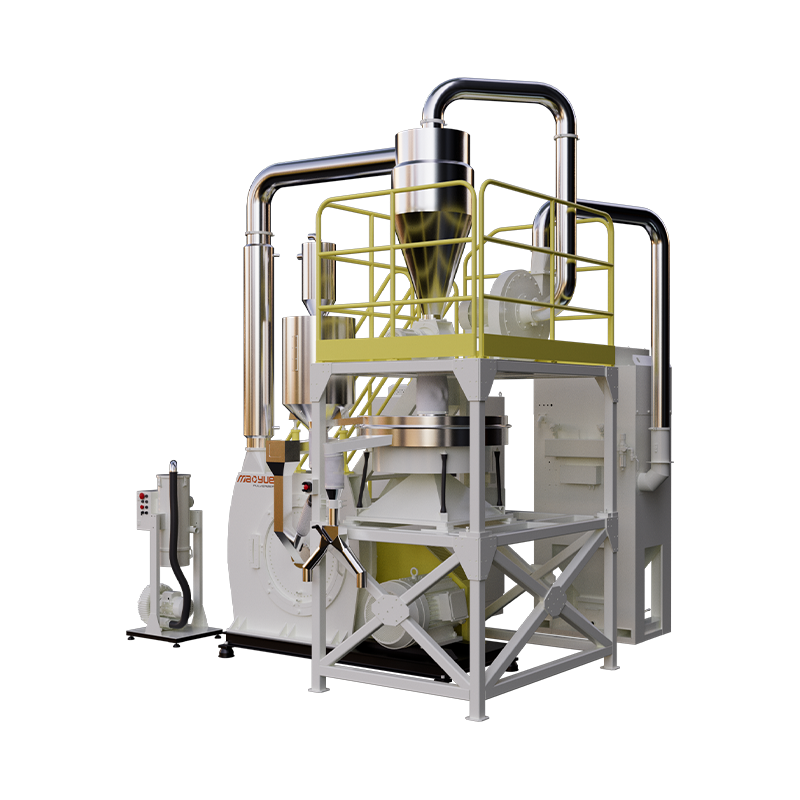
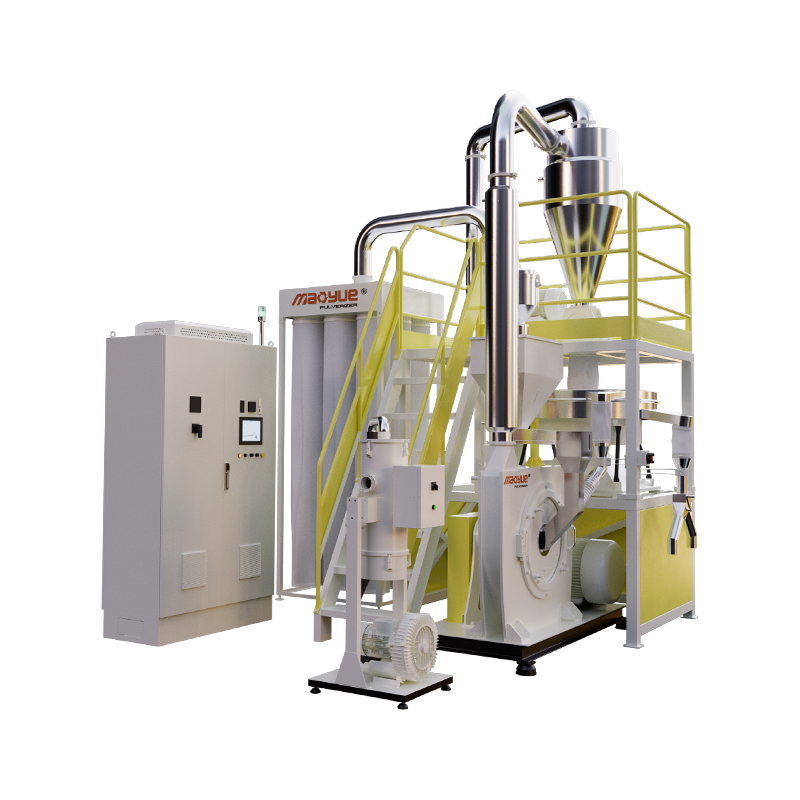
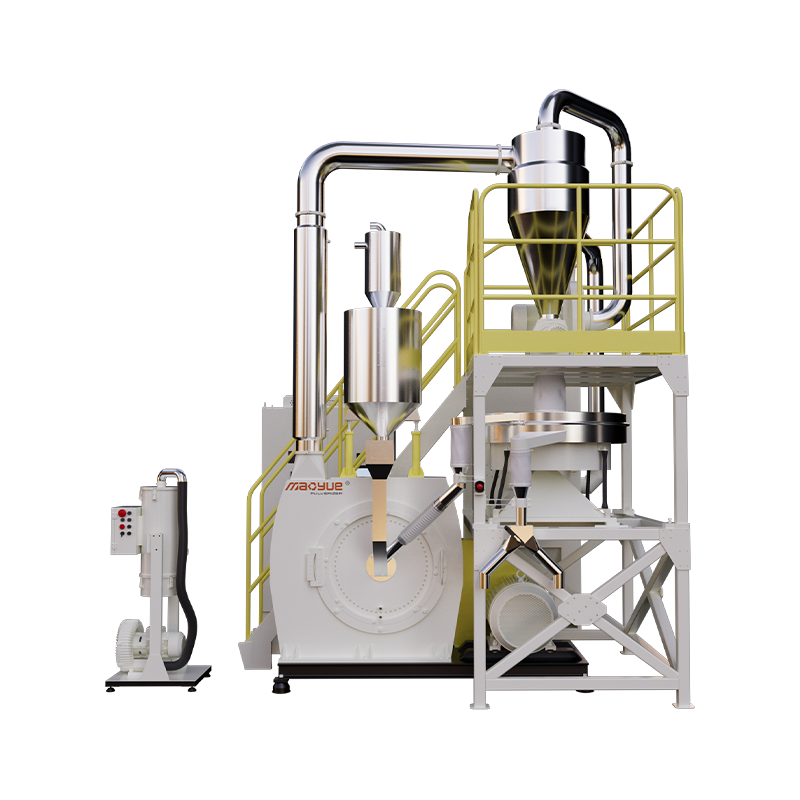
The 800PA/PP Energy-Saving Room-Temperature Pulverizer is designed for industrial users who require high-capacity, stable, and precise powder production from PA and PP materials. Built around an 800mm grinding disc system, a heavy-duty drive configuration, advanced cooling, and long-life alloy grinding components, this machine is positioned as a flagship solution for large recycling groups, masterbatch producers, powder coating enterprises, and OEM factories handling continuous, high-tonnage production.
In modern plastic recycling and plastic modification, output alone is no longer enough. Customers need powder with consistent particle size, stable melt index, low impurity levels, minimal heat degradation, and reliable flowability. This is especially important when processing PA6, PA66, glass fiber reinforced nylon, mineral-filled polypropylene, PP masterbatch materials, rotational molding powders, and functional composite powders. The 800PA/PP pulverizer addresses these demands through a combination of oversized grinding capacity, multi-stage shearing, controlled temperature management, wear-resistant grinding discs, vibration damping, and stainless-steel conveying components.
Compared with smaller pulverizers, the 800 model is built for customers who need a serious increase in productivity. Compared with many ordinary competing machines, it focuses not only on capacity but also on total operating cost, powder quality, equipment durability, and 24/7 industrial reliability. It is more powerful than a 600mm disc system, more industrialized than medium-sized 500mm machines, and better suited for ten-thousand-ton scale powder production projects.
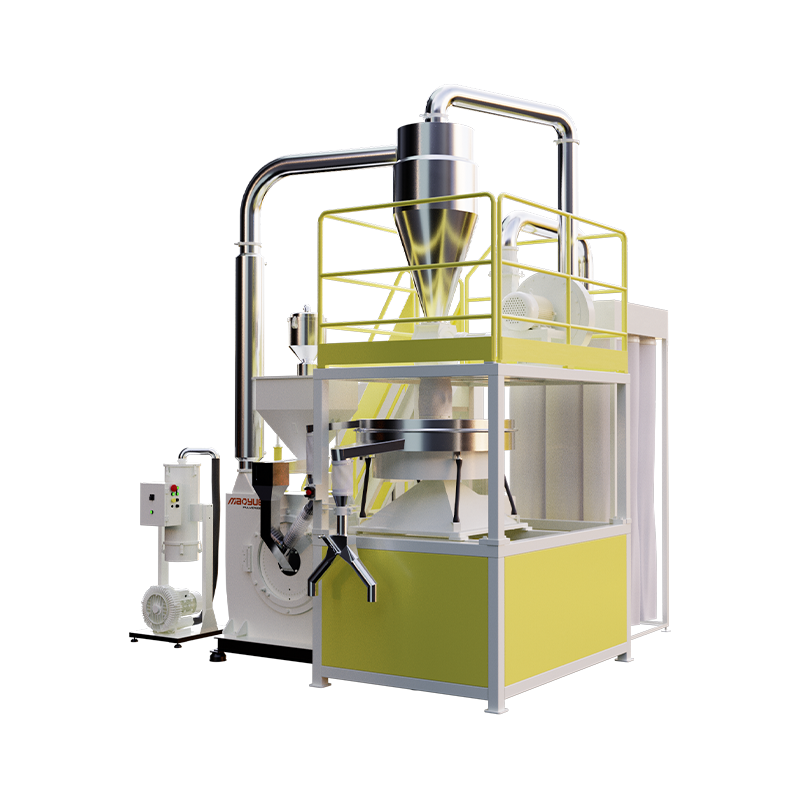
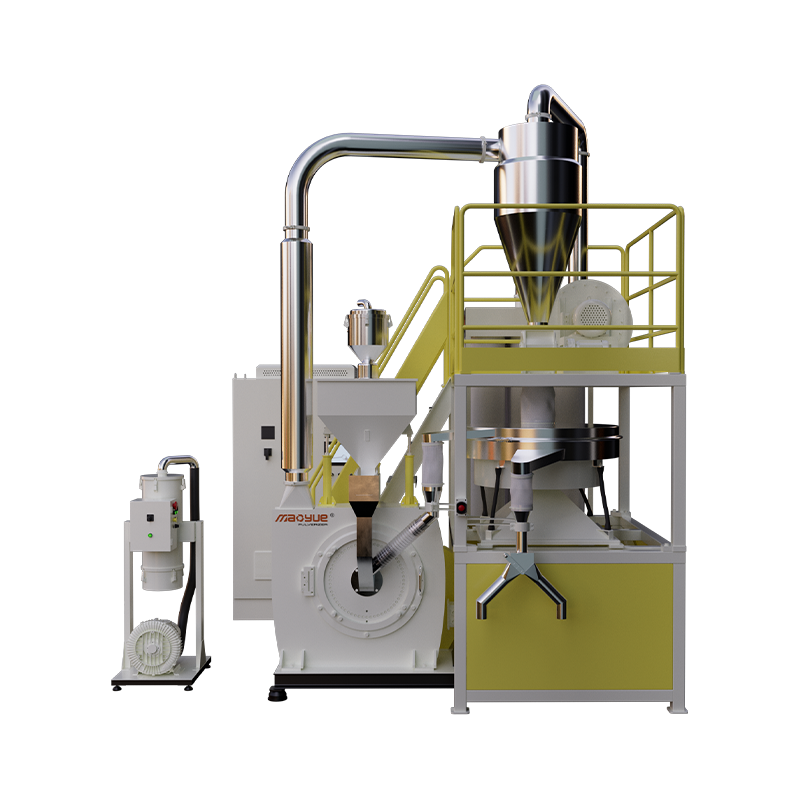
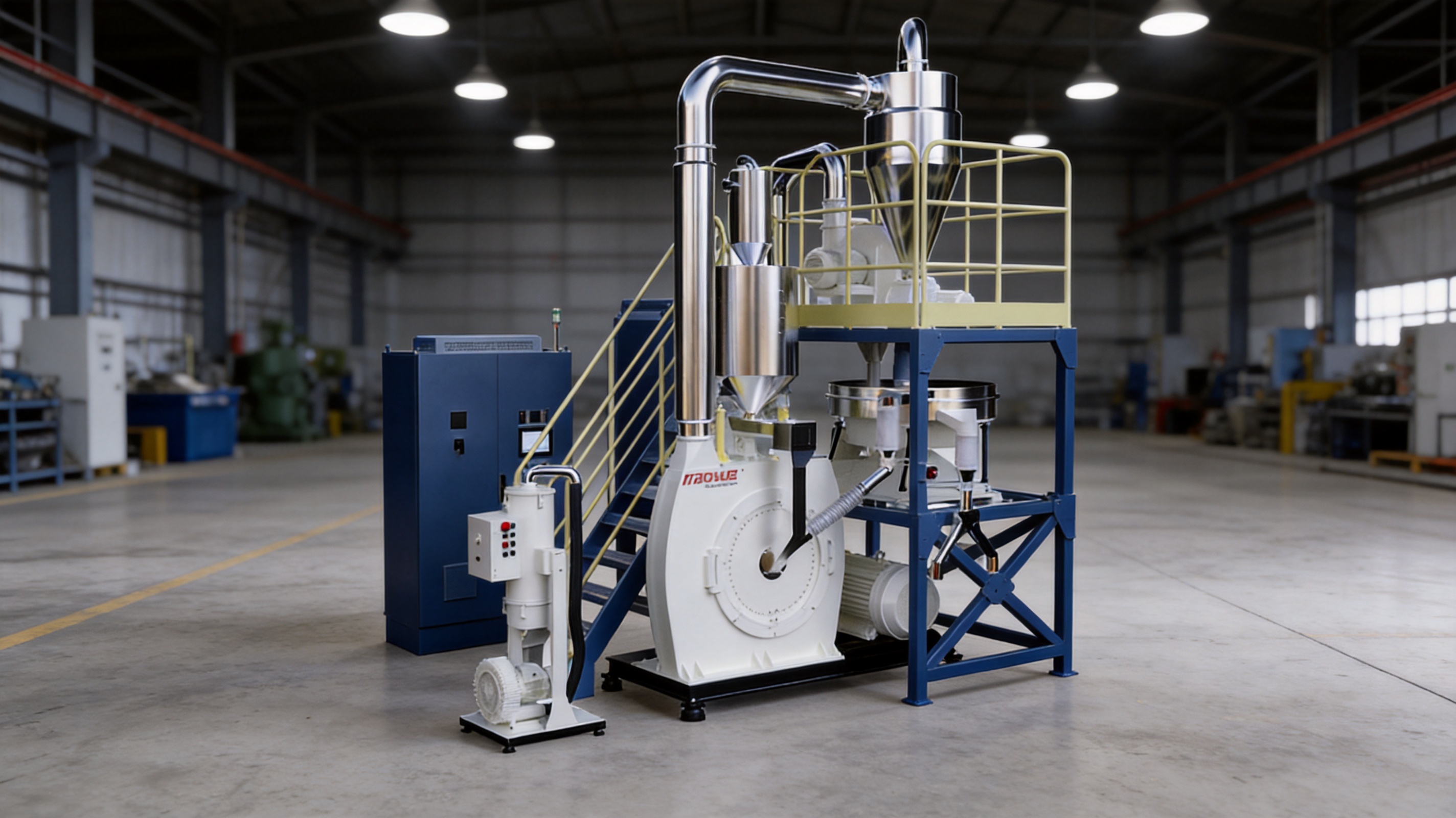
800PA/PP Energy-Saving Room-Temperature Pulverizer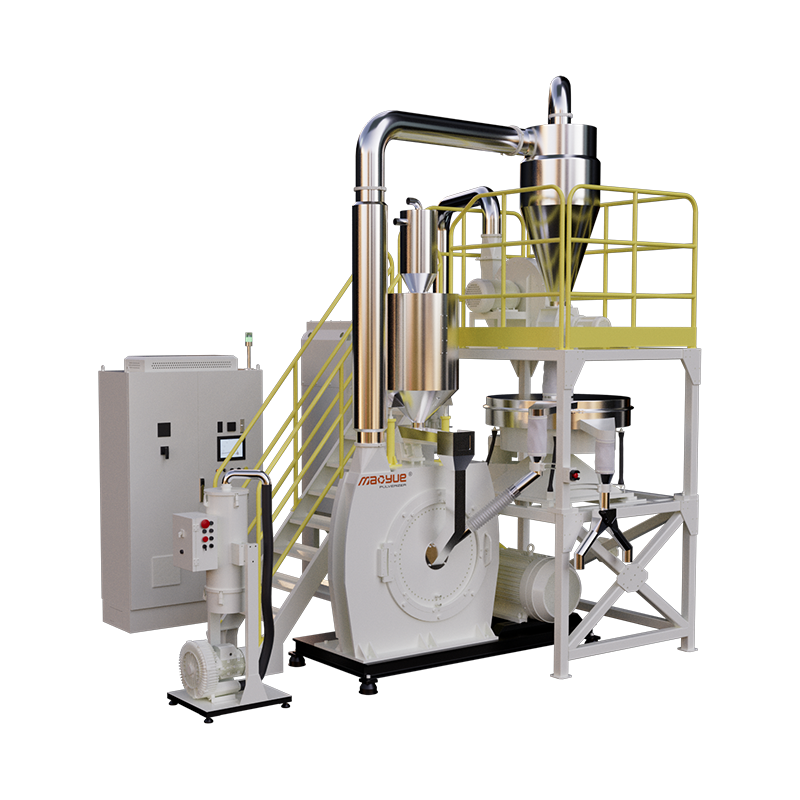
Product Positioning and Core Application Value
The 800PA/PP Energy-Saving Room-Temperature Pulverizer belongs to the PA PP pulverizer category and is also part of a wider plastic crushing and pulverizing line. Its core role is to transform properly prepared plastic granules, flakes, or regrind materials into controlled powder for downstream processes such as recycled engineering plastic production, masterbatch compounding, rotational molding, powder coating, extrusion, injection molding, and functional material manufacturing.
Its greatest value lies in the balance between high throughput and controlled room-temperature pulverizing. Many plastics, especially engineering plastics and modified PP compounds, are sensitive to thermal history. Excessive heat during grinding can cause material softening, agglomeration, discoloration, odor formation, melt index fluctuation, and reduced downstream processing stability. This pulverizer uses high-flow cooling and intelligent temperature regulation to keep the grinding zone stable, helping prevent degradation and ensuring that powder remains clean, free-flowing, and suitable for high-value applications.
The model is especially suitable for PA and PP materials with high added value. In PA recycling, it can process PA6 and PA66 scrap from automotive parts, electronic connector housings, cable jackets, textile tow waste, and glass-filled engineering plastic components. In PP processing, it supports large-volume masterbatch production, filler powder preparation, rotational molding powder, fluidized bed impregnation powder, and powder coating materials. For chemical and functional material producers, it can produce PA-based flame-retardant powders, high-temperature resistant nylon powders, chemically resistant composite powders, and PP carrier powders.
For enterprises targeting export-grade recycled material production, the machine helps create powders with better purity, narrower distribution, and stronger batch consistency. These qualities are essential when recycled PA or PP powder is used to produce engineering-grade pellets, high-end composite materials, or powders intended for demanding European and American markets.
Large 800mm Disc Diameter for Industrial Throughput
The 800mm disc diameter is one of the defining features of this pulverizer. A larger disc provides a wider grinding surface, higher material contact area, and greater shearing opportunity during every rotation. This directly supports higher output and improved particle reduction efficiency, especially when compared with smaller disc pulverizers.
In production terms, the 800 model can achieve a nominal capacity of approximately 450 to 900 kg/h depending on material type, feed size, mesh requirement, moisture level, and operating settings. Under optimized conditions, peak output can reach 600 to 1000 kg/h or more. This represents a significant increase compared with 600mm-class pulverizers, making it highly attractive for factories that need continuous production rather than occasional batch processing.
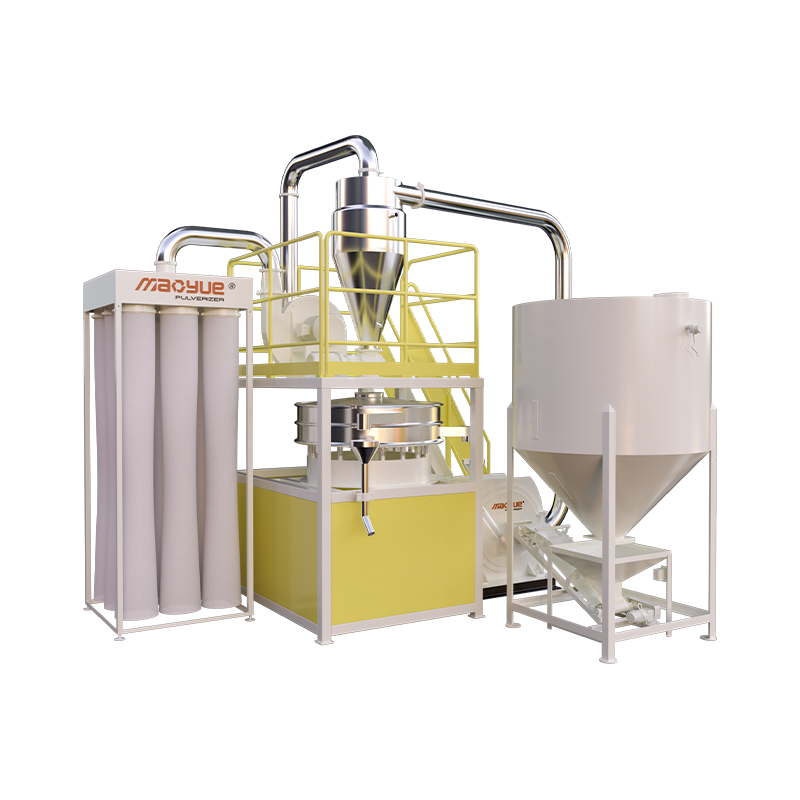
Capacity improvement is not merely a matter of installing a larger motor. Effective high-output pulverizing requires a complete system: stable feeding, strong grinding structure, efficient air transport, suitable screening, powerful cooling, and reliable dust collection. The 800PA/PP pulverizer is configured as an integrated production unit rather than a simple grinding chamber. Its vacuum feeding, high-capacity blower, stainless-steel pipeline, swing vibrating screen, dust collector, and cooling structure work together to maintain consistent material movement from feed to finished powder.
For large-scale recycling companies, this level of capacity can transform production planning. Instead of operating multiple smaller machines with higher labor demand, higher maintenance complexity, and uneven output quality, one properly configured 800mm pulverizer can consolidate production, reduce bottlenecks, and improve batch management. The result is higher daily tonnage, more stable powder quality, and better control over unit production cost.
Energy-Saving Performance and Lower Unit Cost
Energy consumption is a major concern in pulverizing operations. Plastic size reduction requires high mechanical force, and inefficient machines can waste significant electricity while generating excessive heat. The 800PA/PP pulverizer is designed to reduce energy consumption per unit of output by improving the conversion of motor power into productive shearing and grinding action.
The machine is equipped with a main drive motor configuration ranging from 75kW to 132kW, depending on production requirements. Inverter speed control allows operators to adjust operating conditions according to material characteristics and target mesh size. Rather than running at one fixed speed for every material, the system can be tuned to improve efficiency, protect components, and maintain powder consistency.
Compared with many conventional pulverizers, the energy-saving advantage appears in several ways. First, the oversized grinding chamber reduces repeated ineffective grinding by increasing the probability of proper particle reduction in each pass. Second, the multi-stage shearing structure improves cutting and pulverizing efficiency. Third, controlled cooling helps prevent material softening, which otherwise increases resistance, causes agglomeration, and wastes power. Fourth, stable feeding prevents motor load fluctuation and reduces idle energy loss.
Energy saving should also be evaluated through total production cost rather than motor size alone. A machine that uses slightly higher installed power but produces far more qualified powder per hour may be more economical than a smaller or cheaper machine with lower real output. The 800 model is intended for customers who calculate cost per kilogram, cost per ton, wear cost per production cycle, and downtime cost per month. In these measurements, high throughput, long component life, and reduced stoppage deliver a strong long-term return on investment.
Room-Temperature Pulverizing with Advanced Cooling Control
One of the most important technical advantages of this pulverizer is its room-temperature processing capability. PA and PP materials can become difficult to process when heat builds up inside the grinding chamber. Heat may cause softening, sticking, powder bridging, yellowing, burning marks, or agglomeration. It may also change downstream material behavior, especially when powder is used for high-end compounding or powder coating.
The 800PA/PP pulverizer uses a dual-circuit high-flow air and water cooling design. The water cooling system helps remove heat from critical grinding areas, while the air cooling and conveying system supports powder movement and temperature control throughout the process. The system is supported by intelligent PID regulation to maintain stable temperature conditions, with control accuracy reaching approximately ±2℃ under suitable operating conditions.
This level of stability is especially valuable for high-capacity continuous operation. In many competing systems, temperature may remain acceptable during short testing but rise quickly during long shifts. Once thermal balance is lost, powder quality declines, cleaning frequency increases, and operators must stop production to prevent damage or poor output. The 800 model is built to maintain thermal stability during extended operation, helping customers run continuous production with less interruption.
For glass-filled PA or mineral-filled PP materials, temperature control is even more important. Fillers increase wear and can change friction behavior inside the grinding chamber. If the machine lacks proper cooling, the process becomes unstable. With high-flow cooling, heavy-duty grinding discs, and intelligent control, the 800 model can process demanding materials while maintaining powder flowability and reducing the risk of agglomeration.
Heavy-Duty Grinding Discs for High-Wear Materials
The grinding disc is the core consumable and performance component of a disc pulverizer. The 800PA/PP pulverizer uses heavy-duty, high-wear-resistant alloy grinding discs, with DC53 separated grinding blade material specified in the configuration. These grinding components are designed for long service life, stable cutting performance, and easier maintenance.
For standard PA and PP materials, grinding disc life can be very strong. For highly filled materials, including 30% to 50% glass fiber reinforced PA or mineral powder reinforced PP, wear resistance becomes a decisive factor. Lower-grade discs may lose sharpness quickly, increase energy consumption, create uneven powder, and require frequent replacement. The heavy-duty disc structure of the 800 model is intended to extend service life to approximately 1200 to 2000 operating hours, depending on actual material abrasiveness, feeding condition, mesh size, and maintenance practice.
Separated grinding blade construction also provides maintenance benefits. Instead of replacing an entire large component in every wear scenario, the separated structure can help reduce replacement cost and service complexity. For large factories operating around the clock, grinding disc maintenance is not only a technical issue but also a production scheduling issue. Longer disc life means fewer shutdowns, fewer spare part emergencies, and more predictable cost management.
Compared with ordinary competitors that focus on low initial purchase price, the 800 model emphasizes wear cost per ton of powder. This is particularly important for companies processing engineering plastics, reinforced materials, or recycled industrial scrap. A machine with cheaper discs but short life can become expensive after several months of operation. By contrast, a higher-grade disc system helps protect long-term profitability.
Industrial Structure for 24/7 Continuous Production
The 800PA/PP pulverizer is designed for industrial factories rather than light workshop use. Its structure includes heavy-duty vibration damping, a low-noise fan system, strong piping, stable screening, and robust drive components. The operating noise can be controlled below approximately 88dB under suitable conditions, helping improve the working environment compared with many high-noise pulverizing systems.
Continuous operation requires more than a powerful motor. The frame must resist vibration, the transmission must remain stable, the pulleys must be reliable, the material path must avoid clogging, and the screen system must classify powder without becoming a bottleneck. This model uses European-standard belt pulley configuration, inverter speed control, stainless-steel pipeline materials, a swing vibrating screen with 1200mm or 1500mm diameter options, and blower motor options of 11kW or 15kW.
Vacuum feeding improves operator safety and feeding consistency. It reduces manual handling, limits dust exposure, and supports continuous material supply. Stable feeding is important because overloads and feed interruptions can damage powder quality and create unnecessary stress on the machine. With vacuum feeding, the pulverizer can be integrated into a larger automatic crushing, conveying, pulverizing, screening, and packaging line.
The stainless-steel piping system is also significant. Powder purity matters in high-end PA and PP applications. Stainless-steel contact surfaces help reduce contamination, corrosion issues, and material residue. For export-grade powder, masterbatch carriers, and functional powders, cleaner conveying supports higher product value and customer confidence.
Technical Configuration Overview
The following table summarizes the main configuration of the 800PA/PP Energy-Saving Room-Temperature Pulverizer. Actual configuration can be customized according to material characteristics, output target, plant layout, mesh requirement, dust collection standard, and automation level.
Item |
Specification |
Industrial Significance |
Type |
800 |
Flagship high-capacity PA/PP pulverizing model |
Grinding disc diameter |
800mm |
Large grinding surface for high throughput and efficient shearing |
Capacity |
450-900 kg/h nominal, up to 600-1000 kg/h+ under optimized conditions |
Suitable for large daily production and continuous industrial lines |
Mesh size |
10-50 mesh standard, with application-dependent adjustment |
Supports recycling, masterbatch, rotational molding, and powder products |
Main drive motor |
75/90/110/132kW |
Flexible power selection for different output and material demands |
Speed control |
Inverter |
Improves process control, energy efficiency, and material adaptability |
Belt pulley standard |
European standard |
Reliable transmission and easier maintenance planning |
Grinding blade material |
DC53 separated structure |
High wear resistance and practical replacement management |
Blower motor |
11/15kW |
Supports powder transport, cooling, and production stability |
Pipe material |
All stainless steel |
Improves cleanliness, corrosion resistance, and powder purity |
Pipe diameter |
178/203mm |
Matches high-volume air conveying requirements |
Swing vibrating screen |
1200/1500mm diameter |
Ensures classification capacity matches pulverizer output |
Vibrating screen motor |
1.1/1.5kW |
Stable screening for consistent powder size |
Feeding method |
Vacuum feeding |
Continuous feeding, reduced labor, improved operational safety |
Dust collector bag diameter |
300mm |
Supports cleaner working environment and powder recovery |
Cooling method |
Water cooling with inlet and outlet circulation |
Controls heat buildup and protects powder quality |
Advantages Over Conventional Competitors
In the plastic pulverizer market, many suppliers promote capacity figures, but real production performance depends on the whole system. The 800PA/PP model offers several advantages over ordinary competing machines, especially in large-scale PA and PP applications.
Higher Real Output Instead of Only Higher Nameplate Power
Some machines rely on larger motors to claim higher output, but without sufficient grinding chamber design, screening capacity, air transport, and cooling, the actual qualified powder output remains limited. The 800 model combines a large disc diameter, strong motor options, multi-stage shearing, high-flow conveying, and proper screening. This helps convert installed power into usable finished powder rather than heat, dust, and rejected oversized particles.
Better Temperature Stability for Heat-Sensitive Materials
Ordinary pulverizers may operate acceptably on easy materials but struggle with PA, PP, modified compounds, and reinforced scrap. Heat accumulation can cause powder sticking and production instability. The dual-circuit cooling and intelligent regulation of the 800 model help maintain room-temperature pulverizing conditions, reducing degradation and agglomeration risk.
Longer Wear Part Life
Wear part cost is one of the largest hidden expenses in pulverizing. Cheaper machines may require frequent disc replacement, resulting in downtime and inconsistent powder. The high-wear-resistant alloy disc system of the 800 model is designed for longer service life, especially when processing abrasive materials such as glass-filled PA or mineral-filled PP.
Cleaner Material Path
For high-end powder applications, contamination control is critical. The all-stainless-steel pipeline and reliable dust collection help reduce contamination risks. This is an important advantage for customers producing powder for masterbatch, engineering plastics, powder coating, export material, or additive manufacturing applications.
Better Suitability for Continuous Production
Light-duty machines may perform in short demonstrations but fail to maintain stability over long shifts. The 800 model is engineered for continuous industrial operation, with heavy-duty damping, strong fan configuration, automatic feeding, and integrated classification. This gives large factories greater confidence in production scheduling and delivery commitments.
PA Recycling Applications
Polyamide recycling is one of the strongest application areas for the 800PA/PP pulverizer. PA6 and PA66 are widely used in automotive parts, electronics, electrical equipment, textiles, industrial components, and engineering assemblies. Many of these materials retain significant value after first use, especially when properly sorted, cleaned, crushed, and pulverized.
The pulverizer can process PA66 and PA6 glass-filled parts, automotive hood components, bumper brackets, electronic connector housings, cable jackets, industrial nylon parts, and textile tow waste. By reducing these materials to controlled powder, recyclers can create high-purity feedstock for recycled injection molding, extrusion profiles, nylon compounding, and engineering-grade recycled pellets.
For automotive dismantling and e-waste processing companies, production consistency is critical. Different batches of PA scrap may vary in filler content, moisture, viscosity, color, and contamination level. A robust pulverizer with adjustable speed, strong cooling, and wear-resistant discs gives operators more flexibility when processing these mixed industrial streams. It also helps reduce the need for excessive manual sorting and repeated reprocessing.
High-quality PA powder can increase the economic value of waste engineering plastics. Instead of selling crushed scrap at a low price, recyclers can produce more uniform powder that is easier for downstream compounders to blend, melt, filter, and pelletize. For large-scale enterprises, this can open higher-value export opportunities and create a more profitable circular economy model.
PP Modification and Powder Product Manufacturing
Polypropylene is one of the most widely used plastics in the world, and PP powder has many industrial uses. The 800PA/PP pulverizer supports large-scale production of PP masterbatch powder, filler carrier powder, rotational molding powder, electrostatic spraying powder, fluidized bed impregnation powder, and PP composite powders.
In rotational molding, powder quality directly affects product wall thickness, surface smoothness, impact strength, and processing efficiency. Poor powder distribution can cause uneven melting, voids, weak areas, and surface defects. The 800 model helps produce PP powder with good flowability, controlled particle size, and low agglomeration, supporting applications such as chemical storage tanks, trash bins, pallets, playground equipment, and large hollow products.
In masterbatch and filler production, powder uniformity helps improve mixing and dispersion. PP powder may be used as a carrier for pigments, mineral fillers, additives, flame retardants, stabilizers, or functional modifiers. Consistent powder size enables better feeding accuracy and better downstream compounding. For producers operating ten-thousand-ton level lines, stable powder preparation is essential to maintaining uniform masterbatch quality.
For powder coating and impregnation processes, free-flowing powder with controlled size distribution improves coating uniformity and reduces defects. A pulverizer that avoids scorching and agglomeration helps preserve color, appearance, and functional performance. This makes the 800 model suitable for factories producing large volumes of powder products with strict quality expectations.
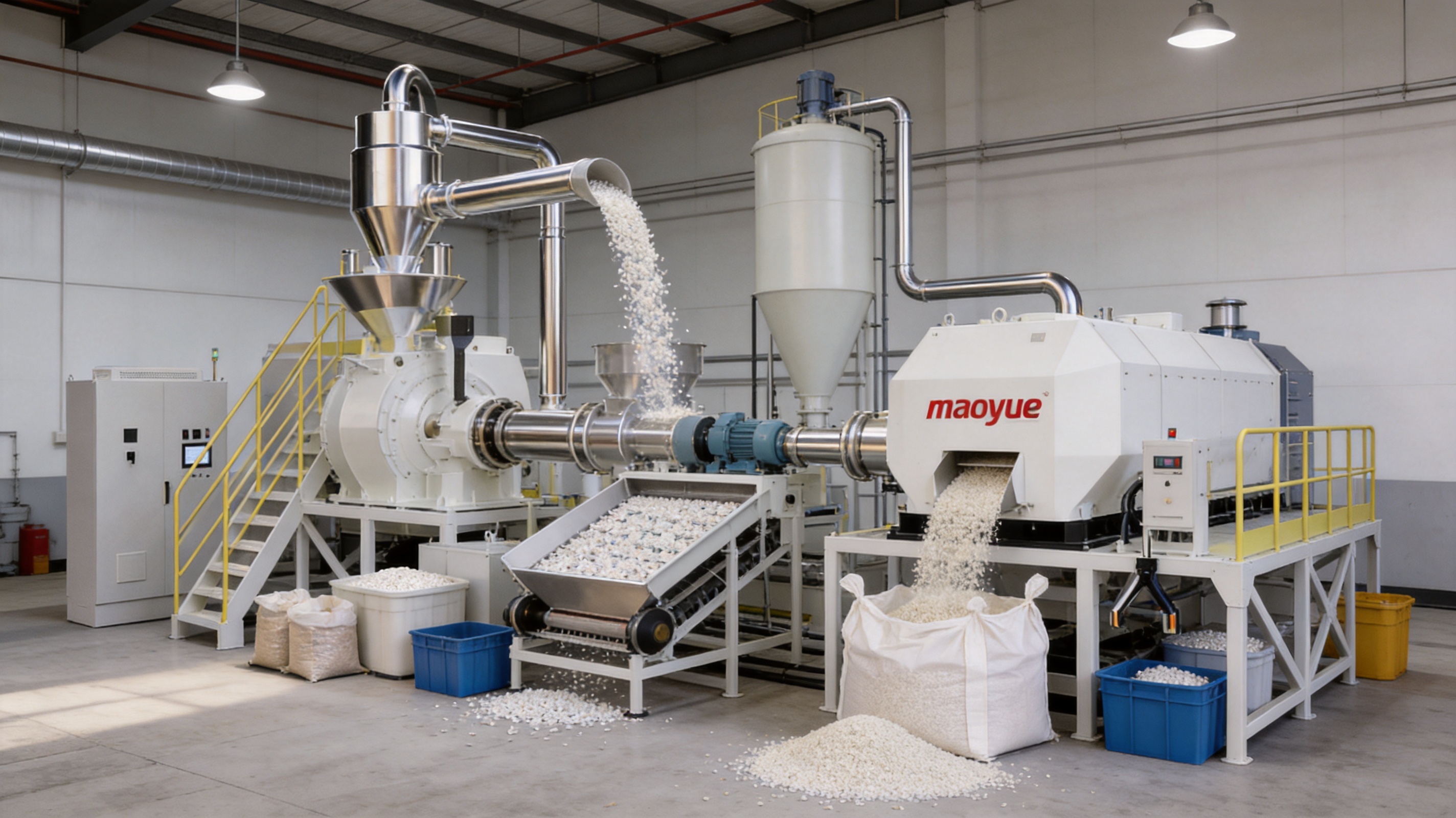
Functional Materials and High-End Composite Powder
The machine is also valuable in chemical and functional materials production. PA-based functional powders are increasingly used in high-performance applications, including flame-retardant materials, high-temperature resistant nylon systems, chemically resistant powders, specialty engineering plastics, and additive manufacturing feedstocks. PP composite powder carriers are also used in functional masterbatches and modified polymer systems.
For these applications, powder purity and particle distribution matter greatly. Impurities can affect electrical properties, mechanical strength, appearance, and processing stability. A narrow particle size distribution improves mixing, melting, and final product consistency. Minimal melt index variation is also important when powder is converted into filaments, pellets, molded components, or composite structures.
The 800PA/PP pulverizer supports high-end functional powder production through stainless-steel material contact, controlled cooling, stable grinding, and robust classification. Under suitable production management, impurity levels can be controlled to meet demanding industrial requirements. This makes the equipment suitable not only for recycling but also for advanced material preparation.
In additive manufacturing and aerospace composite support applications, raw material consistency is a foundation for performance. Although final suitability always depends on material formulation and downstream processing validation, the pulverizer provides a strong powder preparation platform for companies developing high-value PA and PP composite products.
Manufacturing Strength Behind the Equipment
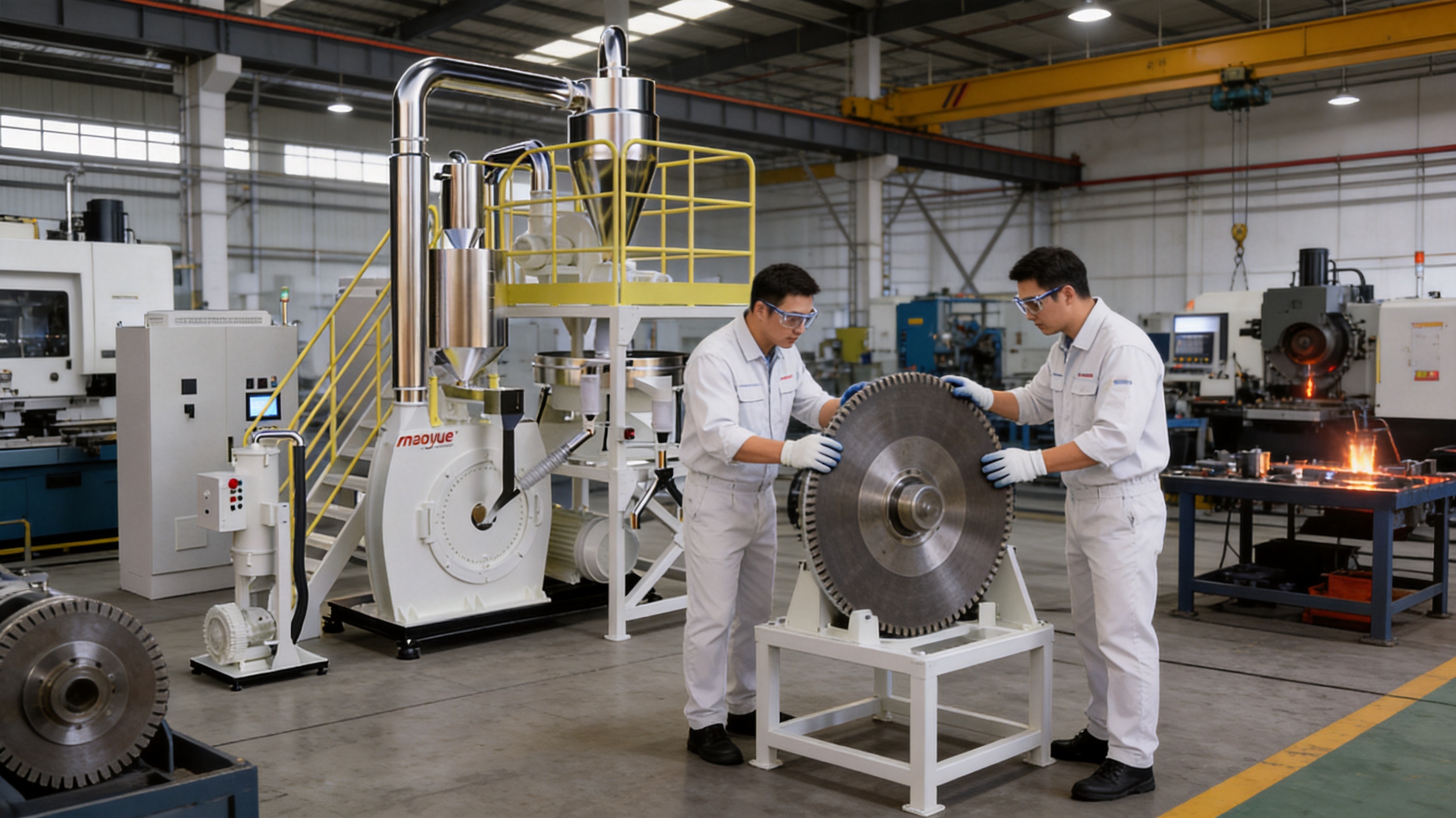
Changzhou Mao Yue Intelligent Equipment Co., Ltd. is a source manufacturer with 30 years of experience in plastic crushing and pulverizing equipment. This background is important because pulverizer performance depends heavily on manufacturing precision, component quality, assembly accuracy, and process knowledge. A high-capacity pulverizer is not simply a collection of purchased parts; it is an engineered system that requires experience in grinding behavior, dynamic balance, wear control, air transport, cooling, screening, and long-term maintenance.
The company operates six processing workshops, each averaging about 1,400 square meters. This production scale supports machining, fabrication, assembly, testing, and customization. The company has developed long-term partnerships with more than 5,000 enterprises in domestic and international markets, giving it practical knowledge of different plastics, production environments, and customer requirements.
Advanced manufacturing processes are a major strength. The factory is equipped with Taiwan-imported high-precision grinding machines built to German standards. Precision machining is essential for grinding discs, rotating components, and assemblies that must remain stable at high speed. Poor machining accuracy can cause vibration, noise, uneven wear, reduced powder quality, and bearing damage. High-precision grinding helps ensure that core parts fit correctly and maintain stable operation.
The company also uses German dynamic balancing equipment. Dynamic balance is critical for large rotating systems such as an 800mm disc pulverizer. At high speed, even small imbalance can create vibration, reduce bearing life, increase noise, damage the frame, and affect powder consistency. By using professional balancing equipment, the manufacturer improves operational stability and extends equipment life.
Japanese welding systems further support structural reliability. Strong and accurate welding contributes to frame strength, pipeline quality, and long-term durability. In high-output pulverizing, the machine frame and related assemblies must withstand vibration, load changes, and continuous operation. Good welding quality reduces deformation risk and supports stable alignment.
The company focuses on European quality standards for components and machine design. CE mechanical certification and ISO 9001 quality management system certification support product safety, manufacturing traceability, and process control. For export-oriented customers, these certifications are valuable because they demonstrate commitment to standardized manufacturing and international market requirements.
Customization and Complete Line Integration
Large customers often need more than a single machine. They may require a complete crushing and pulverizing line, including feeding, pre-crushing, magnetic separation, storage, conveying, pulverizing, screening, dust collection, cooling, packaging, and electrical control. The 800PA/PP pulverizer can be integrated into such lines according to the customer’s plant layout and production target.
Customization may include motor power selection, screen size, pipeline diameter, feeding method, cooling capacity, dust collector configuration, explosion prevention considerations where applicable, automation level, and discharge arrangement. For materials with special characteristics, such as high glass fiber content, high mineral filling, strong static electricity, or low softening point, the machine can be configured to improve stability and reduce operational risk.
Compared with suppliers who only sell standard machines, a manufacturer with deep process experience can provide practical advice before installation. This includes feed particle size recommendation, moisture control, screen mesh selection, cooling water requirements, workshop ventilation, dust management, maintenance planning, and spare parts strategy. Such support reduces commissioning problems and helps customers reach stable production faster.
For OEM and export projects, line integration is especially important. Customers handling large orders cannot afford unstable equipment or uncertain output. A complete and properly engineered pulverizing line helps meet delivery schedules, quality standards, and environmental requirements such as REACH and RoHS-related expectations for material cleanliness and compliance management.
Quality Control and Long-Term Reliability
The value of an industrial pulverizer is proven over months and years of operation. Quality control must begin from raw material selection and continue through machining, welding, assembly, balancing, testing, and after-sales service. The 800PA/PP pulverizer is built with this long-term perspective.
Key quality factors include grinding disc hardness and toughness, blade geometry, bearing quality, alignment accuracy, motor reliability, frame strength, sealing performance, electrical control stability, and cooling circuit integrity. If any of these factors are weak, the machine may suffer downtime, unstable powder, high maintenance cost, or safety risks. A manufacturer with established processing workshops and quality management systems is better positioned to control these details.
The use of inverter control also supports reliability. Smooth speed adjustment and controlled startup can reduce mechanical shock and improve operating flexibility. Operators can adapt settings to material hardness, desired mesh size, and output requirements. This reduces unnecessary stress and improves production control.
Dust collection and pipeline design also affect reliability. Plastic powder is light and can become airborne easily. A suitable dust collection system improves the working environment and helps recover valuable powder. Proper pipeline diameter reduces clogging and pressure loss. Stainless-steel piping improves cleanliness and durability. These details may appear secondary, but in continuous production they have a major impact on overall efficiency.
Economic Return for Large-Scale Producers
The 800PA/PP pulverizer requires a higher initial investment than smaller or simpler machines. However, its economic value becomes clear when evaluated through long-term return on investment. For large producers, the main cost drivers are not only purchase price but also output per hour, electricity per ton, disc replacement cost, labor requirement, downtime, maintenance frequency, rejected powder ratio, and ability to meet customer quality requirements.
Higher capacity means more powder can be produced with fewer machines and fewer operators. Stable powder quality reduces rework and improves downstream processing. Longer grinding disc life reduces spare part expense and shutdown time. Better temperature control reduces material loss caused by agglomeration, scorching, or degradation. Cleaner conveying and screening improve product grade and market value.
For recycling groups, the machine can help turn lower-value PA and PP waste into higher-value powder or recycled pellet feedstock. For masterbatch plants, it can support consistent large-volume carrier powder preparation. For powder coating and rotational molding enterprises, it can help produce powder that meets strict flow and particle size requirements. For OEM projects, it can support large export orders with stable quality and lower unit production cost.
When a factory reaches tens of tons per day or ten-thousand-ton annual production scale, even a small reduction in unit cost becomes significant. The 800 model is therefore not only a machine purchase but also a strategic investment in production capability, product quality, and market competitiveness.
Operational Recommendations for Best Performance
To obtain the best results from the 800PA/PP pulverizer, customers should prepare materials properly before feeding. Materials should be clean, suitably crushed, and controlled for moisture. Excessive moisture can affect powder flow, screening efficiency, and final quality. Metal contamination should be removed before pulverizing to protect grinding discs and avoid sparks or damage.
Feed particle size should be matched to the machine’s design and the target mesh. Overly large or irregular feed may reduce efficiency and increase wear. Stable feeding through the vacuum system helps maintain consistent load and powder quality. Operators should avoid sudden overloads and should monitor motor current, temperature, vibration, and powder discharge condition.
Cooling water quality and flow should be maintained. If cooling is insufficient, the machine may lose temperature stability and powder may become sticky. Regular inspection of water channels, air flow, blower condition, and temperature sensors helps maintain stable operation. The PID temperature control should be calibrated and adjusted according to actual material behavior.
Screening condition should also be monitored. A worn or clogged screen can change particle distribution and reduce output. Dust collector bags should be inspected and cleaned or replaced when needed. Grinding discs should be checked regularly for wear, sharpness, and balance. Preventive maintenance is always more economical than emergency repair.
Environmental and Workplace Benefits
Modern plastic processing plants must consider environmental responsibility, worker safety, and cleanliness. The 800PA/PP pulverizer contributes to these goals by supporting efficient recycling, reducing material waste, and improving powder recovery. It helps transform engineering plastic waste into reusable material, supporting circular economy objectives.
The dust collection system helps reduce airborne powder in the workshop. Lower dust levels improve working conditions and reduce cleaning burden. The low-noise fan and vibration damping structure help create a more acceptable production environment. While operators should always use proper personal protective equipment and comply with local safety regulations, a well-designed machine makes safe production easier to manage.
Energy-saving operation also has environmental significance. Lower energy consumption per ton of powder means reduced production emissions where electricity generation is carbon-intensive. Long-life wear parts reduce consumable waste and reduce the environmental impact associated with frequent replacement. In large-scale operations, these improvements accumulate into meaningful sustainability benefits.
Why This Model Is a Flagship Choice
The 800PA/PP Energy-Saving Room-Temperature Pulverizer is a flagship choice because it addresses the real challenges of industrial powder production: capacity, heat control, wear resistance, stability, purity, automation, and long-term cost. It is not designed for occasional light use but for serious factories that need continuous output and dependable quality.
Its 800mm disc system provides a strong foundation for high throughput. Its motor options and inverter control provide flexibility. Its dual-circuit cooling and intelligent temperature regulation protect material quality. Its heavy-duty alloy discs support long service life. Its stainless-steel piping and dust collection support clean production. Its industrial design supports 24/7 operation. Behind the machine, the manufacturer’s 30 years of experience, precision machining, dynamic balancing, advanced welding, and certified quality management strengthen confidence in long-term performance.
For companies handling PA and PP recycling, masterbatch production, rotational molding powder, powder coating, functional materials, or export-grade powder projects, this pulverizer offers a strong combination of productivity and quality. It helps customers overcome production bottlenecks, reduce unit costs, improve powder value, and compete in demanding markets.
Q&A Section
Q1: What materials is the 800PA/PP pulverizer mainly designed for?
It is mainly designed for PA and PP materials, including PA6, PA66, glass fiber reinforced nylon, mineral-filled polypropylene, PP masterbatch materials, recycled engineering plastic scrap, rotational molding PP materials, powder coating materials, and functional composite powders.
Q2: What is the output capacity of this machine?
The nominal capacity is approximately 450 to 900 kg/h, depending on material type, mesh size, moisture, feed condition, and operating settings. Under optimized production conditions, peak capacity can reach about 600 to 1000 kg/h or more.
Q3: Why is room-temperature pulverizing important?
Room-temperature pulverizing helps prevent heat degradation, powder agglomeration, material discoloration, burning, and melt index fluctuation. This is especially important for PA, PP, reinforced materials, masterbatch carriers, powder coating materials, and high-end recycled powders.
Q4: How does this model compare with a 600mm pulverizer?
The 800mm model provides a larger grinding surface, higher capacity, stronger industrial configuration, and better suitability for continuous large-scale production. It can increase production significantly compared with 600mm-class systems, especially in high-tonnage applications.
Q5: Is the machine suitable for glass fiber reinforced PA?
Yes. The machine is designed to handle demanding materials such as 30% to 50% glass fiber reinforced PA or mineral-filled PP. Its high-wear-resistant grinding discs and strong cooling system help improve stability and reduce wear-related downtime.
Q6: What mesh size can it produce?
The standard mesh range is generally 10 to 50 mesh, depending on material and screen configuration. For special applications, particle size requirements should be evaluated with the manufacturer according to material characteristics and final use.
Q7: What are the main advantages over ordinary competing machines?
Main advantages include higher real output, better temperature stability, longer grinding disc life, cleaner stainless-steel conveying, inverter speed control, strong vibration damping, lower noise, and better suitability for 24/7 continuous industrial production.
Q8: Does it support automated production lines?
Yes. The machine uses vacuum feeding and can be integrated with crushing, conveying, screening, dust collection, cooling, storage, and packaging systems. It is suitable for complete plastic crushing and pulverizing lines.
Q9: Why is stainless-steel piping important?
Stainless-steel piping improves cleanliness, corrosion resistance, and powder purity. This is important for high-end PA/PP powders, export-grade recycled materials, masterbatch production, and functional powder applications.
Q10: Who should consider investing in this model?
Large recycling groups, masterbatch plants, powder coating enterprises, rotational molding powder producers, chemical material companies, engineering plastic recyclers, and OEM manufacturers with high-volume production requirements should consider this model.
Conclusion
The 800PA/PP Energy-Saving Room-Temperature Pulverizer is built for enterprises that need high output, stable quality, low unit cost, and reliable long-term operation. Its large 800mm disc, heavy-duty drive system, advanced cooling, intelligent temperature control, wear-resistant grinding discs, stainless-steel conveying, and industrial-grade structure make it a strong solution for PA and PP powder production.
In an industry where many machines appear similar from the outside, the real difference is revealed in continuous production: stable temperature, consistent powder, controlled noise, lower wear cost, fewer shutdowns, and stronger return on investment. Supported by Changzhou Mao Yue Intelligent Equipment Co., Ltd.’s manufacturing experience, precision machining capability, dynamic balancing technology, advanced welding systems, CE certification, ISO 9001 quality management, and decades of application knowledge, this pulverizer is positioned as a dependable flagship machine for high-volume plastic powder production.
References
1. Rauwendaal, C. Polymer Extrusion. Hanser Publishers.
2. Tadmor, Z., and Gogos, C. G. Principles of Polymer Processing. Wiley-Interscience.
3. Osswald, T. A., and Menges, G. Materials Science of Polymers for Engineers. Hanser Publishers.
4. Rosato, D. V., Rosato, D. V., and Rosato, M. G. Plastics Processing Data Handbook. Springer.
5. ISO 9001 Quality Management Systems: Requirements. International Organization for Standardization.
6. CE Machinery Safety Guidelines and General Requirements for Industrial Equipment Compliance.
7. Practical industry data from PA and PP pulverizing, recycling, masterbatch, powder coating, and rotational molding production applications.