

 English
 русский
 Español
 عربى
 中文简体
 中文简体
Content
- 1 Introduction
- 2 Why Fine Powder Quality Matters in Masterbatch Manufacturing
- 3 Product Overview
- 4 Main Technical Specifications
- 5 Precision Grinding Disc Design
- 6 Dynamic Balancing and Low-Vibration Operation
- 7 Dual Cooling for Heat-Sensitive Polymers
- 8 Enclosed Conveying and Dust Collection
- 9 Compact Layout and Energy Considerations
- 10 Applications in Masterbatch Production
- 11 Applications in Laboratories and Pilot Lines
- 12 Manufacturing Strengths of the Equipment Supplier
- 13 Advantages Compared with Conventional Pulverizers
- 14 Operating Process
- 15 Maintenance and Service Requirements
- 16 Installation and Process Planning
- 17 How to Select the Correct Configuration
- 18 Economic Value and Return on Investment
- 19 Safety and Environmental Considerations
- 20 Company Service and Customization Capabilities
- 21 Frequently Asked Questions
- 21.1 What materials can the Model 500 process?
- 21.2 What capacity can the Model 500 achieve?
- 21.3 What particle size can the machine produce?
- 21.4 Can the machine process heat-sensitive polymers?
- 21.5 What is the difference between DC53 and D2 discs?
- 21.6 Can grinding discs be refurbished?
- 21.7 Is the machine suitable for recycling?
- 21.8 Does the machine include dust control?
- 21.9 How much floor space does the machine require?
- 21.10 Is a material test necessary before purchase?
- 21.11 What certifications does the manufacturer have?
- 22 Conclusion
- 23 References
- 24 Product: Model 500 Fine Powder Mill for Masterbatch Production
Introduction
Fine and uniform powder is essential for producing high-quality masterbatch, modified plastics, recycled polymer compounds, rotational molding powders, and other advanced polymer materials. The quality of the powder directly influences pigment dispersion, additive distribution, melt behavior, surface appearance, mechanical performance, and production stability. When particles are too coarse, irregular, or inconsistent, manufacturers may experience color variation, black specks, fisheyes, poor dispersion, unstable feeding, and higher reject rates.
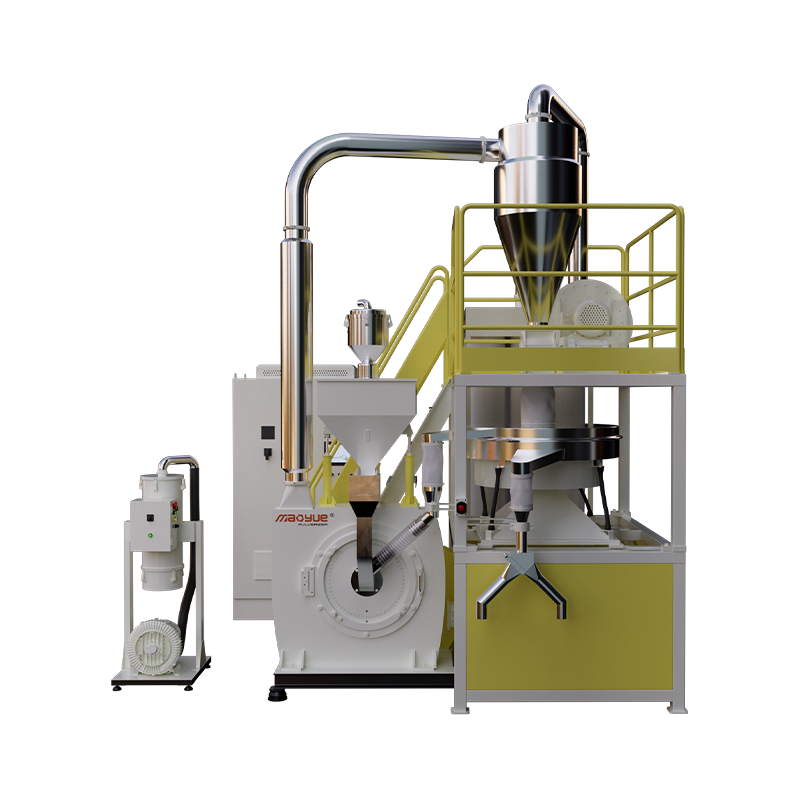
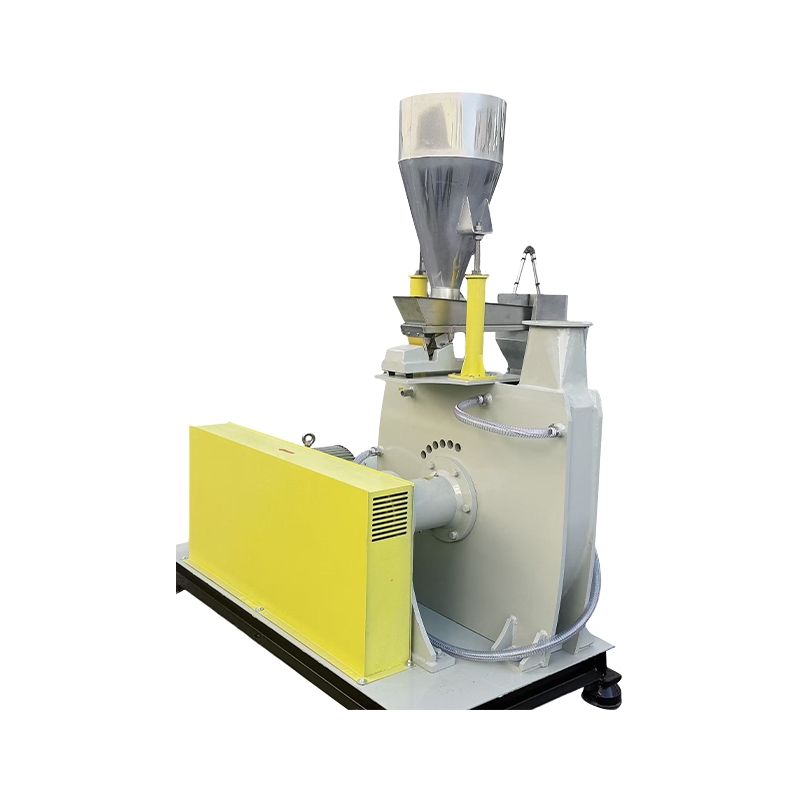
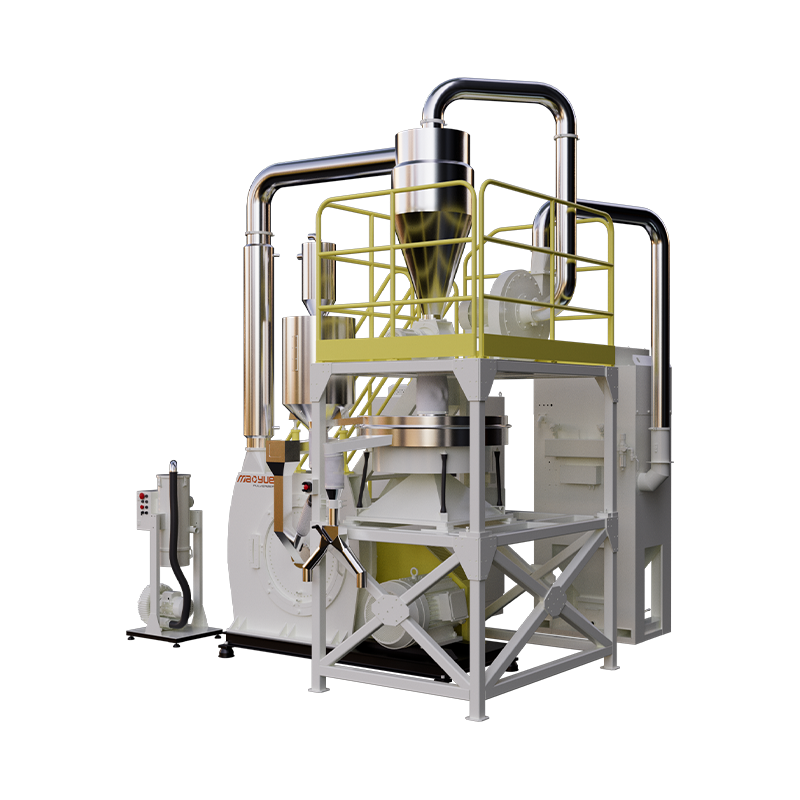
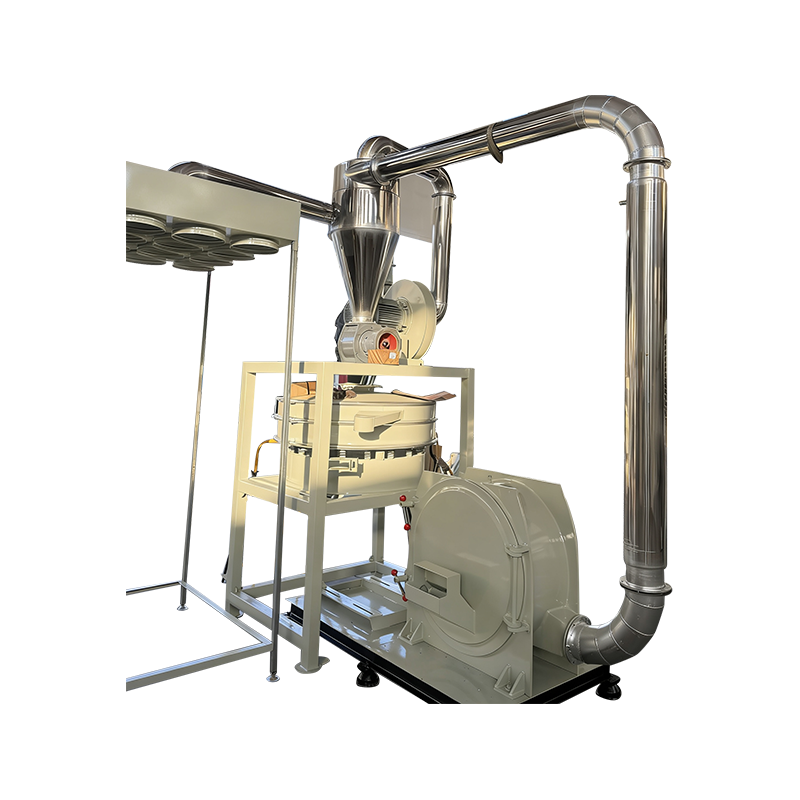
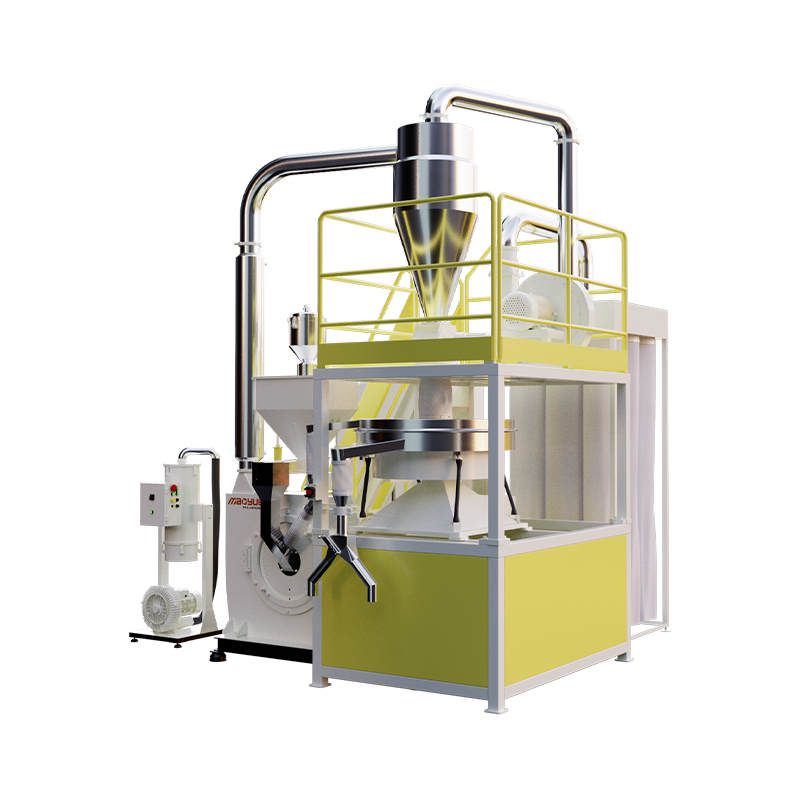
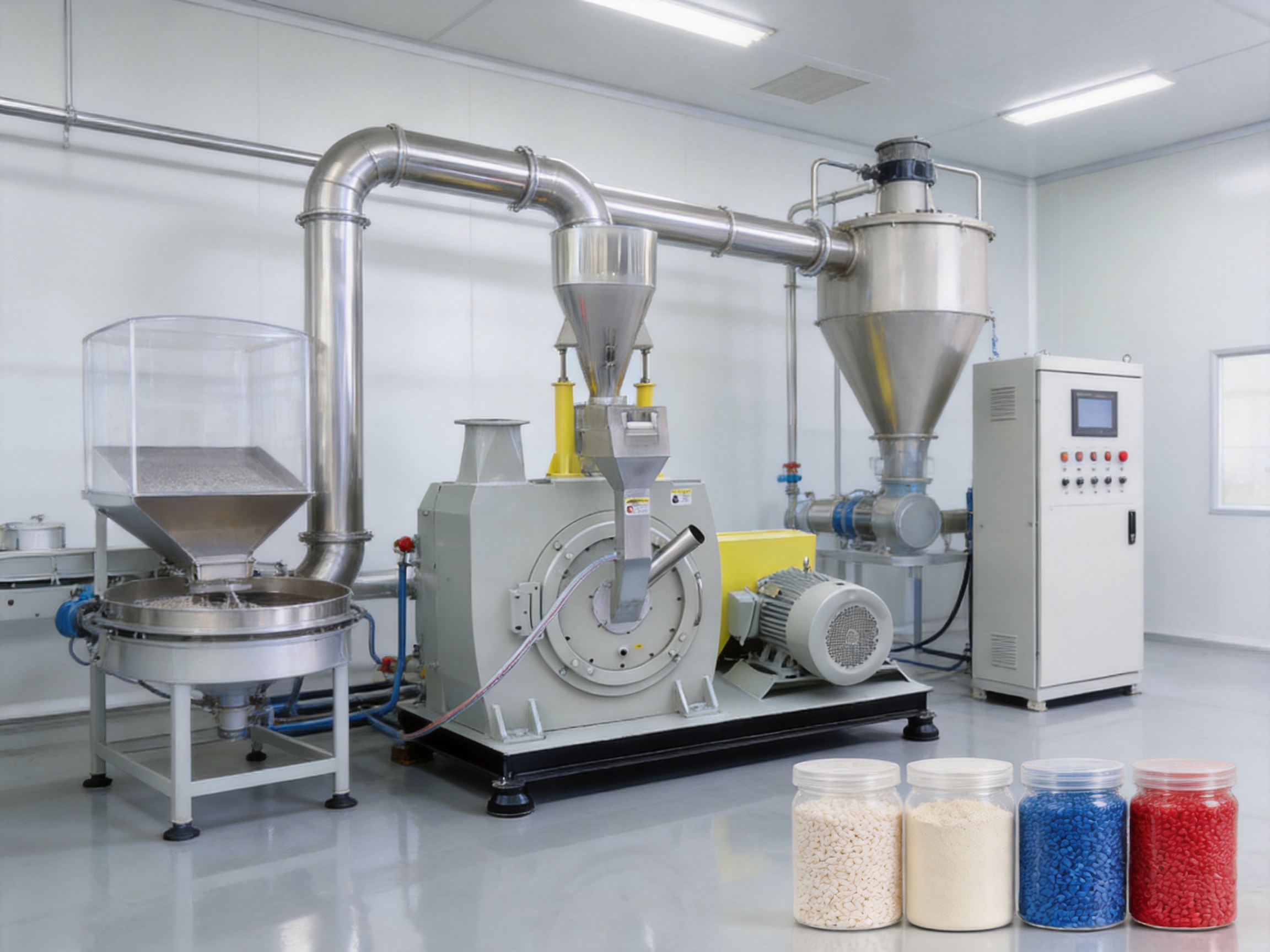
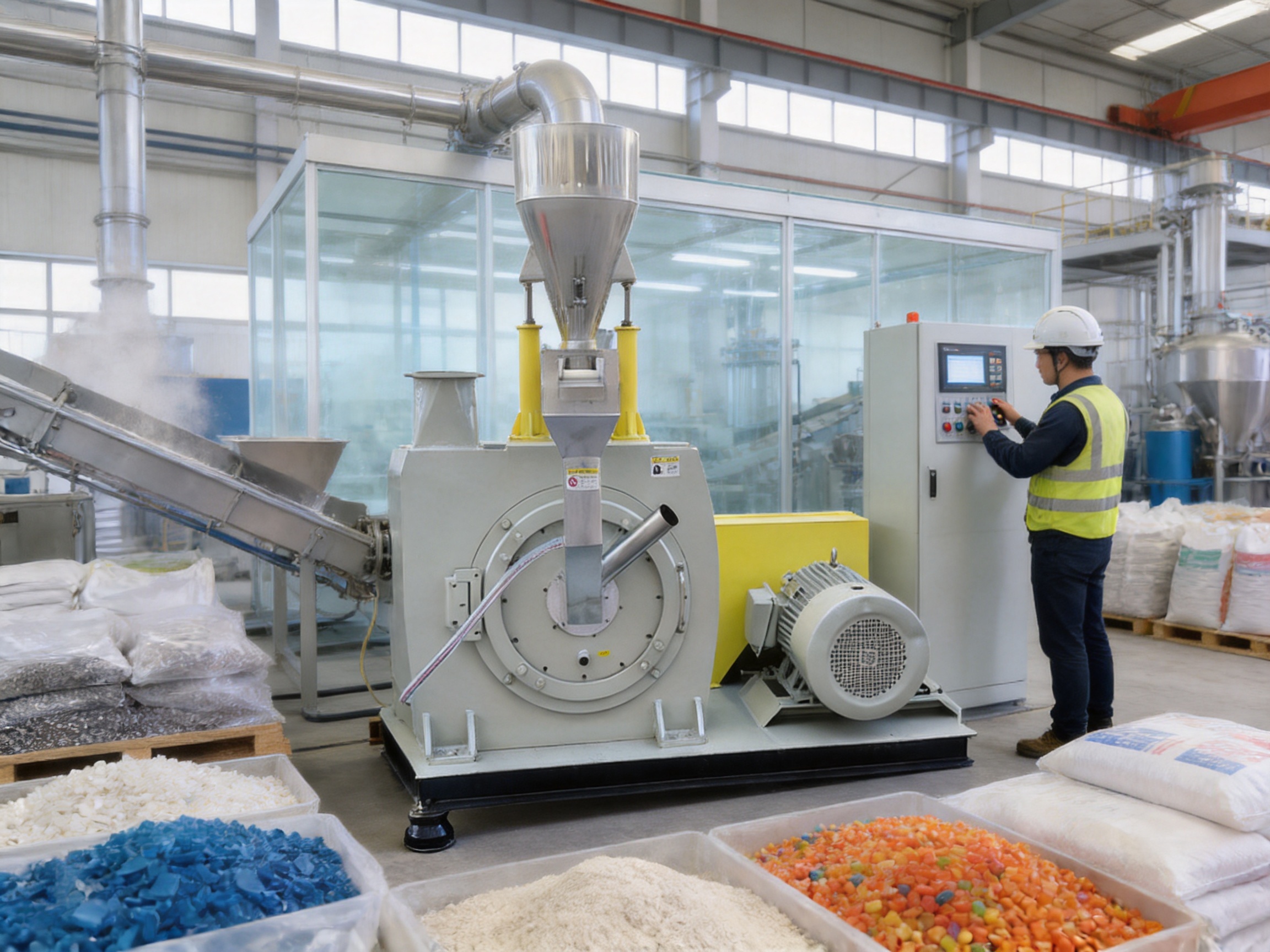
The Model 500 fine powder mill is designed to address these challenges with a compact, high-precision pulverizing system for polymer processing. Developed for masterbatch manufacturers, modified plastics factories, laboratories, and small-to-medium production lines, the machine combines precision grinding discs, controlled cooling, enclosed conveying, dust collection, and flexible particle-size adjustment in one integrated solution.
The machine is suitable for processing materials such as polyethylene, polypropylene, ABS, polystyrene, polycarbonate, EVA, TPU, recycled masterbatch scraps, injection-molding waste, extrusion off-cuts, and other thermoplastic materials. Depending on the raw material, feeding condition, moisture level, machine configuration, and required fineness, the Model 500 can be configured for different throughput and powder-size targets.
Changzhou Mao Yue Intelligent Equipment Co., Ltd. manufactures this type of polymer pulverizing equipment with a focus on European-style component quality, precision processing, stable operation, and customized production solutions. With decades of experience in plastic crushing and pulverizing technology, the company supplies machines for masterbatch, rotational molding, PVC, PE, recycling, polymer compounding, and powder coating applications.
This article examines the structure, operating principles, performance advantages, manufacturing quality, application range, maintenance requirements, and selection considerations of the Model 500 fine powder mill.
Model 500 Fine Powder Mill for Masterbatch Production
Why Fine Powder Quality Matters in Masterbatch Manufacturing
Masterbatch is a concentrated mixture of pigments, additives, and polymer carrier resin. During downstream processing, the masterbatch must disperse evenly into the base polymer. The quality of dispersion depends partly on formulation and mixing conditions, but the physical characteristics of the masterbatch powder or intermediate material are also highly important.
A narrow particle-size distribution allows material to feed more consistently into extruders, mixers, and dosing systems. Uniform particles also help pigments and functional additives distribute more evenly throughout the carrier resin. This is especially important for light-colored products, transparent materials, conductive compounds, flame-retardant masterbatch, antistatic masterbatch, and products used in applications where surface defects cannot be tolerated.
Oversized particles may require additional grinding or create feeding instability. Excessive fines can increase dust generation, create handling problems, or alter the feeding behavior of the material. A properly adjusted pulverizer must therefore provide the desired fineness without unnecessarily overheating the polymer or damaging sensitive additives.
Thermoplastics present a particular grinding challenge because many polymers soften when exposed to frictional heat. If the grinding chamber becomes too hot, particles can stick to the disc, change color, agglomerate, or lose their intended performance. Materials such as PE, PP, EVA, and TPU may be particularly sensitive to temperature during fine grinding.
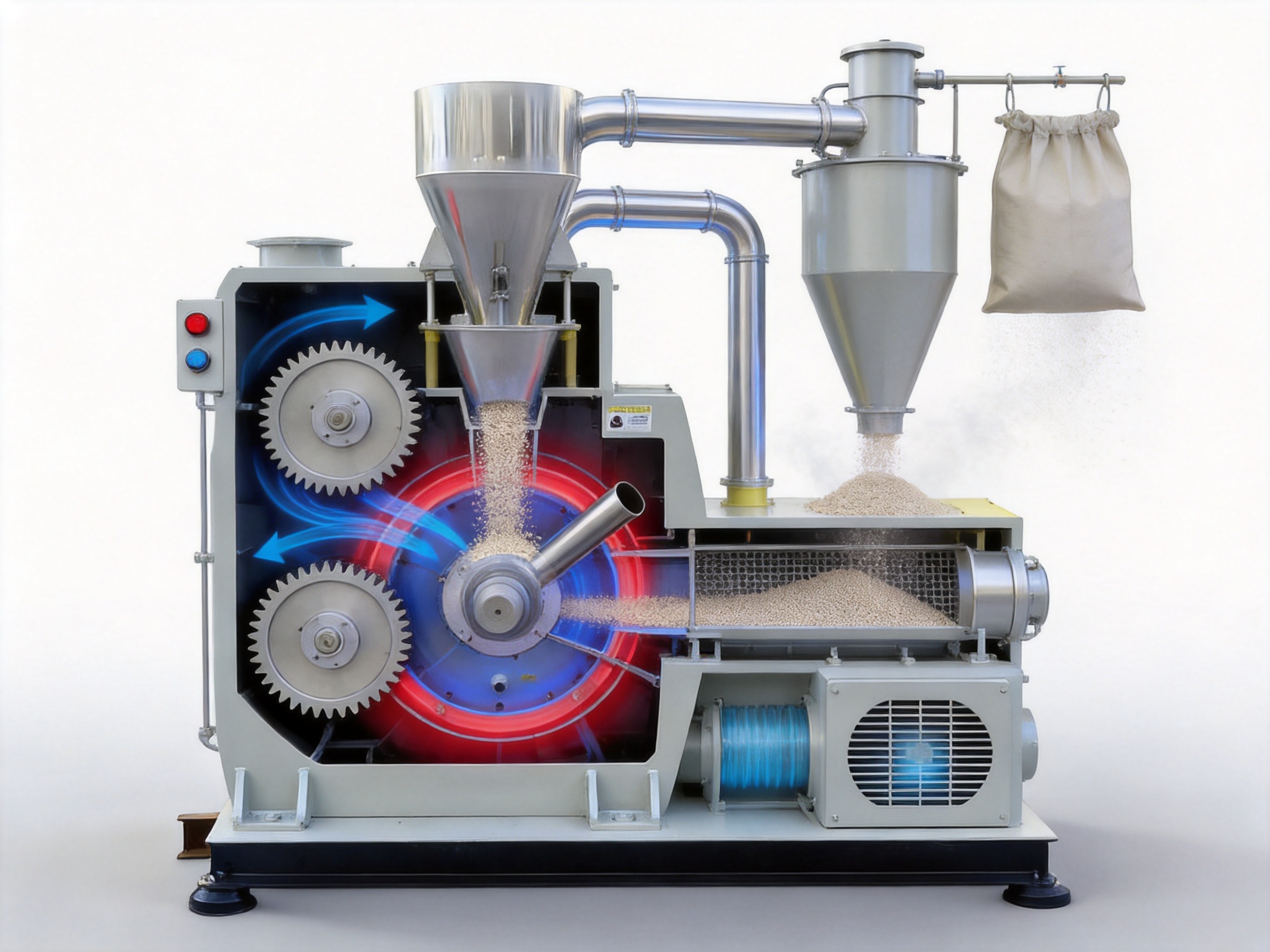
The Model 500 addresses these requirements through controlled disc geometry, dynamic balancing, water cooling, forced air cooling, temperature monitoring, and adjustable operating parameters. The result is a system intended to produce repeatable powder quality rather than simply reducing particle size.
Product Overview
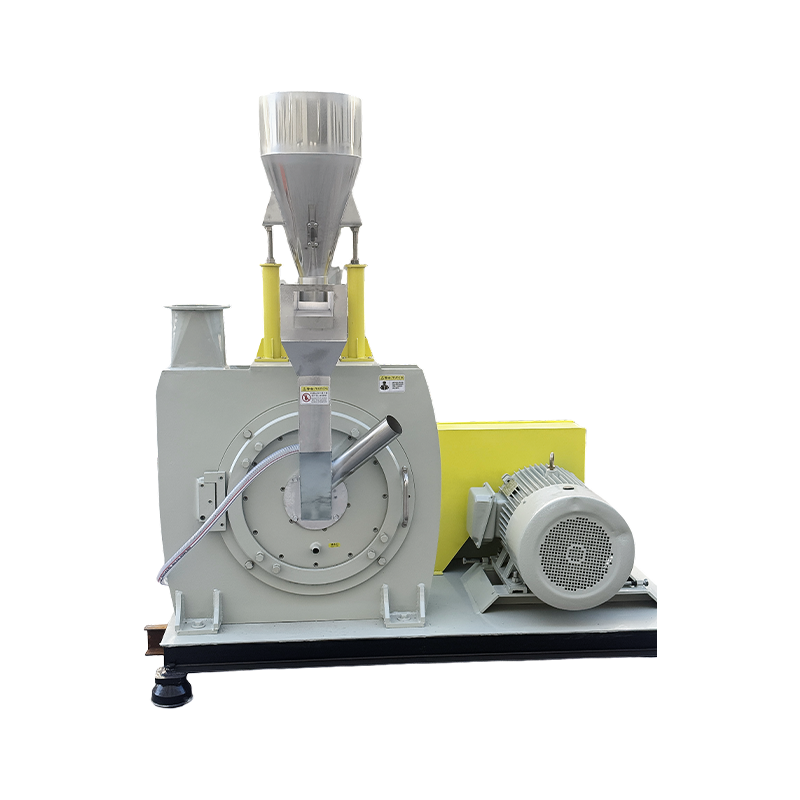
The Model 500 is a disc-type polymer pulverizer with a nominal 500 mm grinding disc diameter. It is designed as a compact production machine for manufacturers that require reliable fine powder production without the footprint and energy demand of a larger 600 mm or 800 mm pulverizer.
The product can be supplied with different process configurations according to the application. Published performance information identifies a typical capacity range of approximately 150–400 kg/h for selected masterbatch applications, while the standard technical table lists a capacity of 50–160 kg/h and a mesh range of 10–30 mesh. These differences reflect the influence of polymer type, feeding form, moisture, target fineness, disc condition, cooling performance, and system configuration.
For this reason, final capacity and fineness should be confirmed through a material test or technical consultation before purchase. A machine producing coarse recycled powder will normally achieve a higher throughput than the same machine producing very fine powder from a heat-sensitive polymer. The Model 500 can also be configured for applications requiring approximately 20–100 mesh, with finer results possible under suitable operating conditions and material preparation.
The standard machine includes a 37 or 45 kW drive motor, a 5.5 or 7.5 kW blower motor, vacuum feeding, stainless-steel conveying pipes, a vibrating screen, dust collection, and a water-cooling system. Motor starting and speed-control options include star-delta starting, soft starting, and inverter control.
Main Technical Specifications
Item |
Specification |
Application Notes |
Model |
500 |
Nominal machine type |
Grinding disc diameter |
500 mm |
Disc size may be customized according to configuration |
Typical capacity |
50–160 kg/h standard reference; higher capacity may be available for suitable materials and configurations |
Actual output depends on material and fineness |
Particle size |
Approximately 10–30 mesh in the standard table; adjustable configurations may cover finer ranges |
Final results require material testing |
Drive motor |
37/45 kW |
Selection depends on process requirements |
Blower motor |
5.5/7.5 kW |
Supports pneumatic conveying and dust collection |
Feeding method |
Vacuum feeding |
Helps provide continuous and enclosed material transfer |
Pipe material |
Stainless steel |
Suitable for clean polymer processing |
Pipe diameter |
159 mm |
System dimension for conveying |
Vibrating screen diameter |
1,000 mm |
Supports classification and product uniformity |
Vibrating screen motor |
1.1 kW |
Separates material according to screen specification |
Dust collector bag diameter |
300 mm |
Used with the enclosed dust collection system |
Cooling method |
Water cooling with inlet and outlet circulation |
May be combined with forced air cooling |
Speed-control options |
Star-delta, soft start, or inverter |
Selected according to electrical and process needs |
The specifications above should be treated as a general reference rather than a universal guarantee for every material. Polymer grinding is strongly influenced by the relationship between feed size, polymer softness, moisture, disc clearance, airflow, cooling-water temperature, and desired particle size. A detailed technical evaluation is recommended when a production line requires a guaranteed capacity or a specific powder distribution.
Precision Grinding Disc Design
High-Performance Disc Materials
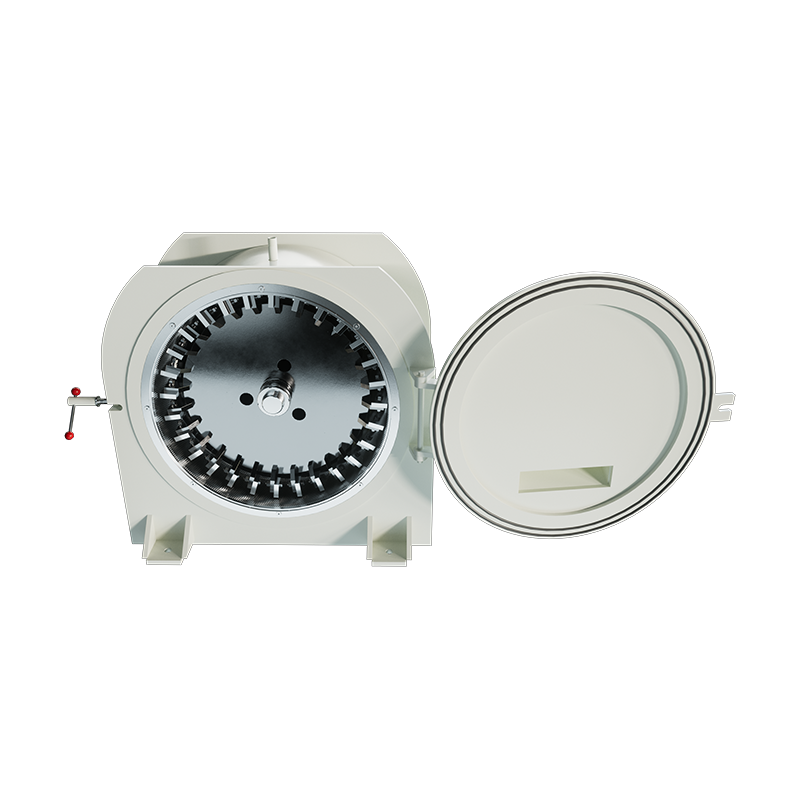
The grinding disc is one of the most important components in a pulverizer. Its surface geometry determines how material is fractured, sheared, accelerated, and discharged. Disc hardness, toughness, dimensional accuracy, and balance all affect product quality and operating life.
The Model 500 can be equipped with high-grade DC53 mold-steel grinding discs. DC53 is valued for its combination of hardness, toughness, fatigue resistance, and resistance to chipping. The specified hardness range of approximately HRC 62–64 provides a durable working surface while maintaining better toughness than many conventional tool-steel solutions.
Some standard configurations may use D2 grinding discs, as indicated in the technical table. The appropriate disc material depends on the processing application, production target, expected wear conditions, and customer requirements. Users should confirm the selected disc material in the final quotation and technical specification.
Compared with ordinary discs, a properly manufactured DC53 disc may offer a significantly longer service interval. The stated service-life advantage can reach approximately 1.5–2.5 times that of standard discs in suitable operating conditions. Actual life depends on contamination, feedstock abrasiveness, operating hours, disc clearance, cleaning practices, and correct feeding.
Tooth-by-Tooth Precision Grinding
Disc geometry is not determined only by the base steel. The precision of the working teeth, grooves, angles, and clearance is equally important. Small variations between teeth can cause unbalanced forces, irregular particle breakage, excessive vibration, and a wider particle-size distribution.
The manufacturer uses imported Taiwanese professional CNC tool grinders for tooth-by-tooth machining. This process is intended to produce consistent blade angles, sharp edges, and accurate working profiles across the disc. Better consistency between teeth allows the grinding chamber to apply more uniform mechanical action to the polymer.
For masterbatch production, this precision can help reduce variations in powder size and improve the repeatability of pigment and additive dispersion. It also helps the machine operate more smoothly because the disc is less likely to generate uneven impact forces.
Disc Refurbishment and Lifecycle Cost
Grinding discs are wear components. Even a high-quality disc eventually becomes dull through normal operation. Rather than replacing every disc immediately, the Model 500 supports professional disc refurbishment. Proper refurbishment restores the working profile and sharpness while retaining the original disc body when its condition remains suitable.
Refurbishment costs are described as approximately one-quarter to one-third of the cost of a new disc. This can substantially reduce long-term tooling expenses, especially for factories operating multiple shifts or processing abrasive formulations.
Refurbishment should be performed by qualified technicians. Incorrect grinding may change the disc angle, reduce balance accuracy, create excessive clearance, or weaken the disc surface. Professional reconditioning helps maintain the original geometry and protects the spindle, bearings, and motor from unnecessary stress.
Dynamic Balancing and Low-Vibration Operation
High-speed rotating components require accurate dynamic balancing. A grinding disc that is slightly unbalanced can produce significant centrifugal force at operating speed. The resulting vibration may reduce product consistency, increase noise, accelerate bearing wear, loosen fasteners, and shorten spindle life.
Each disc for the Model 500 is dynamically balanced using high-precision German balancing equipment. The purpose is to control rotational vibration and maintain stable operation during continuous production. A well-balanced disc also supports more uniform grinding because the clearance between the rotating and stationary surfaces remains more consistent.
The manufacturer emphasizes a highly stable operating condition, sometimes demonstrated by the ability to place a coin upright on the machine during operation. This type of demonstration is not a substitute for formal vibration measurement, but it illustrates the low-vibration design objective.
Noise levels are designed to remain below approximately 85 dB under stated operating conditions. Actual workplace noise depends on the blower, piping, feedstock, installation environment, room acoustics, and maintenance condition. Even with low-vibration performance, operators should use appropriate hearing protection and follow workplace safety regulations.
Stable rotation is particularly valuable in 24-hour or multi-shift production. When vibration is controlled, the machine can reduce unplanned downtime and help maintain consistent powder quality over extended operating periods.
Dual Cooling for Heat-Sensitive Polymers
Frictional heat is one of the major limitations in polymer pulverizing. As the disc rotates at high speed, energy is converted into heat through impact, shearing, and friction. If heat is not removed efficiently, thermoplastic particles can soften and adhere to the grinding disc.
The Model 500 uses a water-cooling jacket combined with forced air cooling. The water system removes heat from the grinding chamber and related machine surfaces, while airflow assists material transfer and heat dissipation. This combination is more effective than relying on a single cooling method for many heat-sensitive applications.
Multi-point temperature sensors monitor operating conditions in different areas of the system. A PLC-based control system can use these signals to support temperature regulation and alarm functions. The stated operating target for the grinding chamber is approximately 50–70°C, although the appropriate range depends on the polymer’s softening behavior and the required powder quality.
Controlled temperature helps reduce the risk of sticking, yellowing, agglomeration, and performance degradation. It is especially useful when processing PE-based, PP-based, EVA-based, TPU-based, or other thermoplastic masterbatch materials.
Temperature control should not be considered a replacement for proper feed preparation. Material that contains excessive moisture, oversized pieces, metal contamination, or a high proportion of soft elastomer may still cause blockage or adhesion. The best results are achieved when cooling, feed size, disc clearance, airflow, and feed rate are adjusted together.
Enclosed Conveying and Dust Collection
Fine polymer powder can become airborne during feeding, grinding, screening, and discharge. Dust may contaminate the workshop, reduce housekeeping efficiency, create respiratory exposure concerns, and cause material loss. An open transfer system also makes it more difficult to maintain a clean production environment.
The Model 500 uses negative-pressure airflow conveying with enclosed stainless-steel piping. The negative-pressure arrangement helps draw material through the system while limiting uncontrolled leakage from process points. Stainless-steel pipes provide a clean and durable conveying surface and are suitable for applications requiring good hygiene and reduced contamination risk.
A pulse bag dust collector captures fine particles from the conveying air. The stated dust-capture rate is greater than 99.9 percent under suitable operating conditions. Actual performance depends on filter selection, airflow volume, pulse-cleaning settings, sealing, maintenance, and the characteristics of the processed powder.
Effective dust collection offers several benefits. It improves workshop cleanliness, reduces product loss, supports employee protection, and helps prevent powder accumulation on motors, control cabinets, and other equipment. It also assists in meeting internal environmental-management objectives.
Dust collection does not eliminate the need for safe operating procedures. Workers should inspect filter bags, clean collection areas, verify seals, and follow relevant regulations for combustible polymer dust. Where the processed material presents a combustible-dust hazard, the complete installation should be evaluated by qualified safety professionals.
Compact Layout and Energy Considerations
Large pulverizing systems can require substantial floor space, complicated foundations, and additional conveying equipment. The Model 500 is intended to provide a more compact solution, with a typical footprint of approximately 4–6 square meters depending on the final layout and auxiliary equipment.
The compact design makes the machine appropriate for small-to-medium masterbatch factories, pilot plants, laboratories, formulation centers, recycling workshops, and test lines. It can also be used as an additional production unit where a factory needs to increase capacity without installing a large pulverizing line.
Total installed power is commonly described in the range of approximately 35–45 kW for the main machine configuration, although the actual electrical load depends on the selected drive motor, blower, screen, cooling equipment, and control system. A correctly sized inverter or soft-start system can help manage motor starting current and adapt operating conditions to the material.
Energy consumption should be evaluated per kilogram of finished powder rather than only by motor nameplate rating. A machine that produces consistent powder in fewer passes may use less energy per usable kilogram than a lower-powered machine that creates more rejects or requires repeated processing.
The compact arrangement may also reduce installation expenses, building modifications, ducting requirements, and labor associated with material transfer. These advantages are especially relevant to companies launching a new masterbatch product or expanding gradually according to market demand.
Applications in Masterbatch Production
Color Masterbatch
Color masterbatch requires excellent pigment dispersion and reliable shade consistency. The Model 500 can process polymer carrier materials and production scraps used in PE, PP, ABS, PS, PC, and other formulations. Properly pulverized material can help pigments distribute more uniformly during subsequent compounding or molding.
Uniform powder supports stable feeding and reduces the possibility of large pigment-rich or polymer-rich pieces entering the process. This can help reduce shade variation, black spots, fisheyes, and surface defects in the final molded or extruded product.
Functional Masterbatch
Functional masterbatch often contains additives that must be distributed at precise concentrations. Examples include flame-retardant, antistatic, conductive, nucleating, slip, antiblock, reinforcing, ultraviolet-resistant, and mineral-filled formulations.
These products may demand narrower particle-size distribution and more consistent dispersibility than general-purpose color masterbatch. The combination of precision grinding, temperature control, and adjustable process parameters allows the Model 500 to be adapted to different functional formulations.
Modified Plastics
Modified plastics may include mineral fillers, fibers, impact modifiers, flame retardants, or other additives that increase the value of the final compound but may also increase grinding difficulty. A suitable disc material and controlled feeding system are important when processing formulations with abrasive or irregular components.
Before production, manufacturers should test the formulation for abrasiveness, heat sensitivity, moisture content, and bulk density. These factors determine the most suitable disc specification, screen arrangement, cooling conditions, and expected service interval.
Recycling and Re-Granulation
Recycling operations often generate masterbatch scraps, injection-molding waste, extrusion off-cuts, rejected pellets, and edge trim. The Model 500 can pulverize suitable thermoplastic waste for reuse in re-granulation or compounding processes.
Reusing clean and properly sorted production waste can reduce raw-material costs and lower the amount of polymer sent for disposal. The machine is most effective when the feedstock is free from metal, stones, excessive moisture, and incompatible polymer contamination.
Rotational Molding Powder
Rotational molding requires polymer powder with controlled particle size and good flow behavior. The Model 500 can be used to produce uniform powder in ranges such as approximately 30–60 mesh, depending on the polymer, screen arrangement, and operating conditions.
Applications may include tanks, containers, playground equipment, agricultural components, and other hollow molded products. The final particle-size target should be selected according to mold design, heating cycle, wall thickness, and resin characteristics.
SPC Flooring and Composite Materials
Stone-plastic composite and related flooring products use polymer-rich formulations containing mineral fillers and stabilizing additives. The Model 500 may be used to prepare suitable powder for core-layer production or recycling operations, provided the material is compatible with the machine and the disc specification is selected for the formulation.
Applications in Laboratories and Pilot Lines
Product development teams often require a pulverizer that can process small batches without occupying the space or consuming the resources of a large industrial line. The compact Model 500 can serve as a trial-production machine for new masterbatch formulas, recycled compounds, functional additives, and rotational molding powders.
Laboratory and pilot-line users benefit from adjustable fineness, controlled cooling, vacuum feeding, and repeatable operating conditions. These features make it easier to compare different formulas and determine how particle size affects extrusion, molding, dispersion, and final product performance.
For a development program, operators can record feed rate, disc clearance, motor load, cooling-water temperature, chamber temperature, screen specification, and product-size distribution. This information helps establish a repeatable process before scaling to a larger pulverizer.
The machine can also support customer sampling. A masterbatch producer may prepare a controlled quantity of powder for a prospective customer without interrupting a high-volume production line. This can shorten product-development cycles and improve communication between the compounder and downstream processor.
Manufacturing Strengths of the Equipment Supplier
Equipment performance depends not only on the design but also on how accurately the machine is manufactured. Poor machining, inconsistent welding, weak balancing procedures, and inadequate assembly inspection can reduce the practical value of a good design.
Changzhou Mao Yue Intelligent Equipment Co., Ltd. has approximately 30 years of experience in plastic crushing and pulverizing equipment. The company operates six processing workshops, each averaging about 1,400 square meters, and maintains a technical team focused on pulverizer development, machining, assembly, and application support.
The factory uses Taiwan-imported high-precision grinding machines built to German standards for critical component processing. These machines support accurate machining of grinding discs and other parts where dimensional consistency affects performance.
German dynamic balancing equipment is used for rotating components. Accurate balancing is essential for controlling vibration, reducing bearing stress, and supporting stable operation at high speed.
Japanese welding systems are also used in the manufacturing process. Reliable welding is particularly important for machine frames, housings, hoppers, pipes, dust collectors, and cooling structures. Consistent welding helps improve mechanical strength, dimensional stability, and appearance.
The company’s manufacturing philosophy emphasizes European-style quality standards, component accuracy, stable operation, and customer-specific solutions. Its equipment is used by more than 5,000 domestic and international enterprises across sectors including rotational molding, masterbatch, polymer processing, PVC, PE, recycling, and powder coating.
CE mechanical certification and ISO 9001 quality management system certification provide additional evidence of structured manufacturing and quality-control practices. Certification does not replace application testing, but it supports the company’s commitment to documented processes and consistent production.
Advantages Compared with Conventional Pulverizers
Improved Particle Uniformity
Conventional pulverizers may use less precise disc machining or rely on irregular wear patterns. The Model 500’s precision-ground teeth and balanced disc are intended to produce more consistent mechanical action and a narrower particle-size distribution.
Better Temperature Management
Machines with limited cooling may struggle when processing soft or heat-sensitive polymers. The combination of water cooling, forced air, sensors, and PLC control gives the Model 500 a stronger foundation for temperature-sensitive production.
Lower Long-Term Tooling Expense
Long disc life and professional refurbishment can reduce the cost of ownership. The ability to restore a disc instead of purchasing a replacement after every wear cycle can be valuable for continuous production lines.
Reduced Vibration
Dynamic balancing supports lower vibration than an inaccurately balanced rotating assembly. This may help extend bearing and spindle life, reduce noise, and maintain stable grinding conditions.
Cleaner Operation
Negative-pressure conveying and pulse bag filtration are preferable to open transfer arrangements when dust control and workshop cleanliness are important. The enclosed design also reduces the risk of material contamination during conveying.
Smaller Installation Footprint
Compared with larger pulverizing models, the 500 mm class machine can provide an appropriate balance between output, installed power, and floor-space demand. This makes it easier to install in smaller factories, pilot plants, and laboratories.
Operating Process
The process normally begins with feed preparation. The operator should remove metal, stones, foreign materials, and excessive moisture. Oversized pieces may need to be pre-crushed so that the pulverizer receives a consistent feed suitable for the selected configuration.
Material is introduced through the vacuum feeding system and transferred toward the grinding chamber. As the rotating disc and stationary disc generate high-speed impact and shearing action, the polymer is reduced into smaller particles.
Airflow carries the ground material through the conveying pipe toward the classification or screening section. The vibrating screen separates material according to the selected mesh specification. Oversized particles may be returned for additional grinding when the line is configured for recirculation.
Fine powder is then collected in the product-receiving section, while dust-laden air passes through the pulse bag dust collector. The operator monitors temperature, motor load, airflow, vibration, and product appearance throughout the process.
Correct adjustment is essential. Increasing the feed rate may increase throughput but can also raise motor load and temperature. Reducing the disc clearance may improve fineness but may increase friction and heat. Increasing airflow may improve conveying but can influence classification and dust collection. These parameters should be adjusted gradually and documented.
Maintenance and Service Requirements
Routine maintenance helps preserve capacity, fineness, safety, and service life. Before maintenance, the machine must be stopped, isolated from electrical power, depressurized where applicable, and secured against accidental startup.
Grinding discs should be inspected for wear, chipping, cracks, deformation, and material buildup. Disc clearance should be checked according to the manufacturer’s procedure. Operating with an incorrect clearance can reduce output, increase heat generation, or damage the disc.
Bearings and spindle assemblies should be monitored for unusual noise, temperature rise, or vibration. A change in operating sound may indicate imbalance, wear, misalignment, or foreign material in the grinding chamber.
Cooling-water flow should remain stable. Operators should inspect hoses, valves, inlet and outlet connections, and temperature readings. Cooling water containing excessive scale or contamination may reduce heat-transfer efficiency and should be treated according to local water conditions.
Dust-collector bags require regular inspection and cleaning. A blocked or damaged bag can reduce airflow, increase system pressure, and lower dust-capture performance. Seals and access doors should remain properly closed during operation.
Stainless-steel conveying pipes should be checked for accumulation and blockage. Polymer buildup may occur when the material is too warm, too soft, too wet, or processed at an unsuitable feed rate. Cleaning intervals depend on the material and operating schedule.
Refurbished grinding discs should be dynamically checked before reinstallation. Reusing a disc without confirming balance and geometry can create vibration and reduce the expected benefit of refurbishment.
Installation and Process Planning
A stable foundation is important for a high-speed pulverizer. The installation area should be level, clean, adequately ventilated, and capable of supporting the machine and auxiliary equipment. Sufficient access should be provided for disc replacement, inspection, filter maintenance, and material handling.
Electrical supply must match the selected motor, starting method, control cabinet, and local regulations. A qualified electrician should verify cable sizing, grounding, overload protection, emergency-stop functions, and control-panel installation.
The cooling system should have adequate water quality, flow, pressure, and heat-dissipation capacity. In regions with high ambient temperatures, a separate chiller or cooling tower may be appropriate depending on production requirements.
The dust-collection discharge area should be planned carefully. Collected powder may be returned to production, packed separately, or disposed of according to its composition. If the powder contains combustible components, a professional hazard assessment is recommended.
Operators should receive training on startup, shutdown, emergency procedures, disc adjustment, temperature management, cleaning, and routine inspection. Written operating instructions help reduce variation between shifts.
How to Select the Correct Configuration
The first selection factor is the raw material. PE, PP, ABS, PS, PC, EVA, TPU, filled compounds, recycled scraps, and blended materials may require different disc materials and cooling conditions.
The second factor is the required powder size. A coarse powder target generally permits higher throughput, while a fine target may require a lower feed rate, stronger cooling, additional screening, or multiple passes.
The third factor is the expected production volume. A laboratory may prioritize flexibility and compactness, while a continuous production plant may prioritize disc life, automation, dust collection, and ease of maintenance.
The fourth factor is contamination risk. If the material contains abrasive mineral fillers, glass fibers, or metallic contamination, the disc material and maintenance plan should be selected accordingly.
The fifth factor is the available electrical and cooling infrastructure. The customer should confirm motor power, voltage, frequency, cooling-water conditions, compressed-air requirements for pulse cleaning, and available floor space before ordering.
Finally, the customer should request a material trial whenever capacity, particle size, color quality, or temperature performance is critical. A trial provides more reliable information than comparing nameplate specifications alone.
Economic Value and Return on Investment
The economic value of a pulverizer includes more than its initial purchase price. Important factors include electricity use, disc replacement frequency, maintenance labor, product yield, reject rate, cleaning time, dust loss, and production uptime.
The Model 500 is intended to reduce total operating cost through durable discs, refurbishment capability, controlled temperature, stable operation, compact installation, and enclosed conveying. A stable machine can also reduce the hidden cost of inconsistent powder, including customer complaints, reprocessing, delayed deliveries, and wasted formulation materials.
A typical return-on-investment period of approximately six to twelve months may be achievable in suitable applications, particularly where the machine replaces outsourced grinding, reduces waste, or operates for multiple shifts. However, actual payback depends on local electricity prices, labor costs, product value, operating hours, capacity utilization, and raw-material conditions.
Customers should prepare a practical cost model before purchase. The model should compare current grinding costs with projected energy consumption, labor, maintenance, disc refurbishment, dust-collection consumables, and expected usable output.
Safety and Environmental Considerations
Operators should never open the grinding chamber while the disc is rotating. Electrical isolation and mechanical stopping must be confirmed before inspection or cleaning. Guards, covers, emergency stops, and interlocks should remain functional at all times.
Polymer dust can affect respiratory health and may create combustible-dust risks under certain conditions. The enclosed negative-pressure system helps reduce airborne dust, but personal protective equipment, ventilation, housekeeping, and risk assessment remain necessary.
Noise exposure should be evaluated in the actual installation environment. Where sound levels approach or exceed workplace limits, hearing protection and engineering controls should be applied.
Cooling water should be managed responsibly. Closed-loop circulation can reduce water consumption, while proper filtration and temperature control help maintain stable machine performance.
Recycling production waste through pulverizing and re-granulation can support material efficiency. Nevertheless, recycled material should be sorted and tested to ensure that contamination or repeated thermal history does not compromise the final product.
Company Service and Customization Capabilities
Changzhou Mao Yue Intelligent Equipment Co., Ltd. provides pulverizing solutions for different polymer applications and production scales. The company can support selection of machine models, disc materials, cooling systems, feeding arrangements, conveying pipes, screening units, dust collectors, and control methods.
Customization is useful because no single capacity figure applies to every polymer. The same Model 500 may require different operating conditions for soft PE, rigid ABS, filled PP, TPU, or recycled masterbatch scraps. Engineering support helps align the machine with the customer’s actual material and production objectives.
Technical service may include process consultation, equipment configuration, material testing, installation guidance, operating instruction, spare-parts supply, disc refurbishment, and after-sales support. These services can reduce the time required to bring a new pulverizing line into stable production.
The company’s long-term industry experience and international customer base provide practical exposure to a wide range of polymer processing conditions. Its focus on quality, service, innovation, and customized solutions supports customers seeking more than a basic size-reduction machine.
Frequently Asked Questions
What materials can the Model 500 process?
The machine is suitable for many thermoplastics and polymer compounds, including PE, PP, ABS, PS, PC, EVA, TPU, masterbatch scraps, injection-molding waste, extrusion off-cuts, and selected filled or modified plastics. A material test is recommended for unusual or highly abrasive formulations.
What capacity can the Model 500 achieve?
Published information includes a standard reference range of approximately 50–160 kg/h and a broader application-dependent range that may reach approximately 150–400 kg/h for suitable materials and configurations. Actual capacity depends on polymer type, feed size, moisture, disc specification, cooling, airflow, and target fineness.
What particle size can the machine produce?
The standard technical table lists approximately 10–30 mesh, while adjustable configurations may support approximately 20–100 mesh or finer under suitable conditions. The final result should be confirmed through a sample test because particle size depends strongly on the material and screen arrangement.
Can the machine process heat-sensitive polymers?
Yes. The water-cooling jacket, forced air cooling, temperature sensors, and PLC control are designed to help process heat-sensitive polymers such as PE, PP, EVA, and TPU. Operators must still select an appropriate feed rate, disc clearance, and cooling condition.
What is the difference between DC53 and D2 discs?
DC53 generally offers a combination of high hardness and improved toughness, making it suitable for demanding wear conditions where resistance to chipping is important. D2 is also a widely used tool steel. The final selection depends on the material, abrasiveness, production volume, and customer requirements.
Can grinding discs be refurbished?
Yes. The machine supports professional disc refurbishment when the disc body remains suitable for continued use. Refurbishment can cost approximately one-quarter to one-third as much as a new disc, although the final price depends on wear condition and required machining.
Is the machine suitable for recycling?
Yes. It can pulverize suitable masterbatch scraps, injection-molding waste, extrusion off-cuts, and other clean thermoplastic waste for reuse or re-granulation. Foreign materials and incompatible polymers should be removed before feeding.
Does the machine include dust control?
The standard system uses enclosed negative-pressure conveying and a pulse bag dust collector. The stated dust-capture rate is greater than 99.9 percent under suitable operating conditions. Filters, seals, airflow, and maintenance affect actual performance.
How much floor space does the machine require?
The Model 500 is designed as a compact unit, with a typical footprint of approximately 4–6 square meters depending on the final arrangement and auxiliary equipment. Customers should allow additional space for operation, maintenance, material storage, and access.
Is a material test necessary before purchase?
A material test is strongly recommended when capacity, fineness, color consistency, temperature, or energy consumption is critical. Testing confirms the most appropriate disc material, screen, feed rate, cooling method, and expected output.
What certifications does the manufacturer have?
The company has obtained CE mechanical certification and ISO 9001 quality management system certification. These certifications support product safety and manufacturing-quality practices, while application performance should still be confirmed for the customer’s specific material.
Conclusion
The Model 500 fine powder mill is a compact and versatile solution for masterbatch production, polymer compounding, recycling, rotational molding powder, SPC flooring materials, and laboratory-scale development. Its value comes from the combination of precise grinding discs, dynamic balancing, controlled cooling, enclosed conveying, dust collection, flexible speed control, and a compact installation format.
Its advantages over conventional pulverizers include improved particle uniformity, stronger temperature management, lower vibration, reduced dust exposure, longer potential disc life, and lower long-term tooling costs through professional refurbishment. These benefits are particularly relevant to manufacturers that require consistent dispersibility, stable color, efficient material recovery, and reliable multi-shift operation.
The manufacturing capabilities of Changzhou Mao Yue Intelligent Equipment Co., Ltd. further support the product. Precision CNC grinding, German dynamic balancing, Japanese welding systems, structured quality management, and decades of industry experience provide a strong foundation for dependable equipment.
Because polymer grinding results depend on material and process conditions, customers should confirm the final configuration through technical consultation and material testing. When correctly matched to the application, the Model 500 can provide an efficient, clean, and cost-conscious route to high-quality fine powder production.
References
1. Manufacturer technical information for the Model 500 polymer masterbatch pulverizer.
2. Manufacturer product specifications for Model 500 disc pulverizing equipment.
3. General principles of polymer size reduction, disc milling, screening, and pneumatic conveying.
4. General industrial guidance on polymer dust collection, filtration, and workplace housekeeping.
5. General engineering practices for dynamic balancing of high-speed rotating equipment.
6. General technical principles for cooling and temperature control during thermoplastic pulverizing.
7. ISO 9001 quality management system principles for manufacturing organizations.
8. CE mechanical safety principles applicable to industrial processing machinery.