

 English
 русский
 Español
 عربى
عربى 中文简体
中文简体
 中文简体
中文简体
Content
- 1 Positioning of the Model 900 in Industrial PVC Pulverizing
- 2 Core Working Principle
- 3 Major Advantages Over Conventional Pulverizers
- 4 High-Output Design for Ten-Thousand-Ton-Scale Operations
- 5 Powder Quality and Downstream Performance
- 6 Technical Configuration Overview
- 7 Cooling and Temperature Control
- 8 Wear-Resistant Grinding Discs and Long Service Life
- 9 Heavy-Duty Structure and Vibration Control
- 10 Feeding, Screening, Conveying, and Dust Collection
- 11 Manufacturing Strength Behind the Equipment
- 12 Customization and Engineering Support
- 13 Applications in PVC Recycling
- 14 Applications in PVC Building Materials
- 15 Applications in Specialty PVC Powder
- 16 Energy Efficiency and Long-Term Return
- 17 Installation and Operational Considerations
- 18 Why the Model 900 Stands Out in Competitive Markets
- 19 Q&A Section
- 19.1 What materials can the Model 900 PVC Fine Powder Pulverizer process?
- 19.2 What makes the Model 900 suitable for large-scale production?
- 19.3 Can the machine produce different powder sizes?
- 19.4 Why is temperature control important when pulverizing PVC?
- 19.5 How does the machine reduce long-term operating cost?
- 19.6 What role do wear-resistant grinding discs play?
- 19.7 Is the Model 900 only for recycling companies?
- 19.8 Can the pulverizer be integrated into a complete line?
- 19.9 What manufacturing strengths support the machine quality?
- 19.10 What should buyers consider before purchasing?
- 20 Conclusion
- 21 References
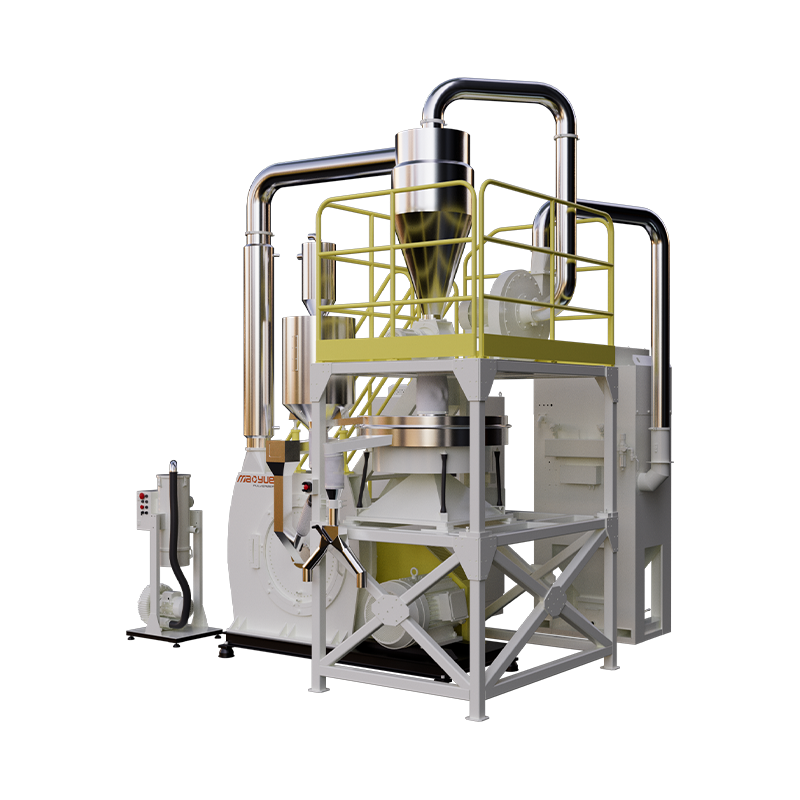
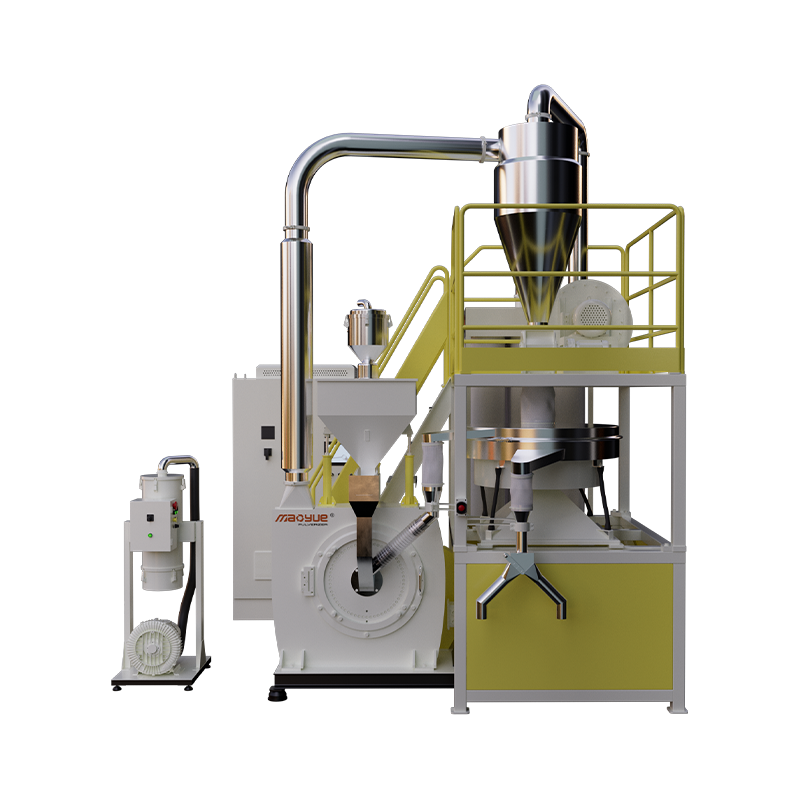
The Model 900 PVC Fine Powder Pulverizer is a flagship industrial pulverizing solution designed for large-scale PVC recycling, PVC building materials manufacturing, specialty compound processing, and high-volume powder production lines. Built for demanding factories that require continuous output, stable fineness, low degradation, and reliable operation, this machine represents the upper end of fine PVC powder processing equipment. It is especially suitable for enterprises handling PVC pipe scrap, window and door profiles, flooring offcuts, cable sheath materials, rigid PVC sheets, decorative panels, foam board materials, and customized PVC compounds.
In modern plastic recycling and building material production, powder quality directly influences downstream product performance. A pulverizer must not only reduce material size; it must also maintain color stability, prevent scorching, control temperature, protect material properties, and deliver a narrow particle size distribution. The Model 900 is engineered for exactly these requirements. With a large grinding chamber, heavy-duty disc structure, high-power drive options, efficient cooling, inverter speed control, and long-life alloy grinding components, it is built for customers who expect industrial-scale production rather than occasional batch processing.
Positioning of the Model 900 in Industrial PVC Pulverizing
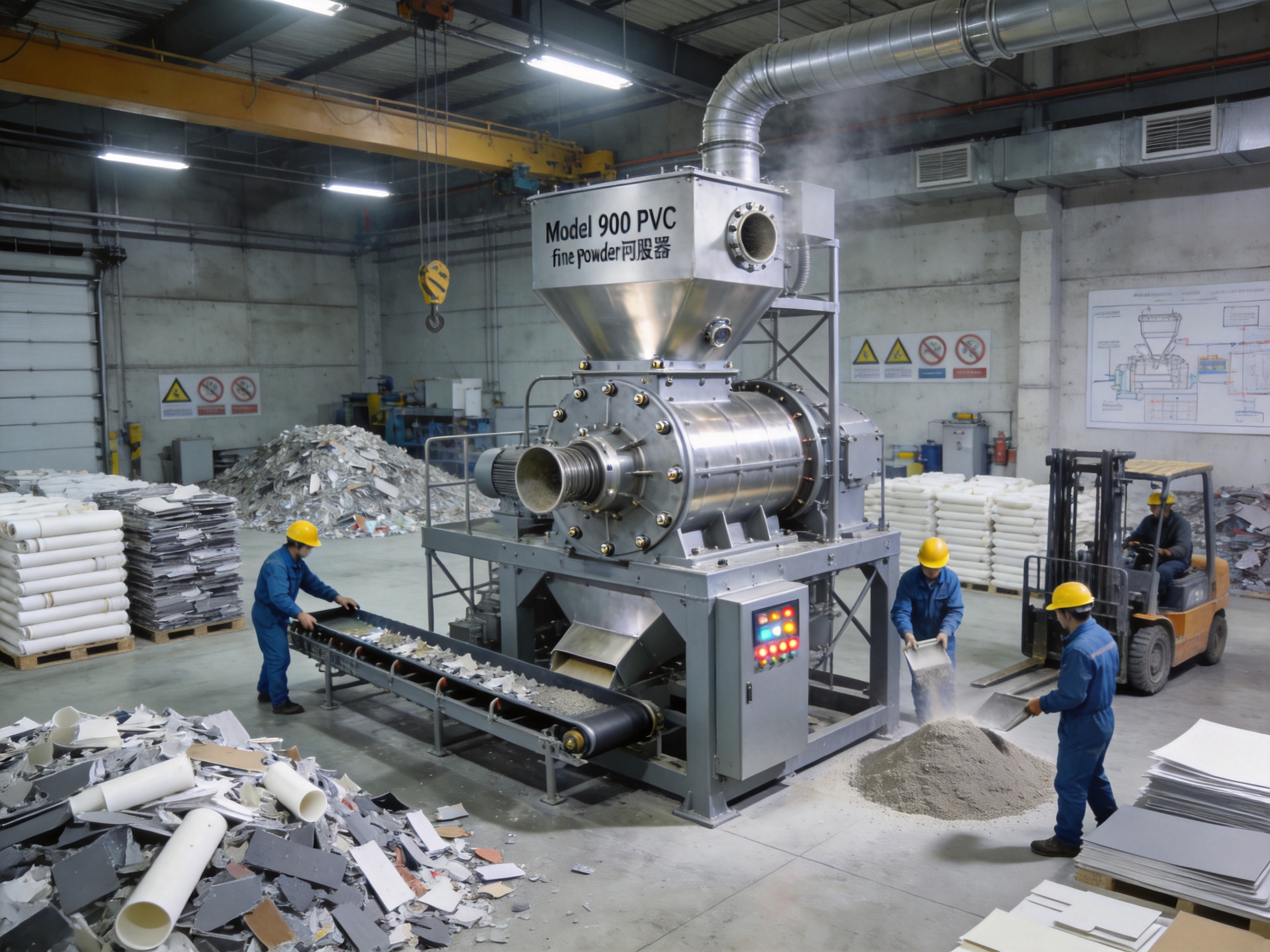
The Model 900 is positioned as a high-output PVC pulverizer for enterprises that need to process tens of tons of material per day. It is not a small auxiliary machine for limited workshop use; it is a production-centered machine designed to become the core of a complete crushing and pulverizing line. For large recycling groups, building material factories, and export-oriented manufacturers, the machine helps convert PVC waste and production scrap into reusable fine powder that can re-enter extrusion, calendering, injection molding, compounding, and other downstream processes.
Compared with smaller pulverizer models, the Model 900 provides a larger processing space and stronger power configuration. Depending on the final configuration and material condition, the machine can be equipped with high-power drive motors such as 90 kW, 110 kW, or 132 kW. In high-efficiency production conditions, it is intended to support large-volume output and can be configured for capacities from hundreds of kilograms per hour to more than one ton per hour. Actual capacity depends on feed material type, moisture content, particle size before grinding, required mesh size, cooling conditions, and blade or disc condition.
The key value of the Model 900 is not only its output. Its importance lies in balancing capacity, powder quality, operating stability, and long-term cost efficiency. Many customers face a common problem: when output increases, heat generation also rises, powder quality becomes unstable, and wear parts need frequent replacement. The Model 900 addresses this challenge through an enlarged grinding structure, optimized airflow, water-cooling support, high-wear-resistant grinding discs, vibration damping, and carefully machined components. The result is a pulverizing platform suitable for continuous, heavy-duty work.
Core Working Principle
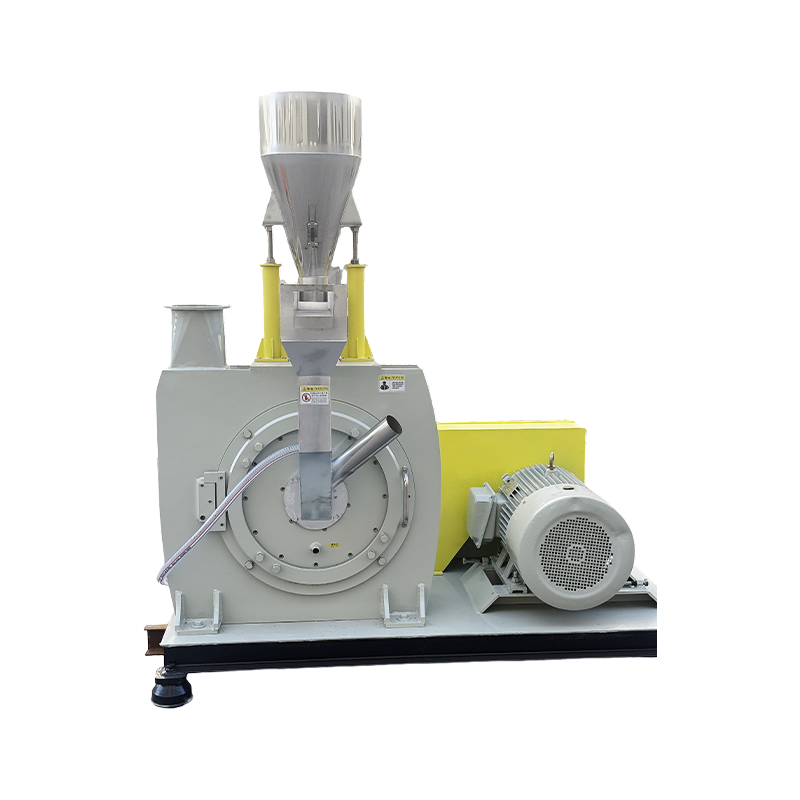
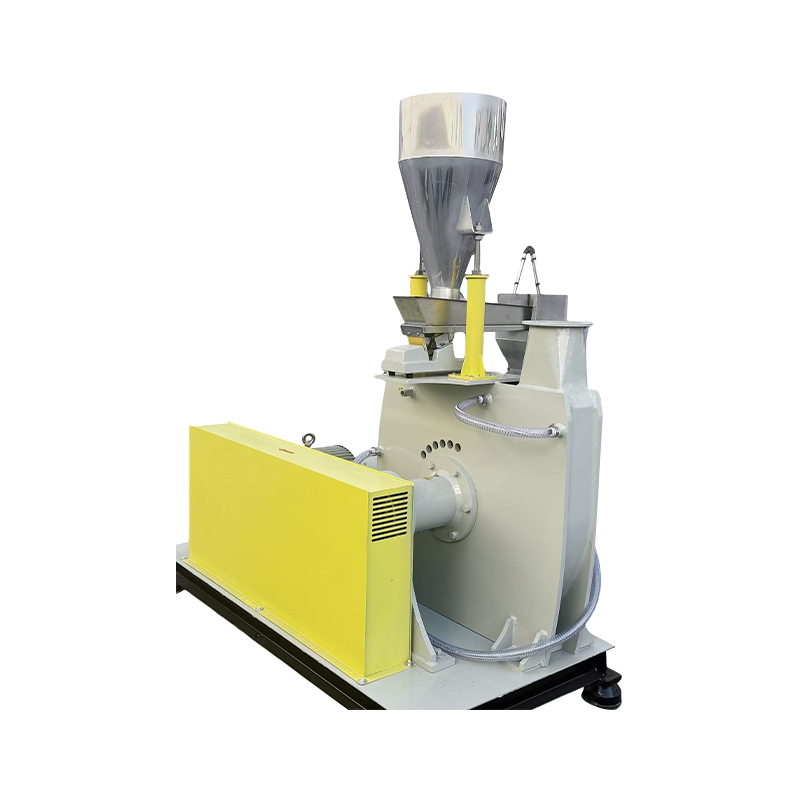
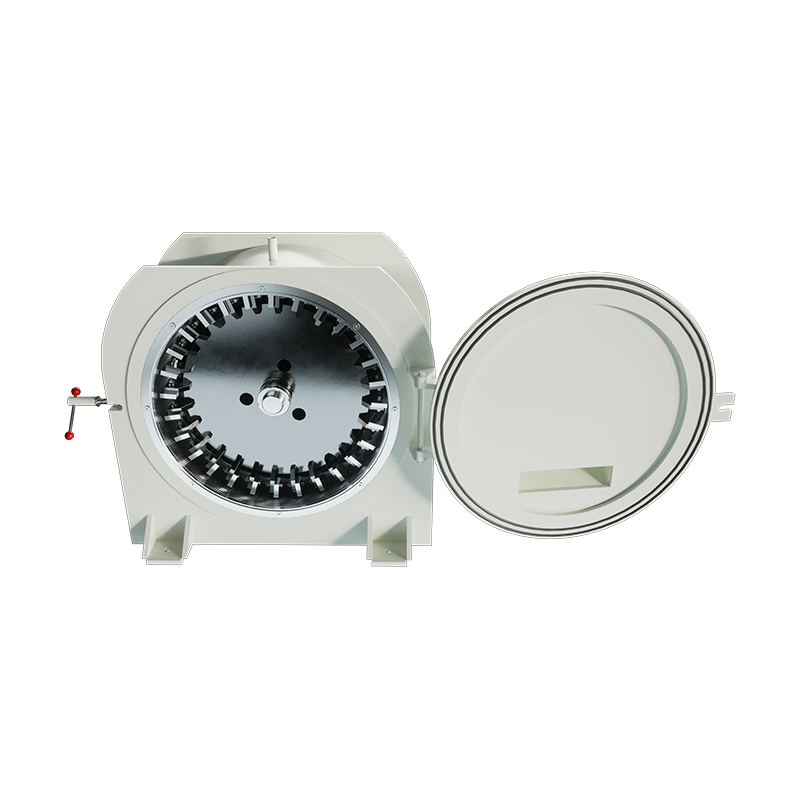
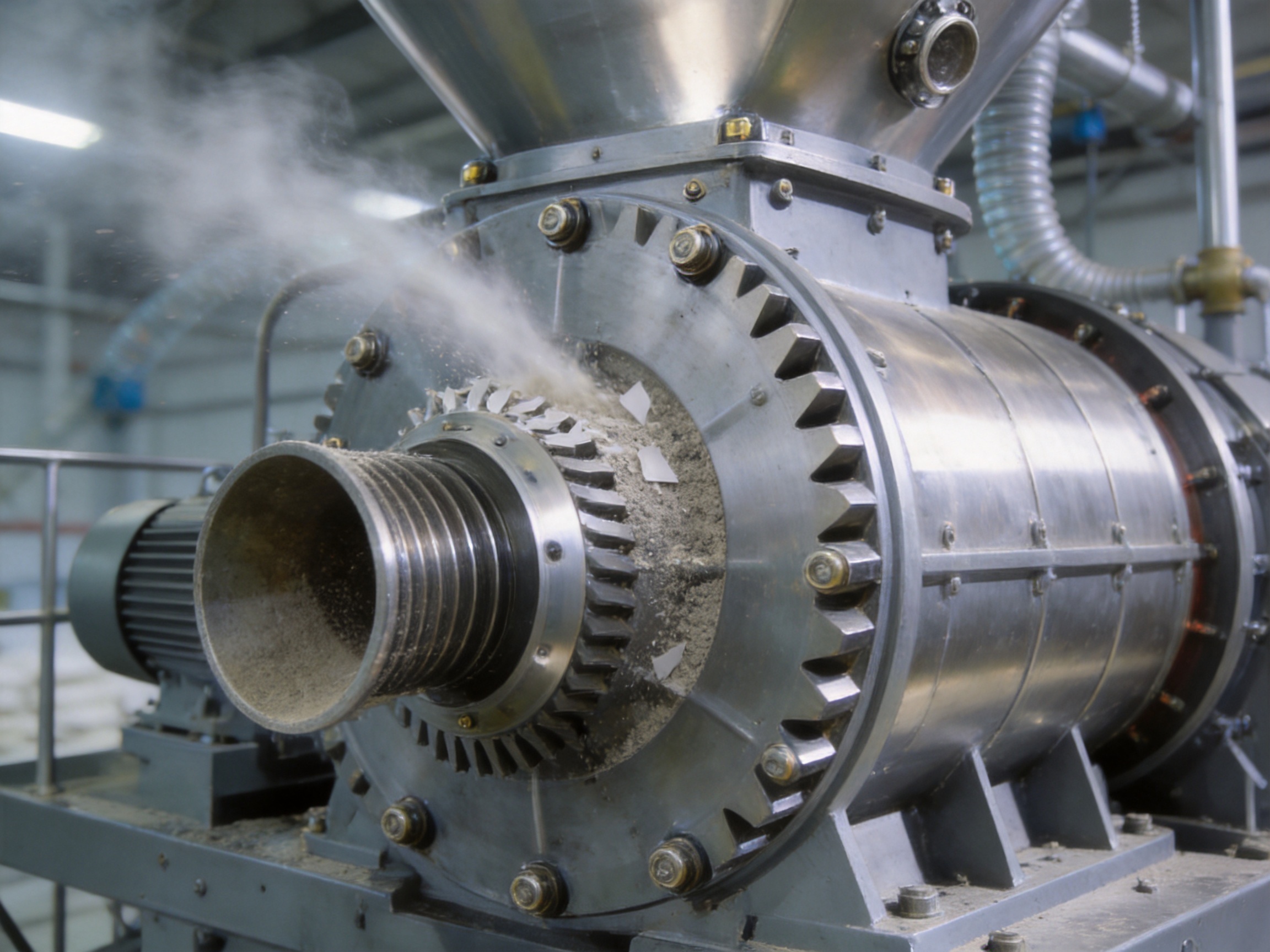
The Model 900 PVC Fine Powder Pulverizer uses a disc-type pulverizing principle. Pre-crushed PVC flakes, granules, or chips are fed into the grinding chamber through a controlled feeding system. Inside the chamber, material is subjected to high-speed shearing, impact, friction, and cutting between fixed and rotating grinding discs. The machine gradually reduces the material into fine powder, while airflow and discharge systems transport qualified powder toward screening and collection units.
Disc pulverizing is especially suitable for rigid and semi-rigid plastics such as PVC because it can create fine particles without the crushing shock associated with many heavy granulators. When the gap between grinding discs, feeding speed, disc design, and motor speed are correctly adjusted, the process can produce powder with controlled fineness and relatively narrow particle distribution. This is very important for PVC powder used in extrusion, molding, flooring, pipes, profiles, and specialty formulations.
The Model 900 enhances this principle with a larger grinding chamber and stronger structural support. The heavy-duty base resists vibration during high-speed operation, while the drive system provides the torque required for large feed volumes. The use of an inverter allows operators to adjust speed according to the material and required mesh size. This flexibility helps the machine handle different PVC forms and formulations, including recycled rigid PVC, high-filler PVC, compounded PVC, and production scrap from building material plants.
Major Advantages Over Conventional Pulverizers
The first advantage of the Model 900 is its production capacity. Many conventional pulverizers can process PVC powder, but they become inefficient when required to operate continuously at high volume. Smaller machines may need multiple units to reach the same daily output, increasing labor, power wiring, floor space, maintenance points, and spare parts inventory. The Model 900 is designed to reduce this complexity by concentrating greater output into one robust pulverizing platform.
The second advantage is its grinding stability. Large-capacity pulverizing generates heat, and heat can damage PVC. Overheated PVC may discolor, degrade, agglomerate, or produce powder that performs poorly in later extrusion or calendering. The Model 900 uses cooling support, controlled airflow, and temperature management to reduce the risk of thermal damage. This is particularly valuable for recycled PVC, which may already have experienced heat history during previous processing cycles.
The third advantage is wear resistance. PVC materials with fillers, stabilizers, pigments, flame retardants, calcium carbonate, or glass-like impurities can accelerate wear. Ordinary grinding discs may lose sharpness quickly, leading to lower output, inconsistent fineness, higher energy use, and more downtime. The Model 900 can be equipped with super-heavy-duty high-wear-resistant alloy grinding discs engineered for abrasive and high-filler PVC applications. With proper operation and material preparation, these discs are intended for long service life and stable grinding performance.
The fourth advantage is process control. The pulverizer includes speed control through an inverter, allowing operators to fine-tune the machine based on target mesh size and material characteristics. This is important because PVC pipe scrap, soft-edge flooring scrap, profile regrind, and cable sheath material may not behave the same way. Instead of forcing one speed setting for every material, the operator can use controlled adjustment to balance output, fineness, temperature, and energy consumption.
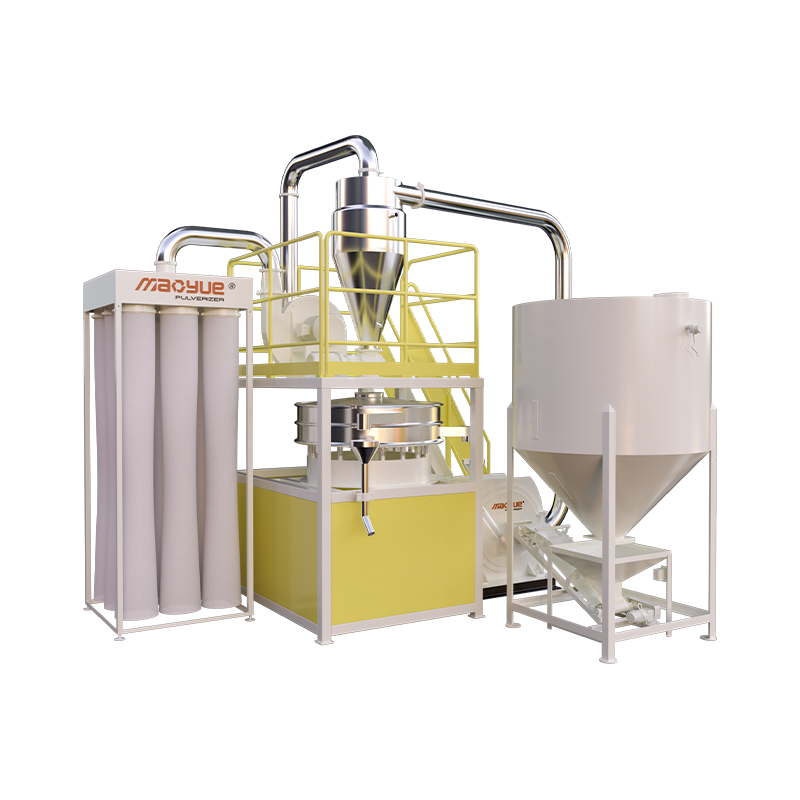
The fifth advantage is suitability for complete line integration. The Model 900 is not only a standalone machine; it can serve as the heart of a crushing and pulverizing line. It can be paired with crushers, feeders, magnetic separation, vibrating screens, air conveying, dust collection, cooling devices, storage silos, and automatic packaging. For factories that want stable daily production, such integrated design is much more valuable than buying isolated equipment without system compatibility.
High-Output Design for Ten-Thousand-Ton-Scale Operations
Factories operating at ten-thousand-ton annual scale require equipment that is predictable. A small unexpected failure can interrupt the production schedule, delay delivery, and reduce customer confidence. The Model 900 is designed for large PVC recycling groups, flooring manufacturers, pipe and profile producers, and international OEM suppliers that must maintain reliable powder supply every day. In these environments, equipment output is not just a technical specification; it is the foundation of the business model.
When a production line processes more than 30 tons per day, the pulverizer must remain stable over long operating hours. It must keep vibration under control, manage bearing temperature, maintain disc alignment, resist wear, and discharge powder smoothly. The Model 900 uses a heavy-duty structure and industrial vibration damping to support continuous operation. In suitable configurations, the design aims to keep operating noise controlled while still delivering the power required for large-volume grinding.
For recycling enterprises, the machine helps convert bulky PVC waste into high-value powder. Waste PVC pipes, window frames, floor tiles, cable sheathing, rigid sheets, and industrial offcuts can be processed after proper sorting, cleaning, crushing, and metal removal. Once reduced to fine powder, the material becomes easier to blend, feed, and reuse. This supports circular production and improves the economic value of scrap that might otherwise be sold at low prices or disposed of inefficiently.
For building material manufacturers, the Model 900 helps establish a closed-loop production system. Offcuts and rejected products can be returned to powder form and reused in appropriate formulations. This can reduce raw material cost, improve resource utilization, and support environmental responsibility. When powder fineness and consistency are controlled, recycled material can be used more confidently in flooring, pipe, profile, foam board, decorative panel, and other PVC products.
Powder Quality and Downstream Performance
Fine powder quality is critical because downstream production lines are sensitive to particle behavior. Powder that is too coarse may not melt uniformly. Powder with wide particle size distribution may cause inconsistent feeding. Powder that has been overheated may discolor or lose performance. Powder with poor flowability may bridge in hoppers or create uneven dosing. The Model 900 is designed to address these issues through stable grinding, cooling, screening, and collection.
A major benefit of disc pulverizing is the ability to produce powder suitable for a range of mesh sizes. The provided configuration references a typical mesh range of 10 to 50 mesh, while actual achievable fineness may vary according to material formulation and selected grinding settings. For some applications, coarser powder may be preferred for blending with virgin resin; for others, finer powder is needed for smooth surface quality or high consistency in extrusion and calendering. The adjustable nature of the machine helps factories match powder specifications with product requirements.
In PVC flooring production, consistent powder contributes to surface smoothness, dimensional stability, and stable calendering behavior. In pipe and profile production, powder uniformity helps maintain consistent melting and extrusion pressure. In foam board manufacturing, powder quality can influence cell structure, foaming stability, and final board strength. In cable sheath or specialty compound applications, stable powder can improve mixing efficiency and support reliable performance in flame resistance, impact resistance, weather resistance, or chemical resistance formulations.
The Model 900 is also valuable for export-oriented manufacturers. International customers often expect consistent powder quality, traceable production standards, and stable delivery schedules. A pulverizer with higher capacity and reliable temperature control helps manufacturers complete large-volume orders while maintaining uniformity between batches. This can reduce customer complaints, lower reprocessing rates, and strengthen long-term supply relationships.
Technical Configuration Overview
The Model 900 can be supplied according to customer requirements, material characteristics, and production targets. The following table summarizes a typical configuration based on the provided machine information. Specific values may be adjusted during project design to match the final application, required output, and plant conditions.
Item |
Configuration |
Industrial Significance |
Machine Type |
Model 900 PVC Fine Powder Pulverizer |
Designed for high-capacity PVC powder production and large recycling lines. |
Grinding Disc Diameter |
Large disc configuration, with supplied specifications selected according to project requirements |
Larger grinding area supports stronger output and more stable processing. |
Capacity Range |
Typical industrial output from 650 to 1000 kg/h, with higher capacity possible under optimized conditions |
Suitable for large daily production when integrated into a complete line. |
Mesh Size |
10 to 50 mesh typical range |
Supports multiple PVC recycling and manufacturing applications. |
Main Drive Motor |
90 kW, 110 kW, or 132 kW optional configuration |
Allows selection based on throughput, fineness, and material difficulty. |
Speed Control |
Inverter control |
Improves process flexibility and helps balance fineness, output, and temperature. |
Bearing Standard |
Imported bearing option such as NSK |
Enhances stability, precision, and long-term reliability. |
Grinding Components |
High-chromium alloy or heavy-duty wear-resistant alloy |
Improves service life when processing abrasive or high-filler PVC. |
Blower Motor |
15 kW typical configuration |
Supports pneumatic conveying and efficient powder discharge. |
Pipe Material |
All stainless steel option |
Improves cleanliness, corrosion resistance, and powder handling quality. |
Vibrating Screen Diameter |
1500 mm typical configuration |
Supports powder classification and particle size control. |
Vibrating Screen Motor |
2.2 kW typical configuration |
Ensures efficient separation of qualified and oversized powder. |
Feeding Method |
Iron-removal feeding arrangement |
Protects grinding components and improves operational safety. |
Cooling Method |
Water cooling with inlet and outlet circulation |
Controls grinding heat and reduces risk of PVC degradation. |
Cooling and Temperature Control
Temperature control is one of the most important technical challenges in PVC pulverizing. PVC is sensitive to excessive heat. If the grinding chamber becomes too hot, the powder can change color, soften, clump, or degrade. These problems are costly because degraded powder may not be suitable for high-end downstream production. In some cases, overheated powder can contaminate an entire batch and create quality complaints.
The Model 900 uses water cooling and can be configured with advanced temperature management concepts to keep the grinding process stable under heavy load. Cooling is not only about protecting the machine; it is also about protecting the value of the material. The cooling system helps remove heat generated by friction between material and grinding discs. This allows the machine to maintain a more controlled processing environment, especially during long continuous operation.
For high-end factories, temperature control is also connected with color consistency. PVC flooring, decorative profiles, boards, and export products often require stable appearance. If recycled powder is discolored, it may limit the percentage that can be reused in premium products. By reducing thermal damage during pulverizing, the Model 900 helps preserve powder whiteness, brightness, and formulation stability, depending on the original material quality.
In a complete line, operators should still manage temperature through proper feeding, material preparation, airflow balance, cooling water flow, and regular cleaning. The pulverizer provides the mechanical foundation, but excellent results come from combining machine capability with disciplined production management. This is where an experienced manufacturer and technical service team become important.
Wear-Resistant Grinding Discs and Long Service Life
The grinding disc is the heart of a disc pulverizer. Its material, hardness, machining accuracy, surface treatment, dynamic balance, and tooth geometry all influence production performance. The Model 900 can use high-chromium alloy or super-heavy-duty wear-resistant alloy grinding discs designed for long service life. The provided material describes a lifespan target of approximately 1500 to 2200 hours under suitable conditions, especially for high-abrasion and high-filler PVC. Actual life depends strongly on material cleanliness, filler content, metal contamination, feed size, cooling, and operating discipline.
Longer disc life provides several business advantages. First, it reduces downtime for replacement or regrinding. Second, it keeps powder fineness more stable over time. Third, it lowers spare parts cost per ton of powder. Fourth, it reduces the risk of emergency stoppages during peak production. For large factories, these savings may be more important than the initial equipment price.
Competitors using ordinary blades or low-grade disc materials may offer lower purchase prices, but they often create higher long-term operating costs. If the grinding discs wear quickly, the machine loses efficiency and requires more frequent maintenance. Operators may need to increase power, slow feeding, or accept lower powder quality. The Model 900 is designed to avoid this situation by using stronger wear-resistant components and precision manufacturing.
For best performance, feed material should be pre-crushed to appropriate size, cleaned, and protected from metal contamination. The iron-removal feeding arrangement helps protect the grinding chamber, but upstream sorting remains essential. Good operating habits can significantly extend the life of discs, bearings, screens, conveying pipes, and dust collection equipment.
Heavy-Duty Structure and Vibration Control
Large pulverizers must control vibration. High-speed rotating discs, large motor power, uneven material feeding, and long operating hours can all create mechanical stress. If the machine structure is weak, vibration can lead to bearing wear, reduced disc alignment, unstable powder quality, higher noise, and shortened equipment life. The Model 900 uses a heavy-duty base and industrial vibration damping to support stable operation.
Vibration control begins with design and manufacturing. The rotating parts must be accurately machined and balanced. The base must be rigid enough to absorb operational forces. The bearing system must maintain precision under load. The assembly process must ensure alignment between the motor, pulley, belt, shaft, and grinding chamber. These details are often invisible to buyers at first glance, but they determine the machine’s real reliability after months and years of use.
Noise control is another benefit of strong structure. Industrial pulverizing inevitably creates sound, but a well-built machine can keep noise at a more manageable level. The provided description references operation below 90 dB under suitable conditions. Actual noise depends on installation, material, workshop layout, foundation, feeding method, and enclosure design. For factories running 24 hours a day, reducing noise improves the working environment and supports compliance with industrial safety expectations.
Feeding, Screening, Conveying, and Dust Collection
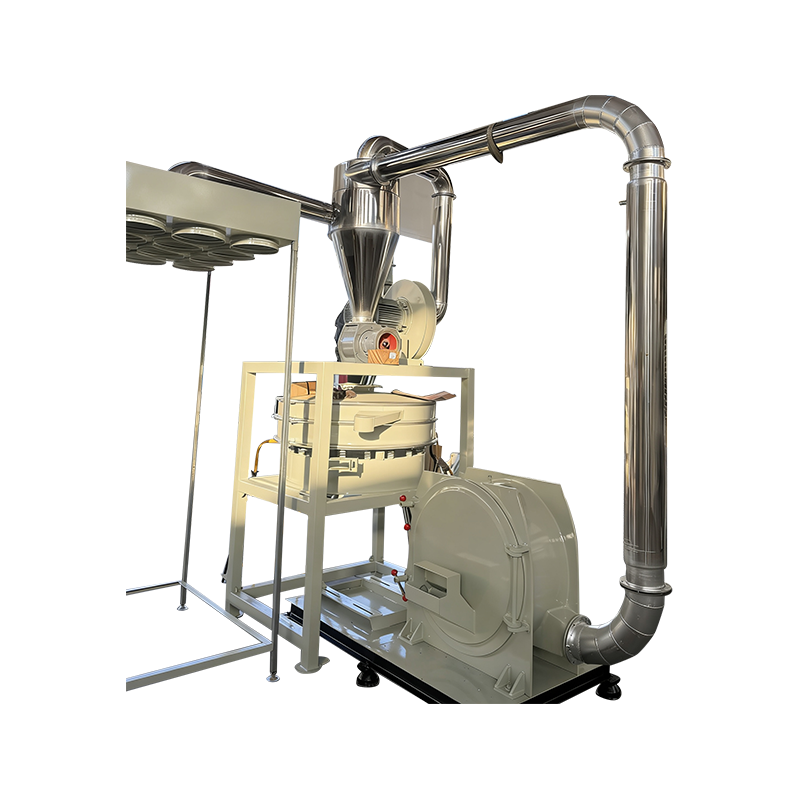
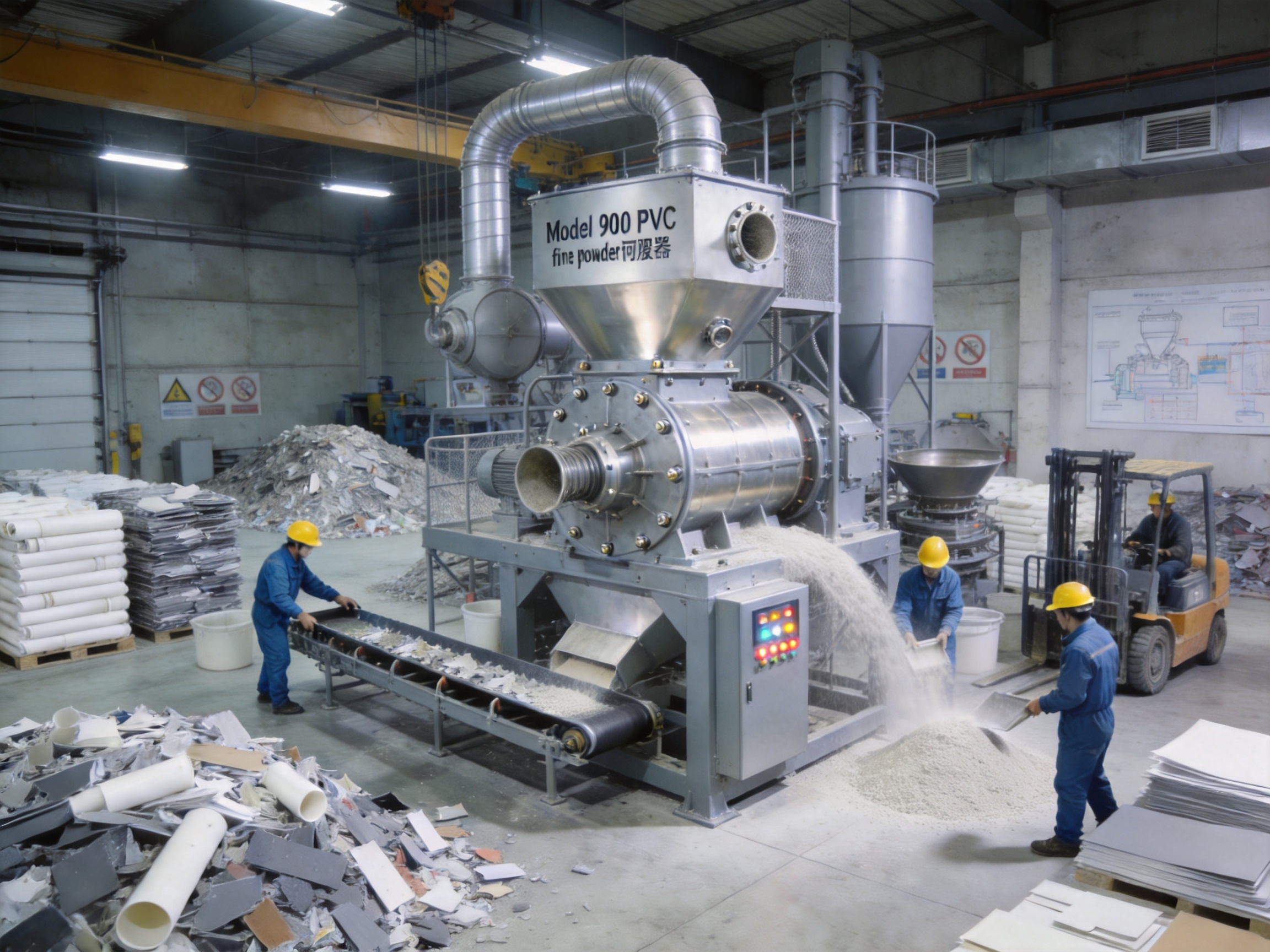
A pulverizer is only one part of a powder production system. To achieve stable output, the surrounding equipment must also be properly designed. The Model 900 can be integrated with iron-removal feeding, stainless steel piping, a blower, a vibrating screen, and dust collection. Each part contributes to the overall performance of the line.
The feeding system controls the amount of material entering the grinding chamber. Stable feeding prevents overload, reduces temperature spikes, and improves powder consistency. Iron removal is especially important for recycled PVC because nails, screws, wires, and metal fragments may be mixed with waste materials. Metal contamination can damage discs, create sparks, interrupt production, and increase maintenance cost. A suitable iron-removal system protects the machine and improves safety.
The blower and piping system transport powder away from the pulverizer. Stainless steel piping is beneficial because it improves cleanliness, resists corrosion, and reduces contamination risk. Proper pipe diameter and airflow balance help prevent clogging and maintain smooth discharge. If powder remains too long inside hot areas, quality may decline; efficient discharge supports both productivity and powder stability.
The vibrating screen classifies the powder and separates oversized particles. Qualified powder continues to collection or packaging, while oversized material may be returned for reprocessing depending on the system design. A 1500 mm vibrating screen with suitable screen mesh provides the classification area needed for high-output lines. Good screening ensures that downstream customers receive powder within the expected particle size range.
Dust collection protects the workshop environment and reduces product loss. PVC powder is fine and must be handled carefully. A properly designed dust collector improves air quality, keeps equipment cleaner, and helps operators maintain a safer production environment. In export-oriented factories, dust control also supports professional plant management and customer audit requirements.
Manufacturing Strength Behind the Equipment
The quality of a pulverizer depends not only on design drawings but also on manufacturing capability. Changzhou Mao Yue Intelligent Equipment Co., Ltd. is a source manufacturer with 30 years of experience in plastic crushing and pulverizing equipment. The company has developed its expertise through long-term involvement in plastic size reduction processes for PVC, PE, rotational molding materials, masterbatch, polymers, recycling, and powder coating applications.
The company operates six processing workshops, each averaging about 1400 square meters. This manufacturing base allows the company to control machining, welding, assembly, inspection, and customization more effectively than trading companies or simple assemblers. For heavy-duty equipment such as the Model 900, in-house manufacturing capability is essential because core components must meet strict requirements for accuracy, strength, and balance.
Advanced equipment is used in the factory to support precise manufacturing. The company is equipped with Taiwan-imported high-precision grinding machines built to German standards, German dynamic balancing equipment, and Japanese welding systems. These manufacturing resources help ensure that rotating parts are stable, welded structures are strong, and machined components meet the accuracy needed for high-speed operation.
Dynamic balancing is especially important for pulverizers. A large rotating disc that is not balanced correctly can cause vibration, noise, bearing stress, and unstable grinding. German dynamic balancing equipment helps improve the smoothness of rotating assemblies. High-precision grinding machines help ensure component flatness and dimensional consistency. Japanese welding systems help support structural strength and repeatable fabrication quality. Together, these processes contribute directly to the operating reliability of the Model 900.
The company also emphasizes European quality standards for components and production management. It has obtained CE mechanical certification and ISO 9001 quality management system certification. CE certification supports machine safety and compliance expectations, while ISO 9001 indicates a structured quality management system. For international buyers, these qualifications provide confidence that the equipment is manufactured under recognized quality principles.
Customization and Engineering Support
No two PVC recycling projects are exactly the same. One factory may process clean pipe scrap with stable composition, while another may handle mixed post-industrial profile waste. A flooring factory may require consistent powder for closed-loop reuse, while an OEM supplier may need several powder grades for different customers. Therefore, customization is essential.
The Model 900 can be adapted according to production target, material type, mesh requirement, workshop layout, power supply, cooling conditions, and downstream process. Drive motor power, feeding design, screen configuration, pipe routing, dust collection capacity, cooling arrangement, and control system can be discussed during project planning. This is a major advantage compared with standard machines that cannot be adjusted to real production needs.
Changzhou Mao Yue Intelligent Equipment Co., Ltd. has built long-term partnerships with more than 5000 enterprises in domestic and international markets. Such experience is valuable because the company has encountered many material types, operating environments, and customer requirements. Practical application knowledge helps reduce trial-and-error during new project installation. It also supports better recommendations for spare parts, maintenance schedules, and operating parameters.
For customers planning a full crushing and pulverizing line, the manufacturer can provide integrated thinking rather than only selling a single pulverizer. This may include upstream crushing, feeding, iron removal, pulverizing, cooling, screening, conveying, dust collection, and collection systems. A complete line designed as one system is more likely to achieve stable output than equipment purchased from unrelated suppliers without engineering coordination.
Applications in PVC Recycling
One of the strongest application areas for the Model 900 is large-scale PVC recycling. PVC waste appears in many forms: construction pipes, pipe fittings, window and door profiles, siding, flooring, sheets, cable sheathing, industrial offcuts, and rejected production pieces. After sorting and pre-processing, these materials can be pulverized into reusable powder. This helps enterprises increase the value of waste streams and supports circular material use.
In centralized recycling plants, material volume can be very high. A machine with insufficient capacity creates a bottleneck after the crushing stage. The Model 900 is designed to support high-volume processing and reduce bottlenecks in large facilities. When combined with reliable feeding and screening, it can transform large quantities of crushed PVC into powder suitable for sale or internal reuse.
The economic advantage is clear. Coarse scrap usually has lower value and fewer direct applications. Fine powder can be blended into formulations, fed more easily into extruders, and used in a wider range of manufacturing processes. By upgrading scrap into powder, recycling enterprises can improve profit margins and provide more valuable material to downstream customers.
The environmental value is also significant. PVC is durable, which makes it useful in construction and industrial products, but this durability also means waste should be managed responsibly. High-capacity pulverizing allows more material to return to production instead of entering low-value disposal paths. For companies working toward sustainability goals, investing in efficient recycling equipment is both a practical and strategic decision.
Applications in PVC Building Materials
The Model 900 is highly relevant for PVC building material manufacturers. PVC flooring, thick-walled pipes, profiles, foam boards, decorative panels, and sheets often generate production offcuts. These offcuts are usually clean and consistent, making them ideal candidates for internal recycling. Pulverizing them into controlled powder allows the factory to recover material value while reducing waste.
In flooring production, powder quality is connected to surface performance, color consistency, dimensional stability, and processing behavior. The Model 900 helps produce powder with good flowability and controlled particle size, supporting stable mixing and calendering. For manufacturers producing large quantities of flooring, high-capacity pulverizing can become part of a closed-loop manufacturing strategy.
In pipe and profile production, recycled powder can be used in suitable layers or formulations depending on product standards. Stable powder helps maintain extrusion pressure and melt uniformity. When recycled powder is inconsistent, it can cause surface defects, weak spots, unstable dimensions, or processing interruptions. A reliable pulverizer reduces these risks by providing more uniform feedstock.
In foam board and decorative panel production, powder stability can influence foaming behavior, density control, surface smoothness, and mechanical properties. The Model 900’s temperature control and grinding consistency help protect material quality, making it suitable for manufacturers that want to reuse internal scrap without sacrificing product performance.
Applications in Specialty PVC Powder
Beyond standard recycling, the Model 900 is suitable for specialty PVC powder production. Modern PVC compounds may include flame-retardant additives, impact modifiers, weather-resistant packages, chemical-resistant formulations, thermal stabilizers, pigments, fillers, and processing aids. These materials can be abrasive and demanding. A heavy-duty pulverizer with wear-resistant grinding discs is necessary to maintain output and quality.
Specialty powder is used in applications such as premium construction materials, automotive interiors, electrical enclosures, cable sheathing, and industrial components. These sectors require consistent powder properties because final products must meet mechanical, safety, environmental, and appearance requirements. Inconsistent powder may cause poor dispersion, unstable processing, or unreliable final performance.
The Model 900 supports these applications through precise grinding, cooling, and adjustable processing conditions. For flame-retardant or high-filler compounds, wear resistance is especially important. For color-sensitive or high-performance compounds, temperature control is critical. For export products, batch consistency and traceable production quality become key selling points.
Energy Efficiency and Long-Term Return
Initial investment is only one part of equipment cost. For large-scale factories, the more important measurement is cost per ton of powder. This includes power consumption, labor, downtime, spare parts, maintenance, rejected material, floor space, and production reliability. A cheaper machine may become expensive if it stops often, wears quickly, or produces inconsistent powder. The Model 900 is designed to provide long-term return through high output, durable components, and stable operation.
High production capacity helps reduce unit cost because more powder can be produced within the same operating time. Efficient grinding reduces repeated processing. Long-life grinding discs reduce replacement frequency. Stable temperature control reduces the risk of downgraded material. Integrated screening and conveying reduce manual handling. Together, these factors improve the economics of the pulverizing operation.
Energy efficiency must be understood correctly. A high-power motor does not automatically mean high cost if the machine produces much more powder per hour. What matters is energy consumption per unit output. A powerful and efficient pulverizer may use more instantaneous power than a small machine but still consume less energy per ton because it finishes the work faster and with fewer repeated passes.
For customers comparing different suppliers, it is important to evaluate total ownership cost rather than only machine price. Questions should include: How long do grinding discs last? How stable is output after 500 hours? What is the expected downtime? Are spare parts available? Is the frame strong enough for continuous work? How accurate is the machining? Is the rotor dynamically balanced? Can the supplier provide technical advice? The Model 900 is designed to answer these concerns with a heavy-duty, manufacturer-backed solution.
Installation and Operational Considerations
To obtain the best performance from the Model 900, customers should prepare the production site properly. The machine should be installed on a stable foundation with enough space for feeding, maintenance, cooling water circulation, electrical control, powder collection, and operator movement. The workshop should allow convenient material flow from crushing to pulverizing to screening and packaging.
Feed material should be pre-crushed to a suitable size and kept as clean as possible. Metal removal should be used before pulverizing, particularly for post-consumer or mixed industrial scrap. Moisture should be controlled because wet material may reduce grinding efficiency and affect powder flow. Operators should monitor feeding speed, motor load, bearing temperature, powder temperature, screen condition, and dust collector performance.
Routine maintenance is essential. Grinding discs should be inspected for wear. Bearings should be monitored and lubricated according to the maintenance plan. Belts and pulleys should be checked for tension and alignment. Cooling channels should remain clear. Screens should be cleaned or replaced when necessary. Dust collection bags should be maintained to preserve airflow and workplace cleanliness.
Training is also important. A high-capacity pulverizer is powerful equipment, and operators should understand safe startup, shutdown, feeding, emergency stop, inspection, and cleaning procedures. Good training reduces accidents, protects equipment, and improves production consistency. Customers should work with the manufacturer to establish operating parameters for their specific material and target powder size.
Why the Model 900 Stands Out in Competitive Markets
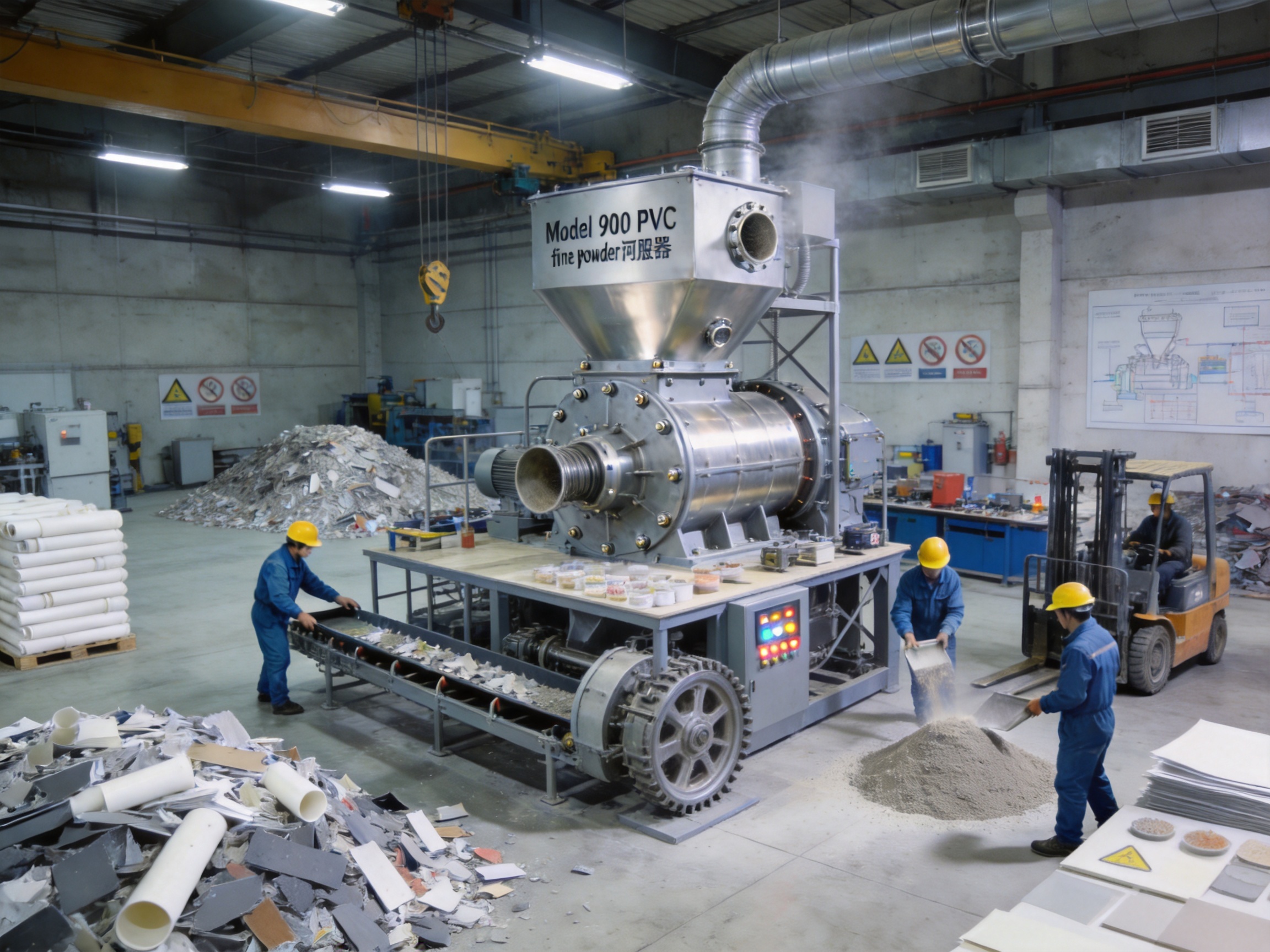
In competitive equipment markets, many machines may look similar from the outside. The difference becomes clear during long-term production. The Model 900 stands out because it combines output, wear resistance, cooling, stability, manufacturing precision, and customization. It is designed for buyers who need dependable industrial performance rather than basic size reduction.
Compared with low-cost competitors, the Model 900 offers stronger value in heavy-duty applications. Its large grinding structure, optional high-power motor configuration, imported bearing option, stainless steel conveying design, inverter speed control, water cooling, iron-removal feeding arrangement, and high-wear-resistant discs create a more complete production solution. These features are not decorative; they directly influence uptime, powder quality, and cost per ton.
The company behind the product also creates an advantage. As a source manufacturer with decades of experience, Changzhou Mao Yue Intelligent Equipment Co., Ltd. can control quality from manufacturing to assembly and service. The use of advanced machining, dynamic balancing, and welding equipment supports consistent machine quality. CE and ISO 9001 certifications strengthen buyer confidence, especially for international projects.
Another competitive advantage is practical application knowledge. A supplier that understands PVC materials can help customers choose correct configurations, avoid overheating, select suitable screens, manage wear, and improve line integration. This knowledge is difficult to replace with generic machinery. For large recycling groups and building material enterprises, professional support can reduce commissioning time and improve long-term productivity.
Q&A Section
What materials can the Model 900 PVC Fine Powder Pulverizer process?
The machine is designed primarily for PVC materials, including rigid PVC pipe scrap, window and door profiles, flooring offcuts, sheets, foam board scrap, cable sheath materials, decorative panels, and production waste. It can also be adapted for various PVC compounds, including high-filler and functional formulations, depending on configuration and material preparation.
What makes the Model 900 suitable for large-scale production?
Its large grinding chamber, high-power drive options, heavy-duty frame, wear-resistant grinding discs, inverter speed control, cooling support, and integrated screening and conveying options make it suitable for continuous high-volume production. It is designed for factories that need stable daily output and long operating hours.
Can the machine produce different powder sizes?
Yes. The machine can typically support a range such as 10 to 50 mesh, depending on material type, disc condition, feeding rate, speed setting, screen selection, and cooling efficiency. Customers should confirm the required powder specification during project design.
Why is temperature control important when pulverizing PVC?
PVC can degrade, discolor, soften, or agglomerate if exposed to excessive heat. Temperature control helps preserve powder quality, color stability, and downstream processing performance. The Model 900 uses water cooling and process control features to reduce thermal damage during grinding.
How does the machine reduce long-term operating cost?
It reduces cost through high output, durable grinding components, stable operation, efficient powder discharge, adjustable speed control, and reduced downtime. Although the initial investment may be higher than basic machines, the cost per ton can be lower in large-scale production.
What role do wear-resistant grinding discs play?
Grinding discs directly determine pulverizing efficiency and powder consistency. Wear-resistant alloy discs maintain sharpness and grinding performance for longer periods, especially when processing abrasive or high-filler PVC. This reduces replacement frequency and helps maintain stable production.
Is the Model 900 only for recycling companies?
No. It is also suitable for PVC building material manufacturers, flooring producers, pipe and profile factories, foam board producers, specialty PVC compound manufacturers, and export-oriented OEM suppliers. Any operation requiring high-volume PVC powder production can benefit from the machine.
Can the pulverizer be integrated into a complete line?
Yes. It can be combined with crushing, feeding, iron removal, pulverizing, cooling, vibrating screening, pneumatic conveying, dust collection, storage, and packaging equipment. Complete line integration improves automation, efficiency, and consistency.
What manufacturing strengths support the machine quality?
The manufacturer has 30 years of experience, six processing workshops, high-precision grinding machines, German dynamic balancing equipment, Japanese welding systems, CE certification, and ISO 9001 quality management certification. These strengths support precision, durability, and reliable performance.
What should buyers consider before purchasing?
Buyers should consider material type, required mesh size, hourly and daily output, filler content, contamination risk, cooling water availability, workshop layout, power supply, dust control requirements, and future expansion plans. Sharing accurate material samples and production goals helps the manufacturer recommend the best configuration.
Conclusion
The Model 900 PVC Fine Powder Pulverizer is a high-capacity industrial machine built for serious PVC powder production. It addresses the major challenges of large-scale pulverizing: output, heat control, wear resistance, powder consistency, vibration stability, and long-term operating cost. For enterprises processing large quantities of PVC waste or manufacturing high-end PVC building materials, it provides a strong platform for improving efficiency and material value.
Its advantages are especially clear when compared with ordinary pulverizers. The Model 900 is not simply larger; it is designed as a heavy-duty production system. With high-power motor options, inverter speed control, water cooling, wear-resistant grinding discs, stable structure, screening integration, and dust collection compatibility, it supports continuous industrial operation. It is particularly suitable for recycling groups, pipe and profile manufacturers, flooring factories, specialty compound producers, and export-oriented OEM suppliers.
The manufacturing strength behind the machine further increases its value. Changzhou Mao Yue Intelligent Equipment Co., Ltd. combines decades of industry experience with advanced machining, dynamic balancing, welding technology, quality management, and customization capability. This allows customers to receive not only a machine, but also an engineered pulverizing solution designed for real production demands.
For companies seeking to process PVC at ten-thousand-ton scale, reduce waste, improve recycled material value, and supply stable powder to demanding downstream applications, the Model 900 represents a powerful and practical investment. Its long-term return comes from productivity, reliability, powder quality, and reduced downtime. In an industry where consistency and efficiency define competitiveness, the Model 900 PVC Fine Powder Pulverizer is a strong choice for high-volume, high-quality PVC powder production.
References
1. Harper, C. A. Handbook of Plastics Technologies: The Complete Guide to Properties and Performance. McGraw-Hill.
2. Brydson, J. A. Plastics Materials. Butterworth-Heinemann.
3. Titow, W. V. PVC Technology. Elsevier Applied Science.
4. ISO 9001 Quality Management Systems: Requirements. International Organization for Standardization.
5. CE Machinery Safety Principles and Conformity Assessment Guidance. European machinery safety documentation.
6. Plastics Recycling: Products and Processes. Technical literature on polymer recycling and size reduction systems.
7. Industrial Dust Collection and Powder Handling Practices. Manufacturing engineering reference materials.