

 English
 русский
 Español
 عربى
عربى 中文简体
中文简体
 中文简体
中文简体
Content
- 1 The Critical Role of Pulverizing Quality in PE Rotomolding
- 2 Product Overview: A Specialized Pulverizer for High-Quality Plastic Powder
- 3 Advantage One: DC53 Grinding Discs for Longer Life and Better Stability
- 4 Advantage Two: Tooth-by-Tooth CNC Precision Grinding
- 5 Advantage Three: German-Imported Dynamic Balancing for Smooth Operation
- 6 Advantage Four: Dual Cooling System and Intelligent Temperature Control
- 7 Advantage Five: Enclosed Negative-Pressure Conveying and High-Efficiency Dust Collection
- 8 Manufacturing Strength Behind the Machine
- 9 Comparison with Conventional Pulverizers
- 10 Powder Quality Benefits for Rotomolding Manufacturers
- 11 Applications Beyond PE Rotomolding
- 12 Operating Principles and Process Flow
- 13 Maintenance and Lifecycle Cost Control
- 14 Quality Control Recommendations for Users
- 15 Environmental, Health, and Safety Value
- 16 Why the Manufacturer Matters
- 17 Buying Considerations for a PE Rotomolding Pulverizer
- 18 Q&A Section
- 18.1 Q1: What makes the 500-type PE rotomolding pulverizer different from ordinary pulverizers?
- 18.2 Q2: Why is DC53 steel important for grinding discs?
- 18.3 Q3: How does precision CNC grinding improve powder quality?
- 18.4 Q4: Why is dynamic balancing necessary?
- 18.5 Q5: How does the cooling system prevent PE powder problems?
- 18.6 Q6: Is the machine suitable only for PE rotomolding?
- 18.7 Q7: What dust-control features does the pulverizer include?
- 18.8 Q8: Can worn grinding discs be reused?
- 18.9 Q9: What certifications support the manufacturer’s quality system?
- 18.10 Q10: How can customers contact the manufacturer?
- 19 Conclusion
- 20 References
In modern plastic processing, powder quality is not a secondary detail; it is one of the decisive factors that determines production stability, finished-product appearance, material utilization, and long-term manufacturing cost. This is especially true in PE rotomolding, where the powder must flow smoothly, melt evenly, and distribute consistently inside the mold. A small variation in particle size, powder temperature, blade sharpness, or equipment vibration can translate into rough surfaces, uneven wall thickness, pinholes, low strength, discoloration, or excessive scrap. For producers working with rotational molding, masterbatch, polymer compounds, PE recycling, PVC, powder coating materials, and other plastic size-reduction applications, a high-precision pulverizer is therefore a strategic piece of production equipment rather than a simple grinding machine.
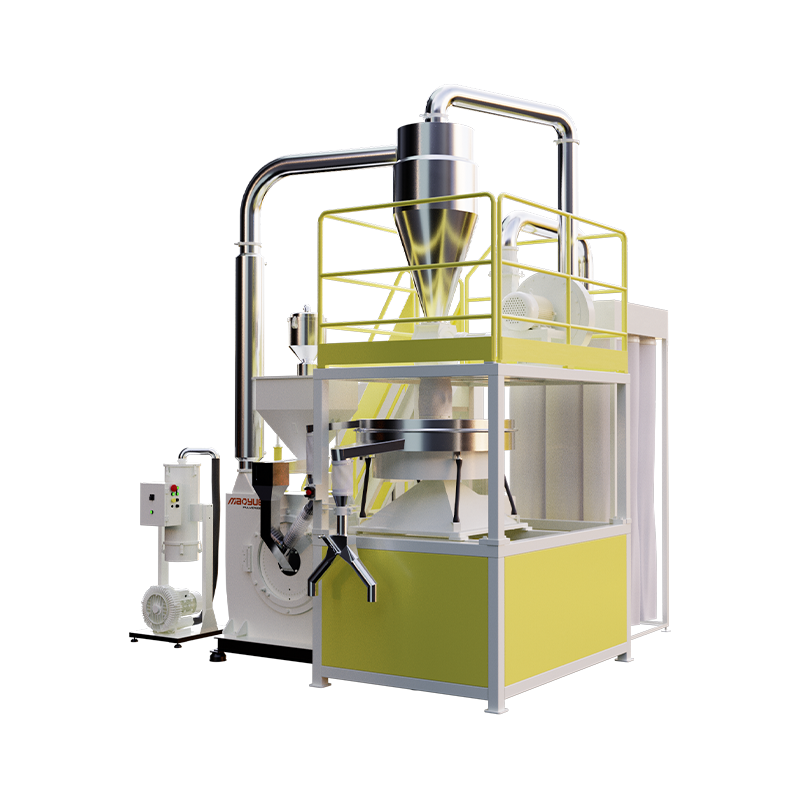
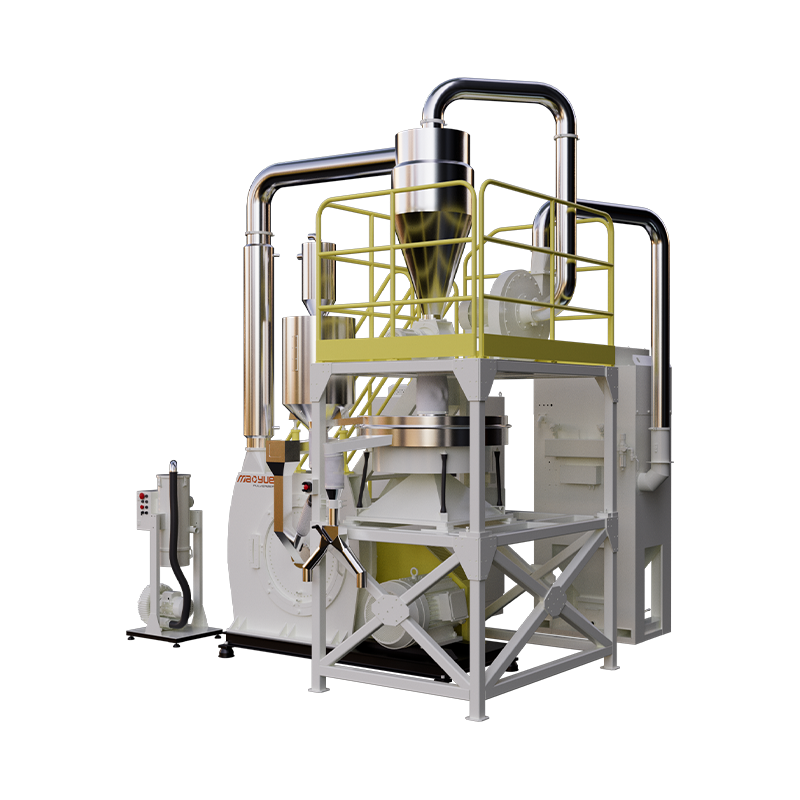
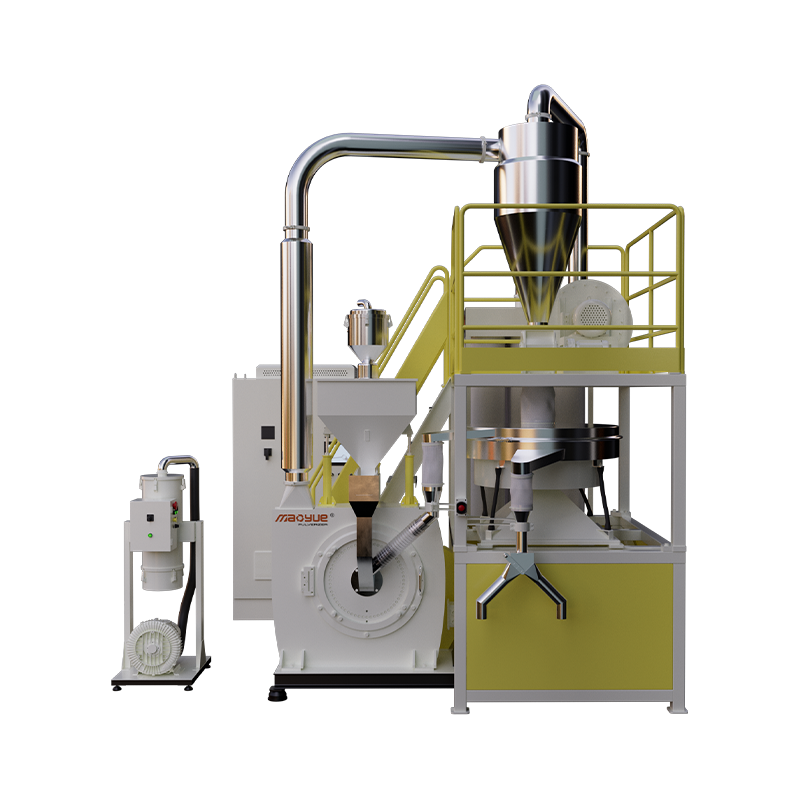
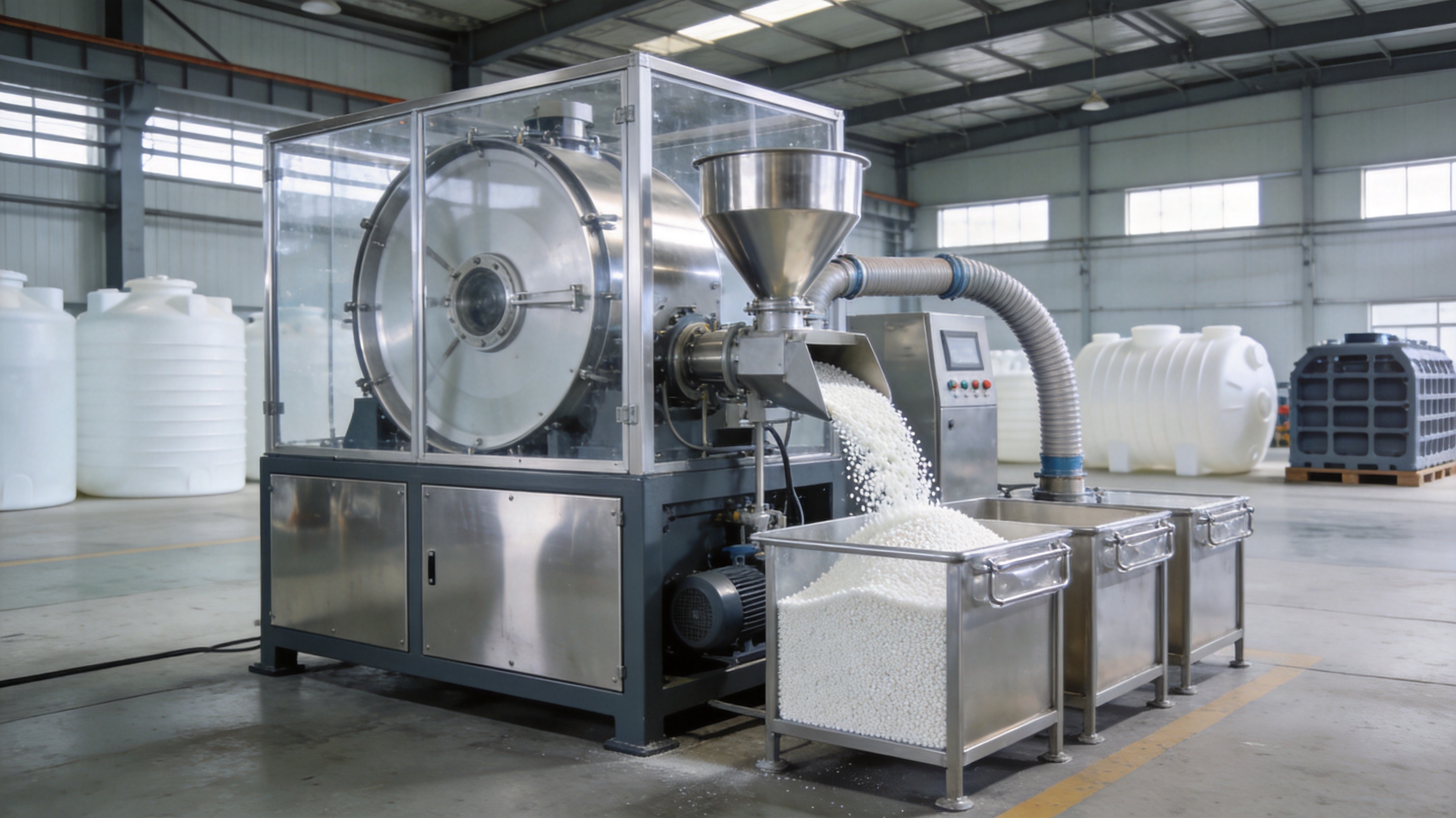
The 500-type PE rotomolding pulverizer produced by Changzhou Mao Yue Intelligent Equipment Co., Ltd. is designed around this principle. It is built to deliver narrow particle size distribution, stable powder flowability, low operating vibration, controlled grinding temperature, reduced dust emission, and long tooling service life. The machine combines premium DC53 high-grade mold steel grinding discs, precision tooth-by-tooth CNC grinding, German-imported high-precision dynamic balancing equipment, water-cooling and forced-air dual temperature control, PLC intelligent monitoring, and a fully enclosed negative-pressure conveying system with pulse bag dust collection. These features create a practical advantage for manufacturers that need consistent powder quality, lower maintenance cost, and reliable continuous operation.
Unlike conventional pulverizers that may rely mainly on motor power and basic disc design, this system focuses on the full chain of powder-making performance: material feeding, grinding disc metallurgy, blade geometry, balancing accuracy, temperature stability, air conveying, dust capture, component machining, and after-sales disc refurbishment. The result is a machine intended not only to crush plastic, but to produce process-ready powder with the consistency demanded by downstream molding and compounding operations.
The Critical Role of Pulverizing Quality in PE Rotomolding
Rotational molding is highly sensitive to powder characteristics. During the process, plastic powder is loaded into a hollow mold, heated while rotating, melted against the mold wall, cooled, and then demolded. Because the material is not injected under high pressure and does not flow through a screw and die in the same way as injection molding or extrusion, the powder itself must provide excellent flow and melting behavior. Particle size, particle shape, moisture level, thermal history, and powder uniformity all influence the final product.
If particles are too large, the material may melt slowly and create voids, weak spots, orange-peel textures, or poor corner filling. If particles are too fine, dust increases, flowability decreases, and material may agglomerate or create handling problems. If the particle size distribution is too wide, different fractions melt at different rates, causing inconsistent wall thickness and irregular surfaces. If the pulverizer generates excessive heat, PE powder may soften, smear, clump, yellow, oxidize, or lose the free-flowing behavior required for smooth mold charging. For these reasons, a specialized PE rotomolding pulverizer must control far more than output capacity.
The 500-type PE rotomolding pulverizer addresses these issues with a precision grinding system built around disc quality, cutting geometry, thermal control, and airflow management. The machine is intended to produce uniform PE powder with stable flowability, while reducing typical problems such as overheating, sticking, clumping, yellowing, and poor powder discharge. For users producing tanks, containers, playground equipment, automotive parts, leisure products, industrial housings, and custom rotomolded components, the practical value lies in improved powder consistency and fewer downstream molding defects.
Product Overview: A Specialized Pulverizer for High-Quality Plastic Powder
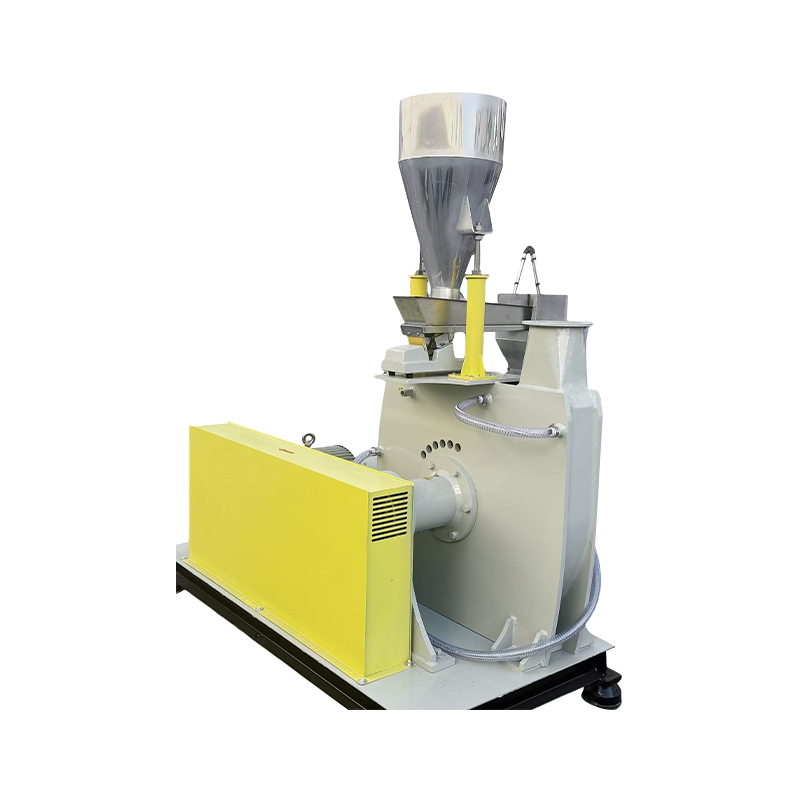
The 500-type PE rotomolding pulverizer is part of the wider product field of plastic pulverizers, pulverizer parts, and crushing and pulverizing lines. It is particularly suitable for masterbatch, polymer compound, PE, PVC, recycling, powder coating, and rotational molding powder applications. Its core function is to reduce plastic granules, chips, or regrind into fine powder through high-speed disc grinding. However, the equipment is engineered with several upgrades that distinguish it from ordinary disc mills.
At the heart of the machine are DC53 high-grade mold steel grinding discs with a hardness of HRC 62–64. These discs provide improved toughness, fatigue resistance, anti-chipping performance, and long service life compared with conventional D2 steel discs. According to the product configuration, service life can be approximately 1.5 to 2.5 times longer than standard grinding discs under appropriate operating conditions. This is important because disc wear is one of the main cost drivers in pulverizing. Worn discs reduce output, widen particle size distribution, increase heat generation, and require frequent replacement or sharpening.
The grinding discs are processed by imported Taiwanese professional CNC tool grinders. The manufacturer emphasizes tooth-by-tooth precision grinding, helping maintain micron-level consistency in blade angle and cutting edge sharpness. This precision directly supports narrow particle size distribution and stable powder uniformity. It also helps reduce the risk of downstream defects in rotomolding, such as rough surfaces and uneven thickness.
The pulverizer also uses strict dynamic balancing for each disc. Dynamic balancing is performed using German-imported high-precision balancing equipment, allowing the rotating system to operate with reduced vibration. Lower vibration improves bearing and spindle life, reduces noise, protects machine structure, and helps maintain consistent grinding quality over long production runs. The manufacturer describes the stability as capable of demonstrating a “coin-standing” effect, meaning the machine can run with unusually smooth motion when properly installed and operated.
Thermal control is another major design area. The machine is equipped with a standard water-cooling jacket and forced air cooling, supported by multi-point temperature sensors and PLC intelligent control. The grinding chamber can be maintained within a controlled temperature range of approximately 50–80°C, depending on material and production settings. This helps prevent heat-sensitive PE powder from softening, sticking, clumping, discoloring, or losing flowability.
Finally, the fully enclosed negative-pressure airflow conveying system and pulse bag dust collector provide dust capture above 99.9% under proper operation and maintenance conditions. This design supports a cleaner workshop, improved environmental compliance, safer working conditions, and better employee health protection. For factories increasingly focused on environmental, health, and safety performance, dust control is no longer optional; it is a basic requirement for responsible production.
Advantage One: DC53 Grinding Discs for Longer Life and Better Stability
The grinding disc is the most critical wearing part in a disc pulverizer. It determines cutting efficiency, heat generation, powder particle shape, and maintenance frequency. Many conventional machines use D2 steel or similar tool steels. While D2 can provide high hardness and acceptable wear resistance, it may be more prone to chipping under impact and repeated stress, especially when processing challenging materials or when operating conditions fluctuate. Disc chipping is not only a tooling problem; it can affect powder quality, increase vibration, damage related components, and create unplanned downtime.
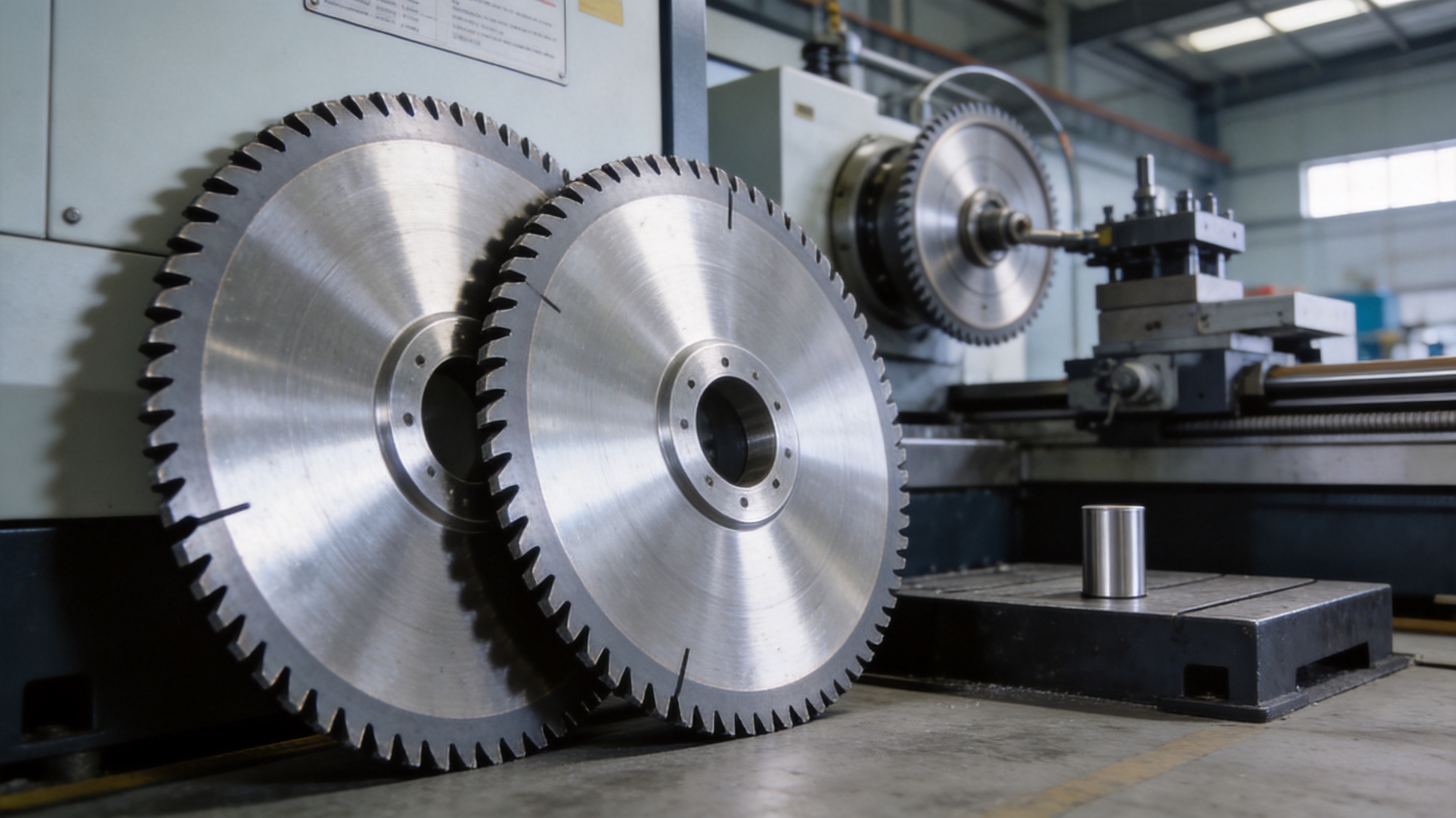
The 500-type PE rotomolding pulverizer uses DC53 high-grade mold steel grinding discs. DC53 is known for combining high hardness with better toughness than traditional D2 steel. With a hardness of HRC 62–64, the discs provide strong cutting performance and wear resistance. At the same time, improved toughness and fatigue resistance help reduce edge breakage and chipping. This balance is valuable because grinding discs must remain sharp and stable while rotating at high speed and repeatedly contacting plastic material.
Longer disc service life produces several economic benefits. First, it lowers the frequency of disc replacement. Second, it helps maintain stable output capacity for a longer period. Third, it reduces the number of production interruptions required for maintenance. Fourth, it decreases the risk of powder quality drift caused by progressive tool wear. When discs wear quickly, the operator may need to adjust feed rate, temperature, and screening more often. With more durable discs, process control becomes easier.
For rotomolding powder manufacturers, the value of long disc life is closely linked to product consistency. A disc that retains sharpness longer can continue to cut cleanly rather than rub, smear, or generate excess heat. Clean cutting supports powder flowability and helps prevent agglomeration. In competitive production environments, this can be a direct advantage over lower-cost pulverizers that may appear economical at purchase but require frequent disc replacement and produce inconsistent powder over time.
In addition, Changzhou Mao Yue Intelligent Equipment Co., Ltd. provides professional refurbishing for dulled grinding discs. Refurbishment costs are typically only about one-quarter to one-third of the cost of new discs, depending on disc condition and service requirements. This creates a practical lifecycle cost advantage. Instead of repeatedly purchasing new discs, users can extend the value of their tooling through professional sharpening and reconditioning. For plants running multiple shifts or producing large volumes of PE powder, this service can significantly reduce long-term operating expense.
Advantage Two: Tooth-by-Tooth CNC Precision Grinding
Powder quality depends not only on steel grade, but also on blade geometry. A grinding disc with inconsistent tooth angles, uneven cutting edges, or poor surface finish may create a wider particle size distribution and unstable output. Even small variations in blade geometry can influence how material is cut, fractured, and discharged from the grinding zone. In PE rotomolding, where uniform powder melting is essential, this difference matters.
The manufacturer uses imported Taiwanese professional CNC tool grinders built to high precision standards. The machining process is described as tooth-by-tooth precision grinding. This means each tooth is processed with careful control of angle, edge profile, and surface accuracy. Micron-level blade angle consistency helps ensure that the disc performs evenly across the cutting surface. Razor-sharp edges reduce rubbing and friction, which can help lower grinding temperature and improve particle shape.
Compared with ordinary manual or semi-automatic grinding methods, CNC tooth-by-tooth processing offers greater repeatability. This is important for customers who need predictable performance from one disc set to the next. If each replacement disc behaves differently, operators must spend time adjusting process parameters. If disc geometry is consistent, production can restart more quickly after maintenance, and powder quality is easier to standardize.
This advantage also supports downstream product quality. Narrow particle size distribution helps PE powder melt more uniformly during rotational molding. Uniform melting reduces the likelihood of rough surfaces, voids, uneven wall thickness, and poor mechanical strength. When powders are produced with consistent cutting rather than irregular tearing or smearing, they also tend to handle more predictably in conveying, dosing, and mold charging systems.
For masterbatch and polymer compound applications, precision grinding can help maintain material consistency when producing powders for blending, coating, or further processing. Particle uniformity supports better dispersion and reduces segregation. In recycling applications, where material properties may vary, precise disc geometry gives operators a stronger baseline for controlling output quality.
Competitors may emphasize installed motor power or nominal capacity, but true pulverizing performance is determined by the interaction of disc metallurgy, tooth design, balancing, cooling, and air management. The tooth-by-tooth CNC grinding process is one of the major reasons this pulverizer can deliver a more stable, high-value output rather than simply high-volume size reduction.
Advantage Three: German-Imported Dynamic Balancing for Smooth Operation
High-speed rotating equipment must be balanced accurately. In a plastic pulverizer, grinding discs rotate rapidly and generate large dynamic forces. If a disc is not properly balanced, vibration increases. Excessive vibration can lead to bearing wear, spindle stress, structural fatigue, noise, reduced powder quality, and operator discomfort. Over time, even small imbalance can become a major maintenance problem.
The 500-type PE rotomolding pulverizer uses strict dynamic balancing procedures with German-imported high-precision balancing equipment. Each disc is balanced to support stable rotation and low vibration. This is not merely a cosmetic feature. Dynamic balance affects the entire operating life of the pulverizer.
When vibration is controlled, bearings and spindles experience less mechanical stress. This extends the life of critical rotating components and reduces the risk of sudden failure. Lower vibration also means that the grinding gap and cutting interaction remain more stable during operation. A stable grinding zone supports consistent particle size and reduces unwanted fluctuation in powder quality.
Noise control is another benefit. The machine is designed to keep operating noise below 85 dB under suitable conditions. This is important for employee comfort and occupational health. In many factories, pulverizers are among the loudest pieces of equipment. Reducing noise improves the working environment and may help facilities meet internal safety standards or local occupational noise requirements.
The manufacturer describes the machine’s vibration control through the well-known “coin-standing” stability demonstration, comparable in concept to the smoothness associated with high-speed rail systems. While actual vibration levels depend on installation foundation, operating conditions, material feed, and maintenance, the emphasis on balancing clearly reflects a high manufacturing standard.
Many lower-grade pulverizers use discs that are machined and installed with limited balancing accuracy. These machines may perform acceptably at first, but vibration can increase as discs wear or as operating loads change. A machine built around precise dynamic balancing provides more stable long-term operation, especially for factories running continuous or high-volume production. This becomes a direct competitive advantage because downtime, bearing replacement, and powder inconsistency all carry hidden costs.
Advantage Four: Dual Cooling System and Intelligent Temperature Control
Heat is one of the biggest enemies of PE powder production. During pulverizing, mechanical friction and repeated cutting generate heat in the grinding chamber. If this heat is not removed efficiently, PE material may soften before it is properly cut. Softened material can stick to the disc, smear on the grinding surface, clump in the chamber, block screens or conveying lines, and produce powder with poor flowability. Excessive temperature can also cause yellowing, oxidation, or degradation, especially during long production runs.
The pulverizer addresses this issue with a standard water-cooling jacket combined with forced air cooling. The water-cooling jacket removes heat from the grinding chamber structure, while forced air assists material transport and heat dissipation. Multi-point temperature sensors monitor key positions, and the PLC intelligent control system helps keep the grinding chamber within an appropriate working range, typically around 50–80°C for PE rotomolding applications.
This controlled temperature range is important because it allows the material to remain cuttable and free-flowing. Instead of overheating and becoming sticky, the PE remains stable enough to be pulverized into uniform powder. The cooling system also protects grinding discs and related components from thermal stress, helping maintain precision over time.
Compared with simpler pulverizers that rely on basic air cooling or operator experience alone, the dual cooling and PLC temperature control system provides a more repeatable production environment. Operators can observe and manage temperature more effectively rather than reacting only after clumping or quality problems appear. This is particularly valuable when processing different grades of PE, recycled materials, or polymer compounds with varying softening behavior.
In practical production, temperature stability contributes to better powder flowability, more consistent bulk density, reduced screen blockage, fewer cleaning interruptions, and improved downstream molding results. It also reduces the chance of producing off-spec powder that must be reprocessed or discarded. For manufacturers focused on yield, temperature control is therefore a profit-protection feature.
Advantage Five: Enclosed Negative-Pressure Conveying and High-Efficiency Dust Collection
Plastic powder production can generate fine dust. Dust is not only a housekeeping issue; it may affect worker health, create environmental compliance challenges, contaminate nearby equipment, increase cleaning labor, and in some conditions contribute to combustion or explosion risk. A modern pulverizing system must manage dust from the grinding chamber to the collection point.
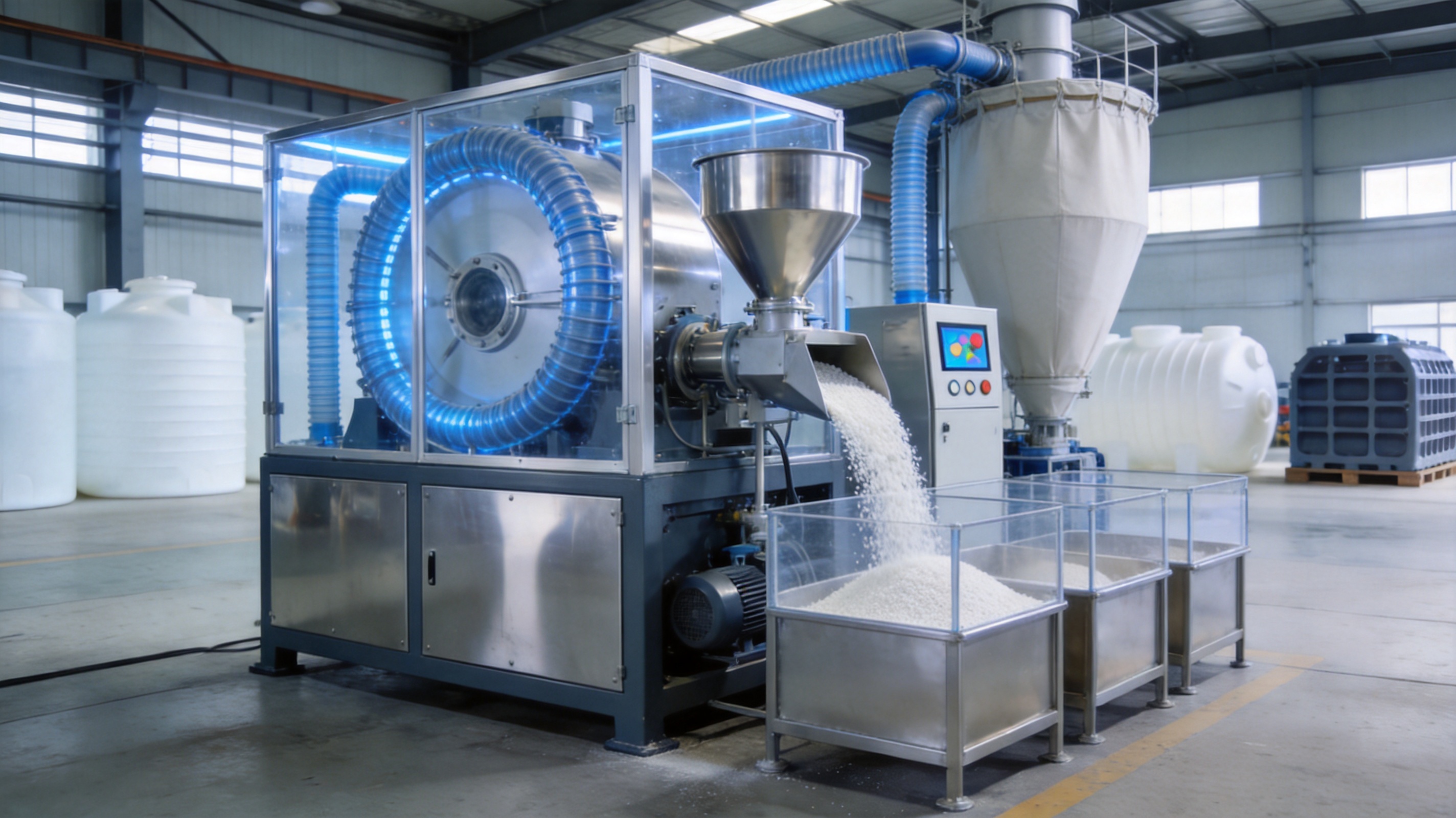
The 500-type PE rotomolding pulverizer uses a fully enclosed negative-pressure airflow conveying system combined with a pulse bag dust collector. Negative pressure helps prevent dust from escaping at transfer points because air is drawn inward rather than pushed outward. The enclosed conveying design moves powder efficiently while reducing open exposure. The pulse bag dust collector captures fine particles and maintains airflow performance through periodic cleaning pulses.
The system is designed to achieve a dust capture rate above 99.9% under proper configuration, operation, and maintenance. This supports near-zero dust emission in the workshop and helps users build cleaner, safer, and more compliant production environments. For employees, reduced dust exposure improves comfort and health protection. For equipment, cleaner conditions reduce dust accumulation on electrical cabinets, sensors, bearings, and surrounding machines.
This dust-control advantage is especially relevant for companies exporting products or serving customers with strict environmental and safety expectations. As regulatory standards become more demanding, factories with poor dust management may face higher compliance costs, customer audits, or production restrictions. Choosing a pulverizer with integrated dust control can therefore strengthen both operational performance and business credibility.
Manufacturing Strength Behind the Machine
Product performance begins in manufacturing. Changzhou Mao Yue Intelligent Equipment Co., Ltd. is a source manufacturer with approximately 30 years of experience in plastic crushing and pulverizing equipment. The company has developed solutions for plastic size reduction across rotational molding, masterbatch, polymers, PVC, PE, recycling, powder coating, and related industries. This long-term specialization gives the company practical knowledge of material behavior, disc wear, powder quality requirements, and user maintenance challenges.
The company operates six processing workshops, each averaging about 1,400 square meters. This production scale supports component machining, welding, assembly, inspection, and customization. Rather than relying only on outsourced parts, the manufacturer emphasizes in-house control of key processes, helping maintain consistency from raw component preparation to final machine commissioning.
The company’s equipment base includes Taiwan-imported high-precision grinding machines built to German standards, German dynamic balancing equipment, and Japanese welding systems. These manufacturing resources directly connect to the quality of the pulverizer. Precision grinding equipment supports accurate disc tooth geometry. Dynamic balancing equipment supports stable rotating components. Advanced welding systems support frame integrity, alignment, and long-term structural reliability.
The company also has a professional technical team that regularly studies advanced machine technologies from countries such as Germany. This approach reflects an emphasis on continuous improvement, not only traditional manufacturing experience. In a market where many pulverizers may look similar externally, internal process discipline and technical development are key differentiators.
Certifications further support customer confidence. Changzhou Mao Yue Intelligent Equipment Co., Ltd. has obtained CE mechanical certification and ISO 9001 quality management system certification. CE certification supports product safety expectations for relevant markets, while ISO 9001 demonstrates that the company maintains a structured quality management system. These certifications do not replace user evaluation, but they indicate a commitment to standardized manufacturing and quality control.
The company has built long-term partnerships with more than 5,000 enterprises in domestic and international markets. Such a customer base suggests broad application experience and provides feedback for continuous product refinement. For buyers, choosing a pulverizer manufacturer with proven industry history can reduce risk. Equipment selection is not only about the machine delivered today; it is also about spare parts availability, technical support, disc refurbishing, process guidance, and long-term service.
Comparison with Conventional Pulverizers
When buyers compare pulverizers, they often look first at price, motor power, and stated capacity. While these factors are important, they do not fully describe real operating value. A lower-priced machine may have higher lifetime cost if it produces excessive dust, requires frequent disc replacement, vibrates heavily, overheats material, or causes inconsistent powder quality. The 500-type PE rotomolding pulverizer is positioned as a high-precision system designed to reduce these hidden costs.
| Evaluation Area | 500-Type PE Rotomolding Pulverizer | Typical Conventional Pulverizer | Practical Benefit for Users |
|---|---|---|---|
| Grinding disc material | DC53 high-grade mold steel, HRC 62–64 | Often D2 or ordinary tool steel | Longer service life, improved toughness, reduced chipping risk |
| Disc processing | Tooth-by-tooth CNC precision grinding | Manual, semi-automatic, or lower-precision grinding | Narrower particle size distribution and better powder uniformity |
| Dynamic balance | German-imported high-precision balancing equipment | Basic balancing or limited inspection | Lower vibration, less noise, longer bearing and spindle life |
| Cooling system | Water-cooling jacket plus forced air cooling with PLC control | Basic air cooling or less precise temperature control | Reduced overheating, sticking, clumping, and yellowing |
| Dust management | Fully enclosed negative-pressure conveying and pulse bag dust collector | Open or partially enclosed powder handling | Cleaner workshop, improved safety, higher dust capture efficiency |
| Maintenance economics | Professional disc refurbishment available | Replacement often preferred or required | Lower long-term tooling cost |
| Manufacturing base | 30 years of specialization, advanced grinding, balancing, and welding equipment | Varies by supplier | More consistent product quality and stronger technical support |
This comparison shows that the machine’s advantage is not a single feature, but a complete engineering system. High-grade discs without precision grinding would not deliver the same performance. Precision grinding without balancing would still risk vibration. Cooling without dust control would leave workshop and safety issues unresolved. The strength of the product lies in combining these systems into a practical pulverizing solution.
Powder Quality Benefits for Rotomolding Manufacturers
For rotomolding manufacturers, powder quality directly affects molded product quality. A pulverizer that delivers uniform, free-flowing, degradation-free powder can improve the stability of the molding process. Operators may see better material distribution inside the mold, more consistent melt behavior, smoother surfaces, and fewer wall-thickness variations. While final results also depend on resin grade, mold design, heating cycle, cooling cycle, operator skill, and quality control procedures, powder preparation is a foundational step.
The narrow particle size distribution produced by precision grinding helps reduce uneven melting. When powder particles are more consistent, they tend to absorb heat and melt at more predictable rates. This can reduce defects such as rough texture, incomplete fusion, and localized weakness. For products that must pass appearance inspection or mechanical performance requirements, this consistency is valuable.
Controlled grinding temperature helps preserve resin properties. PE that is overheated during pulverizing may experience oxidation, yellowing, or reduced flowability. By maintaining the grinding chamber within a controlled range, the pulverizer helps produce powder that remains closer to the original resin performance. This is particularly important for colored materials, UV-stabilized formulations, and specialty compounds where thermal history can affect final appearance or durability.
Reduced dust emission also improves powder handling. Excessive fines may cause poor flow, bridging in hoppers, uneven dosing, and airborne contamination. By combining efficient cutting with dust collection, the system helps create a more manageable powder environment. A cleaner powder process can improve both productivity and workplace safety.
Applications Beyond PE Rotomolding
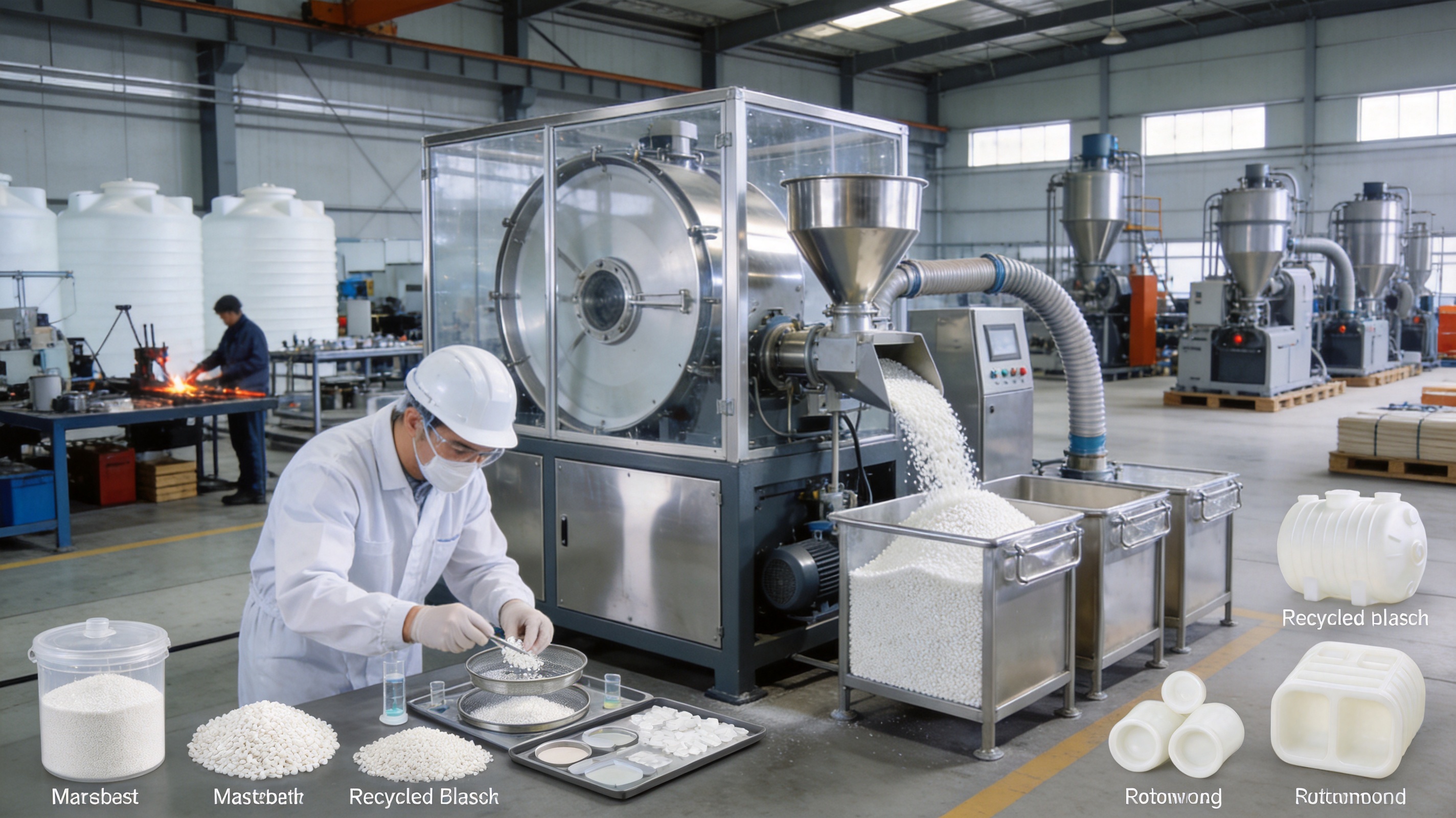
Although the machine is especially suited to PE rotomolding powder, its design principles are useful in many plastic pulverizing fields. In masterbatch production, fine and uniform powder can support better blending and dispersion. In polymer compound processing, controlled particle size helps improve mixing behavior and downstream consistency. In PVC applications, temperature control is particularly important because PVC can be heat sensitive. In recycling, pulverizing can convert plastic regrind into powder for reuse, compounding, coating, or further processing. In powder coating materials, uniform powder size is essential for application quality and surface finish.
The broader product category includes plastic pulverizers, pulverizer parts, and crushing and pulverizing lines. A complete line may include crushing, feeding, pulverizing, screening, cooling, conveying, dust collection, and packaging. For customers with different plant layouts or capacity requirements, customization is often necessary. Changzhou Mao Yue Intelligent Equipment Co., Ltd. emphasizes customized solutions, which is valuable because material type, target mesh size, output demand, workshop space, dust requirements, and automation level can vary widely between users.
A user processing virgin PE for rotomolding may prioritize powder flowability and color stability. A recycling plant may prioritize robust feeding and tolerance for material variation. A compounder may need flexible adjustment for different formulations. A PVC processor may focus heavily on temperature management. A powder coating producer may require highly controlled particle size. The machine’s modular strengths in disc precision, cooling, balance, and dust control provide a strong platform for these different applications.
Operating Principles and Process Flow
A typical pulverizing process begins with properly prepared plastic material. Depending on the application, the material may come from pellets, granules, flakes, chips, or pre-crushed regrind. Oversized material is usually crushed before pulverizing to ensure stable feeding and reduce excessive load on the grinding discs. Clean and dry feedstock is preferred because contamination, metal particles, moisture, and inconsistent particle size can affect output quality and equipment life.
The material is fed into the grinding chamber at a controlled rate. Stable feeding is essential because overfeeding can increase temperature, reduce particle uniformity, and overload the motor. Underfeeding may reduce efficiency and create inconsistent grinding conditions. The high-speed disc system cuts and pulverizes the material into powder. Disc sharpness, gap setting, tooth geometry, and rotational stability all influence the result.
During grinding, the water-cooling jacket and forced air system remove heat. Sensors monitor temperature, and the PLC control system helps maintain suitable conditions. Powder is conveyed by negative-pressure airflow through enclosed channels, reducing dust escape. The powder then passes through collection and filtration equipment, including the pulse bag dust collector. Depending on the line configuration, screening or classification may be used to separate qualified powder from oversized particles. Oversized material can be returned for further pulverizing in some systems.
The process is designed to maintain a stable relationship between feed rate, grinding energy, temperature, airflow, and collection efficiency. When these variables are controlled, powder quality remains more consistent. This is why the machine’s integrated design is more important than any single component.
Maintenance and Lifecycle Cost Control
Maintenance determines whether a pulverizer continues to perform as designed. The main maintenance areas include grinding discs, bearings, belts or drive components, cooling system, sensors, airflow channels, dust collector bags, seals, and electrical control systems. A high-quality pulverizer reduces maintenance frequency, but it still requires disciplined inspection and cleaning.
Grinding discs should be monitored for wear, sharpness, chipping, and balance condition. As discs become dull, output may decrease, temperature may rise, and particle size may widen. Instead of waiting until powder quality fails, operators should establish a preventive maintenance schedule based on operating hours, material abrasiveness, and quality inspection data. The availability of professional disc refurbishment from the manufacturer helps reduce tooling cost and restore cutting performance.
Dust collector maintenance is also important. Pulse bag filters must be inspected and replaced when necessary. If filter performance declines, airflow may drop, dust capture may weaken, and grinding temperature may increase. Air ducts and conveying lines should be checked for blockages or buildup. Cooling water circulation should be kept clean and stable to prevent scale, corrosion, or insufficient heat transfer.
Dynamic balance should be protected by proper handling of discs. Dropping or damaging a disc may affect balance and safety. When discs are refurbished, balancing should be checked again. Bearing lubrication and vibration monitoring can help detect problems early. A machine with low initial vibration provides an excellent baseline; any increase in vibration may indicate wear, imbalance, misalignment, or material buildup.
Lifecycle cost should be evaluated by considering not only purchase price, but also disc life, power efficiency, maintenance labor, spare parts cost, downtime, powder rejection rate, environmental compliance, and operator safety. A pulverizer that produces stable powder with fewer interruptions can generate higher long-term value than a cheaper machine with frequent quality and maintenance problems.
Quality Control Recommendations for Users
To gain the full benefit of a high-precision pulverizer, users should implement a practical powder quality control system. Key checks may include particle size distribution, bulk density, flowability, moisture content, color stability, contamination inspection, and melt behavior. For rotomolding, test molding trials may be used to confirm surface quality, wall thickness consistency, and mechanical performance.
Particle size distribution can be measured using sieve analysis or laser particle analysis, depending on the level of precision required. Flowability can be evaluated through funnel flow tests, angle of repose, or plant-specific handling trials. Temperature records from the pulverizer should be reviewed to identify patterns. If temperature rises gradually during production, it may indicate disc wear, airflow restriction, overfeeding, or cooling system inefficiency.
Operators should record feed material type, feed rate, disc condition, grinding chamber temperature, motor load, powder output, and quality results. These records help build a process database. Over time, the factory can identify optimal settings for each material grade. This is especially useful for plants that process multiple resins or colors.
Training is another essential factor. Even advanced equipment requires skilled operation. Operators should understand the relationship between feed rate, temperature, disc sharpness, particle size, and dust collection. Maintenance personnel should understand disc installation, balancing importance, bearing inspection, and cooling system care. When equipment capability is combined with operator knowledge, production stability improves significantly.
Environmental, Health, and Safety Value
Modern manufacturing increasingly demands clean, safe, and environmentally responsible production. Plastic powder handling can create airborne dust, noise, and housekeeping challenges. The pulverizer’s enclosed negative-pressure conveying system and pulse bag dust collector help reduce dust exposure. Its low-vibration design and noise level below 85 dB under suitable conditions help improve the acoustic environment. Its PLC temperature monitoring reduces the risk of overheating-related problems.
Cleaner workshops are easier to manage and safer for employees. Reduced dust accumulation decreases cleaning labor and limits contamination of electrical systems. Better dust capture can support compliance with environmental and occupational health standards. For customers that must pass audits by international buyers, strong dust management and safety design can be a competitive advantage.
Safety also depends on correct installation and operation. Users should ensure proper grounding, dust control maintenance, guarding, lockout procedures, emergency stop access, and operator training. When processing materials that may generate combustible dust, the plant should conduct a dust hazard assessment and follow applicable safety standards. Equipment design provides a foundation, but plant-level safety management completes the system.
Why the Manufacturer Matters
A pulverizer is not a disposable purchase. It is a long-term production asset. The supplier’s manufacturing strength, technical experience, service capability, and spare parts support all influence the machine’s value over its lifetime. Changzhou Mao Yue Intelligent Equipment Co., Ltd. brings 30 years of experience in plastic crushing and pulverizing equipment. The company pioneered and developed in the plastic pulverizer market and continues to manufacture components with reference to European quality standards.
The company’s six workshops, advanced machining equipment, German dynamic balancing systems, Taiwan-imported grinding machines, Japanese welding systems, and professional technical team form the industrial foundation behind the product. This matters because pulverizer performance is created through precision manufacturing. A machine assembled from poorly machined components may not maintain alignment, balance, or temperature stability, even if its design appears similar on paper.
The company’s long-term cooperation with more than 5,000 enterprises indicates broad market acceptance and application experience. Its CE mechanical certification and ISO 9001 quality management certification add further assurance. For overseas buyers, communication channels through phone, email, and social media platforms such as TikTok, Facebook, Instagram, and YouTube also make it easier to understand products, request technical information, and follow company updates.
In a competitive equipment market, the difference between suppliers often becomes clear after installation. Customers need commissioning support, operation guidance, spare parts, disc refurbishment, troubleshooting, and process advice. A manufacturer with strong technical depth and production capability is better positioned to provide these services than a trading-only supplier or low-cost assembler.
Buying Considerations for a PE Rotomolding Pulverizer
Before purchasing a pulverizer, users should define their production goals clearly. Important questions include: What material will be processed? Is it virgin PE, recycled PE, PVC, masterbatch, or polymer compound? What is the required output per hour? What particle size distribution is needed? What is the acceptable temperature range? How many hours per day will the machine operate? What are the plant’s dust-control requirements? Is disc refurbishment available? What support does the supplier provide?
Buyers should avoid selecting equipment based only on the lowest initial price. Instead, they should compare total operating value. A high-precision pulverizer may reduce rejected powder, lower maintenance frequency, extend disc life, improve molding quality, and reduce environmental problems. These benefits can quickly outweigh the difference in purchase cost, especially in continuous production.
It is also useful to request sample testing or technical consultation when processing special materials. Different polymers behave differently under grinding. Some materials are heat sensitive, some are abrasive, some are elastic, and some require cryogenic or special handling conditions. A knowledgeable manufacturer can recommend suitable disc design, cooling configuration, feeding method, and collection system.
Plant layout should also be considered. A complete pulverizing line requires space for feeding, pulverizing, cooling, collecting, screening, dust collection, electrical control, maintenance access, and packaging. Noise and dust zones should be managed properly. Cooling water supply, electrical capacity, compressed air for pulse cleaning, and ventilation should be planned before installation.
Q&A Section
Q1: What makes the 500-type PE rotomolding pulverizer different from ordinary pulverizers?
The main differences are its DC53 high-grade mold steel grinding discs, tooth-by-tooth CNC precision grinding, German-imported dynamic balancing, dual cooling system, PLC temperature control, enclosed negative-pressure conveying, and high-efficiency pulse bag dust collection. These features work together to produce more uniform powder, lower vibration, improved temperature stability, longer disc life, and cleaner workshop conditions.
Q2: Why is DC53 steel important for grinding discs?
DC53 provides high hardness together with better toughness and fatigue resistance than conventional D2 steel. For grinding discs, this means sharper, more durable cutting edges, reduced chipping risk, and longer service life. Longer disc life helps maintain powder quality and lowers tooling costs over time.
Q3: How does precision CNC grinding improve powder quality?
Tooth-by-tooth CNC grinding creates consistent blade angles and sharp cutting edges. This helps the disc cut material evenly instead of tearing or rubbing it irregularly. The result is narrower particle size distribution, better powder uniformity, reduced heat generation, and improved flowability for PE rotomolding applications.
Q4: Why is dynamic balancing necessary?
Dynamic balancing reduces vibration in high-speed rotating discs. Lower vibration protects bearings and spindles, reduces noise, improves machine stability, and helps maintain consistent grinding conditions. This contributes to longer equipment life and more stable powder production.
Q5: How does the cooling system prevent PE powder problems?
The water-cooling jacket and forced air cooling remove heat from the grinding chamber. Multi-point sensors and PLC control help keep the chamber temperature within a suitable range, typically around 50–80°C for PE applications. This reduces overheating, sticking, clumping, yellowing, and poor powder flowability.
Q6: Is the machine suitable only for PE rotomolding?
No. Although it is especially valuable for PE rotomolding powder, the machine can also support masterbatch, polymer compound, PVC, PE recycling, powder coating, and other plastic pulverizing applications. The exact configuration should be selected according to material properties and target powder specifications.
Q7: What dust-control features does the pulverizer include?
The machine uses fully enclosed negative-pressure airflow conveying and a pulse bag dust collector. This design captures fine dust efficiently and helps prevent dust from escaping into the workshop. Under proper operation and maintenance, the dust capture rate can exceed 99.9%.
Q8: Can worn grinding discs be reused?
Yes. The manufacturer provides professional refurbishing for dulled discs. Refurbishment can cost only about one-quarter to one-third of the price of new discs, depending on condition. This helps reduce long-term tooling expense while restoring cutting performance.
Q9: What certifications support the manufacturer’s quality system?
Changzhou Mao Yue Intelligent Equipment Co., Ltd. has obtained CE mechanical certification and ISO 9001 quality management system certification. These certifications support product safety and manufacturing quality management.
Q10: How can customers contact the manufacturer?
Customers can contact Changzhou Mao Yue Intelligent Equipment Co., Ltd. by phone at +86 182 6297 4902 or +86-519-81580281, or by email at [email protected]. The company is located at No. 307, Beihan Village, Jinfeng Village Committee, Hengshanqiao Town, Economic Development Zone, Changzhou City, Jiangsu Province, China.
Conclusion
The 500-type PE rotomolding pulverizer is a high-precision plastic size-reduction solution designed for manufacturers that require stable powder quality, controlled temperature, low vibration, clean production, and lower long-term tooling cost. Its advantages come from a complete engineering system: DC53 high-grade mold steel grinding discs, tooth-by-tooth CNC precision grinding, German-imported dynamic balancing, dual cooling with PLC temperature monitoring, and enclosed negative-pressure dust collection.
For PE rotomolding, these features help produce free-flowing, uniform powder that supports smoother surfaces, more even wall thickness, and fewer downstream defects. For masterbatch, polymer compound, PVC, recycling, and powder coating applications, the same precision and stability help improve process control and material consistency. The machine’s professional disc refurbishment service further strengthens its lifecycle cost advantage.
Behind the equipment is Changzhou Mao Yue Intelligent Equipment Co., Ltd., a source manufacturer with 30 years of experience, six processing workshops, advanced imported manufacturing equipment, CE certification, ISO 9001 certification, and partnerships with more than 5,000 enterprises. This manufacturing foundation provides confidence that the machine is not only designed for performance, but also built and supported for long-term industrial use.
In a market where many pulverizers may appear similar, the real difference is found in powder quality, vibration control, temperature stability, disc life, dust management, and service support. For manufacturers seeking reliable PE rotomolding powder production and efficient plastic pulverizing, this equipment offers a strong combination of precision engineering, practical operating benefits, and proven manufacturing strength.
References
1. Rauwendaal, C. Polymer Extrusion. Hanser Publishers.
2. Crawford, R. J., and Throne, J. L. Rotational Molding Technology. Plastics Design Library.
3. Rosato, D. V., Rosato, D. V., and Rosato, M. G. Plastics Processing Data Handbook. Springer.
4. Brydson, J. A. Plastics Materials. Butterworth-Heinemann.
5. ISO 9001 Quality Management Systems: Requirements. International Organization for Standardization.
6. CE Machinery Safety Principles and Conformity Assessment Guidance. European Machinery Safety Documentation.