

 English
 русский
 Español
 عربى
عربى 中文简体
中文简体
 中文简体
中文简体
Content
- 1 Industrial Positioning of the Model 800 PVC Pulverizer
- 2 Core Product Advantages
- 3 Technical Configuration Overview
- 4 Advantages Over Conventional Competing Pulverizers
- 5 Main Application Scenarios
- 6 Manufacturing Strength Behind the Equipment
- 7 Operating Value and Return on Investment
- 8 Process Flow Integration
- 9 Quality of Finished Powder
- 10 Maintenance and Practical Operation
- 11 Why This Model Fits Medium-to-Large PVC Plants
- 12 Q&A Section
- 12.1 Q1: What type of material is the Model 800 mainly designed to process?
- 12.2 Q2: What is the main advantage of this pulverizer compared with a smaller 700-level machine?
- 12.3 Q3: Why is temperature control important in PVC pulverizing?
- 12.4 Q4: How does the machine reduce wear cost?
- 12.5 Q5: What mesh size can the equipment produce?
- 12.6 Q6: Is the Model 800 suitable for continuous production?
- 12.7 Q7: Can it process high-filler PVC cable sheath materials?
- 12.8 Q8: What manufacturing strengths support the machine’s reliability?
- 12.9 Q9: Why should buyers consider long-term ROI instead of only purchase price?
- 12.10 Q10: What industries can benefit most from this pulverizer?
- 13 Conclusion
- 14 References
- 15 Product: Model 800 PVC High-Efficiency Energy-Saving Pulverizer
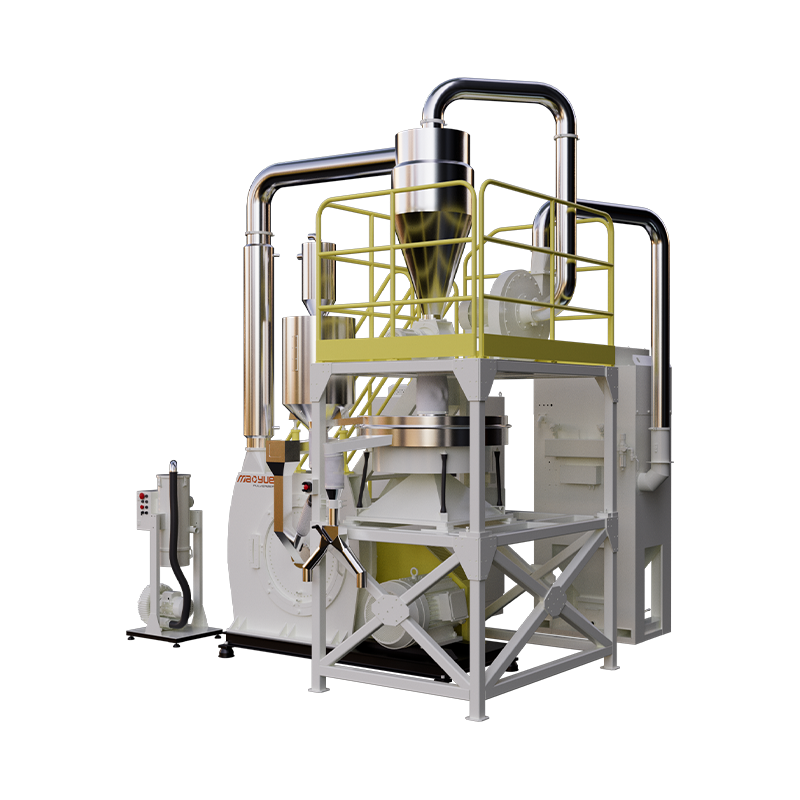
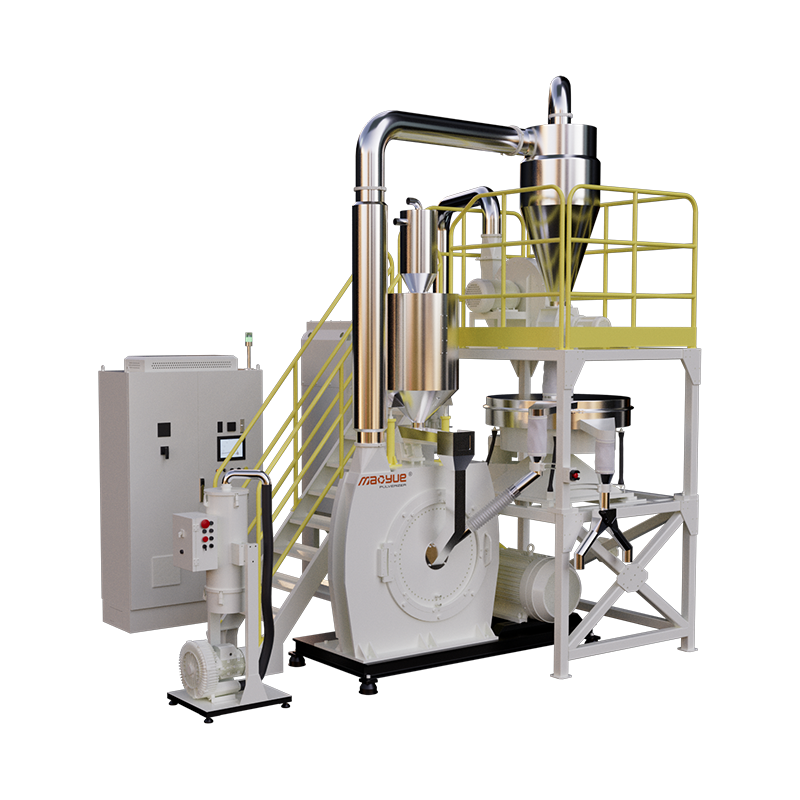
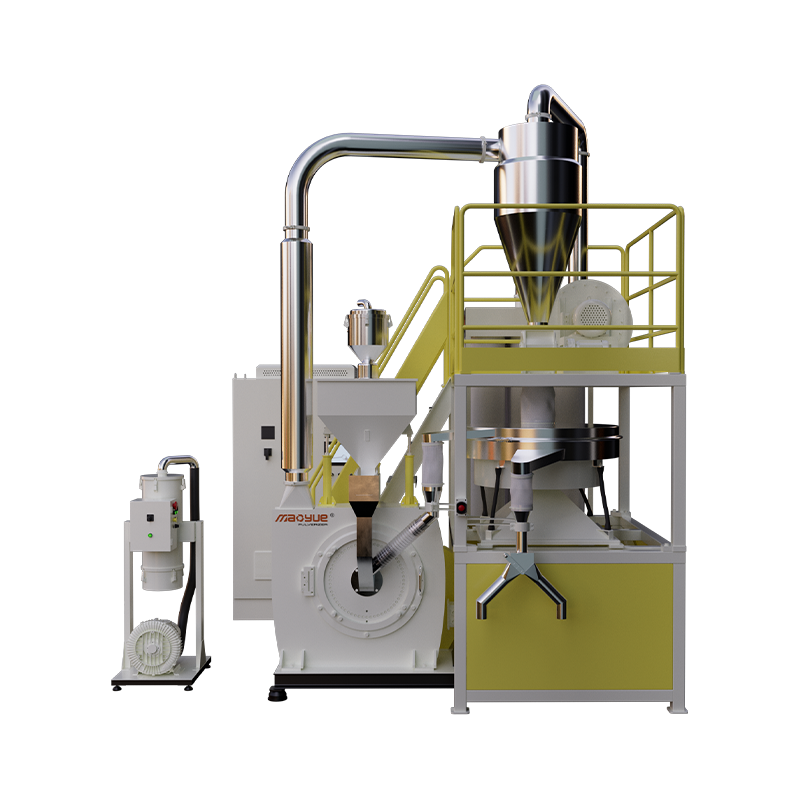
The Model 800 PVC High-Efficiency Energy-Saving Pulverizer is engineered for medium-to-large PVC processing plants that need higher output, stable powder quality, long service life, and lower energy consumption per kilogram of finished material. It is designed for intensive industrial use in PVC recycling, PVC pipe and profile reprocessing, foamed sheet production, cable sheath recycling, building material manufacturing, and functional PVC modification. For factories facing capacity bottlenecks with smaller pulverizers, this equipment provides a practical upgrade path by combining strong grinding force, reliable cooling, heavy-duty construction, and intelligent temperature management.
In the modern plastics industry, pulverizing is no longer a simple size-reduction process. It directly affects material value, downstream extrusion stability, product appearance, melt behavior, foaming uniformity, mechanical strength, and production cost. A pulverizer that produces uneven powder, overheats PVC, or requires frequent blade replacement can reduce the profitability of an entire production line. The Model 800 addresses these challenges through a multi-layer shear grinding structure, premium high-wear-resistant alloy discs, stable vibration damping, high-flow cooling, inverter speed control, and an industrial-grade conveying and screening system.
Compared with smaller machines, especially 700-level pulverizers, this model offers a significant improvement in production capacity while maintaining operating convenience. It is more industrialized than a 700 model but easier to manage than larger 850-class systems. This balance makes it especially attractive for plants that require daily production of approximately 15 to 20 tons, but do not want unnecessary complexity, oversized investment, or excessive operating difficulty.
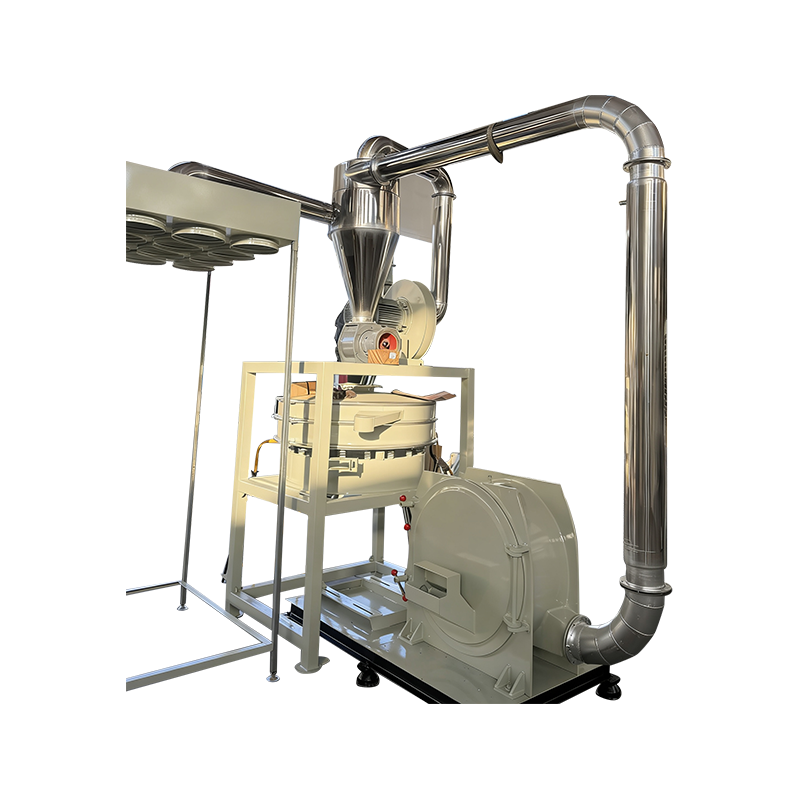
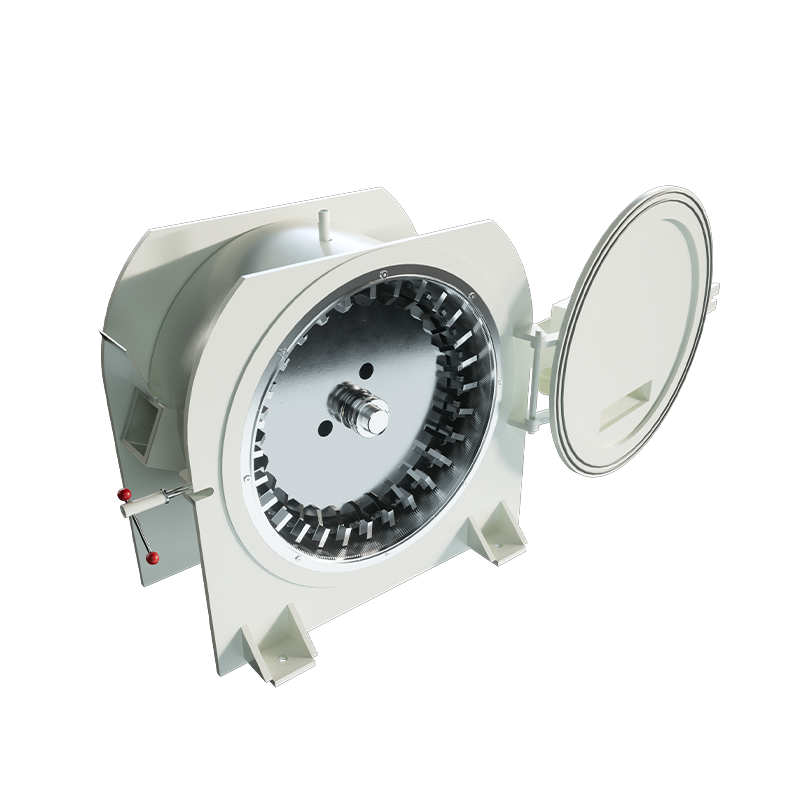
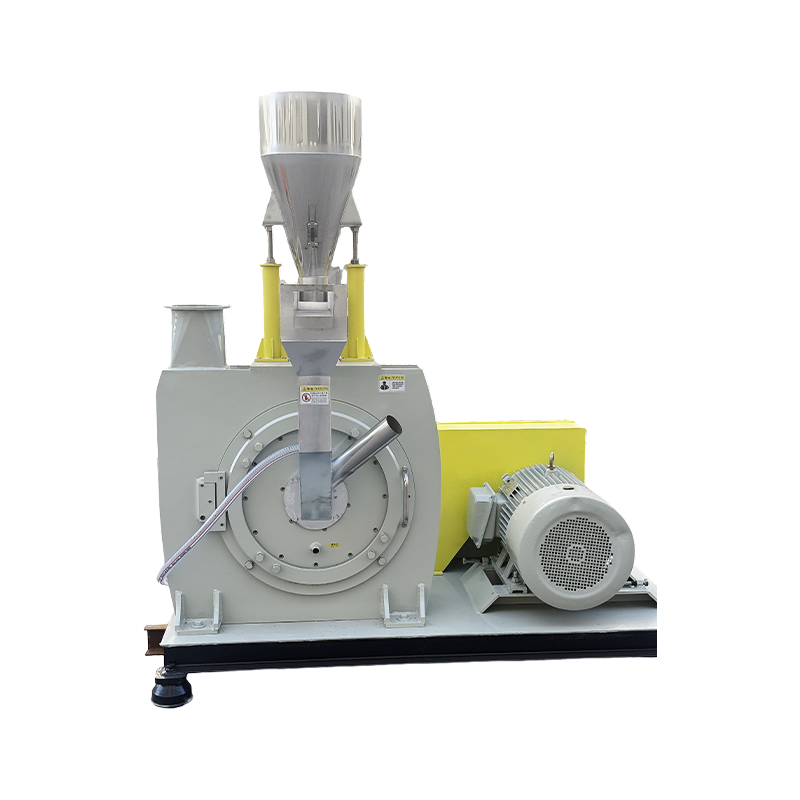
Model 800 PVC High-Efficiency Energy-Saving Pulverizer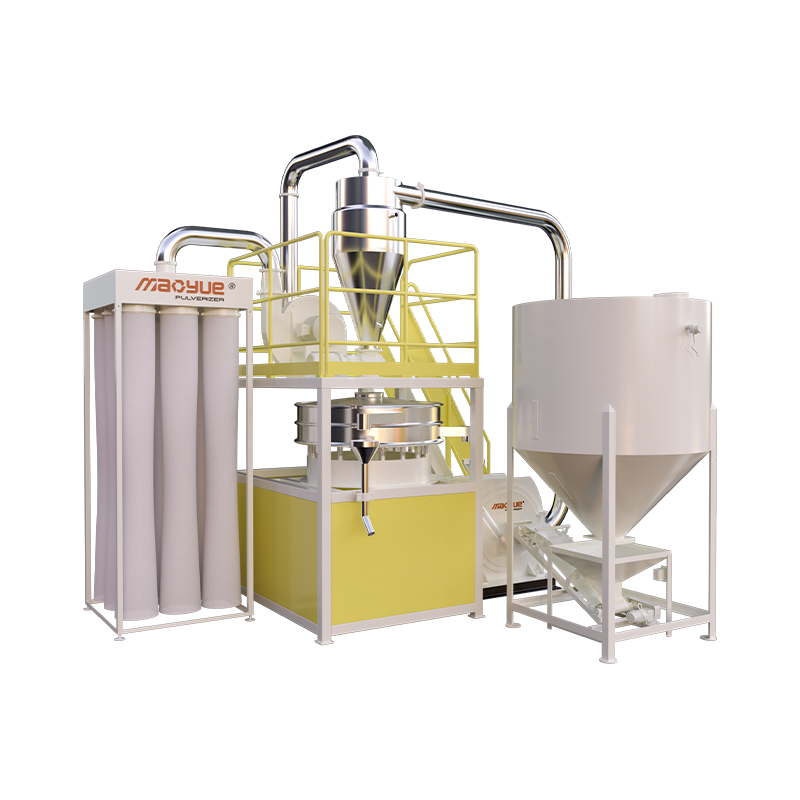
Industrial Positioning of the Model 800 PVC Pulverizer
The Model 800 is positioned as a high-efficiency PVC pulverizing solution for continuous, large-volume, and high-consistency production. It is particularly suitable for enterprises that process large quantities of rigid PVC waste, including construction pipes, window and door profiles, sheets, decorative panels, edge trims, cable sheath materials, and other PVC-based industrial scraps. These materials often contain fillers, calcium carbonate, stabilizers, pigments, and additives that increase wear on grinding discs and create temperature-control challenges during pulverizing.
The equipment is designed to transform these materials into fine, uniform PVC powder with controlled particle distribution. Depending on material characteristics, grinding configuration, and mesh requirements, the Model 800 can support a production capacity range suitable for industrial-scale operation. Its standard configuration uses a 75 kW main motor, while some enhanced configurations may be matched with higher power according to the customer’s production target and material hardness. This flexibility helps factories select an equipment specification that fits actual production rather than relying on a one-size-fits-all solution.
For many manufacturers, the key question is not simply whether a pulverizer can produce powder. The more important question is whether it can continuously produce stable powder with acceptable energy consumption, manageable wear-part cost, low downtime, and reliable output quality. The Model 800 is built around this practical production logic. Its structure, cooling system, disc material, feeding arrangement, screen system, and dust collection design are all selected to support long-hour operation and predictable powder performance.
Core Product Advantages
High Output for Capacity Bottleneck Removal
The most direct advantage of the Model 800 is its strong production capacity. Compared with smaller 700-level machines, it can provide a substantial output increase, helping plants overcome the common problem of pulverizing becoming the limiting step in a recycling or extrusion preparation line. When upstream crushing and downstream conveying or extrusion systems are already capable of handling more material, a low-capacity pulverizer can restrict the entire plant. Upgrading to the Model 800 allows the pulverizing stage to match the production rhythm of larger industrial lines.
For recycling plants processing PVC construction waste, this increased capacity can directly improve business profitability. Waste PVC pipes and profiles are often collected in bulk, and the ability to process them quickly affects inventory turnover, storage cost, labor planning, and order delivery. A pulverizer that can run continuously for long shifts with stable output allows the enterprise to convert low-value waste into higher-value reusable powder more efficiently.
Energy-Saving Grinding Performance
Energy consumption is one of the most important operating costs in pulverizing. PVC grinding requires strong mechanical impact and shearing, and inefficient machines can consume excessive electricity while producing low output. The Model 800 is designed to reduce energy consumption per unit of finished powder by increasing grinding efficiency rather than simply increasing motor power. Its heavy-duty multi-layer shear structure improves the contact, cutting, and friction behavior between material and grinding discs, allowing more effective particle reduction during each pass.
This efficiency advantage is important for long-shift production. A small difference in kilowatt-hour consumption per ton can become a major annual cost difference when a factory operates 16 hours or more per day. For enterprises competing in recycled PVC, construction materials, and modified compounds, lower energy consumption improves price competitiveness and protects profit margins.
Stable Powder Fineness and Narrow Particle Distribution
Powder quality is central to downstream value. The Model 800 is built to produce PVC powder with high fineness, uniform particle size, and good flowability. This is especially important in extrusion, calendering, foaming, compounding, and injection molding applications. Powder with excessive coarse particles can cause surface defects, unstable feeding, uneven melting, weak fusion, poor mechanical consistency, and increased scrap rates. Powder with excessive fines may create dust issues, poor flow, overheating risk, or inconsistent bulk density.
By combining proper disc design, stable feeding, screen separation, and airflow conveying, the Model 800 helps maintain powder uniformity. The mesh size can generally be adjusted according to customer requirements, commonly supporting a range from coarse powder to finer PVC powder used in industrial production. This flexibility enables one machine to serve multiple product categories, such as recycled pipe powder, foamed sheet raw material, cable compound powder, and functional modified PVC powder.
Long-Life High-Wear-Resistant Grinding Discs
Wear resistance is a decisive factor in pulverizer economics. PVC waste, especially pipe and profile waste with high calcium carbonate content, can be abrasive. Low-quality grinding discs may lose sharpness quickly, causing reduced output, higher power consumption, unstable powder size, and frequent replacement downtime. The Model 800 uses premium high-wear-resistant alloy grinding discs designed to withstand high-filler and high-calcium PVC abrasion.
The grinding disc service life may reach approximately 1000 to 1500 hours under suitable operating conditions, depending on material composition, feeding size, filler content, moisture, temperature control, and maintenance practices. This long service life reduces the frequency of disc replacement, lowers spare-part cost per ton, and improves equipment utilization. For large plants, fewer shutdowns can be as valuable as higher hourly output because production continuity affects delivery schedules and labor efficiency.
Cooling System for PVC Heat Sensitivity
PVC is sensitive to heat. Excessive temperature during pulverizing can cause material degradation, discoloration, odor, agglomeration, plate adhesion, and reduced downstream performance. This is particularly important when processing high volumes because heat generation increases with throughput. The Model 800 is equipped with a dual-loop high-flow cooling concept and intelligent temperature-control support to help prevent overheating during continuous high-capacity operation.
Effective cooling protects powder quality and equipment stability. It reduces the risk of PVC sticking to grinding surfaces, prevents production interruptions caused by plate adhesion, and maintains more consistent particle characteristics. For downstream applications such as foamed sheets, cable compounds, and modified profiles, avoiding thermal degradation is essential because degraded PVC can reduce mechanical performance, color stability, electrical properties, and processing reliability.
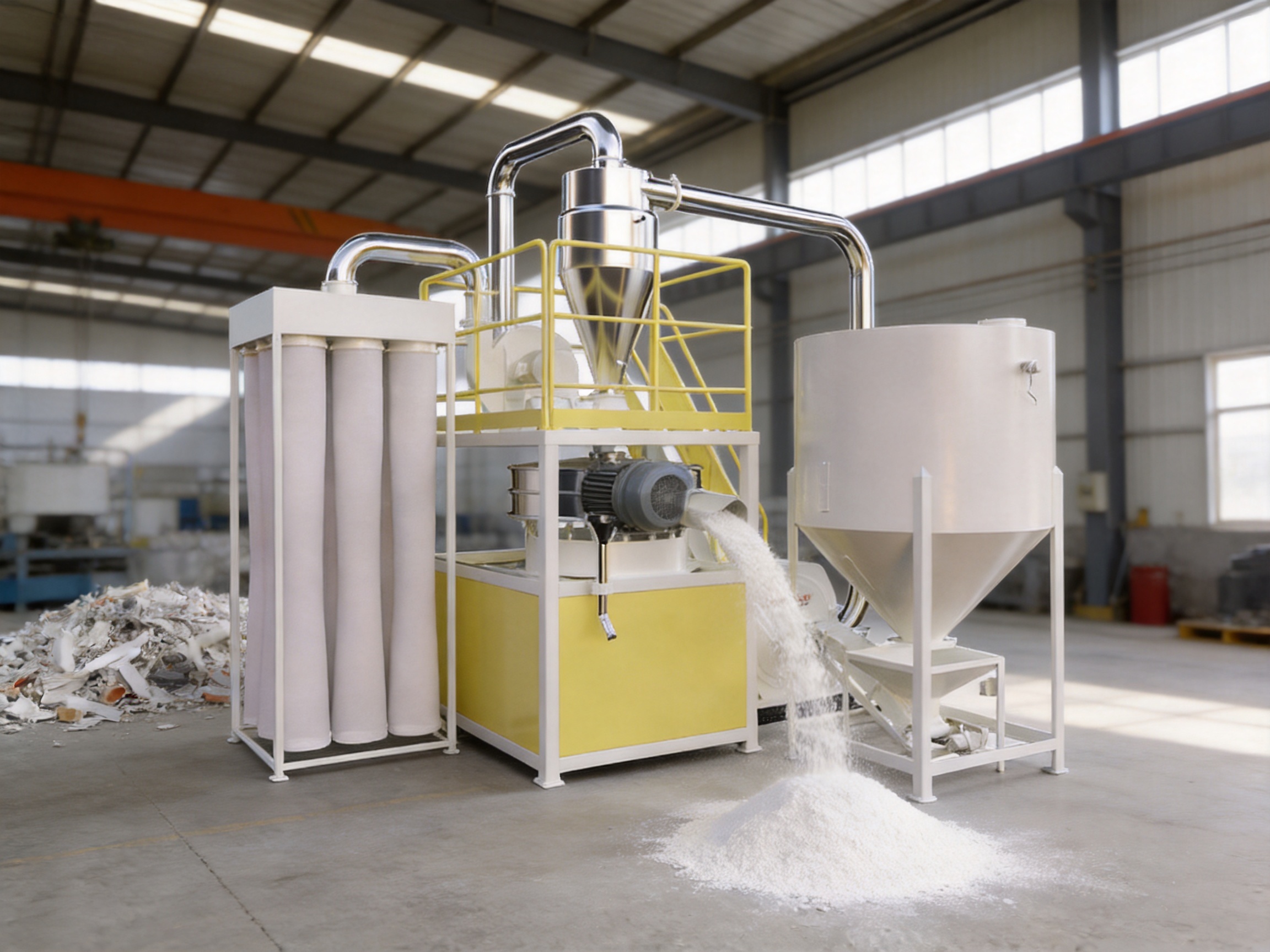
Technical Configuration Overview
The following table presents a representative standard configuration for the Model 800 PVC pulverizer. Actual specifications can be adjusted according to customer material, output target, mesh requirement, plant layout, and supporting equipment.
Item |
Parameter |
Description |
Model |
800 |
Industrial PVC pulverizer for medium-to-large capacity production |
Disc Diameter |
Configuration-dependent, commonly around 660 mm to 800 mm class |
Selected according to grinding structure and required output |
Capacity |
Approximately 400 to 800 kg/h depending on material and mesh |
Higher output is achievable with suitable material and optimized conditions |
Mesh Size |
10 to 50 mesh |
Adjustable according to downstream application requirements |
Main Drive Motor |
75 kW standard, with optional enhanced power configuration |
Provides strong grinding force for rigid PVC materials |
Speed Control |
Inverter |
Supports flexible operating adjustment and smoother startup |
Bearing Configuration |
Imported NSK bearings |
Improves rotation stability and service reliability |
Knife and Blade Material |
High-chromium alloy |
Designed for wear resistance in abrasive PVC applications |
Blower Motor |
11 kW |
Supports pneumatic conveying and powder movement |
Pipe Material |
Stainless steel |
Improves cleanliness, durability, and corrosion resistance |
Pipe Diameter |
159 mm |
Designed for stable airflow and powder transport |
Vibrator Diameter |
1200 mm |
Supports efficient screening and classification |
Vibrating Screen Motor |
1.5 kW |
Provides stable screening movement |
Feeding Method |
Iron-removal tied feeding |
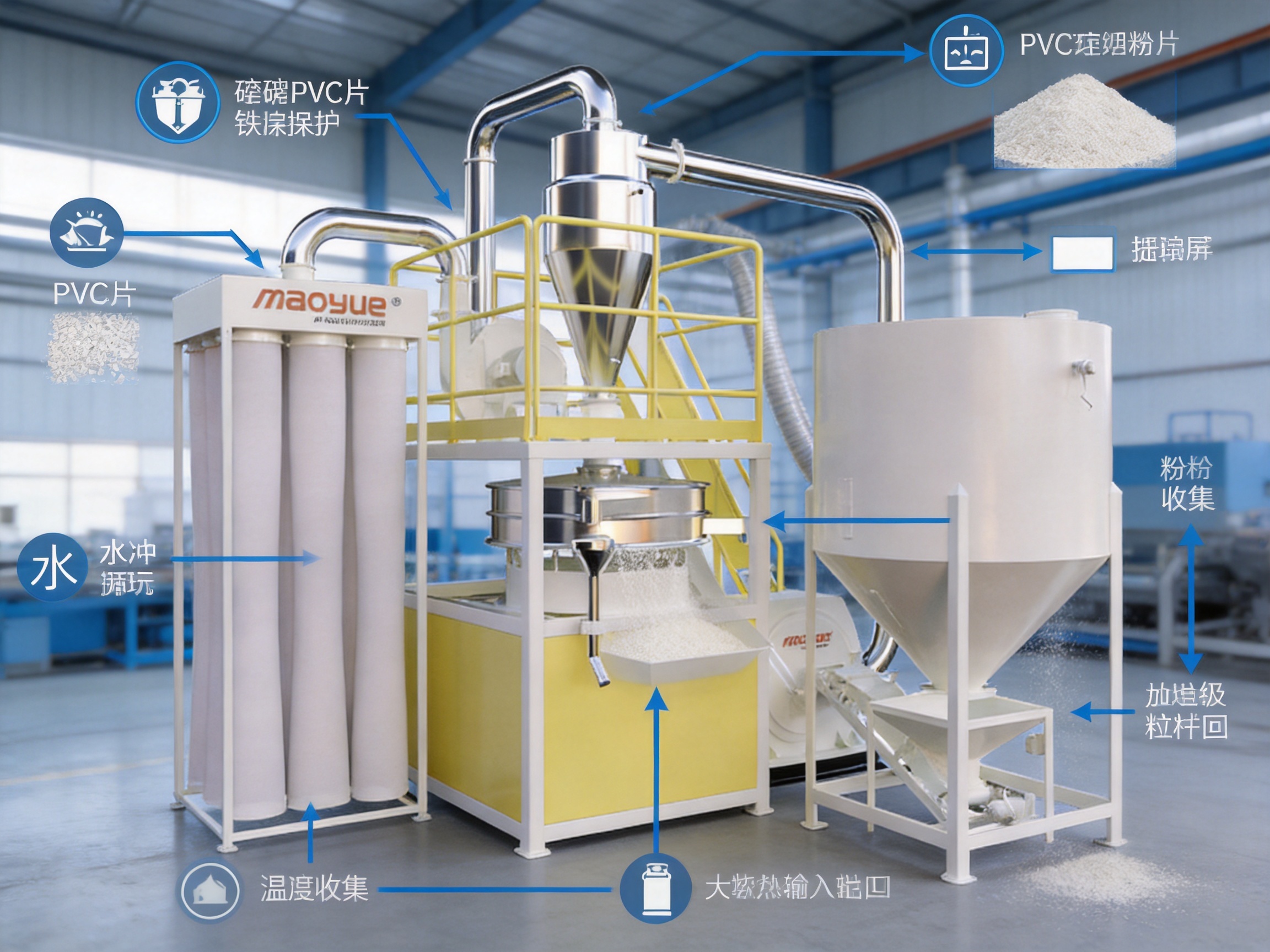
Helps protect grinding components from metallic contamination |
Dust Collector Bag Diameter |
300 mm |
Supports powder collection and cleaner operation |
Cooling Method |
Water cooling with inlet and outlet circulation |
Helps control grinding temperature and protect PVC quality |
Advantages Over Conventional Competing Pulverizers
Better Balance of Capacity and Control
Many competing machines focus on either output or simplicity, but not both. Some smaller pulverizers are easy to operate but cannot meet the production requirements of larger plants. Some larger machines provide high output but require more complicated operation, greater maintenance effort, and higher investment. The Model 800 is designed to sit in a productive middle position: it provides strong industrial capacity while remaining manageable for daily factory operation.
This balance is especially valuable for enterprises upgrading from medium-scale recycling to larger commercial production. Instead of immediately moving to an oversized system, the Model 800 offers a practical step that improves throughput, powder consistency, and energy performance without introducing unnecessary complexity.
Stronger Wear Resistance for High-Filler PVC
In many markets, recycled PVC contains high mineral filler content. Calcium carbonate and similar fillers improve the cost structure of finished products but increase grinding-disc wear during recycling. Conventional pulverizers with ordinary disc material may experience rapid performance decline. As the disc edges wear, powder becomes coarser, capacity decreases, and operators may increase speed or feed pressure, which further raises temperature and energy consumption.
The Model 800 uses high-chromium alloy and premium wear-resistant grinding components to resist this cycle of deterioration. Its longer disc life makes the machine more suitable for real-world PVC recycling, where material quality may vary from batch to batch. This gives it an advantage over low-cost competing equipment that may look economical at purchase but becomes expensive due to frequent maintenance and downtime.
More Reliable Temperature Management
Temperature control is a common weakness in lower-grade pulverizers. Without sufficient cooling, PVC powder may soften, stick, discolor, or degrade. Some operators attempt to reduce feed rate to control temperature, but this sacrifices output. Others interrupt production to allow the machine to cool, which reduces efficiency. The Model 800 is designed for high-flow cooling and intelligent temperature monitoring support, allowing stable operation at higher capacity.
This benefit is not only about machine protection. It directly supports the production of higher-value recycled powder. Powder that has not been thermally damaged has better color, more stable processing behavior, and stronger downstream market acceptance. For customers producing premium recycled pipe, sheet, cable, and modified products, this temperature-control capability is a major competitive advantage.
Improved Noise and Vibration Control
Industrial pulverizing produces mechanical noise and vibration. Poorly designed machines can cause operator fatigue, foundation stress, component loosening, bearing failure, and unstable powder quality. The Model 800 incorporates heavy-duty vibration damping and low-noise fan design to maintain a more controlled production environment. Noise levels can be kept below approximately 88 dB under suitable operating conditions, making it better suited for long-shift operation.
Lower vibration also contributes to equipment longevity. A pulverizer is a high-speed rotating machine, and dynamic balance, bearing quality, frame rigidity, and machining accuracy all affect long-term stability. By emphasizing industrial-grade damping and precision assembly, the Model 800 reduces the risks associated with continuous operation.
Cleaner Material Conveying and Screening
The use of stainless-steel piping, properly matched blower power, and a vibrating screen system supports cleaner and more stable powder handling. In PVC pulverizing, conveying is not a secondary issue. If powder accumulates in pipes, airflow is unstable, or screening is inefficient, the entire system can lose productivity. The Model 800 is designed as a complete pulverizing unit, not only a grinding chamber. Feeding, grinding, cooling, conveying, screening, and dust collection work together to support final powder quality.
Main Application Scenarios
Large-Scale PVC Pipe and Profile Recycling
One of the most important applications of the Model 800 is the recycling of PVC pipes, door and window profiles, construction scrap, and similar rigid PVC materials. These materials are commonly generated in large quantities from building demolition, production trimming, profile extrusion waste, and pipe manufacturing rejects. After crushing, the material can be fed into the pulverizer for fine grinding, producing reusable PVC powder for extrusion lines.
The resulting powder can be used in recycled pipe, profile, board, and other construction-related products. When particle size is uniform and impurity content is low, downstream extrusion becomes more stable. Feeding is smoother, melting is more predictable, and the finished product surface is more consistent. This allows recycling enterprises to increase the value of waste PVC rather than selling it as low-grade crushed material.
For plants targeting daily output of 15 to 20 tons, the Model 800 can serve as the central powder preparation equipment. Its high capacity and continuous operation ability help large recycling factories reduce storage pressure and improve order fulfillment. In markets where recycled construction PVC is increasingly important, this capability supports both environmental goals and commercial growth.
PVC Foam Board and Sheet Production
PVC foam boards, decorative panels, thick-walled sheets, and similar building materials require stable powder preparation. Powder fineness affects foaming behavior, cell structure, wall thickness, surface smoothness, and product strength. If the powder contains large particles or degraded material, foaming may become uneven, sheet surface defects may appear, and mechanical properties may vary.
The Model 800 supports medium-to-large foam and sheet production lines by producing powder with good flowability and controlled particle size distribution. Because the cooling system helps prevent scorching and agglomeration, the powder remains more suitable for sensitive downstream extrusion and calendering processes. Building material manufacturers can use this equipment to create a closed-loop production model, where production scrap is recycled internally and reintroduced into higher-value sheet products.
Cable and Wire PVC Recycling
PVC cable sheath materials often contain plasticizers, fillers, flame retardants, pigments, and other additives. They can be challenging to grind because of their composite nature and variable composition. The Model 800 is suitable for batch processing of high-filler PVC cable sheaths, wire scraps, and composite cable materials after proper pre-treatment and crushing.
The equipment can produce powder with good dispersion and low impurity levels, supporting the preparation of recycled cable compounds. Stable powder contributes to better flowability in compounding and more consistent electrical and mechanical properties in downstream cable-related products. For large cable recycling enterprises, the Model 800 supports both mass production and quality upgrading.
Functional PVC Modification
Beyond standard recycling, the Model 800 is also useful in mid-to-high-end modification applications. PVC-based functional composite powders may be prepared for flame retardancy, impact resistance, weather resistance, chemical corrosion resistance, and other performance requirements. These powders can support premium building panels, weather-resistant profiles, automotive interior components, electronic enclosures, and other products requiring stable raw materials.
In these applications, powder purity and particle consistency are critical. Impurity levels must be controlled, and powder behavior must remain predictable during mixing, compounding, extrusion, or injection molding. The Model 800’s stable grinding, screening, and cooling design helps provide reliable raw material quality for such demanding applications.
Manufacturing Strength Behind the Equipment
The performance of a pulverizer depends not only on its design, but also on how accurately it is manufactured. Changzhou Mao Yue Intelligent Equipment Co., Ltd. is a source manufacturer with 30 years of experience in plastic crushing and pulverizing equipment. The company has developed deep practical knowledge of disc pulverizers and plastic size-reduction systems used in rotational molding, masterbatch, polymers, PVC, PE, recycling, and powder coating industries.
Long manufacturing experience matters because pulverizing equipment is exposed to high-speed rotation, high impact, abrasive wear, heat generation, dust, and continuous vibration. Small errors in machining, balancing, welding, or assembly can become major problems during operation. The company’s production system is designed to control these risks through precision processing, advanced inspection, and standardized assembly.
Six Processing Workshops for Stable Production Capacity
The company operates six processing workshops, each averaging about 1,400 square meters. This workshop scale supports complete equipment manufacturing, component preparation, assembly, testing, and customization. A strong manufacturing base gives customers better delivery reliability and more consistent product quality than trading-oriented suppliers or small assembly shops.
Because pulverizers often need to be matched with different customer materials and plant layouts, manufacturing capacity is important. A factory with sufficient workshops and technical personnel can handle customized requests, spare parts, and after-sales support more effectively. This is especially valuable for international customers who need dependable equipment performance and timely communication.
Precision Grinding Machines Built to German Standards
The factory is equipped with Taiwan-imported high-precision grinding machines built to German standards. Precision machining is particularly important for grinding discs, shafts, housings, bearing seats, and other core components. If these parts are not processed accurately, the machine may suffer from vibration, uneven disc clearance, unstable powder size, bearing wear, and reduced service life.
High-precision machining helps maintain accurate alignment and smooth operation. For a disc pulverizer, the gap between grinding surfaces and the quality of disc installation directly influence powder fineness and capacity. By investing in advanced processing equipment, the manufacturer strengthens the foundation of product reliability.
German Dynamic Balancing Equipment
High-speed rotating systems require excellent dynamic balance. Even a small imbalance can cause vibration, noise, bearing damage, and reduced grinding stability. The use of German dynamic balancing equipment helps ensure that rotating components meet strict balance requirements before final assembly. This is one reason the Model 800 can support continuous industrial operation with controlled vibration.
Dynamic balancing is not simply a quality label. It affects daily production cost. A well-balanced machine runs more smoothly, places less stress on bearings and frames, reduces maintenance frequency, and supports more consistent powder output. For customers running 16 hours or more per day, this manufacturing detail has practical economic value.
Japanese Welding Systems for Structural Reliability
Welding quality affects frame rigidity, equipment durability, vibration resistance, and safety. The company uses Japanese welding systems to improve structural consistency and reliability. Strong welding and stable frames are essential for heavy-duty pulverizers because the equipment must withstand the forces created by material feeding, grinding impact, motor torque, airflow movement, and long-term vibration.
Compared with equipment assembled using inconsistent welding processes, a pulverizer built with controlled welding quality is more likely to maintain alignment and structural integrity over years of service. This supports lower lifetime maintenance cost and safer operation.
European Quality Standards and Certification Awareness
The company is committed to manufacturing components according to European quality standards and has obtained CE mechanical certification and ISO 9001 quality management system certification. These certifications reflect attention to safety, standardized production, quality management, and process control. For customers purchasing industrial equipment, certification provides an additional layer of confidence, especially when machines are integrated into regulated production environments.
Quality management also supports repeatability. A customer purchasing one machine today and spare parts later expects compatibility, consistent machining, and stable service. ISO-style management helps create controlled documentation, inspection, and production traceability.
Operating Value and Return on Investment
The Model 800 represents a medium-to-high investment level compared with smaller or low-cost pulverizers, but its value should be evaluated through long-term return rather than purchase price alone. The real cost of pulverizing includes electricity, disc wear, maintenance labor, downtime, powder rejection, production interruptions, and downstream processing losses. A cheaper machine may cost more over time if it consumes more energy, requires frequent disc changes, produces unstable powder, or cannot meet order volume.
By increasing output, extending wear-part life, reducing overheating risk, and supporting stable powder quality, the Model 800 improves the economics of industrial PVC processing. For high-volume plants, the amortized cost of wear parts and electricity per ton becomes a key performance indicator. The machine’s strong output helps spread fixed costs across more finished powder, while long disc life reduces maintenance cost per ton.
In addition, stable powder quality can improve downstream product yield. If powder supports smoother extrusion or foaming, fewer defective products are produced. This saving may be larger than the direct energy saving of the pulverizer itself. For manufacturers of recycled profiles, boards, cable compounds, and modified PVC products, the value of stable input material is substantial.
Process Flow Integration
The Model 800 is usually integrated into a complete plastic crushing and pulverizing line. A typical process begins with sorting and removing foreign materials, followed by crushing large PVC pieces into smaller flakes or granules. Iron removal is important because metallic contamination can damage grinding discs and create safety risks. The pre-crushed material is then fed into the pulverizer at a controlled rate.
Inside the grinding chamber, the material is reduced by mechanical shearing and friction between the grinding discs. Heat generated during grinding is controlled by the water-cooling system and airflow. The powder is transported through stainless-steel piping by the blower, then classified by the vibrating screen. Qualified powder is collected, while oversized particles may be returned for further grinding depending on system design.
This integrated process is important because pulverizing performance depends on upstream and downstream coordination. If feeding is unstable, the grinding load fluctuates. If airflow is insufficient, powder transport becomes inefficient. If screening is not matched, particle distribution becomes inconsistent. The Model 800’s complete configuration supports a balanced line approach.
Quality of Finished Powder
Finished powder quality from the Model 800 is characterized by high fineness, narrow particle size distribution, good flowability, and reduced risk of scorching or agglomeration. These characteristics help improve downstream production in several ways. First, uniform powder feeds more consistently into mixers and extruders. Second, stable particle size supports more predictable melting and fusion. Third, low thermal degradation helps preserve color and physical properties. Fourth, reduced impurities improve product appearance and reliability.
For high-value applications, impurity control is especially important. Materials intended for functional modification or premium building products may require low impurity levels, sometimes below strict parts-per-million targets depending on customer requirements. While final impurity level depends strongly on sorting and pre-treatment, the pulverizer’s iron-removal feeding arrangement, clean conveying design, and stable processing environment help support cleaner powder production.
Maintenance and Practical Operation
The Model 800 is designed for industrial reliability, but proper operation and maintenance remain essential. Operators should monitor feeding size, feed rate, motor load, cooling water flow, bearing temperature, powder temperature, vibration, and screen condition. Overfeeding can increase temperature and reduce powder uniformity, while underfeeding reduces efficiency. Proper adjustment of inverter speed and feeding rate helps maintain stable grinding conditions.
Grinding discs should be inspected regularly for wear, sharpness, and surface condition. When discs become excessively worn, output may decrease and powder size may become unstable. Timely replacement or reconditioning protects both product quality and energy efficiency. Bearings should be maintained according to recommended lubrication and inspection schedules. The dust collection system should also be checked to ensure safe and clean operation.
Because PVC dust can create housekeeping and safety concerns, plant operators should maintain good ventilation, dust collection, grounding, and cleaning procedures. A well-maintained pulverizing area improves worker comfort, reduces contamination, and supports consistent production.
Why This Model Fits Medium-to-Large PVC Plants
Medium-to-large PVC plants often need equipment that can run long shifts without constant intervention. They require stable capacity, predictable maintenance intervals, and powder quality that supports downstream production. The Model 800 is well matched to these needs because it combines industrial capacity with manageable operation. It is large enough to support serious production but not so oversized that operation becomes unnecessarily complicated.
For a plant upgrading from smaller equipment, the Model 800 can immediately reduce pulverizing bottlenecks. For a recycling company expanding into higher-value powder sales, it improves product consistency. For a building material manufacturer seeking internal closed-loop recycling, it converts production scrap into reusable powder. For a cable recycling enterprise, it supports batch processing of PVC sheath materials. For a compounder, it provides a stable foundation for modified PVC powder preparation.
Q&A Section
Q1: What type of material is the Model 800 mainly designed to process?
The Model 800 is mainly designed for PVC materials, especially rigid PVC pipes, profiles, sheets, foamed board scraps, cable sheath materials, and high-filler PVC waste. It is also suitable for PVC-based functional modification applications when properly configured.
Q2: What is the main advantage of this pulverizer compared with a smaller 700-level machine?
The main advantage is higher industrial capacity with stable powder quality. It can help medium-to-large plants overcome production bottlenecks while maintaining easier operation than oversized systems. It offers a strong balance between output, energy efficiency, and manageability.
Q3: Why is temperature control important in PVC pulverizing?
PVC is heat-sensitive. Excessive grinding temperature can cause degradation, discoloration, odor, agglomeration, and plate adhesion. Good cooling protects powder quality, prevents production interruptions, and improves downstream extrusion or compounding stability.
Q4: How does the machine reduce wear cost?
The machine uses high-wear-resistant alloy grinding discs and high-chromium alloy blade materials. These components are designed to withstand abrasive PVC materials, especially high-calcium and high-filler PVC. Longer disc life reduces replacement frequency, downtime, and spare-part cost per ton.
Q5: What mesh size can the equipment produce?
A typical configuration supports approximately 10 to 50 mesh, depending on material properties, disc condition, screen selection, feeding rate, and customer requirements. The exact powder fineness should be confirmed through material testing and process adjustment.
Q6: Is the Model 800 suitable for continuous production?
Yes. The machine is designed for industrial continuous production, including long-shift operation. Its heavy-duty construction, vibration damping, cooling system, imported bearings, and stable screening system support reliable production in medium-to-large plants.
Q7: Can it process high-filler PVC cable sheath materials?
Yes. The Model 800 is suitable for batch processing of PVC cable sheath scraps and high-filler cable materials after suitable pre-crushing and impurity removal. It can produce powder with good dispersion for downstream recycled cable compound applications.
Q8: What manufacturing strengths support the machine’s reliability?
The manufacturer has 30 years of experience in plastic crushing and pulverizing equipment, six processing workshops, high-precision grinding machines built to German standards, German dynamic balancing equipment, Japanese welding systems, CE mechanical certification, and ISO 9001 quality management certification.
Q9: Why should buyers consider long-term ROI instead of only purchase price?
Pulverizer economics depend on energy consumption, output, disc life, downtime, powder quality, maintenance labor, and downstream product yield. A higher-quality machine may provide better long-term ROI by reducing operating cost per ton and improving production stability.
Q10: What industries can benefit most from this pulverizer?
The main beneficiary industries include PVC recycling, construction material production, pipe and profile manufacturing, PVC foam board production, cable recycling, plastic compounding, and functional PVC modification.
Conclusion
The Model 800 PVC High-Efficiency Energy-Saving Pulverizer is a strong solution for enterprises that require high-capacity, stable, and economical PVC powder production. Its advantages include efficient grinding, long-life wear-resistant discs, reliable cooling, stable powder fineness, reduced vibration, controlled noise, stainless-steel conveying, inverter speed control, and practical integration into crushing and pulverizing lines.
For medium-to-large PVC plants, the equipment provides a valuable balance between industrial output and operating convenience. It is especially suitable for factories processing 15 to 20 tons per day, recycling large volumes of PVC pipe and profile waste, preparing powder for foam board and sheet production, processing cable sheath materials, or producing functional modified PVC powders. Its long-term value comes not only from higher capacity, but also from better powder quality, lower wear cost, reduced downtime, and improved downstream production consistency.
Behind the machine is the manufacturing strength of Changzhou Mao Yue Intelligent Equipment Co., Ltd., a source manufacturer with decades of experience, advanced machining capacity, precision balancing, reliable welding systems, and recognized quality certifications. For buyers seeking a durable PVC pulverizer with strong production performance and dependable manufacturing support, the Model 800 represents a practical and future-ready investment.
References
1. Brydson, J. A. Plastics Materials. Butterworth-Heinemann.
2. Schiller, M. PVC Additives: Performance, Chemistry, Developments, and Sustainability. Hanser Publishers.
3. Rauwendaal, C. Polymer Extrusion. Hanser Publishers.
4. Goodship, V. Introduction to Plastics Recycling. Smithers Rapra Publishing.
5. ISO 9001 Quality Management Systems: Requirements. International Organization for Standardization.
6. CE Machinery Safety Guidance and European Machinery Compliance Principles.