

 English
 русский
 Español
 عربى
عربى 中文简体
中文简体
 中文简体
中文简体
Content
- 1 Why Powder Uniformity Matters in Rotomolding
- 2 Product Positioning: A Golden Configuration for Medium-to-Large Capacity
- 3 Core Advantages Over Ordinary Competitor Machines
- 4 Precision Grinding Discs: The Heart of Powder Quality
- 5 Tooth-by-Tooth CNC Grinding for Narrow Particle Size Distribution
- 6 Dynamic Balancing for Low Vibration and Long Service Life
- 7 Cooling System Designed for PE Powder Stability
- 8 Closed Negative-Pressure Conveying and Dust Collection
- 9 Main Technical Configuration
- 10 Drive Control and Energy Efficiency
- 11 Applications in Rotomolding and Related Industries
- 12 Manufacturing Strength Behind the Machine
- 13 Customization for Different Production Needs
- 14 Operating Stability and Maintenance Economy
- 15 How the Machine Improves Rotomolding Product Quality
- 16 Comparison with Common Low-Cost Pulverizers
- 17 Return on Investment Considerations
- 18 Installation and Production Line Integration
- 19 Quality Management and International Market Readiness
- 20 Recommended User Profiles
- 21 Q&A Section
- 21.1 Q1: What is the main purpose of the 600-type PE rotomolding pulverizer?
- 21.2 Q2: Why is DC53 grinding blade material important?
- 21.3 Q3: How does precision CNC grinding improve powder quality?
- 21.4 Q4: Why is dynamic balancing necessary?
- 21.5 Q5: What mesh size can the machine produce?
- 21.6 Q6: What is the reference capacity of the machine?
- 21.7 Q7: How does the cooling system protect PE powder quality?
- 21.8 Q8: Is the machine suitable for recycled PE material?
- 21.9 Q9: What are the advantages of the enclosed negative-pressure conveying system?
- 21.10 Q10: Why choose a source manufacturer rather than a general trading supplier?
- 22 Conclusion
- 23 References
- 24 Product: PE Rotomolding Powder High Uniformity 600 Pulverizer
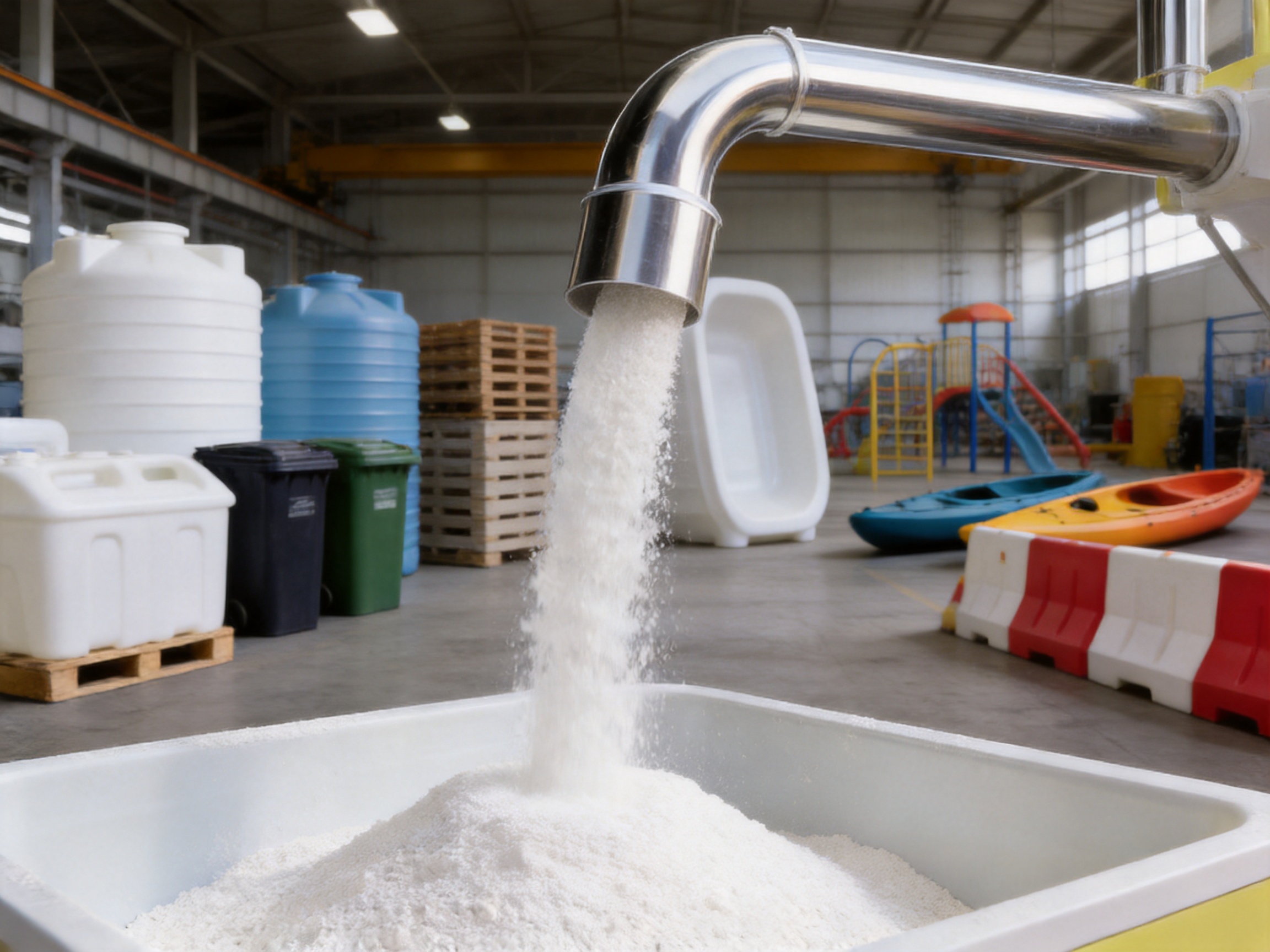
In rotational molding, the quality of the final product begins long before the mold is heated. It begins with the powder. For manufacturers producing water tanks, pallets, trash bins, playground equipment, kayaks, containers, road barriers, and other rotomolded products, polyethylene powder uniformity directly affects flowability, wall thickness distribution, surface finish, mechanical strength, production consistency, and reject rate. A pulverizer that can convert PE granules or recycled material into stable, narrow-distribution powder is therefore not simply an auxiliary machine; it is a core production asset.
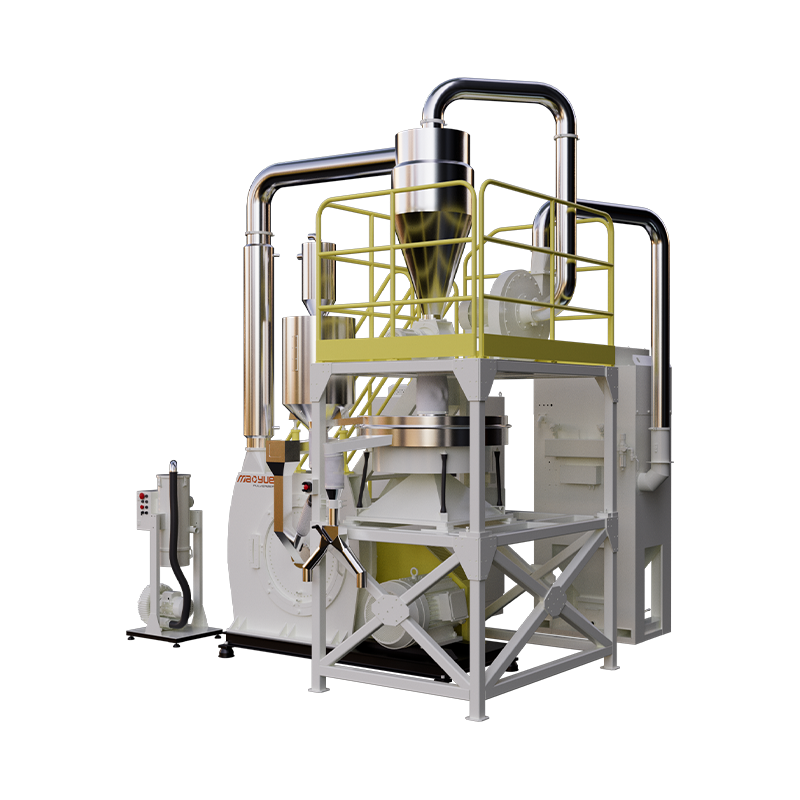
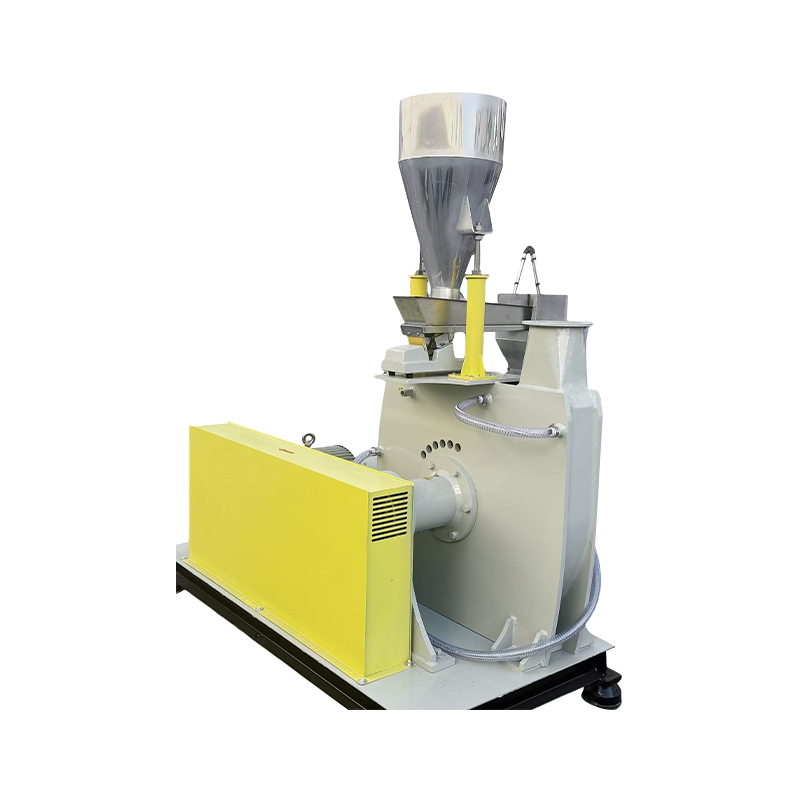
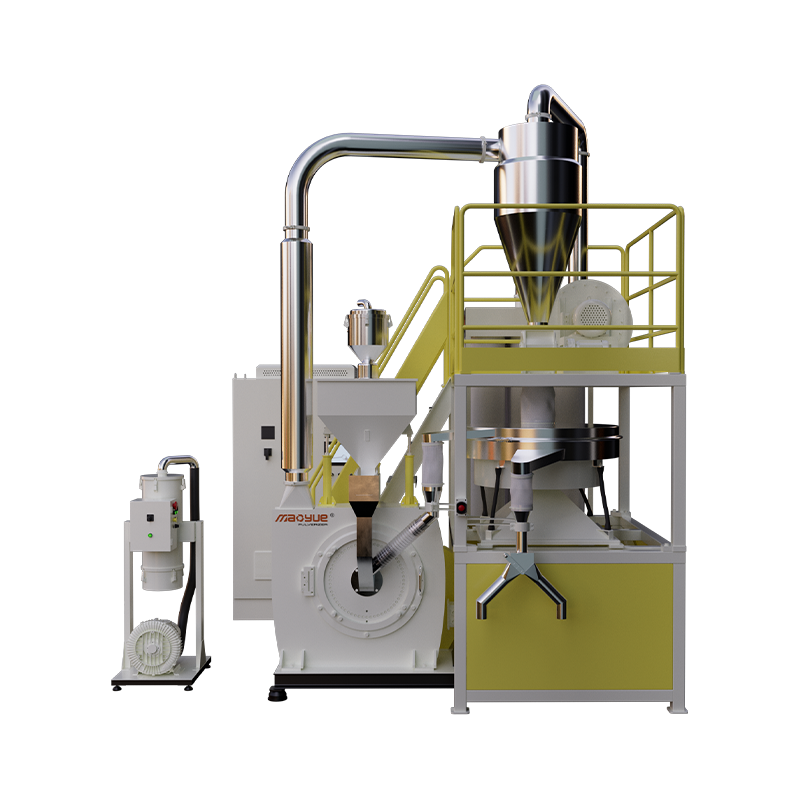
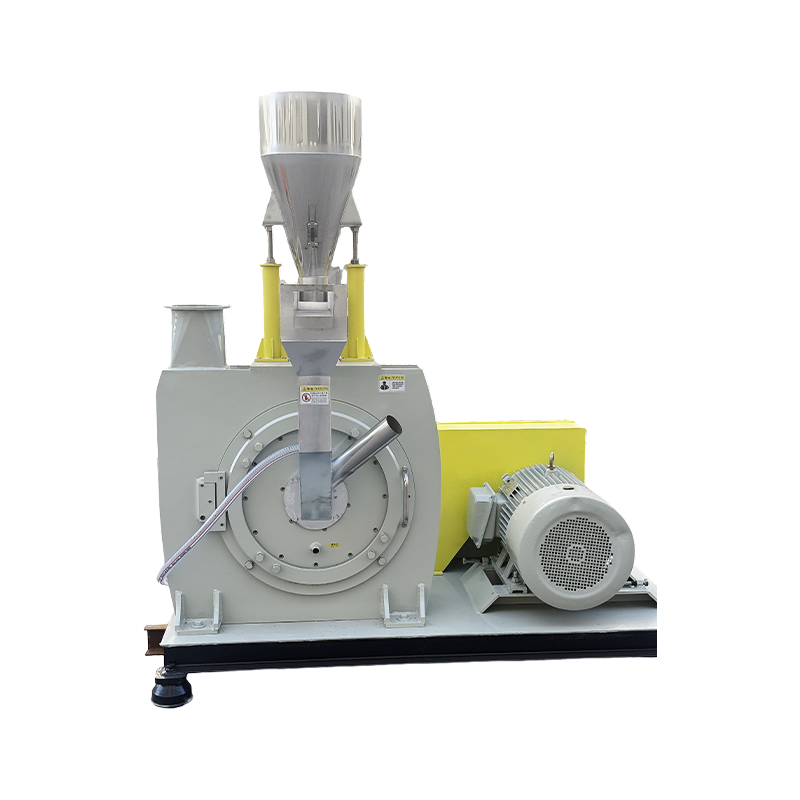
The PE rotomolding powder high uniformity 600 pulverizer is designed as a medium-to-large capacity disc pulverizing system for industrial powder production. It is built for manufacturers that require a practical balance between output, powder fineness, energy consumption, maintenance cost, and long-term operating stability. With a 600 mm grinding disc, DC53 grinding blade material, water cooling, vacuum feeding, stainless steel conveying pipework, and configurable drive control, this machine is positioned as a high-value solution for rotomolding powder plants, modified plastics producers, recycling processors, masterbatch suppliers, and related powder-processing industries.
Unlike small laboratory mills or low-output pulverizers that struggle with heat control, vibration, and particle size consistency, the 600-type pulverizer is intended for continuous industrial production. It occupies a relatively compact footprint while providing strong capacity for medium-to-large operations. Compared with many ordinary pulverizers on the market, its competitive value comes from the integration of precision grinding disc manufacturing, dynamic balancing, intelligent cooling, dust control, durable materials, and field-oriented customization.
Changzhou Mao Yue Intelligent Equipment Co., Ltd. manufactures this pulverizer based on approximately 30 years of experience in plastic crushing and pulverizing equipment. The company is a source manufacturer with processing workshops, precision grinding equipment, German dynamic balancing technology, Japanese welding systems, and a professional technical team that continuously studies advanced machine technologies. Its disc pulverizers are widely used in PE, PVC, masterbatch, polymer processing, recycling, powder coating, and rotational molding industries.
PE Rotomolding Powder High Uniformity 600 Pulverizer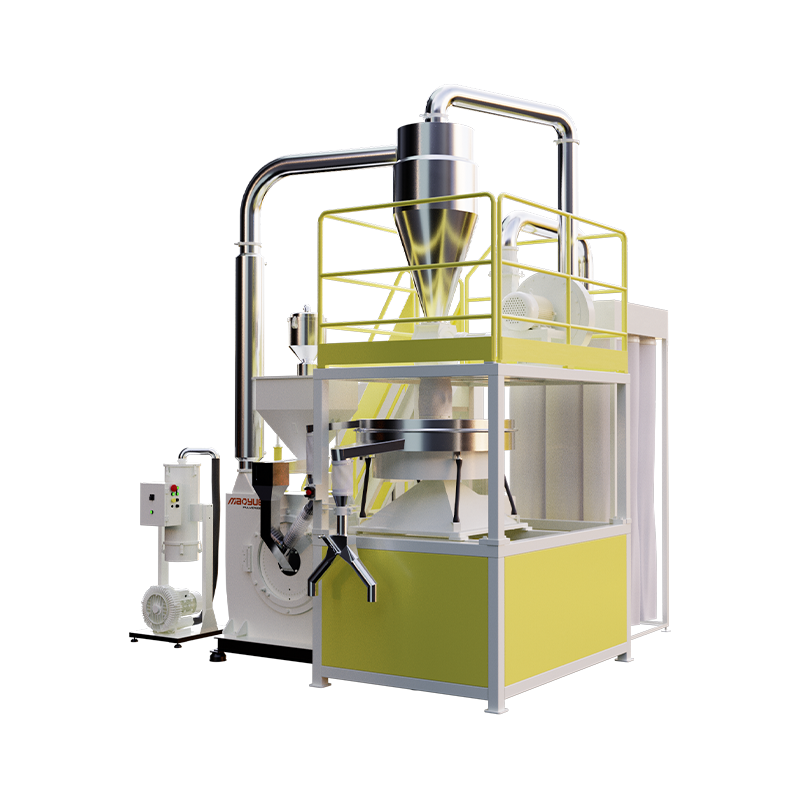
Why Powder Uniformity Matters in Rotomolding
Rotational molding is highly sensitive to powder behavior. During heating, powder particles must flow, tumble, melt, and adhere evenly to the internal surface of the mold. If the powder is too coarse, too irregular, overheated, degraded, or inconsistent in particle size distribution, the molded product may suffer from pinholes, rough surface texture, uneven thickness, weak corners, poor impact strength, low material utilization, or extended heating cycles.
In PE rotomolding, powder typically needs to achieve a controlled mesh range with good flowability and minimal thermal damage. The pulverizing process must reduce plastic granules without excessive heat buildup, material sticking, or particle agglomeration. This is especially important for linear low-density polyethylene and other rotomolding-grade PE materials, which require careful temperature management during size reduction.
A conventional pulverizer may be able to produce powder, but producing powder that remains stable over long shifts is much more difficult. Over time, blade wear, vibration, bearing stress, inconsistent feeding, chamber overheating, and poor classification can cause powder quality to drift. This leads to unstable molding results, more operator adjustments, and higher rejection costs. The 600-type PE rotomolding pulverizer addresses these practical pain points by focusing on disc precision, blade durability, cooling efficiency, stable airflow conveying, and dust collection.
Product Positioning: A Golden Configuration for Medium-to-Large Capacity
The 600-type pulverizer is often considered a balanced configuration for manufacturers that need more output than a 500-type machine but do not yet require the higher investment, space, or power demand of a larger 800-type system. It offers a practical middle ground: higher throughput, strong powder quality control, relatively compact installation requirements, and manageable energy consumption.
For many medium-to-large rotomolding factories, this balance is important. A machine that is too small becomes a bottleneck and forces frequent overtime or multiple production shifts. A machine that is too large may require higher capital investment, larger workshop space, more power capacity, and more complex operation. The 600-type machine is designed to provide a strong output level while retaining flexibility for production planning, formula development, and multi-material processing.
Depending on material characteristics, target mesh, feeding configuration, cooling conditions, and production requirements, the machine can be configured for different output ranges. The reference configuration table lists 180–320 kg/h for certain operating conditions, while higher-capacity line configurations and optimized process arrangements may support broader production targets. In practical use, capacity should always be evaluated according to raw material type, desired fineness, moisture level, ambient temperature, grinding disc condition, and screen or classifier settings.
Core Advantages Over Ordinary Competitor Machines
The market for plastic pulverizers includes many machines that appear similar from the outside. However, real operating performance depends on details hidden inside the system: the steel used for the grinding discs, the accuracy of tooth grinding, the stability of rotor balance, the cooling design, the negative-pressure conveying system, the quality of welding and machining, the control logic, and the manufacturer’s ability to refurbish or support tooling over time.
One of the main advantages of this 600-type pulverizer is its use of DC53 high-grade cold-work mold steel for the grinding discs. Compared with conventional D2 steel often used in standard pulverizer discs, DC53 provides better toughness, fatigue resistance, and anti-chipping performance. For PE powder production, this means longer blade life, more consistent cutting action, and lower risk of edge breakage. Since grinding disc wear is one of the major long-term costs in pulverizing operations, improved disc life can significantly reduce maintenance frequency and tooling expenses.
Another advantage is tooth-by-tooth precision grinding using imported Taiwanese professional CNC tool grinders built to high machining standards. In pulverizer operation, each tooth angle and edge consistency affects powder cutting behavior. If blade angles are inconsistent, the machine may produce a wider particle size distribution, more heat, more vibration, or lower efficiency. Precision grinding helps maintain sharpness and uniform geometry, resulting in a narrower particle size distribution and better powder uniformity.
The machine also benefits from high-precision dynamic balancing. Each disc is dynamically balanced using German-imported balancing equipment. Good balancing reduces vibration, bearing load, noise, foundation stress, and long-term mechanical fatigue. For users who operate continuously, this is a key factor in machine reliability. Lower vibration also helps maintain stable clearance between grinding surfaces, which supports more consistent powder fineness over long production runs.
Cooling design is another competitive advantage. PE is sensitive to heat during pulverizing. If the grinding chamber temperature rises too high, powder may soften, stick, clump, lose flowability, or degrade. The machine uses a water-cooling system and forced airflow assistance to control heat. Multi-point temperature monitoring and intelligent control options help maintain a stable grinding environment. Compared with machines that rely only on basic airflow or insufficient water cooling, this system is better suited for continuous PE rotomolding powder production.
Dust control also separates professional industrial pulverizers from low-cost alternatives. Fine plastic powder can create housekeeping, safety, environmental, and worker health concerns. The fully enclosed negative-pressure airflow conveying system and high-efficiency pulse bag dust collector are designed to capture dust efficiently and keep the workshop cleaner. This is especially valuable for factories pursuing organized production, environmental compliance, and safer working conditions.
Precision Grinding Discs: The Heart of Powder Quality
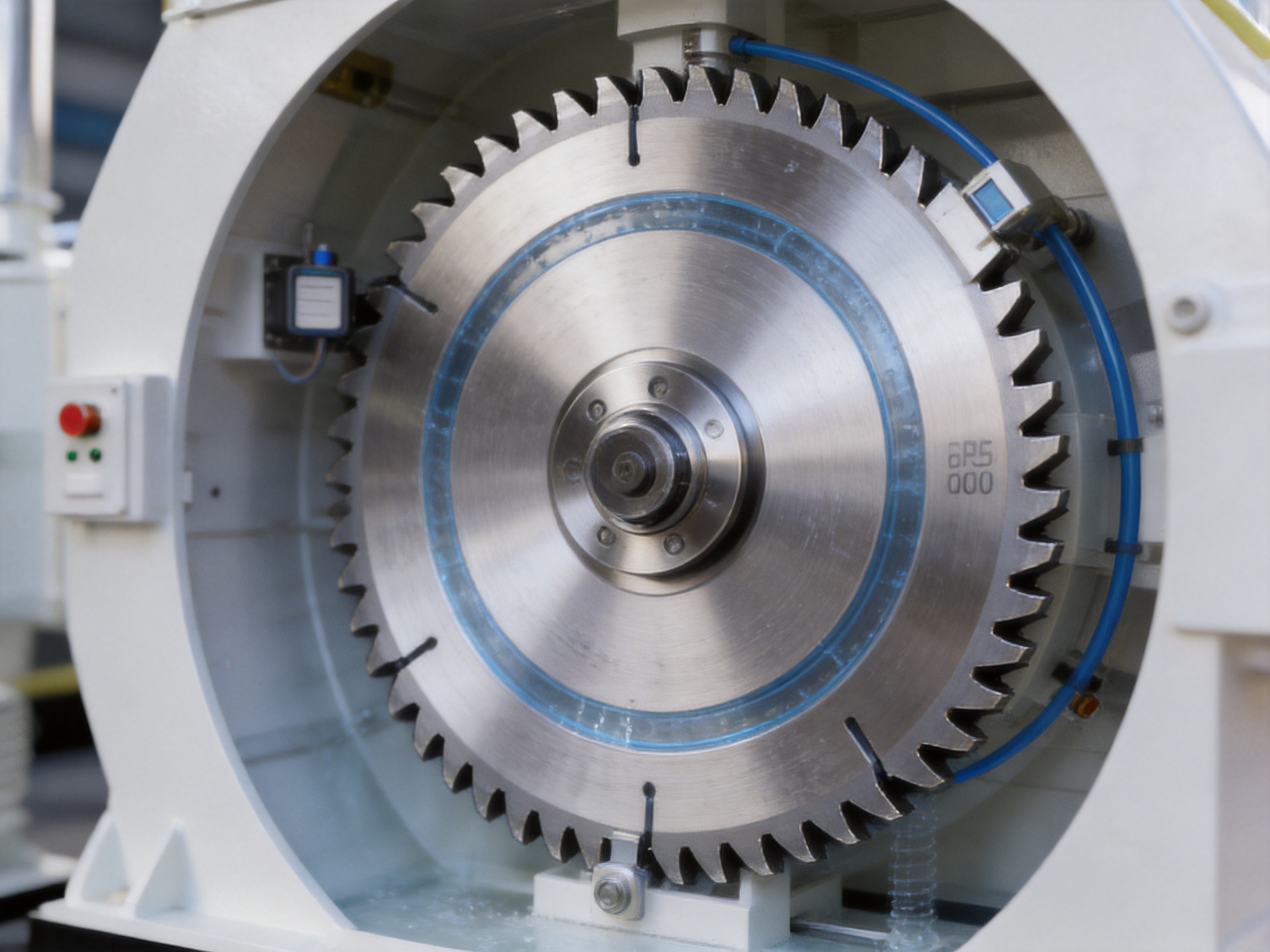
The grinding disc is the central component of a disc pulverizer. It determines cutting efficiency, powder particle shape, powder distribution, heat generation, energy consumption, and maintenance cost. For rotomolding powder, the disc must not only grind material smaller; it must produce particles that behave well in a mold.
The 600-type pulverizer uses a 600 mm disc diameter, giving it strong grinding area and capacity for industrial production. The material of the grinding blade is DC53, a high-grade cold-work mold steel known for a combination of hardness and toughness. With suitable heat treatment, the disc can reach a hardness of approximately HRC 62–64. This gives it excellent wear resistance while reducing the brittleness issues that may occur with some conventional steels.
In many ordinary pulverizers, grinding discs wear quickly, become dull, or chip under heavy production. Once the disc edge becomes rounded, pulverizing efficiency decreases and heat generation increases. The machine may require more power to produce the same powder, and powder uniformity may become worse. By using higher-grade steel and precision grinding technology, the 600-type pulverizer helps extend usable disc life and maintain powder quality for longer periods.
Another major benefit is the availability of professional disc refurbishing. When discs become dull, they do not always need to be replaced immediately. Refurbishing can restore cutting geometry at a cost significantly lower than purchasing new discs. This reduces lifetime operating cost and supports sustainable machine ownership. For factories that operate daily, disc refurbishing can become a major part of cost control.
Tooth-by-Tooth CNC Grinding for Narrow Particle Size Distribution
Powder uniformity is not achieved by motor power alone. It depends on the exact cutting geometry between the fixed and rotating discs. Every tooth must cooperate with the next tooth to shear, impact, and reduce the plastic in a controlled way. If the tooth surface is rough, the angle is inaccurate, or the spacing is inconsistent, the powder may contain too many oversized particles, fines, heat-affected particles, or irregular shapes.
The manufacturer uses imported Taiwanese professional CNC tool grinders for tooth-by-tooth precision grinding. This process is intended to ensure that each blade angle is consistent at a fine level. The result is sharper disc edges and more predictable powder formation. For rotomolding, this is especially important because powder with narrow distribution improves flowability and helps material distribute evenly in the mold.
Better particle size consistency can reduce downstream defects. Rough product surfaces, uneven product thickness, weak areas, and insufficient mechanical strength often relate to poor powder behavior. When powder melts uniformly and flows well, the final rotomolded product has better appearance and more stable performance. Therefore, the precision of the pulverizer directly contributes to customer product quality.
Compared with common machines using less precise disc processing, this manufacturing approach is a meaningful advantage. Competitors may offer a lower initial purchase price, but inconsistent discs can lead to higher reject rates, more screening loss, more frequent adjustments, and increased production uncertainty. In real industrial economics, stable powder quality often saves more money than the initial difference in equipment cost.
Dynamic Balancing for Low Vibration and Long Service Life
High-speed rotating components require excellent balance. Even a small imbalance in the grinding disc assembly can create vibration, noise, bearing wear, shaft stress, unstable grinding clearance, and premature mechanical damage. In powder production, vibration can also affect fineness consistency and operator comfort.
The 600-type pulverizer is produced with rigorous dynamic balancing using German-imported high-precision balancing equipment. This helps achieve smooth operation and supports the well-known “coin-standing” stability effect often associated with well-balanced rotating machinery. While actual performance depends on installation conditions and production settings, the purpose is clear: reduce vibration and improve long-term reliability.
Low vibration has several practical benefits. First, it protects the bearings and mechanical transmission system. Second, it reduces fatigue on the frame, welds, and foundation. Third, it contributes to lower operating noise, with noise levels designed to remain below 85 dB under suitable operating conditions. Fourth, it helps maintain consistent disc clearance, supporting stable powder fineness over long shifts.
Many low-cost pulverizers fail not because the motor is too small, but because mechanical stability is insufficient. Vibration gradually causes loosening, wear, and quality drift. By investing in dynamic balancing and precision machining, the manufacturer strengthens the machine’s ability to operate continuously, including 24/7 production environments where downtime is costly.
Cooling System Designed for PE Powder Stability
Heat control is one of the most important technical challenges in PE pulverizing. During grinding, mechanical energy converts into heat. If the chamber temperature rises beyond the suitable range, polyethylene may soften. Soft material sticks to the discs, blocks the chamber, forms clumps, and produces powder with poor flowability. Overheating can also reduce powder quality and increase cleaning time.
The 600-type pulverizer uses water cooling as a standard cooling method, with one inlet and one outlet for circulation. The water-cooling jacket helps remove heat from the grinding chamber. Forced airflow and negative-pressure conveying assist material movement and heat removal. In advanced configurations, multi-point temperature sensors and PLC intelligent control can help maintain grinding chamber temperature within a stable range suitable for PE powder processing.
Stable temperature control helps prevent sticking, clumping, degradation, and inconsistent powder behavior. It also allows the machine to run longer without frequent shutdowns for cleaning. For rotomolding powder suppliers, this is critical because customers expect batch-to-batch consistency. A powder that flows well in the morning but becomes sticky in the afternoon due to heat buildup can create serious production problems.
Compared with machines that lack adequate cooling design, the 600-type pulverizer is more suitable for continuous production of PE rotomolding powder. The cooling system not only protects product quality but also reduces operator workload, cleaning time, and unplanned downtime.
Closed Negative-Pressure Conveying and Dust Collection
Plastic powder production inevitably generates fine particles. Without proper dust management, powder can escape into the workshop, cover equipment, affect worker health, increase cleaning costs, and create environmental compliance concerns. Good dust collection is therefore not an optional luxury; it is part of responsible industrial production.
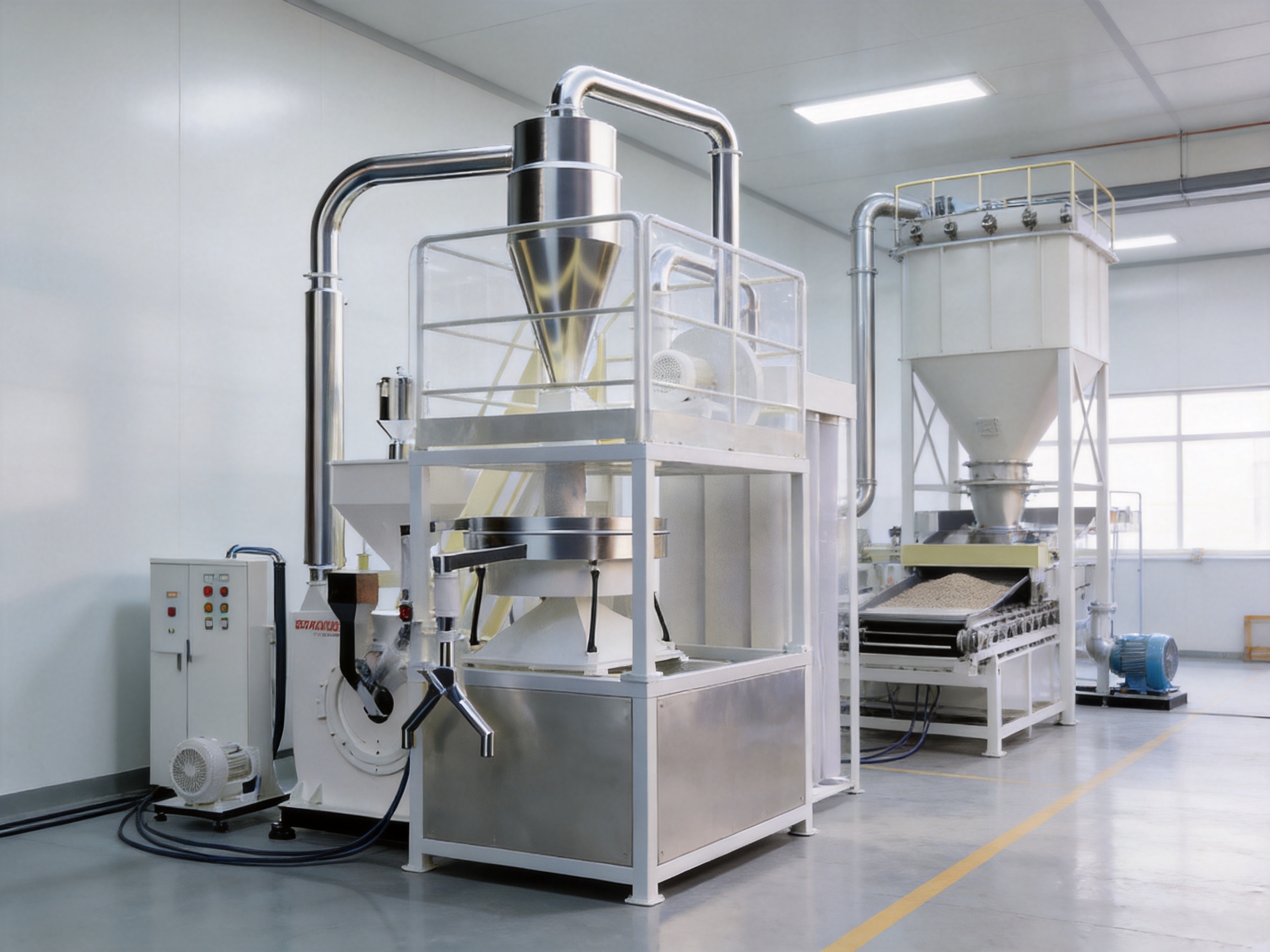
The 600-type pulverizer adopts a fully enclosed negative-pressure airflow conveying design. Powder is transported through stainless steel pipework, reducing leakage and contamination risk. The conveying pipe diameter is listed as 159 mm in the reference configuration, and the pipe material is all stainless steel. Stainless steel improves cleanliness, corrosion resistance, and durability, while also supporting easier maintenance.
The system is paired with a high-efficiency pulse bag dust collector. The listed bag diameter is 300 mm. Pulse cleaning helps maintain airflow by periodically removing accumulated powder from filter bags. This supports stable conveying performance and reduces manual cleaning frequency. A strong dust capture design can achieve very high capture efficiency under proper operation and maintenance conditions.
For manufacturers comparing pulverizers, dust collection should be evaluated carefully. A lower-cost machine with poor sealing or weak dust collection may appear cheaper initially, but the long-term cost of cleaning, product loss, environmental issues, and worker dissatisfaction can be substantial. A clean powder production line improves factory image, safety management, and operational efficiency.
Main Technical Configuration
The following table summarizes a reference configuration for the PE rotomolding powder high uniformity 600 pulverizer. Actual configurations can be adjusted according to customer materials, required mesh, capacity expectations, feeding method, voltage, automation level, workshop layout, and production line integration requirements.
Item |
Description |
Reference Specification |
1 |
Type |
600 |
2 |
Diameter of disc |
600 mm |
3 |
Capacity |
180–320 kg/h under reference conditions; higher line output may depend on material and configuration |
4 |
Mesh size |
10–50 mesh reference range; fineness can be adjusted according to process requirements |
5 |
Drive motor |
45/55 kW |
6 |
Speed control |
Star-delta start, soft start, or inverter option |
7 |
Belt pulley standard |
European standard |
8 |
Material of grinding blade |
DC53 |
9 |
Blower motor |
7.5 kW |
10 |
Pipe material |
All stainless steel |
11 |
Diameter size of pipe |
159 mm |
12 |
Diameter of swing vibrator |
1200 mm |
13 |
Motor power of vibrating screen |
1.1 kW |
14 |
Feeding method |
Vacuum feeding |
15 |
Bag diameter size of dust collector |
300 mm |
16 |
Cooling method |
Water cooling with inlet and outlet circulation |
Drive Control and Energy Efficiency
The drive system is a major factor in pulverizer performance. The 600-type machine can use star-delta starting, soft starting, or inverter control depending on the customer’s electrical requirements and production strategy. Each option has advantages. Star-delta starting is a traditional and cost-effective method for reducing starting current. Soft starting provides smoother acceleration and reduces mechanical shock. Inverter control offers more flexible speed adjustment and can help optimize powder quality, power use, and material response.
For factories processing different PE grades or switching between recycled and virgin materials, inverter control can be especially useful. Different materials may require different disc speeds, feed rates, and temperature control strategies. Adjustable speed allows operators to refine the pulverizing process and balance output with particle size distribution.
Energy cost is one of the largest long-term expenses in powder production. A pulverizer with sharp discs, good balancing, proper airflow, and effective cooling can reduce wasted energy. Dull discs and unstable machines consume more power because they generate heat and vibration instead of useful cutting action. Therefore, the machine’s manufacturing precision contributes directly to energy efficiency.
When evaluating return on investment, users should consider not only the rated motor power but also the kilowatt-hours per ton of qualified powder. A machine that produces stable qualified powder with fewer rejects, less re-screening, fewer shutdowns, and longer disc life may deliver a faster ROI than a cheaper alternative with poor efficiency.
Applications in Rotomolding and Related Industries
The primary application of the 600-type pulverizer is PE rotomolding powder production. It is suitable for medium-to-large rotomolding product manufacturers producing water tanks, pallets, trash bins, playground equipment, industrial containers, agricultural products, traffic products, and other hollow or complex plastic parts. These products require powder that flows evenly and melts consistently inside the mold.
The machine is also suitable for powder suppliers serving rotomolding factories. In this business model, powder quality and delivery consistency determine customer trust. A supplier must produce powder with stable mesh, low contamination, controlled moisture, and reliable flowability. The 600-type pulverizer supports this requirement through precision disc grinding, cooling control, and dust-managed conveying.
Another application is recycling and re-pulverizing waste PE rotomolding products. Recycled material can vary in hardness, additives, color, and contamination level. A strong pulverizer with durable discs and stable operation can help convert suitable recycled PE into usable powder or intermediate material. Proper pre-crushing, cleaning, drying, and metal removal are important before pulverizing recycled plastics.
The machine can also be used in medium-to-high output supply of SPC flooring core layer powder and hot-melt adhesive powder, depending on material properties and process design. In modified plastics and masterbatch production, controlled powder size can improve mixing, dispersion, and downstream processing. The 600-type configuration provides flexibility for pilot-scale amplification, formula optimization, and industrial production.
Manufacturing Strength Behind the Machine
The performance of a pulverizer depends heavily on the manufacturer’s machining capability. Changzhou Mao Yue Intelligent Equipment Co., Ltd. is a source manufacturer with approximately 30 years of experience in plastic crushing and pulverizing equipment. The company has participated in the development of the plastic pulverizer market and focuses on manufacturing components according to European quality standards.
The factory operates six processing workshops, each averaging about 1,400 square meters. This production scale supports machining, welding, assembly, inspection, and customization. A manufacturer with in-house processing capability can control quality more effectively than a trading company or assembler relying heavily on external suppliers. It can also respond faster to customer requests for layout changes, special materials, electrical requirements, and replacement parts.
The company uses Taiwan-imported high-precision grinding machines built to German standards. These machines are important for producing and refurbishing pulverizer discs. Precision disc manufacturing is one of the core competencies that separates professional pulverizer manufacturers from general equipment suppliers. The availability of only a limited number of such professional CNC tool grinders in China highlights the company’s specialized investment in grinding technology.
German dynamic balancing equipment is used to improve rotating component stability. Japanese welding systems support consistent welding quality and structural reliability. These manufacturing investments are directly connected to end-user benefits: smoother operation, longer machine life, lower vibration, better powder quality, and reduced maintenance.
The company has CE mechanical certification and ISO 9001 quality management system certification. These certifications reflect attention to product safety, manufacturing procedure, and quality management. For international customers, certifications are helpful when evaluating equipment compliance and supplier reliability.
Customization for Different Production Needs
No two powder plants are exactly the same. Raw material, required mesh, output target, workshop layout, power supply, labor arrangement, dust control expectations, and downstream packaging systems can all differ. A major advantage of working with a source manufacturer is the ability to customize the pulverizing line according to real operating conditions.
The 600-type pulverizer can be integrated into a crushing and pulverizing line with feeding, grinding, conveying, screening, dust collection, cooling, storage, and packaging equipment. For factories processing large PE parts or recycled rotomolding scrap, pre-crushing equipment may be required before pulverizing. For powder suppliers, screening accuracy and packaging automation may be emphasized. For formula development, adjustable operating parameters and easy cleaning may be priorities.
Customization may include drive control selection, electrical cabinet design, material contact parts, dust collector capacity, pipe layout, cooling water connection, feeding system arrangement, screen configuration, safety protection, and automation level. Because the manufacturer has long experience in plastic pulverizing, it can recommend suitable configurations rather than offering only standard machines.
This is another advantage over competitors that provide generic machines without process support. Pulverizing is a system process. If feeding is unstable, even the best grinding chamber cannot perform optimally. If airflow is weak, powder may overheat or clog. If screening is poorly matched, good powder may be wasted or oversized particles may pass through. Professional line design improves the entire production result.
Operating Stability and Maintenance Economy
For industrial users, the real cost of a pulverizer includes purchase price, electricity, labor, blade replacement, downtime, cleaning, repairs, product loss, and reject rate. A machine that runs reliably for long shifts and maintains powder quality can generate substantial savings over time.
The 600-type pulverizer supports operating stability through durable DC53 discs, precision grinding, dynamic balancing, water cooling, enclosed conveying, and high-efficiency dust collection. These features work together. Sharp discs reduce heat; cooling prevents sticking; balancing reduces mechanical stress; dust collection maintains airflow; stainless steel pipes reduce contamination and wear; stable feeding improves consistency.
Maintenance economy is especially influenced by disc life and refurbishing. Since discs are consumable parts, longer service life reduces operating cost. Professional refurbishing at a fraction of new disc cost provides another advantage. Instead of repeatedly buying replacement discs, users can restore worn discs when appropriate. This is a practical benefit for factories operating multiple shifts.
Routine maintenance should still be performed carefully. Operators should check bearings, belts, pulleys, disc clearance, cooling water flow, filter bags, seals, screens, electrical components, and feeding equipment. Preventive maintenance keeps the pulverizer stable and prevents small issues from becoming major failures.
How the Machine Improves Rotomolding Product Quality
The final value of the pulverizer is measured by the molded products it helps create. High-uniformity PE powder can improve rotomolding in several ways. First, it improves dry flow inside the mold, helping powder distribute more evenly before melting. Second, it supports more uniform melting, which can reduce surface defects. Third, it helps form more consistent wall thickness, especially in corners and complex shapes. Fourth, it may reduce oversized particles that fail to melt completely during the cycle.
Stable powder can also help manufacturers optimize cycle time. If powder behavior is predictable, operators can set heating and cooling cycles more confidently. Inconsistent powder forces conservative settings, longer heating times, or repeated trials. Over many production cycles, stable powder can improve productivity and reduce energy consumption.
For products requiring high mechanical strength, powder consistency supports reliable fusion and fewer weak areas. For visible products such as playground equipment or colored containers, uniform powder helps improve surface appearance. For large tanks or industrial parts, consistent wall thickness and strength are crucial to long-term performance.
Therefore, the pulverizer is not only a powder-making machine; it is a quality-control tool for the entire rotomolding process. Investing in a better pulverizer can improve customer satisfaction, reduce complaint rates, and strengthen brand competitiveness for rotomolding manufacturers.
Comparison with Common Low-Cost Pulverizers
Low-cost pulverizers often focus on initial price. They may use ordinary steel discs, basic machining, limited balancing, simple cooling, weak dust collection, and minimal customization. For small or occasional production, such machines may appear attractive. However, in continuous PE rotomolding powder production, hidden costs can become significant.
Ordinary discs may wear faster and require frequent replacement. Inconsistent tooth grinding may create wider particle size distribution. Poor balancing may increase vibration and bearing failure. Insufficient cooling may cause sticking and clumping. Open or poorly sealed conveying may create dust pollution. Limited supplier support may make troubleshooting difficult.
The 600-type pulverizer addresses these issues with higher-grade disc material, CNC precision grinding, German dynamic balancing, water cooling, stainless steel enclosed conveying, pulse dust collection, and manufacturer-backed support. These advantages are especially important for factories that value stable powder quality and long-term cost reduction.
When comparing machines, customers should request more than a quotation. They should ask about disc material, hardness, grinding process, dynamic balancing standards, cooling design, dust collector capacity, bearing quality, motor configuration, electrical control options, installation requirements, spare parts availability, and after-sales service. A professional manufacturer should be able to explain these details clearly.
Return on Investment Considerations
The typical ROI period for a properly selected 600-type pulverizer can be attractive, especially for factories currently outsourcing powder, using old inefficient machines, or suffering from high reject rates. Savings may come from reduced electricity consumption per ton of qualified powder, fewer blade changes, lower maintenance cost, reduced product rejection, lower dust cleanup costs, and increased throughput.
For rotomolding manufacturers, in-house powder production can improve supply control. Instead of depending entirely on external powder suppliers, a factory can adjust powder output according to production demand. It can also experiment with formulations, recycled content, color batches, and customized particle size requirements. This flexibility can support product development and cost optimization.
For powder suppliers, higher output and more stable quality directly affect profitability. Consistent powder helps retain customers and reduce disputes. A reliable machine reduces delivery risk. When customers require high flowability and uniformity, the pulverizer’s precision becomes a market advantage.
ROI should be calculated based on real production data: raw material cost, power price, labor cost, current powder purchase price, expected production volume, blade life, reject rate, and maintenance schedule. The manufacturer can assist customers in selecting the right configuration based on these variables.
Installation and Production Line Integration
The 600-type pulverizer occupies a relatively compact area for its capacity class, often suitable for workshops where space efficiency matters. A complete line may include raw material storage, vacuum feeding, grinding, airflow conveying, screening, dust collection, and powder discharge or packaging. Proper layout design improves operator access, maintenance convenience, dust control, and material flow.
Before installation, users should prepare foundation conditions, electrical supply, cooling water circulation, compressed air for pulse dust cleaning if required, ventilation, and safe operating space. The machine should be installed level and securely. Pipework should be arranged to minimize unnecessary bends and resistance. Dust collector placement should allow easy filter maintenance.
Training is also important. Operators should understand feeding rate control, disc clearance adjustment, temperature monitoring, screen inspection, dust collector maintenance, emergency stop operation, and safe cleaning procedures. A high-quality machine performs best when operated by trained personnel.
Production line integration can also include metal detection or magnetic separation before pulverizing. This is especially important when processing recycled materials. Metal contamination can damage discs and create safety risks. Proper upstream preparation protects the machine and improves powder quality.
Quality Management and International Market Readiness
International buyers increasingly require machines that combine performance with documentation, safety, and consistent manufacturing quality. Changzhou Mao Yue Intelligent Equipment Co., Ltd. has obtained CE mechanical certification and ISO 9001 quality management system certification. These credentials support confidence in machine safety and quality control procedures.
The company has built long-term partnerships with more than 5,000 enterprises in domestic and international markets. This broad customer base reflects practical field experience across different materials, industries, and operating environments. Experience matters because pulverizing performance depends on many variables that are difficult to understand from theory alone.
The company’s mission is to improve production efficiency, reduce labor intensity, and provide stable, high-quality pulverizing solutions for customers worldwide. This mission aligns with the needs of modern plastics manufacturers, who must improve quality while controlling labor, energy, environmental, and maintenance costs.
Recommended User Profiles
The 600-type PE rotomolding powder pulverizer is suitable for several types of users. The first group is medium-to-large rotomolding factories that need stable powder supply for internal production. These factories benefit from powder quality control, reduced dependence on external suppliers, and flexible production scheduling.
The second group is professional PE powder suppliers serving rotomolding customers. These users require stable output, uniform powder, and reliable operation to meet customer delivery schedules. The machine’s precision discs and cooling system support quality consistency.
The third group is modified plastics and masterbatch manufacturers that require controlled powder size for mixing, compounding, or specialty applications. The ability to adjust fineness and operating parameters helps support formula development.
The fourth group is recycling processors handling suitable PE rotomolding waste or plastic scrap. With proper pre-processing, the pulverizer can help convert waste into reusable powder or intermediate material, supporting circular economy goals.
The fifth group is manufacturers involved in SPC flooring core layer powder, hot-melt adhesive powder, and related powder-processing applications where stable size reduction and controlled temperature are important.
Q&A Section
Q1: What is the main purpose of the 600-type PE rotomolding pulverizer?
The machine is designed to pulverize PE material into controlled powder for rotational molding and related powder applications. Its main purpose is to produce powder with good uniformity, flowability, and stable particle size distribution for industrial production.
Q2: Why is DC53 grinding blade material important?
DC53 is a high-grade cold-work mold steel with strong hardness, toughness, fatigue resistance, and anti-chipping performance. Compared with common D2 steel, it can provide longer service life and more stable cutting performance, reducing long-term tooling cost.
Q3: How does precision CNC grinding improve powder quality?
Tooth-by-tooth CNC grinding improves blade angle consistency and edge sharpness. This helps create a narrower particle size distribution, better powder flowability, and fewer oversized or irregular particles, which can improve rotomolding product quality.
Q4: Why is dynamic balancing necessary?
Dynamic balancing reduces vibration, bearing load, mechanical stress, and noise. A well-balanced grinding system runs more smoothly and helps maintain stable disc clearance, supporting consistent powder fineness during long production runs.
Q5: What mesh size can the machine produce?
The reference configuration lists 10–50 mesh, while different process configurations may allow adjustment according to customer requirements. The final mesh range depends on material type, disc condition, feed rate, cooling, and screening configuration.
Q6: What is the reference capacity of the machine?
The reference table lists 180–320 kg/h under certain conditions. Actual capacity can vary according to PE grade, target mesh, raw material shape, feeding stability, cooling performance, and line configuration. Customers should confirm capacity based on their specific material and powder requirements.
Q7: How does the cooling system protect PE powder quality?
The water-cooling system removes heat from the grinding chamber, while airflow conveying helps transport material and reduce heat accumulation. Stable temperature control helps prevent sticking, clumping, degradation, and poor powder flowability.
Q8: Is the machine suitable for recycled PE material?
Yes, it can be used for suitable recycled PE rotomolding material after proper pre-crushing, cleaning, drying, and metal removal. Recycled material quality should be controlled to protect the grinding discs and maintain powder consistency.
Q9: What are the advantages of the enclosed negative-pressure conveying system?
It reduces powder leakage, improves dust control, keeps the workshop cleaner, protects workers, and supports environmental management. When combined with a pulse bag dust collector, it helps maintain stable airflow and efficient powder collection.
Q10: Why choose a source manufacturer rather than a general trading supplier?
A source manufacturer can better control machining quality, disc production, balancing, welding, assembly, customization, and spare parts support. Changzhou Mao Yue Intelligent Equipment Co., Ltd. has long experience, precision processing equipment, and quality certifications, making it better positioned to provide technical solutions and long-term service.
Conclusion
The PE rotomolding powder high uniformity 600 pulverizer is a practical, industrial-grade solution for manufacturers that need stable powder quality, reliable output, and manageable operating cost. Its 600 mm disc configuration, DC53 grinding blade material, precision CNC tooth grinding, German dynamic balancing, water cooling, stainless steel conveying, vacuum feeding, and pulse dust collection create a complete system focused on powder uniformity and long-term reliability.
Compared with ordinary low-cost pulverizers, the machine offers clear advantages in disc durability, particle size consistency, vibration control, heat management, dust control, customization, and maintenance economy. These advantages directly affect downstream rotomolding product quality, including surface finish, wall thickness uniformity, strength, and rejection rate.
Behind the product is a manufacturer with approximately 30 years of experience in plastic crushing and pulverizing equipment, multiple processing workshops, advanced grinding and balancing equipment, Japanese welding systems, CE certification, ISO 9001 quality management certification, and partnerships with thousands of enterprises. For rotomolding factories, powder suppliers, modified plastics producers, and recycling processors, the 600-type pulverizer represents a balanced investment in productivity, quality, and long-term operational stability.
References
1. Crawford, R. J., and Throne, J. L. Rotational Molding Technology. Plastics Design Library.
2. Strong, A. B. Plastics: Materials and Processing. Pearson Education.
3. Rosato, D. V., Rosato, D. V., and Rosato, M. G. Plastics Processing Data Handbook. Springer.
4. Harper, C. A. Handbook of Plastics Technologies. McGraw-Hill.
5. ISO 9001 Quality Management Systems: Requirements and Practical Manufacturing Applications.
6. General technical literature on polyethylene powder processing, disc pulverizing systems, dynamic balancing, and industrial dust collection.