

 English
 русский
 Español
 عربى
 中文简体
 中文简体
Content
- 1 Industrial Role of a Large PVC Pulverizer
- 2 Core Performance and Configuration
- 3 Advantages Over Conventional Competitors
- 4 Application in PVC Recycling
- 5 Application in Building-Material Manufacturing
- 6 Application in Specialty PVC Compounds
- 7 Manufacturing Strengths Behind the Equipment
- 8 Engineering the Complete Production Line
- 9 Energy Efficiency and Operating Economics
- 10 Maintenance and Service Considerations
- 11 Quality of the Finished PVC Powder
- 12 Suitable Customer Profiles
- 13 Installation and Commissioning Guidance
- 14 Safety and Environmental Considerations
- 15 Why the Model 900 Is a Strategic Investment
- 16 Q&A
- 16.1 What materials can the Model 900 process?
- 16.2 What is the actual production capacity?
- 16.3 Why do the published disc dimensions show different values?
- 16.4 What particle size can the machine produce?
- 16.5 How does water cooling protect PVC powder?
- 16.6 Is the cooling system fully automatic?
- 16.7 How long do the alloy grinding components last?
- 16.8 Can the machine operate continuously for 24 hours?
- 16.9 What kind of pre-processing is required?
- 16.10 What are the main advantages over a smaller pulverizer?
- 16.11 Is it suitable for high-filler PVC?
- 16.12 What supporting equipment is needed?
- 16.13 How should the machine be maintained?
- 16.14 Is the equipment suitable for export projects?
- 17 Conclusion
- 18 References
- 19 Product: Model 900 PVC Fine Powder Pulverizer
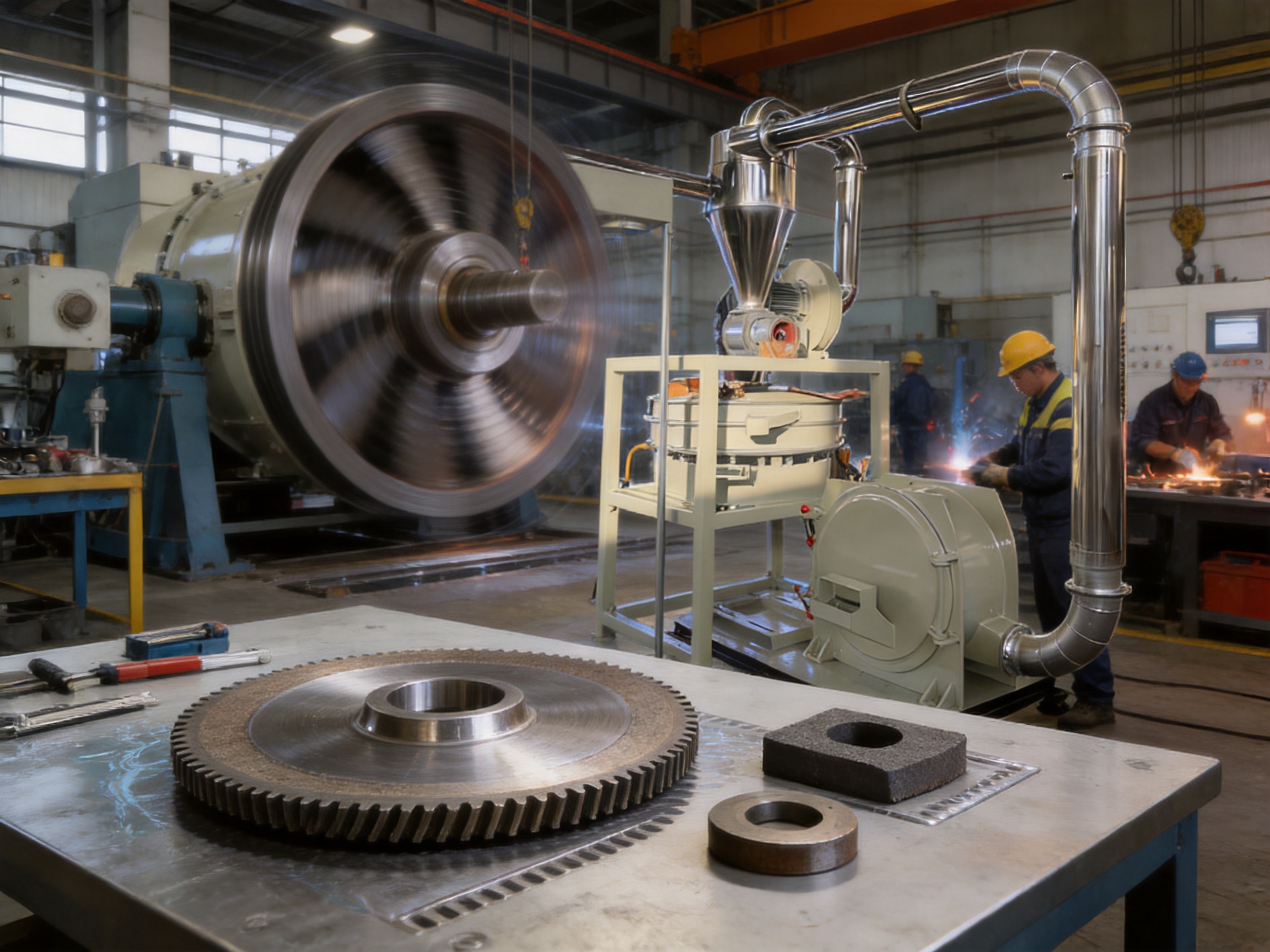
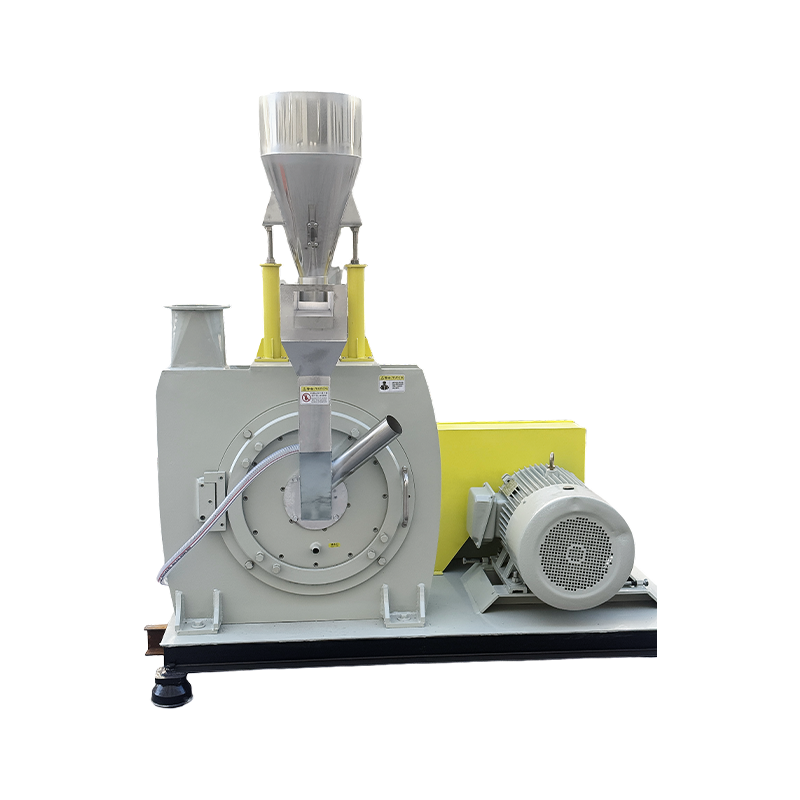
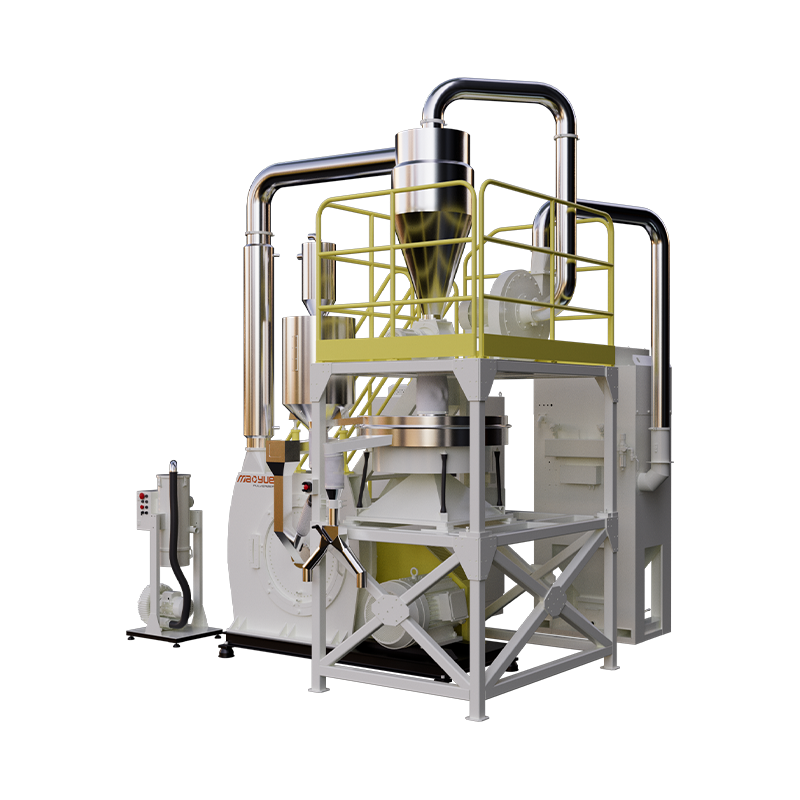
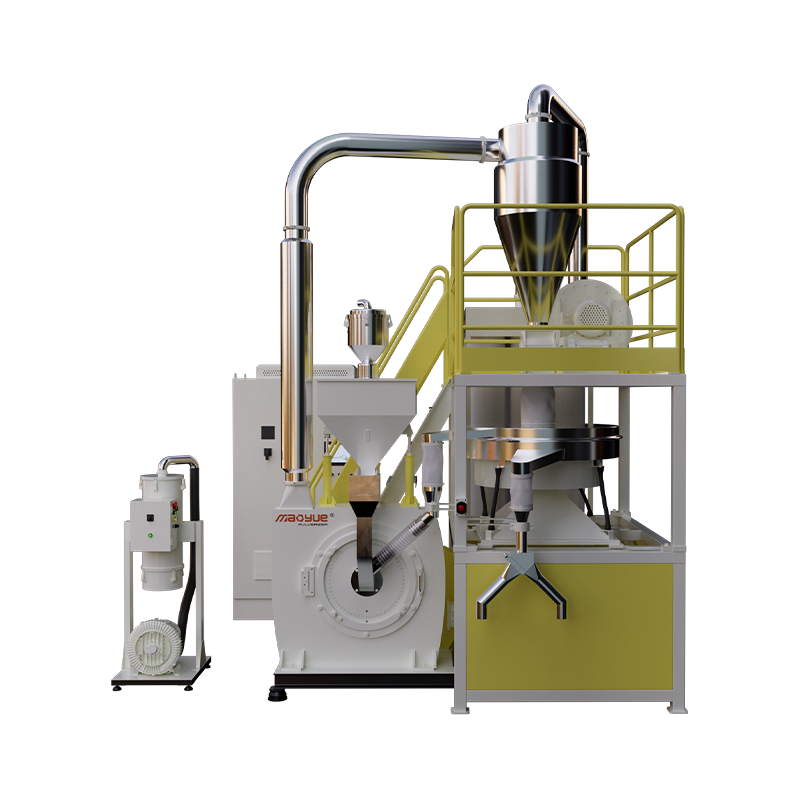
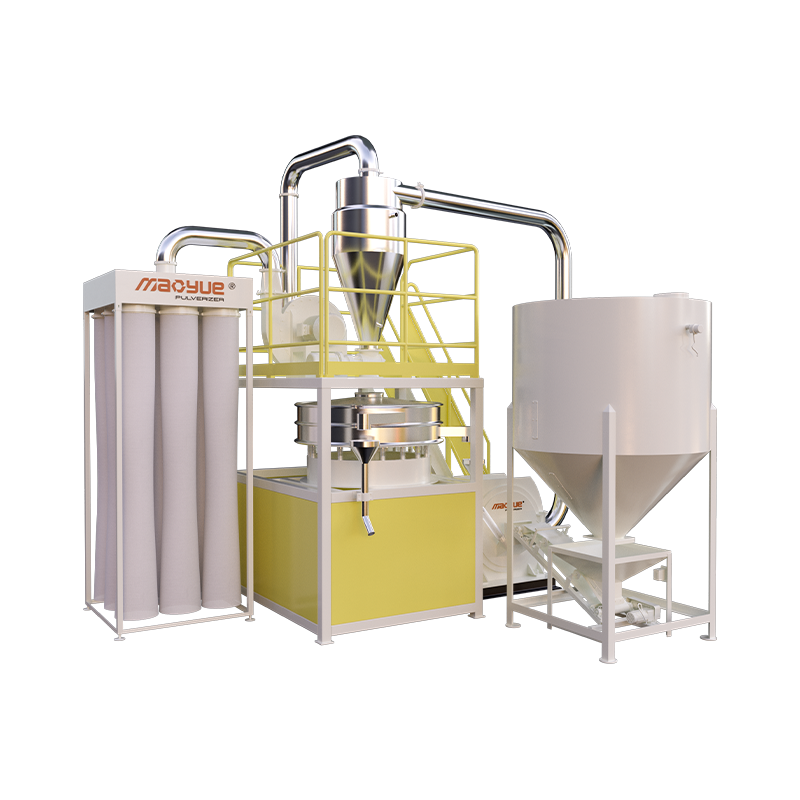
The Model 900 PVC Fine Powder Pulverizer is a heavy-duty size-reduction system designed for large-scale PVC recycling, building-material production, specialty compound processing, and export-oriented manufacturing. It combines a large grinding chamber, high-power drive options, water cooling, inverter-based speed control, high-chromium alloy grinding components, stainless-steel conveying pipes, dust collection, and vibration screening into one integrated powder-processing solution.
With a disc diameter in the approximately 800–900 mm class, a main drive configuration of 90, 110, or 132 kW, and a stated production range that may reach approximately 650–1,000 kg/h under standard configurations or 900–1,300 kg/h and above under optimized operating conditions, this model is positioned as the production flagship of its series. Actual output depends on material type, feed size, formulation, moisture, required mesh, cooling conditions, and the selected motor configuration.
The machine is developed for users who need more than basic plastic grinding. It is intended for continuous operation, high throughput, controlled powder fineness, long component life, and stable product quality. Typical applications include waste PVC pipes, window and door profiles, flooring scraps, cable sheathing, foam boards, decorative panels, industrial offcuts, and other rigid or semi-rigid PVC materials.
Compared with smaller pulverizers, the Model 900 offers a substantially larger processing zone, stronger drive capacity, increased material-handling capability, and better suitability for centralized production lines. Compared with ordinary low-cost grinding machines, it provides a more complete configuration with cooling, screening, conveying, dust control, iron removal feeding, and industrial vibration management.
Industrial Role of a Large PVC Pulverizer
PVC recycling and powder production require careful control of heat, particle size, contamination, and residence time. PVC does not behave like a simple inert mineral during grinding. Excessive heat can affect color, flow behavior, formulation stability, and downstream processing performance. A machine that produces high output but cannot control temperature may create inconsistent powder, discoloration, agglomeration, or thermal degradation.
For this reason, a large PVC pulverizer must be evaluated as a complete process system rather than as an isolated grinding disc. The grinding chamber, rotor and stator geometry, motor power, cooling circuit, material feed, separator, blower, pipework, screening unit, dust collector, and control system all influence final performance.
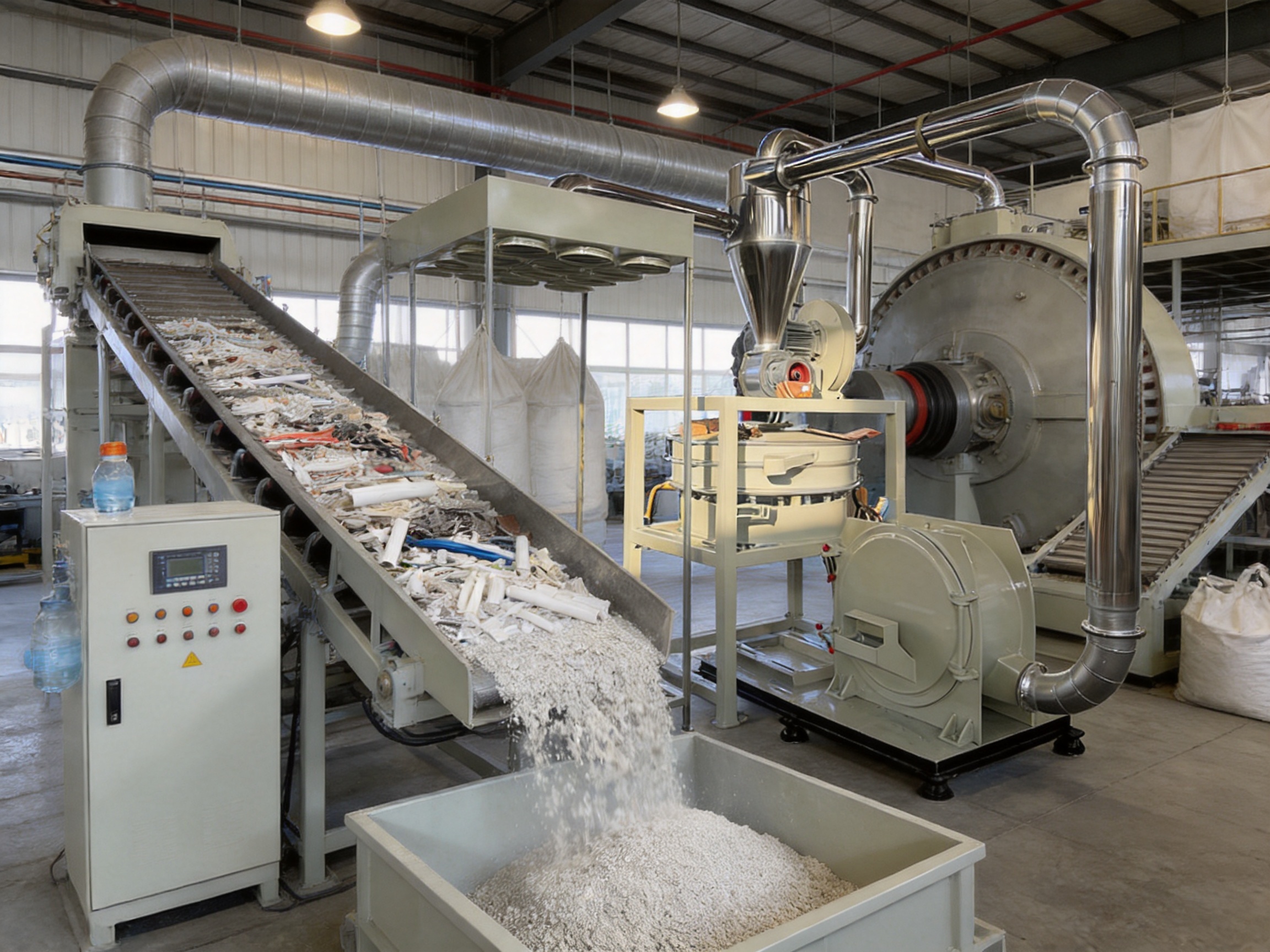
The Model 900 is designed around this integrated principle. Its grinding section provides high-energy shearing and impact, while the cooling system removes heat generated during pulverization. The conveying system transports processed material through stainless-steel piping, and the vibrating screen helps classify powder according to the required specification. A dust collection arrangement supports cleaner operation and improved material recovery.
This configuration is especially valuable for factories that process large quantities of post-industrial or post-consumer PVC. Instead of relying on several small machines with duplicated labor, feeding, collection, and maintenance requirements, a high-capacity pulverizer can become the central processing unit of a continuous line.
Core Performance and Configuration
Large Grinding Disc and Processing Chamber
The Model 900 belongs to the large-disc category of plastic pulverizers. Product materials identify the disc size as approximately 900 mm, while the technical table lists an 800 mm disc diameter for the Type 900 configuration. This difference can result from equipment variants, naming conventions, or different measurement references. Buyers should confirm the final drawing and disc specification before ordering.
Regardless of the exact disc measurement selected for a specific project, the important engineering advantage is the large active grinding area. A larger disc can provide greater processing space and support higher feed rates when paired with an appropriate motor, feed system, and cooling arrangement. It also gives the designer more room to optimize cutting, shearing, and material circulation within the grinding chamber.
The grinding chamber is designed for intensive multi-stage size reduction. Incoming PVC is subjected to repeated contact between high-speed rotating and stationary grinding surfaces. Properly adjusted clearances create a controlled combination of cutting, shearing, impact, and friction. This enables the machine to reduce pre-shredded PVC into fine powder suitable for downstream compounding, extrusion, molding, calendering, or further classification.
A large chamber also helps maintain production stability when the feed contains varying shapes, such as pipe fragments, profile sections, flooring pieces, or cable-sheathing waste. However, the material should still be pre-sized and free from excessive metal, stones, and other foreign matter. A pulverizer is not a substitute for proper sorting and pre-crushing.
High-Power Drive Options
The main drive can be configured with 90, 110, or 132 kW, allowing the system to be matched to the required production target. The 132 kW configuration is intended for demanding applications where high throughput, difficult formulations, high filler content, or continuous industrial operation are important priorities.
A stronger motor provides additional torque and processing capacity, but motor size alone does not determine output. Feed particle size, PVC hardness, filler level, moisture, screen opening, grinding-disc condition, and operating temperature all have a direct influence on capacity. The advantage of the Model 900 is that its large mechanical platform can take advantage of higher drive power without being limited by a small grinding chamber.
Inverter-based speed control permits the operator to adjust the working speed according to the material and desired powder characteristics. Lower or optimized speed may be preferred for heat-sensitive formulations, while a higher working speed can support more intensive pulverization when thermal conditions are controlled. Variable-speed operation also helps users balance capacity, fineness, power consumption, and wear.
Capacity for Centralized Production
The published capacity information includes a standard range of approximately 650–1,000 kg/h and a premium performance description of approximately 900–1,300 kg/h or more. These figures should be treated as reference values rather than universal guarantees. PVC waste is highly variable, and capacity must be confirmed through material testing or a technical evaluation.
At the upper end of its operating range, the Model 900 can serve centralized recycling plants and major building-material factories that need several tons of powder per shift. Its high throughput makes it suitable for production lines processing construction waste, rejected profiles, pipe scrap, flooring waste, cable compounds, and industrial PVC offcuts.
For a plant handling more than 30 tons per day, output planning should include feeding time, equipment cleaning, inspection, screen changes, maintenance intervals, material transfers, and possible interruptions. A pulverizer’s nominal hourly capacity is only one part of total plant productivity. The supporting equipment must also be sized to prevent bottlenecks before and after grinding.
Item | Reference Specification | Application Note |
Machine type | Model 900 | Large-scale PVC pulverizing platform |
Grinding disc diameter | Approximately 800–900 mm, depending on configuration | Confirm final technical drawing before production |
Capacity | Approximately 650–1,000 kg/h; optimized configurations may reach 900–1,300 kg/h or more | Depends on feedstock, mesh, formulation, and operating conditions |
Main drive motor | 90/110/132 kW | Selected according to production requirement |
Particle size | 10–50 mesh | Final result depends on material and adjustment |
Speed control | Inverter | Supports process optimization |
Grinding component material | High-chromium alloy | Designed for high wear resistance |
Blower motor | 15 kW | Supports pneumatic conveying |
Pipe material | Stainless steel | Improves durability and cleanliness |
Pipe diameter | 178 mm | Reference conveying-pipe dimension |
Vibrating-screen diameter | 1,500 mm | Supports powder classification |
Vibrating-screen motor | 2.2 kW | Used for screening and separation |
Cooling method | Water cooling with inlet and outlet circuits | Helps remove grinding heat |
Feeding method | Iron-removal tie feeding | Supports foreign-metal control |
Dust collector bag diameter | 300 mm | Part of the dust-control arrangement |
Advantages Over Conventional Competitors
Higher Production Potential
The most visible advantage of the Model 900 is its ability to support a higher production level than smaller 650, 700, or 850-class machines. A larger grinding structure and stronger motor options allow the machine to process more material per hour when the complete line is correctly configured.
Higher output can reduce the number of machines required for a factory expansion. It may also lower the labor requirement per ton because one central machine can replace multiple smaller production units. Fewer parallel machines can simplify material routing, reduce duplicated dust-collection points, and make production planning easier.
However, the advantage is not merely a larger motor. The entire platform is designed for heavy-duty use, including a large chamber, robust frame, high-wear components, cooling provisions, and industrial conveying equipment. This combination is more useful than simply installing a powerful motor on a small pulverizer.
Improved Wear Resistance
PVC waste containing calcium carbonate, mineral filler, pigment, glass fiber, or other additives can be highly abrasive. Standard carbon-steel grinding elements may wear quickly under these conditions, causing frequent adjustments, changing particle size, reduced throughput, and extended maintenance downtime.
The Model 900 uses high-chromium alloy grinding components intended for improved resistance to abrasion. The premium configuration is described as having a service life of approximately 1,500–2,200 operating hours under suitable conditions. Actual life depends on the filler level, contamination, feed preparation, grinding gap, operating speed, maintenance practice, and material hardness.
Longer component life offers several commercial benefits. It reduces the frequency of planned replacements, helps maintain stable powder quality, and improves machine availability. It also gives production managers a more predictable maintenance schedule. For a plant operating around the clock, these factors can have a greater financial impact than the initial purchase price.
Better Temperature Management
Heat is a central challenge in PVC pulverizing. Grinding energy is converted partly into thermal energy, and high throughput can raise the powder and chamber temperature quickly. If heat is not removed efficiently, the product may become discolored, agglomerated, or degraded.
The machine uses water cooling with separate inlet and outlet flow paths. The dual-circuit cooling concept is designed to improve heat exchange during continuous production. The supplied product description also refers to intelligent or AI-assisted temperature control. In practical terms, the control system can be configured to monitor temperature conditions and support timely adjustments to cooling or operation.
Temperature control does not eliminate the need for correct process design. Cooling-water temperature, flow rate, pressure, cleanliness, ambient temperature, feed rate, and powder residence time should all be monitored. Nevertheless, an integrated cooling arrangement provides a major advantage over basic machines that rely only on passive ventilation or intermittent operation.
Stable Powder Classification
The reference particle-size range is 10–50 mesh. This range covers many recycled PVC powder and compound-preparation applications, although the final result depends on grinding-disc condition, operating speed, material properties, feed rate, and classification settings.
The large vibrating screen and adjustable operating conditions help the user separate material according to downstream requirements. A narrow particle-size distribution is especially valuable in extrusion, calendering, injection molding, and powder-compounding applications. Consistent powder improves feeding behavior, melting uniformity, surface finish, and formulation repeatability.
Screening also reduces the risk that oversized particles will enter the next production step. Oversized material can be returned for additional grinding or directed to a separate stream. This improves process control and helps the operator maintain a more consistent final product.
Cleaner Material Handling
Stainless-steel piping is used for the conveying system. This material offers good corrosion resistance, a smooth internal surface, and suitability for applications where material cleanliness matters. Stainless-steel pipes can also simplify cleaning and reduce the risk of surface contamination compared with poorly finished or heavily corroded carbon-steel ducting.
The 15 kW blower supports pneumatic movement of ground material through the line. Proper airflow helps reduce accumulation in conveying pipes and supports continuous transfer to screening or collection equipment. The blower must be matched to pipe length, bends, powder density, air leakage, and the overall layout.
The dust collection arrangement, including reference bag dimensions of 300 mm, supports cleaner production and material recovery. Dust control is important for workplace cleanliness, product yield, and compliance with industrial environmental requirements. The final dust-control design should be reviewed according to local regulations and the specific powder characteristics.
Lower Noise and Improved Mechanical Stability
The product description identifies a heavy-duty base and industrial vibration-damping structure, with noise designed to remain below approximately 90 dB under stated operating conditions. Actual sound levels depend on installation, room acoustics, material feed, motor loading, pipe vibration, and maintenance condition.
A rigid foundation reduces unwanted movement and helps keep the grinding assembly aligned. Vibration damping protects surrounding equipment, reduces operator discomfort, and contributes to longer service life for bearings, fasteners, electrical connections, and conveying components.
For large factories, mechanical stability is also a quality-control issue. Excessive vibration may cause inconsistent grinding gaps, accelerated wear, abnormal noise, and unplanned shutdowns. A properly engineered base therefore supports both safety and production reliability.
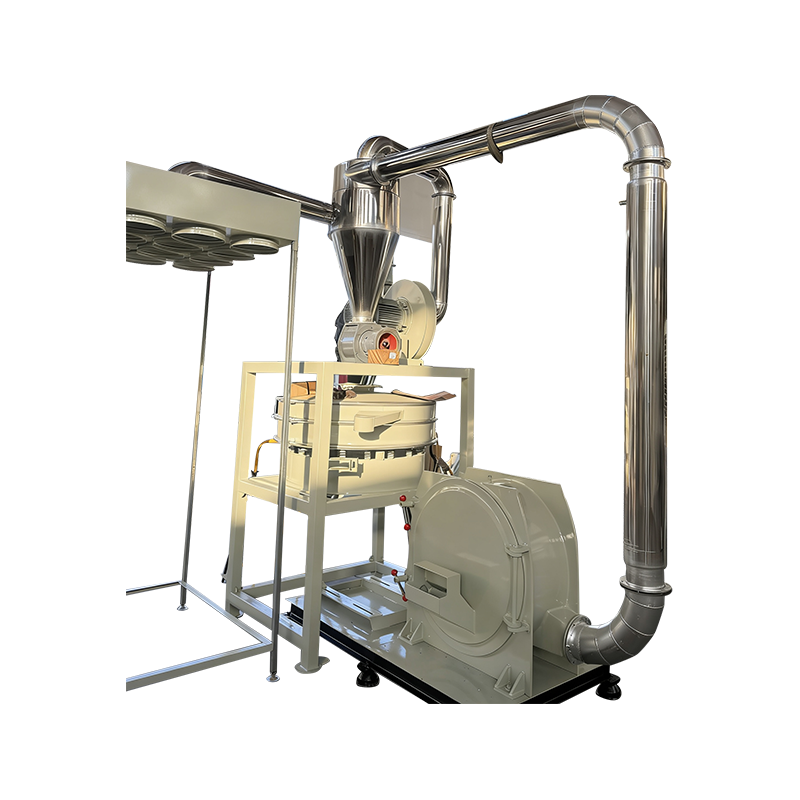
Model 900 PVC Fine Powder Pulverizer
Application in PVC Recycling
The Model 900 is suited to recycling operations that receive large quantities of PVC waste from construction, renovation, manufacturing, and post-industrial sources. Common feedstocks include discarded pipes, profiles, window and door frames, flooring, cable sheathing, wall panels, foam boards, and factory rejects.
A typical recycling line begins with sorting and inspection. Operators remove incompatible polymers, wood, concrete, rubber, excessive dirt, and visible metal. Ferrous metal can damage grinding components and should be separated before pulverizing. The stated iron-removal feeding method provides an additional control point, but it should not replace upstream sorting and magnetic separation.
After sorting, large PVC pieces are reduced to a suitable feed size by a crusher or shredder. Pre-crushing allows the pulverizer to work more efficiently and prevents oversized pieces from creating unstable feeding conditions. The ideal pre-crushed size depends on the material shape and the selected pulverizer configuration.
The pulverizer then produces fine recycled PVC powder. The powder can be screened, collected, tested, and blended with additives or virgin resin as required. In a well-designed closed-loop operation, recycled powder may return to pipe extrusion, profile production, flooring manufacture, injection molding, or other suitable applications.
The value of the recycled material depends on more than fineness. Color, contamination, polymer composition, filler content, moisture, bulk density, and thermal history all influence its suitability. A high-performance pulverizer helps create a consistent physical form, but the entire recycling line must control material quality from receiving through final packaging.
Application in Building-Material Manufacturing
Large PVC building-material producers can use the Model 900 to process production scrap and prepare recycled powder for internal reuse. Flooring factories, pipe manufacturers, profile producers, foam-board plants, and decorative-panel manufacturers often generate regular quantities of edge trim, rejected products, and offcuts.
Reusing this material can lower raw-material costs and reduce disposal volumes. It can also support corporate sustainability targets by increasing the proportion of recovered material in selected products. The quality of recycled powder must be matched to the technical requirements of each product category.
For PVC flooring, stable powder fineness can support uniform mixing and surface quality. For pipes and profiles, consistent particle characteristics can improve extrusion feeding and melt behavior. For foam boards and decorative panels, controlled powder quality helps maintain thickness, appearance, density, and mechanical performance.
The machine is also suitable for plants producing thick-wall pipes, high-volume profiles, flooring, foam sheets, and other materials at a ten-thousand-ton annual scale. Its high-capacity platform allows the pulverizing operation to keep pace with major downstream lines, provided that the crusher, feeder, conveyor, screen, dust collector, and packing system are properly balanced.
Application in Specialty PVC Compounds
Specialty PVC formulations may include flame retardants, impact modifiers, weathering stabilizers, pigments, mineral fillers, and processing aids. These materials can create demanding grinding conditions. Some additives increase abrasiveness, while others affect heat generation, flowability, or powder cohesion.
The Model 900 is suitable for preparing powders used in functional and high-performance applications, including construction products, automotive interior components, electronic enclosures, cable sheathing, and chemically resistant materials. In each case, the machine must be configured according to the formulation and required particle specification.
High-chromium grinding components are beneficial when the compound contains abrasive fillers. Inverter speed control helps the operator adapt the process to the formulation. Water cooling supports thermal stability, while screening assists in achieving a controlled powder distribution.
Specialty applications may require strict batch separation. If multiple colors or formulations are processed on the same machine, cleaning procedures should be established to prevent cross-contamination. Production records should include material identification, motor speed, cooling conditions, feed rate, screen specification, and maintenance status.
Manufacturing Strengths Behind the Equipment
Long-Term Equipment Manufacturing Experience
The manufacturer has approximately 30 years of experience in plastic crushing and pulverizing equipment. Long-term specialization is valuable because plastic pulverizers require knowledge of grinding geometry, rotor balancing, wear behavior, heat management, material conveying, and application-specific process design.
Experience across PVC, PE, polymers, masterbatch, recycling, rotational molding, and powder-coating applications allows the manufacturer to understand how different materials respond to size reduction. This application knowledge supports more practical machine selection than a general-purpose equipment supplier may provide.
A company that focuses on pulverizing equipment can also develop replacement parts, grinding components, cooling arrangements, and line configurations around the same technology. This improves compatibility between the machine and its supporting equipment.
Multiple Processing Workshops
The manufacturing operation includes six processing workshops, each averaging approximately 1,400 square meters. Multiple dedicated workshops can support a more organized production flow, separating machining, fabrication, assembly, testing, storage, and other activities.
Production space alone does not guarantee quality, but it provides the capacity to manage large industrial orders and customized configurations. It may also help the manufacturer maintain spare-part inventories, prepare multiple machines simultaneously, and conduct assembly or testing without interrupting unrelated operations.
Precision Machining
The factory uses high-precision grinding machines imported from Taiwan and built according to German standards. Precision machining is important for grinding discs, shafts, bearing seats, mounting surfaces, and other components that must maintain accurate alignment.
Grinding accuracy affects the working clearance between rotating and stationary elements. Incorrect geometry or poor flatness can cause uneven wear, unstable particle size, excess vibration, and unnecessary power consumption. Accurate machining therefore contributes directly to performance and maintenance life.
For a large pulverizer, dimensional consistency is particularly important because components experience substantial centrifugal force and mechanical load. Precision manufacturing helps reduce assembly variation and supports repeatable performance from one machine to the next.
Dynamic Balancing
German dynamic-balancing equipment is used in the manufacturing process. Dynamic balancing is essential for high-speed rotating assemblies. An imbalanced rotor can create vibration, increase bearing loads, accelerate fatigue, and reduce the service life of the complete machine.
Proper balancing is especially important in large-diameter pulverizers because even a small imbalance can create significant force at operating speed. Accurate balancing improves smooth running, reduces noise, protects the foundation, and helps maintain a stable grinding gap.
Balancing should be considered together with correct installation. The machine must be placed on a suitable foundation, leveled accurately, and connected to conveying pipes without imposing excessive external stress on the body. Regular inspection remains necessary even when the rotor is balanced at the factory.
Advanced Welding and Fabrication
Japanese welding systems are used in the production process. Consistent welding quality supports the strength and dimensional stability of frames, hoppers, pipe supports, dust-collection structures, and other fabricated assemblies.
Large industrial equipment is exposed to vibration, thermal changes, and repeated loading. Poor weld quality can lead to cracks, distortion, air leakage, or misalignment. Controlled welding and appropriate inspection help maintain the structural integrity of the machine during continuous operation.
Fabrication quality also influences installation efficiency. Accurately produced supports, flanges, covers, and access doors reduce the need for field modification and help the customer complete commissioning more quickly.
Quality and Certification Systems
The manufacturer has obtained CE mechanical certification and ISO 9001 quality-management certification. CE-related compliance supports the safety requirements applicable to the intended market, while ISO 9001 reflects a structured approach to quality control, documentation, process management, and continual improvement.
Certification does not remove the customer’s responsibility to install, operate, and maintain the equipment correctly. Electrical standards, guarding, dust control, noise protection, emergency stops, fire prevention, and local environmental requirements must still be reviewed for each project.
Engineering the Complete Production Line
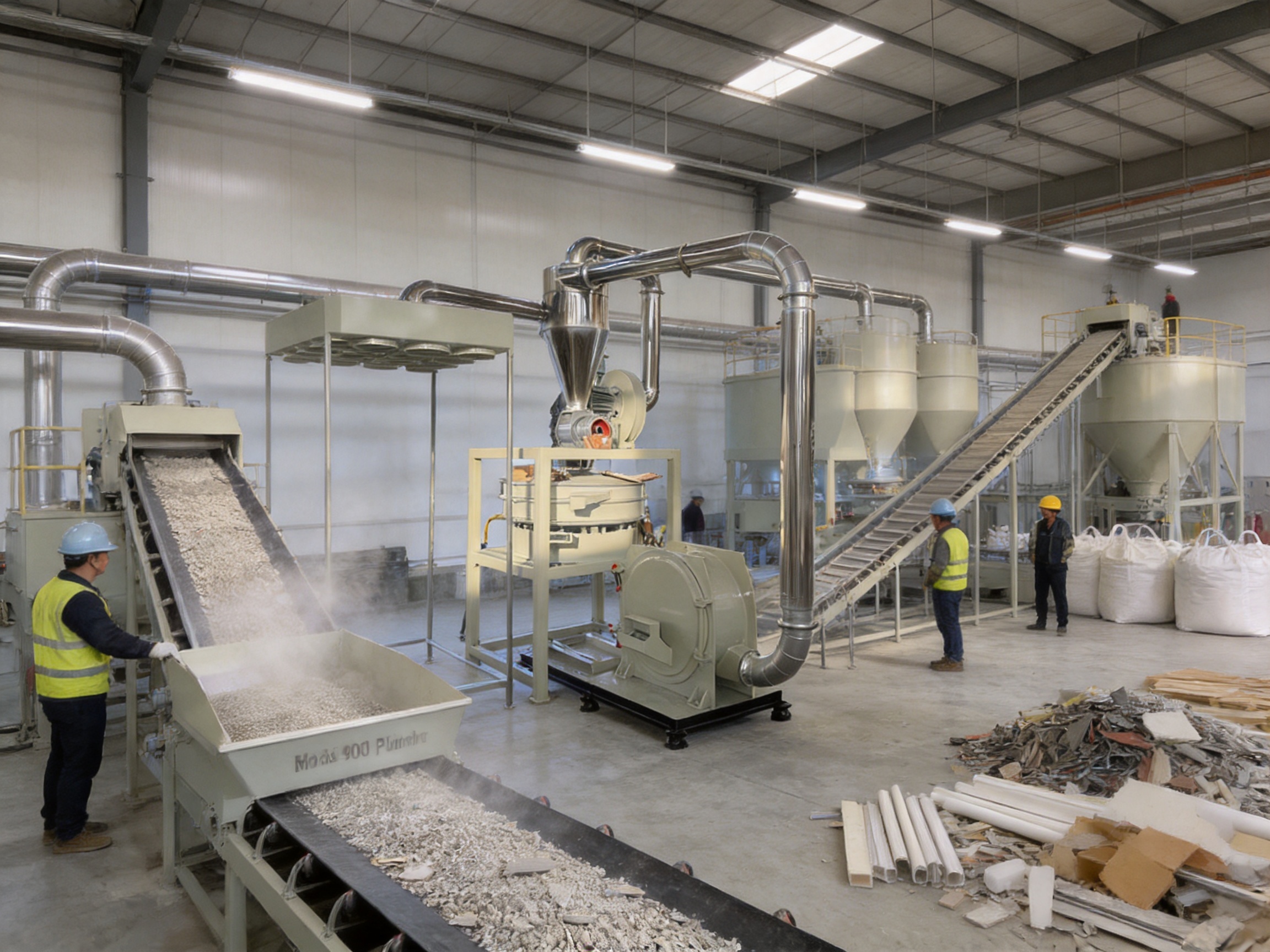
A Model 900 pulverizer should be integrated into a complete line rather than installed as an isolated machine. The upstream section may include manual sorting, magnetic separation, a metal detector, a crusher, a shredder, a storage hopper, and a controlled feeder.
The feeding system must deliver material at a stable rate. Overfeeding can overload the motor, increase heat, reduce powder quality, and cause blockages. Underfeeding may reduce efficiency and create inconsistent operating conditions. A controlled feeder helps match the material stream to the machine’s capacity.
After pulverizing, the material can pass through pneumatic conveying, a vibrating screen, a cyclone or collection system, a dust collector, and a finished-powder packing station. The layout should minimize sharp bends, excessive pipe length, and dead zones where powder can accumulate.
Electrical planning should account for the main motor, blower, vibrating-screen motor, feeding equipment, cooling controls, temperature sensors, dust-collection equipment, and auxiliary systems. The electrical cabinet should provide overload protection, emergency-stop functions, interlocks, and clear operating information.
Cooling-water planning is equally important. The plant should provide reliable water flow, suitable filtration, adequate heat dissipation, and monitoring of inlet and outlet temperatures. If the cooling water is recirculated, the system should be designed to prevent scale, corrosion, clogging, and excessive temperature rise.
Energy Efficiency and Operating Economics
A high-power machine does not automatically consume more energy per ton than several smaller machines. When the line is correctly loaded, a large pulverizer may achieve better production efficiency by reducing duplicated auxiliary equipment, labor, idle time, and transfer operations.
The relevant economic indicator is energy consumption per unit of usable output. This depends on motor loading, throughput, powder fineness, material hardness, grinding-disc condition, cooling efficiency, and operating stability. Operators should monitor kilowatt-hours per ton rather than considering motor power alone.
Maintaining sharp and correctly adjusted grinding surfaces is important for energy efficiency. Worn or incorrectly positioned components may force the motor to work harder while producing less consistent powder. Regular inspection can identify wear before it causes a major decline in capacity.
Inverter control can also support energy management. The operator can select the lowest practical speed that achieves the required fineness and output, instead of running continuously at maximum speed. This approach may reduce unnecessary heat generation and improve component life.
High throughput provides the greatest economic benefit when the machine is supplied consistently. Long periods of idling, frequent material changes, inadequate pre-crushing, or undersized downstream equipment can reduce the return on investment. The complete line should therefore be designed around the expected daily production target.
Maintenance and Service Considerations
Routine Inspection
Operators should inspect the grinding chamber, grinding surfaces, bearings, belts, fasteners, feed inlet, discharge route, blower, screen, dust collector, and cooling-water connections at regular intervals. Abnormal vibration, rising temperature, unusual noise, reduced capacity, or changes in particle size may indicate a developing problem.
Before opening the machine, the main power must be isolated and the rotor must come to a complete stop. Stored energy, residual material, hot surfaces, and dust must be considered. Maintenance personnel should follow documented lockout and safety procedures.
Grinding Component Management
Wear should be measured rather than judged only by appearance. Grinding-disc wear can change the working gap and influence the powder distribution. If one area wears faster than another, the machine may experience imbalance or uneven grinding.
Replacement intervals vary according to feedstock. Clean PVC production scrap may cause less wear than heavily filled flooring or contaminated construction waste. The stated 1,500–2,200-hour service-life range for premium alloy components should be confirmed through actual operating data for each material.
Maintaining spare grinding components on site can reduce downtime. Spare parts should be stored in a clean, dry area and handled carefully to prevent damage to precision surfaces. Replacement work should include inspection of fasteners, alignment, balance, and clearance.
Cooling-System Maintenance
Cooling-water flow should be checked regularly. Blocked channels, low flow, dirty filters, leaking hoses, or excessive water temperature can reduce cooling performance. Operators should record inlet and outlet temperatures and investigate unusual changes.
Water quality matters. Hard water may create scale, while contaminated water can block passages or accelerate corrosion. A suitable filtration and water-treatment plan may be required, particularly for continuous industrial operation.
Dust-Control Maintenance
Dust collectors, bags, seals, ducts, and discharge valves should be checked for leakage and blockage. A leaking system reduces material recovery and may expose workers to airborne dust. A blocked system can increase pressure, reduce conveying efficiency, and affect the flow through the pulverizer.
Dust management should also consider fire and explosion prevention. PVC powder handling requirements vary according to particle size, concentration, additives, and local regulations. The customer should complete a site-specific risk assessment and select the appropriate protective measures.
Quality of the Finished PVC Powder
The desired powder should be evaluated using more than a visual inspection. Important tests may include particle-size distribution, bulk density, moisture, color, contamination, flowability, ash or filler content, and thermal behavior. The correct test program depends on the downstream product.
High fineness and a narrow distribution can improve mixing and feeding. Good flowability supports stable transfer from the collection system to storage or packaging. Low agglomeration helps the powder disperse evenly during compounding or extrusion.
Color stability is particularly important for light-colored profiles, flooring, decorative panels, and specialty compounds. Stable cooling and controlled residence time help reduce the risk of scorching or discoloration. However, color is also affected by the original waste stream, pigments, contamination, and previous thermal history.
For export-oriented production, the powder may need to meet customer specifications related to restricted substances, traceability, environmental performance, and consistency. A reliable pulverizing process supports compliance, but laboratory testing and documentation remain necessary.
Suitable Customer Profiles
The Model 900 is intended for large recycling groups, major PVC building-material manufacturers, centralized waste-processing companies, specialty compound producers, and international OEM manufacturers. It is particularly suitable where the customer has a continuous material supply and needs high annual production.
It may be excessive for a small workshop with limited feedstock or occasional recycling requirements. In such cases, a smaller model may offer a lower initial investment and more appropriate capacity. The Model 900 becomes more attractive when the customer values reduced unit cost, fewer machines, lower labor intensity, longer wear life, and stable continuous operation.
For enterprises planning ten-thousand-ton annual production, the equipment can serve as the principal grinding unit in a centralized line. The final selection should consider the number of operating hours, required powder specification, number of formulations, available utilities, building layout, and future expansion plans.
International buyers should also review voltage, frequency, electrical standards, language requirements, spare-parts availability, installation support, shipping dimensions, and local safety regulations before placing an order.
Installation and Commissioning Guidance
Before delivery, the customer should prepare a level and sufficiently strong foundation. The foundation must support the machine, auxiliary equipment, dynamic loads, and any local vibration requirements. Access space should be reserved for maintenance, grinding-disc replacement, screen inspection, dust-collector servicing, and safe material handling.
The machine should be aligned and leveled during installation. Conveying pipes must be supported independently where appropriate so that their weight does not distort the pulverizer body or impose stress on flexible connections. Electrical cables, cooling-water pipes, and compressed-air or dust-control connections should be routed safely and clearly.
Commissioning should begin with no-load checks. The operator verifies motor rotation, bearing temperature, vibration, belt tracking, cooling-water flow, blower operation, screen movement, emergency stops, and sensor signals. The line can then be tested with a small quantity of material before gradually increasing the feed rate.
Initial trials should record motor current, throughput, product temperature, inlet and outlet water temperature, screen performance, particle-size distribution, and noise or vibration observations. These records provide a baseline for future maintenance and process optimization.
Operators should be trained in normal startup, shutdown, emergency stopping, material changes, cleaning, screen replacement, grinding-gap adjustment, and fault diagnosis. Good training reduces operating errors and helps protect the machine from overloads.
Safety and Environmental Considerations
All rotating and moving parts must be guarded. Access doors should have appropriate interlocks or documented isolation procedures. Emergency-stop devices should be accessible from normal operating positions and tested periodically.
Noise protection should be considered even when the machine is designed to operate below approximately 90 dB under specified conditions. Hearing-protection requirements depend on measured site noise and local occupational-safety rules. Foundation quality, pipe supports, enclosure design, and maintenance all affect sound levels.
Dust control is essential for worker protection and housekeeping. The dust-collection system should be inspected for leaks, and operators should avoid using compressed air in ways that disperse settled powder. Cleaning methods should be selected according to the material and site risk assessment.
Water cooling requires responsible management of discharge and recirculation. The plant should prevent uncontrolled leakage, protect electrical equipment from water exposure, and handle wastewater according to local requirements.
Recycling plants should establish procedures for identifying and removing hazardous contamination. PVC waste may contain legacy additives, metals, dirt, or other substances that require special handling. The pulverizer should process only materials approved by the plant’s quality and safety procedures.
Why the Model 900 Is a Strategic Investment
The initial purchase price of a large pulverizer is higher than that of a small machine, but investment decisions should be based on total operating economics. Relevant factors include output per hour, usable powder yield, energy per ton, labor cost, wear-part life, downtime, maintenance frequency, product quality, and the value of recycled material.
A high-capacity machine can help a company consolidate processing into fewer production units. This may reduce duplicated feeders, blowers, dust collectors, control cabinets, foundations, and labor stations. A robust machine can also make it easier to plan maintenance without interrupting every line in the factory.
Long-life wear components help reduce unplanned stops. Stable temperature control protects product quality. Inverter speed adjustment allows the machine to accommodate different materials. Stainless-steel conveying components support cleanliness and durability. These advantages contribute to a more predictable production system.
For export-focused enterprises, reliable capacity and repeatable powder quality can shorten delivery cycles and support consistent customer specifications. A stable upstream powder process helps downstream factories maintain product performance across different batches and markets.
Q&A
What materials can the Model 900 process?
It is primarily designed for PVC waste, PVC compounds, profiles, pipes, flooring, cable sheathing, foam boards, decorative panels, and industrial PVC offcuts. The material should be properly sorted, pre-sized, and free from excessive metal and unsuitable contaminants.
What is the actual production capacity?
Reference information lists approximately 650–1,000 kg/h for one configuration, while optimized descriptions indicate approximately 900–1,300 kg/h or more. Actual capacity depends on the PVC formulation, feed size, moisture, filler content, target mesh, motor selection, cooling conditions, and operating method. A material trial is recommended for a confirmed production figure.
Why do the published disc dimensions show different values?
The product description refers to a Model 900 with an approximately 900 mm-class disc, while the technical table lists an 800 mm disc diameter. This may reflect different equipment variants or measurement conventions. The buyer should request the final technical drawing and confirmed bill of materials before ordering.
What particle size can the machine produce?
The reference range is 10–50 mesh. Final particle size depends on the feedstock, grinding-disc condition, operating speed, grinding clearance, feed rate, and screening arrangement. The required product specification should be discussed during machine selection.
How does water cooling protect PVC powder?
Water cooling removes heat generated by high-speed grinding. By controlling the chamber and product temperature, it helps reduce the risk of scorching, agglomeration, discoloration, and thermal degradation during continuous operation.
Is the cooling system fully automatic?
The product information describes intelligent or AI-assisted temperature control. The exact degree of automation depends on the selected control configuration. Buyers should confirm the sensor arrangement, control logic, alarm functions, cooling-water requirements, and operator interface in the final quotation.
How long do the alloy grinding components last?
The premium configuration is described with an estimated service life of approximately 1,500–2,200 hours under suitable conditions. Abrasive fillers, foreign matter, operating speed, feed preparation, grinding clearance, and maintenance can significantly change actual life.
Can the machine operate continuously for 24 hours?
It is designed for heavy-duty, continuous industrial production. Continuous operation still requires correct cooling, stable feeding, regular inspection, suitable lubrication, proper dust control, and scheduled maintenance. Twenty-four-hour operation should be planned around the complete line rather than the pulverizer alone.
What kind of pre-processing is required?
Large PVC items should normally be sorted and pre-crushed to a suitable size. Iron, stones, concrete, wood, and incompatible plastics should be removed. A magnetic separator or iron-removal system is recommended, but upstream inspection remains necessary.
What are the main advantages over a smaller pulverizer?
The Model 900 offers a larger grinding platform, higher drive-power options, greater production potential, stronger construction, longer-life wear components, more complete cooling, and improved suitability for centralized high-volume production. It is intended for industrial users rather than occasional small-batch processing.
Is it suitable for high-filler PVC?
Yes. The heavy-duty, high-chromium alloy grinding components are specifically intended to improve wear resistance when processing abrasive, high-filler PVC. The exact configuration should be selected according to the filler type, percentage, and expected operating hours.
What supporting equipment is needed?
A complete line may include sorting equipment, a crusher or shredder, magnetic separation, a controlled feeder, the pulverizer, a blower, stainless-steel conveying pipes, a vibrating screen, a dust collector, finished-powder storage, and a packing system. Cooling-water equipment and electrical controls are also required.
How should the machine be maintained?
Maintenance should include inspection of grinding components, bearings, belts, fasteners, cooling-water flow, screens, conveying pipes, blower operation, dust-collector condition, electrical connections, vibration, and temperature. Wear parts should be replaced before their condition causes unstable quality or unsafe operation.
Is the equipment suitable for export projects?
Yes. Its capacity, wear-resistant configuration, cooling system, stainless-steel conveying components, and industrial manufacturing background make it suitable for international recycling and OEM projects. Export buyers should confirm local electrical, safety, environmental, documentation, and installation requirements.
Conclusion
The Model 900 PVC Fine Powder Pulverizer is designed for customers who need high-volume, stable, and controlled PVC powder production. Its large grinding platform, 90–132 kW drive options, inverter speed control, high-chromium alloy components, water-cooling arrangement, stainless-steel conveying system, vibrating screen, dust collection, and heavy-duty structure provide a comprehensive solution for demanding industrial lines.
Its principal advantages over smaller or less integrated machines include higher production potential, improved wear resistance, better thermal management, more reliable powder classification, reduced labor intensity, and stronger suitability for continuous operation. These advantages are especially important for centralized recycling groups, large building-material factories, specialty compound producers, and export-oriented manufacturers.
The manufacturer’s long experience, six processing workshops, precision machining equipment, dynamic-balancing capability, advanced welding systems, CE mechanical certification, and ISO 9001 quality-management system provide a strong manufacturing foundation. These capabilities support accurate components, stable rotating assemblies, robust frames, and customized production-line solutions.
For the best result, the Model 900 should be selected through a complete engineering review. Feedstock, capacity, particle size, cooling conditions, electrical supply, dust control, foundation, auxiliary equipment, and maintenance planning must all be considered. When properly matched to the material and integrated into a balanced line, it can serve as a reliable core unit for large-scale PVC recycling and high-value powder production.
References
1. Product technical information for the Model 900 PVC Fine Powder Pulverizer, including capacity, motor, grinding-disc, cooling, conveying, and screening specifications.
2. Manufacturer information concerning plastic crushing and pulverizing equipment, manufacturing workshops, precision machining, dynamic balancing, welding systems, and quality certifications.
3. General industrial guidance on PVC recycling, plastic size reduction, particle-size classification, dust control, and material-handling systems.
4. General engineering principles for rotating-equipment balancing, vibration control, water-cooling systems, wear-resistant alloys, and continuous-process maintenance.
5. General occupational-safety principles for industrial machinery guarding, lockout procedures, dust management, noise control, and equipment commissioning.