

 English
 русский
 Español
 عربى
 中文简体
 中文简体
Content
- 1 1. The Role of Blades in PE Pulverizing
- 2 2. High-Performance Alloy Steel Construction
- 3 3. Precision Heat Treatment and Metallurgical Stability
- 4 4. Precision-Adjustable Grinding Clearance
- 5 5. High-Speed Rotating Tooth Design
- 6 6. Thermal Management During Continuous Grinding
- 7 7. Expected Service Life and Operating Economy
- 8 8. Compatibility with PE and PP Pulverizer Systems
- 9 9. Applications in Plastic Recycling
- 10 10. Powder Coating Production
- 11 11. Masterbatch and Modified Plastic Production
- 12 12. Rotational Molding and Chemical Processing
- 13 Product: PE Pulverizer alloy steel blades
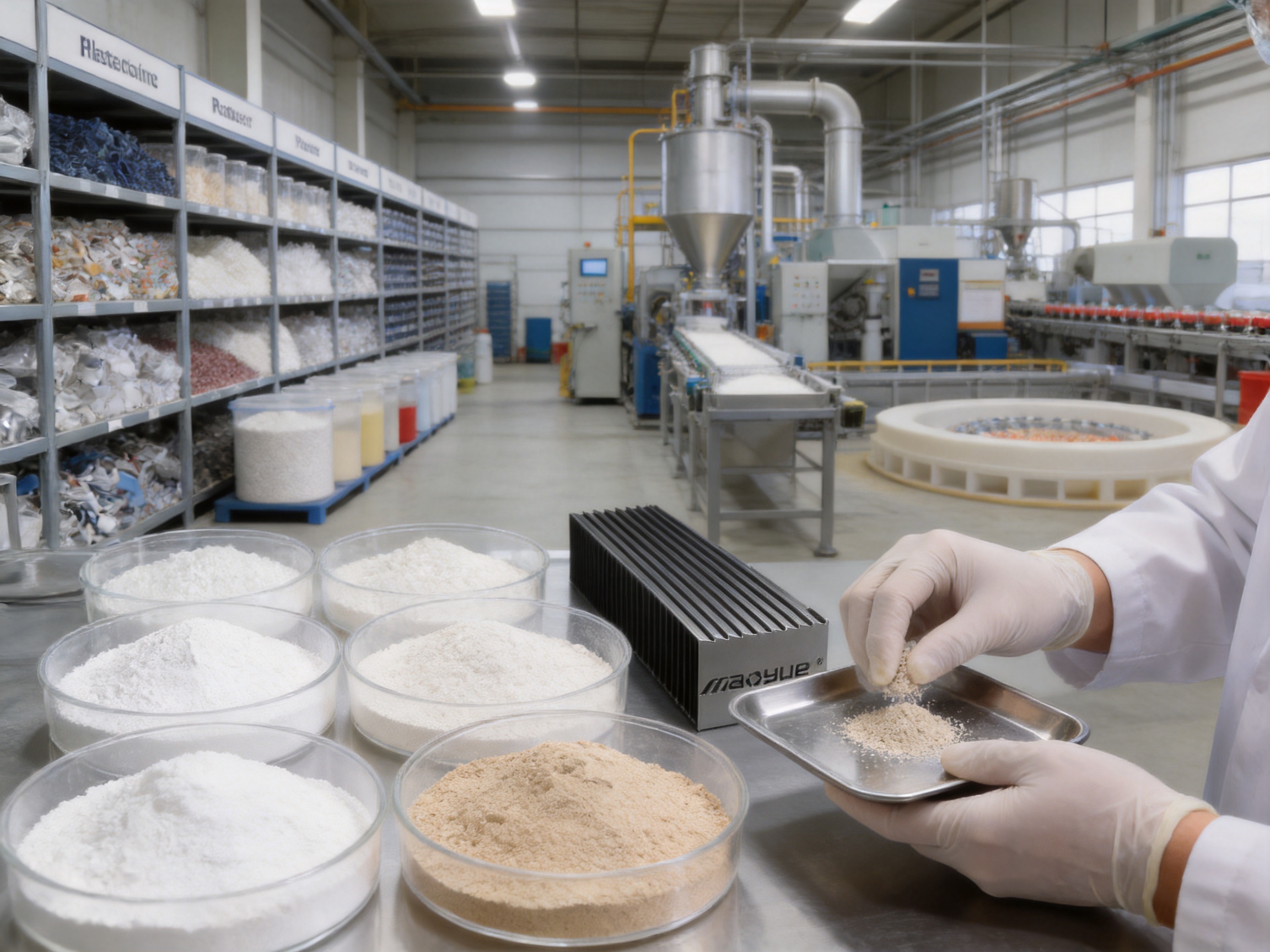
Plastic pulverizing is a demanding size-reduction process in which blade hardness, impact resistance, thermal stability, dimensional accuracy, and machine compatibility directly influence operating cost and finished-powder quality. For processors working with polyethylene (PE), polypropylene (PP), recycled plastics, powder coatings, masterbatch materials, and other polymer products, the pulverizer blade is more than a replaceable wear part. It is a core production component that determines grinding efficiency, particle consistency, maintenance intervals, and the reliability of the complete processing line.
PE pulverizer alloy steel blades are designed for high-intensity grinding applications in which ordinary cutting discs may wear rapidly, lose their edge, or become distorted by friction heat. Manufactured from high-density wear-resistant alloy steel and subjected to multiple precision heat-treatment processes, these blades are engineered to combine high hardness with strong impact resistance. Depending on the material specification and treatment process, blade hardness can reach approximately HRC 60–65 or higher, significantly exceeding the approximate HRC 45 level associated with many conventional cutting discs.
The result is a durable pulverizing component capable of processing demanding PE materials, including high-toughness plastics, reinforced plastic compounds, films, pipes, bottle caps, cable sheathing, strapping bands, and recycled polymer feedstock. Under suitable operating conditions, a single blade set can achieve approximately 800 hours of continuous service life. Actual service life depends on material cleanliness, feed rate, moisture, contamination, machine settings, clearance, cooling performance, and operator maintenance, but the extended-life design can substantially reduce replacement frequency and unplanned downtime.
1. The Role of Blades in PE Pulverizing
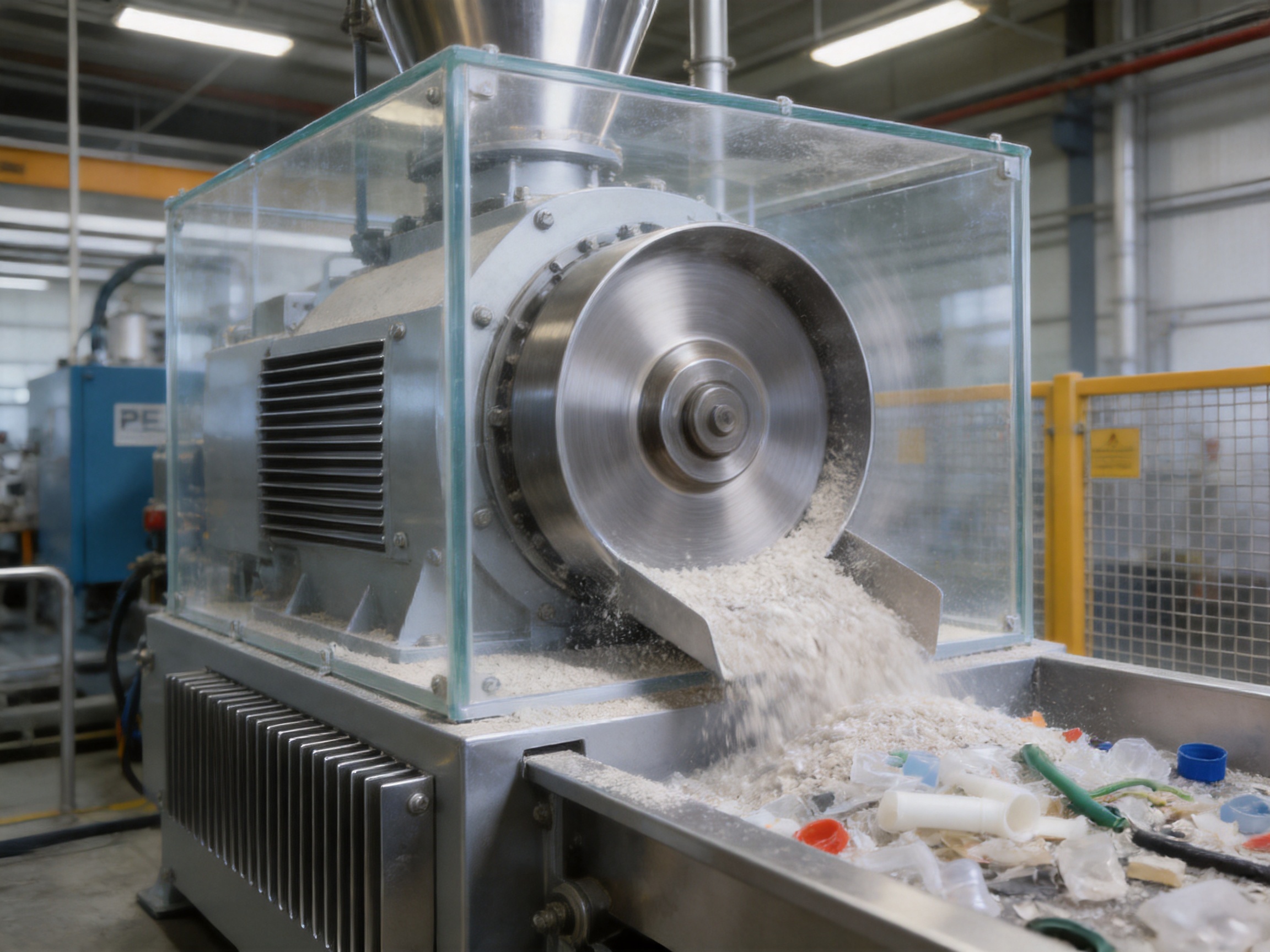
A plastic pulverizer reduces polymer materials into fine powder through a combination of high-speed rotation, shearing, impact, friction, and controlled material circulation. Unlike a simple crusher, a pulverizer must control both the energy applied to the material and the final particle-size distribution. The rotating disc and stationary disc work together to create a precisely controlled grinding gap. As feedstock enters the grinding chamber, it is exposed to repeated contact with the cutting teeth and friction surfaces until the particles reach the required fineness.
The blade or grinding-disc assembly is therefore exposed to repeated mechanical and thermal stresses. It must resist edge wear while maintaining its original geometry. It must also withstand impacts caused by irregular feedstock, recycled materials, or occasional foreign particles. If the cutting edge becomes rounded, the pulverizer may require greater power to achieve the same throughput. If the blade surface wears unevenly, the grinding gap may become unstable and particle-size distribution may deteriorate.
For PE processing, thermal control is particularly important. Polyethylene can soften when exposed to excessive friction heat. A blade that loses sharpness may create more rubbing and less efficient shearing, increasing heat generation inside the grinding chamber. Excessive temperature may cause material sticking, agglomeration, edge dulling, deformation, or inconsistent powder quality. A high-quality alloy steel blade must therefore preserve its hardness and geometry while working under continuous mechanical and thermal stress.
1.1 Why ordinary cutting discs may be insufficient
Many standard cutting discs are designed for general-purpose plastic processing and moderate workloads. They may provide acceptable performance when processing clean, soft, and uniform feedstock. However, demanding applications can expose their limitations. Lower hardness may result in rapid edge wear, while inadequate toughness may increase the risk of chipping or cracking under impact. In addition, insufficient heat treatment can make a blade vulnerable to distortion during long periods of continuous operation.
When a blade wears prematurely, the cost is not limited to the replacement part. Operators may also experience reduced throughput, higher energy consumption, more frequent machine adjustments, increased labor requirements, and production interruptions. Poorly maintained or heavily worn blades can also produce powder with excessive coarse particles, uneven distribution, or agglomerates that create problems in downstream extrusion, molding, coating, or compounding operations.
Alloy steel blades address these challenges by combining a high-hardness cutting surface with a material structure designed to resist impact. The objective is not simply to make the blade as hard as possible. Excessive hardness without adequate toughness can make a component brittle. The manufacturing process must balance hardness, wear resistance, toughness, dimensional stability, and machinability so that the blade performs reliably in a real industrial environment.
2. High-Performance Alloy Steel Construction
The principal advantage of this PE pulverizer blade is its use of high-density wear-resistant alloy steel. Typical material concepts may include chromium-molybdenum-vanadium alloy systems or comparable high-hardness grades selected for plastic pulverizing applications. Chromium can contribute to wear resistance and hardenability, molybdenum can support strength and thermal stability, and vanadium can help refine the grain structure and improve resistance to abrasive wear.
The exact alloy composition can be selected according to the application. Clean virgin PE, post-consumer film, filled compounds, reinforced polymers, and contaminated recycled materials may place different demands on the blade. For example, a process involving glass-fiber-reinforced plastic requires stronger resistance to abrasive wear than a process handling clean low-density film. A customized material specification can help match the blade to the feedstock and expected operating conditions.
High-density alloy steel provides a strong foundation for the grinding edge. Its dense metallurgical structure helps reduce the risk of premature edge breakdown and supports stable performance over a longer service period. The material is also suitable for precision machining, allowing the finished component to maintain accurate dimensions and a consistent tooth profile.
2.1 Hardness combined with toughness
A blade used in a pulverizer must perform two different functions at the same time. Its working edge must be hard enough to resist abrasive wear, but the body must remain tough enough to withstand vibration, intermittent impact, and changes in feedstock. The reported hardness range of HRC 60–65 or higher is intended to provide a substantial improvement over ordinary discs with hardness near HRC 45.
Higher hardness can help the blade maintain a sharper working profile for a longer period. A stable edge promotes more efficient shearing and reduces the amount of energy lost to unnecessary rubbing. It can also help maintain the designed grinding clearance, which is critical to particle-size control. However, hardness alone does not guarantee performance. The supporting heat-treatment cycle, machining accuracy, balancing, installation quality, and operating conditions are equally important.
By applying multiple precision heat treatments, the manufacturer seeks to establish a suitable balance between surface hardness and internal toughness. This approach can reduce the risk of edge collapse, cracking, deformation, and accelerated wear during continuous operation. It is particularly valuable when the pulverizer processes tough or reinforced plastics that impose higher loads on the grinding disc.
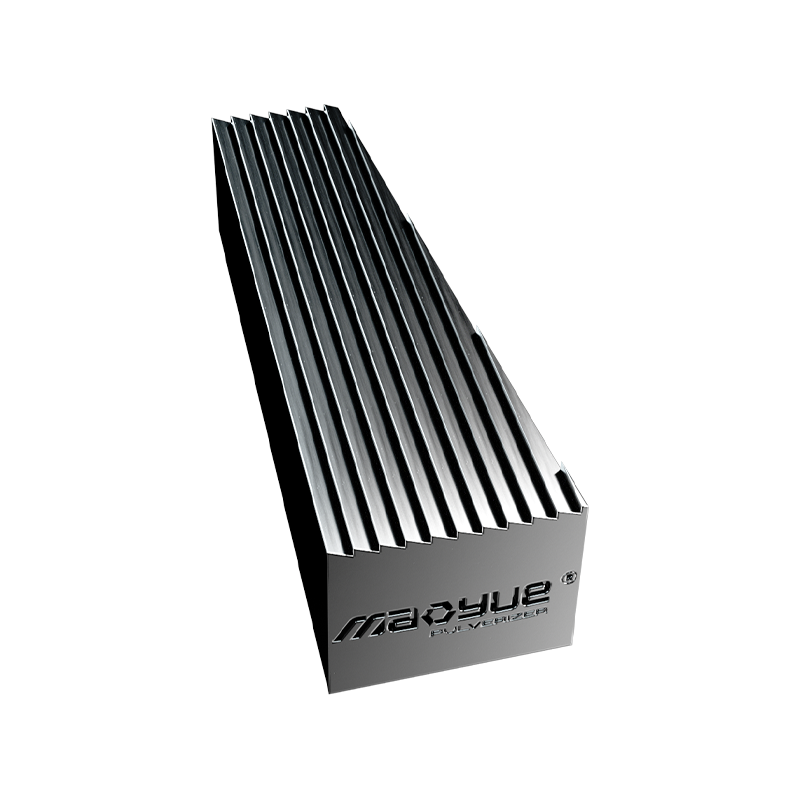
PE Pulverizer alloy steel blades
3. Precision Heat Treatment and Metallurgical Stability
Heat treatment is one of the most important steps in the production of a high-performance pulverizer blade. The process changes the internal structure of the alloy steel so that the finished component can achieve the required hardness, wear resistance, and mechanical stability. A blade that is only machined without an appropriate heat-treatment cycle may initially appear sharp but can lose performance quickly during industrial use.
A controlled heat-treatment program generally includes carefully managed heating, holding, cooling, and tempering stages. The objective is to achieve a uniform structure throughout the blade while limiting internal stress. Multiple treatments may be used to refine the material properties and stabilize the component before final precision machining. The exact process varies according to steel grade, blade geometry, thickness, tooth design, and required hardness.
Precision heat treatment can produce several practical benefits. First, it can increase resistance to abrasive wear caused by repeated contact with PE particles and other contaminants. Second, it can improve resistance to impact and vibration. Third, it can reduce the possibility of dimensional changes during operation. Finally, it can help the blade retain a stable cutting edge for a longer period, supporting consistent grinding efficiency.
3.1 Surface hardness and service life
Blade service life is influenced by many factors, but hardness is a major contributor. When the cutting edge is too soft, it may round over rapidly. A rounded edge has less ability to shear material cleanly and may increase frictional heat. The pulverizer may then consume more power while producing less uniform powder. A harder, wear-resistant edge can preserve the designed tooth profile and help the grinding chamber maintain stable performance.
The supplied product information indicates that wear rates can be reduced by more than 70 percent compared with ordinary cutting discs under suitable processing conditions, and that service life may be two to three times longer or more than standard market blades. These figures should be understood as performance targets or comparative claims that depend on the material being processed, machine configuration, operating parameters, and maintenance practices. In actual production, testing with the customer’s feedstock remains the best method for confirming expected service life.
A longer service interval provides benefits beyond part replacement. Fewer blade changes can reduce labor consumption, machine stoppages, production scheduling problems, and the risk of incorrect reassembly. It can also help maintain a more stable process because the grinding gap and tooth geometry remain consistent for a longer period.
4. Precision-Adjustable Grinding Clearance
Grinding clearance is the distance between the rotating and stationary grinding surfaces. It has a direct influence on the efficiency of shearing, friction, heat generation, and final powder fineness. A clearance that is too large may allow coarse particles to pass through, while a clearance that is too small may increase friction, power consumption, and heat generation. The ability to make fine adjustments is therefore essential for high-quality pulverizing.
These blades support precision-adjustable clearance, including micron-level fine-tuning when used with a compatible pulverizer structure and adjustment system. Fine adjustment allows operators to adapt the machine to different PE grades, feedstock sizes, moisture levels, melt-flow characteristics, and final-powder requirements. It also helps compensate for normal wear and maintain a stable working gap over time.
When the clearance is correctly adjusted, the rotating teeth can apply a balanced combination of shearing and friction. The material is gradually reduced rather than simply crushed or overheated. This controlled action helps produce powder with a more uniform particle distribution and fewer coarse particles or agglomerates.
4.1 Relationship between clearance and powder quality
Particle size is affected by blade geometry, rotational speed, feed rate, material properties, air circulation, classifier settings, and grinding clearance. The blades provide the cutting and friction surfaces required for size reduction, while the adjustment system determines how closely those surfaces interact. A precise and stable clearance can help operators achieve the target output more consistently.
For many PE applications, the target powder range is approximately 20–80 mesh or finer. The correct result depends on the product specification and machine configuration. Powder intended for rotational molding may require different characteristics from powder used in powder coatings, masterbatch production, or recycled pelletizing. The blade system can support these varied requirements by allowing the grinding conditions to be adjusted rather than relying on a fixed, non-adjustable setup.
Uniform powder is important downstream. In extrusion, inconsistent particle size can affect feeding behavior, melting uniformity, and dispersion. In injection molding, irregular feedstock may influence mixing and product consistency. In rotational molding, a controlled powder distribution can contribute to more uniform wall thickness and smoother surfaces. In powder coatings, fineness and flowability directly affect application performance and coating appearance.
5. High-Speed Rotating Tooth Design
The geometry of a pulverizer tooth determines how material enters the grinding zone and how energy is transferred to the polymer. A well-designed high-speed rotating tooth profile promotes efficient engagement with the feedstock. It can help divide larger pieces into smaller particles while encouraging continuous circulation through the grinding chamber.
The specialized rotating tooth design used with these blades is intended to create efficient shearing and friction grinding of PE materials. Compared with a blunt or poorly matched profile, a precise tooth configuration can reduce unnecessary impact and help distribute the workload across the grinding surface. This may improve throughput, reduce localized wear, and support more uniform powder formation.
Tooth geometry must be matched to the material and the machine. PE film, rigid PE pipe, bottle caps, cable sheathing, and filled compounds do not behave in the same way during pulverizing. Film can be flexible and prone to folding, while rigid parts may create higher impact loads. A suitable tooth profile helps the pulverizer respond to these differences.
5.1 Maintaining tooth geometry during operation
The advantage of a precision-designed tooth profile is greatest when the blade retains its original shape. Wear can gradually alter tooth height, edge angle, and clearance. Once the geometry changes, the grinding process may become less efficient. The machine may require more power, produce more heat, or generate a broader particle-size distribution.
High-hardness alloy steel helps resist this geometric change. The blade can continue to perform its intended shearing function for a longer period, especially when operators follow recommended feed rates and inspect the grinding chamber regularly. Proper balancing and correct installation are also essential because an improperly mounted blade can experience uneven loading even if the material itself is excellent.
6. Thermal Management During Continuous Grinding
Friction heat is a natural part of plastic pulverizing. However, excessive heat can be harmful, particularly when processing PE. The material may soften, stick to the grinding surfaces, form agglomerates, or lose its desired powder characteristics. Heat can also accelerate blade wear and cause the edge to lose its sharpness.
The blade assembly incorporates a multi-tiered finned heat-dissipation structure and high-thermal-conductivity materials to help control disc temperature. The design is intended to increase the available surface area for heat transfer and promote more effective removal of heat generated during high-speed grinding.
Thermal control is not achieved by the blade alone. Airflow, cooling-water systems where applicable, ambient temperature, feed rate, rotational speed, material moisture, and chamber design all contribute to operating temperature. Nevertheless, a blade with an effective heat-dissipation structure can support the overall thermal-management strategy of the pulverizer.
6.1 Avoiding softening, sticking, and deformation
When PE softens inside the grinding chamber, it may adhere to the blade surface or chamber wall. This reduces the effective grinding area and can create an unstable operating condition. The feedstock may circulate without being reduced efficiently, while the motor continues to consume energy. Material buildup can also change the clearance and cause uneven loading.
By helping remove heat from the grinding disc, the finned structure supports more stable operating temperatures. This can reduce the likelihood of edge dulling and deformation caused by thermal stress. Under suitable conditions, the blade can maintain its sharpness and stable performance during extended production, including industrial operations that run for many hours per day.
Operators should still monitor temperature, power consumption, output appearance, and vibration. A sudden rise in motor load or powder temperature may indicate excessive feed, inadequate cooling, a blocked air path, incorrect clearance, or a worn blade. Preventive monitoring helps protect both the blade and the wider pulverizer system.
7. Expected Service Life and Operating Economy
A single blade set is described as capable of achieving approximately 800 hours of continuous service life under suitable conditions. The practical value of this service interval is significant for plants that operate continuously or process abrasive and high-toughness plastics.
Longer service life can reduce direct spare-parts consumption. It can also lower indirect costs associated with machine shutdowns, disassembly, cleaning, inspection, blade adjustment, and restart. If blade changes are required less frequently, production planners gain greater flexibility and operators spend less time performing maintenance work.
Extended service life may also contribute to better energy efficiency. A sharp, stable blade generally performs more effective shearing, whereas a worn blade may rely increasingly on friction. Excess friction can increase motor load and heat generation. By retaining its cutting profile for longer, the alloy steel blade can help the pulverizer maintain a more efficient operating condition.
Economic performance should be evaluated through total cost of ownership rather than purchase price alone. A lower-priced blade that wears quickly may become more expensive after accounting for replacements, labor, lost output, and inconsistent powder quality. A durable blade with a higher initial cost may provide a better overall result if it significantly extends maintenance intervals and improves process stability.
7.1 Factors affecting actual blade life
Actual service life depends on several variables:
• Feedstock composition: Clean PE usually causes less wear than PE containing glass fiber, mineral filler, metal particles, sand, or other contaminants.
• Material preparation: Oversized pieces, excessive moisture, and irregular feed can increase mechanical stress.
• Feed rate: Overfeeding may overload the grinding chamber and accelerate edge wear.
• Grinding clearance: Incorrect clearance may create excessive friction or impact.
• Cooling performance: Inadequate heat removal can soften PE and damage the blade system.
• Installation accuracy: Poor alignment, imbalance, or loose fasteners can cause uneven loading.
• Maintenance quality: Regular inspection and timely adjustment help preserve performance.
Understanding these factors allows users to obtain the greatest value from the blade and avoid attributing process-related problems solely to the component itself.
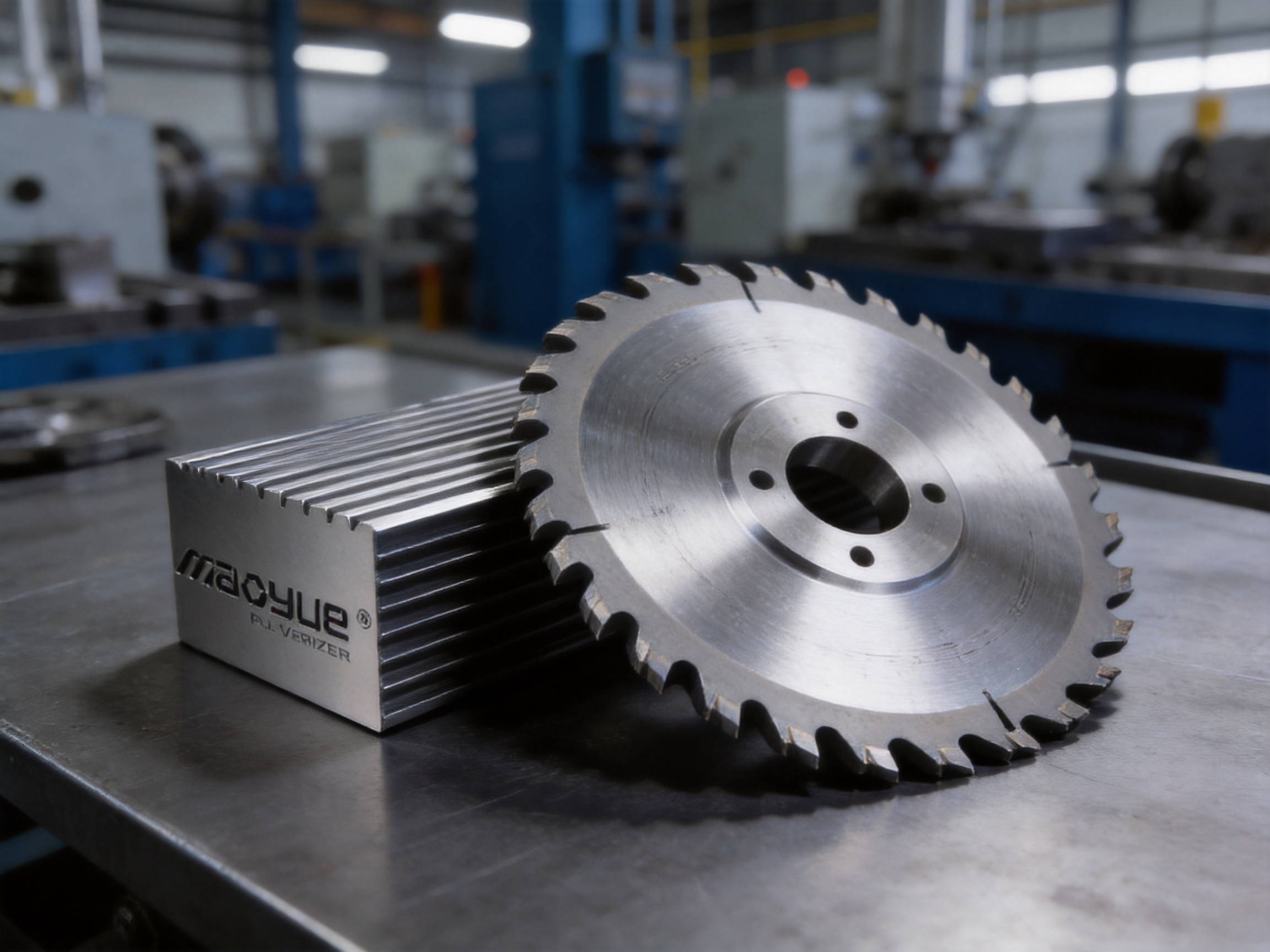
8. Compatibility with PE and PP Pulverizer Systems
The blade is designed as an original accessory for mainstream PE and PP pulverizer configurations. It is available for common disc diameters such as 500 mm, 600 mm, and 800 mm, while customized sizes and specifications can also be considered. Compatibility depends on the pulverizer model, disc dimensions, mounting arrangement, shaft configuration, tooth layout, and clearance-adjustment system.
Correct compatibility is essential. A blade with the wrong diameter, thickness, bolt pattern, tooth orientation, or balancing specification may not operate safely or efficiently. Before ordering, users should provide the machine model, existing disc dimensions, mounting-hole information, material type, desired powder fineness, and operating conditions.
The blade can be adapted for selected equipment from other manufacturers when the mechanical dimensions and operating requirements are suitable. Partial adaptability does not mean universal compatibility, so technical confirmation is recommended before installation. Customization may include disc diameter, tooth profile, material grade, hardness specification, and other design details.
| Application factor | Recommended consideration | Effect on performance |
|---|---|---|
| Disc diameter | Match the original pulverizer structure, such as 500 mm, 600 mm, or 800 mm | Ensures correct rotational path and chamber fit |
| Material type | Specify clean PE, recycled PE, PP, reinforced plastic, or filled compound | Supports appropriate alloy and tooth-profile selection |
| Powder target | Define the required mesh range and particle uniformity | Guides clearance and grinding-surface configuration |
| Operating schedule | Identify intermittent or continuous industrial production | Helps determine heat-treatment and cooling requirements |
| Mounting arrangement | Confirm bolt pattern, thickness, shaft position, and balancing needs | Supports safe installation and stable rotation |
| Contamination level | Assess the presence of dust, metal, glass fiber, or mineral filler | Helps estimate wear rate and maintenance intervals |
9. Applications in Plastic Recycling
Plastic recycling is one of the most important application areas for durable pulverizer blades. Waste PE products often vary in size, shape, thickness, and previous processing history. They may include films, pipes, bottle caps, cable sheathing, agricultural materials, packaging components, and industrial scrap.
After sorting, cleaning, and preliminary size reduction, these materials can be pulverized into fine powder for downstream processing. The resulting powder may be used in regranulation, film blowing, pipe extrusion, injection molding, or other recycling operations. A stable particle distribution helps improve feeding, melting, mixing, and final-product consistency.
Recycled feedstock can be more challenging than virgin resin because it may contain residual additives, labels, dust, moisture, or foreign particles. The blade must withstand variable mechanical conditions, while the operator must ensure that the feedstock is properly prepared. The high hardness and impact resistance of the alloy steel construction are especially valuable when the material contains moderate levels of abrasive contamination.
Efficient recycling also supports resource conservation. A longer-lasting blade produces less discarded metal waste and reduces the frequency of replacement-part manufacturing and transportation. In combination with low-energy equipment and stable powder quality, durable components can contribute to a more sustainable circular-economy process.
10. Powder Coating Production
PE powder is used in selected coating applications where particle fineness, flowability, thermal behavior, and cleanliness are important. The pulverizer blade must create a consistent powder without excessive heat or agglomeration. Overheated material may partially soften and form lumps, affecting screening, storage, feeding, and coating performance.
A controlled grinding process can help produce powder within a specified mesh range, such as approximately 20–80 mesh or finer, depending on the product requirement. Uniform particles can support more consistent electrostatic spraying and fluidized-bed impregnation. They may also improve coverage, melt behavior, and finished-surface appearance.
The blade’s heat-dissipation structure is particularly relevant in this application. By helping limit temperature rise, it supports the production of free-flowing powder with reduced risk of scorching or sticking. The final result still depends on the polymer grade, additives, cooling system, classifier, and storage conditions.
11. Masterbatch and Modified Plastic Production
In filler masterbatch, color masterbatch, and functional masterbatch production, PE powder can act as a carrier or one component of a compounded formulation. Uniform particle size helps improve feeding accuracy and supports more consistent dispersion of pigments, fillers, and functional additives during extrusion.
Powder with a broad or unstable particle distribution may segregate during handling or feed inconsistently into the extruder. Coarse particles can melt later than fine particles, while agglomerates may cause dispersion defects. A precision pulverizer blade helps maintain a controlled grinding process and supports more uniform feedstock preparation.
For modified plastics, the blade must process the selected polymer without creating unnecessary heat that could affect additives or cause premature softening. The combination of high wear resistance, accurate tooth geometry, and adjustable clearance gives operators more control over the process.
12. Rotational Molding and Chemical Processing
Rotational molding relies on fine polymer powder that can distribute evenly across the interior surface of a heated mold. Powder quality influences wall thickness, surface finish, cycle stability, and the risk of bubbles or incomplete coverage. Inconsistent particles may flow or melt unevenly, resulting in visible or structural defects.
Uniformly ground PE powder is suitable for applications such as large hollow containers, storage tanks, playground