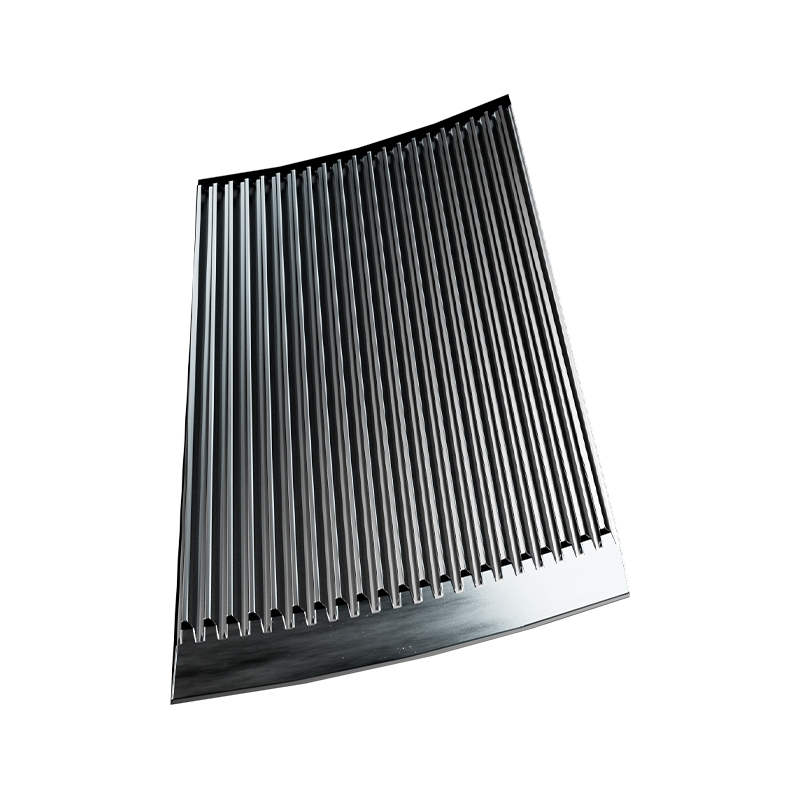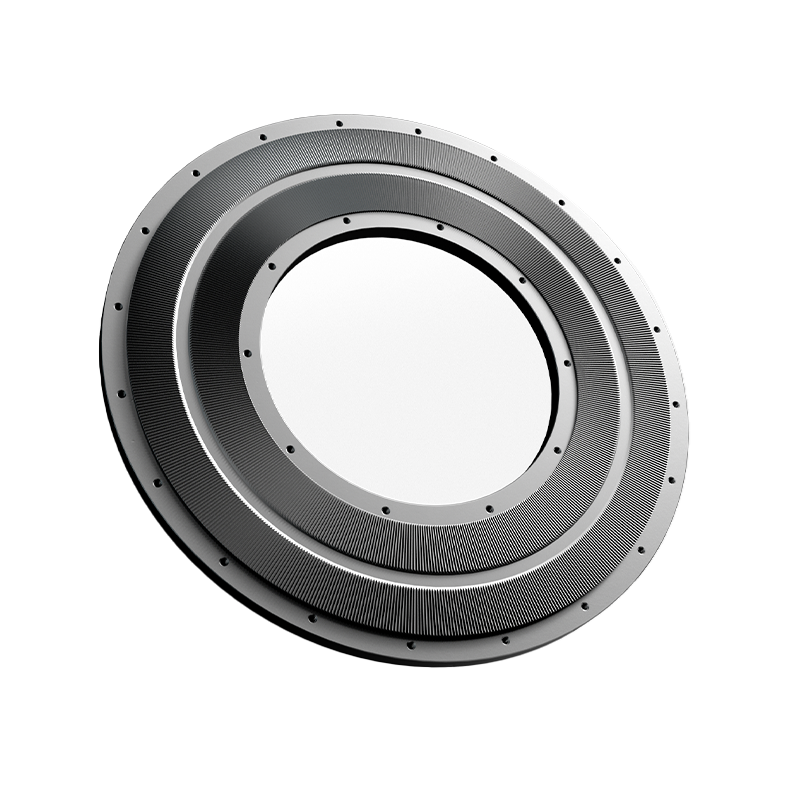


 English
 русский
 Español
 عربى
 中文简体
 中文简体
Content
- 1 1. The Role of Blades in PE Pulverizing Systems
- 2 2. Alloy Steel Construction for Demanding Plastic Processing
- 3 3. Hardness, Toughness, and Wear Resistance
- 4 4. Comparison with Conventional Pulverizer Blades
- 5 5. Precision-Adjustable Clearance
- 6 6. High-Speed Rotating Tooth Design
- 7 7. Heat Dissipation and Thermal Control
- 8 8. Powder Quality and Particle-Size Uniformity
- 9 9. Applications in Plastic Recycling
- 10 10. Applications in Powder Coatings
- 11 11. Applications in Masterbatch and Modified Plastics
- 12 12. Rotational Molding and Chemical Processing
- 13 13. Special and Research Applications
- 14 14. Advanced Manufacturing Capabilities
- 15 15. Factory Strength and Engineering Experience
- 16 16. Certification and Quality Management
- 17 17. Compatibility and Customization
- 18 18. Maintenance and Operating Recommendations
- 19 19. Cost Reduction Through Longer Service Life
- 20 20. How to Select the Correct Blade
- 21 21. Advantages Over Lower-Cost Alternatives
- 22 22. Questions and Answers
- 22.1 Q1: What materials can these blades process?
- 22.2 Q2: What is the typical hardness of the blade?
- 22.3 Q3: How long can one blade set operate?
- 22.4 Q4: Can the blades process glass-fiber-reinforced plastics?
- 22.5 Q5: What powder fineness can be achieved?
- 22.6 Q6: Can the clearance be adjusted?
- 22.7 Q7: Are the blades compatible with other pulverizer brands?
- 22.8 Q8: What standard disc diameters are available?
- 22.9 Q9: Why is dynamic balancing important?
- 22.10 Q10: How can operators extend blade life?
- 22.11 Q11: Are these blades suitable for rotational molding powder?
- 22.12 Q12: What information is needed for a customized quotation?
- 23 23. Conclusion
- 24 References
- 25 Product: PE Pulverizer alloy steel blades
PE pulverizer alloy steel blades are essential working components in plastic size-reduction systems. They directly influence cutting efficiency, powder quality, equipment stability, maintenance frequency, and total production cost. When a pulverizer is used continuously to process polyethylene film, pipes, bottle caps, cable sheathing, strapping bands, rotational molding scrap, or other plastic materials, ordinary blades may lose sharpness quickly. Edge wear can increase the clearance between rotating and stationary discs, reduce grinding efficiency, produce inconsistent particle sizes, and raise energy consumption. For this reason, selecting a blade manufactured from an appropriate alloy steel and treated through a reliable precision process is as important as choosing the pulverizer itself.
Modern PE recycling and powder-processing operations require more than basic cutting performance. They need blades that can maintain a stable edge under impact, friction, heat, and continuous mechanical stress. They also need components that can support consistent powder fineness, easy adjustment, reliable heat dissipation, and compatibility with commonly used pulverizer disc diameters. A well-designed alloy steel blade addresses these requirements through a combination of material selection, forging, precision machining, heat treatment, balancing, and application-specific tooth design.
This article examines the construction, performance, manufacturing technology, application range, maintenance benefits, and purchasing considerations associated with PE pulverizer alloy steel blades. It also explains how a specialized manufacturer with long-term experience in plastic crushing and pulverizing equipment can provide advantages beyond the blade itself, including engineering support, customized dimensions, quality control, compatibility guidance, and dependable after-sales service.
1. The Role of Blades in PE Pulverizing Systems
A plastic pulverizer reduces material size through a combination of high-speed rotation, shearing, impact, friction, and controlled clearance between grinding discs. In a typical disc pulverizer, one disc rotates at high speed while another disc remains stationary or rotates at a different speed. Plastic enters the grinding chamber, where the tooth profiles and working surfaces progressively break the material into smaller particles.
The blade or grinding disc is therefore the primary interface between the machine and the plastic feedstock. Its geometry determines how the material is captured, cut, moved, and discharged. Its hardness controls how long the cutting edge remains effective. Its toughness determines whether it can resist chipping or cracking when hard contaminants, thick sections, or high-toughness plastics enter the chamber. Its surface condition influences friction, heat generation, and the stability of the final powder.
PE is often regarded as a relatively easy material to process, but industrial PE pulverizing can be demanding. Different grades may have very different melt strength, toughness, elasticity, density, and contamination levels. Film scrap can be flexible and difficult to feed consistently. Pipe and bottle-cap scrap can contain thick sections that create impact loading. Recycled material may also contain small amounts of dirt, metal, glass, or other polymers. These conditions place continuous stress on pulverizer blades.
When blades are not suitable for the application, several problems may occur. The cutting edge can become rounded, increasing the amount of friction required to reduce the material. The grinding temperature may rise, causing PE to soften or partially melt. Powder may become uneven, with excessive coarse particles or agglomerates. The machine may draw more power, operate with greater vibration, or require frequent stoppages for blade adjustment and replacement.
A high-quality PE pulverizer blade is designed to prevent these issues. It must combine a hard and wear-resistant working edge with sufficient internal toughness. It must also be manufactured accurately enough to maintain the intended clearance and dynamic balance of the rotating assembly. These factors work together to create stable, efficient, and repeatable pulverizing performance.
2. Alloy Steel Construction for Demanding Plastic Processing
The featured blade is forged from high-density, wear-resistant alloy steel. Depending on the required application and specification, the material may be based on chromium-molybdenum-vanadium alloy steel or a comparable high-hardness engineering grade. These alloying elements are selected because they can improve wear resistance, strength, hardenability, and resistance to repeated mechanical loading.
Forging helps create a dense and reliable internal structure. Compared with poorly controlled cast or low-grade fabricated components, a properly forged blade can offer improved structural continuity and resistance to impact. The forging process also provides a strong foundation for subsequent heat treatment and precision machining. The final performance depends not only on the nominal alloy composition, but also on the forging temperature, reduction ratio, cooling method, treatment sequence, and inspection standards.
The blade is subjected to multiple precision heat-treatment stages. A carefully controlled heat-treatment process can refine the metallurgical structure, increase hardness at the working surface, and preserve the toughness needed for continuous operation. The target hardness is approximately HRC 60–65 or higher, depending on the final specification and operating conditions. This is substantially harder than ordinary cutting discs commonly produced around HRC 45.
High hardness helps the blade maintain a sharper working edge for a longer period. However, hardness alone is not sufficient. An excessively brittle blade may chip or fracture under impact, particularly when processing thick plastic pieces or material containing unexpected contaminants. The purpose of a professional heat-treatment process is to establish an appropriate balance between surface hardness, wear resistance, core strength, and impact tolerance.
Compared with ordinary cutting discs, the alloy steel construction is intended to reduce edge wear significantly. Under suitable operating conditions, wear rates may be reduced by more than 70 percent compared with conventional lower-hardness blades. The exact result depends on the feed material, contamination level, machine speed, clearance, cooling performance, operator practices, and maintenance schedule. Nevertheless, the combination of high-quality alloy steel and controlled heat treatment provides a strong advantage in continuous PE processing.
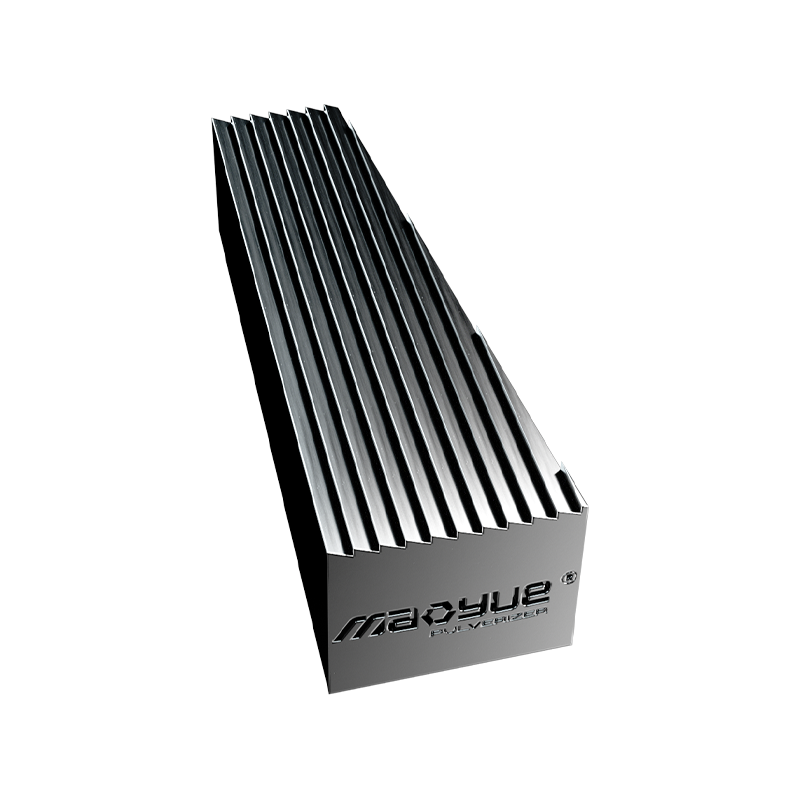
PE Pulverizer alloy steel blades
3. Hardness, Toughness, and Wear Resistance
Blade performance is determined by several related properties rather than by hardness alone. Three of the most important are hardness, toughness, and wear resistance.
3.1 High Working-Edge Hardness
A hard working edge resists deformation during grinding. If an edge is too soft, repeated contact with plastic particles gradually rounds the tooth profile. Once the edge becomes rounded, the blade may push or rub against the material rather than cut it efficiently. This increases friction and can create more heat inside the grinding chamber.
An HRC 60–65 or higher working hardness gives the blade a strong ability to resist abrasive wear. This is particularly useful when processing reinforced or high-toughness plastics. Glass-fiber-reinforced materials, filled PE compounds, and contaminated recycled plastics can be more abrasive than clean virgin resin. A high-hardness surface helps preserve the intended geometry for a longer operating period.
3.2 Resistance to Impact and Chipping
PE pulverizer blades are exposed to repeated impact as material enters the grinding chamber. Thick pipe sections, injection-molded parts, bottle caps, and compacted scrap can generate sudden loading. The blade must resist chipping when these pieces contact the tooth profile.
The alloy composition, forged structure, and heat-treatment sequence work together to improve impact resistance. A tough blade can absorb repeated mechanical loading without developing cracks or losing large sections of its edge. This feature is especially important in recycling lines, where the feedstock may not be as uniform as virgin production scrap.
3.3 Long-Term Wear Stability
Wear resistance is valuable because it protects production stability as well as the blade itself. A blade that wears gradually and predictably allows operators to plan inspections and maintenance. A blade that wears rapidly can cause sudden changes in powder quality and unplanned downtime.
Under appropriate conditions, a single blade set can achieve approximately 800 hours of continuous service life. This figure should be understood as an application reference rather than a universal guarantee. Actual service life depends on material hardness, contamination, throughput, operating temperature, rotor speed, clearance, feeding uniformity, and maintenance quality. Even so, the expected service life is significantly longer than that of many ordinary cutting discs.
A longer blade life reduces the number of replacement events during a production year. It also lowers the amount of discarded steel, minimizes labor associated with disassembly and alignment, and reduces the production losses caused by maintenance shutdowns.
4. Comparison with Conventional Pulverizer Blades
Conventional blades may be suitable for light-duty applications, clean materials, or occasional production. However, they often have limitations in demanding industrial service. Lower hardness can result in rapid rounding of the cutting edge. Inconsistent heat treatment can create variations between blades in the same set. Insufficient precision machining may make it difficult to achieve the correct disc clearance. Poor balancing can increase vibration and bearing load when the disc rotates at high speed.
The alloy steel design addresses these limitations through a more complete performance strategy. It combines a wear-resistant material with a controlled manufacturing process and application-specific geometry. The result is not simply a harder blade, but a more stable pulverizing component.
| Performance Factor | Ordinary Cutting Disc | PE Pulverizer Alloy Steel Blade | Production Benefit |
|---|---|---|---|
| Typical working hardness | Approximately HRC 45 | Approximately HRC 60–65 or higher | Improved resistance to edge wear and deformation |
| Material structure | May use standard steel or less specialized processing | Forged high-density alloy steel | Better structural strength and impact resistance |
| Heat treatment | May be basic or inconsistent | Multiple precision heat-treatment stages | More balanced hardness and toughness |
| Service life | Often shorter under demanding conditions | Reference life of up to approximately 800 continuous hours | Fewer replacements and less downtime |
| Clearance control | May be limited by machining accuracy | Precision-adjustable, with micron-level fine-tuning support | More stable particle size and efficient grinding |
| Application range | Best suited to light or clean materials | Suitable for PE recycling, high-toughness plastics, and powder applications | Greater flexibility in industrial processing |
| Customization | Often limited to standard sizes | Disc diameter, tooth profile, and material specifications can be customized | Better integration with different pulverizer lines |
The comparison demonstrates why total operating value should be evaluated instead of purchase price alone. A lower-cost blade may appear attractive initially, but frequent replacement, inconsistent powder, increased power demand, and production interruptions can make it more expensive over its useful life. A premium blade can provide a lower cost per operating hour and a more predictable maintenance schedule.
5. Precision-Adjustable Clearance
The clearance between rotating and stationary grinding surfaces is one of the most important adjustments in a pulverizer. If the clearance is too large, material may pass through without sufficient grinding. The final powder may contain coarse particles, uneven fractions, or visible agglomerates. If the clearance is too small, friction and heat may increase. The surfaces may contact each other, causing accelerated wear, vibration, or mechanical damage.
The alloy steel blade system supports precision-adjustable clearance, including micron-level fine-tuning where the machine structure permits. This enables operators to optimize the grinding gap for different PE materials, desired mesh sizes, feed rates, and production conditions.
Clearance adjustment should be carried out carefully. Operators should first confirm that the pulverizer is stopped, isolated from power, and free from residual material. The grinding surfaces should be clean and inspected for damage. Adjustments should be made evenly and verified through test production. The optimal setting is usually a balance between particle-size requirements, throughput, temperature, and power consumption.
Precision clearance also helps compensate for normal wear. Instead of replacing a blade at the first sign of minor edge loss, operators may be able to restore performance through controlled adjustment, provided that the blade remains within safe dimensional and structural limits. This can extend usable life and improve the return on the original investment.
6. High-Speed Rotating Tooth Design
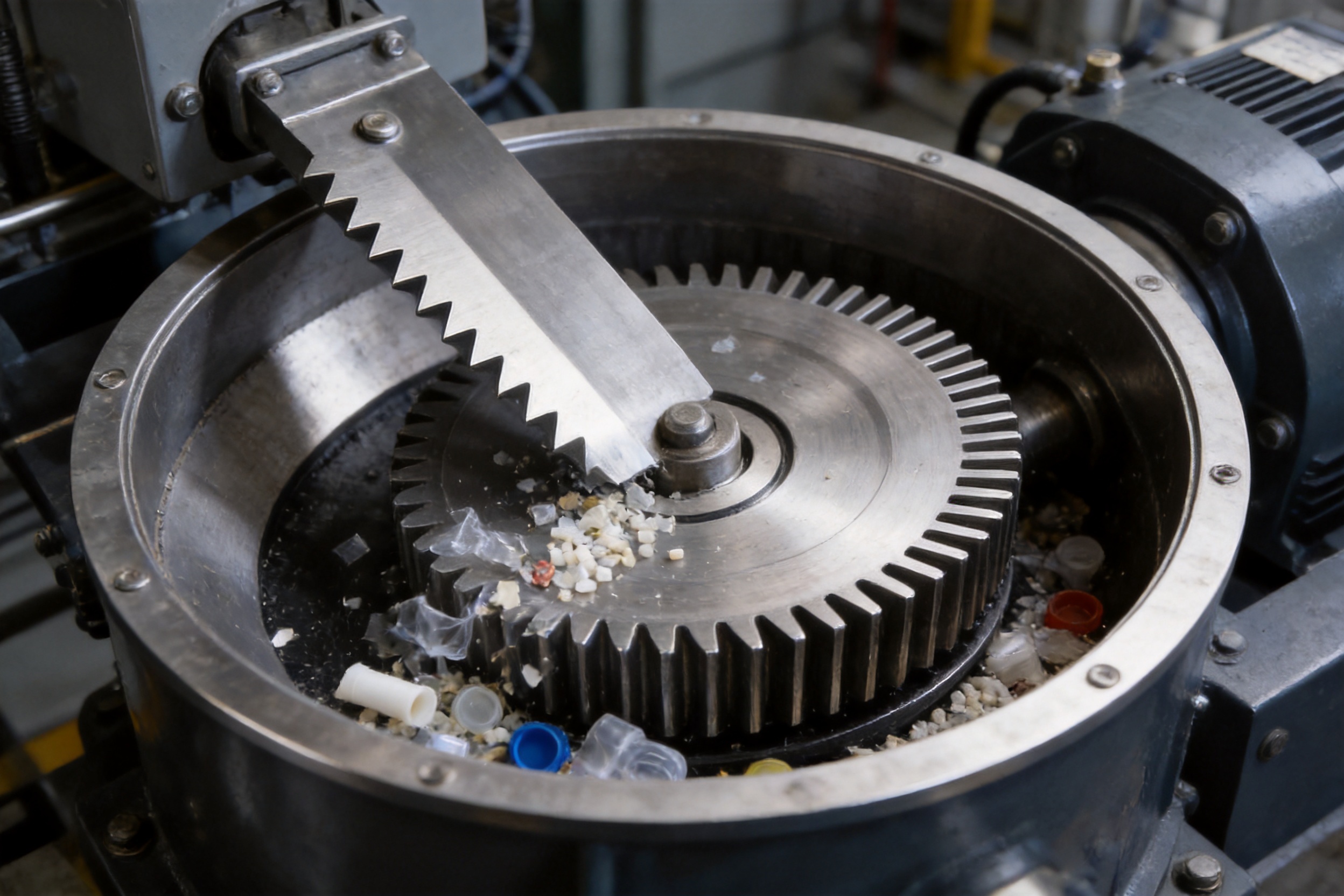
The tooth design of a pulverizer disc controls how material enters the working zone and how it is exposed to cutting and friction. A specialized high-speed rotating tooth configuration can improve the movement of PE through the grinding chamber. It helps guide material toward active cutting areas, distribute loading across the disc, and support continuous size reduction.
For PE, the tooth profile must account for the material’s toughness and tendency to soften when heated. An overly aggressive profile may create unnecessary impact or excessive heat. A profile that is too mild may reduce throughput and leave coarse pieces. The design objective is efficient shearing combined with controlled friction grinding.
When the tooth geometry, rotational speed, and clearance are properly matched, the pulverizer can produce a fine and relatively uniform powder. The stated output range is approximately 20–80 mesh or finer, depending on the machine model, material characteristics, screen or classification arrangement, and operating parameters. The final particle-size distribution should always be confirmed through testing because PE grades differ substantially.
Uniform particle size is valuable in downstream processing. Regranulation systems benefit from consistent feeding and melting behavior. Film-blowing operations require stable material preparation to avoid variation in film thickness and surface quality. Injection molding processes benefit from predictable melting and dispersion. Powder coating and rotational molding applications also depend on reliable particle size and flow characteristics.
7. Heat Dissipation and Thermal Control
Heat management is a critical consideration when pulverizing PE. Friction between plastic particles and high-speed working surfaces can raise the temperature inside the grinding chamber. If the temperature becomes too high, PE may soften, smear, or partially melt instead of forming free-flowing powder. The material may accumulate on the blade surface, form agglomerates, or block passages in the machine.
Thermal stress can also affect the blade. Repeated heating and cooling may contribute to dimensional changes, loss of edge stability, or deformation if the blade is not properly designed and operated. For this reason, the pulverizer uses a multi-tiered finned heat-dissipation structure and high-thermal-conductivity materials to help control disc temperature.
The cooling structure increases the effective surface area available for heat transfer. During operation, it helps move heat away from the grinding zone and supports more stable temperatures during extended production. Thermal control is especially important in 24-hour industrial operation, when there may be little opportunity for the system to cool naturally between batches.
Good heat dissipation does not eliminate the need for correct operating practices. Operators should maintain suitable feed rates, avoid overloading, inspect cooling passages, and monitor the temperature of the grinding chamber, bearings, and discharge material. If the feed material is damp, contaminated, or supplied too quickly, even a well-designed cooling system may be overwhelmed.
Stable temperature supports several important outcomes. It helps preserve blade sharpness, reduces the risk of PE softening, protects powder flowability, and improves the consistency of particle size. It also reduces the possibility of edge dulling and deformation caused by uncontrolled friction heat.
8. Powder Quality and Particle-Size Uniformity
Blade quality has a direct relationship with powder quality. A sharp, accurately positioned blade can cut and shear material more consistently than a worn or poorly aligned blade. When the tooth profile is maintained, the resulting powder is more likely to remain within the desired size range.
For many applications, powder between 20 and 80 mesh is suitable, while some processes may require finer material. The exact result depends on the machine configuration and processing conditions. The blade contributes to the process, but particle size is also affected by rotor speed, clearance, feedstock temperature, material density, moisture, and the number of passes through the grinding zone.
Uniformity is often more important than simply achieving a small average particle size. A powder containing a large proportion of oversized particles may cause feeding instability or inconsistent melting. Agglomerated particles may create defects in coatings, rotational molding surfaces, or injection-molded parts. A well-maintained blade set helps reduce these variations and supports a more predictable particle-size distribution.
In recycled plastics, consistent powder quality can improve the efficiency of downstream separation, blending, compounding, and pelletizing. In powder coating, fine and free-flowing PE powder helps support even application and stable coating thickness. In masterbatch production, uniform carrier powder can improve additive dispersion and reduce variation between batches.
9. Applications in Plastic Recycling
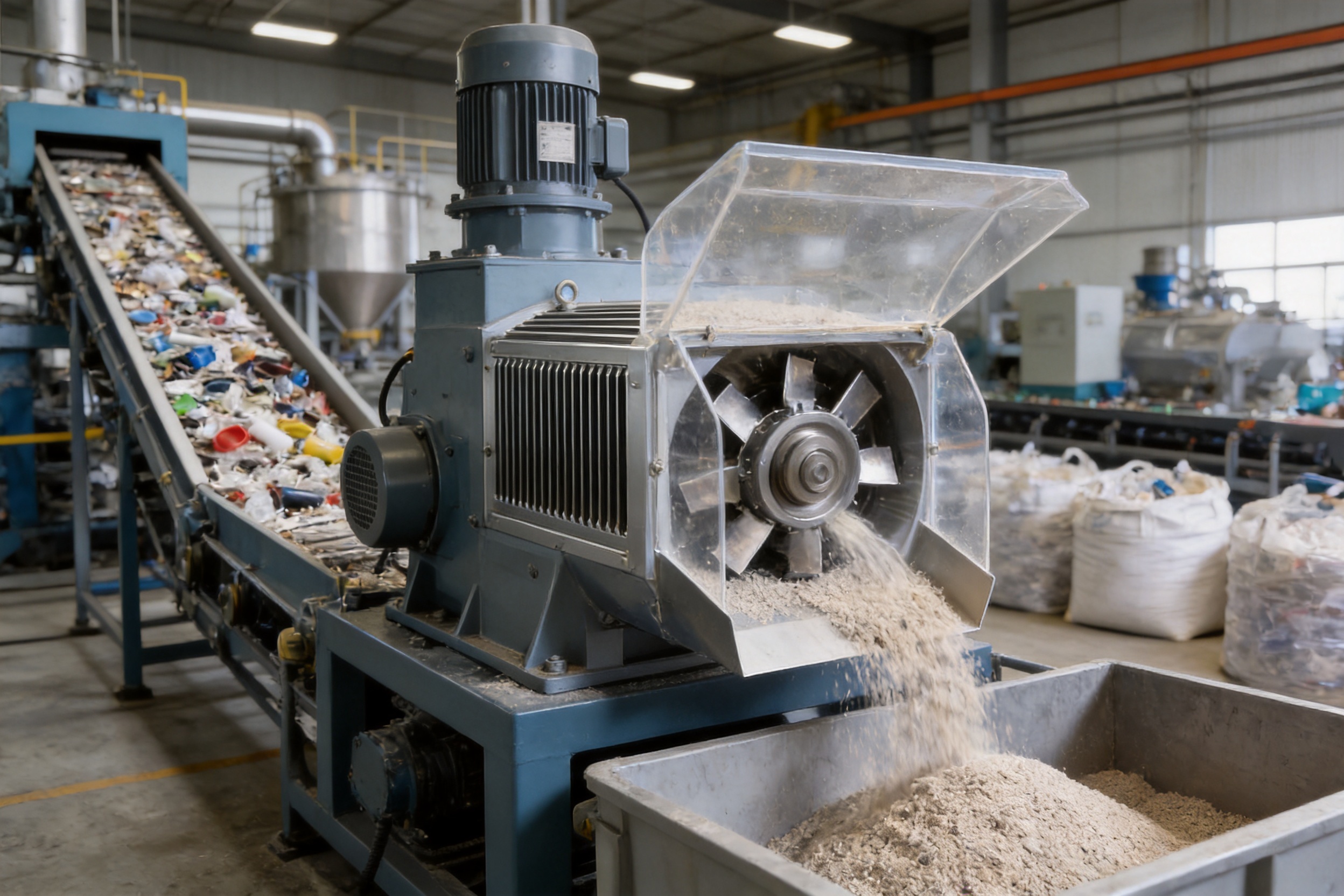
PE pulverizer alloy steel blades are suitable for a broad range of recycling and plastic-processing applications. Their primary use is the reduction of waste PE into powder for further processing. Typical feedstocks include PE film, pipes, bottle caps, cable sheathing, packaging straps, molded components, and production scrap.
9.1 PE Film
Film scrap is lightweight, flexible, and often difficult to feed consistently. It may fold, stretch, or wrap around moving components if the cutting action is inadequate. A high-speed tooth design and sharp alloy steel edge help capture the film and reduce it into manageable particles. Stable temperature control is important because thin film can soften quickly when exposed to excessive friction.
9.2 PE Pipes and Thick Sections
Pipe scrap and other thick PE sections generate greater impact during entry into the grinding chamber. The blade must resist chipping and deformation while maintaining a stable cutting edge. The forged alloy steel structure and controlled heat treatment provide the strength required for repeated impact loading.
9.3 Bottle Caps and Molded Parts
Bottle caps and injection-molded PE parts may be relatively dense and tough. They can enter the machine as compact pieces that require repeated shearing and friction. A precision blade set helps maintain efficient reduction and supports uniform powder output for subsequent regranulation or compounding.
9.4 Cable Sheathing and Strapping Bands
PE cable sheathing and strapping bands can have high toughness and elastic recovery. The blade must continue cutting effectively rather than merely compressing the material. A durable, high-hardness working edge helps maintain performance during long production cycles.
10. Applications in Powder Coatings
PE powder is used in coating processes that require controlled particle size, flowability, and thermal behavior. These may include electrostatic spraying and fluidized-bed impregnation. For such applications, contamination, agglomeration, and broad particle-size variation can negatively affect coating appearance and performance.
Alloy steel pulverizer blades support the production of fine and uniform powder. The combination of sharp edges, controlled clearance, and effective cooling helps reduce scorching and agglomeration. The resulting material can provide more consistent feeding and distribution during coating operations.
Powder quality should still be confirmed through laboratory testing. Important factors may include particle-size distribution, bulk density, melt flow behavior, color, contamination level, and thermal stability. The blade is one part of the complete production system, but it is a critical part because poor grinding performance cannot usually be corrected downstream without additional processing.
11. Applications in Masterbatch and Modified Plastics
In filler masterbatch, color masterbatch, and functional masterbatch production, PE-based powder may act as a carrier or part of a compounded formulation. Uniform particles can improve the consistency of additive feeding and promote better dispersion during extrusion.
A blade that produces excessive coarse particles may cause irregular feeding into mixers or extruders. It can also make blending more difficult and contribute to variation in additive concentration. By maintaining a stable cutting edge and controlled powder output, the alloy steel blade supports a more predictable compounding process.
For modified plastics, the required powder specification may vary according to the filler, additive, processing temperature, and final product. Customized tooth profiles and blade specifications can be considered when a standard disc does not provide the desired result. This flexibility is valuable for manufacturers processing multiple PE formulations on the same general equipment platform.
12. Rotational Molding and Chemical Processing
Rotational molding uses polymer powder to produce large hollow products such as storage tanks, containers, playground equipment, and industrial components. Powder quality has a strong effect on melting, coating of the mold surface, wall-thickness uniformity, and the presence of bubbles or surface defects.
Uniformly ground PE particles can flow more consistently within the mold and melt in a more predictable manner during heating and rotation. This supports smoother surfaces and more uniform wall thickness. The absence of excessive agglomeration is particularly important because large lumps may melt unevenly and create local defects.
Chemical processing applications may also require controlled particle size and purity. When PE powder is used as an intermediate material, stable grinding performance can simplify material handling and improve the repeatability of subsequent blending or reaction steps.
13. Special and Research Applications
Other applications include the fine grinding of plastic components recovered from electronic waste, laboratory samples, and small-batch research materials. These applications may require greater attention to purity, cross-contamination control, and particle-size distribution.
In electronic waste processing, the feed may include mixed plastics, fillers, coatings, or small amounts of metal. Operators should use suitable sorting and pre-cleaning procedures before pulverizing. The blade can provide strong wear resistance, but no blade should be exposed intentionally to large metal objects or uncontrolled foreign matter.
For laboratory and research work, the ability to adjust clearance precisely can be useful. Researchers may need to compare different powder sizes, study material behavior, or prepare samples for analytical testing. A stable blade geometry helps improve repeatability between batches.
14. Advanced Manufacturing Capabilities
The quality of a pulverizer blade depends on the manufacturing system behind it. A specialized equipment manufacturer with long experience in plastic crushing and pulverizing technology can integrate blade production with the requirements of complete pulverizer systems. This integration provides a practical advantage over suppliers that only manufacture generic cutting components.
The manufacturing process begins with material selection. Alloy steel must be chosen according to the expected material load, operating speed, temperature, wear mechanism, and required service life. The steel is then forged to produce a dense structure suitable for high-performance use.
After forging, the blade undergoes controlled heat treatment. The process may include heating, holding, quenching, tempering, and additional treatment stages as required by the selected alloy and target performance. Temperature, timing, atmosphere, and cooling conditions must be managed carefully to reduce distortion and achieve a consistent metallurgical structure.
Precision machining follows heat treatment. The blade surfaces, mounting areas, tooth profiles, and reference features must be produced accurately. The machining process influences disc flatness, radial runout, tooth consistency, and the ability to establish the intended clearance during assembly.
High-precision grinding equipment is used to achieve the required dimensional accuracy and surface finish. Accurate grinding is particularly important for high-speed components because even small dimensional deviations can influence balance, vibration, and bearing loads.
Dynamic balancing is another important stage. A rotating disc with an uneven mass distribution can produce vibration at operating speed. Excessive vibration may damage bearings, loosen fasteners, increase noise, and reduce the service life of the entire pulverizer. Professional dynamic balancing helps ensure smoother rotation and more reliable long-term operation.
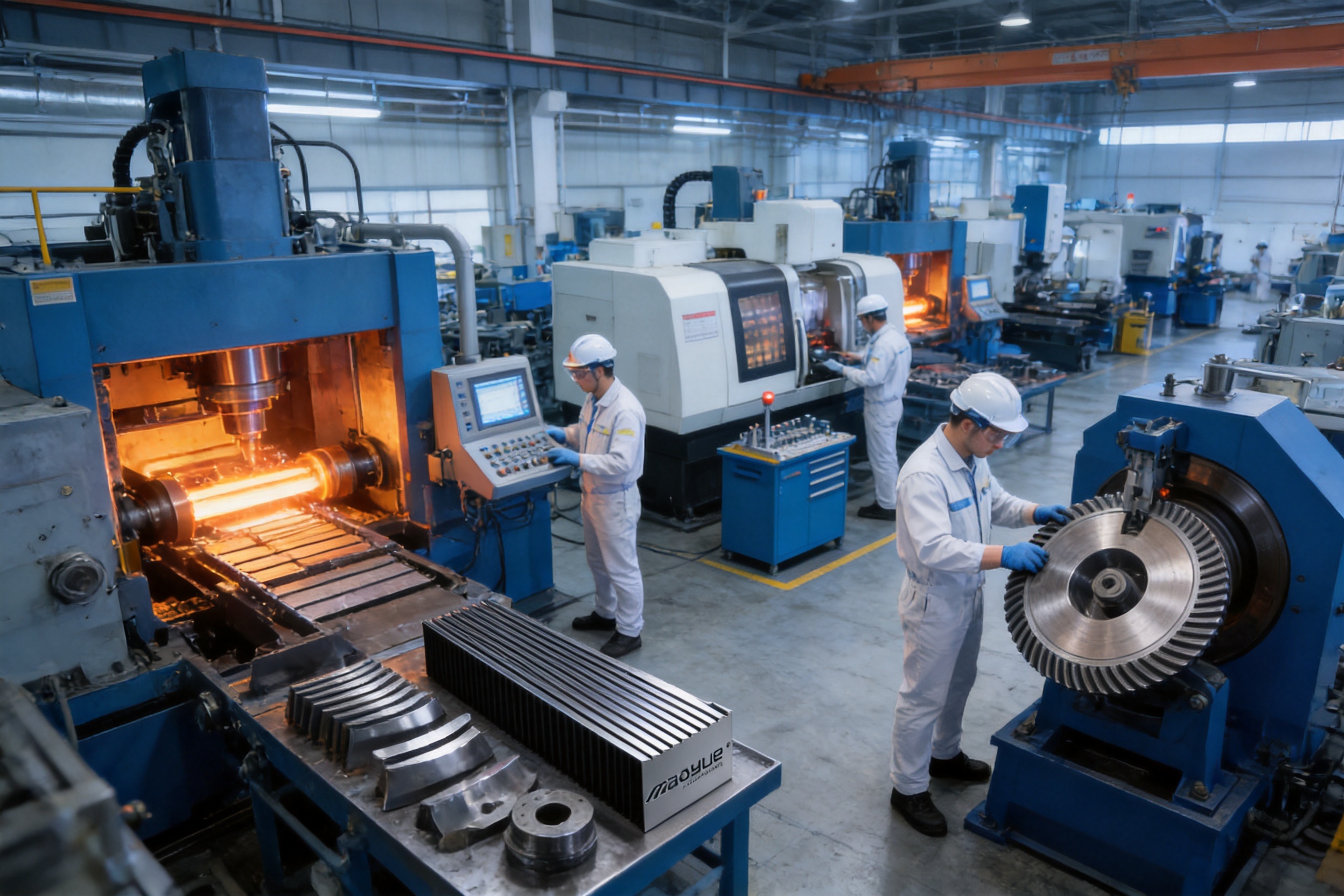
Welding and structural assembly processes must also be controlled where applicable. Reliable welding systems and trained technicians help maintain the strength and dimensional stability of supporting structures. The use of advanced production equipment, including imported high-precision grinding machines, dynamic balancing systems, and specialized welding technology, supports consistent manufacturing quality.
15. Factory Strength and Engineering Experience
A manufacturer with approximately 30 years of experience in plastic crushing and pulverizing equipment understands that blade performance cannot be separated from machine design. The company operates multiple processing workshops and maintains a professional technical team that studies advanced pulverizer technologies, including practices associated with European and German equipment standards.
This experience supports a more complete approach to product development. Instead of treating the blade as an isolated spare part, engineers can consider rotor speed, disc diameter, chamber geometry, feedstock properties, cooling method, discharge design, and downstream requirements. This helps improve compatibility and reduces the risk of selecting a blade that is hard to install or unsuitable for the machine’s operating conditions.
Manufacturing scale also supports quality consistency. Dedicated workshops can separate machining, heat treatment, assembly, testing, and storage activities. A structured production environment makes it easier to trace materials, inspect dimensions, monitor processing parameters, and organize spare-parts deliveries.
Long-term cooperation with thousands of domestic and international enterprises provides practical experience across many plastic-processing applications. This application knowledge can help customers select suitable disc diameters, tooth profiles, hardness levels, and clearance settings. It can also support troubleshooting when powder quality or service life does not meet expectations.
16. Certification and Quality Management
Mechanical safety and manufacturing consistency are important when supplying high-speed pulverizer components. CE mechanical certification and ISO 9001 quality management system certification demonstrate that the manufacturer has established formal procedures related to product safety, process management, documentation, and quality control.
Certification does not replace application testing or proper operation, but it provides an important foundation for procurement decisions. Customers can use technical documents, inspection records, material certificates, and dimensional reports to confirm that the supplied blades match their requirements.
Quality management should extend across the entire production chain. Incoming alloy steel should be verified. Heat-treatment records should be maintained. Critical dimensions should be inspected after machining. Hardness should be tested at suitable locations. Dynamic balance and surface condition should be checked before shipment. Packaging should protect the working edges from impact, corrosion, and deformation during transportation.
17. Compatibility and Customization
The blades are designed to fit mainstream PE and PP pulverizer disc diameters, including common sizes such as 500 mm, 600 mm, and 800 mm. Compatibility must always be confirmed using the exact machine model, mounting pattern, disc thickness, shaft arrangement, tooth configuration, and operating speed.
Partial adaptability to other brands may be possible when the mechanical dimensions and performance requirements are compatible. Customers should provide detailed drawings, photographs, old blade samples, or equipment nameplate information before ordering. This allows engineers to verify the mounting holes, rotation direction, tooth arrangement, clearance range, and balancing requirements.
Customization may include disc diameter, tooth profile, material grade, hardness specification, mounting arrangement, and surface treatment. Customization is particularly useful when a customer processes an unusual PE formulation, requires a special powder size, or operates a nonstandard pulverizer.
Although customization may require additional engineering time, it can offer better long-term value than modifying an unsuitable standard component. A correctly matched blade set can improve throughput, lower vibration, reduce heat generation, and extend service life.
18. Maintenance and Operating Recommendations
Proper maintenance is essential to achieving the expected service life of an alloy steel blade. Before each production shift, operators should inspect the pulverizer for abnormal noise, vibration, temperature, material buildup, and loose fasteners. The grinding chamber should be cleaned according to the equipment manufacturer’s instructions.
Clearance should be checked regularly and adjusted when necessary. The adjustment should be made gradually and evenly. Operators should avoid setting the gap so narrowly that the discs contact each other. Contact between metal surfaces can cause rapid damage, heat generation, and dangerous vibration.
Feedstock should be sorted and pre-cleaned. Large metal pieces, stones, glass, and other hard contaminants should be removed before material enters the pulverizer. Although the alloy steel blade offers strong impact resistance, it is not designed to replace a metal separator or contamination-control system.
Cooling passages, fans, water circuits, and heat-dissipation surfaces should remain clean and unobstructed. Temperature should be monitored during long production runs. If the discharge material begins to soften, agglomerate, or show unusual color changes, the operator should investigate feed rate, clearance, cooling, and blade condition.
Blade replacement should be performed as a complete matched set whenever possible. Mixing blades with different dimensions, hardness, wear levels, or tooth profiles can create imbalance and uneven grinding. After installation, the disc should be checked for correct orientation, secure fastening, runout, and dynamic balance.
Maintenance personnel should use appropriate protective equipment and follow lockout procedures. The pulverizer must be fully stopped and isolated before opening the grinding chamber or handling the blades. High-speed components can remain hazardous even after the motor has been switched off if stored energy or residual rotation is present.
19. Cost Reduction Through Longer Service Life
The economic advantage of a durable blade extends beyond the cost of the replacement part. Every blade change involves labor, machine stoppage, inspection, alignment, cleaning, and restart. If the blade is replaced frequently, these indirect costs can exceed the purchase price of the blade itself.
A service life of approximately 800 continuous operating hours can significantly reduce replacement frequency under suitable conditions. Longer service also supports better production planning. Maintenance can be scheduled during planned shutdowns rather than during urgent interruptions caused by sudden wear.
Improved edge retention may reduce energy consumption because the machine does not need to overcome as much friction and material resistance. More uniform powder can also reduce reprocessing, screening losses, and downstream production variation. These savings contribute to a lower total cost of ownership.
There is also an environmental benefit. Longer-lasting blades generate less discarded steel and reduce the resources required for manufacturing, transporting, and installing replacement components. When combined with low-noise and low-energy pulverizing equipment, durable blades support the broader objectives of efficient recycling and circular production.
20. How to Select the Correct Blade
Customers should evaluate several factors before purchasing replacement blades. The first is the material being processed. Important information includes the polymer type, grade, filler content, reinforcement, moisture level, contamination level, and typical feed size.
The second factor is the pulverizer. The supplier should know the machine model, disc diameter, shaft configuration, rotation speed, mounting pattern, existing tooth profile, and cooling arrangement. If possible, customers should provide drawings or a sample blade.
The third factor is the required output. The desired mesh range, throughput, powder temperature, and downstream process should be identified. A blade suitable for coarse recycling may not be ideal for fine powder coating or rotational molding powder.
The fourth factor is operating intensity. A machine used for occasional production may require a different specification from a unit running continuously for 24 hours per day. High-throughput lines processing abrasive or reinforced material require greater attention to alloy grade, heat treatment, balancing, and cooling.
Finally, customers should evaluate supplier capability. A reliable supplier should be able to provide material information, dimensional confirmation, hardness data, compatibility guidance, installation recommendations, and technical support. The ability to customize the blade and support the complete pulverizer system is an important competitive advantage.
21. Advantages Over Lower-Cost Alternatives
The most obvious advantage of the PE pulverizer alloy steel blade is its combination of hardness and toughness. Lower-cost alternatives may use ordinary steel or simplified heat treatment, resulting in faster wear and less stable performance. The premium blade is designed for demanding work and continuous operation.
A second advantage is manufacturing precision. Accurate tooth geometry, mounting surfaces, disc flatness, and dynamic balance help the blade operate smoothly. These factors can be difficult to achieve when components are produced without specialized grinding and balancing equipment.
A third advantage is compatibility with fine adjustment. The ability to tune clearance supports better control over powder quality and allows operators to adapt the machine to different grades of PE.
A fourth advantage is service support. A manufacturer with extensive pulverizer experience can help diagnose problems related to heat, vibration, particle size, throughput, and wear. This system-level knowledge is more valuable than a generic replacement part supplier can usually provide.
A fifth advantage is customization. Different customers have different feedstocks and production objectives. The ability to customize disc diameter, tooth profile, and material specification makes it easier to develop a practical solution for specialized processing conditions.
22. Questions and Answers
Q1: What materials can these blades process?
They are primarily designed for PE materials, including PE film, pipes, bottle caps, cable sheathing, strapping bands, molded parts, recycling scrap, powder-coating feedstock, masterbatch carriers, and rotational molding materials. They may also be adapted for some PP and other plastic applications after technical evaluation.
Q2: What is the typical hardness of the blade?
The working hardness is approximately HRC 60–65 or higher, depending on the selected alloy and final specification. The exact hardness should be confirmed with the supplier because the optimum value may vary according to the application and required balance between wear resistance and impact toughness.
Q3: How long can one blade set operate?
Under suitable operating conditions, a single-blade set can achieve approximately 800 hours of continuous service life. Actual life depends on the plastic grade, contamination, feed rate, operating temperature, clearance, machine speed, and maintenance practices.
Q4: Can the blades process glass-fiber-reinforced plastics?
The high-hardness alloy steel construction is intended to provide improved resistance when processing high-toughness or reinforced plastics. However, glass fiber is abrasive, so customers should provide detailed material information before selecting the final specification. Additional wear protection or a specialized tooth profile may be recommended.
Q5: What powder fineness can be achieved?
The pulverizing system can produce powder in a range of approximately 20–80 mesh or finer, depending on the machine configuration and operating conditions. Final particle size is influenced by disc diameter, rotor speed, clearance, feedstock properties, cooling, and throughput.
Q6: Can the clearance be adjusted?
Yes. The blade and pulverizer system support precision-adjustable clearance, including fine adjustment where the machine structure allows it. Operators should make adjustments carefully and avoid metal-to-metal contact between grinding surfaces.
Q7: Are the blades compatible with other pulverizer brands?
They may be partially adaptable to other brands when the dimensions, mounting pattern, tooth arrangement, disc thickness, rotation speed, and balancing requirements are compatible. Technical drawings, photographs, machine information, or an existing blade sample should be supplied for confirmation.
Q8: What standard disc diameters are available?
Common disc diameters include approximately 500 mm, 600 mm, and 800 mm. Customized diameters may also be considered according to the customer’s pulverizer and production requirements.
Q9: Why is dynamic balancing important?
Dynamic balancing reduces vibration caused by uneven mass distribution in a rotating disc. Proper balancing helps protect bearings, fasteners, shafts, and the pulverizer frame while also improving operating stability and reducing noise.
Q10: How can operators extend blade life?
Operators should maintain correct clearance, prevent metal and stone contamination, control feed rate, keep cooling systems clean, inspect the blade regularly, avoid disc contact, and replace blades as a properly matched set. Correct installation and scheduled maintenance are essential.
Q11: Are these blades suitable for rotational molding powder?
Yes. Their ability to support fine and uniform PE powder makes them suitable for rotational molding applications, including containers, tanks, playground equipment, and other hollow products. Particle-size testing should be conducted to confirm compliance with the customer’s molding process.
Q12: What information is needed for a customized quotation?
Useful information includes the machine brand and model, disc diameter, mounting drawing, tooth profile, operating speed, plastic material, desired mesh size, throughput, cooling method, and photographs of the existing blade or grinding disc. This information allows the supplier to recommend a suitable design.
23. Conclusion
PE pulverizer alloy steel blades are high-value components for plastic recycling and powder-processing systems. Their performance is based on more than a high hardness number. Forged high-density alloy steel, multiple precision heat treatments, accurate machining, stable tooth geometry, adjustable clearance, effective heat dissipation, and dynamic balancing all contribute to reliable operation.
Compared with ordinary cutting discs, the design offers improved wear resistance, stronger impact tolerance, longer service life, and better suitability for demanding PE applications. A reference life of approximately 800 continuous hours can reduce replacement frequency, maintenance labor, downtime, and long-term operating costs. The ability to produce powder in the approximate 20–80 mesh range or finer also supports downstream applications such as regranulation, film blowing, injection molding, powder coating, masterbatch production, chemical processing, and rotational molding.
The manufacturer’s broader strengths further enhance the value of the product. Decades of experience in plastic crushing and pulverizing equipment, multiple processing workshops, professional technical personnel, high-precision grinding machines, dynamic balancing equipment, advanced welding systems, CE mechanical certification, and ISO 9001 quality management provide a strong foundation for consistent manufacturing and engineering support.
For customers seeking dependable pulverizer performance, the correct blade should be selected according to the material, machine, operating intensity, powder specification, and maintenance requirements. When properly matched and maintained, a high-performance alloy steel blade can improve grinding efficiency, stabilize powder quality, extend equipment service intervals, and support a more efficient and sustainable plastic recycling operation.
References
1. General principles of alloy steel selection for wear-resistant industrial cutting and grinding components.
2. Standard practices for heat treatment, hardness testing, and metallurgical control of high-performance steel parts.
3. Technical guidance on plastic recycling, particle-size reduction, and pulverizing process control.
4. Industrial engineering principles for dynamic balancing of high-speed rotating machinery.
5. Quality management concepts for mechanical equipment manufacturing and spare-parts production.
6. Processing considerations for polyethylene powder used in rotational molding, powder coating, compounding, and recycling.