

 English
 русский
 Español
 عربى
 中文简体
 中文简体
Content
- 1 1. Why PA and PP Pulverization Requires Specialized Equipment
- 2 2. Product Overview and Operating Principle
- 3 3. Main Technical Specifications
- 4 4. Ambient-Temperature Processing Without Liquid Nitrogen
- 5 5. Wear-Resistant Grinding Disc Technology
- 6 6. Intelligent Temperature Control and Product Stability
- 7 7. Particle Size Control and Integrated Screening
- 8 8. Applications in PA Recycling and Modification
- 9 9. Applications in PP Film and Injection Scrap Regeneration
- 10 10. Laboratory, Research, and Product Development Use
- 11 11. Entry-Level PP Powder Coating Applications
- 12 12. Advantages Compared with Conventional Pulverizers
- 12.1 12.1 No Routine Liquid Nitrogen Requirement
- 12.2 12.2 Better Control of Heat-Sensitive Materials
- 12.3 12.3 Improved Disc Wear Resistance
- 12.4 12.4 Integrated Screening
- 12.5 12.5 Flexible Multi-Material Operation
- 12.6 12.6 Compact and Moderate-Power Design
- 12.7 12.7 Lower Noise and Improved Workplace Conditions
- 13 13. Manufacturing Strengths and Production Quality
- 14 14. Engineering Experience and Customized Solutions
- 15 15. Installation, Operation, and Maintenance Considerations
- 16 16. Energy Efficiency and Total Cost of Ownership
- 17 17. Selecting the Correct Configuration
- 18 18. Quality Control for Finished Powder
- 19 19. Environmental and Circular Economy Benefits
- 20 20. Why This Model Is Suitable for Small and Medium-Sized Factories
- 21 21. Frequently Asked Questions
- 21.1 What materials can the 500PA/PP pulverizer process?
- 21.2 Does the machine require liquid nitrogen?
- 21.3 What is the capacity of the machine?
- 21.4 What particle sizes can be produced?
- 21.5 How does the machine prevent PP from melting and sticking?
- 21.6 Can it process glass-fiber-reinforced PA?
- 21.7 How long can the grinding disc last?
- 21.8 Is the machine suitable for powder coating?
- 21.9 Can the machine be used for laboratory research?
- 21.10 What maintenance is required?
- 21.11 Why is a material test recommended before purchase?
- 22 22. Conclusion
- 23 References
- 24 Product: 500PA/PP Ambient Temperature Grinder Requires No Liquid Nitrogen
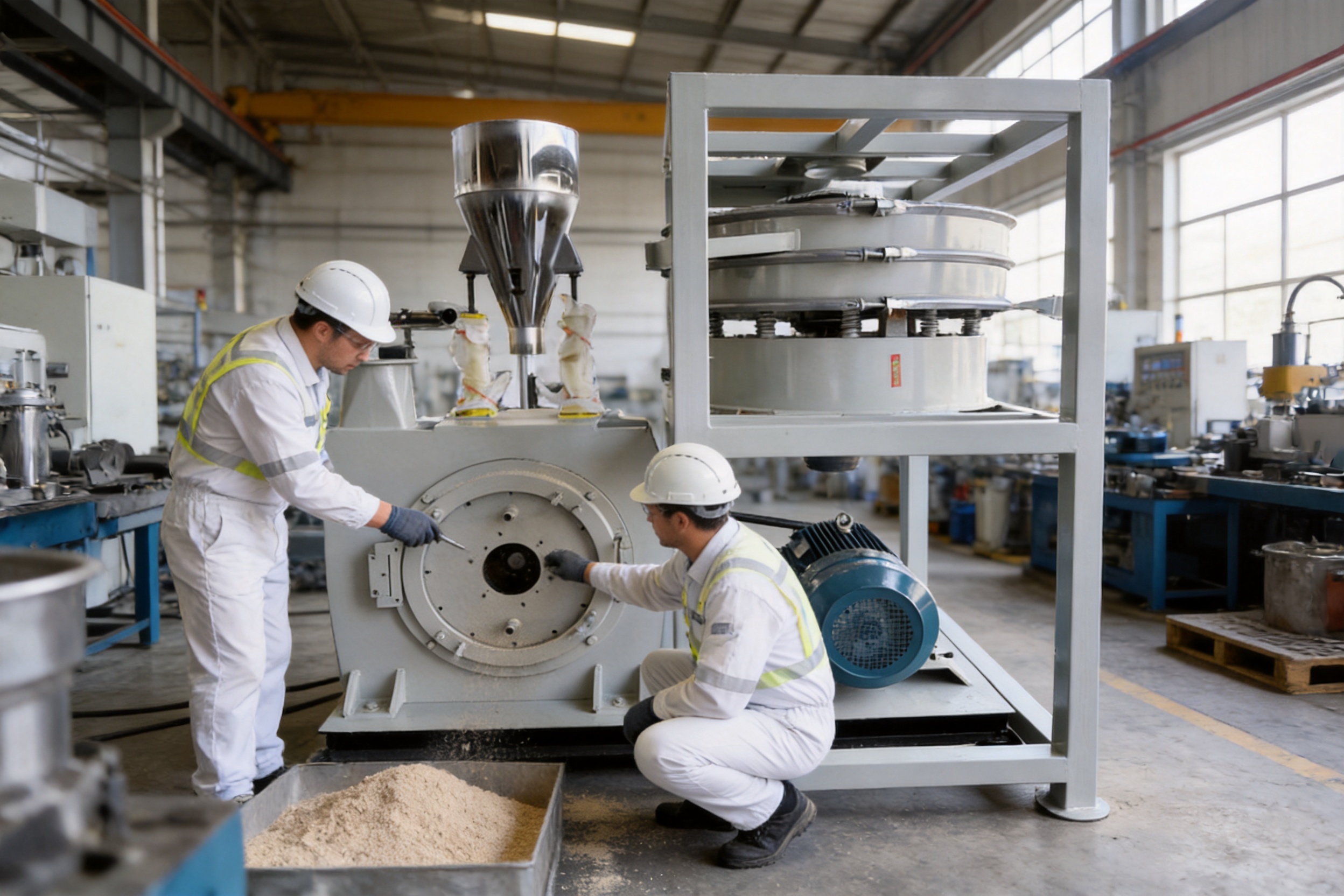
Plastic recycling and powder processing increasingly require equipment that can combine stable particle quality, reasonable operating costs, flexible material changeovers, and dependable long-term performance. Polyamide (PA) and polypropylene (PP) are widely used in automotive components, electrical products, packaging, films, containers, textiles, and industrial parts. However, converting these materials into consistent powder can be technically demanding. PA may generate heat during grinding and can be sensitive to thermal degradation, while PP may soften, melt, or adhere to grinding surfaces when the processing temperature is not controlled properly.
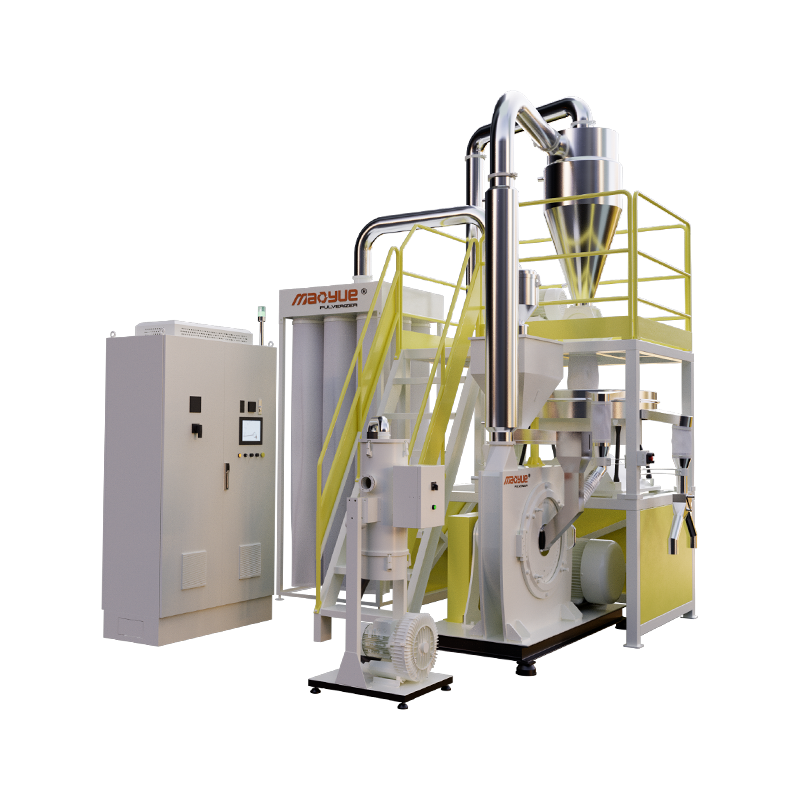
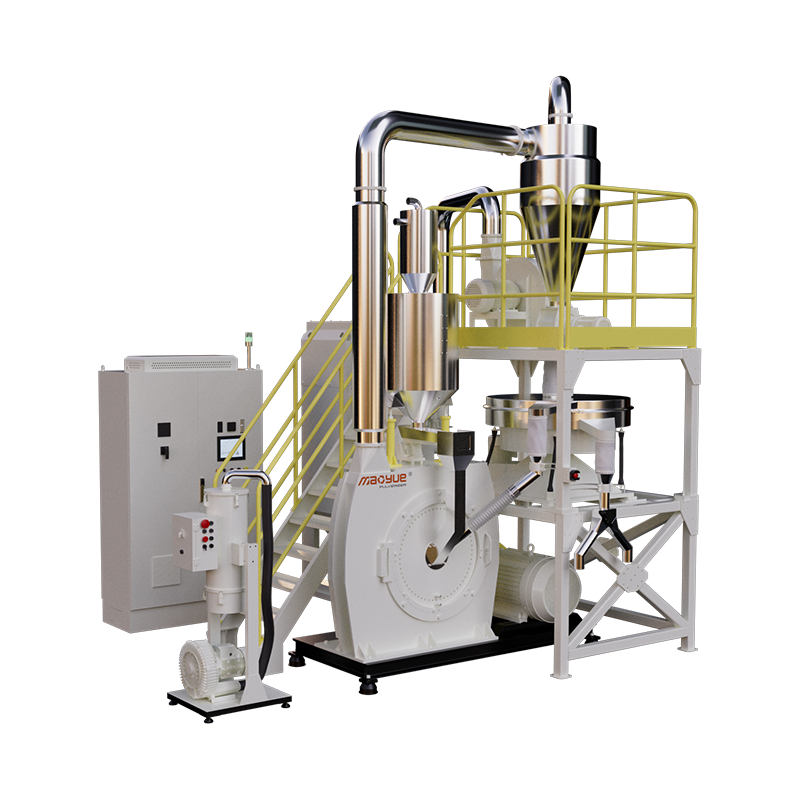
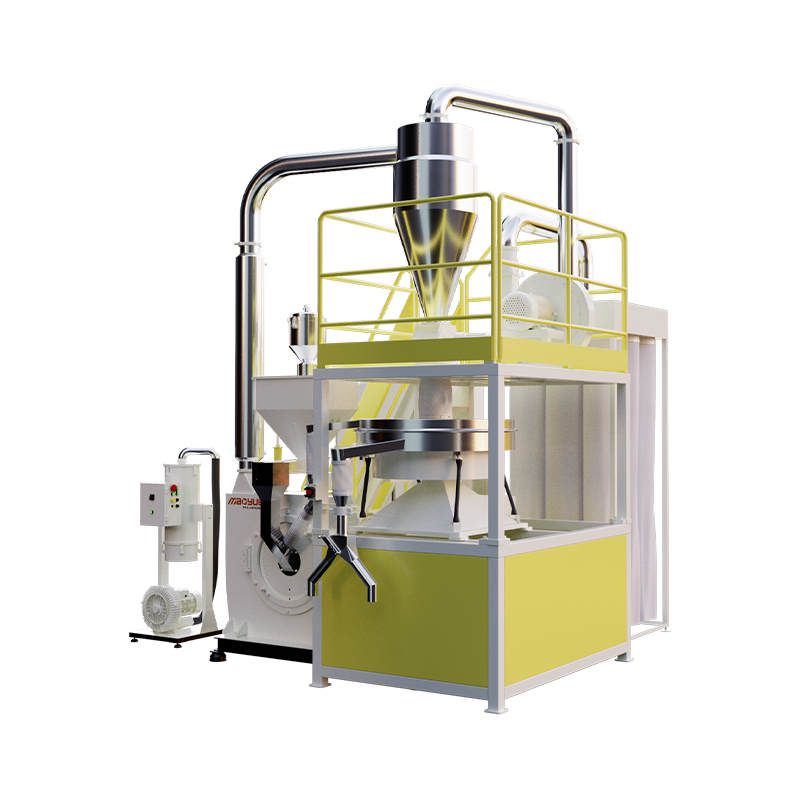
The 500PA/PP ambient-temperature grinder is designed to address these challenges without relying on liquid nitrogen. With a 500 mm grinding disc, a 37–45 kW drive motor, integrated cooling, vibrating screening, vacuum feeding, and intelligent temperature management, the machine provides a practical solution for small and medium-sized recycling plants, masterbatch producers, powder coating operations, laboratories, and material development centers.
Its value is not limited to grinding capacity. The equipment is engineered as a complete processing system in which feeding, pulverizing, temperature control, conveying, screening, dust collection, and product discharge work together. This integrated design helps operators achieve repeatable powder quality while reducing manual intervention and simplifying maintenance.
1. Why PA and PP Pulverization Requires Specialized Equipment
PA and PP are both thermoplastics, but they behave differently during size reduction. Their mechanical properties, melting behavior, moisture sensitivity, and heat generation characteristics influence the design of the pulverizer, the selection of grinding materials, the cooling method, and the operating parameters.
PA6 and PA66 are engineering plastics known for strength, toughness, abrasion resistance, and good temperature performance. These properties make them valuable in automotive parts, electrical connectors, cable components, textile applications, and industrial products. The same toughness that makes PA useful in service can make it difficult to grind efficiently. Waste PA parts and production scrap can impose substantial impact and shear loads on grinding discs, especially when the feedstock contains glass fibers or other reinforcing materials.
Glass-fiber-reinforced PA is particularly demanding. The fibers can accelerate edge wear on conventional grinding discs, causing the gap between grinding surfaces to change over time. As the disc wears, particle size may become less consistent, output may decline, and maintenance intervals may shorten. A grinding system for this application must therefore combine sufficient disc hardness with resistance to chipping, deformation, and abrasive wear.
PP presents a different processing challenge. It is comparatively lightweight and widely available in films, injection-molded parts, containers, bumpers, packaging waste, and production offcuts. However, PP can soften under excessive frictional heating. If heat is not removed efficiently, the material may smear on the grinding chamber, form agglomerates, or block the conveying and screening system. The result can be lower throughput, irregular powder, and more frequent cleaning.
The 500PA/PP grinder is intended to manage both material types through controlled grinding conditions, water cooling, airflow, temperature monitoring, and adjustable operating parameters. This makes it suitable for facilities that process more than one polymer and need rapid changeover between PA and PP products.
2. Product Overview and Operating Principle
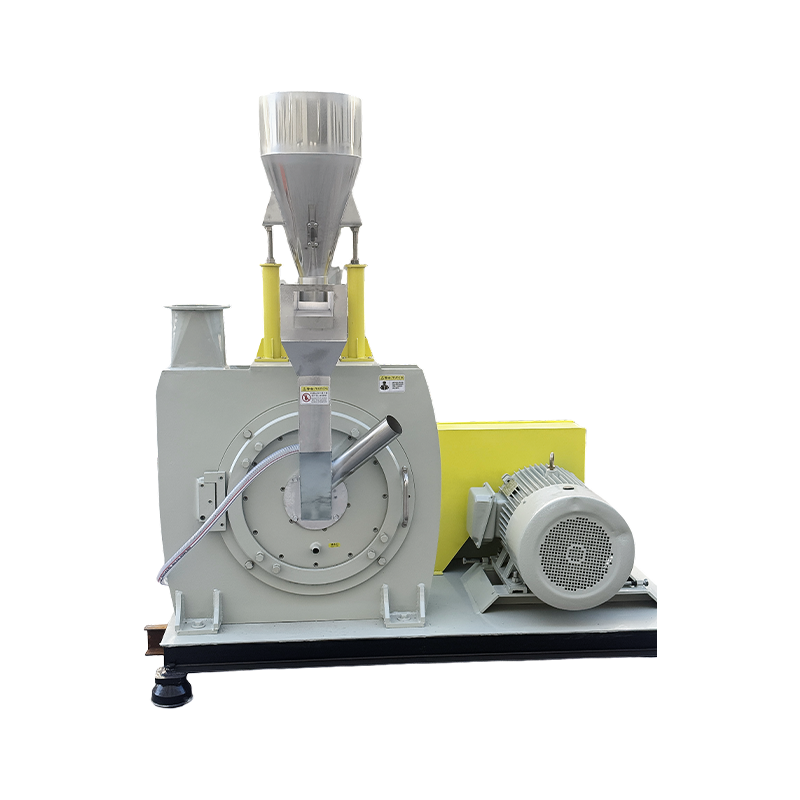
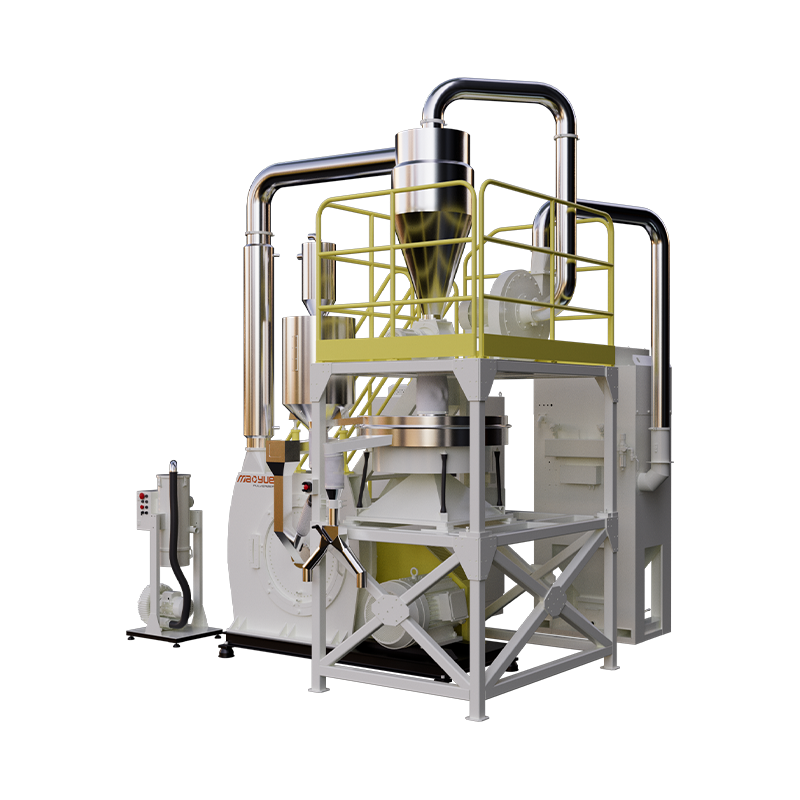
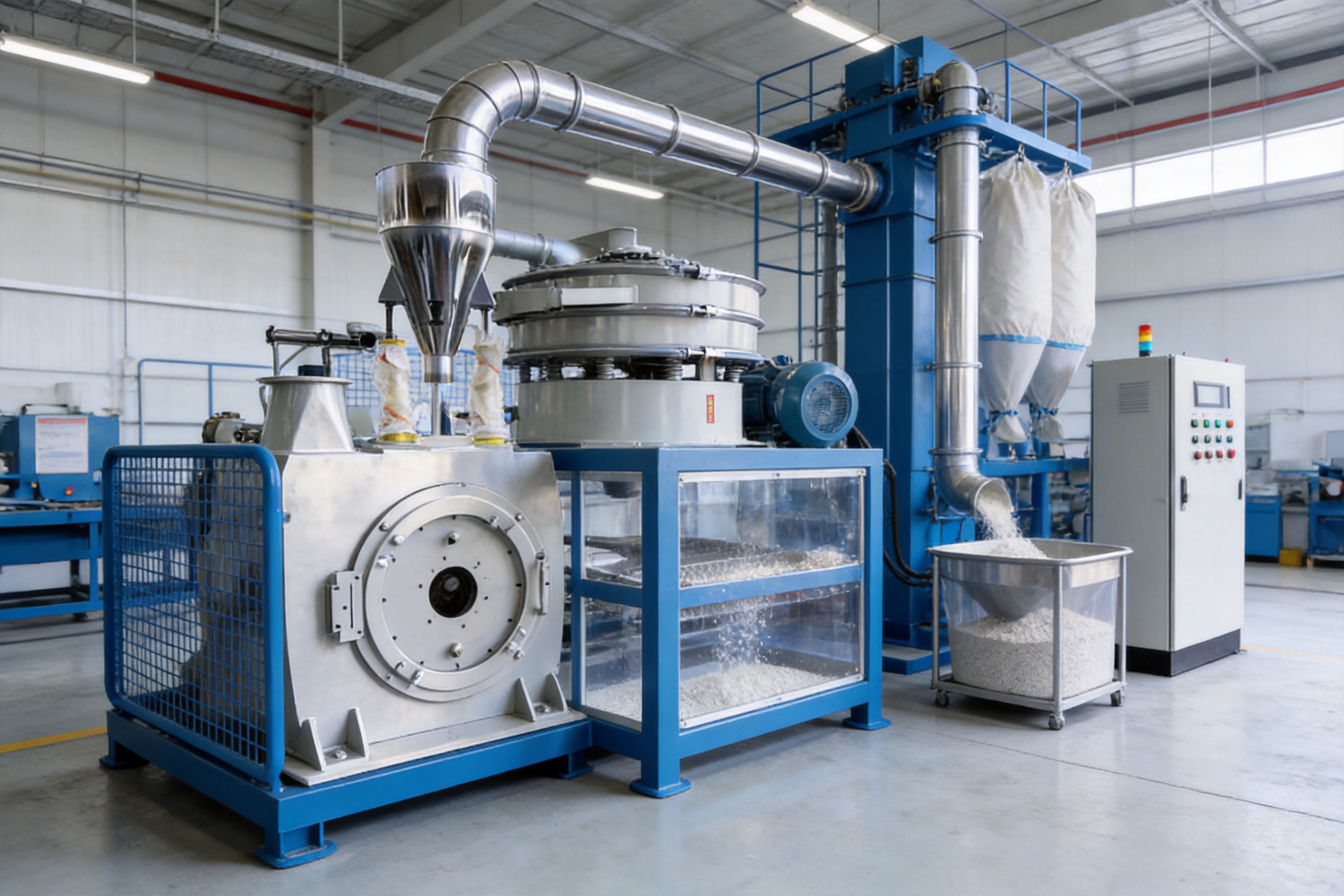
The machine uses a disc pulverizing system centered on a 500 mm grinding disc. Feed material enters the grinding chamber through a vacuum feeding arrangement. Inside the chamber, the material is reduced through high-speed interaction between the rotating and stationary grinding surfaces. The grinding gap can be adjusted with fine control to influence the final particle size.
After pulverization, air movement conveys the processed material through stainless-steel piping toward the screening section. The integrated vibrating screen separates particles according to the selected specification. Oversized particles can be returned for further processing or handled according to the plant’s process design, while qualified powder proceeds to collection.
The cooling circuit uses water cooling, with one connection for water entry and another for discharge. This arrangement helps transfer heat away from the grinding chamber and associated components. The system is designed to support ambient-temperature processing, eliminating the need for liquid nitrogen in normal PA and PP applications.
Temperature control is a central feature of the equipment. The intelligent control system is designed to maintain the grinding chamber within a controlled temperature range, reported at approximately ±3–5°C under suitable operating conditions. Stable thermal conditions help prevent PA degradation and reduce the risk of PP melting and adhesion.
The machine can be operated with star-delta starting, soft starting, or inverter-based speed control, depending on the configuration selected by the customer. Variable speed operation allows the user to balance throughput, particle size, feed characteristics, and heat generation. A lower or optimized speed may be selected for heat-sensitive processing, while other materials can benefit from a higher operating range.
The standard configuration includes a blower motor, stainless-steel pipes, a vibrating screen, dust collection provisions, and a vacuum feeding system. By combining these components into one line, the equipment reduces the need for separate transfer devices and helps create a cleaner, more organized production area.
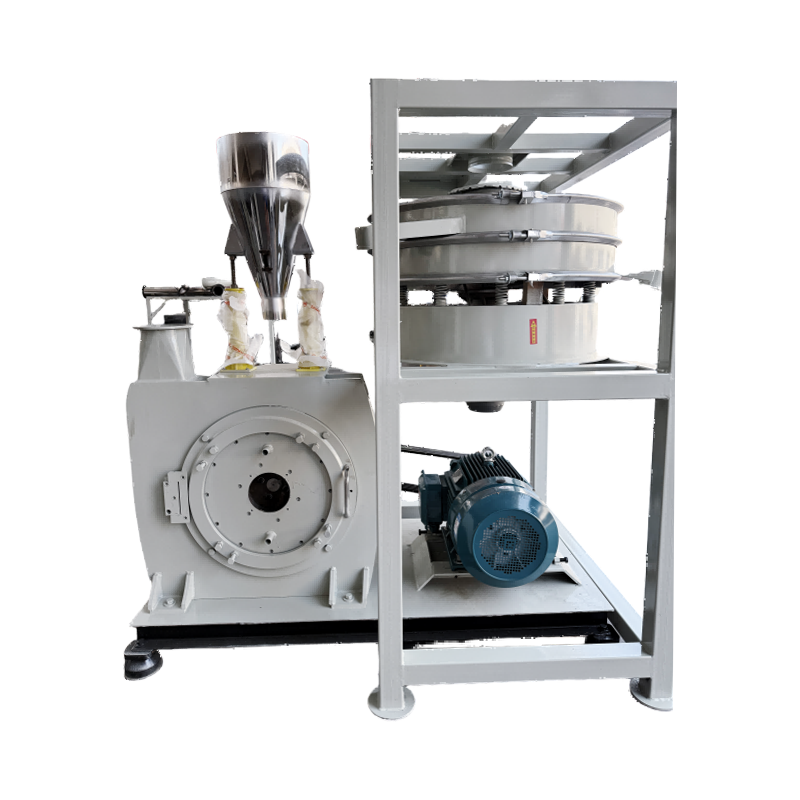
500PA/PP Ambient Temperature Grinder Requires No Liquid Nitrogen
3. Main Technical Specifications
The following specifications summarize the principal configuration described for the 500PA/PP model. Actual values can vary according to feedstock, moisture level, particle shape, screen selection, grinding gap, operating speed, and customer-specific configuration. Capacity and mesh range should therefore be confirmed through a material test before final equipment selection.
| Item | Specification | Technical Significance |
|---|---|---|
| Machine type | 500 | Identifies the model class based on the grinding disc size |
| Grinding disc diameter | 500 mm | Provides a substantial grinding area for PA and PP applications |
| Typical drive motor | 37/45 kW | Supplies the power required for continuous thermoplastic pulverization |
| Reported operating speed | Approximately 2,900–3,700 rpm | Supports adjustment of grinding intensity and productivity |
| Capacity range | Approximately 50–160 kg/h in the listed specification; higher outputs may be possible depending on material and configuration | Capacity depends strongly on polymer form, feed size, moisture, mesh, and operating conditions |
| Particle size | Commonly 10–30 mesh in the listed table; broader ranges such as 20–100 mesh may be available with suitable configuration | Screening and gap adjustment determine the practical product specification |
| Disc material | D2 in the listed configuration; specialized high-wear alloy options may be available | Material selection affects wear life and performance on reinforced polymers |
| Blower motor | 5.5/7.5 kW | Supports pneumatic conveying and product transfer |
| Pipe material | Stainless steel | Promotes cleanliness, corrosion resistance, and easier maintenance |
| Pipe diameter | 159 mm | Provides an appropriate conveying passage for the processing line |
| Vibrating screen diameter | 1,000 mm | Offers screening area for separation and product classification |
| Vibrating screen motor | 1.1 kW | Drives the classification and separation process |
| Feeding method | Vacuum feeding | Reduces manual handling and supports consistent material supply |
| Dust collector bag diameter | 300 mm | Supports dust collection and improved working conditions |
| Cooling method | Water cooling with inlet and outlet connections | Removes grinding heat without routine liquid nitrogen use |
Some descriptions of this model indicate a typical capacity of approximately 200–400 kg/h, a wider powder range of 20–100 mesh, and the possibility of finer adjustment up to approximately 120 mesh for selected applications. The listed technical table specifies 50–160 kg/h and 10–30 mesh. These differences may reflect alternative configurations, feedstock assumptions, screen arrangements, or different test conditions. Buyers should request a final technical confirmation based on their own material, target fineness, and required production rate.
4. Ambient-Temperature Processing Without Liquid Nitrogen
One of the most important advantages of this pulverizer is its ability to process PA and PP under controlled ambient-temperature conditions without requiring liquid nitrogen. Cryogenic grinding can be effective for certain materials, but it introduces additional infrastructure, storage, safety, logistics, and operating costs. A non-cryogenic approach can be more attractive for facilities that need reliable daily production without managing a continuous supply of cryogenic liquid.
Liquid nitrogen systems require insulated storage, specialized delivery arrangements, appropriate ventilation, operator training, and safety procedures. They may also make production costs more sensitive to supply conditions. For a small or medium-sized factory, laboratory, or recycling operation, these requirements can complicate the process and increase the total cost of ownership.
The 500PA/PP grinder instead uses a combination of water cooling, controlled airflow, intelligent temperature monitoring, and optimized grinding parameters. Heat produced by friction is managed within the machine, helping the material remain in a suitable processing state. The objective is not simply to cool the machine after overheating occurs, but to stabilize the process before excessive thermal effects damage powder quality.
For PA, temperature control helps reduce the possibility of thermal degradation, discoloration, and changes in material properties. For PP, it helps prevent softening, melt adhesion, and the formation of large agglomerates. Maintaining a stable grinding environment also supports more consistent melt flow behavior in downstream applications.
A non-cryogenic process can provide additional operational benefits. Operators do not need to prepare the feedstock with cryogenic treatment, and the production line can be started and stopped without waiting for a cooling medium to reach the required condition. This can be useful for small batches, frequent product changes, formulation trials, and research work.
Although the machine is designed to work without liquid nitrogen, processing results still depend on material preparation. Feedstock should be reasonably clean, properly sized, and free from excessive moisture or contaminants. Thick parts may require pre-crushing before entering the pulverizer. A material test remains the best way to determine the correct feed size, screen, speed, and cooling parameters.
5. Wear-Resistant Grinding Disc Technology
The grinding disc is one of the most important components in a disc pulverizer. It directly affects grinding efficiency, particle uniformity, maintenance frequency, and long-term operating cost. A disc that loses its edge quickly can cause production instability even when the motor, blower, and screening system are functioning correctly.
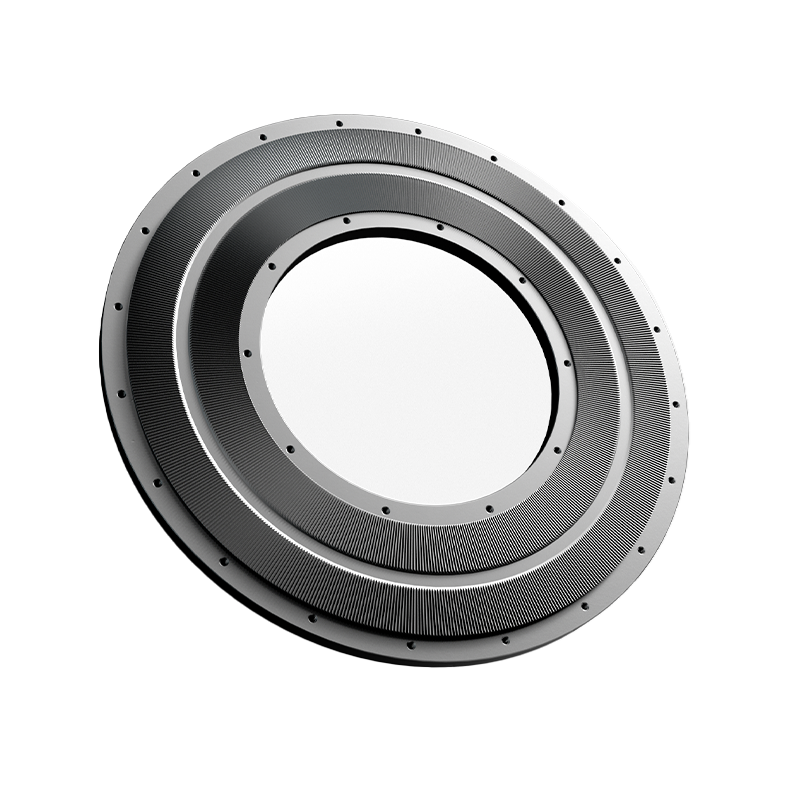
The equipment is described as using a proprietary high-chromium, molybdenum, and vanadium alloy grinding disc with a reported hardness of approximately HRC60–65. The alloy design is intended to provide a combination of hardness, wear resistance, and edge durability. These properties are especially valuable when processing abrasive materials such as glass-fiber-reinforced PA.
Compared with standard grinding discs, the specialized alloy disc is reported to reduce edge wear by more than 60 percent in glass-fiber-reinforced PA applications. It is also described as offering approximately twice the service life of conventional discs, with continuous operating life potentially reaching 600–800 hours under suitable conditions.
Actual service life will depend on the percentage and type of reinforcement, contamination level, feed size, operating speed, grinding gap, moisture, and maintenance practices. Metal fragments, mineral fillers, glass fibers, and other abrasive components can all influence wear. Nevertheless, a durable disc can substantially reduce the frequency of machine stops, disc replacement, regrinding, and gap recalibration.
Longer disc life also protects product quality. When disc edges remain stable, operators can maintain a more consistent grinding profile for a longer period. This reduces the risk of gradually increasing particle size, uneven powder distribution, or excessive fines caused by an improperly worn grinding surface.
The listed standard configuration specifies D2 grinding disc material. Depending on the application, customers may require a different disc material or a specialized wear-resistant alloy. This is an important point when comparing equipment suppliers. A machine should not be judged only by motor power or nominal capacity; the quality and suitability of the grinding disc are equally important.
6. Intelligent Temperature Control and Product Stability
Temperature is closely connected to both product quality and machine reliability. If the grinding chamber becomes too hot, PA may experience thermal deterioration, while PP can soften and adhere to the grinding surfaces. Heat can also change the apparent flow behavior of the powder, affect screening efficiency, and increase the risk of blockages.
The intelligent temperature control system is designed to monitor and regulate the processing environment. The stated control accuracy of approximately ±3–5°C indicates an effort to maintain a narrow operating range rather than relying only on manual observation. Consistent temperature management gives operators a better opportunity to achieve repeatable results across production batches.
Stable temperature can help preserve the intended properties of recycled PA and PP. For PA powder used in regeneration, injection molding, or compounding, excessive heat may contribute to changes in viscosity or degradation. For PP powder used in masterbatch carriers, fillers, coatings, or recycled material preparation, stable processing can help maintain flowability and minimize agglomeration.
The system is also associated with a reported melt index fluctuation of less than 0.4 g/10 min under suitable processing conditions. This figure should be understood as an application-related result rather than a universal guarantee, because melt index depends on the incoming material, previous thermal history, additives, contamination, and test method. Even so, the emphasis on thermal consistency is important for manufacturers seeking predictable downstream performance.
In production environments, a stable temperature system reduces operator dependence. Without automatic monitoring, operators may need to repeatedly adjust water flow, feed rate, or machine speed based on product appearance. Intelligent control can make the process easier to manage and can improve repeatability when different shifts operate the same line.
7. Particle Size Control and Integrated Screening
Powder size is a key quality characteristic in recycling, compounding, coating, injection molding, and laboratory work. A powder that contains excessive oversize particles may disperse poorly or feed inconsistently. A powder with too many fines may create dust, change bulk density, or affect the performance of a downstream formulation.
The 500PA/PP grinder combines adjustable grinding gap control with vibrating screening. The gap adjustment determines the intensity and approximate size of the initial pulverization, while the screen separates material into acceptable and oversized fractions. This two-stage approach helps improve the consistency of the final product.
The equipment is described as capable of producing powder in a broad range from approximately 20 to 100 mesh, with 30–80 mesh identified as a common operating range. The technical table lists 10–30 mesh, and some applications may require finer or coarser screen arrangements. These ranges should be treated as configuration-dependent rather than fixed for every material.
Mesh size alone does not fully describe powder quality. Particle shape, particle size distribution, sphericity, bulk density, moisture, and the presence of agglomerates also influence performance. The integrated screening system is intended to produce particles with more uniform distribution, favorable flowability, and reduced agglomeration.
Uniform powder is particularly important in masterbatch production. A consistent carrier powder can help improve additive dispersion and reduce variation during compounding. In powder coating applications, controlled particle size influences charging behavior, fluidization, coverage, and surface finish. In laboratory testing, narrow particle distribution makes it easier to compare formulations and interpret experimental results.
The vibrating screen also contributes to operational flexibility. A facility may be able to change screen specifications for different products rather than purchasing a separate machine for every particle size. When combined with adjustable speed and grinding gap control, this provides a practical platform for multi-material and multi-grade production.
8. Applications in PA Recycling and Modification
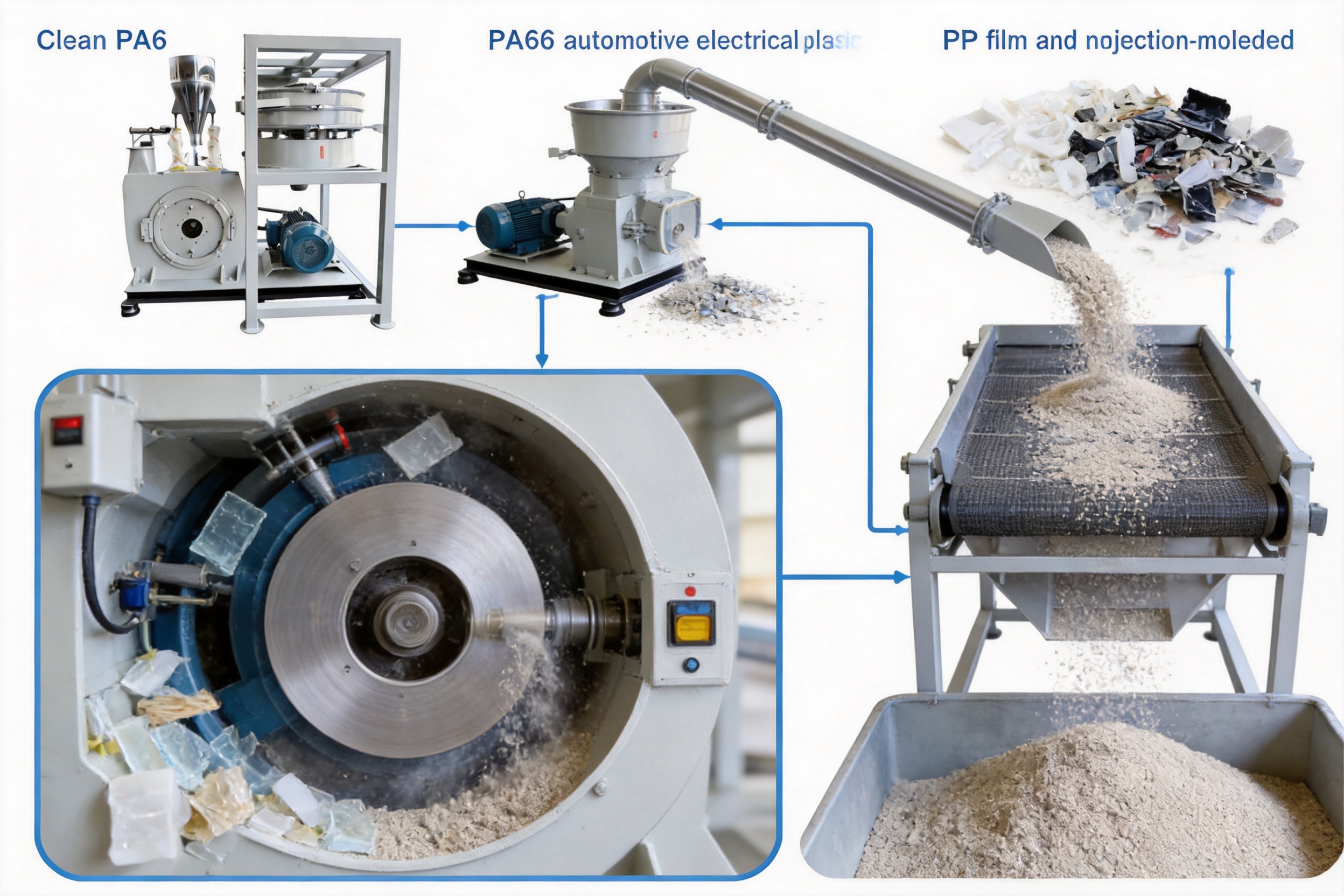
PA6 and PA66 waste can originate from automotive components, electrical connectors, cable sheathing, textile tow, industrial parts, production scrap, and post-use products. In many cases, this material retains significant value if it can be processed into clean and consistent powder for regeneration or compounding.
The pulverizer can be used after sorting, cleaning, and preliminary size reduction. The resulting PA powder may be directed toward regeneration granulation, injection molding compounds, filled formulations, additive development, or selected 3D printing filament production. The appropriate downstream application depends on polymer grade, reinforcement content, moisture, contamination, and quality control requirements.
Glass-fiber-reinforced PA is one of the areas where a wear-resistant disc can provide a practical advantage. The reinforcing fibers improve the mechanical performance of the original component but can accelerate wear in ordinary grinding equipment. A disc designed for higher abrasion resistance can help maintain production stability and reduce the frequency of component replacement.
PA is also sensitive to moisture. Before pulverization, the feedstock should be evaluated for moisture content, especially when the powder will be used in high-quality compounding or molding applications. Drying, storage, and packaging conditions may be necessary to preserve the intended properties of the recycled material.
For small and medium-sized recyclers, the machine’s flexible capacity and compact layout can be useful. Such companies may process several grades of PA rather than one continuous, high-volume material stream. Rapid changeover, manageable maintenance, and moderate investment requirements can be more valuable than the maximum possible throughput of a very large industrial line.
9. Applications in PP Film and Injection Scrap Regeneration
PP waste is found in packaging films, injection-molded parts, containers, automotive bumpers, household products, and industrial components. The material may be supplied as film rolls, flakes, sprues, rejected parts, or mixed production scrap. The feed form strongly affects the pulverizer’s capacity and the need for pre-processing.
When processed under controlled temperature conditions, PP can be converted into a uniform, free-flowing powder suitable for further use. The powder may serve as a carrier for color masterbatches, filled masterbatches, functional additives, or recycled compound formulations. Consistent particle size can improve mixing efficiency and help promote more even additive distribution.
Preventing melt adhesion is a major concern when pulverizing PP. If the material becomes too warm, particles may stick together or form deposits inside the chamber and pipes. The water cooling system and intelligent temperature control are intended to reduce this risk. Proper feed rate, speed, screen selection, and airflow remain essential to achieving the best results.
For film waste, the material should be inspected for moisture, labels, paper, metal, and other contaminants. A suitable pre-shredding or cutting step may be required to create feedstock with a consistent size. For injection parts and bumpers, removal of metal inserts and excessive foreign material is important for both safety and disc life.
Processed PP powder can be used in blow molding, injection molding, extrusion, and compounding operations, subject to material quality and formulation requirements. A controlled powder form can make the recycled stream easier to blend with virgin resin, fillers, pigments, stabilizers, and other additives.
10. Laboratory, Research, and Product Development Use
Not every pulverizing application requires a large production line. Universities, research institutes, polymer laboratories, and new material companies often need to process small quantities of material while testing formulations, additives, reinforcement levels, or recycling methods.
The 500PA/PP grinder can support laboratory and pilot-scale work by providing adjustable grinding conditions and flexible particle size control. Researchers can compare different PA and PP grades, examine the influence of thermal history, or prepare powders for compounding and coating trials.
Small-batch operation is particularly useful during product development. A company may need only a limited quantity of powder to evaluate a new color, filler, flame-retardant system, impact modifier, or processing aid. Using a flexible pulverizer can reduce the need to outsource every trial and can shorten the time between formulation changes.
Particle consistency is important in research because experimental comparisons depend on repeatable sample preparation. If one sample contains a broad or irregular particle distribution and another does not, it becomes difficult to determine whether the observed performance difference comes from the formulation or from the powder preparation process.
The equipment can also help research teams evaluate the behavior of recycled materials. Different waste streams can be processed separately, screened to comparable sizes, and tested in downstream applications. This supports more systematic development of circular material solutions.
11. Entry-Level PP Powder Coating Applications
PP-based powder coating applications may require controlled particle size, good flowability, minimal scorching, and low contamination. The 500PA/PP grinder can serve entry-level and trial-scale powder coating operations where the user needs flexible production rather than very high-volume output.
Uniform powder can support electrostatic spraying and fluidized-bed dipping processes. In electrostatic applications, particle size and flow behavior influence charging and deposition. In fluidized-bed systems, consistent powder helps maintain stable fluidization and more even coating coverage.
For trial production, the ability to change materials and produce small batches is valuable. A facility may need to test several colors, coating formulations, substrate types, or curing conditions. A compact machine with manageable cleaning and screening arrangements can support these changes without the cost and complexity of a dedicated high-capacity system.
Scorching and thermal damage must still be controlled through suitable operating conditions. The cooling system reduces the risk of excessive grinding heat, but formulation, residence time, screen selection, and material cleanliness also affect the final coating powder.
12. Advantages Compared with Conventional Pulverizers
12.1 No Routine Liquid Nitrogen Requirement
Compared with cryogenic grinding systems, the machine can reduce dependence on liquid nitrogen. This may lower operating complexity, simplify plant layout, and reduce costs related to cryogenic storage and supply. It also makes the equipment more accessible to smaller companies and research users.
12.2 Better Control of Heat-Sensitive Materials
Conventional disc pulverizers without effective thermal management may struggle with PA degradation or PP adhesion. The integrated water cooling and temperature control system are designed to stabilize the grinding environment and maintain product quality.
12.3 Improved Disc Wear Resistance
The use of a hard, wear-resistant alloy disc can provide an advantage over standard disc materials when processing abrasive reinforced plastics. Reduced wear can lower the cost of replacement parts and help maintain particle consistency over longer operating periods.
12.4 Integrated Screening
Some basic pulverizers discharge material without integrated classification. The 500PA/PP system includes vibrating screening, reducing the need for an additional standalone screening machine. This can save floor space and simplify material transfer.
12.5 Flexible Multi-Material Operation
The equipment is intended for both PA and PP, allowing a facility to process multiple material streams. Adjustable speed, gap control, screening, and temperature management support rapid switching between different products when the machine is cleaned and configured correctly.
12.6 Compact and Moderate-Power Design
The reported total power requirement is approximately 50–60 kW, depending on the configuration. This is suitable for small and medium-sized factories that need meaningful productivity without installing a very large production system. A compact footprint can also be beneficial where floor space is limited.
12.7 Lower Noise and Improved Workplace Conditions
The stated noise level is below approximately 85 dB under normal conditions. Noise depends on installation, building design, material feed, and operating speed, but attention to noise performance can help companies improve operator comfort and workplace compliance.
13. Manufacturing Strengths and Production Quality
The equipment is manufactured by Changzhou Mao Yue Intelligent Equipment Co., Ltd., a source manufacturer with more than 30 years of experience in plastic crushing and pulverizing equipment. The company has developed a long-term focus on disc pulverizers for plastics, polymers, recycling, masterbatch, PVC, PE, rotational molding, and powder coating applications.
The manufacturer operates six processing workshops, with each workshop averaging approximately 1,400 square meters. This production structure supports the machining, welding, assembly, testing, and service activities required for complete pulverizer systems. A factory with dedicated processing areas can exercise greater control over component production than a business that only purchases and assembles standard parts from outside suppliers.
The company uses high-precision grinding machines imported from Taiwan and built to German standards. Precision machining is important for grinding discs, shafts, bearing seats, housings, gap-adjustment components, and other parts that influence alignment and vibration. Small dimensional errors can affect the grinding gap, noise, wear pattern, and product consistency.
German dynamic balancing equipment is used to balance rotating components. Dynamic balancing is particularly important in high-speed pulverizers because an imbalance can create vibration, increase bearing loads, accelerate wear, and reduce operator comfort. Proper balancing contributes to smoother operation and helps protect the machine during continuous production.
Japanese welding systems are also used in the factory. Welding quality affects the strength, sealing performance, appearance, and long-term reliability of the equipment frame, chambers, hoppers, pipes, and supporting structures. Consistent welding can reduce the risk of leakage, deformation, and fatigue-related failure.
The company states that its components are manufactured according to European quality standards and that its equipment has obtained CE mechanical certification and ISO 9001 quality management system certification. These certifications do not eliminate the need for proper installation, operation, or maintenance, but they indicate that the manufacturer has established procedures related to product safety and quality management.
Manufacturing capability is an important differentiator when comparing pulverizer suppliers. A machine may appear similar from the outside while differing substantially in disc material, shaft precision, balancing quality, cooling design, control integration, and assembly standards. Direct control over these processes can help a manufacturer provide more consistent equipment and more responsive customization.
14. Engineering Experience and Customized Solutions
The manufacturer has supplied equipment to more than 5,000 enterprises in domestic and international markets. A broad customer base can provide valuable experience across different polymers, feed forms, production scales, and end-use requirements.
Plastic pulverization is not a one-size-fits-all process. The correct machine settings depend on whether the feedstock is film, flakes, injection parts, fiber-reinforced material, powder-coated scrap, or laboratory samples. A manufacturer with application experience can help evaluate feed preparation, disc material, cooling requirements, screen selection, conveying, dust collection, and product packaging.
Customization may include motor selection, control method, screen configuration, feeding equipment, dust collection, pipe layout, product collection, and material-contact components. Customers processing abrasive or filled plastics may require upgraded grinding discs. Customers changing products frequently may need a layout that facilitates cleaning and inspection. Export customers may require electrical components and documentation suitable for their local standards.
Technical consultation before purchase is especially important because nominal capacity figures can be misleading. A stated output may be based on a specific material, feed size, screen, and target particle size. Testing representative samples allows the buyer and manufacturer to establish a more realistic performance expectation.
The company’s focus on service, innovation, and customized solutions supports users that require more than a standard machine. This is relevant for recycling enterprises developing new material streams, masterbatch factories adding a powder preparation stage, and research organizations that need flexible pilot equipment.
15. Installation, Operation, and Maintenance Considerations
Correct installation is essential for stable pulverizer performance. The machine should be installed on a suitable foundation with enough clearance for inspection, disc replacement, screen changes, cleaning, and maintenance. The electrical supply must match the selected motor and control configuration, and the water cooling system must provide sufficient flow and reliable drainage.
The feeding system should be checked before startup. Feedstock should be free from large metal pieces, stones, and other hard contaminants that could damage the disc. PA and PP materials should be sorted by grade as far as possible, and wet or contaminated material should be cleaned and dried according to the downstream quality requirements.
Operators should begin with conservative settings during a new material trial. The feed rate, speed, grinding gap, cooling flow, and screen specification can then be adjusted while monitoring temperature, motor load, vibration, powder appearance, and throughput.
Routine maintenance includes inspecting the grinding disc, checking the grinding gap, cleaning the chamber, examining the screen, inspecting the blower and pipes, and checking bearings and belts. Dust collection bags should be maintained so that airflow remains adequate. Stainless-steel pipes should be inspected for deposits, especially when processing materials that have softened during an unstable run.
Disc wear should be evaluated regularly rather than waiting for a clear decline in output. A worn disc may produce a larger or less uniform particle size and may increase energy consumption. Replacing or servicing the disc at the appropriate time helps protect product quality and reduces the likelihood of unexpected downtime.
When changing from PA to PP or from one color to another, the grinding chamber, conveying line, screen, and collection area should be cleaned carefully. Residual material can contaminate the next batch or influence its color and performance. A well-planned layout and accessible machine doors can make changeovers faster and more reliable.
16. Energy Efficiency and Total Cost of Ownership
Energy consumption is an important consideration in plastic recycling. The total power of the machine is reported at approximately 50–60 kW, depending on the configuration and auxiliary equipment. Actual energy per kilogram depends on the polymer, particle size, feed rate, operating speed, and machine condition.
A stable grinding process can improve energy efficiency by reducing unnecessary recirculation, overheating, and downtime. A durable disc can also help maintain efficient cutting and impact conditions over a longer period. When the disc becomes excessively worn, more energy may be required to achieve the same particle size.
The absence of routine liquid nitrogen consumption can further reduce operating costs. While the water cooling system still requires pumps, piping, and water management, these requirements are generally easier to integrate into an industrial plant than a cryogenic supply system.
Total cost of ownership should include the purchase price, electrical consumption, cooling, wear parts, labor, cleaning time, dust collection, maintenance, and downtime. A less expensive machine may become costly if it requires frequent disc replacement, produces unstable powder, or needs extensive manual intervention. Conversely, a machine with a higher initial cost may provide better value if it offers longer service life, easier maintenance, and more reliable production.
The 500PA/PP grinder is positioned as an entry-level model in its series, but entry-level does not mean limited to basic grinding. Its combination of temperature control, screening, vacuum feeding, stainless-steel conveying, and adjustable operating conditions gives small and medium-sized users access to features that would otherwise require multiple separate machines.
17. Selecting the Correct Configuration
Before purchasing, customers should define the incoming material and the desired output in detail. Important questions include the polymer grade, feed form, reinforcement content, moisture level, contamination level, initial particle size, target mesh, required capacity, and downstream application.
For PA6 or PA66 containing glass fiber, the customer should discuss disc material, expected wear, pre-cleaning, and moisture control. For PP film, the discussion should focus on feeding behavior, film cutting, airflow, anti-adhesion measures, and thermal stability. For powder coating, the target particle distribution and screening arrangement should be established in advance.
Customers should also clarify whether the required capacity is based on a specific mesh size. A machine may produce a higher rate at a coarse particle specification and a lower rate at a fine specification. Similarly, light film and dense injection scrap may behave differently even when the polymer is the same.
Electrical standards, voltage, frequency, control cabinet requirements, dust collection regulations, and local safety rules should be confirmed before shipment. Export installations may require additional documentation, language options, or modifications to comply with local regulations.
A sample test is strongly recommended. Testing can verify particle size, throughput, temperature behavior, energy consumption, powder appearance, and the need for pre-processing. It also gives the customer an opportunity to confirm whether the machine meets the intended application rather than relying only on general catalogue data.
18. Quality Control for Finished Powder
Finished powder should be inspected according to the requirements of the downstream process. Basic checks may include particle size distribution, moisture, color, contamination, bulk density, flowability, and the presence of agglomerates.
For recycled PA and PP, melt flow or melt index testing may be useful. These tests help identify changes caused by thermal history, contamination, degradation, or mixing of different grades. A reported melt index fluctuation of less than 0.4 g/10 min may be achievable under controlled conditions, but each customer should establish its own acceptance criteria.
Screen analysis should be performed regularly when particle size is critical. A sample taken from the product stream can show whether the grinding gap or screen needs adjustment. Monitoring this data over time can also help identify disc wear before it creates a major quality problem.
Powder storage is equally important. PA powder may absorb moisture from the environment, and PP powder can collect dust or foreign particles if stored in open containers. Clean, sealed packaging and appropriate labeling help preserve material quality and simplify batch traceability.
19. Environmental and Circular Economy Benefits
Efficient pulverization supports the broader goal of keeping plastic materials in productive use. Waste PA and PP that might otherwise be discarded can be converted into a usable intermediate for compounding, molding, coating, or further recycling.
The ability to process materials without routine liquid nitrogen can reduce the environmental and logistical burden associated with cryogenic grinding. Water cooling can be managed through a suitable circulation or discharge system, depending on local plant requirements.
Recycling companies can use the machine to create higher-value powder products rather than selling all waste as low-value scrap. Masterbatch producers can prepare consistent carriers and reduce dependence on virgin materials. Research organizations can develop improved recycling pathways for engineering plastics and mixed production waste.
Environmental performance should be evaluated across the full process, including electricity, cooling water, cleaning, dust collection, transportation, and the final application of the recycled powder. Even so, reliable size reduction is a necessary step in many circular plastic production systems.
20. Why This Model Is Suitable for Small and Medium-Sized Factories
Large recycling plants may require high-throughput systems designed for one material and one product specification. Smaller factories often face a different operating reality. They may process several polymers, accept irregular waste streams, produce small batches, and change products frequently.
The 500PA/PP model is suited to this environment because it combines moderate capacity with flexible control. Vacuum feeding reduces manual loading, integrated screening reduces auxiliary equipment, water cooling eliminates routine liquid nitrogen use, and adjustable settings support different materials and target particle sizes.
The machine’s compact footprint can make it easier to install in an existing workshop. Its total power requirement is moderate compared with much larger lines, while the stainless-steel conveying system and dust collection provisions help maintain a cleaner process layout.
For businesses with limited capital budgets, the equipment offers a way to introduce in-house pulverization without building a very large plant. For established recyclers, it can function as an additional line for small orders, special grades, research batches, or materials that should not interrupt a high-volume production system.
21. Frequently Asked Questions
What materials can the 500PA/PP pulverizer process?
The machine is designed primarily for PA and PP materials, including PA6, PA66, glass-fiber-reinforced PA, PP films, injection-molded scrap, automotive parts, containers, packaging waste, and production offcuts. The actual suitability depends on feed size, contamination, moisture, reinforcement, and the desired powder specification.
Does the machine require liquid nitrogen?
No. The machine is designed for ambient-temperature processing using water cooling, airflow, and intelligent temperature management. Liquid nitrogen is not required for normal PA and PP operation, although unusual materials or special applications may require separate evaluation.
What is the capacity of the machine?
The supplied information includes different capacity figures, including approximately 50–160 kg/h and approximately 200–400 kg/h. The practical output depends on material form, feed size, target mesh, screen, grinding gap, speed, moisture, and configuration. A sample test and final technical confirmation should be requested before purchase.
What particle sizes can be produced?
The machine is described with ranges including 10–30 mesh, 20–100 mesh, 30–80 mesh, and, for selected applications, up to approximately 120 mesh. These differences reflect configuration and material conditions. The final particle-size capability should be confirmed based on the customer’s desired product and a suitable screen arrangement.
How does the machine prevent PP from melting and sticking?
The machine uses water cooling, controlled airflow, temperature monitoring, and adjustable operating parameters. Correct feed rate, grinding gap, speed, and screen selection are also important. Clean and appropriately sized feedstock helps reduce the risk of adhesion and blockages.
Can it process glass-fiber-reinforced PA?
Yes, the equipment is intended to handle glass-fiber-reinforced PA, and a wear-resistant grinding disc can help reduce abrasion. Because reinforcement content and fiber length affect wear, customers should provide representative samples and discuss the preferred disc material and maintenance schedule.
How long can the grinding disc last?
The disc is reported to provide approximately 600–800 hours of continuous operation under suitable conditions and may offer about twice the service life of standard discs in selected applications. Actual life depends on reinforcement, contamination, feed size, speed, grinding gap, and maintenance.
Is the machine suitable for powder coating?
Yes. It can support entry-level and trial-scale PP powder coating applications where controlled particle size, flowability, and low scorching are important. The final coating performance depends on formulation, particle distribution, electrostatic behavior, and curing conditions.
Can the machine be used for laboratory research?
Yes. Its adjustable grinding and screening functions make it suitable for small-batch material testing, formulation development, recycled polymer evaluation, and pilot-scale powder preparation. Laboratory users should confirm the minimum practical feed rate and collection arrangement for their sample quantities.
What maintenance is required?
Routine maintenance includes checking the grinding disc, adjusting the grinding gap, cleaning the chamber and pipes, inspecting the screen, maintaining the blower and dust collector, checking belts and bearings, and monitoring cooling water flow. Regular inspection helps preserve product consistency and prevent unplanned downtime.
Why is a material test recommended before purchase?
Plastic waste varies greatly in shape, density, moisture, reinforcement, contamination, and thermal history. A material test provides more reliable information about actual capacity, particle size, temperature behavior, energy demand, disc wear, and powder quality than a general catalogue specification.
22. Conclusion
The 500PA/PP ambient-temperature grinder is a flexible solution for converting PA and PP waste into consistent powder without routine liquid nitrogen. Its 500 mm grinding disc, adjustable operating speed, water cooling, intelligent temperature control, integrated vibrating screen, vacuum feeding, stainless-steel conveying, and dust collection provisions address many of the practical challenges associated with thermoplastic pulverization.
Its strongest advantages are the ability to control heat, support multiple material types, reduce disc wear, simplify screening, and provide a compact solution for small and medium-sized operations. The wear-resistant grinding disc is particularly relevant to abrasive glass-fiber-reinforced PA, while the temperature system helps reduce PP adhesion and PA thermal degradation.
The manufacturer’s experience, six processing workshops, precision machining equipment, dynamic balancing capability, Japanese welding systems, CE mechanical certification, and ISO 9001 quality management certification further strengthen the equipment’s industrial foundation. These manufacturing capabilities support consistent assembly, reliable rotating performance, and customized solutions for different customer requirements.
Because the supplied specifications contain different capacity and mesh ranges, buyers should confirm the final configuration through a technical consultation and representative material test. When correctly matched to the feedstock and production objective, the machine can provide a practical balance of quality, flexibility, maintenance control, and investment value for plastic recycling, modification, masterbatch production, powder coating, and research applications.
References
1. Manufacturer-provided technical information for the 500PA/PP ambient-temperature grinder.
2. Manufacturer-provided product specifications for the 500 mm plastic pulverizer configuration.
3. ISO 9001 quality management system principles for manufacturing and process control.
4. CE mechanical equipment safety and conformity principles.
5. General engineering guidance on thermoplastic recycling, pulverization, screening, and powder handling.
6. General technical literature concerning PA6, PA66, polypropylene, glass-fiber reinforcement, melt flow behavior, and thermal processing.