

 English
 русский
 Español
 عربى
 中文简体
 中文简体
Content
- 1 Purpose-Built for Masterbatch and Modified Polymer Processing
- 2 Key Performance Advantages
- 3 DC53 Grinding Discs for Extended Service Life
- 4 Dynamic Balancing for Low-Vibration Operation
- 5 Thermal Control for Heat-Sensitive Polymers
- 6 Enclosed Conveying and Dust Collection
- 7 Integrated Feeding, Screening, and Powder Handling
- 8 Configuration and Technical Specification
- 9 Advantages Compared with Conventional Pulverizers
- 10 Manufacturing Strengths and Quality Control
- 11 Application Areas
- 12 Installation and Operating Considerations
- 13 Maintenance and Service Planning
- 14 Energy Efficiency and Return on Investment
- 15 Quality and Product Consistency
- 16 Why Choose an Experienced Manufacturer
- 17 Recommended Selection Process
- 18 Q&A
- 18.1 What materials can the Model 600 pulverize?
- 18.2 What is the standard output of the machine?
- 18.3 What particle size can be produced?
- 18.4 Why is DC53 used for the grinding discs?
- 18.5 How often must the grinding discs be replaced?
- 18.6 Does the machine control polymer overheating?
- 18.7 Is the pulverizer suitable for continuous operation?
- 18.8 How does the dust-collection system work?
- 18.9 Can the machine be customized?
- 18.10 What is the expected return on investment?
- 18.11 What should be checked before commissioning?
- 19 Conclusion
- 20 References
- 21 Product: High-Speed Pulverizer for Color Masterbatch Model 600
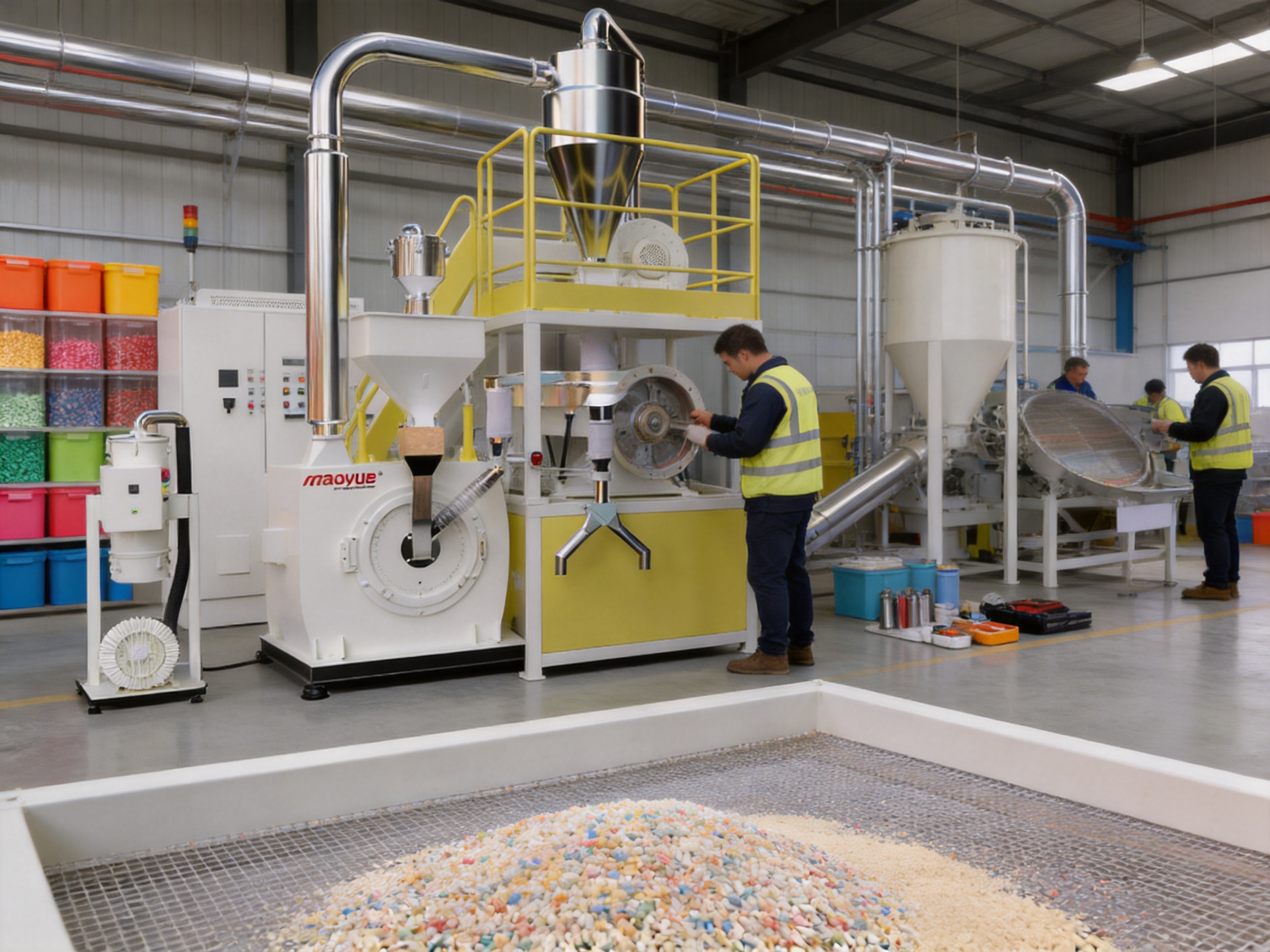
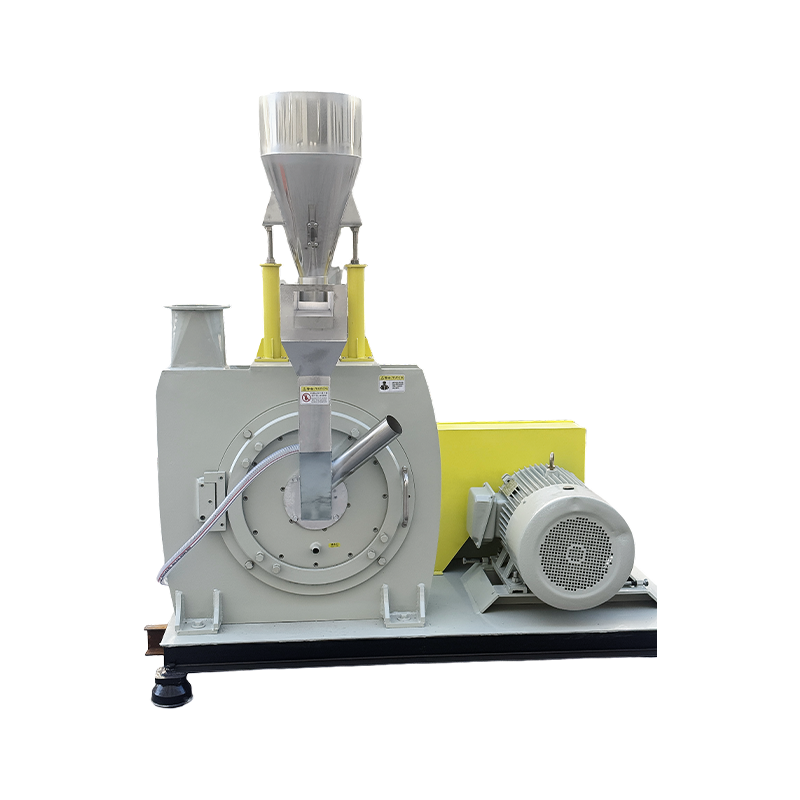
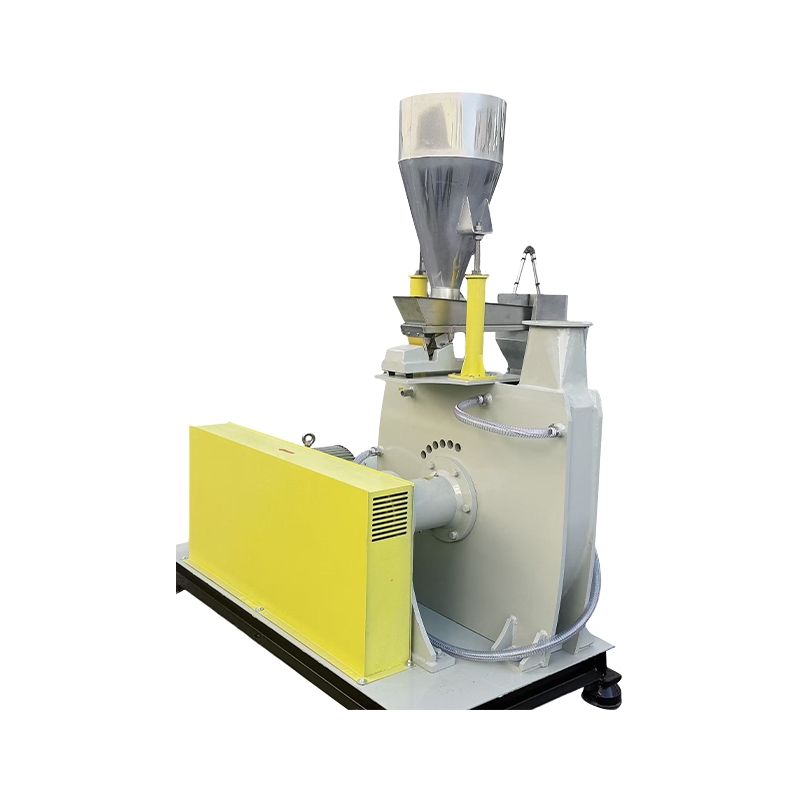
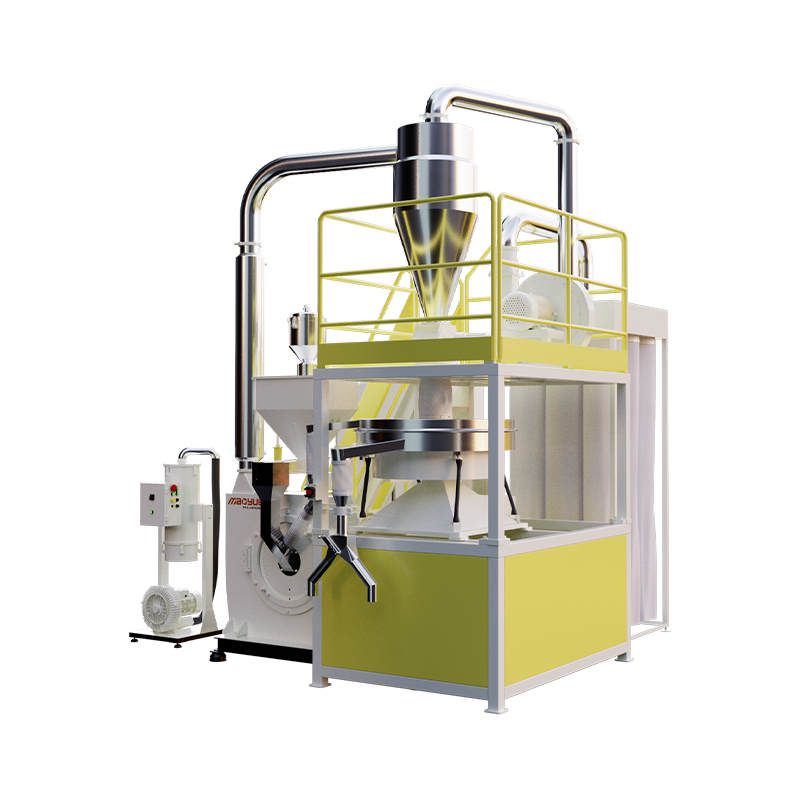
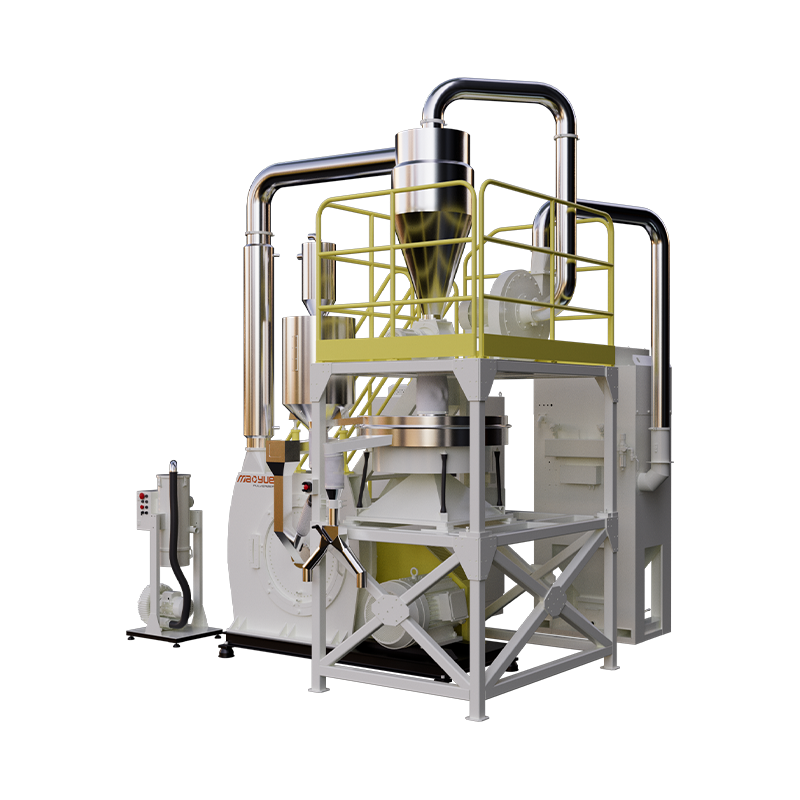
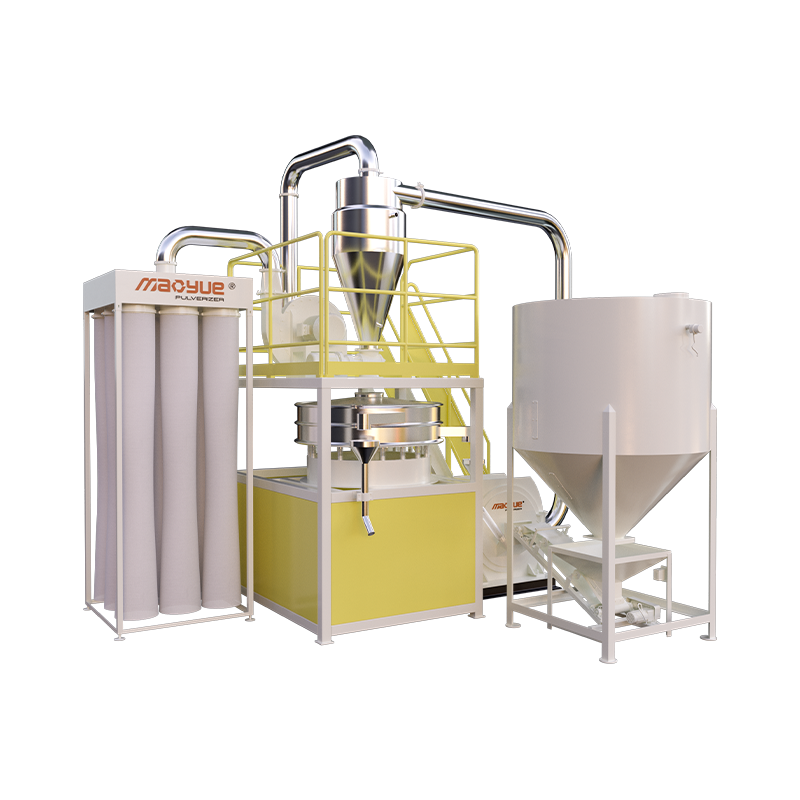
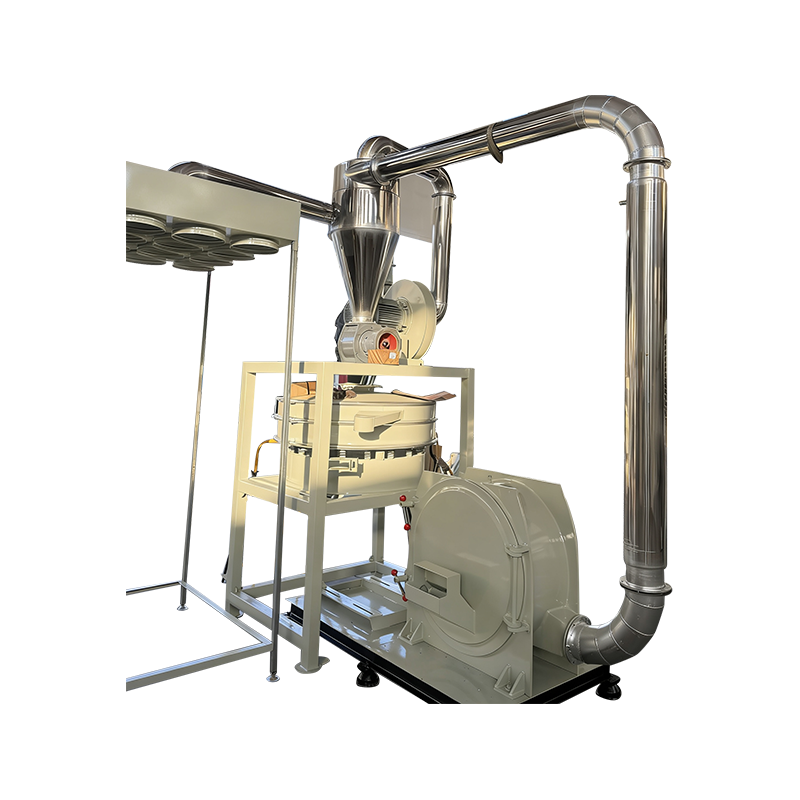
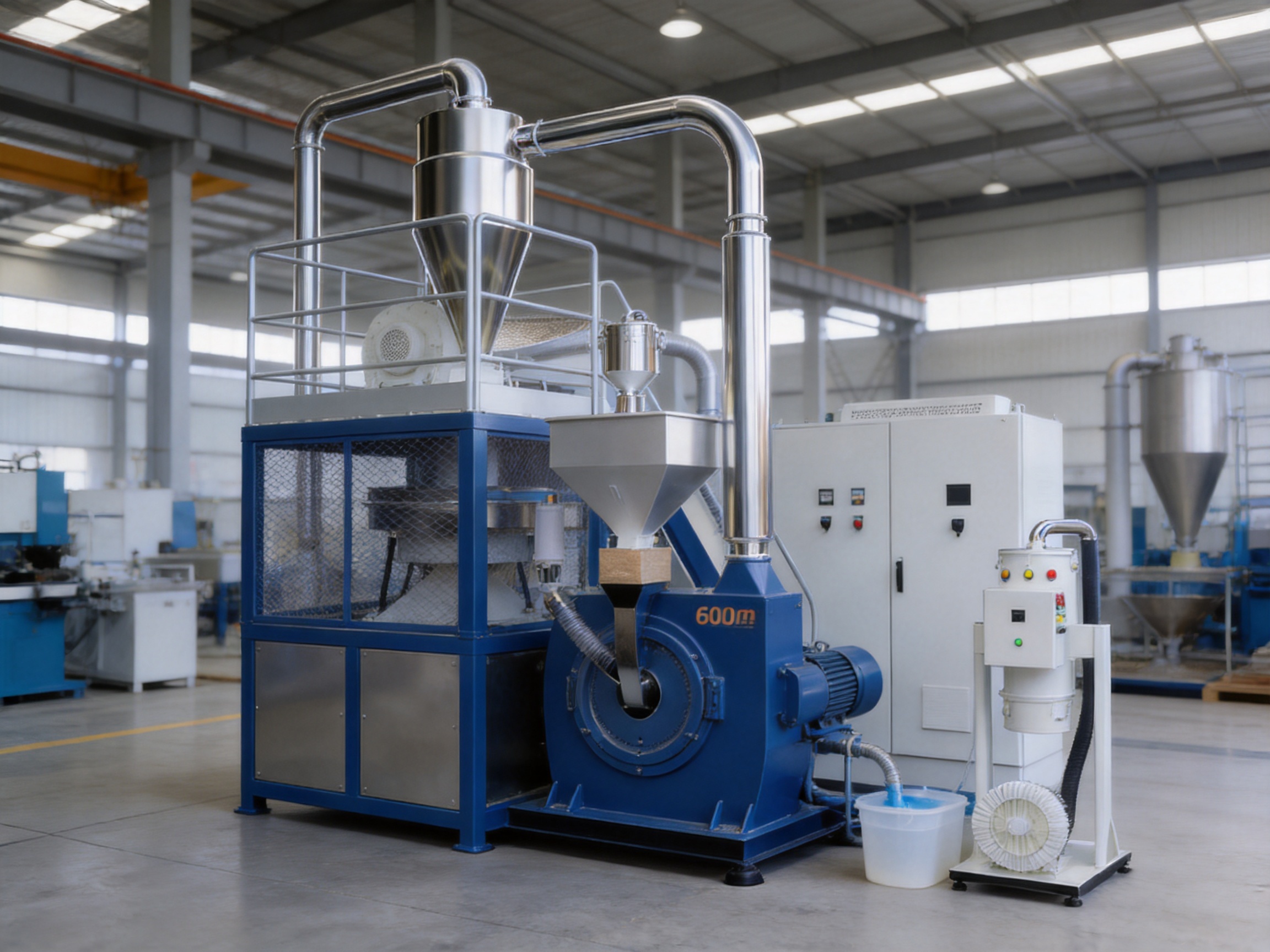
The Model 600 high-speed pulverizer is designed for medium- and large-scale production of color masterbatch, functional masterbatch, modified plastics, and related polymer powders. It combines a 600 mm grinding disc, high-strength DC53 tooling, precision-machined grinding teeth, dynamic balancing, dual cooling, negative-pressure conveying, and high-efficiency dust collection in one integrated pulverizing solution.
For manufacturers, the primary value of a masterbatch pulverizer is not simply the ability to reduce material size. The machine must produce a stable and uniform powder while protecting color quality, limiting thermal degradation, controlling dust, reducing maintenance interruptions, and operating economically for long production cycles. The Model 600 has been developed around these requirements.
Depending on the material, formulation, feeding condition, required fineness, and selected configuration, the machine is suitable for output levels from approximately 180 to 320 kg/h under the standard technical configuration. For specific materials and optimized process conditions, higher production levels may be achievable. The practical result depends on polymer type, pigment and additive loading, moisture, bulk density, grinding gap, screening requirements, and target particle size.
The equipment is intended for manufacturers that require more capacity than a compact laboratory or small-batch pulverizer can provide, but that still want a flexible machine with manageable installation requirements. It offers a useful balance between throughput, product consistency, energy consumption, floor space, serviceability, and investment cost.
Purpose-Built for Masterbatch and Modified Polymer Processing
Color masterbatch contains concentrated pigments or dyes dispersed in a polymer carrier. Functional masterbatch may also contain flame retardants, antistatic agents, conductive fillers, reinforcing materials, mineral additives, or other performance ingredients. These formulations can be difficult to pulverize because the material may be tough, abrasive, heat-sensitive, or prone to softening during grinding.
A pulverizer that is suitable for ordinary plastics may not deliver the same performance when processing highly loaded masterbatch. Excessive heat can cause yellowing, sticking, additive degradation, or changes in color strength. Uneven grinding can create a broad particle-size distribution, which may lead to feeding problems, inconsistent dispersion, black spots, fisheyes, and downstream molding defects.
The Model 600 addresses these issues through a combination of mechanical and process-control features. Its grinding discs are manufactured from DC53 high-grade cold-work tool steel, and the grinding teeth are processed using precision CNC equipment. The grinding chamber is supported by water cooling, forced airflow, and temperature monitoring. Finished material is transported through a fully enclosed negative-pressure conveying system before being collected and screened.
This integrated design is particularly useful for producers of PE, PP, ABS, PC, and other polymer-based masterbatches. It can also be applied to selected modified plastics, recycled masterbatch, injection molding waste, rotational molding powder, and SPC flooring core-layer powder, provided that the material characteristics are confirmed before production.
Key Performance Advantages
Stable Production for Medium-to-Large Plants
The 600 mm disc size gives the machine a substantial grinding area while maintaining a practical footprint. The standard specification includes a 45 or 55 kW drive motor, a 7.5 kW blower motor, a 1.1 kW vibrating screen motor, and a water-cooling system. This power arrangement is intended for continuous industrial operation rather than occasional workshop use.
Actual capacity is influenced by several factors. Softer polymers and coarser powder targets normally pass through the system more quickly than hard, abrasive, or highly filled formulations. Fine powder production also requires more residence time and may require recirculation or screening. For this reason, a responsible capacity estimate should always be based on a material test instead of relying only on the nominal motor rating.
The published standard specification lists a capacity of approximately 180–320 kg/h and a particle-size range of 10–50 mesh. The broader application description indicates that customized process conditions may support fineness from approximately 20–120 mesh and output levels that can extend beyond the standard configuration. These figures should be treated as application-dependent ranges, not as guaranteed results for every formulation.
Consistent Grinding and Narrow Particle Distribution
Particle uniformity is essential in masterbatch processing. A powder that contains too many oversized particles may feed irregularly or require additional screening. Excessive fines may increase dust, affect bulk density, and change the way the powder is handled during mixing, extrusion, or injection molding.
The Model 600 uses precision-ground grinding teeth designed to maintain consistent blade geometry around the disc. Tooth-by-tooth processing on professional CNC tool grinders helps control grinding angles and edge sharpness. Consistent tooth geometry supports more predictable cutting and impact conditions throughout the grinding chamber.
The equipment is manufactured with attention to the concentricity and balance of rotating components. Each grinding disc is dynamically balanced using high-precision balancing equipment. This reduces vibration caused by uneven mass distribution and supports stable operation at high rotational speed.
More consistent grinding conditions can help reduce variations in powder fineness and improve the repeatability of downstream processing. For color masterbatch producers, this may contribute to more reliable dispersion and fewer visual defects in finished plastic products.
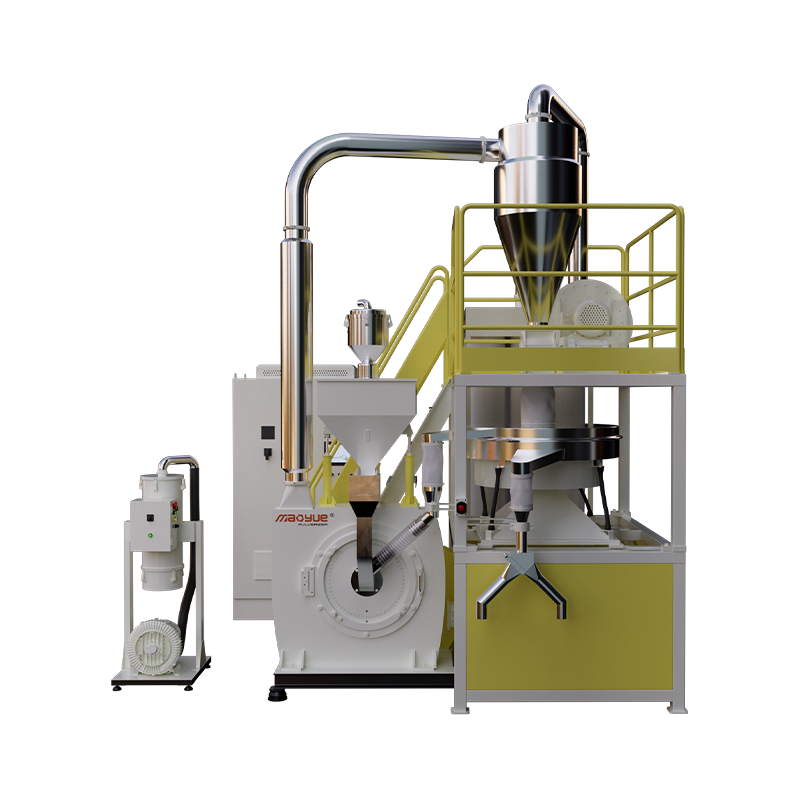
High-Speed Pulverizer for Color Masterbatch Model 600
DC53 Grinding Discs for Extended Service Life
Grinding discs are among the most important wear components in a plastic pulverizer. Their condition directly affects capacity, powder distribution, energy consumption, noise, and the quality of the final product. Inferior or poorly processed discs may lose their edge quickly, chip under demanding conditions, or require frequent replacement.
The Model 600 uses DC53 high-grade cold-work mold steel for its grinding blades. After heat treatment, the material reaches a hardness of approximately HRC 62–64. DC53 is selected for its combination of hardness, toughness, fatigue resistance, and resistance to edge chipping.
Compared with conventional D2 tooling, DC53 can provide approximately twice the toughness and fatigue resistance under suitable processing conditions. The expected service life may be approximately 1.5 to 2.5 times longer than that of standard grinding discs, although the actual result depends on material abrasiveness, contamination, operating temperature, grinding gap, cleaning practices, and maintenance.
This material selection is especially valuable when processing masterbatch formulations containing high pigment or additive concentrations. Mineral fillers, flame-retardant additives, glass-related residues, conductive materials, and other hard ingredients can accelerate wear. A stronger disc material helps maintain a sharp working edge for a longer period and reduces the risk of unexpected chipping.
Precision CNC Tooth Grinding
The company’s manufacturing facilities include imported Taiwanese professional CNC tool grinders designed for precision tooth-by-tooth grinding. The use of specialized grinding equipment helps control the geometry of each tooth rather than relying solely on general-purpose machining.
Controlled tooth geometry improves the balance between cutting, shearing, and impact within the grinding chamber. It also helps ensure that the two discs work together more evenly. When grinding teeth are inconsistent, some areas of the disc may carry more load than others, which can increase vibration and produce an irregular particle distribution.
Precision grinding is therefore not only a cosmetic or dimensional advantage. It influences the practical behavior of the entire pulverizing system. Consistent teeth can support stable throughput, lower mechanical stress, more predictable wear, and improved product repeatability.
Disc Refurbishment and Maintenance Economy
When the grinding edges become worn, the discs do not necessarily need to be discarded. The company provides professional disc refurbishing services for suitable worn components. Reconditioning can restore the grinding profile and extend the useful life of the disc.
Refurbishment costs may be approximately one-quarter to one-third of the cost of new discs, depending on the extent of wear and the required work. This can reduce long-term tooling expenses, particularly for plants operating continuously or processing abrasive formulations.
Refurbishment also supports maintenance planning. A factory can keep an additional disc set available, replace worn components during scheduled maintenance, and send the removed set for professional regrinding. This approach can reduce production interruptions and improve the predictability of spare-parts costs.
Dynamic Balancing for Low-Vibration Operation
High-speed rotating machinery must be properly balanced. Even a small imbalance in a grinding disc or rotor can create significant centrifugal force at operating speed. Vibration may increase bearing loads, loosen fasteners, accelerate wear, create excessive noise, and affect the stability of the grinding gap.
Each Model 600 grinding disc is dynamically balanced using imported high-precision balancing equipment. This process measures the rotating component and identifies the location and amount of correction required. Proper balancing helps the disc rotate smoothly and reduces vibration transferred to the machine frame.
The machine is designed to demonstrate a highly stable operating condition, sometimes described as “coin-standing” stability. This expression refers to the low-vibration behavior that can allow a coin to remain upright on a suitable machine surface during operation. It is a practical illustration rather than a substitute for formal vibration measurement.
Noise levels are designed to remain below approximately 85 dB under standard operating conditions. Actual noise depends on the material, installation, room acoustics, airflow, and operating load. Even so, improved balance and enclosed construction can help create a more controlled working environment than an improperly balanced or poorly enclosed pulverizer.
Stable rotation is also important for product quality. If vibration causes the grinding gap to fluctuate, the machine may produce inconsistent particle sizes or experience unstable feeding. Low-vibration operation helps the grinding chamber maintain more consistent mechanical conditions during long production runs.
Thermal Control for Heat-Sensitive Polymers
Heat is one of the main challenges in polymer pulverizing. Mechanical energy introduced during grinding is partly converted into heat. If the temperature rises too far, a polymer may soften, stick to the grinding surfaces, discolor, or degrade. Pigments and additives can also be affected by excessive temperature.
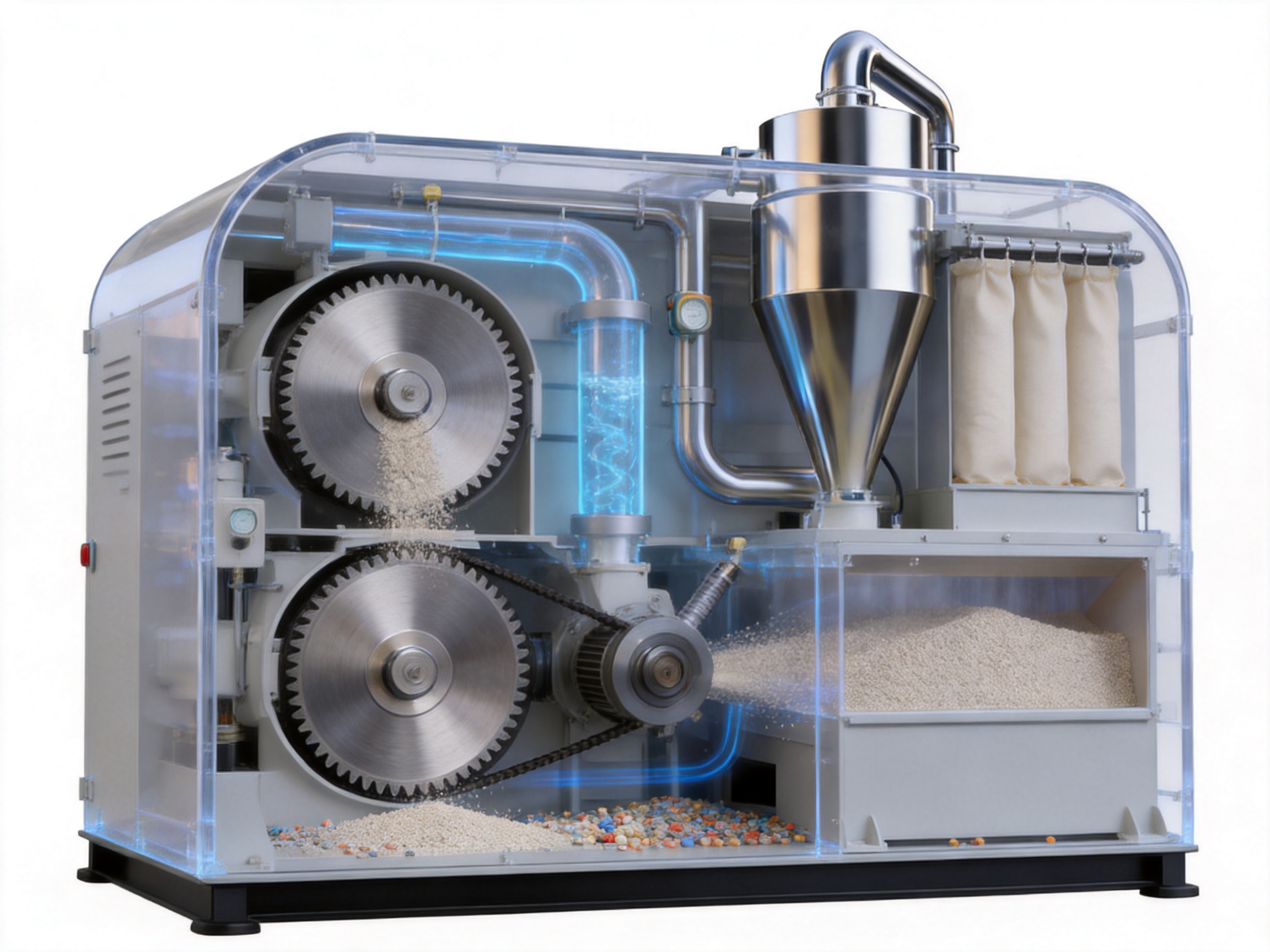
The Model 600 uses a dual cooling arrangement consisting of a water-cooling jacket and forced-air cooling. Cooling water enters and exits through the designated system to remove heat from the grinding chamber. Airflow contributes to heat removal and assists with the movement of pulverized material.
Multiple temperature sensors monitor important areas of the process. The PLC control system can use this information to support operating decisions and maintain the grinding chamber within a target range of approximately 50–70°C, depending on material conditions and the selected process settings.
Temperature control helps reduce the risk of several common problems:
• Polymer sticking to the grinding discs or chamber surfaces.
• Yellowing or color changes caused by excessive heat.
• Degradation of heat-sensitive additives.
• Reduced flowability caused by partial softening.
• Irregular particle size caused by changing material behavior.
• Unplanned shutdowns for cleaning and chamber inspection.
Temperature control does not eliminate the need for correct feeding, suitable moisture control, and proper operating settings. A formulation with a low softening point may require a lower target temperature, a reduced feed rate, or a customized cooling arrangement. The PLC provides a control foundation, but process parameters must still be established for each material.
Enclosed Conveying and Dust Collection
Plastic pulverizing generates fine particles that can become airborne if conveying and collection are not properly designed. Dust can contaminate nearby products, settle on electrical equipment, reduce housekeeping standards, and create occupational health concerns. In some formulations, fine combustible polymer dust may also require additional risk assessment and protective measures.
The Model 600 uses fully enclosed negative-pressure airflow conveying. The blower draws air through the system, helping transport the pulverized material from the grinding chamber toward the collection and screening stages. Negative pressure reduces the likelihood that dust will escape through small gaps in the conveying line.
The standard pipe material is stainless steel, with a listed pipe diameter of approximately 159 mm. Stainless-steel conveying surfaces are suitable for applications that require corrosion resistance, cleanability, and reduced risk of material contamination. The exact pipe layout may be adapted to the plant configuration.
A high-efficiency pulse bag dust collector is used to capture fine particles. The stated dust capture rate is greater than 99.9 percent under appropriate operating conditions. The pulse-cleaning function helps remove accumulated powder from the filter bags and supports continued airflow.
Effective dust collection provides several practical benefits:
• A cleaner production area.
• Reduced powder loss during conveying.
• Better visibility around the equipment.
• Lower housekeeping requirements.
• Improved protection for motors, control cabinets, and nearby equipment.
• Reduced worker exposure to airborne polymer dust.
Dust collection performance depends on filter selection, bag condition, airflow, sealing, material properties, and regular maintenance. Local environmental and workplace safety requirements should be reviewed before installation. Where combustible dust may be present, the user should complete an appropriate hazard assessment and apply any required protection measures.
Integrated Feeding, Screening, and Powder Handling
The standard machine is equipped with vacuum feeding. Vacuum feeding can support a more controlled and enclosed material supply compared with open manual feeding. It is useful when the raw material is stored in bags, bins, or intermediate containers and needs to be transferred to the pulverizer with limited operator handling.
After grinding, the material can pass through a vibrating screen. The listed screen diameter is approximately 1,200 mm, with a 1.1 kW vibrating-screen motor. Screening helps separate material according to the selected mesh requirement and can improve final product consistency.
The standard configuration also includes a 300 mm dust-collector bag diameter. The precise bag quantity, filter material, discharge arrangement, and collection method may vary according to the application and plant layout.
An integrated conveying and screening arrangement reduces the need for manual transfer between separate machines. Fewer open transfer points can reduce powder spillage and contamination. It can also make the production line easier to organize and supervise.
For a masterbatch manufacturer, the complete process may include feeding, pulverizing, air conveying, dust collection, screening, and collection of finished powder. Depending on the raw material and production objective, the system may be connected with storage hoppers, magnetic separation, metal detection, automatic bagging, or other auxiliary equipment.
Configuration and Technical Specification
The following table summarizes the standard technical information supplied for the Model 600. Specifications may be adjusted according to voltage, material, required capacity, target fineness, environmental requirements, and customer process conditions.
| Item | Standard Specification | Application Notes |
|---|---|---|
| Machine type | 600 | High-speed disc pulverizer for industrial polymer processing |
| Grinding disc diameter | 600 mm | Designed for medium- and large-scale production |
| Standard capacity | Approximately 180–320 kg/h | Actual output depends on formulation, fineness, and operating conditions |
| Particle-size range | Approximately 10–50 mesh in the standard specification | Other fineness ranges may be available through process customization |
| Drive motor | 45/55 kW | Selection depends on material and required throughput |
| Speed control | Star-delta, soft start, or inverter | Configuration can be selected according to process requirements |
| Belt pulley | European standard | Supports reliable power transmission and serviceability |
| Grinding blade material | DC53 | High hardness, toughness, and wear resistance after treatment |
| Blower motor | 7.5 kW | Supports conveying and negative-pressure airflow |
| Conveying pipe material | Stainless steel | Suitable for clean and corrosion-resistant powder conveying |
| Pipe diameter | Approximately 159 mm | May be adapted to the line arrangement |
| Vibrating-screen diameter | Approximately 1,200 mm | Supports classification of pulverized material |
| Vibrating-screen motor | 1.1 kW | Provides screening vibration |
| Feeding method | Vacuum feeding | Supports enclosed and controlled material transfer |
| Dust-collector bag diameter | Approximately 300 mm | Final design depends on filtration requirements |
| Cooling method | Water cooling with inlet and outlet circulation | Used together with forced-air cooling and temperature monitoring |
| Recommended installation area | Approximately 6–8 m² for the primary equipment arrangement | Additional space is required for access, storage, and auxiliary equipment |
Advantages Compared with Conventional Pulverizers
Longer Tooling Life
Conventional pulverizers may use lower-toughness steel or grinding discs that are not optimized for abrasive masterbatch formulations. The DC53 disc system provides a stronger foundation for demanding applications. Longer service life can reduce the frequency of disc changes and lower the number of production stops.
Better Resistance to Chipping
Hardness alone does not determine grinding-disc performance. A disc that is very hard but brittle may chip when exposed to impact, contamination, or uneven loading. DC53 combines high hardness with improved toughness, helping reduce the risk of edge failure when the machine is correctly operated.
Improved Vibration Control
Precision dynamic balancing is a significant difference between a carefully manufactured pulverizer and a basic machine assembled without detailed rotor correction. Lower vibration can support longer bearing life, lower noise, more stable grinding gaps, and better operator comfort.
More Effective Heat Management
Some conventional systems rely on natural cooling or a single cooling method. The Model 600 combines water cooling, forced air, temperature sensors, and PLC-based monitoring. This arrangement provides a more effective method for controlling heat during continuous polymer processing.
Cleaner Production Conditions
An enclosed negative-pressure conveying system and pulse-cleaned dust collector can provide better containment than open transfer and basic cyclone collection. Improved containment is valuable for plants handling colored powders, where cross-contamination and housekeeping are important concerns.
Lower Long-Term Maintenance Cost
Maintenance cost is influenced by more than the purchase price. Disc life, refurbishing options, energy consumption, reject rates, cleaning frequency, and production downtime all contribute to the total cost of ownership. The Model 600 is designed to reduce these costs through durable tooling, serviceable construction, precision balancing, and refurbishing support.
Manufacturing Strengths and Quality Control
The manufacturer has approximately 30 years of experience in plastic crushing and pulverizing equipment. Its product range covers plastic pulverizers, pulverizer components, and complete crushing and pulverizing lines for rotational molding, masterbatch, polymers, PVC, PE, recycling, and powder coating applications.
The production organization includes six processing workshops, with each workshop averaging approximately 1,400 square meters. This manufacturing capacity supports the machining, welding, assembly, testing, and service processes required for industrial pulverizer production.
The company uses imported Taiwanese high-precision grinding equipment built to German standards for selected tooling and component-processing operations. These machines support accurate grinding and repeatable dimensions for important wear parts.
German dynamic balancing equipment is used for rotating components. Balancing is especially important for high-speed discs and rotors because it affects vibration, bearing load, noise, and long-term mechanical stability.
Japanese welding systems are also used in the manufacturing process. Controlled welding can help improve the consistency and structural integrity of frames, chambers, hoppers, pipe supports, and other fabricated parts. Welding quality is important because distortion or weak joints can affect alignment and service life.
The manufacturing approach combines material selection, precision machining, balancing, welding, assembly, and process testing. This is more reliable than treating the pulverizer as a collection of independent components. The performance of the final machine depends on how accurately the components work together as a system.
European-Oriented Component Standards
The company focuses on manufacturing components according to European quality standards. The belt pulley system follows a European standard configuration, while the machine design emphasizes durable components, clean powder conveying, stable operation, and serviceability.
CE mechanical certification and ISO 9001 quality management system certification provide formal support for product safety and manufacturing quality. Certification does not replace correct installation or safe operation, but it demonstrates that the equipment is produced within a recognized quality-management framework.
Technical Development and Customization
Plastic processing materials vary significantly from one customer to another. A machine used for soft PE masterbatch may require different settings from one used for abrasive flame-retardant compounds or conductive formulations. The manufacturer’s technical team studies advanced machinery technologies and applies this experience to customized solutions.
Possible customization areas include motor power, speed-control method, grinding-disc design, screen specification, cooling capacity, airflow arrangement, pipe routing, dust-collector configuration, feeding system, and downstream packaging. The correct design should be selected after reviewing the material, required output, target fineness, plant utilities, and local safety requirements.
Application Areas
Color Masterbatch
The primary application is the pulverizing of color masterbatch based on polymers such as PE, PP, ABS, and PC. The machine can be used where uniform powder size and stable color-related performance are required. Properly controlled pulverizing may help improve feeding and dispersion in subsequent production processes.
Functional Masterbatch
Functional masterbatch may contain flame retardants, antistatic agents, conductive additives, reinforcing materials, or other specialized ingredients. These materials can be more abrasive or heat-sensitive than ordinary color masterbatch. The DC53 grinding discs and dual cooling arrangement are appropriate advantages for this category, subject to material testing.
Modified Plastics
Modified plastics often include mineral fillers, fibers, impact modifiers, or performance additives. The Model 600 can be used for high-fineness grinding of selected composite materials where stable particle distribution is important. The processing method should be adjusted according to hardness, elasticity, moisture, and thermal behavior.
Recycling and Re-Granulation Waste
Medium-scale recycling operations may use the pulverizer to process waste masterbatch, injection molding waste, or selected production scraps. The feed should be sorted and checked for metal contamination, excessive moisture, and foreign materials before entering the machine. A pre-crushing or screening stage may be necessary for oversized pieces.
Rotational Molding Powder
Rotational molding applications often require polymer powder with controlled particle size and flowability. The Model 600 can support medium- to high-output powder production when the polymer and required powder specification are compatible with disc pulverizing.
SPC Flooring Core-Layer Powder
SPC flooring core-layer materials may contain polymer and mineral components that require robust grinding equipment. The application should be evaluated carefully because the abrasiveness of mineral content can affect disc wear, capacity, and maintenance intervals.
Installation and Operating Considerations
The primary machine arrangement may occupy approximately 6–8 square meters, but the total installation area should be larger. Operators need space for feeding, inspection, cleaning, maintenance, finished-product collection, and safe movement around the equipment.
The foundation should be level, rigid, and capable of supporting the machine and any connected equipment. The electrical supply must match the selected motor configuration and local power standards. Proper grounding, overload protection, emergency-stop functions, and electrical isolation should be installed according to applicable regulations.
Cooling water should be clean and supplied at an appropriate flow rate. The water circuit needs an inlet, outlet, valves, and a method of monitoring leaks or abnormal temperature conditions. The cooling system should be inspected regularly to prevent scaling, blockage, or insufficient heat transfer.
The air-conveying line should be sealed and installed with smooth transitions wherever possible. Sharp bends, excessive pipe length, and incorrect pipe diameter may reduce conveying efficiency or increase pressure loss. Filter bags should be checked for damage, blockage, and correct installation.
Before production begins, the operator should verify that the grinding chamber is free of foreign objects and that the grinding gap is correctly set. The feed should be introduced gradually rather than suddenly overloaded. Operating current, temperature, vibration, airflow, and product appearance should be monitored during commissioning.
Metal contamination is particularly dangerous for high-speed grinding discs. Magnetic separation, metal detection, and raw-material inspection should be considered where appropriate. Operators should never place hands or tools into the feed opening or grinding chamber while the machine is connected to power.
Maintenance and Service Planning
Preventive maintenance helps preserve capacity and product quality. The grinding discs should be inspected at scheduled intervals for wear, chipping, cracks, uneven tooth condition, and changes in the grinding gap. Bearings, belts, pulleys, fasteners, sensors, and electrical connections should also be checked.
Dust-collector bags require regular inspection. A damaged bag can allow powder to pass into the exhaust stream, while a blocked bag can reduce airflow and increase the load on the blower. Pulse-cleaning pressure and frequency should be checked according to the filter design.
The cooling circuit should be examined for leaks, scale, restricted flow, and abnormal temperature changes. Temperature sensors should be kept functional and calibrated as required. If the machine begins to run hotter than usual, the cause may be insufficient cooling, excessive feed, worn discs, blocked airflow, or a material change.
Disc refurbishment should be planned before the grinding edges become severely damaged. Regrinding a disc while its basic structure remains sound is generally more economical than replacing a component that has been allowed to chip or deform extensively.
Operators should keep records of production hours, processed materials, motor current, temperature, vibration, disc changes, screen cleaning, and maintenance events. These records help identify trends and support accurate calculation of wear cost and energy consumption for each formulation.
Energy Efficiency and Return on Investment
The economic performance of a pulverizer should be evaluated using total cost per ton rather than only motor power. Electricity consumption, production rate, disc life, labor, cleaning time, reject material, downtime, and finished-product value all influence the result.
The Model 600 is designed to provide a balance between output and power consumption. Its total installed power depends on the selected drive motor and auxiliary equipment, with the main motor generally specified at 45 or 55 kW. The machine’s practical energy efficiency depends on keeping the feed rate stable, avoiding unnecessary recirculation, maintaining sharp grinding teeth, and operating at the correct temperature.
A higher-capacity machine can reduce the number of machines and operators required for a given production target. It may also reduce the number of material transfers and simplify factory layout. However, the best choice depends on the production schedule. A plant with highly variable or low demand may prefer a smaller machine, while a continuous masterbatch producer may benefit from the Model 600’s higher capacity.
Under favorable production conditions, the expected return-on-investment period may be approximately 6–12 months. This estimate is not universal. It depends on utilization, selling price, electricity cost, labor cost, existing equipment, product yield, tooling life, and the value of additional production capacity.
Potential economic benefits include:
• Higher output from one production line.
• Fewer grinding-disc replacements.
• Lower cost through disc refurbishment.
• Reduced reject rates caused by unstable fineness or overheating.
• Lower manual handling requirements.
• Improved production continuity.
• Better use of factory floor space.
Quality and Product Consistency
For masterbatch producers, quality consistency is often more important than peak capacity. Customers expect the same color strength, dispersion, flow behavior, and appearance from one batch to the next. A pulverizer contributes to this consistency by controlling particle size, temperature, vibration, and material residence time.
The Model 600’s precision grinding discs are designed to provide uniform tooth geometry. Its dynamic balancing system supports stable rotation. Its cooling system helps control the thermal environment. Its screen and enclosed conveying system help separate and transfer the finished powder under controlled conditions.
These features can help reduce downstream defects such as color variation, black spots, fisheyes, poor dispersion, and inconsistent feeding. The actual effect depends on the full production process, including compounding, mixing, extrusion, cooling, pelletizing, storage, and packaging. Pulverizing is one part of a quality-control system, not a replacement for formulation and process management.
Quality inspection may include particle-size analysis, moisture testing, bulk-density measurement, color comparison, melt-flow testing, and microscopic evaluation of dispersion. Establishing these checks during commissioning allows the user to confirm that the machine is producing the required material rather than relying only on visual observation.
Why Choose an Experienced Manufacturer
Industrial pulverizer performance depends on more than the machine’s catalog description. The manufacturer must understand wear parts, polymer behavior, airflow, temperature, balancing, screen selection, and practical maintenance. Experience with multiple plastics applications helps the technical team identify potential problems before they become costly production issues.
With approximately three decades in the plastic crushing and pulverizing field, the company has supplied equipment to more than 5,000 domestic and international enterprises. This broad application experience supports the development of machines for masterbatch, PVC, PE, rotational molding, recycling, polymers, powder coating, and other industries.
The company’s manufacturing resources include six workshops, precision grinding machinery, high-precision balancing equipment, controlled welding systems, and a dedicated technical team. Its focus on quality, service, innovation, and customized design is intended to provide more than a standard machine sale.
After-sales support may include application consultation, configuration recommendations, installation assistance, operating guidance, replacement parts, disc refurbishment, and maintenance advice. These services are important for customers who plan to operate the pulverizer continuously or who process materials with unusual thermal or abrasive characteristics.
Recommended Selection Process
Before ordering a Model 600 pulverizer, the customer should provide representative material samples and process information. Useful information includes polymer type, additive composition, moisture, feed size, bulk density, hardness, softening behavior, required capacity, target mesh, operating hours, and packaging method.
A material test can determine whether the standard grinding-disc design, motor power, cooling arrangement, and screen are suitable. Testing can also identify the likely output range and energy requirements. If the material contains abrasive mineral fillers, the customer should request an evaluation of expected disc wear and recommended maintenance intervals.
The technical team should also review the plant environment. Important factors include available electrical power, cooling-water quality, dust-control regulations, room height, floor loading, access for maintenance, raw-material storage, finished-product handling, and fire or explosion-control requirements.
A complete quotation should clearly identify the machine configuration, included auxiliaries, capacity basis, fineness basis, installation requirements, spare parts, warranty terms, commissioning scope, and exclusions. This avoids confusion caused by comparing machines only by motor size or disc diameter.
Q&A
What materials can the Model 600 pulverize?
The machine is primarily intended for color masterbatch, functional masterbatch, modified plastics, selected polymer compounds, recycled masterbatch, injection molding waste, rotational molding powder, and SPC flooring core-layer powder. Material suitability should be confirmed through testing, especially when the feed contains high levels of mineral filler, fiber, moisture, or metal contamination.
What is the standard output of the machine?
The standard technical specification lists approximately 180–320 kg/h. Actual output depends on polymer type, formulation, feed condition, grinding gap, target mesh, screen arrangement, and cooling performance. Higher output may be possible for suitable materials with customized process conditions.
What particle size can be produced?
The standard specification lists approximately 10–50 mesh. The broader application range may extend to finer or different particle sizes depending on the screen, grinding arrangement, material behavior, and operating settings. A sample test is recommended for a precise particle-size requirement.
Why is DC53 used for the grinding discs?
DC53 offers high hardness after heat treatment together with better toughness and fatigue resistance than many conventional cold-work tool steels. This combination helps the grinding teeth resist wear and chipping when processing demanding masterbatch and modified polymer formulations.
How often must the grinding discs be replaced?
There is no single replacement interval. Disc life depends on the abrasiveness of the material, operating hours, feed cleanliness, temperature, grinding gap, and maintenance. The discs can be inspected and professionally refurbished when suitable, which may reduce the cost of ownership.
Does the machine control polymer overheating?
The machine uses water cooling, forced-air cooling, temperature sensors, and PLC control to help maintain the grinding chamber within an approximate 50–70°C range. The correct temperature depends on the polymer and formulation. Operators must still select an appropriate feed rate and process setting.
Is the pulverizer suitable for continuous operation?
Yes. The machine is designed for industrial operation and can support long production cycles when properly installed, cooled, maintained, and operated within its application limits. Regular inspection of discs, bearings, belts, screens, sensors, filters, and cooling components is essential.
How does the dust-collection system work?
A blower creates negative-pressure airflow through the enclosed conveying line. Pulverized material is transported toward the collection and screening system, while the pulse bag dust collector captures fine particles. Seals, filter bags, airflow, and maintenance practices affect the final dust-control performance.
Can the machine be customized?
Yes. Possible customization areas include motor power, speed control, cooling capacity, screen size, grinding-disc configuration, pipe arrangement, feeding equipment, dust-collector design, and downstream packing. Customization should be based on material tests and the customer’s factory conditions.
What is the expected return on investment?
A typical estimated return-on-investment period may be approximately 6–12 months in suitable high-utilization applications. The actual period depends on output, operating hours, product margin, energy cost, labor, maintenance, tooling life, and the value of increased production capacity.
What should be checked before commissioning?
The customer should check the foundation, electrical supply, grounding, cooling-water circulation, airflow connections, dust-collector installation, screen selection, emergency stops, lubrication, grinding gap, feeding system, and safety guards. A controlled trial with representative material should be completed before full-scale production.
Conclusion
The Model 600 high-speed pulverizer is a production-oriented solution for manufacturers that require reliable medium- to high-output pulverizing of color masterbatch, functional masterbatch, modified plastics, and selected recycled polymers. Its main advantages come from the way several systems work together: DC53 grinding discs, precision CNC tooth grinding, dynamic balancing, dual cooling, PLC monitoring, enclosed negative-pressure conveying, pulse dust collection, vacuum feeding, and vibrating screening.
Compared with a basic pulverizer, the machine is designed to provide longer tooling life, more stable rotation, improved temperature control, cleaner powder handling, and lower long-term maintenance costs. The company’s experience in plastic pulverizing, precision manufacturing equipment, dynamic balancing, controlled welding, quality management, and customized engineering further strengthens the product’s industrial value.
For the best result, buyers should evaluate the machine according to their actual formulation, required fineness, production schedule, and factory conditions. A properly selected and maintained Model 600 can help masterbatch manufacturers improve throughput, reduce process variation, protect powder quality, and build a more efficient long-term production line.
References
1. Manufacturer-provided technical information for the Model 600 high-speed polymer masterbatch pulverizer.
2. Manufacturer-provided company profile and manufacturing capability statement.
3. General engineering principles for disc pulverizer design, polymer size reduction, and high-speed rotating equipment.
4. General technical guidance concerning cold-work tool steels, DC53 material properties, heat treatment, and wear resistance.
5. General industrial practices for polymer dust collection, negative-pressure conveying, pulse-filter operation, and workplace housekeeping.
6. General maintenance principles for grinding discs, bearings, belts, cooling systems, vibrating screens, and industrial filtration equipment.