

 English
 русский
 Español
 عربى
عربى 中文简体
中文简体
 中文简体
中文简体
Content
- 1 Why PE Rotomolding Powder Requires a Specialized Pulverizer
- 2 Product Positioning: The Golden Capacity Range for Medium-to-Large Plants
- 3 Core Technical Configuration
- 4 DC53 Grinding Discs: A Key Advantage Over Ordinary Pulverizers
- 5 Precision Tooth Grinding and Micron-Level Consistency
- 6 Dynamic Balancing for Low Vibration and Stable Operation
- 7 Temperature Control: Preventing Overheating, Sticking, and Powder Degradation
- 8 Vacuum Feeding for Steady, Cleaner Material Input
- 9 Screening and Classification for Controlled Powder Output
- 10 Stainless Steel Conveying and Dust Collection
- 11 Competitive Advantages Compared with Ordinary Pulverizers
- 12 Manufacturing Strength Behind the Machine
- 13 Application Scenarios
- 13.1 Medium-to-Large Rotomolding Product Manufacturing
- 13.2 Commercial PE Rotomolding Powder Supply
- 13.3 Recycling and Re-Pulverizing of Waste PE Products
- 13.4 Modified Plastics and Functional Masterbatch
- 13.5 SPC Flooring Core-Layer Powder and Hot-Melt Adhesive Powder
- 13.6 Pilot-Scale Formula Amplification
- 14 How Powder Uniformity Improves Rotomolded Product Quality
- 15 Energy Efficiency and Return on Investment
- 16 Maintenance and Long-Term Reliability
- 17 Customization and Production-Line Integration
- 18 Quality Control from Material to Finished Equipment
- 19 Environmental and Workplace Benefits
- 20 Why In-House Pulverizing Can Strengthen a Rotomolding Business
- 21 Practical Buying Considerations
- 22 Q&A Section
- 22.1 Q1: What is the main purpose of the 600-type PE rotomolding powder pulverizer?
- 22.2 Q2: Why is powder uniformity important in rotational molding?
- 22.3 Q3: What makes DC53 grinding discs better than ordinary grinding discs?
- 22.4 Q4: How does dynamic balancing improve machine performance?
- 22.5 Q5: Why does the pulverizer need water cooling?
- 22.6 Q6: Can the machine be used for recycled PE material?
- 22.7 Q7: What capacity can users expect?
- 22.8 Q8: Is the machine suitable for a complete powder production line?
- 22.9 Q9: How does the machine reduce long-term operating cost?
- 22.10 Q10: What company strengths support this product?
- 23 Conclusion
- 24 References
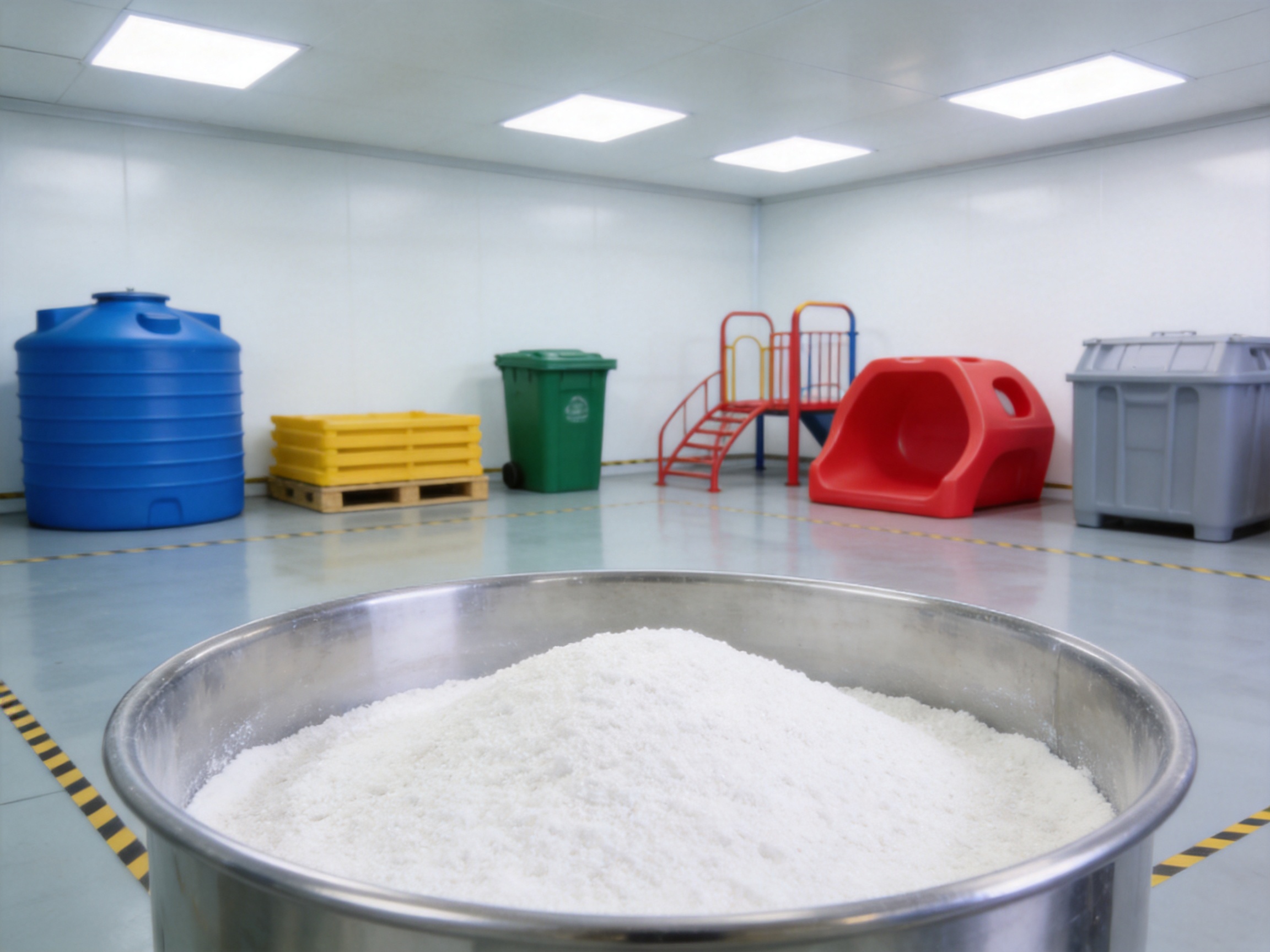
In the production of rotational molding powder, consistency is not a luxury; it is the foundation of product quality. A rotomolded water tank, pallet, playground component, trash bin, or custom industrial shell depends on powder that melts evenly, flows reliably, and distributes itself with predictable behavior inside the mold. When the powder is too coarse, too fine, overheated, irregular, or contaminated with dust, the final product may show rough surfaces, uneven wall thickness, weak corners, pinholes, and reduced impact strength. For medium-to-large manufacturers, the pulverizer is therefore not simply a size-reduction machine. It is a quality-control platform, a productivity engine, and a long-term cost center that must be managed carefully.
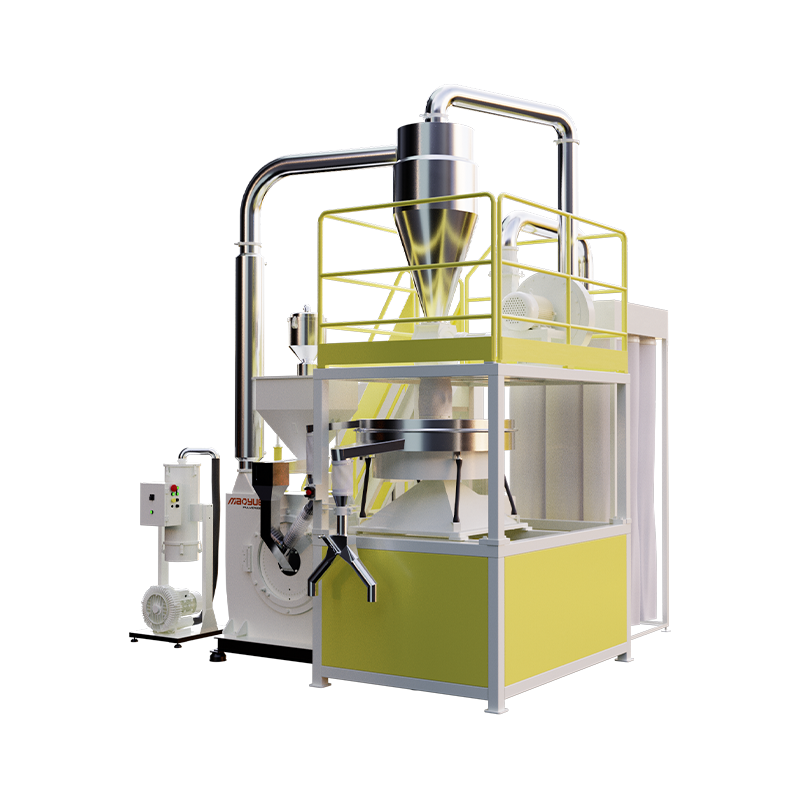
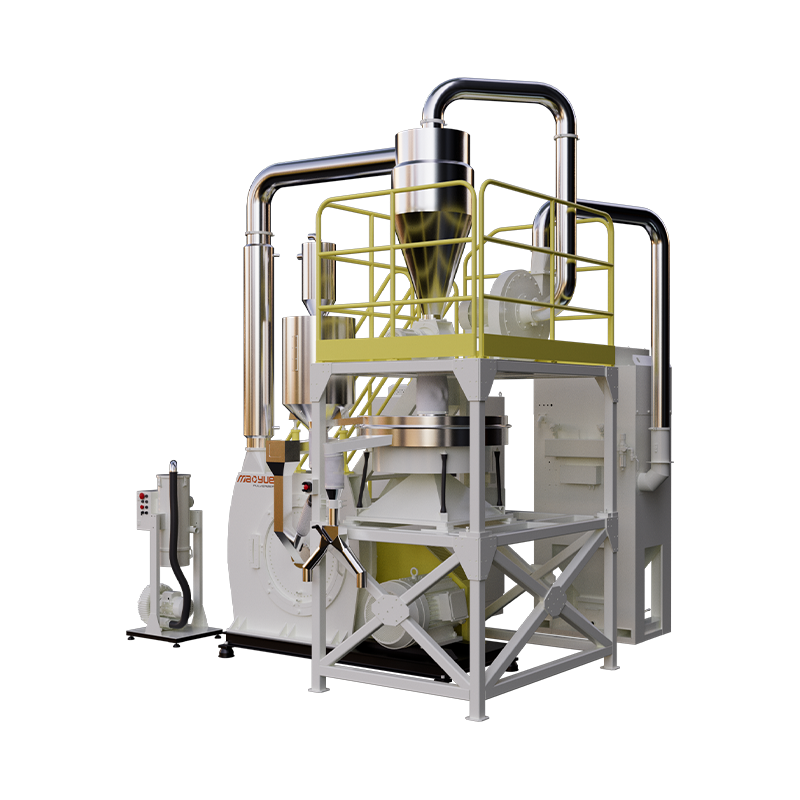
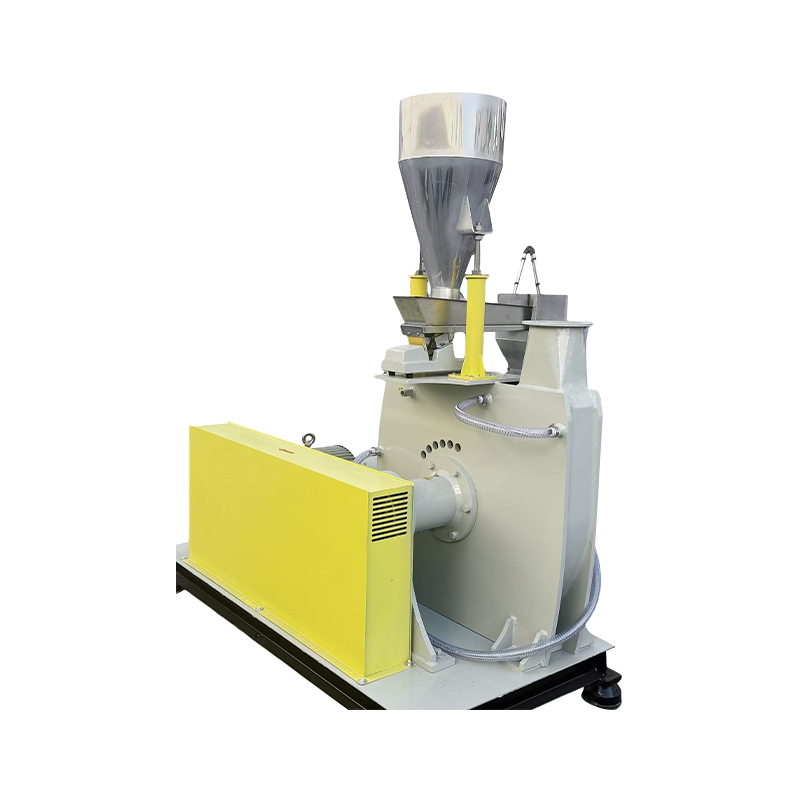
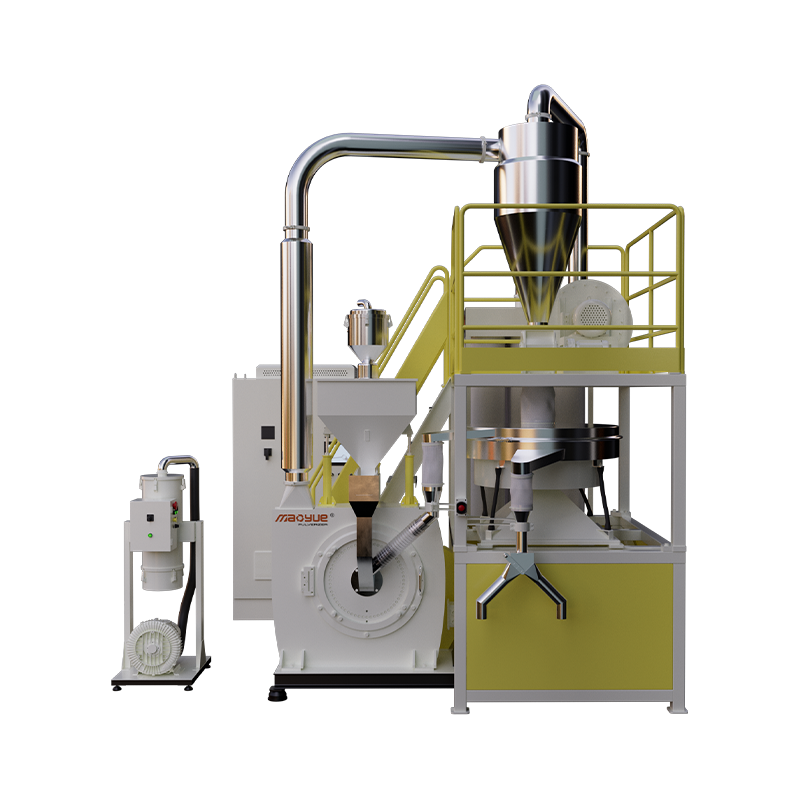
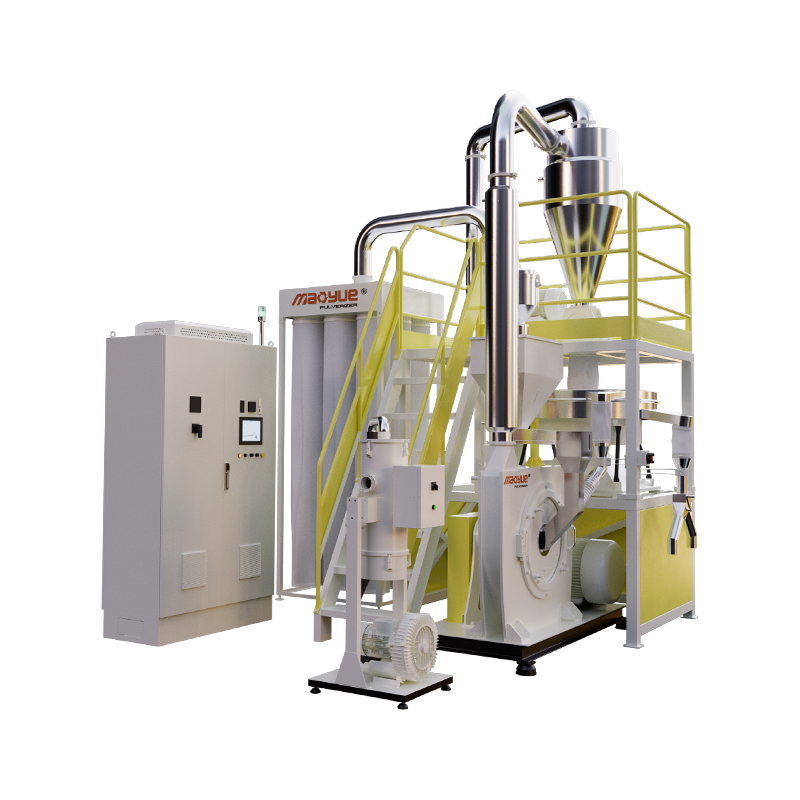
The 600-type PE rotomolding powder pulverizer is designed for this demanding role. It is positioned as a practical, high-performance solution for manufacturers that need higher output than smaller pulverizers can offer, but still want better flexibility, lower energy pressure, and easier plant arrangement than very large units. With a 600 mm grinding disc, DC53 grinding blade material, water cooling, vacuum feeding, stainless steel conveying pipes, and a dedicated screening and dust-collection configuration, the machine is engineered to produce high-uniformity PE powder suitable for rotational molding and related plastic powder applications.
This article explains the product’s technical advantages, processing logic, production benefits, quality-control value, manufacturing background, and competitive strengths. It also discusses how the machine fits into modern plastic pulverizing lines for PE rotomolding powder, modified plastics, functional masterbatch, recycling, SPC flooring core-layer powder, hot-melt adhesive powder, and other powder-based material processes.
Why PE Rotomolding Powder Requires a Specialized Pulverizer
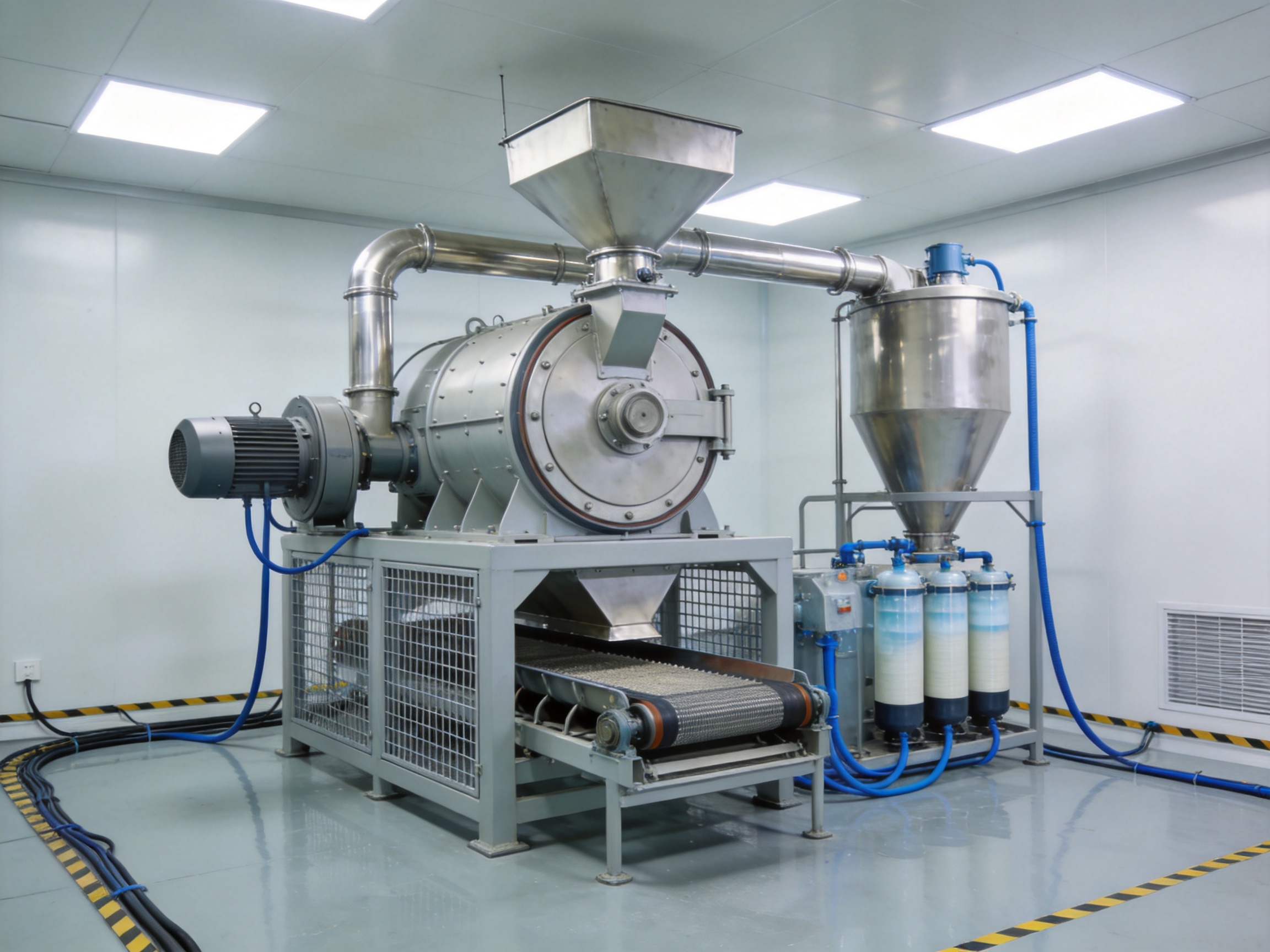
Rotational molding is different from injection molding, extrusion, or blow molding. The material does not enter the mold as a molten stream under high pressure. Instead, powdered plastic is placed inside a hollow mold, heated, rotated, melted, and distributed over the inner surface of the mold by gravity and motion. This process makes powder quality extremely important. The powder must be able to move smoothly, melt at a controlled rate, and form an even layer without excessive voids or thermal damage.
PE, especially linear low-density polyethylene and other rotational molding grades, is widely used because it offers toughness, chemical resistance, weatherability, and good processing behavior. However, PE also presents challenges during pulverizing. It can soften under frictional heat, stick to grinding surfaces, form clumps, and lose flowability if temperature is not controlled properly. A general-purpose crusher or low-grade pulverizer may reduce the plastic into smaller particles, but it may not create the uniform powder needed for demanding rotomolding production.
A specialized PE rotomolding pulverizer must do more than break material. It must cut, shear, cool, classify, convey, and collect powder in a controlled manner. The machine must maintain narrow particle-size distribution, avoid excessive fines, prevent overheating, reduce dust leakage, and keep the powder clean. It must also operate continuously because medium-to-large rotomolding plants often require stable powder supply across long production shifts.
The 600-type pulverizer is built around these requirements. Its grinding system uses a large 600 mm disc structure to create efficient cutting and pulverizing action. The tooth geometry and blade material are designed to support sharp cutting rather than uncontrolled crushing. Cooling is integrated into the process to keep chamber temperature stable. Screening helps separate qualified powder from oversize particles. Airflow conveying and dust collection support cleaner operation and safer workshops. These features work together to create powder that performs better in downstream molding.
Product Positioning: The Golden Capacity Range for Medium-to-Large Plants
The 600-type PE rotomolding pulverizer occupies an important middle position in a pulverizer lineup. Smaller units may be useful for laboratories, trial production, or low-volume powder supply, but they may struggle when a plant needs continuous production. Larger units can offer very high capacity, but they often require more installation space, higher power allocation, larger auxiliary equipment, and higher investment. The 600-type machine is designed to balance capacity, cost, flexibility, and long-term stability.
In practical production, capacity depends on material properties, feed size, target mesh, ambient temperature, blade condition, screening efficiency, and overall line configuration. The reference configuration for the 600-type unit indicates a capacity range of 180 to 320 kg/h for certain mesh and operating conditions, while optimized production lines and suitable materials may achieve higher throughput under application-specific conditions. This flexibility is valuable because rotomolding manufacturers often process different formulas, colors, recycled blends, and powder specifications.
The machine can be applied to powder fineness ranges commonly used in rotomolding and plastic powder applications. Its adjustable pulverizing conditions make it suitable for coarse-to-medium powder requirements as well as finer output when configured and operated correctly. For manufacturers that need powder in the 10 to 50 mesh range or similar practical ranges, the machine provides an effective combination of productivity and uniformity. For applications requiring other fineness targets, equipment configuration and process parameters can be adjusted according to customer needs.
From a factory-management perspective, the 600-type machine is also attractive because it can fit into relatively compact production areas. With efficient arrangement, it can support a complete pulverizing process without consuming excessive floor space. This allows manufacturers to increase powder capacity without rebuilding an entire workshop. It is especially useful for rotomolding companies that want to produce powder in-house instead of depending entirely on outside powder suppliers.
Core Technical Configuration
The performance of a pulverizer is the result of many details working together. A powerful motor alone does not guarantee high-quality powder. Disc material, blade geometry, dynamic balance, cooling, airflow, screening, feeding, and dust collection all affect final output. The 600-type PE rotomolding powder pulverizer combines these elements into a complete system.
The following table summarizes the reference technical configuration.
Item |
Configuration |
Reference Description |
1 |
Machine Type |
600-type PE rotomolding powder pulverizer |
2 |
Grinding Disc Diameter |
600 mm |
3 |
Reference Capacity |
180 to 320 kg/h, depending on material, mesh, and operating conditions |
4 |
Reference Mesh Size |
10 to 50 mesh, with process adjustment available for different powder needs |
5 |
Main Drive Motor |
45 kW or 55 kW configuration |
6 |
Speed Control |
Star-delta start, soft start, or inverter control options |
7 |
Belt Pulley Standard |
European-standard belt pulley configuration |
8 |
Grinding Blade Material |
DC53 high-grade cold-work mold steel |
9 |
Blower Motor |
7.5 kW |
10 |
Pipe Material |
All stainless steel for cleaner conveying and durability |
11 |
Pipe Diameter |
159 mm reference size |
12 |
Swing Vibrating Screen Diameter |
1200 mm |
13 |
Vibrating Screen Motor |
1.1 kW |
14 |
Feeding Method |
Vacuum feeding |
15 |
Dust Collector Bag Diameter |
300 mm reference size |
16 |
Cooling Method |
Water cooling with inlet and outlet circulation |
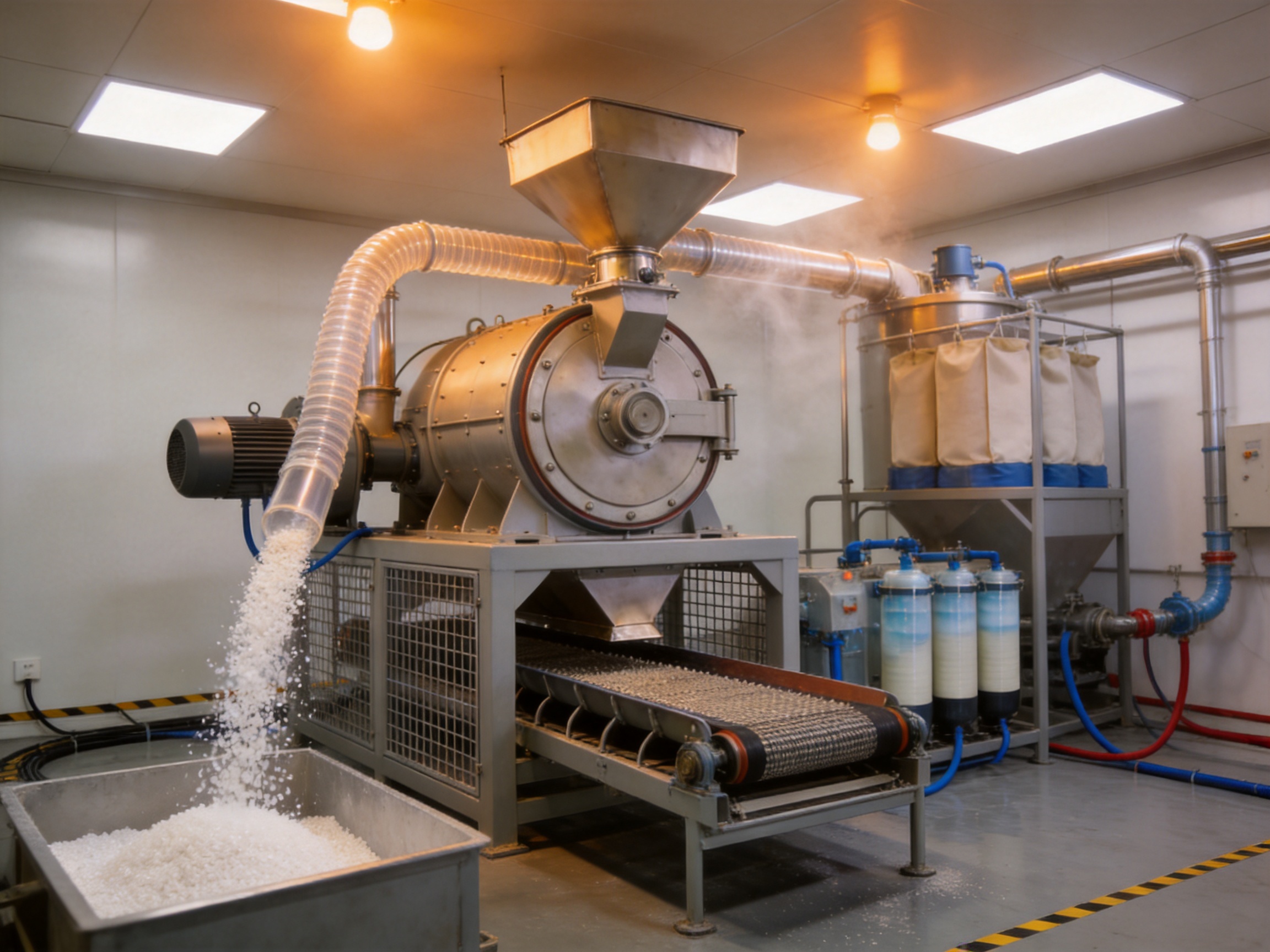
This configuration shows that the machine is not a simple standalone grinder. It is a coordinated powder-production system. The main pulverizing chamber provides size reduction; the vacuum feeder supports steady input; the blower and pipes transfer powder; the vibrating screen classifies output; the dust collector captures fine particles; and the cooling system protects material properties. Each section contributes to powder stability.
DC53 Grinding Discs: A Key Advantage Over Ordinary Pulverizers
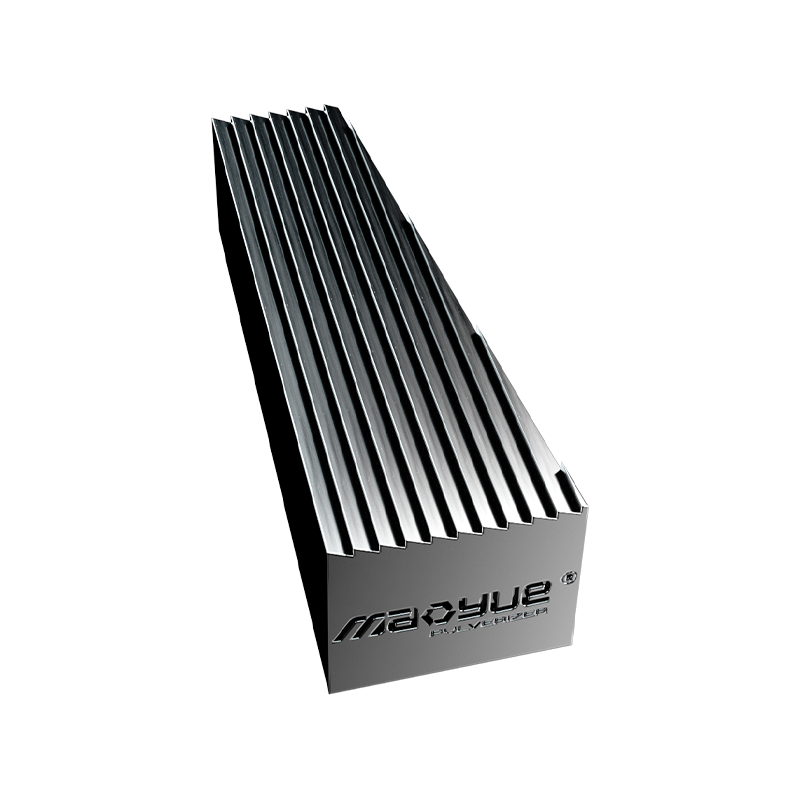
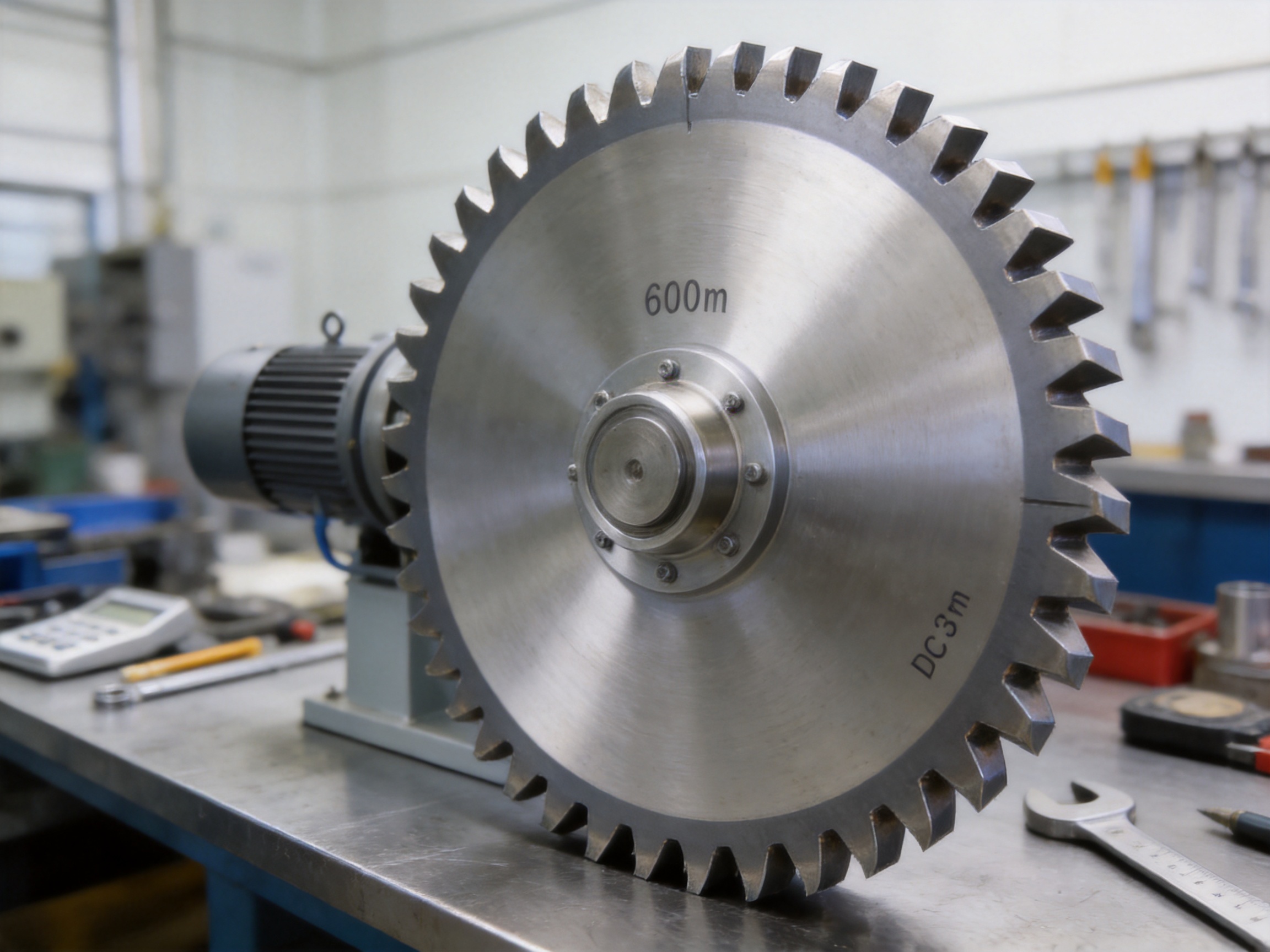
The grinding disc is the heart of a disc pulverizer. Its material quality and machining accuracy determine cutting efficiency, powder uniformity, maintenance frequency, vibration behavior, and energy consumption. The 600-type pulverizer uses DC53 high-grade cold-work mold steel for the grinding blades. This is a major advantage compared with ordinary pulverizers that use conventional materials or lower-grade tool steels.
DC53 is known for high hardness, toughness, fatigue resistance, and resistance to chipping. When properly heat-treated, it can reach a hardness range around HRC 62 to 64. In pulverizing PE and other plastic materials, hardness alone is not enough. A disc that is too brittle may crack or chip under repeated impact and friction. A disc that is too soft may lose sharpness quickly, causing poor cutting, increased heat, higher energy consumption, and broader particle-size distribution. DC53 provides a more balanced structure, combining wear resistance with toughness.
Compared with conventional D2 steel discs often found in lower-cost equipment, DC53 discs can offer significantly improved service life and anti-chipping performance. Longer disc life means fewer shutdowns, reduced replacement frequency, and more stable production planning. For a rotomolding powder plant, this is not only a maintenance benefit. It directly affects powder quality. A sharp and stable disc produces powder with more consistent particle shape and size. A dull disc generates more frictional heat and can create irregular material, fines, and clumps.
Another important benefit is refurbishability. When discs become dull after long operation, professional refurbishing can restore cutting edges at a fraction of the cost of new discs. This reduces long-term tooling expenses and supports more sustainable machine operation. For manufacturers that run the machine daily or continuously, tooling cost over several years can be a major part of total ownership cost. A disc system that lasts longer and can be refurbished professionally gives the user a competitive economic advantage.
Precision Tooth Grinding and Micron-Level Consistency
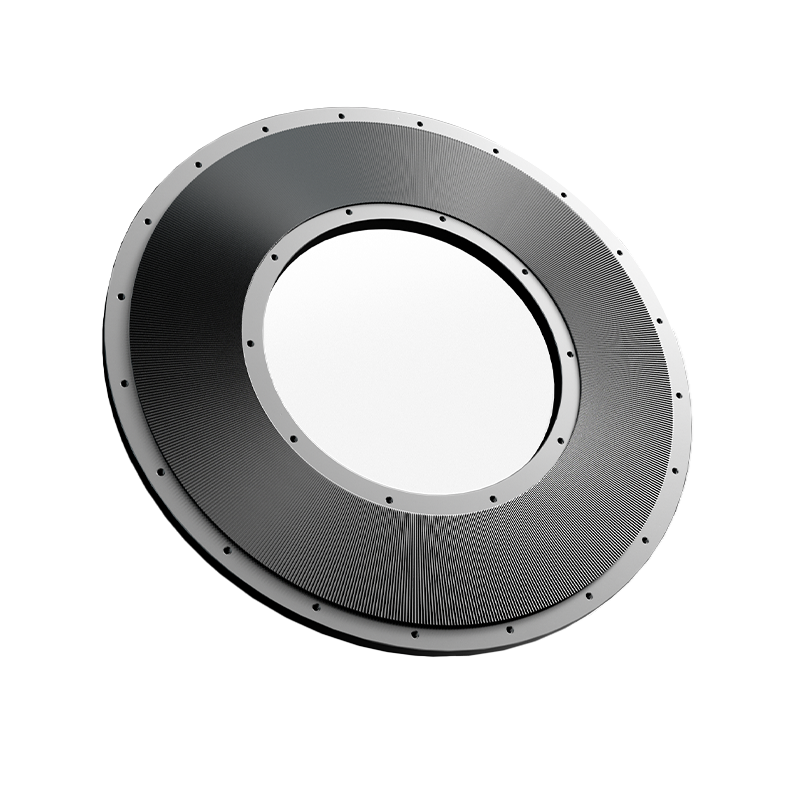
The quality of the grinding disc depends not only on material, but also on machining precision. The tooth profile, blade angle, edge sharpness, and balance between corresponding teeth all influence how plastic is cut. If tooth angles vary too much, the material may be torn rather than cut cleanly. This can increase dust, reduce output uniformity, and create unstable grinding temperature. In severe cases, inconsistent disc geometry can cause vibration, noise, and premature wear.
Changzhou Mao Yue Intelligent Equipment Co., Ltd. has invested in high-precision professional CNC tool-grinding equipment imported from Taiwan and manufactured to demanding technical standards. These machines are used for tooth-by-tooth precision grinding of the pulverizer discs. The goal is to achieve excellent blade-angle consistency and sharp cutting edges across the entire disc surface.
This manufacturing capability gives the 600-type pulverizer a clear advantage over competitors that rely on rough machining, manual correction, or less accurate grinding processes. In a pulverizer, small dimensional errors can become large operational differences because the disc rotates at high speed and works continuously under load. A precisely ground disc helps maintain stable material flow through the grinding zone, reduces unnecessary friction, and improves particle-size distribution.
For rotomolding powder, this precision is especially valuable. Uniform powder melts more evenly in the mold, flows better into corners and details, and reduces the chance of weak spots. It helps eliminate common defects such as rough surfaces, uneven wall thickness, insufficient strength, and incomplete coverage. For producers of water tanks, pallets, bins, road barriers, kayaks, toys, agricultural containers, and industrial shells, reducing these defects can significantly improve customer satisfaction and lower reject rates.
Dynamic Balancing for Low Vibration and Stable Operation
A pulverizer disc is a high-speed rotating component. Even small imbalance can create vibration, noise, bearing stress, power loss, and unstable grinding. Over time, vibration can loosen fasteners, damage structural parts, reduce bearing life, and affect powder consistency. Many lower-end pulverizers may appear acceptable when new, but after extended use, vibration becomes a major maintenance problem.
The 600-type pulverizer addresses this issue through rigorous dynamic balancing. Each disc is balanced using high-precision equipment imported from Germany. This level of balancing helps the machine run smoothly and reduces vibration during operation. Smooth operation is not merely an aesthetic advantage. It protects the mechanical system, improves operator comfort, supports continuous production, and helps preserve the accuracy of the grinding process.
Stable dynamic balance also contributes to lower noise. The machine is designed for industrial environments where long shifts are common, so controlling noise improves workplace conditions and supports compliance with occupational expectations. A pulverizer that runs with less vibration and lower noise is easier to manage, easier to monitor, and less likely to cause fatigue for nearby workers.
For customers comparing machines, dynamic balance is one of the most important indicators of manufacturing seriousness. A low-cost pulverizer may use adequate motors and visible steel structures, but if its rotating components are not properly balanced, long-term performance will suffer. By emphasizing balancing quality, the 600-type machine provides reliability that becomes more valuable month after month.
Temperature Control: Preventing Overheating, Sticking, and Powder Degradation
PE pulverizing generates heat through friction, shearing, and air movement. If the grinding chamber becomes too hot, PE can soften, smear, stick to the disc, agglomerate, or form powder with poor flowability. Excessive heat can also create material degradation, odor, color change, or reduced mechanical properties in the final product. Temperature control is therefore one of the most important factors in producing high-quality rotomolding powder.
The 600-type pulverizer is equipped with a water-cooling structure that helps remove heat from the grinding area. In advanced configurations, forced air cooling and multi-point temperature monitoring can be integrated to further stabilize the process. The target is to keep the grinding chamber within a controlled temperature window suitable for PE powder production, often in the range that prevents softening and sticking while maintaining efficient pulverizing.
This cooling design gives the machine a strong advantage over ordinary equipment that relies only on natural air cooling or basic airflow. Without effective cooling, operators may have to reduce feed rate, stop frequently, or accept inconsistent powder. Such compromises reduce output and raise labor cost. With proper cooling, the 600-type pulverizer can maintain longer production cycles and more consistent powder quality.
Temperature stability also supports formula flexibility. Many rotomolding manufacturers use colored materials, UV-stabilized grades, modified PE, recycled PE, or masterbatch blends. These materials may respond differently to heat. A pulverizer with good cooling control gives operators more room to process different materials without major quality fluctuation.
Vacuum Feeding for Steady, Cleaner Material Input
Feeding stability has a direct influence on pulverizing quality. If too much material enters the grinding chamber suddenly, the machine can become overloaded, temperature may rise, and powder size can become inconsistent. If feed rate is too low or irregular, production capacity drops and powder output fluctuates. Manual feeding also increases labor intensity and may create dust or safety concerns.
The 600-type pulverizer uses vacuum feeding as the reference feeding method. Vacuum feeding supports a more enclosed and automated material-transfer process. It reduces manual handling, improves cleanliness, and helps create stable input to the pulverizer. For medium-to-large plants, this is especially important because workers may need to handle large volumes of raw material across multiple shifts.
Vacuum feeding also helps maintain a cleaner workshop. PE granules, regrind, or prepared feedstock can be transferred more efficiently from storage or upstream equipment into the pulverizing system. This reduces spillage and improves overall production organization. Compared with basic manual feeding, vacuum feeding makes the line look and operate more like a professional powder-production system.
Screening and Classification for Controlled Powder Output
After pulverizing, powder must be classified. The target powder range should be separated from oversized particles and excessive impurities. The 600-type machine uses a swing vibrating screen with a reference diameter of 1200 mm and a 1.1 kW screen motor. This screening section helps ensure that only qualified material enters the final powder stream, while oversized particles can be returned or reprocessed depending on the line setup.
Screening is critical for rotomolding because the process depends on predictable powder melting behavior. If large particles remain in the powder, they may take longer to melt and can produce surface defects or weak areas. If too many fines are present, powder may create dust, reduce flowability, or behave differently during heating. A well-designed screening system helps maintain the correct balance.
Compared with pulverizers that provide grinding only and leave classification to improvised downstream methods, an integrated screening system improves reliability. It also makes quality control easier because operators can sample and evaluate powder after classification. When combined with sharp DC53 discs and stable cooling, screening supports the final objective: powder with narrow distribution and high uniformity.
Stainless Steel Conveying and Dust Collection
Powder handling after grinding is another important part of the system. The 600-type pulverizer uses all-stainless-steel conveying pipes in the reference configuration. Stainless steel offers several benefits: it is durable, clean, corrosion-resistant, and less likely to contaminate powder compared with low-grade materials. For plastic powder production, especially when color changes or high-quality applications are involved, clean conveying is a significant advantage.
The reference pipe diameter is 159 mm, which supports appropriate airflow conveying for the system. The blower motor, with a reference power of 7.5 kW, provides airflow for moving powder through the line. Proper airflow design helps transfer powder efficiently while reducing material accumulation inside pipes. Poor conveying design can cause clogging, uneven discharge, dust leakage, and frequent cleaning interruptions.
Dust collection is also essential. Fine plastic powder can create housekeeping problems and, under certain conditions, safety concerns. It can affect worker health, settle on equipment, and increase cleaning cost. A high-efficiency dust-collection system helps capture fine particles and maintain a cleaner workshop. The 600-type pulverizer is designed with enclosed conveying and dust-collection logic, supporting cleaner production and better environmental performance.
For many buyers, dust control is becoming as important as output. Factories are expected to protect workers, meet environmental standards, and maintain professional production conditions. A pulverizer with strong dust-control capability can help customers improve workshop safety and pass internal or external audits more easily.
Competitive Advantages Compared with Ordinary Pulverizers
When comparing pulverizers, buyers often look first at price and motor power. However, the true value of a pulverizer is determined by total cost of ownership, powder quality, uptime, energy efficiency, tooling life, and service support. The 600-type PE rotomolding powder pulverizer provides several competitive advantages that become clear in daily operation.
Advantage One: Better Powder Uniformity
The combination of DC53 grinding discs, precision tooth grinding, controlled cooling, and screening helps produce more uniform powder. Competitors using less precise discs may produce broader particle-size distribution, more dust, or inconsistent powder shape. For rotomolding, this difference directly affects final product quality.
Advantage Two: Longer Disc Service Life
DC53 material and professional machining can extend disc life compared with ordinary steels. Longer service life means fewer replacements, fewer shutdowns, and lower spare-part cost. Professional refurbishing further reduces long-term tooling expense.
Advantage Three: Lower Vibration
German dynamic balancing equipment supports stable high-speed operation. Lower vibration protects bearings, improves safety, reduces noise, and supports continuous production. Many lower-cost pulverizers do not maintain the same balancing standard.
Advantage Four: Stronger Temperature Control
The cooling system helps prevent PE sticking, clumping, and heat degradation. Competitors with weak cooling may require slower feed rates or frequent shutdowns, especially in warm environments or with heat-sensitive materials.
Advantage Five: Cleaner Production
Vacuum feeding, enclosed airflow conveying, stainless steel pipes, and dust collection reduce powder leakage and workshop contamination. This helps protect workers and keeps the factory more organized.
Advantage Six: Better Manufacturing Foundation
Changzhou Mao Yue Intelligent Equipment Co., Ltd. is a source manufacturer with long experience in plastic crushing and pulverizing equipment. The company operates multiple processing workshops and uses advanced machining, balancing, and welding systems. This manufacturing foundation gives customers confidence that machine quality is controlled from component production to final assembly.
Manufacturing Strength Behind the Machine
A pulverizer’s performance begins long before it reaches the customer’s factory. It begins with design, material selection, machining accuracy, welding quality, assembly control, balancing, testing, and after-sales support. Changzhou Mao Yue Intelligent Equipment Co., Ltd. has developed its capabilities over approximately 30 years in plastic crushing and pulverizing equipment. This experience is reflected in the design and production of the 600-type machine.
The company operates six processing workshops, each with an average area of about 1,400 square meters. This scale supports stable production, component machining, assembly, customization, and quality inspection. Instead of relying only on outsourced parts, the company has built strong internal manufacturing capability. This is important because pulverizer quality depends heavily on precise mechanical components.
The factory is equipped with Taiwan-imported high-precision grinding machines manufactured to demanding standards, German dynamic balancing equipment, and Japanese welding systems. These resources allow the company to produce accurate, stable, and durable machine components. For a high-speed pulverizer, such equipment is not optional; it is essential for long-term reliability.
The company also emphasizes learning from advanced machine technologies, including technical experience from Germany and other industrial markets. This approach supports continuous improvement in structure, safety, performance, and user experience. In a competitive market where many pulverizers may look similar from the outside, manufacturing depth is what separates professional equipment from ordinary machines.
Certifications such as CE mechanical certification and ISO 9001 quality management system certification further support confidence in manufacturing quality and safety. CE certification reflects attention to mechanical safety requirements, while ISO 9001 indicates a structured quality-management process. For international customers, these certifications can simplify procurement evaluation and support compliance requirements.
Application Scenarios
The 600-type PE rotomolding powder pulverizer is designed primarily for PE rotomolding powder production, but its application range is broader. It can serve manufacturers that need stable plastic powder for rotational molding, modified plastic processing, recycling, and powder-based industrial materials.
Medium-to-Large Rotomolding Product Manufacturing
Companies producing water tanks, pallets, trash bins, playground equipment, road barriers, agricultural tanks, and industrial containers often need continuous powder supply. Buying powder from outside suppliers can be convenient, but it may increase cost and reduce control over formula, color, and delivery schedule. An in-house pulverizer allows manufacturers to process suitable PE material into powder according to production needs.
Commercial PE Rotomolding Powder Supply
Some companies specialize in supplying rotomolding powder to multiple customers. For them, powder quality is their product. Uniformity, flowability, and repeatability are critical. The 600-type pulverizer supports stable production and helps suppliers produce powder that meets customer expectations.
Recycling and Re-Pulverizing of Waste PE Products
Rotomolding factories often generate scrap, defective products, runners, trimming waste, or returned material. After proper crushing and preparation, suitable PE waste can be re-pulverized and reused in appropriate applications. The 600-type pulverizer can support medium-scale recycling processes, helping reduce raw material cost and waste.
Modified Plastics and Functional Masterbatch
Modified PE materials and masterbatch-related powders may require controlled particle size for mixing, dispersion, or downstream processing. A stable pulverizer helps improve consistency in these applications.
SPC Flooring Core-Layer Powder and Hot-Melt Adhesive Powder
Beyond rotomolding, the pulverizer can be configured for other plastic powder applications, including SPC flooring core-layer powder and hot-melt adhesive powder. These applications also benefit from controlled grinding, cooling, screening, and dust collection.
Pilot-Scale Formula Amplification
For companies developing new rotomolding formulas, the 600-type machine can support scale-up from trial production to medium-output production. It offers enough capacity to test commercial behavior while remaining more manageable than a very large production system.
How Powder Uniformity Improves Rotomolded Product Quality
Powder uniformity affects every stage of rotational molding. During loading, powder with good flowability fills the mold more evenly. During heating, particles with consistent size absorb heat and melt at a similar rate. During rotation, uniform powder coats corners, edges, and surfaces more predictably. During cooling, a well-formed layer reduces internal stress and improves final strength.
If powder contains too many coarse particles, those particles may not melt completely during the normal heating cycle. They can leave surface roughness, weak points, or visible imperfections. If powder contains too many fines, it may create dust, bridge during feeding, or change melting behavior. If powder is overheated during pulverizing, it may clump and lose flowability. The 600-type pulverizer addresses these risks through cutting precision, cooling, and screening.
Better powder uniformity can reduce reject rates. In rotomolding, rejected products can be expensive because each product may be large, material-intensive, and time-consuming to mold. Reducing defects by even a small percentage can provide meaningful savings. For manufacturers producing large tanks or industrial products, one rejected part may represent significant material, energy, labor, and machine-time loss.
Uniform powder can also improve production planning. When powder behavior is predictable, operators can use more stable heating and cooling cycles. This reduces the need for repeated adjustment and helps maintain consistent output across shifts. The value is especially high when manufacturers produce standardized products in large quantities.
Energy Efficiency and Return on Investment
Energy cost is a major concern in powder production. A pulverizer uses electricity for the main motor, blower, screen, feeding, and auxiliary systems. However, energy efficiency should not be judged only by installed power. It should be evaluated by power consumption per ton of qualified powder, uptime, reject rate, and maintenance cost.
The 600-type pulverizer’s sharp DC53 discs and accurate tooth geometry help reduce unnecessary friction. When a disc cuts effectively, the machine can produce powder more efficiently. Dull or poorly made discs require more energy and generate more heat. This not only raises electricity cost but also reduces powder quality.
The machine’s stable operation and cooling system also support energy efficiency. If overheating forces frequent shutdowns or lower feed rates, the actual cost per ton increases. If powder quality is inconsistent and products are rejected downstream, the energy used to produce that powder is partly wasted. By improving powder consistency, the 600-type pulverizer helps lower hidden costs.
Return on investment can come from several sources: reduced powder purchasing cost, increased internal production capacity, lower tooling replacement cost, fewer defective rotomolded products, reduced labor intensity, cleaner workshop operation, and improved ability to process recycled material. Depending on production scale and local cost conditions, many users may see a relatively short payback period when the machine is properly matched to their production needs.
Maintenance and Long-Term Reliability
A pulverizer used in industrial production must be easy to maintain. Key maintenance areas include disc inspection, blade refurbishing, bearing condition, belt tension, screen cleaning, dust collector maintenance, pipe inspection, cooling-water circulation, and electrical control checks. The 600-type machine is designed with long-term operation in mind, using durable materials and precision-manufactured components.
Disc maintenance is especially important. Operators should monitor powder quality, output rate, current load, vibration, and temperature. A gradual decline in output or an increase in fines may indicate disc wear. Because the machine supports professional disc refurbishing, users can restore cutting performance economically instead of replacing discs immediately.
Screen maintenance also affects powder quality. If the screen becomes blocked, output may drop and classification accuracy may suffer. Regular cleaning keeps the screening section efficient. Dust collector maintenance is equally important because clogged filter bags can reduce airflow, increase dust leakage, and affect conveying performance.
Cooling-water management should not be neglected. Stable water flow helps maintain chamber temperature. Operators should check inlet and outlet conditions, avoid scaling or blockage, and ensure the cooling system remains effective. Proper maintenance protects both the machine and the powder.
Customization and Production-Line Integration
Different customers have different production conditions. Some need a single pulverizer for in-house powder preparation. Others require a complete crushing and pulverizing line, including crusher, storage, feeding, pulverizing, screening, conveying, dust collection, and packing. The 600-type machine can be integrated into broader production lines according to the customer’s material, capacity, mesh target, workshop layout, and automation requirements.
Speed-control options include star-delta start, soft start, and inverter control. Inverter control may be useful for customers who need more flexible process adjustment, smoother startup, or better matching with different materials. Soft start can reduce electrical and mechanical impact during startup. The appropriate choice depends on budget, power supply, process requirements, and operating habits.
The machine can also be matched with upstream crushing equipment. PE scraps, rejected rotomolded products, or sheet-like materials generally need to be crushed into suitable feed size before pulverizing. Proper pre-crushing improves pulverizer efficiency and protects the grinding system. Downstream, powder can be collected, packed, stored, or blended depending on the customer’s workflow.
For international customers, customization may include voltage and frequency adaptation, safety guarding, control-interface preferences, dust-collection layout, cooling configuration, and spare-parts packages. A source manufacturer with strong engineering capability can provide more practical customization than a trading company or low-capability assembler.
Quality Control from Material to Finished Equipment
Quality control in pulverizer manufacturing must cover multiple stages. First, raw material selection matters. Structural steel, tool steel, bearings, motors, electrical components, and pipe materials must meet the machine’s load and safety requirements. Second, machining accuracy must be controlled. Grinding discs, shafts, housings, and rotating assemblies need precise dimensions. Third, welding quality must be stable because machine frames and chambers experience vibration and load. Fourth, dynamic balance and assembly accuracy must be verified. Finally, the machine should be tested before delivery.
Changzhou Mao Yue Intelligent Equipment Co., Ltd. uses advanced equipment and a quality-focused process to support these steps. The use of Japanese welding systems helps improve structural consistency. German balancing equipment supports rotating-part stability. High-precision grinding machines support disc accuracy. Together, these manufacturing processes create a machine that is not only powerful but also refined.
This is an important distinction in the market. Some competitors may reduce cost by simplifying machining, using lower-grade blade materials, skipping precision balancing, or relying on manual assembly correction. Such shortcuts may reduce purchase price, but they often create higher lifetime cost. A professional pulverizer should be evaluated by its ability to produce qualified powder continuously over many years.
Environmental and Workplace Benefits
Modern factories increasingly focus on environmental performance and worker health. Plastic powder production can create dust if not managed properly. Dust can spread across floors, motors, control cabinets, and finished products. It can also become an inhalation concern for workers. A cleaner pulverizing system is therefore both a production improvement and a workplace responsibility.
The 600-type pulverizer’s enclosed airflow conveying and dust-collection design reduce dust escape. The dust collector captures fine powder and helps maintain negative-pressure conveying. Stainless steel pipes improve cleanliness and reduce material retention. Vacuum feeding reduces manual dust exposure during loading. These features help create a more organized and professional production environment.
Noise and vibration control also support workplace quality. A machine that runs smoothly is less stressful for operators and easier to supervise. Stable operation also reduces the risk of unexpected mechanical failure, improving safety.
Why In-House Pulverizing Can Strengthen a Rotomolding Business
Many rotomolding manufacturers face a strategic question: should they buy ready-made powder or produce powder in-house? The answer depends on scale, material needs, labor, energy cost, and quality control requirements. For medium-to-large producers, in-house pulverizing can provide several major advantages.
First, it improves control over powder supply. Production does not need to stop because outside powder deliveries are delayed. Second, it allows formula flexibility. Manufacturers can adjust color, additives, recycled content, or material blends more quickly. Third, it can reduce cost when production volume is high enough. Fourth, it supports recycling of suitable internal waste. Fifth, it protects production know-how because material preparation can be managed internally.
The 600-type pulverizer is well suited for companies moving from purchasing powder to producing powder themselves. It offers industrial-level capacity without the complexity of the largest systems. With proper training and maintenance, it can become a stable part of the production chain.
Practical Buying Considerations
Before purchasing a pulverizer, customers should evaluate several factors. The first is material type. PE grades, melt index, additives, recycled content, and feed form all influence pulverizing behavior. The second is target mesh. Finer powder usually reduces capacity and increases heat load. The third is required hourly or daily output. The fourth is workshop space and power supply. The fifth is dust-control expectation. The sixth is maintenance skill and spare-parts planning.
Customers should also ask about disc material, disc manufacturing method, balancing process, cooling design, screening configuration, dust collector performance, and after-sales service. These details reveal whether a supplier truly understands powder production or only sells machines by motor size.
The 600-type PE rotomolding powder pulverizer answers these concerns with a strong technical package: DC53 discs, precision grinding, dynamic balancing, cooling, vacuum feeding, stainless steel conveying, screening, and dust collection. Backed by an experienced source manufacturer, it provides a reliable choice for serious powder producers.
Q&A Section
Q1: What is the main purpose of the 600-type PE rotomolding powder pulverizer?
A1: Its main purpose is to pulverize PE material into high-uniformity powder suitable for rotational molding and related plastic powder applications. It is especially useful for medium-to-large manufacturers that need stable output, controlled particle size, and reliable powder flowability.
Q2: Why is powder uniformity important in rotational molding?
A2: Uniform powder melts more evenly, flows better inside the mold, and forms more consistent wall thickness. It helps reduce defects such as rough surfaces, weak corners, pinholes, uneven thickness, and incomplete melting.
Q3: What makes DC53 grinding discs better than ordinary grinding discs?
A3: DC53 offers high hardness, toughness, fatigue resistance, and anti-chipping performance. Compared with conventional materials, it can provide longer service life, better edge retention, and more stable cutting performance.
Q4: How does dynamic balancing improve machine performance?
A4: Dynamic balancing reduces vibration during high-speed rotation. This protects bearings and structural parts, lowers noise, improves safety, and helps maintain consistent pulverizing quality during long-term operation.
Q5: Why does the pulverizer need water cooling?
A5: PE can soften, stick, or clump when grinding temperature becomes too high. Water cooling removes heat from the grinding area and helps maintain powder flowability, prevent material degradation, and support continuous production.
Q6: Can the machine be used for recycled PE material?
A6: Yes, suitable recycled PE material can be pulverized after proper sorting, cleaning, and pre-crushing. The final result depends on material quality, contamination level, feed size, and processing conditions.
Q7: What capacity can users expect?
A7: The reference capacity is 180 to 320 kg/h under certain material and mesh conditions. Actual capacity may vary according to PE grade, target fineness, feed condition, blade sharpness, cooling efficiency, and production-line configuration.
Q8: Is the machine suitable for a complete powder production line?
A8: Yes. It can be integrated with crushing, feeding, screening, conveying, dust collection, storage, and packing equipment to form a complete crushing and pulverizing line.
Q9: How does the machine reduce long-term operating cost?
A9: It reduces cost through longer disc life, professional disc refurbishing, stable powder quality, fewer shutdowns, lower reject rates, cleaner production, and improved efficiency per ton of qualified powder.
Q10: What company strengths support this product?
A10: Changzhou Mao Yue Intelligent Equipment Co., Ltd. has about 30 years of experience, multiple processing workshops, high-precision grinding machines, German dynamic balancing equipment, Japanese welding systems, CE certification, ISO 9001 certification, and long-term cooperation with thousands of customers.
Conclusion
The 600-type PE rotomolding powder pulverizer is a high-value solution for manufacturers that need reliable powder quality, practical capacity, and long-term operating stability. Its advantages are not limited to motor power or disc size. The true strength lies in the complete system: DC53 grinding discs, precision tooth grinding, dynamic balancing, temperature control, vacuum feeding, stainless steel conveying, vibrating screening, and dust collection.
For rotomolding producers, these features translate into better powder flowability, more uniform melting, fewer product defects, reduced maintenance cost, and stronger production control. For powder suppliers and modified-plastic processors, the machine offers the consistency and durability needed for commercial production. For companies seeking in-house powder preparation, it provides a balanced route between small low-output machines and very large high-investment systems.
Backed by the manufacturing experience and technical resources of Changzhou Mao Yue Intelligent Equipment Co., Ltd., the 600-type pulverizer represents a professional approach to plastic powder production. It is designed for factories that value not only immediate output, but also powder quality, equipment life, workshop cleanliness, and total return on investment.
References
1. Crawford, R. J., and Throne, J. L. Rotational Molding Technology. Plastics Design Library.
2. Strong, A. B. Plastics: Materials and Processing. Pearson Education.
3. Rosato, D. V., Rosato, M. G., and Rosato, D. V. Plastics Processing Data Handbook. Springer.
4. Harper, C. A. Handbook of Plastic Processes. Wiley.
5. Brydson, J. A. Plastics Materials. Butterworth-Heinemann.
6. ISO 9001 Quality Management Systems: Principles and Requirements.
7. European Machinery Safety Standards and CE Mechanical Safety Guidelines.
8. Industry practice notes on plastic pulverizing, disc grinding, dynamic balancing, and rotational molding powder preparation.