

 English
 русский
 Español
 عربى
عربى 中文简体
中文简体
 中文简体
中文简体
Content
- 1 1. The Role of Alloy Steel Blades and Tooth Plates in PVC Pulverizing
- 2 2. Product Structure and Design Features
- 3 3. Core Material Advantage: High-Wear-Resistant Alloy Steel
- 4 4. Heat Treatment: Carburizing, Quenching, and Tempering
- 5 5. Precision Tooth Geometry and Grinding Efficiency
- 6 6. Heat Dissipation and Anti-Adhesion Performance
- 7 7. Installation, Adjustment, and Maintenance Benefits
- 8 8. Application Fields in PVC Recycling and Processing
- 9 9. Competitive Advantages Over Standard Market Plates
- 10 10. Comparative Performance Table
- 11 11. Advanced Manufacturing Strengths Behind the Product
- 12 12. Integration with Complete Crushing and Pulverizing Lines
- 13 13. Quality Control and Consistency
- 14 14. Contribution to Green Manufacturing and Circular Economy
- 15 15. Practical Selection Considerations for Users
- 16 16. Operating Recommendations for Better Performance
- 17 17. Why Manufacturing Experience Matters
- 18 18. Q&A Section
- 18.1 Q1: What are PVC pulverizer alloy steel blades and knives used for?
- 18.2 Q2: What powder fineness can these tooth plates support?
- 18.3 Q3: Why is HRC 58–62 hardness important?
- 18.4 Q4: How do these plates differ from ordinary market plates?
- 18.5 Q5: Can they reduce production downtime?
- 18.6 Q6: Are they suitable for filled PVC materials?
- 18.7 Q7: Why is cooling important when grinding PVC?
- 18.8 Q8: How should users choose the right tooth plate?
- 18.9 Q9: What maintenance practices help extend blade life?
- 18.10 Q10: Why choose a source manufacturer for pulverizer blades?
- 19 19. Conclusion
- 20 References
- 21 Product: PVC Pulverizer alloy steel blades and knives
In modern PVC recycling, compounding, extrusion, and powder processing, the quality of the pulverizer tooth plate directly determines grinding efficiency, powder fineness, energy consumption, operating stability, and long-term maintenance cost. A PVC pulverizer may appear to be a complete machine, but the actual contact point between mechanical power and plastic material is the cutting and grinding surface. For this reason, alloy steel blades, knives, and tooth plates are not ordinary spare parts; they are core performance components that decide whether a production line can achieve stable 20–100 mesh powder, continuous industrial operation, and predictable powder quality.
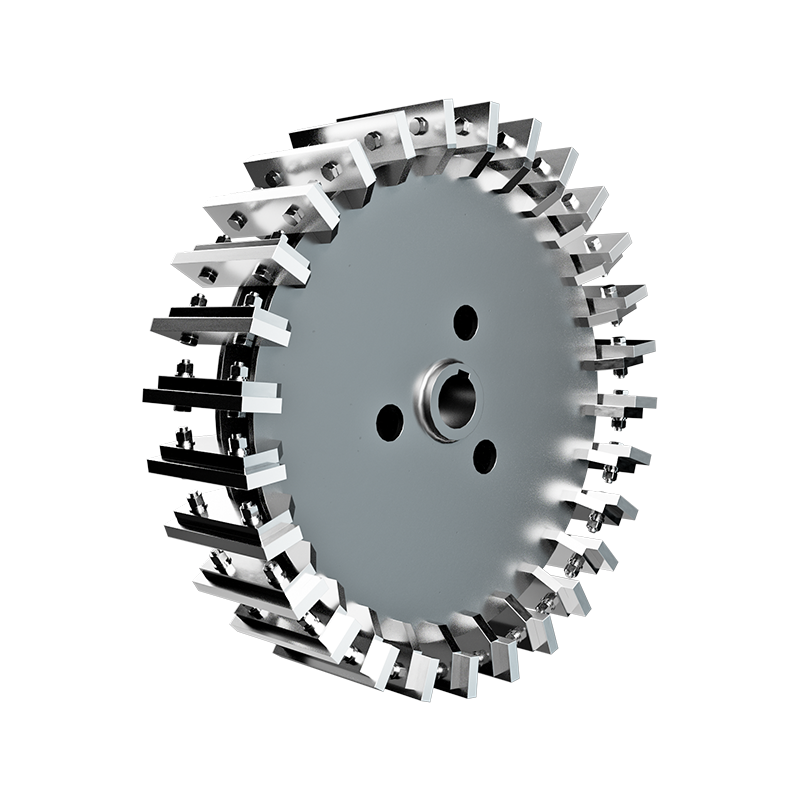
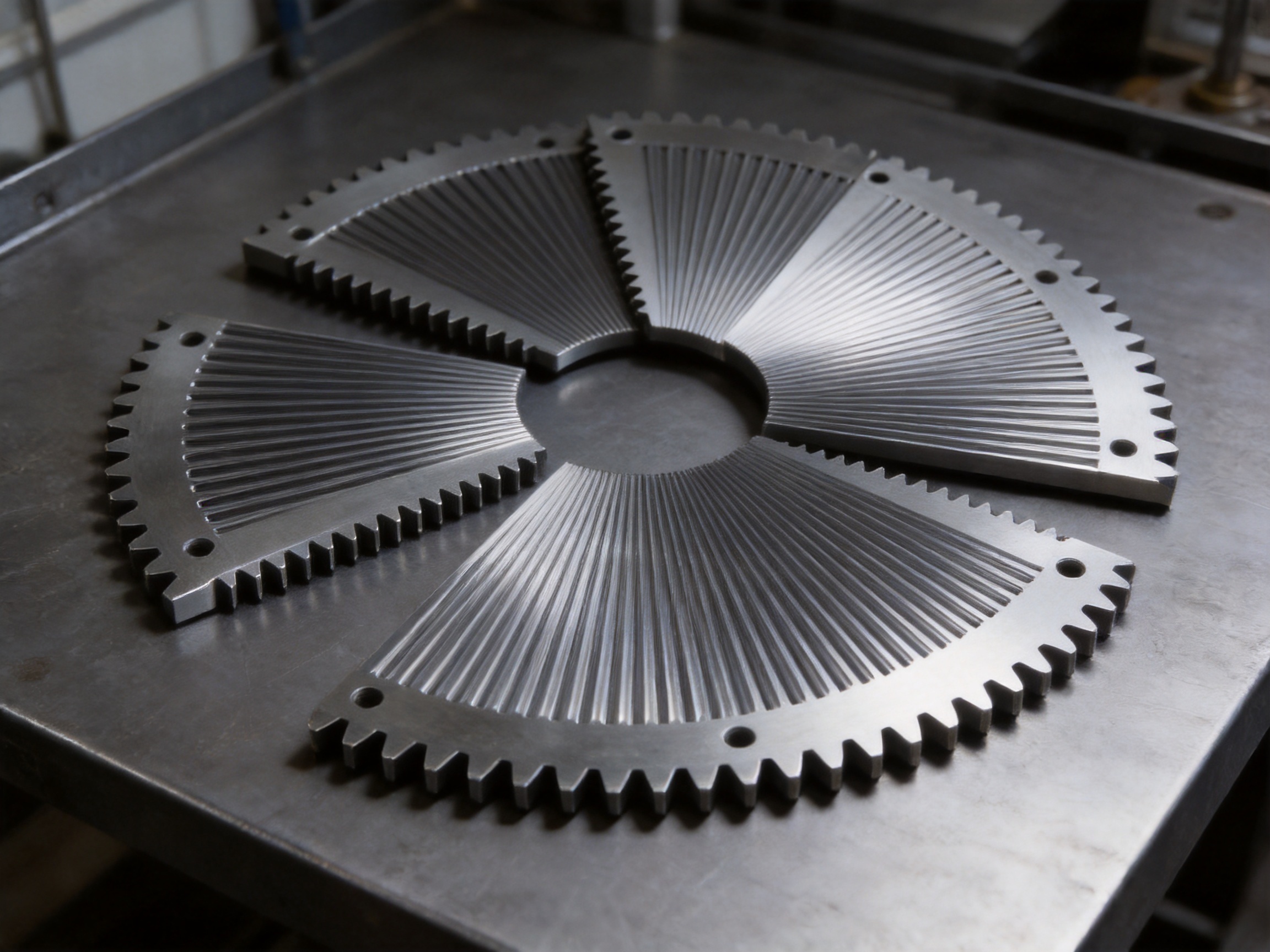
The PVC pulverizer alloy steel blades and knives discussed in this article are designed as high-density toothed grinding plates with fan-shaped, multi-fin geometry. Their surfaces are equipped with numerous precision parallel, radial, fine-serrated, or wave-form teeth. These teeth cooperate with the moving disc and the fixed disc inside a PVC pulverizer to create multi-point shearing, frictional grinding, impact, and controlled particle reduction. Built from high-wear-resistant alloy steel and processed through carburizing, quenching, tempering, precision machining, polishing, and strict quality control, these components are intended for demanding PVC pulverizing applications where output, fineness, and durability cannot be compromised.
Changzhou Mao Yue Intelligent Equipment Co., Ltd. manufactures these pulverizer blades and knives with a strong focus on material quality, heat treatment stability, machining accuracy, and field performance. With decades of practical experience in plastic crushing and pulverizing equipment, the company has developed a production approach that combines European-oriented quality standards, imported precision machining equipment, dynamic balancing technology, welding systems, and customized engineering. This article explains the product structure, performance advantages, manufacturing process, application value, and competitive benefits of these alloy steel grinding parts for PVC pulverizing systems.
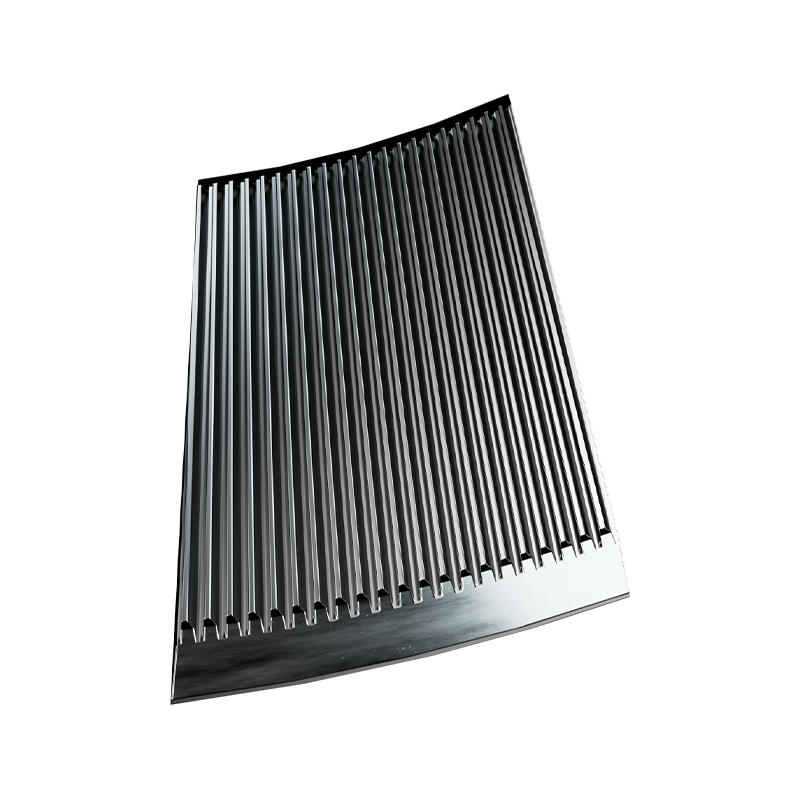
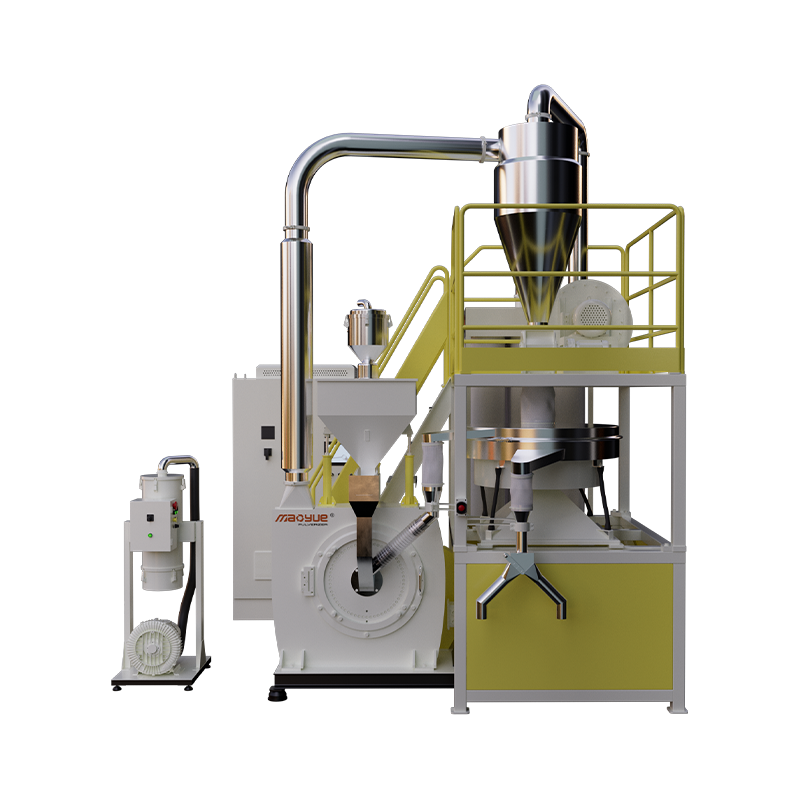
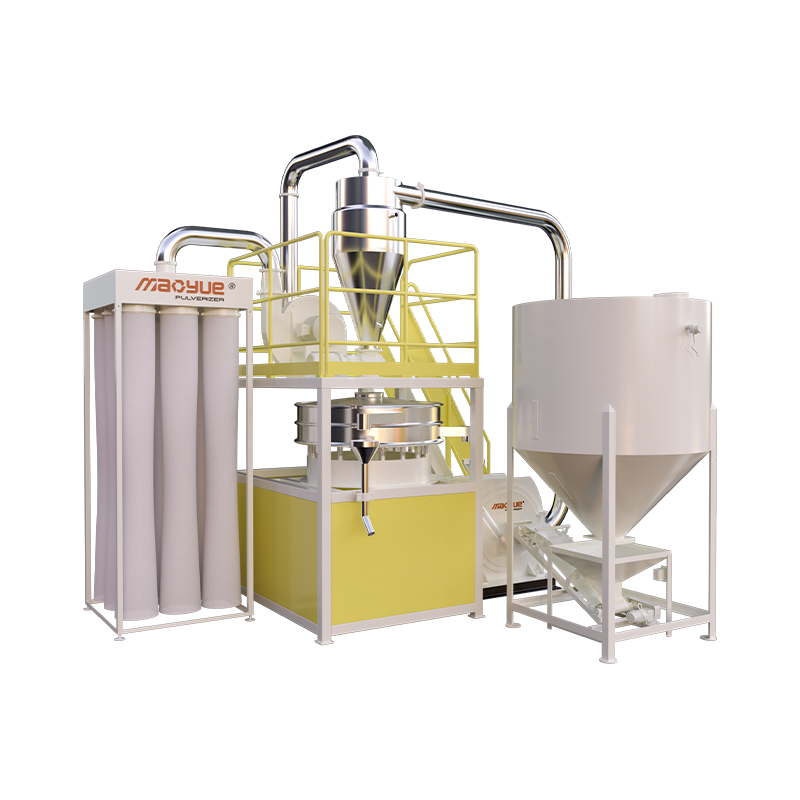
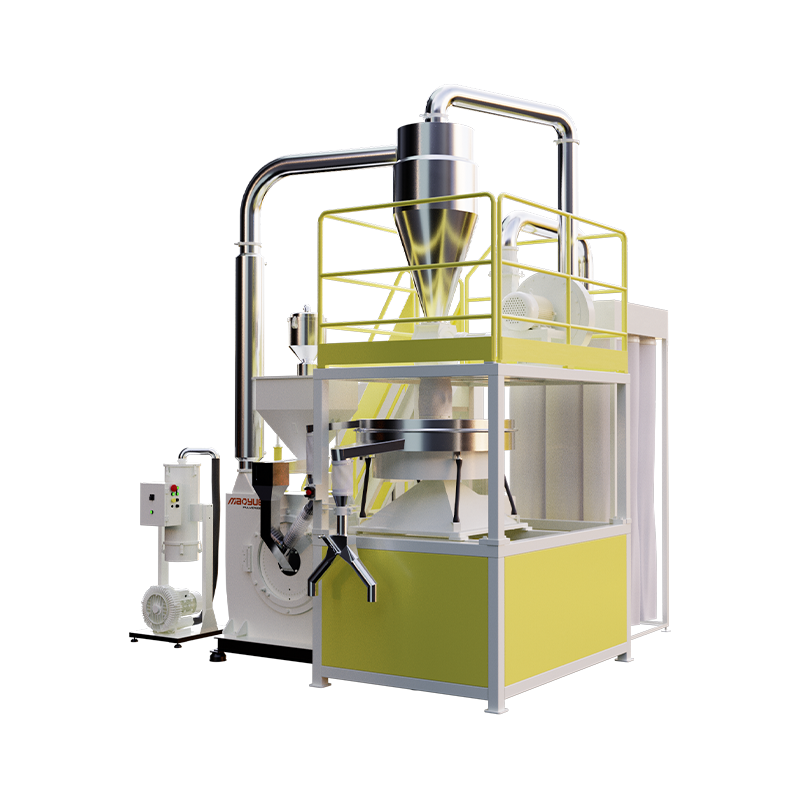
PVC Pulverizer alloy steel blades and knives
1. The Role of Alloy Steel Blades and Tooth Plates in PVC Pulverizing
PVC is widely used in pipes, profiles, flooring, cable sheathing, sheets, bottle caps, wall panels, leather materials, foamed products, and many other industrial goods. When these materials are recycled or prepared for secondary processing, they often need to be reduced into fine powder. Unlike simple crushing, pulverizing requires accurate control of particle size distribution. A crusher may reduce material into flakes or granules, but a pulverizer must transform rigid PVC particles into fine powder that can be reused in extrusion, injection molding, calendering, compounding, rotational processing, or modification.
The tooth plate is the critical working part of this process. It must cut, shear, rub, and refine PVC particles while resisting severe abrasive wear. PVC often contains additives such as calcium carbonate, stabilizers, pigments, plasticizers, impact modifiers, lubricants, and recycled contaminants. These substances can accelerate tool wear, increase frictional heat, and cause powder quality instability. If the blade material is soft or the tooth shape is poorly designed, grinding efficiency drops rapidly, the output becomes inconsistent, coarse particles increase, and the machine may require frequent shutdowns for replacement or adjustment.
High-wear alloy steel tooth plates solve this problem by combining high hardness with structural toughness. The working surface maintains sharp teeth during long operation, while the body of the plate resists impact and deformation. The precision tooth arrangement improves the probability that each PVC particle will be contacted by multiple cutting edges during each rotation. This increases grinding efficiency without relying only on higher motor power. In practical terms, a well-designed tooth plate can improve output, reduce energy per kilogram of powder, and extend service intervals.
For PVC in particular, temperature control is essential. Excessive frictional heat can soften the material, cause adhesion on the disc surface, yellow the powder, or even promote degradation. Therefore, the tooth plate must not only be hard and sharp; it must also support heat dissipation. The fan-shaped multi-fin structure increases the working surface and assists airflow within the grinding chamber. When paired with air-cooling and water-cooling systems, the design helps maintain a stable grinding temperature during continuous production.
2. Product Structure and Design Features
The PVC pulverizer alloy steel blades and knives are designed as fan-shaped grinding tooth plates. Their surfaces are arranged with dozens to hundreds of dense precision teeth. Depending on the equipment model and powder requirements, these teeth may be parallel, radial, serrated, wavy, or arranged in optimized angular patterns. The objective is to create a controlled grinding zone where PVC particles are repeatedly cut and rubbed into fine powder.
The fan-shaped plate geometry is important because disc pulverizers typically use circular rotating and fixed plates. Fan-shaped segments allow convenient installation, replacement, adjustment, and maintenance. Instead of replacing an entire grinding disc, the operator can replace worn plate segments. This lowers maintenance cost and reduces downtime. Precision mounting holes at the bottom or side of the plate ensure stable assembly with the grinding disc housing. Accurate mounting prevents vibration, eccentric wear, and uneven grinding gaps.
The surface of the tooth plate is mirror-polished to a deep gray metallic sheen. This is not only for appearance. A smooth surface helps reduce material adhesion, improves powder discharge, and makes cleaning easier. Rounded edges improve handling safety during installation and maintenance. The working tooth edges remain sharp and functional, while non-working corners are treated to reduce the risk of cuts and impact damage.
The high-density tooth profile provides several mechanical benefits. First, it increases the number of contact points between the plate and the material. Second, it distributes load across the surface rather than concentrating stress on a few large teeth. Third, it produces more uniform particle reduction because particles pass through multiple progressive grinding zones. Finally, it helps maintain powder quality even after long service, because gradual wear does not immediately destroy the entire grinding function.
Compared with standard market tooth plates that may use lower-grade steel, less precise heat treatment, or simpler tooth geometry, this design is built for continuous industrial pulverizing. The target hardness range of HRC 58–62 gives the surface strong resistance against abrasive PVC compounds. At the same time, repeated carburizing, quenching, and tempering improve the balance between hardness and toughness, reducing the risk of chipping or cracking under load.
3. Core Material Advantage: High-Wear-Resistant Alloy Steel
Material selection is the foundation of blade performance. In PVC pulverizing, ordinary carbon steel or inadequately treated alloy steel may wear quickly. As the tooth edges become blunt, the machine consumes more energy, produces more coarse particles, and generates more heat. Operators may try to compensate by narrowing the grinding gap or increasing feed control, but this can create additional stress and raise the risk of overheating. Therefore, the alloy steel substrate must be engineered for hardness, wear resistance, and dimensional stability.
The tooth plates use premium high-wear-resistant alloy steel. This material is selected to withstand abrasive friction from PVC and filled plastic materials. The surface is treated to achieve stable hardness of approximately HRC 58–62, a range suitable for retaining sharp cutting edges while maintaining sufficient toughness for industrial use. This hardness is especially valuable when processing rigid PVC pipes, profiles, sheets, window and door offcuts, flooring, and cable materials that may include mineral fillers.
The alloy steel substrate provides a major advantage over conventional plates. Many ordinary replacement plates may initially appear sharp, but their hardness uniformity is poor. Some areas wear quickly while others remain uneven, leading to unstable powder size and vibration. In contrast, a properly selected and treated alloy steel plate maintains a more consistent working surface. It can continue producing fine, uniform powder after extended operating hours.
Wear resistance also affects total cost of ownership. A cheaper blade that needs frequent replacement may seem economical at the time of purchase, but it increases labor cost, downtime, production loss, and inventory management complexity. A longer-life alloy steel plate can reduce replacement frequency and keep the pulverizer running for longer periods. For high-output factories, avoiding unplanned downtime is often more valuable than saving a small amount on spare parts.
In addition, the material must tolerate impact. PVC feedstock is not always perfectly uniform. Recycled materials may vary in size, hardness, thickness, and additive content. A tooth plate may encounter sudden impact loads during feeding. The use of high-quality alloy steel, combined with proper heat treatment, helps prevent tooth breakage and plate deformation. This improves safety and keeps the grinding gap stable.
4. Heat Treatment: Carburizing, Quenching, and Tempering
The heat treatment process determines whether the selected alloy steel can deliver its full potential. The tooth plates undergo multiple cycles of carburizing, quenching, and tempering, followed by specialized treatment according to the required performance. This process creates a hard, wear-resistant surface while preserving the structural integrity of the base material.
Carburizing enriches the surface layer with carbon, enabling higher surface hardness after quenching. In a pulverizer tooth plate, the working surface experiences the most severe friction, so a hardened surface layer is essential. Quenching then rapidly cools the heated component to transform the microstructure and increase hardness. However, quenching alone may create internal stress and brittleness. Tempering is used afterward to reduce stress, improve toughness, and stabilize the part.
The value of repeated and controlled heat treatment lies in consistency. A tooth plate with uneven hardness may suffer from local wear, cracking, or premature failure. A stable HRC 58–62 surface ensures that the tooth geometry continues to function over long production periods. This is one of the reasons the plates can achieve service life advantages compared with standard market components.
Heat treatment also contributes to edge retention. In PVC pulverizing, sharp teeth are not merely for cutting; they control the grinding mechanism. When edges remain sharp, the plate can produce fine powder with less frictional heat. When edges become dull, the process shifts from cutting and shearing to excessive rubbing, which increases temperature and reduces powder quality. Therefore, edge retention is directly connected to output, energy efficiency, powder whiteness, and downstream process stability.
Changzhou Mao Yue Intelligent Equipment Co., Ltd. emphasizes controlled manufacturing rather than simple parts supply. The company’s long-term experience in plastic pulverizers allows it to understand how heat treatment affects real grinding performance. The goal is not only to reach a hardness number but to ensure that the component performs under continuous operating conditions in recycling plants, PVC powder factories, and compounding facilities.
5. Precision Tooth Geometry and Grinding Efficiency
The tooth profile is the functional language of a grinding plate. Even with excellent steel and proper hardness, a poorly designed tooth arrangement cannot produce efficient powder. The PVC pulverizer alloy steel blades and knives use high-density tooth patterns that are engineered for multi-point efficient shearing and intense controlled friction. This combination is especially suitable for PVC, which requires fine grinding but is sensitive to overheating.
The dense tooth arrangement increases contact frequency. When PVC particles enter the grinding chamber, they are not simply crushed once; they are repeatedly exposed to cutting, scraping, shearing, and rubbing forces. Each pass reduces particle size further. The moving disc and fixed disc cooperate to create a narrow grinding gap. The precision teeth on both sides generate a high-speed interaction zone where particles are progressively refined.
Compared with traditional racks or simple tooth patterns, the optimized high-density design can improve output by more than 30% under comparable power consumption, depending on feed material, machine model, cooling conditions, and target mesh size. This improvement comes from better energy transfer. More of the motor’s energy is used for actual size reduction instead of wasted heat, vibration, and inefficient rubbing.
Powder uniformity is another important advantage. PVC powder used in extrusion, calendering, compounding, or molding must have consistent particle distribution. If coarse particles remain, they can cause surface defects, melting inconsistency, die blockage, voids, color spots, and mechanical property variation in finished products. The precision tooth plate helps stabilize powder fineness within the 20–100 mesh range. The finished powder can have uniform particle distribution, good flowability, reduced fiber-like residues, and fewer coarse particles.
The high-density tooth design also supports material purity. A stable grinding process reduces overheating, scorching, and degradation. This is important for recycled PVC, where maintaining color and material properties can determine whether the powder is suitable for high-value reuse or only low-grade applications. By keeping the grinding action sharp and controlled, the tooth plate helps protect the material from unnecessary thermal damage.
Another benefit is the ability to handle different PVC forms. Rigid pipe flakes, window profile scrap, sheet cuttings, flooring granules, injection molding waste, and bottle cap materials do not behave exactly the same during grinding. A robust tooth pattern with high contact density gives the pulverizer more processing flexibility. Operators can adjust the gap and feed rate according to the material, while the plate provides the cutting strength needed for stable reduction.
6. Heat Dissipation and Anti-Adhesion Performance
PVC grinding has a well-known challenge: friction heat. When PVC temperature rises too high inside the grinding chamber, the material can soften, smear, stick to the plate, or degrade. This leads to reduced output, powder yellowing, increased cleaning frequency, and unstable operation. Therefore, an effective tooth plate must help manage heat as much as it helps cut material.
The fan-shaped multi-fin structure provides a larger surface area that supports heat transfer. During rotation, the geometry helps guide airflow and improves the exchange of heat in the grinding zone. When integrated with a pulverizer equipped with dual air-cooling and water-cooling systems, this structure contributes to lower grinding chamber temperature. The result is more stable continuous operation, especially during 24-hour industrial production.
The polished surface also reduces adhesion. Rough surfaces can hold softened PVC particles, creating buildup that interferes with grinding. Once buildup begins, it may increase friction and temperature further, causing a cycle of worsening performance. A smoother tooth plate surface makes it more difficult for material to adhere and easier for powder to discharge. This supports cleaner operation and faster maintenance.
Competitor products sometimes focus only on hardness and ignore thermal behavior. However, a very hard plate with poor geometry may still cause excessive heat, especially if the teeth rub rather than shear. The advantage of this product lies in combining hardness, tooth shape, surface finish, and cooling compatibility. This integrated approach is better suited for PVC because PVC requires both mechanical reduction and thermal protection.
Stable temperature has downstream value. PVC powder that has not been scorched or degraded maintains better color, processing stability, and compatibility with additives. For manufacturers of PVC flooring, wall panels, cable compounds, leather, and foam products, powder quality affects surface smoothness, melt behavior, and product consistency. Therefore, better heat control at the pulverizing stage improves the reliability of the entire production chain.
7. Installation, Adjustment, and Maintenance Benefits
Industrial users need replacement parts that are not only durable but also practical to install and adjust. The PVC pulverizer alloy steel tooth plates are designed with precision mounting holes and stable fastening structures. This supports secure assembly with grinding disc housings and reduces the risk of misalignment. Accurate installation is essential because the grinding gap between moving and fixed discs directly affects powder fineness and machine safety.
The plate design supports micron-level fine adjustment with feeler gauges and gap adjustment mechanisms, depending on the pulverizer configuration. This allows operators to set the grinding clearance according to target mesh size, material type, and output requirement. A smaller gap can produce finer powder, while a slightly larger gap may increase throughput for less demanding applications. The ability to adjust accurately helps users balance fineness, output, energy consumption, and temperature.
Easy replacement reduces downtime. In a recycling plant or PVC powder production line, every hour of shutdown can represent lost production and delayed orders. Segment-style tooth plates allow maintenance personnel to replace worn components without unnecessary dismantling. Rounded edges improve safety during handling, while precise hole positions make alignment faster.
Longer service life further improves maintenance planning. When a standard plate wears unpredictably, operators may need to inspect frequently or keep extra spare parts on hand. A high-wear alloy plate with stable performance allows more predictable maintenance intervals. Production managers can schedule replacement during planned shutdowns rather than reacting to sudden powder quality decline.
From a cost perspective, the value is clear. Lower replacement frequency means reduced spare parts consumption. Lower downtime means higher production availability. Stable adjustment means fewer rejected batches. Cleaner operation means less labor for cleaning and inspection. Together, these factors create a cost advantage that goes far beyond the initial purchase price of the blade or tooth plate.
8. Application Fields in PVC Recycling and Processing
The primary application of these alloy steel blades and knives is PVC recycling and regeneration. Waste PVC pipes, profiles, window and door offcuts, vinyl flooring, cable sheathing, rigid sheets, bottle caps, and injection molding waste can be pulverized into fine powder for reuse. This supports closed-loop recycling, reduces raw material waste, and helps manufacturers meet environmental and cost-control goals.
In many recycling operations, the value of recovered PVC depends on powder quality. Coarse, uneven, contaminated, or thermally damaged powder may only be suitable for low-value products. Fine, uniform, clean powder can be reused in higher-value extrusion, injection molding, blow molding, calendering, or compounding. Therefore, the tooth plate directly influences the economic value of recycled material.
The plates are also suitable for PVC powder products and chemical modification. High-quality PVC micropowder can be used in flooring, wall panels, cable compounds, artificial leather, foam products, modified masterbatches, and other applications. Fine powder with good flowability and minimal agglomeration improves mixing with stabilizers, fillers, pigments, plasticizers, and functional additives. It also supports smoother downstream extrusion and calendering.
Hard plastics and PVC composite materials can also be processed when the material characteristics match the pulverizer configuration. PVC blended with calcium carbonate or other additives requires a tooth plate that can resist abrasive wear. The high-wear alloy steel design helps maintain grinding capability when processing filled compounds. This is especially important for manufacturers producing functional composite powders where dispersion and mechanical properties matter.
Laboratories and pilot production facilities may use these plates for sample testing and small-batch powder preparation. In such settings, repeatability is essential. Researchers and engineers need powder of consistent fineness to evaluate formulation behavior, melting characteristics, or additive performance. A precision tooth plate helps generate reliable test materials.
Another potential field is environmentally responsible processing of PVC components from electronic waste or mixed industrial waste streams. These applications are sensitive to particle size distribution, purity, and thermal degradation. A stable, wear-resistant grinding plate helps improve the feasibility of recovering PVC materials from complex waste streams, provided that proper sorting and pretreatment are in place.
9. Competitive Advantages Over Standard Market Plates
When comparing pulverizer tooth plates, the initial appearance may be similar. Many plates have teeth, mounting holes, and hardened surfaces. However, real performance differences appear after hundreds of operating hours. The PVC pulverizer alloy steel blades and knives described here offer several advantages over conventional market products, especially in durability, output, powder quality, thermal stability, and maintenance economy.
The first advantage is longer service life. Through optimized alloy steel selection and multiple heat treatment cycles, the plates can extend service life by approximately two to three times compared with ordinary plates under suitable operating conditions. This does not mean that every application will have the same result, because feed material, contamination, cooling, gap setting, and maintenance all affect wear. However, the design is clearly aimed at longer edge retention and reduced replacement frequency.
The second advantage is higher pulverizing efficiency. The precision high-density tooth design works with the moving disc to create multi-point shearing and friction. Instead of relying on brute force, it improves the interaction between material and grinding surface. This can increase output by more than 30% compared with traditional racks at similar power consumption in appropriate applications. Higher output means better productivity without necessarily increasing energy demand.
The third advantage is stable powder fineness. The plates are designed to support powder control in the 20–100 mesh range. Consistent powder helps downstream processes run smoothly and reduces the need for repeated screening or reprocessing. Uniform particle size is especially important when recycled PVC powder is blended with virgin resin or additives.
The fourth advantage is better thermal control. The multi-fin structure, polished surface, and compatibility with air-cooling and water-cooling systems help reduce overheating. This prevents plate deformation, material adhesion, powder yellowing, and degradation. For PVC, this is a major difference because heat sensitivity is one of the biggest limitations in fine grinding.
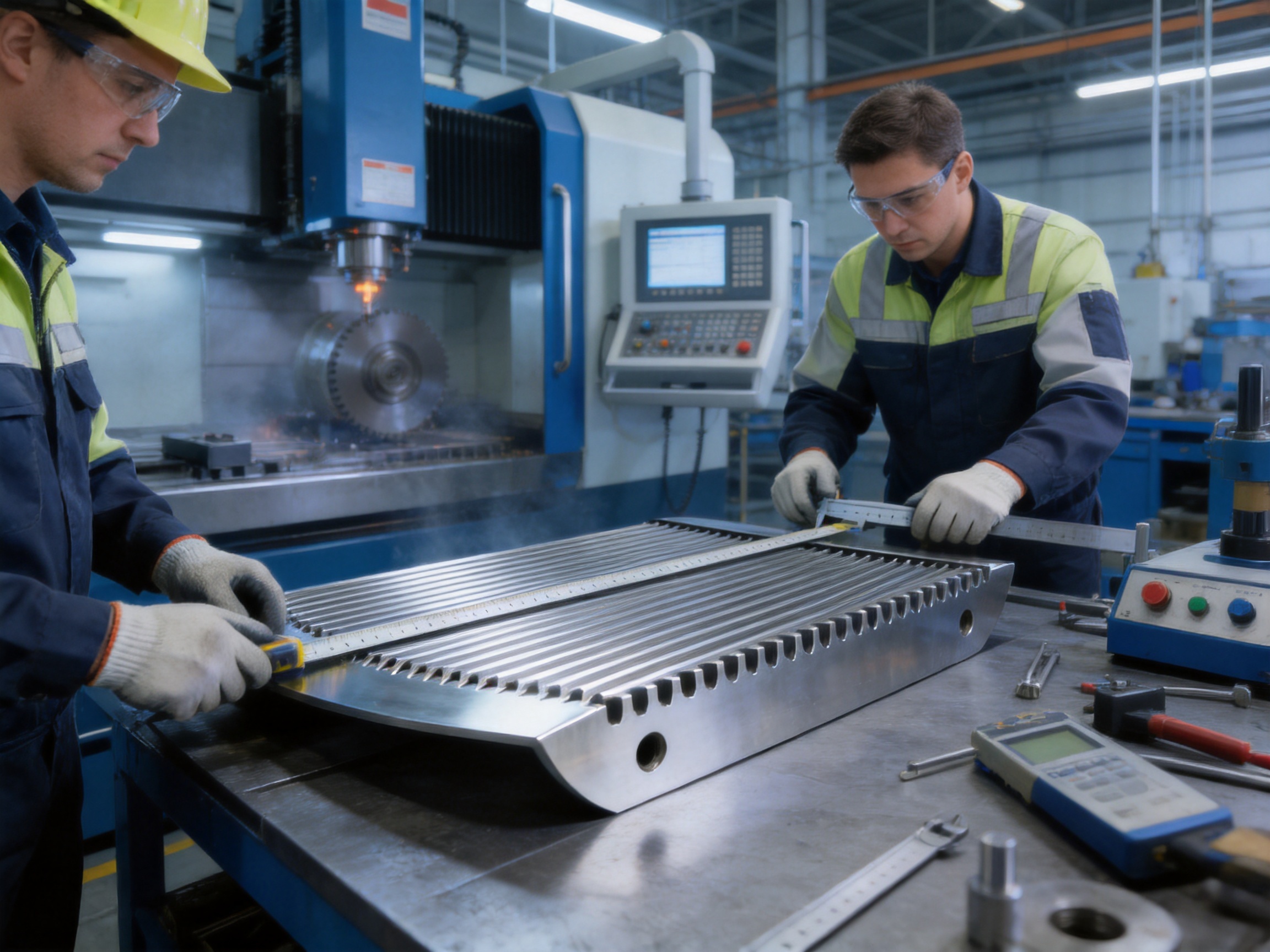
The fifth advantage is manufacturing consistency. Changzhou Mao Yue Intelligent Equipment Co., Ltd. operates multiple processing workshops and uses advanced equipment such as Taiwan-imported high-precision grinding machines built to German standards, German dynamic balancing equipment, and Japanese welding systems. These manufacturing resources help ensure accurate machining, stable components, and reliable machine performance. For customers, consistency means that replacement parts fit properly and perform predictably.
10. Comparative Performance Table
| Evaluation Item | High-Wear Alloy Steel Tooth Plates | Common Standard Market Plates | Customer Benefit |
|---|---|---|---|
| Material | Premium high-wear-resistant alloy steel | Ordinary alloy steel or inconsistent material grade | Stronger resistance to abrasive PVC compounds |
| Hardness | Stable HRC 58–62 after controlled heat treatment | Variable hardness and uneven surface durability | Longer edge retention and predictable wear |
| Heat Treatment | Carburizing, quenching, tempering, and specialized treatment | Basic hardening or less controlled process | Better balance of hardness, toughness, and stability |
| Tooth Design | High-density parallel, radial, serrated, or wave-form teeth | Simpler tooth layout with lower contact efficiency | Higher output and more uniform powder |
| Powder Fineness | Supports stable 20–100 mesh production | More likely to produce coarse particles after wear | Improved downstream processing quality |
| Heat Control | Fan-shaped multi-fin structure and polished surface | Limited heat dissipation design | Reduced adhesion, yellowing, and degradation |
| Service Life | Can reach 2–3 times longer life in suitable conditions | Shorter replacement cycle | Lower downtime and maintenance cost |
| Installation | Precision mounting holes and stable fastening design | Possible alignment and fit variation | Faster replacement and safer adjustment |
11. Advanced Manufacturing Strengths Behind the Product
The performance of a pulverizer blade is not created only during design; it is created through manufacturing discipline. Changzhou Mao Yue Intelligent Equipment Co., Ltd. is a source manufacturer with approximately 30 years of experience in plastic crushing and pulverizing equipment. The company has participated in the development of the plastic pulverizer market and continues to focus on components that meet European-oriented quality standards.
The factory operates six processing workshops, each averaging about 1,400 square meters. This manufacturing scale supports stable production, equipment specialization, and efficient order handling. For customers who require replacement blades, complete pulverizers, or crushing and pulverizing lines, factory capacity is important because it affects delivery time, customization ability, and after-sales support.
The company’s professional technical team regularly studies advanced machine technologies from countries such as Germany. This helps the manufacturer improve structural design, balancing methods, machining accuracy, and system reliability. In the pulverizer industry, long-term learning and process improvement are essential because different plastics behave differently under grinding conditions. PVC, PE, rotational molding materials, masterbatch, polymers, recycling materials, and powder coating materials all require different design considerations.
Precision machining is one of the company’s key strengths. The use of Taiwan-imported high-precision grinding machines built to German standards supports accurate surfaces, consistent dimensions, and stable tooth geometry. High-precision machining matters because even small errors in flatness, hole position, or tooth profile can cause vibration, uneven wear, or inconsistent powder size.
Dynamic balancing technology is another important manufacturing asset. Pulverizers operate at high speed, and rotating components must remain balanced. Imbalance can cause vibration, bearing stress, noise, energy loss, and premature failure. German dynamic balancing equipment helps ensure that rotating assemblies operate smoothly. Although the tooth plate itself may be a segment, its accuracy contributes to the balance and stability of the complete disc system.
Japanese welding systems and advanced fabrication equipment support reliable machine structures and component assemblies. While the tooth plate is mainly a machined and heat-treated wear part, the overall pulverizer system depends on strong frames, stable housings, accurate disc mounting, and durable auxiliary systems. Manufacturing strength across the entire machine improves the operating environment in which the blades work.
The company has obtained CE mechanical certification and ISO 9001 quality management system certification. These certifications indicate attention to product safety, manufacturing process control, and quality management. For international buyers, such certifications help reduce procurement risk and support compliance with equipment requirements in many markets.
12. Integration with Complete Crushing and Pulverizing Lines
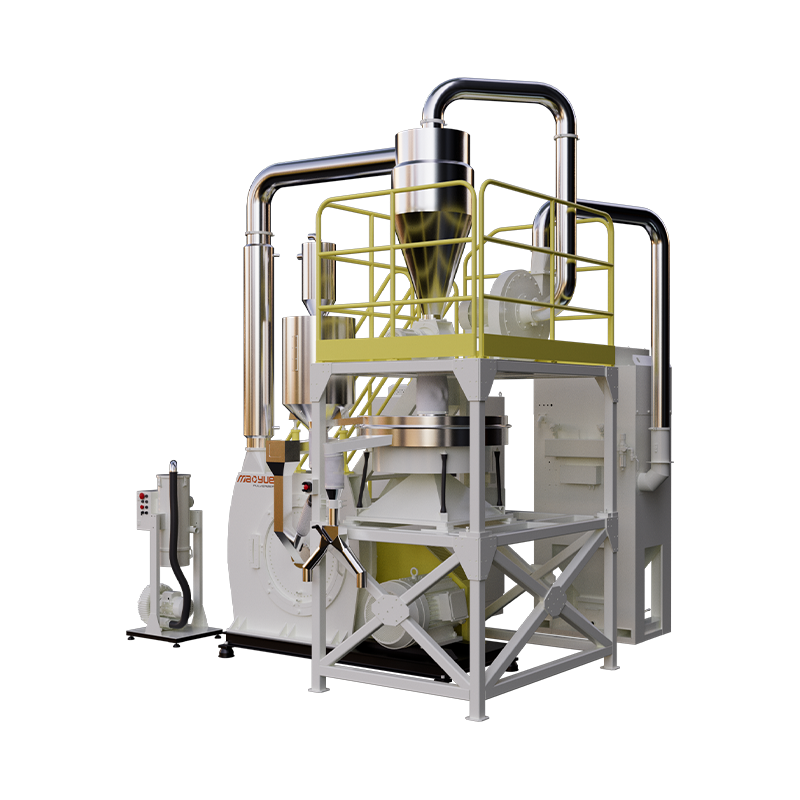
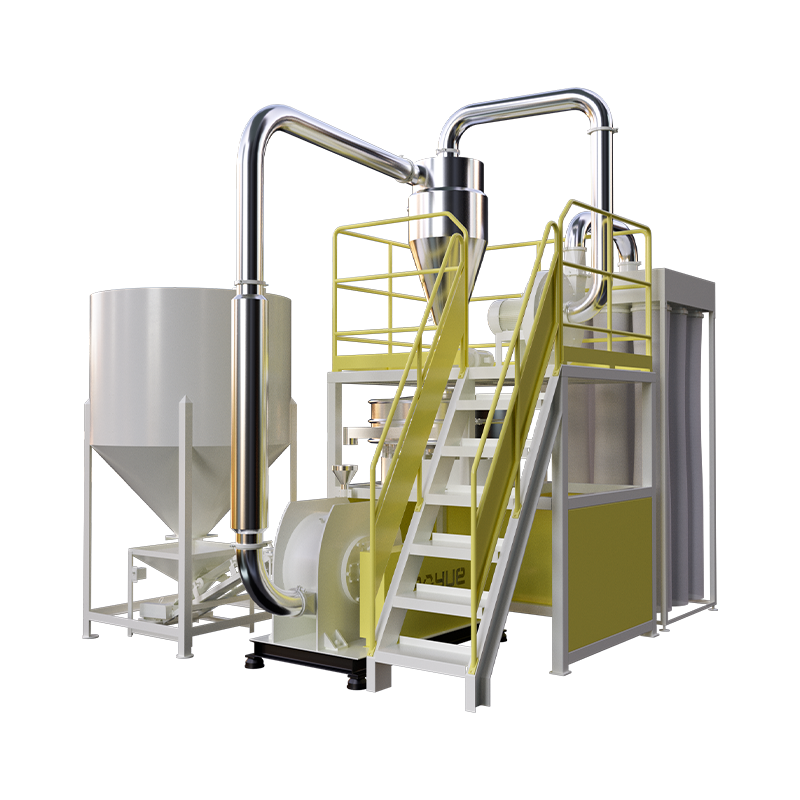
Although this article focuses on alloy steel tooth plates, their full value appears when they are integrated into a properly designed pulverizing system. PVC recycling often includes feeding, pre-crushing, conveying, metal detection, pulverizing, cooling, screening, dust collection, and packaging. If any stage is unstable, powder quality and production efficiency suffer. As a manufacturer of plastic pulverizers, pulverizer parts, and crushing and pulverizing lines, Changzhou Mao Yue Intelligent Equipment Co., Ltd. can align blade design with machine structure and process requirements.
For example, if the feed material is large PVC pipe scrap, the line may require crushing before pulverizing. If the material contains metal contamination, protection systems may be needed to prevent damage to the blades. If the required powder is very fine, screening and recirculation may be necessary. If production is continuous, cooling and dust collection must be properly configured. A tooth plate can perform well only when these supporting systems are suitable.
Customization is valuable because PVC processing conditions vary widely. A factory grinding clean production scrap may need maximum throughput and stable mesh size. A recycler handling mixed post-consumer PVC may need stronger wear resistance and more attention to contamination. A compounder producing modified powder may require strict particle distribution and temperature control. A laboratory may prioritize repeatability and easy cleaning. By understanding the entire line, the manufacturer can recommend appropriate tooth geometry, hardness, gap settings, and maintenance practices.
This integrated approach is a major advantage over suppliers who only sell generic spare parts. A generic blade may fit the machine dimensionally, but it may not match the material, output target, cooling system, or powder requirement. A manufacturer with complete pulverizer experience can optimize the component for the application and provide more practical technical guidance.
13. Quality Control and Consistency
Quality control for pulverizer blades must cover the complete process from raw material selection to final inspection. The steel composition should be suitable for wear resistance and heat treatment response. The machining process should maintain dimensional accuracy. Heat treatment should produce uniform hardness. Tooth geometry should remain consistent across batches. Mounting holes must align accurately. Surface finishing should reduce adhesion and improve handling safety.
Hardness testing is one of the most direct quality checks. A stable HRC 58–62 range indicates that the surface has been properly hardened for wear resistance. However, hardness alone is not enough. The component must also have suitable toughness and dimensional stability. Therefore, process control during carburizing, quenching, and tempering is essential.
Dimensional inspection is equally important. Tooth plate segments must fit securely into the pulverizer disc. If mounting holes are slightly inaccurate, the plate may not sit correctly. If the working surface is uneven, the grinding gap may vary across the disc. This can produce inconsistent powder and accelerate wear. Precision grinding and inspection help avoid these problems.
Surface quality also matters. A polished surface helps material flow and reduces adhesion. Rounded non-working edges improve safety. A clean finish also makes it easier for maintenance personnel to inspect wear condition. In high-output production, small details in surface treatment can reduce cleaning time and improve operator confidence.
Batch consistency is particularly important for customers who operate multiple pulverizers or maintain spare parts inventory. If each replacement plate behaves differently, operators must repeatedly adjust machine parameters. Consistent manufacturing allows users to replace parts with less trial-and-error and return to production more quickly.
14. Contribution to Green Manufacturing and Circular Economy
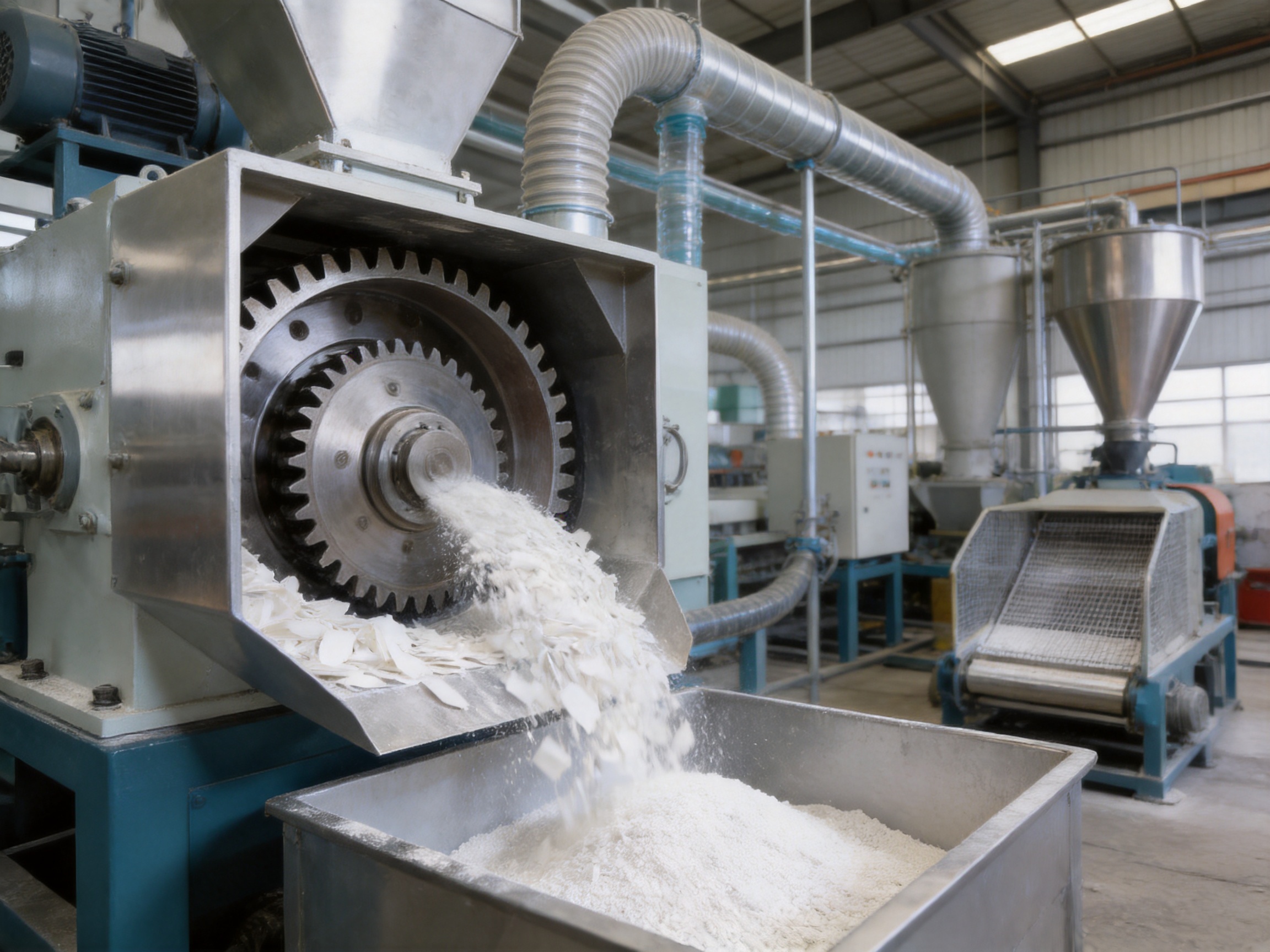
PVC recycling is closely connected with resource efficiency and environmental responsibility. Waste PVC products can remain valuable if they are properly collected, sorted, crushed, pulverized, and reused. Fine powder production enables recycled PVC to enter new manufacturing processes, reducing the need for virgin material and lowering waste disposal pressure. High-performance tooth plates support this circular economy by making pulverizing more efficient and reliable.
Energy consumption is a major concern in size reduction. Grinding plastic into fine powder requires mechanical power, and inefficient blades waste energy through heat and vibration. By improving cutting efficiency and maintaining sharpness, the alloy steel tooth plates help reduce energy consumption per unit of powder. Over long production periods, this can create meaningful savings and reduce the environmental footprint of recycling operations.
Longer service life also contributes to sustainability. Spare parts manufacturing consumes steel, energy, processing time, and transportation resources. If a tooth plate lasts two to three times longer than a conventional plate, fewer replacements are needed. This reduces material consumption and waste from worn components. It also reduces downtime, helping factories operate more efficiently.
Powder quality affects recycling value. When recycled PVC powder is fine, uniform, clean, and free from overheating damage, it can be used in higher-value applications. This improves the economic incentive to recycle PVC. If powder quality is poor, recycled material may be downgraded or discarded. Therefore, the tooth plate indirectly supports higher recycling rates and better material utilization.
The product aligns with broader industrial goals such as green manufacturing, circular economy development, and carbon reduction. For manufacturers facing stricter environmental requirements and rising raw material costs, reliable pulverizing technology is not only a production tool but also a strategic asset.
15. Practical Selection Considerations for Users
When selecting PVC pulverizer blades and tooth plates, users should consider several practical factors. The first is material type. Rigid PVC pipe, profile scrap, flooring, cable sheathing, and sheet material may require different feed preparation and grinding settings. Filled PVC compounds are more abrasive and may require stronger wear resistance. Clean production scrap is easier to process than contaminated recycled material.
The second factor is target powder fineness. A 20 mesh powder requirement is very different from a 100 mesh requirement. Finer powder usually requires tighter grinding gaps, better cooling, more precise screening, and higher attention to heat generation. The tooth plate should be selected according to the desired mesh range and output balance.
The third factor is production capacity. A high-output line needs blades that can maintain sharpness under continuous load. If a plant operates 24 hours per day, service life and heat dissipation become critical. A lower-capacity laboratory or pilot line may prioritize accuracy and easy adjustment.
The fourth factor is machine compatibility. Mounting dimensions, hole positions, disc structure, rotation speed, and cooling configuration must be matched. Precision manufacturing helps ensure fit, but users should provide accurate machine model information or drawings when ordering replacement parts.
The fifth factor is maintenance practice. Even the best tooth plate requires correct installation, gap adjustment, cooling management, feeding control, and contamination prevention. Operators should avoid metal impurities, excessive feed surges, and improper gap settings. Regular inspection can identify wear before it affects powder quality.
Finally, users should evaluate total cost rather than purchase price alone. A longer-life tooth plate with higher output and better powder quality may deliver a lower overall cost per ton of powder. This is especially true in industrial recycling and compounding operations where downtime, labor, energy, and product quality have significant economic impact.
16. Operating Recommendations for Better Performance
To obtain the best performance from alloy steel PVC pulverizer tooth plates, operators should begin with proper feed preparation. Material should be pre-crushed to a suitable size before entering the pulverizer. Oversized pieces can increase impact load and reduce grinding stability. Metal, stones, and hard foreign objects should be removed to prevent tooth damage.
Grinding gap adjustment should be performed carefully. A gap that is too large may produce coarse powder, while a gap that is too small may increase heat, energy consumption, and wear. Feeler gauges or appropriate adjustment tools should be used to set the clearance accurately. After installing new plates, operators should monitor vibration, temperature, powder fineness, and current load.
Cooling systems should be maintained in good condition. Air ducts, water channels, fans, and temperature control devices should be checked regularly. Since PVC is heat-sensitive, cooling performance directly affects powder quality. If powder begins to yellow or material adhesion appears, operators should inspect cooling, feed rate, and plate condition.
Feeding should be stable. Sudden overfeeding can overload the grinding chamber, raise temperature, and reduce powder uniformity. Consistent feeding allows the tooth plate to work in its optimal range. In automated lines, feeding systems should be calibrated to match pulverizer capacity.
Regular inspection is recommended. Operators should check tooth sharpness, mounting bolts, plate surface condition, and powder particle distribution. If wear becomes significant, replacement should be scheduled before severe quality decline occurs. Because these alloy steel plates are designed for long service, planned inspection helps maximize their value.
Cleaning is also important. Although the polished surface reduces adhesion, PVC residues and dust should still be removed during maintenance. Clean plates improve heat transfer and reduce contamination between batches. This is especially important when processing materials of different colors or formulations.
17. Why Manufacturing Experience Matters
In the plastic pulverizer industry, experience is a major technical asset. Theoretical design is useful, but real-world grinding involves many variables: material hardness, brittleness, additive content, moisture, temperature, feed size, rotation speed, disc gap, airflow, screen configuration, and operator habits. A manufacturer with decades of experience can understand these variables and design components that perform reliably in actual factories.
Changzhou Mao Yue Intelligent Equipment Co., Ltd. has built long-term partnerships with more than 5,000 enterprises in domestic and international markets. This broad customer base provides practical feedback from many industries, including rotational molding, masterbatch, polymers, PVC, PE, recycling, and powder coating. Such feedback helps improve blade design, machine structure, cooling systems, and maintenance recommendations.
More than 20 years of export experience also matters. International customers often require clear communication, stable quality, documentation, and reliable after-sales support. Export experience helps the company understand different market requirements and operating environments. For customers purchasing wear parts from abroad, supplier reliability is essential because replacement delays can affect production.
The company’s focus on quality, service, innovation, and customized solutions supports users who need more than standard parts. Some customers may require special tooth profiles, different hardness strategies, customized dimensions, or complete line optimization. A source manufacturer with machining and engineering capability can respond more effectively than a trading company or generic parts supplier.
18. Q&A Section
Q1: What are PVC pulverizer alloy steel blades and knives used for?
They are used inside PVC pulverizers to grind rigid PVC and related plastic materials into fine powder. Typical materials include PVC pipes, profiles, flooring, cable sheathing, rigid sheets, bottle caps, window and door offcuts, and injection molding waste. The finished powder can be used for recycling, compounding, extrusion, molding, and modified PVC products.
Q2: What powder fineness can these tooth plates support?
Under suitable machine configuration and operating conditions, they support stable powder production in the 20–100 mesh range. Actual fineness depends on material type, grinding gap, disc speed, cooling efficiency, screening system, and feed control.
Q3: Why is HRC 58–62 hardness important?
This hardness range provides strong surface wear resistance and edge retention. It helps the teeth remain sharp during long operation, reducing replacement frequency and maintaining grinding efficiency. Proper tempering is also required so the plate does not become excessively brittle.
Q4: How do these plates differ from ordinary market plates?
They use premium high-wear-resistant alloy steel, controlled carburizing, quenching and tempering, precision high-density tooth geometry, polished surfaces, and accurate mounting structures. Compared with many standard plates, they offer longer service life, higher output, better powder uniformity, improved heat control, and easier maintenance.
Q5: Can they reduce production downtime?
Yes. Longer service life reduces replacement frequency, while precision mounting holes and practical segment design make installation faster. Stable wear performance also helps operators schedule maintenance more predictably instead of stopping production unexpectedly.
Q6: Are they suitable for filled PVC materials?
They are suitable for many PVC materials containing additives such as calcium carbonate and stabilizers, provided the pulverizer and process settings are appropriate. Filled materials are more abrasive, so high-wear alloy steel is especially beneficial.
Q7: Why is cooling important when grinding PVC?
PVC can soften, stick, yellow, or degrade when exposed to excessive frictional heat. The fan-shaped multi-fin tooth plate structure, polished surface, and compatibility with air-cooling and water-cooling systems help control temperature and protect powder quality.
Q8: How should users choose the right tooth plate?
Users should consider feed material, target mesh size, output requirement, machine model, mounting dimensions, cooling system, and operating schedule. Providing material samples, machine specifications, or drawings can help the manufacturer recommend a suitable design.
Q9: What maintenance practices help extend blade life?
Operators should remove metal contaminants, use stable feeding, maintain cooling systems, adjust the grinding gap correctly, inspect bolts and tooth condition regularly, and clean residues during scheduled maintenance. Proper operation helps maximize service life.
Q10: Why choose a source manufacturer for pulverizer blades?
A source manufacturer with complete pulverizer experience can control material selection, heat treatment, machining, inspection, and application guidance. This provides better consistency, customization, and technical support than generic spare part suppliers.
19. Conclusion
PVC pulverizing is a demanding process that requires more than a powerful machine. The quality of the alloy steel blades, knives, and tooth plates determines whether the system can produce fine, uniform, clean powder efficiently and continuously. A high-performance tooth plate must combine wear-resistant material, stable heat treatment, precision tooth geometry, accurate installation, heat dissipation, and manufacturing consistency.
The PVC pulverizer alloy steel tooth plates described in this article are engineered for industrial PVC recycling and powder production. Their premium alloy steel substrate, HRC 58–62 hardness, carburizing and quenching treatment, high-density tooth design, polished surface, and fan-shaped multi-fin structure provide strong advantages over many conventional market plates. They help increase output, extend service life, stabilize 20–100 mesh powder, reduce overheating, and lower maintenance cost.
Behind the product is the manufacturing strength of Changzhou Mao Yue Intelligent Equipment Co., Ltd., a source manufacturer with decades of experience in plastic crushing and pulverizing equipment. With multiple workshops, advanced precision grinding equipment, dynamic balancing systems, welding technology, CE certification, ISO 9001 quality management, and extensive domestic and export experience, the company provides not only spare parts but also practical pulverizing solutions.
For PVC recyclers, compounders, powder producers, and manufacturers seeking higher efficiency and better material reuse, selecting the right tooth plate is a strategic decision. A durable, accurately manufactured alloy steel plate can reduce cost per ton, improve powder quality, and support greener production. In a competitive market where downtime, energy consumption, and product consistency matter, high-wear alloy steel pulverizer blades and knives provide a clear path toward more reliable and profitable PVC powder processing.
References
1. Rosato, D. V., Rosato, D. V., and Rosato, M. V. Plastic Product Material and Process Selection Handbook. Elsevier.
2. Brydson, J. A. Plastics Materials. Butterworth-Heinemann.
3. Harper, C. A. Handbook of Plastics Technologies. McGraw-Hill.
4. ISO 9001 Quality Management Systems: Requirements. International Organization for Standardization.
5. ASM Handbook, Volume 4: Heat Treating. ASM International.
6. Goodship, V. Introduction to Plastics Recycling. Smithers Rapra Publishing.
7. Wypych, G. PVC Degradation and Stabilization. ChemTec Publishing.