

 English
 русский
 Español
 عربى
عربى 中文简体
中文简体
 中文简体
中文简体
Content
- 1 1. The Need for Integrated Plastic Crushing and Pulverizing
- 2 2. Product Overview and System Configuration
- 3 3. Hammer-Impact Swing-Knife Crusher: Strong Front-End Size Reduction
- 4 4. Precision Disc Pulverizing for Uniform Fine Powder
- 5 5. Cooling and Temperature Control for Heat-Sensitive Materials
- 6 6. Closed Negative-Pressure Conveying and Dust Collection
- 7 7. Automation and Centralized Control
- 8 8. Technical Specification Example
- 9 9. Advantages Compared with Conventional Systems
- 10 10. Manufacturing Strength Behind the Equipment
- 11 11. Material Selection and Component Durability
- 12 12. Applications in PVC Recycling and SPC Flooring Production
- 13 13. Applications in PE and PP Rotational Molding Recycling
- 14 14. Applications in PET, ABS, EVA, and Engineering Plastic Recycling
- 15 15. Environmental and Economic Value
- 16 16. Maintenance and Operational Convenience
- 17 17. Customization for Different Production Requirements
- 18 18. Why This Line Is a Competitive Choice
- 19 19. Q&A Section
- 19.1 Q1: What materials can this production line process?
- 19.2 Q2: What final powder size can the line produce?
- 19.3 Q3: Why is the hammer-impact swing-knife crusher better for bulky waste?
- 19.4 Q4: How does the line prevent overheating?
- 19.5 Q5: Is the production line suitable for SPC flooring recycling?
- 19.6 Q6: Can PE and PP rotomolding waste be reused after pulverizing?
- 19.7 Q7: How does the system control dust?
- 19.8 Q8: What are the main economic benefits?
- 19.9 Q9: Can the line be customized?
- 19.10 Q10: What manufacturing strengths support equipment reliability?
- 20 20. Conclusion
- 21 References
- 22 Product: Hammer-impact swing-knife crushing and pulverizing production line
In modern plastic recycling and polymer processing, the ability to convert bulky, irregular, and difficult waste materials into consistent fine powder has become a decisive factor in production efficiency, raw material savings, product quality, and environmental compliance. The hammer-impact swing-knife crushing and pulverizing production line is designed as a complete, continuous system for reducing large plastic waste into uniform powder suitable for reuse in extrusion, rotational molding, SPC flooring, pipe production, profile manufacturing, modification, and other high-value applications.
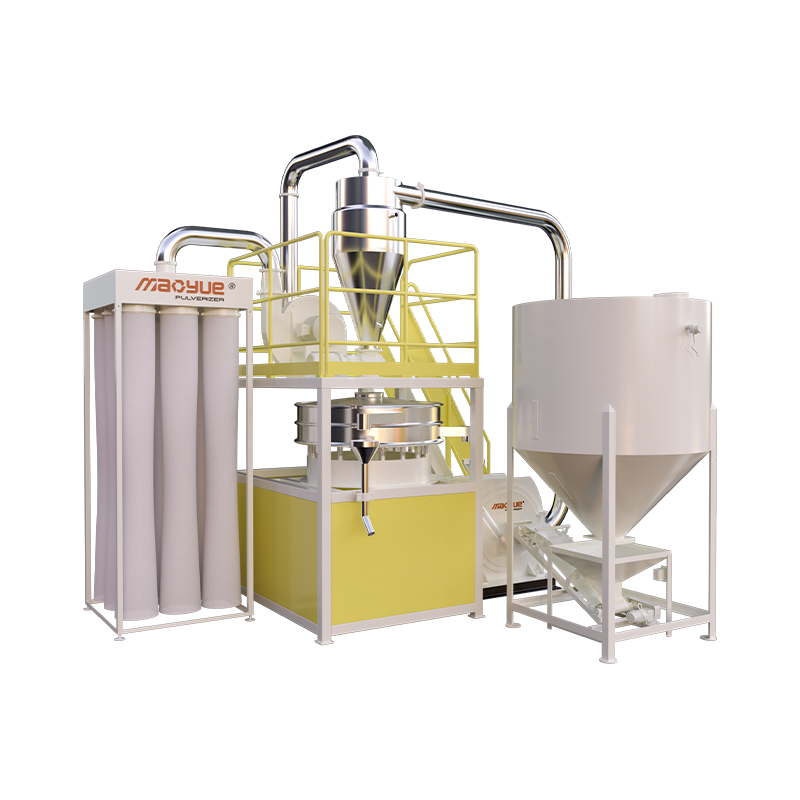
Unlike traditional systems that depend on separate crushing, conveying, milling, screening, and dust collection equipment, this production line integrates coarse crushing, precision pulverizing, negative-pressure conveying, cyclone separation, vibrating screening, and pulse dust collection into one coordinated process. The system is especially suitable for PVC, PE, PP, PET, ABS, EVA, and other medium-hardness plastic materials, including pipes, profiles, sheets, foam boards, pallets, woven bags, barrels, appliance shells, films, bottle flakes, and rotational molding waste.
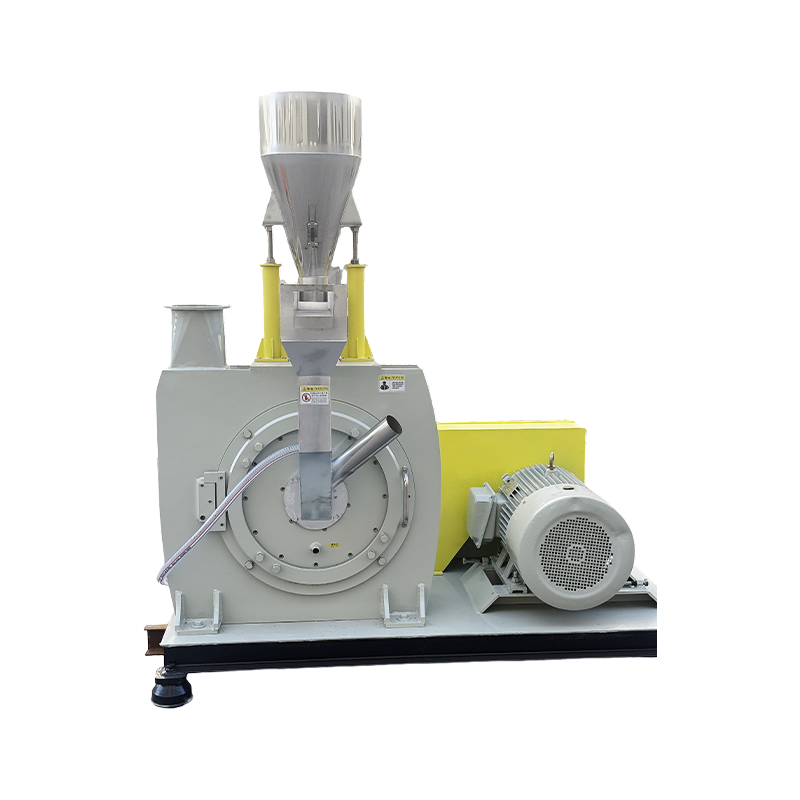
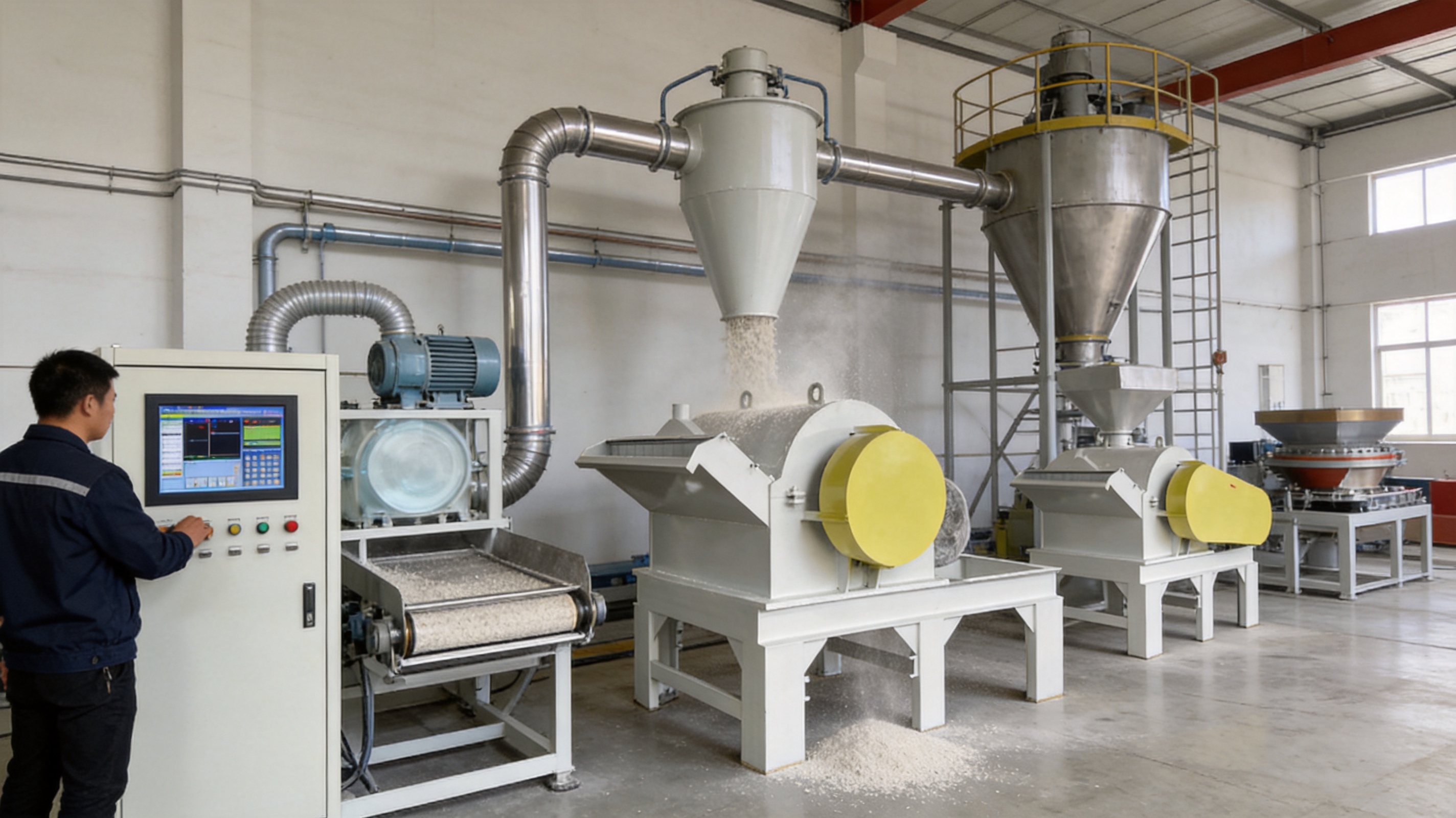
At the front end of the line, a heavy-duty hammer-impact swing-knife crusher provides powerful impact and shearing performance. It breaks large waste materials into manageable particles, typically in the 5–20 mm range depending on screen configuration and production requirements. After coarse crushing, the material is pneumatically conveyed into a precision disc pulverizer, where high-quality grinding discs transform the particles into fine powder, commonly from 20 to 80 mesh or finer. The entire process is controlled through an integrated electrical and automation system to achieve stable feeding, temperature control, consistent output, and reduced labor demand.
Changzhou Mao Yue Intelligent Equipment Co., Ltd. manufactures this production line with a focus on durability, precision, energy efficiency, and long-term operational reliability. With 30 years of experience in plastic crushing and pulverizing equipment, the company combines practical industry knowledge with advanced manufacturing equipment, including high-precision grinding machines, German-standard dynamic balancing technology, and Japanese welding systems. This manufacturing background gives the production line a strong advantage in machine stability, powder quality, maintenance convenience, and return on investment.
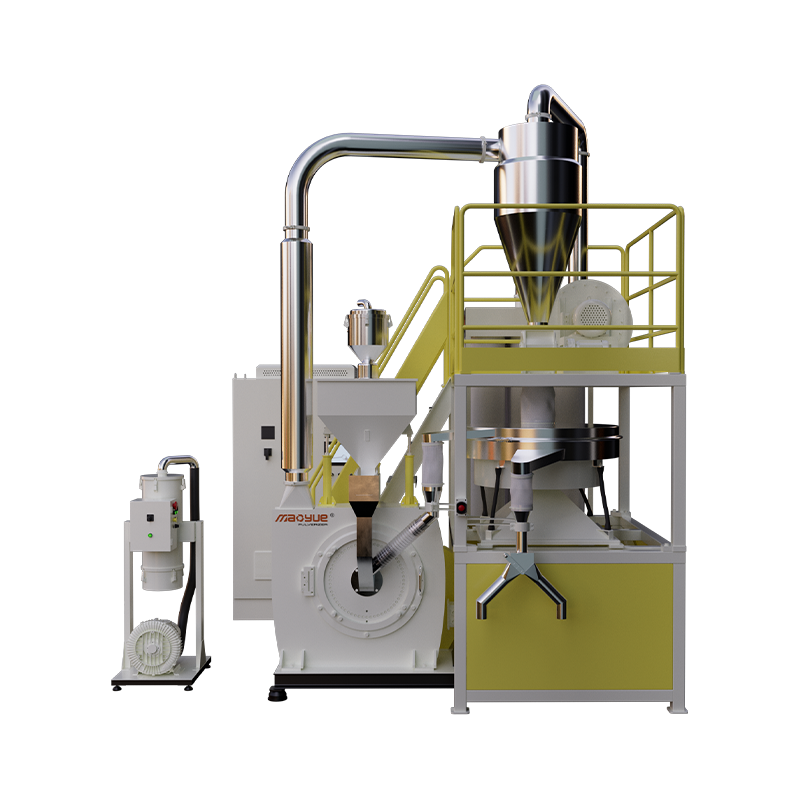
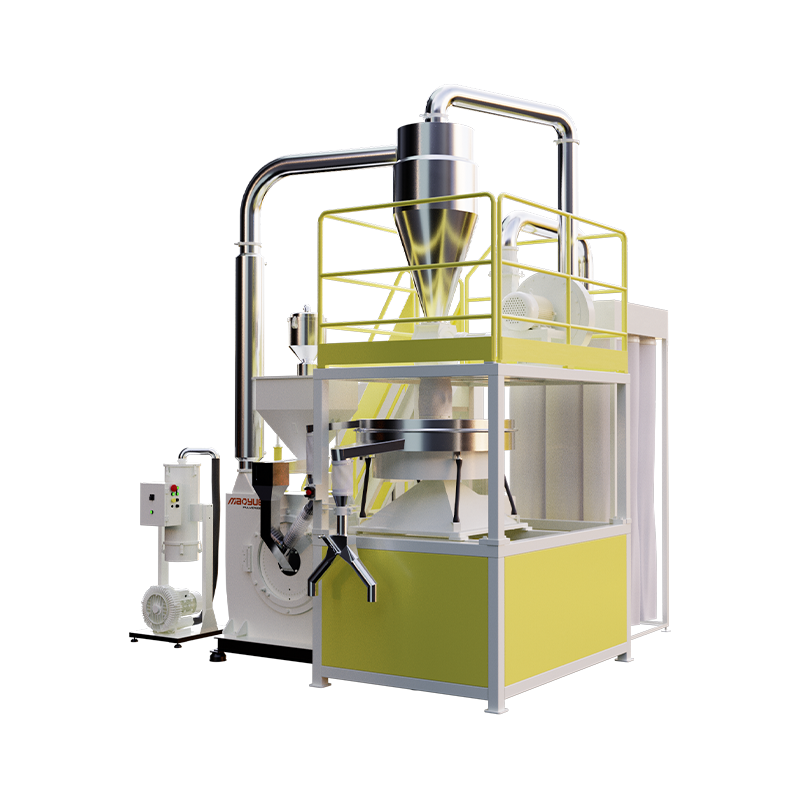
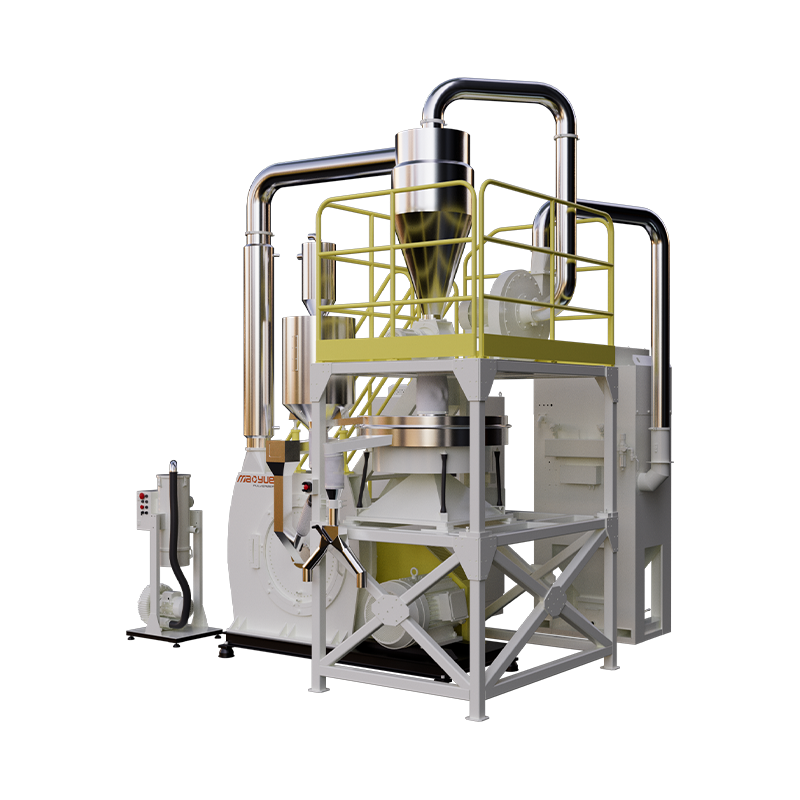
Hammer-impact swing-knife crushing and pulverizing production line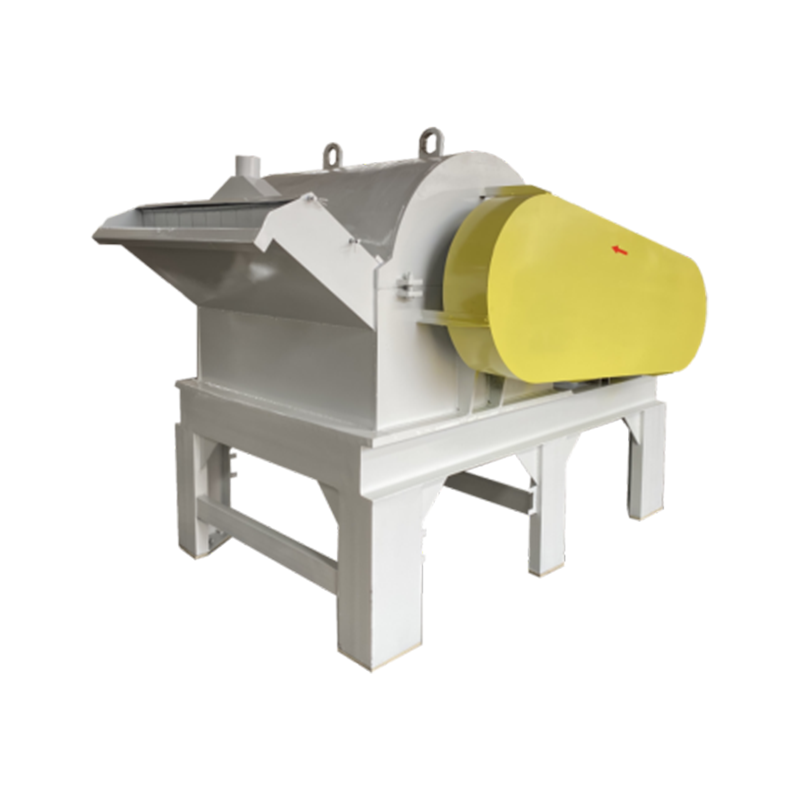
1. The Need for Integrated Plastic Crushing and Pulverizing
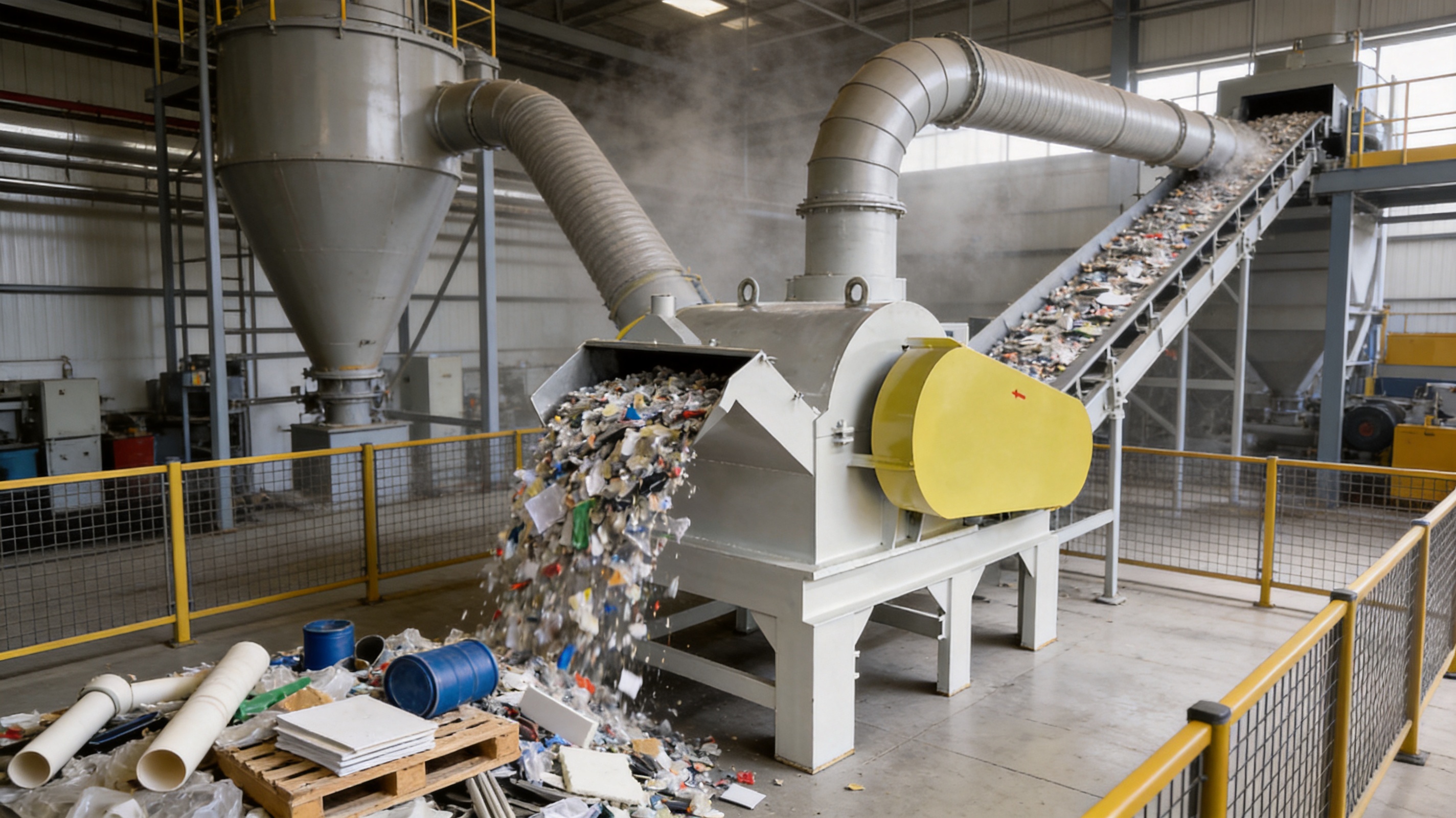
Plastic waste is generated in many forms, and each form presents different processing challenges. PVC pipe factories produce thick pipe ends, rejected pipe sections, window and door profiles, and sheet scraps. Rotational molding plants generate PE or PP waste from tanks, barrels, pallets, toys, road barriers, and oversized hollow products. Flooring manufacturers produce SPC core layer waste, trimming materials, and foam board residues. Recycling centers receive mixed rigid and semi-rigid plastics that are often bulky, uneven, contaminated with dust, or difficult to feed into standard size-reduction equipment.
Traditional recycling processes often use separate machines for each stage. A coarse crusher may be located in one area, while the pulverizer, cyclone, screen, and dust collector are installed elsewhere. Operators manually transfer materials between stages, or multiple conveyors are added without coordinated control. This layout increases floor space, labor cost, energy consumption, dust leakage, and operational complexity. In addition, poor matching between the crusher and pulverizer can cause unstable feeding, overheating, particle size inconsistency, and frequent downtime.
An integrated crushing and pulverizing line solves these problems by designing each section as part of a single production flow. The hammer-impact swing-knife crusher prepares material in a size suitable for the disc mill. The negative-pressure conveying system transfers the crushed material efficiently and reduces dust escape. The pulverizer operates under controlled feeding and cooling conditions. The cyclone separator, vibrating screen, and pulse dust collector work together to separate qualified powder, return oversize particles if required, and maintain a clean workshop environment.
For manufacturers and recyclers, the result is a more stable and more economical process. Instead of simply reducing material size, the line turns low-value plastic waste into reusable powder with controlled particle size, good flowability, and high dispersion. This creates measurable economic value by reducing virgin material purchase, improving raw material utilization, and supporting closed-loop production.
2. Product Overview and System Configuration
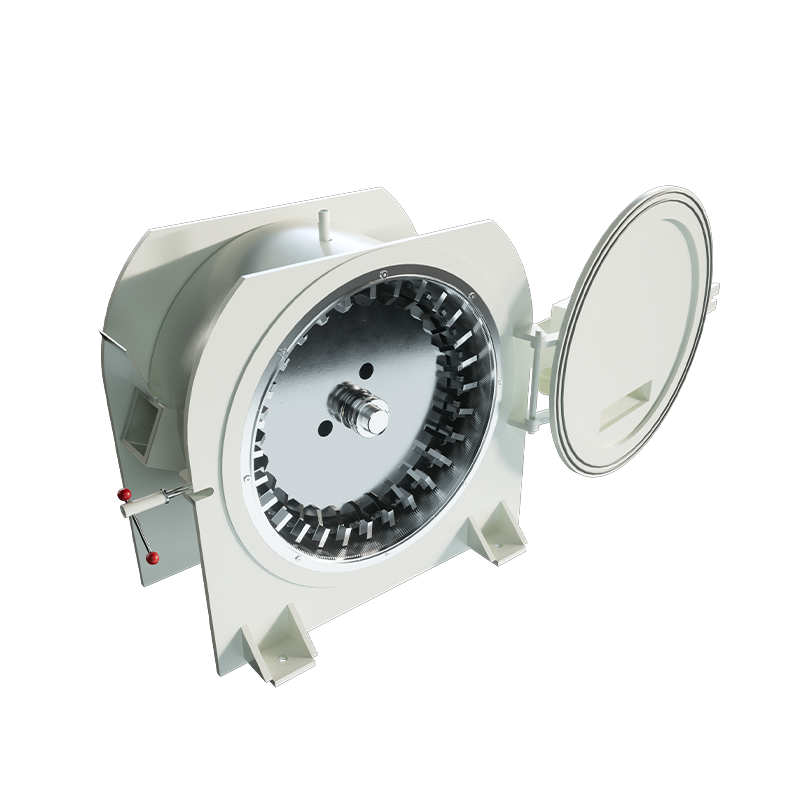
The hammer-impact swing-knife crushing and pulverizing production line is built around a heavy-duty coarse crusher and a precision disc pulverizer. The front-end crusher uses high-speed rotating swing knives and hammer-impact action to break oversized plastic waste. The pulverizer then uses precision grinding discs to convert the crushed particles into fine powder. Depending on capacity and final mesh requirements, the line can be configured with different pulverizer models, such as 500, 600, and 800 series disc mills.
The complete line typically includes a feeding section, hammer-impact swing-knife crusher, conveying system, magnetic or separation options if needed, material buffer section, disc pulverizer, cooling system, cyclone separator, vibrating screen, dust collector, discharge system, and centralized electrical control cabinet. Each component is selected and arranged according to the customer’s material type, hourly capacity, target powder fineness, workshop layout, and downstream application.
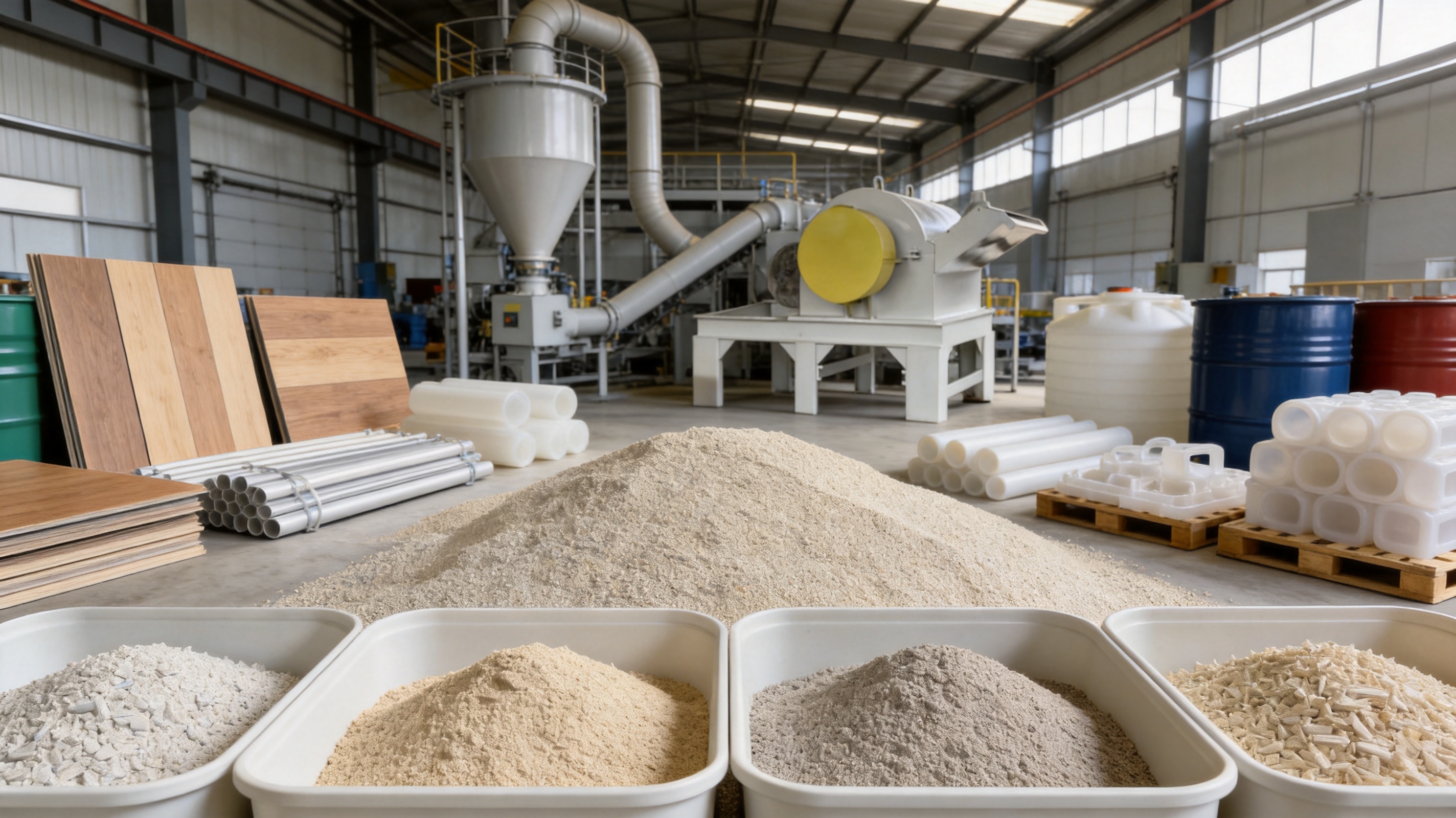
The system can process many common plastic materials. PVC materials can be ground into powder suitable for SPC flooring core layers, pipe extrusion, profile regeneration, or sheet production. PE and PP materials can be processed into powder for rotational molding, blow molding regeneration, or modified material production. PET, ABS, and EVA materials can be reduced for reuse in extrusion, injection molding, compounding, or recycling applications.
The line is designed for continuous production. The feeding speed can be controlled by an inverter, which helps maintain a stable load on the crusher and pulverizer. The pneumatic conveying system keeps material moving in a closed environment. The pulverizer cooling system controls temperature and protects heat-sensitive plastics. The vibrating screen classifies powder to ensure output consistency. The pulse dust collector captures fine particles and improves workshop safety.
3. Hammer-Impact Swing-Knife Crusher: Strong Front-End Size Reduction
The front-end crusher is one of the most important sections of the line. Many plastic recycling problems begin at the coarse crushing stage, especially when materials are large, hollow, soft, flexible, or irregular in shape. Standard knife-type crushers may suffer from feeding difficulty, entanglement, jamming, low efficiency, and heavy blade wear. The hammer-impact swing-knife structure is designed to address these problems.
The crusher uses high-speed rotating knives to generate strong impact, shearing, and tearing forces. When large plastic waste enters the crushing chamber, the rotating knives strike the material repeatedly and reduce it quickly into smaller particles. The swing-knife design helps absorb impact loads and adapt to irregular shapes. Compared with rigid knife structures, this design reduces the risk of sudden blockage when processing pipes, profiles, sheets, foam boards, woven bags, pallets, and other difficult materials.
A wide feed inlet can be customized according to customer needs. This is especially useful for long pipes, large sheets, thick profiles, and bulky rotational molding products. By improving feeding convenience, the crusher reduces manual cutting requirements before processing. This saves labor and allows the system to handle larger waste pieces directly.
The discharge particle size can be adjusted through screen configuration, typically producing particles from 5 to 20 mm. A common mesh size for the crusher configuration is 16 mm, which prepares material well for subsequent pulverizing. Uniform coarse particles improve pulverizer stability, reduce overload risk, and help achieve consistent final powder fineness.
The crusher can be equipped with different motor powers, such as 55 kW, 75 kW, 90 kW, or 110 kW, depending on production capacity and material characteristics. With inverter speed control, the operator can adjust operating speed to balance capacity, energy consumption, and crushing effect. The main rotor speed, for example around 860 r/min in a typical configuration, provides the impact energy required for efficient size reduction.
4. Precision Disc Pulverizing for Uniform Fine Powder
After coarse crushing, the material enters the pulverizing section. The disc mill is responsible for converting particles into powder with controlled fineness. For many applications, powder quality is just as important as capacity. A high-quality pulverizer must produce powder with narrow particle distribution, good dispersion, low thermal damage, and stable flow characteristics.
The disc pulverizer used in this line is equipped with high-grade grinding discs made from DC53 mold steel. DC53 is known for hardness, toughness, wear resistance, and dimensional stability. These properties are important because the grinding discs must operate under high-speed friction while maintaining accurate tooth geometry over long production periods.
The grinding discs are processed using Taiwan-imported high-precision grinding equipment and tooth-by-tooth precision machining methods. Accurate tooth shape improves cutting and grinding efficiency, reduces unnecessary heat generation, and enhances powder uniformity. When disc geometry is inconsistent, some material may be over-ground while other particles remain too coarse. Precision machining helps avoid this problem and supports stable mesh output.
German-standard dynamic balancing technology is also used for rotating components. Dynamic balancing is essential for high-speed pulverizing equipment because even small imbalance can cause vibration, bearing wear, noise, uneven grinding, and reduced machine life. By balancing key rotating parts according to strict standards, the manufacturer improves operational stability and reduces long-term maintenance costs.
The pulverizer can produce 20–80 mesh powder or finer depending on material type, disc design, feeding rate, cooling conditions, and screening requirements. For rotomolding powder, good flowability and uniform particle distribution are critical for even wall thickness and smooth product surfaces. For SPC flooring powder, stable fineness supports consistent core layer formulation and improved extrusion performance. For recycled PVC, PE, PP, ABS, PET, and EVA materials, controlled powder quality increases the value of the recycled material.
5. Cooling and Temperature Control for Heat-Sensitive Materials
Temperature control is one of the key advantages of this production line. Plastic materials can soften, melt, yellow, degrade, or stick to machine surfaces if excessive heat is generated during grinding. PVC and PE are particularly sensitive in many production conditions. Overheating may cause plate adhesion, powder agglomeration, reduced flowability, odor, color change, and performance loss.
The grinding section is equipped with a reinforced dual cooling system. This system helps remove heat from the grinding chamber and maintain a stable processing temperature. Multi-point temperature sensors monitor the working condition of important areas. The PLC control system can respond to temperature changes and help stabilize the grinding chamber, commonly in the range of 50–80°C depending on material and process requirements.
By controlling heat, the line preserves material properties and improves output quality. Powder remains freer flowing and less likely to form lumps. This is especially valuable for PVC powder used in flooring, profiles, and pipe production, because thermal damage can affect color, processing stability, and mechanical performance. In PE and PP rotomolding applications, low thermal stress helps maintain powder quality and molding consistency.
The coarse crushing section can also be configured with air cooling or water mist assistance. This optional feature further improves adaptability when processing materials that generate heat or dust during impact crushing. For high-volume production, cooling is not only a quality feature but also a productivity feature, because it allows longer continuous operation with fewer shutdowns for cleaning.
6. Closed Negative-Pressure Conveying and Dust Collection
Fine plastic powder can create serious workshop challenges if not properly controlled. Dust leakage may reduce raw material yield, contaminate equipment, create cleaning work, affect employee health, and increase environmental compliance risk. Traditional open conveyors and poorly sealed mills often allow powder to escape at transfer points. This is especially problematic when processing fine PVC, PE, PP, or mixed recycling powders.
The production line uses fully enclosed negative-pressure pneumatic conveying. Instead of relying on open transfer, material is moved through closed pipelines under controlled airflow. This design reduces dust escape and helps maintain continuous material movement between equipment sections. Negative-pressure conveying also improves safety because dust is pulled inward rather than pushed outward through gaps.
A high-efficiency pulse bag dust collection system captures fine powder from the airflow. With capture efficiency above 99.9% under proper configuration and maintenance, the dust collection system helps keep the workshop clean and supports environmental emission compliance. Pulse cleaning maintains filter performance by periodically removing accumulated dust from filter bags, allowing the system to operate continuously.
The cyclone separation system performs an important intermediate function. It separates powder from air and supports efficient material collection before final screening or packaging. The vibrating screen then classifies powder according to target mesh size. Qualified powder moves to collection, while oversize particles can be managed according to process design.
This closed dust-control structure gives the line a strong advantage over basic pulverizing systems. It protects employees, reduces material loss, improves housekeeping, and supports customers seeking cleaner and more professional recycling workshops.
7. Automation and Centralized Control
The production line is designed for high automation. A centralized PLC control system coordinates feeding, crushing, conveying, pulverizing, screening, and dust collection. Operators can use one-button start and stop functions under configured operating procedures. Variable-frequency feeding allows stable material supply, which is essential for preventing overload and maintaining powder consistency.
Automation reduces dependence on manual adjustment. In older systems, operators often need to monitor each machine separately and respond manually to blockages, overloads, temperature increases, or unstable discharge. In an integrated system, the control logic can monitor important parameters and improve process coordination.
Star-delta or soft-start electrical cabinet options help reduce starting current and protect motors. Inverter control supports speed adjustment and energy optimization. Multi-point temperature feedback improves process visibility. Safety interlocks can be configured to protect equipment and personnel.
The benefits of automation are particularly clear in large-volume recycling applications. Stable production reduces powder variation. Fewer manual transfers reduce labor intensity. Better process visibility helps operators detect problems early. When one production line replaces multiple disconnected machines, management becomes easier and maintenance planning becomes more efficient.
8. Technical Specification Example
The following table presents a representative configuration for the hammer-impact swing-knife crusher section. Actual specifications can be customized according to material, capacity, feeding size, final powder requirements, and plant layout.
Item |
Description |
Specification or Remark |
1 |
Type |
1000 |
2 |
Knife Quantity |
36 rotary knives |
3 |
Capacity |
1–2.5 t/h |
4 |
Mesh Size |
16 mm |
5 |
Drive Motor |
55/75/90/110 kW |
6 |
Speed Control |
Inverter |
7 |
Belt Pulley Standard |
Imported NSK bearings |
8 |
Knife Blade Material |
SKD-11 |
9 |
Host RPM |
860 r/min |
10 |
Feeding Size |
1350 mm |
11 |
Electrical Cabinet |
Star-delta or soft start |
9. Advantages Compared with Conventional Systems
The production line offers several advantages over conventional separate crushing and pulverizing systems. The first advantage is process integration. Because crushing, conveying, pulverizing, screening, and dust collection are designed together, the whole line operates more smoothly than a system assembled from unrelated equipment. Material flow is more stable, and the risk of mismatch between equipment stages is reduced.
The second advantage is stronger adaptability to difficult waste materials. Traditional knife crushers may struggle with long pipes, bulky profiles, thick sheets, soft foam boards, woven bags, and pallet materials. The hammer-impact swing-knife structure provides impact and shearing action that reduces entanglement and jamming. The wide feed inlet further improves direct processing capability.
The third advantage is powder quality. Precision disc grinding with DC53 discs, tooth-by-tooth machining, and dynamic balancing supports uniform powder output. Many low-cost pulverizers produce uneven powder, excessive fines, lumps, or overheated material. In contrast, this line focuses on controlled fineness, dispersion, and thermal stability.
The fourth advantage is temperature management. The reinforced cooling system and sensor-based control reduce overheating risks. This is important for customers processing PVC, PE, and other heat-sensitive materials. Competitor systems without effective cooling may require slower feeding, frequent shutdowns, or repeated cleaning because of material sticking.
The fifth advantage is dust control. A fully enclosed negative-pressure system and pulse dust collector reduce powder leakage and improve workshop conditions. In many recycling plants, dust control is not merely an optional feature; it directly affects environmental compliance, employee health, housekeeping cost, and product recovery.
The sixth advantage is lower total operating cost. Although an integrated line may appear more advanced than simple individual machines, it can reduce labor, floor space, material loss, downtime, and energy waste. Stable automated production shortens the investment payback period, especially for plants with continuous waste generation or large recycling volumes.
10. Manufacturing Strength Behind the Equipment
Reliable equipment begins with reliable manufacturing. Changzhou Mao Yue Intelligent Equipment Co., Ltd. is a source manufacturer with 30 years of experience in plastic crushing and pulverizing equipment. This long industry experience allows the company to understand not only machine structure, but also real production problems faced by customers, such as powder overheating, disc wear, vibration, unstable feeding, dust leakage, and maintenance difficulty.
The company operates six processing workshops, each averaging about 1,400 square meters. This production scale supports in-house manufacturing, assembly, testing, and customization. A source manufacturer has better control over quality, delivery, and technical improvement than a trading company or assembler that depends heavily on outsourced components.
Advanced manufacturing equipment is a key strength. Taiwan-imported high-precision grinding machines built to German standards are used for accurate component processing. German dynamic balancing equipment is used to improve rotating part stability. Japanese welding systems help ensure strong, consistent fabrication. These manufacturing capabilities directly affect machine performance because pulverizers and crushers operate under high load, high speed, vibration, and abrasive conditions.
The company’s technical team regularly studies advanced machine technologies from countries such as Germany. This learning approach supports continuous improvement in structure design, material selection, balancing standards, cooling design, and automation. Instead of relying only on traditional machine concepts, the company combines practical experience with international manufacturing concepts.
Quality management is also supported by CE mechanical certification and ISO 9001 quality management system certification. CE certification reflects attention to machine safety and compliance, while ISO 9001 supports standardized quality control throughout production. For customers purchasing industrial equipment, these certifications reduce procurement risk and provide confidence in manufacturing consistency.
11. Material Selection and Component Durability
In crushing and pulverizing equipment, blade and disc materials determine long-term operating performance. The crusher uses SKD-11 blade material in the representative configuration. SKD-11 is widely valued for hardness and wear resistance, making it suitable for high-impact cutting and crushing of plastic waste. Durable blades reduce replacement frequency and help maintain consistent crushing efficiency.
The pulverizer grinding discs use DC53 mold steel. Compared with ordinary tool steels, DC53 provides a favorable combination of hardness, toughness, and fatigue resistance. This is important because pulverizing discs must resist wear while maintaining precise tooth profiles. If disc teeth wear too quickly, powder fineness becomes unstable, capacity decreases, and energy consumption may rise.
Imported NSK bearings are used in key rotating structures in the representative configuration. Bearing reliability is essential because crushers and pulverizers operate at high speed and under heavy mechanical load. High-quality bearings reduce vibration, heat generation, and unexpected downtime.
The machine frame, rotor, pulley system, and electrical components are selected with industrial durability in mind. Precision manufacturing and dynamic balancing further reduce mechanical stress. The result is a line designed not only for initial performance but also for stable long-term use in demanding recycling environments.
12. Applications in PVC Recycling and SPC Flooring Production
PVC recycling is one of the most important application areas for this production line. PVC pipes, window and door profiles, flooring sheets, foam boards, and trimming waste are often bulky and difficult to process. However, once converted into fine powder, recycled PVC can be used in many valuable applications, including SPC flooring core layers, pipe extrusion, profile regeneration, and sheet production.
SPC flooring production requires stable powder quality because the core layer formulation depends on consistent mixing of PVC powder, calcium carbonate, stabilizers, and additives. Uneven recycled powder can affect extrusion stability, density, surface quality, and mechanical properties. The precision disc pulverizer supports uniform powder size, while the cooling system helps avoid yellowing or degradation.
For PVC pipe and profile manufacturers, recycling in-house scrap can significantly reduce raw material costs. Instead of selling waste at a low price or paying for disposal, factories can process rejected products, start-up waste, edge trim, and production residues into reusable powder. This supports closed-loop production and improves overall material utilization.
The hammer-impact swing-knife crusher is especially helpful for PVC pipe and profile waste because such materials may be long, thick, and irregular. The wide feed inlet reduces pre-cutting work, while the strong impact action breaks material efficiently before pulverizing.
13. Applications in PE and PP Rotational Molding Recycling
PE and PP rotational molding products are often large, hollow, and difficult to reduce with standard crushers. Examples include water tanks, barrels, trash bins, pallets, toys, playground equipment, road barriers, and industrial containers. These products may have thick walls, curved shapes, and high impact resistance. The hammer-impact swing-knife crusher is well suited for this type of material because it applies repeated impact and shearing forces rather than relying only on fixed knife cutting.
After crushing, PE and PP particles can be pulverized into 30–80 mesh powder suitable for rotational molding or modified material production. Rotational molding requires powder with good flowability and controlled particle size. If powder is too coarse, melting may be uneven. If excessive fines are present, dusting and poor flow may occur. A stable pulverizing process helps improve final molded product quality.
For rotomolding plants, the ability to recycle production scrap into usable powder supports cost reduction and sustainability. New raw material prices can fluctuate, and waste disposal can be expensive. In-house pulverizing allows manufacturers to recover value from rejected parts, trimming waste, and off-spec products.
14. Applications in PET, ABS, EVA, and Engineering Plastic Recycling
The line is also suitable for processing engineering and specialty plastic waste such as PET, ABS, and EVA, depending on material condition and configuration. PET bottle flakes, appliance casings, ABS shells, films, foamed materials, and EVA scraps can be crushed and pulverized for reuse in extrusion, injection molding, modification, compounding, and other recycling processes.
Engineering plastics often require careful processing to preserve value. If size reduction causes excessive heat, contamination, or inconsistent particle size, the recycled material may lose performance or become difficult to sell. The integrated cooling, dust collection, and precision grinding design supports higher-value regeneration.
For recyclers handling diverse materials, the line provides flexibility. Feed inlet size, crusher power, pulverizer model, screen configuration, cooling method, and dust collection capacity can be customized. This allows the system to serve centralized industrial plastic waste treatment centers, recycling stations, environmental enterprises, and plastic processing plants.
15. Environmental and Economic Value
Plastic recycling equipment must now satisfy both economic and environmental goals. Economically, customers want to reduce raw material purchases, lower labor cost, improve production efficiency, and shorten payback time. Environmentally, they need to reduce waste disposal, minimize dust emissions, comply with regulations, and support circular manufacturing.
This production line supports these goals through efficient material recovery. Large plastic waste is transformed into powder that can re-enter production. Dust collection reduces fine powder loss, meaning more material becomes usable product rather than workshop waste. Closed conveying improves cleanliness and reduces environmental burden.
Energy efficiency is also improved through coordinated line design. Inverter feeding prevents unnecessary overload. Proper coarse crushing reduces pulverizer stress. Precision grinding discs improve cutting efficiency. Cooling prevents downtime caused by melting or sticking. Together, these features reduce total cost per ton of processed material.
For companies pursuing sustainability targets, an integrated pulverizing line provides a practical route to measurable improvement. It turns recycling from a secondary activity into a controlled industrial process capable of producing consistent material for new products.
16. Maintenance and Operational Convenience
Industrial equipment must be easy to maintain. If blade replacement, screen cleaning, bearing inspection, disc adjustment, or dust collector maintenance is complicated, downtime increases and operators may avoid proper service. This line is designed with practical maintenance in mind.
The modular structure makes it easier to access different sections. Crusher knives and screens can be inspected according to operating schedule. Pulverizer discs can be checked and maintained to preserve powder quality. The pulse dust collector uses automatic pulse cleaning to reduce manual filter cleaning frequency. Centralized control helps operators monitor system status more conveniently.
Because the crusher and pulverizer are matched as a line, maintenance planning is more predictable. Operators can observe output particle size, machine current, temperature, airflow, and vibration to identify wear or process changes. Preventive maintenance reduces unexpected shutdowns and improves annual production efficiency.
17. Customization for Different Production Requirements
No two recycling plants are exactly the same. Material type, waste shape, target mesh size, capacity demand, floor space, labor arrangement, power supply, and environmental requirements vary widely. The production line can be customized to match these practical conditions.
Customers may choose different motor powers for the crusher according to hardness and throughput. Feed inlet size can be customized for large materials. Pulverizer model selection can be based on desired capacity and fineness. Cooling systems can be strengthened for heat-sensitive or high-output processing. Conveying distance and layout can be adapted to the workshop. Screening and collection systems can be arranged according to packaging or downstream feeding needs.
This customization capability is one of the strengths of working with an experienced source manufacturer. Instead of providing a one-size-fits-all machine, the manufacturer can analyze the customer’s materials and recommend a complete process. This reduces installation risk and improves long-term satisfaction.
18. Why This Line Is a Competitive Choice
The hammer-impact swing-knife crushing and pulverizing production line is competitive because it combines mechanical strength, powder precision, dust control, cooling, automation, and manufacturing quality. Many low-cost systems may perform one function adequately but fail as a complete production solution. A crusher may be strong but produce inconsistent particles. A pulverizer may be capable of fine powder but overheat easily. A conveying system may move material but leak dust. A screen may classify powder but become overloaded due to unstable upstream feeding.
This line is designed to avoid those weaknesses. The front-end crusher prepares material efficiently. The disc mill produces uniform powder. The cooling system protects material quality. The pneumatic conveying and dust collection system keeps the process clean. The PLC control system coordinates operation. High-quality materials and precision manufacturing support long service life.
For customers comparing suppliers, the manufacturer’s background is also important. Changzhou Mao Yue Intelligent Equipment Co., Ltd. has long-term partnerships with more than 5,000 enterprises in domestic and international markets. This broad customer base reflects practical industry acceptance. The company’s focus on quality, service, innovation, and customized solutions supports customers before and after purchase.
19. Q&A Section
Q1: What materials can this production line process?
It can process PVC, PE, PP, PET, ABS, EVA, and other medium-hardness plastic materials. Typical feed materials include pipes, profiles, sheets, foam boards, pallets, barrels, woven bags, rotational molding waste, bottle flakes, appliance casings, films, and industrial plastic scrap.
Q2: What final powder size can the line produce?
The line commonly produces 20–80 mesh powder or finer, depending on material type, pulverizer configuration, grinding disc design, screen setting, cooling condition, and production target.
Q3: Why is the hammer-impact swing-knife crusher better for bulky waste?
The hammer-impact swing-knife structure combines impact and shearing forces. It is more adaptable to irregular, large, hollow, or flexible plastic waste than many traditional knife crushers. It reduces entanglement, jamming, and feeding difficulty.
Q4: How does the line prevent overheating?
The grinding section uses a reinforced dual cooling system and multi-point temperature sensors. The PLC system helps monitor and stabilize grinding temperature, which is especially important for heat-sensitive materials such as PVC and PE.
Q5: Is the production line suitable for SPC flooring recycling?
Yes. PVC sheets, flooring waste, profiles, and related scrap can be crushed and pulverized into uniform powder for reuse in SPC flooring core layers, extrusion, and regeneration applications.
Q6: Can PE and PP rotomolding waste be reused after pulverizing?
Yes. The line can produce PE and PP powder suitable for rotational molding and modified material production, helping manufacturers recycle tanks, barrels, pallets, toys, bins, and other molded waste.
Q7: How does the system control dust?
It uses fully enclosed negative-pressure pneumatic conveying, cyclone separation, and a high-efficiency pulse bag dust collector. This structure reduces dust leakage, improves workshop cleanliness, and increases powder recovery.
Q8: What are the main economic benefits?
The main benefits include reduced raw material cost, lower labor demand, less floor space compared with separated systems, reduced powder loss, improved output consistency, and shorter investment payback period.
Q9: Can the line be customized?
Yes. Crusher power, feed inlet size, pulverizer model, cooling system, conveying layout, screening structure, and dust collection capacity can be customized according to customer materials and production requirements.
Q10: What manufacturing strengths support equipment reliability?
The manufacturer has 30 years of industry experience, six processing workshops, high-precision grinding equipment, German-standard dynamic balancing equipment, Japanese welding systems, CE mechanical certification, ISO 9001 quality management certification, and extensive experience serving domestic and international customers.
20. Conclusion
The hammer-impact swing-knife crushing and pulverizing production line provides a complete solution for converting large plastic waste into high-quality fine powder. By integrating heavy-duty crushing, precision disc pulverizing, cooling, conveying, screening, and dust collection, it delivers stable performance for PVC, PE, PP, PET, ABS, EVA, and other plastic materials.
Its advantages are clear: strong adaptability to bulky waste, uniform powder output, effective temperature control, clean negative-pressure conveying, high dust capture efficiency, automated operation, and reduced total production cost. For PVC pipe and profile recycling, SPC flooring powder preparation, PE and PP rotational molding powder production, engineering plastic recycling, and centralized waste treatment, the line offers both technical and economic value.
Behind the equipment is the manufacturing strength of Changzhou Mao Yue Intelligent Equipment Co., Ltd., a source manufacturer with decades of experience, advanced processing technology, strict quality systems, and a commitment to customized solutions. For companies seeking reliable plastic recycling equipment, this integrated line represents a practical path toward higher efficiency, better powder quality, cleaner workshops, and stronger profitability.
References
1. Rosato, D. V. Plastics Processing Data Handbook. Springer.
2. Goodship, V. Introduction to Plastics Recycling. Smithers Rapra Publishing.
3. Brandrup, J., Bittner, M., Michaeli, W., and Menges, G. Recycling and Recovery of Plastics. Hanser Publishers.
4. Tadmor, Z., and Gogos, C. G. Principles of Polymer Processing. Wiley.
5. ISO 9001 Quality Management Systems: Requirements. International Organization for Standardization.
6. European Machinery Safety Guidance and CE Mechanical Compliance Documentation.