

 English
 русский
 Español
 عربى
عربى 中文简体
中文简体
 中文简体
中文简体
Content
- 1 A Core Component Built for Plastic Pulverizing Demands
- 2 Why an Integrated Disc Outperforms Conventional Split Designs
- 3 Premium Steel Selection: The Foundation of Disc Life
- 4 Advanced Heat Treatment for Hardness, Toughness, and Stability
- 5 Precision CNC Machining and Tooth Profile Engineering
- 6 High-Speed Stability with Low Vibration and Low Noise
- 7 Simple Grinding Gap Adjustment with Micron-Level Fine-Tuning
- 8 Thermal Control and the Role of Cooling in PE Grinding
- 9 Stable Powder Fineness from 10 to 120 Mesh
- 10 Applications in Plastic Recycling and Regeneration
- 11 Applications in Rotational Molding Powder Production
- 12 Applications in Powder Coating and Modified Plastics
- 13 Advantages for Laboratories and Small-Batch Development
- 14 Customization for Different Disc Diameters, Tooth Densities, and Coatings
- 15 Compatibility with Pulverizers and Production Lines
- 16 Manufacturing Strength Behind the Product
- 17 Quality Certifications and Industrial Reliability
- 18 Cost-Performance Compared with Imported Equivalents
- 19 Energy Efficiency and Production Capacity Improvement
- 20 Maintenance Best Practices for Long Disc Life
- 21 Environmental Value and Circular Economy Alignment
- 22 How Buyers Should Evaluate a Pulverizer Integrated Disc
- 23 Q&A: Common Questions About the Integrated Grinding Disc
- 23.1 What materials can this integrated disc process?
- 23.2 What powder fineness can be achieved?
- 23.3 Why is the monolithic structure important?
- 23.4 How does the disc reduce downtime?
- 23.5 Is the disc difficult to adjust?
- 23.6 How does the disc help prevent PE from sticking or carbonizing?
- 23.7 Can it replace imported grinding discs?
- 23.8 Is customization available?
- 23.9 What makes the manufacturer reliable?
- 24 Conclusion
- 25 References
- 26 Product: Pulverizer Integrated Disc
In modern plastic size-reduction production, the grinding disc is not a minor spare part; it is the heart of the pulverizing system. For processors working with PE, PP, EVA, LLDPE, rotational molding powder, recycled polyolefins, powder coating materials, masterbatch carriers, and other demanding applications, the disc determines capacity, powder fineness, particle distribution, energy consumption, machine stability, and long-term operating cost. An integrated grinding disc designed with high-strength alloy steel, precision CNC machining, optimized tooth geometry, and advanced heat treatment can transform the performance of a pulverizer from ordinary grinding into stable, high-output, industrial-grade powder production.
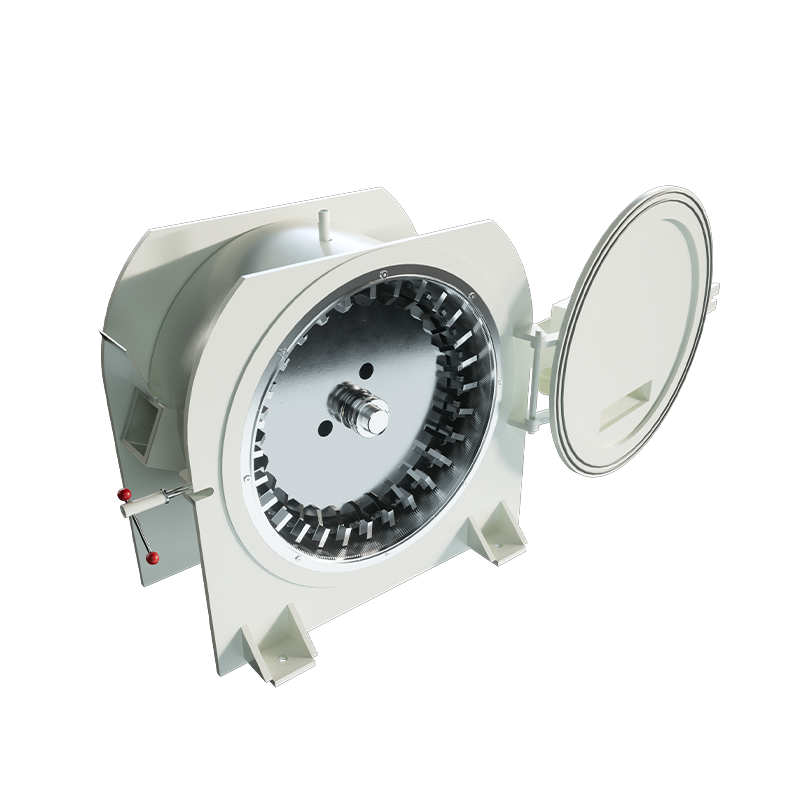
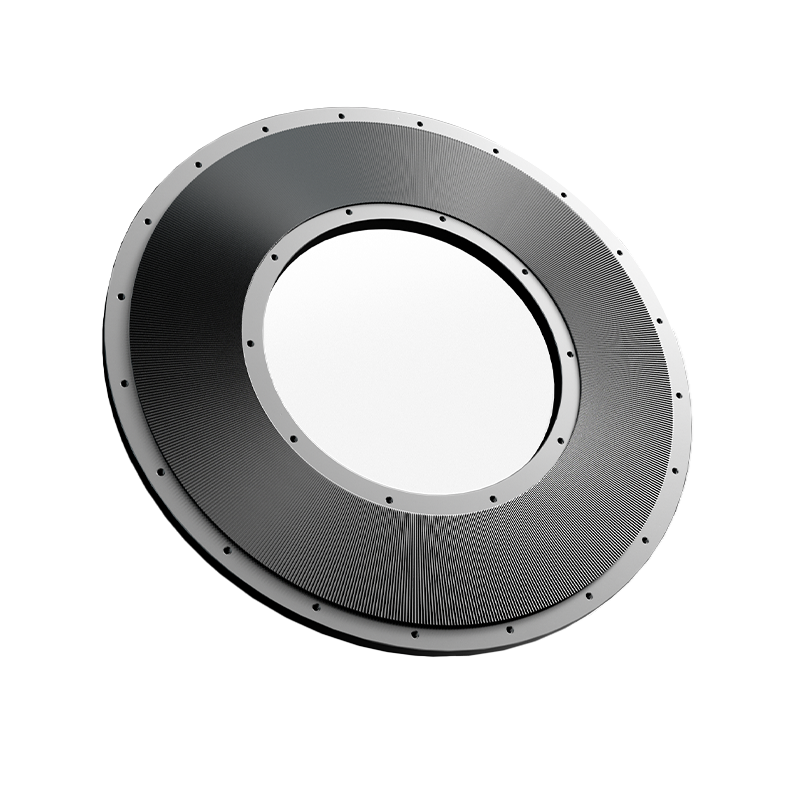
The Pulverizer Integrated Disc developed by Changzhou Mao Yue Intelligent Equipment Co., Ltd. is engineered as a high-performance replacement and upgrade component for plastic pulverizing lines. It features a monolithic disc structure, a central feed zone, inner rotating disc teeth, and precisely machined outer mounting holes for stable installation. Instead of relying on a conventional split or assembled design, the disc is manufactured as a robust integrated component, improving rigidity, concentricity, balance, and resistance to deformation under high-speed operation. For manufacturers that need higher powder quality and fewer production interruptions, this integrated structure offers clear practical advantages.
A Core Component Built for Plastic Pulverizing Demands
Plastic pulverizing is not the same as general crushing. A crusher reduces plastic into flakes, granules, or irregular small pieces, but a pulverizer must convert material into controlled powder, often within a target range such as 10 to 120 mesh, with PE applications commonly requiring 20 to 80 mesh ultrafine powder. During this process, the grinding disc experiences high-speed rotation, repeated cutting impact, abrasive friction, heat accumulation, and continuous load changes. If the disc lacks hardness, toughness, balance, or thermal stability, it will wear quickly, generate excessive vibration, produce uneven powder, and create downtime for maintenance.
The integrated disc is designed precisely for these challenges. It is made from high-strength alloy steel and is further strengthened through carburizing, quenching, and special heat treatment. The surface presents a deep gray to silver-black mirror-like finish, reflecting both industrial durability and precision processing. Rounded edges reduce the risk of accidental cuts during handling and maintenance, which is a meaningful detail for operators who frequently replace, inspect, or adjust pulverizer components.
The disc’s design includes dozens of precision bolt holes around the outer zone, allowing secure mounting to the pulverizer structure. Its central feed zone supports stable material entry, while the tooth profile is machined with high precision to maintain cutting consistency. The combination of material strength, machining accuracy, and balanced geometry makes the disc suitable for continuous production environments where reliability is as important as initial grinding performance.
Why an Integrated Disc Outperforms Conventional Split Designs
Many grinding discs in the market use split or assembled structures. While these designs can be easier to manufacture at lower cost, they often create performance limitations. Joints and assembled interfaces may introduce micro-gaps, stress concentration points, alignment deviations, and reduced rigidity. Under high-speed operation, these weaknesses can result in vibration, noise, uneven wear, and unstable powder fineness.
The monolithic structure of the integrated disc eliminates many of these risks. Because the disc is formed as a single, rigid component and then precision-machined, it maintains better dimensional stability and structural integrity. This is especially important when the disc operates at thousands of revolutions per minute. Even a small imbalance or deformation can become a major issue at high speed, affecting powder quality and machine life.
With an integrated design, the grinding gap can remain more consistent during operation. A consistent gap is essential for producing narrow particle distribution and avoiding excess coarse particles. When the disc maintains a stable geometry, the machine can grind more predictably, reducing the need for frequent adjustment. This also helps operators keep production within specification for demanding downstream processes such as rotational molding, powder coating, compounding, and recycled pellet production.
Performance Factor |
Integrated Grinding Disc |
Typical Split Disc |
Operational Benefit |
|---|---|---|---|
Structural rigidity |
Monolithic body with no joint-related deformation risk |
Possible weakness at assembled interfaces |
More stable grinding gap and lower vibration |
Balance at high speed |
Precision-machined and dynamically balanced for smooth rotation |
More susceptible to imbalance from assembly tolerances |
Reduced noise, bearing stress, and maintenance load |
Wear resistance |
DC53 high-wear-resistant tool steel with HRC 60-61 hardness |
Often made from standard wear steel or lower-grade alloys |
Longer service life and fewer replacements |
Powder quality |
High-precision tooth profile supports narrow particle distribution |
Powder consistency may decline faster as wear develops |
Cleaner, more uniform powder for high-value applications |
Maintenance efficiency |
Micron-level gap fine-tuning with feeler gauge and adjustment bolts |
Adjustment may be more time-consuming or less repeatable |
Faster setup and reduced downtime |
Premium Steel Selection: The Foundation of Disc Life
One of the most important advantages of this disc is its use of proprietary DC53 high-wear-resistant tool steel as the base material. For grinding applications, the material must be hard enough to resist abrasive wear yet tough enough to absorb repeated cutting impact without chipping or cracking. Ordinary steel may perform acceptably in light use, but it can lose sharpness quickly under continuous PE, PP, EVA, or recycled plastic pulverizing conditions.
The disc achieves a stable hardness of HRC 60-61 after heat treatment. This hardness range is significant because it gives the cutting teeth excellent wear resistance while preserving the toughness required for industrial operation. In plastic pulverizing, tooth wear directly reduces output capacity. As teeth become dull, the material requires more energy to cut, chamber temperature rises, powder becomes less uniform, and the risk of plastic softening or sticking increases. A harder, more wear-resistant disc delays this decline and extends the period of efficient grinding.
Compared with standard grinding discs commonly found in the market, the service life of this integrated disc can be extended by more than two times under appropriate operating conditions. For manufacturers, longer life does not merely mean buying fewer discs. It also means fewer shutdowns, less labor for replacement, less recalibration time, more consistent production planning, and better overall equipment effectiveness.
Advanced Heat Treatment for Hardness, Toughness, and Stability
The disc undergoes carburizing and quenching followed by multiple tempering treatments. This process is central to achieving a balanced combination of surface hardness, core strength, dimensional stability, and fatigue resistance. Carburizing increases carbon content at the surface, strengthening the areas exposed to friction and cutting. Quenching then transforms the steel structure to increase hardness. Multiple tempering stages reduce internal stress and improve toughness, helping the disc resist cracking, deformation, and fatigue failure during long-term operation.
Heat treatment quality is one of the key differences between a premium grinding disc and a low-cost alternative. Poorly controlled heat treatment may create uneven hardness, excessive brittleness, warping, or residual stress. These defects may not be obvious when the disc is new, but they become apparent under high-speed load. The result can be uneven wear, unstable dynamic balance, tooth damage, or shortened service life.
By combining carefully selected tool steel with controlled heat treatment, the integrated disc maintains cutting efficiency after hundreds or even thousands of hours of continuous operation, depending on material type, machine conditions, cooling efficiency, and operating discipline. This durability is especially valuable in recycling plants and rotational molding powder facilities where production runs are long and interruptions are costly.
Precision CNC Machining and Tooth Profile Engineering
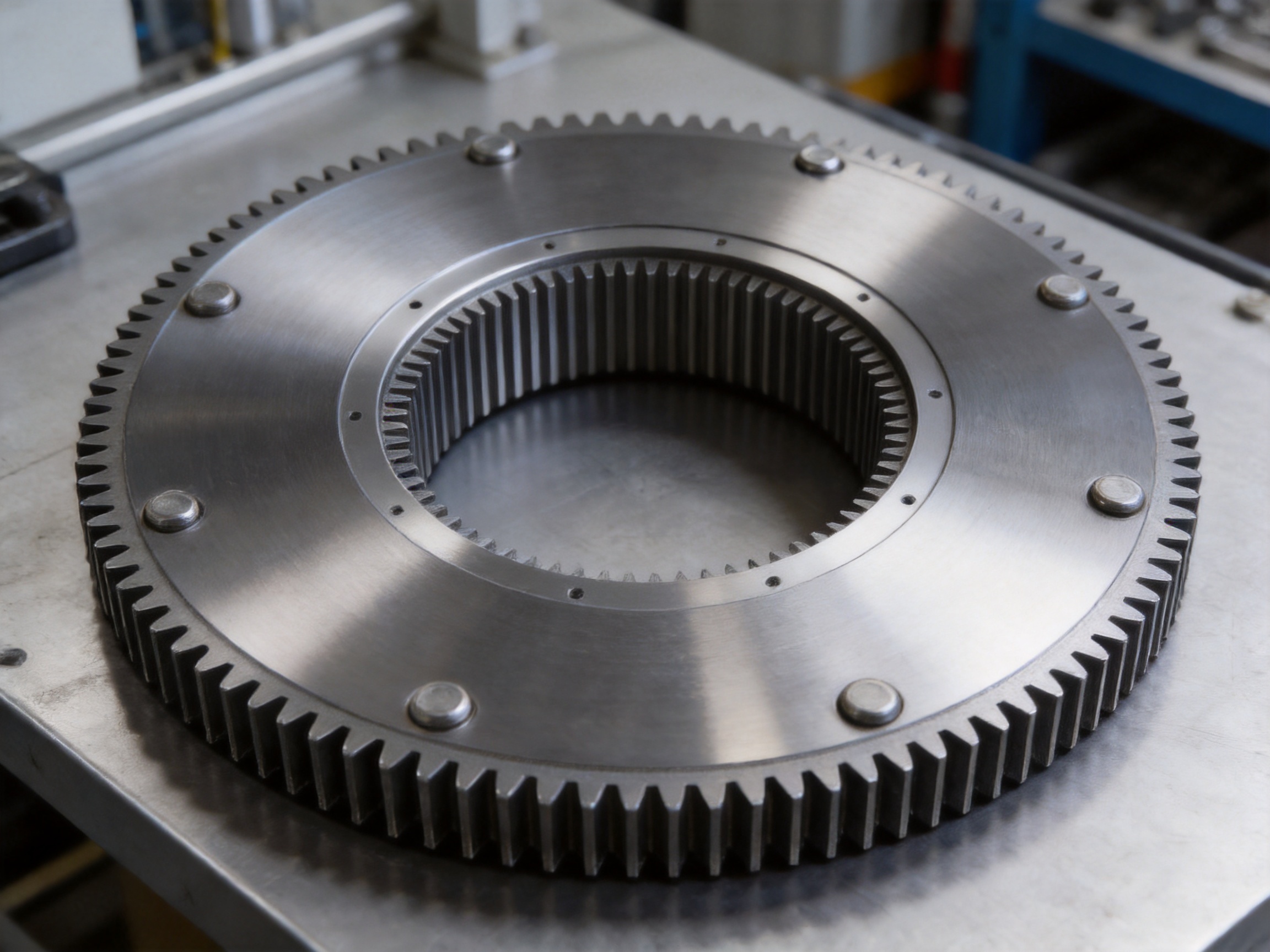
Material quality alone is not enough to create a superior disc. The cutting surface must be machined with high precision so that every tooth participates in the grinding process consistently. The integrated disc uses precision CNC machining to create the disc body, mounting holes, central feed area, and tooth geometry. The tooth profile uses a radial fine-tooth pattern with optimized angles, improving the ability to shear, cut, and refine plastic particles while controlling powder distribution.
High-precision tooth machining contributes directly to powder quality. When the tooth profile is inconsistent, some areas cut aggressively while others rub or pass material inefficiently. This can produce excessive fines, unground coarse particles, overheating, and variable throughput. A uniform tooth pattern supports smoother material movement through the grinding chamber and improves the probability that each particle receives consistent cutting action.
The precision of the outer stationary disc mounting holes is also important. Dozens of bolt holes must align accurately to ensure secure installation and even load distribution. If mounting accuracy is poor, the disc may shift, vibrate, or become difficult to adjust. Precision machining reduces these risks and helps operators maintain a stable grinding gap with less trial and error.
High-Speed Stability with Low Vibration and Low Noise
Pulverizer discs often operate at thousands of revolutions per minute, and high-speed stability is essential for both machine protection and powder consistency. The integrated disc provides excellent balance and structural rigidity, reducing vibration during rotation. Lower vibration protects bearings, shafts, seals, and mounting components. It also contributes to safer and more comfortable working conditions by lowering operational noise.
Excessive vibration in a pulverizer can have many negative consequences. It may loosen fasteners, accelerate bearing wear, cause uneven grinding, increase energy consumption, and shorten the life of the entire machine. In severe cases, vibration can create safety hazards. A well-balanced disc therefore provides value beyond its own service life; it supports the reliability of the complete pulverizing line.
Changzhou Mao Yue Intelligent Equipment Co., Ltd. reinforces this advantage through advanced manufacturing and inspection capability. The company uses German dynamic balancing equipment, high-precision grinding machines imported from Taiwan and built to German standards, and Japanese welding systems for related equipment manufacturing. These resources support accurate machining, stable components, and reliable machine performance. For customers, this manufacturing foundation means the disc is not only designed well but also produced with the equipment discipline required for consistent results.
Simple Grinding Gap Adjustment with Micron-Level Fine-Tuning
In plastic pulverizing, the grinding gap between moving and fixed surfaces strongly influences powder fineness. A smaller gap generally produces finer powder, while a larger gap may increase throughput but produce coarser particles. However, adjustment must be accurate and repeatable. If operators cannot control the gap reliably, the final powder may drift outside specification.
The integrated disc supports straightforward gap adjustment. Micron-level fine-tuning can be achieved with a feeler gauge and adjustment bolts, without requiring highly specialized tools. This is a practical advantage for production teams because it reduces setup time, simplifies operator training, and allows quicker response to changing material requirements. For example, a plant may need to switch from recycled PE film to PE pipe regrind or from ordinary powder production to rotational molding powder. Fast and accurate adjustment helps the plant maintain flexibility.
Ease of adjustment also reduces the risk of incorrect operation. When adjustment is too complicated, operators may postpone fine-tuning or rely on approximate settings. Over time, this leads to inconsistent powder, higher energy use, and unnecessary disc wear. A disc system that supports quick and accurate setting helps keep production disciplined and repeatable.
Thermal Control and the Role of Cooling in PE Grinding
PE and other polyolefins are sensitive to heat during pulverizing. Friction between plastic particles and disc teeth can raise the chamber temperature. If heat is not controlled, PE may soften, smear, carbonize, discolor, or stick to the grinding disc. This creates clumping, reduces throughput, increases cleaning frequency, and can contaminate powder quality.
The integrated disc’s high-precision tooth geometry works together with the Mao Yue pulverizer’s dual air-water cooling system to help control grinding chamber temperature. Efficient cutting reduces unnecessary friction, while cooling removes heat from the process. This combination helps prevent softening, carbonization, and sticking during prolonged continuous production. The result is cleaner powder with less discoloration, fewer lumps, and better flowability.
Thermal control is especially important in applications where powder purity and appearance matter. Rotational molding powder must melt and flow evenly inside molds, powder coating material must remain clean and consistent, and recycled powder intended for regranulation or film blowing must avoid thermal degradation. By helping control temperature, the integrated disc supports both production efficiency and downstream product quality.
Stable Powder Fineness from 10 to 120 Mesh
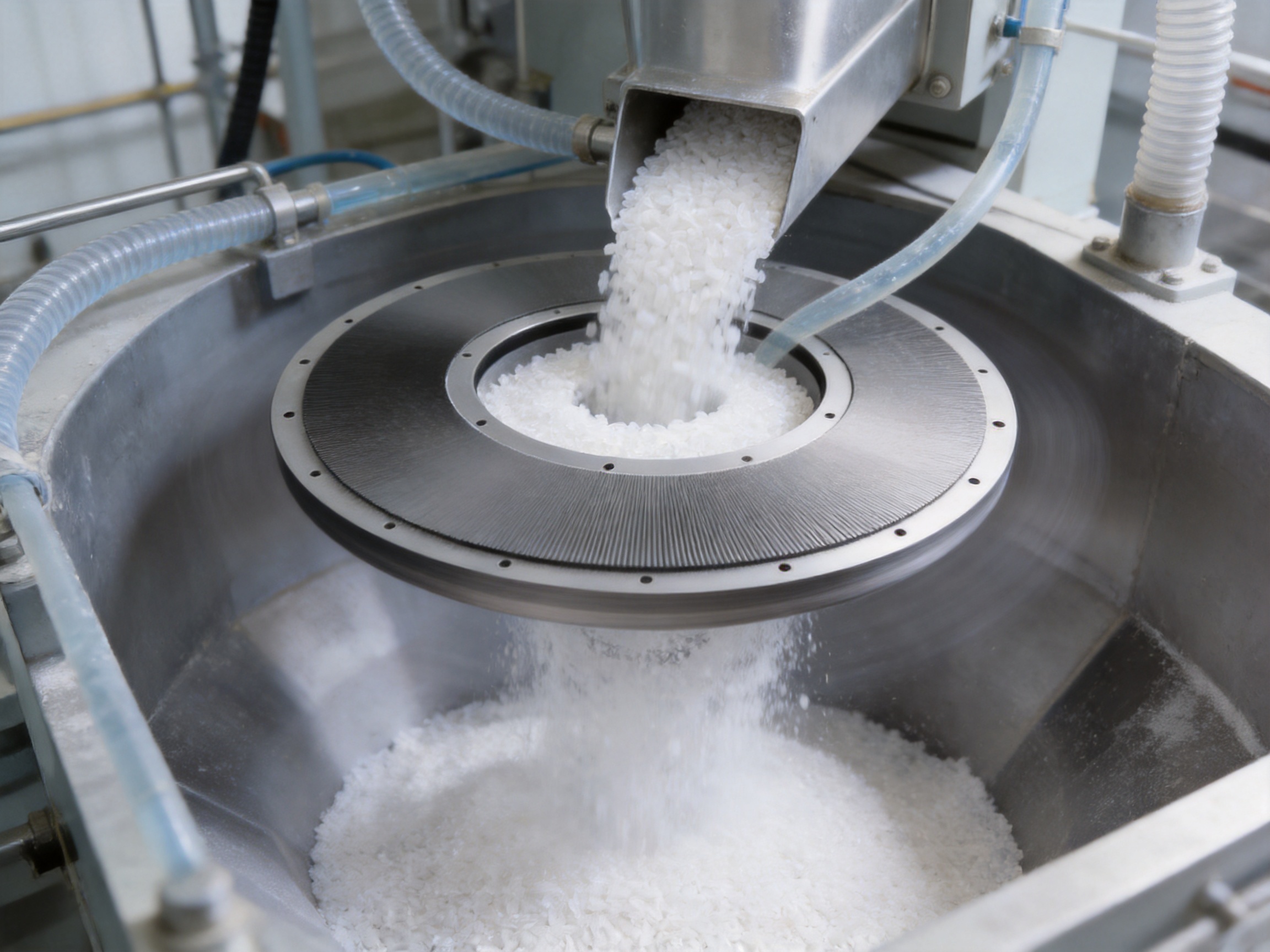
The finished powder fineness produced with this disc can be stably controlled within the range of 10 to 120 mesh, depending on material characteristics, machine configuration, screen selection, cooling, and operating parameters. For PE applications, 20 to 80 mesh ultrafine powder is commonly required. This range is widely used for rotational molding, modified plastic carriers, powder coatings, recycling, and other processing routes.
A valuable powder is not defined only by average particle size. Particle distribution, sphericity, flowability, and impurity control are equally important. Powder with a narrow distribution behaves more predictably in downstream processes. High sphericity and good flowability help material feed smoothly, spread evenly, and melt more uniformly. The integrated disc’s stable cutting action supports these quality characteristics by reducing the occurrence of obvious coarse particles and limiting irregular grinding behavior.
For recycling companies, better powder quality can raise the value of recycled material. Instead of selling low-value flakes or inconsistent regrind, processors can supply powder for regranulation, film blowing, pipe extrusion, profile extrusion, injection molding, and other applications. This helps convert waste PE into higher-value usable material, supporting circular economy goals and more efficient resource use.
Applications in Plastic Recycling and Regeneration
Plastic recycling is one of the most important application areas for the integrated disc. Waste PE materials such as film, agricultural mulch, pipes, bottle caps, cable material, strapping bands, shopping bags, garbage bags, and packaging waste can be pulverized into fine powder after proper cleaning, crushing, drying, and feeding. This powder may then be used in regranulation, extrusion, injection molding, or blending applications.
Recycled plastic materials are often more difficult to process than virgin material because they may vary in density, melt index, contamination level, shape, and prior thermal history. A grinding disc used in recycling must therefore maintain strong cutting performance and resist uneven wear. The DC53 tool steel base, high hardness, impact resistance, and fatigue resistance of the integrated disc are well suited to these conditions.
By reducing replacement frequency and downtime, the disc helps recycling companies improve production continuity. In recycling, profitability often depends on processing large material volumes at controlled cost. Every hour of machine stoppage affects throughput and delivery schedules. A longer-life disc with stable performance can help reduce the hidden cost of maintenance interruptions.
Applications in Rotational Molding Powder Production
Rotational molding requires powder that flows easily, melts uniformly, and distributes evenly across the inner surface of the mold. Products such as water tanks, pallets, playground equipment, kayaks, chemical storage tanks, traffic barriers, and large hollow containers depend on powder quality. If the powder has poor flowability, uneven particle size, or excessive coarse particles, the finished product may show uneven wall thickness, rough surface texture, bubbles, voids, weak corners, or inconsistent mechanical properties.
The integrated disc is highly suitable for PE powder production in rotational molding applications. Its precise tooth profile, high-speed stability, and heat-control compatibility help produce powder with uniform particle size and good flow behavior. Agglomeration-free powder is easier to dose, store, and mold. It also improves the repeatability of production, helping rotational molders reduce scrap and improve final product appearance.
In rotational molding, powder quality can influence cycle time. Powder that melts consistently may require less adjustment and fewer rework cycles. Stable powder also helps manufacturers keep wall thickness within tolerance, which is important for both safety and material cost control. For large hollow products, even small quality improvements can result in significant savings over long production runs.
Applications in Powder Coating and Modified Plastics
High-quality PE powder is used in electrostatic spraying, fluidized bed impregnation, and other coating processes. In these applications, powder must be clean, fine, and free from scorching or contamination. The integrated disc supports the production of PE powder coatings by reducing overheating and improving particle uniformity. This helps the powder form smooth, consistent coatings with reliable coverage.
In modified plastics, ultrafine PE powder can serve as a carrier for filler masterbatches, color masterbatches, and functional masterbatches. When particle size is controlled and powder flowability is good, additives can disperse more evenly during downstream compounding. This supports improved color consistency, mechanical performance, functional dispersion, and processing stability.
The disc can also be used for fine grinding of flexible polyolefins such as EVA and LLDPE. These materials can be challenging because their softness and elasticity may increase heat buildup and sticking risk. A disc with sharp, wear-resistant teeth and good thermal compatibility helps maintain processing efficiency and reduce the risk of material adhesion.
Advantages for Laboratories and Small-Batch Development
Although the disc is designed for demanding industrial production, it also offers value in research, development, and small-batch testing. Laboratories working with new PE blends, recycled formulations, additives, or functional powders need repeatable grinding results. If the grinding system produces inconsistent powder, test results may be unreliable. A stable, precisely machined disc helps laboratories obtain powder that better reflects the intended formulation.
Small-batch producers also benefit from fast adjustment and reliable powder quality. Custom production often requires frequent material changes, and a disc that supports easy gap setting helps reduce transition time. Whether used for pilot testing, formulation comparison, or specialty material processing, the integrated disc provides a strong platform for controlled pulverizing.
Customization for Different Disc Diameters, Tooth Densities, and Coatings
Plastic pulverizing requirements vary by material type, desired powder size, production capacity, and machine model. A single disc configuration cannot be ideal for every application. For this reason, customization services are available for different disc diameters, tooth density configurations, and surface coating options. This allows customers to match the disc to their process instead of forcing the process to adapt to a generic component.
Tooth density influences cutting frequency, powder fineness, heat generation, and capacity. A finer tooth configuration may help produce smaller particles, while a different tooth layout may be preferred for higher throughput or more difficult materials. Disc diameter affects grinding area and machine compatibility. Surface coatings may be selected to improve wear resistance, reduce adhesion, or support special processing requirements.
Customization is one of the strengths of Changzhou Mao Yue Intelligent Equipment Co., Ltd. The company has 30 years of experience in plastic crushing and pulverizing equipment and has built long-term partnerships with more than 5,000 enterprises in domestic and international markets. This extensive application background allows the technical team to understand diverse production problems and recommend practical configurations.
Compatibility with Pulverizers and Production Lines
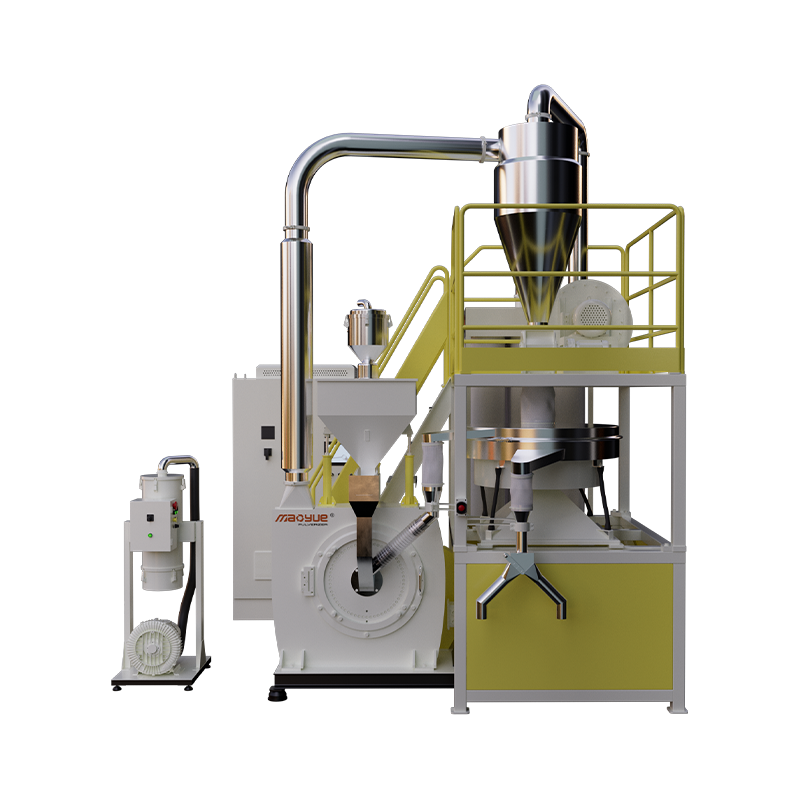
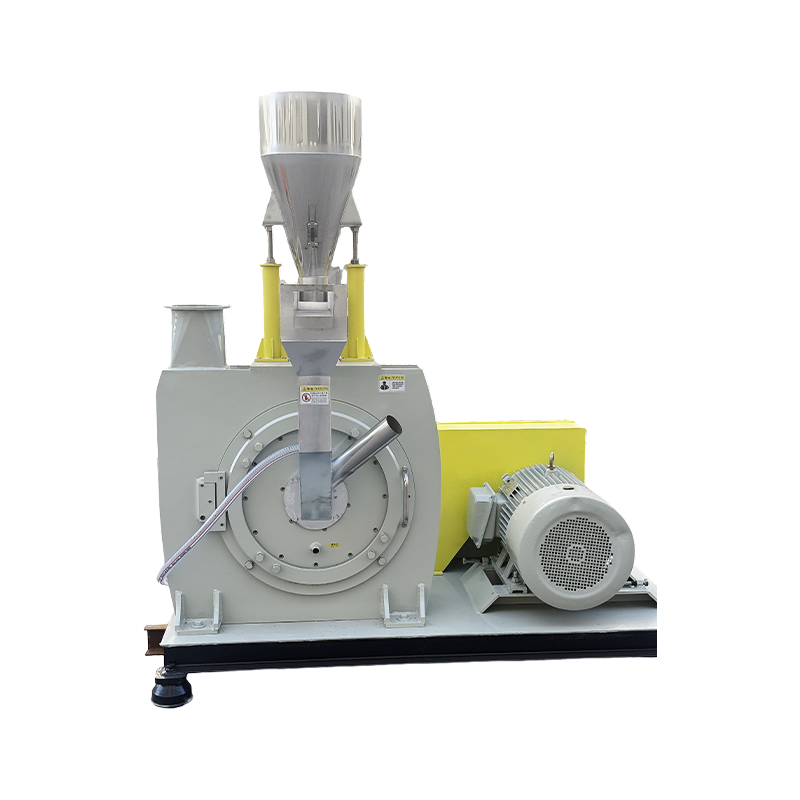
The integrated disc is designed as an original accessory for the full range of Mao Yue PE, PP, and EVA pulverizers. It is also compatible with selected mainstream pulverizer brands, depending on machine structure, disc dimensions, mounting hole layout, shaft arrangement, and operating parameters. Compatibility matters because many plants already operate multiple machines and need reliable spare parts or performance upgrades without replacing the entire line.
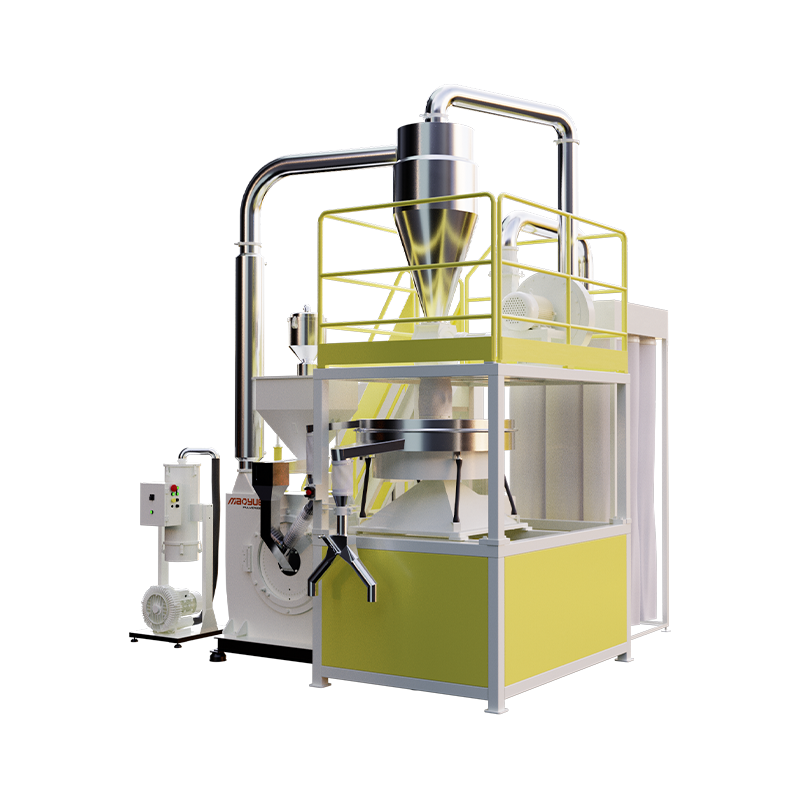
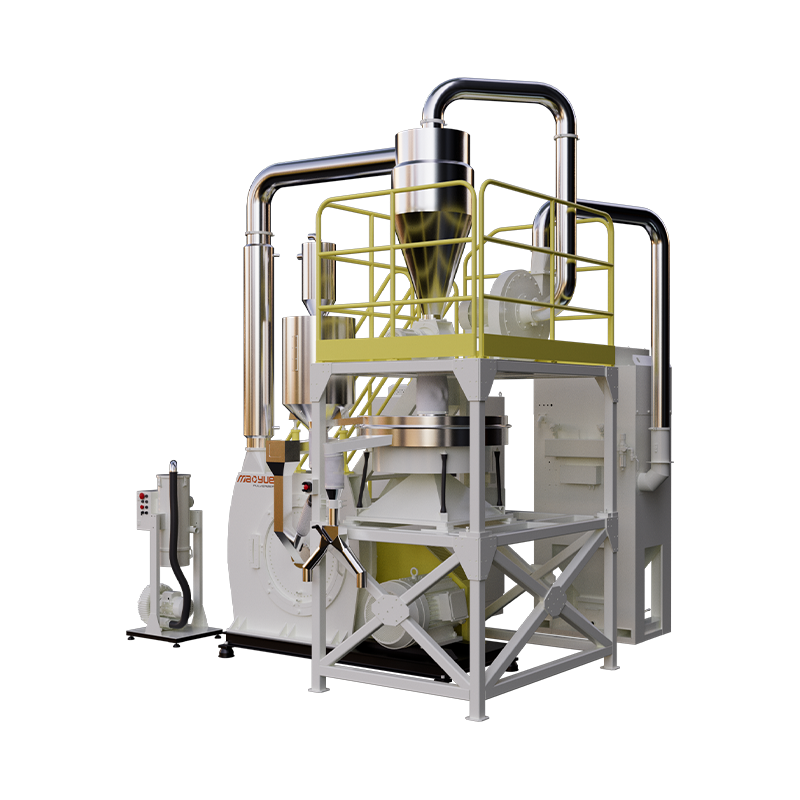
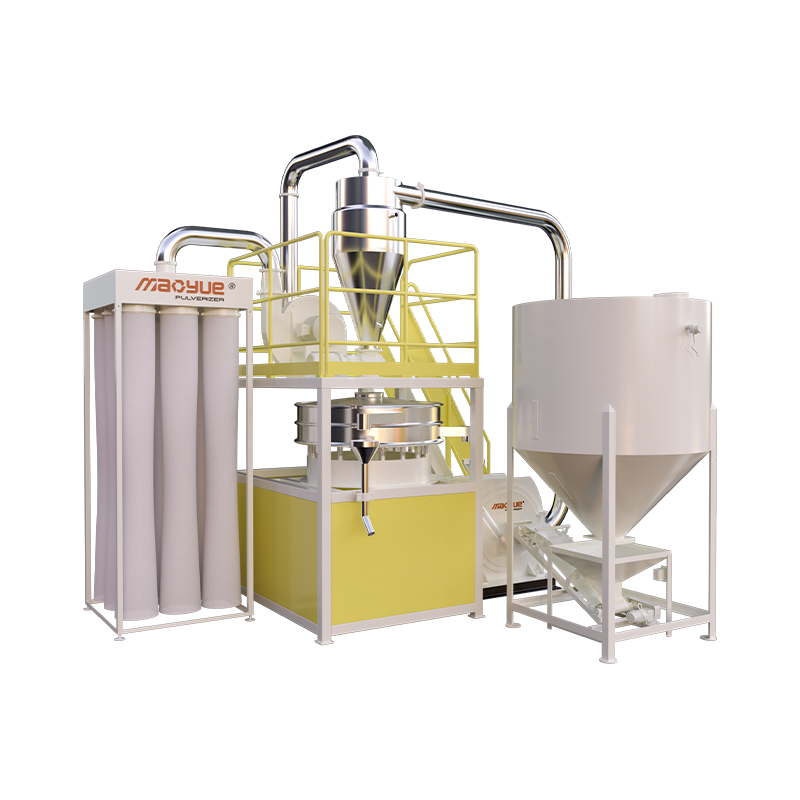
For production lines that include crushing, conveying, feeding, pulverizing, screening, cooling, and dust collection, the disc plays a central role in determining system output. A high-quality disc can improve capacity, but the surrounding equipment must also be matched properly. Feed uniformity, cooling efficiency, classifier or screen performance, and dust control all influence final results. As a source manufacturer of crushing and pulverizing equipment, Mao Yue can support customers with more than a single component; it can provide technical understanding of the complete process.
This integrated approach is important for customers seeking production improvement. If a plant only replaces a worn disc with a low-cost part, it may solve an immediate maintenance issue but fail to address the root cause of low capacity or inconsistent powder. A high-performance integrated disc, combined with proper machine adjustment and process guidance, can produce a more meaningful upgrade.
Manufacturing Strength Behind the Product
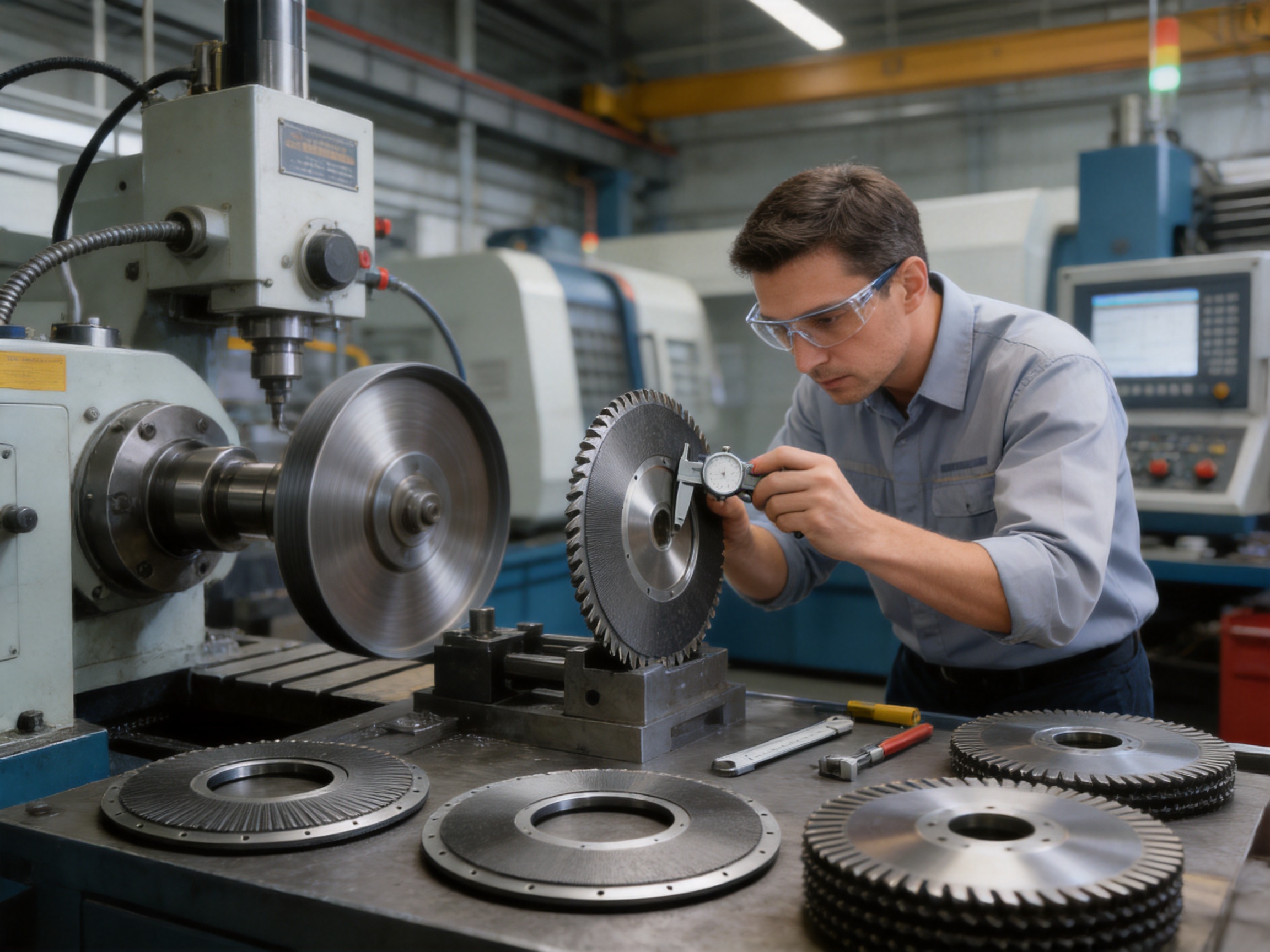
A precision grinding disc requires more than a good design drawing. It requires advanced equipment, experienced technicians, strict process control, and a quality culture focused on long-term reliability. Changzhou Mao Yue Intelligent Equipment Co., Ltd. is a source manufacturer with 30 years of experience in plastic crushing and pulverizing equipment. The company was among the pioneers in the plastic pulverizer market and continues to manufacture components according to European quality standards.
The company operates six processing workshops, each averaging about 1,400 square meters. This workshop capacity supports machining, assembly, inspection, and customized production. A professional technical team regularly studies advanced machine technologies from countries such as Germany, helping the company maintain a modern understanding of pulverizer performance, balancing, machining accuracy, cooling, and machine safety.
The factory is equipped with Taiwan-imported high-precision grinding machines built to German standards. Precision grinding is vital for disc flatness, tooth accuracy, and surface consistency. German dynamic balancing equipment is used to improve high-speed rotational stability. Japanese welding systems support the broader production of pulverizing equipment and related structures. Together, these manufacturing resources allow the company to produce stable components and reliable machines.
Quality Certifications and Industrial Reliability
The company has obtained CE mechanical certification and ISO 9001 quality management system certification. CE certification supports product safety and compliance expectations for machinery markets, while ISO 9001 reflects a structured approach to quality management, process control, documentation, and continuous improvement. For buyers, these certifications help reduce procurement risk, especially when purchasing critical equipment or spare parts for continuous production.
Quality control is particularly important for grinding discs because small deviations can create large operational problems. Dimensional tolerance, hardness uniformity, tooth geometry, surface finish, mounting accuracy, and dynamic balance all need attention. A disc may appear simple from a distance, but its performance depends on many invisible details. A manufacturer with specialized experience in plastic pulverizing is better positioned to control these details than a general-purpose parts supplier.
Mao Yue emphasizes quality, service, innovation, and customized solutions. This matters because many production issues are application-specific. The same machine may behave differently when processing PE film, rigid PE pipe, EVA, LLDPE, bottle caps, or mixed recycled material. Technical service helps customers identify appropriate settings, cooling conditions, maintenance intervals, and disc configurations.
Cost-Performance Compared with Imported Equivalents
Imported pulverizer discs have traditionally been chosen by some customers because of perceived quality and reliability. However, imported parts may involve high purchase prices, long lead times, limited customization flexibility, and increased maintenance planning complexity. A domestically developed high-performance integrated disc with strong material selection, precision machining, and advanced heat treatment can offer a more practical cost-performance balance.
The integrated disc provides a strong alternative by combining premium DC53 tool steel, HRC 60-61 hardness, monolithic rigidity, CNC tooth machining, dynamic balance, and customization capability. Because it is developed and manufactured by a source factory specializing in plastic pulverizing equipment, customers can obtain technical support, replacement guidance, and application-specific improvements more directly.
Total cost should be evaluated over the full service life of the component. A lower-cost disc that wears quickly may be more expensive when downtime, labor, reduced capacity, energy consumption, and inconsistent powder quality are considered. Conversely, a durable integrated disc may reduce the frequency of replacement, preserve grinding efficiency for longer periods, and improve machine utilization. For many production environments, these savings outweigh the difference in initial purchase cost.
Energy Efficiency and Production Capacity Improvement
A sharp, wear-resistant, accurately machined disc cuts material more efficiently. Efficient cutting reduces wasted friction, lowers unnecessary heat generation, and can improve production capacity. Compared with traditional split discs, the integrated disc can significantly enhance output while supporting lower energy consumption. The exact improvement depends on raw material, machine model, disc size, tooth configuration, cooling system, feeding method, and target powder fineness.
Energy efficiency is increasingly important for plastic processing companies. Electricity is a major operating cost in pulverizing, and inefficient grinding can also increase cooling demand and maintenance load. By maintaining sharpness and stable gap control for a longer time, the integrated disc helps reduce energy waste caused by worn teeth or unstable operation.
Higher capacity also affects labor efficiency. When a pulverizing line produces more qualified powder per hour, the same workforce can complete more production. This aligns with the company’s mission to improve production efficiency and reduce labor intensity. For customers facing rising labor costs or limited production space, capacity improvement through better disc technology can be a practical upgrade.
Maintenance Best Practices for Long Disc Life
Even the best grinding disc requires correct operation and maintenance. Before installation, the disc should be inspected for cleanliness, mounting surface condition, and any transport damage. Mounting bolts should be tightened evenly according to machine requirements. After installation, operators should verify the grinding gap with a feeler gauge and ensure that the adjustment is uniform around the disc.
During operation, feeding should be stable and appropriate for the machine capacity. Overfeeding can increase temperature, reduce powder quality, and overload the motor. Underfeeding may reduce efficiency and create unnecessary friction. Material should be properly prepared, usually by crushing, cleaning, and drying as needed. Contaminants such as metal fragments, stones, sand, or hard foreign objects should be removed before pulverizing because they can damage teeth and reduce disc life.
Cooling systems should be kept in good condition. Airflow, water circulation, filters, and chamber temperature should be monitored. If powder begins to clump, discolor, or stick, operators should check temperature, feed rate, gap setting, tooth wear, and material condition. Regular inspection helps detect wear patterns early and prevents small issues from becoming costly failures.
Environmental Value and Circular Economy Alignment
Plastic recycling and efficient material reuse are essential parts of modern environmental strategy. Pulverizing waste PE and related plastics into usable powder supports a closed-loop transformation from waste to valuable raw material. This is especially important for films, agricultural plastics, packaging waste, pipes, and other materials that may otherwise have limited reuse value.
The integrated disc supports this transformation by improving powder consistency and production efficiency. Better powder quality can expand downstream reuse options, allowing recycled material to enter higher-value applications. Lower energy consumption and longer disc service life also reduce resource waste associated with frequent part replacement and inefficient production.
This aligns with broader industrial goals such as reducing carbon emissions, supporting circular economy policies, and improving the sustainability of plastic processing. A grinding disc may seem like a small part in the overall recycling chain, but its impact on throughput, energy, and powder quality can be substantial.
How Buyers Should Evaluate a Pulverizer Integrated Disc
When selecting a grinding disc, buyers should look beyond the quoted price and examine the complete value proposition. Important factors include base material, hardness, heat treatment process, tooth geometry, machining accuracy, balance quality, compatibility, customization options, manufacturer experience, quality certifications, and after-sales technical support.
A reliable supplier should be able to explain why a certain disc configuration is suitable for a specific material and powder target. For PE rotational molding powder, the priority may be uniformity and flowability. For recycling, the priority may be wear resistance and capacity. For powder coating, the priority may be purity and heat control. For EVA or flexible materials, adhesion control and cooling may become more important.
The Pulverizer Integrated Disc from Mao Yue addresses these concerns through its monolithic structure, DC53 tool steel, HRC 60-61 hardness, carburizing and quenching, multiple tempering, precision CNC machining, high-precision tooth profile, easy gap adjustment, and compatibility with advanced cooling systems. It is not simply a replacement part; it is a performance upgrade for the pulverizing process.
Q&A: Common Questions About the Integrated Grinding Disc
What materials can this integrated disc process?
It is especially suitable for PE, PP, EVA, LLDPE, and related polyolefin materials. It is widely used for recycled PE film, agricultural mulch, PE pipes, bottle caps, cable materials, strapping bands, garbage bags, rotational molding powder, powder coatings, and masterbatch carrier powder.
What powder fineness can be achieved?
Depending on material condition, machine model, cooling efficiency, and operating settings, the finished powder can be controlled in the range of 10 to 120 mesh. For PE applications, 20 to 80 mesh is commonly required and can be produced with stable particle quality under proper conditions.
Why is the monolithic structure important?
The monolithic structure improves rigidity and reduces risks associated with joints, such as deformation, alignment error, vibration, and uneven wear. This helps maintain a stable grinding gap, improves high-speed balance, and supports consistent powder quality.
How does the disc reduce downtime?
The DC53 high-wear-resistant tool steel, HRC 60-61 hardness, advanced heat treatment, and precision tooth profile extend service life and maintain cutting efficiency for longer periods. This reduces replacement frequency, maintenance labor, and production interruptions.
Is the disc difficult to adjust?
No. Grinding gap adjustment is designed to be straightforward. Operators can use a feeler gauge and adjustment bolts to achieve micron-level fine-tuning without specialized tools. This helps shorten setup time and improve production flexibility.
How does the disc help prevent PE from sticking or carbonizing?
The disc’s precise tooth geometry improves cutting efficiency and reduces unnecessary friction. When combined with the pulverizer’s dual air-water cooling system, grinding chamber temperature can be better controlled, helping prevent PE softening, carbonization, discoloration, and sticking.
Can it replace imported grinding discs?
Yes, in many applications it can serve as a high-performance alternative to imported equivalents. It offers strong wear resistance, precision machining, customization options, and favorable cost-performance, while also providing direct technical support from a specialized source manufacturer.
Is customization available?
Yes. Disc diameter, tooth density, and surface coating options can be customized according to the machine model, target powder fineness, material type, and production capacity requirement.
What makes the manufacturer reliable?
Changzhou Mao Yue Intelligent Equipment Co., Ltd. has 30 years of experience in plastic crushing and pulverizing equipment, six processing workshops, advanced machining and balancing equipment, CE mechanical certification, ISO 9001 quality management certification, and long-term partnerships with more than 5,000 enterprises.
Conclusion
The integrated grinding disc is a decisive component for high-efficiency plastic pulverizing. By combining a monolithic structure, high-strength alloy steel, proprietary DC53 high-wear-resistant tool steel, HRC 60-61 hardness, carburizing and quenching, multiple tempering, precision CNC machining, optimized radial fine teeth, accurate mounting holes, and easy micron-level gap adjustment, it delivers clear advantages over conventional split discs and standard market alternatives.
Its benefits are practical and measurable: longer service life, reduced downtime, lower vibration, lower noise, improved powder uniformity, better flowability, reduced overheating, higher production capacity, and stronger cost-performance. These qualities make it especially valuable for PE recycling, rotational molding powder production, powder coating, masterbatch carriers, EVA and LLDPE grinding, laboratory testing, and specialized plastic processing.
Behind the product is the manufacturing strength of Changzhou Mao Yue Intelligent Equipment Co., Ltd., a source manufacturer with three decades of pulverizer experience, advanced workshops, precision grinding equipment, German dynamic balancing systems, Japanese welding technology, European quality standards, CE certification, ISO 9001 quality management, and a deep understanding of plastic size-reduction applications. For companies seeking to improve pulverizer performance, reduce maintenance cost, and produce higher-quality powder, the Pulverizer Integrated Disc is a strong upgrade choice and a reliable core component for modern plastic pulverizing lines.
References
1. Brydson, J. A. Plastics Materials. Butterworth-Heinemann.
2. Rosato, D. V., Rosato, D. V., and Rosato, M. G. Plastic Product Material and Process Selection Handbook. Elsevier.
3. Crawford, R. J., and Kearns, M. P. Practical Guide to Rotational Moulding. Smithers Rapra Technology.
4. ISO 9001 Quality Management Systems: Requirements. International Organization for Standardization.
5. ASM Handbook, Volume 4: Heat Treating. ASM International.
6. Wypych, G. Handbook of Polymers. ChemTec Publishing.
7. Strong, A. B. Plastics: Materials and Processing. Pearson.
8. European Committee for Standardization. Machinery Safety and CE Compliance Principles.