

 English
 русский
 Español
 عربى
عربى 中文简体
中文简体
 中文简体
中文简体
Content
- 1 Introduction
- 2 1. What the Production Line Does
- 3 2. Materials and Applications
- 4 3. Blade Crushing: A More Controlled Front-End Process
- 5 4. Technical Specifications
- 6 5. Precision Disc Pulverizing
- 7 6. Thermal Management for Heat-Sensitive Plastics
- 8 7. Pneumatic Conveying and Separation
- 9 8. Dust Collection and Environmental Performance
- 10 9. Advantages Compared with Conventional Hammer-Type Systems
- 11 10. Advanced Manufacturing and Quality Control
- 12 11. Automation, Operation, and Maintenance
- 13 12. Production Economics and Resource Utilization
- 14 13. Installation and Project Planning
- 15 14. Why Manufacturer Capability Matters
- 16 15. Recommended Feedstock Preparation
- 17 16. Quality of the Finished Powder
- 18 17. Safety Considerations
- 19 18. Q&A
- 19.1 Q1: What materials can this production line process?
- 19.2 Q2: What is the difference between the blade crusher and the disc pulverizer?
- 19.3 Q3: What final particle size can be achieved?
- 19.4 Q4: Can the line process heat-sensitive PVC or ABS?
- 19.5 Q5: How is dust controlled?
- 19.6 Q6: What are the available crusher capacities?
- 19.7 Q7: What knife material is used?
- 19.8 Q8: What grinding disc material is used?
- 19.9 Q9: Is the line suitable for masterbatch recycling?
- 19.10 Q10: Does the machine replace washing and drying equipment?
- 19.11 Q11: How should customers select a model?
- 19.12 Q12: What manufacturing strengths support the equipment?
- 20 Conclusion
- 21 References
- 22 Product: Blade-type crushing and pulverizing production line
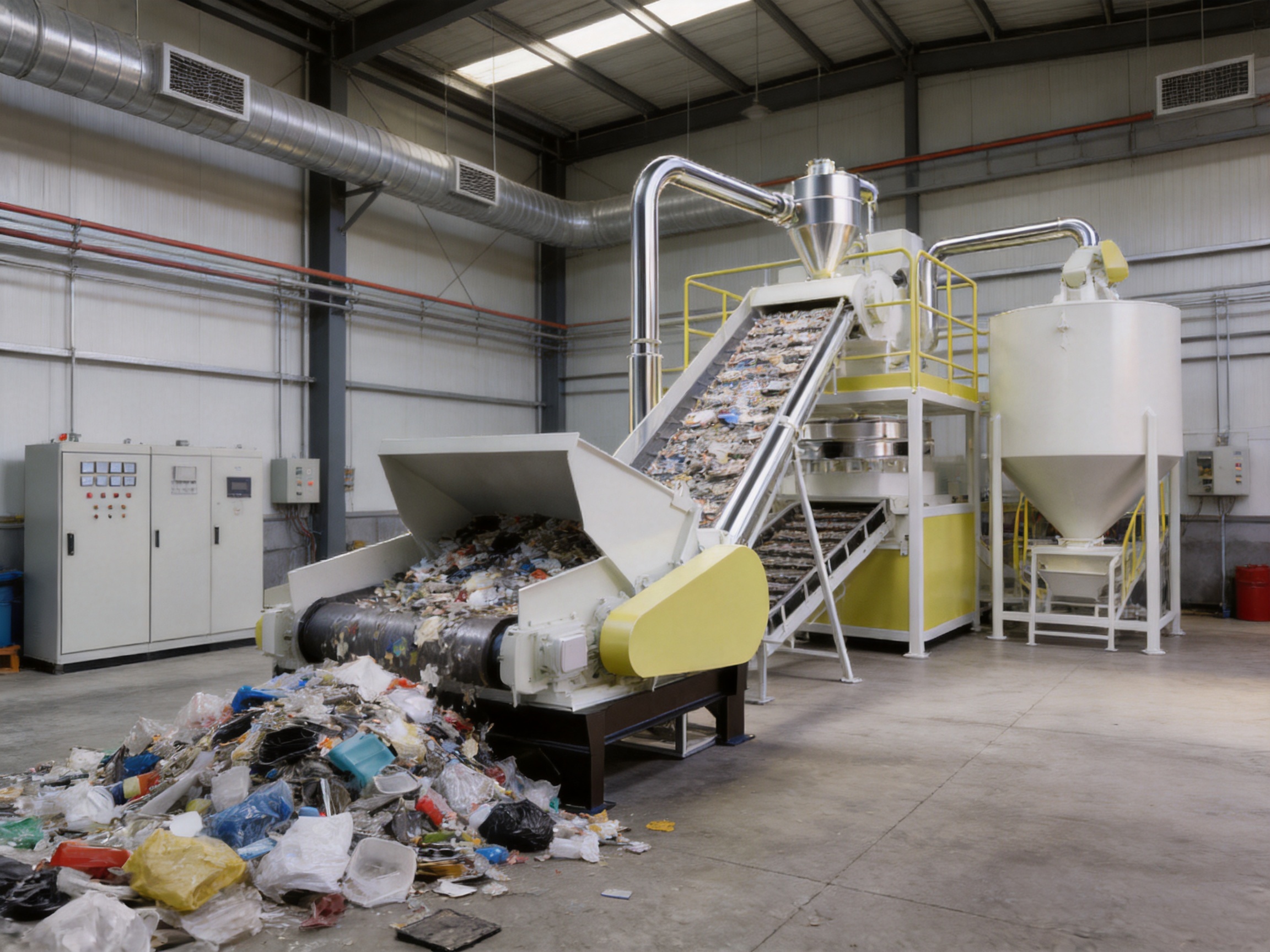
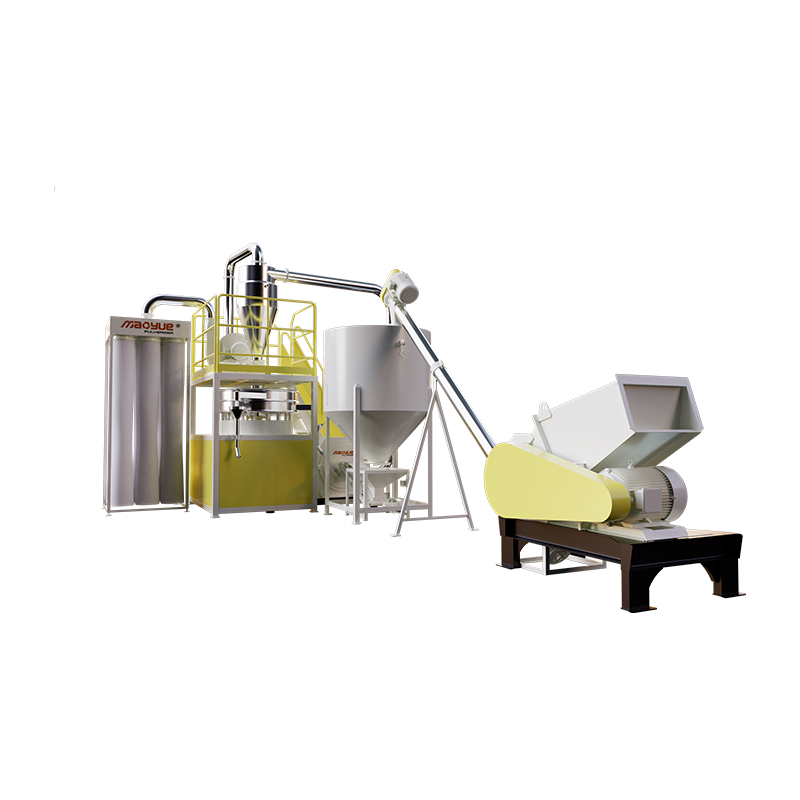
Blade-type crushing and pulverizing production line
Introduction
Plastic recycling is moving beyond simple size reduction. Modern recyclers increasingly require equipment that can convert difficult post-industrial and post-consumer plastic waste into consistent, clean, and reusable powder. The final material may be used in injection molding, extrusion, rotational molding, masterbatch production, modified plastics, regenerated PET products, flooring compounds, or other high-value applications. To meet these requirements, a recycling system must control particle size, temperature, dust, energy consumption, and material flow throughout the entire process.
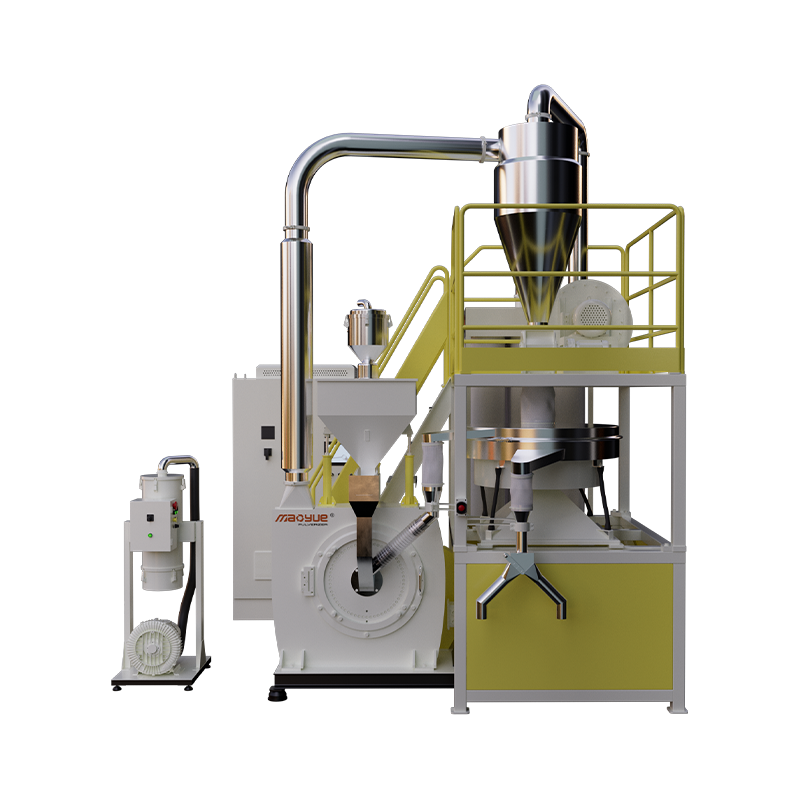
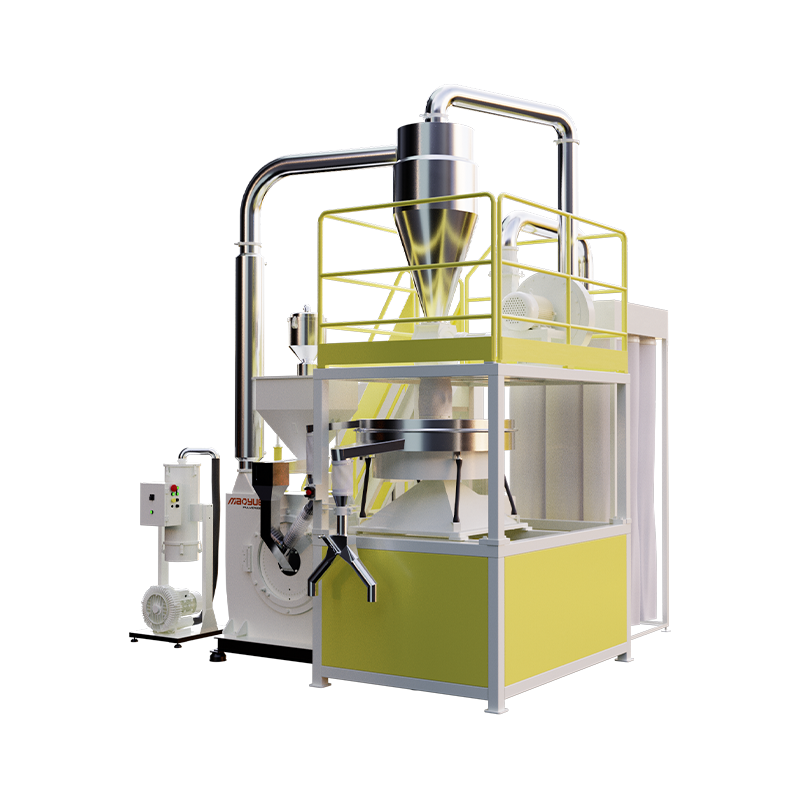
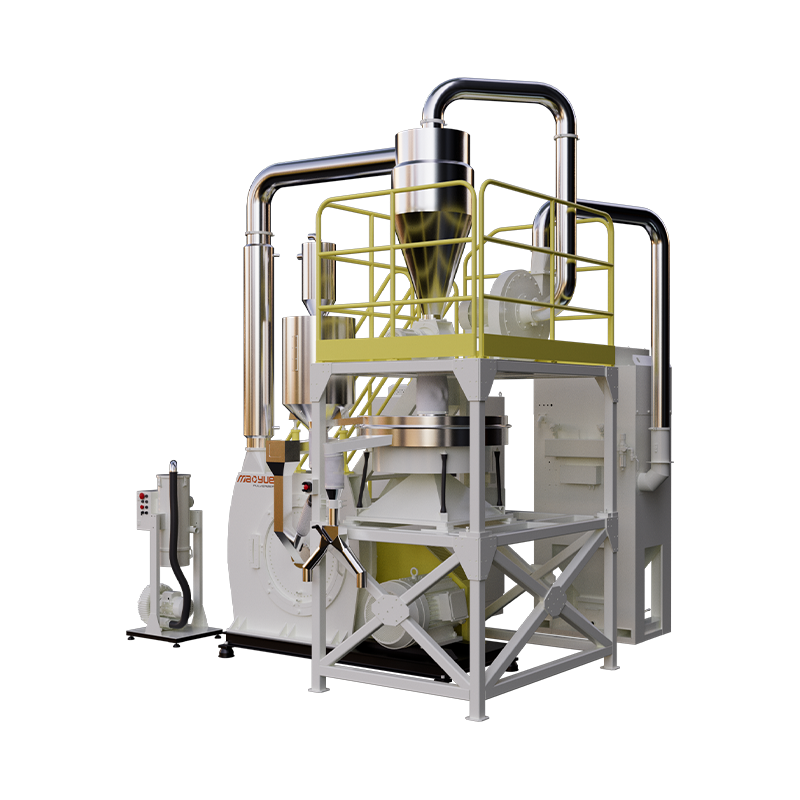
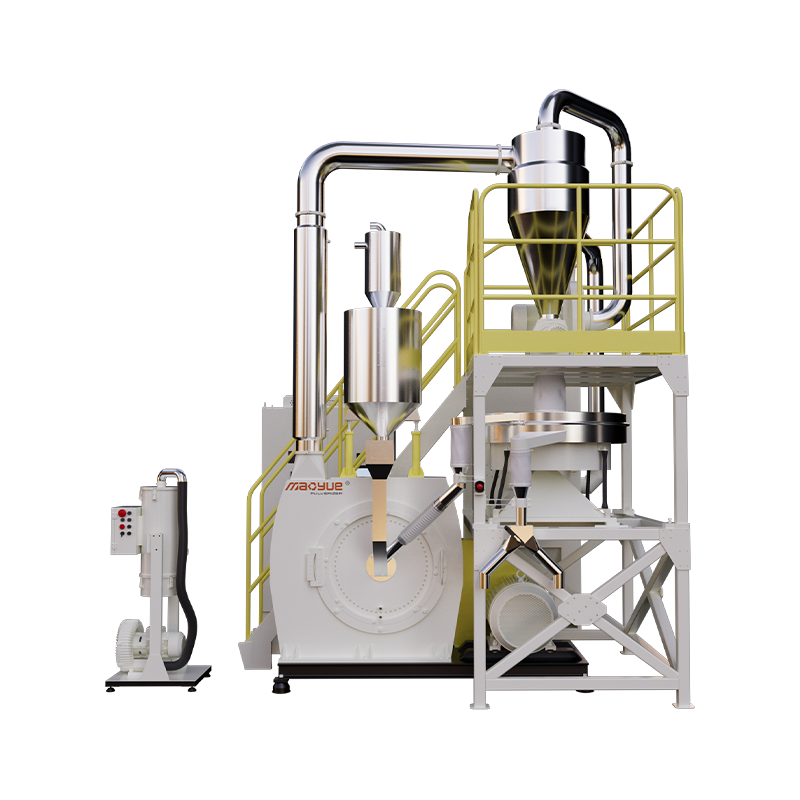
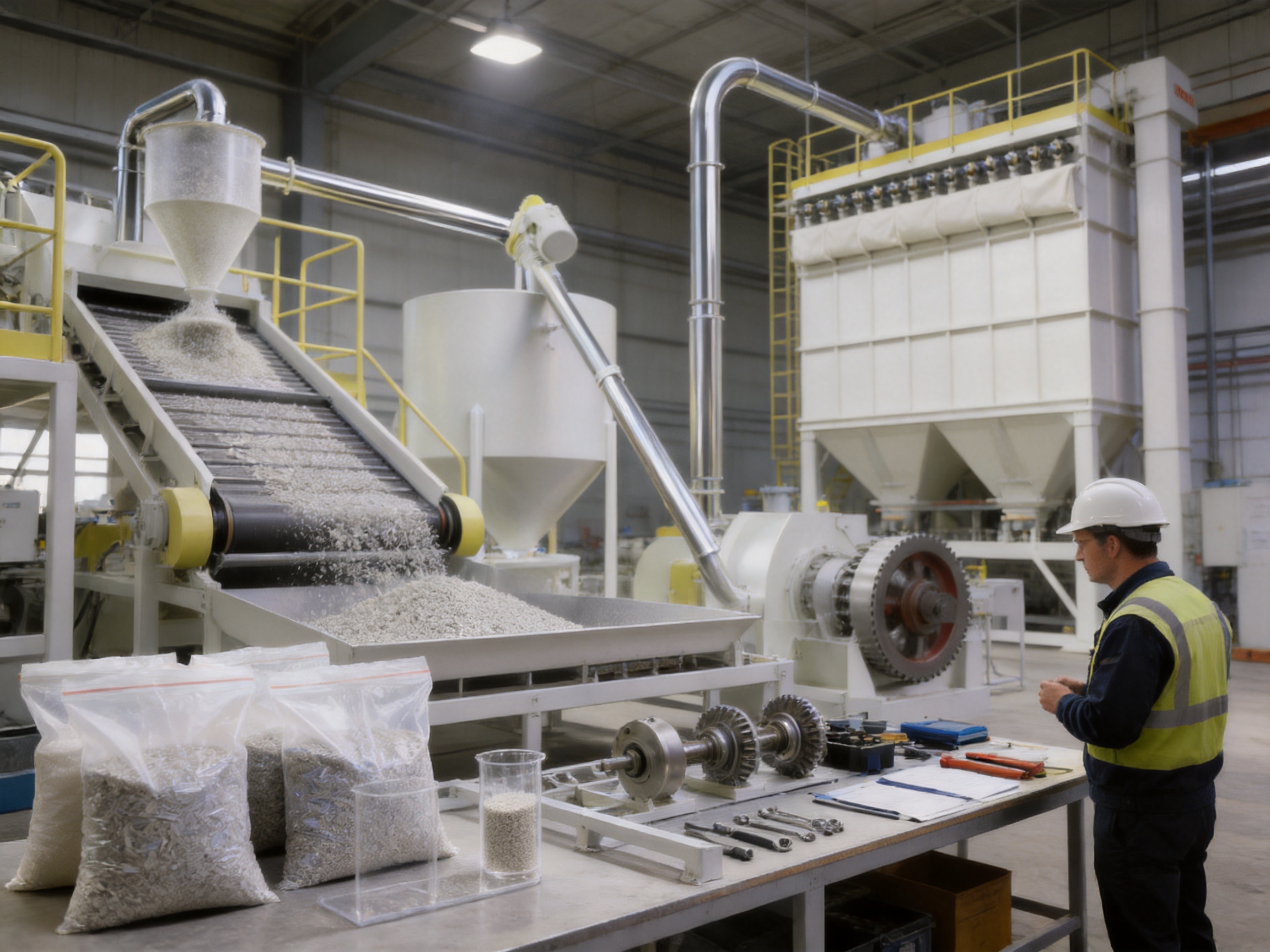
The blade-type crushing and pulverizing production line is an integrated solution developed for this purpose. It combines heavy-duty blade crushing, precision disc milling, pneumatic conveying, cyclone separation, vibrating screening, temperature control, and pulse-jet dust collection in one continuous processing system. Large or irregular plastic waste enters the line and is progressively reduced into uniform fine powder, with a typical final fineness of 20–80 mesh or finer, depending on the material and configuration.
Unlike conventional hammer-based systems, this production line uses a cutting-centered front-end process. Multiple rotary knives work with fixed knives to apply repeated shearing and cutting forces. This approach is particularly suitable for medium-hardness, brittle, and high-impact plastic waste, including PVC, PE, PP, PET, ABS, EVA, profiles, sheets, barrels, pallets, woven bags, injection-molded parts, film clumps, electrical housings, and appliance components.
The result is a production line designed not merely to crush plastic, but to prepare valuable secondary raw materials with stable quality. Its configuration emphasizes high particle-size consistency, reduced dust leakage, lower risk of material entanglement, improved thermal management, and easier maintenance. Supported by precision manufacturing, advanced balancing, carefully selected materials, and automated controls, the line provides a practical route from mixed scrap to reusable fine powder.
1. What the Production Line Does
The system is designed as a continuous crushing and grinding process. Depending on the incoming material, plastic waste may first be sorted, manually inspected, or pre-cut into manageable pieces. It is then fed into the blade crusher, where the material is cut into relatively uniform pieces. The coarse product is conveyed to the disc pulverizer, which performs the fine grinding stage. Air transport, cyclone separation, screening, and dust filtration then complete the processing cycle.
The principal stages include:
1. Feeding and material introduction.
2. Heavy-duty blade crushing.
3. Negative-pressure pneumatic conveying.
4. Precision disc pulverizing.
5. Cyclone separation.
6. Vibrating screening.
7. Return of oversize particles when required.
8. Pulse-jet baghouse dust collection.
9. Collection and packaging of finished powder.
This arrangement allows the line to process large pieces without requiring every item to be manually reduced to a small size before feeding. The blade crusher provides the initial size reduction, while the disc mill is responsible for producing the required fine powder. The separation and screening stages help maintain product uniformity and prevent excessive coarse particles from entering the finished product.
The line can be configured around different disc mill sizes, including 500, 600, and 800 models. The final selection depends on the type of plastic, required output, target mesh size, material moisture, bulk density, and operating schedule. A larger system may be appropriate for high-volume recycling, while a smaller configuration can be suitable for specialized recycling operations or applications with lower throughput requirements.
2. Materials and Applications
The production line is suitable for a broad range of plastic recycling applications. Its blade-based crushing principle is especially effective when the feedstock contains rigid pieces, brittle sections, thin sheets, molded components, or mixed shapes that can be difficult to process consistently with conventional equipment.
2.1 PVC Recycling
PVC pipe scraps, profiles, flooring offcuts, rigid sheets, film, and mixed PVC components can be reduced into powder for reuse in extrusion, flooring substrates, profiles, and other PVC products. PVC is sensitive to excessive heat, so stable grinding temperature and controlled residence time are important. The line’s reinforced cooling system and temperature monitoring help reduce overheating, adhesion, yellowing, and thermal degradation.
For PVC flooring and profile manufacturers, the resulting powder can serve as a recycled component in new production. Consistent particle size improves blending and dispersion, while dust collection helps maintain a cleaner working environment around the grinding and packaging areas.
2.2 PE and PP Waste
PE and PP are widely used in containers, packaging, woven products, automotive components, pallets, caps, and household goods. The blade crusher can process many of these materials into manageable pieces before fine grinding. Depending on the feedstock, the powder may be used in regenerated compounds, molded products, masterbatch production, or blended formulations.
Flexible PE and PP materials can sometimes create feeding and conveying challenges because they may fold, bridge, or wrap around rotating components. A cutting-oriented structure, correct blade clearance, suitable feeding design, and appropriate operating speed help reduce these risks. Material preparation and sorting remain important, particularly when film, rigid scrap, and contaminated waste are processed together.
2.3 PET Bottles, Sheets, and Strapping
PET bottles, sheet waste, and packaging straps are relatively hard and can be brittle during size reduction. After preliminary sorting and removal of unsuitable contaminants, the material can be crushed and finely ground for use in regenerated PET sheet, fibers, injection-molded products, and other applications.
Particle-size consistency is valuable in PET recycling because it supports more predictable feeding, blending, melting, and downstream processing. The system is not a substitute for washing, drying, or chemical treatment when those operations are required, but it can provide an efficient size-reduction and powder-preparation stage within a larger PET recycling plant.
2.4 ABS and PS Engineering Plastics
Waste ABS and PS can come from appliance housings, monitor covers, keyboards, toys, electronic components, and other molded products. These materials are often valuable because they can be reused in engineering plastic compounds. The blade-type production line reduces such waste into uniform pieces and then into fine powder suitable for further blending, modification, or remolding.
Uniform powder supports better distribution of additives, pigments, fillers, and virgin polymer. When the material is properly sorted by polymer type and color, the recycling operation can achieve a higher-value output than mixed, uncontrolled scrap processing.
2.5 EVA, Masterbatch, and Modified Plastic Waste
EVA scraps, masterbatch leftovers, color concentrates, and modified plastic waste can also be processed. In masterbatch applications, accurate dispersion is essential. A narrow and stable particle-size distribution helps improve the consistency of subsequent compounding and color distribution.
The line may be used for pre-treatment of masterbatch scrap, rejected molded parts, production edge trim, and other manufacturing residues. The recovered powder can be returned to an internal production process or supplied to a downstream modified-material manufacturer, subject to the customer’s material specifications and quality-control procedures.
3. Blade Crushing: A More Controlled Front-End Process
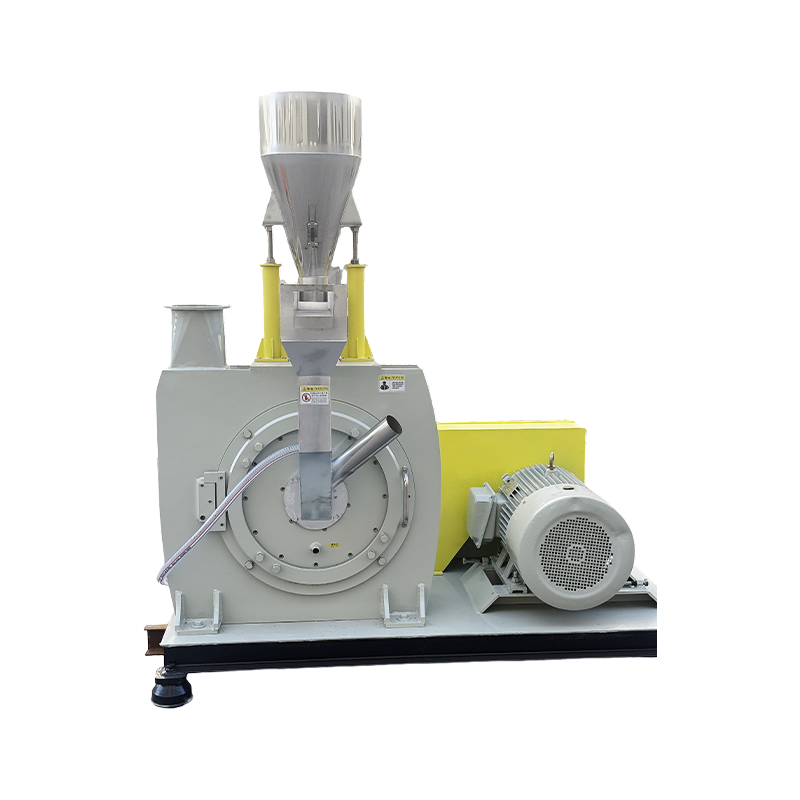
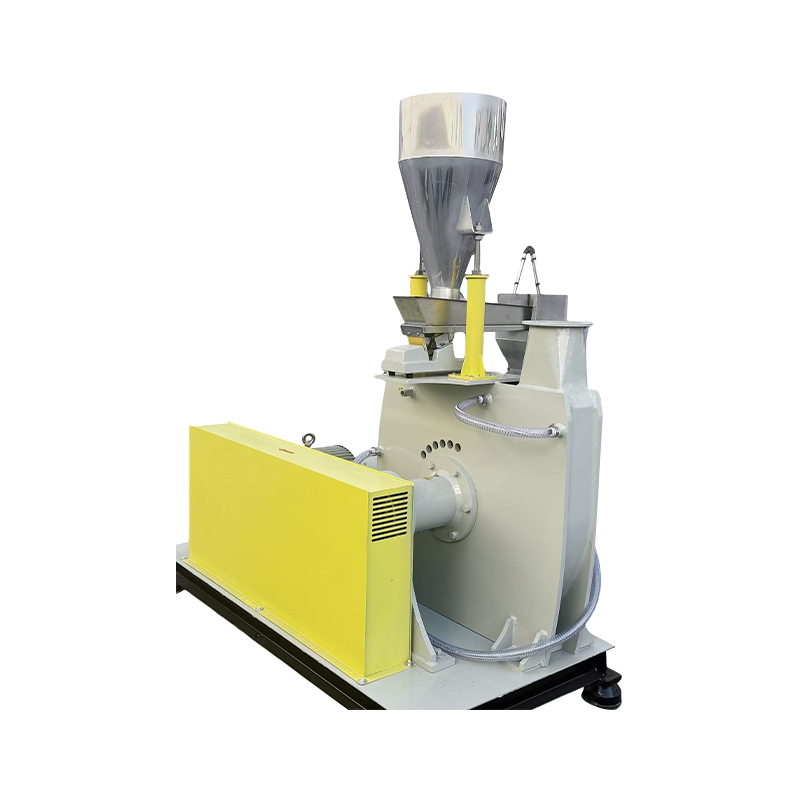
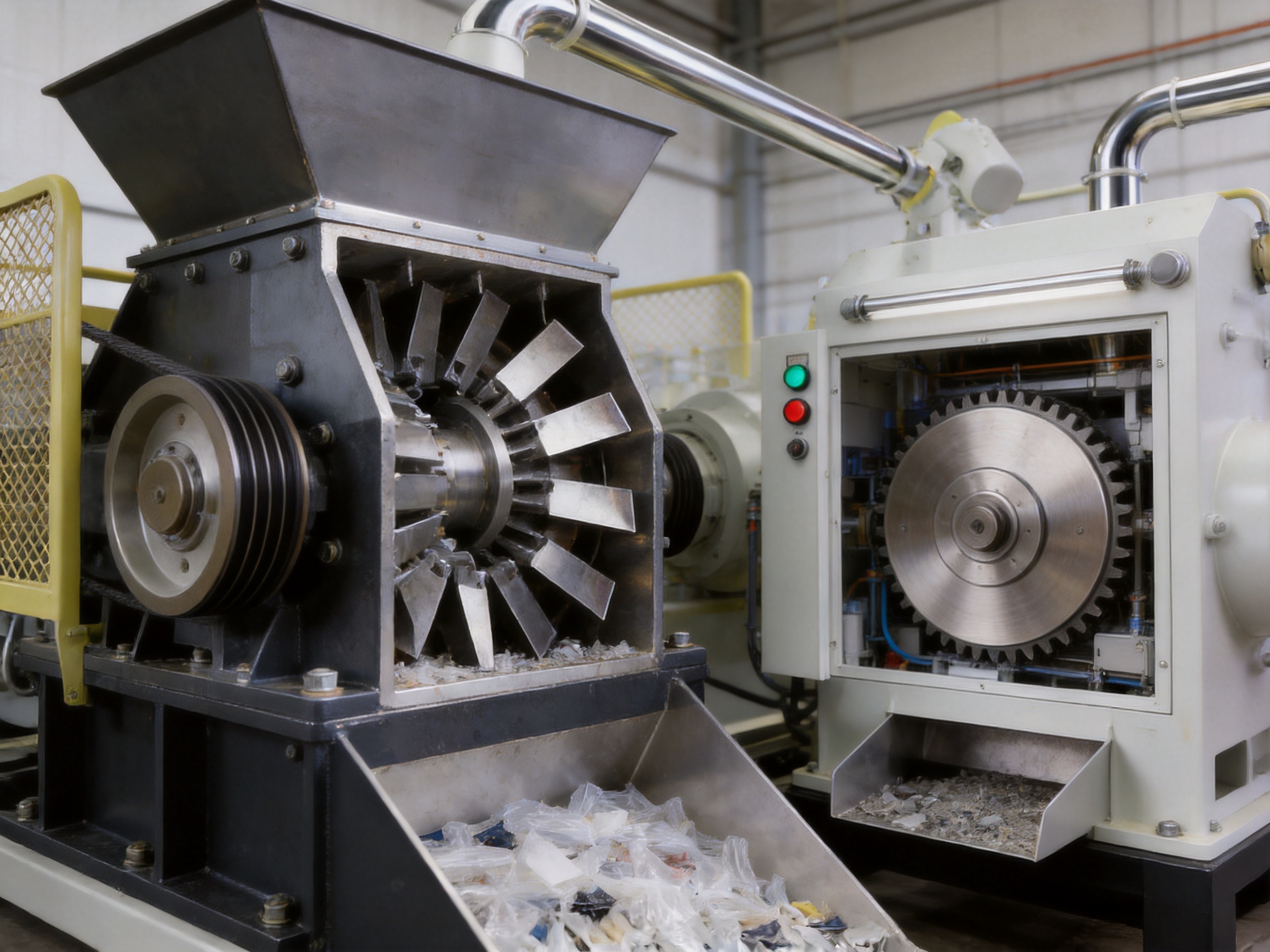
The front-end crusher is the first major performance element in the system. It uses a heavy-duty multi-blade rotor and fixed knife arrangement. As the rotor turns, the material is pulled into the cutting zone and subjected to repeated shearing and slicing forces. The cutting action produces smaller pieces while limiting the uncontrolled impact and pulverization associated with some hammer-type machines.
The cutting structure is well suited to medium-hardness and brittle plastics. Instead of relying primarily on violent impact, the crusher applies a more directional force. This can improve particle consistency, reduce unnecessary fines, and help the material move smoothly toward the fine grinding stage.
The available crusher configurations include models identified as 665, 1200, and 1500. Depending on the model, the rotor includes different numbers of rotary and fixed knives. The 665 model is specified with 10 rotary knives and 4 fixed knives. The 1200 model includes 15 rotary knives and 6 fixed knives, while the 1500 model includes 20 rotary knives and 8 fixed knives. These configurations support different throughput requirements and operating conditions.
The knife blades are made from 9CrSi tool steel. This material is commonly selected for cutting applications because of its hardness, wear resistance, and ability to maintain a usable edge under repeated mechanical stress. Blade life still depends on feedstock composition, contamination, operating conditions, clearance, sharpening quality, and maintenance frequency. However, suitable blade material provides a strong foundation for reliable cutting performance.
The crusher’s nominal host speed is 550 revolutions per minute for the 665 and 1200 models, while the 1500 model is specified at 650 revolutions per minute. Drive motor options range from 22 to 75 kW according to the model and configuration. Star-delta starting or soft-start control can be selected to reduce starting current and provide smoother acceleration.
Imported NSK bearings are specified for the belt and pulley system. Reliable bearings are important because the rotor operates under fluctuating loads when large and irregular plastic pieces enter the cutting chamber. Bearing quality contributes to lower vibration, improved service life, and more stable operation.
4. Technical Specifications
The following specifications summarize the principal blade crusher configurations described for the production line. Actual capacity may vary according to material type, feed size, moisture, contamination, final product requirements, operator settings, and the complete line configuration.
| Item | 665 Model | 1200 Model | 1500 Model |
| Knife configuration | 10 rotary knives, 4 fixed knives | 15 rotary knives, 6 fixed knives | 20 rotary knives, 8 fixed knives |
| Nominal capacity | 400–650 kg/h | 700–1,000 kg/h | 800–1,150 kg/h |
| Screen or mesh size | 16 mm | 16 mm | 16 mm |
| Drive motor options | 22/30/37/45 kW | 30/45/55 kW | 45/55/75 kW |
| Starting or speed control | Star-delta or soft start | Star-delta or soft start | Star-delta or soft start |
| Bearing standard | Imported NSK bearings | Imported NSK bearings | Imported NSK bearings |
| Knife material | 9CrSi | 9CrSi | 9CrSi |
| Host speed | 550 r/min | 550 r/min | 650 r/min |
| Feeding width or size designation | 665 mm | 665 mm | 665 mm |
The table should be used as a preliminary selection reference rather than a universal production guarantee. A complete technical proposal should be based on representative samples of the customer’s material. Testing is especially important when the feedstock includes mixed polymers, high levels of contamination, metal inserts, moisture, labels, adhesives, or a large percentage of flexible film.
5. Precision Disc Pulverizing
After coarse cutting, the material is transferred to a precision disc mill. The disc mill is available in 500, 600, and 800 models, allowing the system to be matched to different capacity targets and final powder specifications. The grinding discs are manufactured from DC53 high-grade mold steel, a material selected for high hardness, wear resistance, and dimensional stability.
Disc geometry is central to the quality of the finished powder. The grinding surfaces are processed using Taiwan-imported CNC tooth-by-tooth precision grinding technology. This manufacturing method helps maintain consistent tooth profiles and controlled working clearances across the disc surface. Accurate disc geometry supports stable grinding, predictable particle reduction, and improved service life.
Dynamic balancing is another important manufacturing step. The grinding rotor and related rotating components are calibrated using German dynamic balancing equipment. A properly balanced rotating assembly reduces vibration, bearing stress, noise, and mechanical wear. It also helps maintain stable grinding conditions at high rotational speeds.
Compared with a less accurately manufactured grinding chamber, a precision-balanced and precisely machined system can provide more consistent operation over extended production periods. This is particularly important when the output is used in applications requiring good flowability, dispersion, surface finish, or controlled blending behavior.
The fine grinding stage is designed to produce a narrow particle-size distribution with reduced agglomeration and fewer excessive fines. The actual result depends on the polymer, disc gap, feed rate, temperature, screen arrangement, and other operating parameters. Nevertheless, precision manufacturing provides the operator with a more stable platform for achieving the desired specification.
6. Thermal Management for Heat-Sensitive Plastics
Heat is one of the most important challenges in high-speed plastic grinding. Friction between the plastic and the grinding surfaces can raise the temperature rapidly. If temperature is not controlled, thermoplastic materials may soften, stick to the grinding discs, discolor, degrade, or form agglomerates.
The production line uses a reinforced dual cooling system in the grinding section. Multi-point temperature sensors monitor thermal conditions at different positions, while PLC-based intelligent control helps regulate the cooling process. The grinding chamber temperature is designed to remain within approximately 50–80°C under suitable operating conditions.
This temperature range is not a universal requirement for every polymer. Different plastics have different softening points, thermal sensitivities, and processing windows. The purpose of the control system is to provide a stable and adjustable operating environment. PVC, PET, ABS, and other heat-sensitive materials can therefore be processed with a lower risk of overheating and thermal damage when the system is correctly configured.
Additional air cooling or localized water cooling can be selected for the coarse crushing area, particularly around the blade section. Cooling the cutting zone can reduce heat accumulation, protect the blade edge, and help extend the interval between sharpening or replacement operations.
Temperature control also contributes to product quality. Powder that has not been overheated generally shows better flowability and reduced tendency to form lumps. It may also retain more of the original polymer’s usable properties, although final recycled-material performance will always depend on the condition and history of the incoming waste.
7. Pneumatic Conveying and Separation
Negative-pressure pneumatic conveying connects the major processing sections. Instead of relying entirely on open mechanical transfer, the system uses controlled airflow to move the crushed and ground material through enclosed pipelines. This reduces the opportunity for powder to escape into the workshop and supports a cleaner production environment.
Negative pressure is especially useful in a powder-processing line because air is drawn toward the system rather than pushed outward through gaps. When combined with proper sealing, cyclone separation, and dust filtration, this arrangement can significantly reduce airborne dust and material loss.
The cyclone separator removes a substantial portion of the conveyed product from the air stream. Its design separates particles according to centrifugal and airflow forces, allowing usable powder to fall into a collection area while the remaining air continues toward the filtration system.
Vibrating screening provides an additional classification step. It can remove oversized particles, stabilize the final product, and help the operator achieve a more consistent powder specification. In some configurations, oversize material may be returned to the mill for further processing. This closed-loop approach increases the proportion of product that meets the target size.
Conveying, separation, and screening should be considered as part of the product-quality system rather than simple auxiliary equipment. Poorly matched airflow, insufficient screening, or inadequate sealing can reduce output quality even when the crusher and pulverizer themselves are well designed.
8. Dust Collection and Environmental Performance
Fine plastic powder can become airborne during grinding, conveying, separation, screening, and packaging. Dust can create housekeeping problems, reduce material recovery, affect worker comfort, and increase the risk of exposure. A complete recycling line therefore requires a reliable dust-control system.
The production line uses a high-efficiency pulse-jet baghouse dust collector. Dust-laden air passes through filter bags, where fine particles are retained. Periodic compressed-air pulses clean the bags and return collected dust to the appropriate collection area. The system is designed to achieve a dust capture rate exceeding 99.9% under suitable operating conditions.
The entire conveying and filtration route is enclosed and operated under negative pressure. This combination helps minimize leakage at transfer points and reduces the loss of valuable fine powder. It also supports a cleaner workshop and helps the installation meet applicable environmental requirements when correctly installed, operated, and maintained.
Environmental performance is influenced by more than the filter itself. Correct duct sizing, fan selection, sealing, filter maintenance, airflow balance, exhaust treatment, and regular inspection are all important. Customers should evaluate the complete installation against local regulations and site conditions before commissioning.
Effective dust collection also improves economic performance. Fine polymer powder that escapes into the environment is lost saleable material. Recovering it can increase raw-material utilization, improve yield, and reduce the need for additional cleaning. A cleaner working area can further reduce maintenance time around motors, electrical cabinets, sensors, and other equipment.
9. Advantages Compared with Conventional Hammer-Type Systems
Traditional hammer milling systems can provide high-impact size reduction, but they may not always be ideal for medium-hardness plastic waste that requires controlled powder quality. Depending on the material, hammer systems may generate excessive fines, uneven particles, higher dust levels, material entanglement, or increased heat.
The blade-type system offers several potential advantages:
Controlled cutting action: Rotary and fixed knives create a shearing process that is more directional than uncontrolled impact. This can improve the consistency of coarse particles entering the pulverizer.
Reduced risk of entanglement: Correctly designed cutting chambers and knife clearances can reduce the tendency of films, strips, and flexible pieces to wrap around rotating components. Material sorting and operating conditions remain important, but the system is designed with difficult plastic shapes in mind.
More stable particle-size distribution: Precision disc milling and vibrating screening help produce a narrower and more uniform output than a basic impact-only arrangement.
Lower excessive-fine generation: Controlled cutting and accurately manufactured grinding surfaces can reduce unnecessary over-grinding, improving yield and downstream handling.
Improved thermal control: Dual cooling, temperature sensors, PLC control, and optional blade-area cooling help manage heat-sensitive materials.
Lower dust emissions: Enclosed negative-pressure conveying and pulse-jet filtration limit dust leakage throughout the line.
Extended tool life: 9CrSi cutting knives, DC53 grinding discs, accurate machining, and balanced rotating components can support longer service intervals under appropriate operating conditions.
Flexible application range: The line can be configured for PVC, PE, PP, PET, ABS, PS, EVA, masterbatch waste, molded components, sheets, profiles, bottles, and other plastic feedstocks.
These advantages do not mean that every plastic recycling application should use the same configuration. Wet, heavily contaminated, highly elastic, or metal-containing material may require washing, drying, metal separation, pre-shredding, or another specialized process. The value of the blade-type line is its ability to provide a precise crushing and pulverizing solution when the feedstock and required product are properly defined.
10. Advanced Manufacturing and Quality Control
Equipment performance begins with manufacturing accuracy. Plastic pulverizers operate under high rotational speed, fluctuating mechanical loads, abrasive conditions, and continuous thermal cycling. Small errors in alignment, balance, disc geometry, welding, or machining can eventually appear as vibration, uneven grinding, unstable capacity, or premature wear.
The manufacturer operates six processing workshops, each averaging approximately 1,400 square meters. This production structure provides dedicated space for machining, welding, assembly, inspection, and equipment preparation. A specialized technical team studies advanced equipment technologies and incorporates appropriate manufacturing practices into the product-development process.
Taiwan-imported high-precision grinding machines are used for accurate processing of critical components. Such equipment supports controlled dimensions and consistent surface quality. The grinding discs receive tooth-by-tooth CNC precision processing, which is important for maintaining uniform grinding conditions across the working surface.
German dynamic balancing equipment is used to calibrate rotating assemblies. Dynamic balancing identifies and corrects imbalance that may not be detected by simple static inspection. This process is particularly valuable for high-speed grinding equipment because imbalance can produce vibration and additional load on bearings and structural components.
Japanese welding systems are used in the factory’s manufacturing operations. Consistent welding quality supports frame rigidity, chamber integrity, and reliable fabrication. A stable structure helps maintain alignment and reduces the risk of vibration during operation.
The company manufactures components according to European quality expectations and has obtained CE mechanical certification and ISO 9001 quality management system certification. Certification does not eliminate the need for correct installation and maintenance, but it demonstrates a structured approach to product safety, documentation, and quality management.
Quality control should cover incoming materials, machining accuracy, welding quality, rotor balance, electrical assembly, cooling performance, dust-sealing integrity, and final test operation. A complete production line is more reliable when these checks are integrated into every manufacturing stage rather than performed only at final shipment.
11. Automation, Operation, and Maintenance
The integrated line is designed for automated continuous processing. PLC intelligent control can coordinate temperature monitoring, conveying, cooling, screening, dust collection, and other operating functions. Automation reduces the amount of manual intervention required during normal operation and helps operators identify abnormal conditions earlier.
Soft-start control or star-delta starting can reduce the electrical impact of motor startup. This is useful for large drive motors and facilities where power demand must be managed carefully. The control strategy can also contribute to smoother mechanical acceleration.
Routine maintenance remains essential. Operators should inspect cutting knives, fixed knives, grinding discs, screens, bearings, belts, seals, fans, filter bags, temperature sensors, and electrical connections according to a planned schedule. Wear parts should be checked before their condition begins to affect product quality or energy consumption.
Knife clearance and disc gap should be maintained according to the equipment manufacturer’s operating recommendations. Excessive clearance can produce larger or less uniform particles, while insufficient clearance may increase friction, heat, and mechanical load. Correct adjustment is therefore directly related to both output quality and equipment life.
Material preparation also affects maintenance. Stones, metal fragments, screws, and other hard contaminants can damage knives and grinding discs. Feedstock should be inspected and, where appropriate, passed through magnetic separation or other contaminant-removal equipment. Operators should never assume that a plastic recycling machine can safely process all objects mixed with plastic waste.
Filter bags require regular inspection and cleaning. A blocked filter can reduce airflow, increase fan load, and affect negative-pressure control. Leaks in ducting or access doors should be repaired promptly. Cooling water, when used, must be monitored for flow, temperature, cleanliness, and leakage.
12. Production Economics and Resource Utilization
A recycling line should be evaluated by more than its purchase price. Important economic factors include usable output, energy consumption, labor requirements, maintenance cost, tool life, dust loss, downtime, and the value of the recovered powder.
The blade-type production line supports economic performance in several ways. First, its integrated design reduces the need for separate handling between coarse crushing and fine grinding. Second, controlled cutting and precision grinding can improve the proportion of material that meets the required specification. Third, dust collection helps recover fine powder that might otherwise be lost. Fourth, temperature control can reduce material degradation and protect the value of the recycled product.
Lower downtime is also valuable. Features such as durable knife materials, DC53 grinding discs, imported bearings, precision balancing, and modular equipment design can simplify maintenance and extend service intervals. The financial benefit depends on actual operating conditions, but reliable equipment generally supports more predictable production planning.
Energy consumption should be assessed across the complete line rather than by looking only at the main motor. Fans, pumps, conveyors, dust collectors, cooling systems, and screening equipment all contribute to total power demand. Correct matching of equipment size, airflow, feed rate, and final product requirement can help avoid unnecessary energy use.
The payback period depends on the feedstock cost, output value, annual operating hours, labor cost, electricity price, product quality, and local market demand. A technical and economic assessment should therefore be prepared for each project instead of applying a universal return-on-investment estimate.
13. Installation and Project Planning
Before installation, the user should define the material type, maximum feed dimensions, bulk density, moisture content, contamination level, target mesh size, required hourly capacity, operating hours, available floor area, and local environmental requirements.
The production line has a modular structure that can be adapted to different plant layouts. However, sufficient space must be provided for feeding, inspection, access doors, filter maintenance, screen replacement, blade servicing, electrical cabinets, product collection, and safe operator movement.
Electrical supply should be checked in advance, including voltage, frequency, transformer capacity, motor-starting conditions, grounding, and control-panel requirements. Cooling water or air requirements should also be reviewed. If localized water cooling is selected, the project should include appropriate piping, filtration, drainage, and water-quality management.
Material storage and finished-powder packaging should be planned alongside the main line. A reliable conveying system cannot compensate for an undersized feed hopper or an inadequate product collection arrangement. Automatic bagging, bulk collection, or intermediate silos may be considered according to production scale and downstream requirements.
Commissioning should include no-load testing, low-load testing, full-load testing, temperature verification, airflow adjustment, dust-leak inspection, screening evaluation, and finished-product analysis. Samples should be checked for particle size, color, flowability, agglomeration, contamination, and moisture where relevant.
14. Why Manufacturer Capability Matters
Purchasing a pulverizing line involves more than selecting a motor size. The supplier must understand material behavior, grinding mechanics, thermal management, dust control, electrical integration, and downstream recycling requirements. A manufacturer with experience in plastic size reduction can provide more useful guidance during material testing and equipment selection.
The manufacturer behind this production line has approximately 30 years of experience in plastic crushing and pulverizing equipment. Its products are used in rotational molding, masterbatch, polymers, PVC, PE, recycling, powder coating, and related industries. Experience across these applications helps the technical team recognize the differences between rigid, brittle, flexible, heat-sensitive, and filled plastic materials.
The company has developed long-term partnerships with more than 5,000 enterprises in domestic and international markets. This broad customer base indicates experience with different production scales, material specifications, operating environments, and project requirements.
Its manufacturing resources include six workshops, precision machining equipment, dynamic balancing equipment, Japanese welding systems, and a professional technical team. This combination supports both standard products and customized solutions. Customers can benefit from a supplier that is able to consider the entire system rather than treating the crusher or pulverizer as an isolated machine.
Service quality is also important. Training, installation support, spare-parts availability, operating guidance, maintenance instructions, and troubleshooting assistance all affect the long-term value of a recycling line. A technically advanced machine will not achieve its potential without proper commissioning and operator knowledge.
15. Recommended Feedstock Preparation
Although the line can process many forms of plastic waste, preparation is important for safety and product quality. Incoming material should be inspected for metal, stones, glass, excessive dirt, moisture, and incompatible polymers. Where a consistent powder is required, the feedstock should be separated by polymer type and, when necessary, by color or grade.
Large hollow items such as barrels and containers should be checked for residual liquids or hazardous substances before processing. Pipes, profiles, sheets, and pallets should be free from embedded metal where possible. Electrical housings and appliance parts may require removal of cables, circuit boards, screws, and other non-plastic components.
Wet plastic should not be introduced into equipment designed for dry grinding unless the system has been specifically engineered for that condition. Excessive moisture can affect airflow, powder behavior, energy consumption, and final product quality. Washing and drying may be required upstream for post-consumer waste.
Feed rate should be controlled rather than allowing sudden surges into the crusher. Stable feeding helps maintain consistent cutting, temperature, motor load, and product size. Automated feeding equipment may be suitable for high-capacity installations.
16. Quality of the Finished Powder
The final powder specification depends on the complete processing configuration. Important quality indicators include mesh distribution, particle shape, flowability, bulk density, color, contamination, moisture, agglomeration, and thermal history.
For masterbatch and modified-plastic applications, uniform particle size can improve the distribution of pigments, fillers, stabilizers, and other additives. For rotational molding or powder-based processing, flowability and controlled particle size can influence feeding, melting, surface appearance, and molding behavior.
For recycled PVC, ABS, PS, PET, PE, and PP, powder quality must be evaluated together with polymer identity and contamination. A fine particle size alone does not guarantee a high-quality recycled material. Proper sorting, cleaning, testing, and blending are essential for consistent downstream performance.
Screening and controlled recycling of oversize particles help stabilize the product. If the customer requires a specific narrow size range, the disc mill, screen, airflow, and operating conditions should be optimized through testing. The 20–80 mesh range is a general indication of the line’s capability, not a fixed result for every plastic and every machine setting.
17. Safety Considerations
Plastic crushing and pulverizing equipment contains high-speed rotating components and must be operated with appropriate guards, interlocks, emergency stops, and lockout procedures. Operators should never open an inspection door while the rotor or grinding disc is moving.
Electrical systems should be installed by qualified personnel. Proper grounding, overload protection, emergency shutdown circuits, and motor protection are essential. Maintenance work should begin only after the equipment has been isolated from electrical, pneumatic, hydraulic, and mechanical energy sources.
Dust control is part of both environmental and occupational safety. The baghouse, ducts, seals, and fan system should be maintained to prevent dust accumulation. The user should assess the specific combustion, static-electricity, and dust-explosion risks associated with the processed polymer and local regulations. Additional protective measures may be required for certain materials and operating conditions.
Personal protective equipment may include safety glasses, hearing protection, gloves suitable for maintenance work, protective footwear, and respiratory protection where required by the site risk assessment. Training should cover normal operation, emergency response, blade replacement, screen replacement, filter maintenance, and safe cleaning procedures.
18. Q&A
Q1: What materials can this production line process?
The line is designed for many plastic materials, including PVC, PE, PP, PET, ABS, PS, and EVA. Suitable feedstocks may include pipes, profiles, sheets, barrels, pallets, woven bags, film clumps, bottles, appliance housings, injection-molded parts, toys, flooring offcuts, and masterbatch scraps. The exact configuration should be selected after reviewing the material’s hardness, flexibility, moisture, contamination, and thermal behavior.
Q2: What is the difference between the blade crusher and the disc pulverizer?
The blade crusher performs the initial coarse size reduction. It cuts large or irregular pieces into smaller particles that can be conveyed efficiently. The disc pulverizer then performs the fine grinding stage and produces the target powder. Using both stages provides a more controlled process than asking one machine to perform every size-reduction function.
Q3: What final particle size can be achieved?
The line is designed for a typical final fineness of 20–80 mesh or finer, depending on material properties and operating conditions. The actual result depends on the disc mill model, disc gap, screen, feed rate, temperature, and polymer type. Product testing should be completed when a specific particle-size distribution is required.
Q4: Can the line process heat-sensitive PVC or ABS?
Yes. The system includes a reinforced dual cooling system, multi-point temperature sensors, and PLC-based control. These features help stabilize the grinding chamber temperature and reduce the risk of overheating, adhesion, yellowing, or degradation. Proper feed rate, cooling settings, and material preparation remain necessary.
Q5: How is dust controlled?
The production line uses enclosed negative-pressure pneumatic conveying, cyclone separation, vibrating screening, and a pulse-jet baghouse dust collector. Under suitable installation and operating conditions, the dust collection system is designed for a capture rate exceeding 99.9%. Duct sealing, filter maintenance, and correct airflow balance are essential to achieving effective performance.
Q6: What are the available crusher capacities?
The listed crusher configurations have nominal capacities of approximately 400–650 kg/h for the 665 model, 700–1,000 kg/h for the 1200 model, and 800–1,150 kg/h for the 1500 model. Actual output varies according to the type and condition of the plastic, required product size, feed rate, and complete plant configuration.
Q7: What knife material is used?
The cutting knives are made from 9CrSi tool steel. This material provides a combination of hardness and wear resistance suitable for plastic cutting applications. Knife service life depends on contamination, operating conditions, clearance, sharpening, and the material being processed.
Q8: What grinding disc material is used?
The precision disc mill uses DC53 high-grade mold steel grinding discs. The discs are processed using CNC tooth-by-tooth precision grinding, and rotating components are dynamically balanced to support stable operation and consistent grinding performance.
Q9: Is the line suitable for masterbatch recycling?
Yes. Masterbatch scraps, production rejects, and selected injection-molding waste can be coarsely cut and finely ground into powder for remanufacturing or use in modified-material production. Sorting by polymer, color, and formulation is important when a consistent masterbatch product is required.
Q10: Does the machine replace washing and drying equipment?
No. The production line is primarily a crushing, pulverizing, conveying, separation, screening, and dust-collection system. Washing, drying, metal removal, or other treatment may be needed upstream or downstream depending on the condition of the plastic waste.
Q11: How should customers select a model?
Selection should be based on material type, hourly capacity, maximum feed dimensions, target powder fineness, moisture, contamination, available power, floor space, and downstream application. Sample testing is recommended before final equipment selection.
Q12: What manufacturing strengths support the equipment?
The manufacturer has approximately 30 years of industry experience, six processing workshops, precision CNC grinding capability, German dynamic balancing equipment, Japanese welding systems, and a professional technical team. CE mechanical certification and ISO 9001 quality management system certification further support its manufacturing and quality-control processes.
Conclusion
The blade-type crushing and pulverizing production line provides a complete route for converting a wide range of plastic waste into reusable fine powder. Its combination of multi-blade cutting, precision disc grinding, pneumatic conveying, cyclone separation, vibrating screening, cooling, PLC control, and pulse-jet dust collection addresses the main challenges of modern plastic powder recycling.
Its key advantages include controlled shearing, improved particle-size consistency, reduced risk of entanglement, thermal protection for sensitive polymers, lower dust leakage, efficient material recovery, and flexible application across PVC, PE, PP, PET, ABS, PS, EVA, masterbatch, and modified plastics.
The performance of the line is supported by advanced manufacturing practices. CNC tooth-by-tooth grinding, DC53 grinding discs, 9CrSi cutting knives, German dynamic balancing, Japanese welding systems, imported NSK bearings, and structured quality management help create equipment capable of stable continuous operation.
For recyclers and plastic manufacturers seeking higher-value utilization of production scrap and post-consumer materials, the system offers more than basic crushing. It provides a coordinated solution for producing cleaner, more uniform, and more usable recycled powder. With suitable feedstock preparation, correct installation, regular maintenance, and appropriate process control, it can support efficient production, improved resource utilization, and more sustainable plastic manufacturing.
References
1. Technical product information for blade-type plastic crushing and pulverizing production lines.
2. Technical specifications for 665, 1200, and 1500 blade crusher configurations.
3. Manufacturer information concerning plastic pulverizing equipment, manufacturing facilities, certifications, and technical capabilities.
4. General engineering principles for plastic size reduction, disc milling, pneumatic conveying, screening, and dust collection.
5. General industrial practices for polymer recycling, temperature control, equipment maintenance, and occupational safety.
6. General quality-management principles associated with ISO 9001 manufacturing systems.
7. General mechanical safety principles for rotating machinery, electrical isolation, guarding, and maintenance procedures.