

 English
 русский
 Español
 عربى
عربى 中文简体
中文简体
 中文简体
中文简体
Content
- 1 1. Product Overview and Process Concept
- 2 2. Key Applications in Plastic Recycling and Manufacturing
- 3 3. Advantages of the Hammer-Impact Swing-Knife Crushing Structure
- 4 4. Precision Disc Pulverizing for Uniform Fine Powder
- 5 5. Temperature Control and Material Protection
- 6 6. Dust Control, Environmental Compliance, and Workshop Safety
- 7 7. Automation, Control, and Operational Efficiency
- 8 8. Technical Configuration and Main Parameters
- 9 9. Competitive Advantages Over Conventional Crushing and Pulverizing Systems
- 10 10. Advanced Manufacturing Strength Behind the Equipment
- 11 11. Material-Specific Processing Benefits
- 12 12. Economic Value and Return on Investment
- 13 13. Installation, Operation, and Maintenance Considerations
- 14 14. Why Manufacturer Experience Matters
- 15 15. Q&A Section
- 15.1 Q1: What materials can the hammer-impact swing-knife crushing and pulverizing production line process?
- 15.2 Q2: What final powder size can the line produce?
- 15.3 Q3: Why is coarse crushing necessary before pulverizing?
- 15.4 Q4: How does the hammer-impact swing-knife crusher differ from ordinary knife crushers?
- 15.5 Q5: Is the line suitable for PVC processing?
- 15.6 Q6: How does the system control dust?
- 15.7 Q7: What is the typical capacity of the crushing section?
- 15.8 Q8: Can the production line be customized?
- 15.9 Q9: What makes the grinding discs important?
- 15.10 Q10: What are the main benefits compared with separate crusher and pulverizer systems?
- 16 16. Conclusion
- 17 References
- 18 Product: Hammer-impact swing-knife crushing and pulverizing production line
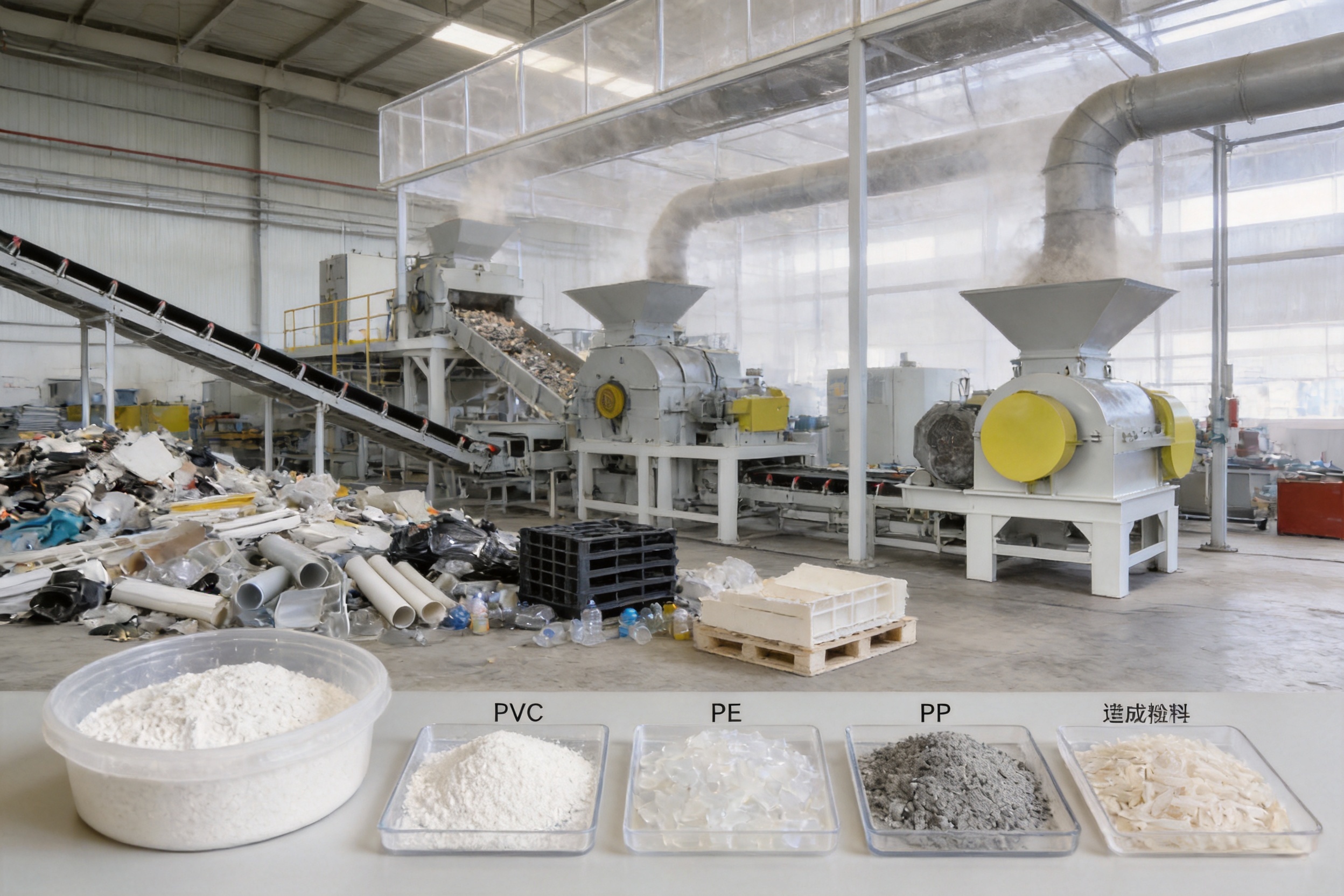
Modern plastic recycling and plastic product manufacturing require more than a simple crusher or a single pulverizer. As raw materials become more diverse and as factories seek higher powder quality, lower dust emissions, reduced labor, and more stable continuous operation, integrated crushing and pulverizing systems have become essential. The hammer-impact swing-knife crushing and pulverizing production line is designed to convert bulky plastic waste, offcuts, pipes, profiles, sheets, foam boards, pallets, woven bags, and other medium-hardness plastic materials into uniform fine powder with high efficiency and reliable consistency.
This production line combines heavy-duty coarse crushing, precision disc milling, negative-pressure conveying, cyclone separation, vibrating screening, and pulse dust collection into one automated system. It is especially suitable for PVC, PE, PP, PET, ABS, EVA, and other common plastic materials used in recycling, pipe and profile production, sheet manufacturing, rotational molding, foam board processing, SPC flooring, and general plastic regeneration. By integrating multiple processing steps into a coordinated line, the system helps manufacturers reduce intermediate handling, avoid contamination, improve output stability, and achieve consistent powder fineness from approximately 20 to 80 mesh or finer according to material characteristics and application requirements.
Compared with traditional separate crushing and grinding equipment, this integrated line offers clear advantages in capacity, powder uniformity, dust control, energy management, process automation, and operating cost. Its hammer-impact swing-knife coarse crusher is designed to handle large and irregular plastic waste that may cause jamming or entanglement in conventional knife crushers. After coarse crushing, the material is delivered smoothly to a disc pulverizer equipped with high-grade precision grinding components. The system’s cooling, screening, dust collection, and PLC-based control functions help maintain continuous performance while protecting the properties of heat-sensitive plastics.
For companies seeking to transform bulky plastic waste into reusable powder, this line provides a one-stop solution that supports resource recovery, cost reduction, cleaner production, and high-value reuse. It is not only a machine combination; it is a complete process concept developed to match the practical demands of modern plastic recycling and powder processing plants.
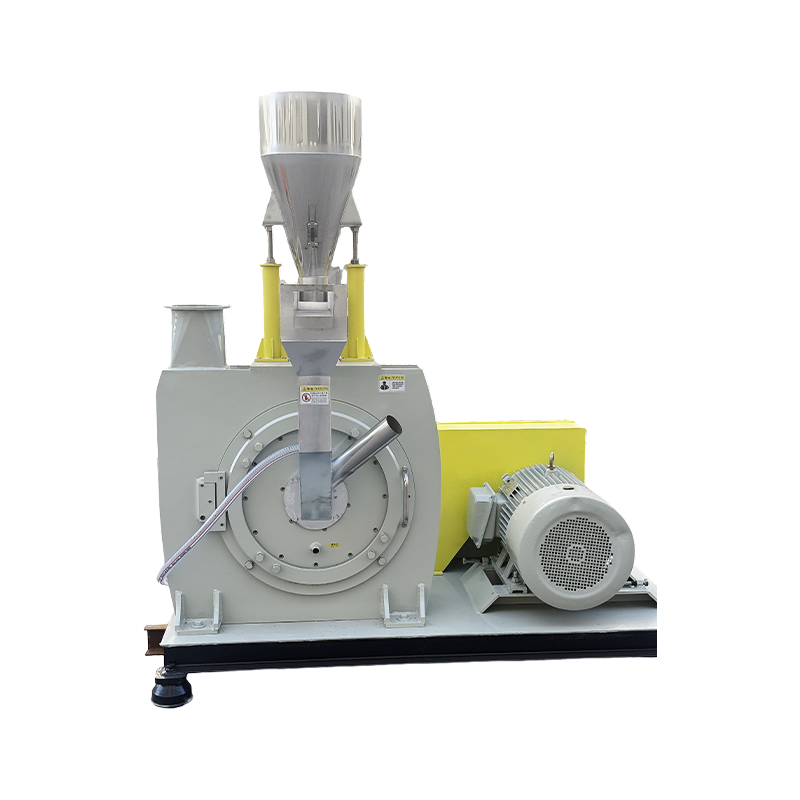
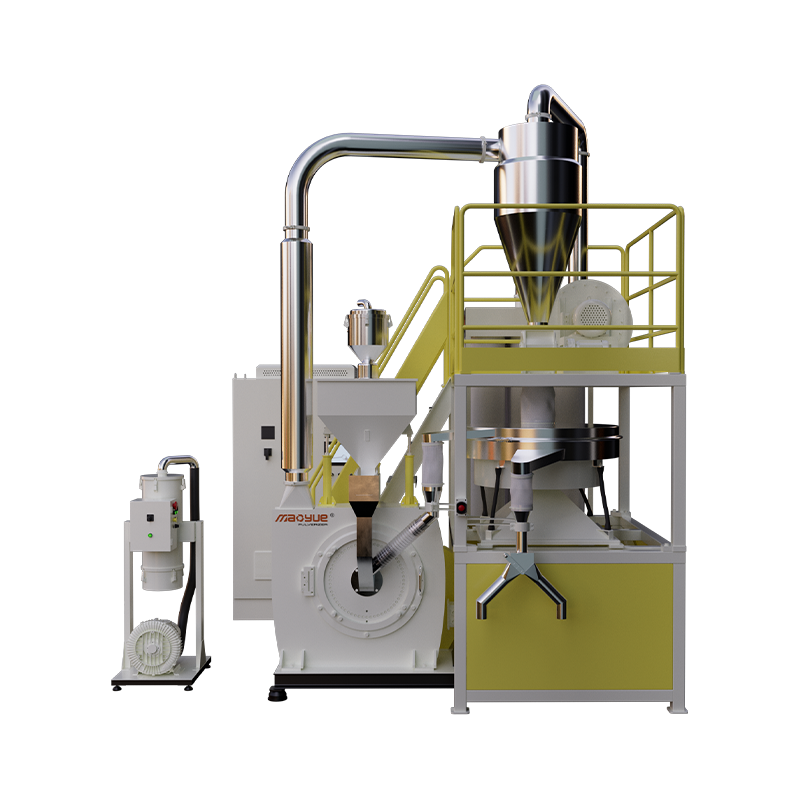
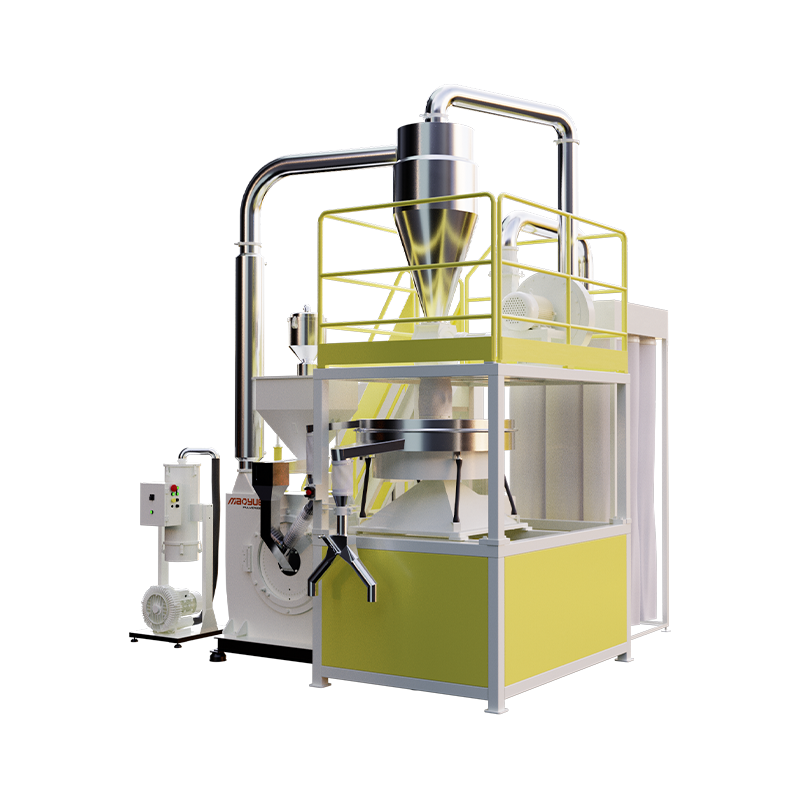
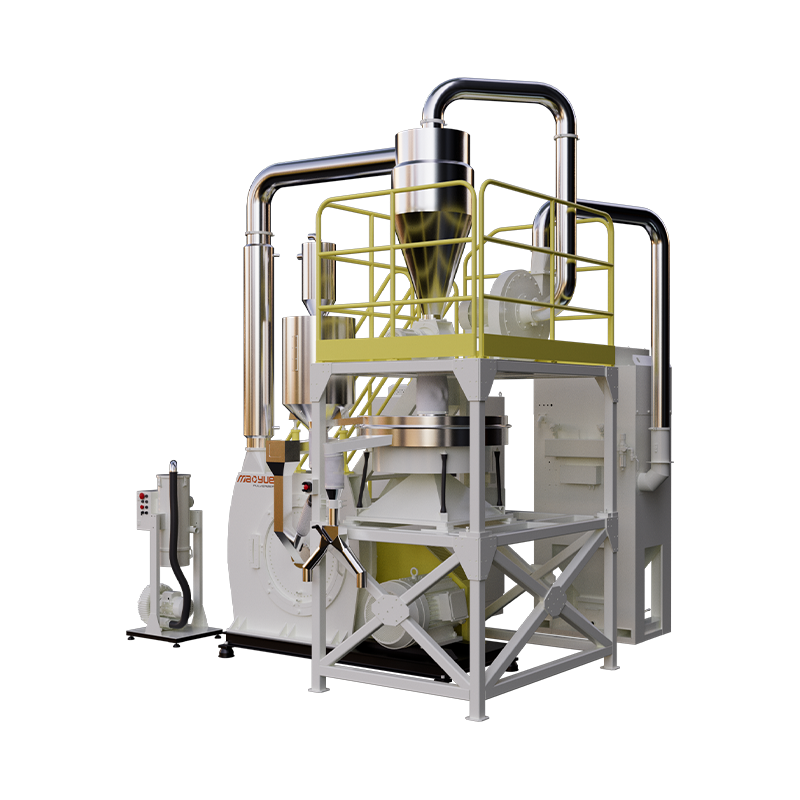
Hammer-impact swing-knife crushing and pulverizing production line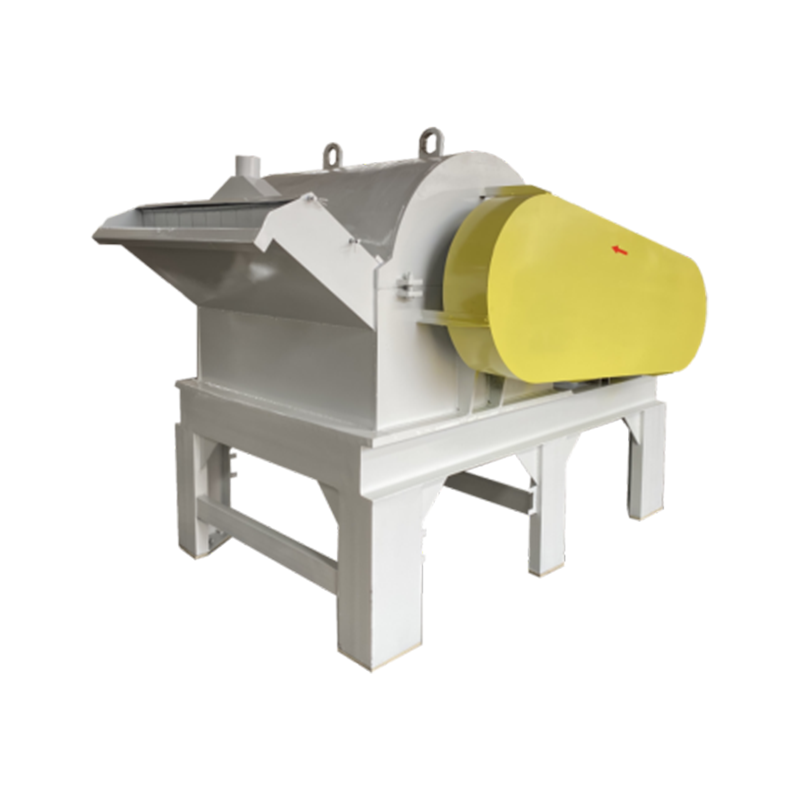
1. Product Overview and Process Concept
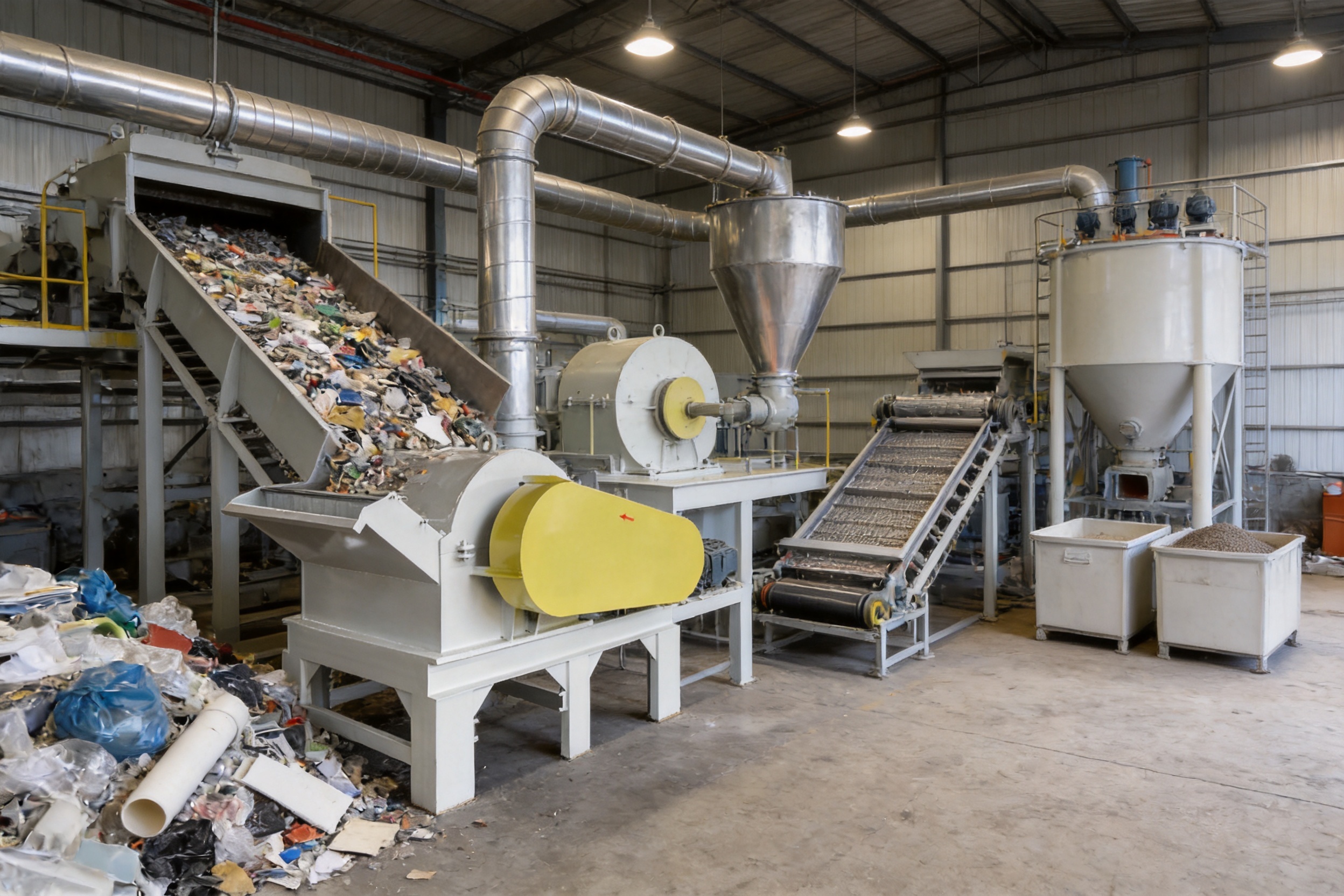
The hammer-impact swing-knife crushing and pulverizing production line is built around the principle of staged size reduction. Large and irregular waste plastic is first reduced into manageable particles by a heavy-duty hammer-blade coarse crusher. These particles are then transferred through a controlled conveying system into a precision disc mill for fine grinding. The milled powder is separated, cooled, screened, and collected through a closed negative-pressure system with pulse dust filtration.
This staged process is important because different particle sizes require different mechanical forces. Bulky waste needs impact, tearing, shearing, and high-throughput feeding capability. Fine powder production requires precise cutting, grinding, temperature control, and classification. Attempting to complete both steps with one ordinary machine often leads to unstable output, high energy consumption, uneven powder, excessive dust, blade damage, and frequent maintenance. By dividing the process into coarse crushing and fine pulverizing, the line achieves both productivity and quality.
The front-end crusher uses high-speed rotary knives and hammer-impact action to break materials quickly. Its wide feed inlet can be customized for large pipes, profiles, sheets, foam boards, and other bulky materials. The output particle size from the crusher is typically adjustable within a practical range, often around 5 to 20 millimeters depending on screen configuration and material characteristics. This size is suitable for stable feeding into the disc pulverizer, helping maintain continuous operation and preventing overload.
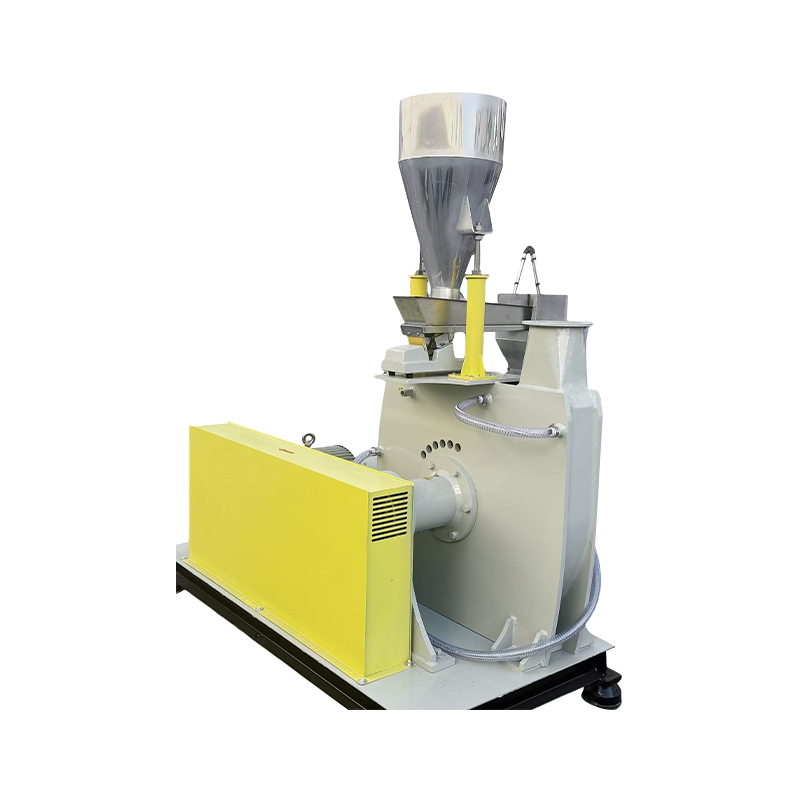
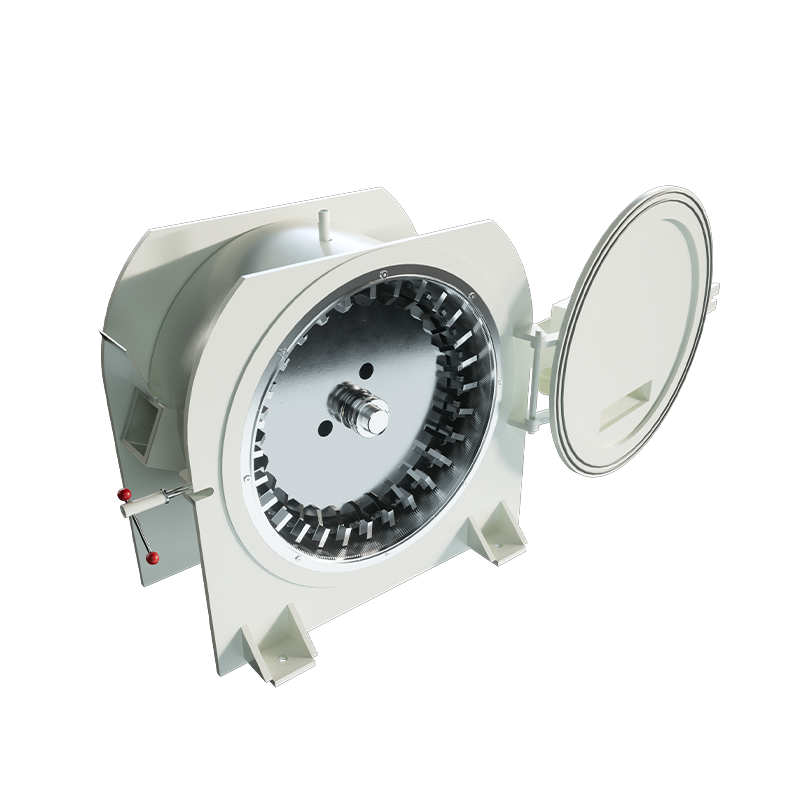
The grinding section is centered on a disc mill available in different model options such as 500, 600, and 800 series configurations. These models can be selected according to desired capacity, material type, target mesh size, and factory layout. The grinding discs are made from high-grade mold steel and processed using advanced precision machining technology. Tooth-by-tooth grinding, dynamic balancing, and controlled assembly help ensure powder uniformity, stable rotation, low vibration, and long service life.
After grinding, the powder is transported by negative-pressure pneumatic conveying. Cyclone separation and vibrating screening classify the powder, while oversized particles can be returned for further processing depending on line configuration. A pulse bag dust collector captures fine dust with high efficiency, helping keep the workshop clean and improving powder recovery. The closed conveying design reduces leakage and supports compliance with environmental and occupational safety requirements.
2. Key Applications in Plastic Recycling and Manufacturing
The production line is designed for a broad range of plastic recycling and powder preparation applications. Its versatility is one of its strongest advantages because recycling plants often process mixed shapes and different product forms rather than uniform material. The system can be configured for rigid, semi-rigid, foamed, and certain flexible plastics, provided the material characteristics are evaluated properly before production.
In PVC pipe, profile, and sheet recycling, the line can process scrap pipes, window and door profiles, flooring sheets, foam boards, edge trims, extrusion offcuts, and production rejects. These materials can be crushed and pulverized into powder suitable for reuse in pipe extrusion, profile regeneration, SPC flooring core layers, sheet production, and other applications. Reusing production waste helps factories reduce raw material purchasing costs and improve material utilization rates.
In PE and PP rotational molding applications, uniform plastic powder is essential for product quality. Rotational molding powder must flow well, disperse evenly, and melt consistently inside the mold. The line can process discarded PE or PP items such as barrels, pallets, tanks, trash bins, toys, playground equipment, and other rotational or blow-molded products. By producing 30 to 80 mesh powder with good flowability, the system helps manufacturers support closed-loop recycling and reduce dependence on virgin materials.
In engineering plastic recycling, the line can be used for materials such as PET, ABS, and EVA in suitable forms. Bottle flakes, appliance housings, films, foamed materials, and other industrial waste can be reduced into fine powder for reuse in compounding, extrusion, injection molding, modification, and related downstream processes. The ability to convert waste into controlled powder increases the value of recycled materials and expands their potential applications.
The line is also suitable for centralized industrial waste treatment centers, recycling stations, environmental service companies, and plastic processing plants that require large-scale turnkey solutions. Instead of selling low-value bulky waste, these facilities can produce higher-value powder or regrind suitable for internal use or sale to downstream manufacturers. This supports both environmental responsibility and business profitability.
3. Advantages of the Hammer-Impact Swing-Knife Crushing Structure
The coarse crushing stage is one of the most important parts of the line. Many traditional plastic crushers rely mainly on fixed knives and rotary knives. While these machines are effective for relatively uniform materials, they can struggle with long strips, thick-walled pipes, hollow products, woven materials, foam boards, and irregular waste. Problems such as material bridging, knife jamming, rotor overload, and repeated manual feeding are common in less advanced systems.
The hammer-impact swing-knife structure is designed to overcome these limitations. High-speed rotary action creates strong impact and shear forces, breaking large material into smaller particles quickly. The swing-knife concept improves adaptability to different material shapes and reduces the likelihood of hard impact damage compared with overly rigid cutting arrangements. This makes the crusher more capable of handling complex waste streams found in real recycling operations.
A wide and customizable feed inlet allows operators to feed large plastic pieces with less pre-cutting. This saves labor and reduces the need for additional pre-processing equipment. For large pipe and profile manufacturers, this is especially important because offcuts can be long, thick, and difficult to feed into narrow-mouth crushers. The improved feeding design contributes directly to higher productivity and more stable operation.
The crusher can produce relatively uniform coarse particles, commonly in a range suitable for downstream pulverizing. Uniform coarse material improves the feeding stability of the disc mill. When a pulverizer receives material that is too large or uneven, it may experience current fluctuation, excessive heat, uneven grinding, or reduced capacity. By delivering controlled particle size, the hammer-impact swing-knife crusher helps the entire line operate as a coordinated system rather than as disconnected machines.
Another competitive advantage is reduced entanglement. Traditional knife crushers may experience winding issues when processing flexible plastics, woven bags, strips, and films. The hammer-impact action, optimized chamber design, and adjustable particle discharge help lower this risk. This does not mean every flexible material can be processed without evaluation, but the design is more adaptable than many conventional crushers used only for rigid lumps.
4. Precision Disc Pulverizing for Uniform Fine Powder
After coarse crushing, the material enters the fine grinding stage. This section determines the final powder quality. Uniform powder size, clean particle shape, low heat degradation, and stable dispersion are essential for downstream processes such as rotational molding, SPC flooring production, extrusion, compounding, and modified plastics manufacturing.
The disc pulverizer in the line uses precision grinding discs made from high-grade mold steel. The quality of the grinding disc has a direct influence on powder output, particle distribution, energy consumption, and service life. Poorly machined discs may cause uneven grinding, vibration, excessive heat, unstable powder size, and premature wear. In contrast, high-precision discs support smoother cutting and grinding, resulting in more consistent powder.
Advanced tooth-by-tooth precision grinding helps ensure that each cutting tooth performs predictably. This is particularly important for plastic pulverizing because plastics respond differently to friction, impact, and heat. The grinding geometry must be sharp enough to reduce particle size efficiently but controlled enough to avoid excessive thermal buildup. Accurate machining enables stable gap control between the fixed and rotating discs, which is one of the key factors determining final mesh size.
Dynamic balancing is another major advantage. A high-speed pulverizer operates under significant rotational force. Even small imbalances can generate vibration, bearing stress, noise, uneven wear, and reduced powder quality. German-standard dynamic balancing equipment used in component preparation helps improve rotor stability and machine reliability. Stable rotation also contributes to lower maintenance costs and a safer production environment.
The pulverizer can be matched with different screens and grinding settings to achieve powder ranging from approximately 20 to 80 mesh or finer depending on material type and configuration. For PE and PP rotational molding, powder flowability and particle consistency are critical. For PVC and SPC flooring applications, powder uniformity affects mixing, melting, product strength, and surface quality. For engineering plastic recycling, controlled powder size improves compounding and modification performance.
Compared with ordinary pulverizers that may produce lumps, tails, or broad particle distribution, the precision disc grinding system provides better dispersion and more stable product quality. This is particularly valuable when recycled powder must be blended with virgin resin or additives. A more consistent powder reduces formulation variation and supports downstream process control.
5. Temperature Control and Material Protection
Plastic pulverizing generates heat through friction, impact, and compression. For heat-sensitive materials such as PVC, PE, and some modified plastics, excessive temperature can cause softening, adhesion, yellowing, degradation, odor, or reduced mechanical performance. Therefore, cooling is not an optional accessory; it is a core requirement for stable powder production.
The production line is equipped with a reinforced dual cooling system in the grinding section. Multi-point temperature sensors monitor process conditions, while PLC intelligent control helps maintain grinding chamber temperature within a controlled range, commonly around 50 to 80 degrees Celsius depending on material and operating conditions. This temperature stability helps prevent plate adhesion and material caking inside the pulverizer.
For PVC processing, temperature control is particularly important. PVC can degrade when exposed to excessive heat, releasing undesirable fumes and losing color and performance. In applications such as SPC flooring core powder, consistent low-temperature pulverizing helps preserve material properties and maintain product quality. For PE and PP, controlled temperature helps prevent melting, smearing, and poor powder flow.
The coarse crushing section can also be equipped with air cooling or water mist assistance depending on material requirements. This increases adaptability and supports continuous production under demanding conditions. When processing thick materials or high-throughput workloads, heat generated in the first stage can affect downstream performance. Cooling at the crushing stage helps create a more balanced process.
Competitor systems that lack effective temperature monitoring may depend heavily on operator experience. Operators may need to stop production, reduce feed rate, or manually adjust settings when overheating occurs. This leads to inconsistent output and lower productivity. In contrast, intelligent temperature monitoring and cooling integration allow this line to maintain more stable operation and reduce dependence on manual intervention.
6. Dust Control, Environmental Compliance, and Workshop Safety
Fine plastic powder is valuable, but it can also create dust management challenges. Dust leakage reduces yield, contaminates the workshop, increases cleaning workload, and may create health or safety risks. A modern production line must manage dust from the beginning of conveying to the final powder collection stage.
This line uses fully enclosed negative-pressure pneumatic conveying combined with cyclone separation and high-efficiency pulse bag dust collection. Negative pressure helps prevent powder from escaping at transfer points. Instead of pushing air and dust outward, the system draws material through enclosed pipelines and separation units. This creates a cleaner working environment and improves powder recovery.
Pulse bag dust collection captures fine particles efficiently. Properly designed dust collectors can achieve very high capture rates, reducing visible dust and helping facilities comply with environmental emission standards. Cleaner workshops also protect electrical cabinets, bearings, motors, sensors, and other machine components from powder contamination. This contributes to longer equipment life and reduced maintenance.
Dust control is also important for employee health. Operators working near traditional open crushing and grinding equipment may be exposed to airborne particles, noise, and repeated cleaning tasks. By adopting enclosed conveying and dust collection, the line supports safer and more comfortable production conditions. This is increasingly important as factories improve workplace standards and pursue sustainable manufacturing certifications.
Another advantage is material savings. Powder that escapes into the workshop is not only a cleanliness problem; it is lost product. High-efficiency dust capture returns more fine material to the usable output stream, improving raw material utilization and reducing waste. Over long-term production, improved powder recovery can produce significant economic benefits.
7. Automation, Control, and Operational Efficiency
The production line is designed for centralized control and continuous automated operation. A PLC control system coordinates key equipment such as the crusher, pulverizer, conveying fans, feeding devices, separators, screens, cooling systems, and dust collectors. Variable-frequency feeding helps adjust material flow according to load conditions, allowing the system to operate more smoothly.
One-button start and stop functions simplify operation and reduce training difficulty. Instead of starting multiple independent machines in the wrong sequence, operators can follow a controlled startup logic. This helps protect equipment, avoid material blockage, and improve production safety. In shutdown procedures, coordinated stopping prevents residual material from accumulating inside the system.
Automation also improves output consistency. Manual feeding often creates peaks and valleys in machine load. When feed is too heavy, the pulverizer may overheat or draw excessive current. When feed is too light, energy efficiency decreases. Variable-frequency feeding and centralized monitoring help maintain a more stable material flow, improving powder quality and reducing power fluctuation.
Compared with separate crusher and pulverizer arrangements, the integrated line reduces material transfer labor. In traditional systems, workers may need to collect crushed flakes in bags or bins, move them to another machine, and feed them again. This creates dust, labor cost, contamination risk, and inconsistent feeding. The integrated system connects each step through enclosed conveying, reducing manual handling and improving process hygiene.
Maintenance is also simplified through modular integration. Each section can be inspected and serviced according to its function. Screens, knives, grinding discs, bearings, belts, dust bags, and sensors can be maintained with planned schedules. Because the system is designed as a complete line, layout, access points, and operating sequence can be configured to support easier daily management.
8. Technical Configuration and Main Parameters
The following table summarizes a representative technical configuration for the hammer-impact swing-knife crushing section. Actual specifications can be customized according to material, capacity target, required powder size, plant layout, and downstream process requirements.
Item |
Description |
Specification or Remarks |
1 |
Type |
1000 |
2 |
Knife quantity |
36 rotary knives |
3 |
Capacity |
1 to 2.5 tons per hour |
4 |
Mesh size |
16 millimeters |
5 |
Drive motor |
55, 75, 90, or 110 kilowatts |
6 |
Speed control |
Inverter |
7 |
Belt pulley standard |
Imported bearings such as NSK |
8 |
Knife blade material |
SKD-11 |
9 |
Main machine speed |
860 revolutions per minute |
10 |
Feeding size |
1350 millimeters |
11 |
Electric cabinet |
Star-delta start or soft start |
These parameters reflect the heavy-duty nature of the system. The motor options allow configuration for different capacity and material hardness requirements. Inverter speed control improves flexibility and helps optimize processing conditions. Imported bearings and high-strength blade materials support long-term reliability under continuous industrial operation.
The system may be combined with different disc pulverizer models, such as 500, 600, or 800 series configurations, depending on final powder requirements. Larger pulverizers can increase capacity, while smaller units may suit lower-volume or specialized applications. Cooling, screening, conveying, and dust collection components can also be adjusted according to plant needs.
9. Competitive Advantages Over Conventional Crushing and Pulverizing Systems
The line offers several practical advantages compared with conventional separate crushing and pulverizing systems. The first advantage is improved process continuity. Traditional systems often require manual transfer between crushing and grinding. This interrupts production, increases labor, and exposes material to contamination. The integrated line moves material automatically from coarse crushing to fine grinding and collection.
The second advantage is better adaptability to bulky waste. Many standard crushers are designed for small lumps or uniform injection molding scrap. They may struggle with large pipes, profiles, foam boards, pallets, woven bags, and hollow products. The hammer-impact swing-knife structure, wide feed opening, and heavy-duty design help process large and irregular waste more efficiently.
The third advantage is powder quality. Ordinary systems may produce uneven powder because crushing size is inconsistent, pulverizer feeding is unstable, and grinding discs are not precisely machined. This line combines controlled coarse particle size with precision disc grinding, helping achieve uniform fine powder with fewer lumps and better dispersion.
The fourth advantage is temperature control. In many low-cost pulverizing systems, cooling capacity is limited or monitoring is insufficient. Heat-sensitive plastics may soften or degrade, causing production interruptions and quality problems. The reinforced cooling system, temperature sensors, and PLC control help protect material properties and maintain stable operation.
The fifth advantage is dust management. Open conveying, manual bagging, and poorly sealed systems release powder into the workshop. The closed negative-pressure conveying and pulse dust collection design helps reduce dust leakage, increase powder recovery, and support cleaner production.
The sixth advantage is reduced total operating cost. Although an integrated line may require higher initial planning than a simple crusher, it can reduce labor, workshop space, intermediate handling, power waste, material loss, downtime, and maintenance caused by unstable operation. For continuous production plants, these savings often shorten the investment payback period.
The seventh advantage is customization. Different plastic materials behave differently. PVC, PE, PP, PET, ABS, and EVA each require suitable knife configuration, cooling, grinding gap, screening, airflow, and control settings. A manufacturer with extensive experience can configure the system according to real production goals rather than offering a one-size-fits-all machine.
10. Advanced Manufacturing Strength Behind the Equipment
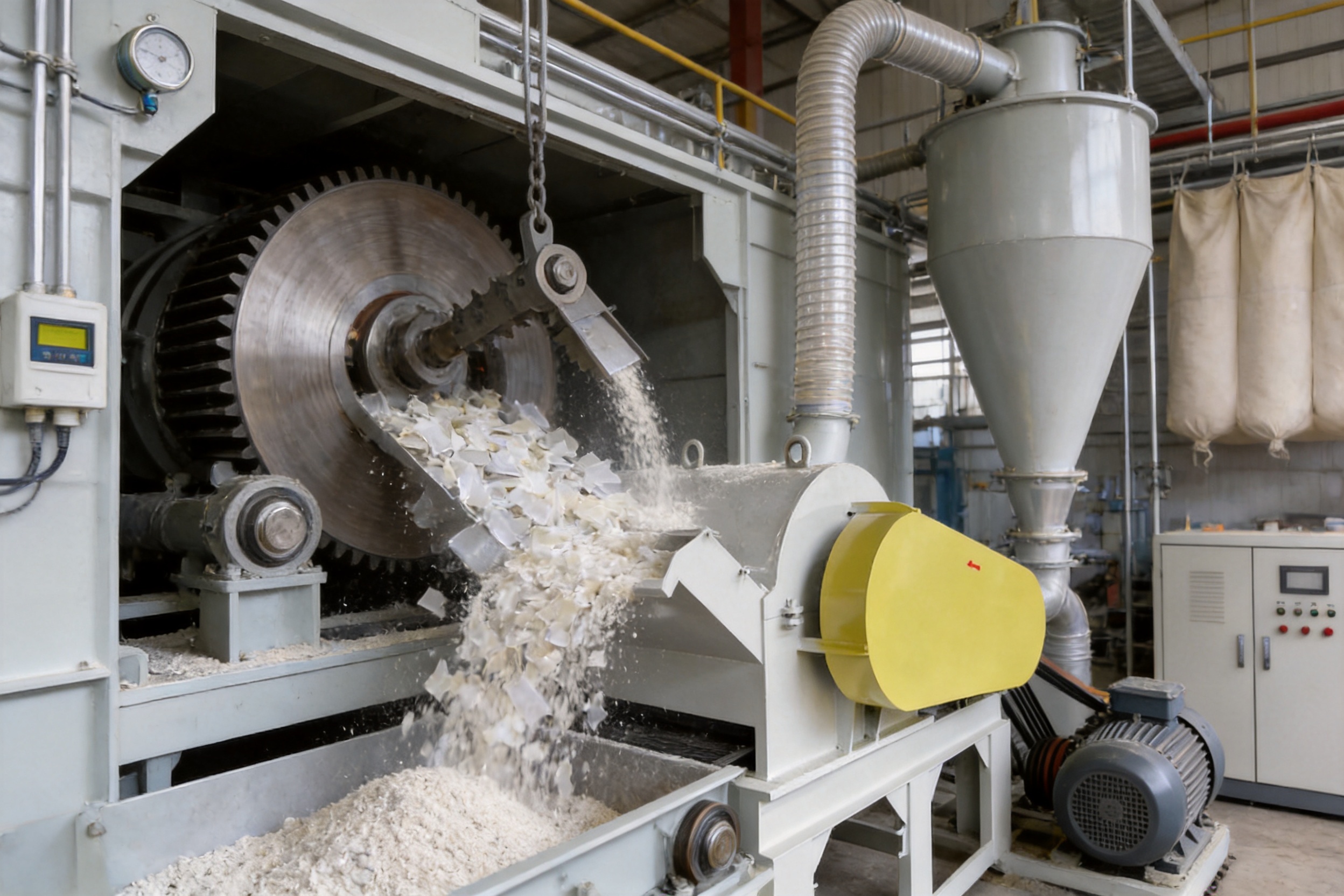
The performance of a crushing and pulverizing line depends not only on design but also on manufacturing quality. Changzhou Mao Yue Intelligent Equipment Co., Ltd. is a source manufacturer with approximately 30 years of experience in plastic crushing and pulverizing equipment. This long-term specialization provides a deep understanding of material behavior, customer production challenges, machine structure, and practical maintenance requirements.
The company operates multiple processing workshops, each with substantial manufacturing space, supporting machining, welding, assembly, inspection, and testing. A professional technical team continuously studies advanced machinery technologies, including approaches from Germany and other industrial equipment leaders. This technical orientation helps the company improve machine stability, precision, and long-term reliability.
One of the company’s manufacturing strengths is precision machining. The factory is equipped with Taiwan-imported high-precision grinding machines built to German standards. Such equipment is important for producing high-quality grinding discs, shafts, and critical machine components. In pulverizing applications, machining accuracy directly affects vibration, grinding gap consistency, powder size distribution, and machine service life.
German dynamic balancing equipment is used to improve the rotational stability of high-speed components. Dynamic balance is essential for pulverizers and crushers because rotors operate under high load and high speed. Balanced components reduce vibration, protect bearings, lower noise, and improve powder consistency. This manufacturing step differentiates advanced equipment from ordinary machines assembled with less precise components.
Japanese welding systems contribute to structural quality. Heavy-duty crushers and pulverizers must withstand impact, vibration, torque, and continuous operation. Welding quality affects frame rigidity, alignment stability, fatigue resistance, and safety. Reliable welding helps ensure that the machine remains stable over years of industrial use.
The company manufactures components according to European quality standards and has obtained CE mechanical certification and ISO 9001 quality management system certification. These certifications support product safety, process control, and quality consistency. For international customers, certification also provides confidence that the equipment is manufactured under recognized quality management principles.
In addition to manufacturing capacity, the company emphasizes customization. Plastic recycling operations vary widely. One customer may process PVC profile scrap, while another may process PE tanks, PP woven bags, or ABS appliance housings. A practical solution requires analysis of material form, moisture, hardness, heat sensitivity, target mesh size, output capacity, installation space, and downstream application. The company’s experience with thousands of domestic and international enterprises helps it recommend suitable configurations and avoid common mistakes in equipment selection.
11. Material-Specific Processing Benefits
PVC Pipe, Profile, Sheet, and SPC Flooring Waste
PVC recycling requires careful heat control and uniform powder preparation. Scrap PVC pipes, window profiles, sheets, foam boards, and flooring materials can be bulky and difficult to feed into traditional grinders. The hammer-impact crusher first reduces them to manageable particles, while the disc pulverizer produces fine powder for reuse. In SPC flooring applications, powder consistency supports stable mixing with calcium carbonate, stabilizers, and other additives. Good powder quality can improve product density, extrusion stability, and surface performance.
PE and PP Rotational Molding Waste
Rotational molding requires powder with excellent flowability and controlled particle distribution. PE and PP products such as tanks, barrels, pallets, bins, toys, and playground equipment can be large and thick. The integrated line reduces these items efficiently and produces powder suitable for rotational molding or compounding. Closed-loop recycling allows manufacturers to reuse production rejects and reduce virgin resin consumption.
PET, ABS, EVA, and Other Engineering Plastics
PET, ABS, EVA, and similar materials may be used in bottle flakes, appliance casings, films, foam products, and industrial scraps. Fine powder can be used in modification, extrusion, injection molding blends, or specialty recycling applications. The line’s adjustable processing parameters help adapt to different hardness and heat behavior, improving recovery value.
Foamed and Hollow Plastic Products
Foam boards and hollow items occupy large space and are difficult to handle. The wide feed design and impact crushing structure help reduce volume quickly. This is useful for recycling centers where storage and transportation of bulky waste can be expensive. Converting foam or hollow products into particles and powder improves logistics efficiency and downstream usability.
12. Economic Value and Return on Investment
The economic value of the production line comes from multiple sources. First, it converts low-value waste into reusable powder. Plastic scrap that might otherwise be sold cheaply, stored, or discarded can become a production resource. For factories that generate continuous scrap, internal recycling can reduce raw material purchasing costs significantly.
Second, the line reduces labor. Automated conveying and integrated processing minimize manual transfer, bagging, feeding, and cleaning. Labor savings are especially important in regions where manufacturing wages are rising or where skilled operators are difficult to recruit. A more automated line allows fewer workers to manage higher output.
Third, the system improves space utilization. Separate machines require additional floor area for intermediate storage, manual transfer routes, and dust control devices. An integrated modular layout can be planned more efficiently. Flexible footprint design allows installation in different workshop conditions.
Fourth, energy efficiency improves through process coordination. Stable feeding, appropriate particle size, inverter control, and optimized grinding reduce unnecessary power fluctuation. Although power consumption depends on material and capacity, a well-integrated system generally performs more efficiently than disconnected machines operated inconsistently.
Fifth, powder quality increases downstream value. Uniform powder can be used in higher-grade applications, while uneven powder may be limited to low-value reuse. Better powder quality can improve customer acceptance, reduce formulation problems, and increase the selling price of recycled powder.
Sixth, dust recovery reduces material loss. Fine powder lost to the workshop or exhaust system represents direct financial loss. High-efficiency dust collection captures more usable material and keeps the production environment cleaner.
When these factors are combined, the line can offer a relatively short payback period for companies with sufficient waste volume or powder demand. The exact return depends on material price, capacity, energy cost, labor cost, powder application, and operating hours, but the integrated design is clearly aligned with cost reduction and value creation.
13. Installation, Operation, and Maintenance Considerations
Successful operation begins with proper system selection and installation. Before purchasing, customers should evaluate material type, average size, thickness, contamination level, moisture, desired powder mesh, required hourly output, available power, workshop height, and dust emission requirements. This information helps determine crusher model, pulverizer size, motor power, cooling method, screen configuration, conveying distance, and dust collector capacity.
During installation, machine alignment, foundation strength, pipeline layout, electrical safety, and ventilation should be considered carefully. Heavy-duty equipment must be installed on stable foundations to minimize vibration. Conveying pipelines should be arranged to reduce unnecessary bends and pressure loss. Dust collection systems should be sealed properly to maintain negative pressure.
Operators should monitor machine current, temperature, feed rate, powder size, vibration, noise, and dust collector pressure. Regular inspection of knives, grinding discs, screens, belts, bearings, and dust bags helps prevent unexpected downtime. Wear parts should be replaced or sharpened according to production conditions. Different materials may cause different wear rates, so maintenance schedules should be adjusted based on actual use.
For heat-sensitive materials, operators should pay close attention to cooling water, air cooling, temperature sensor readings, and feed rate. If material begins to soften or powder flow becomes poor, operating parameters should be adjusted promptly. The PLC system and temperature monitoring functions provide valuable support, but skilled observation remains important for best results.
Good housekeeping also supports long equipment life. Even with enclosed conveying and dust collection, periodic cleaning of accessible areas prevents accumulation and improves safety. Electrical cabinets should be protected from dust and moisture. Lubrication should follow manufacturer recommendations, especially for bearings and transmission components.
14. Why Manufacturer Experience Matters
Plastic pulverizing is not a simple universal process. The same machine may perform differently with PVC pipe scrap, PE rotational molding waste, PP woven bags, PET flakes, ABS housings, or EVA foam. Material shape, hardness, melting point, elasticity, and additives all influence processing results. This is why manufacturer experience is critical.
A company with decades of specialization can identify potential processing challenges before installation. For example, flexible materials may require special feeding and anti-entanglement considerations. Heat-sensitive PVC requires stronger cooling and temperature monitoring. Abrasive filled materials may require more wear-resistant components. High-output lines require careful airflow and dust collection design. These details determine whether the system performs reliably in real production.
Changzhou Mao Yue Intelligent Equipment Co., Ltd. has built long-term partnerships with more than 5,000 enterprises in domestic and international markets. This broad application base provides practical knowledge across many industries and materials. The company’s mission is to improve production efficiency, reduce labor intensity, and provide stable, high-quality pulverizing solutions for customers worldwide.
Compared with suppliers that only sell standard machines, a source manufacturer with processing workshops, technical teams, advanced machining equipment, and quality certifications can provide stronger engineering support. Customers benefit from better customization, spare parts supply, technical guidance, and long-term service. In industrial production, after-sales support and component availability are often as important as initial machine performance.
15. Q&A Section
Q1: What materials can the hammer-impact swing-knife crushing and pulverizing production line process?
It is suitable for many medium-hardness and high-impact plastic materials, including PVC, PE, PP, PET, ABS, EVA, and related plastic waste. Common forms include pipes, profiles, sheets, foam boards, pallets, barrels, trash bins, toys, bottle flakes, appliance housings, woven bags, films, and production offcuts. The final configuration should be selected according to the actual material.
Q2: What final powder size can the line produce?
The system can typically produce powder in the range of approximately 20 to 80 mesh or finer, depending on material type, grinding disc configuration, screen selection, feed rate, cooling conditions, and pulverizer model. For rotational molding and SPC flooring applications, powder size can be adjusted to match downstream requirements.
Q3: Why is coarse crushing necessary before pulverizing?
Coarse crushing reduces bulky plastic waste into smaller and more uniform particles. This protects the pulverizer, stabilizes feeding, reduces current fluctuation, improves powder quality, and increases overall line efficiency. Directly feeding large irregular waste into a fine pulverizer would cause overload, blockage, overheating, and uneven powder.
Q4: How does the hammer-impact swing-knife crusher differ from ordinary knife crushers?
Traditional knife crushers mainly rely on rotary and fixed knife cutting, which may jam or become entangled when processing large, hollow, flexible, or irregular waste. The hammer-impact swing-knife structure generates stronger impact and shear action, improves adaptability, supports larger feed sizes, and reduces jamming risks in demanding recycling applications.
Q5: Is the line suitable for PVC processing?
Yes. The line is particularly useful for PVC pipe, profile, sheet, foam board, and SPC flooring waste. Its cooling system, temperature sensors, and PLC control help prevent overheating, yellowing, adhesion, and degradation, which are common concerns in PVC pulverizing.
Q6: How does the system control dust?
The line uses closed negative-pressure pneumatic conveying, cyclone separation, vibrating screening, and pulse bag dust collection. This design reduces dust leakage, improves powder recovery, keeps the workshop cleaner, and supports environmental compliance.
Q7: What is the typical capacity of the crushing section?
A representative Type 1000 crushing configuration can reach approximately 1 to 2.5 tons per hour, depending on material type, feeding method, screen size, motor power, and operating conditions. Complete line capacity also depends on the pulverizer model and target mesh size.
Q8: Can the production line be customized?
Yes. The feed inlet, motor power, pulverizer model, cooling method, conveying layout, dust collection capacity, screening system, and control functions can be customized according to customer materials, capacity requirements, workshop layout, and final powder application.
Q9: What makes the grinding discs important?
Grinding discs determine powder uniformity, capacity, heat generation, and service life. High-grade steel, precision tooth machining, accurate gap control, and dynamic balancing help produce stable powder while reducing vibration and wear.
Q10: What are the main benefits compared with separate crusher and pulverizer systems?
The integrated line reduces manual transfer, dust leakage, intermediate storage, labor cost, and process instability. It improves continuous operation, powder consistency, cooling control, environmental performance, and overall production efficiency.
16. Conclusion
The hammer-impact swing-knife crushing and pulverizing production line provides a complete, efficient, and practical solution for transforming bulky plastic waste into high-quality fine powder. By combining heavy-duty impact crushing, precision disc milling, intelligent cooling, enclosed negative-pressure conveying, cyclone separation, vibrating screening, and pulse dust collection, it addresses the key challenges of modern plastic recycling and powder processing.
Its advantages are especially clear when processing large pipes, profiles, sheets, foam boards, pallets, woven bags, rotational molding waste, PVC production scrap, PE and PP products, PET flakes, ABS housings, and EVA materials. The line helps factories improve material utilization, reduce raw material costs, recover valuable powder, maintain cleaner workshops, and support sustainable production.
Behind the equipment is the manufacturing strength of Changzhou Mao Yue Intelligent Equipment Co., Ltd., a source manufacturer with decades of experience, multiple processing workshops, advanced precision grinding equipment, German-standard dynamic balancing, Japanese welding systems, CE certification, ISO 9001 quality management certification, and extensive application experience across thousands of enterprises. These strengths support machine precision, reliability, customization, and long-term service.
For plastic recycling enterprises, pipe and profile manufacturers, rotational molding producers, SPC flooring factories, sheet processors, and centralized waste treatment centers, this production line offers a strong combination of capacity, powder quality, environmental protection, automation, and economic value. It is a future-oriented solution for companies seeking efficient resource regeneration and stable plastic powder production.
References
1. Plastics Recycling Technology Handbook, industrial plastic size reduction and powder processing principles.
2. Polymer Processing Fundamentals, mechanical behavior of thermoplastics during cutting, grinding, and milling.
3. Industrial Dust Collection and Air Filtration Guide, pulse bag filtration and negative-pressure conveying practices.
4. Rotational Molding Materials and Processing Manual, powder particle size requirements for PE and PP molding applications.
5. PVC Processing and Stabilization Reference, temperature control and degradation prevention in PVC recycling.
6. Quality Management Systems in Machinery Manufacturing, ISO 9001 implementation and equipment production control.