

 English
 русский
 Español
 عربى
عربى 中文简体
中文简体
 中文简体
中文简体
Content
- 1 Why Pulverizer Blades Matter in PE Powder Production
- 2 Core Material Advantage: High-Density Wear-Resistant Alloy Steel
- 3 Precision Heat Treatment for Hardness and Stability
- 4 Longer Service Life and Lower Operating Cost
- 5 Stable Powder Fineness from 20 to 80 Mesh or Finer
- 6 Precision-Adjustable Clearance for Better Grinding Control
- 7 Heat Dissipation Structure for Continuous Production
- 8 Compatibility with Mainstream Pulverizer Disc Diameters
- 9 Performance Comparison with Ordinary Pulverizer Blades
- 10 Applications in Plastic Recycling and Regeneration
- 11 Applications in Powder Coating Production
- 12 Applications in Modified Plastics and Masterbatch
- 13 Applications in Rotational Molding
- 14 Applications in Electronic Waste, Laboratory Testing, and R&D
- 15 Manufacturing Strength Behind the Blades
- 16 Advanced Equipment and Machining Capability
- 17 European Quality Standards and Certification
- 18 Technical Team and Continuous Innovation
- 19 Advantages Over Competitors
- 20 Energy Savings and Downstream Processing Benefits
- 21 Operational Stability in 24-Hour Industrial Production
- 22 Customization for Specific Production Needs
- 23 Role in Complete Crushing and Pulverizing Lines
- 24 Maintenance Recommendations for Better Blade Life
- 25 How the Blade Supports Sustainable Plastic Recycling
- 26 Customer Value: Efficiency, Quality, Stability, and Cost Control
- 27 Q&A Section
- 27.1 Q1: What materials are these PE pulverizer blades made from?
- 27.2 Q2: How hard are the blades?
- 27.3 Q3: How long can one blade set last?
- 27.4 Q4: What powder fineness can the blades produce?
- 27.5 Q5: Are the blades suitable for recycled PE materials?
- 27.6 Q6: Can the blades be used for powder coating production?
- 27.7 Q7: Why is heat dissipation important in PE pulverizing?
- 27.8 Q8: Are custom blade sizes available?
- 27.9 Q9: How do these blades reduce production cost?
- 27.10 Q10: What makes the manufacturing process reliable?
- 28 Conclusion
- 29 References
- 30 Product: PE Pulverizer alloy steel blades
In modern plastic recycling and polymer processing, the quality of the pulverizer blade directly affects powder fineness, machine stability, energy consumption, maintenance frequency, and the final value of recycled or processed materials. PE pulverizer alloy steel blades are designed for demanding pulverizing applications where ordinary cutting discs wear too quickly, lose sharpness, generate unstable particle sizes, or cause frequent downtime. Built from high-density wear-resistant alloy steel and strengthened through precision heat treatment, these blades provide a practical upgrade for PE and PP pulverizing systems that must operate continuously under industrial conditions.
The product is especially suitable for pulverizing polyethylene materials such as PE film, PE pipe, PE bottle caps, cable sheath, strapping bands, and other recycled or processed PE products. It is also valuable for powder coating, rotational molding, masterbatch production, modified plastics, chemical processing, laboratory testing, and other applications where powder uniformity and stable particle size distribution are important. Compared with standard market blades, these alloy steel blades offer higher hardness, stronger impact resistance, longer service life, better heat stability, and more consistent grinding performance.
PE Pulverizer alloy steel blades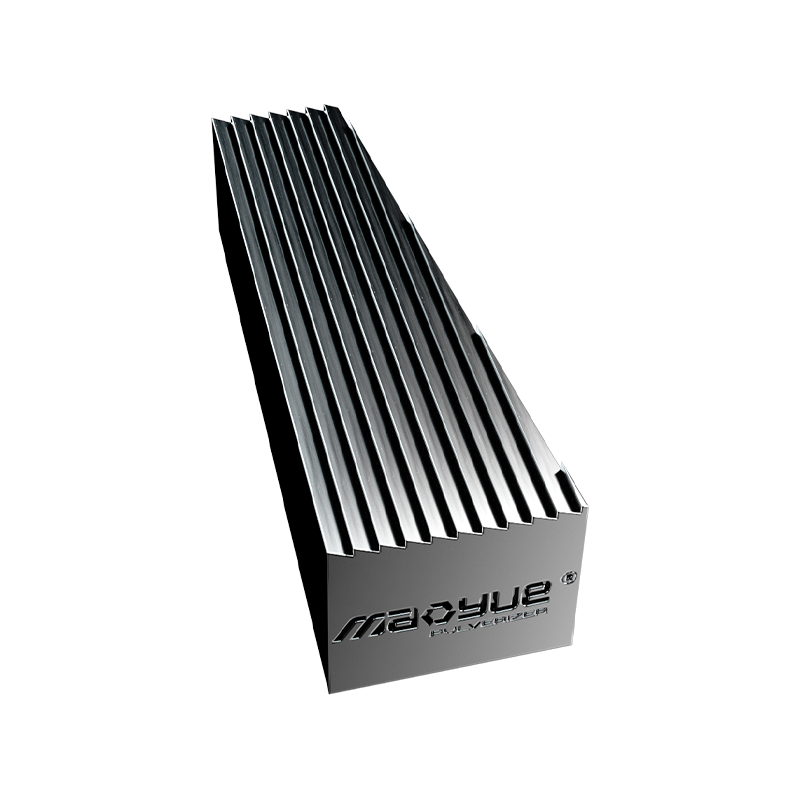
Why Pulverizer Blades Matter in PE Powder Production
A plastic pulverizer is more than a motor, housing, and feeding system. Its real working performance depends heavily on the interaction between the fixed and rotating grinding discs or blades. When PE material enters the grinding chamber, it is reduced through shearing, friction, impact, and repeated contact with the cutting edges. If the blade edge is too soft, poorly balanced, unevenly machined, or unable to resist heat and wear, the entire pulverizing process becomes unstable.
PE is a flexible and tough polymer. Unlike brittle materials that fracture easily, polyethylene may stretch, deform, and absorb energy during size reduction. This places high stress on the blade edge. When the machine processes recycled materials, the challenge becomes even greater because the input may include film scraps, pipe chips, bottle cap flakes, or reinforced materials with varied hardness and shape. For glass-fiber reinforced or high-toughness plastic, standard blades may wear rapidly and produce coarse particles, reducing production efficiency and increasing maintenance costs.
High-quality PE pulverizer blades solve these problems by maintaining sharpness for a longer period. A sharper and harder blade supports faster material reduction, more uniform powder, lower operating resistance, and reduced risk of overheating. The result is not only a better powder product but also a more stable production line. In industrial recycling, where machines may run for long shifts or continuous 24-hour operation, blade reliability becomes one of the most important cost-control factors.
Core Material Advantage: High-Density Wear-Resistant Alloy Steel
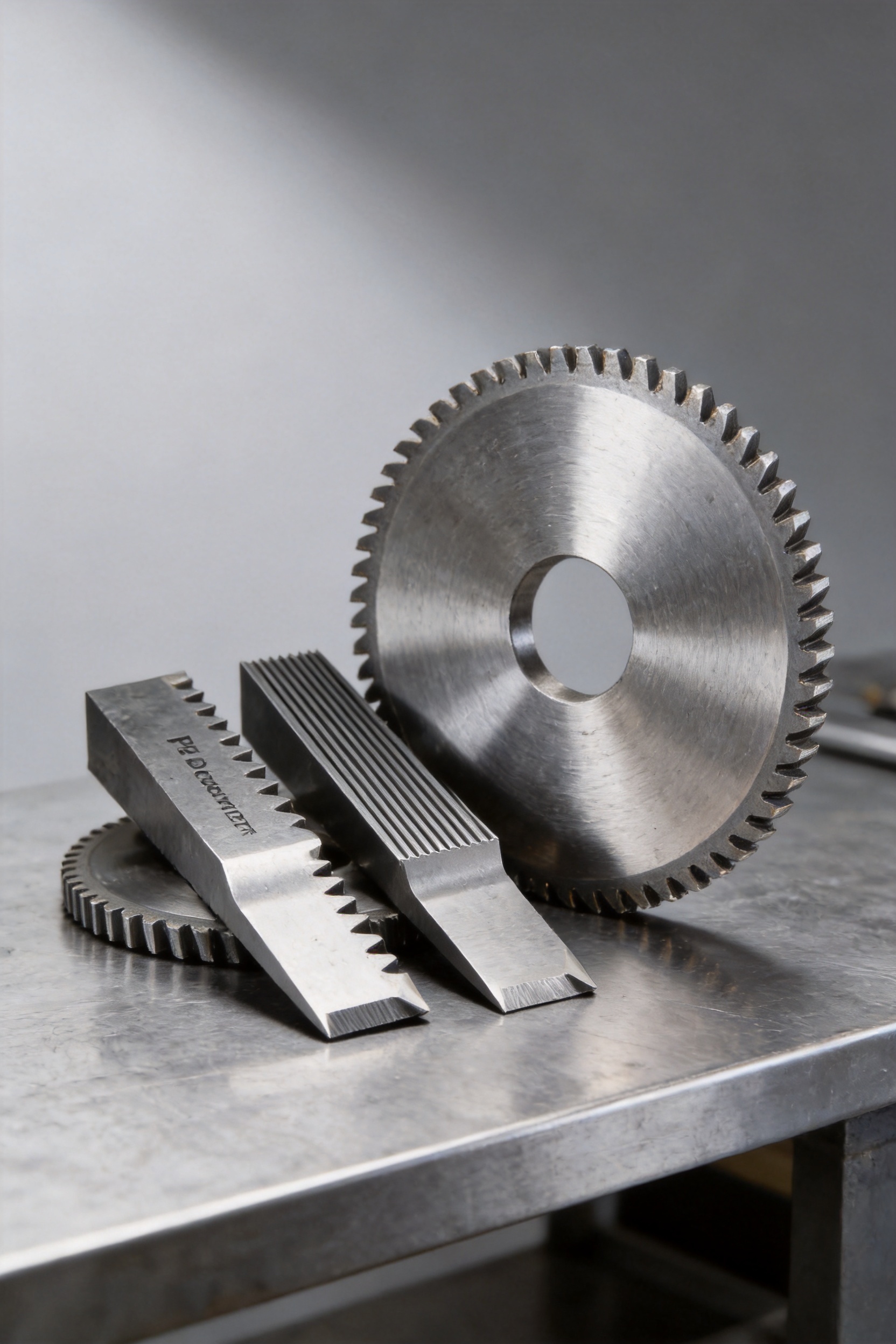
The blades are forged using high-density wear-resistant alloy steel, such as chromium-molybdenum-vanadium alloy or similar high-hardness materials. This alloy selection is central to the product’s performance. Chromium contributes to wear resistance and hardness. Molybdenum improves toughness, high-temperature strength, and resistance to deformation. Vanadium supports grain refinement and enhances edge retention. Together, these alloying elements create a blade structure capable of handling repeated impact and abrasive contact during PE pulverizing.
Ordinary cutting discs often reach approximately HRC 45 hardness. While this may be acceptable for light applications, it is not sufficient for high-load pulverizing, especially when processing recycled plastics, reinforced materials, or mixed PE waste. The PE pulverizer alloy steel blades can achieve HRC 60 to 65 or higher after multiple precision heat treatments. This significant increase in hardness directly improves cutting-edge durability and reduces wear rates. In demanding applications, wear can be reduced by more than 70% compared with ordinary blades.
However, hardness alone is not enough. A blade that is extremely hard but brittle may chip or crack under impact. The value of these alloy steel blades lies in the balance between hardness and toughness. Through controlled forging, heat treatment, and finishing, the blade edge achieves high wear resistance while retaining the impact strength required for continuous industrial operation. This balance is especially important when PE material contains hard impurities, mineral fillers, glass fiber, or irregular recycled feedstock.
Precision Heat Treatment for Hardness and Stability
Heat treatment determines whether a high-quality alloy can truly become a high-performance blade. The manufacturing process applies multiple precision heat treatment steps to optimize internal structure, hardness distribution, stress relief, and dimensional stability. A carefully controlled heat treatment process improves cutting-edge hardness while reducing the chance of deformation, cracking, or uneven wear during service.
For pulverizer blades, heat treatment must be accurate and repeatable. If the temperature is too low, the blade may not achieve full hardness. If the temperature is too high or cooling is not controlled properly, the blade may become brittle or distorted. Precision heat treatment creates a more uniform metallurgical structure, allowing the blade to maintain stable performance over long operating periods.
In actual use, this means that the blade edge remains sharp for longer, the grinding gap remains more consistent, and the final powder size is easier to control. For users, this translates into fewer blade changes, less downtime, lower labor costs, and more predictable production planning. A single blade set can easily achieve around 800 hours of continuous service life under suitable operating conditions, which provides a major advantage compared with common market alternatives.
Longer Service Life and Lower Operating Cost
One of the strongest advantages of PE pulverizer alloy steel blades is their extended service life. Compared with standard blades, service life can be extended by two to three times or more, depending on the material, machine settings, operating hours, and maintenance conditions. This longer life reduces the frequency of replacement and lowers the total cost per ton of processed material.
Blade replacement is not only a parts cost. It also includes machine stoppage, operator labor, clearance readjustment, possible production delays, and quality fluctuations after restarting. In a recycling plant or powder processing facility, every hour of downtime can affect delivery schedules and profitability. A blade that lasts longer helps maintain production continuity and reduces hidden costs.
The long-life design also supports a more sustainable operating model. Fewer discarded blades mean less metal waste and lower resource consumption. In plastic recycling, where the goal is often to create a circular economy, durable equipment parts help reinforce the overall environmental value of the production line. The blade therefore contributes not only to productivity but also to greener manufacturing.
Stable Powder Fineness from 20 to 80 Mesh or Finer
Powder fineness is a key measurement in PE pulverizing. Different downstream processes require different particle size ranges. Recycled pelletizing, film blowing, extrusion, injection molding, powder coating, and rotational molding all benefit from consistent powder size and uniform distribution. If powder contains too many coarse particles, the downstream process may suffer from poor melting uniformity, unstable feeding, surface defects, or lower product strength.
The alloy steel blades support stable powder fineness from 20 to 80 mesh or finer, depending on the machine configuration, material properties, screen or classifier system, and operating parameters. Their high hardness and long-lasting sharpness allow the pulverizer to maintain efficient shearing and friction grinding. As a result, the finished powder has a more uniform particle distribution, with fewer coarse particles and fewer agglomerates.
Uniform powder is especially valuable in powder coating applications. PE powder coatings require good flowability, consistent particle size, and clean material without scorching or large particles. In rotational molding, uniform PE powder helps ensure even wall thickness, smooth product surfaces, and reduced risk of bubbles or weak spots. In masterbatch production, fine and consistent powder improves dispersion and supports more stable compounding.
Precision-Adjustable Clearance for Better Grinding Control
The blade system supports precision-adjustable clearance, including micron-level fine adjustment. The gap between grinding surfaces has a direct influence on powder size, machine load, heat generation, and production efficiency. If the gap is too large, the powder may be coarse and inconsistent. If the gap is too small, excessive friction may cause overheating, higher energy consumption, or unnecessary blade wear.
Fine clearance adjustment allows operators to optimize the pulverizing process according to material type and desired powder specification. PE film, pipe flakes, bottle caps, and reinforced materials may each require different settings. The ability to adjust clearance accurately helps users maintain stable output quality without excessive trial and error.
When combined with a high-speed rotating tooth design, the blades generate efficient shearing and friction grinding. This design improves the contact pattern between material and cutting surfaces, helping PE particles break down more quickly and uniformly. The result is higher productivity, better powder quality, and more controlled operation.
Heat Dissipation Structure for Continuous Production
During pulverizing, friction generates heat. PE material is sensitive to temperature because it can soften, smear, stick, or agglomerate when overheated. Excessive heat can also dull the blade edge, deform components, and reduce powder quality. Therefore, heat control is essential in PE pulverizing.
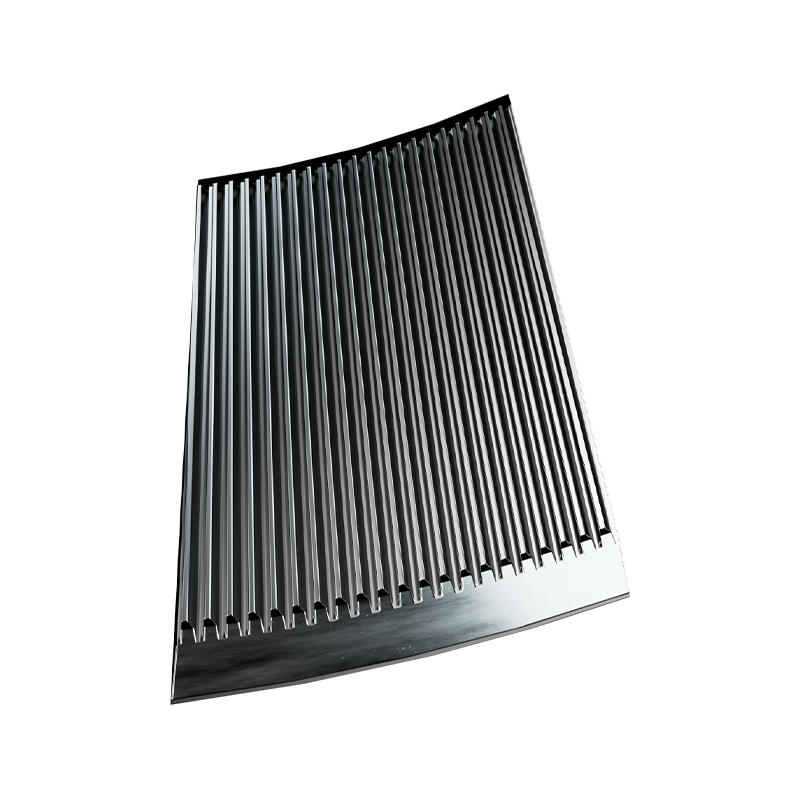
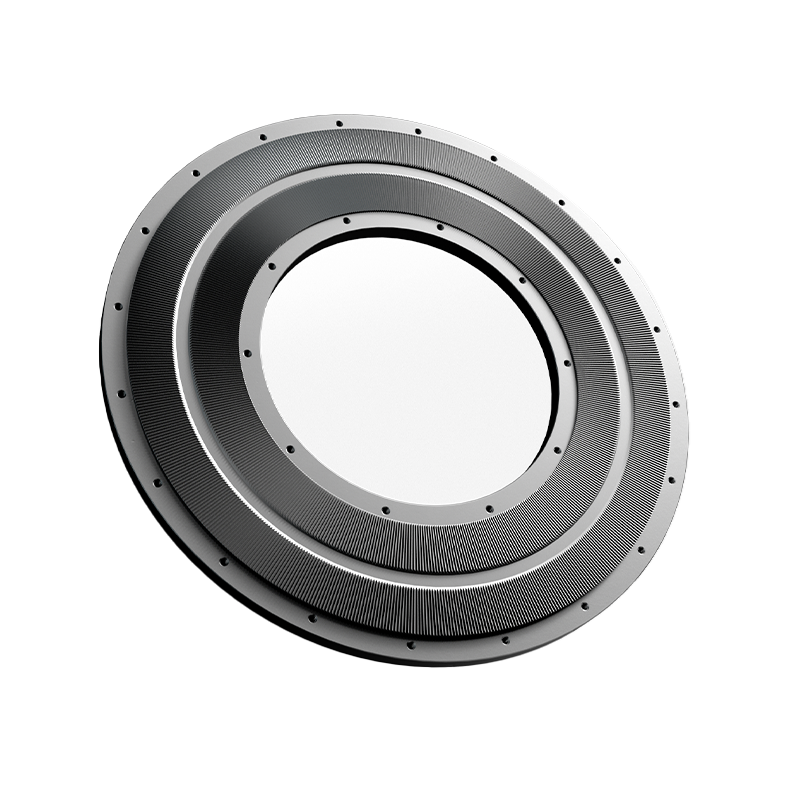
The blades use a multi-tiered finned heat dissipation structure and high thermal conductivity materials to help control disc temperature during grinding. This design helps remove heat from the working zone and reduces the risk of overheating. By keeping the blade and disc temperature within a more stable range, the system protects both the material and the cutting edge.
In 24-hour industrial-scale continuous production, this heat dissipation advantage becomes especially important. Stable temperature helps prevent PE softening and agglomeration. It also helps maintain blade sharpness and dimensional stability. For operators, this means fewer production interruptions, more consistent powder, and less need to stop the machine for cooling or cleaning.
Compatibility with Mainstream Pulverizer Disc Diameters
The blades are designed to fit mainstream disc diameters commonly used in PE and PP pulverizers, including 500 mm, 600 mm, and 800 mm configurations. This compatibility makes them practical for many existing production lines. Users can upgrade blade performance without replacing the entire pulverizer system, provided that machine structure and mounting requirements are suitable.
As an original accessory from Changzhou Mao Yue Intelligent Equipment Co., Ltd., the blade is engineered for reliable fit with the company’s PE and PP series pulverizers. It also offers partial adaptability to other brands, depending on machine design, disc dimensions, bolt patterns, and operating parameters. Customization is available for disc diameter, tooth profile, and material specifications, allowing users to match the blade design with specific production needs.
Customization is not a minor advantage. Plastic recycling and processing plants often handle different material streams and target different powder specifications. A blade used for PE film recycling may not require the same tooth profile as one used for rotational molding powder or reinforced plastic grinding. Custom blade geometry helps optimize material intake, cutting behavior, powder distribution, and machine efficiency.
Performance Comparison with Ordinary Pulverizer Blades
The following table summarizes the practical differences between high-wear-resistant alloy steel PE pulverizer blades and ordinary market blades. Actual performance depends on operating conditions, but the comparison reflects common industrial results.
| Comparison Item | PE Pulverizer Alloy Steel Blades | Ordinary Pulverizer Blades |
|---|---|---|
| Typical Hardness | HRC 60-65 or higher after precision heat treatment | Approximately HRC 45 in many standard designs |
| Wear Resistance | High resistance to abrasion, especially for tough or reinforced plastics | Faster edge wear under continuous or abrasive operation |
| Service Life | Often 2-3 times longer; single set can reach around 800 hours under suitable conditions | Shorter replacement cycle and higher downtime frequency |
| Powder Quality | Stable 20-80 mesh or finer, uniform distribution, fewer coarse particles | Greater risk of coarse particles and inconsistent fineness as wear increases |
| Heat Control | Multi-tiered heat dissipation structure helps prevent overheating and agglomeration | More likely to generate heat-related softening or sticking |
| Operating Cost | Lower long-term cost through reduced replacement, downtime, and labor | Higher hidden cost due to frequent maintenance and quality fluctuation |
| Customization | Disc diameter, tooth profile, and material specifications can be customized | Often limited to standard designs |
Applications in Plastic Recycling and Regeneration
Plastic recycling is one of the most important application areas for PE pulverizer alloy steel blades. Waste PE materials appear in many forms, including films, pipes, caps, containers, cable sheath, packaging strips, and industrial scraps. After cleaning, shredding, and preliminary crushing, these materials can be pulverized into fine powder for reprocessing.
Fine PE powder supports high-value circular utilization. It can be used for regranulation, film blowing, pipe extrusion, injection molding, compounding, and other downstream processes. The more uniform the powder, the easier it is to feed, melt, mix, and process. Uniform powder also improves product consistency and can reduce energy consumption during extrusion or injection molding because the material melts more evenly.
In recycling operations, input material quality may vary. Some batches may contain harder pieces, thicker wall sections, or mixed additives. Durable alloy steel blades help maintain production stability under these changing conditions. Their high hardness and impact resistance reduce the risk of rapid blade wear, allowing recyclers to process broader material streams with more confidence.
Applications in Powder Coating Production
PE powder coatings require strict particle size control. Powder that is too coarse may not melt or adhere properly, while powder that is too fine may create dusting issues or poor flow behavior. The alloy steel blades help produce PE powder within a controlled range, commonly 20 to 80 mesh, with good uniformity and flowability.
Powder coating processes such as electrostatic spraying and fluidized bed impregnation demand clean powder without scorching, agglomeration, or large impurities. Since PE can soften under heat, heat control during pulverizing is essential. The blade’s heat dissipation design helps reduce temperature-related defects and supports stable powder quality.
For powder coating manufacturers, consistent powder quality helps improve coating appearance, adhesion, thickness control, and process repeatability. The blade therefore contributes directly to final product performance, not just grinding efficiency.
Applications in Modified Plastics and Masterbatch
In modified plastics and masterbatch production, PE powder can serve as a carrier for fillers, pigments, additives, flame retardants, and functional compounds. The quality of the carrier powder affects mixing uniformity and final product performance. If the powder size distribution is irregular, additives may disperse poorly, causing color differences, weak mechanical properties, or processing instability.
PE pulverizer alloy steel blades produce uniform fine powder suitable for filler masterbatch, color masterbatch, and functional masterbatch applications. The improved powder consistency supports more accurate formulation and better extrusion performance. For manufacturers producing high-value compounds, reliable powder preparation is an important foundation for quality control.
Applications in Rotational Molding
Rotational molding depends heavily on powder quality. In this process, plastic powder is placed inside a mold, heated, and rotated so the powder melts and coats the inner surface of the mold. If the powder particles are uneven, too coarse, or agglomerated, the molded product may have uneven wall thickness, rough surface texture, bubbles, pinholes, or weak areas.
Uniform PE powder produced with high-quality alloy steel blades is suitable for large hollow products such as storage tanks, containers, amusement equipment, water tanks, and industrial hollow parts. Stable particle size distribution helps the powder flow and melt evenly. This supports smoother surfaces, improved structural consistency, and better product appearance.
Because rotational molding products are often large and safety-related, powder reliability is extremely important. A small defect in powder preparation can become a large defect in the finished product. Long-lasting blades reduce quality drift over time and help maintain stable powder output across production batches.
Applications in Electronic Waste, Laboratory Testing, and R&D
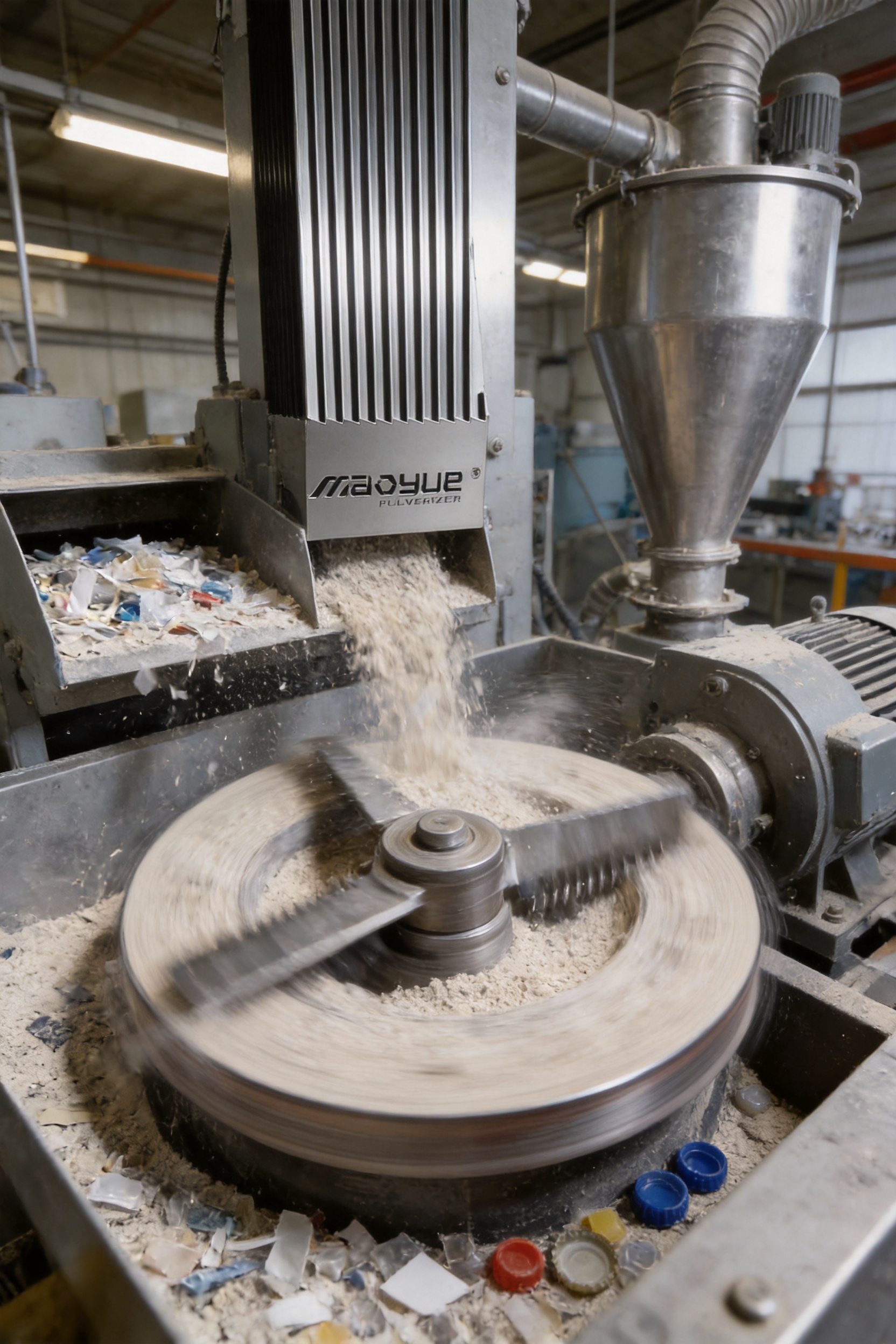
Beyond mainstream recycling and production, the blades are also useful in high-demand pulverizing tasks such as electronic waste plastic recovery, laboratory sample preparation, and small-batch research and development. Electronic waste may contain plastic components with additives, flame retardants, or reinforced structures. Processing these materials requires blades that can resist wear and maintain cleanliness.
Laboratories and R&D facilities often require small batches of powder with precise particle size distribution. Even when production volume is limited, powder accuracy is critical because test results may guide formulation, processing conditions, or material qualification. A stable blade system helps produce repeatable samples and reduces variability in research data.
Manufacturing Strength Behind the Blades
The performance of a pulverizer blade depends not only on material selection but also on the manufacturing capability behind it. Changzhou Mao Yue Intelligent Equipment Co., Ltd. is a source manufacturer with approximately 30 years of experience in plastic crushing and pulverizing equipment. The company has developed its technical foundation through long-term specialization in disc pulverizers, plastic size reduction lines, pulverizer parts, and complete crushing and pulverizing solutions.
The company’s experience covers industries such as rotational molding, masterbatch, polymers, PVC, PE, recycling, and powder coating. This broad application background is important because blade design must match real production problems. A manufacturer that understands only metal processing may not fully understand polymer behavior. A manufacturer that understands both equipment and plastic materials can design blades that perform better in actual pulverizing conditions.
The company operates six processing workshops, each averaging about 1,400 square meters. This production scale supports stable manufacturing, machining, assembly, inspection, and customization. It also allows the company to control key production steps internally rather than relying only on outsourced processing. Better process control leads to more stable blade quality and more reliable delivery.
Advanced Equipment and Machining Capability
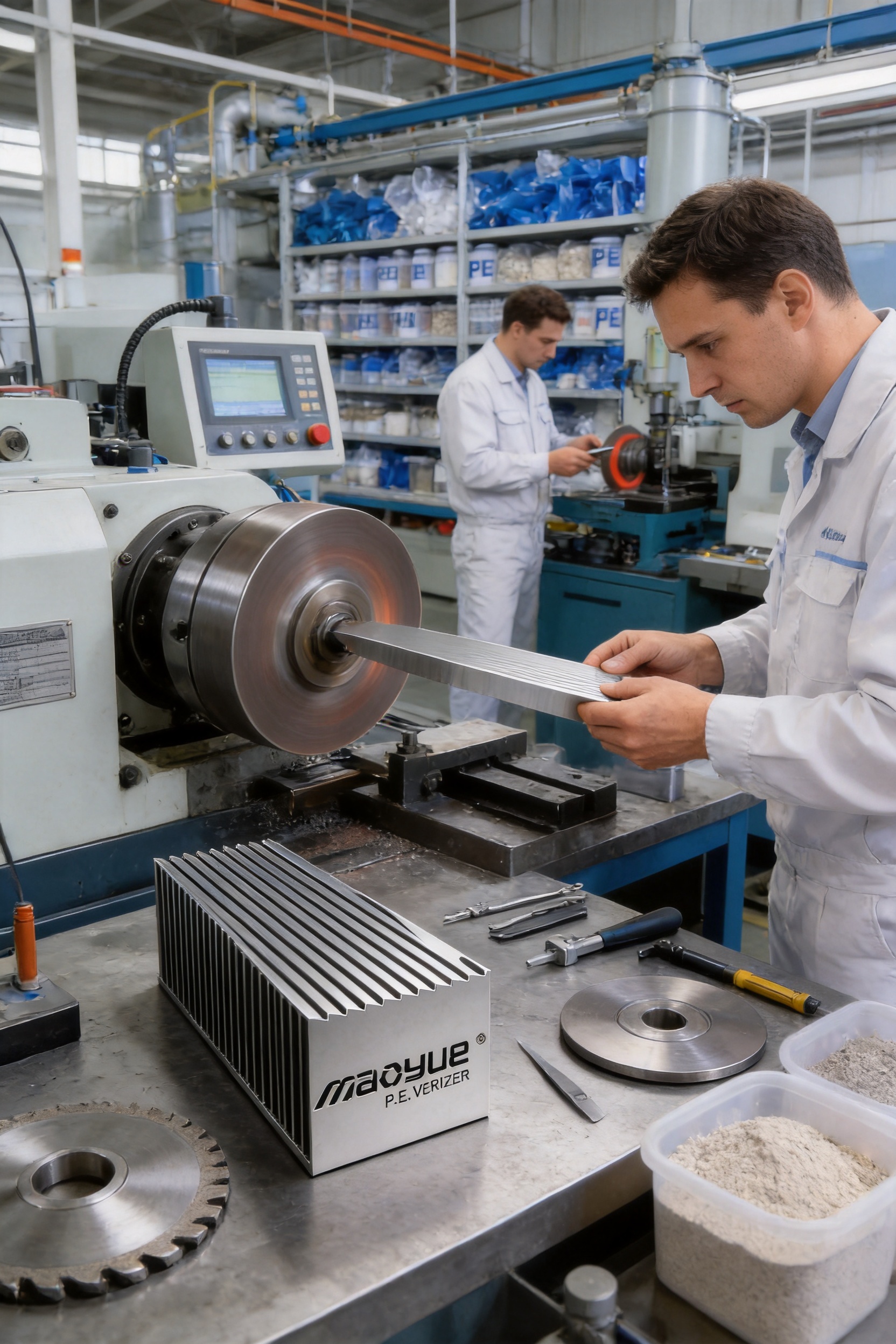
Precision machining is essential for pulverizer blades. Even a small deviation in surface flatness, tooth geometry, balance, or mounting accuracy can affect vibration, noise, powder quality, and blade life. The company uses Taiwan-imported high-precision grinding machines built to German standards, German dynamic balancing equipment, and Japanese welding systems. These advanced manufacturing resources support accurate machining and stable component performance.
High-precision grinding improves blade flatness and cutting-edge accuracy. Dynamic balancing reduces vibration during high-speed rotation. Low vibration protects bearings, improves powder consistency, lowers noise, and reduces mechanical stress on the pulverizer. Reliable welding systems support stable fabrication of related components and help maintain equipment durability.
For a customer, these manufacturing strengths mean the blade is not simply a hardened metal part. It is a precision-engineered component designed to work in a high-speed pulverizing environment. The combination of alloy steel, heat treatment, machining accuracy, and balancing creates the final performance advantage.
European Quality Standards and Certification
The company is committed to manufacturing components according to European quality standards. It has obtained CE mechanical certification and ISO 9001 quality management system certification. These certifications support product safety, process control, and manufacturing consistency.
ISO 9001 is especially relevant because blade quality must be repeatable. A single excellent blade is not enough for industrial customers. Users need every replacement set to match the expected dimensions, hardness, and performance. Quality management systems help ensure that production steps, inspection procedures, corrective actions, and documentation are controlled.
CE mechanical certification reflects attention to machine safety and compliance for equipment exported or used in markets that recognize these standards. For international customers, certification provides additional confidence when purchasing pulverizer systems and parts.
Technical Team and Continuous Innovation
The company maintains a professional technical team that regularly studies advanced machine technologies from countries such as Germany. This learning and improvement culture is important in the pulverizer industry because material applications continue to evolve. Recycled plastics are becoming more complex, fillers and reinforcements are more common, and customers expect lower energy consumption with higher output quality.
Continuous innovation allows the company to improve tooth profiles, heat dissipation structures, material selection, balancing methods, and customization options. The PE pulverizer alloy steel blade is a result of this practical engineering approach. It is designed not just to cut material, but to solve production problems such as short blade life, unstable powder size, overheating, high downtime, and excessive maintenance cost.
Advantages Over Competitors
Compared with many standard market blades, the PE pulverizer alloy steel blade offers a stronger combination of hardness, toughness, wear resistance, heat control, and precision fit. Competitor blades may use ordinary steel, simpler heat treatment, or less accurate machining. These differences may not be obvious when the blade is new, but they become clear after hours of operation.
As ordinary blades wear, powder becomes coarser, machine load may increase, and heat generation may rise. Operators may need to adjust settings more frequently or stop the machine for replacement. In contrast, the alloy steel blade maintains a sharper edge and more stable clearance for a longer time. This leads to steadier powder quality and lower operating interruption.
The product also competes strongly in cost-performance. It delivers premium quality at an affordable price and is designed to rival international top-tier brands. For many users, the best blade is not simply the cheapest one at purchase. The best blade is the one that lowers total cost per ton while maintaining stable powder quality. Longer service life, reduced downtime, and better downstream processing results create a stronger overall value.
Energy Savings and Downstream Processing Benefits
Finer and more uniform powder can help downstream extrusion, injection molding, and compounding processes reduce energy consumption. When powder particles are consistent, they heat and melt more evenly. This can improve feeding stability, reduce unmelted particles, and support smoother processing. In some applications, better powder quality may also reduce the need for reprocessing or quality correction.
For film blowing and pipe extrusion, uniform recycled PE powder or reprocessed material can help maintain melt stability and product dimensions. For injection molding, consistent feed material supports better part quality and fewer defects. For compounding, uniform powder improves additive dispersion and final material performance. Therefore, blade quality influences the entire production chain, not only the pulverizing stage.
Operational Stability in 24-Hour Industrial Production
Industrial plastic processing often requires continuous production. Machines may run for two or three shifts per day, and unplanned shutdowns can be expensive. A blade designed for long service life and heat stability is valuable because it supports uninterrupted operation.
The alloy steel blade maintains sharpness under continuous use, while the heat dissipation structure helps control disc temperature. Together, these features reduce the chance of overheating, material sticking, edge dulling, or deformation. Operators can maintain stable output for longer periods and plan maintenance more efficiently.
Planned maintenance is always better than emergency maintenance. When blade life is predictable, production managers can schedule replacement during planned downtime. This improves labor efficiency, inventory planning, and delivery reliability.
Customization for Specific Production Needs
Every plastic processing plant has different requirements. Some customers prioritize maximum output. Others require the finest powder. Some process clean virgin material, while others handle recycled waste with variable quality. Because of these differences, customized blade specifications can provide major advantages.
The blade can be customized according to disc diameter, tooth profile, material specification, and application requirements. Tooth design can influence cutting intensity, material flow, heat generation, and particle size distribution. Material selection can be adjusted for special wear conditions or impact requirements. Disc diameter customization supports compatibility with different pulverizer models.
Customization also helps extend equipment life. A blade that matches the machine and material properly will operate more smoothly than a generic replacement part. Better fit reduces vibration, uneven wear, and mechanical stress. This improves both blade life and machine reliability.
Role in Complete Crushing and Pulverizing Lines
The blade is part of a larger processing ecosystem that may include crushers, pulverizers, feeding systems, conveying systems, classifiers, dust collection, and control systems. In a complete crushing and pulverizing line, material typically moves from large waste pieces to flakes or chips, then to fine powder. Each stage must be matched for stable production.
If the pulverizer blade wears quickly, it can become the bottleneck of the whole line. Upstream crushers may continue to produce material, but the pulverizer may not maintain output or powder quality. Downstream packaging or compounding systems may receive inconsistent powder. By improving pulverizer blade reliability, the entire line becomes more efficient.
Changzhou Mao Yue Intelligent Equipment Co., Ltd. has long experience in plastic crushing and pulverizing lines, which helps ensure that blade recommendations are aligned with complete process needs. This system-level understanding is valuable for customers seeking stable production rather than isolated parts replacement.
Maintenance Recommendations for Better Blade Life
Although the alloy steel blade is designed for long service life, proper maintenance remains important. Operators should check the grinding clearance regularly and adjust it according to powder requirements and machine load. Excessively tight clearance may increase heat and wear, while overly wide clearance may reduce powder fineness.
Material preparation also matters. Removing metal contaminants, stones, and hard foreign objects before pulverizing helps protect the blade. Even high-impact-resistant alloy steel can be damaged by unexpected metal pieces. A magnetic separator or careful sorting process can improve blade safety and machine life.
Temperature monitoring is also recommended, especially during continuous operation. If PE material begins to soften or agglomerate, operators should check feed rate, cooling condition, clearance, and blade sharpness. Regular inspection of bearings, fasteners, and balancing condition helps maintain smooth rotation and prevents secondary damage.
When replacing blades, operators should follow proper installation procedures and ensure that all mounting surfaces are clean. Bolts should be tightened according to recommended specifications. After installation, test running and vibration checking help confirm safe operation.
How the Blade Supports Sustainable Plastic Recycling
Sustainability in plastic recycling depends on more than collecting waste. It requires efficient processing technology that can convert waste into reusable material with stable quality and reasonable cost. Pulverizing is a key step in many recycling routes, especially where fine powder is needed for rotational molding, compounding, powder coating, or direct reprocessing.
The alloy steel blade supports sustainability in several ways. First, it helps produce finer and more uniform recycled PE powder, improving the value and usability of recycled material. Second, its long service life reduces the number of discarded blades and lowers replacement-related resource consumption. Third, better powder quality can improve downstream energy efficiency and reduce rejected products. Fourth, stable operation reduces downtime and production waste.
These advantages align with green recycling and circular economy principles. A durable and efficient blade may appear to be a small component, but it can influence the environmental and economic performance of the entire recycling line.
Customer Value: Efficiency, Quality, Stability, and Cost Control
The main customer value of PE pulverizer alloy steel blades can be summarized in four areas: efficiency, quality, stability, and cost control. Efficiency comes from sharp cutting edges, optimized tooth design, and controlled clearance that support fast pulverizing. Quality comes from uniform powder fineness and reduced coarse particles. Stability comes from long-lasting hardness, heat dissipation, and precision machining. Cost control comes from fewer replacements, less downtime, lower labor demand, and improved downstream processing.
For a recycling plant, this means higher throughput and better product value. For a powder coating manufacturer, it means more consistent coating powder. For a rotational molding producer, it means smoother molded products and fewer defects. For a masterbatch company, it means improved dispersion and formulation stability. For laboratory or R&D users, it means repeatable powder preparation.
Q&A Section
Q1: What materials are these PE pulverizer blades made from?
They are forged from high-density wear-resistant alloy steel, such as chromium-molybdenum-vanadium alloy or similar high-hardness materials. The blades undergo multiple precision heat treatment steps to achieve high hardness, wear resistance, and impact strength.
Q2: How hard are the blades?
The blades can reach HRC 60-65 or higher after heat treatment. This is significantly higher than the approximate HRC 45 hardness commonly found in many ordinary cutting discs.
Q3: How long can one blade set last?
Under suitable operating conditions, a single blade set can achieve around 800 hours of continuous service life. Actual service life depends on material type, feed cleanliness, machine settings, cooling conditions, and maintenance practices.
Q4: What powder fineness can the blades produce?
The blades can help produce PE powder in a stable range of 20 to 80 mesh or finer, depending on the pulverizer configuration, material characteristics, clearance adjustment, and process parameters.
Q5: Are the blades suitable for recycled PE materials?
Yes. They are well suited for PE film, PE pipes, PE bottle caps, cable sheath, strapping bands, and other recycled PE materials. Their wear resistance and impact strength make them valuable for recycling and regeneration applications.
Q6: Can the blades be used for powder coating production?
Yes. The blades help produce uniform PE powder with good fineness and flowability, which is important for powder coating processes such as electrostatic spraying and fluidized bed impregnation.
Q7: Why is heat dissipation important in PE pulverizing?
PE can soften, smear, or agglomerate when overheated. The blade’s heat dissipation structure helps control grinding temperature, protecting powder quality and maintaining cutting-edge performance during continuous operation.
Q8: Are custom blade sizes available?
Yes. Customization is available for disc diameter, tooth profile, and material specification. The blades are compatible with mainstream disc diameters such as 500 mm, 600 mm, and 800 mm, and may also be adapted to certain other pulverizer brands.
Q9: How do these blades reduce production cost?
They reduce cost by extending service life, lowering replacement frequency, decreasing downtime, reducing labor for maintenance, and improving powder quality for downstream processing.
Q10: What makes the manufacturing process reliable?
The manufacturer uses high-precision grinding equipment, German dynamic balancing equipment, Japanese welding systems, controlled heat treatment, and quality management practices. The company also has approximately 30 years of industry experience and holds CE mechanical certification and ISO 9001 quality management system certification.
Conclusion
PE pulverizer alloy steel blades are a high-value upgrade for plastic pulverizing systems that require long service life, stable powder fineness, low downtime, and reliable continuous operation. Their high-density alloy steel construction, HRC 60-65 or higher hardness, precision heat treatment, wear-resistant cutting edge, heat dissipation structure, and adjustable clearance provide clear advantages over ordinary blades.
For PE recycling, powder coating, rotational molding, masterbatch, modified plastics, chemical processing, and R&D applications, powder consistency is essential. These blades help produce uniform powder from 20 to 80 mesh or finer while reducing coarse particles, agglomeration, and heat-related defects. Their extended service life can reduce maintenance frequency and lower total operating costs.
Behind the product is Changzhou Mao Yue Intelligent Equipment Co., Ltd., a source manufacturer with around 30 years of experience in plastic crushing and pulverizing equipment. With six processing workshops, advanced machining equipment, German-standard dynamic balancing, Japanese welding systems, European quality standards, CE certification, ISO 9001 certification, and a technical team focused on innovation, the company provides not only blades but also practical manufacturing strength and application knowledge.
Choosing these PE pulverizer alloy steel blades supports multidimensional improvement in grinding efficiency, powder quality, production stability, maintenance planning, and sustainability. For companies seeking more reliable plastic recycling and powder processing, the blade is a critical component that can make the entire production line more efficient, economical, and competitive.
References
1. Brydson, J. A. Plastics Materials. Butterworth-Heinemann.
2. Osswald, T. A., and Menges, G. Materials Science of Polymers for Engineers. Hanser Publishers.
3. Harper, C. A. Handbook of Plastics Technologies. McGraw-Hill.
4. ASM International. Heat Treater’s Guide: Practices and Procedures for Irons and Steels.
5. ASM International. ASM Handbook, Volume 1: Properties and Selection: Irons, Steels, and High-Performance Alloys.
6. ISO 9001 Quality Management Systems: Requirements.
7. Rosato, D. V., Rosato, D. V., and Rosato, M. G. Plastic Product Material and Process Selection Handbook. Elsevier.
8. Crawford, R. J., and Throne, J. L. Rotational Molding Technology. William Andrew Publishing.