

 English
 русский
 Español
 عربى
عربى 中文简体
中文简体
 中文简体
中文简体
Content
- 1 Why Powder Uniformity Matters in Rotomolding
- 2 Core Positioning of the 800 Model Pulverizer
- 3 Technical Specification Overview
- 4 DC53 Grinding Discs: A Major Advantage Over Conventional Tooling
- 5 Precision Tooth Grinding and Micron-Level Consistency
- 6 Dynamic Balancing for Low Vibration and Long Machine Life
- 7 Cooling System Designed for PE Powder Stability
- 8 Negative-Pressure Airflow Conveying and Dust Collection
- 9 PLC and Inverter Control for Modern Production Management
- 10 Energy Efficiency and Return on Investment
- 11 Comparison with Common Competitor Machines
- 12 Manufacturing Strength Behind the Machine
- 13 Quality Systems, Certifications, and Customer Base
- 14 Application Scenarios
- 15 How the Machine Improves Finished Rotomolded Products
- 16 Maintenance and Service Considerations
- 17 Operational Recommendations for High-Quality PE Powder
- 18 Why Large Factories Choose an 800 Model Instead of Multiple Smaller Machines
- 19 Q&A Section
- 19.1 Q1: What type of material is the 800 model mainly designed for?
- 19.2 Q2: What is the typical production capacity?
- 19.3 Q3: Why is DC53 steel important for grinding discs?
- 19.4 Q4: How does the machine help improve rotomolded product quality?
- 19.5 Q5: Why is cooling so important during PE pulverizing?
- 19.6 Q6: What dust control features are included?
- 19.7 Q7: Can worn grinding discs be refurbished?
- 19.8 Q8: Is the machine suitable for 24-hour production?
- 19.9 Q9: What company manufactures the machine?
- 19.10 Q10: What are the main advantages over ordinary pulverizers?
- 20 Conclusion
- 21 References
- 22 Product: PE Rotomolding Powder High Uniformity 800 Model Pulverizer
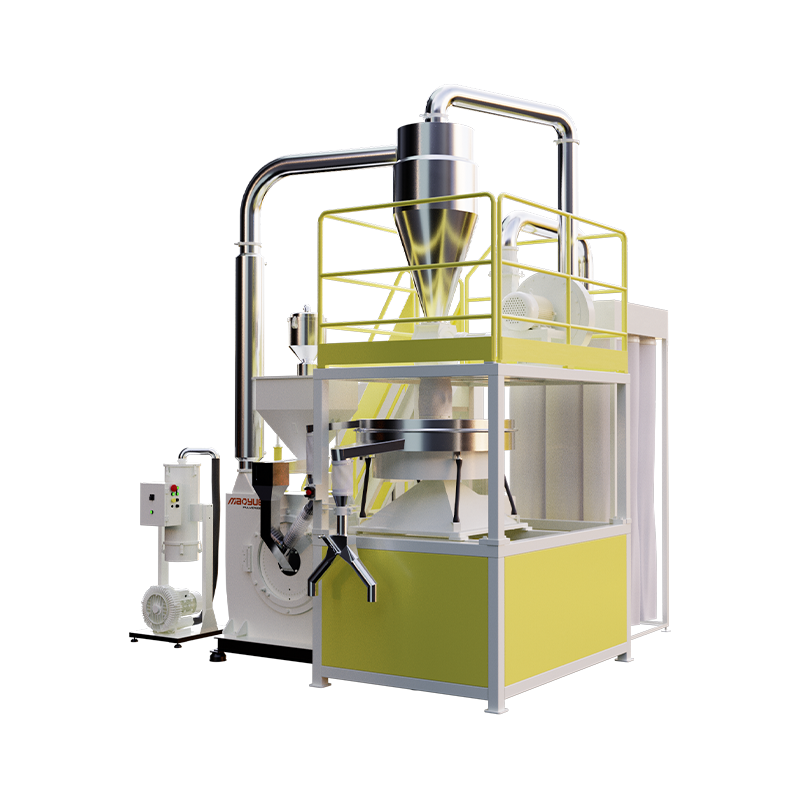
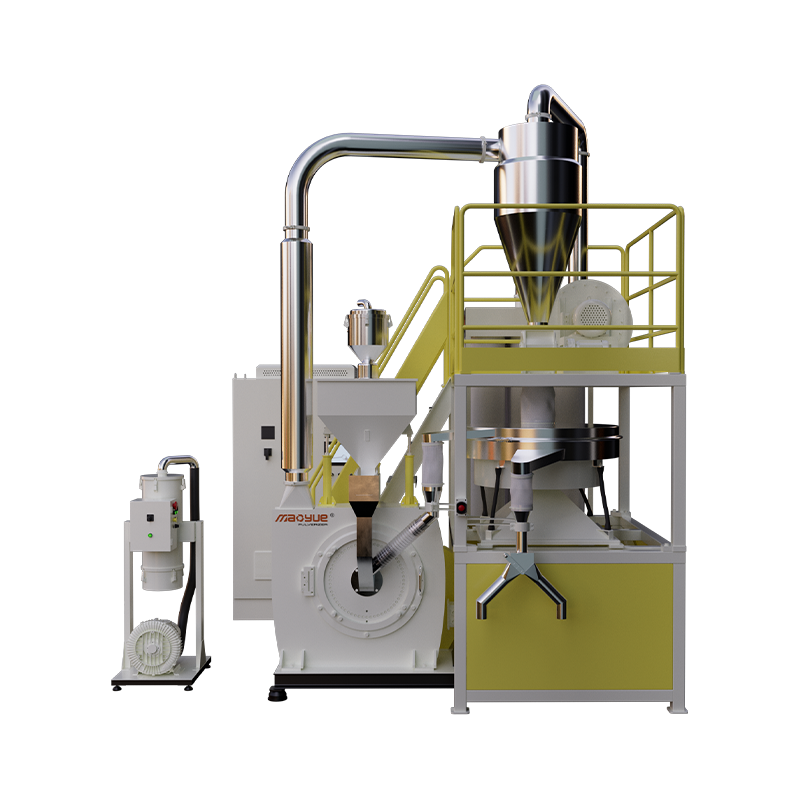
In high-volume rotational molding, powder quality is not a small detail; it is one of the foundations of product strength, surface appearance, wall thickness consistency, cycle stability, and manufacturing profitability. The 800 model PE rotomolding powder pulverizer is designed for factories that need dependable, large-scale powder production with uniform particle distribution, controlled temperature, durable grinding components, and stable continuous operation. Built for demanding plastic size-reduction applications, this equipment targets manufacturers producing large water tanks, pallets, trash bins, playground structures, industrial containers, and other rotational molded products where powder flowability and consistency directly affect the final product.
The machine is positioned as a heavy-duty, ultra-high-capacity pulverizing solution for PE rotomolding powder. It is suitable for production lines that require high output, adjustable fineness, low dust escape, stable cooling, and long service life. Compared with general-purpose plastic pulverizers, the 800 model is engineered around the specific needs of polyethylene rotational molding powder: narrow particle size distribution, reduced overheating, reduced material degradation, improved flow performance, and dependable long-running operation.
Changzhou Mao Yue Intelligent Equipment Co., Ltd. manufactures this pulverizer as part of its plastic pulverizing and crushing equipment portfolio. With around 30 years of industry experience, the company has developed a strong manufacturing base, precision processing capability, and a technical culture focused on machine stability, component accuracy, and customized solutions. The 800 model reflects this industrial background through its DC53 grinding disc material, precision tooth grinding, dynamic balancing, cooling system, negative-pressure conveying, dust collection, and PLC-based control features.
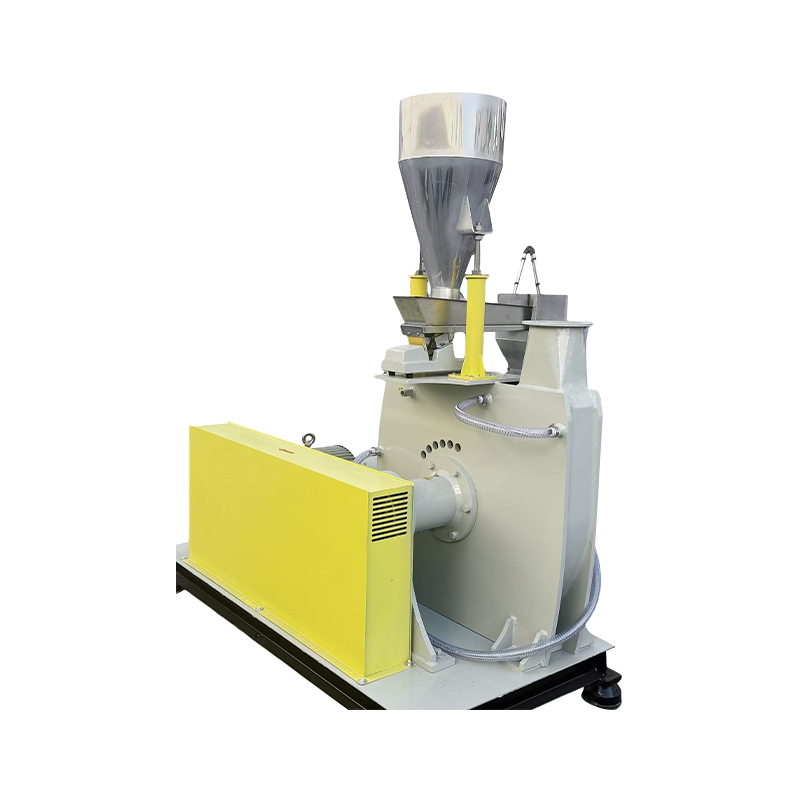
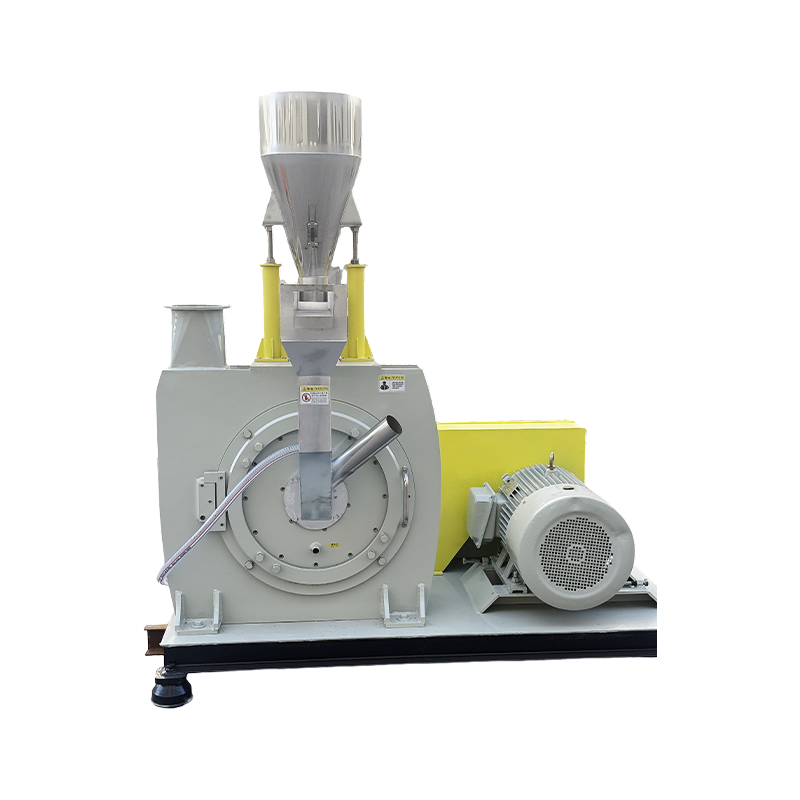
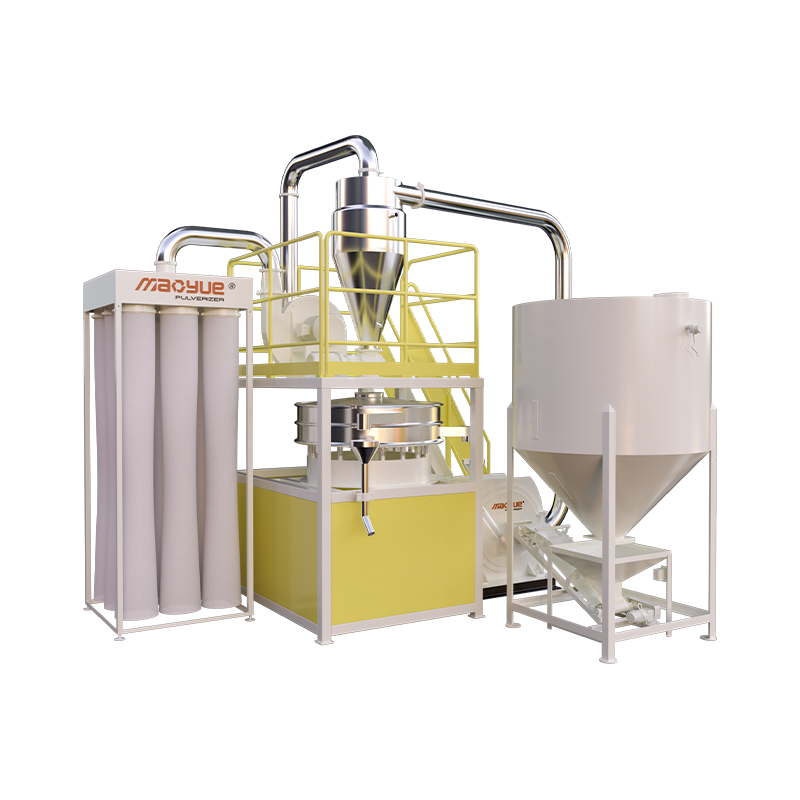
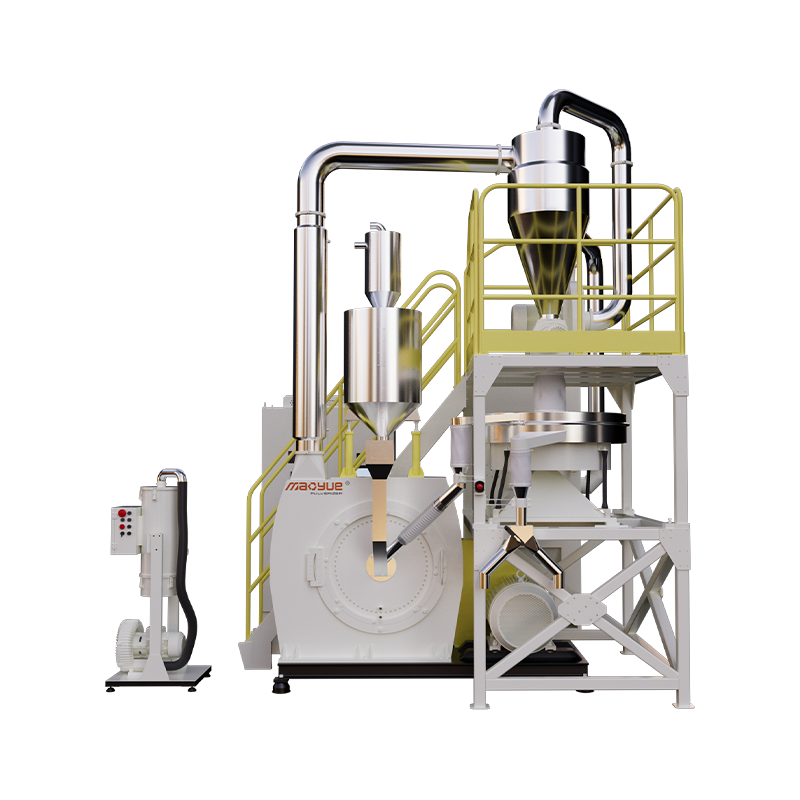
PE Rotomolding Powder High Uniformity 800 Model Pulverizer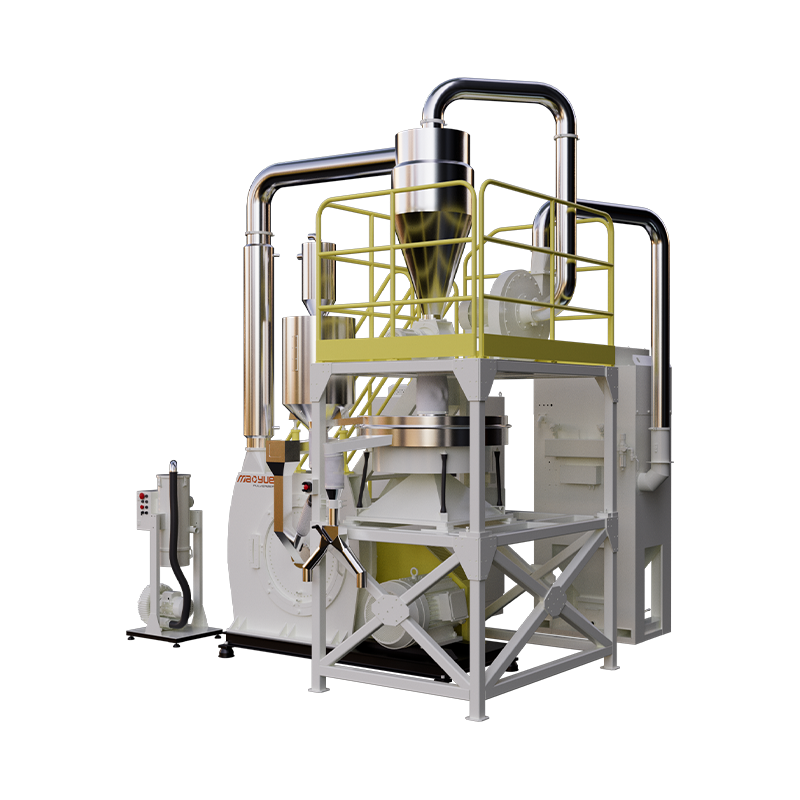
Why Powder Uniformity Matters in Rotomolding
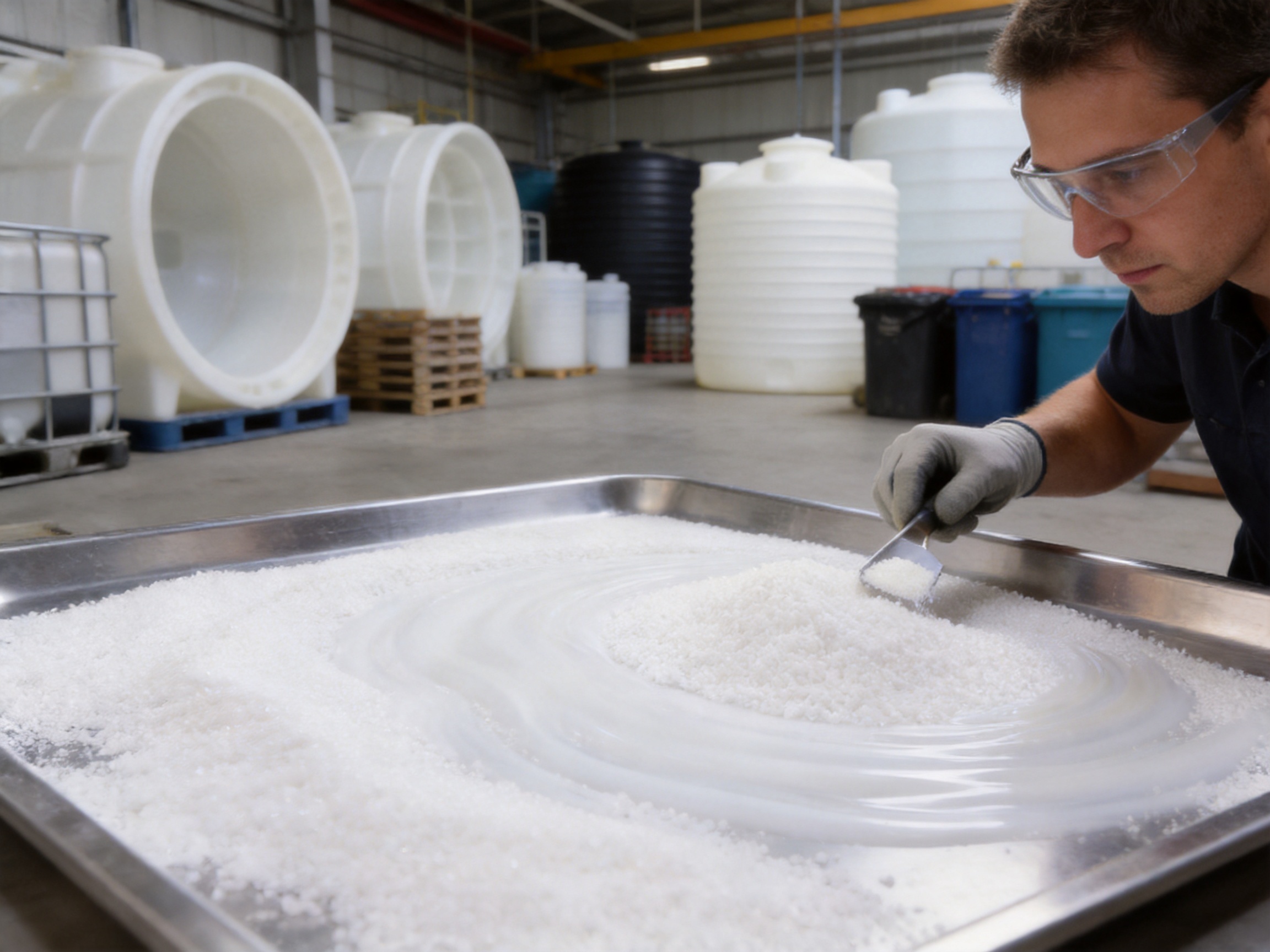
Rotational molding depends on the behavior of powder inside a heated mold. Unlike injection molding or extrusion, rotomolding does not use high-pressure injection to force melted plastic into a cavity. Instead, the powder is charged into a mold, heated while rotating, melted against the mold surface, and then cooled to form a hollow product. Because the process relies heavily on powder movement, melting, adhesion, and fusion, the quality of the powder has a direct effect on product results.
If the powder contains too many large particles, melting may be incomplete, causing weak spots, pinholes, rough surfaces, or uneven product strength. If the powder contains excessive fines, dusting may increase, powder flow may become unstable, and material may overheat or degrade more easily. If the particle size distribution is wide, the powder may not spread evenly inside the mold, resulting in inconsistent wall thickness and poor surface quality. For products such as water tanks and industrial containers, these defects can lead to high rejection rates and loss of customer confidence.
The 800 model pulverizer is built to address these concerns by producing PE powder with high uniformity. Its adjustable fineness range allows operators to match powder specifications to different product requirements. For many rotomolding operations, mesh size selection is not simply a matter of making powder finer. It must balance flowability, melting behavior, production speed, dust level, and finished product performance. A stable pulverizer helps manufacturers maintain this balance day after day.
High-uniformity powder also contributes to improved production planning. When the powder behaves consistently, molders can control heating cycles more accurately, reduce trial-and-error adjustments, and improve repeatability between batches. This is especially important for factories operating multiple molds, different product sizes, or export-oriented production where consistency must be maintained over long runs.
Core Positioning of the 800 Model Pulverizer
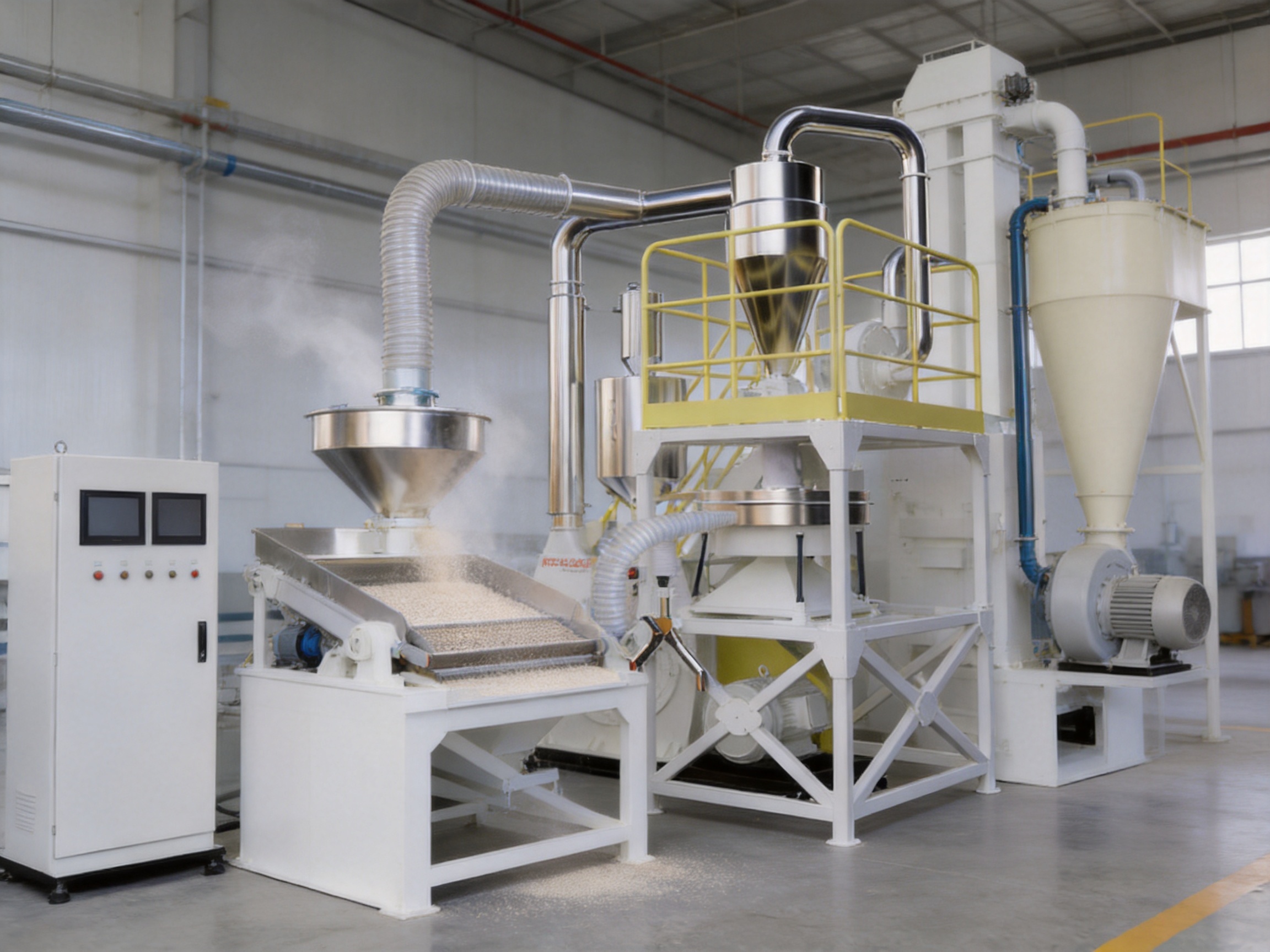
The 800 model is designed as a flagship high-capacity pulverizer for large factories and dedicated rotomolding powder producers. The machine uses an 800 mm grinding disc diameter and can be configured with different motor power options to meet production requirements. Depending on material characteristics, target fineness, cooling conditions, feeding stability, and configuration, output can vary significantly. The listed specification range includes 450 to 900 kg/h for typical configurations, while optimized operating conditions and suitable PE materials may support higher production expectations in large-scale applications.
The pulverizer is suitable for polyethylene materials used in rotational molding, including virgin PE pellets, processed PE feedstock, and certain recycled PE materials after proper cleaning and preparation. It may also be used in broader plastic powder processing fields, including recycling re-pulverizing, industrial PE powder production, hot-melt adhesive powder preparation, SPC flooring core powder supply, and other applications requiring controlled plastic size reduction.
One of the key strengths of the 800 model is that it is not merely a larger version of a smaller pulverizer. Large-scale grinding brings additional challenges: greater heat generation, higher mechanical load, more vibration risk, faster tool wear, and more demanding dust collection requirements. The 800 model addresses these challenges through reinforced structure, advanced disc material, precision machining, dynamic balancing, cooling integration, and closed conveying design.
Technical Specification Overview
Item |
Specification |
Practical Significance |
Model Type |
800 |
Heavy-duty high-capacity pulverizer for large-scale powder production |
Grinding Disc Diameter |
800 mm |
Large grinding surface supports higher throughput and stable powder processing |
Typical Capacity |
450–900 kg/h, depending on material and fineness |
Suitable for industrial production; optimized lines may achieve higher practical output |
Mesh Size |
10–50 mesh in listed configuration; adjustable according to process needs |
Allows powder specification matching for rotomolding and related plastic powder applications |
Main Drive Motor |
75/90/110/132 kW options |
Power can be selected according to required output and material characteristics |
Speed Control |
Inverter control |
Improves process flexibility, energy control, and operating stability |
Grinding Blade Material |
DC53 separated grinding blade structure |
Improves toughness, wear resistance, and maintenance convenience |
Blower Motor |
11/15 kW options |
Supports airflow conveying and powder classification movement |
Pipe Material |
All stainless steel |
Improves cleanliness, durability, and corrosion resistance |
Pipe Diameter |
178/203 mm options |
Selected to match air volume, throughput, and conveying layout |
Swing Vibrator Diameter |
1200/1500 mm options |
Provides screening support for powder separation and specification control |
Vibrating Screen Motor |
1.1/1.5 kW options |
Supports continuous classification and screening operation |
Feeding Method |
Vacuum feeding |
Improves feeding cleanliness, labor efficiency, and production continuity |
Dust Collector Bag Diameter |
300 mm |
Part of the dust filtration system for cleaner workshop operation |
Cooling Method |
Water cooling with inlet and outlet arrangement |
Controls grinding temperature and reduces overheating risk |
DC53 Grinding Discs: A Major Advantage Over Conventional Tooling
The grinding disc is the core working component of a pulverizer. Its material, tooth profile, hardness, balance, and grinding accuracy determine not only production capacity but also powder quality and maintenance cost. The 800 model uses premium DC53 high-grade cold-work mold steel grinding discs with hardness around HRC 62–64. This material choice is a significant advantage compared with many conventional pulverizers using standard D2 or lower-grade tool steels.
DC53 is known for combining high hardness with improved toughness. In pulverizer operation, hardness alone is not sufficient. A grinding disc must resist wear while also handling repeated impact, friction, and thermal stress. If the disc is too brittle, chipping may occur. If it is too soft, the cutting edge wears quickly and powder quality declines. DC53 provides a balanced performance profile, helping the machine maintain sharpness and stable particle size over longer production intervals.
For rotomolding powder producers, longer disc life is not only a spare-parts advantage. It also means fewer production interruptions, less time spent changing tools, more predictable maintenance scheduling, and more stable powder uniformity between service cycles. When a disc wears unevenly, powder distribution changes, motor load may rise, heat generation increases, and product quality can gradually become unstable. High-quality DC53 discs reduce these risks.
The separated grinding blade design further supports maintenance efficiency. Instead of replacing large components unnecessarily, users may be able to service or refurbish worn parts more economically. The provided information indicates that professional disc refurbishment can cost only about one quarter to one third of the price of new discs, which can dramatically reduce long-term tooling expenses for factories running continuous production.
Precision Tooth Grinding and Micron-Level Consistency
A premium steel material can only perform fully when it is processed accurately. The tooth geometry of a pulverizer disc determines cutting behavior, friction, heat generation, powder shape, and particle distribution. The 800 model benefits from high-precision grinding processes using imported Taiwanese professional CNC tool grinders built according to advanced standards. This manufacturing capability allows tooth-by-tooth precision processing, improving blade angle consistency and edge sharpness.
In lower-grade pulverizers, tooth angles may vary from one section to another. Small inconsistencies can become serious when the disc rotates at high speed and processes hundreds of kilograms of material per hour. Uneven tooth geometry can create inconsistent cutting, uneven wear, higher vibration, more heat, and wider particle distribution. These issues are especially harmful for rotomolding powder, where flowability and uniform melting are critical.
By controlling the disc tooth geometry more precisely, the machine supports a narrower particle size distribution. This helps prevent common downstream defects such as rough product surfaces, uneven wall thickness, weak fusion, and insufficient product strength. It also improves operational confidence for rotomolding factories that need to supply powder to multiple production lines or maintain consistent quality for large-volume orders.
This precision manufacturing capability is one of the important distinctions between a specialized rotomolding pulverizer and a general crushing machine. The goal is not simply to reduce plastic size; it is to create powder that performs predictably inside a rotational mold. That requires engineering attention from disc material selection through final balancing and machine assembly.
Dynamic Balancing for Low Vibration and Long Machine Life
High-speed rotating machinery depends heavily on balance. In a large 800 mm disc pulverizer, even small imbalance can generate significant vibration, noise, bearing stress, spindle wear, and reducer load. Over time, vibration can loosen fasteners, shorten component life, reduce powder consistency, and create safety concerns. For this reason, the 800 model uses rigorous dynamic balancing with German-imported high-precision balancing equipment.
The goal of dynamic balancing is to control vibration at operating speed, not merely during static assembly. A well-balanced grinding disc and rotating system allow the machine to run smoothly, even under demanding production conditions. The result is often described by the industry as “coin-standing” stability, indicating extremely low vibration during operation. This type of stability is not only impressive; it has practical value for long-term industrial use.
Lower vibration means longer bearing and spindle life. It also helps maintain the accurate gap and relative alignment between grinding components, which supports consistent particle size. When vibration is high, the grinding process becomes less controlled, potentially increasing fines, coarse particles, heat, and noise. By reducing vibration, the 800 model contributes to both machine durability and powder quality.
Noise levels below 85 dB are another practical advantage for workshop management. While hearing protection and local workplace regulations should always be considered, lower machine noise improves the production environment and indicates better mechanical smoothness. In large factories where several machines may operate simultaneously, vibration and noise control become especially important.
Cooling System Designed for PE Powder Stability
Polyethylene can be sensitive to excessive heat during pulverizing. If the grinding chamber becomes too hot, material may soften, stick, smear, clump, or degrade. Poor cooling can lead to powder with reduced flowability, high agglomeration, inconsistent screening, and lower product performance. This is one of the most common weaknesses of ordinary pulverizers when they are pushed to high output.
The 800 model uses a reinforced cooling concept combining water cooling and forced air cooling. The listed configuration includes water cooling with inlet and outlet arrangement, while the product design also emphasizes a large-area cooling jacket and multi-stage airflow support. By maintaining the grinding chamber within a controlled temperature range, the machine helps prevent overheating, sticking, and clumping during long production runs.
Temperature control is particularly important in high-capacity operation because heat generation increases with throughput, motor power, friction, and continuous processing time. A machine that performs well for a short test run may fail to maintain powder quality during 24-hour operation if cooling is inadequate. The 800 model is intended for continuous industrial use, making cooling design one of its key competitive strengths.
Stable temperature also protects material properties. Rotomolding powder must melt and fuse properly in the mold. If the material is thermally damaged during pulverizing, oxidation, discoloration, reduced mechanical performance, or flow problems may occur. By reducing thermal stress, the cooling system helps preserve the quality of PE feedstock and supports consistent downstream molding.
Negative-Pressure Airflow Conveying and Dust Collection
Dust management is a major issue in powder production. Fine plastic dust can cause workshop contamination, material loss, operator discomfort, housekeeping problems, and potential safety concerns if not properly controlled. For large factories, dust escape also affects environmental compliance and production efficiency. The 800 model addresses this through a fully enclosed industrial-grade negative-pressure airflow conveying system combined with high-efficiency pulse bag dust collection.
Negative-pressure conveying helps keep powder moving through the system while reducing the chance of dust leaking outward. Instead of allowing powder to spread into the workshop, the airflow directs material toward screening and collection equipment. A pulse bag dust collector captures fine particles and helps maintain cleaner exhaust flow. The provided product information indicates dust capture efficiency greater than 99.9% under appropriate system conditions.
Compared with open or poorly sealed pulverizing systems, this design offers several advantages. It reduces raw material waste, improves workshop cleanliness, supports environmental management, and helps protect nearby electrical and mechanical equipment from dust accumulation. For companies producing premium rotomolding powder, a clean process also improves customer confidence and demonstrates professional production standards.
The use of stainless-steel pipes further supports durability and cleanliness. Plastic powder conveying can cause abrasion, static buildup concerns, and contamination issues if materials are poorly selected. Stainless-steel conveying pipelines provide a robust and cleanable solution suitable for long-term powder movement in industrial plants.
PLC and Inverter Control for Modern Production Management
Modern powder production requires more than mechanical strength. Operators need control over feeding, speed, temperature, motor load, and safety protection. The 800 model uses inverter speed control and can be supported by PLC multi-point intelligent control with over-temperature protection. These features improve process flexibility and reduce reliance on manual adjustment.
Inverter control allows the operating speed to be adjusted according to material characteristics and target powder fineness. Different PE grades may behave differently during grinding. Some materials may require slower processing to reduce heat; others may allow higher throughput. With adjustable speed, operators can optimize output, energy consumption, and powder quality instead of being limited to one fixed operating condition.
PLC-based control improves monitoring and coordination across the production system. Temperature monitoring and over-temperature protection are particularly valuable for PE powder. If operating temperature exceeds a safe range, the system can alert operators or take protective actions depending on configuration. This reduces the risk of producing off-spec powder during long shifts.
For factory managers, automated control also improves training and standardization. A well-configured control system allows operating parameters to be documented, repeated, and refined. This is important for companies scaling from small-batch powder production to continuous industrial supply.
Energy Efficiency and Return on Investment
High-capacity equipment is often evaluated by its purchase price, but professional factories should also evaluate cost per ton of powder. The 800 model is designed to support low energy consumption per unit of output through efficient grinding, stable feeding, strong cooling, and high-capacity processing. While total installed power may range from 75 to 110 kW or higher depending on configuration, the machine’s high throughput can reduce the electricity cost per ton when compared with running multiple smaller, less efficient machines.
Energy efficiency is closely connected to sharp tools and good machine balance. Dull discs increase friction and heat, requiring more power to produce the same amount of powder. Poorly balanced systems waste energy through vibration and mechanical stress. Inconsistent feeding causes load fluctuation and reduces efficiency. The 800 model’s precision discs, dynamic balancing, inverter control, and vacuum feeding all support more efficient operation.
The product information suggests a typical return on investment period of 6 to 12 months in suitable high-volume production environments. This depends on local electricity cost, labor cost, powder demand, material price, reject rate reduction, and operating hours. For factories replacing outsourced powder supply or upgrading from older equipment, savings may come from multiple sources: reduced powder purchase cost, lower reject rates, fewer blade changes, less downtime, cleaner production, and increased output capacity.
For large rotomolding factories, doubling or significantly increasing powder production capacity can unlock additional profit. If powder supply is a bottleneck, finished product production is limited. A high-capacity pulverizer can support more molds, longer production schedules, and faster order fulfillment. In export markets or seasonal demand peaks, this capacity advantage can be decisive.
Comparison with Common Competitor Machines
Many plastic pulverizers on the market are built for general-purpose size reduction. They may be acceptable for basic plastic powder applications, but rotomolding powder places higher demands on uniformity, temperature control, and consistency. The 800 model has several advantages that help distinguish it from ordinary competitor machines.
Advantage 1: Better Grinding Disc Material
Competitor machines may use standard D2 steel or lower-cost tool steel for grinding discs. While such materials can work, they may wear faster, chip more easily, or require more frequent replacement under heavy-duty operation. DC53 steel provides a stronger combination of hardness and toughness, improving edge life and reducing long-term maintenance cost.
Advantage 2: Higher Precision Tooth Processing
Some pulverizers are limited by less accurate disc machining. Tooth inconsistency causes vibration, uneven cutting, and wider particle size distribution. The 800 model benefits from precision CNC tool grinding, supporting micron-level consistency and better powder uniformity.
Advantage 3: Stronger Vibration Control
Large pulverizers must be dynamically balanced with high accuracy. Machines without rigorous balancing may suffer from higher noise, unstable operation, and shortened bearing life. German dynamic balancing equipment and strict balancing procedures help the 800 model operate more smoothly.
Advantage 4: More Effective Cooling
PE powder production is heat-sensitive. A machine with insufficient cooling may produce clumped powder, sticky material, or degraded particles during long runs. The 800 model’s reinforced water and air cooling approach provides better thermal management for industrial operation.
Advantage 5: Cleaner Powder Handling
Open conveying and weak dust collection create messy workshops and material loss. The 800 model’s negative-pressure airflow conveying and pulse bag dust collection improve environmental performance and powder recovery.
Advantage 6: Stronger Manufacturing Background
A pulverizer is only as reliable as the factory that builds it. Changzhou Mao Yue Intelligent Equipment Co., Ltd. operates multiple processing workshops and uses advanced equipment including Taiwan-imported high-precision grinding machines, German dynamic balancing equipment, and Japanese welding systems. This manufacturing foundation supports stable machine quality and repeatable component accuracy.
Manufacturing Strength Behind the Machine
Changzhou Mao Yue Intelligent Equipment Co., Ltd. is a source manufacturer with approximately 30 years of experience in plastic crushing and pulverizing equipment. The company has participated in the development of the plastic pulverizer market and focuses on manufacturing components according to European quality standards. Its disc pulverizers are used in rotational molding, masterbatch, polymers, PVC, PE, recycling, and powder coating applications.
The company operates six processing workshops, each averaging about 1,400 square meters. This production base allows the manufacturer to control key steps internally rather than depending entirely on external processing. Internal manufacturing control is important for pulverizer quality because grinding discs, shafts, frames, screens, conveying systems, and assembly alignment all require consistent standards.
The company’s technical team studies advanced machine technologies from countries such as Germany. This focus on international manufacturing methods is reflected in precision grinding, dynamic balancing, welding, and machine control. For customers, the advantage is practical: better-running machines, longer service life, and more reliable performance under continuous industrial conditions.
The factory is equipped with Taiwan-imported high-precision grinding machines built to German standards. These machines are especially important for disc tooth processing. The factory also uses German dynamic balancing equipment to control high-speed rotating stability and Japanese welding systems to improve structural reliability. Together, these manufacturing tools contribute to the final machine’s performance.
Quality Systems, Certifications, and Customer Base
Industrial buyers often need more than a product description; they need confidence in the manufacturer. Changzhou Mao Yue Intelligent Equipment Co., Ltd. has obtained CE mechanical certification and ISO 9001 quality management system certification. CE certification supports machine safety expectations for relevant markets, while ISO 9001 indicates a quality management framework for manufacturing consistency and continuous improvement.
The company has built long-term partnerships with more than 5,000 enterprises in domestic and international markets. A broad customer base provides practical field feedback, helping improve machine design, spare parts support, and application knowledge. Plastic pulverizing conditions vary widely, so real production experience is valuable. Different customers may process virgin PE, recycled PE, PVC, masterbatch, powder coating material, or other polymers. This application diversity helps the manufacturer understand how to adapt machines to specific requirements.
The company emphasizes quality, service, innovation, and customized solutions. In pulverizing equipment, customization can be important because customer needs differ by material type, capacity target, mesh requirement, workshop layout, dust control standard, feeding method, and downstream packaging process. A manufacturer with strong engineering and processing capacity can provide more suitable system solutions rather than only selling standard machines.
Application Scenarios
The 800 model is especially suitable for large-scale rotomolding product manufacturers. Large water tanks, storage tanks, pallets, trash bins, playground facilities, road barriers, containers, and industrial parts often require large quantities of PE powder. When production is continuous, powder supply must be stable and economical. The 800 model can serve as a primary pulverizing unit in such factories.
It is also suitable for companies specializing in PE rotomolding powder supply. Some businesses produce powder for multiple molding customers. For these suppliers, powder uniformity, batch consistency, dust control, and production efficiency directly determine market competitiveness. A high-capacity pulverizer with precision discs and stable cooling can help maintain professional powder standards.
Recycling and re-pulverizing are another important use. Waste PE rotomolding products, offcuts, or rejected products can be crushed and then pulverized again when properly processed. This helps reduce material waste and supports circular production. However, recycled materials must be cleaned, sorted, and prepared properly before pulverizing to protect machine components and powder quality.
Beyond rotomolding, the machine may support powder production for SPC flooring core layer materials, hot-melt adhesive powders, industrial PE powder, and other plastic powder applications where controlled particle size is required. Each application should be evaluated based on material properties, melting point, brittleness, moisture content, and target mesh size.
How the Machine Improves Finished Rotomolded Products
The connection between a pulverizer and the final molded product is sometimes underestimated. A high-quality pulverizer improves finished products by improving powder behavior before molding begins. Uniform powder flows more evenly inside the mold, melts more consistently, and reduces unmelted particles. This supports smoother surfaces, more even wall thickness, better strength, and fewer defects.
When powder quality is unstable, operators may try to compensate by adjusting heating time, rotation speed, or cooling cycles. However, process adjustments cannot fully solve powder defects. If particle distribution is too wide or powder contains clumps, the finished product may still show defects. By improving powder consistency at the source, the 800 model helps reduce downstream troubleshooting.
Lower reject rates are one of the strongest economic advantages. Large rotomolded products consume significant material and production time. A rejected water tank or large container represents not only wasted powder but also wasted labor, machine time, energy, and delivery schedule capacity. Better powder uniformity reduces the probability of such failures.
In addition, high-flow powder can help fill complex mold geometries more effectively. Products with ribs, corners, handles, or detailed surfaces require powder to move and distribute properly. Consistent mesh and controlled fines content help achieve better coverage and fusion in these challenging areas.
Maintenance and Service Considerations
Long-term pulverizer performance depends on proper maintenance. The 800 model is designed with durable components, but operators should still follow a structured maintenance plan. Grinding discs should be inspected regularly for wear, chipping, edge condition, and gap consistency. When discs become dull, timely refurbishment can restore performance and prevent excess heat or power consumption.
Bearings, belts, pulleys, motors, and reducers should be monitored for vibration, temperature, and noise. Because the machine uses precision balancing, abnormal vibration should not be ignored. It may indicate disc wear, material buildup, bearing issues, or improper assembly after maintenance. Early diagnosis protects major components.
The cooling system should be kept clean and functional. Water flow, inlet and outlet condition, cooling jacket cleanliness, and temperature sensors should be checked. If cooling performance declines, powder quality can deteriorate quickly. Operators should also ensure that air cooling and airflow conveying paths are not blocked by accumulated powder.
Dust collector bags require periodic cleaning, inspection, and replacement. A blocked dust collector reduces airflow, lowers conveying efficiency, increases dust escape risk, and may affect powder classification. Pulse cleaning systems should be maintained to keep filtration stable.
Vacuum feeding and screening equipment should also be managed carefully. Stable feeding improves output and powder quality. Unstable feeding causes load changes and inconsistent grinding. Screening equipment must be matched to target mesh size and kept free of damage or blockage.
Operational Recommendations for High-Quality PE Powder
To achieve the best results, factories should begin with suitable feedstock. PE material should be clean, dry, and properly sized before entering the pulverizer. Contaminants such as metal, sand, hard foreign objects, or mixed plastics can damage the grinding discs and reduce powder quality. Magnetic separation or pre-cleaning may be required in recycling applications.
Operators should select proper mesh size according to the rotomolding process. Finer powder may improve melting behavior but can increase dust and heat sensitivity. Coarser powder may improve flow in some conditions but can create incomplete melting if too large. The correct balance depends on product thickness, mold size, heating cycle, and material grade.
Grinding gap and speed settings should be optimized through controlled trials. Once stable parameters are found, they should be recorded for future batches. PLC and inverter control make this easier by allowing repeatable settings.
Temperature should be monitored continuously during long runs. If powder begins to clump or flow poorly, the first checks should include grinding chamber temperature, cooling water flow, disc sharpness, feeding rate, and dust collection airflow. Many powder quality issues can be solved by maintaining the correct balance among these factors.
Regular particle size testing is recommended. Screen analysis helps confirm that powder remains within the required distribution range. For high-value products, melt flow testing, bulk density measurement, and rotomolding trial evaluation may also be useful.
Why Large Factories Choose an 800 Model Instead of Multiple Smaller Machines
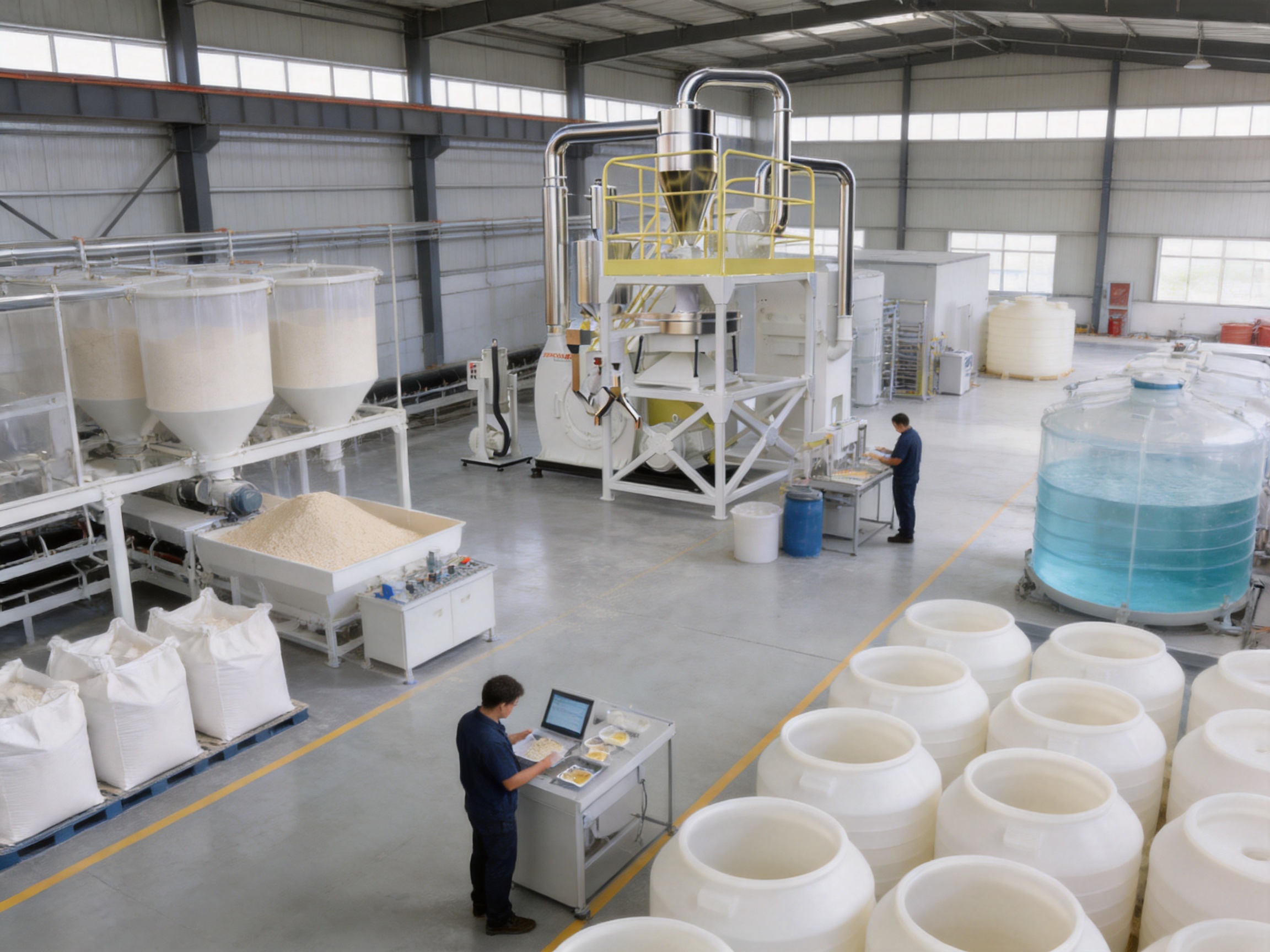
Some manufacturers attempt to increase powder capacity by operating several smaller pulverizers. While this approach can work in certain cases, it also increases labor, maintenance points, dust sources, floor space requirements, and process variation. A single heavy-duty 800 model can simplify production management by concentrating capacity into a more robust machine.
One large pulverizer often provides better energy efficiency per ton than several smaller machines. It also reduces the number of operators needed for feeding, monitoring, cleaning, and maintenance. Spare parts management becomes simpler, and powder quality may be more consistent because material is processed through one controlled system rather than several machines with slightly different wear conditions.
Large factories also benefit from cleaner layout. With vacuum feeding, stainless-steel conveying, screening, and dust collection integrated into a production line, the powder workshop can be organized more professionally. This supports safety, environmental management, and customer audits.
However, the choice should be based on production planning. If a factory needs multiple powder grades simultaneously, more than one machine may still be useful. But when the main requirement is high-volume PE rotomolding powder, the 800 model provides a strong central production solution.
Q&A Section
Q1: What type of material is the 800 model mainly designed for?
The 800 model is mainly designed for PE rotomolding powder production. It can process suitable polyethylene materials for rotational molding and may also be used for related plastic powder applications after evaluation of material properties and target particle size.
Q2: What is the typical production capacity?
The listed typical capacity is 450–900 kg/h, depending on material, mesh size, feed condition, cooling, and machine configuration. In optimized large-scale production environments with suitable materials, higher practical output may be possible.
Q3: Why is DC53 steel important for grinding discs?
DC53 cold-work mold steel provides high hardness, toughness, fatigue resistance, and anti-chipping performance. Compared with conventional D2 or lower-grade materials, it can provide longer service life, more stable cutting performance, and lower long-term tooling cost.
Q4: How does the machine help improve rotomolded product quality?
It produces more uniform powder with controlled particle size distribution. This improves powder flowability, melting consistency, wall thickness uniformity, surface quality, and product strength while reducing defects such as rough surfaces and incomplete fusion.
Q5: Why is cooling so important during PE pulverizing?
PE can soften, stick, clump, or degrade if the grinding chamber becomes too hot. Effective water and air cooling help maintain stable powder quality, prevent overheating, and support continuous high-output operation.
Q6: What dust control features are included?
The machine uses enclosed negative-pressure airflow conveying and high-efficiency pulse bag dust collection. This helps reduce dust escape, improve workshop cleanliness, recover material, and support environmental management.
Q7: Can worn grinding discs be refurbished?
Yes. Professional refurbishment of dulled discs is supported. Refurbishment can be much more economical than replacing discs, helping reduce long-term maintenance expenses for high-volume users.
Q8: Is the machine suitable for 24-hour production?
The machine is designed for heavy-duty continuous industrial operation when properly installed, cooled, maintained, and operated. Dynamic balancing, durable discs, reinforced cooling, and stable conveying all support long-running production.
Q9: What company manufactures the machine?
The machine is manufactured by Changzhou Mao Yue Intelligent Equipment Co., Ltd., a source manufacturer with about 30 years of experience in plastic crushing and pulverizing equipment.
Q10: What are the main advantages over ordinary pulverizers?
Main advantages include DC53 grinding discs, precision CNC tooth grinding, German dynamic balancing, reinforced cooling, enclosed negative-pressure conveying, efficient dust collection, inverter control, and strong manufacturing support from an experienced equipment producer.
Conclusion
The 800 model PE rotomolding powder pulverizer is a heavy-duty solution for manufacturers that need high-capacity powder production with strong uniformity, stable cooling, low vibration, and reliable long-term performance. Its design addresses the real challenges of rotomolding powder manufacturing: particle size distribution, heat control, tool wear, dust management, energy efficiency, and continuous operation.
Compared with ordinary plastic pulverizers, the machine stands out through its DC53 grinding discs, precision tooth processing, dynamic balancing, reinforced cooling system, negative-pressure conveying, and professional dust collection. These features help improve powder flowability and uniformity, reduce downstream molding defects, protect machine components, and reduce long-term operating cost.
The manufacturing strength behind the machine further reinforces its value. Changzhou Mao Yue Intelligent Equipment Co., Ltd. brings around 30 years of industry experience, multiple processing workshops, advanced grinding and balancing equipment, Japanese welding systems, CE certification, ISO 9001 quality management, and a broad customer base. For large rotomolding factories and professional powder suppliers, the 800 model offers not only capacity but also a complete industrial approach to stable, high-quality plastic powder production.
References
1. Crawford, R. J., and Kearns, M. P. Practical Guide to Rotational Moulding. Smithers Rapra Publishing.
2. Strong, A. B. Plastics: Materials and Processing. Pearson Education.
3. Rosato, D. V., Rosato, D. V., and Rosato, M. G. Plastics Processing Data Handbook. Springer.
4. Osswald, T. A., and Hernández-Ortiz, J. P. Polymer Processing: Modeling and Simulation. Hanser Publishers.
5. ISO 9001 Quality Management Systems: Requirements and Industrial Application Guidance.
6. General technical literature on plastic pulverizing, polymer powder processing, dynamic balancing, and rotational molding powder quality control.