

 English
 русский
 Español
 عربى
عربى 中文简体
中文简体
 中文简体
中文简体
Content
- 1 1. Product Overview: A Monolithic Disc Built for Industrial Pulverizing
- 2 2. Why the Grinding Disc Matters in Plastic Pulverizing
- 3 3. Material Advantage: High-Wear-Resistant Tool Steel with Stable Hardness
- 4 4. Heat Treatment: Carburizing, Quenching, and Multiple Tempering
- 5 5. One-Piece Structure Versus Split Disc Designs
- 6 6. Precision CNC Machining and High-Accuracy Tooth Geometry
- 7 7. Grinding Gap Adjustment with Micron-Level Fine Tuning
- 8 8. Cooling Compatibility and Heat Control in PE Pulverizing
- 9 9. Powder Quality: Fineness, Flowability, and Clean Output
- 10 10. Production Capacity and Energy Efficiency
- 11 11. Application Areas in Plastic Recycling and Regeneration
- 12 12. Application in Rotational Molding
- 13 13. Application in Powder Coating and Chemical Modification
- 14 14. Application in EVA, LLDPE, PP, and Specialized Materials
- 15 15. Compatibility and Customization
- 16 16. Manufacturing Strength Behind the Product
- 17 17. Quality Control, Certification, and Industrial Reliability
- 18 18. Comparison with Common Market Alternatives
- 19 19. Total Cost of Ownership: More Than the Purchase Price
- 20 20. Installation and Operating Considerations
- 21 21. Safety, Handling, and Maintenance
- 22 22. Support for Sustainable Plastic Processing
- 23 23. Company Strength and Customer Value
- 24 24. Frequently Asked Questions
- 24.1 Q1: What is the main advantage of an integrated pulverizer disc compared with a split disc?
- 24.2 Q2: What materials can this disc process?
- 24.3 Q3: What powder fineness can be achieved?
- 24.4 Q4: Why is DC53 tool steel important?
- 24.5 Q5: How does the disc help reduce overheating?
- 24.6 Q6: Can the grinding gap be adjusted easily?
- 24.7 Q7: How long is the service life?
- 24.8 Q8: Is the disc compatible with non-original pulverizer brands?
- 24.9 Q9: Can the disc be customized?
- 24.10 Q10: What industries benefit most from this disc?
- 25 25. Conclusion
- 26 References
- 27 Product: Pulverizer Integrated Disc
In modern plastic size reduction, the grinding disc is not merely a replaceable wear part; it is the core component that determines powder quality, throughput, energy efficiency, vibration stability, and long-term operating cost. For processors handling polyethylene, polypropylene, EVA, LLDPE, recycled plastics, powder coating materials, masterbatch carriers, and rotational molding grades, a well-engineered pulverizer disc can define the difference between inconsistent powder and stable, high-value output.
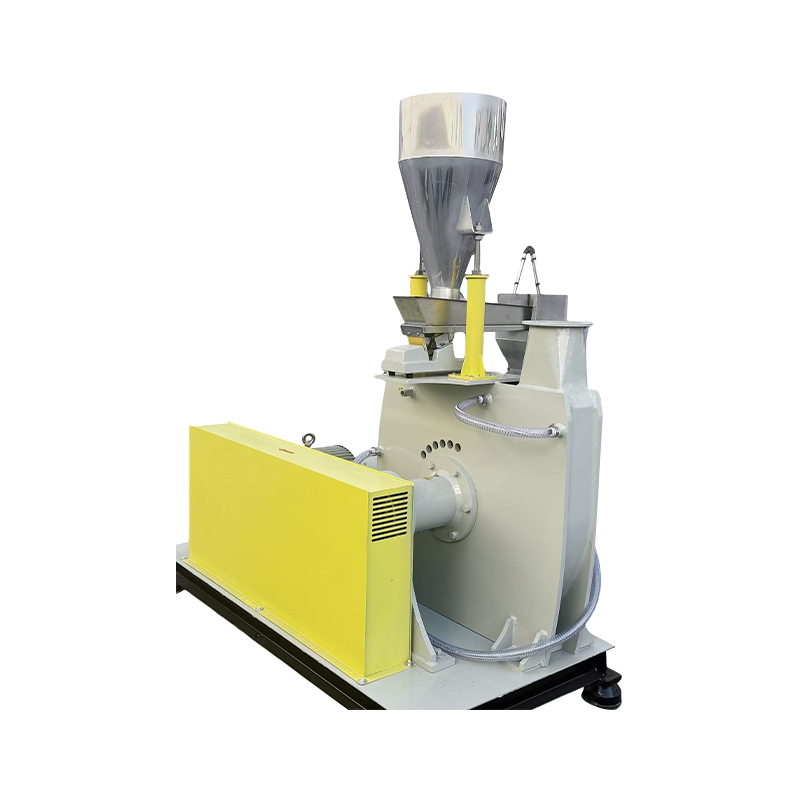
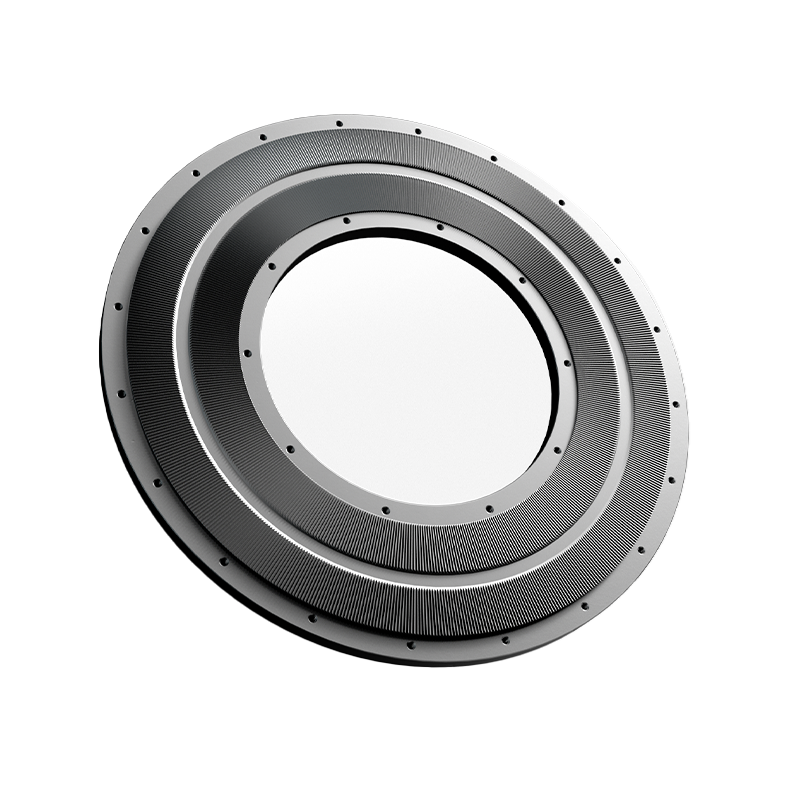
The Pulverizer Integrated Disc is designed as a high-strength, monolithic grinding component for demanding plastic pulverizing applications. It combines a one-piece casting and precision CNC machining process, a large circular structure, a central feed area, engineered inner rotating teeth, and multiple precision bolt holes for reliable mounting. Built from high-wear-resistant alloy tool steel and treated through carburizing, quenching, and multiple tempering processes, the disc is intended to deliver superior wear resistance, stable hardness, impact strength, and fatigue resistance under continuous high-speed operation.
Unlike ordinary split grinding discs or lower-grade wear plates that may suffer from weak joints, uneven tooth geometry, premature abrasion, or difficult gap adjustment, the integrated disc focuses on structural rigidity, balance, tooth precision, and repeatable powder performance. It is especially suitable for upgrading PE grinding mills, improving production capacity, reducing downtime, and producing plastic powder with narrow particle distribution and excellent flowability.
Changzhou Mao Yue Intelligent Equipment Co., Ltd. develops and manufactures this component as an original factory accessory for plastic pulverizing systems. With approximately 30 years of experience in plastic crushing and pulverizing equipment, the company combines advanced machining equipment, strict quality control, European-oriented manufacturing standards, CE mechanical certification, ISO 9001 quality management, and long-term practical knowledge from thousands of customer applications.
1. Product Overview: A Monolithic Disc Built for Industrial Pulverizing
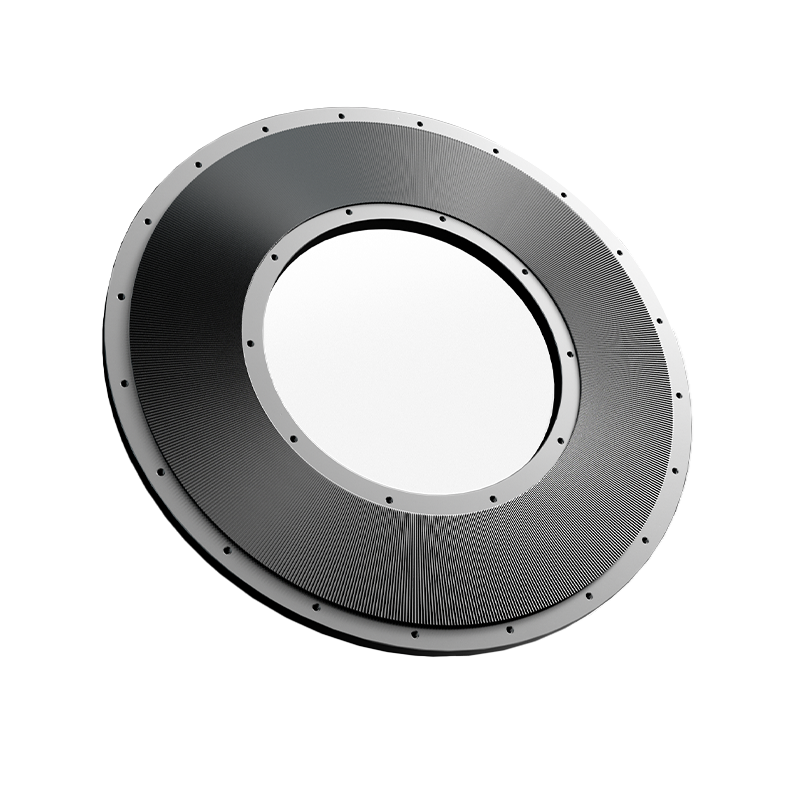
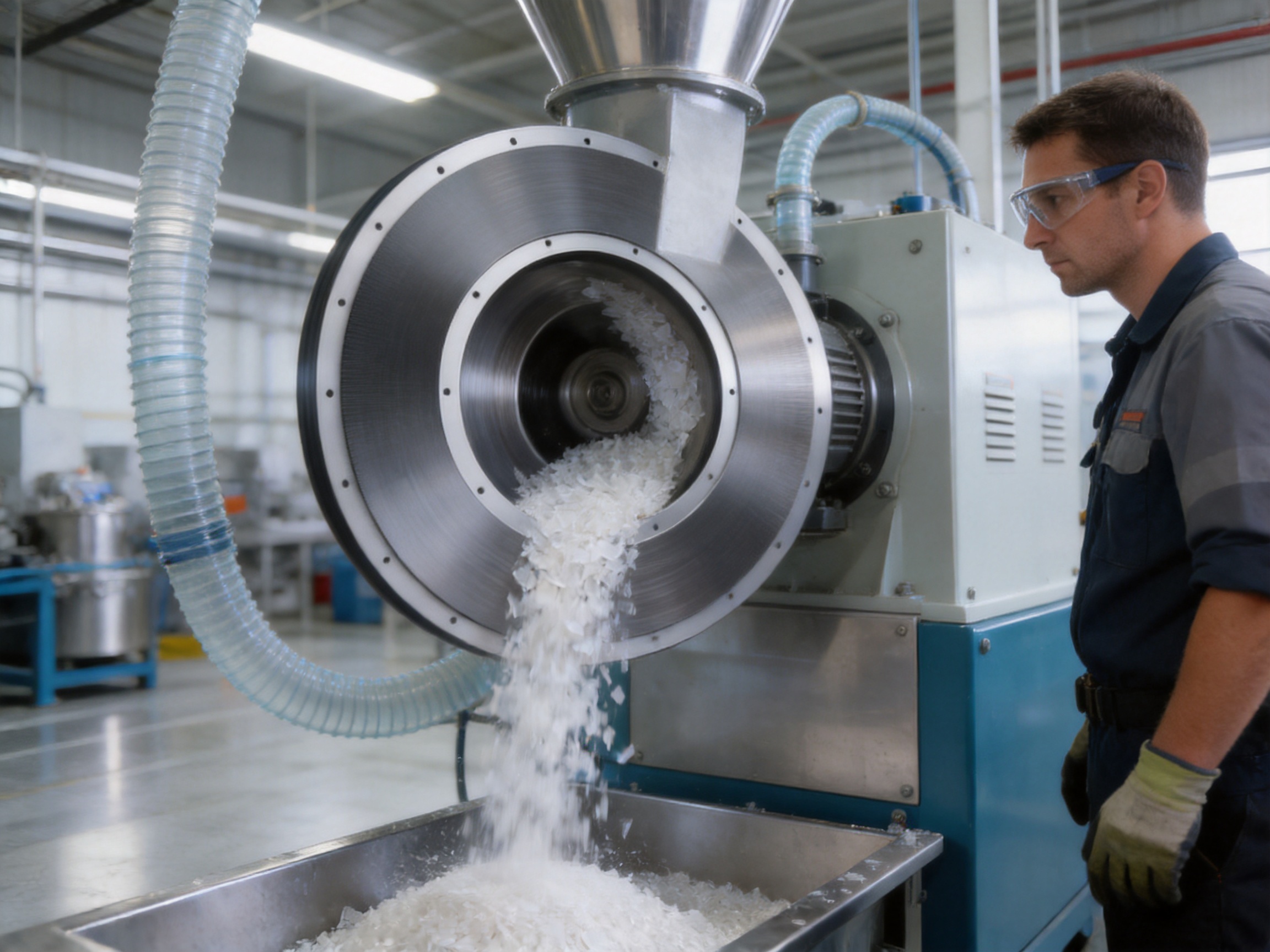
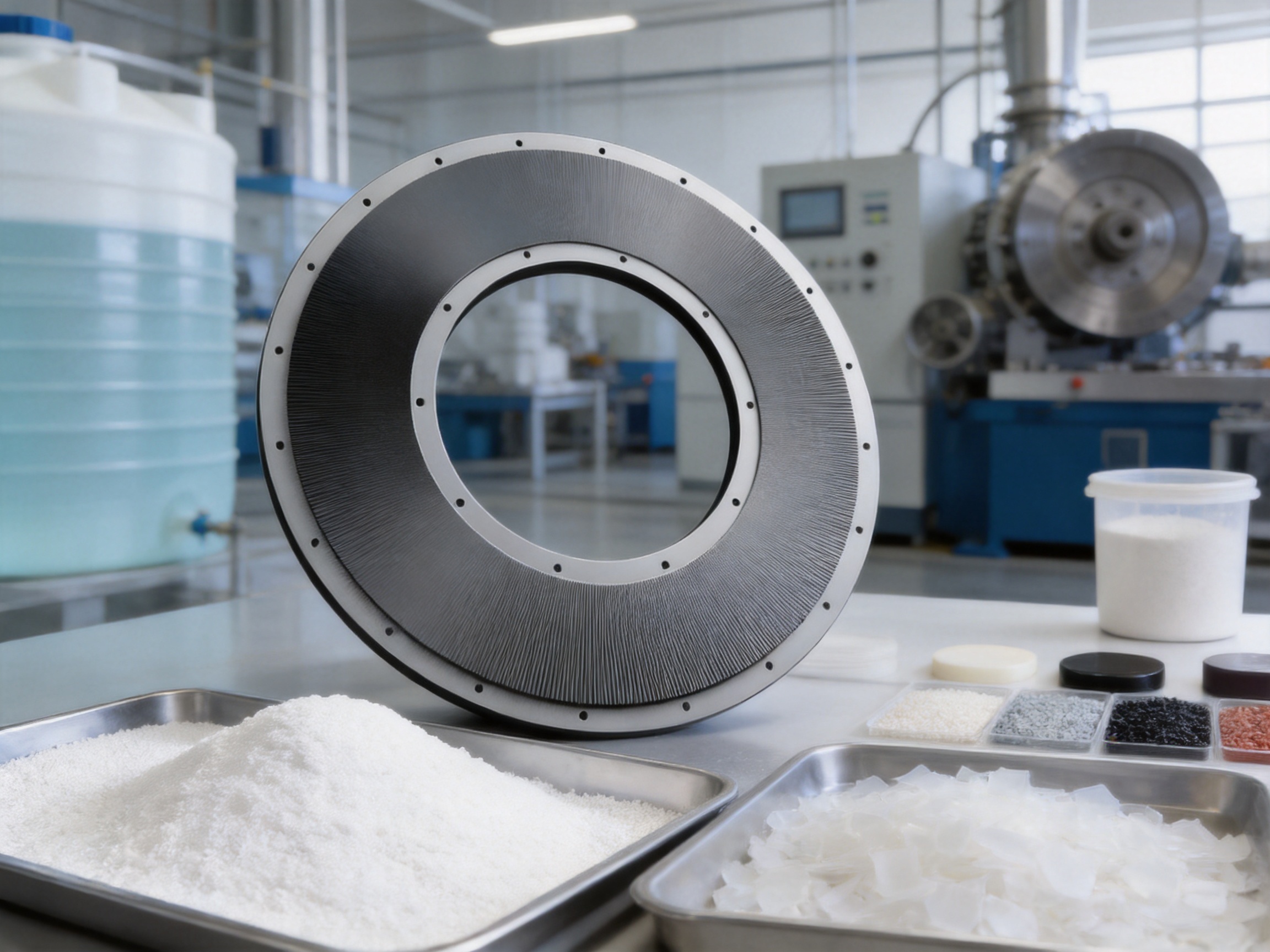
The Pulverizer Integrated Disc is a circular grinding disc designed for high-speed plastic milling. Its structure includes a central feed zone that guides material into the grinding area, inner rotating disc teeth engineered for cutting and shearing action, and outer mounting positions with dozens of precision bolt holes. The design is intended to ensure stable installation, accurate alignment, and reliable operation in pulverizer assemblies.
The disc is manufactured using a monolithic casting process followed by precision CNC machining. This means the working body is not assembled from multiple weakly connected sections. Instead, the integrated structure provides uniform rigidity across the disc, which helps reduce deformation risk during high-speed rotation and heavy material impact. For plastic grinding, where the disc may rotate at thousands of revolutions per minute, structural consistency is essential for safety, stability, and powder quality.
Its surface appearance is deep gray to silver-black, with a smooth mirror-like industrial finish that reflects the high level of machining and heat treatment. Rounded edges help reduce handling risks and prevent sharp-edge injuries during installation or maintenance. The product therefore combines practical safety features with a premium industrial appearance.
The integrated disc is particularly valuable for PE pulverizing, where friction heat and material softness create major production challenges. Polyethylene can soften, smear, carbonize, or stick to the grinding surface when heat is not controlled. A disc with accurate tooth form, high hardness, excellent wear resistance, and stable gap adjustment helps maintain efficient cutting rather than excessive rubbing. When used with a pulverizer equipped with proper air-water cooling, the disc supports stable production of clean, free-flowing powder.
2. Why the Grinding Disc Matters in Plastic Pulverizing
Plastic pulverizing is different from general crushing. Crushing reduces large pieces into flakes or granules, while pulverizing turns plastic into fine powder. In this process, the grinding disc creates repeated cutting, shearing, friction, and impact actions. The tooth geometry, hardness, balance, gap setting, and heat control ability directly influence the final result.
If the disc wears too quickly, the tooth edges become blunt. Blunt teeth generate more heat and less cutting force, leading to lower throughput and inconsistent particle size. If the disc is poorly balanced, vibration increases, which may damage bearings, reduce machine life, and make particle size harder to control. If the disc structure is weak, the grinding gap may change under load, causing coarse particles, irregular powder, or unstable production. If the disc surface and heat treatment are inconsistent, wear patterns may become uneven and maintenance becomes more frequent.
For processors selling powder to rotational molding, powder coating, modified plastics, filler masterbatch, color masterbatch, or recycled material markets, powder consistency is a key commercial value. Customers require powder that flows well, melts uniformly, avoids large particles, and remains clean. Therefore, the disc is not just a spare part; it is a productivity and quality-control tool.
The Pulverizer Integrated Disc addresses these technical issues through a rigid one-piece body, high-wear-resistant tool steel, deep heat treatment, precision tooth machining, stable mounting accuracy, and compatibility with cooling-assisted pulverizer systems. These features support stable mesh control, higher capacity, reduced downtime, and improved powder uniformity.
3. Material Advantage: High-Wear-Resistant Tool Steel with Stable Hardness
The core competitiveness of the integrated disc lies in its material selection. The disc uses proprietary DC53 high-wear-resistant tool steel as its base material. DC53-type tool steel is valued in industrial tooling for its combination of hardness, toughness, wear resistance, and fatigue resistance. For pulverizer discs, this balance is extremely important because the component must resist both continuous abrasion and repeated impact.
A disc that is only hard but not tough may crack or chip under shock. A disc that is tough but not hard enough may wear rapidly and lose cutting efficiency. The integrated disc is engineered to achieve a stable hardness of approximately HRC 60 to 61 after heat treatment. This hardness range provides strong cutting-edge durability while retaining the mechanical strength needed for industrial pulverizing loads.
In plastic pulverizing, especially when processing recycled feedstock, the disc may encounter material variation, contamination, small hard particles, or inconsistent feeding. Strong wear resistance protects the cutting teeth from rapid rounding, while impact resistance helps the disc withstand unstable operating conditions. Fatigue resistance is also crucial because high-speed rotation creates repeated stress cycles. A disc that resists fatigue can maintain performance over extended production periods.
Compared with standard grinding discs commonly available in the market, this integrated disc can extend service life by more than two times under suitable operating and maintenance conditions. Longer service life means fewer replacements, fewer production interruptions, reduced labor costs, lower spare-part inventory pressure, and more predictable production planning. For plants running continuous production, these benefits can be more valuable than the initial purchase price difference.
4. Heat Treatment: Carburizing, Quenching, and Multiple Tempering
Material quality alone is not enough. A premium pulverizer disc requires correct heat treatment to unlock the performance of the steel. The integrated disc undergoes carburizing and quenching followed by special heat treatment and multiple tempering processes. This manufacturing route enhances surface hardness, improves wear resistance, relieves internal stress, and stabilizes the structure for long-term use.
Carburizing enriches the surface layer with carbon, improving the wear-resistant outer zone. Quenching then transforms the steel structure to achieve high hardness. However, quenching can also introduce internal stresses, so multiple tempering steps are used to improve toughness, reduce brittleness, and stabilize the component. For a high-speed rotating disc, this sequence is especially important because uneven stress may cause distortion, vibration, or premature failure.
The objective is not simply to make the disc as hard as possible. The objective is to create a controlled balance: hard cutting surfaces, strong internal support, reduced stress concentration, and stable geometry. This balance allows the teeth to remain sharp for longer periods while the disc body maintains its shape and mounting accuracy.
For end users, proper heat treatment translates into practical benefits. The disc can continue grinding efficiently after hundreds or even thousands of continuous operating hours, depending on material type, feeding stability, cooling performance, and maintenance practices. It reduces the tendency toward tooth chipping, uneven wear, excessive vibration, and sudden performance decline.
5. One-Piece Structure Versus Split Disc Designs
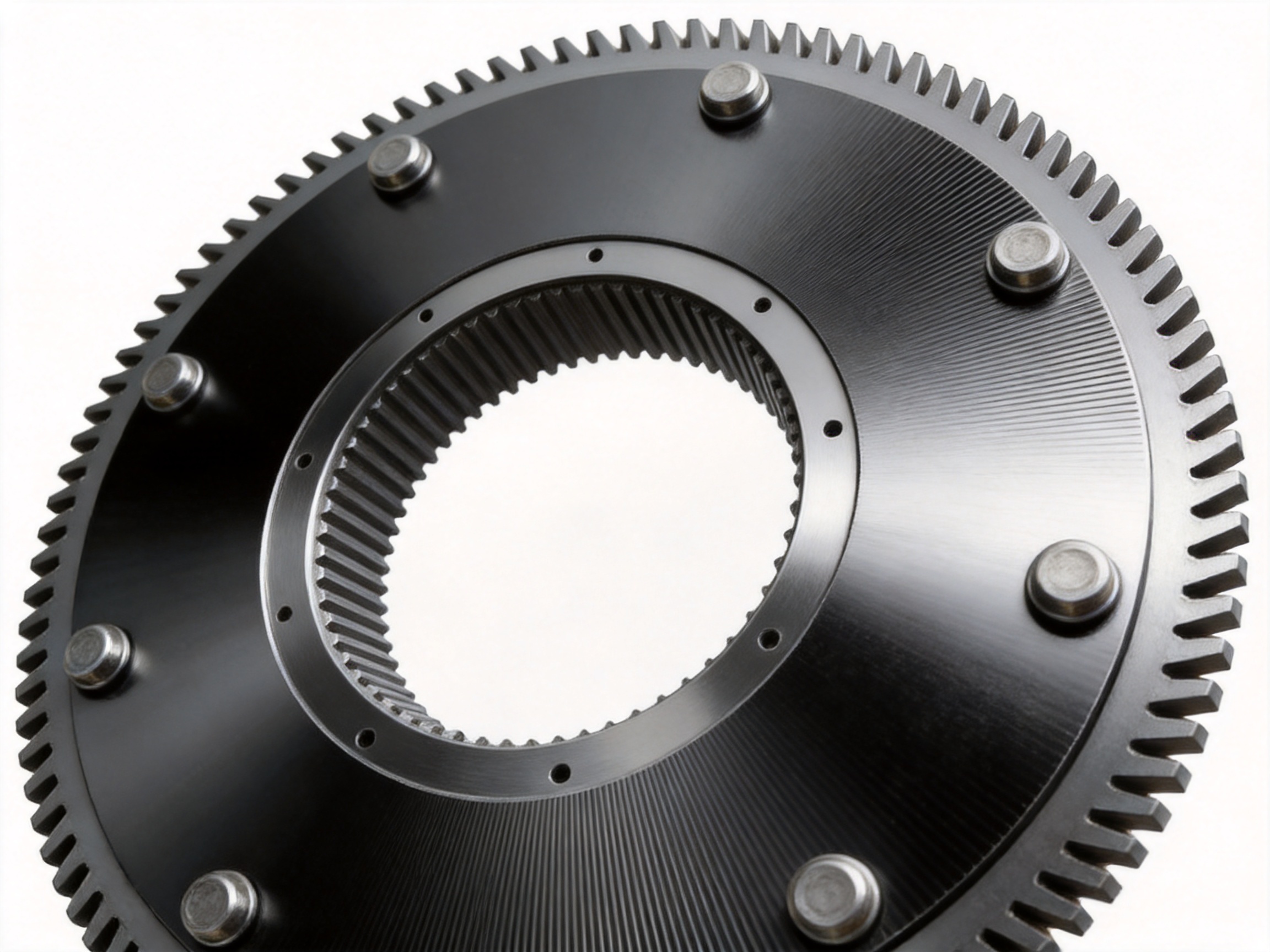
Many traditional pulverizer discs use split or assembled structures. These may be easier to manufacture or replace in sections, but they can introduce mechanical compromises. Joint lines, fastening interfaces, uneven stiffness, and assembly tolerances may affect balance and grinding-gap stability. Under high-speed operation, any small difference in rigidity or mass distribution can become a source of vibration.
The integrated disc uses a monolithic design to provide superior structural rigidity. Because the disc is formed as one complete body, it avoids the deformation risks associated with joints. This is important when maintaining a precise grinding gap. Even slight deformation can change the way material passes between the rotating and stationary surfaces. The result may be more coarse particles, wider particle distribution, increased heat, or lower output.
A one-piece disc also supports better dynamic balance. When a disc rotates at thousands of RPM, good balance reduces vibration, noise, bearing load, and mechanical fatigue. Lower vibration helps the pulverizer run more smoothly, improves the working environment, and protects other machine components. Over time, stable rotation contributes to lower maintenance cost and longer equipment life.
In comparison with many standard split discs, the integrated disc is designed for higher production continuity and more stable grinding performance. It is particularly suitable for operations where product consistency matters and where downtime from frequent disc changes can be costly.
6. Precision CNC Machining and High-Accuracy Tooth Geometry
The grinding teeth are the functional heart of the disc. Their shape, angle, pitch, depth, and surface quality determine how material is cut, accelerated, sheared, and discharged. The integrated disc uses high-precision tooth profile machining, including a radial fine-tooth pattern and optimized cutting angles. This helps produce efficient cutting action while controlling heat generation.
Precision CNC machining ensures that the tooth pattern is consistent around the disc. Consistency is vital because uneven teeth can create unbalanced cutting forces, vibration, hot spots, and irregular particle size. Accurate machining also supports repeatable grinding-gap adjustment because the disc surface remains true and predictable.
The radial fine-tooth structure is suitable for plastics that require fine powder, particularly PE materials commonly processed into 20 to 80 mesh powder. Depending on configuration and operating conditions, the disc supports powder fineness in a broader range of approximately 10 to 120 mesh. This allows the equipment to serve different applications, from relatively coarse recycled powder to fine rotational molding powder and powder coating feedstock.
Optimized tooth angles improve material engagement. Instead of merely rubbing plastic and generating heat, the teeth cut and shear material more effectively. This reduces overheating, lowers the risk of sticking, and helps maintain powder color and purity. In plastic recycling, where material value depends heavily on quality, this machining advantage can directly influence selling price and customer acceptance.
7. Grinding Gap Adjustment with Micron-Level Fine Tuning
Grinding gap control is one of the most important operating parameters in pulverizing. A smaller gap generally produces finer powder but may increase heat and energy consumption. A larger gap may improve throughput but can create more coarse particles. Therefore, operators must be able to adjust the gap accurately and conveniently.
The integrated disc is designed for straightforward gap adjustment. Micron-level fine tuning can be achieved using a feeler gauge and adjustment bolts, without the need for complex specialized tools. This is a major operational advantage because it reduces setup time and makes the machine easier to manage.
In production environments, operators often need to change materials, target mesh sizes, or output requirements. Quick and accurate adjustment allows the plant to respond faster. It also reduces dependence on highly specialized technicians. When adjustment is simple and repeatable, the risk of operator error decreases, and production consistency improves.
Stable gap adjustment is also supported by the disc's rigid integrated structure. If a disc deforms or has uneven tooth height, precise adjustment becomes difficult. By combining monolithic rigidity with accurate machining, the integrated disc allows users to maintain a controlled grinding zone for longer periods.
8. Cooling Compatibility and Heat Control in PE Pulverizing
PE pulverizing is heat-sensitive. Polyethylene softens when temperature rises, and friction in the grinding chamber can create rapid heat accumulation. If heat is not controlled, material may smear on the teeth, clump in the chamber, darken, carbonize, or lose flowability. These problems reduce output and may force operators to stop the machine for cleaning.
The integrated disc is designed to work effectively with pulverizer systems using dual air-water cooling. Air cooling helps remove heat and transport fine powder, while water cooling helps stabilize key machine surfaces and prevent excessive temperature rise. When combined with the disc's tooth geometry and high wear resistance, cooling helps maintain efficient cutting instead of heat-heavy rubbing.
Effective heat control provides several practical benefits. Powder remains free of clumping and discoloration. Grinding efficiency remains stable during long production runs. The disc surface is less likely to become coated with softened plastic. Energy consumption can be reduced because the machine does not need to overcome excessive friction from material adhesion. The operator spends less time cleaning and more time producing.
For rotational molding powder, heat control is especially important. Powder that has been overheated during grinding may show poor melt behavior, color change, odor, or reduced mechanical performance. By maintaining a stable grinding temperature, the integrated disc helps produce powder suitable for high-quality downstream applications.
9. Powder Quality: Fineness, Flowability, and Clean Output
The final goal of any pulverizing process is usable powder. The integrated disc supports stable powder fineness from approximately 10 to 120 mesh, with PE applications commonly requiring 20 to 80 mesh ultrafine powder. The produced powder can feature a narrow particle distribution, high sphericity, excellent flowability, and reduced presence of coarse particles or impurities.
Narrow particle distribution is important because different particle sizes melt, flow, and disperse differently. In rotational molding, powder with too many coarse particles may cause uneven wall thickness, surface defects, or incomplete melting. In powder coating, inconsistent particles can affect film uniformity and coating appearance. In masterbatch and modification applications, uneven powder can reduce dispersion accuracy.
High flowability helps powder feed smoothly into downstream equipment. It reduces bridging, improves dosing consistency, and supports automated production. Clean output with minimal discoloration or contamination improves the market value of recycled and processed powder.
The disc contributes to these powder-quality advantages through sharp, durable teeth; stable grinding gap; balanced rotation; controlled heat generation; and compatibility with cooling systems. While feedstock quality and machine operation also matter, the disc is a decisive factor in whether the process can maintain consistent powder over long production runs.
10. Production Capacity and Energy Efficiency
Production capacity is not only about motor power. It depends on how efficiently the disc converts power into cutting action. If the teeth are sharp, accurately machined, and wear resistant, more material can be processed per unit of energy. If the disc becomes blunt or overheated, energy is wasted as friction and heat rather than useful size reduction.
The integrated disc improves capacity compared with many traditional split discs by maintaining efficient cutting geometry for longer. Its rigid body helps keep the grinding gap stable, while its tooth design improves material engagement. Reduced vibration also contributes to smoother operation and less energy loss.
Energy efficiency is increasingly important for plastic recycling and processing plants. Electricity cost affects powder cost, and lower energy consumption improves competitiveness. A disc that maintains high efficiency over time helps reduce the total cost per kilogram of powder. In addition, longer service life reduces hidden costs such as shutdowns, labor for replacement, trial production after adjustment, and waste generated during unstable startup.
For companies seeking to improve profitability, the integrated disc should be evaluated not only as a wear part but as a productivity investment. Its value comes from longer operating intervals, higher powder yield, fewer quality fluctuations, and reduced downtime.
11. Application Areas in Plastic Recycling and Regeneration
One of the most important uses of the integrated disc is plastic recycling and regeneration. Waste PE materials such as film, agricultural mulch, pipes, bottle caps, cable materials, strapping bands, garbage bags, and packaging scrap can be crushed and then pulverized into fine powder. This powder can be used for regranulation, film blowing, pipe extrusion, profile extrusion, injection molding, and other value-added processes.
In recycling, feed materials are often variable. Some may be flexible, some rigid, some contaminated, and some mixed with additives. A durable grinding disc helps maintain stable output despite these challenges. The high wear resistance of the integrated disc is particularly beneficial when recycled material contains abrasive fillers or trace impurities.
By converting waste plastics into usable powder, recycling plants can increase material value and support circular economy goals. Fine powder is easier to blend, modify, color, and reprocess. When powder quality is stable, downstream customers gain confidence in using recycled content. This helps reduce plastic waste and supports more sustainable manufacturing.
12. Application in Rotational Molding
Rotational molding is a major application for PE powder. Large hollow products such as water tanks, pallets, playground equipment, kayaks, containers, and chemical storage tanks require powder with excellent flowability and controlled particle size. During rotational molding, powder must melt and coat the inner surface of a heated mold evenly. Poor powder quality can cause bubbles, pinholes, uneven walls, rough surfaces, or weak areas.
The integrated disc supports rotational molding powder production by producing uniform PE powder with minimal agglomeration. Stable particle distribution helps powder melt evenly, while good flowability supports consistent mold coverage. Heat-controlled grinding helps preserve material color and performance.
For manufacturers of rotational molding powder, disc performance affects customer satisfaction. If powder quality changes from batch to batch, molding defects increase and customers may reject material. A long-life, accurately machined disc reduces such risks by maintaining stable grinding performance over extended production periods.
13. Application in Powder Coating and Chemical Modification
PE powder is also used in powder coating and surface protection applications, including electrostatic spraying and fluidized bed impregnation. These processes require powder that is fine, clean, scorch-free, and impurity-free. Particle consistency affects coating smoothness, adhesion, melting behavior, and final appearance.
The integrated disc helps produce high-quality PE powder coatings by reducing overheating and maintaining a clean cutting process. Its wear-resistant tooth structure minimizes the risk of metal wear contamination, while stable grinding reduces coarse particle formation.
In chemical modification and masterbatch production, PE powder may serve as a carrier for fillers, pigments, and functional additives. Finer and more uniform powder improves dispersion accuracy. This is important for filler masterbatches, color masterbatches, flame-retardant formulations, conductive compounds, and other modified plastic systems. Better dispersion can improve final product performance and reduce additive waste.
14. Application in EVA, LLDPE, PP, and Specialized Materials
Although PE pulverizing is a key focus, the integrated disc can also support fine grinding of flexible polyolefins and related plastics such as EVA, LLDPE, PP, and selected soft or modified materials. These materials often present grinding challenges because they may be elastic, heat-sensitive, or prone to sticking.
The combination of sharp tooth geometry, high hardness, and cooling compatibility makes the disc suitable for many flexible plastic powder applications. For small-batch development, laboratories can use such grinding systems to test formulations, evaluate powder behavior, or produce trial samples. For electronic waste recycling, PE plastic components may be pulverized as part of environmentally responsible material separation and reuse.
Different materials may require different disc diameters, tooth densities, gap settings, and surface treatments. The availability of customization allows the disc to be matched to specific process needs rather than forcing all users into one standard configuration.
15. Compatibility and Customization
As an original factory-developed accessory, the integrated disc is designed to match the full range of Mao Yue PE, PP, and EVA pulverizers. It is also compatible with selected mainstream pulverizer brands, depending on machine dimensions, mounting structure, rotation requirements, and operating conditions.
Customization options can include different disc diameters, tooth density configurations, tooth profile designs, and surface coatings. This flexibility is important because no two pulverizing operations are identical. A recycling plant processing washed PE film may need a different configuration from a rotational molding powder producer or a powder coating manufacturer.
Custom disc engineering allows customers to optimize between fineness, capacity, wear life, heat control, and energy consumption. For example, a denser tooth pattern may support finer powder, while a different tooth angle may improve throughput for a particular resin. Surface coatings may further enhance wear resistance or reduce adhesion in special applications.
Compared with imported equivalents, the integrated disc offers strong cost-performance value. Domestic control over core components reduces reliance on imported spare parts, improves delivery responsiveness, and gives customers access to direct factory technical support. For plants where spare-part lead time can affect production schedules, this is a major advantage.
16. Manufacturing Strength Behind the Product
The quality of a pulverizer disc depends heavily on the manufacturer's capabilities. Changzhou Mao Yue Intelligent Equipment Co., Ltd. is a source manufacturer with about 30 years of experience in plastic crushing and pulverizing equipment. The company has developed its expertise through long-term work in plastic size reduction markets, including rotational molding, masterbatch, polymers, PVC, PE, recycling, and powder coating.
The company operates six processing workshops, each averaging approximately 1,400 square meters. This manufacturing scale supports machining, assembly, inspection, customization, and production scheduling for both complete machines and critical components. The factory is equipped with Taiwan-imported high-precision grinding machines built to German standards, German dynamic balancing equipment, and Japanese welding systems. These resources help ensure accurate machining, stable components, and reliable machine performance.
Advanced manufacturing equipment is particularly important for grinding discs. Precision grinding and machining determine tooth accuracy and surface flatness. Dynamic balancing equipment verifies rotational stability. Controlled welding systems support associated machine structures and assemblies. Together, these capabilities allow the company to manufacture not only the disc but also the pulverizer systems that depend on it.
The company also maintains a professional technical team that regularly studies advanced machine technologies from countries such as Germany. This international technical awareness helps improve equipment design, manufacturing discipline, and operating performance. By combining practical domestic manufacturing experience with European-oriented quality concepts, the company aims to deliver stable, durable, and efficient pulverizing solutions.
17. Quality Control, Certification, and Industrial Reliability
Quality control for a pulverizer disc involves many checkpoints. Material composition must be appropriate. Casting integrity must be verified. Heat treatment must produce stable hardness and internal structure. CNC machining must achieve accurate geometry. Tooth profiles must be consistent. Mounting holes must align precisely. Dynamic balance must meet high-speed rotation requirements. Surface finish must be clean and safe to handle.
Mao Yue emphasizes quality, service, innovation, and customized solutions. The company has obtained CE mechanical certification and ISO 9001 quality management system certification, supporting product safety and manufacturing consistency. While certifications do not replace process control, they demonstrate that the company has established formal management systems and safety-oriented production standards.
The company has built long-term partnerships with more than 5,000 enterprises in domestic and international markets. Such a large customer base provides extensive feedback from real production environments. Practical field data helps refine disc design, machine structure, cooling systems, and maintenance recommendations. The result is a product shaped not only by theory but also by industrial use.
For customers, manufacturer reliability matters because pulverizing equipment is often central to production. A supplier must provide stable spare parts, technical guidance, customization ability, and after-sales support. A disc produced by a source manufacturer with complete machine knowledge can be better matched to real operating conditions than a generic spare part from a trading supplier.
18. Comparison with Common Market Alternatives
The following table summarizes the practical differences between the integrated disc and many conventional grinding disc options available in the market. Actual results depend on material type, machine model, cooling condition, operator skill, and maintenance practice, but the comparison highlights the engineering direction of the product.
| Evaluation Item | Integrated Pulverizer Disc | Common Standard Disc | Practical Benefit to User |
|---|---|---|---|
| Structure | Monolithic one-piece body with high rigidity | Often split, assembled, or less rigid | More stable gap, lower deformation risk, smoother running |
| Material | High-wear-resistant DC53 tool steel | Ordinary alloy steel or lower-grade tool steel | Longer wear life and better tooth durability |
| Hardness | Stable HRC 60 to 61 after heat treatment | May vary by supplier and batch | More predictable grinding performance |
| Heat Treatment | Carburizing, quenching, and multiple tempering | Basic heat treatment or inconsistent process | Improved wear resistance, toughness, and stress stability |
| Tooth Geometry | Precision radial fine-tooth profile with optimized angles | Less precise or generic tooth design | Better powder uniformity and reduced heat generation |
| Balance | Designed for excellent high-speed balance | May create higher vibration | Lower noise, less bearing stress, improved equipment life |
| Gap Adjustment | Micron-level fine tuning with feeler gauge and bolts | May require more time or specialized skill | Faster setup and easier process control |
| Service Life | Can exceed standard disc life by more than two times | Shorter replacement interval | Less downtime and lower total operating cost |
| Application Fit | Suitable for PE, PP, EVA, LLDPE, recycling, rotational molding, and powder coating | Often limited or less optimized | Broader production flexibility |
| Supply Support | Original factory development with customization options | Generic supply with limited engineering support | Better matching to equipment and process goals |
19. Total Cost of Ownership: More Than the Purchase Price
When purchasing pulverizer discs, some buyers focus mainly on unit price. However, the true cost of a grinding disc includes purchase cost, installation labor, machine downtime, production loss, energy consumption, powder quality stability, rejected material, operator time, and maintenance impact on bearings and related components.
A cheaper disc that wears quickly may become expensive if it requires frequent replacement. Each replacement may require stopping production, opening the machine, cleaning the chamber, removing the old disc, installing and adjusting the new disc, checking the gap, testing output, and discarding unstable startup material. If the plant operates continuously, the value of lost production can exceed the savings from a lower purchase price.
The integrated disc reduces total cost of ownership through longer life, stable cutting performance, lower vibration, easier gap adjustment, and improved powder quality. It helps maintain production planning and reduces emergency maintenance. For customers producing high-value powder, consistent output may also improve customer retention and reduce complaints.
From an investment perspective, the disc should be viewed as a performance component. Its value is measured by output per hour, energy per kilogram, powder acceptance rate, maintenance interval, and machine reliability. In many cases, a high-quality disc delivers better economic return than a low-cost alternative.
20. Installation and Operating Considerations
To obtain the best performance from the integrated disc, proper installation and operation are essential. Before installation, operators should check that the mounting surface is clean, free of debris, and not damaged. Bolt holes should align correctly, and fasteners should be tightened according to recommended procedures. Uneven tightening can affect balance and contact stability.
After installation, the grinding gap should be adjusted carefully using a feeler gauge and adjustment bolts. Operators should select the gap according to target mesh size, material properties, cooling capacity, and throughput requirement. It is usually advisable to start with a conservative setting and fine-tune after observing powder quality and machine load.
Cooling systems should be checked before production. Airflow, water flow, cooling temperature, and chamber cleanliness all influence grinding performance. In PE applications, insufficient cooling can quickly create sticking or clumping even with a high-quality disc. Feeding should be stable and controlled. Overfeeding can overload the grinding chamber, increase heat, reduce fineness, and accelerate wear.
Regular inspection is recommended. Operators should monitor vibration, noise, motor load, powder temperature, output rate, and particle size. If powder becomes coarser or the machine load increases, the disc may need gap adjustment, cleaning, or inspection. Proper maintenance protects the disc and the complete pulverizer system.
21. Safety, Handling, and Maintenance
The integrated disc features rounded edges to reduce the risk of cuts during handling. Nevertheless, it is a heavy precision component and should be handled with appropriate lifting tools, protective gloves, and trained personnel. Dropping or striking the disc may damage the tooth profile or affect balance.
During maintenance, the machine should be fully stopped, isolated from power, and secured according to plant safety procedures. Operators should never attempt adjustment while the disc is rotating. After maintenance, all guards and covers must be restored before operation.
Cleaning should be performed carefully to avoid damaging tooth edges. If plastic has adhered to the disc because of overheating, operators should identify the cause, such as insufficient cooling, excessive feed rate, too narrow a gap, or unsuitable material condition. Repeated overheating can reduce powder quality and shorten disc life.
Storage is also important. Spare discs should be kept in a dry, clean environment and protected from corrosion, dust, and accidental impact. Mounting surfaces and tooth profiles should be preserved so the disc remains ready for installation.
22. Support for Sustainable Plastic Processing
Plastic recycling and efficient powder production are closely connected with sustainability. By converting waste plastics into usable fine powder, manufacturers can reduce landfill pressure, lower demand for virgin resin, and create value from materials that might otherwise be discarded. The integrated disc supports this goal by improving pulverizing efficiency and recycled powder quality.
Better powder quality expands the range of possible downstream applications. If recycled PE powder is uniform, clean, and free-flowing, it can be used in higher-value products. This encourages more recycling activity and improves the economic foundation of circular plastic use. Lower energy consumption also reduces the environmental footprint of processing.
The product aligns with broader industrial goals of energy saving, resource reuse, and green manufacturing. For companies seeking to improve environmental performance while remaining profitable, high-efficiency pulverizing components provide a practical route.
23. Company Strength and Customer Value
Changzhou Mao Yue Intelligent Equipment Co., Ltd. has focused on plastic crushing and pulverizing equipment for three decades. Its position as a source manufacturer allows it to control design, machining, assembly, testing, and after-sales improvement. This is important because pulverizing performance depends on the interaction between disc, machine body, cooling system, feeding system, motor power, and operator settings.
The company pioneered the plastic pulverizer market and continues to manufacture components according to European quality standards. Its production resources include six workshops, high-precision grinding machines, German dynamic balancing equipment, Japanese welding systems, and a technical team that studies advanced international machinery. These strengths support the development of components such as the integrated disc.
Customers benefit from direct factory knowledge, customization ability, and practical process guidance. Whether a user needs higher capacity for PE recycling, better powder for rotational molding, finer output for powder coating, or a customized disc for EVA or LLDPE, the manufacturer can provide recommendations based on equipment and material characteristics.
The company’s long-term partnerships with thousands of enterprises demonstrate its ability to serve both domestic and international markets. Its focus on quality, service, innovation, and customized solutions supports customers who need stable, high-quality pulverizing performance rather than one-time equipment sales.
24. Frequently Asked Questions
Q1: What is the main advantage of an integrated pulverizer disc compared with a split disc?
The main advantage is structural rigidity. A one-piece integrated body avoids joint-related deformation risks, improves high-speed balance, helps maintain a stable grinding gap, and reduces vibration. This leads to more consistent powder quality, lower noise, and improved equipment reliability.
Q2: What materials can this disc process?
The disc is especially suitable for PE pulverizing, including recycled PE film, pipes, bottle caps, cable materials, agricultural film, and other polyethylene waste. It can also be used for PP, EVA, LLDPE, flexible polyolefins, masterbatch-related materials, powder coating feedstock, and selected recycling applications, depending on configuration and operating conditions.
Q3: What powder fineness can be achieved?
Under suitable machine settings and material conditions, the disc supports powder fineness from approximately 10 to 120 mesh. PE applications commonly target 20 to 80 mesh powder, especially for rotational molding and recycled powder applications.
Q4: Why is DC53 tool steel important?
DC53 high-wear-resistant tool steel provides a strong combination of hardness, toughness, wear resistance, impact resistance, and fatigue resistance. With stable hardness around HRC 60 to 61 after heat treatment, the disc can maintain sharp cutting performance for longer periods than many standard discs.
Q5: How does the disc help reduce overheating?
The disc reduces overheating through precision tooth geometry, sharp cutting action, stable gap control, and compatibility with dual air-water cooling systems. Efficient cutting produces less unnecessary friction, helping prevent PE from softening, sticking, clumping, or discoloring.
Q6: Can the grinding gap be adjusted easily?
Yes. The disc is designed for convenient micron-level fine tuning using a feeler gauge and adjustment bolts. This allows operators to adjust fineness and production conditions without complex specialized tools.
Q7: How long is the service life?
Service life depends on material abrasiveness, feed stability, cooling performance, operating hours, and maintenance. Compared with many ordinary grinding discs, the integrated disc can extend service life by more than two times under suitable operating conditions.
Q8: Is the disc compatible with non-original pulverizer brands?
It is designed to match Mao Yue pulverizers and can be compatible with selected mainstream pulverizer brands. Compatibility should be confirmed based on disc diameter, mounting pattern, machine structure, rotation speed, and process requirements.
Q9: Can the disc be customized?
Yes. Customization can include disc diameter, tooth density, tooth profile, and surface coating. Custom engineering helps match the disc to specific materials, target mesh size, capacity needs, and equipment conditions.
Q10: What industries benefit most from this disc?
Industries that require fine, uniform, and clean plastic powder benefit most. These include plastic recycling, rotational molding powder production, powder coating, masterbatch production, modified plastics, polymer processing, laboratory testing, and selected electronic waste plastic recycling operations.
25. Conclusion
The Pulverizer Integrated Disc is a high-performance grinding component developed for demanding plastic powder production. Its monolithic structure, DC53 high-wear-resistant tool steel, HRC 60 to 61 hardness, carburizing and quenching treatment, multiple tempering process, precision CNC tooth machining, and stable high-speed balance distinguish it from many conventional grinding discs.
For users, these engineering advantages translate into practical value: longer service life, reduced downtime, easier gap adjustment, lower vibration, improved powder uniformity, better flowability, enhanced capacity, and lower total operating cost. In PE pulverizing, where heat control and powder consistency are critical, the disc provides a strong foundation for producing clean, stable powder for recycling, rotational molding, powder coating, masterbatch, and modified plastic applications.
Behind the product is the manufacturing strength of Changzhou Mao Yue Intelligent Equipment Co., Ltd., a source manufacturer with about 30 years of experience, six processing workshops, advanced machining and balancing equipment, European-oriented quality standards, CE certification, ISO 9001 certification, and partnerships with more than 5,000 enterprises. This combination of product engineering and manufacturing capability makes the integrated disc a valuable upgrade for plastic pulverizing systems.
For companies seeking to improve production efficiency, reduce labor intensity, overcome PE grinding bottlenecks, and increase recycled material value, a high-quality integrated disc is not simply a spare part. It is a core performance component that supports stable, efficient, and sustainable powder production.
References
1. Osswald, T. A., and Menges, G. Materials Science of Polymers for Engineers. Hanser Publications.
2. Tadmor, Z., and Gogos, C. G. Principles of Polymer Processing. Wiley-Interscience.
3. Rosato, D. V., Rosato, D. V., and Rosato, M. G. Plastics Processing Data Handbook. Springer.
4. Strong, A. B. Plastics: Materials and Processing. Pearson.
5. Callister, W. D., and Rethwisch, D. G. Materials Science and Engineering: An Introduction. Wiley.
6. ISO 9001 Quality Management Systems: Requirements. International Organization for Standardization.
7. Machinery Safety Principles and CE Conformity Assessment Guidance. European machinery safety literature.