

 English
 русский
 Español
 عربى
عربى 中文简体
中文简体
 中文简体
中文简体
Content
- 1 Why the 700-Class Format Is Important for PVC Processing
- 2 High-Efficiency Grinding Disc Design
- 3 Capacity and Production Performance
- 4 Composite Water-Cooling and Air-Cooling System
- 5 Wear Resistance and Service Life
- 6 Fineness Control from 10 to 100 Mesh
- 7 Integrated Screening and Dust Collection
- 8 Motor, Drive, and Speed-Management Options
- 9 Manufacturing Precision and Quality Control
- 10 Application in PVC Recycling
- 11 Application in Flooring, Wallboard, and Ceiling-Panel Production
- 12 Application in Cable and Leather Material Recovery
- 13 Application in PVC Compound Modification
- 14 Advantages Compared with Typical Alternative Solutions
- 15 Manufacturing Strengths and Technical Support
- 16 Installation and Commissioning Considerations
- 17 Operation and Maintenance Practices
- 18 How to Select the Correct Configuration
- 19 Q&A
- 19.1 What type of machine is the Model 700?
- 19.2 What is the standard capacity?
- 19.3 What is the main motor power?
- 19.4 What fineness can the machine produce?
- 19.5 How does the machine control temperature?
- 19.6 Can it process calcium-filled PVC?
- 19.7 How long can the grinding components last?
- 19.8 Does the machine include screening?
- 19.9 Does it include dust collection?
- 19.10 What materials are used for the knives and pipes?
- 19.11 What starting or speed-control options are available?
- 19.12 Is the Model 700 suitable for continuous operation?
- 19.13 What upstream equipment may be required?
- 19.14 Can the machine process multiple PVC formulations?
- 19.15 What should be checked before purchasing?
- 20 Conclusion
- 21 References
- 22 Product: Model 700 PVC High-Efficiency Grinding Equipment
Efficient size reduction is one of the most important stages in PVC recycling, compound preparation, flooring production, cable-material recovery, and many other plastic-processing operations. The quality of the pulverizing stage affects powder fineness, material flowability, downstream dispersion, product consistency, energy consumption, maintenance frequency, and the commercial value of recovered material. For medium-sized enterprises, selecting the correct pulverizer is therefore not simply a matter of choosing the largest motor or the highest theoretical capacity. The machine must provide a practical balance of throughput, fineness control, operating stability, cooling performance, durability, footprint, and investment cost.
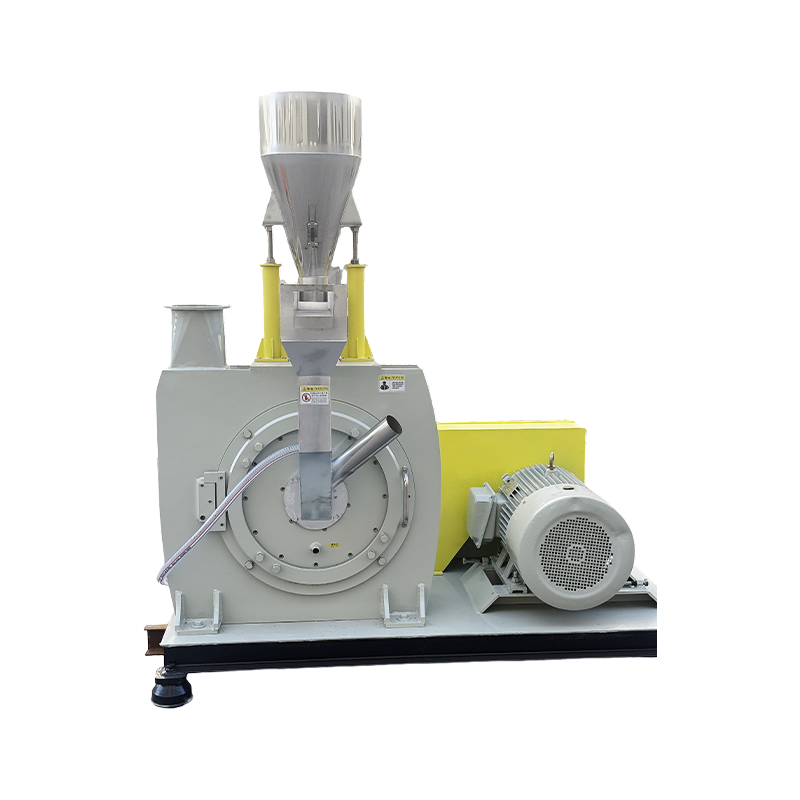
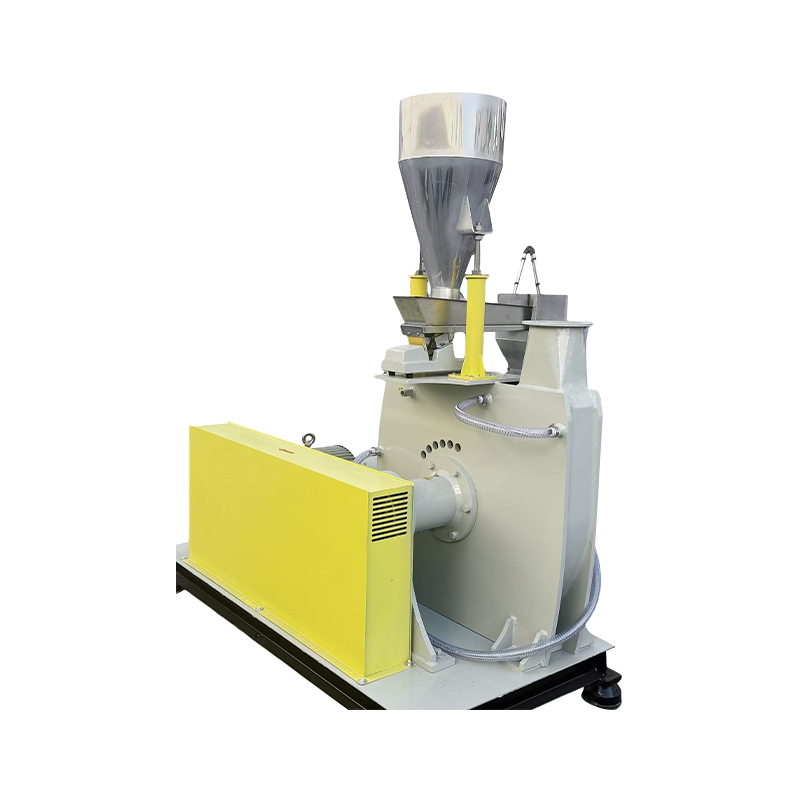
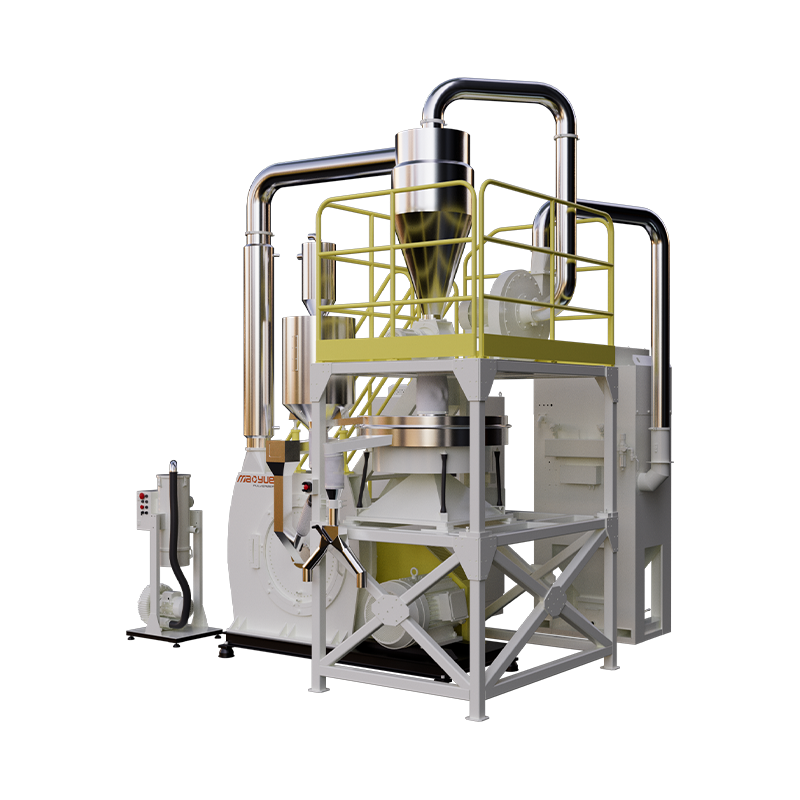
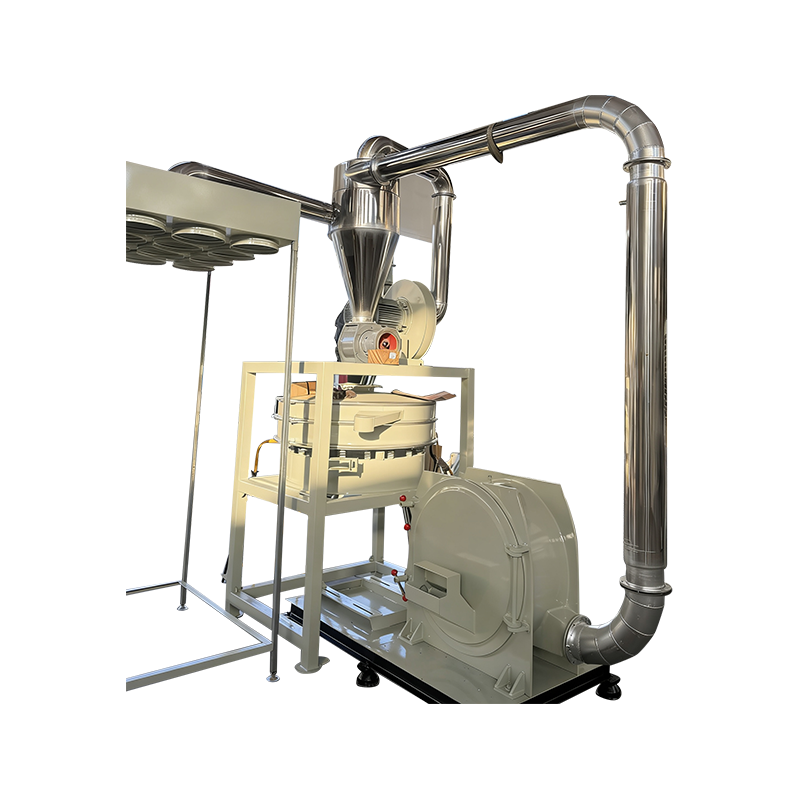
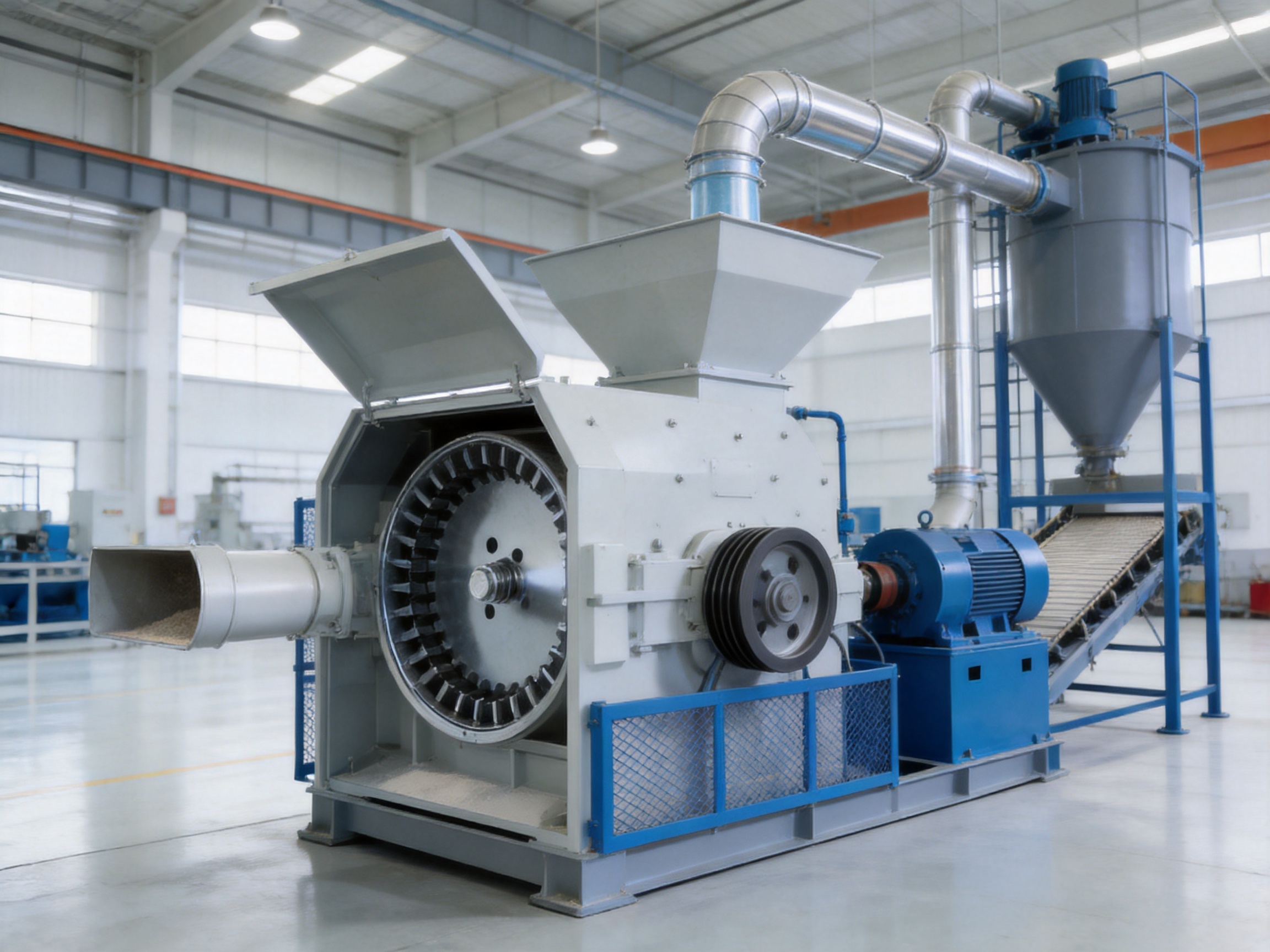
The Model 700 PVC High-Efficiency Grinding Equipment is designed for this specific operating range. With a grinding disc diameter of approximately 660 to 700 millimetres, a main motor configuration centered on 55 kilowatts, and a stated capacity of approximately 320 to 500 kilograms per hour in the standard specification, it provides a substantial performance step above smaller 500-class equipment while remaining more economical and easier to integrate than larger 800-class systems. Depending on the material, formulation, feed preparation, moisture, target mesh, and selected configuration, the broader performance range can reach approximately 300 to 550 kilograms per hour.
The machine is intended for continuous medium-to-high-load operation. Its disc structure, cutting arrangement, composite cooling system, screening equipment, dust collection system, and wear-resistant components are coordinated to maintain stable output rather than deliver only a short-term peak capacity. This makes the Model 700 suitable for enterprises that need dependable daily production, flexible material changeover, and consistent powder quality across different PVC formulations.
Beyond the machine itself, the equipment benefits from a manufacturing system built around precision processing, dynamic balancing, controlled welding, component inspection, and application-oriented technical support. The manufacturer operates multiple production workshops and maintains experience in plastic crushing and pulverizing equipment, allowing the Model 700 to be developed as part of a complete size-reduction solution rather than as an isolated motor-and-disc assembly.
Why the 700-Class Format Is Important for PVC Processing
PVC processors frequently work between two demanding production requirements. On one side, smaller pulverizers may offer lower initial investment and reduced power consumption, but they can become limiting when a plant must process several tonnes per day. On the other side, very large pulverizers may provide higher nominal capacity but require greater investment, larger auxiliary equipment, more floor space, and stronger supporting infrastructure. They may also be excessive for plants whose actual feed supply does not justify the additional capacity.
The 700-class format occupies the practical middle ground. It provides a larger grinding surface and a stronger drive system than compact models, while retaining a relatively manageable installation footprint and operating cost. This is especially valuable for medium-sized recycling companies, PVC product manufacturers, and compound producers that require regular production but still need close control over capital expenditure.
The Model 700 can support daily processing targets of approximately 8 to 12 tonnes when operated according to the material, formulation, working schedule, and line configuration. This daily capacity is suitable for medium-scale recycling lines processing window profiles, pipes, flooring offcuts, cable sheathing, rigid PVC scraps, soft PVC materials, and other prepared feedstocks.
A medium-sized enterprise can also use the equipment as a central pulverizing unit shared by several production departments. For example, the same machine may process rigid profile scrap during one shift, flooring offcuts during another shift, and a filled PVC compound during a scheduled trial-production period. The ability to change materials, adjust fineness, and manage temperature is important in these applications because the feedstock is not always uniform.
Compared with a smaller 500 model, the Model 700 offers more grinding area, a stronger motor range, and greater production potential. Compared with an 800 model, it normally requires less investment and may offer a more favorable relationship between output, energy demand, floor space, and maintenance cost. This balance is one of its principal competitive advantages for companies that need dependable medium-scale production rather than maximum theoretical capacity.
High-Efficiency Grinding Disc Design
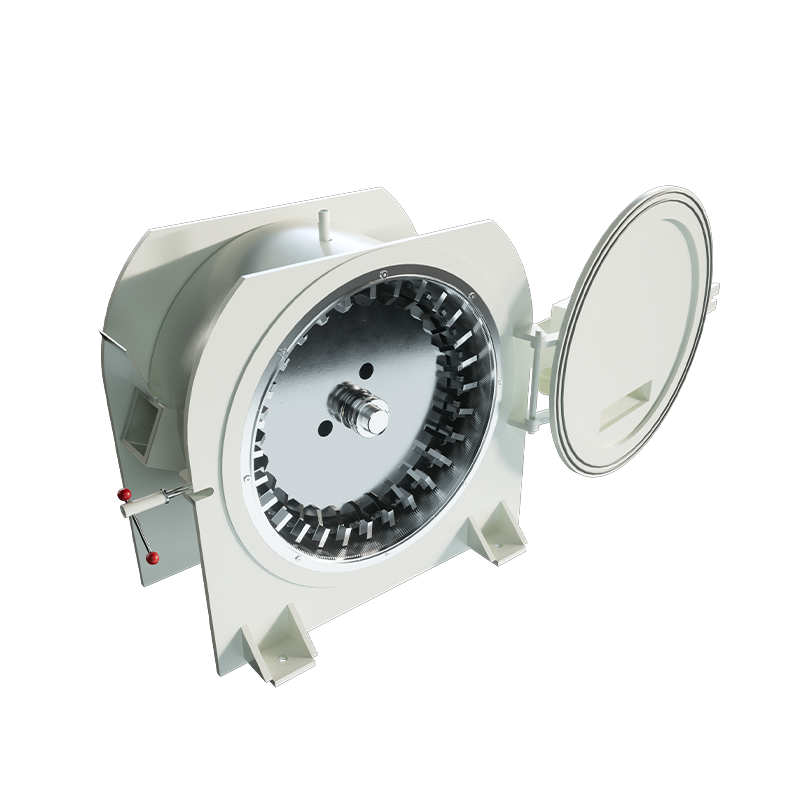
The grinding disc is the core working component of a plastic pulverizer. Its diameter, blade layout, tooth arrangement, surface condition, rotational behavior, and gap adjustment all affect the interaction between material and grinding surface. The Model 700 uses a disc with a diameter of approximately 660 millimetres in the standard specification, corresponding to the 700-class machine designation.
The larger disc provides an extended working area compared with smaller pulverizer models. This allows material to remain within the active grinding zone for effective cutting and friction while supporting higher feed rates. The disc geometry is designed to promote repeated contact between the plastic particles and the working surfaces, helping the machine produce a controlled powder rather than simply breaking the material into irregular chips.
The equipment can be configured with approximately 32 to 36 moving blades together with high-density dual-row fixed teeth. This arrangement creates a combined cutting, shearing, impact, and friction effect. The moving blades accelerate and cut the feedstock, while the fixed teeth form a dense counter-surface that helps refine the material as it passes through the grinding chamber.
The dual-row fixed-tooth structure increases the number of effective contact points inside the grinding zone. It also supports more uniform material distribution and reduces the dependence on a single cutting action. In practical terms, this means that the machine can achieve higher output at a comparable fineness than a simpler arrangement with fewer working elements, provided that the feed material is correctly prepared and the machine is operated within its recommended range.
Shearing is particularly important for PVC because the feedstock may include tough, flexible, filled, or laminated components. Pure impact can produce irregular fragments and may create excessive heat when the material is repeatedly struck at high speed. The combination of shearing and friction allows the machine to break down the material progressively, supporting a more uniform particle shape and a narrower practical size distribution.
The blade and tooth layout also contributes to the machine’s flexibility. PVC flooring scraps, profiles, pipes, cable coverings, and compound pellets do not behave in exactly the same way during grinding. A working chamber that combines cutting and friction can adapt more effectively to these differences than a design optimized for only one type of feedstock.
Capacity and Production Performance
The standard technical information for the Model 700 indicates a capacity of approximately 320 to 500 kilograms per hour. The broader stated range is approximately 300 to 550 kilograms per hour, reflecting the fact that actual capacity depends on material type, feed size, moisture, bulk density, formulation, target mesh, operating temperature, blade condition, and feeding stability.
Capacity should always be considered together with fineness. A coarse 10-mesh product generally requires less grinding work than a fine 50-mesh product. Filled PVC, stabilizer-containing formulations, soft PVC, and mixed post-consumer waste may also behave differently. A realistic production plan should therefore use a capacity range rather than assume one fixed hourly figure for every material.
At a practical rate of 320 to 500 kilograms per hour, the equipment can serve production lines requiring several tonnes of powder per day. If the plant operates for 8 to 12 hours with appropriate feed preparation, scheduled inspections, and material handling, the machine can support the needs of a medium-sized manufacturing or recycling operation.
The Model 700 is designed to provide an 80 to 120 percent increase in output compared with the 500 model under comparable operating conditions. This improvement comes from the combined effect of the larger disc, increased working area, more substantial motor power, optimized blade and fixed-tooth configuration, and improved cooling. The exact increase will depend on the comparison model and the processed material, but the design objective is to provide a meaningful production upgrade without requiring the investment associated with a much larger system.
Consistent feeding is essential to obtaining the expected output. PVC pieces should be reduced to a suitable preliminary size before entering the pulverizer. Oversized profiles, long pipes, wire bundles, and tangled flexible scraps can cause unstable feeding, overload, or uneven residence time. Where required, a crusher, granulator, metal separator, or feeding conveyor should be installed upstream to prepare the material.
The equipment includes an iron-removal tie feeding method in the listed configuration. Removing ferrous contamination before grinding is important for protecting blades, reducing unexpected damage, and preserving powder purity. It is especially valuable when processing post-consumer PVC waste that may contain screws, brackets, nails, wire fragments, or other metallic objects.
Composite Water-Cooling and Air-Cooling System
Heat control is a central requirement in PVC pulverizing. Friction between the feedstock and grinding surfaces generates heat, and PVC formulations can be sensitive to excessive temperature. Overheating may cause partial softening, agglomeration, discoloration, formulation degradation, or adhesion to the grinding chamber. Temperature control is therefore directly connected to product quality and equipment reliability.
The Model 700 uses a high-flow water-cooling and air-cooling composite system. The listed standard cooling method is water cooling with separate inlet and outlet flow, allowing heat to be transferred away from the grinding area through a controlled circulation path. Air movement supports heat removal and helps transport processed powder through the line.
Under suitable operating conditions, the upgraded cooling system is designed to maintain temperature fluctuations within approximately plus or minus 3 to 4 degrees Celsius. Stable temperature behavior is beneficial when the machine must process PVC for extended periods or switch between different formulations. It helps reduce sudden changes in powder condition and provides operators with a more predictable production window.
Water cooling and air cooling perform complementary functions. Water has a high heat-transfer capacity and can remove heat from the machine structure efficiently. Air assists with material conveying, ventilation, and the removal of heat from the working environment. Combining both methods is generally more effective than relying on air movement alone when the machine is operating under medium-to-high load.
Cooling performance depends on more than the machine’s internal design. The cooling-water temperature, circulation rate, pipe condition, ambient temperature, airflow, feed rate, and cleanliness of the system all influence the result. Operators should maintain the cooling circuit, check inlet and outlet conditions, and avoid blocking the air path. A properly designed and maintained cooling system protects both the powder and the grinding components.
Model 700 PVC High-Efficiency Grinding Equipment
Wear Resistance and Service Life
Pulverizing PVC containing calcium carbonate, stabilizers, pigments, and other mineral or functional additives can accelerate wear on blades, fixed teeth, liners, and grinding discs. If the working surfaces wear too quickly, the machine may experience declining capacity, wider particle-size distribution, higher energy consumption, and more frequent maintenance interruptions.
The Model 700 grinding disc uses carburizing and quenching together with a wear-resistant coating. Carburizing increases the hardness of the working surface by enriching the surface layer with carbon, while quenching develops a hardened structure through controlled heat treatment. The coating adds an additional protective barrier in areas exposed to repeated contact with abrasive feedstock.
This combination is intended to extend the working life of the grinding components to approximately 800 to 1,200 hours when processing calcium-containing powders or stabilizer-containing PVC under appropriate operating conditions. Actual service life depends on the material’s filler content, contamination level, moisture, feed size, operating temperature, blade gap, cleaning practice, and maintenance schedule.
Surface treatment is only one part of wear management. The machine must also be manufactured with accurate component fit, correct disc alignment, stable shaft support, and reliable dynamic balance. If the disc is not balanced or the working surfaces are not installed accurately, vibration can accelerate wear and place additional stress on bearings, belts, and the drive system.
Regular inspection remains necessary even when wear-resistant components are installed. Operators should check the condition of the moving blades and fixed teeth, observe changes in current draw, listen for unusual noise, inspect powder fineness, and monitor the temperature trend. A planned replacement of wear parts is usually more economical than waiting for severe wear to reduce output or damage adjacent components.
The equipment uses high-chromium alloy for the knife and blade material in the listed specification. High-chromium alloys are widely used where hardness and resistance to abrasive wear are required. Their performance is influenced by heat treatment and machining quality, so material selection must be supported by controlled manufacturing and proper installation.
Fineness Control from 10 to 100 Mesh
Different PVC applications require different powder sizes. Coarser powder may be adequate for some recycling or compound-feeding operations, while flooring, wallboard, masterbatch, and specialty formulation processes may require a finer and more uniform product. The Model 700 supports flexible fineness control from approximately 10 to 100 mesh in the broader product description, while the standard table lists a 10 to 50 mesh range.
The practical fineness range depends on the working configuration, screen selection, material properties, feed rate, and grinding gap. A fine target normally requires a lower throughput than a coarse target because particles must remain in the grinding zone longer and undergo more working. When selecting the machine, buyers should confirm the required mesh size using representative samples of their actual material.
Uniformity is often as important as the nominal mesh number. In downstream extrusion, calendering, injection molding, and compounding, a consistent particle distribution can improve feeding stability, dispersion, surface quality, and product performance. A vibrating screen is included to help classify the powder and return or separate material according to the selected specification.
The screening system can support more controlled product quality by removing oversized particles from the finished stream. This is especially useful for recycled feedstocks that may contain pieces with different hardness, thickness, or composition. The vibrating screen’s motor power is listed as 1.5 kilowatts, and its diameter is approximately 1,200 millimetres in the standard configuration.
Operators should select mesh specifications according to the final application rather than pursue the finest possible powder in every case. Excessive fineness may increase energy consumption, reduce capacity, and create unnecessary heat without providing a meaningful benefit to the downstream process. A balanced setting normally produces better overall economics.
Integrated Screening and Dust Collection
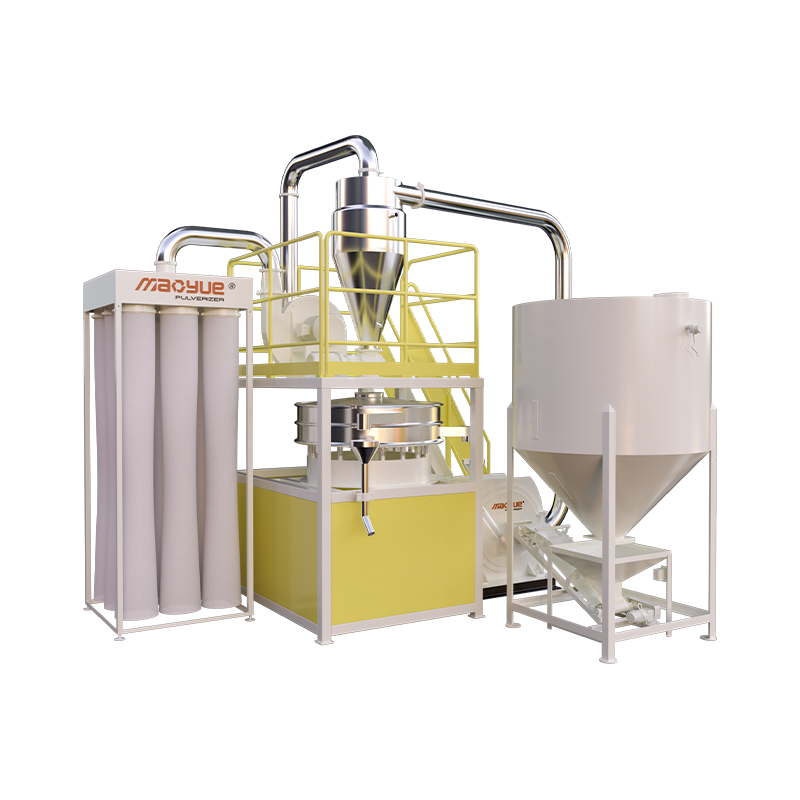
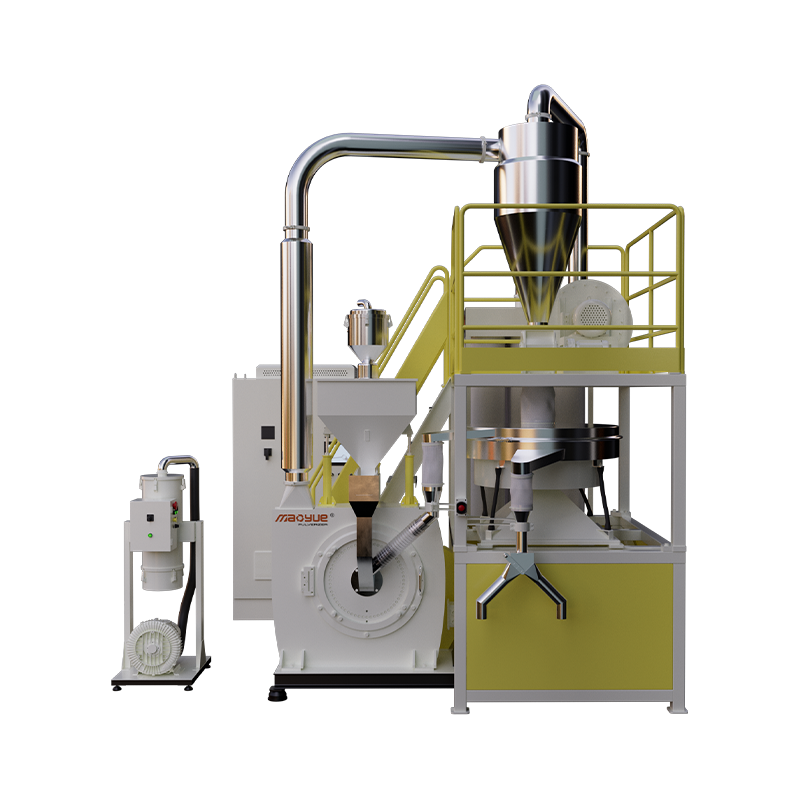
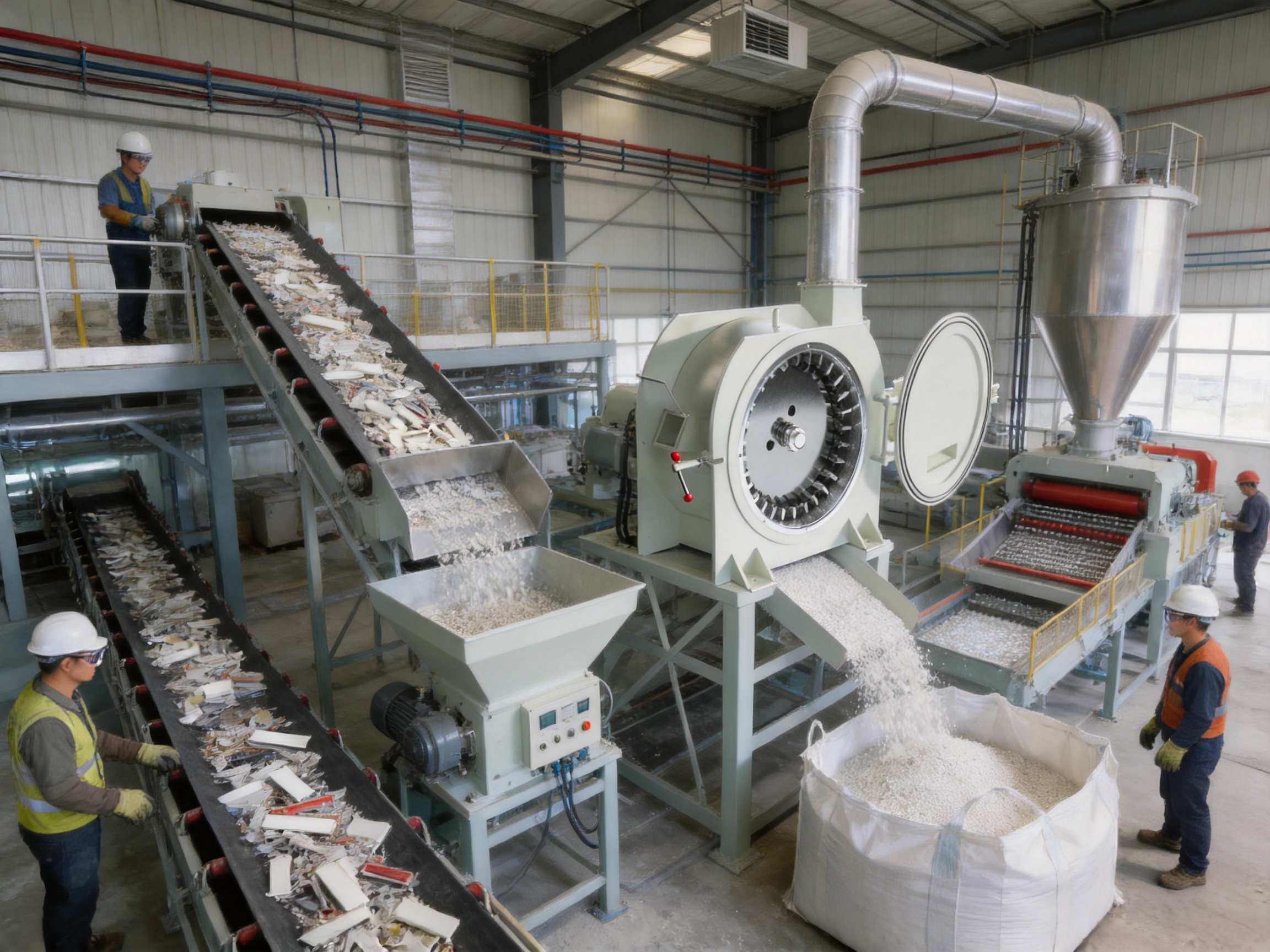
A complete pulverizing line must manage not only the grinding operation but also powder classification, material transfer, air movement, and dust control. The Model 700 is equipped with a vibrating screen and pulse dust collector to support a cleaner and more organized production environment.
The vibrating screen separates particles according to the selected mesh. It helps deliver a more uniform product and can reduce the amount of oversized material entering the finished-powder collection system. The screen also contributes to process control when the plant uses more than one powder specification.
The pulse dust collector uses periodic air pulses to clean dust from the filter bags. This arrangement helps maintain airflow and supports stable conveying performance during extended operation. The standard dust-collector bag diameter is listed as approximately 300 millimetres. The complete dust-handling arrangement should be connected and commissioned according to the plant’s ventilation, discharge, and safety requirements.
Dust control is important for product purity, worker comfort, equipment cleanliness, and fire-risk management. PVC powder can accumulate on surfaces if the line is poorly sealed or if the dust collector is undersized. A correctly adjusted air path helps capture fine particles while avoiding excessive loss of usable powder.
The listed piping material is stainless steel, and the pipe diameter is approximately 159 millimetres. Stainless-steel conveying pipes provide corrosion resistance and a smooth internal surface, which can support easier cleaning and reduce the risk of material retention. Pipe routing should be designed with appropriate bends, access points, and support structures to minimize pressure loss and powder accumulation.
Motor, Drive, and Speed-Management Options
The standard Model 700 configuration includes a 55-kilowatt drive motor, while the broader product range may be configured with a main motor power between 55 and 75 kilowatts depending on the required capacity and processing conditions. The selected motor should match the actual material, target output, fineness, and electrical infrastructure of the plant.
A stronger motor can provide additional operating reserve when processing difficult, filled, or dense materials. However, motor size alone does not determine performance. Blade condition, feed preparation, cooling, disc balance, screen selection, and feeding stability all have a major influence on actual production.
The equipment supports several speed-control and starting options, including star-delta starting, soft starting, and inverter control. Star-delta starting can reduce starting current compared with direct starting. A soft starter can improve acceleration and reduce mechanical shock. Inverter control provides broader speed-management flexibility and may be useful when the machine must handle multiple materials or fineness specifications.
Variable-speed operation can help operators match the working conditions to the feedstock. A lower speed may be suitable for heat-sensitive materials or specific formulations, while a higher speed may support greater productivity when the material and cooling capacity permit. Any speed adjustment should remain within the machine’s recommended operating range and should be validated through temperature, current, and powder-quality monitoring.
The drive arrangement uses imported NSK bearings in the listed belt-pulley standard. Reliable bearing support is essential because the grinding disc rotates under significant load and may experience vibration if the material distribution is uneven. Bearing inspection, lubrication, alignment checks, and belt tension adjustment should form part of the routine maintenance plan.
Manufacturing Precision and Quality Control
The performance of a pulverizer is closely linked to manufacturing accuracy. A grinding disc that is not properly machined, a shaft that is not aligned, or a housing that is not welded accurately can create vibration, noise, premature wear, and unstable powder quality. For this reason, advanced processing equipment and disciplined production procedures are important competitive factors.
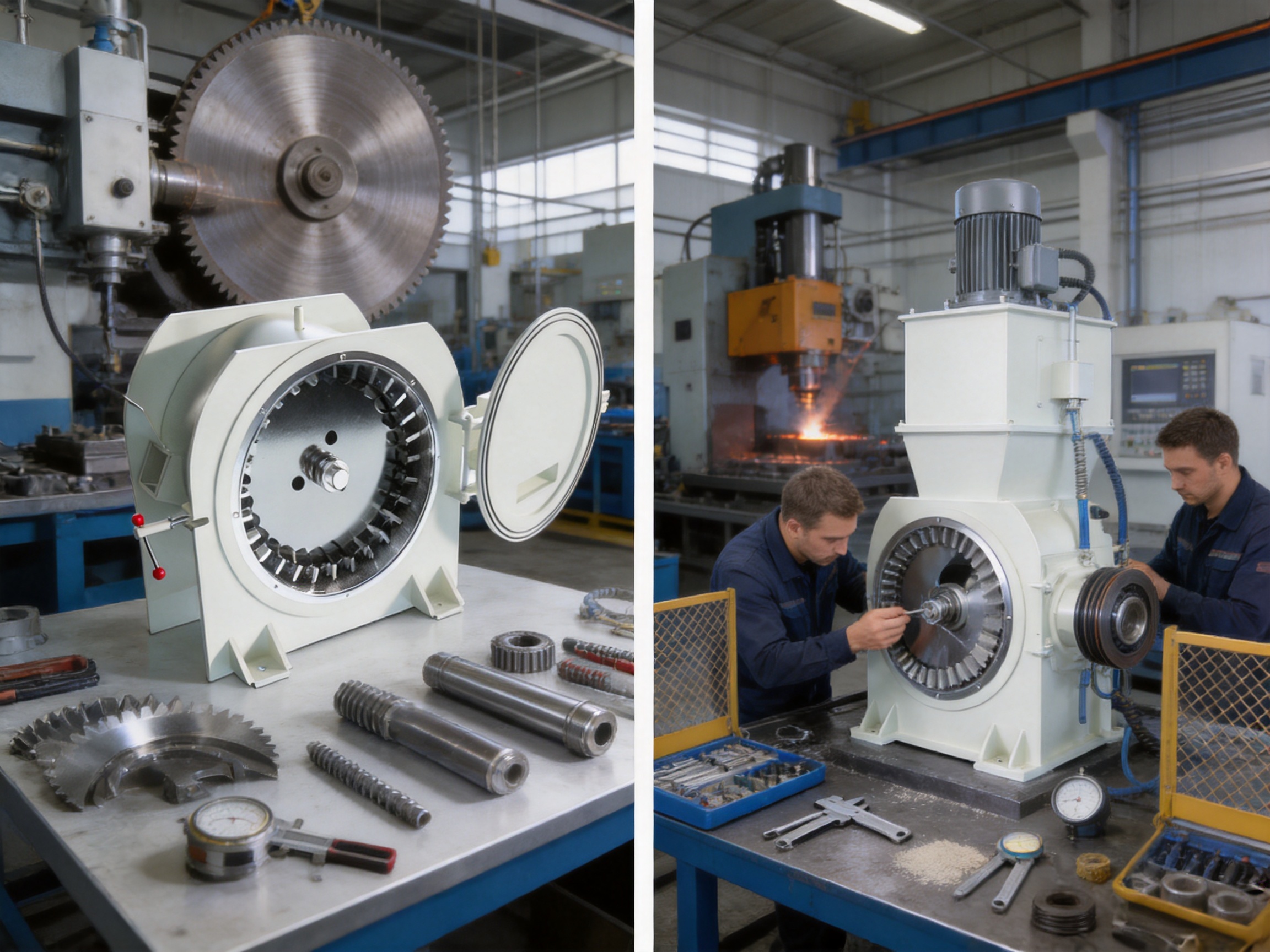
The manufacturer operates six processing workshops, each averaging approximately 1,400 square metres. This workshop structure supports the separation of different manufacturing activities, including machining, welding, assembly, component preparation, inspection, and equipment integration. Dedicated production areas can improve workflow control and make it easier to manage large equipment orders or customized configurations.
The factory uses Taiwan-imported high-precision grinding machines built to German standards. Precision grinding is important for working surfaces, shafts, discs, and other components where dimensional accuracy and surface finish affect performance. Consistent machining can help maintain the correct relationship between moving and fixed parts and support more reliable adjustment of the grinding gap.
German dynamic balancing equipment is used to control the balance of rotating components. Dynamic balancing is particularly important for high-speed pulverizer discs because even a small imbalance can produce substantial centrifugal force during operation. A balanced rotor reduces vibration, protects bearings, improves operator comfort, and supports longer service life for the drive system.
Japanese welding systems are used in the manufacturing process. Controlled welding helps produce stable frames, housings, support structures, hoppers, and pipe assemblies. Welding quality can influence dimensional stability, sealing, structural strength, and the ability of the equipment to remain aligned during long-term operation.
Manufacturing quality also depends on inspection and assembly discipline. Components should be checked for dimensional accuracy, surface condition, material conformity, and correct fit before final assembly. The completed machine should be inspected for rotation, vibration, electrical function, cooling flow, screen operation, dust-collection performance, and safety features before shipment.
The company’s production philosophy emphasizes European quality standards, precision processing, stable components, and application-oriented customization. Its CE mechanical certification and ISO 9001 quality-management certification provide formal support for its focus on product safety and manufacturing management.
Application in PVC Recycling
The Model 700 is well suited to medium-scale PVC recycling lines that process prepared construction and household waste. Common feed materials include PVC window and door profiles, scrap pipes, vinyl flooring, cable coverings, production offcuts, and rejected molded or extruded products.
In a typical recycling process, incoming waste is first sorted to remove incompatible materials and visible metal contamination. The material is then crushed or granulated to a suitable feed size before entering the pulverizer. After grinding, the powder passes through the vibrating screen and dust-collection system. The resulting product can be stored, blended, or returned to downstream extrusion and molding processes.
Uniform PVC powder can help recyclers improve the value of recovered material. Instead of selling irregular flakes or mixed fragments, a plant may produce a more consistent powder suitable for use in recycled pipe extrusion, profile extrusion, flooring production, injection molding, or compound preparation. The commercial benefit depends on material separation, contamination control, formulation, and end-user requirements.
For recycling plants with daily capacities of approximately 8 to 12 tonnes, the Model 700 can function as the central grinding unit. Its capacity range allows the line to process regular production volumes while retaining flexibility for different material grades. The machine is especially appropriate where the plant needs a balance between output and investment rather than the highest possible capacity.
Recycled PVC can vary substantially in hardness, filler content, color, age, and previous processing history. The machine’s combination of high-density fixed teeth, moving blades, cooling, screening, and adjustable speed helps address this variation. Nevertheless, careful sorting and feed preparation remain essential to achieving consistent results.
Application in Flooring, Wallboard, and Ceiling-Panel Production
PVC flooring, wallboard, and ceiling-panel manufacturers may use pulverized PVC as a powder carrier or as part of an integrated recycling and production loop. The powder must generally provide stable flow, predictable particle size, and reliable dispersion in the subsequent formulation.
The Model 700 can support the production of powder from recycled flooring offcuts, edge trim, rejected panels, and other PVC production waste. Recovered powder may be blended with virgin resin, fillers, plasticizers, stabilizers, pigments, and processing aids according to the product formula.
Stable fineness can assist with smooth product surfaces and uniform thickness in calendering or extrusion. Oversized fragments can create surface defects, feeding interruptions, or localized formulation differences. The integrated vibrating screen helps reduce the risk of oversized material entering the finished powder stream.
For manufacturers seeking an integrated closed-loop process, the machine can connect the recycling stage with the production stage. Production scraps can be collected, prepared, pulverized, screened, and reintroduced into an appropriate formulation. This can reduce material waste and support more efficient use of internal production resources.
The suitability of recycled powder for a particular flooring or panel formula should be confirmed through laboratory testing. Factors such as color, plasticizer content, thermal history, filler level, and contamination may influence the final product. The pulverizer provides the size-reduction capability, while formulation development and quality testing determine the acceptable recycling ratio.
Application in Cable and Leather Material Recovery
PVC cable sheathing and wire-related scraps can contain flexible PVC, mineral fillers, pigments, textile components, metal traces, or other composite elements. Proper separation and metal removal are important before pulverizing these materials. Once prepared, the Model 700 can finely grind suitable cable-sheathing waste into a powder with improved dispersion potential.
Recycled cable-compound powder can be used in carefully controlled formulations for cable accessories, profiles, mats, sheets, or other products where the material specification permits recycled content. The fine powder can improve blending with other formulation ingredients, although the final application must always be validated for mechanical, electrical, and thermal performance.
The equipment can also process certain soft or hard PVC leather scraps and composite offcuts. These materials may be flexible, fibrous, or filled, so stable feeding and temperature management are especially important. The shearing and friction mechanism helps reduce the material progressively, while cooling limits the risk of excessive softening.
For cable and leather recycling enterprises, product purity is a major concern. Metal contamination, textile fibers, rubber, adhesive residues, and incompatible polymers may reduce the value of the finished powder. The iron-removal feeding method, screening system, and dust-handling arrangement can support cleaner processing, but upstream sorting remains a necessary part of the complete line.
Application in PVC Compound Modification
Modified PVC products may contain calcium carbonate, stabilizers, plasticizers, flame retardants, pigments, lubricants, and other additives. A medium-sized compound manufacturer may need to produce several formulas, conduct trial production, and adjust powder specifications according to customer requirements.
The Model 700 is suitable for medium-batch blending and pulverizing operations in which material changeover occurs regularly. Its flexible fineness range, speed-management options, temperature-control system, and accessible process arrangement can support a variety of development and production tasks.
When processing calcium-containing or highly filled compounds, wear resistance becomes especially important. The carburized, quenched, and coated grinding-disc design is intended to maintain working performance for longer intervals than untreated surfaces under comparable conditions. The expected service life of 800 to 1,200 hours should be treated as an operating reference rather than a guarantee for every formula.
Frequent changeover requires careful cleaning and material management. Residual powder from one formulation can affect the color, additive concentration, flame-retardant level, or mechanical properties of the next batch. A changeover procedure should include safe shutdown, internal cleaning, screen inspection, dust removal, and verification that the conveying line is clear.
For companies moving from small-batch trials toward regular production, the Model 700 can provide a useful intermediate platform. It offers more capacity and process stability than laboratory or small workshop equipment while remaining more accessible than a large industrial pulverizing system. This allows a company to evaluate product demand and formulation performance before investing in a higher-capacity line.
Advantages Compared with Typical Alternative Solutions
One advantage of the Model 700 is its balanced scale. A small pulverizer may be economical but can require multiple units or extended operating hours to meet medium-sized production targets. A much larger machine may deliver greater capacity but could increase installation cost, energy demand, auxiliary equipment requirements, and maintenance expense. The 700-class design is positioned between these extremes.
A second advantage is the combination of cutting and friction. Pulverizers that depend mainly on impact may struggle with flexible PVC, filled compounds, or mixed production scraps. The moving-blade and dual-row fixed-tooth arrangement provides multiple mechanisms for material reduction, supporting a more adaptable grinding action.
A third advantage is temperature management. PVC processing is sensitive to heat, and the high-flow water-cooling plus air-cooling system is designed to stabilize operating conditions. The ability to maintain temperature fluctuations within approximately plus or minus 3 to 4 degrees Celsius can be beneficial for long production runs and formula changes.
A fourth advantage is the combination of screening and dust collection in one line configuration. A standalone grinding chamber may produce powder but leave the operator responsible for separate classification, conveying, and dust-handling arrangements. The integrated screen and pulse dust collector support a more complete and organized process.
A fifth advantage is the attention to wear resistance. The use of high-chromium alloy blades and a carburized, quenched, coated grinding disc addresses the abrasive nature of filled PVC. Longer wear intervals can reduce shutdown frequency and make maintenance planning more predictable.
A sixth advantage is manufacturing capability. Precision grinding, dynamic balancing, controlled welding, and formal quality-management systems help reduce the performance risks associated with poorly aligned or insufficiently balanced equipment. The machine’s design benefits from the manufacturer’s experience across recycling, PVC, PE, masterbatch, polymers, rotational molding, and powder-coating applications.
Performance area |
Model 700 approach |
Practical benefit |
Machine scale |
Approximately 660 to 700 millimetre disc class |
Balances medium-scale capacity with manageable investment and footprint |
Main drive |
Standard 55 kilowatts, with broader configurations up to approximately 75 kilowatts |
Provides operating reserve for different PVC materials and formulas |
Grinding action |
Approximately 32 to 36 moving blades with dense dual-row fixed teeth |
Combines shearing and friction for efficient size reduction |
Capacity |
Approximately 300 to 550 kilograms per hour, with a standard range of about 320 to 500 kilograms per hour |
Supports medium-sized daily production requirements |
Fineness |
Approximately 10 to 100 mesh depending on configuration; standard table lists 10 to 50 mesh |
Allows adjustment for recycling, compounding, and product manufacturing |
Cooling |
High-flow water cooling combined with air cooling |
Helps control heat during continuous operation |
Wear protection |
Carburizing, quenching, wear-resistant coating, and high-chromium alloy blades |
Supports longer service intervals when processing filled PVC |
Classification |
Approximately 1,200 millimetre vibrating screen |
Improves control of finished powder size |
Dust management |
Pulse dust collector with approximately 300 millimetre bag diameter |
Supports powder recovery, cleaner operation, and stable airflow |
Drive control |
Star-delta, soft-start, or inverter options |
Allows the system to match starting and operating conditions |
Manufacturing Strengths and Technical Support
A pulverizer supplier should be evaluated not only by the published capacity but also by its ability to manufacture, customize, install, and support the equipment. The company behind the Model 700 has approximately 30 years of experience in plastic crushing and pulverizing equipment and has developed equipment for domestic and international customers.
Its workshops and technical team support the production of pulverizers and related components. The company’s product range serves applications including rotational molding, masterbatch, polymers, PVC, polyethylene, recycling, and powder coating. This breadth of experience is valuable because it exposes the engineering team to different material behaviors, production targets, and line configurations.
The technical team studies advanced machine technologies from countries such as Germany. The use of high-precision grinding equipment, dynamic balancing equipment, and controlled welding systems indicates an emphasis on repeatable manufacturing rather than purely manual fabrication.
Customization is important because no two PVC recycling lines are identical. Customers may require different motor powers, screen sizes, pipe layouts, feeding arrangements, dust-collection capacities, cooling configurations, electrical standards, or discharge systems. A manufacturer with in-house processing and assembly capability can generally coordinate these elements more effectively than a supplier that relies entirely on outside fabrication.
Long-term service also depends on spare-parts availability and technical communication. Wear components such as blades, fixed teeth, screens, bearings, belts, and liners should be identified clearly. Operators should receive guidance on installation, rotation direction, blade-gap adjustment, cooling-water management, cleaning, lubrication, and troubleshooting.
The company reports long-term partnerships with more than 5,000 enterprises in domestic and international markets. Its CE mechanical certification and ISO 9001 quality-management certification support its stated commitment to equipment safety and consistent manufacturing processes.
Installation and Commissioning Considerations
Before installation, the customer should confirm the foundation, lifting access, power supply, cooling-water system, ventilation, dust-collection discharge, raw-material storage, finished-powder collection, and maintenance clearance. The machine should be positioned on a stable foundation capable of supporting its operating weight and vibration loads.
The electrical system should be selected according to the motor configuration and local voltage requirements. A qualified electrician should verify cable sizing, grounding, overload protection, emergency-stop functions, and control-panel operation. If an inverter is selected, its settings should be matched to the motor and the machine’s permitted speed range.
The water-cooling system should have a reliable inlet and outlet connection. Operators should verify circulation before beginning production. Cooling-water flow should not be interrupted during operation unless the machine has been safely stopped and the temperature has returned to an acceptable level.
During commissioning, the machine should first be operated without material to check rotation, vibration, noise, bearing temperature, belt tracking, screen movement, air movement, and dust-collector operation. Material should then be introduced gradually while monitoring motor current, powder temperature, throughput, and product fineness.
Initial trials should use representative PVC feedstock rather than only a light or unusually easy material. This provides a more realistic assessment of capacity and heat behavior. The final operating parameters should be recorded for each major material category and product specification.
Operation and Maintenance Practices
Stable operation begins with consistent feeding. The feed should be free from oversized pieces, excessive moisture, and harmful metal contamination. Sudden surges can overload the motor and produce uneven grinding. A controlled feeder or conveyor can help maintain a more stable material flow.
Operators should monitor the grinding temperature, motor current, vibration, noise, powder appearance, and dust-collector pressure. A sudden increase in current may indicate excessive feed, dull blades, a blocked screen, foreign material, or a mechanical problem. A change in powder fineness may indicate wear, incorrect blade clearance, screen damage, or unstable feeding.
Cooling water should be inspected regularly for flow, temperature, cleanliness, and leakage. Air passages and dust-collection components should be kept clear. Filter bags should be cleaned through the pulse system and replaced when their condition or pressure loss indicates that they are no longer performing effectively.
Blades and fixed teeth should be inspected at planned intervals. If working edges become rounded or uneven, grinding efficiency may decline and heat generation may increase. Replacement or servicing should be carried out according to the manufacturer’s instructions, with the machine fully isolated from electrical power before access to the grinding chamber.
Bearings, belts, pulleys, and fasteners should be checked as part of the preventive-maintenance schedule. Correct belt tension helps transmit power efficiently and reduces slippage. Bearing lubrication should follow the recommended type and interval because both insufficient and excessive lubrication can cause problems.
Cleaning is especially important when the equipment handles multiple formulas. Residual powder can affect the next product’s color, additive content, or performance. A documented changeover procedure can improve product quality and reduce cross-contamination.
How to Select the Correct Configuration
Customers should begin by defining the material. Important information includes whether the feed is rigid PVC, soft PVC, cable sheathing, flooring scrap, profile waste, compound pellets, or a mixed stream. The filler content, plasticizer level, moisture, contamination, and bulk density should also be identified.
The required capacity should be based on actual daily production, operating hours, planned maintenance, and future growth. A machine should not be selected solely on the highest advertised hourly figure. It is better to establish a realistic operating range that allows for temperature control, screen classification, cleaning, and normal material variation.
The desired mesh size should be confirmed through sample testing. If a customer needs both coarse and fine powder, the machine should be configured with appropriate screens, speed control, and process arrangements. The customer should also clarify whether the powder will be used in extrusion, calendering, injection molding, compounding, or resale.
The electrical supply, cooling-water availability, dust-collection requirements, building height, floor area, raw-material flow, and finished-product handling should be reviewed before placing an order. A complete line layout can reduce installation delays and improve operating efficiency.
Sample testing is strongly recommended for difficult or high-value materials. Testing allows the customer and supplier to evaluate throughput, temperature, powder fineness, dust behavior, wear tendency, and the suitability of the selected blades and screens. It also provides a basis for calculating energy use and maintenance intervals.
Q&A
What type of machine is the Model 700?
It is a PVC pulverizer designed for medium-scale grinding and powder production. It is suitable for PVC recycling, compound preparation, flooring and wallboard production, cable-material recovery, leather-related PVC recycling, and other applications requiring controlled plastic powder.
What is the standard capacity?
The standard technical table lists approximately 320 to 500 kilograms per hour. The broader product range is described as approximately 300 to 550 kilograms per hour. Actual capacity depends on the feed material, target mesh, moisture, formulation, feeding method, blade condition, and operating parameters.
What is the main motor power?
The standard configuration uses a 55-kilowatt drive motor. Depending on the required output and material conditions, the broader configuration range can include motor power from approximately 55 to 75 kilowatts.
What fineness can the machine produce?
The broader description indicates a flexible range of approximately 10 to 100 mesh, while the standard specification table lists 10 to 50 mesh. The practical result depends on the screen, grinding gap, feed rate, material properties, and machine configuration. Sample testing should be used to confirm the required specification.
How does the machine control temperature?
It uses a composite water-cooling and air-cooling system. The standard water-cooling arrangement has separate inlet and outlet flow, while air movement supports heat removal and powder conveying. Under suitable conditions, temperature fluctuations are designed to remain within approximately plus or minus 3 to 4 degrees Celsius.
Can it process calcium-filled PVC?
Yes. The machine is designed to process PVC containing calcium carbonate and other additives. Its high-chromium alloy blades and carburized, quenched, coated grinding disc are intended to improve wear resistance. The actual service life depends on filler content, contamination, operating conditions, and maintenance.
How long can the grinding components last?
The stated reference service life is approximately 800 to 1,200 hours for calcium-containing powders or stabilizer-containing PVC under appropriate conditions. This is an operating reference, not a universal guarantee. Abrasive fillers, metal contamination, excessive feed, poor cooling, and incorrect adjustment can shorten component life.
Does the machine include screening?
Yes. The listed configuration includes a vibrating screen with an approximate diameter of 1,200 millimetres and a 1.5-kilowatt motor. The screen helps classify the powder and improve control of the finished particle size.
Does it include dust collection?
Yes. The equipment is supplied with a pulse dust collector in the described line configuration. The standard dust-collector bag diameter is approximately 300 millimetres. The complete dust-handling system should be selected and installed according to the plant’s ventilation and discharge requirements.
What materials are used for the knives and pipes?
The listed knife and blade material is high-chromium alloy. The conveying pipes are specified as stainless steel, with a standard pipe diameter of approximately 159 millimetres.
What starting or speed-control options are available?
The equipment can use star-delta starting, soft starting, or inverter control. The appropriate option depends on the customer’s electrical system, material range, desired speed flexibility, and production requirements.
Is the Model 700 suitable for continuous operation?
It is designed for continuous operation under medium-to-high loads and is described as stable for operating periods of approximately 8 to 12 hours when correctly installed, cooled, fed, and maintained. Actual working schedules should be established according to the material and plant conditions.
What upstream equipment may be required?
Depending on the feedstock, the line may require sorting equipment, a crusher or granulator, metal removal, a controlled feeder, conveyors, and storage hoppers. Large profiles, long pipes, tangled cables, and oversized scraps should normally be reduced before entering the pulverizer.
Can the machine process multiple PVC formulations?
Yes. Its speed-control options, temperature-management system, screening flexibility, and material-changeover design support multiple formulations. A proper cleaning and changeover procedure is necessary to prevent cross-contamination between different products.
What should be checked before purchasing?
Buyers should confirm the actual material, filler level, moisture, desired capacity, mesh size, motor power, electrical supply, cooling-water conditions, dust-collection requirements, available floor space, maintenance access, and expected operating schedule. Representative sample testing is recommended for difficult or abrasive materials.
Conclusion
The Model 700 PVC High-Efficiency Grinding Equipment is designed for enterprises that need dependable medium-scale PVC powder production without moving immediately to the cost and complexity of a much larger pulverizer. Its approximately 660 to 700 millimetre grinding-disc class, 55 to 75 kilowatt motor range, dense moving-blade and fixed-tooth arrangement, composite cooling system, wear-resistant working surfaces, vibrating screen, and pulse dust collector create a balanced solution for recycling and manufacturing applications.
Its principal strength is the integration of productivity, temperature control, fineness flexibility, wear resistance, and practical operating economics. The machine can process a broad range of PVC materials, including profiles, pipes, flooring scraps, cable coverings, compound materials, and other prepared waste. It is particularly suitable for medium-sized plants with daily requirements of approximately 8 to 12 tonnes and for companies developing closed-loop recycling or modified PVC powder production.
The equipment’s competitive position is supported by more than its published specifications. Precision grinding machinery, dynamic balancing equipment, controlled welding systems, multiple processing workshops, technical experience, CE mechanical certification, and ISO 9001 quality-management certification contribute to the manufacturing foundation behind the machine.
For the best result, the pulverizer should be selected as part of a complete process. Feed preparation, metal removal, cooling-water management, screening, dust collection, electrical control, maintenance planning, and product testing all influence the final performance. When these elements are correctly coordinated, the Model 700 can provide a stable and economical route to higher-value PVC powder production.
References
1. Manufacturer-provided technical specification for the Model 700 PVC High-Efficiency Grinding Equipment.
2. Manufacturer-provided information on PVC recycling, pulverizing applications, cooling systems, screening, and dust collection.
3. Manufacturer-provided information on workshop facilities, precision machining, dynamic balancing, welding systems, certifications, and technical experience.
4. General principles of polymer size reduction, abrasive wear management, powder classification, and industrial dust control.
5. General engineering practices for PVC recycling lines, compound preparation, preventive maintenance, and process temperature management.