

 English
 русский
 Español
 عربى
عربى 中文简体
中文简体
 中文简体
中文简体
Content
- 1 Introduction
- 2 Why Integrated Crushing and Pulverizing Is Important
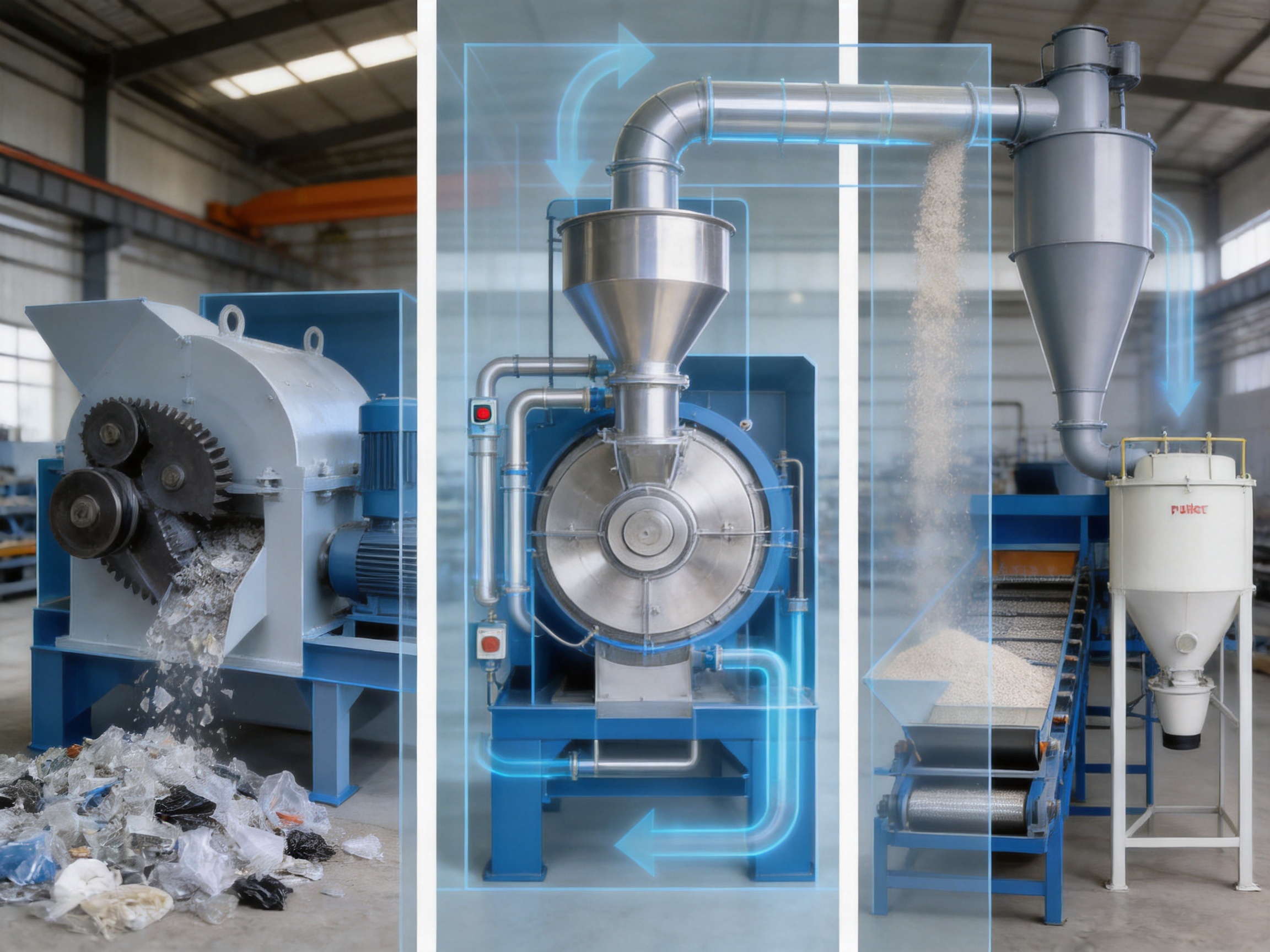
- 3 Working Principle of the Production Line
- 4 Dust Collection and Environmental Performance
- 5 Advantages Compared with Conventional Plastic Pulverizing Systems
- 6 Applications in Plastic Recycling and Manufacturing
- 7 Manufacturing Strengths and Engineering Capabilities
- 8 Automation and Control System
- 9 Technical Specification
- 10 Installation and Process Planning
- 11 Maintenance and Operating Recommendations
- 12 Product Quality and Recycling Value
- 13 Customized Solutions for Different Businesses
- 14 Business Benefits for Plastic Processors
- 15 Company Experience and Quality Commitment
- 16 Q&A
- 16.1 What materials can the production line process?
- 16.2 What is the typical final powder size?
- 16.3 What capacity can the listed coarse crusher achieve?
- 16.4 Why is a coarse crusher used before the disc mill?
- 16.5 How does the system control grinding temperature?
- 16.6 Can the line process heat-sensitive PVC?
- 16.7 How is dust controlled?
- 16.8 Is the production line fully automatic?
- 16.9 What knife material is used in the coarse crusher?
- 16.10 Which disc mill models are available?
- 16.11 Can the system be customized?
- 16.12 What should be removed from plastic waste before processing?
- 16.13 What industries can use the recovered powder?
- 16.14 What maintenance is required?
- 17 Conclusion
- 18 References
- 19 Product: Hammer-impact swing-knife crushing and pulverizing production line
Introduction
Plastic recycling increasingly requires more than simple size reduction. Manufacturers and recycling companies must transform bulky, irregular, contaminated, or difficult-to-handle plastic waste into a consistent material that can be reused in demanding production processes. Pipes, profiles, sheets, foam boards, woven bags, pallets, containers, flooring scraps, appliance housings, and other plastic products often arrive in sizes and shapes that are unsuitable for direct feeding into a pulverizer. An effective recycling solution must therefore combine robust coarse crushing, controlled pulverizing, temperature management, dust separation, screening, and automated conveying.
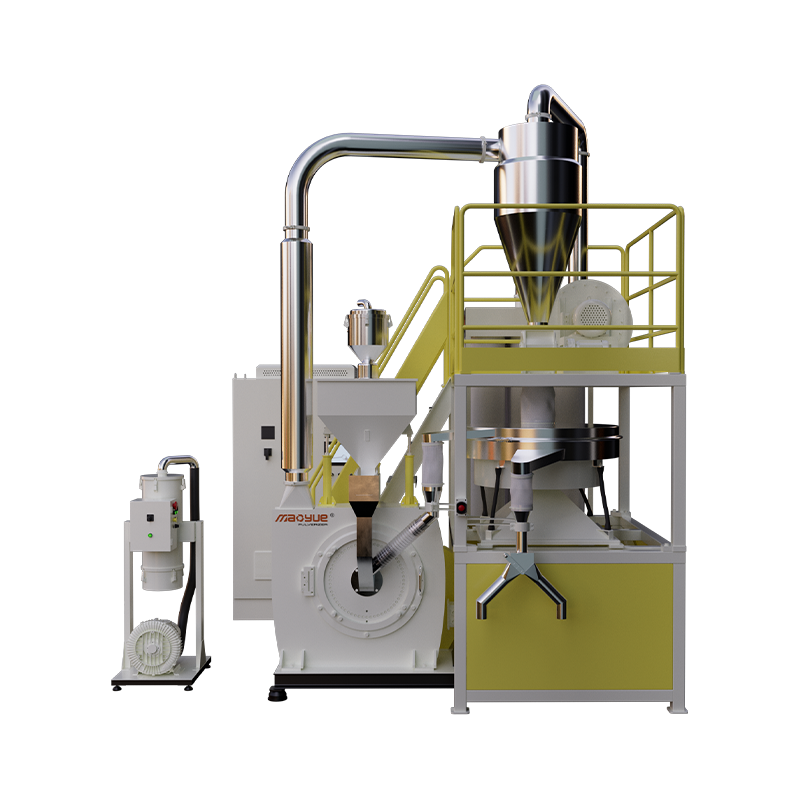
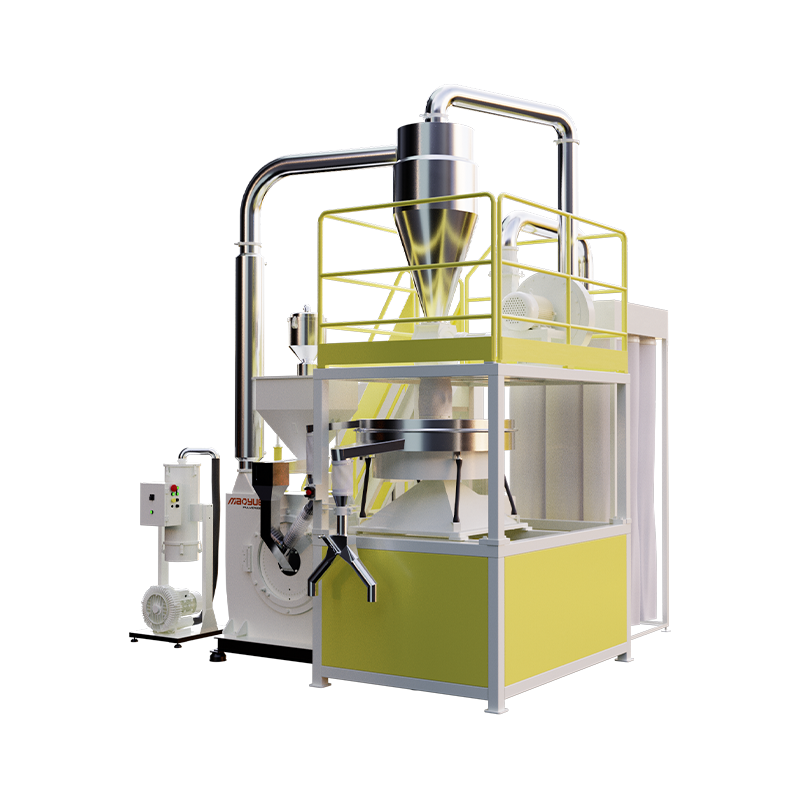
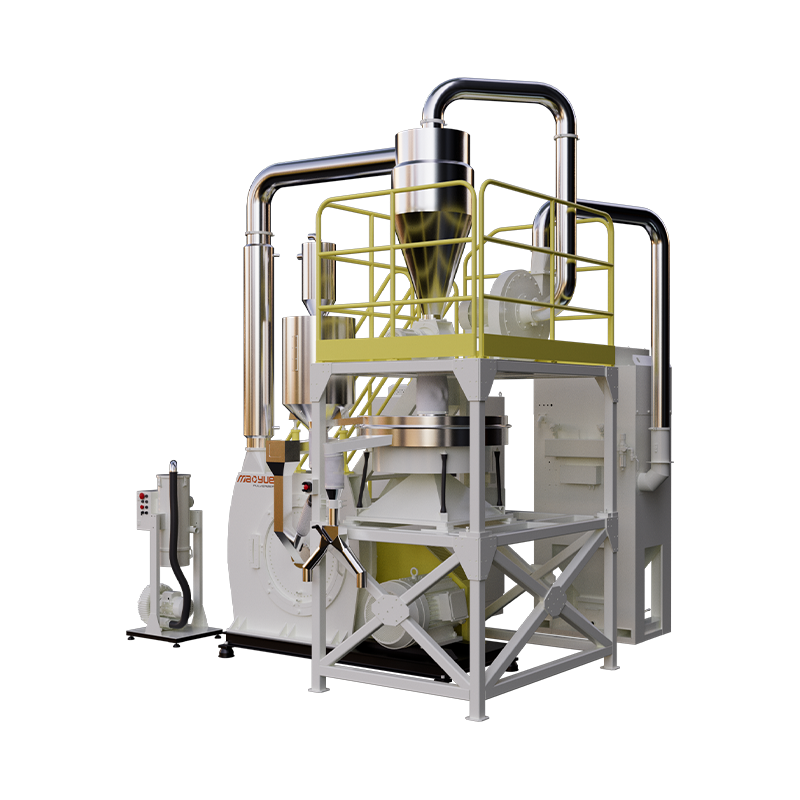
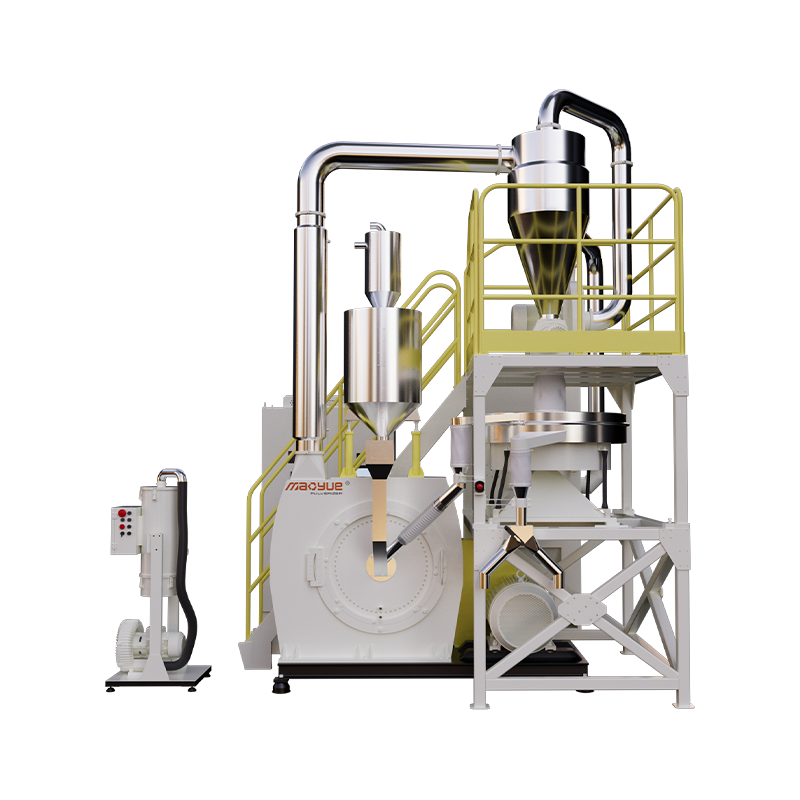
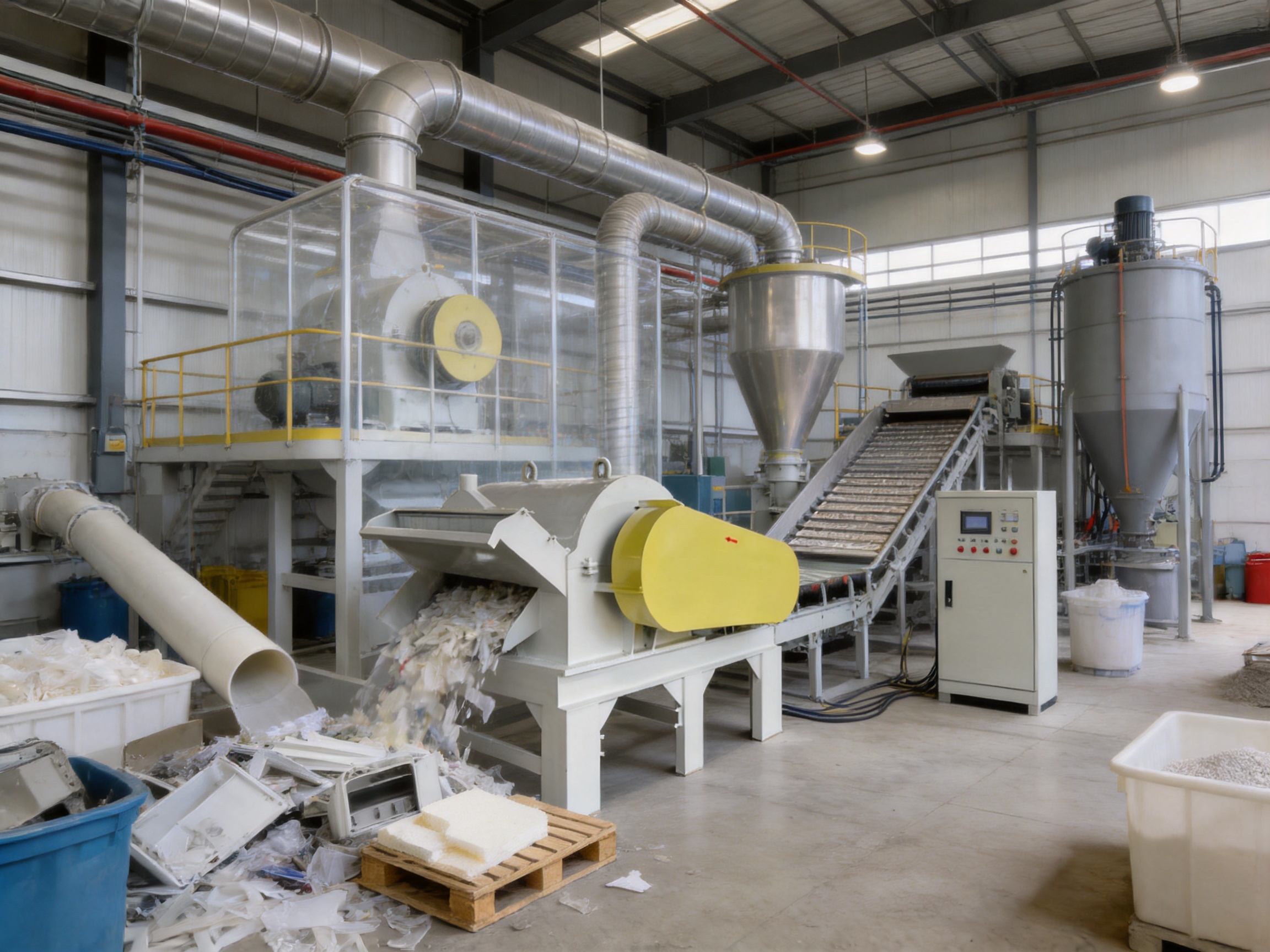
The hammer-impact swing-knife crushing and pulverizing production line is designed as an integrated answer to these requirements. It combines a heavy-duty hammer-blade coarse crusher with a precision disc mill, negative-pressure conveying, cyclone separation, vibrating screening, and pulse dust collection. Instead of treating crushing and grinding as isolated operations, the complete line connects these stages into a continuous processing system. Large plastic waste can be reduced to controlled intermediate particles and then converted into uniform fine powder in a single automated workflow.
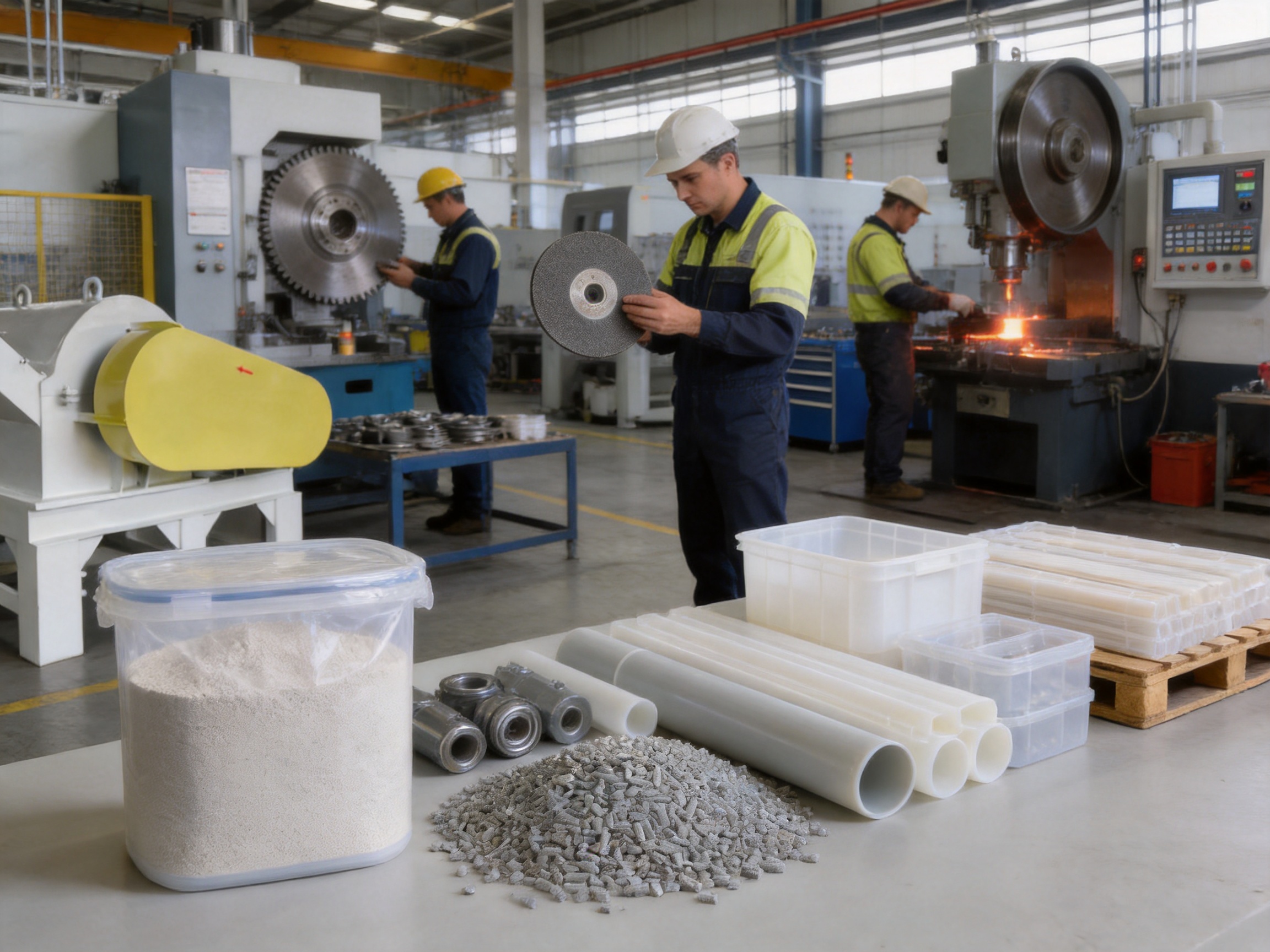
The system is suitable for PVC, PE, PP, PET, ABS, EVA, and other medium-hardness or high-impact plastics. Depending on material characteristics, equipment configuration, and operating conditions, the final product can reach approximately 20 to 80 mesh or finer. This makes the line appropriate for applications including PVC pipe and profile recycling, SPC flooring production, rotational molding powder preparation, plastic modification, powder coating feedstock, and centralized industrial waste treatment.
A major strength of the design is the coordination between its front-end impact crushing section and its downstream disc pulverizing section. The crusher accepts large and irregular pieces that would be difficult for a conventional knife pulverizer to process directly. It then produces a controlled particle size suitable for stable feeding into the mill. The disc mill completes the reduction process while its cooling and monitoring systems help protect heat-sensitive plastics from overheating, sticking, yellowing, and degradation.
Changzhou Mao Yue Intelligent Equipment Co., Ltd. manufactures this type of equipment with a focus on plastic size reduction, precision machining, automation, and customized production solutions. With approximately 30 years of experience in plastic crushing and pulverizing equipment, the company combines specialized manufacturing facilities with technical knowledge developed through service to domestic and international customers.
Why Integrated Crushing and Pulverizing Is Important
Many plastic recycling operations use separate machines for coarse crushing and fine pulverizing. While this approach can work, it often creates difficulties in material transfer, labor organization, dust control, and production consistency. Operators may need to move semi-processed material between machines, manually monitor feeding, and adjust each unit independently. These additional steps can increase labor costs and introduce variations in particle size and throughput.
An integrated production line reduces these difficulties by linking the major processing stages. The coarse crusher prepares the feedstock, the pneumatic conveying system transfers material under controlled conditions, and the disc mill performs the final fine reduction. The screening system checks particle size, while oversized material can be returned for additional processing when the configuration includes a recycling loop. Dust generated throughout the line is collected through a centralized pulse bag filtration system.
This arrangement creates several practical benefits. First, the material flow is more stable because the pulverizer receives particles within a controlled size range. Second, the enclosed conveying system reduces manual handling and limits the escape of airborne powder. Third, automatic control allows the operator to manage feeding speed, motor operation, temperature, and shutdown procedures from a centralized electrical cabinet. Fourth, the overall layout can be planned as a modular system that fits the available workshop space.
Integrated processing is especially valuable for companies handling large quantities of industrial plastic waste. A recycling plant may receive long pipes, wide sheets, bulky pallets, foam boards, and mixed production scraps during the same working period. These materials differ in shape, density, flexibility, and thermal behavior. A system designed only for one uniform feedstock may suffer from blockage or unstable output. The hammer-impact front end provides a wider operating range before the material reaches the precision grinding stage.
Working Principle of the Production Line
Material Feeding
Plastic waste is first introduced into the feeding system. The feed inlet can be customized according to the size and shape of the incoming material. Large pipes, profile sections, sheets, boards, and other bulky items can be loaded with less preliminary cutting than would normally be required for a traditional fine knife pulverizer.
Variable-frequency feeding can be used to regulate the amount of material entering the crusher. This helps match the feed rate to the selected motor power, material type, moisture condition, and desired output. Controlled feeding also prevents sudden overloads and supports more stable continuous operation.
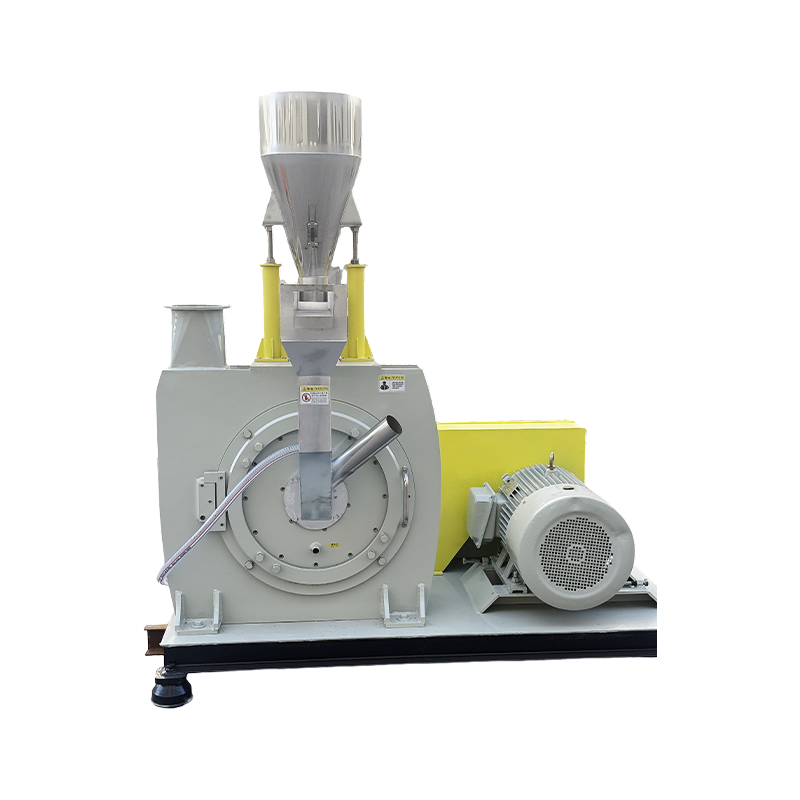
Hammer-Impact Coarse Crushing
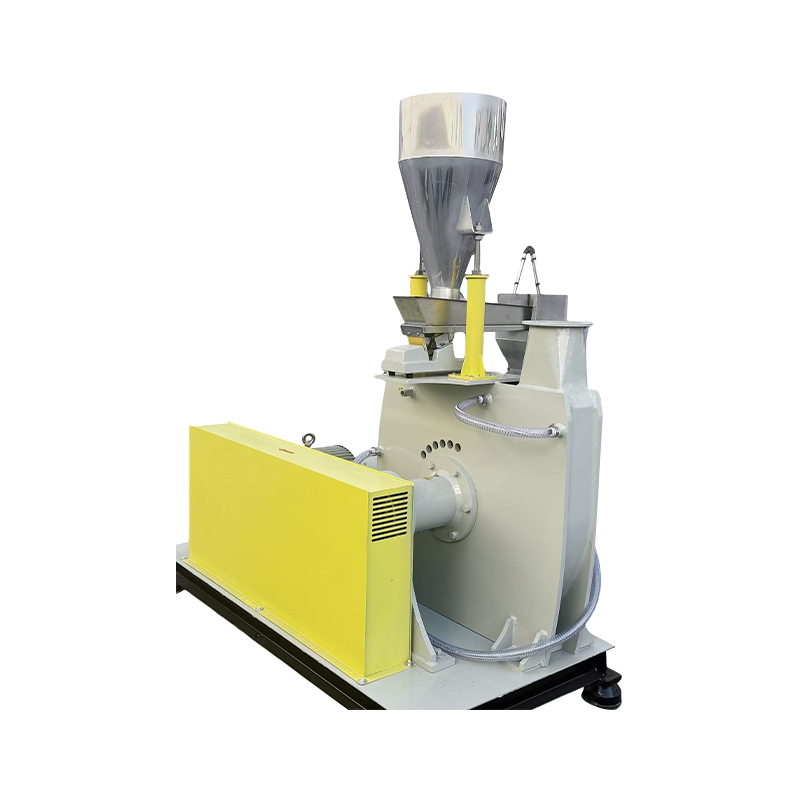
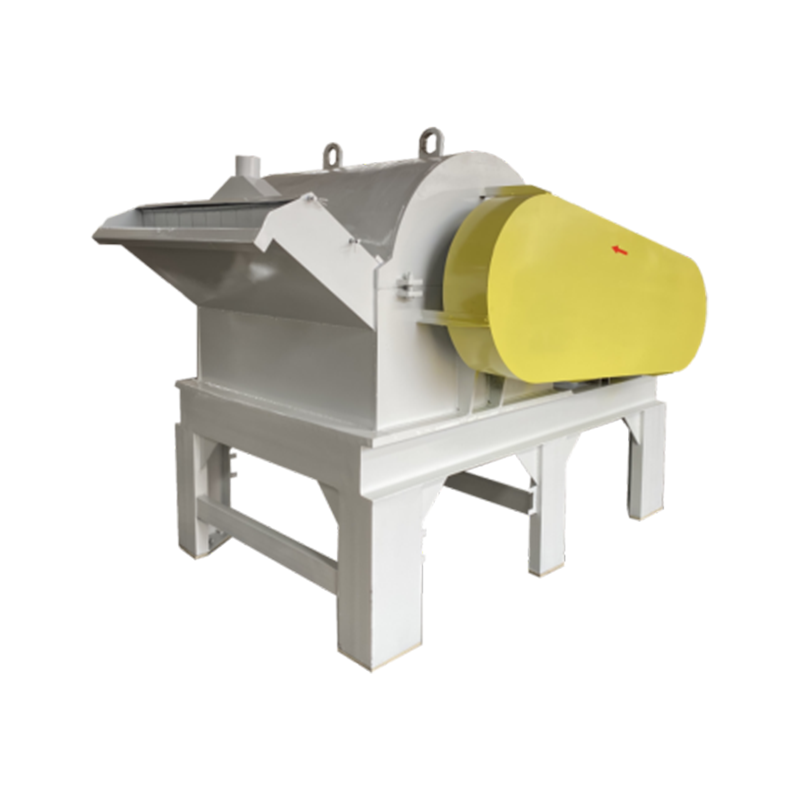
The first major reduction stage uses a high-speed rotating hammer-blade structure. The rotating knives generate impact and shearing forces that break down large pieces into smaller particles. Unlike a system that depends primarily on a narrow knife gap, the hammer-impact design can respond more effectively to irregular shapes and tough plastic items.
The coarse crusher is designed to reduce material to an adjustable intermediate size, generally within a range of approximately 5 to 20 millimeters depending on the configuration and material. The supplied specification identifies a 16-millimeter mesh size for the listed model. This intermediate particle size is appropriate for subsequent feeding into the disc mill.
The crusher configuration includes 36 rotary knives, a type designation of 1000, and a host speed of approximately 860 revolutions per minute. Drive motor options include 55, 75, 90, and 110 kilowatts. These options allow the equipment to be matched to different capacities and material conditions. The listed capacity range is approximately 1 to 2.5 tons per hour, although actual production depends on the material, feed size, bulk density, moisture, screen selection, and operating conditions.
The knife blades are made from SKD-11 tool steel. This material is widely used for wear-resistant cutting components because it offers high hardness and good resistance to abrasion when properly heat-treated and maintained. The use of imported NSK bearings in the belt pulley standard further supports reliable operation in a high-load rotating assembly.
Negative-Pressure Conveying
After coarse crushing, the reduced plastic particles are transferred through a fully enclosed negative-pressure pneumatic conveying system. Airflow carries the material from the crusher toward the grinding section while helping limit the escape of dust into the workshop.
Negative-pressure conveying has an important environmental and operational role. Because the conveying path is maintained under controlled suction, air tends to move into the system rather than allowing dusty air to escape through openings. Proper sealing, duct design, fan selection, and filter maintenance remain essential, but the basic principle creates a cleaner transfer method than open manual handling or exposed belt movement.
The conveying system also helps connect machines that may be positioned at different distances or elevations. This supports flexible workshop layouts and allows the production line to be adapted to available floor space. The equipment can be arranged according to material flow, building height, access requirements, and maintenance zones.
Precision Disc Pulverizing
The disc mill performs the fine grinding stage. Mao Yue offers disc mill configurations in 500, 600, and 800 models. The grinding discs use DC53 high-grade mold steel and are produced through high-precision tooth-by-tooth CNC grinding. The discs are also calibrated through dynamic balancing technology associated with German manufacturing standards.
Disc accuracy and rotor balance are important because uneven grinding surfaces or unbalanced rotating components can lead to vibration, irregular powder quality, excessive wear, and unnecessary energy consumption. A precisely machined grinding disc provides a more uniform working gap and promotes consistent particle reduction across the processing surface.
The final powder size can be adjusted according to the material and application. Typical products may range from approximately 20 to 80 mesh or finer. Rotational molding powder, for example, often requires good flowability and a controlled particle distribution. PVC powder for SPC flooring or profile applications may require a different target size and thermal management strategy. The line can therefore be configured according to product specifications rather than relying on a single universal setting.
Cooling and Temperature Control
Heat generation is one of the most important concerns in plastic pulverizing. Friction, impact, and compression can raise the temperature of the grinding chamber. If heat is not controlled, PVC and other sensitive materials may soften, adhere to the grinding plates, yellow, degrade, or lose performance.
The grinding section uses a reinforced dual cooling system. Multiple temperature sensors monitor operating conditions, while a programmable logic controller helps regulate the process. The grinding chamber is designed to operate within an approximate temperature range of 50 to 80 degrees Celsius under suitable conditions.
Temperature control is not simply a protective function. It also contributes to product consistency. When the grinding temperature varies significantly, plastic behavior can change during processing. A material that is rigid and free-flowing at one temperature may become soft or adhesive at another. Maintaining a controlled range helps stabilize the relationship between grinding gap, feed rate, energy input, and powder output.
The coarse crushing section can also be equipped with air cooling or water mist assistance when required. These options are useful for materials that generate substantial heat during impact crushing or for applications in which the incoming feedstock has a challenging thermal profile. The appropriate cooling method depends on the material, moisture tolerance, downstream requirements, and plant operating practices.
Hammer-impact swing-knife crushing and pulverizing production line
Dust Collection and Environmental Performance
Fine plastic powder can become airborne during crushing, conveying, grinding, screening, and discharge. Uncontrolled dust can reduce material recovery, contaminate the workshop, create housekeeping problems, and expose employees to unnecessary particulate matter. For this reason, dust control must be treated as a complete system rather than as an accessory attached to one machine.
The production line uses fully enclosed conveying together with high-efficiency pulse bag dust collection. The system is designed to capture more than 99.9 percent of collected dust under appropriate operating and maintenance conditions. The filter separates fine particles from the conveying air, allowing cleaned air to pass through while the captured powder is removed from the filter surface through pulse cleaning.
Pulse cleaning uses short bursts of compressed air to dislodge accumulated dust from the filter bags. This helps maintain airflow and prevents the filter surface from becoming excessively blocked. The effectiveness of the system depends on correct filter selection, adequate compressed-air quality, proper duct sealing, routine inspection, and timely replacement of worn components.
By collecting powder throughout the line, the system helps reduce material waste. Fine particles that would otherwise settle on floors or escape through open transfer points can be recovered and returned to the product stream when appropriate. The result is improved raw material utilization as well as a cleaner production environment.
Environmental performance also depends on the complete installation. Users must follow local regulations relating to ventilation, electrical safety, combustible dust, noise, waste handling, and emissions. A properly engineered production line can support compliance with applicable national environmental requirements, but site-specific assessment and professional installation remain necessary.
Advantages Compared with Conventional Plastic Pulverizing Systems
Better Handling of Large and Irregular Feedstock
A conventional fine knife pulverizer often requires pre-cutting or carefully prepared feedstock. Long pipes, wide sheets, thick profiles, and bulky plastic components may bridge across the feed opening or wrap around the rotor. The hammer-impact coarse crusher is designed to accept a broader range of large plastic waste and reduce it before fine grinding.
This reduces the need for separate pre-cutting equipment and lowers the amount of manual preparation. It also makes the line more suitable for recycling plants that receive varied industrial waste rather than one standardized production scrap.
Reduced Risk of Entanglement and Jamming
Flexible plastics, woven bags, films, and long profile sections can entangle in some cutting systems. Entanglement may cause rotor stoppage, motor overload, irregular feeding, or frequent operator intervention. The impact and shearing action of the hammer-blade structure helps break down these materials more effectively and reduces the likelihood of prolonged wrapping around the cutting assembly.
No crushing system can eliminate every possible blockage. Feedstock must still be inspected for metal, stones, excessive moisture, and other contaminants. However, the wider feed adaptability and staged reduction approach provide a practical advantage over attempting to send large or difficult items directly into a fine pulverizer.
More Stable Fine-Powder Quality
When a disc mill receives feedstock that is too large or inconsistent, the grinding chamber may experience unstable loading. This can lead to variations in powder size, fluctuations in motor current, and additional heat generation. The front-end crusher prepares a more uniform intermediate particle size, allowing the disc mill to operate under more consistent conditions.
The precision-machined grinding discs further support uniform powder production. CNC tooth-by-tooth grinding, high-grade mold steel, and dynamic balancing help maintain a reliable grinding geometry. For users producing powder for rotational molding, SPC flooring, extrusion, or material modification, stable particle distribution can improve downstream feeding and product consistency.
Improved Thermal Protection
Traditional systems without adequate cooling may experience plate adhesion, material yellowing, or degradation when processing PVC, PE, or other heat-sensitive plastics. The dual cooling system, temperature sensors, and PLC-based monitoring provide a more controlled thermal environment.
Temperature management also reduces unplanned cleaning and downtime. If softened plastic adheres to the grinding plates, operators may need to stop the machine, open the chamber, and manually remove buildup. Preventing excessive heat in the first place improves production continuity and lowers maintenance demands.
Lower Labor and Space Requirements
A separate crushing machine, conveyor, pulverizer, screening unit, and dust collector may require multiple operators and a large footprint. The integrated line coordinates these stages and supports centralized control. Variable-frequency feeding, automatic sequencing, and one-button start and stop functions reduce the amount of continuous manual supervision required.
The modular layout also allows equipment to be positioned according to the building and process. While the complete line requires adequate service access and safety clearance, it can be more efficient in space utilization than several disconnected machines with manual transfer points.
More Effective Dust Management
Open transfer operations commonly release dust during manual loading and unloading. The enclosed negative-pressure conveying system and centralized pulse dust collector reduce these exposure points. Cleaner air, reduced powder loss, and easier housekeeping can improve the working environment and support more professional plant operation.
Flexible Configuration for Different Plastics
The line is suitable for rigid and flexible plastics, including PVC, PE, PP, PET, ABS, and EVA. These materials do not all behave identically. Some are brittle, some are ductile, some soften at relatively low temperatures, and some generate fibrous or film-like particles. Motor selection, cooling, screen size, feeding speed, grinding gap, and dust collection settings can be adjusted to match the material.
This flexibility is a significant advantage for recycling businesses that process multiple product categories. It can also support future expansion when a company adds new sources of plastic waste or develops additional powder products.
Applications in Plastic Recycling and Manufacturing
PVC Pipes, Profiles, and Sheets
PVC pipes and profiles are often too large and rigid for direct fine pulverizing. The hammer-impact stage can break these products into manageable pieces before the disc mill converts them into uniform powder. Recovered PVC powder may be used in pipe extrusion, profile regeneration, flooring production, and other suitable applications after quality assessment and formulation.
Scrap from window and door profiles, flooring sheets, foam boards, and production trimming can also be processed. The resulting powder can be incorporated into selected products, including SPC flooring core layers, when its composition, cleanliness, particle size, and additive content meet the formulation requirements.
For PVC, temperature control is particularly important. Excessive heat can promote discoloration or degradation. The cooling system and sensor-based monitoring help maintain a more stable processing condition and protect the quality of the recovered powder.
PE and PP Rotational Molding Waste
Rotational molding and blow molding operations generate waste in the form of barrels, tanks, pallets, trash bins, toys, playground equipment, containers, and production rejects. PE and PP items can be bulky and irregular, making them suitable candidates for staged crushing and pulverizing.
The line can produce approximately 30 to 80 mesh powder for applications such as rotational molding or modified material production, depending on the selected configuration. High-flow powder is important because it must move consistently through feeding and distribution systems and spread effectively inside a heated mold.
By processing discarded PE and PP items into reusable powder, manufacturers can reduce dependence on newly purchased raw materials. The precise percentage of recycled content depends on product standards, mechanical requirements, color, contamination levels, and the specific formulation used by the customer.
PET, ABS, and EVA Materials
Engineering plastics and specialty materials can also be processed through the production line. PET bottle flakes, appliance casings, ABS components, films, foamed materials, and EVA products may be reduced into powder for extrusion, injection molding, compounding, modification, or other downstream uses.
Each material requires its own process evaluation. PET, for example, may require careful control of moisture and contamination. ABS appliance housings may contain coatings, inserts, or metal components that must be removed before processing. EVA foam has a low-density structure that may require suitable feeding and conveying settings. Testing before full-scale production helps determine the correct operating parameters.
SPC Flooring and Building Material Production
SPC flooring manufacturers can use recovered plastic powder as part of a circular material strategy. PVC-based flooring scraps, foam boards, and related production waste can be crushed and pulverized into a consistent feedstock for appropriate core-layer formulations.
Uniform particle size, good dispersion, and limited thermal degradation are especially important in this application. The precision grinding section and temperature control system help support these requirements. Before reuse, the material should be sorted by formulation and color whenever possible to maintain consistent finished-product properties.
Centralized Industrial Waste Treatment
Recycling stations, environmental service companies, and centralized plastic waste treatment centers often need equipment that can process multiple forms of waste at a commercial scale. The production line provides a turnkey arrangement that combines size reduction, conveying, screening, and dust collection.
Centralized processors can use the system to produce standardized recycled powder for internal manufacturing or sale to other companies. The ability to serve multiple industries may improve equipment utilization and create additional revenue opportunities. Careful incoming-material inspection remains essential because mixed waste can affect powder quality and equipment wear.
Manufacturing Strengths and Engineering Capabilities
The performance of a pulverizing line depends not only on its general design but also on the precision with which each component is produced. Rotor alignment, disc flatness, knife installation, bearing seating, weld quality, electrical integration, and dynamic balance all influence service life and output stability.
Changzhou Mao Yue Intelligent Equipment Co., Ltd. operates six processing workshops, each averaging approximately 1,400 square meters. This manufacturing structure supports the production of major equipment assemblies and components while providing dedicated space for machining, welding, assembly, inspection, and testing.
The company uses Taiwan-imported high-precision grinding machines built to German standards. Such equipment supports accurate machining of grinding discs and other critical components. Precision machining helps maintain the designed working gap and reduces deviations that could lead to uneven powder output or excess vibration.
German dynamic balancing equipment is used for rotating components. Dynamic balancing is important for high-speed rotors because even a small imbalance can generate centrifugal forces that increase vibration as rotational speed rises. Proper balancing helps protect bearings, shafts, housings, and foundations while contributing to smoother operation.
The company also uses Japanese welding systems. Consistent welding helps improve the structural strength and dimensional stability of machine frames, hoppers, ducts, and supporting assemblies. Controlled welding processes can reduce distortion and improve the repeatability of manufactured equipment.
Knife and grinding-disc materials are selected according to the wear demands of plastic processing. The listed coarse-crusher knives use SKD-11, while the disc mill uses DC53 high-grade mold steel grinding discs. Material selection, heat treatment, machining accuracy, and correct operating conditions must work together. Even a high-quality tool steel component can wear prematurely if foreign metal enters the machine or if the grinding gap is improperly adjusted.
The company reports long-term cooperation with more than 5,000 enterprises in domestic and international markets. This experience provides exposure to different feedstocks, production capacities, powder specifications, factory conditions, and regulatory expectations. Such experience is valuable when designing customized lines because plastic recycling projects rarely have identical requirements.
CE mechanical certification and ISO 9001 quality management system certification provide formal support for product safety and manufacturing control. Certification does not replace correct installation or responsible operation, but it demonstrates that the equipment is developed and produced within recognized quality and safety frameworks.
Automation and Control System
The production line uses PLC centralized control to coordinate the major processing stages. A programmable logic controller can manage startup sequences, feeding, crusher operation, grinding, cooling, conveying, screening, dust collection, and shutdown procedures. Centralized control helps ensure that downstream machines do not start before upstream systems are ready.
Variable-frequency control allows the feed rate and selected motors to be adjusted according to production requirements. Lower feed rates may be appropriate during startup, when processing heat-sensitive materials, or when testing a new formulation. Higher rates may be used after the material and operating conditions have been confirmed.
Temperature sensors provide information from the grinding chamber and other relevant areas. If the temperature approaches a defined limit, the control system can trigger an alarm, reduce feeding, or initiate a protective stop depending on the selected programming. This is more reliable than relying only on manual observation.
One-button start and stop functions simplify operation, but operators must still complete pre-start checks. These checks should include confirmation of correct electrical connections, closed access doors, adequate cooling, available compressed air, clear discharge paths, functioning dust collection, and absence of foreign objects in the feed hopper.
The electrical cabinet can use star-delta starting or soft-start technology. These methods help manage motor starting current and reduce mechanical shock. The appropriate choice depends on motor size, power supply conditions, plant requirements, and the customer’s electrical standards.
Technical Specification
The following specification represents the listed hammer-impact swing-knife coarse-crusher configuration. Actual complete-line specifications may vary according to material, capacity, powder size, cooling method, dust collection design, and customer requirements.
| Item | Specification | Remarks |
|---|---|---|
| Type | 1000 | Hammer-impact swing-knife crusher configuration |
| Knife quantity | 36 rotary knives | Designed for impact and shearing reduction |
| Capacity | 1 to 2.5 tons per hour | Dependent on material and operating conditions |
| Mesh size | 16 millimeters | Listed coarse-crushing screen specification |
| Drive motor | 55, 75, 90, or 110 kilowatts | Selection depends on application and throughput |
| Speed control | Inverter | Supports adjustable operating conditions |
| Belt pulley bearing standard | Imported NSK bearings | For reliable rotating support |
| Knife-blade material | SKD-11 | Wear-resistant tool steel |
| Host speed | Approximately 860 revolutions per minute | Listed operating speed |
| Feeding size | Approximately 1,350 millimeters | Feed opening or applicable feeding dimension |
| Electrical cabinet | Star-delta or soft start | Selected according to electrical requirements |
| Disc mill models | 500, 600, or 800 | Selected according to capacity and product requirements |
| Final powder range | Approximately 20 to 80 mesh or finer | Depends on material and grinding configuration |
Installation and Process Planning
Before installation, the user should evaluate the material stream, target powder, required capacity, available floor area, building height, electrical supply, cooling-water or air requirements, compressed-air availability, and dust discharge arrangement. The more accurately these factors are defined, the more effectively the production line can be configured.
Feedstock should be classified by polymer type whenever possible. PVC, PE, PP, PET, ABS, and EVA may require different knife clearances, feeding speeds, cooling levels, and powder specifications. Mixing incompatible materials can reduce the value of the recovered powder and complicate downstream processing.
Metal, stones, glass, and other hard contaminants should be removed before feeding. A metal detector, magnetic separator, manual sorting station, or other protective device may be added according to the waste stream. Foreign objects can damage knives, grinding discs, bearings, and screens, resulting in costly downtime.
The foundation must be strong and level enough to support the equipment and absorb operational loads. Rotating machinery should be aligned according to the installation instructions. Ducts must be properly sealed, and the dust collector must be positioned so that filter maintenance and powder discharge can be performed safely.
Electrical installation should be completed by qualified professionals. Motor protection, emergency stops, access-door interlocks, grounding, overload protection, and control-system settings should be inspected before commissioning. The line should be tested first without material and then with a controlled amount of feedstock.
Commissioning should begin at a conservative feed rate. Operators can gradually increase throughput while observing motor current, vibration, temperature, powder appearance, dust collector pressure, and discharge behavior. This step helps establish a stable operating window for each material.
Maintenance and Operating Recommendations
Routine maintenance is essential for preserving capacity, powder quality, and safety. The knives should be inspected for wear, chipping, cracks, and correct fastening. Dull or damaged knives increase energy consumption and may produce irregular coarse particles. Grinding discs should also be inspected for wear and buildup.
The grinding gap must be checked and adjusted according to the equipment instructions. An incorrect gap can reduce productivity, change powder size, increase heat generation, or cause contact between rotating and stationary components. Adjustment should only be performed after the machine has been fully stopped, isolated from power, and secured against accidental startup.
Bearings, belts, pulleys, shafts, and other rotating parts should be inspected according to a preventive maintenance schedule. Lubrication must follow the recommended type and interval. Excessive vibration, unusual noise, rising bearing temperature, or visible belt damage should be treated as a warning rather than ignored.
The cooling system should be kept clean and free from blockage. Temperature sensors must be checked for correct readings, and cooling fans, water mist devices, pumps, valves, and heat-exchange components should be inspected as applicable. A blocked cooling path can quickly affect powder quality and production stability.
Dust collector maintenance includes checking filter bags, pulse valves, compressed-air pressure, discharge devices, duct seals, and differential pressure. A damaged filter bag can allow dust to pass into the clean-air side, while a blocked bag can reduce airflow and increase system resistance. Regular inspection improves both environmental performance and material recovery.
Operators should avoid feeding wet, sticky, or heavily contaminated material unless the line has been specifically configured for it. Moisture can affect conveying, powder flowability, screen performance, and dust collection. If wet material must be processed, the customer should confirm the design requirements before production.
Safe operation requires that access doors remain closed during operation and that no person reaches into a hopper, crusher, mill, screen, or conveying connection while the equipment is running. Lockout and tagout procedures should be followed during cleaning, knife replacement, disc adjustment, inspection, and repair.
Product Quality and Recycling Value
The value of recycled plastic powder depends on more than fineness. Important quality factors include polymer identity, contamination level, color, moisture, bulk density, particle-size distribution, thermal history, and flowability. An integrated crushing and pulverizing line addresses several of these factors by providing controlled size reduction, enclosed material transfer, screening, and temperature management.
Uniform powder supports more predictable downstream feeding. In rotational molding, consistent flow helps distribute material inside the mold. In extrusion and injection molding, stable particle size can improve metering and melting behavior. In compounding, a controlled powder can contribute to more consistent blending with virgin resin, additives, fillers, or reinforcing materials.
Recycling companies should establish inspection procedures for incoming material and finished powder. Sampling may include visual inspection, sieve analysis, moisture testing, polymer identification, ash or contamination analysis, and application-specific performance testing. These procedures help determine whether the powder is suitable for internal reuse, sale, or further purification.
The line can help improve material utilization because it captures dust and processes waste into a product form rather than sending it to disposal. The economic benefit depends on local waste costs, recovered powder value, energy prices, labor rates, equipment utilization, maintenance, and the percentage of material that meets the customer’s quality requirements.
Customized Solutions for Different Businesses
A small plastics processor may need a compact line for production scrap, while a centralized recycling center may require a high-capacity system with multiple feeding and sorting stages. The same basic technology can be adapted by changing the crusher model, motor power, disc mill size, screen specification, cooling configuration, dust collector capacity, and automation level.
For a PVC profile manufacturer, the priority may be stable processing of long, rigid sections and protection against thermal degradation. For a rotational molding powder producer, the priority may be fine particle size, good flowability, and color consistency. For an environmental service provider, the priority may be flexibility, continuous operation, and easy maintenance across several waste categories.
Material testing is an important part of customization. Samples can be evaluated to determine the most appropriate coarse-crushing size, disc mill model, motor power, cooling method, screen selection, and target output. This approach is more reliable than choosing equipment based only on the name of the polymer or a theoretical capacity figure.
Mao Yue’s technical team supports customized solutions based on customer material, production targets, factory conditions, and final application. The company’s experience with plastic recycling, rotational molding, masterbatch, polymers, PVC, PE, and powder-related industries provides a foundation for application-specific engineering.
Business Benefits for Plastic Processors
The production line can reduce the number of manual transfer points in a recycling process. Fewer transfer points generally mean less handling, less powder loss, and fewer opportunities for contamination. Automated feeding and conveying can also allow operators to focus on quality inspection, maintenance, and process supervision rather than continuously moving material between machines.
The line can help reduce floor-space requirements by combining several functions into a coordinated layout. Space savings are especially valuable in existing factories where expansion is difficult. A modular design makes it possible to position the crusher, mill, dust collector, screen, and storage equipment according to the building’s dimensions.
Energy performance depends on the selected motor, material, feed rate, particle size, and production schedule. Even so, staged processing can be more practical than forcing a fine pulverizer to accept oversized waste. The coarse crusher performs the initial heavy reduction, while the disc mill focuses on producing the desired fine powder. This division of work can improve equipment utilization and reduce unnecessary stress on the grinding section.
Maintenance costs can also be managed more effectively when the equipment is designed with accessible components, standardized wear parts, and centralized control. Preventive replacement of knives, screens, filters, belts, and other consumables is generally more economical than waiting for a failure that stops the complete line.
By converting plastic waste into reusable powder, the system can support a circular production model. Manufacturers may reuse their own scrap, recycling companies may sell standardized powder, and waste treatment centers may provide contracted processing services. The best commercial model depends on local regulations, product demand, and the quality requirements of end users.
Company Experience and Quality Commitment
Changzhou Mao Yue Intelligent Equipment Co., Ltd. is a source manufacturer specializing in plastic crushing and pulverizing equipment. Its reported experience of approximately 30 years reflects a long-term focus on plastic size reduction rather than general-purpose machinery alone.
The company’s manufacturing philosophy emphasizes European quality standards, precision components, stable operation, and customized engineering. Its workshops include equipment and processes intended to support accurate machining, welding, balancing, assembly, and testing. This vertical manufacturing capability can help maintain consistency between the design, production, and service stages.
The use of Taiwan-imported precision grinding machines, German dynamic balancing equipment, and Japanese welding systems demonstrates an investment in manufacturing infrastructure. Such equipment is particularly relevant to pulverizers because the performance of rotating and grinding components depends on dimensional accuracy and mechanical balance.
The company reports partnerships with more than 5,000 enterprises in domestic and international markets. Customer experience across multiple sectors can assist in identifying common problems such as heat buildup, powder adhesion, unstable feeding, excessive vibration, dust leakage, and difficult maintenance access.
CE mechanical certification and ISO 9001 quality management system certification support the company’s stated commitment to safety and quality management. Customers should still review the specific configuration, documentation, testing records, spare-parts plan, installation requirements, and applicable local compliance obligations for each project.
Q&A
What materials can the production line process?
The line is designed for PVC, PE, PP, PET, ABS, EVA, and other medium-hardness or high-impact plastic waste. Suitable examples include pipes, profiles, sheets, foam boards, woven bags, pallets, containers, appliance housings, films, bottle flakes, and rotational molding waste. Material testing is recommended for mixed, wet, coated, or highly contaminated feedstock.
What is the typical final powder size?
The final product can generally be configured from approximately 20 to 80 mesh or finer. The actual particle-size distribution depends on the material, disc mill model, grinding gap, screen arrangement, feed rate, cooling condition, and operating parameters.
What capacity can the listed coarse crusher achieve?
The listed type 1000 coarse-crusher configuration has a stated capacity of approximately 1 to 2.5 tons per hour. Actual throughput depends on material shape, density, hardness, moisture, contamination, feed size, selected motor, screen size, and operator settings.
Why is a coarse crusher used before the disc mill?
The coarse crusher reduces large and irregular waste into controlled intermediate particles. This improves feeding stability, reduces the risk of jamming, and allows the disc mill to focus on fine grinding instead of handling oversized pieces.
How does the system control grinding temperature?
The grinding section uses a reinforced dual cooling system, multiple temperature sensors, and PLC-based control. Under suitable operating conditions, the grinding chamber temperature can be maintained within an approximate range of 50 to 80 degrees Celsius. Air cooling or water mist assistance may also be selected for the coarse-crushing section.
Can the line process heat-sensitive PVC?
Yes. The cooling and monitoring systems are intended to help process heat-sensitive plastics such as PVC and PE. Proper feed rate, cooling, grinding-gap adjustment, material sorting, and regular cleaning are still required to prevent adhesion, yellowing, or degradation.
How is dust controlled?
The line uses enclosed negative-pressure pneumatic conveying and a pulse bag dust collection system. The design is intended to reduce dust leakage and achieve more than 99.9 percent capture efficiency under appropriate operating and maintenance conditions.
Is the production line fully automatic?
The line supports PLC centralized control, variable-frequency feeding, automated sequencing, temperature monitoring, and one-button start and stop functions. Operators are still required to perform safety checks, inspect material quality, monitor operation, and carry out maintenance.
What knife material is used in the coarse crusher?
The listed coarse-crusher blades use SKD-11 tool steel. Knife service life depends on feedstock contamination, hardness, operating speed, material loading, maintenance, and correct adjustment.
Which disc mill models are available?
The disc mill section is available in 500, 600, and 800 models. The appropriate model should be selected according to the material, target particle size, capacity, cooling requirements, and final application.
Can the system be customized?
Yes. Customization may include the feeding inlet, motor power, crusher and disc mill model, cooling method, screen size, dust collector, conveying route, storage arrangement, electrical control system, and production capacity. Material samples and factory information should be reviewed before final equipment selection.
What should be removed from plastic waste before processing?
Metal, stones, glass, excessive moisture, and other hard foreign objects should be removed whenever possible. These contaminants can damage knives, grinding discs, bearings, screens, and other components.
What industries can use the recovered powder?
Potential applications include rotational molding, SPC flooring, PVC pipe and profile production, extrusion, injection molding, compounding, material modification, powder coating, and centralized recycling. Suitability depends on powder quality and the technical requirements of the finished product.
What maintenance is required?
Maintenance includes knife and disc inspection, grinding-gap adjustment, bearing and belt checks, cooling-system cleaning, temperature-sensor inspection, filter-bag replacement, dust-collector servicing, electrical inspection, and removal of accumulated material. A preventive maintenance schedule should be established during commissioning.
Conclusion
The hammer-impact swing-knife crushing and pulverizing production line provides a complete approach to plastic waste size reduction. By combining heavy-duty impact crushing with precision disc pulverizing, controlled conveying, screening, cooling, and dust collection, it addresses many of the limitations associated with disconnected or narrowly specialized systems.
Its main advantages include improved handling of large and irregular waste, reduced risk of entanglement, more stable fine-powder quality, controlled grinding temperature, enclosed material transfer, centralized automation, and flexible configuration. These features make it suitable for PVC, PE, PP, PET, ABS, EVA, and other plastics used in recycling and manufacturing.
The production line is supported by manufacturing capabilities that include precision grinding, dynamic balancing, specialized welding, tool-steel component production, PLC integration, and quality-management procedures. With six processing workshops, advanced equipment, CE mechanical certification, ISO 9001 certification, and experience serving more than 5,000 enterprises, Changzhou Mao Yue Intelligent Equipment Co., Ltd. offers a strong manufacturing base for customized plastic pulverizing projects.
For companies seeking to convert bulky plastic waste into uniform, reusable powder, the most important step is to match the line configuration with the actual feedstock and final product requirements. Proper material testing, factory planning, installation, operator training, and maintenance are essential. When these factors are managed correctly, the integrated system can help reduce labor, improve raw material utilization, control dust, support stable production, and create greater value from plastic waste.
References
1. Manufacturer-provided product specifications for the hammer-impact swing-knife crushing and pulverizing production line.
2. Manufacturer-provided technical information for plastic disc pulverizers, cooling systems, conveying systems, and pulse dust collectors.
3. ISO 9001 quality management system principles for manufacturing organizations.
4. CE machinery safety and conformity-assessment principles applicable to industrial processing equipment.
5. General engineering practices for plastic recycling, particle-size reduction, dust collection, rotating machinery, and preventive maintenance.