

 English
 русский
 Español
 عربى
عربى 中文简体
中文简体
 中文简体
中文简体
Content
- 1 Industrial Background: Why High-Capacity PA and PP Pulverizing Matters
- 2 Core Product Positioning
- 3 Key Technical Specifications
- 4 Advantage One: Larger Grinding Disc for Higher Production Efficiency
- 5 Advantage Two: Multi-Stage Shearing for Consistent Powder Quality
- 6 Advantage Three: Energy-Saving Room-Temperature Pulverizing
- 7 Advantage Four: Wear-Resistant Grinding Discs for Difficult Materials
- 8 Advantage Five: Industrial-Grade Continuous Operation
- 9 Applications in Large-Scale PA Recycling
- 10 Applications in PP Modification, Masterbatch, and Filler Production
- 11 Applications in Functional Materials and Advanced Manufacturing
- 12 Export-Oriented Production and Compliance Requirements
- 13 Comparison with Conventional Competitor Machines
- 14 Manufacturing Strength Behind the Equipment
- 15 Why Precision Manufacturing Matters in Pulverizer Performance
- 16 Quality Certifications and Service Philosophy
- 17 Energy Efficiency and Return on Investment
- 18 Production Line Integration
- 19 Operator Benefits and Workplace Improvements
- 20 Recommended Users
- 21 Customization Considerations
- 22 Q&A Section
- 22.1 Q1: What materials is the 800PA/PP Energy-Saving Room-Temperature Pulverizer mainly designed for?
- 22.2 Q2: What is the main capacity range of this machine?
- 22.3 Q3: Why is the 800 mm grinding disc important?
- 22.4 Q4: How does the machine reduce heat-related powder problems?
- 22.5 Q5: Is this pulverizer suitable for glass-fiber-reinforced PA?
- 22.6 Q6: What mesh size can it produce?
- 22.7 Q7: Why is inverter speed control useful?
- 22.8 Q8: What industries benefit most from this machine?
- 22.9 Q9: How does this machine compare with smaller 500 or 600 models?
- 22.10 Q10: Why should buyers consider the manufacturer’s production capability?
- 23 Conclusion
- 24 References
For manufacturers, recyclers, compounders, masterbatch producers, and powder-processing plants, the ability to convert PA and PP materials into consistent powder is no longer only a matter of capacity. It is also a matter of energy efficiency, particle-size stability, temperature control, contamination prevention, wear resistance, continuous operation, and total cost of ownership. The 800PA/PP Energy-Saving Room-Temperature Pulverizer is designed for this demanding environment. With an 800 mm grinding disc, heavy-duty drive configuration, high-throughput structure, dual-circuit cooling, and industrial-grade durability, it targets users who need stable powder production on a large scale.
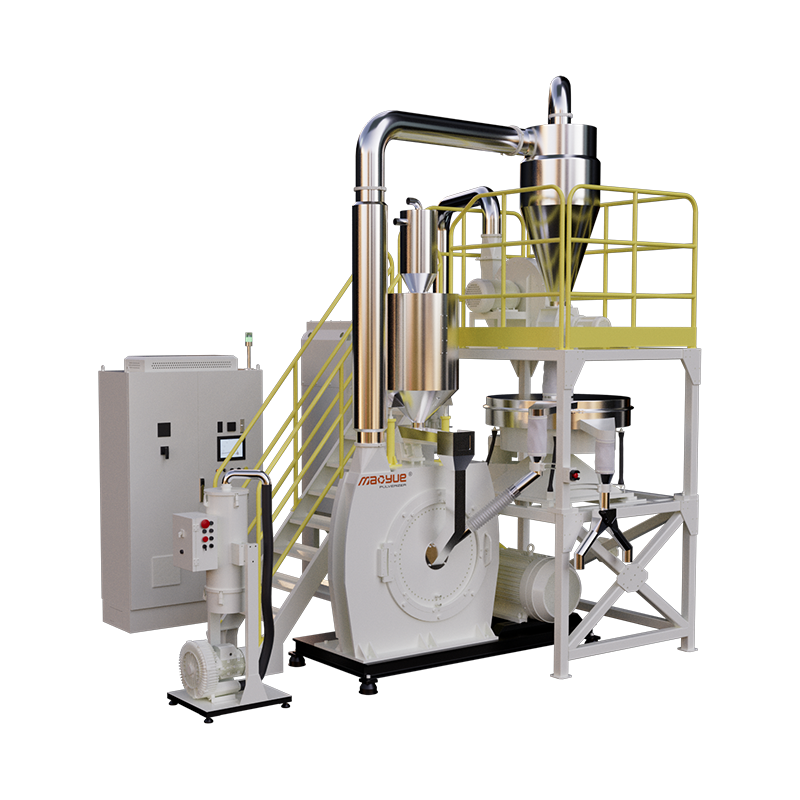
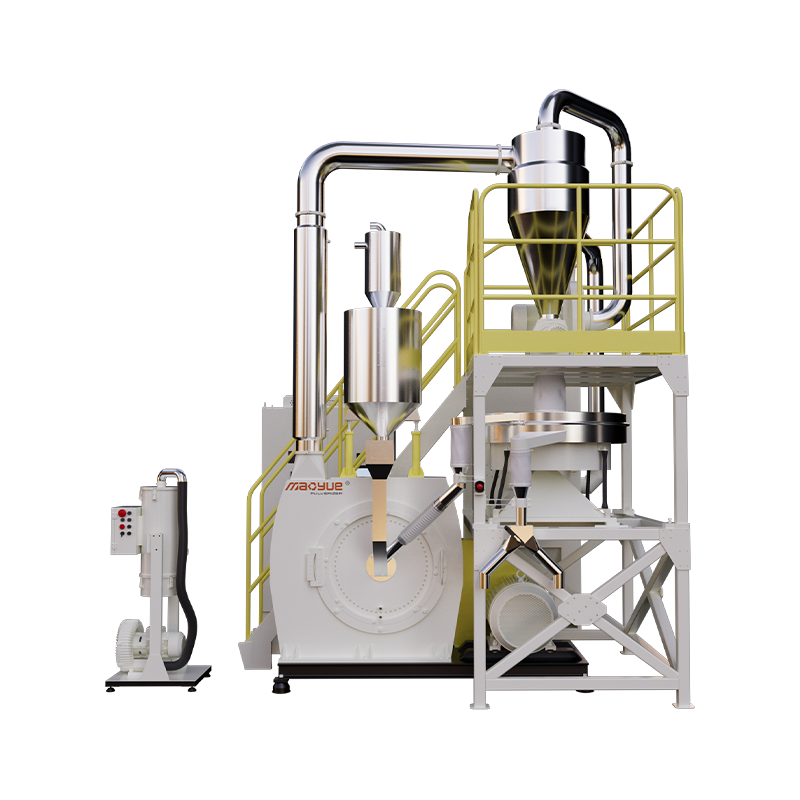
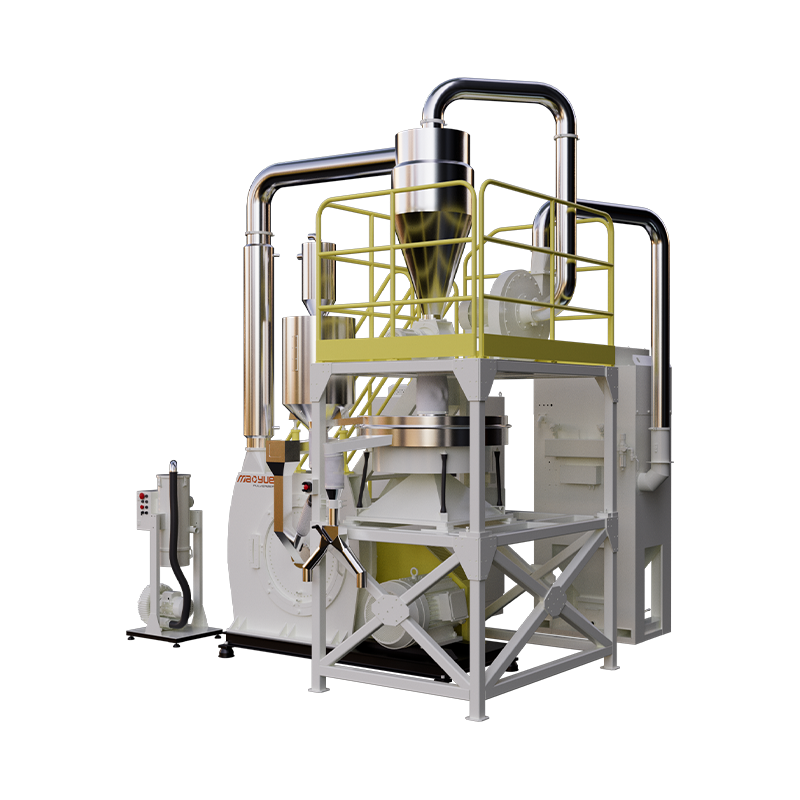
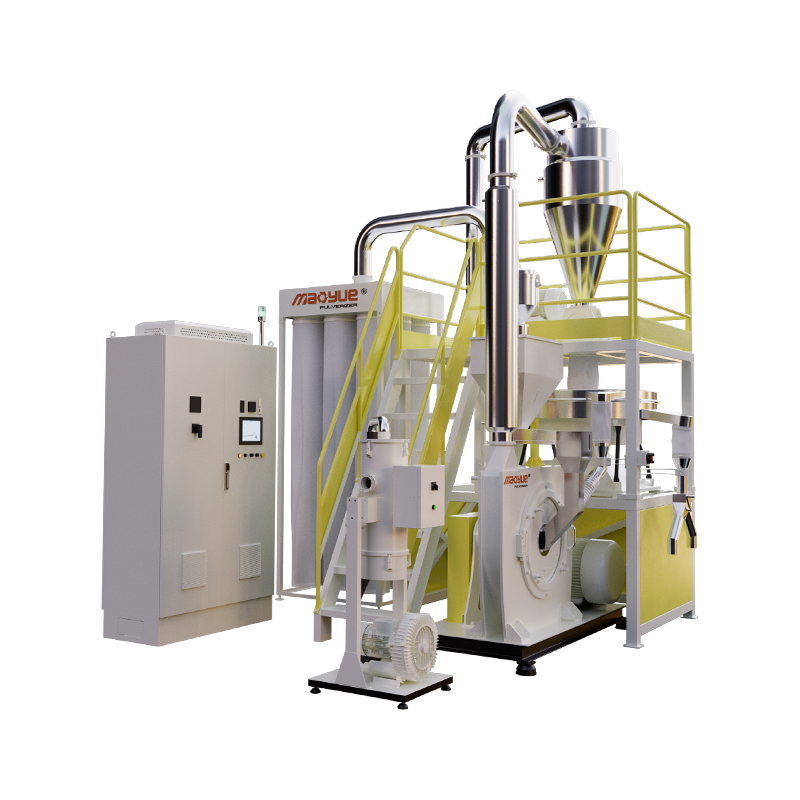
This pulverizer is positioned as a flagship high-output model for PA and PP pulverizing. It is suitable for large recycling groups, engineering plastic recovery plants, masterbatch and filler producers, powder coating manufacturers, rotational molding powder suppliers, and export-oriented OEM projects requiring strict quality control. Its design focuses on room-temperature pulverizing performance, minimizing thermal degradation and agglomeration while maintaining high production capacity.
Unlike smaller pulverizers that may perform well for medium-volume production but become limited in long continuous runs, this 800 model is engineered for large daily output and long operating hours. Its oversized grinding chamber and multi-stage shearing structure allow it to process high-value materials such as PA6, PA66, glass-fiber-reinforced nylon, mineral-filled polypropylene, PP masterbatch materials, and functional composite plastics. Depending on the material, feed condition, required mesh size, and motor configuration, the system can deliver typical capacities from 450 to 900 kg/h, with peak production capability reaching approximately 600 to 1000 kg/h or more under suitable conditions.
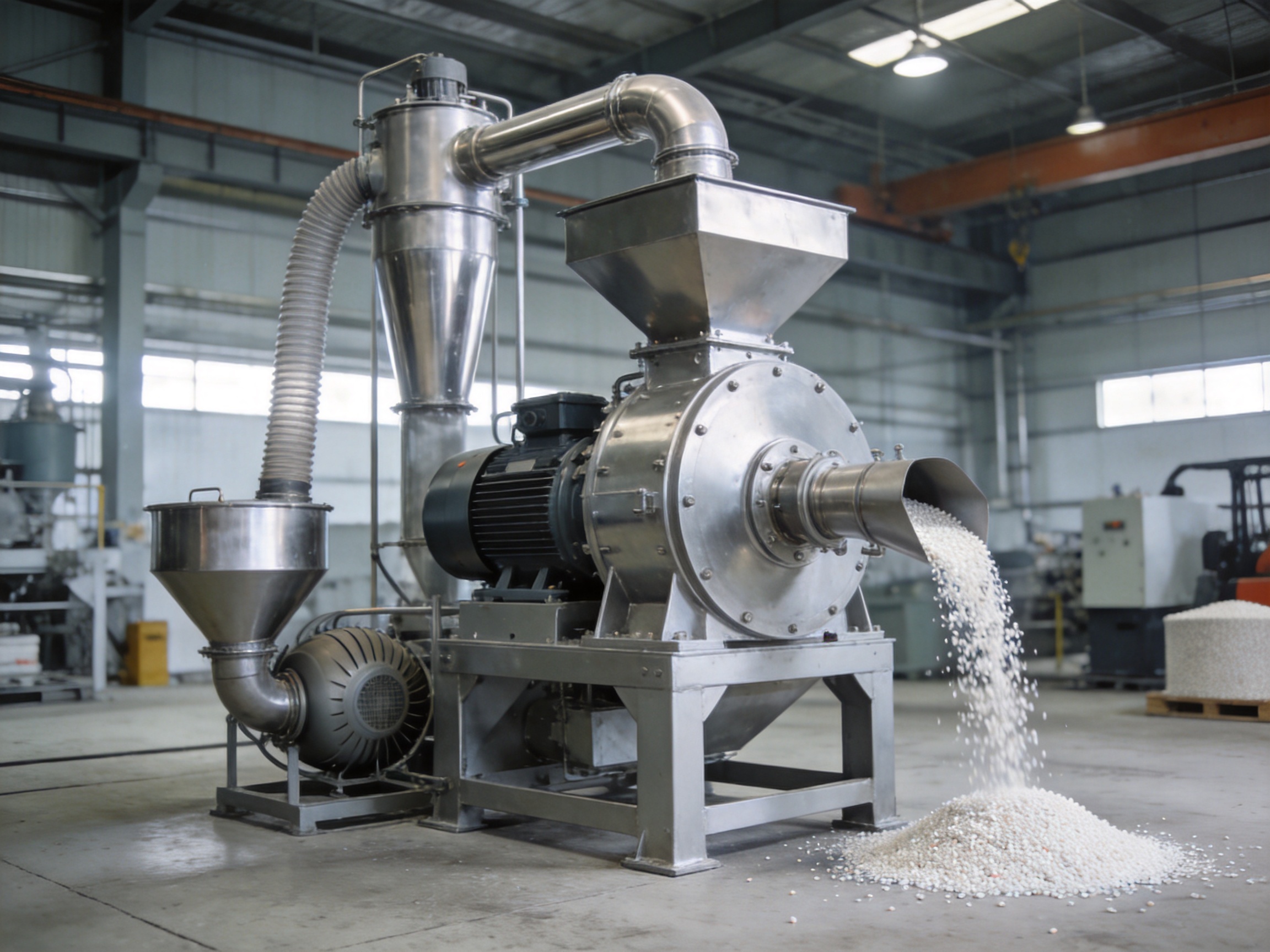
Industrial Background: Why High-Capacity PA and PP Pulverizing Matters
PA and PP materials are widely used in automotive components, electrical parts, cable jackets, engineering plastic products, packaging, household goods, chemical containers, rotational molding products, and various modified polymer applications. As industries pursue circular economy models, high-performance recycling, and cost-effective material reuse, the demand for uniform plastic powder continues to increase. Powdered PA and PP can be used in injection molding compounds, extrusion profiles, masterbatch carriers, powder coatings, rotational molding, functional composites, and additive manufacturing-related material preparation.
However, PA and PP are not always easy to pulverize. PA, especially PA66 and glass-fiber-reinforced PA, has high toughness, abrasion characteristics, and sensitivity to heat buildup during grinding. PP can soften, smear, or agglomerate when temperature rises during high-speed size reduction. These challenges become more serious as production capacity increases. A pulverizer must therefore combine cutting efficiency, cooling capacity, wear-resistant components, stable feeding, and precise particle classification.
Many conventional pulverizers are able to reduce plastic granules into powder, but they often struggle when the user requires continuous high output, narrow particle-size distribution, low impurity levels, and minimal thermal influence. In large plants, downtime caused by worn discs, blocked screens, unstable temperature, or inconsistent powder quality can quickly increase production cost. For this reason, industrial users increasingly prefer a heavy-duty pulverizing solution that is not only powerful but also stable, controllable, and economical over long service periods.
The 800PA/PP Energy-Saving Room-Temperature Pulverizer directly responds to these market requirements. It is built for high-volume powder production and is particularly valuable where customers process tens of tons per day or operate multiple shifts. The machine is designed to help users reduce unit production cost, improve powder quality, extend wear-part life, and support export-grade material consistency.
Core Product Positioning
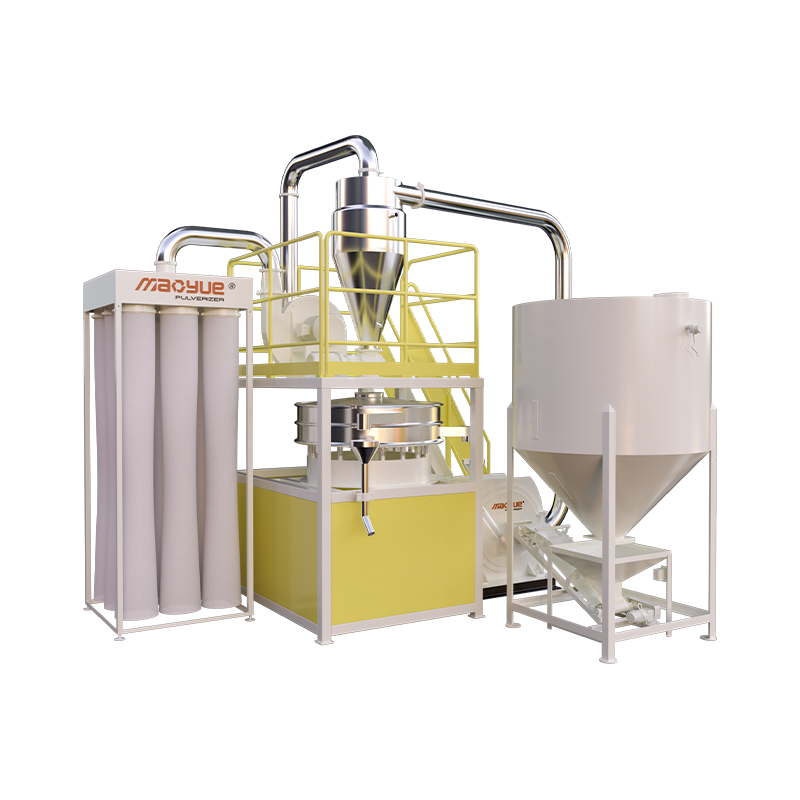
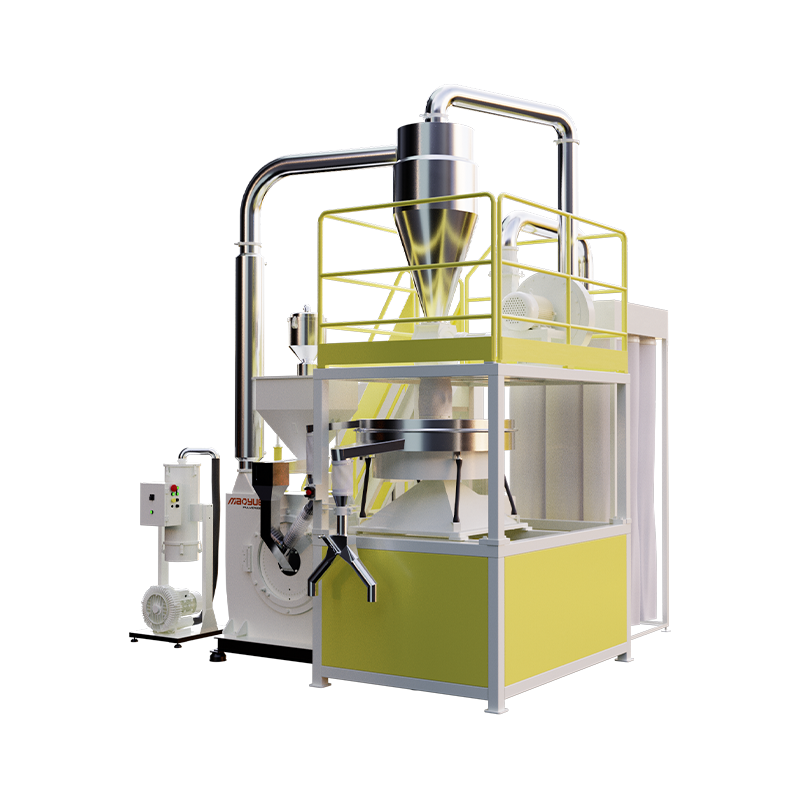
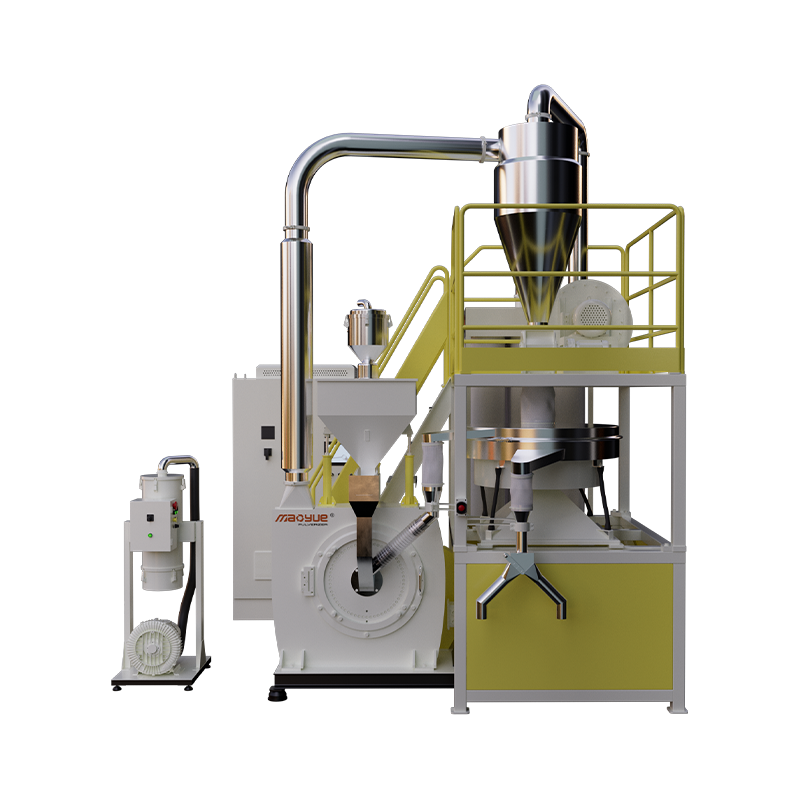
The 800PA/PP Energy-Saving Room-Temperature Pulverizer is a large-disc plastic pulverizer for PA and PP applications. It belongs to the PA PP pulverizer category and is intended for demanding industrial powder production. Compared with medium-sized models, it provides greater grinding area, higher drive power, stronger airflow, larger screening options, and improved cooling support. Compared with many general-purpose pulverizers, it is more specialized for tough engineering plastics and modified polyolefin materials.
Its 800 mm disc diameter is a key advantage. A larger disc creates a broader grinding surface and higher processing potential, allowing more material to be sheared and reduced during each operating cycle. The combination of disc size, motor power, grinding chamber geometry, and controlled feeding makes the machine suitable for high-capacity operation without compromising powder uniformity.
The main drive motor can be configured at 75 kW, 90 kW, 110 kW, or 132 kW depending on the production requirement and material difficulty. This flexibility allows users to match the machine to their actual production goals. For standard PA or PP powder production, a lower configuration may be sufficient. For heavily filled materials, high-volume operation, or more demanding mesh specifications, a higher power configuration can provide stronger cutting force and better throughput stability.
The system also uses inverter speed control. This allows operators to adjust speed according to material type, target particle size, feed condition, and thermal behavior. Inverter control is important because not all PA and PP materials respond identically during pulverizing. A rigid fixed-speed approach may cause unnecessary energy use, excessive heat, or unstable output. Adjustable speed gives the operator a practical tool for balancing production efficiency and powder quality.
Key Technical Specifications
Item |
Specification |
Industrial Value |
Model Type |
800 |
Large-scale PA and PP powder production |
Grinding Disc Diameter |
800 mm |
Greater grinding area and higher throughput potential |
Typical Capacity |
450–900 kg/h |
Suitable for continuous industrial production |
Peak Capacity |
Approximately 600–1000 kg/h or more, depending on material and configuration |
Supports high-output production lines |
Mesh Size |
10–50 mesh standard range; application-dependent fine grinding possible |
Meets common requirements for recycling, masterbatch, and coating applications |
Main Drive Motor |
75/90/110/132 kW |
Configurable for different production targets |
Speed Control |
Inverter |
Improves process flexibility and energy management |
Grinding Blade Material |
DC53 separated structure |
High wear resistance and easier maintenance |
Blower Motor |
11/15 kW |
Supports efficient powder conveying and cooling airflow |
Pipe Material |
All stainless steel |
Reduces contamination risk and improves durability |
Pipe Diameter |
178/203 mm |
Matches different airflow and capacity requirements |
Swing Vibrator Diameter |
1200/1500 mm |
Supports particle classification and stable discharge |
Vibrating Screen Motor |
1.1/1.5 kW |
Provides reliable screening performance |
Feeding Method |
Vacuum feeding |
Improves automation and reduces manual handling |
Dust Collector Bag Diameter |
300 mm |
Supports dust control and cleaner production |
Cooling Method |
Water cooling, inlet and outlet design |
Controls heat during high-capacity grinding |
Advantage One: Larger Grinding Disc for Higher Production Efficiency
The 800 mm disc diameter is one of the most important features of this pulverizer. In plastic pulverizing, disc diameter influences grinding surface area, cutting path, material residence behavior, and throughput potential. A larger disc can handle a greater volume of material while maintaining effective shearing action. This is especially valuable for PA and PP applications where high material toughness or heat sensitivity can limit production capacity.
Compared with 500 mm and 600 mm class pulverizers, the 800 model provides a substantial increase in processing capability. The production capacity can be 60 to 100 percent higher than a 600 class system under comparable conditions, depending on material type and process settings. This improvement is not merely a matter of bigger motor power. It results from a coordinated structure: a larger disc, enlarged grinding chamber, optimized airflow, multi-stage shearing geometry, stronger cooling, and heavy-duty drive design.
For large plants, this increase in capacity has direct economic value. A higher-output pulverizer can reduce the number of machines required for the same production target. It can also reduce labor allocation, simplify production planning, and make it easier to meet large customer orders. For businesses handling export orders, automotive recycling projects, or masterbatch powder supply, the ability to produce stable powder at high volume can become a decisive competitive advantage.
Advantage Two: Multi-Stage Shearing for Consistent Powder Quality
High output is valuable only when powder quality remains stable. The 800PA/PP Energy-Saving Room-Temperature Pulverizer uses an oversized grinding chamber and multi-stage shearing structure to improve pulverization efficiency. Instead of relying on simple impact alone, the structure supports repeated cutting, shearing, and friction-based reduction between the grinding elements. This approach helps produce more uniform powder and reduces the amount of oversized material requiring reprocessing.
For PA powder, uniformity is especially important because recycled nylon powder may be used in engineering-grade compounds. Particle-size variation can affect flow behavior, melting consistency, mechanical performance, and downstream processing stability. For PP powder, uniformity influences rotational molding wall thickness, coating smoothness, masterbatch dispersion, and filler distribution. A pulverizer that can maintain stable particle size during continuous operation helps downstream manufacturers reduce defects and improve product repeatability.
In competitive environments, some machines may deliver high initial output but produce broad particle distribution or excessive fines. Too many fines can increase dust, reduce flowability, and create handling problems. Too many coarse particles can cause poor melting, uneven dispersion, or screening overload. The 800 model is designed to balance capacity and classification performance, helping users produce powder that is suitable for industrial applications rather than only rough size reduction.
Advantage Three: Energy-Saving Room-Temperature Pulverizing
Energy efficiency is a major concern in plastic powder production. High-power pulverizers consume significant electricity, so the best machine is not simply the one with the largest motor. The best solution converts power into useful grinding work while minimizing wasted heat, unnecessary friction, repeated reprocessing, and production stoppage. The 800PA/PP pulverizer is designed around this principle.
The machine’s room-temperature pulverizing concept is important for PA and PP. When plastics absorb too much heat during grinding, powder can soften, stick, agglomerate, or degrade. PA may suffer quality changes if excessive heat affects moisture behavior or polymer structure. PP may smear or form clumps if the grinding chamber temperature is not controlled. Room-temperature operation helps preserve powder quality and reduces the need for costly additional cooling or complicated downstream correction.
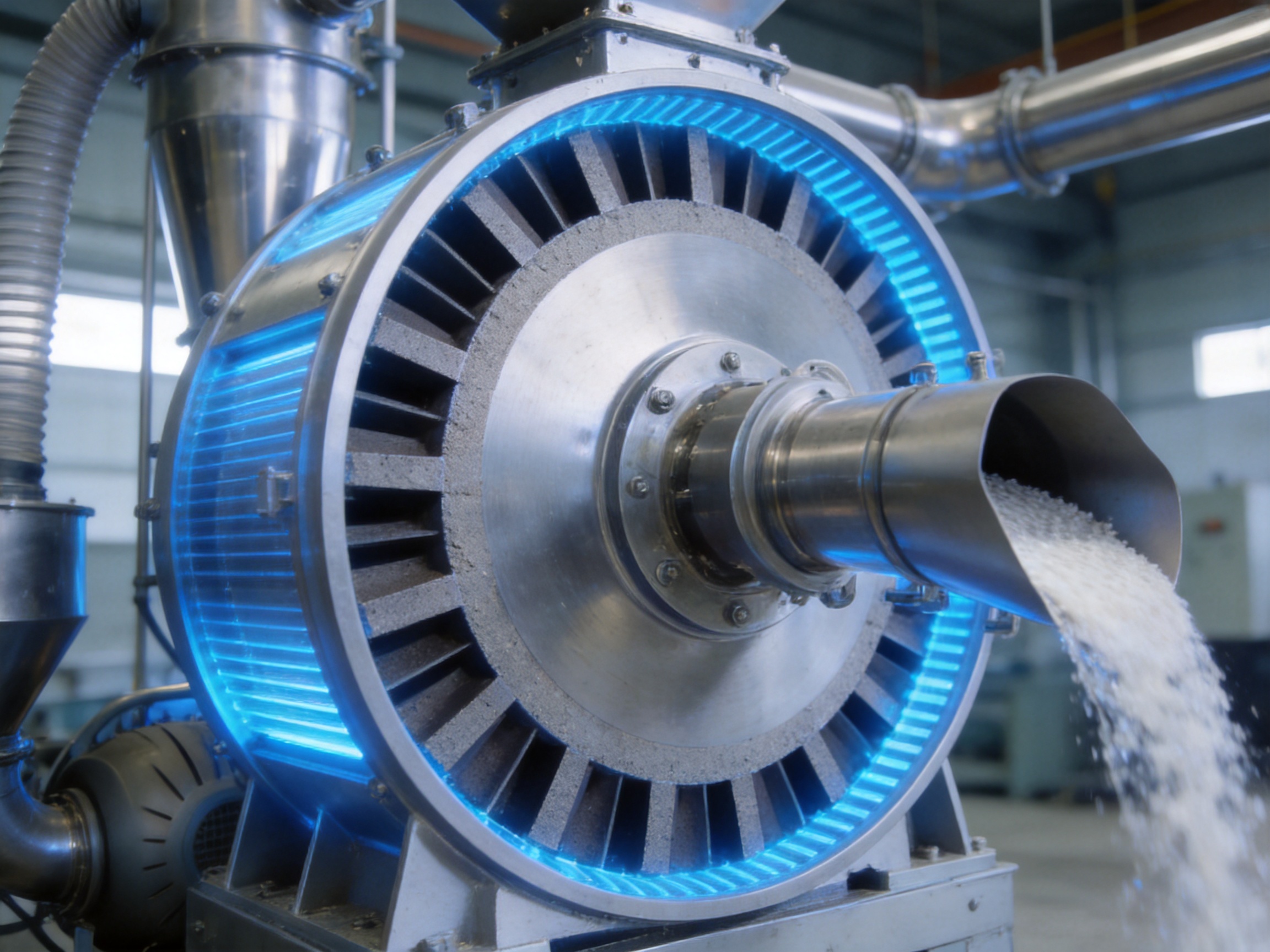
The dual-circuit high-flow air and water cooling system supports temperature stability during high-capacity operation. Air movement removes heat from powder conveying and grinding zones, while water cooling helps control critical machine components. AI-assisted temperature control with automatic PID regulation can maintain temperature stability within approximately ±2 degrees Celsius under suitable conditions. This level of control reduces the risk of scorching, agglomeration, and inconsistent powder behavior.
Compared with older or simpler pulverizers that depend mainly on natural heat dissipation, this cooling structure provides a more reliable production environment. It helps operators run longer shifts without frequent pauses for temperature recovery. It also supports more consistent mesh quality across production batches, which is important when supplying customers with strict specifications.
Advantage Four: Wear-Resistant Grinding Discs for Difficult Materials
Wear resistance is one of the biggest cost factors in pulverizing PA and PP, especially when processing filled materials. Many PA components contain 30 to 50 percent glass fiber or mineral reinforcement. These additives improve the strength of the original product, but they are abrasive during grinding. Ordinary grinding discs may wear quickly, causing particle-size drift, reduced output, higher energy consumption, and frequent maintenance.
The 800 model uses heavy-duty, high-wear-resistant alloy grinding discs with a reported service life of approximately 1200 to 2000 hours, depending on material abrasiveness, operating conditions, and maintenance practices. The grinding blade material specification includes DC53 in a separated structure, which supports durability and serviceability. DC53 is commonly valued in industrial tooling contexts for toughness, wear resistance, and dimensional stability when properly processed.
The separated structure also has practical maintenance benefits. In many production environments, replacing or servicing modular wear components is more efficient than dealing with fully integrated structures. Reduced maintenance time means less downtime. For large recycling groups and masterbatch plants, downtime is not a minor inconvenience; it directly reduces output and can disrupt delivery schedules. Longer-lasting discs also reduce spare-part inventory pressure and improve long-term return on investment.
When compared with low-cost machines using ordinary disc materials, the difference becomes clear after months of operation. A cheaper pulverizer may appear attractive at purchase time, but frequent disc replacement, unstable particle size, and repeated shutdowns can result in higher real cost. The 800PA/PP pulverizer is designed for users who evaluate equipment based on full lifecycle economics, not only initial purchase price.
Advantage Five: Industrial-Grade Continuous Operation
Large-scale pulverizing plants often operate for extended periods, sometimes 24 hours per day and seven days per week. Continuous operation places heavy demands on machine frame strength, vibration control, bearing reliability, cooling efficiency, airflow balance, electrical control, and maintenance accessibility. The 800 model is built with industrial-grade design to support this environment.
Heavy-duty vibration damping helps maintain stable operation and reduces stress on machine components. Low vibration is important not only for operator comfort but also for long-term mechanical reliability. Excessive vibration can accelerate bearing wear, loosen fasteners, affect screening accuracy, and increase noise. By improving damping and structural rigidity, the machine supports safer and more stable long-term production.
The low-noise fan design helps keep operating noise below approximately 88 dB under suitable conditions. For a high-power pulverizing system, noise control is important for workplace safety and regulatory compliance. While hearing protection and proper plant layout are still necessary in many industrial environments, lower machine noise contributes to better working conditions.
The system also includes vacuum feeding, stainless steel piping, blower support, vibrating screening, and dust collection. These components form a practical production line rather than a standalone grinding unit only. Automated feeding reduces manual labor and improves consistency. Stainless steel piping reduces contamination risk and improves durability. Screening helps classify powder to the desired mesh range. Dust collection supports cleaner production and reduces material loss.
Applications in Large-Scale PA Recycling
One of the strongest application areas for this pulverizer is large-scale PA industrial recycling. PA6 and PA66 are widely used in automotive, electrical, textile, and engineering products. High-value scrap materials may include automotive hoods, bumper brackets, electronic connector housings, cable jackets, textile tow waste, industrial nylon components, and glass-filled engineering plastic parts. These materials are too valuable to be treated as ordinary low-grade waste.
By pulverizing PA scrap into high-purity powder, recyclers can create feedstock for recycled engineering compounds, injection molding materials, extrusion profiles, and high-performance recycled pellets. Powdered PA can be blended, modified, filtered, compounded, and pelletized with greater consistency than irregular scrap. A stable powder form also improves dosing and mixing accuracy in downstream processes.
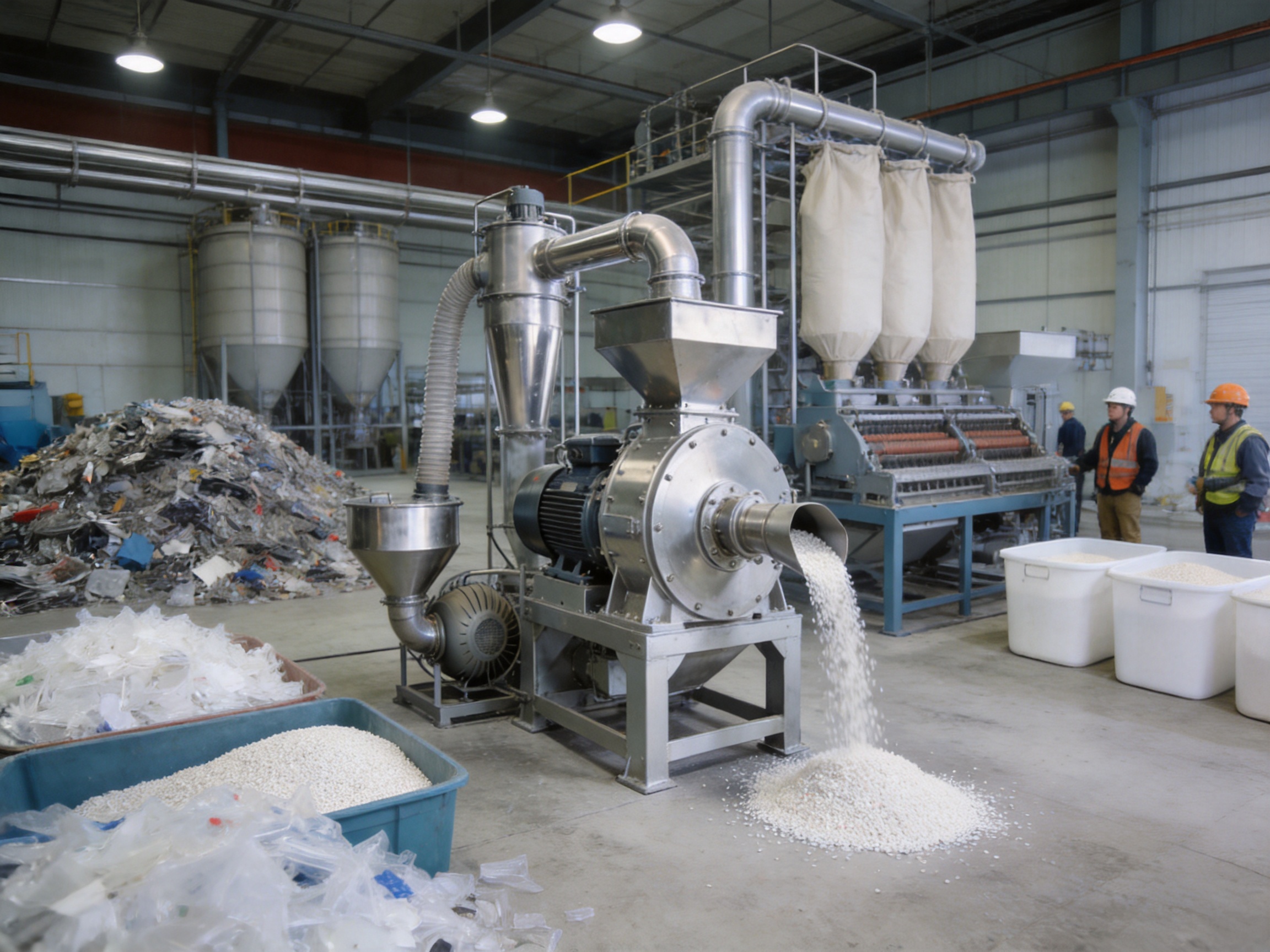
The 800PA/PP pulverizer supports batch-based precision grinding for these high-value materials. With proper sorting, cleaning, and feeding preparation, it can produce PA powder in the 10 to 100 mesh range depending on configuration and process requirements, while the standard specification table emphasizes 10 to 50 mesh. The ability to obtain stable powder is particularly valuable for manufacturers targeting European and American markets, where customers may require reliable material properties, low impurity levels, and documentation for environmental compliance.
For automotive dismantling and e-waste processing facilities, this machine can become a core part of the recycling line. Instead of selling cleaned PA scrap at a lower value, processors can upgrade the material into powder suitable for compounding and reuse. This increases resource utilization and improves the economic value of waste engineering plastics.
Applications in PP Modification, Masterbatch, and Filler Production
PP is one of the most widely used plastics in the world, and PP powder has broad industrial value. It can be used in filler masterbatch, modified PP compounds, rotational molding, fluidized bed coating, electrostatic spraying, and composite powder carriers. In these applications, powder flowability, particle-size consistency, and thermal stability are essential.
The 800 model supports large PP masterbatch and filler production lines by producing powder with stable size and good flow characteristics. This helps improve mixing with calcium carbonate, talc, pigments, flame retardants, stabilizers, and other additives. Uniform PP powder improves dispersion and reduces batch variation, which is important for masterbatch producers supplying high-volume customers.
In rotational molding applications, PP powder quality affects the final product’s wall thickness, surface smoothness, impact performance, and dimensional consistency. Products such as chemical storage tanks, trash bins, pallets, playground equipment, and large molded containers require reliable powder behavior during heating and rotation. If the powder contains agglomerates or has poor flow, the finished part may show thin spots, surface defects, or weak areas.
The machine’s cooling and shearing design helps reduce scorching and agglomeration. This provides a practical advantage over pulverizers that generate excessive heat during PP grinding. For producers of powder coatings and fluidized bed impregnation powders, consistent particle size also supports stable coating thickness and surface finish.
Applications in Functional Materials and Advanced Manufacturing
Beyond conventional recycling and masterbatch production, the 800PA/PP pulverizer is suitable for functional material preparation. PA-based powders can be modified for flame retardancy, high-temperature resistance, chemical resistance, and mechanical performance. PP composite powder carriers can be used in additive systems, specialty compounds, and advanced polymer formulations.
Functional materials often require narrow particle-size distribution and low contamination. Impurity control is critical when powders are used in high-end injection molding, extrusion, specialty engineering plastics, aerospace composites, or additive manufacturing-related materials. The machine’s stainless steel piping and stable processing environment help support cleaner powder transfer. When paired with proper upstream cleaning, sorting, and plant hygiene, the system can contribute to high-purity powder production with impurity levels suitable for demanding industrial requirements.
For 3D printing filament preparation, polymer powder may be used as an intermediate material in compounding and formulation. Consistent powder improves additive dispersion and melt blending. For specialty engineering plastics, powder uniformity supports better control of melt index variation and mechanical properties after compounding. The 800 model provides the capacity and control needed for producers moving from pilot-scale production to industrial-scale supply.
Export-Oriented Production and Compliance Requirements
Many powder producers and recycling companies are now working with international customers. Export markets often require stable quality, environmental documentation, and compliance with standards such as REACH and RoHS. While the pulverizer itself does not replace material testing or certification, it plays an important role in producing powder that can meet strict customer expectations.
High-capacity export orders require equipment that can run reliably for long periods. A plant producing ten-thousand-ton-level annual output cannot depend on unstable machines with frequent downtime. The 800PA/PP pulverizer is suitable for OEM projects and large export orders because it combines capacity, temperature control, wear resistance, and production consistency.
International customers may also evaluate supplier capability. A factory equipped with heavy-duty pulverizing systems, high-precision grinding technology, and professional quality control is more likely to win long-term contracts. In this sense, investing in a flagship pulverizer is not only a production decision but also a market-positioning decision. It demonstrates that the producer can supply industrial powder at scale.
Comparison with Conventional Competitor Machines
In the plastic pulverizer market, competitors vary widely. Some focus on low purchase price, some on simple general-purpose grinding, and some on specialized high-end systems. The 800PA/PP Energy-Saving Room-Temperature Pulverizer differentiates itself through a combination of large capacity, temperature stability, wear resistance, and manufacturing quality.
Compared with low-cost conventional pulverizers, the first advantage is durability. Machines built with ordinary materials may work for low-abrasion applications but can struggle with glass-filled PA or mineral-filled PP. Faster wear leads to higher spare-part cost and more frequent maintenance. The 800 model’s heavy-duty alloy discs and DC53 separated blade structure provide a better foundation for abrasive materials.
The second advantage is process control. Many basic machines lack advanced temperature regulation, making them more vulnerable to heat buildup. The dual-circuit air and water cooling system with PID temperature control gives the 800 model a stronger ability to maintain powder quality during long runs. This is especially important for PP, which may soften or agglomerate, and for PA, where quality consistency is essential.
The third advantage is capacity efficiency. A smaller or less optimized pulverizer may require multiple units to reach the same output. Multiple machines increase floor space, labor demand, energy distribution complexity, maintenance points, and quality variation between lines. A single high-capacity 800 model can simplify production planning and reduce unit production cost when properly matched to the application.
The fourth advantage is integrated line design. Vacuum feeding, stainless steel piping, blower configuration, vibrating screening, dust collection, and cooling are all relevant to real production. A pulverizer should not be evaluated only by the grinder body. Powder production requires coordinated feeding, grinding, conveying, cooling, classifying, and collecting. The 800 model is designed with this system-level understanding.
Manufacturing Strength Behind the Equipment
The performance of a pulverizer depends not only on design but also on manufacturing accuracy. Changzhou Mao Yue Intelligent Equipment Co., Ltd. is a source manufacturer with 30 years of experience in plastic crushing and pulverizing equipment. The company has been involved in the development of the plastic pulverizer market and focuses on manufacturing components according to European quality standards.
The company’s disc pulverizers are used in plastic size reduction processes for industries including rotational molding, masterbatch, polymers, PVC, PE, recycling, and powder coating. This broad application experience gives the manufacturer practical insight into different materials, production environments, and customer requirements. A pulverizer for PA and PP must be designed with real-world material behavior in mind, not only theoretical capacity.
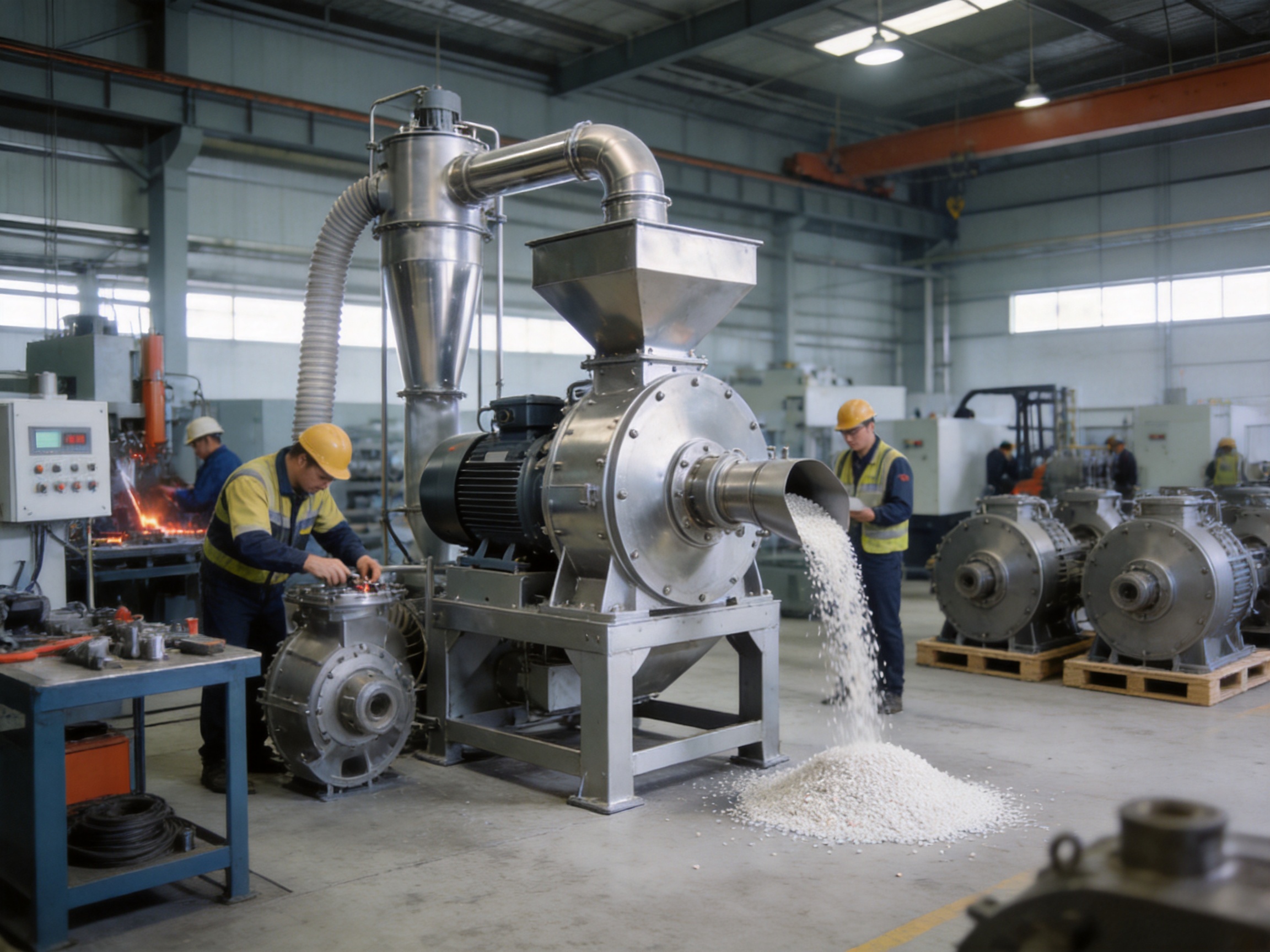
The manufacturing base includes six processing workshops, each averaging about 1,400 square meters. This production scale supports machining, assembly, inspection, customization, and quality control. The company also has a professional technical team that regularly studies advanced machine technologies from countries such as Germany. Continuous technical learning helps improve machine structure, component accuracy, balancing, and system reliability.
Advanced manufacturing equipment is another important strength. The factory uses Taiwan-imported high-precision grinding machines built to German standards, German dynamic balancing equipment, and Japanese welding systems. These capabilities are highly relevant to pulverizer quality. Grinding disc flatness, blade accuracy, rotor balance, weld consistency, and frame stability directly affect machine vibration, noise, powder quality, and service life.
Why Precision Manufacturing Matters in Pulverizer Performance
Plastic pulverizing is a high-speed mechanical process. Even small inaccuracies can create serious problems. If grinding discs are not precisely machined, the gap may be inconsistent, leading to uneven powder size, local overheating, and faster wear. If rotating components are not dynamically balanced, vibration can increase, bearings can fail prematurely, and noise can become excessive. If welding quality is poor, the frame may deform or fatigue under long-term operation.
High-precision grinding machines help ensure that critical surfaces meet strict dimensional requirements. German dynamic balancing equipment helps reduce vibration in rotating assemblies. Japanese welding systems contribute to stable and reliable structural fabrication. These manufacturing processes give the 800PA/PP pulverizer a stronger foundation for continuous industrial operation.
This is where the difference between a professional source manufacturer and a simple assembler becomes significant. A professional manufacturer controls more of the production process, understands component interaction, and can provide customization based on actual material requirements. For users investing in large-capacity equipment, this manufacturing depth reduces technical risk.
Quality Certifications and Service Philosophy
The company has obtained CE mechanical certification and ISO 9001 quality management system certification. CE certification supports machine safety and conformity requirements for relevant markets, while ISO 9001 reflects a structured quality management approach. For international buyers, these certifications provide additional confidence when evaluating supplier reliability.
The company emphasizes quality, service, innovation, and customized solutions. It has built long-term partnerships with more than 5,000 enterprises in domestic and international markets. This customer base indicates broad practical experience and the ability to support different production needs. In pulverizing projects, service matters because each material behaves differently. Feed size, moisture, filler content, target mesh, temperature sensitivity, and desired capacity all influence machine selection and process settings.
A strong supplier should help customers evaluate these factors before purchase and support them after installation. For large pulverizing systems, after-sales service, spare parts, technical guidance, and process optimization are important to long-term success. The 800 model is particularly suitable for customers who want not only a machine but a production solution.
Energy Efficiency and Return on Investment
The 800PA/PP Energy-Saving Room-Temperature Pulverizer requires a higher initial investment than smaller or simpler machines. However, for large-volume users, the correct evaluation is long-term return on investment. Several factors contribute to ROI: output per hour, energy consumption per unit of powder, wear-part cost, downtime, labor requirement, product quality, and ability to win high-value orders.
Higher capacity reduces the time required to produce each ton of powder. Stable temperature control reduces waste caused by agglomeration or degraded material. Durable grinding discs reduce replacement frequency. Inverter speed control allows the operator to avoid unnecessary power consumption when full speed is not required. Vacuum feeding and integrated conveying reduce labor intensity. Screening and dust collection help recover usable powder and maintain a cleaner environment.
In a large plant, even small improvements in unit cost can produce significant annual savings. For example, if a pulverizer processes many tons per day, reductions in downtime and wear-part replacement can quickly offset the difference between a low-cost machine and a premium heavy-duty system. The 800 model is therefore most attractive to companies that value lifecycle cost, not only purchase price.
Production Line Integration
A pulverizer performs best when integrated into a well-designed production line. Upstream processes may include sorting, metal detection, washing, drying, crushing, granulating, and storage. The pulverizer then receives prepared material through vacuum feeding. After grinding, powder is conveyed through stainless steel piping, classified by vibrating screen, collected through dust-control systems, and packed or transferred to downstream compounding.
For PA recycling, upstream drying and impurity removal are particularly important. Moisture and contamination can reduce powder quality and affect downstream compounding. For PP powder, feed consistency and temperature control are essential to prevent melting or sticking. The 800 model’s adjustable speed and cooling system help manage these variables, but good line design remains essential.
The large swing vibrator options, 1200 mm or 1500 mm, support classification capacity. A properly sized vibrating screen prevents bottlenecks after grinding. The blower motor options, 11 kW or 15 kW, support powder conveying and airflow balance. Pipe diameter options, 178 mm or 203 mm, allow the system to be matched to different production requirements. These details show that the machine is designed for industrial line integration rather than isolated operation.
Operator Benefits and Workplace Improvements
While production managers often focus on output and cost, operator experience also matters. A pulverizer with stable feeding, lower vibration, controlled noise, and cleaner dust collection improves the working environment. Vacuum feeding reduces manual lifting and direct contact with material. Stainless steel conveying reduces leakage points when properly installed. Dust collection helps maintain air cleanliness and reduces powder loss.
Inverter control and temperature monitoring also make operation more manageable. Operators can adjust settings based on material behavior and receive better feedback from the process. When temperature remains stable, there is less need for emergency shutdowns or manual intervention. Stable operation helps reduce fatigue and improves safety awareness.
Industrial equipment should be designed for real people working in real factories. The 800 model’s low-noise fan, heavy-duty damping, and automated feeding support a more professional production environment. These features are especially useful for plants running multiple shifts.
Recommended Users
The 800PA/PP Energy-Saving Room-Temperature Pulverizer is best suited for users with large and continuous production requirements. It is particularly appropriate for large recycling groups processing PA6, PA66, and PP waste; automotive dismantling and e-waste recycling companies; engineering plastic recyclers; masterbatch and filler producers; rotational molding powder suppliers; powder coating manufacturers; functional polymer material producers; and OEM plants handling export orders.
It may be more machine than necessary for small workshops with limited daily production. However, for companies planning capacity expansion, quality upgrading, or entry into export markets, the 800 model provides a strong platform. Its industrial design makes it suitable for ten-thousand-ton-scale operations where stability, efficiency, and quality are critical.
Customization Considerations
Different customers may require different configurations. The correct motor power, blower size, screen diameter, pipe diameter, cooling setup, and grinding disc selection should be based on material characteristics and production targets. For heavily filled PA, stronger wear resistance and higher power may be recommended. For heat-sensitive PP, cooling and speed optimization become especially important. For fine powder applications, screening and classification design must be carefully selected.
Before selecting a pulverizer, users should provide information about material type, feed size, filler content, moisture level, desired mesh range, hourly capacity target, operating hours, downstream application, and quality requirements. With these details, the equipment supplier can recommend an optimized configuration. This consultative approach helps avoid under-sizing or over-configuring the system.
Because Changzhou Mao Yue Intelligent Equipment Co., Ltd. is a source manufacturer with customization capability, customers can discuss production-line requirements rather than only choosing a standard machine. This is important for large industrial projects where layout, automation, dust control, and downstream connection must match plant conditions.
Q&A Section
Q1: What materials is the 800PA/PP Energy-Saving Room-Temperature Pulverizer mainly designed for?
It is mainly designed for PA and PP materials, including PA6, PA66, glass-fiber-reinforced nylon, mineral-filled PA, polypropylene, modified PP, PP masterbatch materials, and functional composite plastics. It is especially suitable for high-value engineering plastic recycling and large-scale powder production.
Q2: What is the main capacity range of this machine?
The typical capacity range is approximately 450 to 900 kg/h, depending on material type, feed size, filler content, required mesh size, and machine configuration. Under suitable conditions, peak capacity may reach approximately 600 to 1000 kg/h or more.
Q3: Why is the 800 mm grinding disc important?
The 800 mm disc provides a larger grinding surface and greater processing potential than smaller disc models. It improves throughput, supports continuous operation, and helps maintain efficient shearing for demanding PA and PP materials.
It uses dual-circuit high-flow air and water cooling, supported by AI-assisted temperature control and automatic PID regulation. This helps maintain stable operating temperature and reduces the risk of PP agglomeration, PA degradation, scorching, and powder quality variation.
Q5: Is this pulverizer suitable for glass-fiber-reinforced PA?
Yes. The machine is designed for abrasive and high-filled PA and PP materials, including materials with approximately 30 to 50 percent glass fiber or mineral filler. Its high-wear-resistant alloy grinding discs and DC53 separated blade structure help extend service life in difficult applications.
Q6: What mesh size can it produce?
The standard specification range is 10 to 50 mesh. Depending on material, configuration, and process control, PA powder applications may target broader ranges such as 10 to 100 mesh. Final results should be confirmed through material testing and production trials.
Q7: Why is inverter speed control useful?
Inverter speed control allows operators to adjust machine speed according to material characteristics and target powder size. This improves process flexibility, reduces unnecessary energy consumption, and helps control heat generation.
Q8: What industries benefit most from this machine?
Key industries include plastic recycling, automotive dismantling, e-waste processing, engineering plastic recovery, masterbatch production, filler production, rotational molding powder supply, powder coating, functional polymer materials, and export-oriented OEM manufacturing.
Q9: How does this machine compare with smaller 500 or 600 models?
Compared with smaller models, the 800 model offers higher capacity, a larger grinding chamber, stronger drive options, improved cooling, and better suitability for continuous high-volume production. It is more appropriate for large industrial plants and ten-thousand-ton-scale operations.
Q10: Why should buyers consider the manufacturer’s production capability?
Pulverizer performance depends heavily on machining accuracy, dynamic balance, welding quality, material selection, and assembly control. A manufacturer with advanced grinding machines, German dynamic balancing equipment, Japanese welding systems, CE certification, ISO 9001 quality management, and long industry experience can provide more reliable equipment and stronger technical support.
Conclusion
The 800PA/PP Energy-Saving Room-Temperature Pulverizer is a high-capacity industrial solution for demanding PA and PP powder production. Its 800 mm disc diameter, configurable 75 to 132 kW drive motor, inverter control, wear-resistant grinding discs, dual-circuit cooling, stainless steel conveying, vacuum feeding, and vibrating classification system make it suitable for large recycling, masterbatch, powder coating, rotational molding, and functional material applications.
Its greatest value lies in the balance between output and control. Many machines can increase power, but not all can maintain stable powder quality, temperature, wear resistance, and continuous operation. This model is designed for users who require high throughput without sacrificing powder consistency or long-term reliability.
Supported by Changzhou Mao Yue Intelligent Equipment Co., Ltd.’s 30 years of experience, advanced manufacturing workshops, high-precision machining, German dynamic balancing, Japanese welding systems, CE certification, ISO 9001 quality management, and extensive customer base, the machine represents a mature industrial pulverizing solution. For companies seeking to reduce unit cost, expand powder capacity, improve recycled material value, and compete in high-end domestic or export markets, this 800PA/PP pulverizer is a strong flagship choice.
References
1. Brydson, J. A. Plastics Materials. Butterworth-Heinemann.
2. Harper, C. A. Handbook of Plastics Technologies. McGraw-Hill.
3. Rauwendaal, C. Polymer Extrusion. Hanser Publishers.
4. Goodship, V. Introduction to Plastics Recycling. Smithers Rapra.
5. Osswald, T. A., and Menges, G. Materials Science of Polymers for Engineers. Hanser Publishers.
6. ISO 9001 Quality Management Systems: Requirements. International Organization for Standardization.
7. CE Machinery Safety Principles and Industrial Equipment Conformity Guidance.