

 English
 русский
 Español
 عربى
عربى 中文简体
中文简体
 中文简体
中文简体
Content
- 1 Positioning of the Model 500 Pulverizer
- 2 Why PE Rotomolding Powder Requires Specialized Pulverizing
- 3 Core Structural Design
- 4 High-Grade Grinding Disc Advantage
- 5 Precision Manufacturing of Disc Teeth
- 6 Dynamic Balancing and Vibration Control
- 7 Temperature Control and Cooling System
- 8 Dust Collection and Workshop Cleanliness
- 9 Compact Layout and Cost Performance
- 10 Technical Specification Overview
- 11 Advantages Over Common Competitor Machines
- 12 Manufacturing Strength of the Company
- 13 Engineering Philosophy: Practical Reliability
- 14 Application Scenarios
- 15 Process Flow and Operation
- 16 Quality Impact on Rotomolded Products
- 17 Energy and Maintenance Considerations
- 18 Customization and System Integration
- 19 Safety and Environmental Benefits
- 20 Buyer Evaluation Guide
- 21 Q&A Section
- 21.1 Q1: What materials is the Model 500 pulverizer mainly designed for?
- 21.2 Q2: Why is powder uniformity so important in rotational molding?
- 21.3 Q3: What is the main advantage of precision-ground discs?
- 21.4 Q4: How does dynamic balancing improve machine performance?
- 21.5 Q5: Why does PE pulverizing need water cooling?
- 21.6 Q6: Can the grinding discs be refurbished?
- 21.7 Q7: Is the Model 500 suitable for laboratory use?
- 21.8 Q8: Can the machine process recycled PE rotomolding scraps?
- 21.9 Q9: What should be checked during daily maintenance?
- 21.10 Q10: Why choose this machine instead of a cheaper competitor model?
- 22 Conclusion
- 23 References
- 24 Product: Model 500 PE Rotomolding Powder High-Output Stable Pulverizer
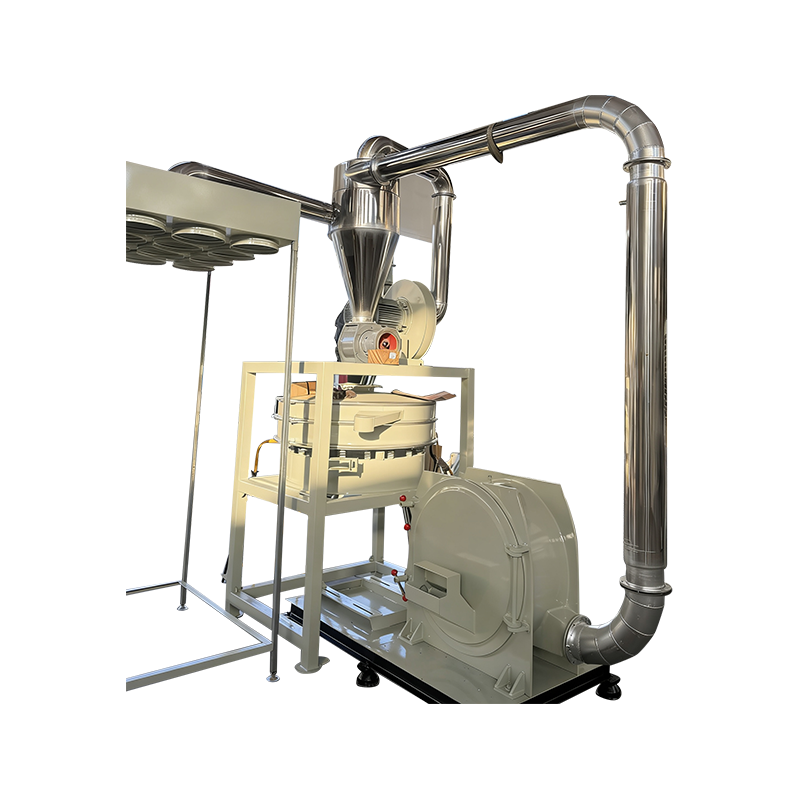
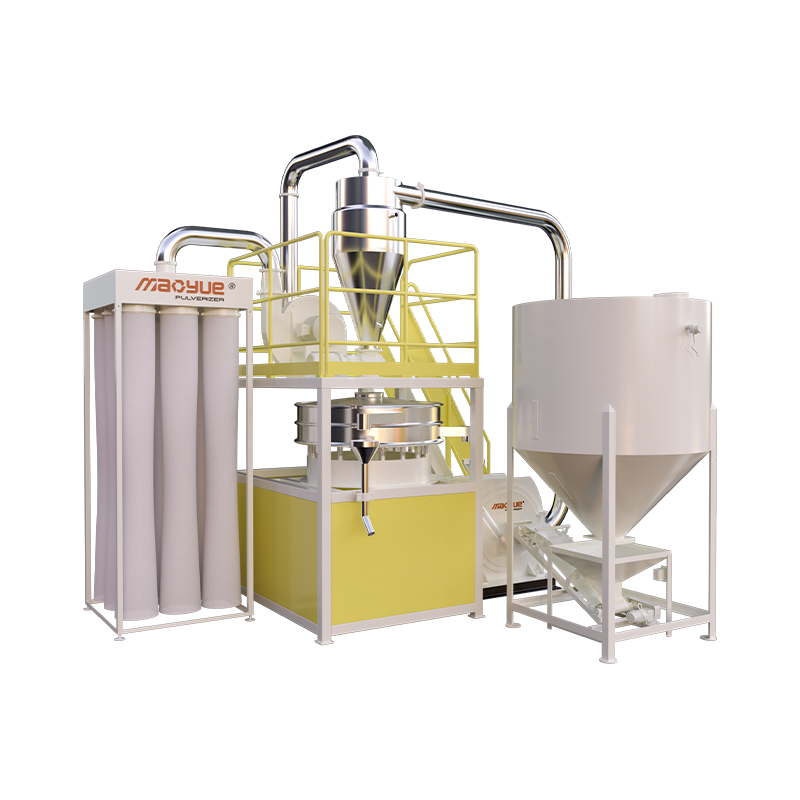
Model 500 PE Rotomolding Powder High-Output Stable Pulverizer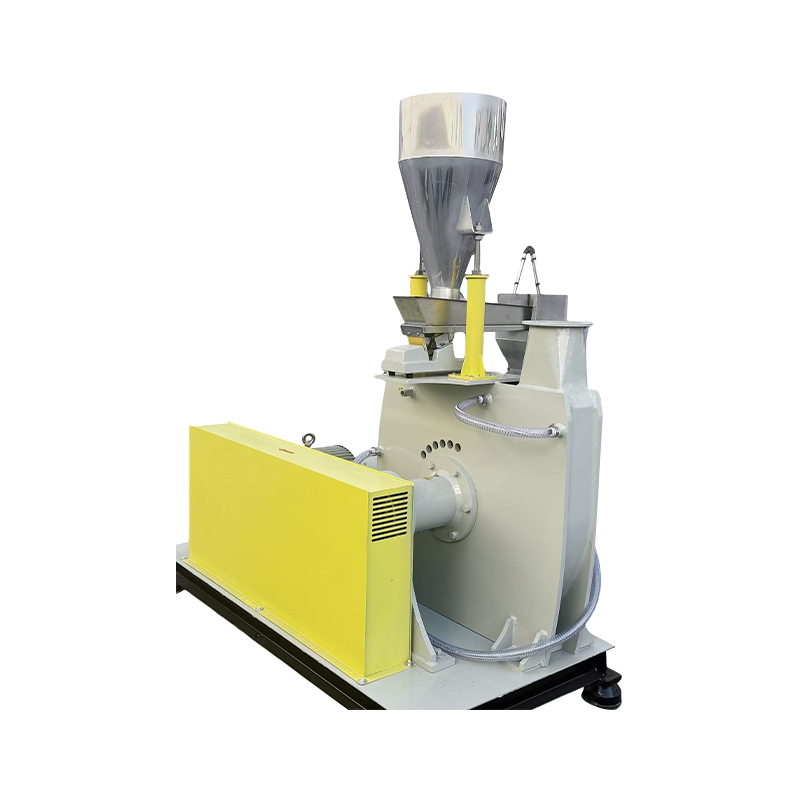
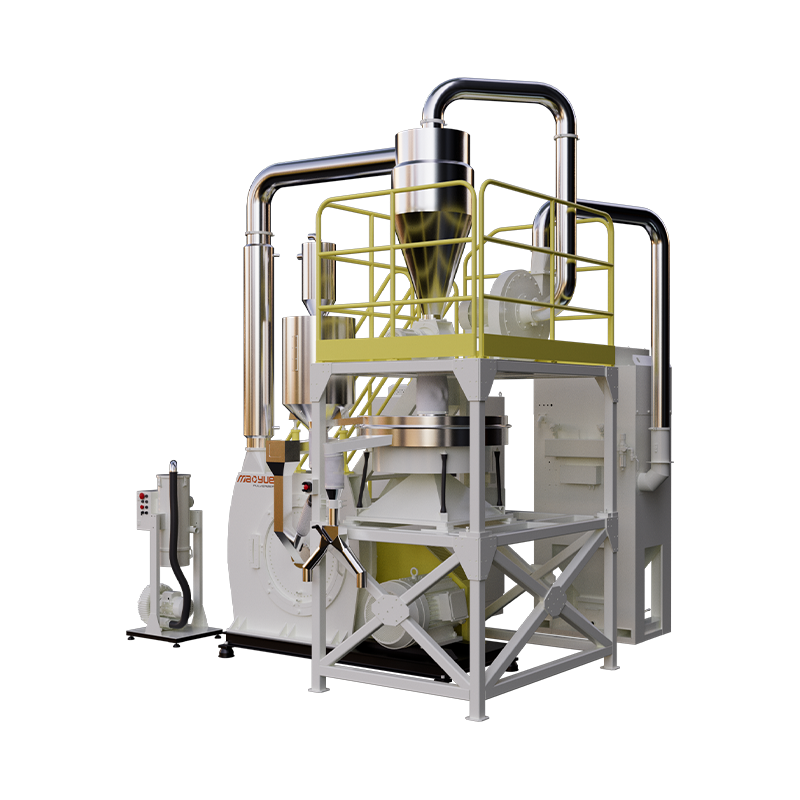
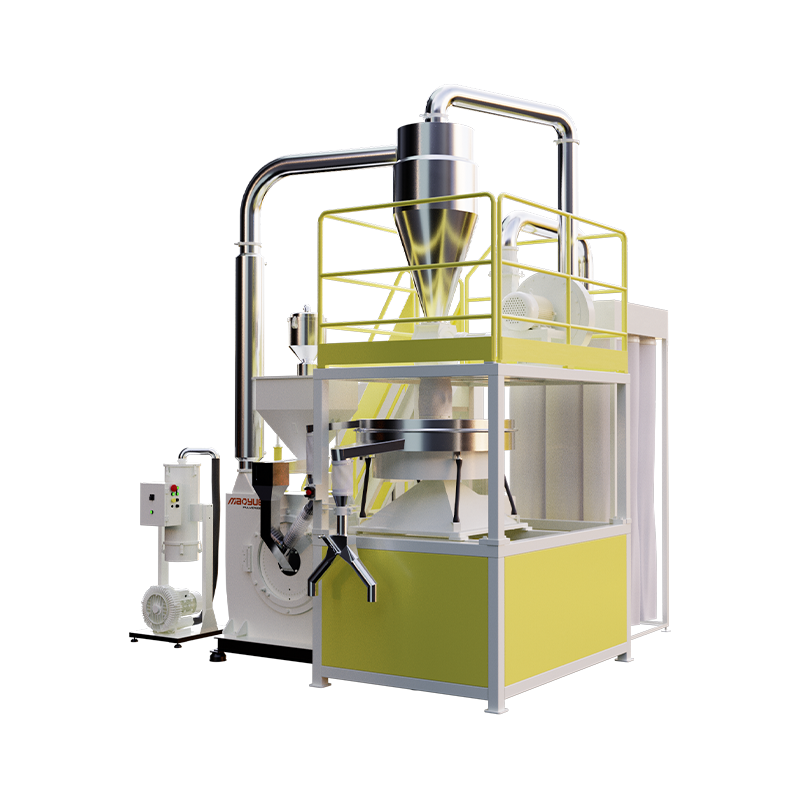
The Model 500 PE rotomolding powder high-output stable pulverizer is designed for manufacturers that need reliable, uniform, and efficient plastic powder production without committing to the floor space, energy demand, or investment level of a large pulverizing line. It is especially suitable for small-to-medium rotational molding factories, laboratory powder development, pilot production, custom product trials, and recycling applications involving PE rotomolding scraps.
In rotomolding, powder quality directly affects the appearance, wall thickness, flowability, fusion behavior, impact strength, and final consistency of molded products. A water tank, playground component, pallet, toy, container, or custom hollow part can only perform well when the raw PE powder melts evenly and coats the mold surface uniformly. Poor powder distribution can lead to rough surfaces, pinholes, weak corners, uneven thickness, longer cycle times, and a higher scrap rate. For this reason, a compact pulverizer is not merely an auxiliary machine; it is a critical quality-control asset.
The Model 500 pulverizer is built around precision disc grinding, stable dynamic balance, controlled cooling, clean airflow conveying, and easy operation. It aims to solve several long-standing problems in the market: unstable particle size, overheating during grinding, excessive dust, frequent blade wear, vibration, high maintenance cost, and inconsistent powder quality from batch to batch. By combining robust mechanical design with refined manufacturing processes, the machine provides a practical solution for customers that want industrial-grade powder stability in a compact machine footprint.
Positioning of the Model 500 Pulverizer
The Model 500 is positioned as a compact, entry-level yet high-precision pulverizing machine for PE rotomolding powder production. It is not simply a downsized version of a large machine. Instead, it is engineered for users who require flexible operation, fast changeover, dependable output, and relatively low total operating cost. The machine is suitable for factories that produce limited batches, test new formulas, process recycled material, or require stable powder for daily rotomolding production.
Depending on raw material characteristics, target particle size, feeding stability, screen configuration, and system layout, the machine can serve different production expectations. For fine PE rotomolding powder, typical performance is influenced by resin grade, melt index, temperature sensitivity, chip size, disc condition, and desired mesh range. The machine can be configured for practical output ranges such as laboratory-scale testing, small-batch powder preparation, and continuous small-to-medium production. The provided equipment specification lists a 500 mm disc diameter, 37/45 kW main drive options, water cooling, vacuum feeding, stainless steel pipes, and a vibrating screen system.
For many buyers, the most important advantage is balance: the Model 500 provides enough power and precision for demanding rotomolding powder, while remaining economical in installation, operation, and maintenance. It occupies a relatively small area, can be integrated into existing workshops, and does not require the same level of infrastructure as a high-capacity multi-machine line. This makes it a valuable first pulverizer for growing rotomolding manufacturers and a practical supporting machine for established plants that need sample development or backup capacity.
Why PE Rotomolding Powder Requires Specialized Pulverizing
PE rotomolding powder is not the same as ordinary crushed plastic granule. In rotational molding, the powder is placed into a mold, heated, rotated on multiple axes, fused against the mold wall, cooled, and demolded. During this process, powder flowability and particle size distribution strongly influence how evenly the material coats the mold. A powder that contains too many coarse particles may melt slowly and create rough surfaces. A powder with too many ultra-fines may cause dusting, bridging, poor flow, and uneven fusion. A broad particle size distribution can create inconsistent wall thickness and unpredictable molding behavior.
Therefore, rotomolding powder requires a narrow and stable particle size distribution. It must also remain thermally undamaged during pulverizing. PE can soften under excessive heat, causing sticking, agglomeration, yellowing, clumping, and flowability deterioration. If the grinding chamber temperature is not controlled, the powder may degrade before it even reaches the mold. This is why a specialized pulverizer must combine cutting sharpness, material cooling, airflow movement, temperature monitoring, and dust collection.
Another key factor is the cutting geometry of the grinding discs. Disc tooth angle, edge sharpness, concentricity, and surface quality all influence the final powder. If the teeth are inconsistent, some areas cut aggressively while others rub or heat the material. This increases energy consumption, reduces powder uniformity, and accelerates disc wear. Competitor machines with lower-precision discs may appear cheaper at purchase, but often generate hidden costs through poor powder quality, high reject rates, frequent maintenance, and reduced production stability.
Core Structural Design
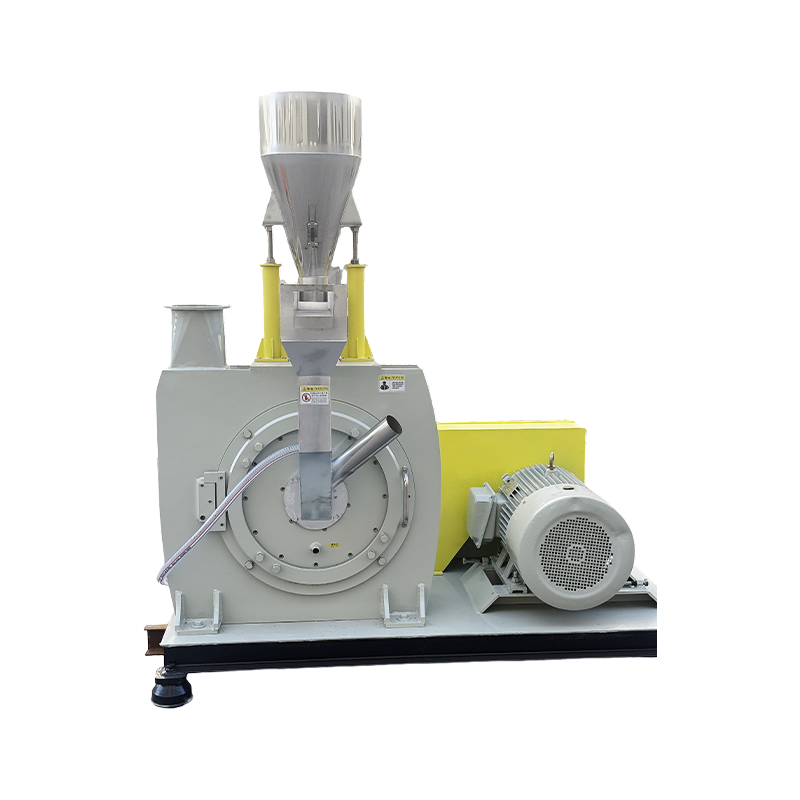
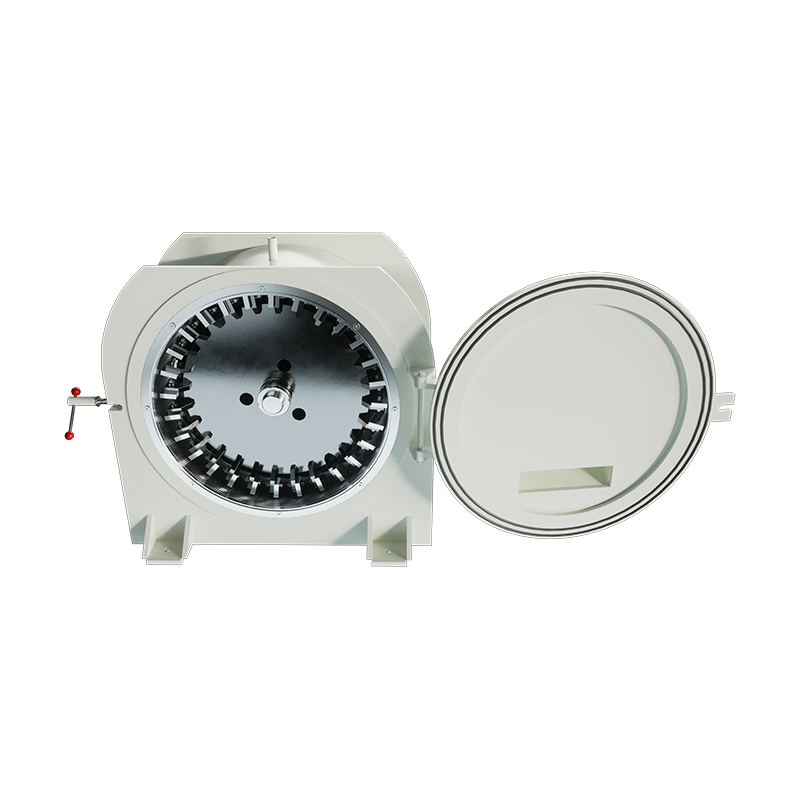
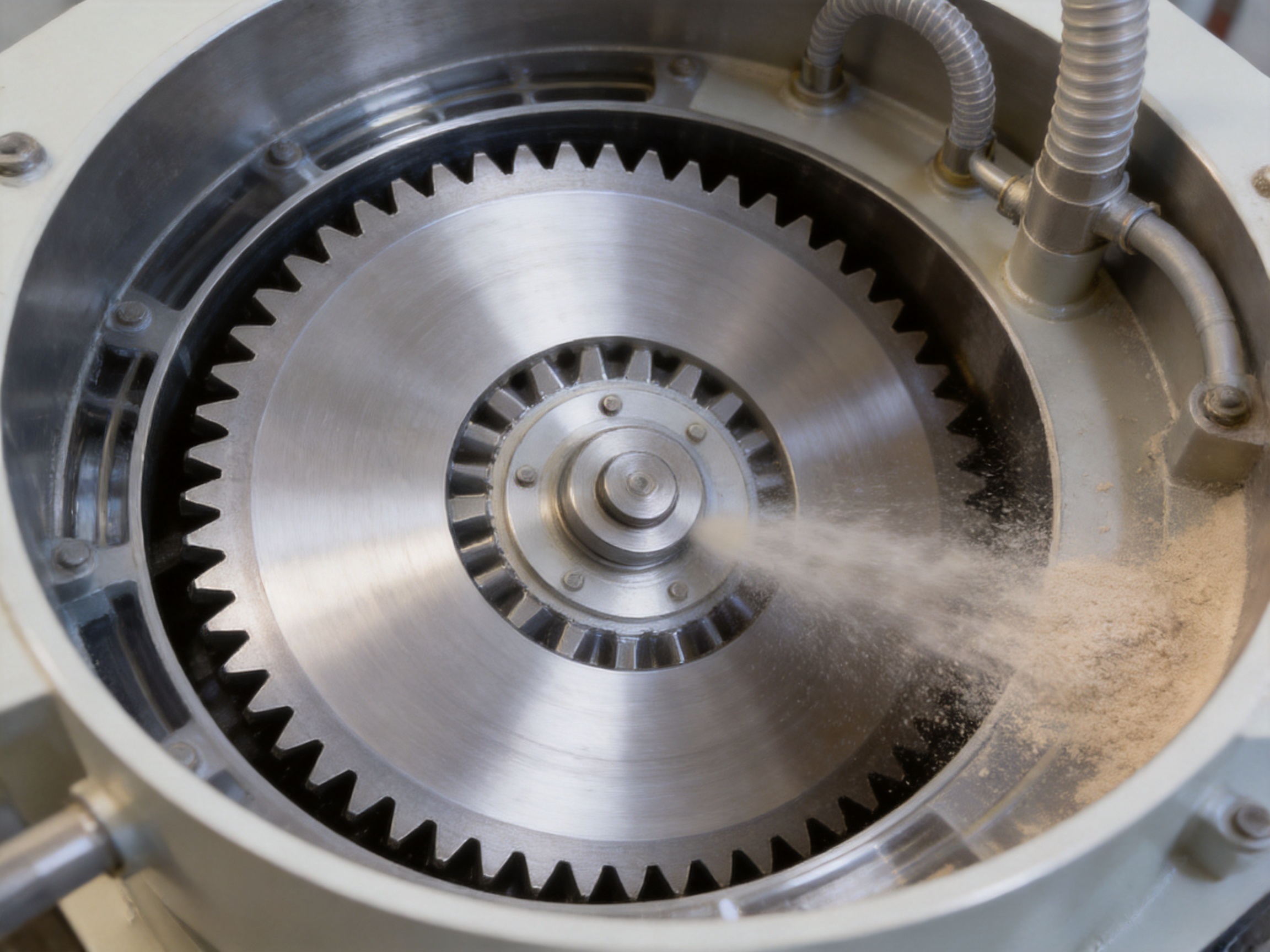
The Model 500 pulverizer is based on a disc-type grinding principle. Material is fed into the grinding chamber, where a high-speed rotating disc works against a fixed disc to shear and pulverize PE particles into powder. The powder is then conveyed by airflow to classification and collection components, while oversized particles can be separated and returned depending on the system configuration. This operating principle is widely used for plastic pulverizing, but the performance difference between machines depends heavily on disc quality, machining accuracy, balancing, cooling design, and system integration.
The 500 mm disc diameter provides a useful working area for efficient pulverizing while maintaining manageable power demand. The main drive motor options, such as 37 kW or 45 kW, allow customers to match the machine with output targets, material hardness, and fineness requirements. Speed control options may include star-delta starting, soft starting, or inverter control. Inverter control can be especially useful when adjusting the machine for different material grades or powder specifications, because grinding intensity and airflow behavior can be optimized more flexibly.
The machine also includes a blower system, stainless steel conveying pipes, a vibrating screen, vacuum feeding, and dust collection. These supporting components are not secondary details. In a rotomolding powder system, poor conveying can cause powder accumulation, inconsistent classification, heat buildup, and dust leakage. By using a coordinated airflow and screening system, the Model 500 supports cleaner and more stable powder handling from grinding to collection.
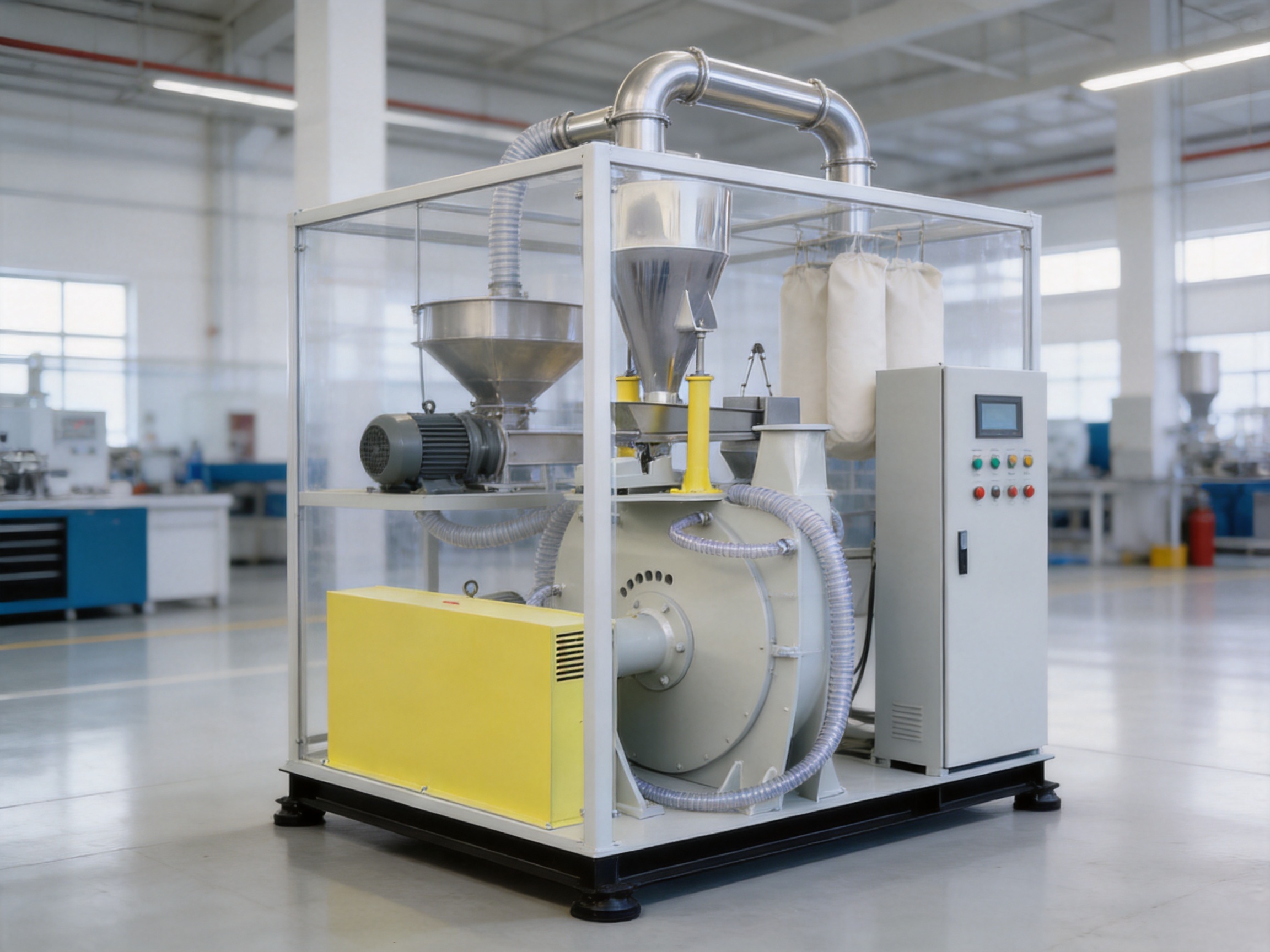
High-Grade Grinding Disc Advantage
The grinding disc is the heart of any disc pulverizer. Its material, hardness, cutting geometry, heat treatment, and balance determine much of the machine’s powder quality and long-term operating cost. The Model 500 can be equipped with high-quality disc materials and precision-machined tooth profiles to meet the demanding requirements of PE rotomolding powder. In advanced configurations, premium mold steel such as DC53 may be selected for enhanced toughness, fatigue resistance, anti-chipping performance, and service life. Standard configurations may also use durable tool steel such as D2, depending on customer requirements and budget.
Compared with many conventional pulverizer discs, premium high-hardness disc materials provide a stronger balance between wear resistance and toughness. A disc that is hard but brittle may chip under impact or thermal stress. A disc that is tough but insufficiently hard may lose sharpness quickly. The goal is to maintain cutting performance over long production periods while reducing the frequency of disc replacement. For rotomolding manufacturers, this directly reduces downtime, labor cost, spare-part cost, and powder instability caused by worn tools.
Another major advantage is the possibility of professional disc refurbishment. When grinding discs become dull, they do not always need to be replaced immediately. With accurate regrinding, the original cutting geometry can be restored, extending the usable life of the disc. Refurbishment costs can be significantly lower than purchasing new discs, which helps customers reduce long-term tooling expense. This is especially valuable for plants that operate continuously or process abrasive recycled materials.
Precision Manufacturing of Disc Teeth
Many pulverizer problems begin with inaccurate disc teeth. If tooth height, angle, spacing, and sharpness vary across the disc, the grinding process becomes uneven. Some zones cut efficiently, while others generate heat through rubbing. This creates unstable particle size and unnecessary vibration. The Model 500 benefits from manufacturing processes that emphasize tooth-by-tooth precision grinding, micron-level consistency, and sharp cutting edges.
Changzhou Mao Yue Intelligent Equipment Co., Ltd. uses advanced machining resources, including Taiwan-imported high-precision grinding machines built to demanding standards and equipment inspired by mature European manufacturing practices. This capability supports accurate disc tooth shaping and repeatable cutting geometry. Compared with ordinary workshop machining, high-precision tool grinding allows better control of blade angles, edge quality, and symmetry. The result is a disc that cuts cleaner, runs smoother, and maintains a narrower particle size distribution.
For PE rotomolding applications, this precision matters because final product quality is sensitive to powder behavior. Narrower particle size distribution improves flowability and melting consistency. More uniform powder reduces the risk of rough molded surfaces, local thin spots, and inconsistent material buildup. In practical production, the value of precision grinding is not only visible in the powder test report; it is visible in fewer customer complaints, fewer rejected molded parts, and more stable cycle conditions.
Dynamic Balancing and Vibration Control
High-speed pulverizing places heavy demands on rotating components. Even a small imbalance in the grinding disc assembly can create vibration, noise, bearing stress, shaft fatigue, and unstable powder production. The Model 500 addresses this problem through rigorous dynamic balancing. The company uses German dynamic balancing equipment to improve rotating stability and reduce vibration levels.
Excellent dynamic balance produces several practical benefits. First, it protects bearings and spindle components, extending their service life. Second, it reduces operational noise, helping the machine maintain a more comfortable and safer workshop environment. Third, it supports consistent grinding gaps and stable cutting conditions. When a machine vibrates excessively, the grinding gap may fluctuate, leading to inconsistent powder size and higher wear. A well-balanced machine preserves mechanical accuracy during operation.
Competitor machines may focus on motor power or price while neglecting balancing quality. However, vibration is one of the hidden causes of high maintenance cost. A machine that shakes, loosens fasteners, overheats bearings, or produces unstable powder can quickly become more expensive than a better-built machine. The Model 500’s attention to balance reflects a manufacturing philosophy that prioritizes reliability, not only initial appearance.
Temperature Control and Cooling System
PE powder production requires careful temperature management. During pulverizing, mechanical energy is converted into heat. If this heat is not removed efficiently, PE material can soften, smear, stick to the disc surface, form clumps, or degrade. Overheating can also reduce powder flowability and cause yellowing or odor changes. The Model 500 uses water cooling and forced airflow support to help maintain stable grinding conditions.
The standard cooling method includes a water-cooling arrangement with inlet and outlet circulation. In more advanced system configurations, a water-cooling jacket and forced air cooling can work together with temperature monitoring and intelligent control. Multi-point temperature sensors and PLC-based control can help maintain grinding chamber temperature within a suitable range, depending on material requirements and production settings. This reduces the risk of thermal damage and keeps powder quality stable over long runs.
Compared with simpler pulverizers that rely mainly on airflow without sufficient chamber cooling, the Model 500 provides stronger protection against heat-related problems. This is particularly important for fine powder production, where increased cutting intensity and longer residence time can create more heat. Stable cooling helps reduce downtime for cleaning sticky material, improves powder discharge, and maintains consistent output.
Dust Collection and Workshop Cleanliness
Plastic powder handling creates dust, and fine PE powder must be controlled carefully. Dust leakage can create housekeeping problems, worker health concerns, environmental compliance issues, and potential safety risks. A good pulverizing system must therefore include efficient negative-pressure conveying and dust collection. The Model 500 can be configured with airflow conveying and a pulse bag dust collector to capture fine particles and maintain a cleaner workshop.
The dust collector bag diameter, blower motor, pipe diameter, and sealed conveying design all affect system performance. Stainless steel pipes help reduce contamination and improve long-term durability. Vacuum feeding reduces manual handling and helps maintain a more enclosed material flow. A negative-pressure design helps prevent dust from escaping through small openings, directing powder toward collection points instead.
When compared with low-cost open systems, a closed dust-controlled pulverizer offers important operational advantages. The workshop stays cleaner, powder loss is reduced, operators face less exposure, and cleaning labor decreases. For customers seeking export-oriented production or professional factory management, dust control is no longer optional. It is part of modern manufacturing quality.
Compact Layout and Cost Performance
The Model 500 is especially attractive because of its compact footprint and practical investment level. It can typically be arranged in a small workshop area and does not require the large installation space of high-output multi-unit pulverizing lines. This allows small and medium rotomolding producers to bring powder preparation in-house rather than relying entirely on outside suppliers.
In-house pulverizing can provide several financial advantages. A factory can reduce the cost of purchased powder, process its own scrap material, adjust powder size according to product requirements, and respond faster to custom orders. It can also maintain better control over raw material quality and formula testing. For companies developing new products, the ability to prepare trial powder quickly can shorten R&D cycles.
The return on investment depends on electricity cost, labor cost, raw material price, powder purchase price, machine utilization, reject rate reduction, and maintenance conditions. However, for many users, the machine can generate value through electricity savings per ton, fewer blade changes, lower product scrap, reduced outsourcing dependence, and stable production. In markets where powder supply is expensive or inconsistent, the value of owning a reliable pulverizer becomes even stronger.
Technical Specification Overview
The following table summarizes key configuration information for the Model 500 pulverizer. Actual specifications can be adjusted according to customer materials, target fineness, production layout, electrical requirements, and optional automation level.
Item |
Description |
Reference Configuration |
1 |
Machine type |
Model 500 disc pulverizer |
2 |
Grinding disc diameter |
500 mm |
3 |
Typical capacity |
Material and mesh dependent; reference configuration 50–160 kg/h, with customized systems available for higher practical ranges |
4 |
Mesh size |
Reference 10–30 mesh; finer PE rotomolding powder can be targeted through suitable disc, screen, and process configuration |
5 |
Main drive motor |
37 kW or 45 kW |
6 |
Speed control |
Star-delta start, soft start, or inverter control |
7 |
Belt pulley standard |
European standard option |
8 |
Grinding disc material |
D2 standard option; premium mold steel options available according to requirement |
9 |
Blower motor |
5.5 kW or 7.5 kW |
10 |
Pipe material |
Stainless steel |
11 |
Pipe diameter |
159 mm reference |
12 |
Vibrating screen diameter |
1000 mm reference |
13 |
Vibrating screen motor |
1.1 kW |
14 |
Feeding method |
Vacuum feeding |
15 |
Dust collector bag diameter |
300 mm reference |
16 |
Cooling method |
Water cooling with inlet and outlet circulation |
Advantages Over Common Competitor Machines
The Model 500’s competitive advantage comes from the combination of precision manufacturing, stable operation, cooling control, dust management, and lifecycle cost reduction. Many competitor machines compete mainly on purchase price. While initial price is important, it does not fully represent production cost. A cheaper machine can become expensive if it produces inconsistent powder, requires frequent tool changes, consumes excess electricity, leaks dust, or causes product defects in the rotomolding process.
Better Powder Uniformity
Precision-ground discs and stable balancing help the Model 500 generate more uniform powder. In rotomolding, uniformity is more important than simple output volume. A machine that produces high kilograms per hour but broad particle distribution may create downstream losses. The Model 500 is designed to support a narrower distribution and cleaner cutting action, helping customers improve molded product quality.
Lower Heat-Related Risk
Machines with weak cooling often cause PE softening and sticking, especially in warm climates or during long production runs. The Model 500’s water cooling and airflow design help control temperature and reduce material degradation. This leads to better flowability and fewer shutdowns for cleaning.
Smoother Operation
Dynamic balancing reduces vibration and protects the machine structure. A smooth pulverizer is easier to maintain, safer to operate, and more stable in powder production. Competitor machines with poor balancing may experience bearing failures, noise complaints, and inconsistent grinding gaps.
Longer Tool Life
High-quality disc material and professional refurbishment options reduce the total cost of tooling. Instead of replacing discs frequently, users can maintain cutting performance through proper regrinding. This helps stabilize production cost and reduces spare-part inventory pressure.
Cleaner Workshop
Closed conveying and pulse dust collection are important advantages over open or poorly sealed systems. Reduced dust loss means less material waste, less cleaning labor, and improved worker comfort. For professional rotomolding plants, cleanliness also supports better factory image and process discipline.
Flexible Operation
The Model 500 can be used for production, testing, recycling, and formula development. It can support different motor options, starting methods, and process settings. This flexibility is valuable for companies handling multiple PE grades or producing customized products.
Manufacturing Strength of the Company
Changzhou Mao Yue Intelligent Equipment Co., Ltd. is a source manufacturer with around 30 years of experience in plastic crushing and pulverizing equipment. This long manufacturing background gives the company practical insight into the real problems customers face: disc wear, heat buildup, vibration, dust leakage, bearing damage, powder instability, and maintenance difficulty. The Model 500 reflects this accumulated experience.
The company has developed strong capabilities in plastic pulverizers, pulverizer parts, crushing systems, and complete pulverizing lines. Its equipment is widely used in rotational molding, masterbatch, polymer processing, PVC, PE, recycling, and powder coating applications. This broad industry exposure helps the engineering team understand different plastic behaviors and adapt machinery to specific customer requirements.
The factory operates multiple processing workshops, each with substantial production space, allowing systematic manufacturing of machine frames, precision components, discs, conveying systems, and line assemblies. A professional technical team studies advanced machine technologies from mature industrial markets such as Germany, integrating practical improvements into equipment design and manufacturing. This approach supports continuous product improvement rather than one-time machine assembly.
The company’s manufacturing resources include Taiwan-imported high-precision grinding machines built according to demanding standards, German dynamic balancing equipment, and Japanese welding systems. These resources are important because plastic pulverizer performance depends on component accuracy. A heavy frame alone does not guarantee powder quality. Accurate disc grinding, stable balancing, clean welding, and correct assembly all contribute to the final performance of the machine.
Quality management is another strength. The company has obtained CE mechanical certification and ISO 9001 quality management system certification. These certifications support product safety, standardized production procedures, and consistent manufacturing control. For overseas customers, certification and quality systems help reduce purchasing risk and support smoother factory acceptance.
Engineering Philosophy: Practical Reliability
The Model 500 is not designed only for showroom appearance. Its value lies in practical reliability under daily production conditions. Rotomolding factories often operate in environments with dust, variable temperatures, different raw material batches, and tight delivery schedules. Equipment must be easy to operate, stable, and maintainable. The machine’s structure, cooling, feeding, screening, and collection systems are designed with these realities in mind.
Practical reliability also means easy access for maintenance. Grinding discs eventually require inspection, adjustment, cleaning, or refurbishment. Bearings, belts, screens, and dust collector bags require routine attention. A machine that is difficult to service may lose production time even if its theoretical output is high. The Model 500 is built to support regular maintenance and long-term operation.
Another aspect of reliability is stable supplier support. Because the company manufactures pulverizer parts and complete equipment, it can provide matching spare parts and technical advice. Customers benefit from a single source for machinery, discs, refurbishment, and process consultation. This is different from purchasing a generic machine from a trading company that may have limited engineering capability.
Application Scenarios
Small-to-Medium Rotomolding Production
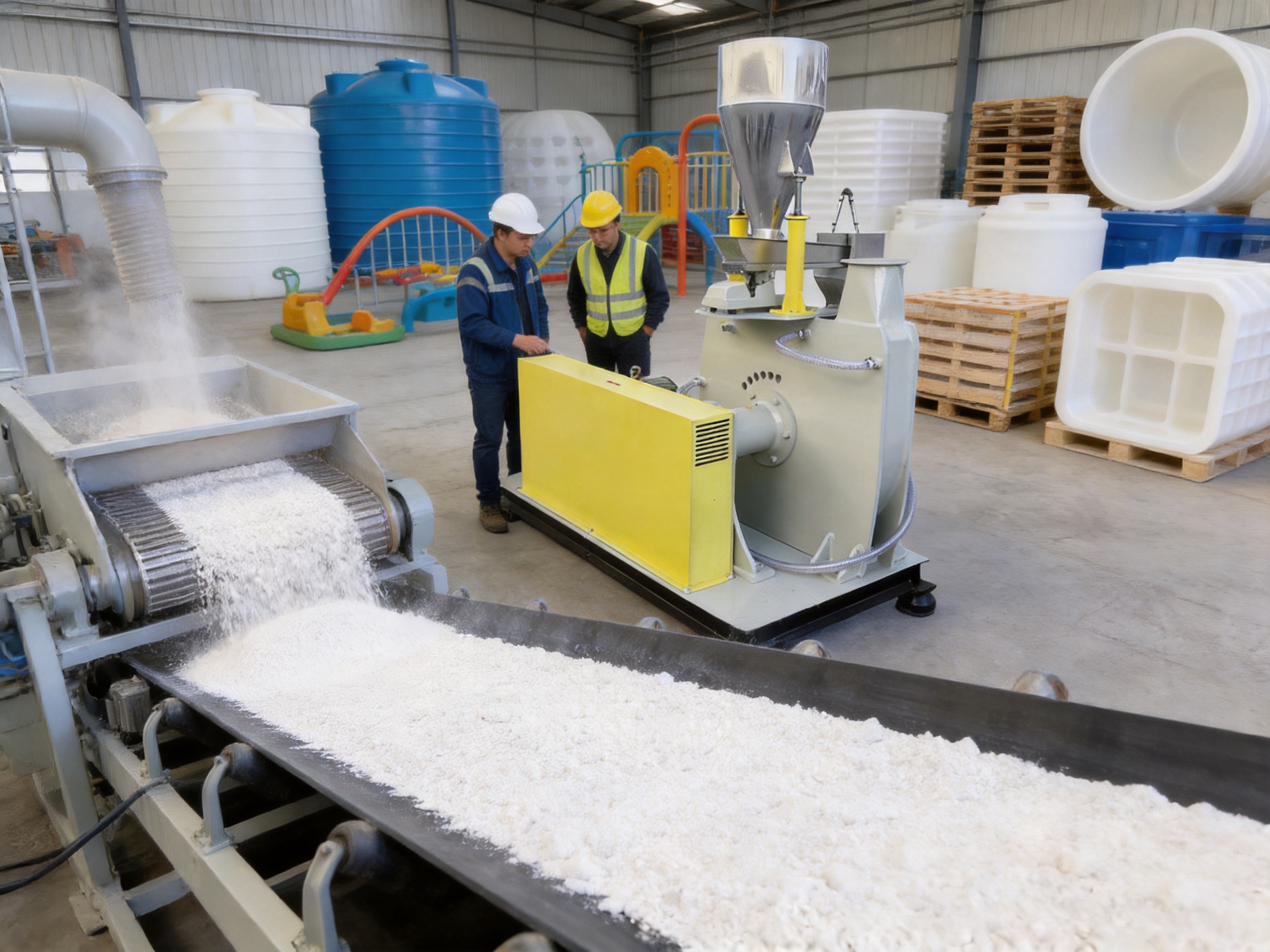
For factories producing water tanks, pallets, toys, playground equipment, containers, and custom hollow products, the Model 500 can provide in-house powder preparation. It allows manufacturers to control powder size, manage recycled material, and reduce dependence on outside powder suppliers. Stable powder helps improve molding consistency and reduce product defects.
Laboratory and R&D Centers
Research teams developing new PE formulas need repeatable powder samples. The Model 500 can support trial batches, material comparison, additive testing, color development, and process validation. Because it is compact and relatively flexible, it is suitable for laboratories that require industrial-style pulverizing without installing a large production line.
Small-Batch Trial Production
Custom rotomolding orders often require small production runs before mass production begins. The Model 500 helps prepare test powder for prototype molds, customer samples, and production confirmation. This can shorten development time and improve responsiveness.
Recycling of PE Rotomolding Scraps
Rotomolding production can generate scrap from trimming, rejected parts, color changes, and start-up waste. After suitable crushing and preparation, PE scraps may be re-pulverized for reuse in appropriate applications. The Model 500 helps convert waste into usable powder, supporting cost reduction and circular material management.
Fine Powder for High-End Custom Products
Some high-end rotomolding products require excellent surface finish, consistent wall thickness, and reliable mechanical properties. Powder quality becomes especially important in these applications. With precision discs and controlled grinding, the Model 500 can support stable fine powder preparation according to customer requirements.
Process Flow and Operation
A typical pulverizing process begins with properly prepared PE material. The material should usually be clean, dry, and appropriately sized before entering the pulverizer. Oversized chips may reduce feeding stability or increase machine load. Contaminated material can damage discs or reduce powder quality. Good upstream crushing and material preparation are essential for stable pulverizer performance.
The vacuum feeding system transfers material into the grinding area with reduced manual handling. Once inside the grinding chamber, the rotating and fixed discs shear the material into smaller particles. Airflow helps move the powder away from the grinding area, reducing heat residence time and carrying material into the classification and collection section. The vibrating screen separates particles according to size requirements. Properly sized powder continues to collection, while oversized material can be handled according to the process design.
The operator monitors machine load, temperature, sound, vibration, feeding rate, and powder output. If powder becomes too coarse, the grinding gap, screen, feed rate, or disc condition may need adjustment. If powder temperature rises, cooling water flow, airflow, feeding rate, or disc sharpness should be checked. Stable operation depends on the relationship between material characteristics and machine settings.
For best results, operators should follow a standard startup and shutdown procedure. Cooling and airflow should be confirmed before continuous feeding. The machine should not be overloaded suddenly. After production, remaining material should be cleared to prevent buildup. Routine inspection of screens, bags, pipes, belts, and discs will help maintain long-term performance.
Quality Impact on Rotomolded Products
The quality of powder produced by the pulverizer directly affects the final rotomolded product. When powder flows well, it distributes more evenly inside the mold. When particle size is consistent, melting behavior becomes more predictable. When powder is not overheated, material properties are better preserved. This improves product appearance, reduces defects, and supports stable production cycles.
Inconsistent powder can create many production problems. Coarse particles may remain unmelted or create rough surfaces. Excessive fines may dust, bridge, or produce uneven deposits. Thermally damaged powder may flow poorly or create weak areas. A broad particle distribution may make it difficult to control wall thickness. By improving powder consistency, the Model 500 helps rotomolding factories address these downstream challenges at the source.
Many manufacturers focus on mold design, oven temperature, and cycle time when troubleshooting rotomolding defects. These are important factors, but powder quality should not be overlooked. A stable pulverizer gives the production team a more consistent raw material foundation, making process optimization easier and more repeatable.
Energy and Maintenance Considerations
Energy consumption in pulverizing is affected by disc sharpness, material temperature, feed rate, target mesh, motor efficiency, airflow resistance, and machine alignment. Sharp, well-balanced discs cut more efficiently than dull or poorly ground discs. Stable cooling prevents material softening, which can otherwise increase friction and power demand. Proper airflow reduces clogging and supports efficient powder movement.
The Model 500’s total power configuration includes the main drive, blower, vibrating screen, and auxiliary systems. Although electricity cost varies by region, efficient operation can significantly influence the cost per kilogram of powder. Operators can improve efficiency by maintaining disc sharpness, avoiding overfeeding, keeping screens clean, ensuring cooling water flow, and preventing dust collector blockage.
Maintenance should include regular inspection of belts, bearings, grinding discs, fasteners, screens, dust collector bags, pipe joints, and cooling lines. Operators should listen for abnormal sound and monitor vibration changes. A sudden increase in vibration may indicate disc imbalance, bearing wear, material buildup, or loose components. Early attention can prevent costly failures.
Disc maintenance is especially important. When edges become dull, the machine may generate more heat, produce more irregular powder, consume more energy, and reduce capacity. Professional disc refurbishment can restore performance at a lower cost than replacement. This lifecycle approach is one of the important advantages of working with a manufacturer that understands both the machine and its core tooling.
Customization and System Integration
Different customers have different production goals. Some need a simple standalone pulverizer for occasional use. Others need a more complete line including crusher, feeding system, pulverizer, screening, dust collection, silo, and control cabinet. The Model 500 can serve as a core machine within a broader crushing and pulverizing line.
Customization may involve motor power, disc material, electrical control method, cooling arrangement, screen size, dust collector specification, pipe layout, feeding method, and automation level. For overseas customers, voltage, frequency, safety standards, and factory layout must also be considered. A professional manufacturer can evaluate these requirements and provide a suitable solution rather than a fixed one-size-fits-all machine.
For customers handling recycled PE, the system may require stronger upstream cleaning and crushing. For customers targeting finer powder, disc geometry, cooling capacity, and classification efficiency become more important. For customers with strict cleanliness requirements, stainless steel contact parts and enhanced dust collection may be selected. This flexibility helps the Model 500 meet a wide range of practical applications.
Safety and Environmental Benefits
Modern plastic processing facilities must consider safety, dust control, noise, ergonomics, and environmental responsibility. The Model 500 supports these goals through enclosed conveying, dust collection, stable operation, and controlled cooling. Lower vibration and reduced noise contribute to a better working environment. Efficient dust capture reduces airborne powder and improves housekeeping.
Safety also depends on proper installation and operation. Electrical systems should be installed by qualified personnel. Guards and covers should remain in place during operation. Operators should avoid opening the grinding chamber while the machine is running or before rotating parts have fully stopped. Cooling water, airflow, and dust collection should be checked before production. Proper grounding, emergency stop systems, and routine training are essential.
From an environmental perspective, the ability to reprocess PE scraps can reduce material waste. By converting suitable waste into reusable powder, factories can lower raw material consumption and improve resource efficiency. Dust collection also reduces material loss and prevents powder from spreading into the workshop environment.
Buyer Evaluation Guide
When evaluating a PE pulverizer, buyers should look beyond the machine price and motor power. A complete evaluation should include disc quality, machining accuracy, balancing process, cooling design, dust collection, spare-part support, refurbishment service, company experience, and certification. The Model 500 performs strongly in these areas because it is backed by a manufacturer with long-term specialization in plastic size reduction.
Buyers should ask whether the grinding discs are precisely ground, whether dynamic balancing is performed, whether the supplier can refurbish discs, what cooling method is used, how dust is collected, and whether the machine can be customized for target powder size. They should also request information about installation requirements, maintenance procedures, spare parts, and after-sales support.
A reliable pulverizer should produce stable powder over time, not only during a short test. Therefore, buyers should consider lifecycle cost. If one machine saves disc cost, reduces rejected products, lowers maintenance downtime, and improves powder consistency, it may be more profitable even if its initial price is higher than a basic competitor machine.
Q&A Section
Q1: What materials is the Model 500 pulverizer mainly designed for?
It is mainly designed for PE rotomolding powder production. It can also be applied to suitable plastic size-reduction tasks depending on material characteristics, temperature sensitivity, hardness, and target particle size. For non-PE materials, technical confirmation is recommended.
Q2: Why is powder uniformity so important in rotational molding?
Uniform powder flows and melts more consistently inside the mold. This helps improve surface finish, wall thickness distribution, product strength, and production repeatability. Poor powder uniformity can lead to rough surfaces, thin areas, pinholes, weak corners, and higher reject rates.
Q3: What is the main advantage of precision-ground discs?
Precision-ground discs provide consistent tooth geometry and sharp cutting edges. This improves cutting efficiency, reduces heat generation, narrows particle size distribution, and supports stable powder quality over long production periods.
Q4: How does dynamic balancing improve machine performance?
Dynamic balancing reduces vibration in high-speed rotating components. Lower vibration protects bearings and spindles, reduces noise, maintains stable grinding gaps, and helps produce more consistent powder.
Q5: Why does PE pulverizing need water cooling?
PE can soften or degrade when grinding temperature becomes too high. Water cooling helps remove heat from the grinding chamber, reducing the risk of sticking, clumping, yellowing, and poor powder flowability.
Q6: Can the grinding discs be refurbished?
Yes, dull discs can often be professionally refurbished through accurate regrinding. Refurbishment helps restore cutting performance and can cost much less than buying new discs, reducing long-term operating cost.
Q7: Is the Model 500 suitable for laboratory use?
Yes. Its compact size and flexible operation make it suitable for laboratories, R&D centers, trial production, and new formula validation, while still providing industrial-style pulverizing performance.
Q8: Can the machine process recycled PE rotomolding scraps?
Yes, suitable PE scraps can be pulverized after proper crushing, cleaning, and preparation. The final usability of recycled powder depends on material quality, contamination level, and product requirements.
Q9: What should be checked during daily maintenance?
Operators should check disc condition, bearing sound, belt tension, cooling water flow, screen cleanliness, dust collector bags, pipe connections, fasteners, vibration level, and motor load. Regular maintenance helps maintain output and powder quality.
Q10: Why choose this machine instead of a cheaper competitor model?
The Model 500 offers advantages in disc precision, dynamic balancing, cooling, dust control, manufacturing quality, and lifecycle support. These factors can reduce hidden costs from downtime, tool wear, powder defects, dust leakage, and rejected rotomolded products.
Conclusion
The Model 500 PE rotomolding powder high-output stable pulverizer is a practical and reliable solution for manufacturers that need compact equipment without sacrificing powder quality. Its value lies in the details that matter most in real production: high-quality grinding discs, precision tooth machining, stable dynamic balancing, effective cooling, enclosed conveying, dust collection, flexible configuration, and professional manufacturing support.
For small-to-medium rotomolding plants, it offers a path to in-house powder control, lower outsourcing dependence, better scrap reuse, and improved product consistency. For laboratories and R&D centers, it provides a capable platform for formula testing and sample development. For established factories, it can serve as a flexible support machine for custom orders, trial batches, or backup production.
Backed by Changzhou Mao Yue Intelligent Equipment Co., Ltd.’s decades of experience in plastic crushing and pulverizing equipment, the Model 500 reflects a manufacturing approach focused on accuracy, stability, and customer value. In a market where many machines look similar from the outside, the true difference is found in the disc, the balance, the cooling, the dust control, and the engineering discipline behind every component.
For buyers seeking a compact PE rotomolding pulverizer with strong cost performance and dependable powder quality, the Model 500 is a compelling choice. It helps transform plastic particles and recycled PE material into controlled powder, while supporting cleaner workshops, lower maintenance burden, and more stable rotomolding production.
References
1. Crawford, R. J., and Throne, J. L. Rotational Molding Technology. Plastics Design Library.
2. Rosato, D. V., Rosato, D. V., and Rosato, M. G. Plastics Processing Data Handbook. Springer.
3. Strong, A. B. Plastics: Materials and Processing. Pearson.
4. Osswald, T. A., and Menges, G. Materials Science of Polymers for Engineers. Hanser Publishers.
5. ISO 9001 Quality Management Systems: Requirements and Implementation Guidance.
6. CE Machinery Safety Principles for Industrial Equipment Manufacturing.