

 English
 русский
 Español
 عربى
عربى 中文简体
中文简体
 中文简体
中文简体
Content
- 1 Why High-Capacity Masterbatch Pulverizing Requires Specialized Equipment
- 2 Core Product Advantages
- 3 Thermal Management for Continuous Polymer Grinding
- 4 Enclosed Conveying and Dust Control
- 5 Feeding, Screening, and Material Handling
- 6 Published Technical Configuration
- 7 Advantages Compared with Conventional Pulverizers
- 8 Manufacturing Strengths and Quality-Control Processes
- 9 Application Areas
- 10 Installation and Operating Considerations
- 11 Maintenance Strategy
- 12 Return on Investment and Total Cost of Ownership
- 13 Customization and Selection Guidance
- 14 Company Manufacturing and Service Capability
- 15 Q&A
- 15.1 What materials can the 800 Series pulverizer process?
- 15.2 What capacity can the machine achieve?
- 15.3 What mesh sizes are available?
- 15.4 Why is DC53 used for the grinding disc?
- 15.5 Can the grinding disc be refurbished?
- 15.6 How does the machine control grinding temperature?
- 15.7 Does the system include dust collection?
- 15.8 What is the recommended factory space?
- 15.9 What motor options are available?
- 15.10 Is the machine suitable for 24-hour production?
- 15.11 How can a customer confirm the correct configuration?
- 16 Conclusion
- 17 References
- 18 Product: 800 Series High-Capacity Masterbatch Pulverizer
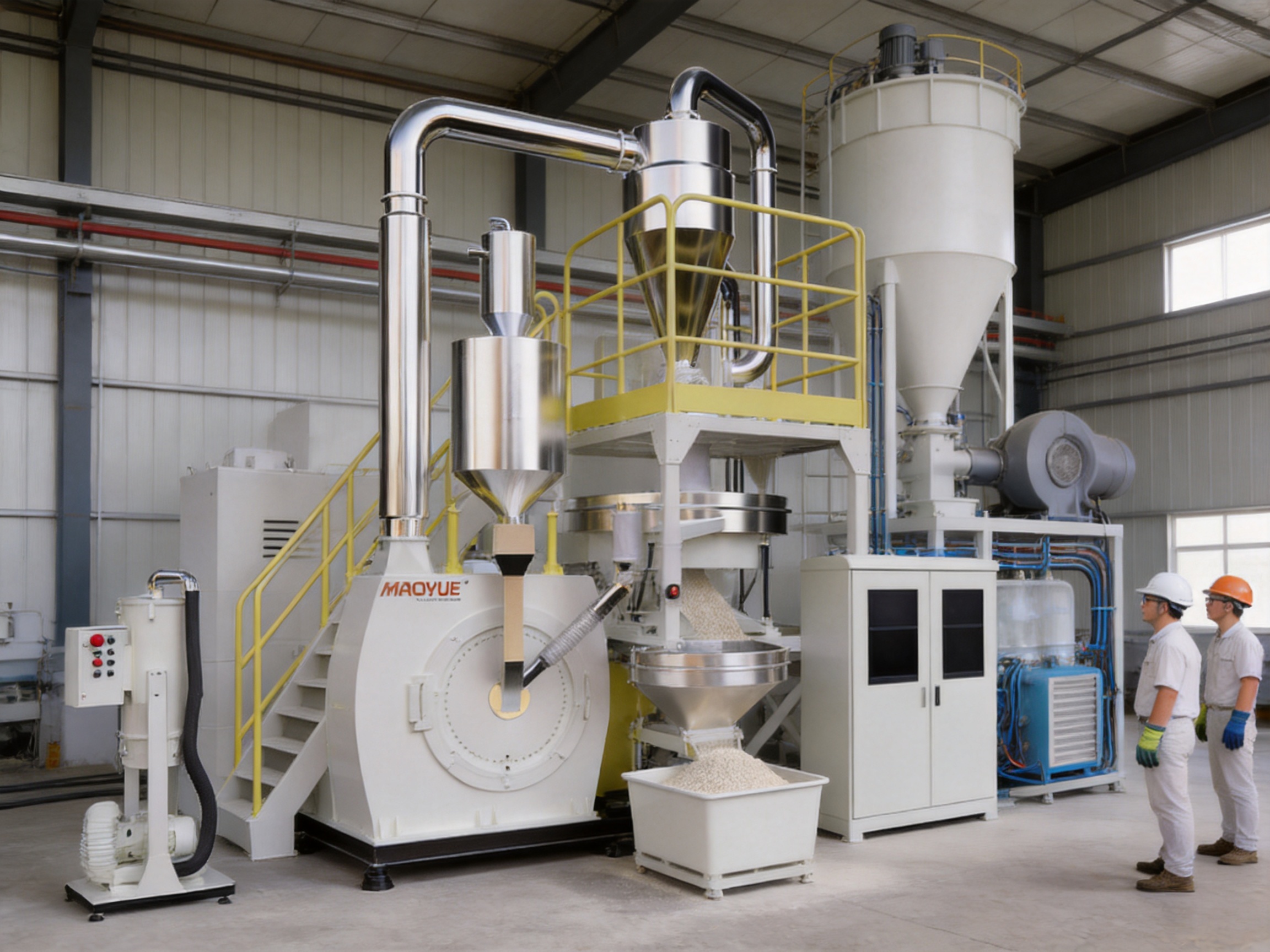
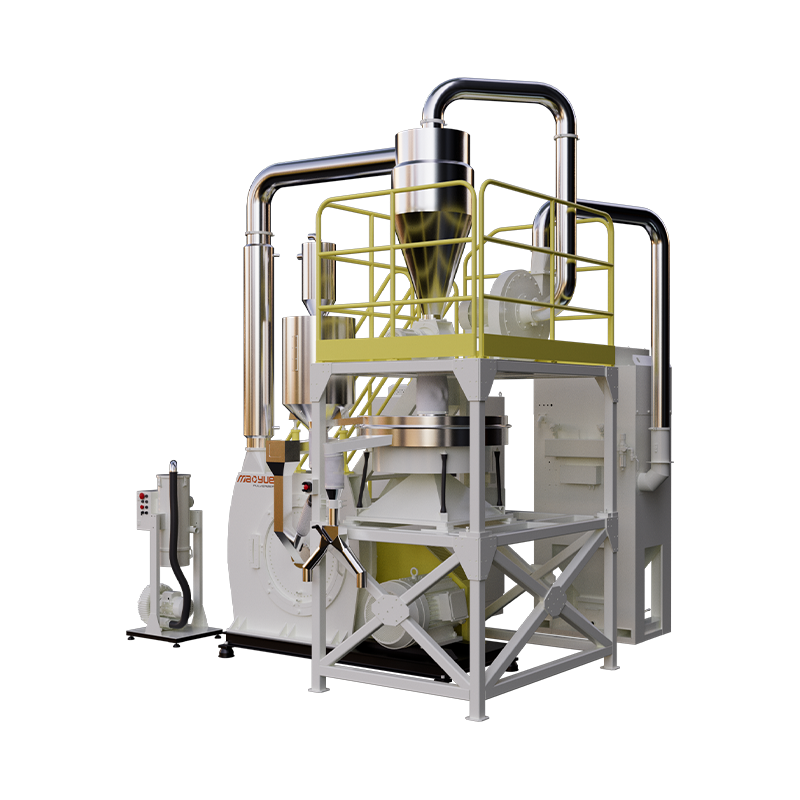
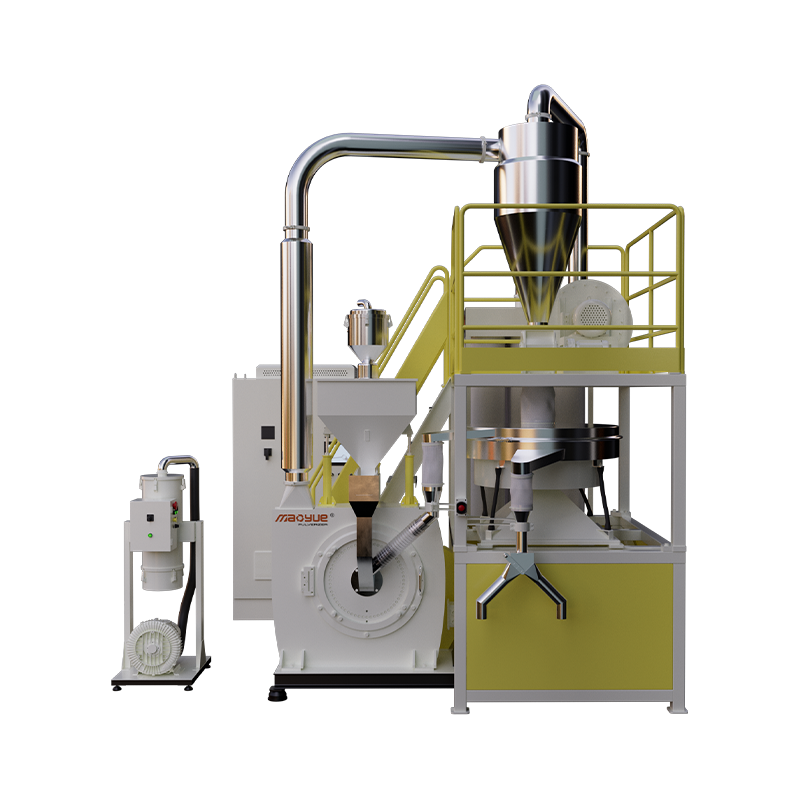
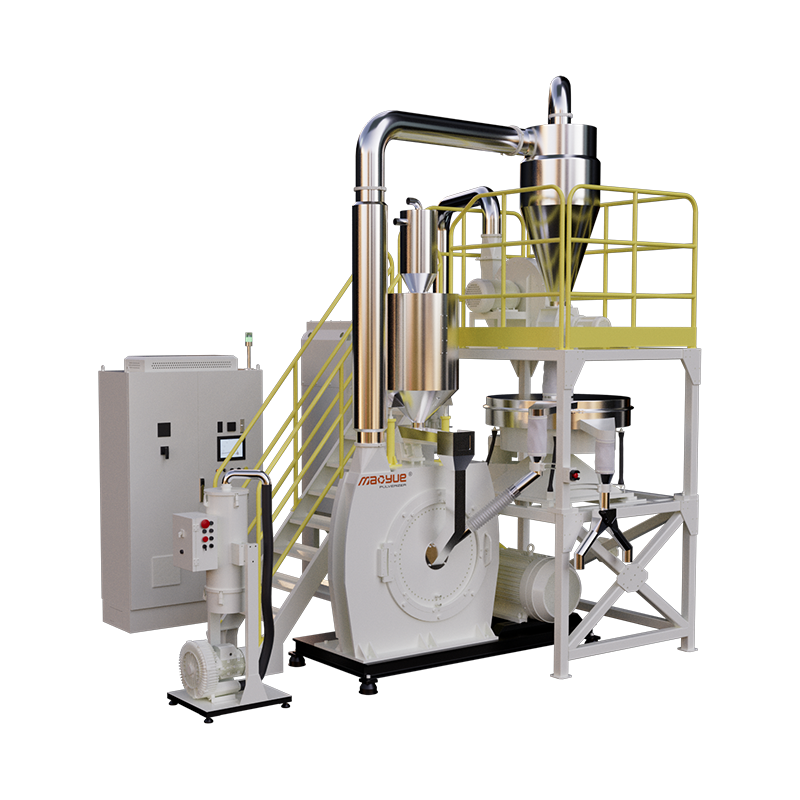
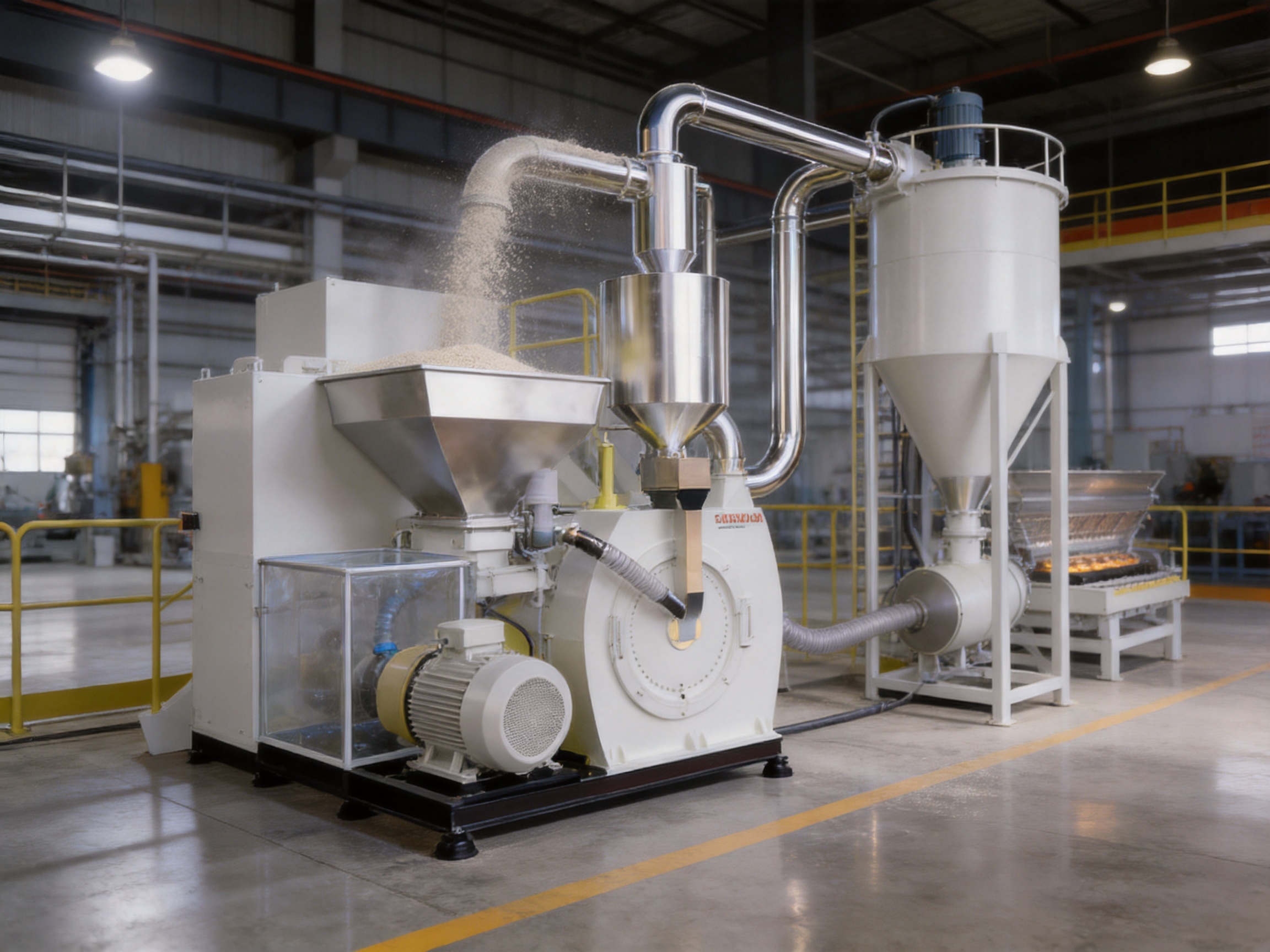
Large-scale masterbatch and modified-plastics manufacturers require more than a pulverizer with a powerful motor. They need a complete production solution that can maintain stable particle size, control grinding temperature, minimize dust, reduce maintenance interruptions, and deliver consistent powder quality throughout long operating cycles. The 800 Series High-Capacity Masterbatch Pulverizer is designed for this demanding production environment. It combines a large-diameter grinding disc, reinforced cooling, precision-machined grinding tools, intelligent process control, negative-pressure conveying, and high-efficiency dust collection in one industrial system.
Designed for continuous operation in large factories, the 800-type machine is suitable for masterbatch, functional masterbatch, modified plastics, high-filler compounds, recycled polymer materials, and other applications requiring high throughput and reliable powder quality. Depending on the material, feed condition, selected screen, operating speed, and target fineness, the machine can provide a practical production range of approximately 450–900 kg/h according to the standard technical configuration, while some application-specific configurations may achieve output levels of approximately 600–1500 kg/h. This range allows the system to be adapted to different polymers and production objectives instead of relying on a single nominal capacity.
The equipment supports adjustable powder fineness. Standard configurations are generally associated with approximately 10–50 mesh, while specialized operating conditions and application adjustments can extend the usable range toward finer or coarser results, including approximately 20–100 mesh depending on the material and classification arrangement. Because polymer grinding behavior varies substantially between materials, final capacity and fineness should be confirmed through application testing before purchase.
Why High-Capacity Masterbatch Pulverizing Requires Specialized Equipment
Masterbatch production is different from ordinary plastic size reduction. A masterbatch may contain a high concentration of pigments, additives, fillers, flame retardants, conductive materials, reinforcing agents, or other functional ingredients. These components can increase hardness, friction, heat generation, and wear inside the grinding chamber. A pulverizer that performs well with a relatively soft and clean polymer may experience rapid tool wear, unstable temperature, powder agglomeration, or excessive energy consumption when processing highly loaded compounds.
Large factories also face stricter quality requirements. Powder that appears acceptable during a short trial may become inconsistent after several hours of operation. Small changes in grinding temperature, blade clearance, disc balance, feed rate, or airflow can influence particle distribution and downstream processing. Uneven powder can contribute to color variation, black specks, fisheyes, poor dispersion, inconsistent feeding, and unstable performance during extrusion, molding, coating, or rotational molding.
For this reason, a high-capacity masterbatch pulverizer must be engineered as an integrated system. The grinding disc, spindle, bearings, drive motor, cooling circuit, feeding mechanism, conveying pipeline, classifier or vibrating screen, and dust collector must operate together. Increasing motor power alone does not guarantee higher production. The complete system must maintain mechanical stability, thermal control, and air-material balance while processing a large amount of polymer every hour.
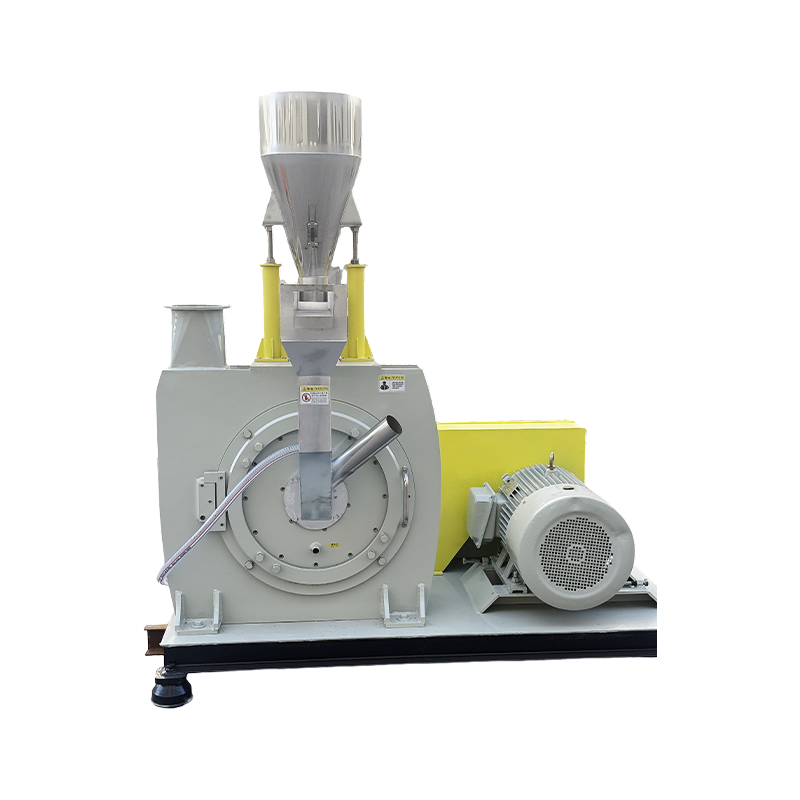
The 800-type machine addresses these requirements with a reinforced industrial structure and a grinding disc diameter of approximately 800 mm. Its large grinding area is intended for high-throughput production, while the available 75, 90, 110, and 132 kW drive motor options allow the system to be matched to different materials and output targets. In large masterbatch plants, this configuration can provide substantially greater throughput than smaller pulverizers while reducing the number of machines needed for the same production volume.
Core Product Advantages
Large Grinding Disc for High Throughput
The 800 mm grinding disc provides a larger working area than small and medium-size pulverizers. This enables the material to pass through a broad grinding zone and supports greater feed rates when the material preparation, airflow, and cooling systems are correctly configured. A larger disc also makes the machine suitable for demanding applications where high production volume is more important than compact equipment dimensions.
The system is designed for a factory footprint of approximately 8–12 square meters, depending on the selected auxiliary equipment and installation arrangement. Although the machine occupies more space than a small laboratory or workshop pulverizer, its production capacity can significantly reduce the number of parallel machines required in a large plant. Fewer machines may simplify material handling, maintenance planning, operator training, and quality control.
High throughput does not mean that the machine is limited to one type of polymer. It can be configured for a variety of masterbatch and modified-plastic applications, including polyethylene, polypropylene, ABS, polycarbonate, polyamide, filled compounds, flame-retardant compounds, conductive compounds, and recycled polymer materials. The actual result depends on feed particle size, moisture, formulation, softening point, additive concentration, target mesh, and operating parameters.
DC53 Grinding Discs with High Wear Resistance
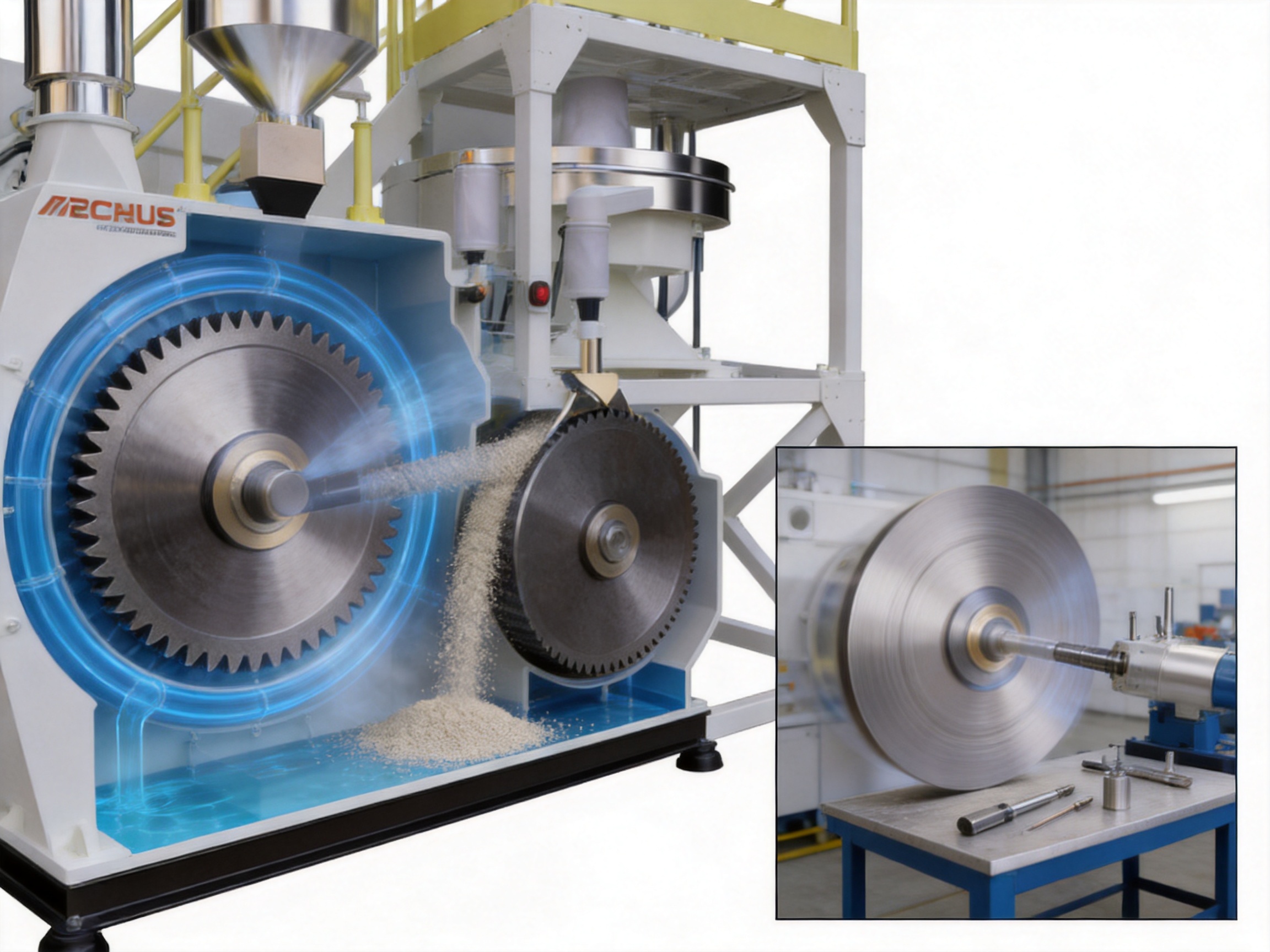
The grinding discs use DC53 high-grade cold-work mold steel. The material is heat treated to a reported hardness of approximately HRC 62–64, providing a combination of hardness, toughness, fatigue resistance, and resistance to edge chipping. This is particularly valuable in masterbatch applications because pigment-rich and filler-rich compounds can impose considerably greater stress on grinding teeth than relatively clean virgin polymer.
Compared with conventional D2 grinding tools, DC53 can provide a more balanced combination of wear resistance and toughness when properly heat treated and machined. Excessive hardness without sufficient toughness may increase the risk of chipping, while insufficient hardness can cause rapid loss of cutting sharpness. The selected DC53 disc design is intended to maintain tooth geometry for longer periods during continuous production.
Under comparable operating conditions, the service life of the DC53 disc may be approximately 1.5–2.5 times longer than that of standard discs. Actual service life is influenced by the material formulation, filler content, contamination, feed size, operating temperature, grinding pressure, and maintenance practices. Nevertheless, the combination of high-quality steel and precision machining can reduce the frequency of disc replacement and help stabilize production costs.
An additional advantage is the possibility of professional disc refurbishment. When grinding teeth become dull but the disc body remains suitable for service, the disc can be reground rather than discarded. Refurbishment costs may be approximately one-quarter to one-third of the price of a new disc, depending on the amount of restoration required. This provides a practical way to reduce long-term tooling expenses and improve the return on the original investment.
Precision Tooth-by-Tooth Grinding
The quality of a pulverizer disc depends not only on the steel grade but also on the accuracy of tooth geometry. If tooth angles, heights, clearances, or surface finishes vary significantly, the material may be ground unevenly. Such variation can widen the particle-size distribution, increase friction, create hot spots, and accelerate localized wear.
The manufacturer uses imported Taiwanese professional CNC tool grinders for precision tooth-by-tooth grinding. The production facility is equipped with two such units, allowing the grinding tools to be processed with repeatable geometry and controlled dimensional accuracy. The objective is to achieve consistent blade angles, stable cutting edges, and uniform interaction between the rotating and stationary discs.
Accurate tooth geometry can improve the consistency of the finished powder. It can also reduce the probability of excessive fines, oversized particles, and localized heat generation. In masterbatch production, this consistency is important because the powder may later be blended, extruded, molded, coated, or fed into another automated process. A narrow particle-size distribution can support better dosing, dispersion, and product repeatability.
Precision machining also contributes to maintenance efficiency. When the discs are manufactured and refurbished using controlled CNC processes, the replacement or restored disc is more likely to match the original operating geometry. This helps reduce the adjustment time required after a disc change and supports more predictable commissioning.
Dynamic Balancing for Low Vibration
High-speed rotating equipment must be accurately balanced. An unbalanced grinding disc can create vibration, noise, bearing stress, spindle deflection, uneven wear, and fatigue in the machine frame. These problems become more serious as disc diameter, rotational speed, and production time increase.
Each disc is dynamically balanced using imported German high-precision balancing equipment. The balancing process is intended to reduce eccentricity and control vibration before the disc is installed in the machine. Stable dynamic balance is especially important for a large pulverizer because the grinding disc carries substantial rotational energy and operates continuously under load.
The machine is designed to demonstrate exceptionally stable running behavior, sometimes described by the practical “coin-standing” test in which a coin can remain upright on the equipment during operation. This type of demonstration is not a substitute for formal vibration measurement, but it communicates the importance placed on mechanical stability. Lower vibration can help extend the life of bearings, spindles, reducers, couplings, and structural components.
Noise levels are designed to remain below approximately 85 dB under normal conditions, although the final sound level depends on the installation room, material, airflow, foundation, and auxiliary equipment. Improved balance and a fully enclosed system can contribute to a more controlled working environment compared with poorly balanced or openly discharged pulverizing equipment.
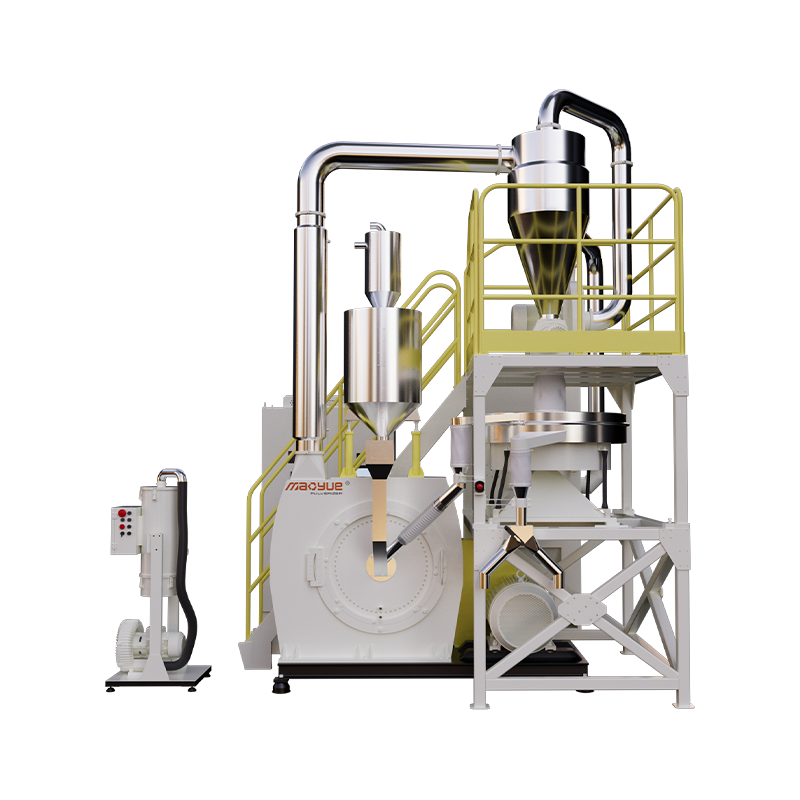
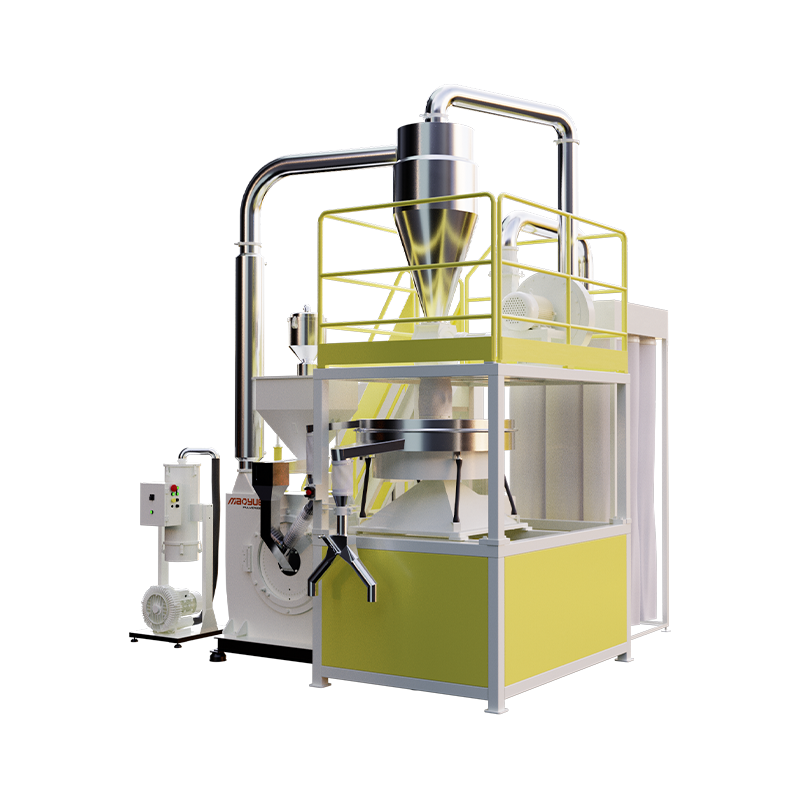
800 Series High-Capacity Masterbatch Pulverizer
Thermal Management for Continuous Polymer Grinding
Temperature control is one of the most important factors in polymer pulverizing. When polymer particles are exposed to excessive frictional heat, they may soften, stick to the disc, agglomerate, discolor, degrade, or obstruct the grinding passage. These problems become more likely when the material contains a high concentration of pigments, fillers, or functional additives, because the compound may generate more friction than an unfilled polymer.
The 800-type machine uses a reinforced dual cooling system. A large-area water-cooling jacket removes heat from the grinding chamber, while multi-stage forced-air cooling assists with heat transfer and material transport. The combination is designed to maintain the grinding chamber at approximately 50–70°C during normal production, subject to material characteristics and operating conditions.
Water cooling and forced-air cooling perform different but complementary functions. The water jacket absorbs heat from the chamber structure and grinding zone, while the airflow helps carry material through the system and removes heat from the moving powder stream. Using both methods provides a wider thermal control margin than relying only on natural cooling or a single small cooling circuit.
PLC multi-point intelligent control and over-temperature protection further improve process safety. Sensors can monitor important operating conditions, allowing the control system to respond when the temperature approaches a preset limit. Depending on the control configuration, the system may issue an alarm, reduce feeding, adjust operation, or stop the machine when abnormal conditions are detected.
Temperature control protects both product quality and equipment life. A stable temperature can help prevent material sticking and reduce the risk of thermal degradation. It can also reduce the formation of deposits on the discs and chamber walls, which otherwise may require frequent cleaning. By lowering the frequency of thermal interruptions, the machine can support longer production runs and more predictable scheduling.
Enclosed Conveying and Dust Control
High-volume pulverizing generates a substantial amount of fine polymer powder. If this powder is released into the workshop, it can create housekeeping problems, increase material waste, affect worker comfort, and potentially create combustible dust concerns depending on the polymer and formulation. A modern pulverizing line therefore requires effective containment and collection in addition to grinding performance.
The 800-type uses a fully enclosed negative-pressure airflow conveying system. Material is transported through enclosed stainless-steel pipelines rather than being discharged openly into the production room. Negative pressure helps draw air and powder through the process, reducing the likelihood of dust escaping through gaps or transfer points when the system is correctly sealed and maintained.
The dust collector uses high-efficiency pulse bag filtration. The stated dust capture rate is greater than 99.9 percent under appropriate operating conditions. Pulse cleaning periodically removes accumulated powder from the filter bags, helping maintain airflow and filtration performance during extended production. The collected material can also be returned to the process where permitted by product-quality requirements.
All product-contact pipelines are made from stainless steel. Stainless-steel conveying surfaces provide good corrosion resistance, facilitate cleaning, and help reduce contamination from the conveying system. The standard pipe diameter options are approximately 178 mm and 203 mm, allowing the airflow system to be selected according to the material, output, and conveying distance.
Dust control provides several practical benefits. It can help create a cleaner workshop, reduce loss of expensive pigments and additives, simplify routine cleaning, and support compliance with environmental requirements. It also protects downstream equipment by keeping the process air cleaner. Because polymer dust behavior varies, the complete installation should include appropriate grounding, inspection, ventilation, and combustible-dust risk assessment where necessary.
Feeding, Screening, and Material Handling
The standard feeding method is vacuum feeding. Vacuum transfer can reduce manual handling, improve feeding continuity, and connect the pulverizer with upstream granulation, storage, or conveying equipment. It is particularly useful in large plants where raw materials must be delivered consistently from a silo, hopper, bag unloading station, or intermediate storage vessel.
Consistent feeding is essential for stable pulverizing. Sudden surges can overload the grinding chamber, increase temperature, and cause irregular particle size. Too little feeding can reduce productivity and make the system operate inefficiently. A properly controlled vacuum-feeding system helps maintain a more stable material flow and can be coordinated with the PLC control system.
After grinding, the material can pass through a vibrating screen or classification arrangement. The standard system provides swing-vibrator diameter options of approximately 1,200 mm or 1,500 mm, with vibrating-screen motor options of approximately 1.1 kW or 1.5 kW. The appropriate selection depends on desired screening capacity, powder characteristics, installation layout, and final product requirements.
Screening allows oversized particles to be separated from acceptable powder. The exact mesh should be selected based on the application. A masterbatch producer requiring rapid high-output powder may select a relatively coarse screen, while a compound manufacturer requiring improved dispersion may choose a finer specification. In all cases, actual throughput generally decreases as the target fineness becomes finer, especially with tough, elastic, or highly filled materials.
The integrated material-handling design is intended to reduce labor intensity. Operators can focus on monitoring temperature, pressure, vibration, dust collection, and product quality instead of repeatedly loading and transferring material by hand. Automation also helps reduce variation between production batches.
Published Technical Configuration
| Item | Technical parameter | Standard or available configuration |
| 1 | Machine type | 800 |
| 2 | Grinding disc diameter | 800 mm |
| 3 | Reference capacity | 450–900 kg/h |
| 4 | Reference mesh size | 10–50 mesh |
| 5 | Drive motor | 75, 90, 110, or 132 kW |
| 6 | Speed control | Inverter |
| 7 | Belt pulley standard | European standard |
| 8 | Grinding blade material | DC53, separated disc design |
| 9 | Blower motor | 11 or 15 kW |
| 10 | Pipeline material | Stainless steel |
| 11 | Pipeline diameter | 178 or 203 mm |
| 12 | Swing-vibrator diameter | 1,200 or 1,500 mm |
| 13 | Vibrating-screen motor | 1.1 or 1.5 kW |
| 14 | Feeding method | Vacuum feeding |
| 15 | Dust-collector bag diameter | 300 mm |
| 16 | Cooling method | Water cooling with inlet and outlet circulation |
The table presents the principal reference configuration. It should not be interpreted as a guaranteed result for every polymer. Capacity is affected by bulk density, moisture, feed size, melt behavior, pigment concentration, filler content, target particle size, disc condition, cooling-water temperature, and airflow. A technical evaluation or material trial is recommended before final equipment selection.
Advantages Compared with Conventional Pulverizers
More Stable Long-Term Operation
Many conventional pulverizers are designed around short-duration production or relatively easy-to-grind polymers. Their discs may use ordinary tool steel, their balancing accuracy may be limited, and their cooling systems may be too small for continuous high-volume operation. Such machines may initially achieve an acceptable output but gradually suffer from vibration, rising temperature, dulling teeth, and inconsistent powder.
The 800-type is designed for long production cycles. DC53 grinding discs, CNC tooth grinding, dynamic balancing, reinforced cooling, and PLC monitoring work together to maintain more stable operation over time. This is particularly valuable for factories operating multiple shifts or 24 hours per day, where every unplanned stoppage affects delivery schedules and production costs.
Lower Risk of Product Defects
Inconsistent pulverizing can create downstream defects. Oversized particles may disperse poorly, while excessive fines can affect feeding and bulk density. Burnt or degraded material may appear as black spots or color variation. Agglomerates and irregular particles may contribute to fisheyes or surface defects in the final molded or extruded product.
Precision-ground discs and controlled grinding temperature help reduce these risks. Uniform tooth geometry supports consistent cutting and shearing, while temperature management reduces softening and sticking. The result is a more controlled particle-size distribution and a more stable powder suitable for demanding masterbatch and polymer-compound applications.
Reduced Tooling and Maintenance Costs
Frequent disc replacement can become a major operating expense in a high-output plant. It also creates downtime because the machine must be stopped, opened, cleaned, adjusted, and recommissioned. The wear resistance of DC53, combined with the ability to refurbish suitable discs, can lower the total cost of ownership.
Dynamic balancing can also reduce stress on rotating components. When vibration is controlled, bearings and spindle assemblies may experience less fatigue, and the risk of loosening or structural damage can be reduced. Preventive inspection remains essential, but a mechanically stable system is generally easier to maintain than a system operating with persistent imbalance.
Improved Energy Efficiency per Ton
The 800-type uses a high-power drive, but high installed power does not automatically mean high energy consumption per ton. When the machine operates near its intended production range, the larger disc and efficient conveying arrangement can process a large quantity of material in a relatively short time. This may reduce the energy consumed per ton compared with using several smaller, less efficient machines.
Energy performance depends on the selected motor, material, mesh, feed rate, cooling system, and operating schedule. Variable-frequency inverter control allows the operating speed to be adjusted instead of forcing the machine to run at one fixed condition. Correct adjustment can help match grinding intensity to the material and target product, avoiding unnecessary energy use.
Cleaner Production Environment
Open discharge points and inadequate dust collection are common weaknesses in older pulverizing lines. They can lead to material loss and leave fine powder on floors, equipment, and electrical surfaces. The enclosed negative-pressure system and pulse bag collector provide a stronger containment approach for large-scale production.
With a reported dust capture rate above 99.9 percent under suitable conditions, the system is designed to support a cleaner workshop and reduce airborne powder. Proper sealing, filter maintenance, grounding, and local safety procedures are still required. Dust collection performance should be verified after installation and during routine operation.
Manufacturing Strengths and Quality-Control Processes
The performance of a high-capacity pulverizer depends heavily on the quality of its manufacturing process. A machine may have a strong design on paper but fail to deliver stable results if the disc is poorly machined, the spindle is misaligned, the frame is distorted, or the cooling passages are not properly fabricated. The manufacturer behind the 800-type has developed its production capabilities around precision processing, industrial fabrication, and polymer-size-reduction applications.
Changzhou Mao Yue Intelligent Equipment Co., Ltd. has approximately 30 years of experience in plastic crushing and pulverizing equipment. Its product experience covers rotational molding, masterbatch, polymers, PVC, polyethylene, recycling, powder coating, and other plastic powder applications. This application background is important because different industries require different combinations of output, fineness, cooling, conveying, and wear resistance.
The company operates six processing workshops, each averaging approximately 1,400 square meters. Multiple workshops provide space for component fabrication, welding, machining, assembly, testing, and auxiliary-system production. A larger manufacturing structure can also support better separation of production stages and reduce the risk of assembly congestion.
Precision Machining Equipment
The factory uses Taiwan-imported high-precision grinding machines built to German standards for grinding-disc and tool-related work. Precision equipment helps maintain consistent dimensions and tooth profiles across production batches. It is particularly important for a machine in which small geometric errors can affect vibration, heat generation, powder distribution, and disc life.
German dynamic balancing equipment is used for rotating parts. Balancing is not merely a final cosmetic check; it is an important part of rotating-equipment quality control. A balanced disc reduces the load imposed on bearings and the spindle and contributes to smoother operation at production speed.
Japanese welding systems are used in the manufacturing process. High-quality welding is important for machine frames, cooling jackets, hoppers, pipelines, and dust-handling components. Controlled welding can reduce distortion, improve structural consistency, and support the airtight construction required by a negative-pressure conveying system.
Process-Based Assembly and Testing
Industrial assembly should include alignment checks, fastener inspection, spindle and bearing installation, disc clearance adjustment, cooling-circuit testing, airflow inspection, electrical-control verification, and trial operation. These steps are especially important for an 800 mm pulverizer because the size and operating force of the equipment magnify the impact of small assembly errors.
The manufacturer’s production approach emphasizes accurate machining, stable components, and reliable machine performance. Before shipment, the machine and auxiliary equipment should be checked as a complete system rather than as separate parts. This includes confirming that the feeding route, grinding chamber, blower, vibrating screen, dust collector, and control cabinet operate in the intended sequence.
Quality management is supported by ISO 9001 certification, while CE mechanical certification supports conformity with relevant European machinery-safety requirements. Certification does not replace proper installation or operator training, but it provides an important framework for design review, documentation, manufacturing control, and product safety.
Application Areas
Large-Scale Masterbatch Production
The 800-type is suitable for high-volume production of polyethylene, polypropylene, ABS, polycarbonate, polyamide, and other polymer-based masterbatches. These materials may contain concentrated pigments or additives that require stable grinding conditions. The machine’s wear-resistant disc and cooling system are intended to support extended operation with less frequent tooling intervention.
Color masterbatch producers can benefit from a consistent powder profile because uniform particle size supports more predictable feeding and dispersion. The machine may also be used for black, white, and colored masterbatches, provided that cleaning and material-change procedures are properly managed to prevent cross-contamination.
Functional Masterbatch and Modified Plastics
Functional masterbatches can contain flame retardants, antistatic agents, conductive fillers, antibacterial additives, reinforcing fibers, mineral fillers, or other specialized ingredients. These formulations often place greater demands on wear resistance and temperature management than standard color compounds.
The 800-type is designed for large-scale production of such materials, especially when the manufacturer requires high output and stable powder quality. Material trials are important for compounds containing abrasive minerals, glass fiber, carbon black, metal powders, or other ingredients that may require special disc geometry and additional wear monitoring.
High-Filler and High-Additive Compounds
High-filler compounds can be difficult to pulverize because the filler may increase hardness and friction, while the polymer binder may soften under heat. A properly cooled grinding chamber helps balance these opposing behaviors. The DC53 disc provides a stronger wear-resistant working surface, and the inverter allows operating conditions to be adjusted to the compound.
Applications may include calcium-carbonate-filled plastics, talc-filled materials, flame-retardant compounds, conductive compounds, and other engineered formulations. The final powder must be evaluated not only for mesh size but also for dispersion, bulk density, flowability, moisture, and downstream feeding behavior.
Recycling and Re-Granulation
The machine can be used for recycling waste masterbatch, production offcuts, rejected polymer compounds, and industrial scraps after suitable preprocessing. Recycled materials may contain irregular shapes, mixed hardness, residual moisture, or foreign contamination. Pre-sorting, metal removal, drying, and size reduction may therefore be required before pulverizing.
Recycling applications can benefit from the enclosed conveying system because valuable polymer powder is kept within the process instead of being lost to the workshop. However, recycled material should be checked carefully for contaminants that could damage the grinding discs or compromise the quality of the final powder.
Rotational-Molding Powder
Rotational molding requires polymer powder with controlled particle size and reliable flow characteristics. The 800-type can support high-output powder production for rotational-molding materials when the correct screen and processing conditions are selected. The required fineness may differ according to the mold design, polymer type, wall thickness, and desired surface finish.
Other Polymer Powder Applications
Additional applications may include powder for SPC flooring core layers, hot-melt adhesives, powder coatings, polymer composites, and specialized industrial materials. Each application has its own requirements for fineness, thermal sensitivity, bulk density, and powder flow. The machine’s adjustable operating speed, interchangeable disc options, cooling system, and screening arrangement allow it to be evaluated for a broad range of polymer powder processes.
Installation and Operating Considerations
Before installation, the factory should prepare a level foundation capable of supporting the machine and its auxiliary equipment. The total space requirement is approximately 8–12 square meters for the main arrangement, but additional area is needed for material storage, access, maintenance, electrical panels, cooling-water equipment, filter-bag servicing, and finished-powder collection.
The electrical supply must be selected according to the motor configuration. Available drive motors include 75, 90, 110, and 132 kW, while the blower may use an 11 or 15 kW motor. The vibrating screen may use a 1.1 or 1.5 kW motor. A qualified electrical engineer should verify starting current, protection devices, cable sizing, grounding, inverter compatibility, emergency-stop circuits, and local electrical requirements.
The cooling-water circuit should provide adequate flow, clean water, and reliable temperature control. The standard arrangement uses water inlet and outlet circulation. Water quality should be monitored to reduce scaling, corrosion, and blockage. If the factory uses a closed-loop chiller, its capacity should be matched to the expected heat load and local ambient conditions.
The dust-collection system must be installed with appropriate duct routing and sufficient airflow. Long or sharply bent pipelines can increase resistance and reduce conveying performance. Filter bags should be inspected regularly, and pressure difference across the collector should be monitored. The installation should also include suitable grounding and static-electricity control.
Operators should inspect the grinding chamber, disc condition, fasteners, cooling connections, pipeline seals, filter bags, and vibration level before starting production. The feed should be introduced gradually rather than immediately at maximum capacity. Operating speed and feed rate should be adjusted according to the material temperature and powder quality.
Disc clearance is a critical operating parameter. Excessively tight clearance can increase friction, heat, and wear, while excessive clearance may reduce grinding efficiency and increase oversized particles. The correct setting depends on the material and target fineness and should be established during commissioning by trained personnel.
Maintenance Strategy
A preventive maintenance program helps preserve capacity and powder quality. Daily checks may include temperature, vibration, unusual noise, cooling-water flow, blower operation, dust-collector pressure, and product appearance. Operators should record these values so that gradual changes can be identified before they become serious problems.
Grinding discs should be inspected for dull teeth, chipping, cracking, uneven wear, and material buildup. Uneven wear may indicate incorrect clearance, contaminated feed, poor alignment, or unstable operating conditions. When a disc is removed, the spindle, mounting surfaces, fasteners, and chamber should be cleaned and checked before the replacement or refurbished disc is installed.
Bearings and spindle components should be serviced according to the manufacturer’s maintenance schedule. Lubrication must be applied correctly because both insufficient and excessive lubrication can create problems. The drive belt and pulley system should be checked for alignment, tension, wear, and contamination. The European-standard belt-pulley arrangement is designed for reliable power transmission, but it still requires routine inspection.
Dust-collector filter bags should be cleaned or replaced when pressure loss increases or airflow declines. Damaged bags must be changed promptly to prevent powder leakage. Stainless-steel pipes should be inspected for wear at bends and high-velocity areas, especially when processing abrasive filled compounds.
Refurbishing discs instead of replacing them can lower operating costs, but refurbishment should be performed only when the disc body, mounting area, and structural condition remain safe. After refurbishment, the disc should be checked for dimensional accuracy and dynamically balanced before being returned to service.
Return on Investment and Total Cost of Ownership
The economic value of a high-capacity pulverizer should be assessed through total cost of ownership rather than purchase price alone. Important factors include hourly output, energy consumed per ton, disc life, refurbishment cost, labor requirements, dust losses, reject rates, maintenance downtime, and the selling value of the finished powder.
For suitable applications, the typical return-on-investment period may be approximately 6–12 months. This estimate is application-dependent and should be verified using actual production data. A large factory may obtain economic benefits from doubled capacity compared with a smaller machine, fewer operators per ton, longer-lasting discs, lower reject rates, and better utilization of floor space.
Electricity savings can result when the machine processes more material per operating hour and maintains an efficient feed rate. However, the highest-power motor is not always the most economical choice. Motor size should be selected according to material hardness, target mesh, required capacity, and expected operating schedule.
Maintenance savings can be equally important. If a disc lasts longer and can be refurbished, the factory may reduce both replacement costs and downtime. Stable operation may also protect downstream equipment by delivering a more consistent powder and reducing blockages or interruptions.
Customization and Selection Guidance
Although the 800-type is a standardized high-capacity platform, the final system should be configured around the customer’s material and process. Key selection questions include the polymer type, incoming particle size, moisture content, pigment or filler loading, target mesh, required hourly output, operating hours per day, available electrical supply, cooling-water conditions, and dust-control requirements.
Customers should provide representative samples for testing whenever possible. A material trial can establish realistic output, temperature behavior, energy demand, particle-size distribution, and disc-wear expectations. It can also reveal whether additional upstream shredding, drying, magnetic separation, or screening is required.
The choice between 75, 90, 110, and 132 kW drive motors should be based on tested requirements rather than selecting the largest motor automatically. A stronger motor may be appropriate for high-filler or abrasive compounds, while a smaller motor may provide sufficient performance for easier materials and lower target mesh sizes.
Similarly, the 11 or 15 kW blower selection should consider pipeline length, material density, powder flow, dust-collector resistance, and required conveying speed. Pipeline diameter options of 178 mm and 203 mm provide flexibility, but the entire air-material system must be balanced so that the blower, collector, and screening unit operate efficiently.
Company Manufacturing and Service Capability
Changzhou Mao Yue Intelligent Equipment Co., Ltd. is a source manufacturer specializing in plastic crushing and pulverizing equipment. With approximately three decades of experience, the company has developed equipment for domestic and international customers in rotational molding, masterbatch, polymer processing, PVC, polyethylene, recycling, powder coating, and related industries.
The company has established long-term partnerships with more than 5,000 enterprises. This customer base reflects broad application exposure, although each new project still requires individual technical evaluation. Different factories may use different raw materials, formulations, and quality standards, so the manufacturer’s ability to provide customized solutions is an important part of the purchasing decision.
The manufacturing organization includes six processing workshops, professional technical personnel, imported precision grinding equipment, German dynamic balancing equipment, and Japanese welding systems. These resources support the production of stable machine components and help maintain consistency from disc fabrication to final assembly.
The company’s stated priorities include quality, service, innovation, and customized engineering. Its CE mechanical certification and ISO 9001 quality-management certification provide supporting evidence of a structured manufacturing and quality-control system. For international customers, technical documentation, commissioning guidance, spare-parts availability, operator training, and after-sales support should be confirmed as part of the complete project quotation.
Q&A
What materials can the 800 Series pulverizer process?
The machine is intended for polymer materials such as PE, PP, ABS, PC, PA, masterbatch compounds, modified plastics, filled polymers, recycled masterbatch, industrial polymer scraps, rotational-molding powder, SPC flooring materials, and hot-melt adhesive powder. Suitability depends on the exact formulation, feed size, moisture, hardness, and thermal behavior.
What capacity can the machine achieve?
The published standard technical configuration lists a reference capacity of approximately 450–900 kg/h. Depending on material and fineness, application-specific configurations may achieve approximately 600–1500 kg/h. Actual production should be confirmed through testing because finer powder, abrasive formulations, high filler content, and heat-sensitive polymers can reduce throughput.
What mesh sizes are available?
The standard specification lists approximately 10–50 mesh. The product description also indicates that adjustable fineness may extend toward approximately 20–100 mesh under suitable conditions. Final mesh capability depends on the screen, disc configuration, material properties, and required production rate.
Why is DC53 used for the grinding disc?
DC53 is selected for its combination of hardness, toughness, fatigue resistance, and resistance to chipping when properly heat treated. It is intended to provide longer wear life than conventional D2 discs in demanding masterbatch and filled-polymer applications. Actual life depends on material and operating conditions.
Can the grinding disc be refurbished?
Suitable discs can be professionally refurbished by precision grinding. Refurbishment may cost approximately one-quarter to one-third as much as a new disc, depending on the condition and required work. The disc must be inspected for structural integrity and dynamically balanced before reuse.
How does the machine control grinding temperature?
The machine uses a reinforced dual cooling system comprising a water-cooling jacket and multi-stage forced-air cooling. PLC multi-point control and over-temperature protection help monitor the process. The intended chamber temperature range is approximately 50–70°C, although the actual value depends on material, output, ambient temperature, and cooling-water conditions.
Does the system include dust collection?
Yes. The design includes enclosed negative-pressure airflow conveying and a pulse bag dust collector. The stated dust-capture rate is greater than 99.9 percent under suitable operating conditions. Correct sealing, filter maintenance, grounding, and installation are necessary to achieve the expected performance.
What is the recommended factory space?
The main 800-type arrangement occupies approximately 8–12 square meters. Additional space is required for access, maintenance, storage, electrical equipment, cooling-water equipment, dust-collector servicing, and finished-product collection.
What motor options are available?
The main drive motor options are 75, 90, 110, and 132 kW. Blower options are approximately 11 and 15 kW, while the vibrating screen may use a 1.1 or 1.5 kW motor. Selection should be based on tested material requirements and the planned production rate.
Is the machine suitable for 24-hour production?
The 800-type is designed as a heavy-duty industrial machine for continuous production. Its suitability for uninterrupted operation depends on correct installation, material preparation, cooling, lubrication, disc inspection, dust-collector maintenance, and compliance with the recommended operating limits.
How can a customer confirm the correct configuration?
The customer should provide representative material samples and specify the desired capacity, mesh size, formulation, moisture, feed size, operating schedule, and local utilities. A material trial is the most reliable way to confirm output, temperature behavior, powder quality, energy use, and disc-wear expectations.
Conclusion
The 800 Series High-Capacity Masterbatch Pulverizer is engineered for manufacturers that need high throughput without sacrificing particle consistency, temperature control, dust containment, or long-term reliability. Its 800 mm grinding disc, DC53 wear-resistant tooling, CNC precision tooth grinding, dynamic balancing, dual cooling, inverter control, vacuum feeding, stainless-steel conveying, vibrating screening, and pulse bag filtration form a complete solution for demanding polymer powder production.
Compared with conventional pulverizers, the machine is designed to provide stronger wear resistance, lower vibration, more stable thermal performance, cleaner operation, reduced maintenance frequency, and improved production efficiency. These advantages are supported by the manufacturer’s experience in plastic pulverizing, precision manufacturing resources, quality-management system, and application knowledge across masterbatch, modified plastics, recycling, rotational molding, and powder-processing industries.
For large-scale factories, the most important benefit is process stability. A high-capacity pulverizer must produce acceptable powder not only during the first hour but throughout extended production campaigns. By combining mechanical precision, thermal management, airflow control, and intelligent monitoring, the 800-type provides a strong platform for factories seeking reliable high-volume masterbatch and polymer-compound powder production.
References
1. Manufacturer-provided technical specification for the 800-type high-capacity polymer pulverizer.
2. Manufacturer-provided information concerning DC53 grinding-disc material, heat treatment, disc refurbishment, and precision tooth grinding.
3. Manufacturer-provided information concerning dynamic balancing, cooling design, PLC control, negative-pressure conveying, and pulse bag dust collection.
4. ISO 9001 quality management system principles for manufacturing process control and continual improvement.
5. CE machinery-safety principles for the design, manufacture, and documentation of industrial equipment.
6. General engineering practices for polymer grinding, particle-size control, thermal management, dust collection, and preventive maintenance.