

 English
 русский
 Español
 عربى
عربى 中文简体
中文简体
 中文简体
中文简体
Content
- 1 Why Powder Uniformity Matters in PE Rotomolding
- 2 Product Positioning: A Balanced Workhorse for Medium-to-Large Production
- 3 Core Advantages Over Ordinary Pulverizers
- 4 Temperature Control: Preventing Overheating, Sticking, and Degradation
- 5 Enclosed Negative-Pressure Airflow and Dust Collection
- 6 Detailed Technical Configuration
- 7 How the 600-Type Pulverizer Improves Downstream Rotomolding Quality
- 8 Manufacturing Strength Behind the Machine
- 9 Quality Certifications and Industrial Credibility
- 10 Comparison With Smaller and Larger Pulverizers
- 11 Energy Efficiency and Cost of Ownership
- 12 Typical Application Scenarios
- 13 Operational Design for Continuous Production
- 14 Maintenance Considerations
- 15 Why This Pulverizer Is a Strong Choice Against Competitors
- 16 Buyer Selection Guide
- 17 Q&A Section
- 17.1 Q1: What is the main purpose of the 600-type PE rotomolding pulverizer?
- 17.2 Q2: Why is DC53 steel used for the grinding discs?
- 17.3 Q3: How does precision CNC grinding improve powder quality?
- 17.4 Q4: Why is cooling so important when pulverizing PE?
- 17.5 Q5: What advantages does the negative-pressure dust collection system provide?
- 17.6 Q6: How does the 600-type model compare with smaller machines?
- 17.7 Q7: How does the 600-type model compare with larger 800-type systems?
- 17.8 Q8: Can dulled grinding discs be refurbished?
- 17.9 Q9: What industries can use this pulverizer?
- 17.10 Q10: What should buyers provide when requesting a configuration?
- 18 Conclusion
- 19 References
- 20 Product: PE Rotomolding Powder High Uniformity 600 Pulverizer
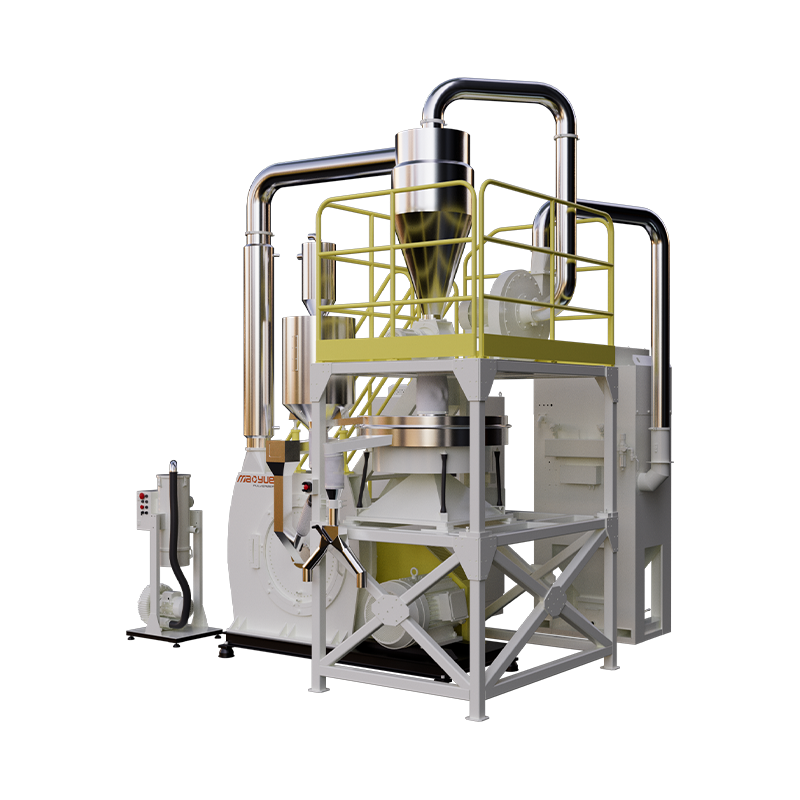
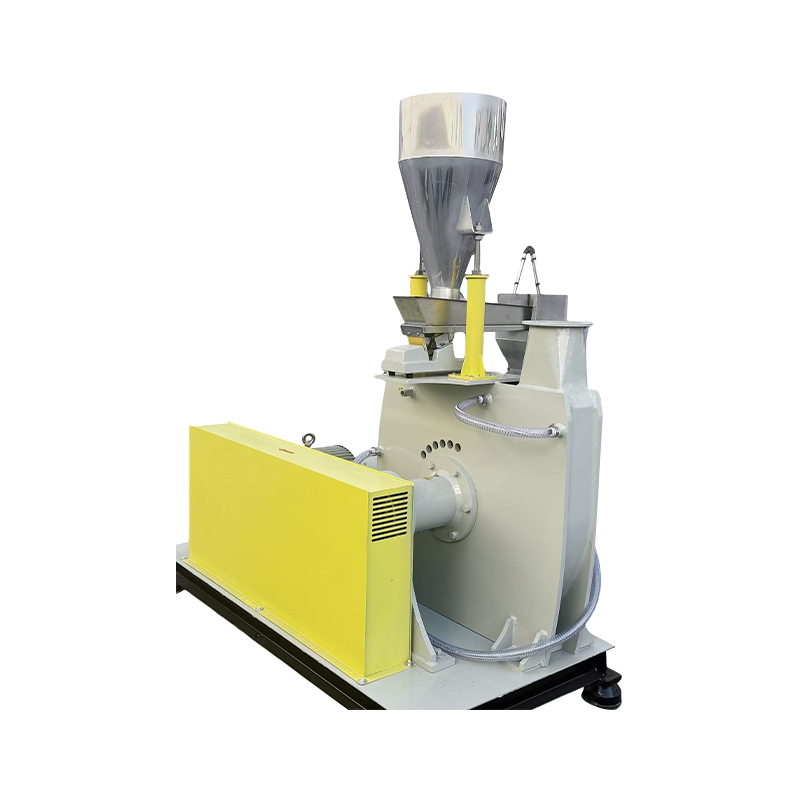
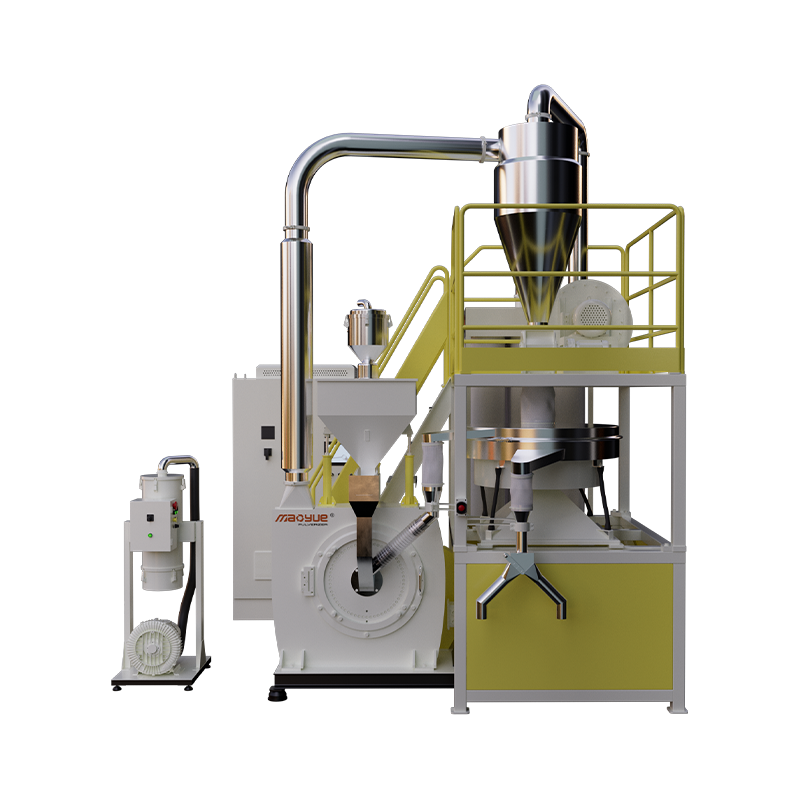
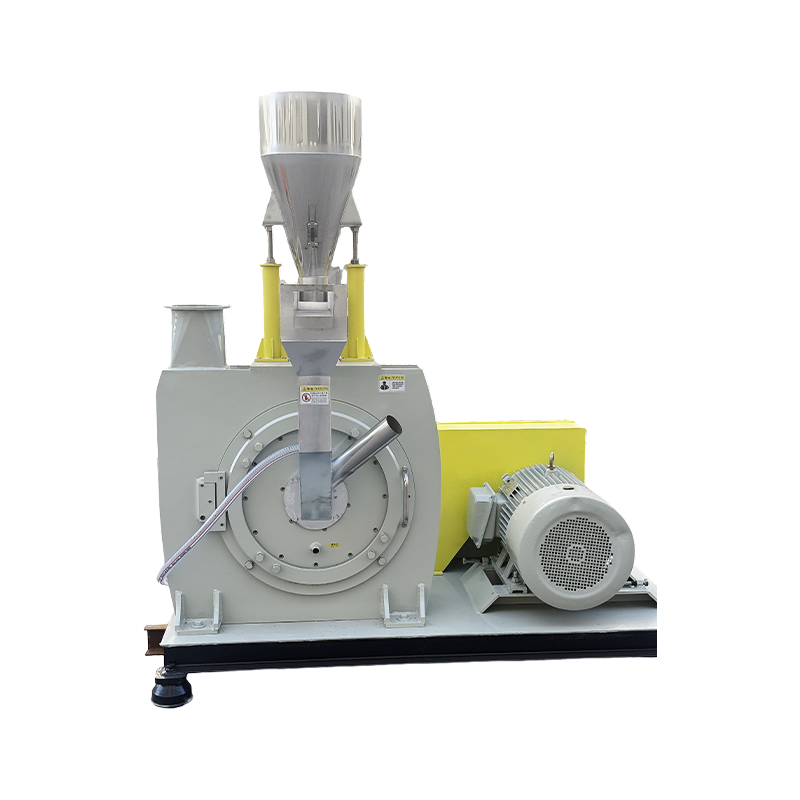
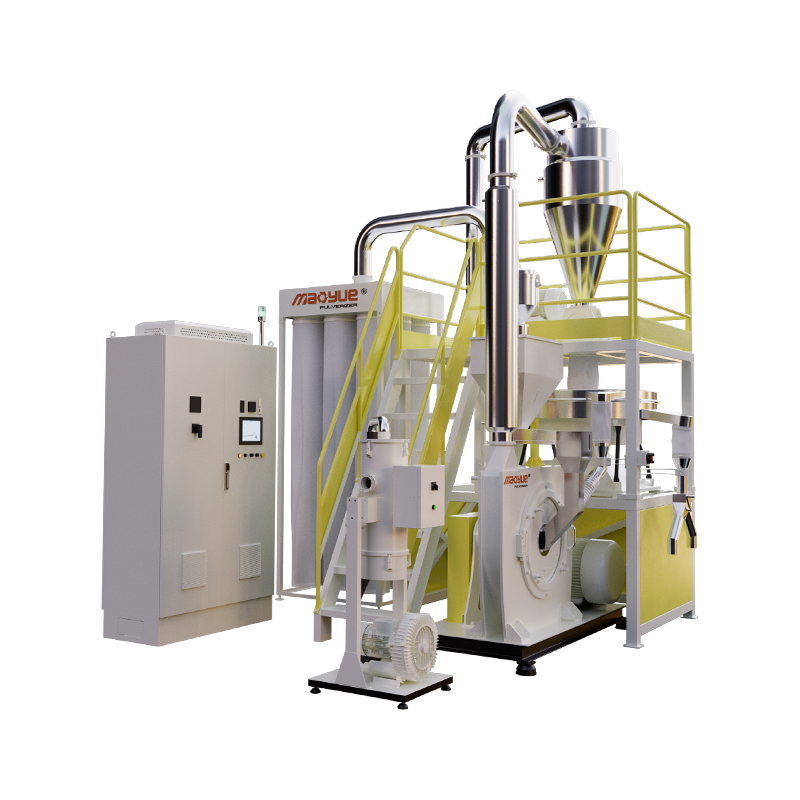
The 600-type PE rotomolding powder pulverizer is designed for manufacturers that need stable, uniform, and highly flowable polyethylene powder for medium-to-large rotational molding production. In rotomolding, powder quality directly affects product surface smoothness, wall thickness consistency, melt distribution, impact strength, and overall production yield. A pulverizer that merely grinds plastic is not enough; the machine must control particle size, temperature, airflow, vibration, dust, blade sharpness, and long-term mechanical stability. This 600-type pulverizer addresses these requirements with a balanced configuration that combines strong output, precise grinding, reliable cooling, advanced dust collection, and durable DC53 grinding discs.
Positioned between smaller laboratory or low-capacity machines and larger heavy-duty production lines, the 600-type model offers an attractive balance of capacity, footprint, energy consumption, and return on investment. It is especially suitable for PE rotomolding powder producers, rotational molding product factories, modified plastics manufacturers, masterbatch processors, recycling plants, SPC flooring material suppliers, hot-melt adhesive powder producers, and companies developing or scaling new polymer powder formulations. Its design focuses on stable continuous operation, low maintenance cost, particle uniformity, and powder quality consistency.
Changzhou Mao Yue Intelligent Equipment Co., Ltd. manufactures this pulverizer as part of a complete plastic crushing and pulverizing equipment portfolio. With approximately 30 years of experience in plastic size reduction, the company has developed strong manufacturing capabilities in grinding disc processing, machine assembly, dynamic balancing, welding, quality control, and customized pulverizing solutions. The 600-type PE rotomolding powder pulverizer reflects this industrial background by combining high-grade tooling materials, precision machining, intelligent temperature management, and an enclosed negative-pressure powder conveying system.
PE Rotomolding Powder High Uniformity 600 Pulverizer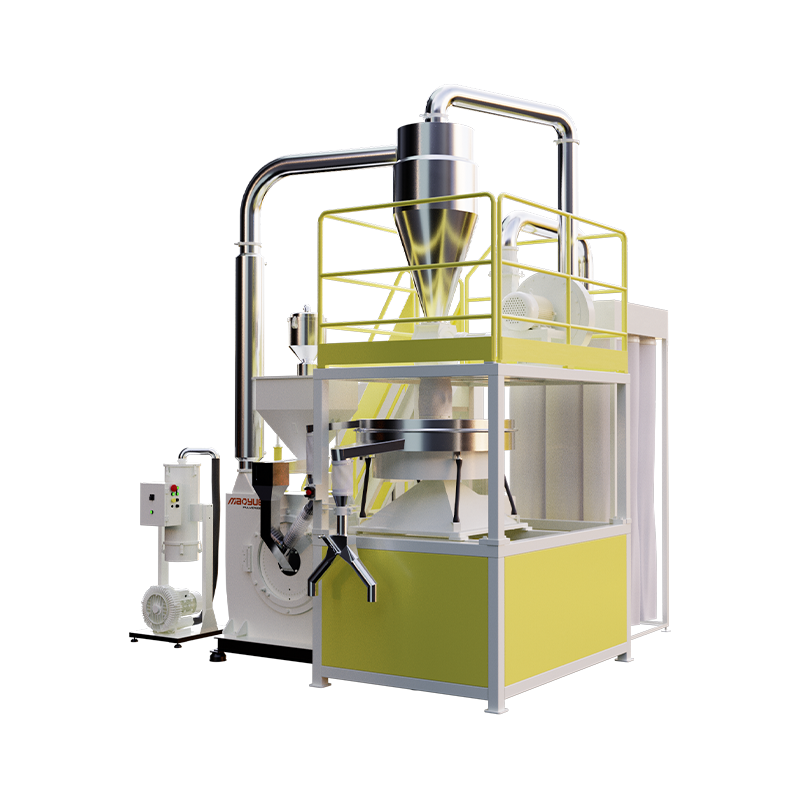
Why Powder Uniformity Matters in PE Rotomolding
Rotational molding is highly sensitive to the physical behavior of plastic powder. Unlike injection molding or extrusion, rotomolding relies on powder tumbling inside a heated mold until it melts, coats the inner surface, and forms the final hollow product. If the powder particles are too coarse, too uneven, or poorly flowing, the material may not distribute evenly during the heating cycle. The result can be rough surfaces, pinholes, weak corners, inconsistent wall thickness, trapped air, and reduced mechanical performance.
For polyethylene rotomolding, a good powder normally requires controlled particle size distribution, suitable bulk density, excellent dry flow, low dust content, minimal thermal degradation, and stable melting behavior. The pulverizer therefore becomes a critical part of the production chain. It determines whether granules are transformed into powder that can be used reliably in water tanks, pallets, trash bins, traffic barriers, kayaks, playground equipment, agricultural containers, storage boxes, and many other rotomolded products.
Competitor machines may emphasize motor power or nominal output, but rotomolding powder quality depends on more than throughput. A machine with unstable disc clearance, imprecise blade geometry, poor cooling, or excessive vibration can create inconsistent powder even when the motor is powerful. The 600-type pulverizer is developed around the idea that stability and precision are the true foundations of production efficiency. By improving grinding disc quality, temperature control, airflow management, and mechanical balance, it helps users produce powder that supports consistent rotomolding performance batch after batch.
Product Positioning: A Balanced Workhorse for Medium-to-Large Production
The 600-type PE rotomolding pulverizer is engineered as a flagship workhorse for medium-to-large powder production. It is larger and more productive than compact machines such as many 400-type or 500-type pulverizers, yet it remains more flexible and space-efficient than very large 800-type systems. This balance makes it practical for factories that have moved beyond small-batch production but do not want excessive investment, excessive floor space, or unnecessary power consumption.
Depending on raw material properties, mesh target, feeding stability, cooling conditions, and system configuration, the output range can vary. For standard PE rotomolding powder applications, the machine is commonly configured to support stable medium-to-high production. The provided configuration table lists a capacity range of 180–320 kg/h and a mesh range of 10–50 mesh, while broader application positioning may cover higher output ranges and finer powder targets when machine setup, raw material, disc condition, and process parameters are optimized. This difference should be understood as an application-dependent range rather than a contradiction. Actual performance is always influenced by polymer grade, melt index, granule size, required mesh, ambient temperature, screen selection, and operator settings.
For many factories, the most important benefit is not only peak hourly output but also stable output over long production periods. A pulverizer that can operate continuously with controlled heat, reduced vibration, sharp discs, and efficient dust collection provides better overall productivity than a machine that reaches a high output only for a short time before overheating, clogging, vibrating, or requiring frequent blade changes. The 600-type model is designed for 24-hour production environments where consistency is as valuable as speed.
Core Advantages Over Ordinary Pulverizers
The 600-type PE rotomolding powder pulverizer offers several advantages over many conventional machines used in plastic powder production. These advantages are not isolated features; they work together to improve powder uniformity, equipment reliability, and cost efficiency.
Precision DC53 Grinding Discs
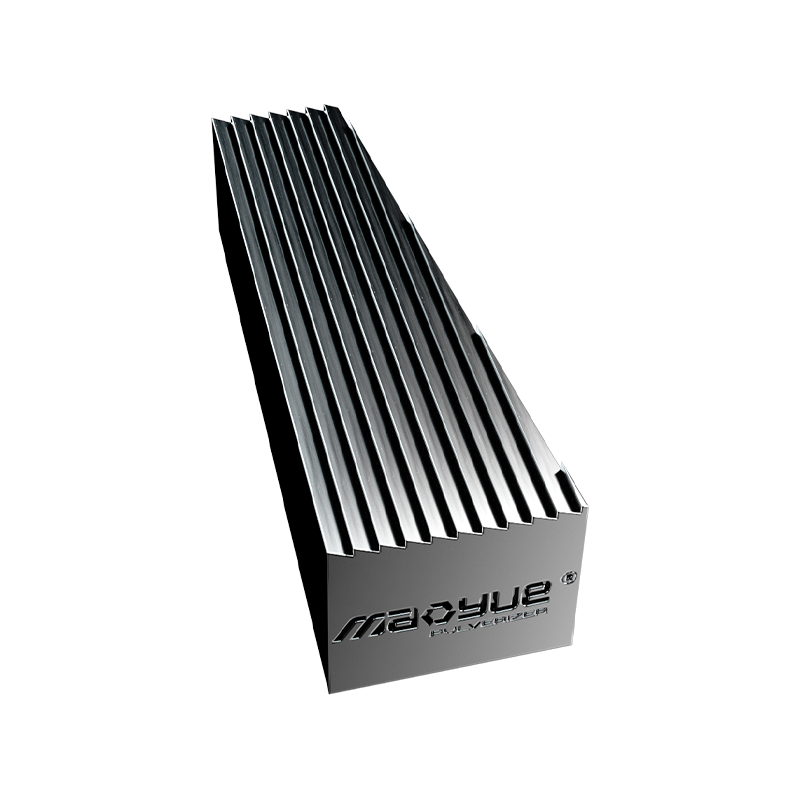
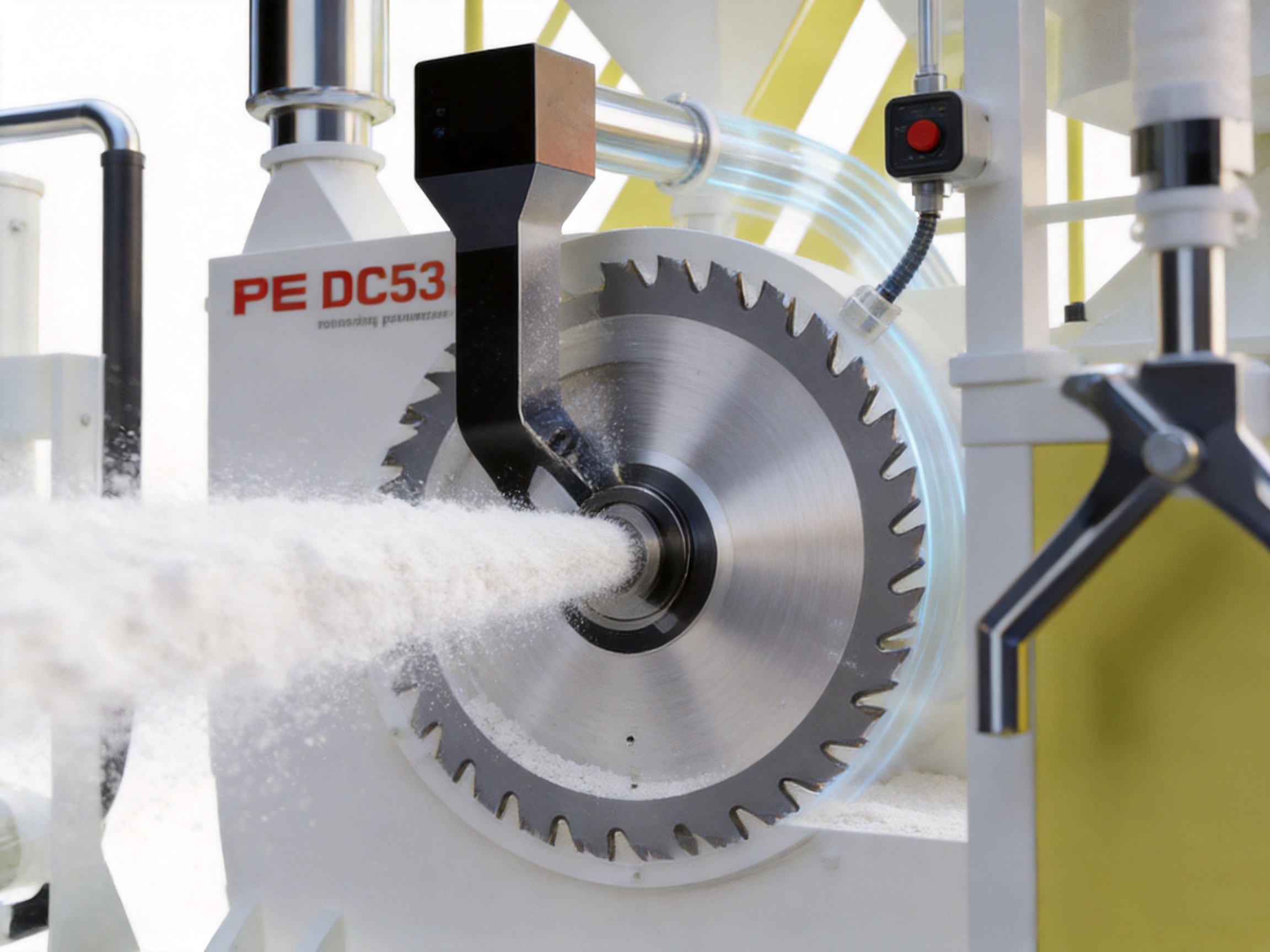
One of the most important components of any disc pulverizer is the grinding disc. The grinding disc determines cutting efficiency, particle shape, heat generation, service life, and powder distribution. This 600-type pulverizer uses DC53 high-grade cold-work mold steel for the grinding blades. DC53 is widely respected for its combination of hardness, toughness, wear resistance, and anti-chipping performance. With a hardness around HRC 62–64 after proper heat treatment, it provides the strength required for continuous plastic pulverizing.
Compared with conventional D2 steel discs, DC53 offers improved toughness and fatigue resistance. In many plastic pulverizing applications, this means a longer service life, more stable blade sharpness, and reduced risk of edge chipping. The supplied product information indicates that the service life may be 1.5–2.5 times longer than standard discs under suitable operating conditions. For a production factory, this directly reduces tooling cost, machine downtime, and maintenance labor.
Ordinary competitor machines often use lower-grade tool steel or discs with less precise heat treatment. Such discs may become dull faster, generate more heat, produce wider particle distribution, and require more frequent replacement. When pulverizing PE for rotomolding, dull or uneven discs can cause more fines, more irregular particles, and poorer flowability. The DC53 disc configuration provides a stronger foundation for high-uniformity powder production.
Tooth-by-Tooth CNC Grinding for Consistent Blade Geometry
Blade material alone is not enough. Even high-quality steel cannot deliver excellent powder if the tooth profile and blade angle are inconsistent. The manufacturer uses imported Taiwanese professional CNC tool grinders built to high precision standards for tooth-by-tooth grinding. This process supports micron-level consistency in blade angles and sharpness across the disc surface.
In pulverizing, small differences in blade geometry can create uneven cutting forces and inconsistent powder size. If one section of the disc cuts aggressively while another section rubs or overheats, the powder will show broader particle distribution and lower flow performance. Precision grinding helps each tooth participate evenly in the size reduction process. This improves cutting efficiency, reduces unnecessary heat, and supports a narrower particle size distribution.
This manufacturing strength is a major advantage over competitors that rely heavily on manual grinding or less advanced equipment. Manual processing may be acceptable for simple crushing blades, but rotomolding powder requires much higher control. The ability to grind discs accurately and repeatedly helps the 600-type pulverizer maintain quality not only when new, but also after disc refurbishing.
Professional Disc Refurbishing to Reduce Long-Term Cost
Grinding discs are consumable parts. Over time, even high-grade discs become dull due to friction, heat, and continuous cutting. A significant operating cost for pulverizing plants is the replacement or restoration of these discs. The manufacturer supports professional refurbishing of dulled discs, helping users extend tooling value. The refurbishment cost is typically only a fraction of the price of new discs, with the provided material indicating approximately one-quarter to one-third of the new disc cost.
This is an important long-term advantage. Some competitors sell machines at a low initial price but provide limited support for blade restoration. Users then face frequent replacement costs, inconsistent third-party grinding quality, or long downtime. By offering professional disc refurbishing based on the original grinding standards, the manufacturer helps users maintain powder quality while reducing maintenance expense.
Dynamic Balancing for Low Vibration and Long-Term Stability
High-speed pulverizing requires excellent balance. If the rotating disc or related components are not accurately balanced, the machine may vibrate, produce noise, damage bearings, loosen fasteners, reduce grinding precision, and shorten machine life. The 600-type pulverizer uses German-imported high-precision dynamic balancing equipment to balance each disc rigorously.
The result is industry-leading vibration control, often described by the famous “coin-standing” stability demonstration. Low vibration is not only a comfort feature; it directly affects powder quality and equipment reliability. A stable disc maintains more consistent clearance, reduces impact stress, and allows smoother high-speed rotation. It also contributes to lower noise levels, with the system designed to operate below 85 dB under suitable conditions.
Many ordinary pulverizers suffer from vibration after long use because their discs, pulleys, shafts, or rotating assemblies are not processed or balanced precisely. Vibration can gradually reduce productivity and increase maintenance costs. The 600-type pulverizer’s balancing process gives it an advantage in continuous industrial environments where stability is essential.
Temperature Control: Preventing Overheating, Sticking, and Degradation
PE pulverizing generates heat through cutting, friction, and air movement. If the grinding chamber temperature rises too high, powder may soften, stick, clump, smear on machine surfaces, or lose flowability. Excessive heat may also contribute to polymer degradation, discoloration, odor, or reduced performance in downstream molding. For rotomolding powder, temperature control is one of the most critical process requirements.
The 600-type pulverizer is equipped with a dual cooling concept combining a standard water-cooling jacket and forced air cooling. This design helps maintain the grinding chamber within a controlled temperature range, commonly around 50–80°C depending on process conditions. Multi-point temperature sensors and PLC intelligent control can be integrated to monitor and regulate the operating environment.
The benefit of dual cooling is that it manages heat from multiple directions. Water cooling removes heat from the machine body and grinding area, while forced airflow carries powder away quickly and helps reduce residence time in the hot zone. This is especially useful for PE, which can become problematic when temperature rises near its softening range. Stable cooling improves powder flowability, reduces screen blockage, prevents agglomeration, and supports continuous production.
Competitor machines with limited cooling may operate acceptably at low output but struggle during long shifts or hot weather. Operators may need to reduce feed rate, stop the machine, clean sticky powder, or accept inconsistent product. The 600-type pulverizer is designed to avoid these productivity losses by making temperature control a central part of the system rather than an optional accessory.
Enclosed Negative-Pressure Airflow and Dust Collection
Plastic powder production can generate fine dust. Dust affects workshop cleanliness, employee health, machine safety, and environmental compliance. In rotomolding powder plants, dust control is especially important because fine polyethylene particles can spread easily if the conveying and collection system is poorly sealed.
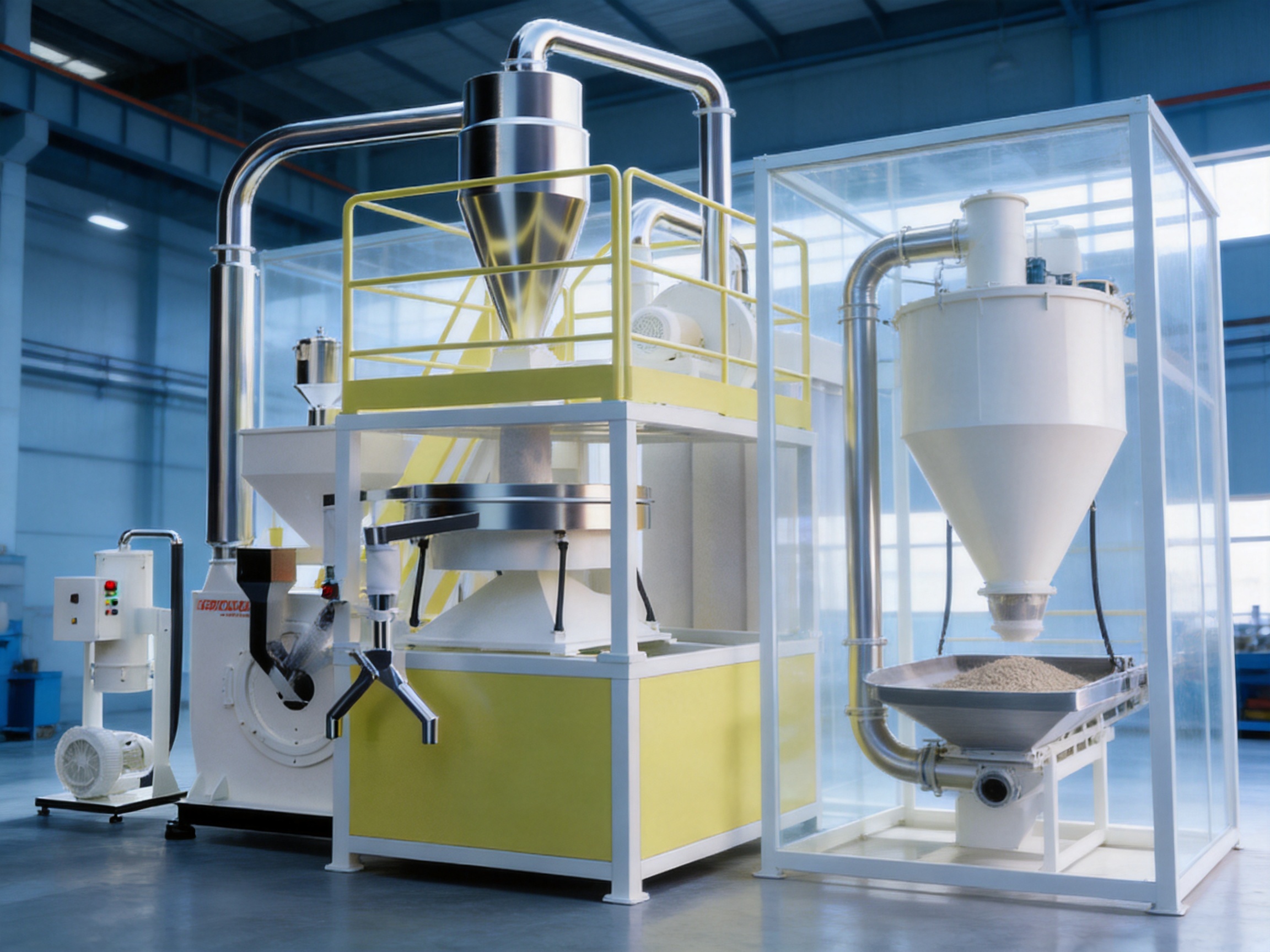
The 600-type pulverizer uses a fully enclosed negative-pressure airflow conveying system combined with a high-efficiency pulse bag dust collector. Negative pressure helps keep powder inside the system rather than allowing it to escape through gaps. The pulse bag collector captures fine dust efficiently, with the supplied product information indicating a dust capture rate above 99.9%. This supports cleaner production and helps factories meet environmental emission expectations.
Compared with open or semi-open systems, enclosed negative-pressure conveying brings several advantages. It reduces airborne dust, improves worker comfort, lowers cleanup labor, protects nearby equipment, and supports safer handling of fine powder. It also helps maintain material yield because more powder is collected instead of lost to the environment.
Dust control is another area where low-cost competitor machines may appear cheaper at purchase but become expensive during daily operation. Poor dust collection can create regulatory issues, housekeeping costs, contamination risks, and employee complaints. The 600-type system is designed as a complete powder production unit, not just a grinder, which makes it more suitable for modern factory requirements.
Detailed Technical Configuration
The following table summarizes the supplied technical configuration for the 600-type PE rotomolding powder pulverizer. Actual configurations can be adjusted according to production requirements, raw material characteristics, mesh target, automation level, and workshop layout.
Item |
Parameter |
Description |
1 |
Machine Type |
600-type PE rotomolding pulverizer |
2 |
Grinding Disc Diameter |
600 mm |
3 |
Typical Capacity |
180–320 kg/h for the listed configuration; actual output depends on material, mesh, and process settings |
4 |
Mesh Size |
10–50 mesh for the listed configuration; adjustable according to application requirements |
5 |
Main Drive Motor |
45/55 kW |
6 |
Speed Control |
Star-delta start, soft start, or inverter control |
7 |
Belt Pulley Standard |
European standard configuration |
8 |
Grinding Blade Material |
DC53 cold-work mold steel |
9 |
Blower Motor |
7.5 kW |
10 |
Pipe Material |
Stainless steel |
11 |
Pipe Diameter |
159 mm |
12 |
Swing Vibrator Diameter |
1200 mm |
13 |
Vibrating Screen Motor |
1.1 kW |
14 |
Feeding Method |
Vacuum feeding |
15 |
Dust Collector Bag Diameter |
300 mm |
16 |
Cooling Method |
Water cooling with inlet and outlet design, combined with airflow cooling |
How the 600-Type Pulverizer Improves Downstream Rotomolding Quality
The value of a pulverizer should be measured not only inside the powder room but also in the molding workshop. Better powder quality can improve the entire manufacturing chain. In rotational molding, high-uniformity PE powder melts more evenly, flows more smoothly, and coats the mold surface more consistently. This can help reduce common defects such as rough surfaces, thin corners, excessive porosity, weak weld lines, and uneven wall thickness.
Uniform powder also helps improve process repeatability. When particle size distribution changes from batch to batch, operators may need to adjust heating time, cooling time, mold rotation speed, or charge weight. These adjustments consume time and increase the chance of rejects. A stable pulverizer reduces this variability by delivering powder with more consistent physical behavior.
Flowability is another major factor. Powder that flows well fills corners and complex mold shapes more effectively. For products such as playground equipment, tanks, industrial containers, and custom hollow parts, flowability influences both appearance and structural reliability. Powder that clumps or bridges may cause uneven material placement, while powder with balanced particle size and low heat history performs more predictably.
The 600-type pulverizer’s sharp DC53 discs, precision blade geometry, cooling system, and balanced airflow all contribute to powder that is better suited for rotomolding. Instead of simply reducing granules into smaller pieces, the system is designed to create a controlled powder suitable for industrial production.
Manufacturing Strength Behind the Machine
A pulverizer’s performance depends heavily on the manufacturer’s production capability. Changzhou Mao Yue Intelligent Equipment Co., Ltd. is a source manufacturer with about 30 years of experience in plastic crushing and pulverizing equipment. This long operating history matters because pulverizing machines require practical knowledge of polymer behavior, machining tolerances, blade materials, airflow, vibration, and customer-specific production challenges.
The company operates six processing workshops, each averaging about 1,400 square meters. This production scale supports machining, welding, assembly, testing, component storage, and customization. A larger in-house manufacturing base also improves quality control because key components can be processed and inspected under one management system rather than outsourced randomly.
The technical team regularly studies advanced machine technologies from countries such as Germany. This learning approach is reflected in the adoption of German dynamic balancing equipment, high-precision grinding systems, and quality-focused manufacturing standards. The company’s production process emphasizes European quality expectations for components and machine reliability.
For grinding disc processing, the factory is equipped with Taiwan-imported high-precision grinding machines built to German standards. These machines are essential for producing accurate blade profiles and consistent tooth geometry. For rotating components, German dynamic balancing equipment helps reduce vibration and protect long-term performance. For structural fabrication, Japanese welding systems contribute to strong, stable frames and reliable machine bodies.
This combination of experience, equipment, and quality management gives the 600-type pulverizer a competitive foundation. Many suppliers can assemble a pulverizer, but fewer have the integrated capability to control disc material, blade grinding, dynamic balancing, welding quality, dust system matching, and after-sales refurbishment. For buyers, this reduces technical risk and supports long-term cooperation.
Quality Certifications and Industrial Credibility
The manufacturer has obtained CE mechanical certification and ISO 9001 quality management system certification. CE certification supports machine safety and compliance expectations for international markets, while ISO 9001 indicates a structured quality management approach. These certifications are valuable for customers who purchase equipment for export-oriented factories, regulated production environments, or corporate procurement systems requiring documented quality control.
Beyond certifications, the company has built long-term partnerships with more than 5,000 enterprises in domestic and international markets. This broad customer base suggests practical field experience across many plastic materials and production conditions. Pulverizing is rarely a one-size-fits-all process; customers may process PE, PVC, masterbatch, polymers, recycled materials, powder coating resins, and functional compounds. Experience with different materials helps the manufacturer recommend suitable disc types, cooling strategies, feeding methods, and screening configurations.
The company’s mission is to improve production efficiency, reduce labor intensity, and provide stable, high-quality pulverizing solutions for customers worldwide. The 600-type PE rotomolding powder pulverizer is a practical example of this mission because it combines automation-friendly feeding, enclosed conveying, efficient dust collection, and stable grinding performance.
Comparison With Smaller and Larger Pulverizers
Choosing the correct pulverizer size is an important investment decision. A machine that is too small may become a bottleneck, forcing long operating hours and limiting powder supply. A machine that is too large may consume unnecessary energy, require more space, and increase initial investment. The 600-type model occupies a useful middle position.
Compared with many 500-type machines, the 600-type pulverizer provides a larger disc diameter, stronger grinding capacity, and better suitability for medium-to-large production. The larger grinding area can improve throughput and reduce pressure on the machine when production demand increases. For factories supplying their own rotomolding lines or selling powder externally, this capacity increase can be important.
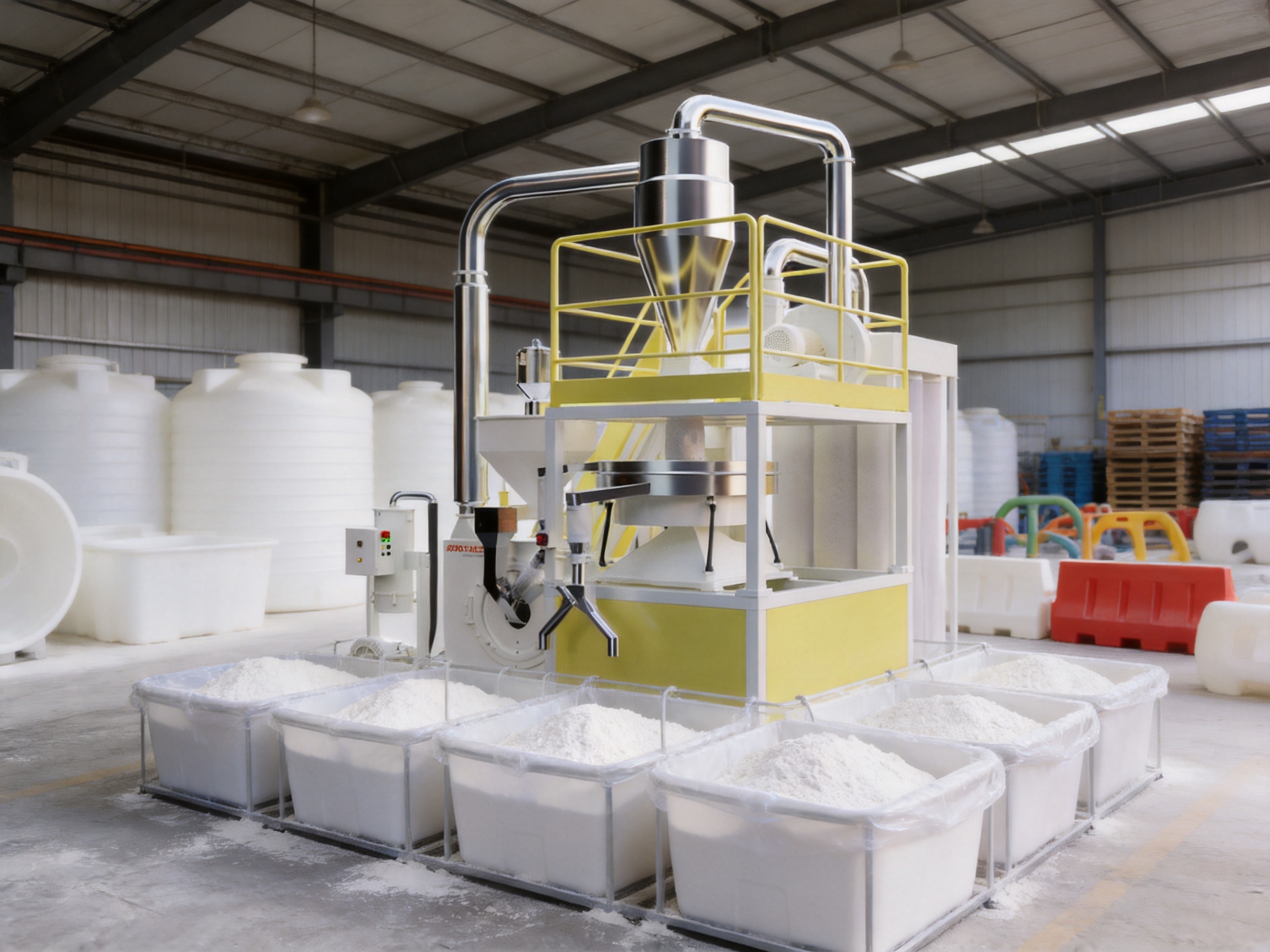
Compared with 800-type machines, the 600-type model is more compact and flexible. The provided information indicates that the system can occupy approximately 6–8 square meters depending on layout. It is easier to install in existing workshops, easier to match with moderate production demand, and often more economical in power consumption. For many mid-sized factories, an 800-type machine may be more capacity than needed, while the 600-type provides a better balance between investment and output.
The total power configuration is commonly in the 55–75 kW range depending on motor selection and auxiliary equipment. This provides enough strength for stable production while keeping energy cost manageable. When combined with longer blade life, lower reject rates, and improved throughput, many users can achieve a favorable return on investment. The supplied product information notes a typical ROI period of 6–12 months in suitable production conditions, supported by reduced electricity consumption per ton, fewer blade changes, reduced rejects, and increased production capacity.
Energy Efficiency and Cost of Ownership
The purchase price of a pulverizer is only one part of the total cost. A professional factory should consider cost per ton of finished powder. This includes electricity, blade wear, downtime, maintenance labor, powder loss, dust management, reject rate, and operator time. The 600-type pulverizer is designed to reduce total cost of ownership through several mechanisms.
First, high-quality DC53 grinding discs maintain sharpness longer, reducing the frequency of replacement. Second, professional disc refurbishing lowers the cost when discs become dull. Third, dynamic balancing protects bearings and mechanical parts from vibration-related damage. Fourth, efficient cooling reduces stoppages caused by overheating, sticking, and cleaning. Fifth, enclosed conveying and dust collection reduce material loss and housekeeping work. Sixth, stable powder quality can reduce downstream rotomolding rejects.
Energy efficiency is also linked to blade sharpness and powder transport. Dull blades often require more power to achieve the same output because they rub instead of cut. Poor airflow can cause material buildup, forcing operators to reduce feed rate or increase cleaning. A well-designed pulverizer uses power more productively by keeping the cutting process efficient and the material flow smooth.
For factories calculating investment value, it is useful to compare machines based on annual operating hours. A machine running one shift may tolerate more downtime than a machine running continuously. However, rotomolding powder suppliers and large product manufacturers often require long production periods. In these situations, the 600-type pulverizer’s stability, cooling, disc life, and dust control can generate significant savings over time.
Typical Application Scenarios
The 600-type PE rotomolding pulverizer is suitable for a wide range of plastic powder production applications. Its core market is PE rotomolding powder, but the same system concept can support other powder-related production needs with proper configuration and material evaluation.
Medium-to-Large Rotomolding Product Production
Factories producing water tanks, pallets, trash bins, road barriers, playground equipment, agricultural containers, and other hollow products require dependable powder supply. Internal powder production can help control cost, protect formulation confidentiality, and reduce reliance on external powder suppliers. The 600-type pulverizer gives these factories the capacity and quality control needed for daily production.
Commercial PE Rotomolding Powder Supply
Powder suppliers need consistent quality because their customers may use the powder in different molds and production lines. Uniformity, flowability, and repeatability are essential. The 600-type machine’s precision grinding and cooling features make it suitable for producing PE powder for customers with high expectations for surface appearance and mechanical performance.
Recycling and Re-Pulverizing Waste PE Rotomolding Products
Rotomolding factories often generate scrap, rejected products, trimming waste, or recycled PE materials. After proper crushing and preparation, some materials can be re-pulverized for reuse or blended into suitable applications. The 600-type pulverizer can support medium-scale recycling operations, helping factories reduce waste and improve material utilization. Material cleanliness, formulation compatibility, and quality requirements should always be evaluated before reuse.
SPC Flooring Core Layer Powder
Some powder applications in flooring materials require stable particle size and efficient production. With suitable configuration, the pulverizer can support medium-to-high output powder supply for SPC flooring core layer materials. The exact performance depends on formulation, filler content, material hardness, and required mesh.
Hot-Melt Adhesive Powder and Functional Powder
Hot-melt adhesive powder and functional polymer powders often require careful temperature control to avoid softening or sticking. The dual cooling system and enclosed conveying design are beneficial for such applications when the material is compatible with disc pulverizing. Testing is recommended to optimize disc clearance, feed rate, cooling temperature, and screen selection.
Pilot-Scale Amplification and Formula Optimization
For companies developing new rotomolding powders or modified PE formulas, the 600-type pulverizer can also support scale-up from small trials to practical production. It offers enough output to evaluate real manufacturing behavior while remaining more flexible than oversized production systems. This helps research teams and production engineers optimize formulations, additives, and processing conditions.
Operational Design for Continuous Production
The 600-type pulverizer is designed to support continuous production with reduced manual intervention. Vacuum feeding helps transfer material into the system efficiently and can reduce manual lifting. The stainless-steel pipe system supports clean conveying and durability. The swing vibrating screen and dust collector help separate and collect powder after grinding, forming a more complete production line.
PLC intelligent control can support temperature monitoring, operational stability, and process adjustment. Inverter control may be selected for speed regulation, allowing operators to adjust machine behavior according to material properties and target powder size. Soft start or star-delta starting options can reduce electrical impact during startup, depending on the user’s electrical system and budget.
Good operation also depends on correct raw material preparation. PE granules should be clean, dry, and suitable for pulverizing. Large recycled pieces should be pre-crushed to an appropriate size before feeding. Metal contamination should be avoided because it can damage grinding discs. Operators should monitor disc wear, chamber temperature, motor load, airflow, screen condition, and dust collector performance. With proper operation, the machine can maintain stable powder output and long service life.
Maintenance Considerations
Maintenance is simplified when a pulverizer is built with stable components and precise manufacturing. However, regular inspection remains essential. The grinding discs should be checked for wear and sharpness. When powder quality begins to decline, output drops, or temperature rises, disc condition should be evaluated. Professional refurbishment can restore cutting performance and reduce the need for new disc purchases.
Bearings, belts, pulleys, fasteners, and motor connections should be inspected according to the maintenance schedule. Because dynamic balancing reduces vibration, these components experience less stress than in poorly balanced machines, but preventive maintenance is still required. Cooling water flow should remain unobstructed, and the inlet and outlet should be checked for scale, leakage, or insufficient circulation.
The dust collector requires attention as well. Filter bags should be cleaned by the pulse system and replaced when worn or blocked. Poor dust collector performance can reduce airflow, lower output, increase chamber temperature, and allow dust leakage. Screens should be inspected for blockage or damage, especially when processing materials that may soften or contain additives.
Routine maintenance is not merely a repair activity; it is part of powder quality control. A well-maintained pulverizer produces more consistent powder, uses less power, and reduces unexpected downtime. The manufacturer’s ability to provide disc refurbishing, technical guidance, and customized solutions adds value throughout the machine’s life cycle.
Why This Pulverizer Is a Strong Choice Against Competitors
The 600-type PE rotomolding powder pulverizer stands out because it addresses the main weaknesses found in many ordinary machines. Some competitors focus mainly on low purchase price, but may compromise on disc steel, grinding precision, balancing accuracy, cooling capacity, dust sealing, or after-sales support. These compromises may not be obvious during a short demonstration, but they become costly during continuous production.
This machine’s competitive strength begins with its DC53 grinding discs, which provide better wear resistance and toughness than common alternatives. It continues with tooth-by-tooth CNC grinding, which improves blade consistency and particle uniformity. German dynamic balancing equipment supports low vibration and longer machine life. Dual cooling helps prevent PE sticking and degradation. Enclosed negative-pressure conveying and pulse dust collection improve workshop cleanliness and environmental performance. Professional disc refurbishing reduces long-term tooling cost.
The manufacturer’s 30 years of experience and large production base add further confidence. A machine is not only a set of parts; it is the result of process knowledge. The ability to understand different plastics, recommend configurations, process precision discs, balance rotating components, and support customers after installation is a major advantage. For buyers looking for stable production rather than short-term savings, this integrated capability is highly important.
Buyer Selection Guide
Before purchasing a PE rotomolding pulverizer, buyers should define their powder production target clearly. Important questions include the required hourly output, target mesh size, material grade, melt index, additive content, production hours per day, workshop space, dust emission requirements, cooling water availability, and downstream powder quality standard. These factors help determine whether the 600-type configuration is the best fit or whether a smaller or larger model should be considered.
Buyers should also request information about grinding disc material, heat treatment, blade grinding accuracy, dynamic balancing, cooling design, dust collector capacity, and after-sales support. A pulverizer should not be evaluated only by motor power or quoted capacity. Powder quality, maintenance cost, vibration, dust control, and machine stability are equally important.
For factories that produce PE rotomolding powder continuously, the 600-type model is often a strong choice because it balances productivity and cost. It is suitable for companies that require more output than entry-level machines but do not want the higher investment and space requirement of oversized systems. It can also be customized to suit different feeding, screening, conveying, and control requirements.
Q&A Section
Q1: What is the main purpose of the 600-type PE rotomolding pulverizer?
The machine is designed to pulverize polyethylene granules or prepared plastic material into powder suitable for rotational molding and other powder applications. Its main purpose is to produce uniform, flowable powder with stable particle size distribution for medium-to-large production needs.
Q2: Why is DC53 steel used for the grinding discs?
DC53 cold-work mold steel offers high hardness, toughness, fatigue resistance, and anti-chipping performance. Compared with many conventional disc materials, it can provide longer service life and more stable cutting performance, which helps reduce maintenance cost and improve powder uniformity.
Q3: How does precision CNC grinding improve powder quality?
Tooth-by-tooth CNC grinding ensures that blade angles and cutting edges are consistent. This allows the disc to cut material more evenly, reducing excessive fines, irregular particles, and heat generation. The result is a narrower particle size distribution and better powder flowability.
Q4: Why is cooling so important when pulverizing PE?
PE can soften, stick, or clump if the grinding temperature becomes too high. Effective cooling helps maintain a stable grinding chamber temperature, prevents powder agglomeration, protects material quality, and supports continuous production.
Q5: What advantages does the negative-pressure dust collection system provide?
The enclosed negative-pressure system keeps powder and dust inside the conveying path. Combined with a pulse bag dust collector, it improves workshop cleanliness, reduces powder loss, protects employee health, and supports environmental compliance.
Q6: How does the 600-type model compare with smaller machines?
Compared with smaller pulverizers, the 600-type model offers higher production capacity, stronger grinding performance, and better suitability for medium-to-large factories. It is appropriate for users whose production demand has exceeded small-machine capacity.
Q7: How does the 600-type model compare with larger 800-type systems?
The 600-type model is more compact, flexible, and cost-effective for many medium-to-large users. It provides strong output while avoiding the higher investment, larger footprint, and greater power demand of oversized systems.
Q8: Can dulled grinding discs be refurbished?
Yes. Professional disc refurbishing is available, allowing users to restore disc sharpness at a cost significantly lower than purchasing new discs. This reduces long-term tooling expense and helps maintain consistent powder quality.
Q9: What industries can use this pulverizer?
The machine is suitable for PE rotomolding powder production, rotomolding product factories, plastic recycling, modified plastics, functional masterbatch, SPC flooring material powder, hot-melt adhesive powder, and other compatible polymer powder applications.
Q10: What should buyers provide when requesting a configuration?
Buyers should provide material type, granule size, required mesh, expected capacity, daily operating hours, workshop layout, cooling conditions, dust emission requirements, and downstream application. This information helps the manufacturer recommend the most suitable configuration.
Conclusion
The 600-type PE rotomolding powder pulverizer is a practical and high-performance solution for factories that need stable powder quality, reliable continuous operation, and controlled long-term cost. Its value lies not only in grinding capacity but also in the precision and stability behind the powder production process. DC53 grinding discs, tooth-by-tooth CNC grinding, German dynamic balancing, dual cooling, enclosed negative-pressure conveying, and high-efficiency pulse dust collection combine to create a machine that addresses the real challenges of PE rotomolding powder production.
For rotomolding manufacturers, better powder means better products. It can improve surface finish, wall thickness consistency, melt distribution, flowability, and production repeatability. For powder suppliers, it helps deliver reliable material to customers. For recycling and modified plastics producers, it supports efficient size reduction with strong process control. For growing factories, it offers a balanced investment between smaller low-output machines and larger high-investment systems.
Changzhou Mao Yue Intelligent Equipment Co., Ltd. strengthens the product through approximately 30 years of manufacturing experience, six processing workshops, advanced grinding equipment, German balancing technology, Japanese welding systems, CE certification, ISO 9001 quality management, and long-term partnerships with thousands of enterprises. These manufacturing strengths make the 600-type pulverizer more than a machine; it is a complete powder production solution designed for stable quality, reduced maintenance cost, and long-term industrial value.
References
1. Crawford, R. J., and Kearns, M. P. Practical Guide to Rotational Moulding. Smithers Rapra Publishing.
2. Strong, A. Brent. Plastics: Materials and Processing. Pearson Education.
3. Harper, Charles A. Handbook of Plastics Technologies. McGraw-Hill.
4. Rosato, D. V., Rosato, D. V., and Rosato, M. G. Plastic Product Material and Process Selection Handbook. Elsevier.
5. Tadmor, Z., and Gogos, C. G. Principles of Polymer Processing. Wiley-Interscience.
6. ISO 9001 Quality Management Systems: Requirements. International Organization for Standardization.
7. European Machinery Safety Principles and CE Conformity Assessment Guidelines.