

 English
 русский
 Español
 عربى
عربى 中文简体
中文简体
 中文简体
中文简体
Content
- 1 Why Fine Plastic Powder Matters in Modern Recycling
- 2 Integrated Process Configuration
- 3 Technical Specification Overview
- 4 Advantages of Blade Cutting Over Conventional Crushing
- 5 Temperature Management for Heat-Sensitive Plastics
- 6 Manufacturing Quality and Engineering Strengths
- 7 Applications Across Plastic Recycling Industries
- 8 Operational Efficiency and Total Cost of Ownership
- 9 Automation, Safety, and Environmental Performance
- 10 Maintenance Recommendations
- 11 Installation and Material Preparation
- 12 Comparison with Hammer-Milling and Separate Grinding Systems
- 13 Quality of the Finished Powder
- 14 How to Select the Appropriate Configuration
- 15 Q&A: Blade-Type Crushing and Pulverizing Production Line
- 15.1 What materials can the line process?
- 15.2 What is the difference between the blade crusher and the disc pulverizer?
- 15.3 What powder sizes can be produced?
- 15.4 How does the system control overheating?
- 15.5 Is the line suitable for PVC and PET?
- 15.6 How much dust does the system produce?
- 15.7 Can the line process mixed rigid and flexible plastic?
- 15.8 What is the expected service life of the knives and grinding discs?
- 15.9 What certifications does the manufacturer have?
- 15.10 Can the production line be customized?
- 16 Conclusion
- 17 References
- 18 Product: Blade-type crushing and pulverizing production line
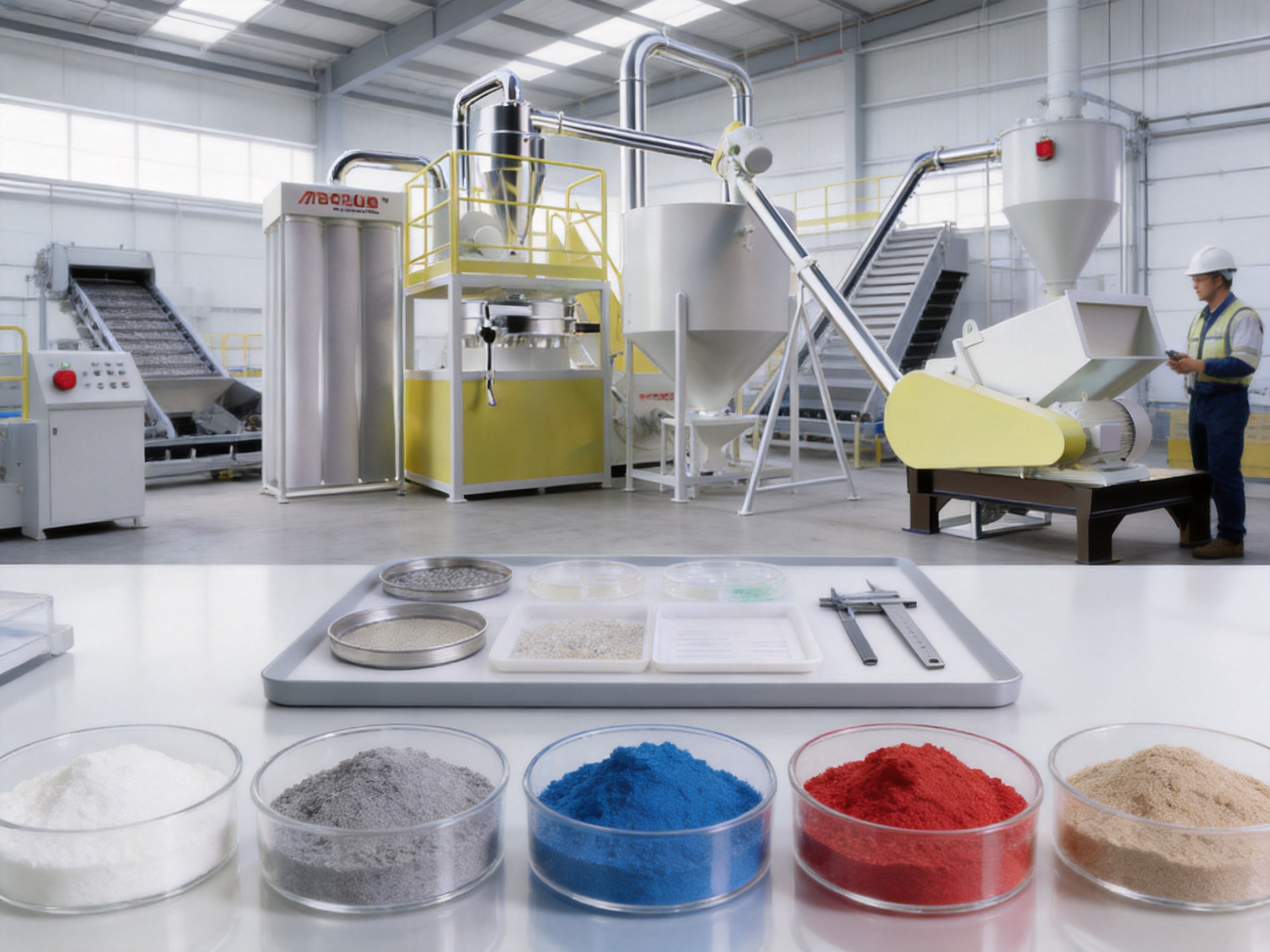
Plastic recycling is moving beyond simple size reduction. Modern recyclers increasingly require systems that can transform post-industrial and post-consumer plastic waste into consistent, clean, and commercially valuable powder. The quality of the final powder influences its dispersibility, flowability, color uniformity, processing stability, and suitability for reuse in injection molding, extrusion, masterbatch production, rotational molding, flooring, and modified plastics. For this reason, a recycling line must do more than break material into smaller pieces. It must control particle size, heat, dust, contamination, energy use, and equipment wear throughout the process.
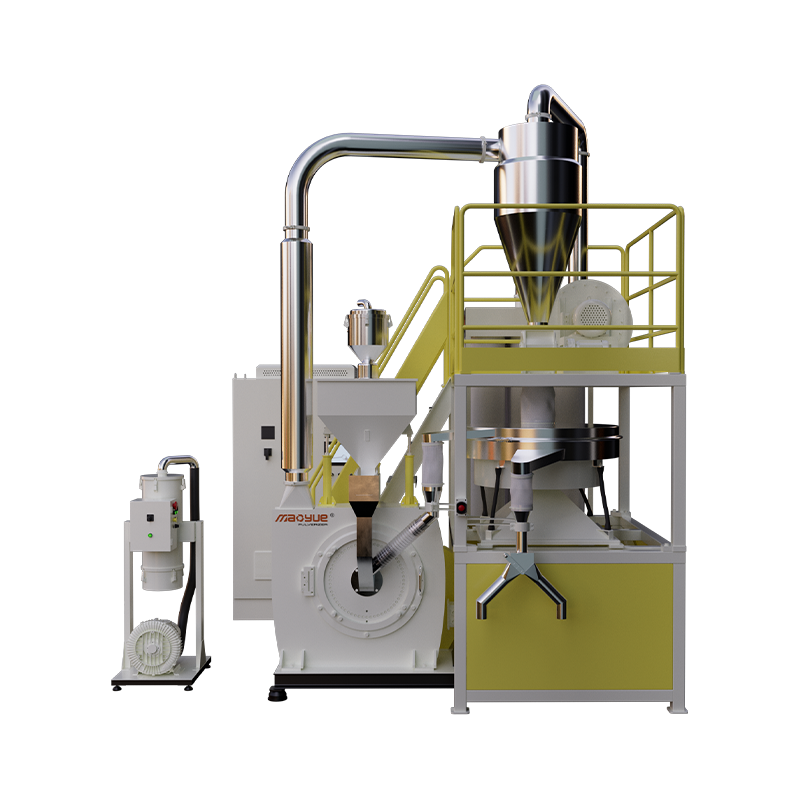
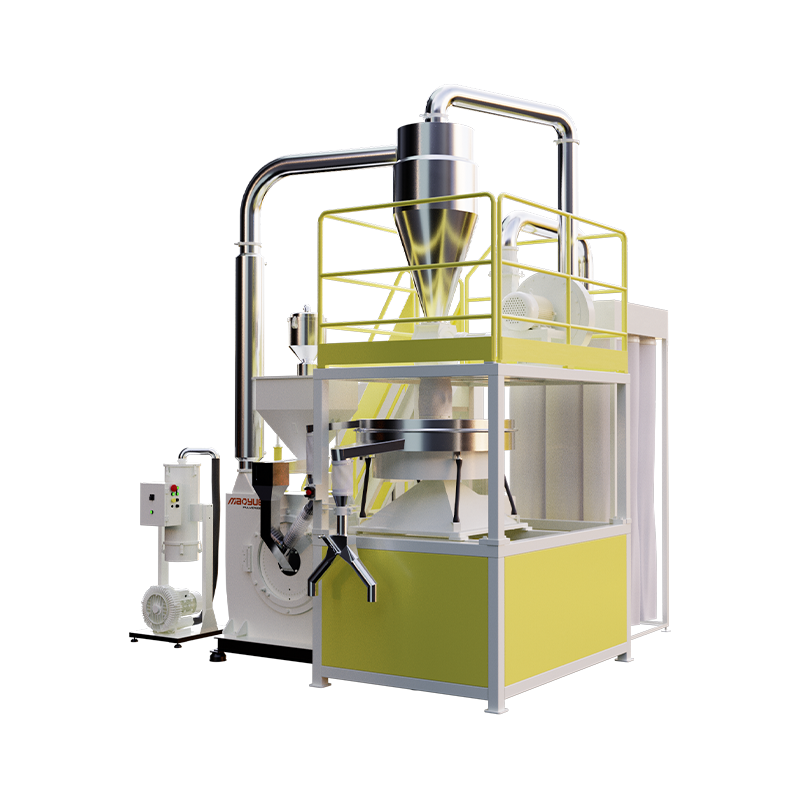
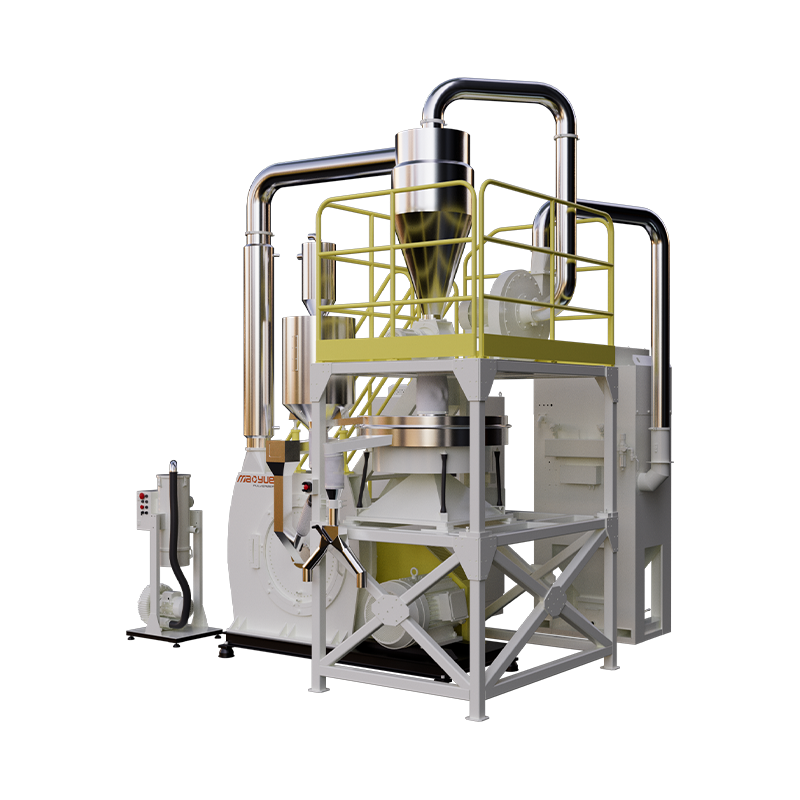
The blade-type crushing and pulverizing production line is an integrated solution developed for this purpose. It combines heavy-duty blade crushing, fine disc pulverizing, pneumatic conveying, cyclone separation, vibrating screening, temperature control, and pulse-jet dust collection in one continuous system. The line is designed for medium-hardness and relatively high-impact plastic waste, including PVC, PE, PP, PET, ABS, EVA, engineering plastics, injection-molded components, pipes, profiles, sheets, barrels, pallets, woven bags, film clumps, bottle flakes, appliance housings, and flooring scraps.
Unlike a conventional single-stage crusher or a loosely connected hammer-milling system, this production line is engineered as a coordinated process. Each section performs a defined function: the blade crusher reduces large and irregular feedstock into controlled pieces; the disc pulverizer converts those pieces into fine powder; the conveying and separation system transports and classifies the material; the screening unit supports particle-size consistency; and the dust collection system captures airborne fines. The result is a cleaner, more stable, and more efficient route from plastic scrap to reusable powder.
Why Fine Plastic Powder Matters in Modern Recycling
Recycled plastic powder is used in applications where uniform particle size and reliable material behavior are essential. In masterbatch production, fine and evenly distributed particles help improve pigment dispersion. In modified plastics, controlled powder characteristics support more predictable blending with virgin resin, fillers, stabilizers, and reinforcing agents. In rotational molding, particle flow and melting behavior affect mold coverage, wall thickness, and finished-surface quality. In PVC flooring and profile production, powder consistency influences extrusion stability and the appearance of the final product.
Large pieces, tangled films, brittle flakes, and mixed rigid materials are difficult to process reliably if the equipment is not matched to the material. A crusher that produces excessive fines may increase dust and energy consumption. A pulverizer operating without sufficient cooling may cause softening, adhesion, yellowing, or thermal degradation. A poorly balanced grinding disc can generate vibration, uneven wear, and unstable particle sizes. An open transfer system can release dust into the workshop and lose valuable powder.
The integrated blade-type line addresses these problems through a process layout designed around controlled cutting, controlled grinding, controlled conveying, and controlled temperature. It is especially useful for recyclers that want to increase the value of plastic scrap rather than sell it only as low-grade flakes or regrind.
Integrated Process Configuration
Heavy-Duty Blade Crushing
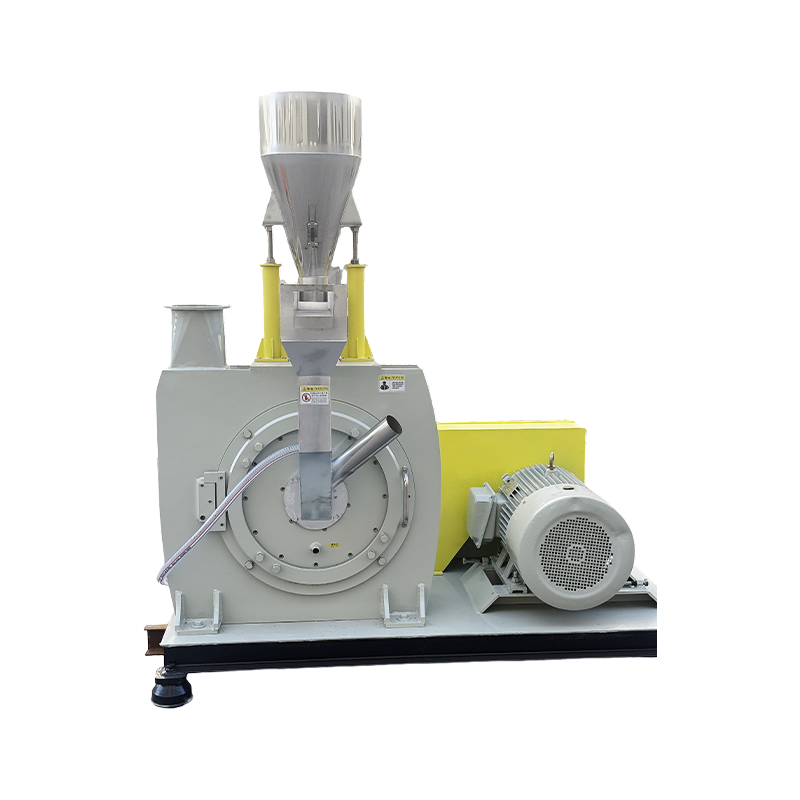
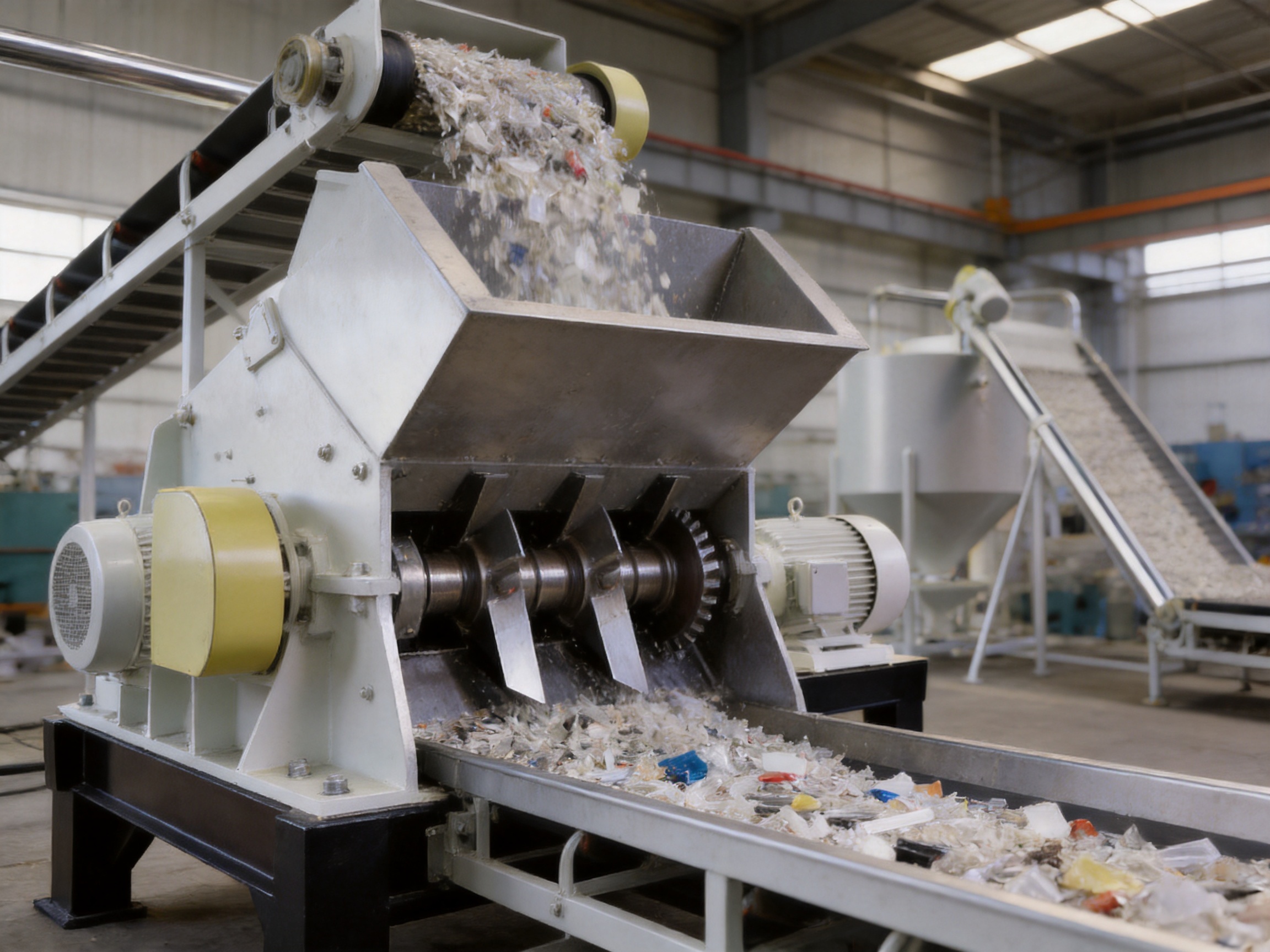
The front end of the line uses a heavy-duty blade crusher as the primary size-reduction machine. Instead of relying mainly on impact, the cutting chamber applies repeated shearing and slicing forces. Rotary knives mounted on the rotor work against fixed knives installed in the chamber. As the rotor turns, oversized plastic is drawn into the cutting zone and reduced progressively until it can pass through the specified screen opening.
This cutting action is appropriate for medium-hardness plastic waste that may be difficult for conventional impact equipment. Injection-molded parts, rigid packaging, profiles, electrical housings, pipe sections, pallets, and similar materials can be reduced into relatively uniform pieces before fine grinding. The controlled cutting process also helps limit the production of uncontrolled dust during the initial stage.
The crusher is available in several configurations, including models identified as 665, 1200, and 1500. These model ranges provide different knife quantities, capacities, motor options, and rotor speeds. The selection can therefore be matched to the material type, required throughput, feed characteristics, and desired production schedule.
Precision Disc Pulverizing
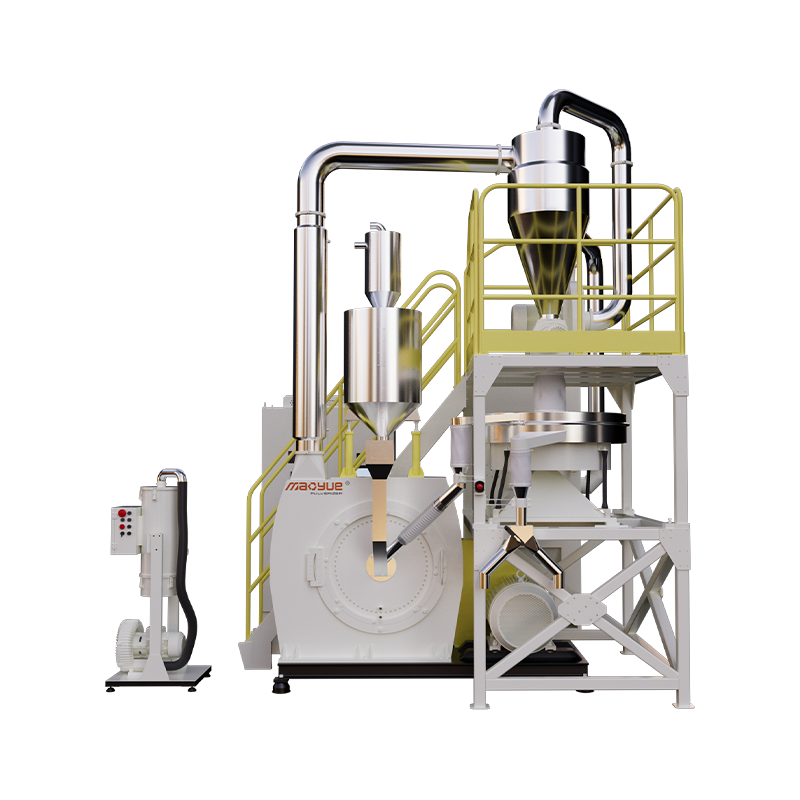
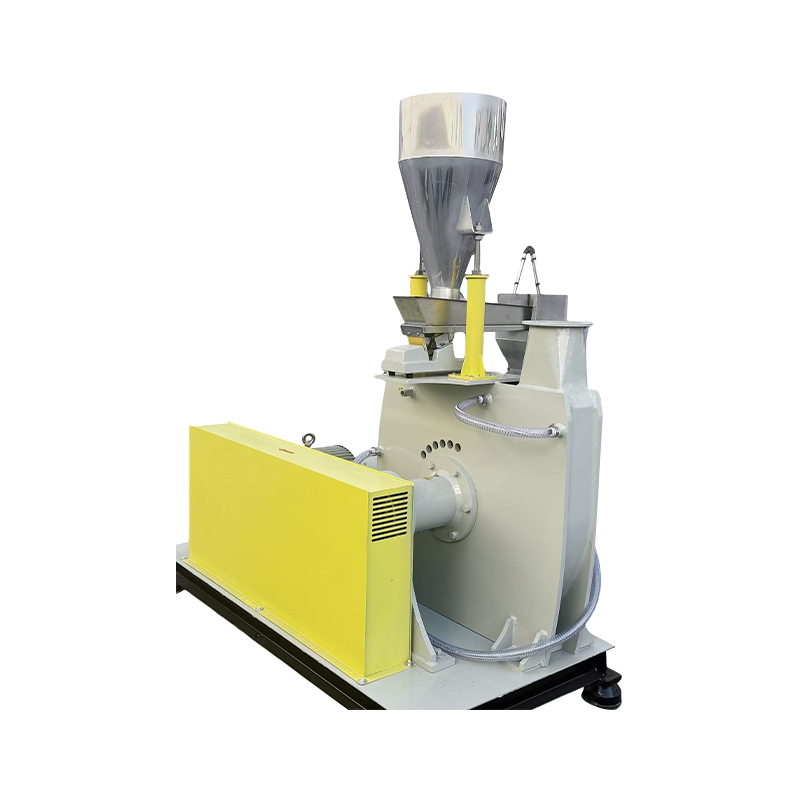
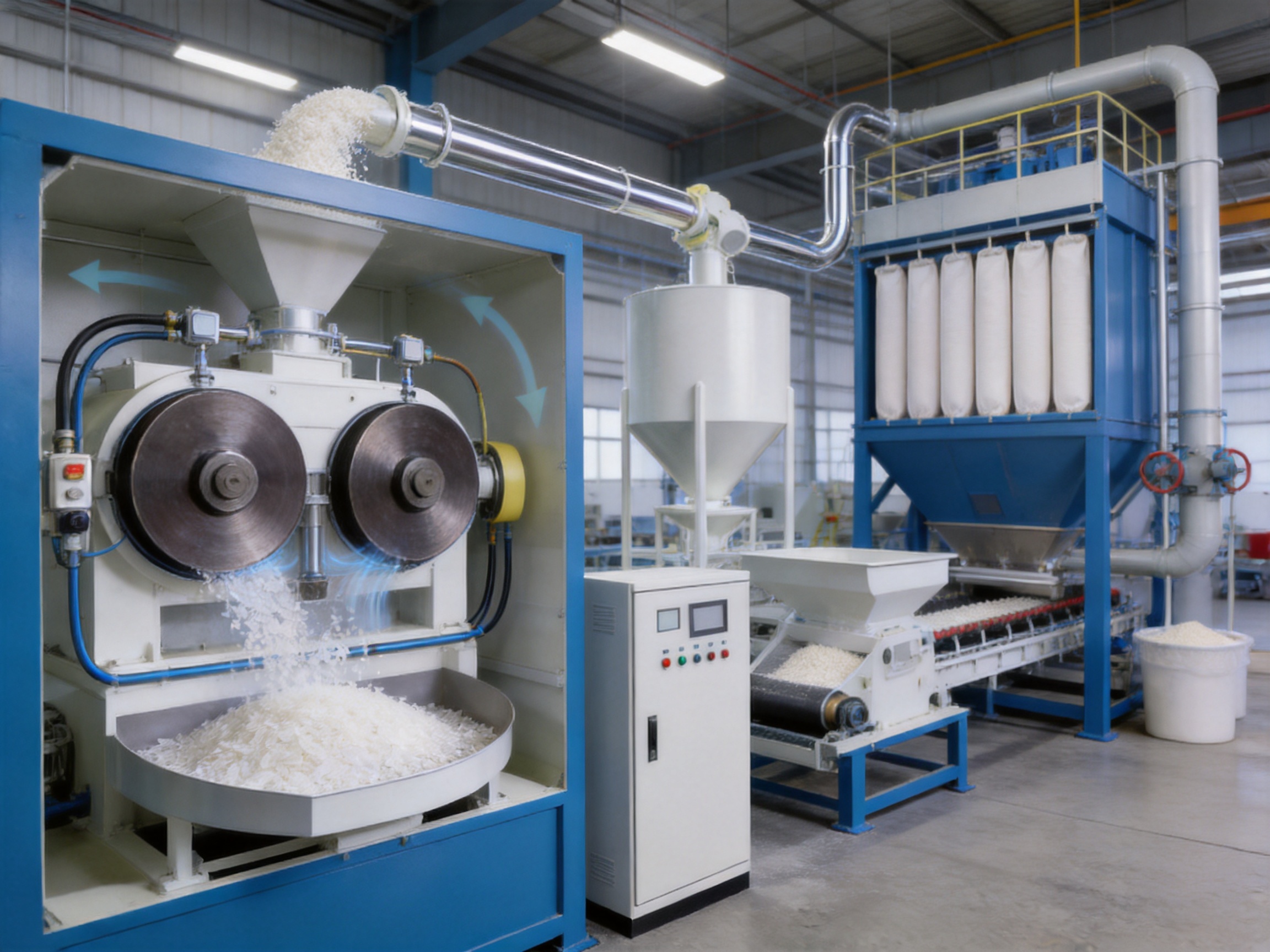
After coarse crushing, the material is transferred to a precision disc mill. The pulverizing section is available in 500, 600, and 800 models, allowing the line to be configured for different capacity and powder-production requirements. The grinding discs are made from DC53 high-grade mold steel, a material selected for hardness, wear resistance, and dimensional stability.
The grinding discs use a carefully machined tooth profile to create a controlled grinding gap and repeated frictional contact. The objective is not simply to produce the smallest possible particles. The objective is to produce a useful and consistent particle-size distribution with limited agglomeration, excessive fines, and heat generation. This distinction is important because powder that is too fine or thermally damaged may be less valuable than powder with a controlled and application-specific size range.
The manufacturing process includes Taiwan-imported CNC tooth-by-tooth precision grinding. This method supports accurate tooth geometry and stable grinding performance. German dynamic balancing calibration is also applied to rotating assemblies. Proper balancing reduces vibration, improves operating stability, protects bearings, and helps maintain consistent grinding conditions during long production cycles.
Negative-Pressure Pneumatic Conveying
The entire transfer route is designed around enclosed negative-pressure conveying. Instead of allowing ground material and air to escape freely into the workshop, the system draws material through sealed pipelines. This reduces dust leakage and supports a cleaner operating environment.
Negative-pressure conveying also helps maintain a controlled material path between the pulverizer, cyclone separator, screening section, and collection point. The reduced risk of leakage is particularly valuable when processing fine PVC, PET, ABS, masterbatch scraps, and other materials that can generate airborne powder. Enclosed conveying reduces product loss while supporting environmental compliance and easier housekeeping.
Cyclone Separation and Vibrating Screening
The cyclone section separates conveyed powder from the air stream and supports efficient material recovery. Its design helps direct processed particles toward the appropriate collection or screening stage while allowing the conveying air to continue toward filtration.
Vibrating screening provides an additional control point for particle size. Material that meets the required specification can proceed to collection, while oversize particles can be returned for further grinding or handled according to the production requirement. This arrangement improves product consistency and helps operators adapt the line to different powder specifications, including common ranges from approximately 20 to 80 mesh or finer, depending on the material and configuration.
Screening is especially valuable when the powder is intended for applications with strict flow and dispersion requirements. A narrow and stable particle-size distribution helps downstream processors reduce formulation variation and maintain more predictable processing conditions.
Pulse-Jet Baghouse Dust Collection
A pulse-jet baghouse dust collection system is integrated into the line to capture fine airborne particles. The system uses filtered bags and periodic compressed-air pulses to remove accumulated dust from the filter surfaces. This allows the filtration system to continue operating efficiently while the collected powder is recovered.
The complete line is designed to achieve a dust capture rate exceeding 99.9 percent under suitable operating conditions. Actual performance depends on installation, material characteristics, airflow, filter maintenance, and operating practices, but the enclosed design and high-efficiency filtration substantially reduce workshop dust. This improves employee protection, reduces cleaning requirements, and limits the loss of valuable fine material.
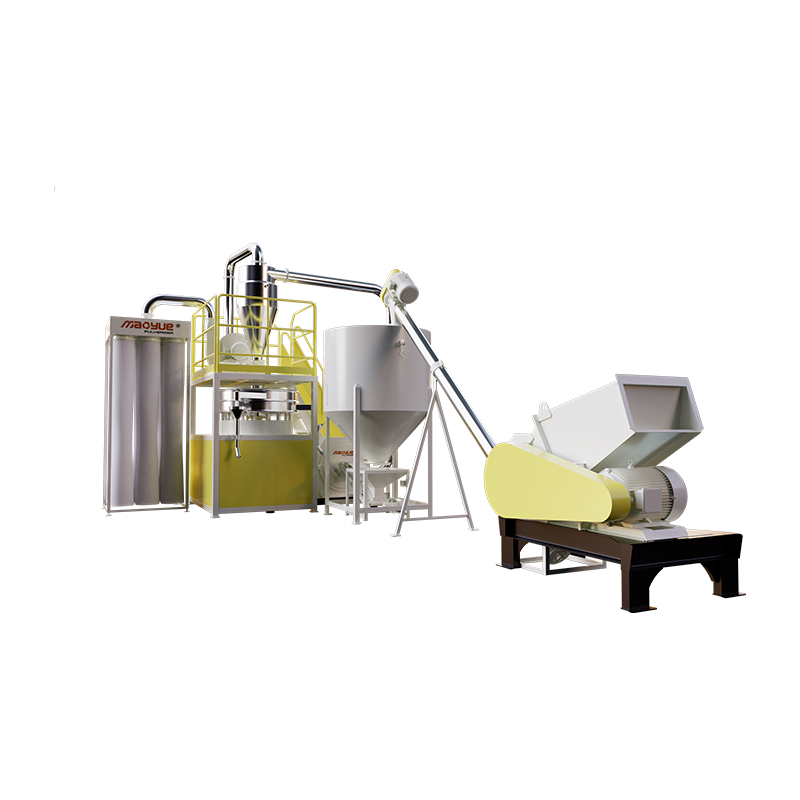
Blade-type crushing and pulverizing production line
Technical Specification Overview
The following specifications describe the principal blade-crusher configurations included in the production line. The exact final system may be customized according to raw material, capacity, powder specification, cooling requirements, and customer layout.
Item | Model 665 | Model 1200 | Model 1500 |
Type | 665 | 1200 | 1500 |
Knife quantity | 10 rotary knives, 4 fixed knives | 15 rotary knives, 6 fixed knives | 20 rotary knives, 8 fixed knives |
Capacity | 400–650 kg/h | 700–1,000 kg/h | 800–1,150 kg/h |
Screen opening | 16 mm | 16 mm | 16 mm |
Drive motor options | 22/30/37/45 kW | 30/45/55 kW | 45/55/75 kW |
Starting and speed control | Star-delta or soft start | Star-delta or soft start | Star-delta or soft start |
Bearing standard | Imported NSK bearings | Imported NSK bearings | Imported NSK bearings |
Knife material | 9CrSi | 9CrSi | 9CrSi |
Host speed | 550 r/min | 550 r/min | 650 r/min |
Feeding width | 665 mm | 665 mm | 665 mm |
The capacity figures are reference values rather than universal guarantees. Actual throughput varies according to bulk density, moisture, material hardness, feed shape, contamination, powder target, operator settings, and the selected pulverizer configuration. A proper technical evaluation should consider both the crusher capacity and the required output of the fine-grinding section.
Advantages of Blade Cutting Over Conventional Crushing
More Controlled Size Reduction
Blade cutting produces a more deliberate size-reduction pattern than uncontrolled impact. Rotary and fixed knives cut the material repeatedly, helping produce smaller pieces with less random breakage. This gives the downstream disc mill a more consistent feed and can improve its grinding efficiency.
Uniform coarse feed is important because very large pieces may overload the pulverizer, while excessive fines may increase heat and dust. By preparing the material properly, the crusher supports a smoother load profile and more stable overall production.
Reduced Risk of Entanglement
Plastic recycling often involves a mixture of rigid and flexible materials. Film clumps, woven bags, thin sheets, and flexible packaging can wrap around rotating components in unsuitable machines. The multi-blade cutting structure is designed to continuously engage and cut the material rather than allowing long pieces to circulate indefinitely.
Reduced entanglement lowers the risk of rotor blockage, blade jamming, and unplanned shutdowns. It also improves operator safety because less manual intervention is required in the cutting chamber.
Lower Dust Generation During Primary Processing
Hammer-type crushers can create a large amount of uncontrolled impact dust, particularly when processing brittle plastics. Blade cutting generally produces a more controlled coarse fraction and avoids unnecessary pulverization in the first stage. Fine powder is generated primarily in the disc mill, where it can be handled by the enclosed pneumatic conveying and dust collection system.
Separating cutting from fine grinding makes it easier to manage dust. The system can apply the appropriate airflow and filtration to the section where fine particles are actually produced.
Longer Tool Service Intervals
Tool life depends on material contamination, feed conditions, knife clearance, operating speed, and maintenance practices. However, a cutting system that uses controlled shearing rather than excessive impact can reduce unnecessary mechanical shock. The use of 9CrSi knife material, DC53 grinding discs, accurate machining, and balanced rotating assemblies further supports reliable operation.
Longer service intervals can reduce downtime and labor requirements. When maintenance is needed, modular components and accessible machine sections help simplify inspection, sharpening, replacement, and cleaning.
Temperature Management for Heat-Sensitive Plastics
Heat is one of the most important variables in plastic pulverizing. PVC, PET, ABS, and other heat-sensitive materials can soften, stick to grinding surfaces, discolor, or degrade if the temperature rises beyond a suitable range. A line that produces fine powder but damages its material cannot deliver high-value recycling.
The pulverizing section uses a reinforced dual cooling system. Multi-point temperature sensors monitor conditions at important locations, while PLC-based control supports automatic adjustment and alarm management. The grinding chamber temperature is designed to remain within approximately 50–80°C, depending on the material, feed rate, cooling conditions, and operating settings.
Temperature control provides several benefits. It helps prevent powder from adhering to the grinding disc. It reduces the chance of yellowing and thermal degradation. It supports better powder flow and lowers the risk of agglomeration. It also helps maintain more stable product quality during long production runs.
The coarse-crushing section can be equipped with air cooling or localized water cooling around the blade area. Air cooling is useful where water must be avoided or where a simpler installation is preferred. Localized water cooling can provide stronger heat removal in demanding applications, provided that moisture management and material compatibility are properly considered.
Temperature control must be treated as a complete process responsibility rather than only a machine feature. Operators should monitor feed rate, ambient conditions, material moisture, screen condition, knife sharpness, grinding gap, and airflow. A dull knife or blocked screen can increase friction and cause unnecessary temperature rise. Correct maintenance therefore contributes directly to thermal stability.
Manufacturing Quality and Engineering Strengths
Precision Machining
Changzhou Mao Yue Intelligent Equipment Co., Ltd. has developed its equipment around precision machining and specialized production control. The company operates six processing workshops, each averaging approximately 1,400 square meters. This manufacturing capacity supports the production of pulverizers, crushers, conveying assemblies, cooling components, screening units, and related equipment.
Taiwan-imported high-precision grinding machines are used to manufacture critical grinding components. Accurate machining is important because small deviations in disc geometry, tooth profile, clearance, or mounting surfaces can influence vibration, energy consumption, wear, and particle-size distribution.
Precision machining also improves interchangeability during maintenance. When replacement components are manufactured to controlled dimensions, users can replace wear parts more efficiently and return the machine to service with less adjustment.
Dynamic Balancing
High-speed rotating assemblies require effective dynamic balancing. Imbalance creates centrifugal forces that can increase vibration and place additional stress on bearings, shafts, housings, and foundations. It may also influence the consistency of the grinding gap.
German dynamic balancing equipment is used in the manufacturing process to calibrate rotating components. This supports smoother operation, lower mechanical stress, and improved service life. Dynamic balancing is particularly valuable in fine pulverizing equipment, where stable high-speed rotation is directly connected to product consistency.
Welding and Structural Reliability
Machine frames, hoppers, ducts, platforms, and support structures must withstand vibration, material loading, thermal cycling, and continuous industrial operation. Japanese welding systems are used in the factory to support reliable structural fabrication. Proper welding quality helps reduce deformation and improves the fit of connected modules.
A rigid structure also contributes to lower vibration and better alignment. When the frame, motor base, bearing supports, and pulverizer housing remain stable, the equipment can maintain its designed operating condition for longer periods.
European-Oriented Quality Standards
The manufacturer focuses on producing components according to European quality standards and has obtained CE mechanical certification and ISO 9001 quality management system certification. These certifications do not replace correct installation, operation, or maintenance, but they demonstrate a structured approach to safety, manufacturing control, and quality management.
For international customers, documented production procedures and recognized certification can simplify project evaluation. They also provide a foundation for discussing electrical requirements, guarding, emergency stops, dust handling, component inspection, and technical documentation before shipment.
Technical Experience and Application Knowledge
With approximately 30 years of experience in plastic crushing and pulverizing equipment, the company has served customers in rotational molding, masterbatch, polymers, PVC, PE, recycling, powder coating, and related industries. Long-term application experience is important because plastic waste is not a single material category. Two materials with similar names may have very different behavior due to fillers, additives, moisture, impact modifiers, pigments, reinforcement, or previous processing history.
The manufacturer reports long-term partnerships with more than 5,000 enterprises in domestic and international markets. This broad customer base contributes to practical knowledge about machine selection, line integration, troubleshooting, material testing, and process optimization.
Applications Across Plastic Recycling Industries
Injection-Molding and Blow-Molding Waste
Injection-molded runners, rejected parts, housings, toys, caps, containers, and production scraps can be processed through the blade crusher and disc mill. The system reduces irregular pieces into a uniform powder that may be reused in injection molding, modified compounds, or masterbatch production, subject to material identification and quality control.
Blow-molding waste, including bottles and containers, can also be processed after suitable sorting and preparation. Removing foreign materials, labels, metal, and incompatible polymers is essential before pulverizing. Clean and correctly separated feedstock produces a more valuable and stable powder.
PET Bottle Flakes and Sheet Waste
PET is relatively brittle compared with many flexible polyolefins, making it suitable for controlled cutting and fine grinding when the equipment is correctly configured. Waste PET bottles, sheets, packaging straps, and similar materials can be reduced into powder for use in regenerated sheets, fibers, injection-molded products, and other applications.
PET processing requires special attention to contamination and moisture. Water, dirt, adhesives, and incompatible polymers can affect powder quality and downstream processing. Drying and sorting should therefore be integrated into the overall recycling plan when required.
ABS and PS Engineering Plastics
ABS and PS waste can come from appliance casings, keyboards, monitor housings, consumer products, toys, and industrial components. These materials can be transformed into uniform powder for reuse in injection molding, modification, or composite materials.
Consistent particle size supports more reliable blending with additives and other resins. For engineering plastic recycling, it is also important to separate flame-retardant grades, filled grades, painted components, and incompatible polymers whenever possible.
PVC Film, Profiles, and Flooring Offcuts
The line is suitable for PVC film, rigid PVC, mixed rigid and flexible PVC compounds, pipe scraps, profile waste, and flooring offcuts. These materials may be processed into powder for pipe extrusion, flooring substrates, profile regeneration, and other PVC applications.
PVC is particularly sensitive to thermal conditions. The dual cooling system, temperature sensors, and PLC control help reduce the risk of overheating and degradation during grinding. Operators should nevertheless use appropriate stabilizers, sorting practices, and temperature limits based on the specific PVC formulation.
Masterbatch and Functional Masterbatch Waste
Masterbatch scraps and production waste can be coarse-crushed and finely pulverized before being returned to suitable production streams. Fine powder with good dispersion characteristics can support masterbatch remanufacturing or the production of functional compounds.
Color separation is important in this application. Mixing incompatible colors may lower product value even when the particle size is excellent. A well-designed recycling program should separate colors and resin types before feeding the line.
Rotational-Molding Powder
Rotational molding depends heavily on powder flow, melting behavior, and particle distribution. A stable fine powder can help improve mold coverage and reduce defects caused by irregular feedstock. The disc pulverizer is therefore relevant to producers of tanks, containers, playground equipment, automotive components, and other rotationally molded products.
The exact particle-size requirement depends on the mold, resin, wall thickness, cycle time, and processing temperature. Screening and adjustable process parameters allow the line to be configured for a range of powder specifications.
Operational Efficiency and Total Cost of Ownership
Equipment cost is only one part of a recycling investment. Energy consumption, labor, maintenance, dust management, product loss, downtime, and the value of the recovered powder all contribute to the total cost of ownership.
The blade-type line can reduce operating costs in several ways. Controlled cutting lowers the likelihood of jamming and unnecessary reprocessing. Efficient disc grinding reduces the need for multiple independent size-reduction stages. Enclosed conveying limits material loss and cleaning labor. Automatic temperature monitoring reduces the risk of producing degraded batches. Balanced rotating components and durable wear parts support longer service intervals.
Energy efficiency is influenced by many factors, including feed size, material hardness, moisture, target mesh, motor selection, and line loading. A properly prepared feedstock requires less work than large, tangled, or contaminated material. The front-end crusher therefore plays a role in reducing the energy burden on the fine pulverizer.
Labor requirements may also be reduced because the line is designed for continuous automated processing. Operators can supervise the control system, monitor temperature and pressure, inspect product quality, and perform scheduled maintenance instead of manually transferring material between separate machines.
Payback depends on the purchase price, production hours, local energy rates, labor cost, raw material availability, powder selling price, and the percentage of material successfully recovered. A technical and financial assessment should use actual samples and realistic operating data rather than relying only on nominal capacity.
Automation, Safety, and Environmental Performance
The line uses PLC intelligent control to coordinate machine operation and monitor important process conditions. Temperature sensors, motor protection, conveying controls, screening, and dust collection can be integrated into a central operating system. Automation improves repeatability and helps operators identify abnormal conditions before they become serious failures.
Safety design should include guarding around rotating components, emergency-stop devices, appropriate access doors, overload protection, interlocks, and safe procedures for cleaning and maintenance. Operators must never enter a crusher or pulverizer chamber until all energy sources have been isolated and the equipment has fully stopped.
Dust control is both an environmental and occupational-health issue. Plastic powder can irritate the respiratory system, contaminate nearby equipment, and create housekeeping problems. Some dust may also present a combustible-dust risk depending on its composition and concentration. The system’s enclosed negative-pressure design and pulse-jet baghouse help reduce airborne dust, but the final installation should still be evaluated according to local regulations and the specific plastic being processed.
Proper ventilation, filter inspection, grounding, electrical protection, housekeeping, and personal protective equipment remain necessary. The dust collection system should be sized correctly, inspected regularly, and operated with suitable pressure and airflow. Bags must be replaced when damaged or excessively blocked.
Maintenance Recommendations
Knife Inspection and Sharpening
Sharp knives reduce cutting resistance and help maintain consistent coarse particle size. Dull knives increase friction, energy consumption, heat, vibration, and the likelihood of irregular feed. Operators should inspect knife edges regularly and sharpen or replace them according to wear condition.
Knife clearance should also be checked. Excessive clearance can reduce cutting quality, while insufficient clearance may increase mechanical contact and damage. Correct tightening torque and proper alignment are essential after knife maintenance.
Grinding Disc Inspection
Grinding discs gradually wear as material passes through the chamber. Wear can change the grinding gap and affect particle-size distribution. The discs should be inspected for tooth damage, uneven wear, cracks, and material buildup.
Cleaning should be performed with approved procedures that avoid damaging precision surfaces. When discs are replaced or repositioned, the assembly should be balanced and aligned according to the manufacturer’s instructions.
Bearing and Drive-System Care
Bearings should be lubricated at the recommended intervals and monitored for temperature, noise, and vibration. Imported NSK bearings are specified for the blade crusher, but even high-quality bearings require correct lubrication, alignment, sealing, and loading.
Belts, pulleys, couplings, shafts, and motor mounts should be checked during scheduled maintenance. Loose belts can slip and generate heat, while excessive tension can overload bearings. Vibration changes should be investigated rather than ignored.
Cooling and Dust-Collection Maintenance
Cooling circuits should be checked for blockage, leakage, pump performance, airflow, and sensor accuracy. A cooling system that is partially blocked may appear to operate normally while allowing the grinding chamber temperature to rise gradually.
Baghouse filters require regular inspection. Damaged bags can release dust downstream, while heavily blocked bags can reduce airflow and conveying performance. Pulse valves and compressed-air quality should also be maintained to ensure effective cleaning.
Installation and Material Preparation
A successful installation begins with a realistic evaluation of the feedstock. The material should be characterized by polymer type, hardness, moisture, bulk density, contamination, shape, and expected particle size. Samples should be tested before final equipment selection whenever possible.
The installation area must provide adequate floor strength, access for maintenance, electrical capacity, ventilation, compressed air, cooling resources, and space for finished-product storage. The layout should allow safe movement around the crusher, pulverizer, cyclone, screen, dust collector, control cabinet, and material discharge points.
Metal removal is strongly recommended before plastic enters the crusher. Magnets, metal detectors, manual sorting, or other separation equipment may be required depending on the feedstock. Metal contamination can rapidly damage knives and grinding discs and may cause unsafe operating conditions.
Material should also be sorted by polymer family and grade whenever possible. PVC, PET, ABS, PP, PE, and mixed engineering plastics have different processing behavior and different end-use requirements. The line can process a broad range of plastics, but broad adaptability does not eliminate the need for responsible sorting.
Comparison with Hammer-Milling and Separate Grinding Systems
Traditional hammer-milling systems often depend on repeated impact to reduce material size. They can be useful for certain brittle materials, but may generate more uncontrolled fines, greater noise, and higher mechanical shock. Flexible materials may also wrap around components or fail to pass through the system efficiently.
A separate grinding system may require multiple conveyors, manual transfer points, independent dust collectors, and additional operators. Each transfer point can create product loss and dust leakage. Multiple independent machines may also make it more difficult to coordinate temperature, airflow, and throughput.
The blade-type production line offers a more integrated alternative. It combines cutting precision with fine pulverizing, then connects the process through enclosed pneumatic conveying, cyclone separation, screening, and filtration. The main advantages include better feed preparation, lower risk of entanglement, reduced dust dispersion, more controlled powder quality, and simpler centralized operation.
This does not mean that a blade-type line is automatically the best choice for every plastic. Extremely soft, highly elastic, heavily contaminated, or moisture-sensitive materials may require additional preparation or a different process route. The correct comparison should be based on sample testing, operating cost, product value, maintenance requirements, and the customer’s target application.
Quality of the Finished Powder
Finished-powder quality should be evaluated through more than visual appearance. Important indicators include particle-size distribution, moisture, bulk density, flowability, color, contamination, thermal history, and performance in the intended downstream application.
Particle-size testing can be performed using standardized sieves or other analytical methods. A sample should be taken from different points in the production run to determine whether the line remains stable over time. If the distribution changes, possible causes include disc wear, feed variation, temperature rise, screen damage, or unstable airflow.
Powder should be stored in clean, dry, sealed containers or silos appropriate for the material. Moisture absorption, cross-contamination, and excessive storage time can reduce its value. Clear labeling of polymer type, color, source, batch, and processing date supports traceability.
How to Select the Appropriate Configuration
Equipment selection should begin with the intended product rather than only the available scrap. A recycler producing coarse regrind requires a different configuration from a masterbatch producer requiring fine, highly dispersed powder. The desired mesh, capacity, material type, and downstream process must all be considered.
The 665 blade-crusher configuration, with a reference capacity of 400–650 kg/h, may be suitable for smaller or medium-scale operations. The 1200 configuration provides a reference capacity of 700–1,000 kg/h, while the 1500 model is listed at approximately 800–1,150 kg/h. These figures concern the blade-crushing stage and should be coordinated with the capacity of the selected disc pulverizer.
Motor power should be selected according to material hardness, feed size, throughput, and operating schedule. Soft-start or star-delta starting helps manage motor starting current and mechanical loading. Additional cooling may be necessary for heat-sensitive materials or demanding production rates.
The best configuration is normally determined through a combination of technical data, material trials, layout planning, and lifecycle-cost analysis. A supplier with experience across PVC, PE, PP, PET, ABS, EVA, masterbatch, and engineering plastics can help identify risks before the line is built.
Q&A: Blade-Type Crushing and Pulverizing Production Line
What materials can the line process?
The line is designed for medium-hardness and high-impact plastic waste, including PVC, PE, PP, PET, ABS, EVA, rigid profiles, pipes, sheets, barrels, pallets, woven bags, film clumps, bottle flakes, appliance housings, toys, injection-molded scraps, masterbatch waste, and flooring offcuts. Material sorting and contamination control remain important for stable operation.
What is the difference between the blade crusher and the disc pulverizer?
The blade crusher performs primary size reduction. It cuts large or irregular plastic waste into smaller pieces suitable for further processing. The disc pulverizer then performs fine grinding and produces the target powder. Using both stages allows each machine to perform the task for which it is best suited.
What powder sizes can be produced?
The integrated line can produce powder in common ranges from approximately 20 to 80 mesh or finer, depending on the material, disc mill model, grinding conditions, screen arrangement, and required output. The final specification should be confirmed through sample testing.
How does the system control overheating?
The pulverizing section uses a reinforced dual cooling system, multiple temperature sensors, and PLC intelligent control. The grinding chamber is designed to operate within approximately 50–80°C under suitable conditions. The coarse crusher can also use air cooling or localized water cooling around the blade area.
Is the line suitable for PVC and PET?
Yes. The line is suitable for PVC, PET, and other heat-sensitive materials when the equipment is correctly configured and operated. Temperature control, clean feedstock, correct throughput, sharp tools, and suitable cooling are essential to reduce adhesion, yellowing, and degradation.
How much dust does the system produce?
The system uses enclosed negative-pressure pneumatic conveying and a pulse-jet baghouse dust collector. Under suitable installation and operating conditions, the dust collection system is designed to achieve a capture rate exceeding 99.9 percent. Regular filter maintenance and proper airflow are necessary to maintain performance.
Can the line process mixed rigid and flexible plastic?
It can process certain mixed rigid and flexible materials, including PVC film and related compounds, but sorting is recommended whenever possible. Excessively elastic materials, severe contamination, or incompatible polymers may require pre-treatment or separate processing.
What is the expected service life of the knives and grinding discs?
Service life depends on material hardness, contamination, moisture, throughput, operating hours, clearance, and maintenance. Knife sharpness and grinding-disc wear should be monitored routinely. Clean, well-sorted feedstock generally extends the service interval.
What certifications does the manufacturer have?
Changzhou Mao Yue Intelligent Equipment Co., Ltd. has obtained CE mechanical certification and ISO 9001 quality management system certification. These certifications support its manufacturing and quality-control processes, while the final installation must still meet the applicable regulations in the destination country.
Can the production line be customized?
Yes. The modular system can be configured according to raw material, capacity, powder size, cooling method, plant layout, conveying distance, screening requirement, automation level, and dust-collection needs. A technical evaluation and material test are recommended before final configuration.
Conclusion
The blade-type crushing and pulverizing production line provides a complete route for converting difficult plastic waste into valuable fine powder. Its combination of heavy-duty cutting, precision disc grinding, temperature control, enclosed pneumatic conveying, cyclone separation, vibrating screening, and pulse-jet filtration addresses the major challenges of modern plastic recycling.
Compared with conventional hammer milling or disconnected grinding arrangements, the system offers more controlled size reduction, lower dust leakage, reduced risk of entanglement, improved powder consistency, and more effective process integration. Its cooling and monitoring functions are particularly valuable for PVC, PET, ABS, and other materials that can suffer from overheating or adhesion.
The manufacturing strengths behind the equipment include precision CNC grinding, German dynamic balancing, Japanese welding systems, imported NSK bearings, DC53 grinding discs, 9CrSi knives, CE mechanical certification, ISO 9001 quality management, and extensive experience in plastic size reduction. These capabilities support the company’s goal of providing reliable machinery for rotational molding, masterbatch, polymers, recycling, PVC, PE, powder coating, and related industries.
For recyclers seeking higher recovery value, the central benefit is not only a smaller particle size. It is the ability to produce a cleaner, more uniform, more usable material through a stable and automated process. When paired with proper sorting, maintenance, temperature management, and quality control, the line can help transform plastic scrap into a dependable raw material for new products and a more efficient circular plastics economy.
References
1. Changzhou Mao Yue Intelligent Equipment Co., Ltd. Product information for blade-type crushing and pulverizing production lines.
2. Changzhou Mao Yue Intelligent Equipment Co., Ltd. Technical specifications for 665, 1200, and 1500 blade-crusher configurations.
3. ISO 9001. Quality Management Systems—Requirements.
4. European Committee for Standardization. Machinery safety principles and risk-reduction guidance.
5. General technical literature on plastic recycling, size reduction, particle classification, and polymer reprocessing.
6. General industrial guidance on dust collection, pulse-jet filtration, ventilation, and combustible-dust risk management.