

 English
 русский
 Español
 عربى
عربى 中文简体
中文简体
 中文简体
中文简体
Content
- 1 Introduction
- 2 What Is a Blade-Type Crushing and Pulverizing Production Line?
- 3 Complete Process Flow
- 4 Key Product Advantages
- 5 Comparison with Traditional Hammer-Milling Systems
- 6 Available Crusher Configurations
- 7 Manufacturing Technology and Engineering Strengths
- 8 Applications in Plastic Recycling
- 9 Cooling and Temperature Management
- 10 Environmental and Workplace Benefits
- 11 Energy Efficiency and Investment Considerations
- 12 Installation and Process Planning
- 13 Operation and Maintenance Guidelines
- 14 Quality of the Finished Powder
- 15 Why Manufacturer Experience Matters
- 16 Selection Guide for Buyers
- 17 Frequently Asked Questions
- 17.1 What materials can the blade-type crushing and pulverizing line process?
- 17.2 What final powder size can be achieved?
- 17.3 What is the purpose of the blade crusher before the pulverizer?
- 17.4 How does the line control processing temperature?
- 17.5 Is the system suitable for heat-sensitive PVC?
- 17.6 How is dust controlled?
- 17.7 What knife material is used in the listed crusher models?
- 17.8 What bearing brand is specified?
- 17.9 What are the available crusher capacities?
- 17.10 Can the line be customized?
- 17.11 What maintenance is required?
- 17.12 Does the company provide complete production-line support?
- 18 Conclusion
- 19 References
- 20 Product: Blade-type crushing and pulverizing production line
Introduction
Plastic recycling increasingly requires more than simple size reduction. Modern recyclers must produce materials with consistent particle size, low contamination, controlled temperature, minimal dust, and sufficient quality for demanding downstream applications. These requirements are especially important when recycled plastics are intended for injection molding, extrusion, rotational molding, masterbatch production, modified compounds, flooring products, or other applications in which powder uniformity directly affects final product performance.
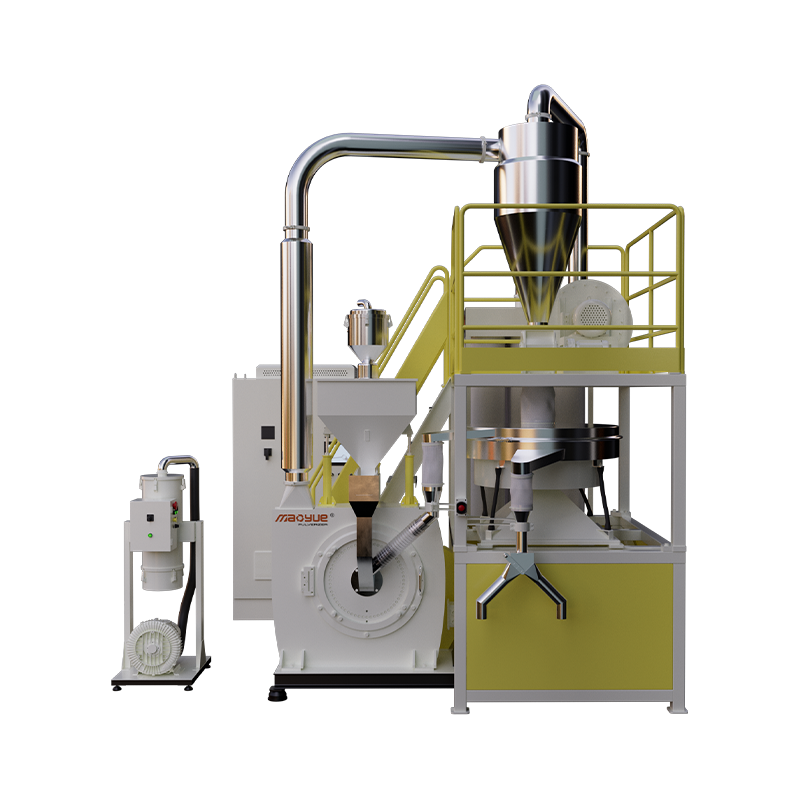
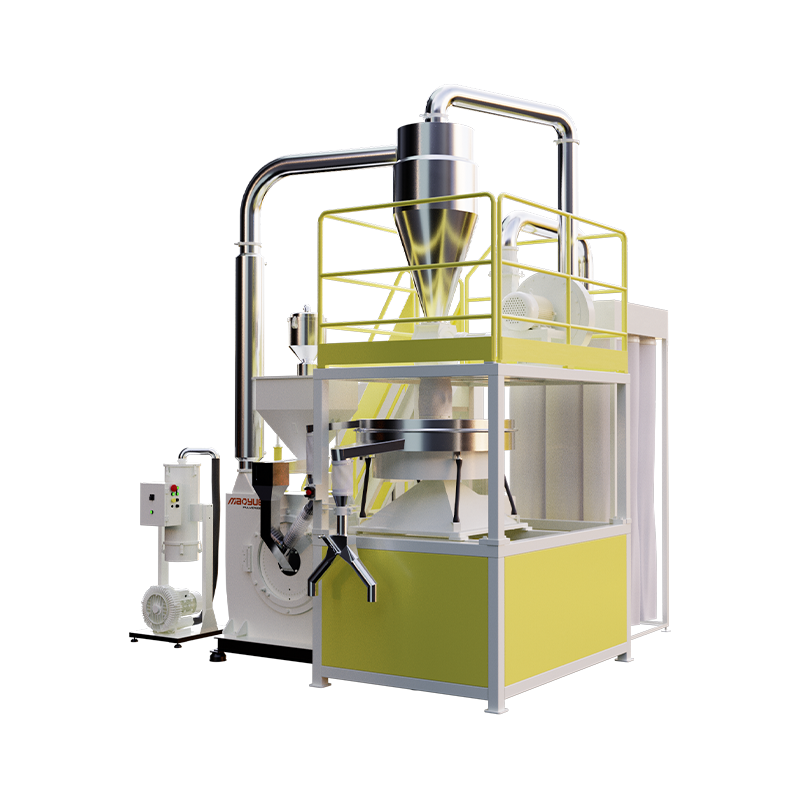
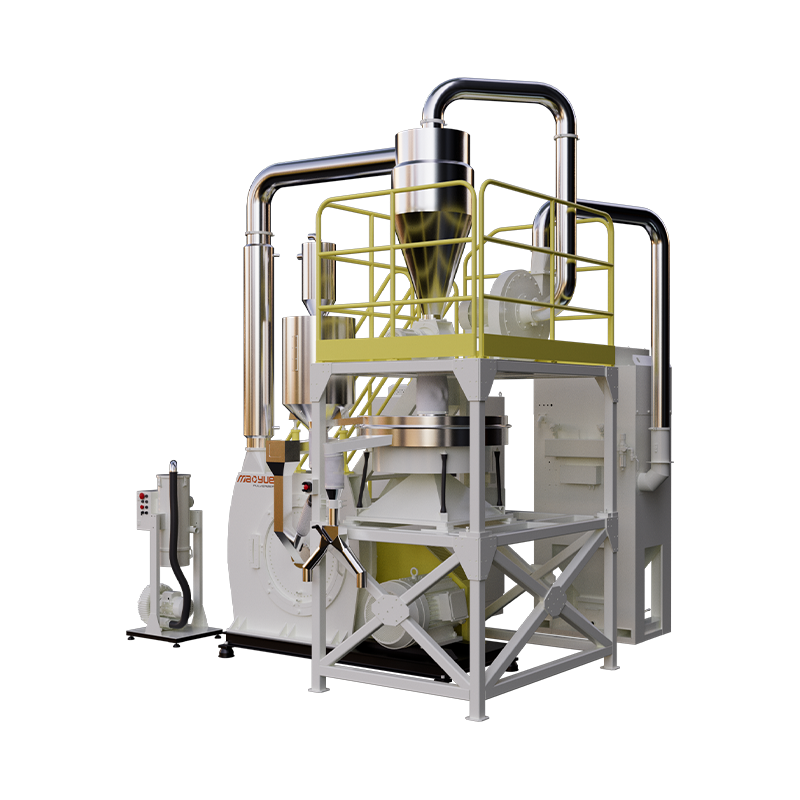
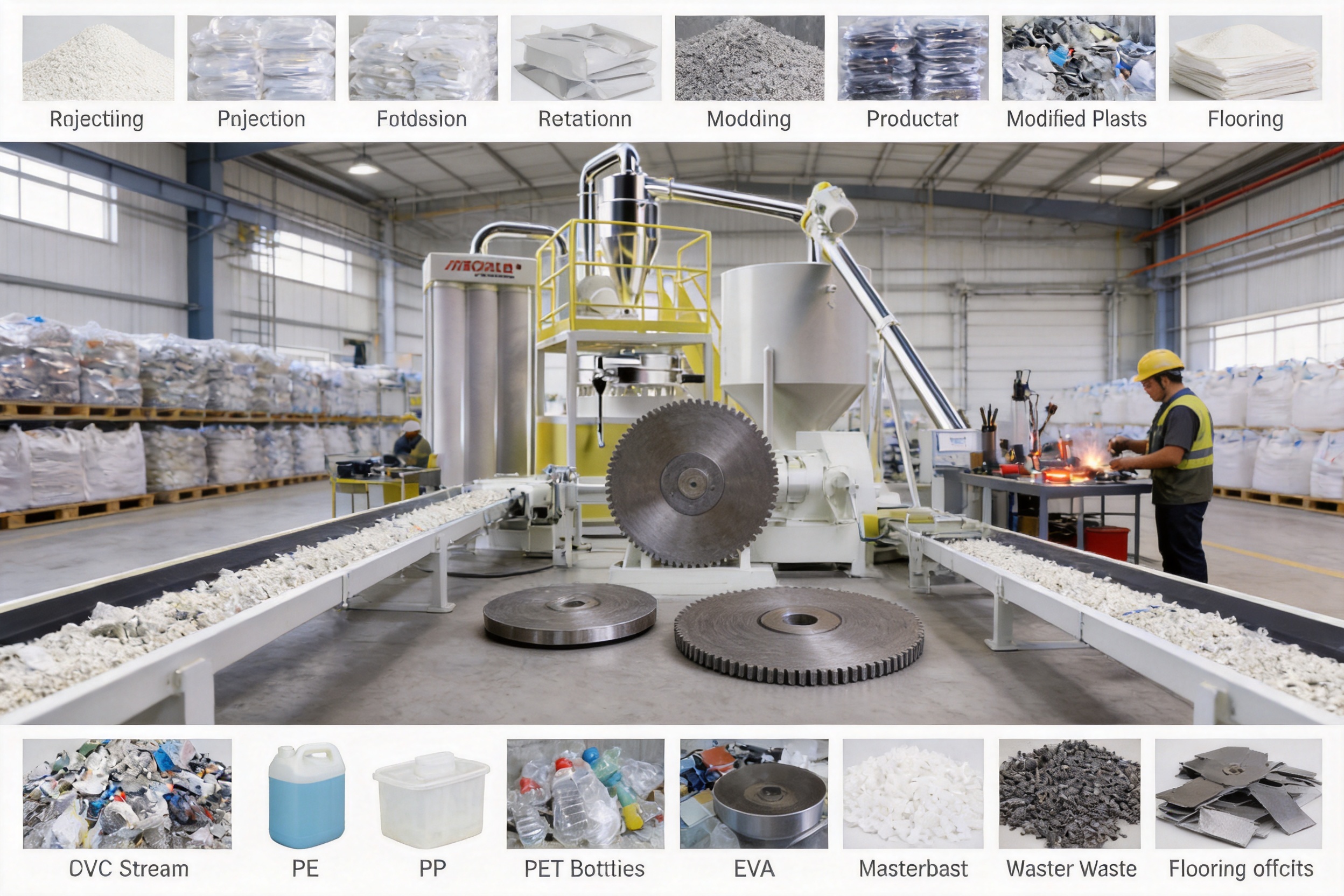
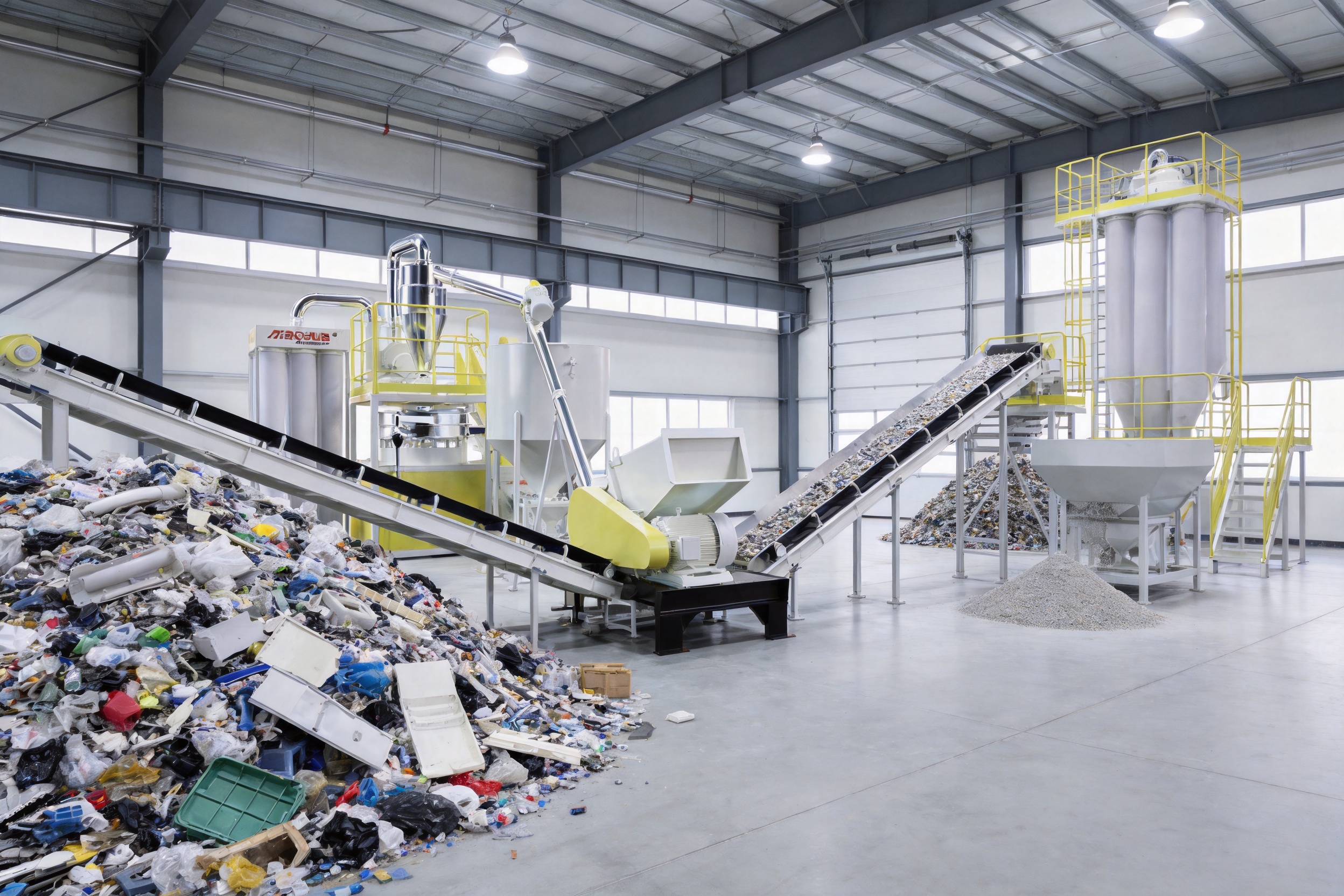
The blade-type crushing and pulverizing production line is an integrated solution developed for this purpose. It combines heavy-duty blade crushing, precision disc milling, pneumatic conveying, cyclone separation, vibrating screening, temperature control, and pulse-jet dust collection in one continuous system. The line is designed to process medium-hardness and high-impact plastic waste, including pipes, profiles, sheets, barrels, pallets, bottles, injection-molded parts, appliance housings, woven bags, film clumps, and production scraps.
Depending on the material, equipment configuration, and operating conditions, the line can transform large plastic waste into uniform fine powder in the range of approximately 20 to 80 mesh or finer. Its integrated design helps reduce manual handling, improve production stability, limit material loss, and provide a cleaner working environment than many conventional crushing and grinding arrangements.
Changzhou Mao Yue Intelligent Equipment Co., Ltd. manufactures this type of equipment with a focus on plastic size reduction, pulverizing, recycling, and customized process solutions. With approximately 30 years of experience, the company has developed manufacturing capabilities that combine high-precision machining, imported grinding equipment, dynamic balancing, specialized welding, and automated control integration.
What Is a Blade-Type Crushing and Pulverizing Production Line?
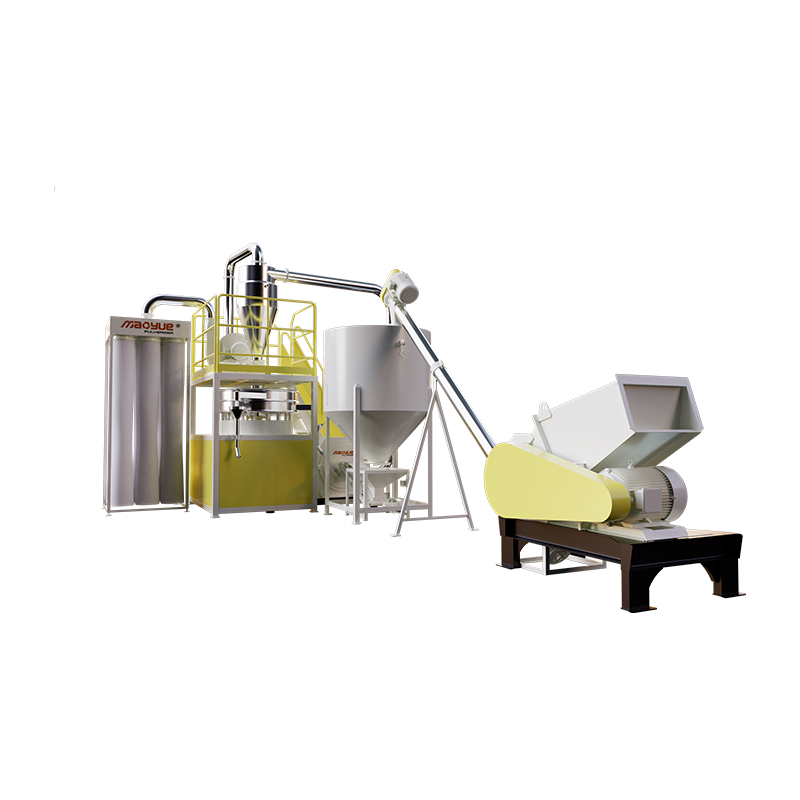
A blade-type crushing and pulverizing production line is a complete plastic recycling system rather than a single machine. The front-end crusher reduces bulky plastic waste into manageable pieces. The downstream disc mill then refines the coarse material into a controlled powder. Conveying and separation equipment moves the material between stages, while screening and dust collection help maintain product consistency and environmental performance.
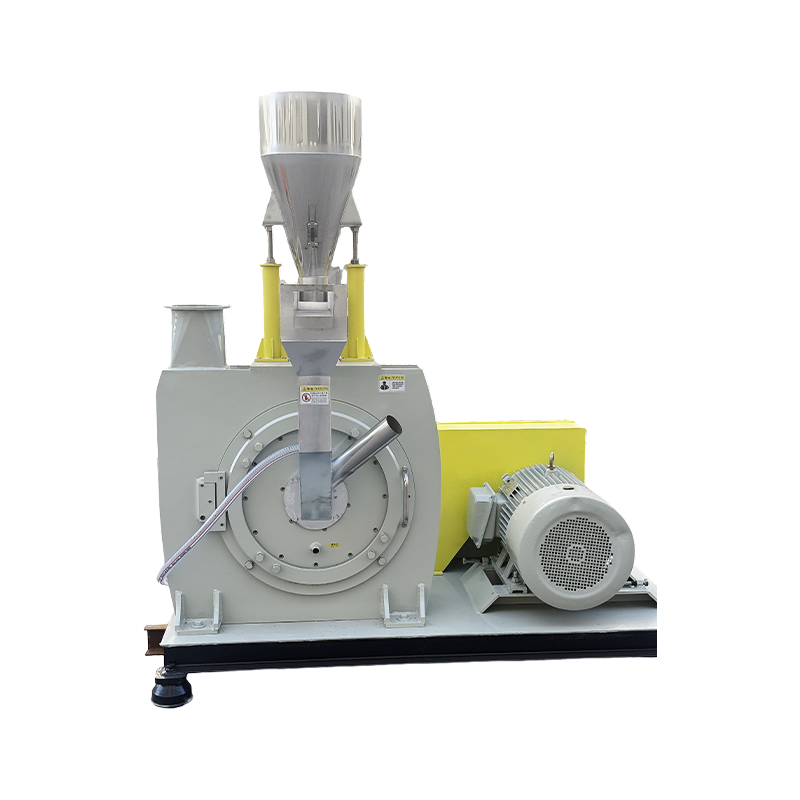
The process usually begins with feeding. Large plastic pieces are introduced into a heavy-duty blade crusher through a feed hopper. Rotary knives and fixed knives create repeated shearing and cutting actions. Unlike an impact-based hammer mechanism, this cutting action is particularly suitable for many medium-hardness plastics and brittle plastic products that require controlled fragmentation.
After coarse crushing, the material is conveyed under negative pressure to the pulverizing section. The disc mill uses precision-machined grinding discs to reduce the particle size further. Airflow carries the ground particles through the separation system. A cyclone separator removes and collects the main product stream, while a vibrating screen can classify particles and return oversized material for additional processing when required.
The complete line is enclosed and connected to a pulse-jet baghouse dust collection system. This arrangement helps prevent dust from escaping into the workshop and allows fine material to be recovered rather than lost. A PLC control system coordinates temperature sensors, conveying, grinding, screening, and dust collection functions to support continuous operation.
Complete Process Flow
Feeding and Material Preparation
The raw material may include rigid or flexible plastic waste, production scraps, post-industrial rejects, molded components, packaging materials, or pre-sorted recycling streams. Before entering the production line, operators normally remove foreign objects such as metal, stones, excessive moisture, and unsuitable contaminants. Proper sorting improves blade life, product purity, and overall throughput.
Large parts such as pipes, profiles, barrels, and panels can be fed directly when their dimensions are compatible with the selected crusher. Oversized or unusually shaped materials may require preliminary cutting. The feeding system can be matched to the material characteristics and production capacity, helping maintain a stable supply to the crusher.
Blade-Type Coarse Crushing
The crusher is equipped with rotary and fixed knives. As the rotor turns, the knives apply shearing and cutting forces to the incoming material. The cutting action reduces the waste into pieces controlled by the screen opening or mesh configuration. For the listed configurations, the standard mesh size is 16 mm.
The blade structure is designed to handle medium-hardness, high-impact plastics while reducing several problems associated with less suitable crushing methods. These problems may include material entanglement, excessive dust, irregular output, overheating, blade jamming, and frequent shutdowns. The exact performance depends on the material, contamination level, moisture, feeding method, and selected motor size, but the cutting principle provides a strong foundation for stable coarse reduction.
Negative-Pressure Conveying
After coarse crushing, the material is transferred through a fully enclosed negative-pressure pneumatic conveying system. Instead of relying on open mechanical transfer, the system uses controlled airflow to move the material between processing stages. This approach reduces exposure to the workshop atmosphere and helps limit the release of fine particles.
Negative-pressure conveying also supports a cleaner production layout. Material can be transported over practical distances without extensive open conveyors, reducing manual intervention and minimizing opportunities for product contamination. Air volume and conveying configuration must be selected according to the material bulk density, particle size, moisture, and target capacity.
Precision Disc Milling
The coarse material enters a disc mill available in 500, 600, or 800 models. The mill is equipped with high-grade DC53 mold-steel grinding discs. These discs are manufactured for wear resistance and dimensional stability, which are important when producing fine plastic powders over extended operating periods.
The grinding discs use precisely formed tooth profiles to generate a controlled milling action. The distance and profile between the discs influence the final particle size and throughput. Correct adjustment allows the operator to balance production capacity, powder fineness, energy use, and temperature generation.
Precision disc milling is well suited to applications in which the final powder must have good dispersion, flowability, and appearance. These properties are important for color masterbatch, functional masterbatch, modified plastics, rotational molding powders, PVC compounds, and flooring-related powder applications.
Separation and Screening
After milling, the material is carried by airflow to a separation system. A cyclone separator collects the main powder stream, while a vibrating screen can classify the product by particle size. Oversized particles may be returned to the mill for further processing, depending on the process design and product specification.
Separation improves the consistency of the finished powder. It also helps prevent large particles from entering downstream production, where they could cause feeding problems, surface defects, weak points, or poor dispersion. The appropriate screen specification should be selected according to the material and the required end use.
Pulse-Jet Dust Collection
A pulse-jet baghouse dust collector is connected to the production line to capture airborne fines. Periodic compressed-air pulses clean the filter bags and allow collected powder to fall into the recovery area. The system is designed to support a high dust-capture rate, with the stated configuration exceeding 99.9 percent under suitable operating conditions.
Dust collection has both environmental and economic benefits. It helps maintain a cleaner workshop, reduces employee exposure to airborne particles, and limits the loss of valuable fine powder. A properly designed system also supports compliance with applicable workplace and environmental requirements. Actual emissions performance depends on installation, filter selection, sealing, maintenance, airflow balance, and local regulations.
Key Product Advantages
Controlled Cutting Instead of Uncontrolled Impact
One of the main advantages of the blade-type system is its cutting-based front-end process. Hammer crushers rely primarily on impact, which can be effective for certain materials but may not provide the best results for every plastic waste stream. Some plastics can become excessively dusty, deform from heat, wrap around internal components, or produce a wide and inconsistent particle distribution when subjected to unsuitable impact forces.
The multi-blade structure applies repeated shearing and cutting. This produces a more controlled coarse particle shape and creates a suitable feed for the precision disc mill. A stable coarse feed helps the grinding section operate more efficiently and reduces unnecessary recirculation.
High Particle-Size Consistency
Many recycled plastic applications require more than a generally small particle size. They require repeatable particle size from one production batch to the next. Inconsistent powder can result in variable bulk density, poor feeding, uneven pigment dispersion, or changes in the mechanical properties of a finished product.
The production line addresses this issue through the combined action of precision grinding discs, airflow separation, and vibrating screening. The Taiwan-imported CNC tooth-by-tooth grinding process is intended to produce accurate disc geometry. German dynamic balancing calibration helps reduce vibration during high-speed operation. Together, these manufacturing and operating features support a narrow particle-size distribution and uniform finished powder.
Reduced Risk of Overheating
Plastic is sensitive to processing temperature. Excessive heat may cause softening, adhesion, discoloration, odor, degradation, or changes in material performance. PVC, PET, ABS, and certain other plastics require particularly careful temperature control during high-speed grinding.
The grinding section uses a reinforced dual cooling system with multiple temperature sensors. A PLC control system monitors operating conditions and helps maintain the grinding chamber within an approximate range of 50 to 80°C, depending on the material and process settings. The crusher can also be equipped with air cooling or localized water cooling around the blade area.
Temperature control does not eliminate the need for correct operation. Feed rate, moisture, blade sharpness, disc condition, airflow, ambient temperature, and material formulation all affect heat generation. However, integrated cooling and sensor-based monitoring provide a stronger foundation for reliable processing than a system without active thermal management.
Lower Dust Emissions
Dust can be a significant issue in plastic crushing and pulverizing. Open transfer points, poorly sealed equipment, and inefficient collection systems may cause dust to spread throughout the production area. This can reduce workplace cleanliness, create housekeeping costs, waste usable material, and increase the need for protective measures.
The blade-type line uses enclosed conveying and centralized pulse-jet dust collection. Negative pressure helps draw airborne fines toward the collection system rather than allowing them to escape through gaps. This design supports cleaner workshops and helps recover fine product. It also reduces the need for operators to manually transfer material between individual machines.
Improved Blade and Tool Service Life
Tool wear influences both operating cost and product quality. Dull knives require more energy, generate more heat, and may produce irregular particles. Grinding discs with worn tooth profiles can reduce capacity and affect powder uniformity.
The crusher knives are made from 9CrSi, a material commonly used for industrial cutting tools because of its hardness and wear resistance when correctly heat-treated and maintained. The disc mill uses DC53 high-grade mold steel grinding discs. The combination of suitable tool materials, cooling, precision manufacturing, and proper adjustment can extend maintenance intervals.
Tool life still depends on the material being processed. Glass, metal, mineral fillers, sand, and other abrasive contaminants can significantly reduce service life. For this reason, upstream sorting and magnetic or metal separation are important parts of a responsible recycling process.
Continuous Automated Operation
The integrated production line is designed for continuous processing. Once the feeding, crushing, conveying, milling, separation, screening, and collection stages are correctly configured, material can move through the system with limited manual handling.
PLC-based control can coordinate startup and shutdown sequences, monitor temperature, manage airflow-related equipment, and provide operating alerts. Automation improves repeatability and helps reduce labor intensity. It also gives operators a clearer view of system status and can simplify fault diagnosis when sensors and control points are properly installed.
Flexible Product Applications
The line can be adapted for a wide range of plastic recycling applications. These include PVC, PE, PP, PET, ABS, PS, EVA, masterbatch scraps, rigid packaging, engineering plastics, flooring offcuts, and selected mixed rigid or flexible materials.
Not every plastic stream should be processed under identical conditions. Different polymers have different melting points, toughness, brittleness, moisture sensitivity, and thermal behavior. Nevertheless, the combination of adjustable crushing, precision milling, cooling, and classification allows the system to serve multiple product requirements with suitable configuration and process development.
Blade-type crushing and pulverizing production line
Comparison with Traditional Hammer-Milling Systems
Traditional hammer-milling systems remain useful for some applications, but they may present limitations when the target product is a clean, uniform plastic powder. Hammer impact can generate a large amount of fines, irregular fragments, and heat. Flexible plastics may wrap around internal parts, while some rigid plastics may fracture unpredictably.
The blade-type production line offers a different process philosophy. Its front-end cutting action is intended to produce a more regular coarse feed. The disc mill then performs controlled fine reduction. Because the line includes separation and screening, the finished product can be classified more effectively than material discharged from a single impact machine.
Comparison factor | Blade-type crushing and pulverizing line | Conventional hammer-milling arrangement |
Primary reduction method | Shearing and cutting with rotary and fixed knives | Impact from rotating hammers |
Coarse particle control | Controlled through knife arrangement and screen opening | May vary according to impact conditions and material behavior |
Flexible plastic handling | Designed to reduce entanglement risk through cutting action | May experience wrapping or jamming with unsuitable materials |
Temperature management | Dual cooling, temperature sensors, and PLC monitoring | Depends on individual machine design and operator control |
Fine powder consistency | Supported by precision disc milling and screening | May require additional separation and recirculation stages |
Dust control | Enclosed conveying and pulse-jet baghouse collection | Varies widely and may require separate dust-handling equipment |
Process integration | Designed as an integrated continuous line | Often assembled from separate machines and transfer points |
Maintenance objective | Longer intervals supported by tool materials and cooling | Maintenance frequency depends on hammer wear and contamination |
The comparison does not mean that every hammer mill is unsuitable or that every blade line will outperform every alternative in every application. Equipment performance depends on material testing, machine sizing, installation, and operation. The primary advantage of the blade-type system is that it integrates cutting, fine grinding, cooling, classification, conveying, and dust control around the specific needs of plastic recycling.
Available Crusher Configurations
The listed crusher configurations provide different capacity levels for users with different production requirements. The 665 model is designed for approximately 400 to 650 kilograms per hour, the 1200 model for approximately 700 to 1,000 kilograms per hour, and the 1500 model for approximately 800 to 1,150 kilograms per hour. Actual output varies according to the type, size, density, moisture, and feeding consistency of the plastic.
Item | 665 model | 1200 model | 1500 model |
Knife quantity | 10 rotary knives and 4 fixed knives | 15 rotary knives and 6 fixed knives | 20 rotary knives and 8 fixed knives |
Approximate capacity | 400–650 kg/h | 700–1,000 kg/h | 800–1,150 kg/h |
Standard mesh size | 16 mm | 16 mm | 16 mm |
Drive motor options | 22, 30, 37, or 45 kW | 30, 45, or 55 kW | 45, 55, or 75 kW |
Speed control | Star-delta or soft start | Star-delta or soft start | Star-delta or soft start |
Bearing specification | Imported NSK bearings | Imported NSK bearings | Imported NSK bearings |
Knife material | 9CrSi | 9CrSi | 9CrSi |
Host speed | 550 r/min | 550 r/min | 650 r/min |
Listed feeding size | 665 mm | 665 mm | 665 mm |
Capacity figures should be treated as reference values rather than guaranteed results for every application. A low-density film clump, a thick engineering-plastic housing, and a filled PVC profile do not behave in the same way. A technical evaluation should consider the material's bulk density, wall thickness, hardness, contamination, required powder fineness, and acceptable temperature range.
Manufacturing Technology and Engineering Strengths
High-Precision Grinding Equipment
Changzhou Mao Yue Intelligent Equipment Co., Ltd. operates six processing workshops, each averaging approximately 1,400 square meters. The company uses Taiwan-imported high-precision grinding machines manufactured to German standards. Such equipment supports accurate machining of grinding discs and other components that influence the stability and performance of a pulverizer.
Precision machining is particularly important for disc mills. Small deviations in tooth geometry, disc flatness, or concentricity can affect vibration, product distribution, energy consumption, and tool wear. High-accuracy processing helps the finished components maintain consistent geometry during operation.
CNC Tooth-by-Tooth Disc Processing
The grinding discs are produced using Taiwan-imported CNC tooth-by-tooth precision grinding. This manufacturing approach enables detailed control over the tooth profile and spacing. Consistent tooth geometry supports a predictable grinding action and helps reduce variation across the working surface.
For customers producing fine powders for masterbatch, modified materials, or rotational molding, disc precision is directly connected to product value. The goal is not merely to reduce particle size, but to produce a powder with appropriate uniformity, flowability, and dispersion behavior.
German Dynamic Balancing Calibration
Rotating equipment must be balanced carefully. Imbalance can cause vibration, noise, bearing stress, uneven wear, and reduced service life. Mao Yue uses German dynamic balancing equipment to calibrate rotating components.
Dynamic balancing is performed with the component rotating so that mass-distribution errors can be identified and corrected under conditions related to actual operation. This supports smoother running and helps protect bearings, shafts, housings, and grinding components. It also contributes to a more stable working environment for operators.
Japanese Welding Systems
The factory is equipped with Japanese welding systems for the fabrication of structural and process components. Consistent welding quality is important for machine rigidity, enclosure integrity, hopper strength, duct connections, and long-term alignment.
A robust frame and accurately assembled enclosure help the line withstand continuous industrial operation. They also support sealing, which is essential for negative-pressure conveying and dust collection. Poorly sealed or flexible structures can reduce the effectiveness of an otherwise capable dust-handling system.
European-Oriented Quality Standards
The company states that it manufactures components according to European quality standards and has obtained CE mechanical certification and ISO 9001 quality management system certification. These certifications support a structured approach to product safety, manufacturing control, documentation, and quality assurance.
Certification does not replace proper installation or safe operation. Customers should still ensure that the complete installation complies with local electrical, machinery, pressure, dust, and occupational safety regulations. Nevertheless, a formal quality management system provides an important foundation for consistent manufacturing and traceability.
Technical Development and Customization
Mao Yue maintains a professional technical team that studies advanced machine technologies from countries including Germany. This engineering orientation supports continuing improvement in grinding, balancing, cooling, automation, and system integration.
Plastic recycling plants rarely process only one material under one fixed condition. Customization may be required for feeding equipment, cooling method, conveying distance, screen design, dust collection capacity, powder fineness, electrical standards, and plant layout. A manufacturer with experience in integrated systems can evaluate the complete process instead of supplying an isolated machine that creates compatibility problems later.
Applications in Plastic Recycling
Injection-Molding and Blow-Molding Waste
Injection-molding and blow-molding plants generate sprues, runners, rejected parts, bottles, caps, housings, containers, and other production waste. If the waste is clean and sorted by polymer, the blade-type line can reduce it into powder for reuse or further compounding.
Recycling this material internally can reduce dependence on virgin resin and lower raw-material procurement costs. The powder may be blended into a controlled production recipe, used in modified materials, or supplied for masterbatch remanufacturing. Before reuse, manufacturers should verify contamination, color, thermal history, additive content, and mechanical performance.
PET Bottles, Flakes, and Sheets
PET waste can include bottles, sheets, strapping, and other brittle products. After suitable sorting and preparation, the blade crusher can reduce the material into smaller pieces for fine grinding. Recovered PET powder may be considered for regenerated sheets, fibers, injection-molded products, or other applications where the powder specification is acceptable.
PET processing requires attention to moisture. Water in PET can contribute to hydrolytic degradation during subsequent thermal processing. The pulverizing line itself should therefore be integrated with appropriate sorting, drying, and storage procedures when the final powder is intended for high-quality PET regeneration.
ABS and PS Engineering Plastics
Waste appliance casings, keyboard parts, monitor housings, toys, and other engineering-plastic products can contain ABS, PS, blends, coatings, pigments, flame retardants, or metal inserts. When materials are properly identified and separated, the line can produce uniform powder for injection molding, modification, or composite material production.
Uniform particle size can help improve blending and feeding. However, engineering plastics require careful quality control because additives and previous thermal exposure may influence the properties of recycled material. Testing for polymer identity, ash content, impact strength, melt flow, and color may be appropriate for demanding applications.
PVC Film, Profiles, and Flooring Offcuts
PVC is widely used in films, pipes, profiles, flooring, cable products, and construction materials. The blade-type line is designed to process selected PVC waste streams into fine powder for pipe extrusion, flooring substrates, profile regeneration, and related applications.
PVC is heat-sensitive, so temperature control is especially important. The dual cooling system, temperature sensors, and PLC monitoring help reduce the risk of overheating, adhesion, yellowing, and degradation. The suitability of a particular waste stream depends on plasticizer content, stabilizer formulation, filler level, contamination, and whether rigid and flexible materials have been mixed.
Masterbatch and Functional Masterbatch Waste
Masterbatch production can create off-specification pellets, start-up material, color change waste, and trimming scraps. Fine grinding can prepare this material for remanufacturing or reuse in selected formulations.
Particle uniformity is valuable in masterbatch applications because the recovered material must disperse effectively in the carrier resin. Excessive fines, agglomerates, or oversized pieces may affect feeding and pigment distribution. The precision disc mill and screening system are intended to provide a more consistent powder for downstream use.
PE, PP, EVA, and Mixed Plastic Streams
PE and PP products may include containers, sheets, woven bags, caps, packaging components, and molded parts. EVA can appear in industrial scraps, footwear-related waste, packaging materials, and other products. These materials differ in flexibility and thermal behavior, so operating conditions must be selected carefully.
Mixed rigid and flexible plastics can sometimes be processed, but the quality and value of the resulting powder depend on polymer compatibility. For high-value applications, sorting by polymer and color is normally preferable. The production line provides the size-reduction capability, while the recycler must establish a material-management system that protects the quality of the final product.
Cooling and Temperature Management
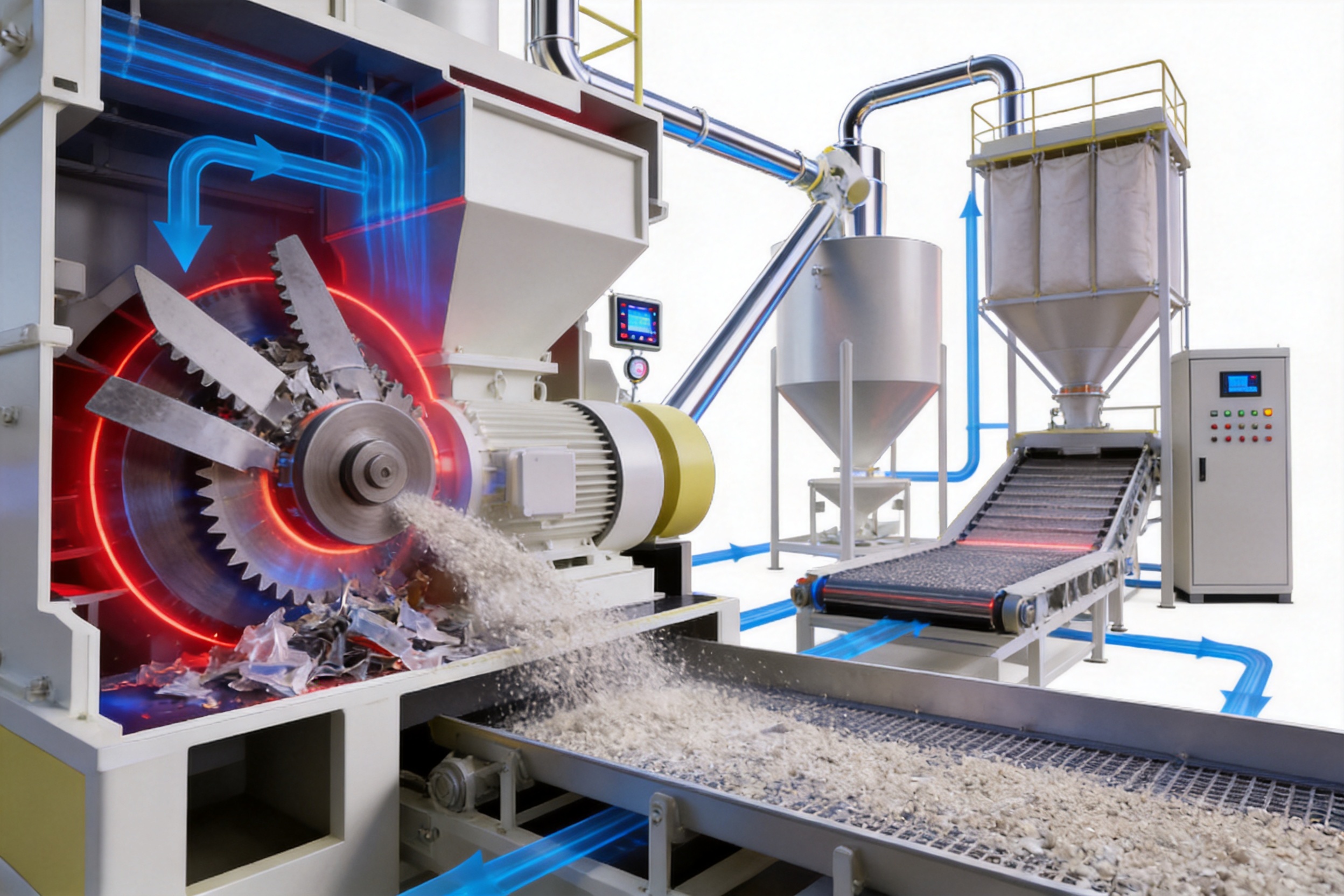
Thermal management is one of the most important design considerations in plastic pulverizing. Mechanical energy is converted partly into heat during cutting and grinding. Heat generation increases with higher throughput, smaller target particle size, dull tools, excessive friction, high moisture, and unsuitable operating settings.
The grinding section incorporates a reinforced dual cooling system. Multiple temperature sensors provide information from different points, allowing the PLC control system to monitor changes in the grinding chamber. The stated operating range of approximately 50 to 80°C provides a reference for controlled processing, although the ideal range must be confirmed for each polymer and product specification.
Air cooling can be used where it provides sufficient heat removal without adding moisture. Localized water cooling may be selected for the blade area when additional thermal control is needed. Water cooling must be properly designed to avoid leakage, condensation, corrosion, and unwanted moisture entering the plastic stream.
Operators should also monitor the condition of knives and grinding discs. Worn tools increase friction and can raise operating temperature. Stable feeding is equally important. Intermittent overfeeding may cause sudden load changes, while underfeeding can reduce productivity and alter airflow conditions.
Environmental and Workplace Benefits
Plastic powder production can generate airborne dust if the equipment is open or poorly sealed. The integrated negative-pressure conveying and pulse-jet baghouse system is designed to keep the process enclosed and capture fine material. The stated dust-capture rate exceeds 99.9 percent under appropriate system conditions.
Lower dust emissions can improve visibility, housekeeping, equipment cleanliness, and operator comfort. Recovering dust also increases material utilization. For recyclers handling colored plastics, engineering plastics, or masterbatch waste, even small losses of fine powder may represent a measurable reduction in product value.
Environmental performance depends on the complete installation. Ducts must be correctly sized, flexible connections must remain sealed, filters must be maintained, and the fan must provide the required airflow. Local authorities may require additional controls or testing. The equipment should therefore be incorporated into a documented environmental and occupational safety program.
Noise, moving parts, electrical systems, compressed air, and stored mechanical energy also require attention. Guards, emergency stops, lockout procedures, personal protective equipment, and operator training should be provided. Dust collection improves conditions but does not remove the need for a full machinery safety assessment.
Energy Efficiency and Investment Considerations
Energy consumption in a pulverizing line depends on polymer type, feed size, throughput, target mesh, moisture, tool condition, and operating practice. A well-matched blade crusher can reduce bulky waste efficiently before it reaches the fine grinding stage. This reduces the amount of work required from the disc mill and can help control total energy use.
The integrated arrangement may also reduce indirect costs. Enclosed pneumatic conveying limits manual transfer. Automated controls reduce repeated operator intervention. Improved powder consistency can reduce rejected batches and reprocessing. Longer tool service intervals can reduce maintenance downtime.
Investment payback should be calculated using actual local conditions. Important factors include incoming waste cost or purchase price, recovered powder value, electricity, labor, maintenance, replacement tools, dust-collector filters, building modifications, and utilization rate. A line that operates at a stable load for multiple shifts may achieve a different economic result from a line used intermittently.
Compared with a conventional hammer milling and separation arrangement, the blade-type system may offer greater process precision, lower dust emissions, reduced material loss, and improved tool life. These benefits can contribute to a shorter investment payback period, particularly when the recovered powder is sold into higher-value applications rather than low-grade markets.
Installation and Process Planning
Successful installation begins with a material assessment. The recycler should identify the polymers, dimensions, bulk density, moisture, contamination, color range, additive content, and required final particle size. Samples should be tested to determine the most suitable crusher, disc mill, screen, cooling method, and dust-collection capacity.
The plant layout must provide adequate space for feeding, access, inspection, tool replacement, filter maintenance, and product collection. The foundation should support the equipment's weight and dynamic loads. Electrical supply, compressed air, cooling-water requirements, ventilation, and fire-safety measures should be evaluated before delivery.
Material flow should be designed to avoid bottlenecks. If the crusher is significantly larger than the mill, the milling section may limit production. If the mill is larger than the front-end equipment, the available capacity may not be fully utilized. The conveying and dust-collection systems must also be sized for the selected throughput.
Commissioning should include no-load testing, rotation checks, vibration inspection, temperature verification, airflow balancing, emergency-stop testing, and gradual material loading. Operators should record power draw, throughput, powder fineness, temperature, and dust-collector pressure during the initial production period.
Operation and Maintenance Guidelines
Knife Maintenance
Knives should be inspected regularly for wear, chips, cracks, and incorrect clearance. Sharp knives reduce cutting resistance and heat generation. When knives are sharpened or replaced, they must be installed symmetrically and adjusted according to the manufacturer's specifications.
Unbalanced or incorrectly positioned knives may create vibration and reduce cutting quality. Fasteners should be checked for secure installation, and the machine must be isolated from electrical and mechanical energy before maintenance begins.
Disc Mill Maintenance
Grinding discs should be inspected for tooth wear, damage, buildup, and uneven wear. Disc clearance must be adjusted carefully. Excessive clearance can produce coarse material and reduce efficiency, while insufficient clearance can increase friction, temperature, and tool wear.
The condition of bearings, seals, shafts, cooling channels, and protective housings should also be monitored. Abnormal noise, vibration, temperature, or power consumption may indicate a developing mechanical problem.
Dust-Collection Maintenance
Filter bags require periodic inspection. A damaged bag can allow dust to pass into the exhaust stream, while excessive filter blockage can reduce airflow and increase fan load. Pulse cleaning pressure and frequency should be adjusted according to the dust characteristics and operating conditions.
Collected powder should be removed safely and regularly. Ducts, hoppers, valves, and cyclone outlets should be checked for blockage. Seals and access doors must remain tight so that the negative-pressure system can function correctly.
Control-System Monitoring
The PLC control system should be reviewed for temperature alarms, motor overloads, conveying faults, screen problems, and dust-collector warnings. Operators should understand the difference between a normal process alarm and a condition requiring immediate shutdown.
Maintenance records should include operating hours, processed material, tool changes, temperature trends, motor load, filter replacement, and corrective actions. These records help identify recurring issues and support preventive maintenance planning.
Quality of the Finished Powder
The value of recycled powder depends on more than mesh size. Important characteristics include particle-size distribution, bulk density, flowability, moisture, color, contamination, thermal history, and polymer identity. The production line contributes to particle-size control and cleanliness, but the total recycling process must address all quality factors.
Powder intended for masterbatch or modified plastics should be evaluated for dispersion and compatibility. Powder for rotational molding may require specific flow and melting behavior. Powder for PVC flooring or profiles may need controlled filler content and stable thermal properties. PET powder may require drying and additional processing before melt conversion.
Sampling should be performed consistently. A representative sample can be tested by sieve analysis, moisture measurement, bulk-density testing, melt-flow evaluation, ash analysis, color measurement, or other methods relevant to the application. These tests help verify whether the powder meets internal or customer specifications.
Why Manufacturer Experience Matters
An integrated production line involves more engineering than connecting several machines. The crusher, disc mill, fan, cyclone, screen, dust collector, cooling system, electrical controls, and product collection equipment must work together. Poorly matched components can create unstable airflow, insufficient cooling, excessive vibration, low throughput, or inconsistent powder quality.
A source manufacturer with long-term experience in plastic crushing and pulverizing can provide more practical guidance on machine selection and process integration. Changzhou Mao Yue Intelligent Equipment Co., Ltd. has supplied equipment to more than 5,000 domestic and international enterprises according to the company information provided. This customer experience supports the development of application-specific solutions.
The company's product range focuses on disc pulverizers and related plastic size-reduction equipment used in rotational molding, masterbatch, polymers, PVC, PE, recycling, and powder coating. Its technical resources cover machining, balancing, welding, cooling, automation, and system assembly.
The manufacturing process is supported by six workshops, imported high-precision grinding machinery, dynamic balancing equipment, and specialized welding systems. This combination allows the company to control key production stages internally rather than depending entirely on unrelated subcontractors.
Quality and service are also important when purchasing industrial recycling equipment. Customers may require installation guidance, process testing, spare knives, grinding discs, filter bags, electrical documentation, training, and technical support. A manufacturer capable of supplying these services can help reduce commissioning risk and improve long-term equipment availability.
Selection Guide for Buyers
Buyers should begin by defining the raw material and final product rather than choosing a machine only by motor power. The most important questions concern polymer type, feed form, contamination, required capacity, target mesh, operating hours, and available plant utilities.
Material Questions
Is the material rigid, flexible, brittle, or elastic? Does it contain fillers, fibers, flame retardants, pigments, plasticizers, or metal components? Is it clean production scrap or post-consumer waste? What is the moisture content? Will the line process one polymer or several different materials?
Capacity Questions
What is the required hourly output? Is the capacity based on continuous operation or occasional peaks? How many hours per day and days per year will the line operate? Does the customer need room for future expansion?
Powder Specification Questions
What mesh size is required? Is the powder intended for injection molding, extrusion, rotational molding, masterbatch, flooring, compounding, or another application? Is a narrow particle-size distribution necessary? What levels of fines and oversized particles are acceptable?
Utility and Layout Questions
Is sufficient electrical power available? Is compressed air available for pulse-jet cleaning? Will air cooling or water cooling be used? How much floor height is available for ducts, cyclones, and product collection? Are there local requirements for noise, dust, fire safety, and emissions?
Answering these questions allows the equipment supplier to recommend a more suitable configuration. It also reduces the risk of selecting a line that is oversized, undersized, difficult to install, or unable to meet the required powder specification.
Frequently Asked Questions
What materials can the blade-type crushing and pulverizing line process?
The line is intended for many medium-hardness and brittle plastic materials, including PVC, PE, PP, PET, ABS, PS, EVA, injection-molding waste, blow-molding waste, bottles, sheets, pipes, profiles, barrels, pallets, woven bags, film clumps, appliance housings, masterbatch scraps, and flooring offcuts. Material testing is recommended for mixed, contaminated, highly elastic, or heavily filled waste.
What final powder size can be achieved?
The stated product range is approximately 20 to 80 mesh or finer, depending on the disc mill model, material properties, screen configuration, feed rate, and operating conditions. Final particle size should be confirmed through a process trial using the customer's actual material.
What is the purpose of the blade crusher before the pulverizer?
The blade crusher reduces large waste into a consistent coarse feed. This helps the disc mill work more efficiently and reduces the risk of feeding oversized pieces into the fine-grinding chamber. Cutting also provides a controlled alternative to relying only on impact.
How does the line control processing temperature?
The grinding section uses a reinforced dual cooling system, multiple temperature sensors, and PLC monitoring. The grinding chamber can be controlled within an approximate range of 50 to 80°C according to the material and process requirements. The crusher may also use air cooling or localized water cooling around the blade area.
Is the system suitable for heat-sensitive PVC?
It is designed to process heat-sensitive materials such as PVC with controlled temperature management. However, PVC formulation, plasticizer level, filler content, moisture, feed rate, tool condition, and target fineness all affect processing behavior. A technical test is advisable before commercial production.
How is dust controlled?
The line uses enclosed negative-pressure pneumatic conveying together with a pulse-jet baghouse dust collector. The stated dust-capture rate exceeds 99.9 percent under suitable operating conditions. Correct installation, sealing, airflow balancing, and filter maintenance are necessary to achieve expected performance.
What knife material is used in the listed crusher models?
The listed crusher configurations use 9CrSi knife material. Knife life depends on the processed plastic, contamination, operating load, sharpening practice, and maintenance schedule.
What bearing brand is specified?
The specifications identify imported NSK bearings for the belt and pulley arrangement. Bearing selection and service life also depend on alignment, lubrication, load, temperature, and installation quality.
What are the available crusher capacities?
The 665 model is listed at approximately 400 to 650 kilograms per hour, the 1200 model at approximately 700 to 1,000 kilograms per hour, and the 1500 model at approximately 800 to 1,150 kilograms per hour. These figures are reference capacities and may vary with the material and operating conditions.
Can the line be customized?
Integrated recycling lines can be customized in areas such as feeding, cooling, conveying distance, screening, dust collection, product collection, electrical standards, and plant layout. The correct design depends on the raw material, desired output, local utilities, and final application.
What maintenance is required?
Routine maintenance includes knife inspection and sharpening, grinding-disc inspection, bearing and seal checks, cooling-system inspection, screen cleaning, filter-bag maintenance, duct inspection, fastener checks, and PLC alarm review. Preventive maintenance records help reduce unexpected downtime.
Does the company provide complete production-line support?
Changzhou Mao Yue Intelligent Equipment Co., Ltd. focuses on plastic crushing and pulverizing equipment and integrated solutions. Customers should confirm the exact scope of supply, installation assistance, commissioning, operator training, spare parts, documentation, and after-sales service in the technical and commercial agreement.
Conclusion
The blade-type crushing and pulverizing production line provides a complete approach to converting plastic waste into consistent, high-value powder. Its process combines controlled blade cutting, precision disc milling, negative-pressure conveying, cyclone separation, vibrating screening, cooling, PLC monitoring, and pulse-jet dust collection.
Compared with less integrated hammer-milling arrangements, the system is designed to reduce material entanglement, improve particle-size consistency, limit dust dispersion, control heat, and support longer tool service intervals. These advantages are particularly relevant to recyclers producing powders for masterbatch, modified plastics, rotational molding, PVC products, PET regeneration, engineering plastics, and flooring materials.
The product's performance is supported by the manufacturer's manufacturing capabilities. Six processing workshops, Taiwan-imported CNC grinding equipment, German dynamic balancing technology, Japanese welding systems, DC53 grinding discs, 9CrSi knives, CE mechanical certification, and ISO 9001 quality management certification contribute to a structured production and quality-control process.
For recycling companies seeking to improve raw-material utilization and create higher-value products, the line offers a practical platform for continuous plastic size reduction. The best results are achieved when the equipment is selected through material testing, correctly matched to the required capacity, installed with suitable dust and cooling systems, and operated under a disciplined maintenance and quality-control program.
References
1. Changzhou Mao Yue Intelligent Equipment Co., Ltd., product specifications and technical information for blade-type crushing and pulverizing production lines.
2. Changzhou Mao Yue Intelligent Equipment Co., Ltd., company profile and manufacturing capability statement.
3. Technical data supplied for 665, 1200, and 1500 blade crusher configurations.
4. General engineering principles for plastic size reduction, pneumatic conveying, cyclone separation, vibrating screening, and pulse-jet filtration.
5. General industrial guidance concerning machinery safety, preventive maintenance, plastic recycling quality control, and dust-management practices.