

 English
 русский
 Español
 عربى
عربى 中文简体
中文简体
 中文简体
中文简体
Content
- 1 Product Overview
- 2 Core Structural Design
- 3 Material Selection and Heat Treatment
- 4 Precision CNC Machining and Dimensional Control
- 5 Dual-Stage Pulverizing Mechanism
- 6 Temperature Control and Powder Protection
- 7 Fineness Control and Powder Quality
- 8 Advantages Over Conventional Competitor Discs
- 9 Performance Comparison Table
- 10 Applications in Plastic Recycling and Regeneration
- 11 Applications in Rotational Molding
- 12 Applications in Powder Coating and Fluidized Bed Processes
- 13 Applications in Masterbatch and Modified Plastics
- 14 Applications in Flexible Polyolefins and Specialty Materials
- 15 Compatibility and Customization
- 16 Manufacturing Strength of Changzhou Mao Yue Intelligent Equipment Co., Ltd.
- 17 Quality Certifications and Process Discipline
- 18 Operational Benefits for Production Managers
- 19 Energy Efficiency and Cost-Performance
- 20 Installation and Gap Adjustment Considerations
- 21 Maintenance and Service Life Optimization
- 22 Why the Double-Tooth Disc Is a Strategic Upgrade
- 23 Q&A Section
- 23.1 Q1: What is the main advantage of the double-tooth grinding disc?
- 23.2 Q2: What materials can the disc process?
- 23.3 Q3: What powder fineness can be achieved?
- 23.4 Q4: How does the disc improve output?
- 23.5 Q5: Why is DC53 steel used?
- 23.6 Q6: How does the disc help prevent overheating?
- 23.7 Q7: Is the disc suitable for continuous production?
- 23.8 Q8: Can the disc fit equipment from other brands?
- 23.9 Q9: What industries benefit most from this disc?
- 23.10 Q10: How should users maintain the disc?
- 24 Conclusion
- 25 References
- 26 Product: Pulverizer double-tooth Disc
In modern plastic size reduction, the grinding disc is not merely a consumable component. It is the core interface where mechanical energy becomes controlled cutting, shearing, friction, and particle refinement. For processors working with PE, PP, EVA, LLDPE, recycled polyolefins, masterbatch materials, rotational molding powders, and powder coating feedstocks, the performance of the disc directly influences output, particle distribution, energy efficiency, downtime, and final product value.
The Pulverizer Double-Tooth Disc is designed for high-demand plastic pulverizing applications where ordinary single-tooth or conventional monolithic discs often struggle to balance capacity, fineness, temperature control, wear life, and powder consistency. Its large ring-shaped, double-layer concentric structure is densely equipped with precision radial fine teeth. The outer and inner tooth zones work together in a staged grinding process: the material is first subjected to aggressive coarse shearing and crushing, then refined through fine friction pulverization. This dual-stage action is the central reason the disc can deliver higher throughput and more stable powder quality under industrial operating conditions.
Manufactured by Changzhou Mao Yue Intelligent Equipment Co., Ltd., a source manufacturer with decades of experience in plastic crushing and pulverizing equipment, the disc reflects the company’s long-term focus on European-quality manufacturing standards, precision machining, high-strength materials, heat treatment, and application-specific customization. The product is not only a replacement part; it is a performance upgrade for plastic pulverizing lines that demand reliable 24-hour operation, narrow powder size distribution, and improved production economics.
Product Overview
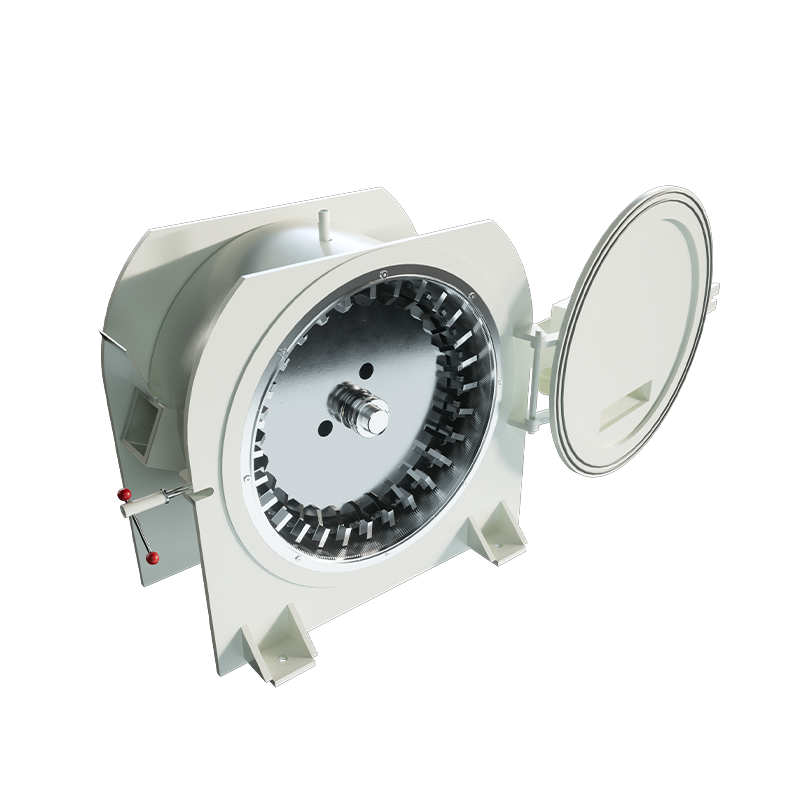
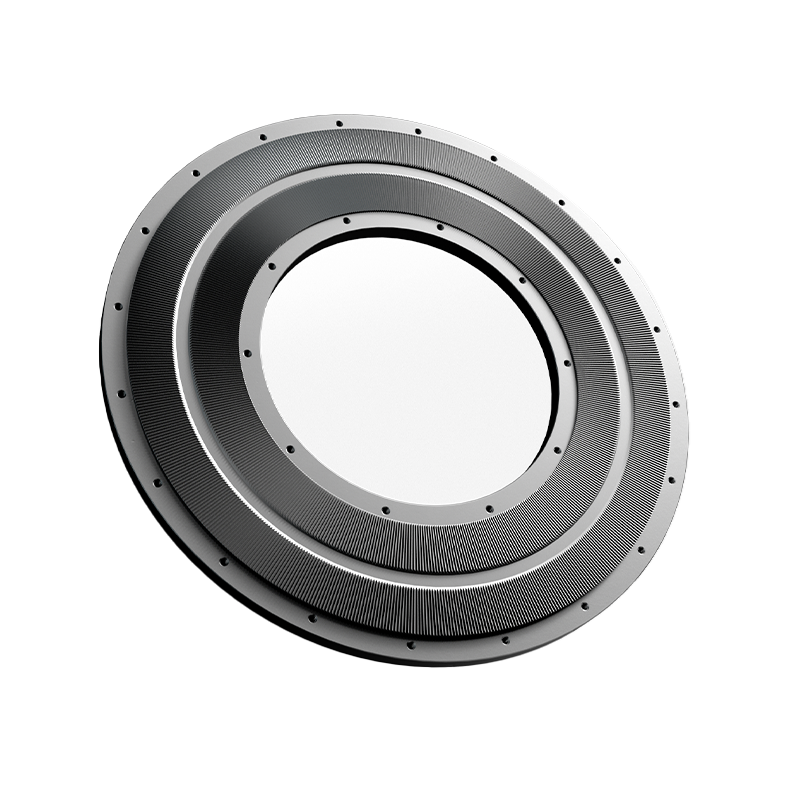
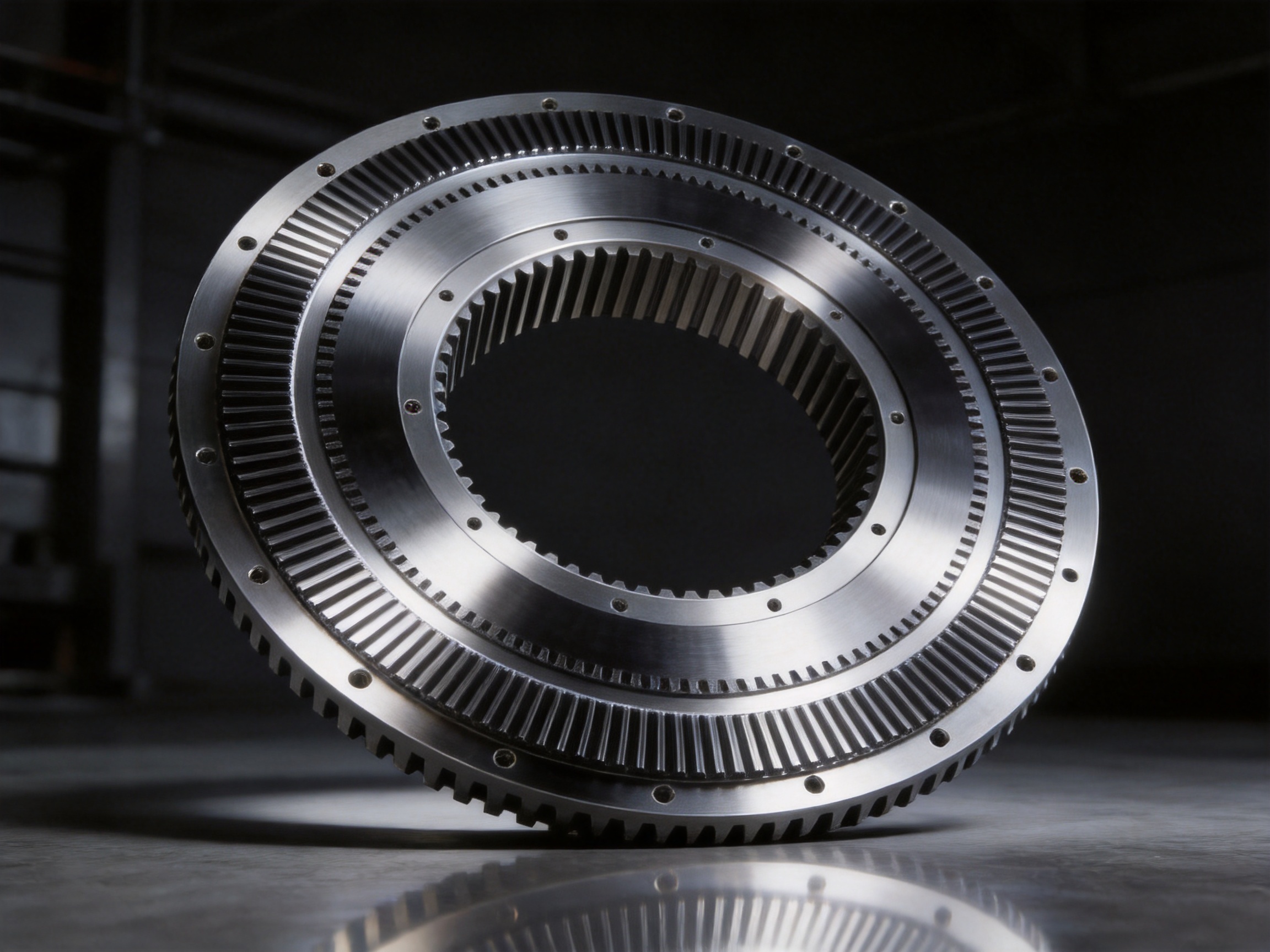
The Pulverizer Double-Tooth Disc belongs to the pulverizer disc category and is engineered as a critical wear and grinding component for plastic pulverizers. Its visible structure presents a deep gray to silver-black mirror finish, produced through CNC high-precision machining and carburizing quenching heat treatment. The disc uses a large concentric ring layout with two densely toothed layers, creating an expanded working surface for shearing and frictional grinding.
The central feed zone is intentionally wide, allowing plastic particles or flakes to enter the grinding area smoothly and distribute evenly toward the toothed rings. Around the edge, high-strength alloy steel flanges with multiple precision bolt holes provide secure installation, stable clamping, and dependable alignment. These mechanical details are especially important because pulverizer discs operate under high rotational speed, repeated impact, frictional heat, and continuous material loading.
Unlike basic grinding discs that depend on a single tooth zone, the double-tooth configuration increases the contact opportunity between plastic material and the disc surface. This improves the probability of effective cutting and refinement during each pass through the grinding chamber. For materials such as PE, which can generate heat and soften under friction, the disc must not only grind efficiently but also help maintain stable operating conditions. The dual-tooth geometry, combined with appropriate machine cooling, supports efficient material reduction while reducing risks such as sticking, coking, discoloration, and agglomeration.
Core Structural Design
The most recognizable feature of the disc is its double-layer concentric tooth architecture. The outer and inner rings are densely covered with fine radial teeth. These teeth are arranged in optimized dual rows, and the tooth profiles may be staggered or positioned at complementary angles. This layout creates a controlled sequence of material engagement rather than a single abrupt grinding stage.
When plastic particles enter the central feed zone, they are guided outward by centrifugal force and disc geometry. The first tooth area performs coarse shearing and initial particle breakdown. As the material continues to travel through the grinding path, the second tooth area applies additional friction, micro-cutting, and refinement. This staged action produces a more uniform powder than many traditional structures because particles experience repeated and progressively finer contact.
The disc also benefits from a split or dual-tooth design that supports precise gap adjustment. In pulverizing, the gap between fixed and rotating discs has a decisive influence on final particle size. A gap that is too wide may create coarse particles and uneven distribution, while a gap that is too narrow can raise temperature, increase wear, and reduce stability. The product supports micron-level feeler gauge adjustment and bolt fine-tuning, allowing operators to regulate fineness without complicated disassembly. This is particularly valuable for processors that frequently switch between different plastic grades, target mesh ranges, or production recipes.
Material Selection and Heat Treatment
The performance of a grinding disc depends heavily on its substrate material and heat treatment. The Pulverizer Double-Tooth Disc uses a proprietary optimized DC53 steel substrate from Mao Yue. DC53 is widely valued in demanding tooling environments because of its balance between hardness, toughness, wear resistance, and dimensional stability after heat treatment. For pulverizer discs, this balance is essential. A tooth that is very hard but brittle may chip under impact, while a tooth that is tough but insufficiently hard may wear quickly and lose grinding sharpness.
To strengthen the tooth structure, the disc undergoes specialized carburizing and quenching, followed by multiple tempering processes. Carburizing enhances surface hardness and wear resistance, while quenching transforms the steel structure to achieve high mechanical strength. Multiple tempering steps help reduce internal stress, improve fatigue resistance, and maintain a more stable balance between hardness and toughness.
This treatment process produces teeth with exceptional hardness, strong impact toughness, and long fatigue endurance. According to the product material, service life can exceed that of standard single-tooth discs by more than 200%. In practical production, longer service life means fewer disc replacements, lower maintenance labor, less production interruption, and more predictable output planning.
Precision CNC Machining and Dimensional Control
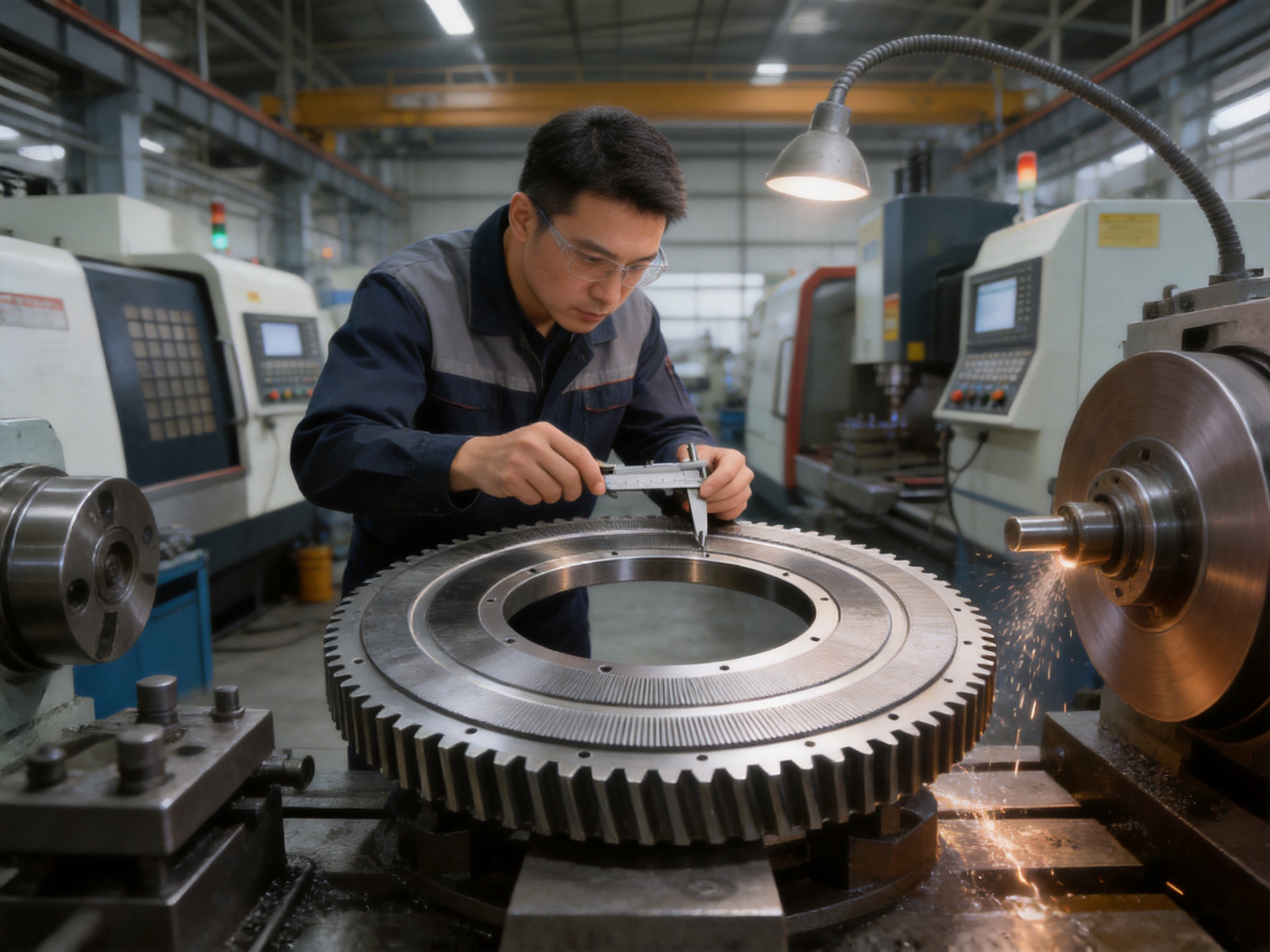
Grinding discs must be manufactured with extremely careful dimensional control. Even a small deviation in tooth height, concentricity, flatness, or bolt-hole position can affect grinding gap uniformity, powder quality, vibration, temperature rise, and bearing load. For this reason, CNC high-precision machining is not an optional feature; it is a necessity for industrial-grade pulverizer discs.
The Pulverizer Double-Tooth Disc is produced through precision machining processes that shape the concentric tooth rings, central feed area, flange geometry, and bolt-hole layout. The goal is to ensure that the disc fits accurately, rotates stably, and maintains consistent tooth engagement across the entire grinding surface. This is especially important for customers using high-output pulverizers or continuous production lines, where vibration or uneven wear can quickly become expensive.
Changzhou Mao Yue Intelligent Equipment Co., Ltd. operates six processing workshops, each averaging approximately 1,400 square meters. The factory is equipped with high-precision grinding machines imported from Taiwan and built to German standards, German dynamic balancing equipment, and Japanese welding systems. This manufacturing foundation enables the company to control disc accuracy, machine stability, and component reliability from raw material processing to finished product inspection.
Dual-Stage Pulverizing Mechanism
The double-tooth grinding disc is designed to create a dual-stage pulverizing effect. In the first stage, plastic particles are subjected to coarse shearing. Larger particles are cut, cracked, and reduced by the initial tooth engagement. This reduces the burden on the fine grinding section and prevents excessive accumulation of oversized material in the grinding chamber.
In the second stage, the partially reduced particles encounter additional tooth surfaces that apply frictional and micro-shearing forces. This produces finer powder with improved uniformity. Because the grinding action is distributed across two tooth zones, the disc can often process material more efficiently than traditional single-row designs at comparable power levels.
Compared with conventional single-row or monolithic discs, the dual-row and dual-layer tooth structure nearly doubles the shear and friction surface area. In suitable PE pulverizing applications, this can increase output by 30% to 50% or more at equivalent power consumption. This improvement is highly significant in plastic recycling and powder production, where profitability often depends on kilograms per hour, energy cost per ton, and the ability to meet a target mesh specification without repeated processing.
Temperature Control and Powder Protection
Plastic pulverizing is not only a mechanical size reduction process; it is also a thermal management challenge. PE and other polyolefins can soften, smear, stick, or discolor if grinding temperature rises excessively. Heat can also cause agglomeration, powder flow problems, odor, and quality defects in downstream applications. Therefore, a high-performance disc must support efficient grinding while helping the equipment maintain a controlled thermal environment.
The Pulverizer Double-Tooth Disc works effectively with Mao Yue’s dual cooling concept, which combines air and water cooling. By controlling grinding chamber temperature, the system helps prevent material overheating, softening, sticking, coking, and powder discoloration. This is particularly valuable in 24-hour continuous production, where heat accumulation can gradually degrade powder quality if the equipment design is insufficient.
The disc’s dual-stage action can also contribute to thermal stability because material reduction is more efficient. When a disc grinds poorly, material may remain in the chamber longer, increasing friction time and heat exposure. By improving cutting and friction efficiency, the double-tooth structure helps the material pass through the reduction process more effectively.
Fineness Control and Powder Quality
The final powder fineness can be flexibly controlled between 10 and 120 mesh, with mainstream PE ultrafine powder commonly produced in the 20 to 80 mesh range. This adjustable range allows the disc to serve multiple industries, from recycling and regranulation preparation to rotational molding and powder coating applications.
Powder quality is not defined only by average fineness. Particle size distribution, flowability, sphericity, agglomeration behavior, and contamination level are equally important. The dual-tooth disc is designed to produce powder with narrower particle distribution, higher sphericity, excellent flowability, reduced agglomeration, and fewer coarse impurities. These properties are especially valuable in applications where powder must melt, flow, coat, disperse, or sinter evenly.
For rotational molding, for example, powder consistency influences wall thickness, surface finish, bubble formation, orange peel defects, and overall product yield. For powder coating and fluidized bed processes, flowability and uniform particle size affect coating thickness, surface smoothness, and process stability. For masterbatch and modified plastics, consistent powder improves dispersion and helps maintain stable performance in downstream compounding.
Advantages Over Conventional Competitor Discs
Many traditional pulverizer discs are built around a single grinding zone. They may be adequate for basic reduction tasks, but they often show limitations when customers require high output, fine powder, reduced temperature rise, long service life, and consistent 24-hour operation. The Pulverizer Double-Tooth Disc is positioned as an upgrade because it addresses several of these limitations simultaneously.
First, the double-tooth structure expands the functional grinding surface. More tooth engagement means better use of mechanical energy and more opportunities for particle reduction. This helps increase output without simply increasing motor power.
Second, the staged grinding path improves particle refinement. Instead of relying on one aggressive grinding event, the disc applies sequential shearing and friction. This supports narrower particle size distribution and reduces the presence of coarse impurities.
Third, the optimized DC53 substrate and heat treatment provide significantly improved wear resistance. Competitor discs made with less suitable steel, less precise heat treatment, or inconsistent surface hardness may lose sharpness quickly. As tooth profiles wear down, output declines, powder becomes coarser, and energy consumption rises. A longer-life disc preserves production stability for a longer period.
Fourth, the disc supports precise gap adjustment. Some competitor designs require more complex disassembly or less accurate manual adjustment, making it harder to maintain consistent mesh targets. The fine-tuning capability of this product supports efficient production changeovers and repeatable powder quality.
Fifth, the disc is manufactured by a company with integrated production capabilities, professional engineering experience, and certified quality systems. This matters because a grinding disc is not simply a shape; it is a combination of steel selection, tooth geometry, heat treatment, dynamic balance, machining accuracy, and compatibility with the pulverizer system.
Performance Comparison Table
| Evaluation Item | Pulverizer Double-Tooth Disc | Conventional Single-Tooth Disc | Practical Benefit |
|---|---|---|---|
| Grinding Structure | Dual-row and dual-layer concentric tooth design | Single-row or monolithic tooth zone | More shear and friction contact area |
| Grinding Process | Coarse shearing followed by fine friction pulverization | One-stage reduction process | Improved powder uniformity and efficiency |
| Output Potential | Can increase output by 30% to 50% or more in suitable PE applications | Limited by smaller effective grinding surface | Higher production capacity at comparable power |
| Service Life | Optimized DC53 substrate with carburizing, quenching, and multiple tempering | Often uses standard tool steel or less advanced treatment | Reduced replacement frequency and downtime |
| Fineness Range | Adjustable from 10 to 120 mesh | Often narrower or less stable adjustment range | Suitable for recycling, rotational molding, coating, and masterbatch uses |
| Temperature Control Support | Works with air and water cooling systems to reduce overheating risks | May generate higher heat under heavy grinding load | Less sticking, coking, discoloration, and agglomeration |
| Maintenance Convenience | Supports micron-level gap checking and bolt fine-tuning | Adjustment may be less precise or more labor-intensive | Faster setup and more repeatable powder quality |
| Customization | Tooth density, double-row spacing, coatings, and compatibility options available | Often limited to standard tooth patterns | Better adaptation to customer materials and processes |
Applications in Plastic Recycling and Regeneration
Plastic recycling is one of the most important application areas for high-efficiency pulverizing discs. Waste PE materials, production scrap, post-industrial plastic, and selected post-consumer materials must often be reduced to consistent powder before regranulation, film blowing, pipe extrusion, profile extrusion, injection molding, or compounding. If powder quality is unstable, downstream processing becomes less predictable and the value of recycled material decreases.
The double-tooth disc improves recycling operations by producing more uniform powder at higher output. Uniform powder melts more consistently, blends more evenly, and supports better final product appearance and performance. For recycling companies, this can help convert low-value waste material into higher-value feedstock. Better pulverizing also reduces the need for repeated grinding, screening, or correction steps.
In a circular economy context, efficient pulverizing technology supports resource recovery and reduces material waste. By improving output and extending disc service life, processors can lower energy intensity, reduce spare-part consumption, and minimize downtime. These benefits are aligned with green manufacturing, carbon reduction, and plastic resource reuse goals.
Applications in Rotational Molding
Rotational molding requires plastic powder with excellent flowability and controlled particle distribution. During the molding process, powder must tumble, flow, adhere to the heated mold surface, melt evenly, and form a uniform wall. If the powder contains too many coarse particles, irregular particles, or agglomerates, the molded product may suffer from uneven wall thickness, bubbles, pinholes, rough texture, or orange peel defects.
The Pulverizer Double-Tooth Disc is particularly well suited for producing PE powder used in rotational molding of large hollow products. Examples include water tanks, chemical containers, toys, kayaks, traffic barriers, agricultural containers, and other hollow molded items. The disc’s dual-stage grinding process helps create powder with better flow behavior and fewer coarse impurities.
For rotational molders, the advantage is not only powder fineness but also production yield. A stable powder can improve surface finish, reduce defective parts, and support consistent cycle performance. This can help manufacturers reduce scrap costs and improve customer satisfaction.
Applications in Powder Coating and Fluidized Bed Processes
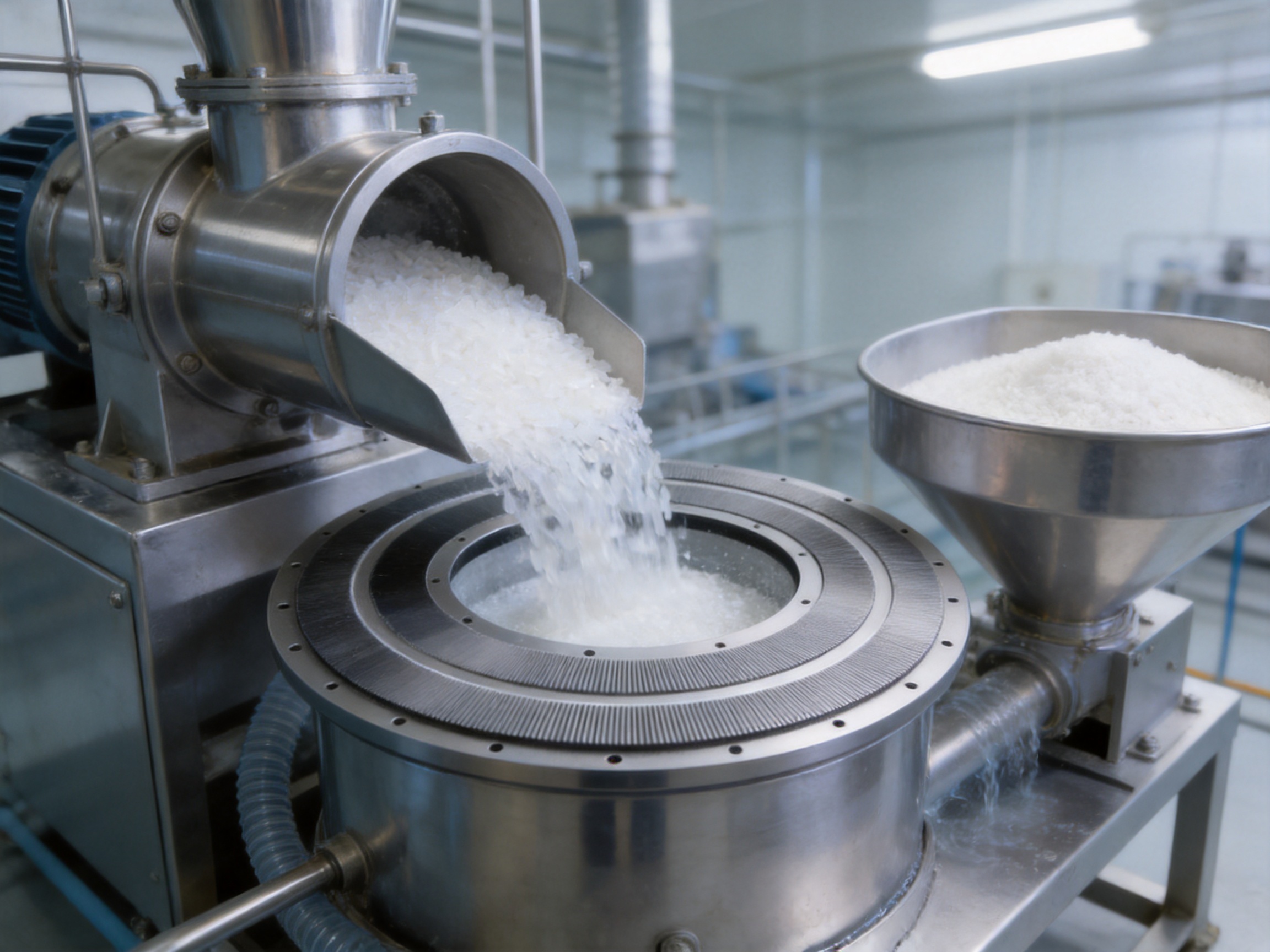
PE powder is widely used in powder coating, electrostatic spraying, and fluidized bed impregnation. These processes require powder that is clean, free from scorching, and capable of flowing consistently. Poorly ground powder can lead to uneven coating thickness, surface defects, inconsistent melting, or contamination.
The double-tooth disc helps produce high-purity PE powder with controlled fineness and reduced thermal damage. Because overheating can cause discoloration or degradation, the combination of efficient tooth geometry and cooling support is important. The resulting powder is suitable for applications where appearance, adhesion, and coating consistency matter.
In fluidized bed processes, powder must suspend and circulate evenly. Excessive fines, oversized particles, or agglomerates can disrupt fluidization. A narrower particle distribution supports more stable coating behavior and improved process repeatability.
Applications in Masterbatch and Modified Plastics
Masterbatch production depends on precise dispersion. Whether producing filler masterbatch, color masterbatch, or functional masterbatch, raw materials must mix evenly with carriers, additives, pigments, and fillers. Ultrafine PE powder can serve as an effective carrier because it improves contact area and dispersion uniformity.
The Pulverizer Double-Tooth Disc produces PE powder suitable for high-end modified plastic applications. Its controlled particle size and low impurity level help support accurate formulation and stable performance. For processors making color masterbatch, consistent powder helps maintain color uniformity. For filler masterbatch, it supports better mixing and reduces localized concentration problems. For functional masterbatch, such as materials requiring anti-static, flame-retardant, UV-resistant, or other specialized additives, uniform powder improves the reliability of additive distribution.
Applications in Flexible Polyolefins and Specialty Materials
Beyond standard PE and PP applications, the disc can also support fine grinding of flexible polyolefins such as EVA and LLDPE. These materials can be more challenging because of their softness, elasticity, and tendency to generate heat during grinding. A disc with efficient cutting geometry and strong thermal management compatibility is valuable for maintaining powder quality.
The disc can also be used in environmentally responsible processing of PE plastic components from electronic waste, where controlled reduction supports material separation, reuse, or preparation for further recycling. In laboratory and research settings, the disc can help produce small batches with narrow particle size distribution, supporting formulation development, material testing, and process optimization.
Compatibility and Customization
The Pulverizer Double-Tooth Disc is highly compatible with Mao Yue PE and PP series disc pulverizers and can partially accommodate equipment from other brands, depending on size and mounting requirements. Disc diameter, bolt-hole configuration, flange design, and tooth geometry must be matched carefully to ensure safe and effective operation.
Customization is one of the product’s important advantages. Customers can request adjustments in tooth density, double-row spacing, tooth profile, surface coating, and application-specific dimensions. This is important because different plastics behave differently during grinding. A rigid recycled PE flake, a soft EVA particle, and a modified polymer compound may require different tooth engagement characteristics to achieve the best balance between output, temperature, fineness, and wear life.
By providing customized solutions, the manufacturer helps customers avoid the limitations of generic spare parts. Instead of forcing every material into one standard disc design, the tooth structure can be optimized for real production needs.
Manufacturing Strength of Changzhou Mao Yue Intelligent Equipment Co., Ltd.
Changzhou Mao Yue Intelligent Equipment Co., Ltd. is a source manufacturer with 30 years of experience in plastic crushing and pulverizing equipment. The company pioneered the plastic pulverizer market and has focused on manufacturing components according to European quality standards. Its disc pulverizers are widely used in plastic size reduction processes for rotational molding, masterbatch, polymers, PVC, PE, recycling, and powder coating.
The company’s manufacturing capability is supported by six processing workshops, each with an average area of about 1,400 square meters. This production scale allows the company to manage machining, assembly, inspection, and customization with a high level of control. A professional technical team regularly studies advanced machine technologies from countries such as Germany, helping the company improve design concepts, processing methods, and product reliability.
The factory is equipped with Taiwan-imported high-precision grinding machines built to German standards. These machines support accurate surface finishing and dimensional control. German dynamic balancing equipment helps ensure stable rotation and reduces vibration, which is essential for high-speed pulverizing systems. Japanese welding systems support reliable fabrication where welded structures are required in related equipment. Together, these manufacturing resources contribute to accurate machining, stable components, and reliable machine performance.
Quality Certifications and Process Discipline
Quality control is essential in pulverizer disc production because the disc operates under demanding mechanical and thermal conditions. Changzhou Mao Yue Intelligent Equipment Co., Ltd. has obtained CE mechanical certification and ISO 9001 quality management system certification. These certifications reflect attention to product safety, manufacturing consistency, process management, and quality assurance.
For customers, certification provides confidence that the manufacturer follows structured production and inspection procedures. However, quality is not achieved by certification alone. It is also created through careful material selection, precise machining, controlled heat treatment, dynamic balancing, dimensional inspection, and application feedback. The company’s long-term partnerships with more than 5,000 enterprises in domestic and international markets demonstrate its ability to deliver practical solutions across different industries and operating environments.
Operational Benefits for Production Managers
For production managers, the value of a grinding disc must be measured in daily operating results. A disc that costs less at purchase may become expensive if it wears rapidly, produces inconsistent powder, increases energy consumption, or causes frequent stoppages. The Pulverizer Double-Tooth Disc is designed to improve the total production economy rather than only reduce initial spare-part cost.
Higher output helps increase line productivity. Longer service life reduces replacement frequency. Better fineness control reduces the need for reprocessing. Stable powder quality supports downstream production and reduces rejected batches. Precise adjustment reduces setup time. Improved temperature control reduces material loss due to sticking, discoloration, or coking.
These benefits are especially meaningful in 24-hour production environments. Continuous operation magnifies small differences in disc performance. A modest improvement in hourly output can become a large monthly production gain. A reduction in downtime can improve order delivery reliability. Better powder consistency can strengthen customer trust and reduce quality complaints.
Energy Efficiency and Cost-Performance
Energy efficiency in pulverizing is closely linked to grinding geometry. If the disc cannot cut and refine effectively, the machine may consume power without producing enough qualified powder. The double-tooth design improves the use of available mechanical energy by increasing functional contact area and distributing grinding action across two stages.
At equivalent power consumption, output may increase by 30% to 50% or more in suitable PE applications. This means the energy cost per kilogram of qualified powder can be reduced. When combined with longer disc life and lower downtime, the total cost-performance becomes superior to many conventional discs and competitive with imported alternatives.
The product is especially attractive for processors that want European-level quality standards while maintaining practical procurement cost. By manufacturing directly and controlling key processes internally, Changzhou Mao Yue Intelligent Equipment Co., Ltd. can offer strong cost-performance without compromising essential performance requirements.
Installation and Gap Adjustment Considerations
Proper installation is essential for safe and efficient disc operation. Before installation, the disc, mounting surface, bolt holes, and chamber should be cleaned and inspected. Operators should confirm that the disc diameter, bolt pattern, flange structure, and rotation requirements match the pulverizer model. Bolts should be tightened evenly according to the machine manufacturer’s procedures to avoid uneven clamping or disc distortion.
After installation, the grinding gap should be checked with suitable feeler gauges. Micron-level gap adjustment allows operators to target specific powder fineness while protecting the disc from unnecessary contact or overload. Bolt fine-tuning makes adjustment more convenient and repeatable. Operators should avoid setting the gap too tight during initial startup, especially when processing heat-sensitive materials. A gradual adjustment approach can help identify the best balance between output, fineness, current load, and temperature.
Dynamic stability should also be monitored. Abnormal vibration, unusual noise, rapid temperature rise, or sudden changes in powder quality may indicate improper installation, uneven feeding, foreign material contamination, bearing issues, or disc wear. Routine inspection helps prevent small problems from developing into major downtime events.
Maintenance and Service Life Optimization
Although the disc is engineered for long service life, maintenance practices still influence performance. Operators should maintain stable feeding, avoid metal contamination, monitor temperature, and inspect tooth wear periodically. Screening and magnetic separation before pulverizing can protect the disc from hard foreign objects. Cooling systems should be kept clean and functional to prevent excessive heat.
When processing abrasive recycled materials, inspection frequency should be increased. Recycled plastics may contain fillers, pigments, dirt, or hard particles that accelerate wear. If powder becomes coarser, output drops, or energy consumption rises, tooth wear or gap change may be the cause. Timely adjustment can extend useful operating time before replacement is necessary.
Disc storage is also important. Spare discs should be stored in a dry, clean environment and protected from impact. Precision tooth surfaces should not be damaged during handling. Because the disc is a high-accuracy component, careless storage or installation can reduce the benefits created by advanced manufacturing.
Why the Double-Tooth Disc Is a Strategic Upgrade
The plastic pulverizing industry is under increasing pressure to deliver higher output, better powder quality, lower energy consumption, and more sustainable operation. Customers are no longer satisfied with simple size reduction. They need powder that supports high-value downstream processing and consistent industrial performance.
The Pulverizer Double-Tooth Disc answers this demand through a combination of tooth geometry, material engineering, heat treatment, precision machining, cooling compatibility, and customization. It is a strategic upgrade because it helps the entire pulverizing line perform better. The disc improves not only the grinding chamber but also downstream processes such as molding, coating, compounding, recycling, and product finishing.
For companies facing capacity bottlenecks, the disc can increase production without requiring a full line replacement in many cases. For companies struggling with powder inconsistency, the staged grinding design can improve distribution and reduce coarse impurities. For companies concerned about downtime, the extended wear life can reduce maintenance frequency and improve production planning.
Q&A Section
Q1: What is the main advantage of the double-tooth grinding disc?
The main advantage is its dual-row and dual-layer tooth structure. This design increases shear and friction surface area, creating a dual-stage grinding process that first performs coarse shearing and then fine friction pulverization. The result is higher output, better powder uniformity, and improved grinding efficiency compared with many traditional single-tooth discs.
Q2: What materials can the disc process?
The disc is especially suitable for PE and PP pulverizing and can also be used for flexible polyolefins such as EVA and LLDPE, depending on machine configuration and processing requirements. It is useful in recycling, rotational molding powder production, powder coating, masterbatch preparation, and modified plastic applications.
Q3: What powder fineness can be achieved?
The final powder fineness can be flexibly controlled between 10 and 120 mesh. For mainstream PE ultrafine powder applications, the common range is approximately 20 to 80 mesh. Actual results depend on material type, feed size, disc gap, cooling, machine model, and operating conditions.
Q4: How does the disc improve output?
The double-tooth layout nearly doubles the effective shear and friction contact area compared with many single-row structures. This allows more efficient use of mechanical energy and creates repeated material engagement. In suitable PE applications, output can increase by 30% to 50% or more at equivalent power consumption.
Q5: Why is DC53 steel used?
DC53 steel offers a strong balance of hardness, toughness, wear resistance, and dimensional stability. After specialized carburizing, quenching, and multiple tempering processes, the disc teeth achieve high hardness while maintaining impact toughness and fatigue endurance. This helps extend service life and preserve grinding performance.
Q6: How does the disc help prevent overheating?
The disc is designed to work with air and water cooling systems that control grinding chamber temperature. Efficient dual-stage grinding also helps reduce excessive residence time in the chamber. Together, these factors reduce the risk of PE overheating, softening, sticking, coking, agglomeration, and discoloration.
Q7: Is the disc suitable for continuous production?
Yes. The disc is designed for demanding industrial use, including 24-hour continuous high-volume production. Its wear-resistant material, precision machining, stable mounting structure, and compatibility with cooling systems support long-term stable operation.
Q8: Can the disc fit equipment from other brands?
The disc directly fits Mao Yue PE and PP series disc pulverizers and can partially accommodate other brands’ equipment. Compatibility depends on disc diameter, bolt-hole pattern, flange design, shaft and chamber configuration, and required grinding gap. Customization may be available for specific requirements.
Q9: What industries benefit most from this disc?
The disc is valuable for plastic recycling, rotational molding, powder coating, fluidized bed coating, masterbatch production, modified plastics, polymer processing, and laboratory research. It is especially useful where both high powder quality and high output are required.
Q10: How should users maintain the disc?
Users should ensure clean feeding, prevent metal contamination, monitor temperature, inspect tooth wear, maintain cooling systems, and adjust the disc gap properly. Magnetic separation and screening before pulverizing can help protect the teeth. Correct installation and careful handling are also important for long service life.
Conclusion
The Pulverizer Double-Tooth Disc represents a high-performance approach to plastic pulverizing. Its double-layer concentric tooth structure, optimized radial fine teeth, wide central feed zone, precision flanges, DC53 steel substrate, carburizing quenching, multiple tempering, and CNC high-precision machining all contribute to a disc designed for efficiency, durability, and powder quality.
Compared with conventional single-tooth discs, it provides a larger grinding surface, staged material reduction, higher output potential, longer service life, better fineness control, and stronger support for heat-sensitive plastics. These advantages make it suitable for PE recycling, rotational molding powders, coating powders, masterbatch carriers, modified plastics, EVA and LLDPE grinding, and other high-demand applications.
Behind the product is the manufacturing strength of Changzhou Mao Yue Intelligent Equipment Co., Ltd., a source manufacturer with 30 years of experience, six processing workshops, advanced imported machining and balancing equipment, CE certification, ISO 9001 certification, and long-term partnerships with thousands of enterprises. The company’s combination of technical experience, production scale, precision manufacturing, and customization capability allows the disc to serve as more than a spare part. It becomes a practical solution for improving pulverizing productivity, reducing downtime, supporting green recycling, and increasing the value of plastic powder production.
References
1. Tadmor, Z., and Gogos, C. G. Principles of Polymer Processing. Wiley-Interscience.
2. Brydson, J. A. Plastics Materials. Butterworth-Heinemann.
3. Harper, C. A. Handbook of Plastics Technologies. McGraw-Hill.
4. Rosato, D. V., Rosato, D. V., and Rosato, M. G. Plastics Processing Data Handbook. Springer.
5. Osswald, T. A., and Hernández-Ortiz, J. P. Polymer Processing: Modeling and Simulation. Hanser Publishers.
6. ISO 9001 Quality Management Systems: Requirements. International Organization for Standardization.
7. CE Machinery Safety Compliance Guidelines. European machinery safety documentation.
8. Tool Steel Heat Treatment and Wear Resistance Reference Manual. Industrial tooling materials publication.