

 English
 русский
 Español
 عربى
عربى 中文简体
中文简体
 中文简体
中文简体
Content
- 1 1. Product Overview: A Double-Tooth Disc Built for Modern Pulverizing Demands
- 2 2. Why the Grinding Disc Matters in Plastic Pulverizing
- 3 3. Structural Advantages of the Double-Tooth Design
- 4 4. Material Selection: Optimized DC53 Steel for Strength and Stability
- 5 5. Manufacturing Precision: CNC Machining and Controlled Processing
- 6 6. Comparison with Conventional Single-Tooth Discs
- 7 7. Powder Fineness and Quality Control
- 8 8. Thermal Management: Preventing Softening, Sticking, and Discoloration
- 9 9. Precision Gap Adjustment and Operational Convenience
- 10 10. Compatibility and Customization
- 11 11. Applications in Plastic Recycling and Regeneration
- 12 12. Applications in Rotational Molding
- 13 13. Applications in Powder Coating and Chemical Modification
- 14 14. Applications in EVA, LLDPE, and Flexible Polyolefins
- 15 15. Applications in Electronic Waste Plastic Components
- 16 16. Laboratory, Small-Batch, and Research Applications
- 17 17. Company Manufacturing Strengths Behind the Product
- 18 18. Advanced Processing and Quality Control
- 19 19. Advantages Over Imported and Generic Alternatives
- 20 20. How the Disc Improves Total Production Economics
- 21 21. Installation and Operating Considerations
- 22 22. Recommended Maintenance Practices
- 23 23. Role in Complete Crushing and Pulverizing Lines
- 24 24. Sustainability and Green Manufacturing Value
- 25 25. Q&A Section
- 25.1 Q1: What is the main advantage of a pulverizer double-tooth disc?
- 25.2 Q2: Which materials are suitable for this disc?
- 25.3 Q3: What powder fineness can be achieved?
- 25.4 Q4: Why is cooling important when using this disc?
- 25.5 Q5: How does the disc reduce downtime?
- 25.6 Q6: Can the disc fit machines from other brands?
- 25.7 Q7: Is customization available?
- 25.8 Q8: Why choose this disc instead of a cheaper generic disc?
- 25.9 Q9: What company strengths support this product?
- 25.10 Q10: What industries benefit most from the double-tooth disc?
- 26 26. Conclusion
- 27 References
- 28 Product: Pulverizer double-tooth Disc
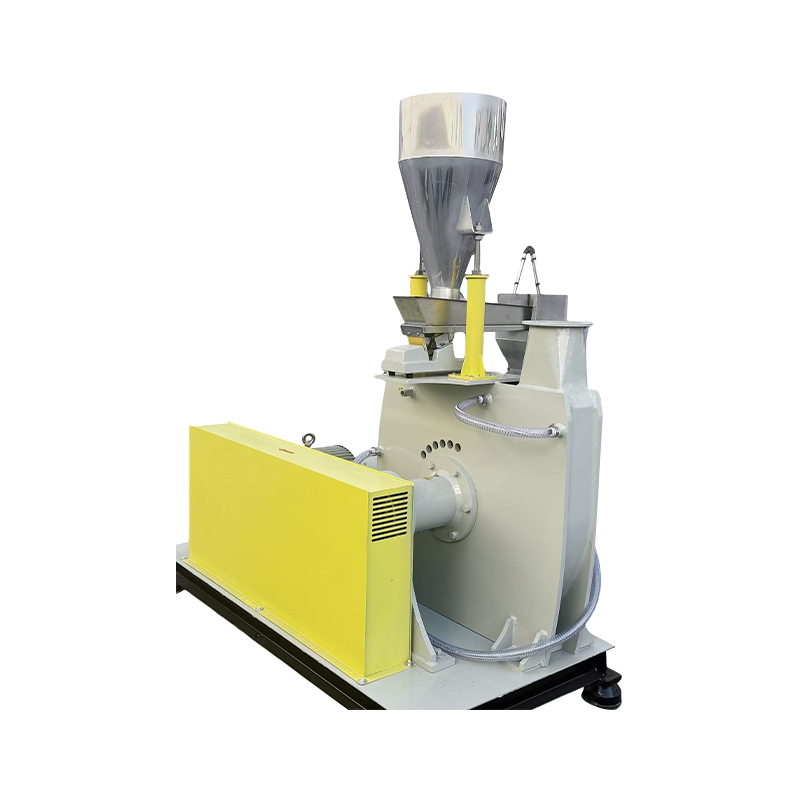
In modern plastic size reduction, the grinding disc is one of the most decisive components inside a pulverizer. It determines how material is cut, rubbed, heated, cooled, and finally transformed into powder. For processors working with PE, PP, EVA, LLDPE, PVC-related materials, masterbatch carriers, recycling flakes, rotational molding feedstock, and powder coating raw materials, disc performance directly affects output, powder quality, energy use, maintenance frequency, and total production cost. The pulverizer double-tooth disc is designed to address these practical challenges by combining a large ring-shaped structure, dual-layer concentric tooth zones, dense radial fine teeth, precision machining, alloy steel reinforcement, and advanced heat treatment.
This article introduces the structure, advantages, application value, manufacturing logic, and industrial significance of the pulverizer double-tooth disc supplied by Changzhou Mao Yue Intelligent Equipment Co., Ltd. The focus is on why the double-tooth design can outperform traditional single-row or ordinary monolithic discs, how the product helps plastic processors achieve higher capacity and better powder uniformity, and why the company’s manufacturing foundation provides strong support for stable long-term use.
1. Product Overview: A Double-Tooth Disc Built for Modern Pulverizing Demands
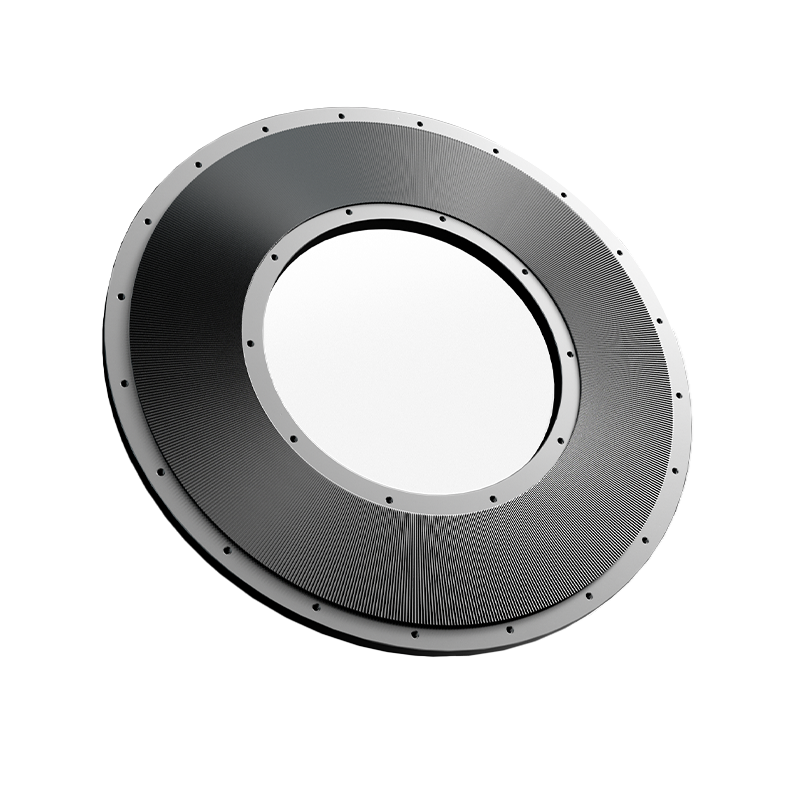
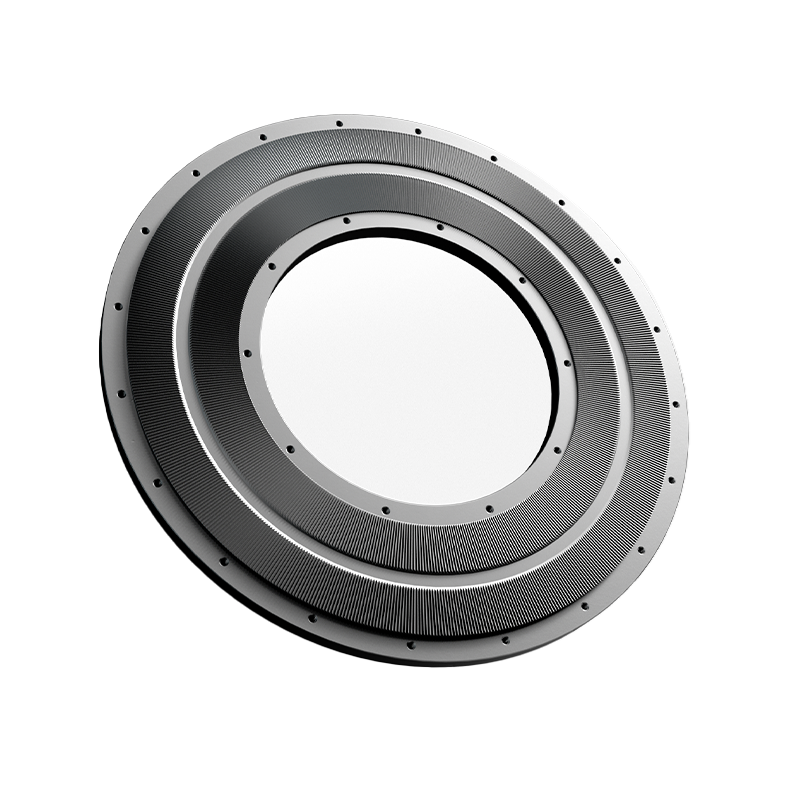
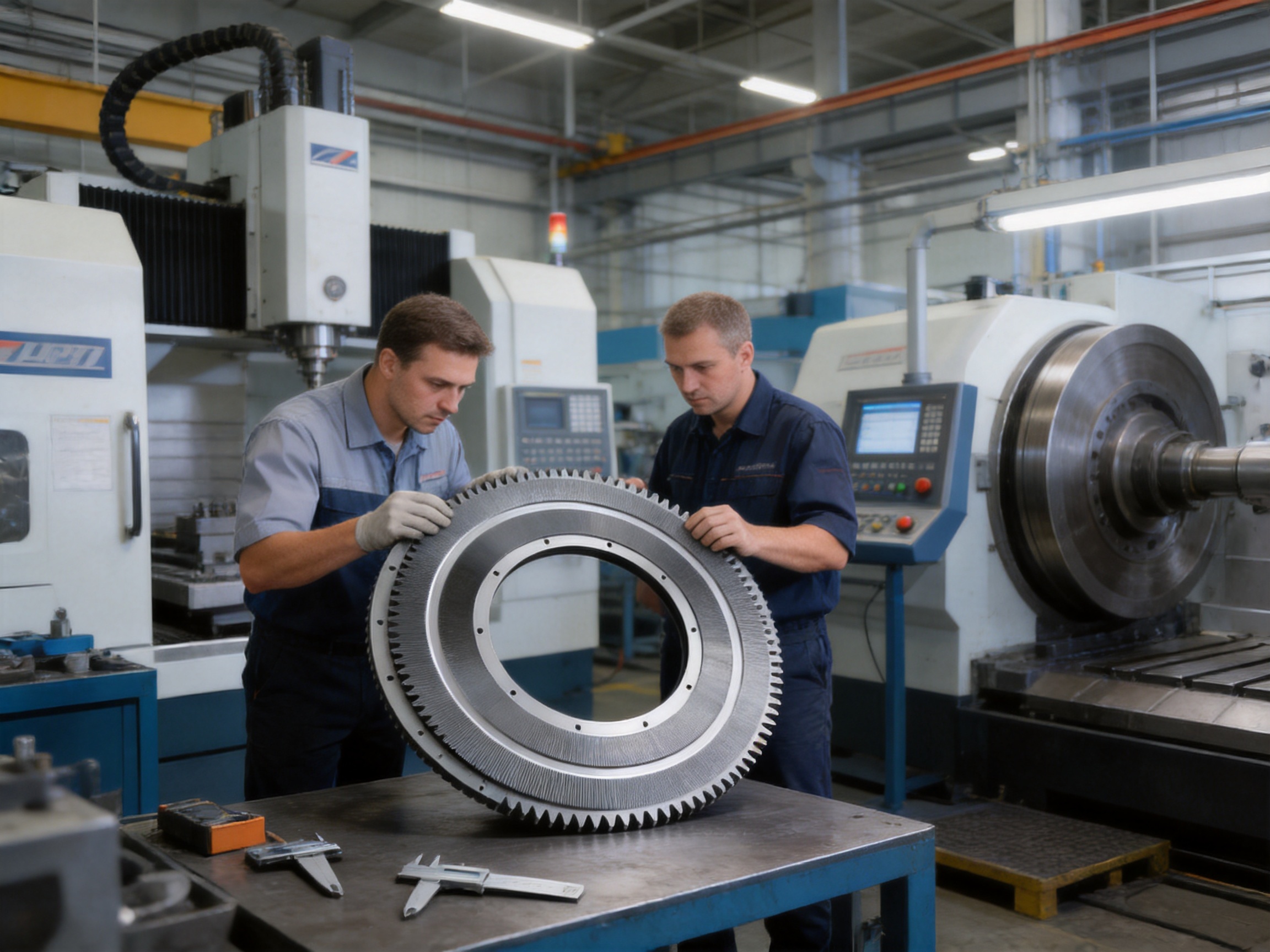
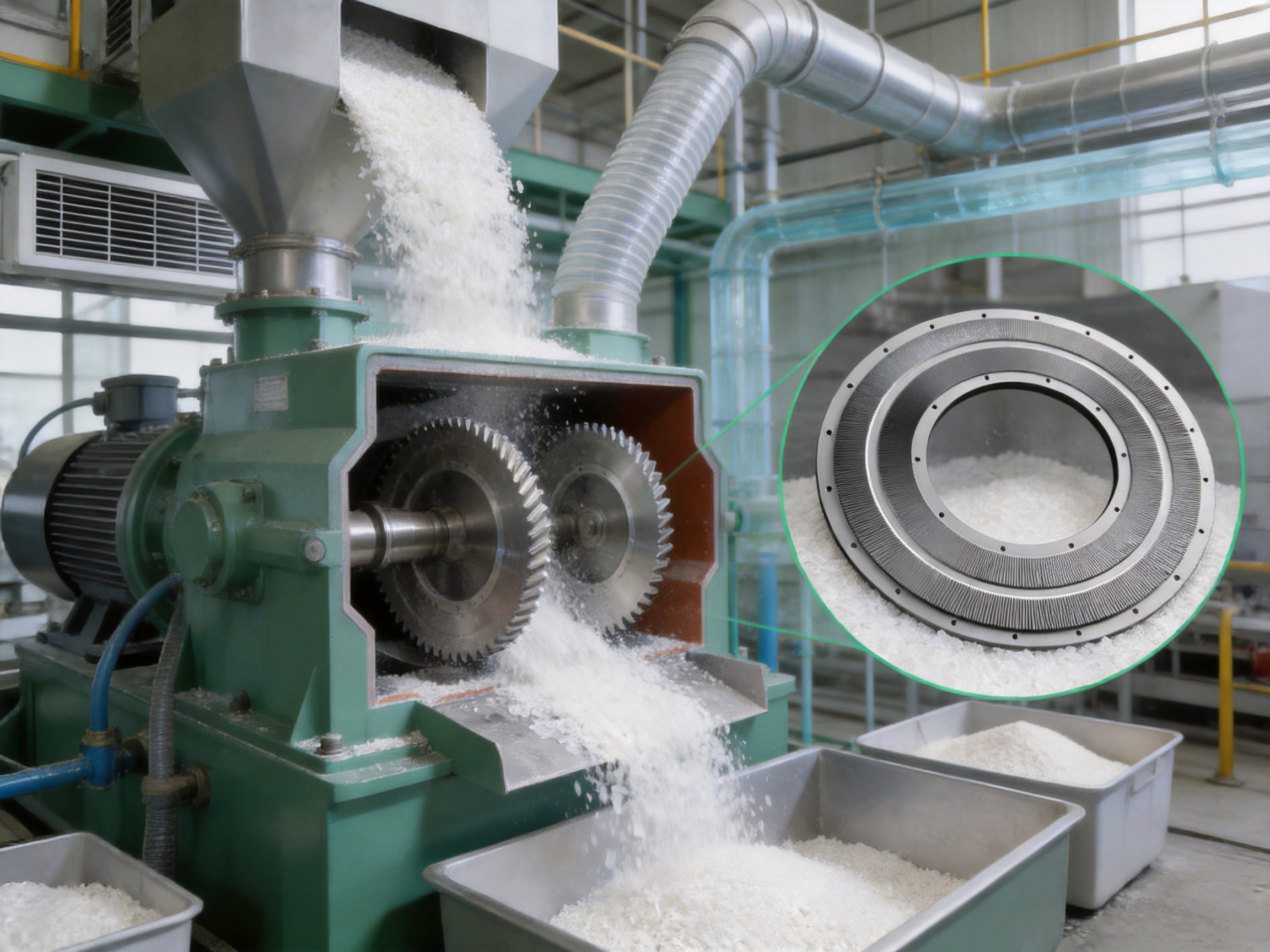
The pulverizer double-tooth disc is a precision grinding component used in disc pulverizers for plastic powder production. Its visible structure immediately reflects its functional purpose. The disc has a wide central feed zone, a large ring-shaped working area, and two concentric tooth layers. Both the inner and outer rings are densely arranged with radial fine teeth. These teeth are engineered in dual rows and may be optimized through staggered or complementary tooth angles to improve cutting, shearing, friction, and material flow.
Compared with a standard single-tooth disc, the double-tooth disc provides a larger effective grinding surface. This means that as plastic particles enter the pulverizing chamber, they are not processed by one basic cutting zone only. Instead, the material is progressively exposed to coarse shearing and then fine friction pulverization. This two-stage action is especially valuable for PE materials, which can be difficult to pulverize efficiently because of their toughness, flexibility, and tendency to generate heat under friction.
The product’s large double-layer concentric design is not merely an appearance feature. It is a functional geometry created to improve grinding efficiency and powder consistency. The outer and inner tooth rings help distribute the workload more effectively, reducing the dependency on a single tooth zone. The result is more stable processing, more complete material refinement, and a better balance between output and powder fineness.
The edges of the disc are secured by high-strength alloy steel flanges. Dozens of precision bolt holes are distributed around the fastening area to support reliable installation, accurate positioning, and stable operation under high-speed rotation. The disc is manufactured through CNC high-precision machining and receives carburizing quenching heat treatment, resulting in a deep gray or silver-black mirror-like finish. This finish reflects the attention given to surface quality, wear resistance, and operational durability.
2. Why the Grinding Disc Matters in Plastic Pulverizing
In a plastic pulverizer, the main machine body, feeding system, cooling system, classifier, motor, and dust collection system all contribute to production performance. However, the disc pair is the active processing heart of the machine. A poor-quality disc can limit even a powerful pulverizer, while a high-performance disc can help existing equipment reach a higher level of efficiency and powder quality.
The grinding disc affects four major outcomes. First, it affects throughput. If the tooth geometry cannot cut and rub the material efficiently, production output remains low even when the motor consumes significant power. Second, it affects fineness. Powder that is too coarse, too uneven, or mixed with large impurities may be unsuitable for rotational molding, coating, modification, or high-value recycling. Third, it affects temperature. Plastics such as PE soften when excessive heat accumulates, causing sticking, coking, discoloration, and material loss. Fourth, it affects maintenance. If the disc wears too quickly, the customer faces frequent downtime, labor cost, inventory pressure, and inconsistent powder quality over time.
The pulverizer double-tooth disc addresses these issues through an integrated design. More tooth rows increase the working surface. Optimized tooth profiles improve the interaction between plastic particles and the grinding chamber. High-grade steel and heat treatment increase wear resistance. Accurate machining supports dynamic balance and installation reliability. These features together create a disc that can improve production efficiency while protecting product quality.
3. Structural Advantages of the Double-Tooth Design
The most distinctive feature of this product is its dual-row or dual-layer tooth design. Ordinary discs often rely on a single tooth structure, which limits the available shear and friction surface. When the disc rotates at high speed, material must be processed quickly within the grinding gap. If the effective tooth engagement area is insufficient, particles may pass through unevenly or require repeated grinding, reducing efficiency.
The double-tooth disc nearly doubles the working surface area compared with many traditional single-row structures. This creates what can be described as dual-stage high-efficiency grinding. In the first stage, incoming plastic particles receive stronger coarse shearing and crushing. In the second stage, partially reduced particles are exposed to fine friction pulverization. This progressive processing path helps transform plastic pieces into powder more effectively.
For PE pulverizing, this is particularly important. Polyethylene materials can be resilient, flexible, and heat-sensitive. A disc that only depends on aggressive impact may generate too much heat without producing uniform powder. A disc that only depends on gentle friction may have low output. The double-tooth disc balances both mechanisms by combining initial cutting with subsequent fine grinding.
The tooth arrangement also supports narrower particle distribution. When material experiences more consistent contact with multiple tooth zones, the final powder tends to contain fewer oversized particles and fewer poorly processed fragments. The result is powder with better flowability, improved sphericity, less agglomeration, and better suitability for demanding downstream processes.
4. Material Selection: Optimized DC53 Steel for Strength and Stability
A grinding disc must resist abrasion, impact, temperature fluctuation, and fatigue. The teeth are constantly exposed to plastic particles, fillers, pigments, recycled impurities, and high-speed friction. If the steel is soft, the tooth edge wears rapidly. If the steel is too brittle, teeth may chip or crack under impact. Therefore, material selection must balance hardness with toughness.
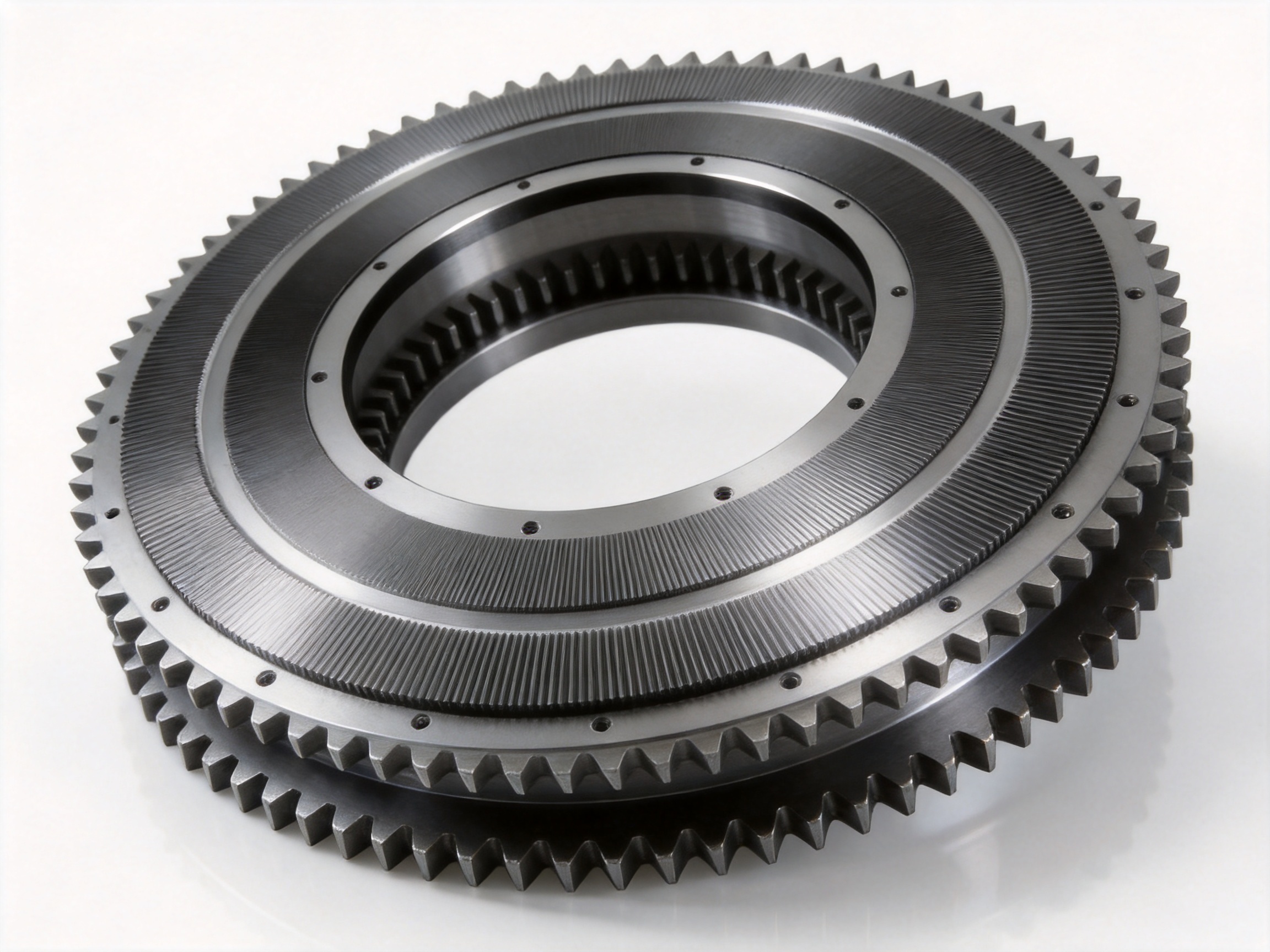
The double-tooth disc supplied by Changzhou Mao Yue Intelligent Equipment Co., Ltd. is manufactured from the company’s proprietary optimized DC53 steel substrate. DC53 is widely valued in industrial tooling because it can achieve high hardness while maintaining good toughness and resistance to deformation when properly heat treated. For pulverizer discs, this material foundation supports long service life and stable tooth geometry.
After machining, the disc undergoes specialized carburizing and quenching, followed by multiple tempering processes. Carburizing improves the hardness and wear resistance of the surface layer, while the internal structure remains capable of absorbing operational stress. Quenching increases hardness, and tempering helps reduce brittleness, stabilize the microstructure, and improve fatigue resistance. This process combination gives the teeth high hardness, outstanding wear resistance, impact toughness, and fatigue endurance.
According to the supplied product information, the service life can exceed that of standard single-tooth discs by more than 200% under suitable operating conditions. This is a major economic advantage. A disc that lasts longer reduces replacement frequency, minimizes downtime, lowers labor requirements, and keeps production quality more stable over long operating cycles.
5. Manufacturing Precision: CNC Machining and Controlled Processing
The performance of a pulverizer disc is not determined by steel grade alone. Even excellent steel can fail to perform if the tooth geometry, flatness, bolt hole accuracy, concentricity, and surface finish are not controlled. The double-tooth disc is produced through CNC high-precision machining, allowing the tooth pattern, ring layout, fastening holes, and working surfaces to be processed with accurate repeatability.
Precision is critical because the grinding gap between the rotating disc and the fixed disc is often small. If the disc surface is uneven or out of balance, the gap becomes inconsistent. This can cause uneven powder fineness, vibration, abnormal wear, heat concentration, and potential damage to the machine. A carefully machined disc supports stable gap adjustment and reliable pulverizing performance.
Changzhou Mao Yue Intelligent Equipment Co., Ltd. operates six processing workshops, each averaging about 1,400 square meters. The factory is equipped with Taiwan-imported high-precision grinding machines built to German standards, German dynamic balancing equipment, and Japanese welding systems. These manufacturing resources help ensure that components are not only strong in theory but stable in actual machine operation.
The company has a professional technical team that regularly studies advanced machine technologies from countries such as Germany. This approach is important because disc pulverizer technology requires both traditional mechanical experience and continuous improvement. Tooth geometry, cooling design, balancing, welding quality, assembly accuracy, and wear control are all areas where practical know-how accumulates over years of production.
6. Comparison with Conventional Single-Tooth Discs
Many plastic processors begin with ordinary single-tooth discs because they are familiar and may have a lower initial purchase cost. However, the real cost of a pulverizer disc should be measured by total production value, not only purchase price. Factors such as output, energy efficiency, powder pass rate, downtime, replacement frequency, and product quality all affect profitability.
The double-tooth disc is designed to provide advantages in these areas. By increasing the working tooth surface, it can improve material engagement and reduce the number of incomplete particles. At equivalent power consumption, the product information indicates that grinding efficiency can increase output by 30% to 50% or more, depending on material type, machine condition, target mesh, cooling conditions, and operating parameters.
The following table summarizes practical differences between the double-tooth disc and common conventional disc designs.
| Comparison Item | Pulverizer Double-Tooth Disc | Conventional Single-Tooth Disc | Practical Impact |
|---|---|---|---|
| Tooth Structure | Dual-row or dual-layer concentric tooth design | Single-row or simpler monolithic tooth design | More contact area and more progressive grinding |
| Processing Mechanism | Coarse shearing followed by fine friction pulverization | Usually relies on one main grinding action | Better balance of output and fineness |
| Grinding Efficiency | Can increase output by 30% to 50% or more under suitable conditions | Lower effective grinding area may limit capacity | Higher productivity at similar power input |
| Powder Quality | Narrower particle distribution, improved flowability, fewer coarse impurities | More likely to produce uneven particles when worn or overloaded | Better suitability for high-value applications |
| Wear Resistance | Optimized DC53 steel with carburizing, quenching, and tempering | Varies by supplier; may use lower-grade material or simpler heat treatment | Longer service life and lower downtime cost |
| Gap Adjustment | Designed for precise fine adjustment with feeler gauge and bolt tuning | May require more frequent correction or more complex handling | Improved operational convenience |
| Thermal Control Compatibility | Works with air and water cooling systems to control heat | May generate more heat for the same powder target | Lower risk of sticking, coking, and discoloration |
7. Powder Fineness and Quality Control
Different industries require different powder specifications. Rotational molding usually needs powder with excellent flowability and uniform particle size. Powder coating and fluidized bed impregnation require fine, clean, and stable powder. Recycled material processing may prioritize output and cost while still needing acceptable uniformity. Laboratory research and small-batch development may require narrow particle size distribution for accurate testing.
The double-tooth disc supports flexible control of final powder fineness from 10 mesh to 120 mesh. For mainstream PE ultra-fine powder, the common range is often 20 mesh to 80 mesh. This flexibility helps processors adapt to different customer orders and material requirements without constantly changing the entire production system.
Uniform powder offers several downstream benefits. It improves feeding stability in extrusion or compounding. It reduces segregation in masterbatch and filler systems. It supports more consistent melting and fusion in rotational molding. It improves the appearance and coating uniformity in powder coating processes. It also reduces waste caused by oversized particles, agglomerates, or burnt impurities.
The double-tooth disc’s ability to provide a narrower particle distribution is linked to its staged grinding mechanism. Material is progressively reduced rather than randomly struck. The dense radial fine teeth create repeated controlled interaction between particles and the disc surface. When combined with proper cooling and gap adjustment, this helps produce powder that is more spherical, more fluid, and less prone to agglomeration.
8. Thermal Management: Preventing Softening, Sticking, and Discoloration
Heat is one of the most difficult problems in plastic pulverizing. During high-speed grinding, friction generates temperature rise. PE and similar materials are especially sensitive because they can soften, smear, stick to the teeth, or form deposits if the chamber becomes too hot. Excessive heat can also cause powder discoloration, odor, coking, and reduced material value.
The double-tooth disc is designed to work with a dual cooling system that combines air cooling and water cooling. This helps control grinding chamber temperature during continuous operation. Cooling is not only a machine accessory; it is part of the total pulverizing system. A high-output disc must be matched with sufficient heat dissipation so that the increased grinding efficiency does not create quality problems.
By promoting efficient staged grinding, the double-tooth design can also reduce unnecessary repeated friction. When material is processed more effectively in one pass, there is less need for excessive dwell time inside the grinding chamber. This helps limit thermal accumulation. The result is a more stable process, especially during 24-hour high-volume production.
For processors producing light-colored PE powder, rotational molding powder, or material used in high-end modification, temperature control is essential. Burnt particles or yellowed powder can lead to customer rejection. The combination of disc material, tooth geometry, precision gap control, and dual cooling helps protect powder purity and appearance.
9. Precision Gap Adjustment and Operational Convenience
The grinding gap between discs strongly influences final powder fineness. A smaller gap generally supports finer powder but may increase heat, energy load, and wear. A larger gap may improve throughput but produce coarser powder. Therefore, operators need a disc system that allows accurate, repeatable, and convenient adjustment.
The split or dual-tooth design of the product supports precise gap adjustment using a micron-level feeler gauge and bolt fine-tuning. This allows operators to set the disc gap according to material type, target mesh, output requirement, and temperature conditions. The process is simple and can be performed without complicated disassembly, reducing downtime and improving production flexibility.
Operational convenience is a competitive advantage that is often underestimated. In real factories, machines may process different materials in different shifts. Recycled PE, virgin PE, PP, EVA, and blended materials may all require slightly different settings. If adjustment is slow or inaccurate, operators may avoid optimization and run the machine under compromise conditions. A convenient adjustment structure encourages proper setup and helps maintain consistent powder quality.
10. Compatibility and Customization
The double-tooth disc is highly compatible with disc diameter models of the Mao Yue PE and PP series. It also partially accommodates equipment from other brands, depending on size, mounting structure, rotational direction, bolt pattern, and operating requirements. This compatibility is valuable for customers who want to upgrade existing pulverizers without replacing their entire production line.
Customization options include tooth density, double-row spacing, and specialized surface coatings. Tooth density may be adjusted based on material hardness, toughness, target fineness, and output priority. Double-row spacing can be optimized for specific particle flow behavior. Surface coatings may be selected for enhanced wear resistance, reduced adhesion, or special processing conditions.
This customization capability differentiates the product from generic discs. A generic component may fit physically, but it may not match the customer’s material, capacity target, cooling system, or powder specification. A customized disc can be engineered as part of the process solution, providing better long-term results.
11. Applications in Plastic Recycling and Regeneration
Plastic recycling is one of the most important application fields for high-efficiency pulverizing. Waste PE materials, industrial scraps, pipe pieces, film regrind, sheet fragments, and injection molding waste can be converted into powder for regranulation, extrusion, injection molding, and other secondary uses. The value of recycled plastic increases when it is processed into a cleaner, more uniform, and more controllable raw material.
The double-tooth disc helps recycling operations overcome common bottlenecks. Traditional pulverizing may produce inconsistent powder, excessive coarse particles, or overheated material. These issues reduce the quality of recycled pellets and make downstream processing less stable. By improving shearing and fine friction pulverization, the double-tooth disc can produce more uniform powder at higher output.
Uniform recycled powder can be used in film blowing, pipe extrusion, profile extrusion, injection molding, and regranulation. It can improve feeding stability, melting consistency, and final product appearance. For recyclers seeking higher margins, better powder quality means access to more demanding applications rather than only low-value reuse.
The product also supports broader circular economy goals. By increasing the efficiency and quality of plastic recycling, it helps reduce material waste, improve resource utilization, and support green manufacturing policies. In this sense, the grinding disc is not only a machine part but also an enabling component for sustainable plastic processing.
12. Applications in Rotational Molding
Rotational molding places strict demands on PE powder. The powder must flow smoothly inside the mold, distribute evenly across heated surfaces, melt consistently, and form a uniform wall thickness. Poor powder flow can lead to thin spots, bubbles, pinholes, orange peel texture, uneven surfaces, and reduced product strength.
The double-tooth disc is especially suitable for producing rotational molding powder because it can create particles with good flowability, uniform size distribution, and low agglomeration. When powder particles are more consistent, they heat and melt more evenly. This improves molded part quality and reduces scrap rates.
Large hollow products such as tanks, containers, outdoor products, playground components, and industrial housings can benefit from high-quality PE powder. In these applications, surface appearance and structural uniformity are both important. A powder that flows properly helps ensure smooth surfaces, consistent wall thickness, and reduced defect formation.
For rotational molding processors, powder quality directly affects production stability. If powder batches vary, heating cycles, mold rotation speed, and cooling conditions may require constant adjustment. A stable grinding disc contributes to stable powder, which in turn supports predictable molding performance.
13. Applications in Powder Coating and Chemical Modification
High-purity PE powder is widely used in powder coating, electrostatic spraying, fluidized bed impregnation, and chemical modification. These applications require powder that is fine, clean, and free from scorching or impurities. Particle size distribution affects coating thickness, surface smoothness, adhesion, and process stability.
The double-tooth disc helps produce PE powder with controlled fineness and reduced coarse impurities. Because the disc works with effective cooling, it reduces the risk of overheated particles. This is important for coating applications where discoloration, burnt specks, or uneven particles can visibly reduce quality.
In chemical modification, PE powder can serve as a carrier or base material for filler masterbatches, color masterbatches, and functional masterbatches. Uniform powder supports precise dispersion of pigments, fillers, flame retardants, stabilizers, and other additives. Better dispersion improves final material performance and reduces processing defects.
For high-end modified plastics, the ability to produce stable ultrafine powder is a competitive advantage. The double-tooth disc supports this need by combining controlled grinding, durable tooth geometry, and compatibility with precision pulverizing systems.
14. Applications in EVA, LLDPE, and Flexible Polyolefins
Flexible polyolefins such as EVA and LLDPE can be challenging to pulverize because they are softer and more elastic than rigid plastics. They may absorb impact, deform under pressure, and generate heat easily. A disc that is not optimized may smear the material rather than cut it cleanly.
The double-tooth disc provides a stronger and more progressive processing action. The initial tooth contact helps break and shear the material, while the subsequent fine tooth zone promotes further size reduction. When combined with appropriate cooling and feeding control, this design can improve fine grinding results for flexible materials.
Processors handling flexible plastics often need to test settings carefully, including feed rate, disc gap, temperature, and classifier speed. The precision adjustment capability of the disc makes this easier. It allows production teams to tune the process for material behavior rather than relying on fixed settings.
15. Applications in Electronic Waste Plastic Components
Electronic waste contains many plastic components that require size reduction before reuse, separation, or further processing. PE and related plastic parts may need to be ground into smaller particles or powder as part of recycling workflows. However, electronic waste plastics may contain additives, pigments, or mixed material characteristics that increase processing difficulty.
The double-tooth disc offers strong wear resistance and efficient grinding action, making it suitable for demanding recycling environments. Its durable steel substrate and heat treatment help resist wear from mixed recycled materials. Its efficient tooth structure helps improve throughput and powder consistency, supporting more economical material recovery.
As environmental regulations become stricter and recycling targets increase, efficient grinding components become more important. A reliable disc can help processors reduce landfill waste, increase recovery value, and improve the economics of e-waste plastic recycling.
16. Laboratory, Small-Batch, and Research Applications
Not all pulverizing is large-scale industrial production. Laboratories, research centers, material developers, and pilot plants often need small-batch powder with precise particle size distribution. In these settings, repeatability is more important than maximum output. Researchers need to compare materials, additives, processing conditions, and final properties under controlled conditions.
The double-tooth disc can support laboratory and development work when installed in suitable equipment. Its precision structure and fine adjustment capability help produce narrower particle distributions. This allows researchers to evaluate powder behavior, flowability, melting characteristics, compounding performance, and molding results with greater confidence.
For companies developing new PE-based materials, recycled blends, masterbatches, or functional powders, a stable pulverizing disc shortens development cycles. It reduces uncertainty caused by inconsistent powder preparation and enables more reliable test data.
17. Company Manufacturing Strengths Behind the Product
Changzhou Mao Yue Intelligent Equipment Co., Ltd. is a source manufacturer with 30 years of experience in plastic crushing and pulverizing equipment. This background matters because a grinding disc must be designed according to actual machine behavior, not only drawing theory. Decades of experience in disc pulverizers, recycling lines, crushing equipment, and pulverizing systems provide the company with practical knowledge about material flow, tooth wear, heat generation, vibration, and customer production problems.
The company pioneered the plastic pulverizer market and is committed to manufacturing components according to European quality standards. Its disc pulverizers are used in rotational molding, masterbatch, polymers, PVC, PE, recycling, and powder coating. This broad application base gives the company insight into different materials and industries, which is reflected in the double-tooth disc’s flexible design.
The factory operates six processing workshops and uses advanced equipment such as high-precision grinding machines, German dynamic balancing equipment, and Japanese welding systems. These resources support accurate machining, stable components, and reliable machine performance. For customers, this means the disc is backed by real manufacturing capability rather than simple trading supply.
The company has obtained CE mechanical certification and ISO 9001 quality management system certification. These certifications support product safety, process discipline, and manufacturing quality control. While certifications alone do not guarantee performance, they show that the manufacturer has established formal standards for production and management.
18. Advanced Processing and Quality Control
Producing a high-performance double-tooth disc requires several controlled steps. The first is material selection. Steel must be chosen based on hardness potential, toughness, dimensional stability, and suitability for heat treatment. The second is rough machining, where the main disc shape, central feed zone, mounting areas, and ring structure are prepared. The third is tooth machining, where precision CNC processes create the dense radial tooth pattern.
After machining, heat treatment becomes critical. Carburizing, quenching, and multiple tempering processes must be controlled carefully. Excessive heat treatment variation can cause deformation, cracking, inconsistent hardness, or reduced toughness. Proper heat treatment gives the tooth surface the durability required for long production runs.
Final grinding and finishing then help ensure flatness, surface quality, and dimensional accuracy. Dynamic balancing is important because the disc operates at high speed. Even small imbalance can create vibration, bearing stress, noise, uneven wear, and reduced machine life. By using German dynamic balancing equipment, the manufacturer can improve operational stability.
Quality inspection should cover material identity, hardness, tooth dimensions, bolt hole accuracy, concentricity, flatness, surface finish, and balance condition. A reliable disc must meet requirements across all these areas. If one area is neglected, performance may suffer in production.
19. Advantages Over Imported and Generic Alternatives
Customers often compare three options: imported discs, generic low-cost discs, and professionally manufactured domestic high-performance discs. Imported discs may offer good quality, but they can be expensive, have longer delivery cycles, and may lack flexible customization for local production needs. Generic low-cost discs may be cheaper initially, but they often have inconsistent steel quality, less precise machining, shorter service life, and weaker technical support.
The double-tooth disc from Changzhou Mao Yue Intelligent Equipment Co., Ltd. provides a cost-performance balance. It is designed to meet European quality expectations while offering customization, direct manufacturer support, and compatibility with multiple pulverizer models. The product’s optimized DC53 steel, dual-tooth geometry, advanced heat treatment, and precision machining help it compete with higher-priced alternatives.
For customers, the most important advantage is not simply lower purchase cost. It is the ability to achieve higher output, better powder quality, longer service life, and lower downtime. When calculated over months of production, these factors can create far greater savings than the initial price difference between discs.
20. How the Disc Improves Total Production Economics
A pulverizing operation earns profit by converting material into usable powder efficiently. Every hour of downtime, every kilogram of rejected powder, every excessive energy cost, and every replacement part affects the final margin. The double-tooth disc improves economics in several connected ways.
First, it can increase throughput. Higher output means more saleable powder per hour and better utilization of labor, electricity, and equipment. Second, it improves powder consistency. More uniform powder reduces screening waste and customer complaints. Third, it extends service life. A longer-lasting disc reduces replacement cost and machine stoppage. Fourth, it supports temperature control. Less sticking and discoloration means less cleaning, less scrap, and more stable production. Fifth, it enables process flexibility. Adjustable gap and customization allow one machine to serve multiple product requirements.
These benefits are particularly important for companies operating continuous production. In 24-hour manufacturing, a small improvement in hourly output becomes a large monthly gain. Likewise, reducing one or two maintenance shutdowns per month can significantly improve delivery reliability.
21. Installation and Operating Considerations
To get the best performance from a double-tooth disc, proper installation is essential. The disc should be mounted on a clean, inspected spindle or disc holder. Bolt holes must align accurately, and fasteners should be tightened according to the machine’s recommended sequence and torque requirements. The mounting surface should be free of debris, burrs, or deformation.
After installation, operators should check disc clearance with appropriate tools. A micron-level feeler gauge can help set the gap precisely. The gap should match the target powder fineness, material behavior, and machine capacity. Operators should avoid setting the gap too tight at the beginning, especially when processing heat-sensitive materials. Gradual adjustment is safer and helps identify the best operating point.
Cooling should be activated and verified before continuous production. Air and water cooling systems should be checked for flow, temperature, blockage, and leakage. Feed rate should be increased gradually to avoid overload. During operation, operators should monitor motor load, powder temperature, noise, vibration, output rate, and powder appearance.
Regular inspection of tooth wear helps maintain consistent quality. When the tooth edges become rounded or damaged, powder fineness may decline and energy consumption may increase. Because the double-tooth disc has extended service life, inspections may be less frequent than with ordinary discs, but they remain important for preventive maintenance.
22. Recommended Maintenance Practices
Maintenance begins with clean operating conditions. Excessive dust accumulation, metal contamination, or foreign objects can damage teeth and reduce service life. Material should be pre-cleaned when possible, especially in recycling applications. Magnets or metal detection systems may be used upstream to reduce the risk of metal entering the pulverizer.
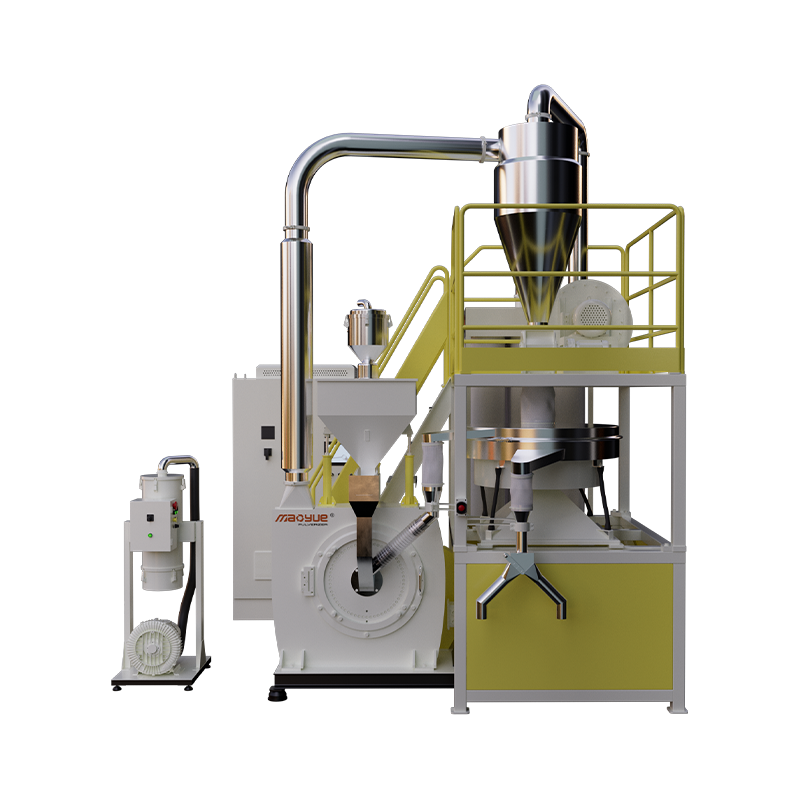
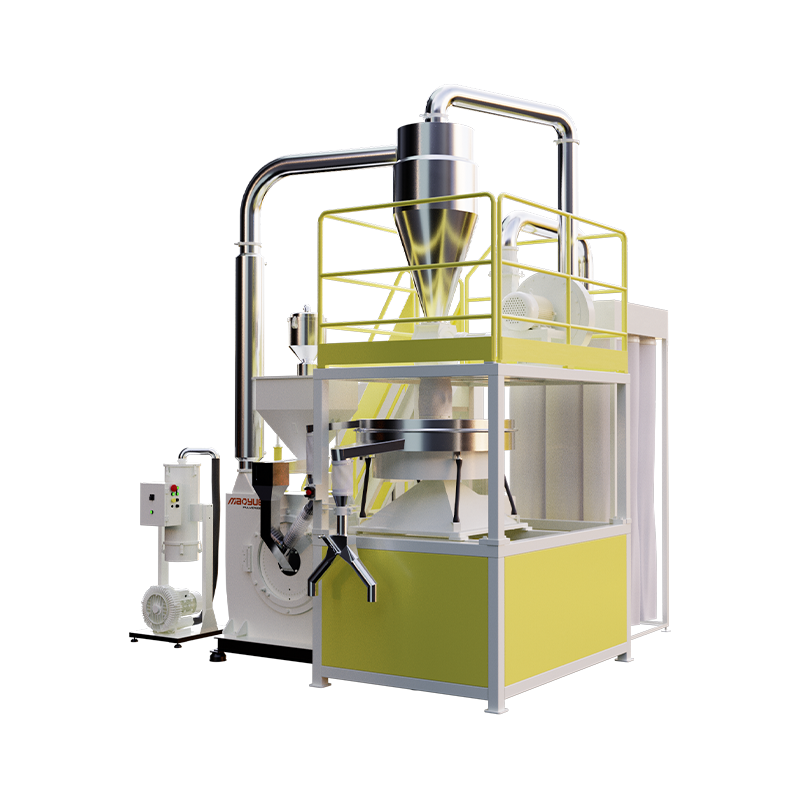
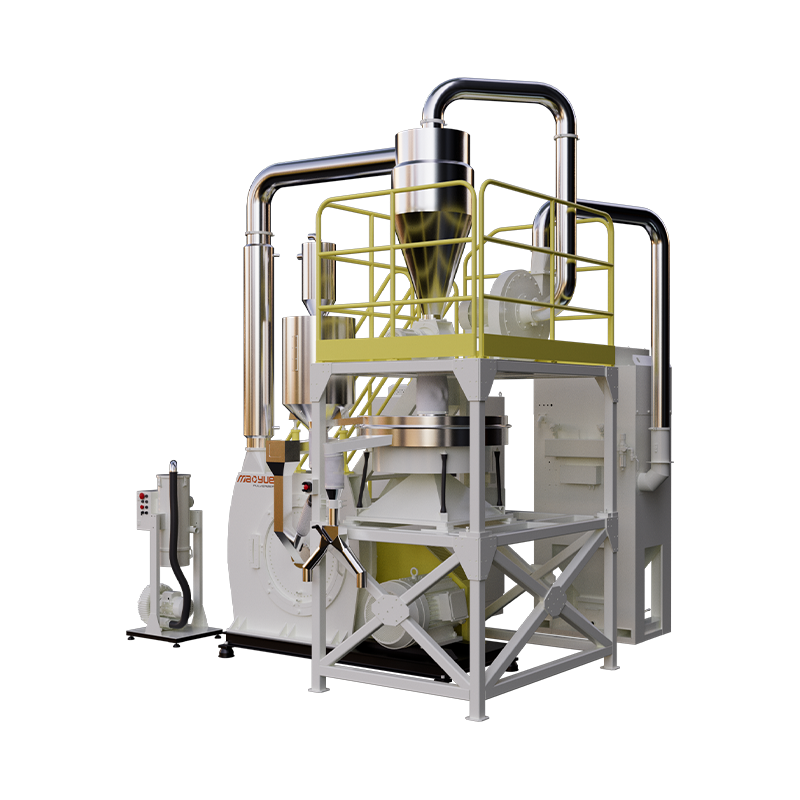
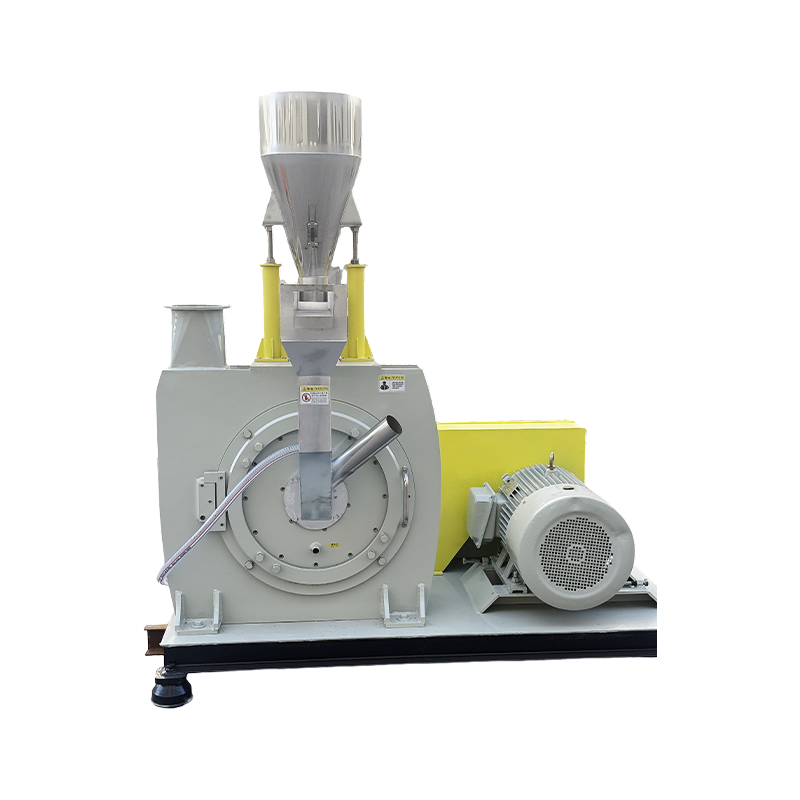
Operators should avoid sudden overload. Feeding large, irregular, or unsuitable pieces into the pulverizer can cause impact stress. Proper pre-crushing and feeding control help protect the disc. The product category includes plastic pulverizers, pulverizer parts, and crushing and pulverizing lines, which means the disc should ideally be used as part of a properly matched size reduction system.
Temperature management is also maintenance. If the chamber overheats, material may stick to the teeth and create deposits. These deposits reduce grinding efficiency and can cause imbalance. Regular cleaning, correct cooling, and appropriate feed rate help prevent this problem.
When the disc is removed, it should be handled carefully. Teeth should be protected from impact. The disc should be stored in a dry environment to prevent corrosion. If sharpening or refurbishment is required, it should be performed by qualified technicians who understand the original tooth geometry and heat-treated structure.
23. Role in Complete Crushing and Pulverizing Lines
The double-tooth disc can be viewed as a core component within a larger crushing and pulverizing line. In many production systems, plastic waste or raw material first passes through a crusher or granulator. The crushed particles are then fed into the pulverizer, where the disc performs fine grinding. After pulverizing, powder may pass through classification, screening, cooling, dust collection, storage, or packaging.
If upstream crushing is inconsistent, the pulverizer disc must handle irregular feed, which can reduce efficiency. If downstream classification is poor, even well-ground powder may not be separated correctly. Therefore, the best results come from matching the double-tooth disc with a well-designed line. Changzhou Mao Yue Intelligent Equipment Co., Ltd. has experience in plastic crushing and pulverizing equipment, making it capable of supporting customers not only with parts but also with system-level understanding.
For customers upgrading existing lines, replacing an ordinary disc with a double-tooth disc may be one of the most practical improvement steps. It can increase performance without requiring full machine replacement. For new lines, selecting the disc design early helps optimize motor power, cooling capacity, feeding control, and powder classification.
24. Sustainability and Green Manufacturing Value
The global plastics industry is under pressure to improve recycling, reduce waste, lower carbon emissions, and increase the use of recycled materials. Efficient pulverizing supports these goals by transforming plastic scrap into reusable powder. The double-tooth disc contributes to sustainability by improving the productivity and quality of plastic recycling and regeneration.
Higher output at equivalent power consumption can reduce the energy cost per kilogram of powder. Longer service life reduces replacement part consumption and maintenance waste. Better powder quality increases the chance that recycled materials can be used in higher-value applications, extending the useful life of plastic resources.
The product aligns with circular economy initiatives and green manufacturing policies. By helping customers recover and reuse PE, PP, EVA, LLDPE, and other plastic materials, it supports a more resource-efficient industrial chain. In this context, the disc is part of a larger movement toward responsible plastic processing.
25. Q&A Section
Q1: What is the main advantage of a pulverizer double-tooth disc?
The main advantage is its dual-row or dual-layer tooth structure. This design increases the effective grinding surface and creates a two-stage pulverizing effect: coarse shearing followed by fine friction grinding. As a result, it can improve output, powder uniformity, and processing stability compared with many conventional single-tooth discs.
Q2: Which materials are suitable for this disc?
The disc is especially suitable for PE and PP pulverizing. It can also be applied to flexible polyolefins such as EVA and LLDPE, depending on machine configuration and operating conditions. It is useful in recycling, rotational molding powder production, masterbatch applications, powder coating, chemical modification, and related plastic powder processes.
Q3: What powder fineness can be achieved?
The final powder fineness can be flexibly controlled from about 10 mesh to 120 mesh. For mainstream PE ultra-fine powder, 20 mesh to 80 mesh is common. Actual results depend on material type, feed size, disc gap, cooling, machine power, classifier settings, and production requirements.
Q4: Why is cooling important when using this disc?
Plastic pulverizing generates friction heat. PE and similar materials can soften, stick, discolor, or coke if the temperature becomes too high. The disc is designed to work with air and water cooling systems to control grinding chamber temperature and maintain powder quality during continuous production.
Q5: How does the disc reduce downtime?
The disc uses optimized DC53 steel and receives carburizing, quenching, and multiple tempering processes. This improves hardness, wear resistance, impact toughness, and fatigue endurance. Longer service life means fewer replacements, less machine stoppage, and more stable production.
Q6: Can the disc fit machines from other brands?
It directly fits all disc diameter models of the Mao Yue PE and PP series and can partially accommodate other brands’ equipment. Compatibility depends on disc diameter, mounting pattern, bolt holes, rotation requirements, and machine structure. Technical confirmation is recommended before purchase.
Q7: Is customization available?
Yes. Tooth density, double-row spacing, and specialized surface coatings can be customized according to material characteristics, powder fineness requirements, output targets, and wear conditions. This allows the disc to better match specific production needs.
Q8: Why choose this disc instead of a cheaper generic disc?
A cheaper generic disc may reduce initial purchasing cost, but it may wear faster, produce less uniform powder, require more frequent adjustment, and cause more downtime. The double-tooth disc focuses on total production value through higher output, longer service life, better powder quality, and stronger process stability.
Q9: What company strengths support this product?
Changzhou Mao Yue Intelligent Equipment Co., Ltd. has 30 years of experience in plastic crushing and pulverizing equipment. It operates six processing workshops, uses high-precision grinding machines, German dynamic balancing equipment, and Japanese welding systems, and holds CE mechanical certification and ISO 9001 quality management system certification.
Q10: What industries benefit most from the double-tooth disc?
Industries that require both high output and high powder quality benefit most. These include plastic recycling, PE rotational molding powder production, powder coating, masterbatch manufacturing, polymer modification, electronic waste plastic recycling, and laboratory material development.
26. Conclusion
The pulverizer double-tooth disc is a high-performance grinding component designed for processors who need higher productivity, better powder quality, longer service life, and more reliable operation. Its ring-shaped dual-layer concentric design, dense radial fine teeth, optimized tooth profiles, precision bolt fastening, CNC machining, and advanced heat treatment work together to solve common pulverizing challenges.
Compared with traditional single-tooth discs, it offers a larger grinding surface and a more effective two-stage grinding mechanism. This can increase output, improve powder uniformity, reduce coarse impurities, and support narrower particle distribution. For PE, PP, EVA, LLDPE, recycling materials, rotational molding powders, powder coating materials, and masterbatch carriers, these advantages translate into practical production value.
The product’s performance is supported by the manufacturing strength of Changzhou Mao Yue Intelligent Equipment Co., Ltd., a source manufacturer with 30 years of experience, six processing workshops, advanced machining equipment, dynamic balancing capability, and certified quality management. The company’s ability to provide customization, compatibility support, and application knowledge further increases the value of the disc for customers seeking dependable pulverizing solutions.
For plastic processors facing capacity bottlenecks, powder quality problems, frequent disc replacement, or overheating issues, the double-tooth disc offers a meaningful upgrade path. It is not simply a replacement part; it is a productivity component that can improve the economics, stability, and sustainability of plastic powder production.
References
1. Tadmor, Z., and Gogos, C. G. Principles of Polymer Processing. Wiley-Interscience.
2. Crawford, R. J., and Kearns, M. P. Practical Guide to Rotational Moulding. Smithers Rapra Technology.
3. Rauwendaal, C. Polymer Extrusion. Hanser Publishers.
4. Wypych, G. Handbook of Polymers. ChemTec Publishing.
5. Brydson, J. A. Plastics Materials. Butterworth-Heinemann.
6. ISO 9001 Quality Management Systems: Requirements. International Organization for Standardization.
7. European Machinery Safety Certification Guidelines and CE Conformity Principles.
8. Industrial Size Reduction and Pulverizing Technology Manuals for Polymer Processing Applications.