

 English
 русский
 Español
 عربى
عربى 中文简体
中文简体
 中文简体
中文简体
Content
- 1 Why High-Capacity Masterbatch Pulverizing Requires Specialized Equipment
- 2 Heavy-Duty 800 mm Grinding Configuration
- 3 DC53 Grinding Discs for Long Service Life
- 4 Precision Tooth-by-Tooth Grinding
- 5 Disc Refurbishment and Life-Cycle Cost Control
- 6 Dynamic Balancing for Low Vibration
- 7 Cooling for Continuous Polymer Pulverizing
- 8 Enclosed Negative-Pressure Conveying and Dust Collection
- 9 Vacuum Feeding and Stable Material Transfer
- 10 Screening and Particle Size Control
- 11 Manufacturing Strengths and Quality-Control Processes
- 12 Advantages Over Conventional Pulverizer Designs
- 13 Typical Applications
- 14 Factory Layout and System Integration
- 15 Operating and Maintenance Recommendations
- 16 Production Economics and Return on Investment
- 17 Customization and Technical Selection
- 18 Q&A
- 18.1 What materials can the 800 Series pulverize?
- 18.2 What is the capacity of the machine?
- 18.3 What fineness can be achieved?
- 18.4 Why is DC53 used for the grinding discs?
- 18.5 Can the grinding discs be refurbished?
- 18.6 How does the machine control overheating?
- 18.7 Is the pulverizer suitable for continuous production?
- 18.8 What type of feeding system is used?
- 18.9 How is dust controlled?
- 18.10 What factory space is required?
- 18.11 What makes the manufacturer suitable for large projects?
- 18.12 How should a customer select the motor size?
- 19 Conclusion
- 20 References
- 21 Product: 800 Series High-Capacity Masterbatch Pulverizer
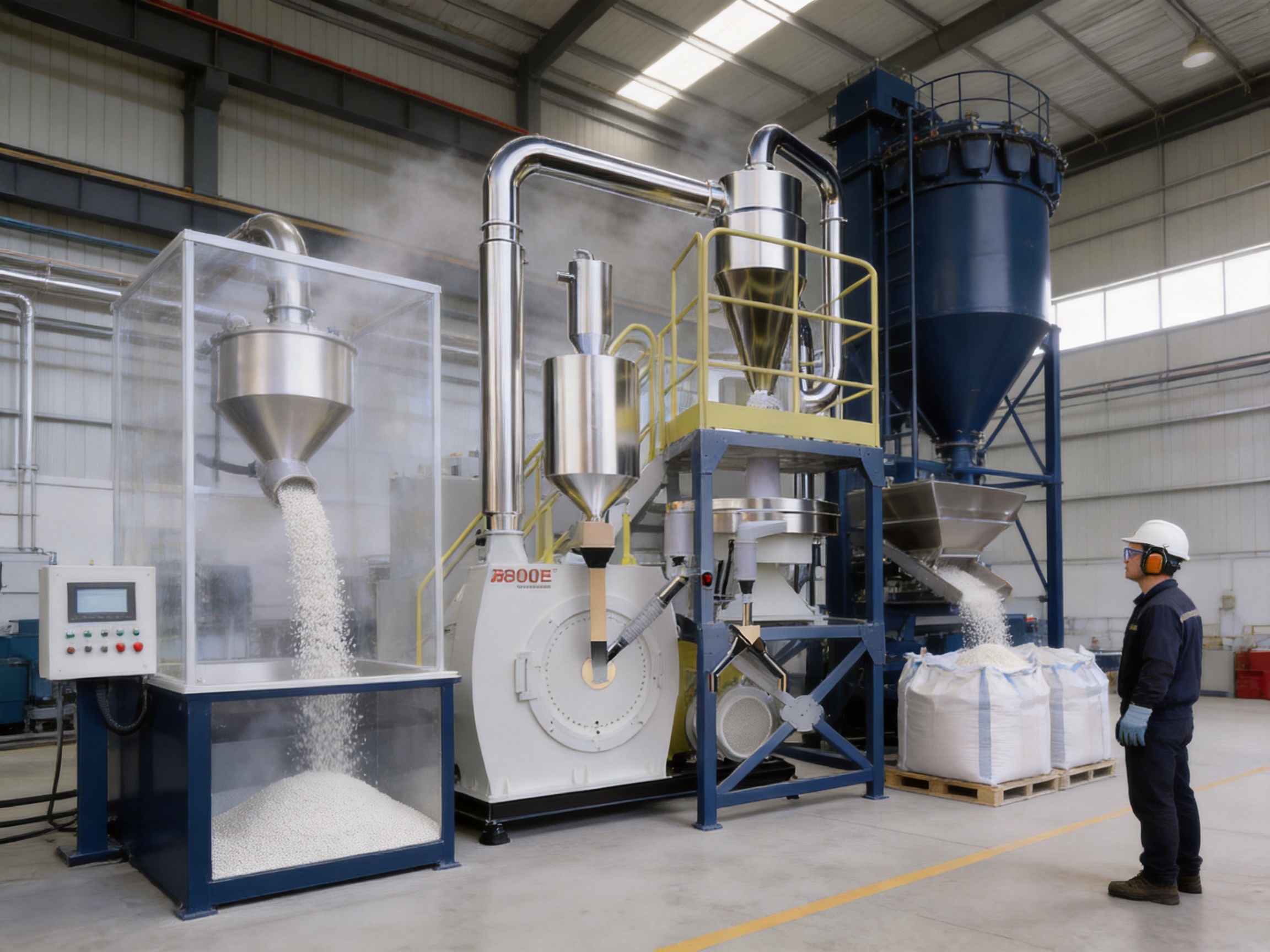
Large-scale masterbatch and modified-plastics manufacturers require pulverizing equipment that can deliver more than high output alone. A production-grade pulverizer must maintain stable particle size, control heat, minimize dust, protect operators, reduce blade wear, and continue operating reliably through long production cycles. These requirements become particularly demanding when processing highly concentrated pigments, flame retardants, mineral fillers, conductive additives, recycled masterbatch, and other formulations that place exceptional stress on grinding discs and conveying systems.
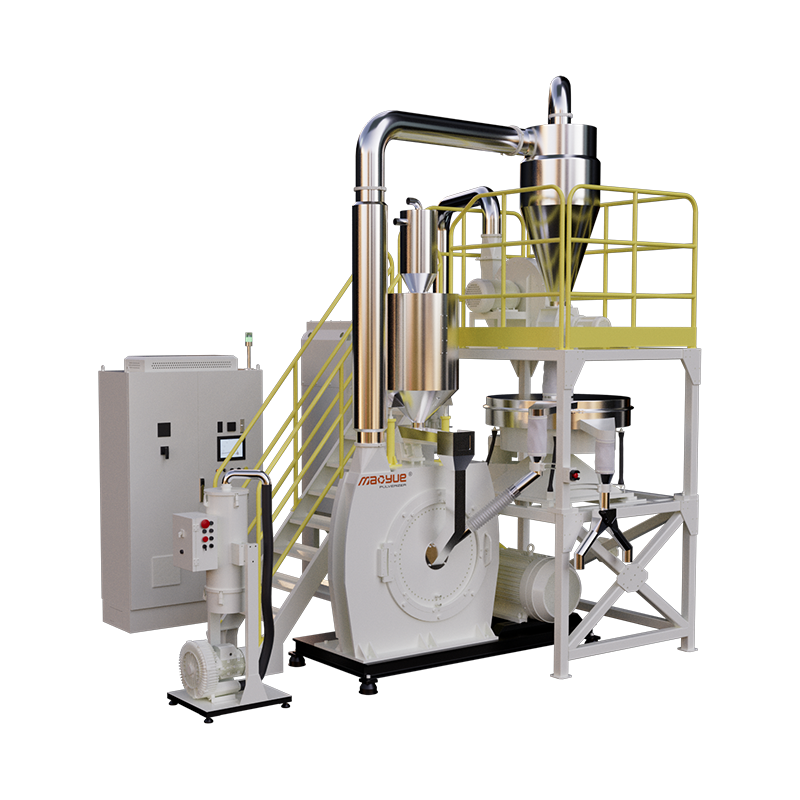
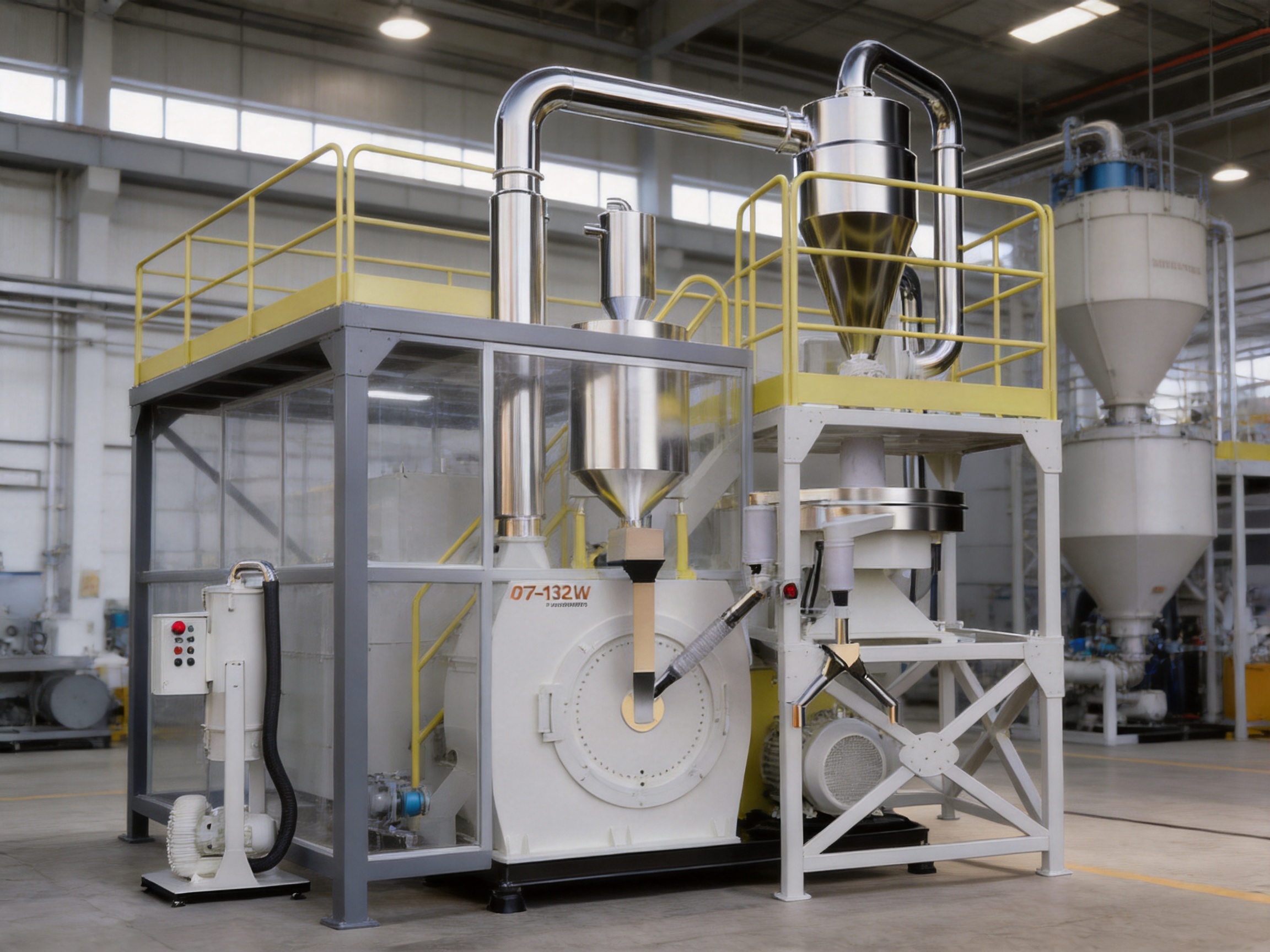
The 800 Series High-Capacity Masterbatch Pulverizer is designed as a heavy-duty solution for these demanding applications. It combines a large 800 mm grinding disc, high-power drive options, reinforced cooling, intelligent control, enclosed conveying, dust collection, and precision-manufactured grinding components. Depending on the material, target fineness, feeding conditions, and selected configuration, the machine is intended for high-volume processing in the approximate range of 450–900 kg/h under the listed standard specifications, while certain material-specific production conditions may support higher practical outputs.
Its design is especially suitable for masterbatch producers, polymer compounders, modified-plastics factories, recycling plants, and powder manufacturers that need dependable continuous production. Rather than treating the pulverizer as an isolated grinding unit, the system is engineered as part of a complete processing line that includes feeding, grinding, cooling, airflow conveying, screening, and dust collection.
Why High-Capacity Masterbatch Pulverizing Requires Specialized Equipment
Masterbatch is not an ordinary plastic feedstock. A carrier resin may contain a high concentration of pigments, additives, fillers, or functional ingredients. These materials can change the hardness, abrasiveness, melting behavior, flowability, and thermal sensitivity of the feedstock. A machine that performs well with a low-filled polymer may experience rapid wear, unstable discharge, or thermal problems when processing a high-loading formulation.
Particle size consistency is also critical. If the powder contains excessive coarse particles, pigment or additive dispersion may become uneven during subsequent compounding or molding. If the product is overheated, polymer may soften and adhere to the grinding surfaces, reducing throughput and causing blockages. If the airflow system is poorly designed, fine powder may escape into the workshop, creating material losses and an unfavorable working environment.
For these reasons, a high-capacity pulverizer must balance several technical factors at the same time:
1. Sufficient grinding energy for high-throughput production.
2. Strong and wear-resistant grinding discs capable of processing filled and abrasive formulations.
3. Precise disc geometry for uniform particle size distribution.
4. Effective removal of grinding heat during continuous operation.
5. Stable feeding and conveying without material surges.
6. Efficient classification and screening of finished powder.
7. Reliable dust collection and low-emission operation.
8. Easy maintenance and economically viable component refurbishment.
The 800 Series addresses these requirements through an integrated mechanical and process-control design. Its large grinding chamber and high-power motor options provide the capacity required by large factories, while its cooling, balancing, and dust-control systems are intended to protect product quality during extended operation.
Heavy-Duty 800 mm Grinding Configuration
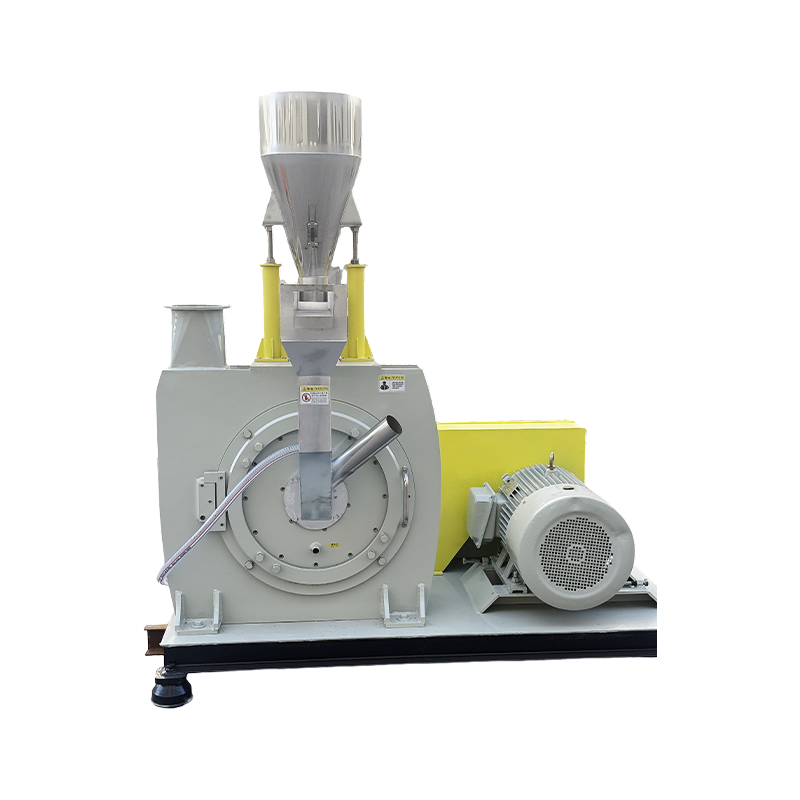
The central feature of the machine is its 800 mm grinding disc. Compared with smaller pulverizers, the larger disc provides a greater working area and supports higher material processing rates. The machine is available with drive motor options of 75, 90, 110, or 132 kW, enabling users to select a configuration according to material characteristics and desired production capacity.
A larger disc does not automatically guarantee better performance. The disc must be correctly machined, balanced, installed, and matched with the motor and airflow system. The 800 Series therefore combines disc size with precision manufacturing and system-level engineering. This helps the machine deliver more stable grinding conditions instead of simply increasing motor power.
The standard specification lists a capacity of approximately 450–900 kg/h and a fineness range of 10–50 mesh. Actual performance depends on the type of polymer, moisture content, feed size, additive loading, material temperature, selected screen, motor power, and required product quality. For some materials and production arrangements, broader operating ranges may be possible, but final capacity should be confirmed through material testing and process validation.
Variable-speed control through an inverter allows the operating speed to be adjusted according to the material and the desired powder characteristics. This is valuable because a rigid, fixed-speed operating strategy may not be suitable for all formulations. Softer polymers, abrasive compounds, heat-sensitive materials, and recycled feedstock can require different speed and airflow settings.
Typical Technical Configuration
| Item | Specification | Engineering Significance |
| Model | 800 Series | Heavy-duty high-capacity pulverizing platform |
| Grinding disc diameter | 800 mm | Large grinding area for industrial-scale processing |
| Reference capacity | 450–900 kg/h | Depends on material, fineness, and operating conditions |
| Reference mesh range | 10–50 mesh | Selected according to product requirements and screen configuration |
| Drive motor | 75/90/110/132 kW | Allows configuration for different production demands |
| Speed control | Inverter | Supports flexible process adjustment |
| Grinding disc material | DC53, separated design | High wear resistance and replaceable working components |
| Blower motor | 11/15 kW | Supports airflow conveying and product transport |
| Pipeline material | Stainless steel | Improves cleanliness, durability, and corrosion resistance |
| Pipe diameter | 178/203 mm | Configured for high-volume pneumatic conveying |
| Swing vibrator diameter | 1200/1500 mm | Supports screening and discharge stability |
| Vibrating screen motor | 1.1/1.5 kW | Provides controlled classification of finished powder |
| Feeding method | Vacuum feeding | Promotes enclosed and consistent material transfer |
| Dust collector bag diameter | 300 mm | Supports high-efficiency dust capture |
| Cooling method | Water cooling with inlet and outlet circulation | Removes heat from the grinding system during operation |
The values in this table represent the standard reference configuration. A complete quotation and final technical design should be prepared after reviewing the customer’s material, production target, desired mesh size, factory layout, electrical standard, and environmental requirements.
DC53 Grinding Discs for Long Service Life
Grinding discs are among the most important wear components in a plastic pulverizer. Their edge geometry directly affects particle size, power consumption, heat generation, and processing stability. Their material and heat treatment determine how long they can remain sharp under continuous mechanical stress.
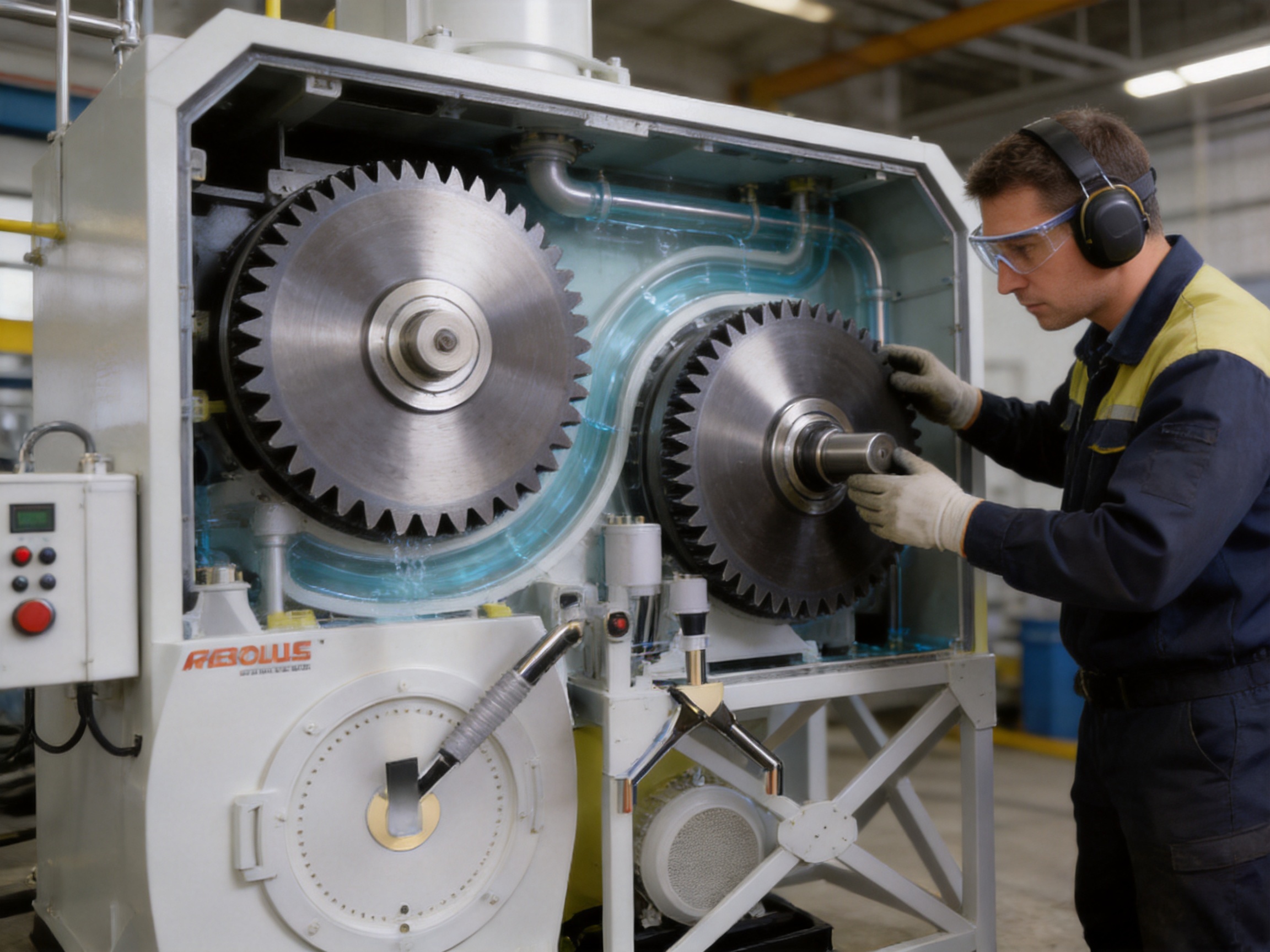
The 800 Series uses DC53 high-grade cold-work mold steel for its grinding discs. The specified hardness is approximately HRC 62–64. DC53 is selected because it provides a useful combination of hardness, toughness, fatigue resistance, and resistance to chipping. This combination is particularly important when processing filled masterbatch and modified plastics, where hard particles can produce impact and abrasive wear.
Compared with conventional D2 disc materials, DC53 can provide improved resistance to cracking and edge damage when correctly heat-treated and machined. The design objective is not simply to make the disc extremely hard. Excessive hardness without sufficient toughness can make an edge more vulnerable to chipping. A balanced material and heat-treatment strategy helps maintain a sharp working profile for a longer period.
Under comparable operating conditions, the service life of the DC53 discs may be approximately 1.5–2.5 times longer than that of standard discs. Actual service life depends on formulation, filler content, contamination, feed size, operating speed, cooling performance, and maintenance. Nevertheless, longer disc life can provide important economic benefits:
1. Fewer planned production stops for disc replacement.
2. Lower expenditure on replacement wear parts.
3. More consistent product quality between maintenance intervals.
4. Reduced labor requirements for inspection and replacement.
5. Lower risk of unexpected downtime caused by damaged grinding edges.
The separated disc design also supports more practical maintenance. When the working disc becomes dull, the relevant component can be removed, inspected, sharpened, or replaced without treating the entire machine as a disposable unit.
Precision Tooth-by-Tooth Grinding
The quality of a pulverizer disc depends not only on its steel grade but also on the precision of its tooth geometry. Small differences in tooth angle, height, spacing, or edge sharpness can influence the force distribution inside the grinding chamber. Uneven geometry may increase vibration, widen the particle size distribution, and create localized heat.
The manufacturer operates imported Taiwanese professional CNC tool-grinding equipment for precision disc production. These machines are used for tooth-by-tooth grinding, helping maintain consistent blade angles and repeatable edge profiles. Precision processing is especially valuable for masterbatch because downstream customers often require uniform powder for reliable feeding, dispersion, and color development.
A narrow particle size distribution can improve the performance of the finished masterbatch powder in several ways. It can support more predictable dosing, reduce coarse-particle defects, improve additive dispersion, and help reduce problems such as color variation, black spots, and fisheyes in later processing. The pulverizer cannot eliminate every possible downstream defect, since formulation, extrusion, filtration, and molding conditions also play important roles, but stable grinding provides a stronger foundation for consistent production.
Tooth-by-tooth precision also supports repeatability between disc sets. When a replacement or refurbished disc is manufactured to the correct geometry, the operator can restore a similar grinding condition instead of accepting a substantial change in product quality after every maintenance event.
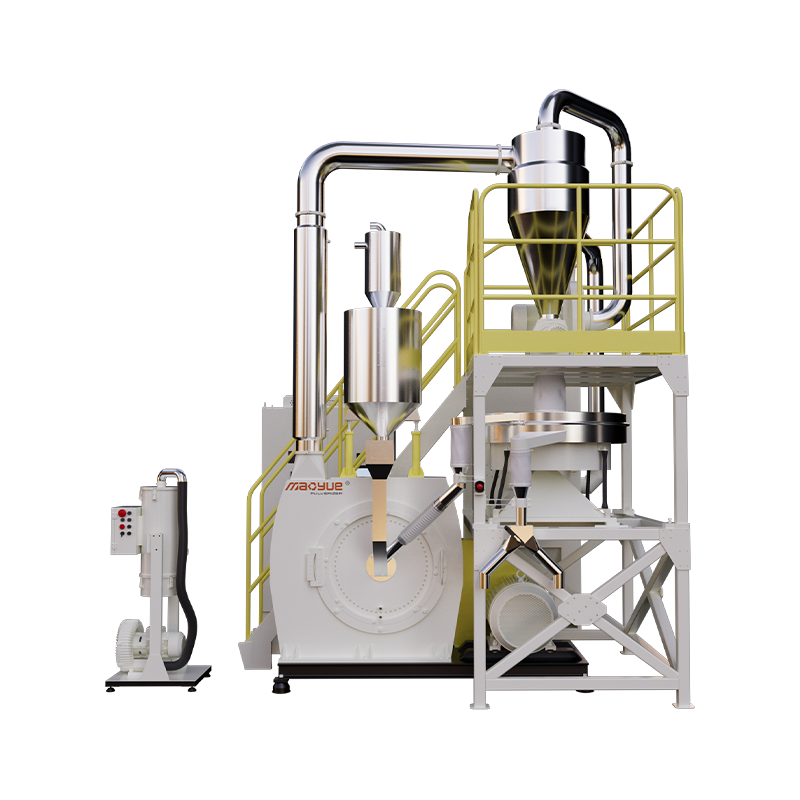
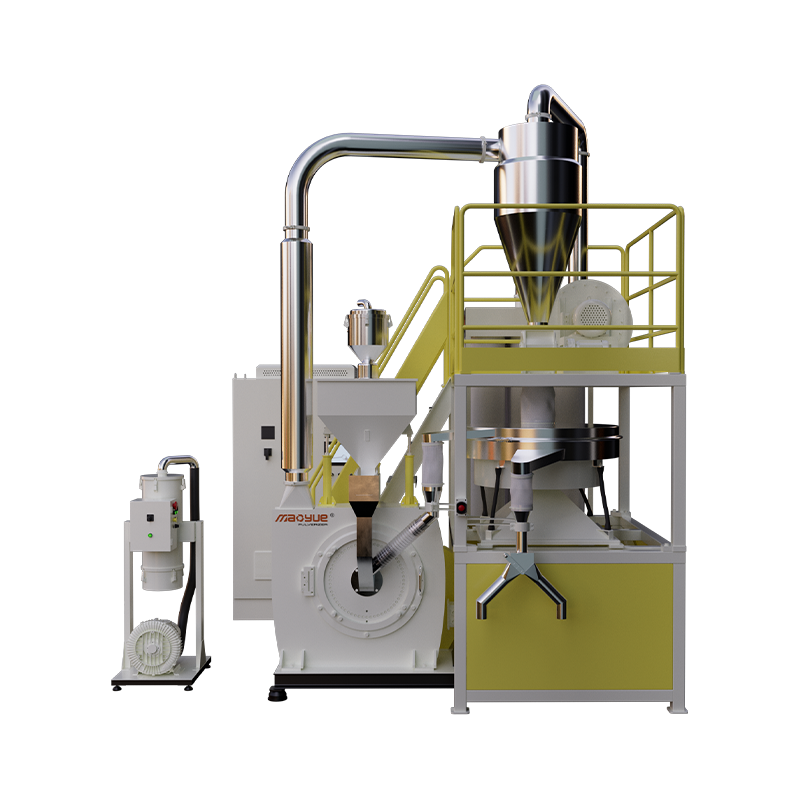
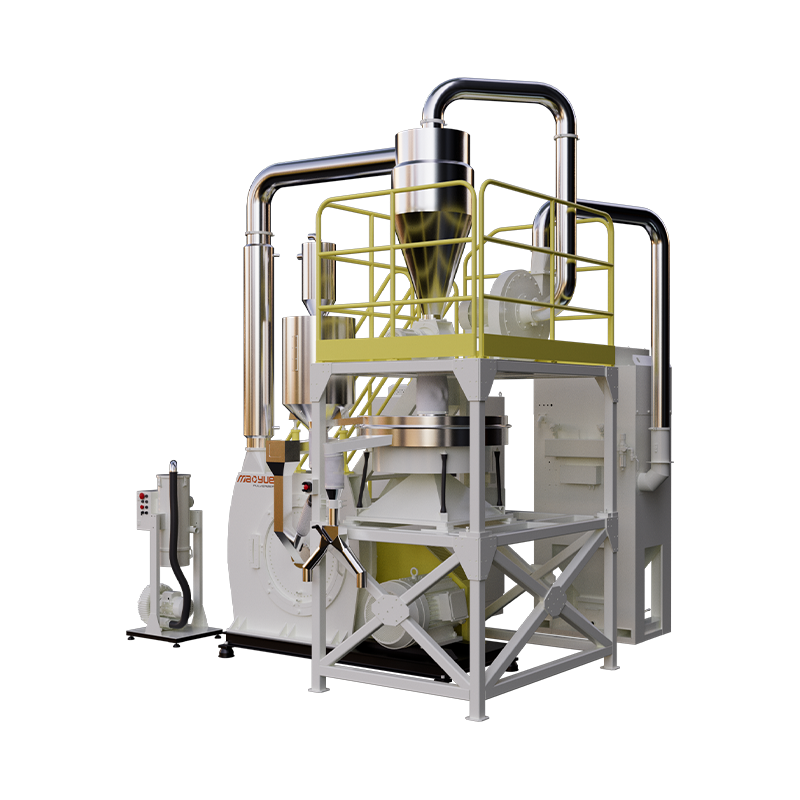
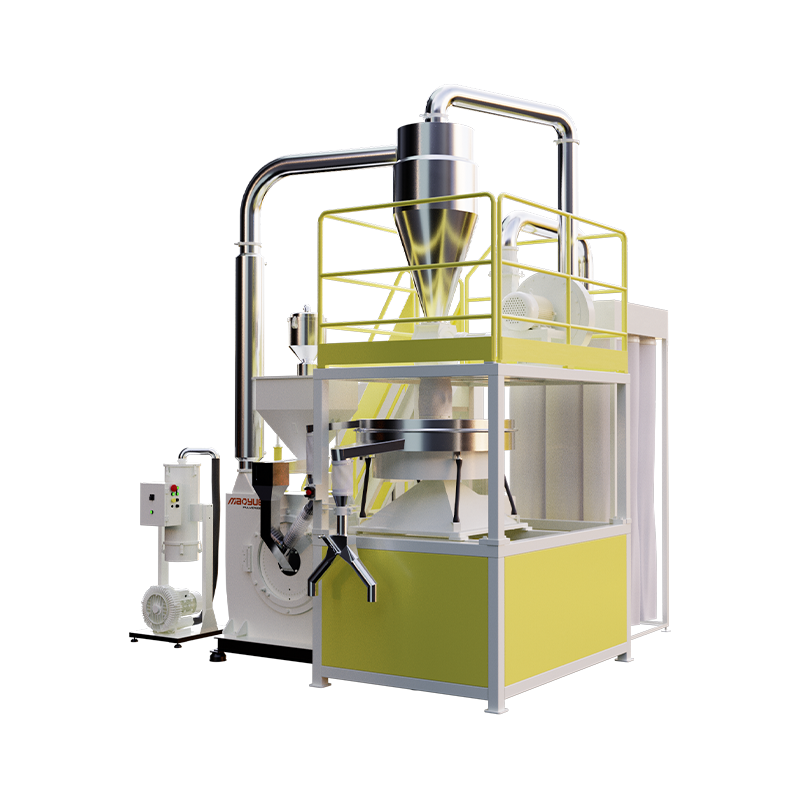
800 Series High-Capacity Masterbatch Pulverizer
Disc Refurbishment and Life-Cycle Cost Control
Wear parts are a major consideration when evaluating a high-capacity pulverizing system. The purchase price of the machine is only one part of the total cost of ownership. Electricity, disc replacement, labor, maintenance, dust-filter replacement, rejected product, and production downtime can have a greater impact on long-term profitability.
The 800 Series supports professional refurbishment of dulled grinding discs. Instead of replacing every disc after wear, suitable discs can be inspected, corrected, and reground. Refurbishment costs may be approximately one-quarter to one-third of the cost of new discs, depending on the condition of the component and the required work.
Refurbishment should be performed by trained personnel using suitable grinding equipment. The process may include cleaning, dimensional inspection, checking for cracks or deformation, correcting the grinding profile, restoring tooth geometry, and carrying out dynamic balancing. A disc that has suffered serious cracking, distortion, or structural damage should not be returned to service merely to reduce cost. Safety and product stability must remain the primary criteria.
When properly managed, a refurbishment program offers several advantages:
1. Lower recurring tooling costs.
2. Better control of spare-part inventories.
3. Reduced waste from discarded metal components.
4. Shorter maintenance planning cycles.
5. More predictable long-term operating expenses.
For factories operating multiple pulverizers, a documented disc-management system can be especially valuable. Each disc can be assigned a service record that includes installation date, material processed, operating hours, inspection results, refurbishment history, and final retirement condition. This information helps maintenance teams identify the most demanding materials and optimize replacement schedules.
Dynamic Balancing for Low Vibration
High-speed rotating equipment must be balanced carefully. Even a small imbalance in a large grinding disc can create significant centrifugal force at operating speed. Excessive vibration may shorten bearing life, damage the spindle, loosen fasteners, increase noise, and cause inconsistent grinding conditions.
Every disc is dynamically balanced using high-precision balancing equipment imported from Germany. Dynamic balancing corrects the distribution of mass while the component rotates, allowing technicians to identify and compensate for imbalance that may not be visible during a static inspection.
Effective balancing provides benefits throughout the machine:
1. Smoother operation of the grinding disc.
2. Lower vibration transmitted to the frame and foundation.
3. Longer bearing and spindle life.
4. Lower mechanical stress on the reducer and drive system.
5. Reduced risk of fastener loosening.
6. Improved operator comfort and workshop conditions.
7. More stable powder quality during continuous production.
The machine is designed to achieve a low-noise operating condition, with reported noise levels below 85 dB under appropriate operating conditions. Actual noise should be verified at the installation site because building structure, foundation design, connected piping, material characteristics, and surrounding equipment can all influence measured sound levels.
Stable mechanical performance is particularly important for 24-hour production. A machine that produces acceptable powder for a short trial but gradually develops vibration, heat, or wear problems may create major losses in a large factory. Balancing, precision assembly, and preventive maintenance work together to reduce this risk.
Cooling for Continuous Polymer Pulverizing
Heat is one of the most common causes of instability in plastic grinding. Mechanical energy is converted partly into heat as the polymer is cut, impacted, and sheared between the grinding surfaces. High pigment loading, high filler content, restricted airflow, blunt discs, and excessive feed rates can increase this heat generation.
If the grinding chamber becomes too hot, the polymer may soften and stick to the disc or chamber wall. This can reduce the effective grinding gap, restrict material movement, increase motor load, and cause fluctuating output. Heat-sensitive additives may also degrade, while certain polymers may develop discoloration or unwanted changes in flow behavior.
The 800 Series uses a reinforced dual cooling concept. A large-area water-cooling jacket removes heat from the grinding chamber, while multi-stage forced-air cooling assists with heat extraction and material transport. The standard specification describes water circulation with one inlet and one outlet, allowing continuous cooling water flow through the relevant parts of the system.
PLC-based multi-point temperature monitoring and over-temperature protection help operators supervise the thermal condition of the pulverizer. The intended operating temperature range of the grinding chamber is approximately 50–70°C, although the ideal setting should be determined according to the polymer and formulation being processed.
Cooling performance depends on more than the machine itself. The user should provide adequate water flow, stable water temperature, clean cooling channels, and appropriate ventilation. Water quality should also be managed to reduce scaling or corrosion. The airflow path must remain free from blockages, and filters should be inspected regularly.
When properly configured, the cooling system helps reduce:
1. Polymer sticking on grinding surfaces.
2. Thermal degradation of additives and carrier resins.
3. Unplanned shutdowns caused by overheating.
4. Product discoloration and inconsistent powder flow.
5. Motor overload caused by heat-related accumulation.
6. Variation in particle size during long production runs.
Temperature Management as a Quality-Control Tool
Temperature control should be treated as part of product-quality management rather than merely a machine-protection function. A stable thermal profile makes the grinding process more repeatable. If the chamber temperature changes significantly between the beginning and end of a batch, the resulting powder may show changes in flowability, particle size, or surface condition.
Operators can improve thermal stability by controlling feed rate, maintaining sharp discs, keeping the air path clean, checking water circulation, and avoiding excessive recirculation of oversize material. The PLC can provide alarm signals when temperatures exceed defined limits, allowing the operator to intervene before a serious quality problem occurs.
Enclosed Negative-Pressure Conveying and Dust Collection
Plastic powder is easily dispersed in the air, particularly when the finished product is fine and dry. Open transfer points can cause dust accumulation around the machine, loss of valuable material, difficult cleaning, and increased exposure for workers. A high-capacity pulverizer must therefore control powder movement from the grinding chamber through screening and collection.
The 800 Series uses enclosed industrial negative-pressure airflow conveying. The blower creates controlled airflow that draws pulverized material through stainless-steel pipelines toward the classification and collection sections. Because the system operates under negative pressure, air and powder are directed inward through designated pathways rather than being forced outward through gaps.
The design is combined with a high-efficiency pulse bag dust collector. The reported dust capture rate is greater than 99.9% under appropriate operating conditions. This supports a cleaner workshop, reduces raw-material waste, and assists factories in meeting demanding environmental requirements.
Pulse cleaning helps maintain filter performance by periodically removing accumulated powder from the filter surfaces. The collected material can then be handled according to the production process. Correct filter selection, air-volume adjustment, sealing, and routine inspection are essential for maintaining the expected collection efficiency.
The stainless-steel pipeline provides a durable and clean conveying path. It is suitable for applications where contamination control, corrosion resistance, and ease of cleaning are important. Pipe diameters of 178 or 203 mm can be selected according to system capacity and layout requirements.
Dust control should be evaluated across the complete line, including the feed hopper, inspection doors, screen outlet, bag discharge points, and finished-product packaging station. Even an efficient collector cannot compensate for poorly sealed transfer points or incorrect airflow balance.
Vacuum Feeding and Stable Material Transfer
The machine uses vacuum feeding to transfer material into the pulverizing system. Enclosed vacuum feeding can improve cleanliness and reduce manual handling, especially when the feedstock is supplied from bags, silos, hoppers, or upstream granulation equipment.
Stable feeding is essential for stable grinding. If the feed rate fluctuates sharply, the motor load and chamber temperature may also fluctuate. Excessive feeding can cause overload or insufficient residence time, while insufficient feeding may reduce productivity and increase unnecessary airflow through the system.
Vacuum feeding offers several practical advantages:
1. Reduced exposure of material to the workshop environment.
2. Lower risk of contamination during transfer.
3. Less manual lifting and handling.
4. Better integration with automated production lines.
5. More consistent material delivery to the grinding chamber.
The feed system should be matched to the size, shape, temperature, and flow behavior of the material. Recycled flakes, irregular pellets, soft granules, and sticky compounds may require different hopper and conveying settings. Customer-specific testing is recommended before finalizing the feeding configuration.
Screening and Particle Size Control
Grinding and classification work together. The grinding disc creates the powder, while the screen determines which particles leave the system as finished product and which particles require further processing. The 800 Series can be equipped with a swing vibrator with a diameter of approximately 1200 or 1500 mm and a vibrating-screen motor rated at 1.1 or 1.5 kW.
A properly selected screen helps control the final mesh range and reduces the amount of coarse material in the finished product. The correct screen depends on the polymer, desired fineness, bulk density, and downstream application. A fine screen may improve product specification but can also reduce capacity or increase pressure in the conveying system. A coarse screen may increase throughput but produce a powder that does not meet the customer’s application requirements.
Screen inspection is an important maintenance task. Damaged, blocked, or improperly installed screens can cause changes in product fineness and production rate. Screen frames and sealing surfaces should be checked regularly to prevent bypass of oversize material.
Manufacturing Strengths and Quality-Control Processes
The reliability of a pulverizer depends on the quality of its components and the consistency of its manufacturing process. Changzhou Mao Yue Intelligent Equipment Co., Ltd. has approximately 30 years of experience in plastic crushing and pulverizing equipment. Its production activities cover disc pulverizers and related components used in rotational molding, masterbatch, polymers, PVC, polyethylene, recycling, and powder coating.
The company operates six processing workshops, each averaging approximately 1,400 square meters. This manufacturing capacity supports the production of machine frames, grinding components, conveying sections, dust-collection assemblies, and other equipment parts under controlled workshop conditions.
Its manufacturing capabilities include several advanced equipment categories:
1. Taiwan-imported high-precision grinding machines built to German standards.
2. German dynamic balancing equipment for rotating components.
3. Japanese welding systems for accurate and repeatable fabrication.
4. CNC tool-grinding equipment for detailed disc-tooth machining.
5. Dedicated assembly and inspection areas for complete pulverizing systems.
These capabilities are important because a pulverizer is a precision mechanical system, not simply a welded steel enclosure with a motor. The grinding chamber, spindle, disc, drive, cooling jacket, airflow path, screen, and dust collector must operate together. Variation in one section can affect the performance of the entire line.
Component Accuracy
Precision machining helps ensure that mating components fit correctly and that operating clearances remain within the intended range. Accurate components can reduce unnecessary vibration, friction, leakage, and assembly adjustments. They also make future maintenance more predictable because replacement parts can be produced according to consistent dimensions.
Welding Quality
Welding accuracy affects the structural stability and sealing performance of the equipment. Poorly controlled welding can result in distortion, stress concentration, air leakage, or misalignment of connected components. The use of Japanese welding systems supports repeatable fabrication and helps maintain the dimensional integrity of the machine frame and conveying assemblies.
Balancing and Rotating-Part Inspection
Dynamic balancing is applied to important rotating components to support low-vibration operation. Balancing should be combined with spindle inspection, bearing installation control, fastener verification, and alignment checks. This multi-step approach is more effective than balancing the disc alone without checking the complete rotating assembly.
Advantages Over Conventional Pulverizer Designs
The 800 Series has several advantages over conventional pulverizers that use smaller discs, standard D2 grinding components, basic air transport, or limited thermal monitoring.
Higher Production Potential
The 800 mm disc and high-power motor options provide a larger processing platform for factories that have outgrown smaller equipment. Increasing capacity through a single heavy-duty machine may simplify feeding, conveying, screening, and dust collection compared with operating many small machines in parallel. The final choice should consider redundancy requirements, available space, maintenance strategy, and the customer’s production schedule.
Improved Disc Durability
DC53 grinding discs with controlled hardness and toughness are intended to withstand demanding filled and high-additive applications more effectively than conventional disc materials. Longer wear life can reduce replacement frequency and help maintain consistent product quality.
Better Vibration Control
Precision tooth grinding and dynamic balancing help reduce vibration compared with poorly balanced or inconsistently machined disc assemblies. Lower vibration protects bearings and spindles while improving the operating environment.
More Effective Temperature Control
The combination of water cooling, forced-air cooling, temperature monitoring, and over-temperature protection provides a stronger thermal-management system than a basic air-cooled pulverizer. This is particularly useful for polymers that soften or degrade when processing temperatures rise.
Cleaner Production
Negative-pressure conveying, enclosed stainless-steel pipelines, and pulse bag filtration help reduce fugitive dust and material loss. This can simplify housekeeping and support environmental compliance in large production facilities.
Lower Long-Term Maintenance Expense
Disc refurbishment, replaceable working components, and access to precision manufacturing resources can reduce life-cycle costs. A machine should be evaluated based on total cost per ton rather than only initial purchase price.
Flexible Process Adjustment
Inverter speed control, multiple motor options, selectable screens, vacuum feeding, and configurable blower capacity allow the system to be adapted to different polymer formulations and product specifications.
Typical Applications
Large-Scale Masterbatch Production
The pulverizer is suitable for high-volume production of PE, PP, ABS, PC, PA, and other carrier-based masterbatches. These applications may involve high pigment concentrations and require uniform powder for accurate downstream dosing and dispersion.
Functional Masterbatch and Modified Plastics
Flame-retardant, antistatic, reinforced, conductive, antibacterial, and other functional compounds can place greater demands on wear resistance and thermal control. The DC53 disc system and reinforced cooling arrangement are suited to these challenging formulations, subject to material testing.
High-Filler Composite Materials
Mineral-filled and additive-rich materials can be abrasive and may generate considerable heat during grinding. A high-capacity machine with durable grinding components and controlled airflow can help maintain stable production.
Recycling and Re-Granulation
Waste masterbatch, industrial scraps, rejected pellets, and recycled polymer materials can be pulverized for reprocessing or blending. Recycled feedstock should be inspected for metal contamination and other hard foreign objects before entering the machine. Magnetic separation, screening, and pre-cleaning may be required.
Rotomolding Powder
Rotational molding applications often require controlled powder fineness and reliable flowability. The pulverizer can be integrated into a line that includes feeding, grinding, screening, and collection to produce powder suitable for subsequent rotomolding operations.
SPC Flooring and Industrial Powder
High-output grinding may also be used for powder required in SPC flooring core layers, hot-melt adhesives, polymer compounds, and related applications. The appropriate disc geometry, temperature setting, and screen must be selected according to the material.
Factory Layout and System Integration
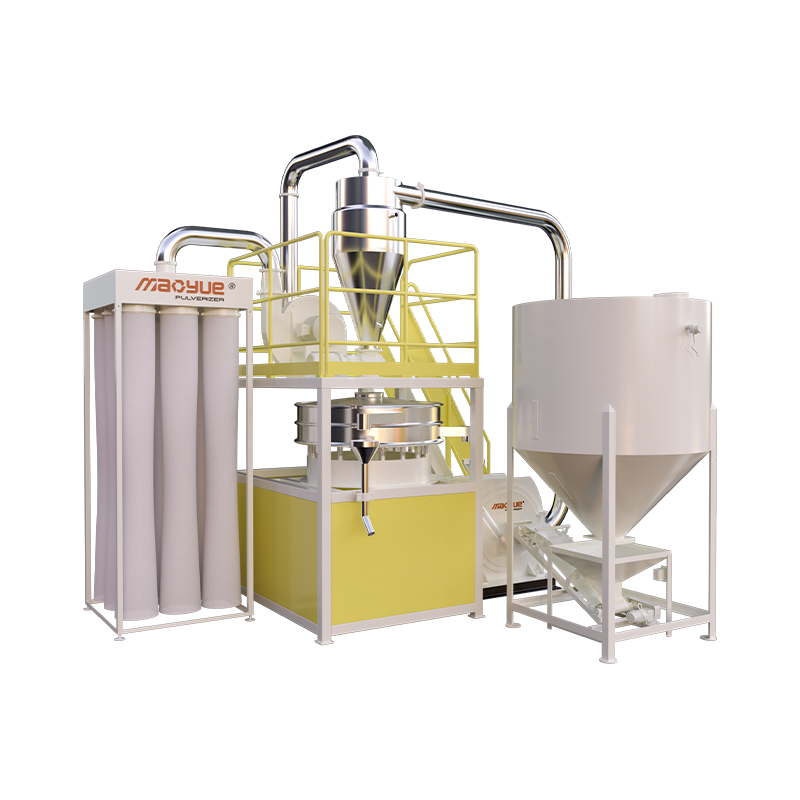
The 800 Series occupies approximately 8–12 square meters for the main machine and associated operating area, depending on the selected configuration and line arrangement. Additional space is required for feeding equipment, pipelines, screening, dust collection, finished-product packaging, electrical control cabinets, access paths, and maintenance clearance.
Before installation, the customer should review the following factors:
1. Available floor area and ceiling height.
2. Foundation strength and vibration isolation.
3. Electrical supply and motor-starting requirements.
4. Cooling-water supply, drainage, and filtration.
5. Ventilation and ambient temperature.
6. Raw-material storage and feeding position.
7. Finished-powder collection and packaging.
8. Dust-collection discharge and filter maintenance access.
9. Fire-safety and polymer-dust management requirements.
10. Safe access to inspection doors, screens, discs, and bearings.
A well-designed layout reduces unnecessary pipe bends and improves conveying efficiency. It also gives maintenance staff enough room to remove discs, inspect the chamber, clean screens, and replace filters without disrupting unrelated equipment.
Operating and Maintenance Recommendations
Even a robust pulverizer requires disciplined operation. Before starting, the operator should verify that the grinding chamber is clear, the disc assembly is correctly secured, the cooling system is circulating, the dust collector is ready, and the feed system is functioning normally.
The machine should generally be started without material, allowing the drive and airflow system to reach stable operating conditions before feeding begins. Feed rate should be increased gradually while observing motor current, temperature, vibration, airflow, and product quality.
During operation, operators should monitor:
1. Grinding-chamber temperature.
2. Motor current and inverter status.
3. Vibration and abnormal noise.
4. Cooling-water flow and temperature.
5. Blower operation and conveying pressure.
6. Dust collector pressure and pulse-cleaning performance.
7. Product fineness and visual consistency.
8. Screen condition and discharge rate.
9. Feed stability and material accumulation.
10. Bearing and spindle temperature.
At shutdown, material should be cleared from the grinding and conveying pathways according to the operating procedure. The system should not be stopped with a significant quantity of hot or sticky polymer trapped inside unless the machine is specifically designed for that condition.
Disc Maintenance
Grinding discs should be inspected at planned intervals rather than waiting for a sudden decline in capacity. Signs of wear may include increased motor current, reduced output, wider particle size distribution, greater heat generation, or visible rounding of the tooth edges.
Discs should be removed and refurbished only by qualified personnel. After refurbishment, the disc should be dimensionally checked and dynamically balanced before reinstallation. Incorrect regrinding or unbalanced installation can create vibration and shorten the life of the complete machine.
Cooling-System Maintenance
Cooling passages should be inspected for scaling, blockage, leakage, and reduced flow. Water quality management is important in areas with hard water. The forced-air path should be kept clear, and any filters or cooling components should be cleaned according to the maintenance schedule.
Dust-Collector Maintenance
Filter bags should be inspected for damage, excessive blinding, or poor sealing. Pulse valves and compressed-air supply should be checked to ensure effective cleaning. Dust discharge points must remain sealed and should be emptied safely to prevent secondary dust release.
Production Economics and Return on Investment
The manufacturer indicates that typical return on investment may be approximately 6–12 months in suitable high-volume applications. This estimate is not universal and should be treated as a project-specific calculation. Actual payback depends on operating hours, electricity rates, product selling price, labor costs, existing equipment, material yield, maintenance expenses, and utilization rate.
The potential economic benefits come from several sources rather than capacity alone:
1. Higher output from one production platform.
2. Lower energy consumption per ton compared with inefficient equipment.
3. Longer grinding-disc service life.
4. Lower cost of disc refurbishment.
5. Reduced rejected product caused by unstable fineness.
6. Lower dust-related material loss.
7. Fewer interruptions caused by overheating.
8. Reduced manual handling through vacuum feeding.
9. Lower maintenance frequency through balanced rotating components.
A proper economic evaluation should compare the complete installed cost with the expected cost per ton. It should also account for the value of floor space, operator time, product consistency, and the risk of lost production during unplanned maintenance.
Customization and Technical Selection
Although the 800 Series is a standardized high-capacity platform, the final system should be selected according to the customer’s application. Important input data includes polymer type, bulk density, initial particle size, moisture content, additive and filler percentage, expected capacity, target mesh, feeding temperature, and packaging method.
Customers should also identify whether the material is abrasive, heat-sensitive, electrically conductive, or prone to agglomeration. These properties influence disc selection, motor rating, airflow, screen design, cooling requirements, and dust-collection configuration.
A material trial is recommended for unfamiliar formulations. The trial can determine practical capacity, temperature rise, energy consumption, particle size distribution, powder flowability, and the expected wear rate of the grinding components.
Electrical and regulatory requirements should also be reviewed. The machine may need to be configured for the customer’s voltage, frequency, control standards, safety interlocks, and factory environmental requirements. CE mechanical certification and ISO 9001 quality-management certification provide an important foundation, but the complete installation must still comply with local regulations and site-specific safety procedures.
Q&A
What materials can the 800 Series pulverize?
The machine is designed for masterbatch, polymer compounds, modified plastics, high-filler materials, recycled masterbatch, industrial scraps, rotomolding powder, SPC flooring materials, hot-melt adhesive powder, and related polymer products. Material testing is recommended for formulations with unusual softness, high moisture, extreme abrasiveness, or strong heat sensitivity.
What is the capacity of the machine?
The listed standard reference capacity is approximately 450–900 kg/h. Actual output depends on the polymer, additive loading, feed size, target fineness, disc condition, screen, airflow, and motor selection. Some materials may achieve different practical output ranges, so capacity should be confirmed through a technical trial.
What fineness can be achieved?
The standard table lists a reference range of 10–50 mesh. The appropriate fineness depends on the selected screen and the properties of the material. Product testing should be used to confirm the final particle size distribution for a specific application.
Why is DC53 used for the grinding discs?
DC53 offers high hardness together with useful toughness, fatigue resistance, and resistance to edge chipping. This combination is intended to provide longer service life than conventional disc materials in demanding masterbatch and filled-polymer applications.
Can the grinding discs be refurbished?
Yes. Suitable dulled discs can be professionally reground and refurbished. The reported refurbishment cost may be approximately one-quarter to one-third of the cost of new discs. Every refurbished disc should be inspected, correctly machined, and dynamically balanced before returning to service.
How does the machine control overheating?
The system combines a water-cooling jacket, forced-air cooling, PLC-based monitoring, and over-temperature protection. The intended grinding-chamber temperature is approximately 50–70°C, but the correct setting depends on the polymer and formulation.
Is the pulverizer suitable for continuous production?
It is designed for heavy-duty industrial operation and long production cycles. Continuous operation still requires proper feeding, cooling-water circulation, disc inspection, dust-collector maintenance, and preventive servicing.
What type of feeding system is used?
The standard configuration uses vacuum feeding. This supports enclosed material transfer, reduced manual handling, and improved integration with upstream and downstream equipment.
How is dust controlled?
The machine uses enclosed negative-pressure airflow conveying and a pulse bag dust collector. The reported dust-capture rate is greater than 99.9% under suitable operating conditions. Actual environmental performance depends on sealing, filter condition, airflow balance, and complete-line design.
What factory space is required?
The main 800-type machine occupies approximately 8–12 square meters, while the full line requires additional space for feeding, conveying, screening, dust collection, controls, packaging, and maintenance access.
What makes the manufacturer suitable for large projects?
Changzhou Mao Yue Intelligent Equipment Co., Ltd. has approximately 30 years of experience in plastic crushing and pulverizing equipment. It operates six processing workshops and uses precision grinding, dynamic balancing, and controlled welding equipment to manufacture pulverizers and related components. The company also provides customized solutions for different materials and production requirements.
How should a customer select the motor size?
The motor should be selected according to material hardness, filler content, required capacity, target mesh, and expected operating hours. The available drive options are 75, 90, 110, and 132 kW. A technical evaluation should determine the most economical configuration rather than selecting the largest motor automatically.
Conclusion
The 800 Series High-Capacity Masterbatch Pulverizer is intended for manufacturers that require industrial-scale output, stable particle size, durable grinding components, and controlled operation over long production periods. Its 800 mm grinding disc and high-power drive options provide the foundation for high-volume processing, while DC53 disc material, precision tooth grinding, and dynamic balancing address the mechanical demands of continuous pulverizing.
The reinforced cooling system helps manage heat during the processing of high-loading and heat-sensitive materials. Vacuum feeding, negative-pressure conveying, stainless-steel pipelines, swing screening, and pulse bag filtration create a more complete and cleaner production system than a standalone grinding chamber. Disc refurbishment further improves life-cycle economics by reducing the recurring cost of wear components.
The manufacturer’s experience, six-workshop production structure, precision machining equipment, balancing technology, welding capability, CE mechanical certification, and ISO 9001 quality-management certification provide additional support for large-scale equipment projects. With correct material testing, line configuration, installation, and maintenance, the 800 Series can serve as a reliable production platform for masterbatch, modified plastics, polymer recycling, high-filler compounds, and related powder applications.
References
1. Product technical specification for the 800 Series High-Capacity Masterbatch Pulverizer, supplied project materials.
2. Manufacturer information for Changzhou Mao Yue Intelligent Equipment Co., Ltd., including company history, manufacturing facilities, certifications, and application industries.
3. General principles of polymer size reduction, grinding heat management, particle classification, and pneumatic conveying in plastics processing.
4. General engineering practices for dynamic balancing, rotating equipment maintenance, dust collection, and industrial machine safety.