

 English
 русский
 Español
 عربى
عربى 中文简体
中文简体
 中文简体
中文简体
Content
- 1 Why Fine Pulverizing Matters in Masterbatch Production
- 2 Compact Equipment for Flexible Production
- 3 Precision Grinding Disc Design
- 4 Tooth-by-Tooth Precision Machining
- 5 Disc Refurbishment and Lower Operating Cost
- 6 Dynamic Balancing for Smooth Operation
- 7 Dual Cooling for Heat-Sensitive Polymers
- 8 Enclosed Conveying and Dust Control
- 9 Typical Technical Configuration
- 10 Applications in Masterbatch Manufacturing
- 11 Advantages Compared with Conventional Pulverizers
- 12 Advanced Manufacturing Capabilities
- 13 Quality Control from Component to Complete Line
- 14 Energy Efficiency and Return on Investment
- 15 Installation and Process Integration
- 16 Operation and Maintenance Recommendations
- 17 Safety Considerations
- 18 Choosing the Correct Configuration
- 19 Customer Service and Customized Solutions
- 20 Frequently Asked Questions
- 20.1 What materials can the Model 500 process?
- 20.2 What capacity can users expect?
- 20.3 What particle size can the machine produce?
- 20.4 Is the Model 500 suitable for heat-sensitive polymers?
- 20.5 What is the difference between D2 and DC53 grinding discs?
- 20.6 Can the grinding disc be refurbished?
- 20.7 How does the machine control dust?
- 20.8 Does the machine include a screening system?
- 20.9 What information should be provided for a quotation?
- 20.10 Is the machine suitable for laboratory use?
- 20.11 What certifications does the manufacturer have?
- 21 Conclusion
- 22 References
- 23 Product: Model 500 Fine Powder Mill for Masterbatch Production
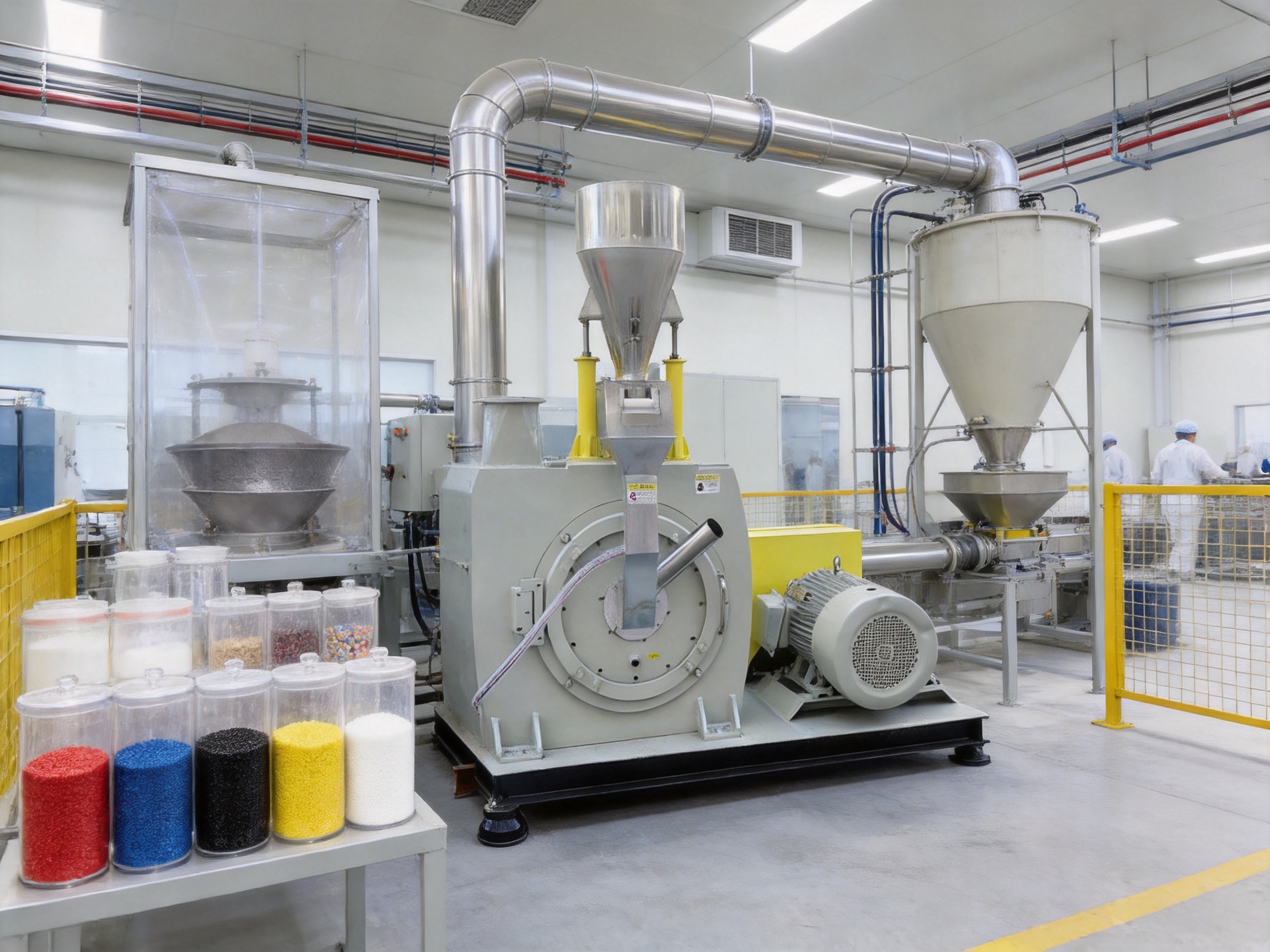
Masterbatch manufacturers require grinding equipment that can deliver more than simple size reduction. The pulverizer must produce a consistent particle size, protect heat-sensitive polymers, maintain pigment and additive dispersion, operate reliably for long production cycles, and control dust throughout the workshop. At the same time, manufacturers increasingly need compact equipment that can fit into small and medium-sized factories, laboratories, recycling areas, and trial-production lines.
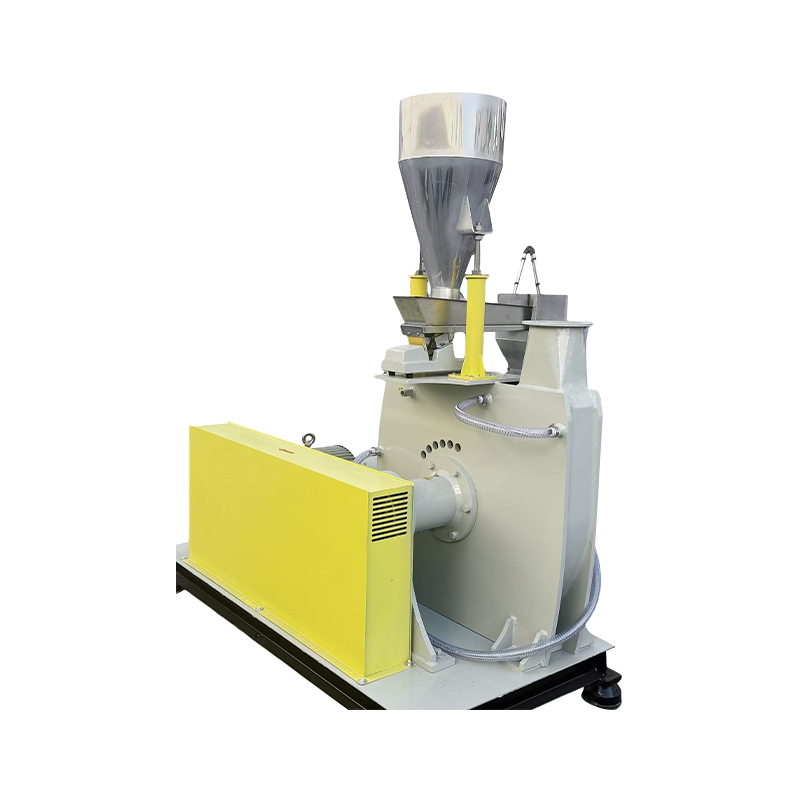
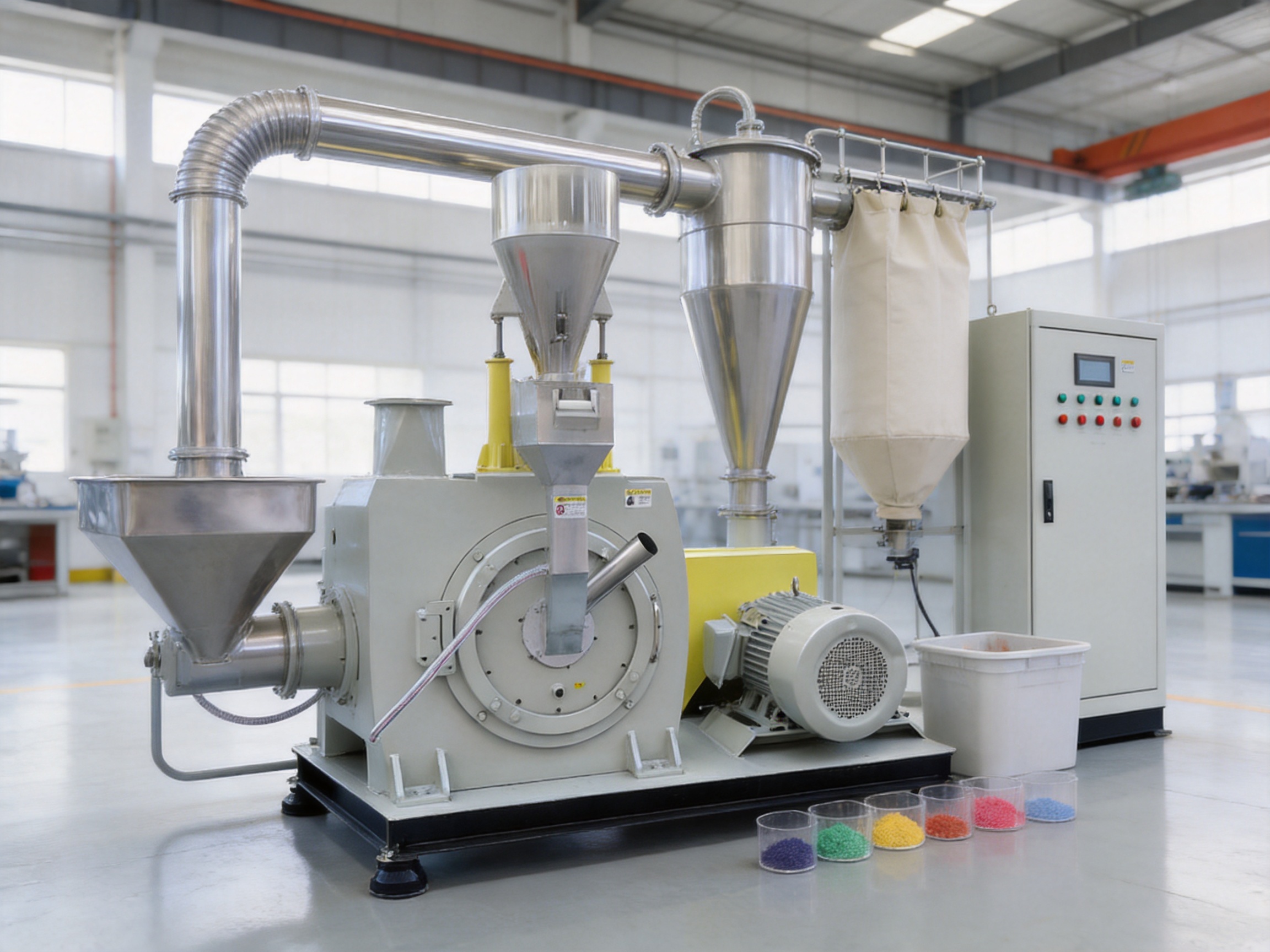
The Model 500 fine powder mill is designed to meet these requirements. It is a compact disc pulverizer for masterbatch, modified plastics, polymer recycling, functional compounds, and other fine powder applications. Depending on the material, feed condition, operating configuration, and required fineness, the machine can provide a typical single-machine capacity ranging from approximately 50 to 400 kg/h. Its working range can cover ordinary coarse powder production as well as finer masterbatch applications, with particle sizes commonly adjusted between 20 and 100 mesh and the possibility of reaching approximately 120 mesh or finer under suitable conditions.
The machine combines a high-strength grinding disc, precision-machined grinding teeth, dynamic balancing, water cooling, forced-air cooling, negative-pressure conveying, dust collection, and intelligent temperature monitoring. These features work together to improve product uniformity, reduce thermal degradation, extend component life, and lower the total cost of ownership.
Why Fine Pulverizing Matters in Masterbatch Production
Masterbatch is a concentrated mixture of pigments, additives, and polymer carrier materials. During downstream processing, the quality of dispersion strongly influences color consistency, mechanical properties, surface appearance, and production stability. If the carrier or additive system is not sufficiently uniform, the final product may exhibit color differences, black spots, fisheyes, weak points, poor surface finish, or inconsistent performance.
Fine pulverizing helps prepare raw materials for better mixing, conveying, feeding, and compounding. A controlled particle size provides a larger effective surface area and allows pigments, flame retardants, conductive additives, antistatic agents, reinforcing materials, and other functional ingredients to distribute more evenly in the polymer matrix.
However, masterbatch materials are not always easy to grind. Many polymers soften rapidly when exposed to frictional heat. PE, PP, EVA, TPU, and similar materials may become sticky if the grinding chamber temperature rises too far. A sticky material can block the grinding gap, reduce capacity, contaminate the product, and cause unstable operation. A suitable pulverizer must therefore balance grinding intensity with temperature control.
The Model 500 is engineered for this balance. Its grinding chamber, cooling arrangement, airflow system, and control functions are intended to maintain stable operating conditions while producing a uniform powder. Instead of relying only on high motor power, the machine uses coordinated mechanical design and process control to improve grinding efficiency.
Compact Equipment for Flexible Production
One of the principal advantages of the Model 500 is its compact format. Compared with larger 600 and 800 series pulverizers, the 500-type requires less installation space and is easier to integrate into an existing production area. Its typical footprint is approximately 4–6 square meters, depending on the complete configuration, hopper, cyclone or separator arrangement, dust collector, and operator access requirements.
This compact design is valuable for small and medium-sized masterbatch manufacturers that need industrial performance without dedicating a large workshop to one machine. It is also suitable for laboratories, pilot lines, formula-development departments, recycling rooms, and manufacturers that operate several specialized production cells.
A compact machine can offer practical economic benefits. Shorter material and air-conveying routes may simplify installation. A smaller footprint can reduce building modification costs. Operators can also arrange feeding, grinding, screening, collection, and bagging equipment in a more efficient line layout. When the pulverizer is used for trial production, the smaller format makes it easier to change materials and clean the system between formulas.
The Model 500 is not limited to one fixed production rate. Actual capacity depends on polymer type, bulk density, moisture, feed size, grinding gap, target mesh, cooling-water temperature, airflow, and the condition of the grinding discs. Coarser products generally allow higher throughput, while finer products require more grinding energy and may reduce capacity. This flexibility allows users to select operating conditions according to the product specification rather than forcing every material through one standard setting.
Precision Grinding Disc Design
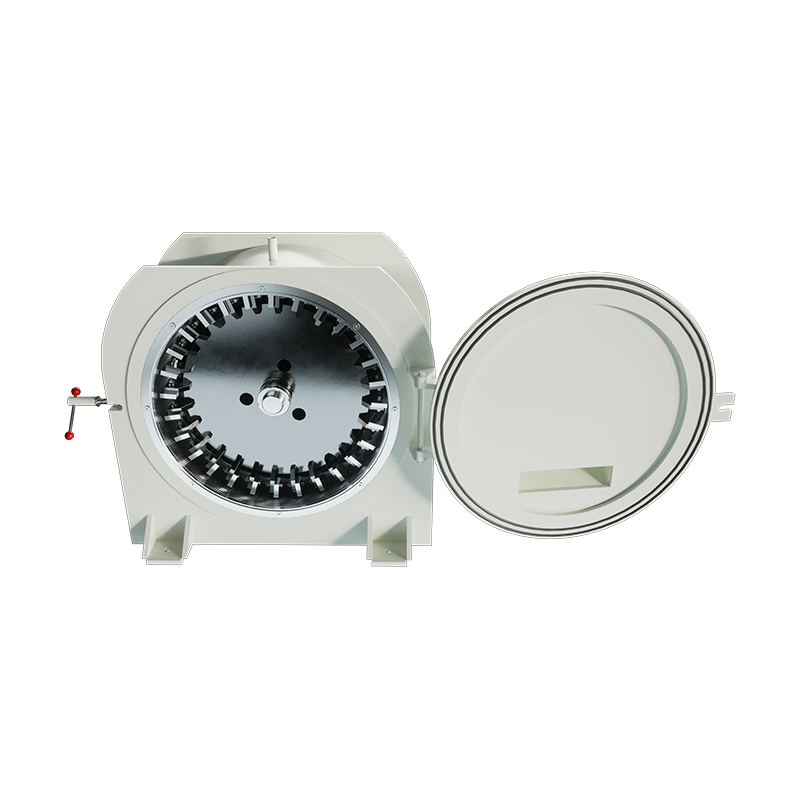
The grinding disc is the core working component of a disc pulverizer. Its tooth profile, material, surface finish, balance, and installation accuracy directly affect capacity, particle-size distribution, energy use, and service life. The Model 500 is available with high-strength grinding discs manufactured for demanding polymer applications.
Premium DC53 high-grade mold steel can be selected for applications that require improved toughness, fatigue resistance, and resistance to chipping. The stated hardness range is approximately HRC 62–64. Compared with conventional D2 steel, DC53 can provide a more balanced combination of hardness and toughness when correctly heat-treated and processed. This is especially useful in applications where the disc is exposed to repeated impact, abrasive additives, recycled contaminants, or long operating cycles.
Depending on the final machine configuration, standard specifications may also identify D2 as the grinding-disc material. This means that users should confirm the disc grade, heat treatment, tooth design, and intended application with the equipment supplier before placing an order. The DC53 option is particularly attractive for high-duty masterbatch production, while other disc materials may be selected according to feedstock, required fineness, and budget.
A durable disc can reduce the frequency of replacements, but material selection is only one part of service life. Correct alignment, dynamic balancing, controlled feeding, foreign-object protection, cooling, and regular inspection are equally important. A high-quality disc installed in an incorrectly balanced rotor will not deliver its full potential.
The manufacturer reports that its premium DC53 discs can achieve a service life approximately 1.5–2.5 times longer than standard discs under comparable working conditions. Actual results vary according to the presence of mineral fillers, glass fiber, metal contamination, operating hours, feed size, and maintenance practices. Even when the exact life extension differs by application, improved disc toughness can help reduce unexpected chipping and production interruptions.
Tooth-by-Tooth Precision Machining
Grinding teeth must be manufactured consistently. Small differences in tooth angle, height, spacing, or edge sharpness can create uneven grinding zones. Uneven teeth may cause variations in particle size, local heat generation, vibration, and power consumption.
The manufacturing process uses imported Taiwanese professional CNC tool-grinding equipment for tooth-by-tooth precision grinding. This process is intended to maintain consistent blade geometry across the disc. Micron-level control of the tooth angle and edge profile improves the repeatability of the grinding action and helps narrow the particle-size distribution.
For masterbatch production, narrow particle-size distribution is valuable because it improves feeding behavior and promotes consistent mixing. A powder containing a wide range of particle sizes may segregate during transport or storage. Very fine particles may create dust, while oversized particles may remain insufficiently dispersed during compounding. A more uniform powder can therefore support stable downstream processing.
Precision grinding also supports repeatable production after a disc has been serviced. If the tooth profile is restored accurately, the machine can return closer to its original grinding behavior. This is more practical than treating the grinding disc as a disposable component after every period of wear.
The company operates high-precision processing equipment built to advanced manufacturing standards. Its workshops include specialized machining, grinding, welding, assembly, and inspection areas. By combining controlled machining with experienced technicians, the manufacturer can produce components with more consistent dimensions and better interchangeability.
Disc Refurbishment and Lower Operating Cost
Grinding discs eventually become dull through normal use. A worn disc may reduce capacity, increase energy consumption, produce a broader particle-size distribution, and generate more frictional heat. Replacing the disc immediately is not always the most economical solution, especially for a factory operating several pulverizers.
The Model 500 disc can be professionally refurbished when its condition permits. Refurbishment may include inspection, removal of damaged areas, restoration of tooth geometry, precision grinding, balancing, and final verification. The stated refurbishment cost can be approximately one-quarter to one-third of the cost of a new disc, although the final price depends on the extent of damage and the required service.
Refurbishment contributes to a lower lifecycle cost in several ways. It reduces the purchase frequency of new tooling, limits spare-part inventory requirements, and allows production departments to plan maintenance during scheduled shutdowns. It can also reduce material waste associated with disc disposal.
Refurbishment is not suitable for every disc. Severe cracking, excessive deformation, deep impact damage, or deterioration beyond the allowable machining range may require replacement. Regular inspection is therefore important. Operators should monitor vibration, noise, motor current, output rate, and powder quality to identify wear before it causes secondary damage.
Dynamic Balancing for Smooth Operation
A high-speed grinding disc must be dynamically balanced. Even a small imbalance can become significant at operating speed, creating vibration that affects bearings, the spindle, the housing, the foundation, and the final powder quality.
Each disc is dynamically balanced using high-precision balancing equipment imported from Germany. The purpose is to reduce mass imbalance and provide stable rotation. Proper balancing helps prevent the abnormal vibration that often leads to premature bearing wear, loose fasteners, mechanical fatigue, and inconsistent grinding performance.
Stable rotation also improves the working environment. The equipment is designed to maintain noise levels below approximately 85 dB under suitable operating conditions. Actual noise depends on the installation room, material, airflow, foundation, surrounding equipment, and operating speed. Hearing-protection requirements should always be assessed according to local regulations and workplace measurements.
The manufacturer describes the machine’s stability using the well-known “coin-standing” demonstration, in which a coin can remain upright while the machine is operating. Although such demonstrations are not a substitute for formal vibration measurement, they communicate the practical effect of accurate balancing and rigid construction.
Low vibration is particularly important for continuous masterbatch production. A factory may operate the pulverizer for extended shifts, and small mechanical problems can become major costs when repeated over thousands of hours. Reducing vibration helps preserve the spindle and bearings, supports predictable maintenance intervals, and protects the consistency of the grinding gap.
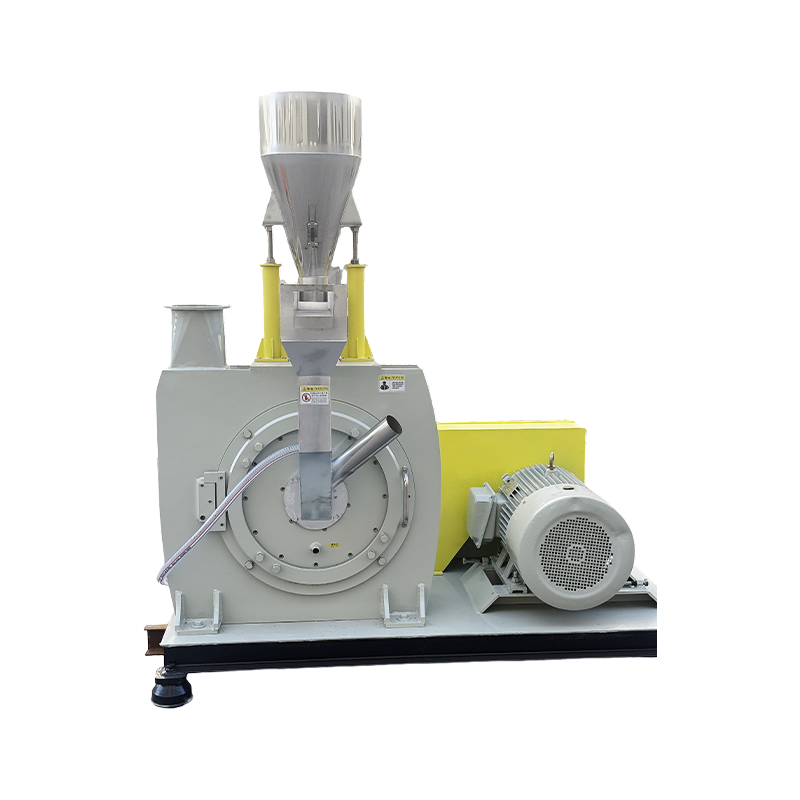
Model 500 Fine Powder Mill for Masterbatch Production
Dual Cooling for Heat-Sensitive Polymers
Thermal control is one of the most important performance factors in polymer pulverizing. Grinding creates heat through friction, impact, and deformation. If the chamber temperature becomes excessive, polymers may soften, stick to the disc, discolor, or lose functional properties.
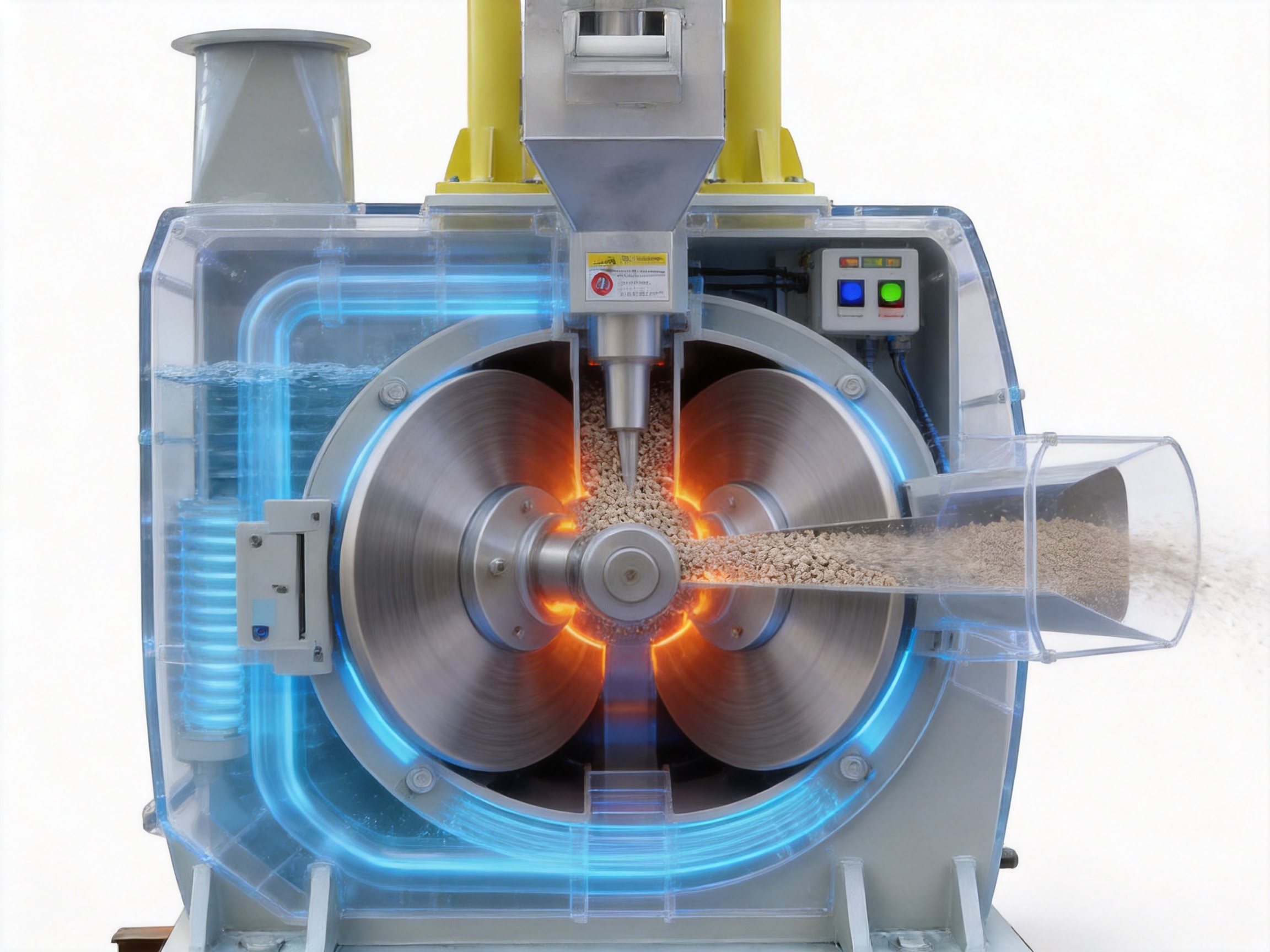
The Model 500 uses a water-cooling jacket combined with forced-air cooling. Water removes heat from the grinding chamber and surrounding structure, while airflow helps transport material and discharge heat from the process. The two systems are designed to work together instead of placing all cooling responsibility on one method.
Multiple temperature sensors monitor critical areas of the pulverizing system. PLC-based control can be used to observe operating conditions and support automatic adjustments or alarms. The intended grinding-chamber temperature range is approximately 50–70°C, although the ideal set point depends on the polymer, formulation, feed rate, ambient conditions, and required powder size.
Keeping temperature within a controlled range helps reduce several common problems. These include softening, sticking, yellowing, degradation, blocked passages, and inconsistent output. For PE-based, PP-based, EVA-based, and TPU-based masterbatch materials, temperature control is often directly related to product quality.
Water-cooling systems should be installed with appropriate flow, filtration, and maintenance. Insufficient flow, blocked passages, poor water quality, or excessively warm cooling water can reduce cooling performance. Operators should also inspect hoses, valves, seals, and sensors at regular intervals.
Forced-air cooling and conveying depend on the correct blower selection and clean air passages. Dust accumulation in ducts, filters, or separators can restrict airflow and change the operating balance. A preventive maintenance program should include inspection of the blower, impeller, ductwork, filter bags, and pressure readings.
Enclosed Conveying and Dust Control
Fine polymer powder can create housekeeping, safety, and occupational-health challenges. Open transfer points may release dust into the workshop, contaminate nearby products, and increase cleaning requirements. Fine powders can also accumulate on electrical equipment and ventilation surfaces.
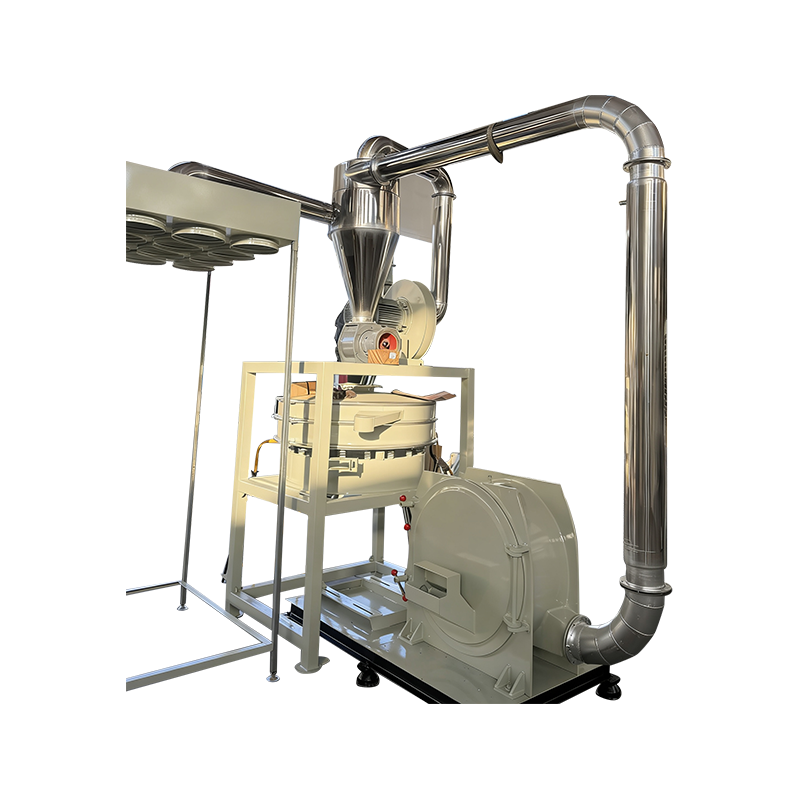
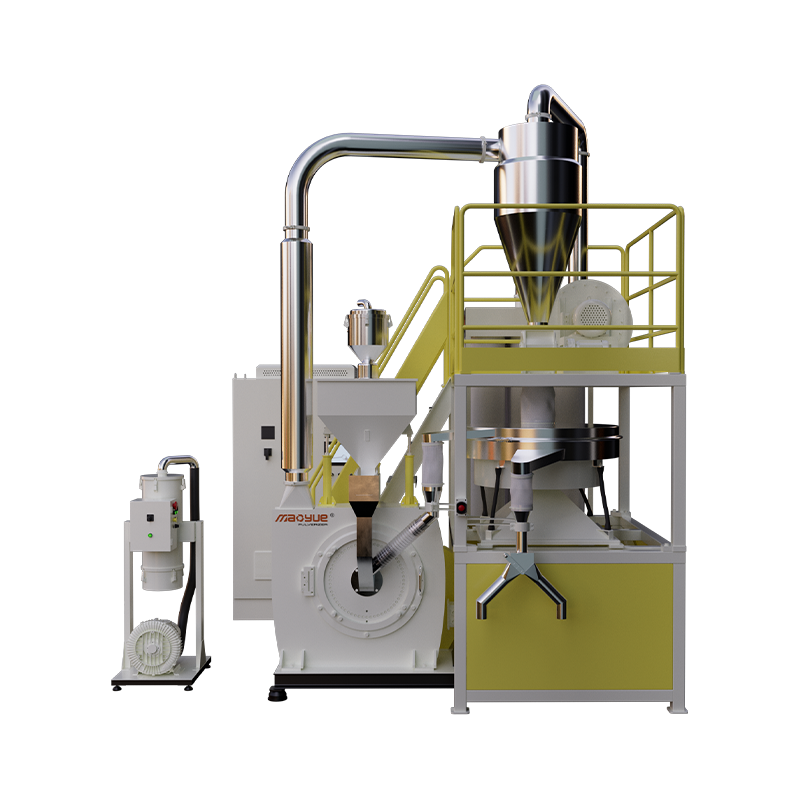
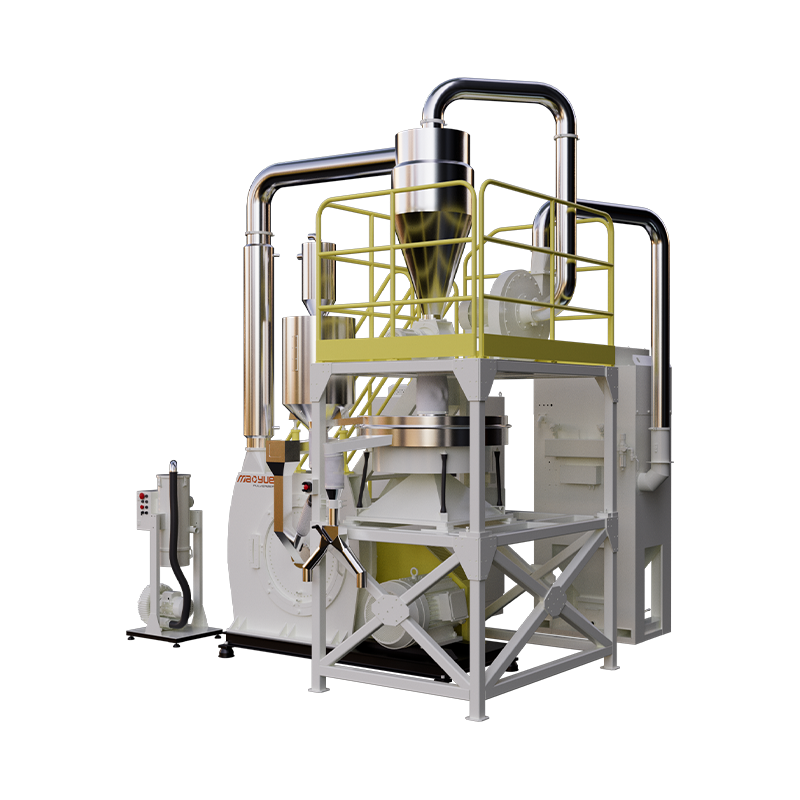
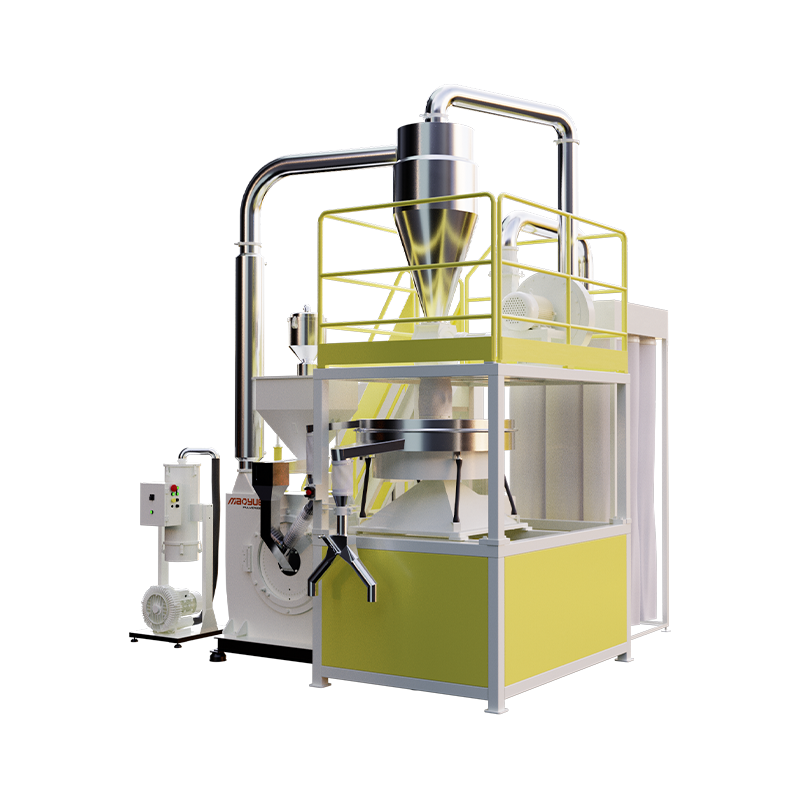
The Model 500 can be configured with fully enclosed negative-pressure airflow conveying and a pulse bag dust collector. The negative-pressure design draws air and material through the conveying route rather than pushing powder outward through open points. This helps limit leakage when the system is properly sealed.
The dust collector is designed to achieve a dust-capture rate of more than 99.9 percent under suitable operating conditions and with correctly selected filter media. The actual emission result depends on the material, particle size, filter condition, airflow, sealing, maintenance, and local testing method.
Pulse cleaning periodically removes accumulated powder from the filter bags. This helps maintain airflow and collection efficiency. The collected material can often be recovered, screened, and returned to production when permitted by the formulation and quality-control system.
A clean conveying system supports better product quality as well as better working conditions. It reduces cross-contamination between colors and formulations, lowers manual cleaning work, and helps protect employees from unnecessary exposure to airborne dust. The system should still be operated with appropriate personal protective equipment, ventilation, housekeeping, and risk controls.
Stainless-steel piping is used in the standard configuration. Stainless steel offers a clean internal surface, corrosion resistance, and suitability for applications where material contamination must be controlled. The standard pipe diameter is approximately 159 mm, although the final conveying dimensions should be confirmed according to the line layout and airflow requirements.
Typical Technical Configuration
The following table summarizes the principal reference specifications for the Model 500 configuration. These values should be treated as a technical reference rather than a universal production guarantee. Final specifications may change according to voltage, motor brand, disc material, cooling design, screening system, dust collector, and customer requirements.
| Item | Specification | Technical Note |
|---|---|---|
| Machine type | 500 | Compact disc pulverizer |
| Grinding-disc diameter | 500 mm | Disc size used for the Model 500 series |
| Reference capacity | 50–160 kg/h | Depends on material, feed size, and mesh requirement |
| Fine-powder capacity range | Approximately 150–400 kg/h in selected applications | Applicable conditions depend on material and process configuration |
| Reference mesh range | 10–30 mesh | Typical standard-table range |
| Adjustable fine range | Approximately 20–100 mesh | Finer settings require suitable material and process conditions |
| Possible maximum fineness | Approximately 120 mesh or finer | Requires application verification |
| Main drive motor | 37/45 kW | Motor selection depends on configuration |
| Blower motor | 5.5/7.5 kW | Supports conveying and cooling airflow |
| Speed control | Star-delta, soft start, or inverter | Selected according to process and electrical requirements |
| Grinding-disc material | D2 standard reference or DC53 premium option | Confirm final material before purchase |
| Pipe material | Stainless steel | Designed for clean material conveying |
| Reference pipe diameter | 159 mm | May vary with system layout |
| Vibrating-screen diameter | 1,000 mm | Used for classification in the complete line |
| Vibrating-screen motor | 1.1 kW | Supports screening and classification |
| Feeding method | Vacuum feeding | Enclosed feeding option |
| Dust-collector bag diameter | 300 mm | Final filter arrangement depends on system design |
| Cooling method | Water cooling | Water inlet and outlet circulation |
| Typical total power | Approximately 35–45 kW for selected compact configurations | Actual installed power may differ |
Applications in Masterbatch Manufacturing
Color Masterbatch
The Model 500 can process PE, PP, ABS, PS, PC, and other polymer carriers used in color masterbatch. The objective is to create a uniform powder that supports stable pigment distribution during subsequent mixing, extrusion, or pelletizing.
Consistent grinding can help reduce the possibility of color shade variation. A powder with controlled size and good flow characteristics is easier to feed into mixers and extruders. It can also support more repeatable dosing of concentrated pigment systems.
The pulverizer does not replace the need for correct formulation, mixing, dispersion, and extrusion control. Instead, it provides a stable raw-material preparation stage that helps the rest of the process perform more consistently.
Functional Masterbatch
Functional masterbatches often contain additives that require particularly good distribution. Flame-retardant, antistatic, conductive, reinforced, nucleating, lubricating, and ultraviolet-resistant formulations may benefit from controlled powder preparation.
Some functional additives are abrasive or have a high specific gravity. The grinding system should therefore be configured according to the actual formulation. Disc material, tooth design, cooling, screen size, and conveying speed should be selected after reviewing the additive content and expected wear rate.
Where the formulation requires narrow particle-size distribution, precision-machined grinding teeth and stable disc rotation are important advantages. Better uniformity can help reduce segregation and improve repeatability during feeding.
Modified Plastics
Modified plastic manufacturers may use the machine to prepare polymer powders before compounding, blending, or reuse. The controlled grinding process can assist with the handling of materials containing fillers, colorants, or performance additives.
Because modified plastics can have widely different hardness, toughness, and thermal behavior, testing is recommended before full-scale production. A sample trial can establish the appropriate grinding gap, speed, cooling-water flow, feed rate, and screen arrangement.
Recycling and Re-Granulation
The Model 500 can pulverize masterbatch scraps, injection-molding waste, extrusion off-cuts, rejected material, and production leftovers for reuse when the material is clean and suitable for recycling. Recovering these materials can reduce raw-material costs and improve overall yield.
Recycling applications require careful control of contamination. Metal fragments, stones, glass, excessive moisture, and foreign polymers can damage the disc or compromise the final product. A suitable upstream inspection, sorting, and size-reduction process should be used before feeding the pulverizer.
Recycled feedstock may also vary significantly in shape and density. A controlled feeding system helps prevent surges that could overload the grinding chamber. Vacuum feeding can support enclosed transfer and more stable material flow when correctly adjusted.
Rotomolding Powder
The machine can produce uniform powder for rotational molding applications. Depending on the polymer and product specification, a 30–60 mesh powder may be suitable for certain rotomolding processes. Particle-size requirements must be confirmed by the end product, mold geometry, heating cycle, and material grade.
A consistent powder improves mold coverage and can support more uniform wall thickness. It may also reduce unprocessed particles, surface defects, and variation between production batches.
SPC Flooring Powder
SPC flooring core-layer materials may require controlled particle preparation before compounding. The pulverizer can be incorporated into a process that prepares polymer-based powder for flooring formulations, subject to the properties of the polymer, mineral filler, and additives.
When mineral fillers are present, disc wear may increase. The machine configuration should therefore be reviewed carefully, and operators should monitor disc condition, vibration, motor load, and powder quality.
Laboratory and Pilot Production
The compact size, adjustable fineness, and temperature-control functions make the Model 500 suitable for formula development and small-batch production. Researchers can evaluate new carrier resins, pigment systems, additive packages, or recycling blends without committing to a large industrial line.
A pilot pulverizer can also help manufacturers determine the best feed preparation method before scaling up. Data collected from small-batch trials may include throughput, energy consumption, temperature profile, particle-size distribution, and screening yield.
Advantages Compared with Conventional Pulverizers
More Consistent Particle Size
Conventional pulverizers may use grinding discs with inconsistent tooth geometry or insufficiently controlled balance. This can result in a broad particle-size range and unstable performance as the disc wears. The Model 500’s precision tooth grinding and balanced disc design are intended to maintain more uniform grinding action.
Improved Thermal Stability
Some basic machines rely mainly on natural cooling or a single cooling method. Such arrangements may be inadequate for low-softening-point polymers. The Model 500 combines water cooling, forced air, sensors, and PLC control to provide more reliable temperature management.
Lower Maintenance Burden
Reduced vibration can help extend the service life of bearings, spindle components, and fasteners. A durable disc and refurbishment capability can also reduce the frequency and cost of tooling replacement. These advantages become more significant in factories with long operating hours.
Cleaner Production
Open conveying systems can release polymer dust and create additional cleaning work. The Model 500’s enclosed negative-pressure conveying and pulse bag collection arrangement is designed to capture dust efficiently and support a cleaner workshop.
Better Fit for Smaller Facilities
Large pulverizers can provide high output but may be excessive for a small production line or research facility. The Model 500 offers a practical balance between capacity, footprint, energy use, and process flexibility.
More Flexible Process Configuration
Different users may require different starting methods, speed-control systems, disc materials, screen arrangements, cooling systems, and feeding equipment. The availability of star-delta starting, soft starting, or inverter control allows the machine to be matched to the factory’s electrical system and process requirements.
Advanced Manufacturing Capabilities
The equipment is manufactured by Changzhou Mao Yue Intelligent Equipment Co., Ltd., a source manufacturer with approximately 30 years of experience in plastic crushing and pulverizing equipment. The company focuses on disc pulverizers and related size-reduction systems for plastics, polymers, PVC, PE, rotational molding, masterbatch, recycling, and powder coating.
The manufacturer operates six processing workshops, with each workshop averaging approximately 1,400 square meters. This multi-workshop structure supports separate activities such as machining, welding, grinding, assembly, testing, and component preparation. It also provides manufacturing capacity for standard equipment and customized systems.
The factory uses Taiwan-imported high-precision grinding machines built to German standards, German dynamic-balancing equipment, and Japanese welding systems. These resources support accurate component processing, stable rotating assemblies, strong welded structures, and repeatable production quality.
High-quality equipment depends on process discipline as much as machine tools. Machining tolerances, surface finish, shaft concentricity, disc flatness, weld quality, balance results, electrical assembly, and final testing must be controlled in sequence. Experienced technical personnel are needed to connect these individual operations into a reliable complete machine.
The company’s technical team studies advanced equipment technologies from countries including Germany. This focus supports continuous improvement in mechanical design, material selection, balancing, cooling, automation, and production safety.
Manufacturing according to European quality standards is intended to provide customers with components that are stable, serviceable, and compatible with demanding industrial environments. The company has obtained CE mechanical certification and ISO 9001 quality management system certification. These certifications support systematic management of product safety and manufacturing quality, although users should still verify that the delivered configuration meets the regulations of their specific country and application.
Quality Control from Component to Complete Line
Quality control begins with the selection of steel, bearings, motors, electrical components, filter materials, valves, sensors, and other parts. Material certificates and supplier verification can help ensure that critical components meet their intended requirements.
During machining, dimensions and tolerances should be checked against engineering drawings. Grinding discs require particular attention because tooth geometry and balance directly affect performance. Shafts, housings, flanges, and bearing seats must also be manufactured accurately to preserve alignment.
Welding quality is important for the frame, cooling jacket, hopper, ductwork, and dust-collection structures. Proper preparation, welding procedure, inspection, and finishing help reduce leakage, deformation, corrosion, and fatigue problems.
Assembly quality determines whether the individual components work together correctly. Technicians must verify disc alignment, spindle rotation, belt tension, bearing installation, fastener torque, sensor position, water connections, electrical wiring, and airflow direction.
Final testing should evaluate no-load rotation, operating vibration, motor current, temperature response, cooling-water circulation, conveying performance, dust collection, screening, emergency stops, and control functions. Where possible, material trials should be used to confirm capacity and particle-size performance before shipment.
This systematic approach distinguishes a complete equipment manufacturer from a simple machine reseller. Customers receive not only a motor and grinding chamber, but also engineering support for feeding, conveying, cooling, screening, dust collection, installation, and commissioning.
Energy Efficiency and Return on Investment
The Model 500 is designed with a total power requirement of approximately 35–45 kW in selected compact configurations. The exact installed power depends on the main motor, blower, vibrating screen, feeding equipment, dust collector, cooling accessories, and electrical specification.
Energy consumption per kilogram is influenced by product fineness, feed size, material hardness, moisture, throughput, disc condition, and airflow. A finer powder normally requires more energy than a coarse powder. Running the machine below its effective feed rate may also reduce efficiency.
Several design features can help control operating cost. Precision grinding teeth can improve the efficiency of size reduction. A sharp and correctly balanced disc can reduce unnecessary friction. Stable cooling can prevent blockages and repeated shutdowns. Enclosed conveying can reduce manual cleaning labor. Disc refurbishment can lower tooling expenditure.
The manufacturer indicates that a typical return-on-investment period may be approximately 6–12 months in suitable applications. This estimate is not universal. It depends on operating hours, electricity prices, product value, labor cost, reject rate, existing equipment, maintenance cost, and the amount of material recovered for reuse.
Before purchasing, users should prepare a simple economic model. The model should include expected hourly output, annual operating hours, power consumption, labor, consumables, disc replacement, cooling-water costs, dust-collector maintenance, downtime, and product recovery. A material trial can provide more realistic data than a general catalog estimate.
Installation and Process Integration
The pulverizer should be installed on a rigid, level foundation capable of supporting the machine and absorbing operating forces. Adequate clearance is required around the grinding chamber, motor, belts, dust collector, screen, control cabinet, and maintenance doors.
Electrical power must match the machine’s voltage, frequency, motor rating, starting method, and local safety requirements. An inverter may be useful when the process requires adjustable speed, although speed changes should be made only within the approved operating range.
The cooling-water system should provide sufficient flow and pressure. Water quality should be suitable for the cooling circuit, and the inlet and outlet should be clearly identified. A flow switch, temperature sensor, or alarm can provide additional protection against insufficient cooling.
The feeding system should deliver material continuously without sudden surges. Oversized pieces should be reduced before entering the pulverizer. Metal detection or magnetic separation may be appropriate for recycling applications.
Ductwork should be designed to minimize sharp bends, dead zones, and unnecessary pressure loss. The dust collector must be sized for the actual airflow and powder load. Filter bags should be compatible with the temperature, chemical characteristics, and particle size of the material.
Commissioning should begin with an empty-machine inspection and no-load test. Operators should confirm the rotation direction, vibration, unusual noise, cooling-water flow, airflow, emergency-stop function, and control-panel indications. Material should then be introduced gradually while temperature, motor current, capacity, and powder quality are recorded.
Operation and Maintenance Recommendations
Operators should inspect the grinding chamber before each shift. The chamber should be free from foreign objects, excessive buildup, and loose parts. The disc, teeth, fasteners, seals, screen, and conveying route should be checked according to the site’s maintenance procedure.
Material should be fed at a controlled rate. Overfeeding may increase motor load, raise temperature, reduce fineness, and cause blockages. Underfeeding may reduce productivity and increase the proportion of air movement relative to material throughput.
Temperature should be monitored continuously during production. If the temperature rises unexpectedly, operators should check cooling-water flow, airflow, feed rate, material behavior, disc condition, and duct blockage. Continuing to operate under abnormal temperature conditions may damage the material and the machine.
Motor current provides useful information about load changes. A sudden increase may indicate foreign material, excessive feed, dull discs, a blocked conveying line, or a mechanical problem. A sudden decrease may indicate an empty feed system, belt failure, or loss of material flow.
Bearings, belts, seals, fasteners, sensors, filter bags, and electrical connections require scheduled inspection. Lubrication should follow the bearing manufacturer’s instructions. Excessive or unsuitable lubricant can be as harmful as insufficient lubrication.
Filter bags should be cleaned through the pulse system and replaced when damaged, blocked, or no longer able to maintain the required airflow. A damaged filter bag can release powder into the workshop and contaminate the product area.
Disc condition should be assessed through output, particle-size distribution, motor load, vibration, and visual inspection. When the disc becomes dull, professional refurbishment may restore its working profile and postpone the cost of a new disc.
Safety Considerations
Only trained personnel should operate, adjust, clean, or maintain the pulverizer. Operators should understand the emergency-stop system, lockout and tagout procedures, rotating-equipment hazards, hot surfaces, electrical risks, dust exposure, and the correct use of protective equipment.
The grinding chamber must never be opened while the disc is rotating. Power should be isolated, locked, and verified before maintenance. Residual rotation and stored energy must be allowed to dissipate before access is permitted.
Fine polymer powder can present dust-related risks depending on its composition and concentration. The dust-collection system should be maintained in good condition, and the installation should be evaluated for combustible-dust hazards where applicable. Grounding, bonding, ventilation, spark prevention, and explosion-protection measures should be selected according to the material and local regulations.
Noise should be measured at the operator position. Even when the machine is designed for a noise level below approximately 85 dB, hearing protection may still be required depending on the total workshop environment.
Safety devices, guards, interlocks, alarms, and emergency stops should not be bypassed. Any modification to the machine should be reviewed by qualified technical personnel.
Choosing the Correct Configuration
Customers should provide detailed material information before selecting the Model 500. Important data includes polymer type, melt behavior, feed size, moisture, bulk density, additive content, abrasive filler content, contamination risk, required throughput, target mesh, and acceptable temperature.
The required capacity should be based on the finished powder specification rather than the maximum possible output. A machine that produces a high rate of coarse powder may produce a lower rate when configured for very fine powder. A realistic production target provides a better basis for motor, disc, screen, blower, and dust-collector selection.
Disc material should be selected according to wear conditions. Clean PE and PP may require a different solution from a formulation containing mineral filler, glass fiber, flame retardant, or conductive additive. A premium DC53 disc may be attractive when toughness, long service life, and refurbishment value are priorities.
Speed control should be matched to the application. Star-delta starting is a conventional option. Soft starting can reduce electrical and mechanical stress during startup. Inverter control can provide more process flexibility, but it requires appropriate motor, control, cooling, and safety coordination.
The screen and conveying system should be selected as part of the complete process. Particle-size classification, return flow, powder collection, bagging, and dust capture all influence the final result. Installing only the pulverizer without considering the downstream system may limit the performance of the entire line.
Customer Service and Customized Solutions
The manufacturer’s experience in plastic pulverizing allows it to support applications beyond standard machine delivery. Engineering assistance may include material testing, process recommendations, disc selection, cooling design, feeding configuration, conveying layout, dust collection, screening, electrical control, installation, and commissioning.
Customized solutions are useful when the material has unusual thermal behavior, high abrasive content, strict contamination limits, special voltage requirements, or a complex factory layout. The final system can be designed around the customer’s production targets and available space.
More than 5,000 domestic and international enterprises have established partnerships with the company. This broad customer base provides practical experience across masterbatch, plastics recycling, rotational molding, modified polymer, PVC, PE, powder coating, and related industries.
After-sales support is also important for pulverizing equipment. Spare discs, refurbishment, wear parts, operating guidance, troubleshooting, and maintenance advice can influence long-term production reliability. A supplier that can support the equipment throughout its service life offers greater value than a supplier focused only on the initial sale.
Frequently Asked Questions
What materials can the Model 500 process?
The machine is suitable for many polymer and masterbatch materials, including PE, PP, ABS, PS, PC, EVA, TPU, modified plastics, masterbatch scraps, injection-molding waste, extrusion off-cuts, and selected materials for rotomolding or SPC flooring production. The exact suitability depends on material composition, thermal behavior, moisture, contamination, and required fineness.
What capacity can users expect?
Reference specifications list approximately 50–160 kg/h, while selected masterbatch applications may achieve approximately 150–400 kg/h. Capacity is affected by the material, feed size, disc condition, target mesh, cooling, airflow, and process configuration. A material trial should be used to confirm the expected output.
What particle size can the machine produce?
The standard reference table lists 10–30 mesh, while the adjustable fine-powder range is approximately 20–100 mesh. Under suitable material and operating conditions, the machine may reach approximately 120 mesh or finer. The achievable size should be verified with a sample test because polymer behavior varies significantly.
Is the Model 500 suitable for heat-sensitive polymers?
Yes. The machine uses a water-cooling jacket, forced-air cooling, multiple temperature sensors, and PLC-based control to help manage the grinding-chamber temperature. These features are intended to reduce sticking, yellowing, overheating, and degradation in materials such as PE, PP, EVA, and TPU.
What is the difference between D2 and DC53 grinding discs?
D2 is a commonly used tool-steel option, while DC53 is a premium high-strength mold-steel option that can provide an improved balance of hardness and toughness when properly processed. DC53 may offer better resistance to fatigue and chipping in demanding applications. The best choice depends on the material, additives, wear conditions, and budget.
Can the grinding disc be refurbished?
Yes, discs can be professionally refurbished when their condition remains suitable. The process may restore the tooth profile and improve the disc’s working condition. Refurbishment can cost approximately one-quarter to one-third as much as a new disc, although the actual cost depends on the damage and required machining.
How does the machine control dust?
The complete system can use enclosed negative-pressure conveying and a pulse bag dust collector. The dust collector is designed for a capture rate above 99.9 percent under suitable conditions. Proper sealing, filter maintenance, airflow adjustment, and workplace ventilation remain essential.
Does the machine include a screening system?
The reference configuration includes a vibrating screen with an approximate diameter of 1,000 mm and a 1.1 kW motor. The exact screen arrangement depends on the required particle-size classification and the complete line design.
What information should be provided for a quotation?
Customers should provide the material name and formulation, feed size, required capacity, target mesh, working hours, moisture level, additive or filler content, power supply, available floor space, cooling-water conditions, and preferred collection or packaging method. Samples are recommended for reliable process evaluation.
Is the machine suitable for laboratory use?
Its compact design and adjustable operating range make it suitable for laboratories, pilot production, sample development, and formula validation. The final configuration should be sized according to the laboratory’s batch size, cleaning requirements, ventilation, and electrical capacity.
What certifications does the manufacturer have?
The manufacturer has obtained CE mechanical certification and ISO 9001 quality management system certification. Customers should confirm the documentation supplied with the specific machine and check additional certification or compliance requirements in the destination country.
Conclusion
The Model 500 fine powder mill provides a balanced solution for masterbatch and polymer powder production. Its compact footprint makes it appropriate for small and medium-sized factories, laboratories, pilot lines, and recycling operations, while its precision grinding system supports consistent particle-size distribution.
The combination of high-strength grinding discs, tooth-by-tooth CNC machining, dynamic balancing, disc refurbishment, dual cooling, temperature monitoring, enclosed conveying, and pulse dust collection addresses many of the limitations found in conventional pulverizers. These features can help manufacturers improve powder quality, protect heat-sensitive polymers, reduce dust, lower maintenance costs, and operate more reliably.
The equipment is supported by a manufacturer with extensive experience in plastic crushing and pulverizing machinery, multiple processing workshops, advanced imported equipment, certified quality-management systems, and a broad international customer base. Its capabilities extend beyond the machine itself to include line design, material testing, customization, installation support, and lifecycle service.
For the best result, customers should evaluate the Model 500 according to their actual material and production target. Capacity, mesh size, disc material, cooling conditions, dust collection, and screen configuration should all be verified through technical discussion and, where possible, sample testing. With the correct configuration and maintenance program, the Model 500 can provide a stable, efficient, and cost-conscious fine-powder solution for modern masterbatch production.
References
1. Internal product specification data for the Model 500 polymer masterbatch pulverizer.
2. Technical information concerning DC53 and D2 tool-steel properties for industrial cutting and grinding applications.
3. General principles of polymer size reduction, grinding heat management, and particle-size classification.
4. Industrial guidance on negative-pressure pneumatic conveying and pulse-jet bag filtration.
5. ISO 9001 quality management system principles for manufacturing organizations.
6. CE machinery-safety principles for industrial processing equipment.
7. General maintenance practices for high-speed rotating machinery, bearings, belts, and dynamically balanced assemblies.