

 English
 русский
 Español
 عربى
 中文简体
 中文简体
Content
- 1 1. The Role of the Grinding Disc in Plastic Pulverizing
- 2 2. Integrated Construction and Its Structural Advantages
- 3 3. Material Selection: DC53 Tool Steel and Alloy Steel Construction
- 4 4. Carburizing, Quenching, and Multiple Tempering
- 5 5. Precision CNC Machining and Tooth Geometry
- 6 6. Grinding-Gap Adjustment and Operational Precision
- 7 7. Balance, Vibration, and Noise Control
- 8 8. Cooling Performance and Prevention of Thermal Damage
- 9 9. Powder Quality and Particle-Size Control
- 10 10. Comparison with Conventional Split Grinding Discs
- 11 11. Applications in Plastic Recycling and Reprocessing
- 12 12. Rotational Molding Powder
- 13 13. Powder Coating and Masterbatch Applications
- 14 14. Processing EVA, LLDPE, and Other Flexible Polyolefins
- 15 15. Laboratory, Research, and Electronic-Waste Applications
- 16 16. Manufacturing Capabilities of the Producer
- 17 17. Quality Management and Certification
- 18 18. Customization Options
- 19 19. Installation and Maintenance Recommendations
- 20 20. Economic and Production Benefits
- 21 21. Selection Guide for Customers
- 22 22. Frequently Asked Questions
- 22.1 Q1: What materials can the integrated grinding disc process?
- 22.2 Q2: What makes the disc different from a standard grinding disc?
- 22.3 Q3: How long can the disc operate?
- 22.4 Q4: What hardness does the cutting tooth have?
- 22.5 Q5: Can the disc produce 20 to 80 mesh PE powder?
- 22.6 Q6: Does the disc require special adjustment tools?
- 22.7 Q7: Can the disc be customized?
- 22.8 Q8: How does the disc help prevent plastic from sticking?
- 22.9 Q9: Is the disc suitable for recycled plastic?
- 22.10 Q10: What information is needed for a replacement order?
- 22.11 Q11: What quality documents should customers request?
- 22.12 Q12: Can the disc be used with pulverizers from other manufacturers?
- 23 23. Conclusion
- 24 References
- 25 Product: Pulverizer Integrated Disc
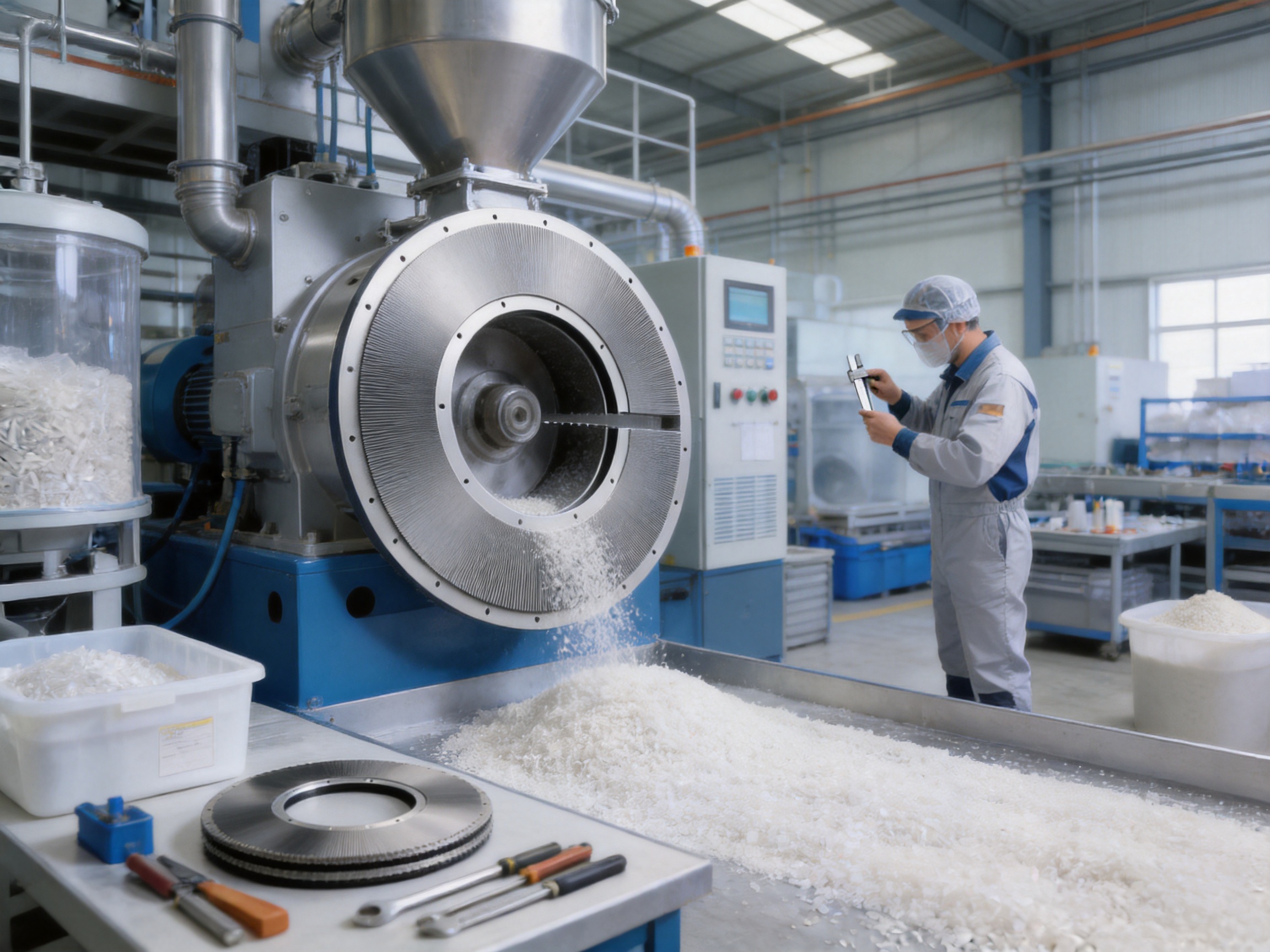
Plastic pulverizing is a demanding size-reduction process in which the grinding component directly influences productivity, powder quality, energy consumption, maintenance frequency, and the overall reliability of the pulverizer. A grinding disc must withstand continuous high-speed rotation, repeated impact, friction, thermal stress, and abrasive contact with plastic feedstock. At the same time, it must maintain a precise grinding gap and a stable tooth profile so that the finished powder remains uniform throughout extended production runs.
The integrated grinding disc described in this article is designed as a high-performance core component for plastic pulverizers. It is suitable for PE, PP, EVA, LLDPE, and other thermoplastic materials that require controlled grinding into fine powder. Unlike conventional split or assembled discs, this component is produced as a monolithic casting and then subjected to precision CNC machining. The integrated construction improves rigidity, balance, and dimensional stability while eliminating many weaknesses associated with joints, separately assembled sections, and inconsistent tooth alignment.
Developed for demanding industrial applications, the disc combines high-strength alloy steel, proprietary DC53 wear-resistant tool steel, carburizing, quenching, multiple tempering treatments, and high-precision machining. The resulting component is engineered to maintain cutting performance over long operating periods and to reduce the frequency of replacement and unplanned shutdowns.
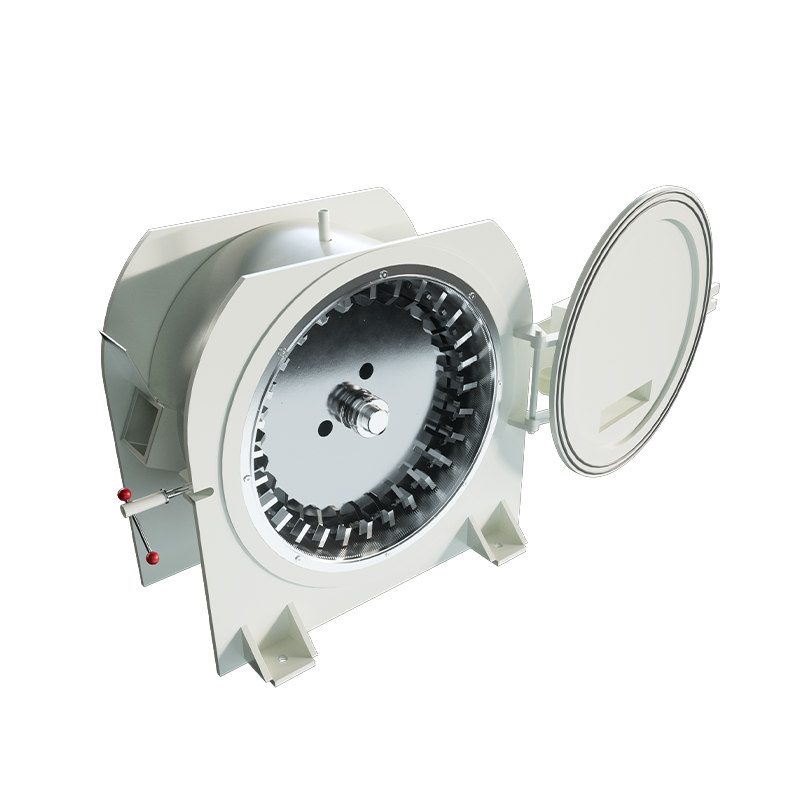
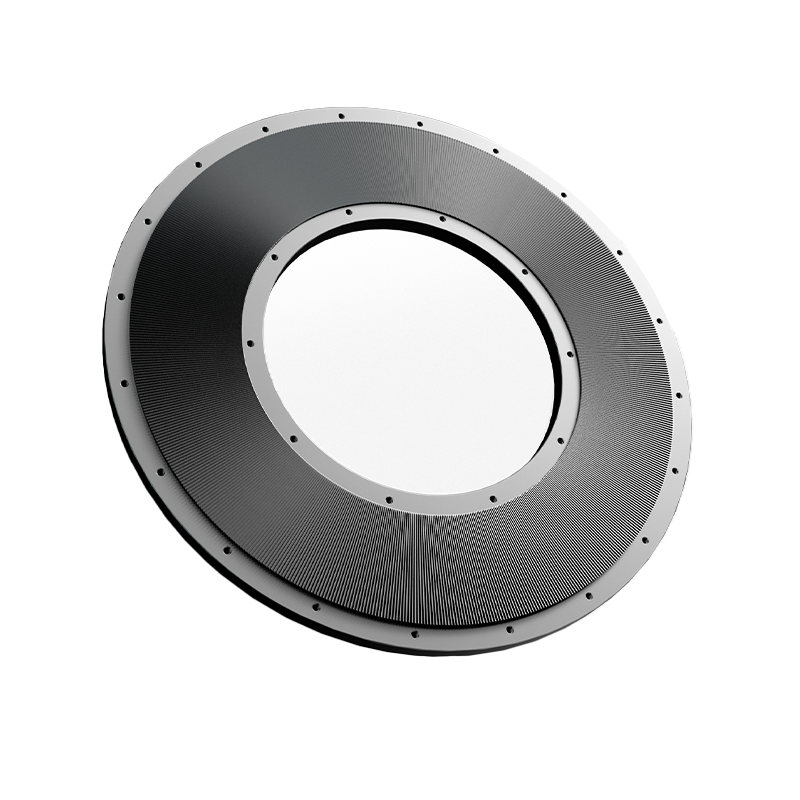
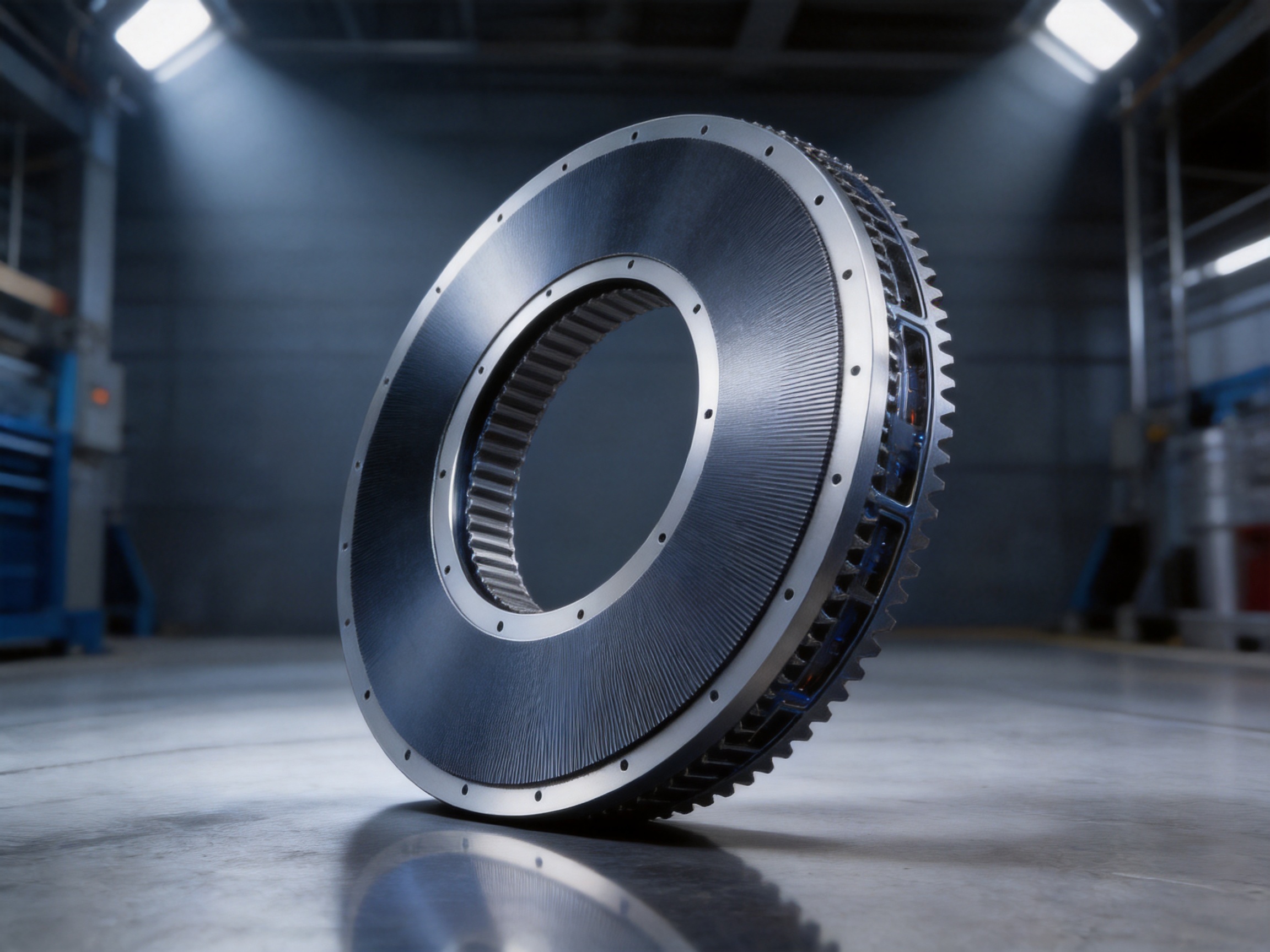
Its design includes a large circular body, a central feeding area, inner rotating teeth, and an outer mounting zone with numerous precision bolt holes. Rounded edges improve handling safety and give the component a refined industrial appearance. The disc is intended to work with advanced air-water cooling systems and fine grinding-gap adjustment mechanisms, allowing operators to produce stable powder while limiting overheating, sticking, discoloration, and agglomeration.
For plastic processors, recyclers, rotational molding companies, compounders, powder coating manufacturers, and research facilities, the integrated disc provides a practical way to upgrade pulverizer performance without replacing an entire production line. It can serve as an original replacement component for compatible pulverizers and can also be customized for different diameters, tooth densities, and surface treatments.
1. The Role of the Grinding Disc in Plastic Pulverizing
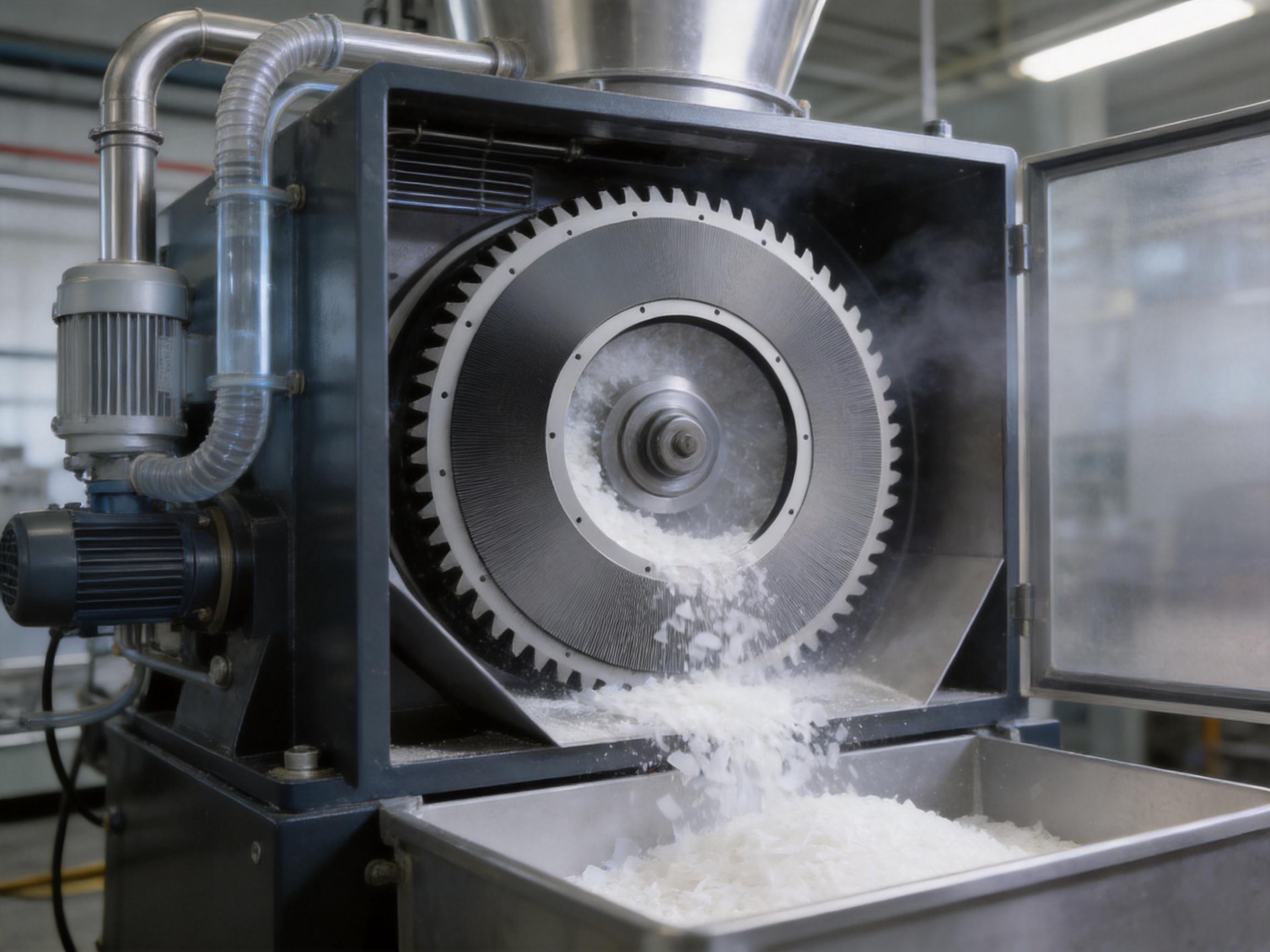
In a plastic pulverizer, the grinding disc is one of the most important working components. The feed material enters the grinding chamber through the central feed area and is progressively reduced by the relative motion between rotating and stationary disc surfaces. The teeth generate cutting, shearing, impact, and friction forces that transform plastic flakes, chips, films, or pellets into powder.
The quality of the disc determines how consistently these forces are applied. If the disc is poorly balanced, the machine may experience excessive vibration, bearing stress, noise, and energy loss. If the tooth geometry is inaccurate, the material may pass through the grinding chamber unevenly, creating an unstable particle-size distribution. If the material hardness is insufficient, the teeth can wear rapidly, reducing production capacity and increasing the risk of coarse particles.
Thermal control is equally important. Plastic materials such as PE and EVA can soften when exposed to excessive frictional heat. Once softened, the material may adhere to the teeth or chamber surfaces, form lumps, carbonize, or block the passage of material. A properly manufactured disc must therefore work together with a suitable cooling system and a correctly adjusted grinding gap.
The integrated disc addresses these requirements through a combination of structural rigidity, high-wear-resistance material, precision tooth machining, accurate balancing, and compatibility with fine adjustment. These characteristics allow the disc to perform as a long-life working surface rather than merely serving as a replaceable wear part.
2. Integrated Construction and Its Structural Advantages
The component is manufactured using a monolithic construction. Instead of assembling multiple disc segments or joining separate tooth sections, the main disc body is formed as one integrated piece. This design provides a continuous structural foundation for the central feed zone, rotating teeth, outer mounting area, and bolt-hole pattern.
One major benefit of integrated construction is improved rigidity. During operation, a pulverizer disc may rotate at several thousand revolutions per minute. At this speed, even small structural weaknesses can produce deformation, vibration, or changes in the grinding gap. A monolithic body distributes mechanical loads more evenly and reduces the risk of movement between separate sections.
Traditional split discs may contain joints, interfaces, or assembled segments. These areas can become potential points of stress concentration. Over time, repeated impact and thermal cycling may cause loosening, misalignment, or localized wear. The integrated design removes these internal interfaces and helps maintain a stable tooth relationship throughout the working surface.
Another advantage is improved balance. Since the disc is produced as a unified component and then machined with controlled dimensional accuracy, its mass distribution can be managed more effectively. Proper balancing reduces vibration and noise, protects bearings and shafts, and supports smoother operation at high speed.
The monolithic structure also improves maintenance consistency. A replacement disc does not require the operator to align several separate sections or verify the position of multiple tooth modules. Once the component is correctly installed and the grinding gap is adjusted, the machine can return to production with fewer assembly variables.
Integrated construction does not eliminate the need for correct installation. The shaft, mounting surface, fastening system, and stationary disc must still be inspected carefully. However, it reduces the number of mechanical interfaces that can affect grinding performance and provides a more stable foundation for precision pulverizing.
Pulverizer Integrated Disc
3. Material Selection: DC53 Tool Steel and Alloy Steel Construction
The performance of a grinding disc depends heavily on its material. Plastic pulverizing may appear less severe than metal cutting, but the disc is exposed to continuous abrasion, repeated impact, frictional heat, and high-speed centrifugal forces. Recycled plastic can also contain contaminants, mineral particles, labels, dust, or other hard inclusions that accelerate wear.
The integrated disc uses high-strength alloy steel and is based on proprietary DC53 high-wear-resistant tool steel. DC53 is widely recognized as a premium cold-work tool steel with a favorable balance of hardness, toughness, dimensional stability, and resistance to wear. When correctly heat-treated, it can provide a durable working surface capable of maintaining sharp and accurate teeth over extended operating periods.
The specified hardness of the cutting teeth is approximately HRC 60–61. This hardness level is intended to support strong wear resistance while retaining sufficient toughness for demanding pulverizing conditions. Excessive hardness without adequate toughness can make a tool brittle and vulnerable to chipping. Conversely, insufficient hardness may cause rapid rounding of the teeth. The selected material and treatment process are designed to balance these competing requirements.
Material selection also affects the stability of the finished powder. When teeth wear rapidly, their cutting angles change. The disc may then produce more heat, generate a wider particle-size distribution, and allow coarse particles to pass through. A wear-resistant disc maintains its designed profile for longer, helping the pulverizer produce more consistent powder between maintenance intervals.
Compared with ordinary grinding discs manufactured from lower-grade steel, the DC53-based design is intended to deliver substantially longer service life. Under appropriate operating conditions, its working life may exceed that of standard market discs by more than two times. Actual service life depends on feedstock type, contamination level, throughput, grinding gap, cooling efficiency, operating hours, and maintenance practices.
4. Carburizing, Quenching, and Multiple Tempering
Heat treatment is a critical part of the disc manufacturing process. Precision machining alone cannot provide the required combination of hardness, toughness, fatigue resistance, and dimensional stability. The integrated disc therefore undergoes carburizing, quenching, and special heat treatment, followed by multiple tempering operations.
Carburizing enriches the surface layer with carbon. This produces a hard and wear-resistant outer zone while allowing the internal structure to retain useful toughness. For a grinding disc, this combination is valuable because the teeth require a durable surface, while the disc body must withstand impact and rotational stress without cracking.
Quenching transforms the prepared steel structure into a high-hardness condition. However, freshly quenched steel can contain internal stresses and may be too brittle for continuous industrial use. Multiple tempering treatments are therefore applied to improve toughness, relieve residual stress, and stabilize the final mechanical properties.
Repeated tempering also supports dimensional stability. A grinding disc must maintain its geometry during operation and throughout its service life. Uncontrolled dimensional change can affect the grinding gap and create uneven contact between rotating and stationary components. Proper heat-treatment control helps minimize this risk.
The process is especially important for the tooth profile. The teeth are the active working elements of the disc, and their performance is directly related to surface hardness and resistance to fatigue. A well-treated tooth can better withstand repeated contact with plastic particles and occasional impact from hard contaminants.
Heat treatment must be followed by accurate inspection. Hardness testing, dimensional measurement, surface inspection, and balance verification are important steps for confirming that the component meets its intended performance requirements. The combination of controlled metallurgy and precise finishing gives the integrated disc a more dependable working profile than a component that has only been cut and mechanically assembled.
5. Precision CNC Machining and Tooth Geometry
After casting and heat treatment, the disc undergoes precision CNC machining. CNC processing allows the manufacturer to control the shape, position, depth, angle, and spacing of the teeth with a high degree of repeatability. It also supports accurate machining of the central opening, mounting surfaces, bolt holes, and other critical dimensions.
The disc uses a radial fine-tooth pattern with optimized cutting angles. This tooth arrangement is intended to promote effective contact with the plastic feedstock and to distribute the grinding action over the working surface. Fine teeth can improve the ability to produce smaller particles, while optimized angles help balance cutting efficiency, material flow, and heat generation.
Tooth geometry affects several aspects of performance. A suitable rake or cutting angle helps the tooth engage material instead of simply rubbing against it. Controlled spacing provides pathways for particles and cooling air. Consistent tooth height supports a more uniform grinding gap and reduces local hot spots.
Precision machining is also important for the outer mounting zone. The disc includes dozens of precision bolt holes for reliable attachment to the pulverizer structure. If these holes are inaccurately positioned, the disc may be difficult to install or may not sit concentrically. Accurate hole placement helps maintain alignment and supports stable high-speed rotation.
The machining of the central feed zone must also be controlled carefully. A smooth and accurately shaped feed area supports consistent material entry and reduces the possibility of bridging or uneven loading. Uniform feeding allows the tooth pattern to work more efficiently and helps prevent one section of the disc from carrying excessive load.
Compared with manually finished or loosely toleranced components, CNC-machined discs provide better repeatability between production batches. This is particularly valuable for customers operating several machines or replacing discs at different times. Consistent geometry simplifies installation and helps maintain similar production parameters from one component to another.
6. Grinding-Gap Adjustment and Operational Precision
The distance between the rotating and stationary discs is one of the main operating variables in a pulverizer. A smaller gap generally promotes finer grinding, while a larger gap may be used for higher throughput or more temperature-sensitive materials. The correct setting depends on the material, desired fineness, feed rate, and cooling conditions.
The integrated disc is designed for straightforward grinding-gap adjustment. Operators can use a feeler gauge and adjustment bolts to perform fine-tuning without specialized tools. Micron-level adjustment is possible when the machine structure, measurement method, and operator technique are properly controlled.
This simple adjustment method has practical benefits. It reduces setup time, makes routine inspection easier, and allows operators to respond quickly to changes in material behavior. For example, if the powder becomes too coarse, the gap can be adjusted carefully. If heat generation increases or the material begins to soften, the gap and feed rate can be reviewed before the problem becomes serious.
Accurate gap adjustment also helps protect the disc. Excessive contact between the rotating and stationary surfaces can cause abnormal wear, heat, vibration, and damage. An overly large gap may reduce grinding efficiency and allow coarse particles to pass. The ability to make controlled adjustments supports a better balance between capacity, fineness, and component life.
Operators should always follow safe adjustment procedures. The machine must be stopped, isolated from power, and allowed to cool before inspection or mechanical adjustment. The feeler gauge should be used at several points around the disc to confirm uniformity. Uneven readings may indicate incorrect mounting, contamination on the contact surfaces, disc deformation, or bearing and shaft problems.
7. Balance, Vibration, and Noise Control
High-speed pulverizing places strict demands on balance. A disc that is only slightly out of balance can generate considerable centrifugal force when rotating at several thousand revolutions per minute. This force may be transmitted to the shaft, bearings, housing, and supporting structure.
The integrated disc is designed to provide excellent balance through controlled casting, precision machining, and dynamic balancing procedures. A balanced component rotates more smoothly and produces less vibration. This contributes to a quieter working environment and reduces mechanical fatigue across the pulverizer.
Lower vibration can extend the service life of bearings, couplings, seals, and fasteners. It can also reduce the likelihood of bolt loosening and mounting-surface damage. In continuous production, these improvements may reduce maintenance costs beyond the disc itself.
Noise reduction is another operational benefit. Pulverizers naturally produce sound from high-speed rotation, material impact, airflow, and motor operation. However, poor balance, loose components, and uneven tooth contact can increase noise significantly. A stable integrated disc helps prevent these avoidable sources of noise.
Balance should be maintained throughout the component’s service life. Accumulated plastic residue, uneven tooth wear, foreign-object damage, or incorrect cleaning can alter the mass distribution. Operators should therefore inspect the disc regularly and remove deposits before restarting the machine.
8. Cooling Performance and Prevention of Thermal Damage
Thermal management is essential when pulverizing PE, PP, EVA, and other thermoplastic materials. Friction between the material and the disc converts mechanical energy into heat. If the heat is not removed efficiently, plastic can soften, smear, stick to the working surfaces, or carbonize.
The integrated disc is intended to work with a dual air-water cooling system. Airflow helps remove heat and supports material transport within the grinding chamber. Water cooling can absorb heat from the chamber structure and maintain more stable operating conditions. Together, these methods help prevent excessive temperature increases during continuous production.
The disc’s tooth geometry contributes to cooling performance by supporting material movement and reducing unnecessary rubbing. A sharp, accurately machined tooth profile engages material efficiently. A worn or rounded tooth may increase friction and require more energy to achieve the same degree of size reduction.
Preventing thermal damage is particularly important for PE powder. Overheated PE may become sticky and form agglomerates. It may also develop discoloration or degraded properties. In powder coating, rotational molding, and compounding applications, such defects can affect the appearance and performance of the finished product.
Cooling performance depends on more than the disc alone. Water flow, air volume, feed rate, material moisture, ambient temperature, and machine sealing all influence the result. The disc provides a strong working foundation, but the complete pulverizer must be operated within the recommended process range.
Temperature monitoring is a useful preventive practice. Operators can record chamber temperature, motor load, cooling-water conditions, and powder appearance. A gradual increase in temperature may indicate disc wear, an overly small grinding gap, excessive feed rate, blocked cooling passages, or contamination in the feedstock.
9. Powder Quality and Particle-Size Control
The integrated disc is designed to produce powder within an approximate range of 10 to 120 mesh, depending on the machine configuration, raw material, feed rate, disc diameter, tooth arrangement, and grinding-gap setting. For many PE applications, a target range of approximately 20 to 80 mesh is commonly required.
Particle size is only one measure of powder quality. A valuable powder should also have a narrow particle-size distribution, good flowability, high sphericity where appropriate, low contamination, and minimal agglomeration. The integrated disc supports these qualities through consistent tooth geometry and stable operation.
Uniform tooth engagement helps reduce the production of excessive coarse particles. At the same time, controlled cooling prevents softened plastic from forming lumps that would otherwise distort the size distribution. Stable balance and low vibration help maintain consistent grinding conditions over long production periods.
Powder quality should be verified through regular sampling. A basic quality-control program may include sieve analysis, visual inspection, bulk-density measurement, moisture testing, and examination for discoloration or foreign particles. The test results can be used to optimize the grinding gap, feed rate, and cooling conditions.
The disc is especially useful when the customer requires repeatable powder for downstream processing. Rotational molding operations may need powder with consistent flow characteristics to achieve even wall thickness. Powder coating producers may require clean, fine material with low scorch risk. Recyclers may need stable powder quality before regranulation or compounding.
A high-quality disc does not guarantee identical results for every material. Waste film, rigid pipe, cable insulation, bottle caps, and flexible EVA each have different grinding behavior. Nevertheless, a durable and precise disc gives operators a better platform for adjusting the process and achieving the desired result.
10. Comparison with Conventional Split Grinding Discs
Conventional split discs remain common because they can be easier to manufacture or repair in certain applications. However, their construction may introduce several potential disadvantages. Multiple sections require careful assembly, alignment, fastening, and inspection. Any variation between sections can affect tooth continuity and balance.
Joints may also become areas where material residue accumulates or where mechanical stress is concentrated. Repeated vibration and thermal cycling can increase the possibility of loosening or deformation. If one section wears differently from another, the grinding chamber may develop uneven performance.
The integrated disc eliminates most internal joints and provides a continuous body. This supports greater rigidity, more stable balance, and consistent tooth positioning. The absence of assembly seams also reduces the risk of mismatch between adjoining tooth sections.
Service life is another important comparison. The use of DC53 wear-resistant tool steel, HRC 60–61 hardness, and specialized heat treatment is intended to provide more than twice the service life of ordinary discs under comparable conditions. Longer service life reduces the frequency of disc replacement, labor requirements, inventory needs, and production interruptions.
Energy efficiency can also improve indirectly. A disc with sharp, stable teeth requires less unnecessary rubbing than a worn disc. Reduced friction can lower motor load and help control chamber temperature. Actual energy savings depend on the complete pulverizer system and process settings, but disc condition is an important factor.
| Performance factor | Integrated grinding disc | Conventional split disc |
|---|---|---|
| Construction | Monolithic body produced as one integrated component | Multiple sections or assembled working parts |
| Structural rigidity | High rigidity with fewer internal interfaces | May depend on joint quality and fastening condition |
| Tooth alignment | Machined as a continuous working structure | Can vary between separately assembled sections |
| Balance | Suitable for precision balancing and high-speed rotation | More sensitive to assembly and uneven wear |
| Wear resistance | DC53-based material with controlled heat treatment | Varies according to steel grade and treatment quality |
| Maintenance requirement | Fewer assembly interfaces to inspect | May require additional joint and segment inspection |
| Customization | Available in different diameters, tooth densities, and coatings | Often limited by standard segment configurations |
The comparison should be understood as a general engineering evaluation. A high-quality split disc can perform well when properly designed and maintained. However, the integrated disc offers specific advantages for customers seeking structural continuity, stable balance, long wear life, and simplified replacement.
11. Applications in Plastic Recycling and Reprocessing
Plastic recycling is one of the major application areas for the integrated disc. Waste PE materials such as film, agricultural mulch, pipes, bottle caps, cable materials, strapping bands, and garbage bags can be reduced into powder for subsequent processing.
Recycled plastic often contains variable material properties and contamination. The feedstock may include different grades, colors, moisture levels, labels, dust, and occasional hard particles. A strong and wear-resistant disc is therefore essential for maintaining productivity under nonuniform conditions.
After pulverizing, the powder can be used in regranulation, film blowing, pipe and profile extrusion, injection molding, or other compounding processes. Producing a uniform intermediate powder can improve feeding, blending, and dispersion in subsequent operations.
The integrated disc supports a waste-to-value production model by helping convert discarded plastic into a usable raw material. This can reduce dependence on virgin resin, lower disposal volumes, and support circular-economy objectives. The environmental benefit is strongest when the complete recycling line is efficiently operated and the recovered material is used in suitable products.
For recycling companies, reduced downtime is particularly valuable. Every disc replacement requires production to stop, the chamber to be opened, the worn component to be removed, and the new component to be installed and adjusted. A longer-life disc can increase equipment availability and improve production planning.
12. Rotational Molding Powder
Rotational molding requires plastic powder with reliable particle size, flowability, and thermal behavior. The powder is placed inside a mold, heated while the mold rotates, and distributed over the internal surface to form a hollow product.
Applications include water tanks, pallets, playground equipment, chemical storage tanks, containers, and other large hollow products. If the powder contains excessive coarse particles, agglomerates, or contaminants, the finished product may develop uneven wall thickness, surface defects, bubbles, or weak areas.
The integrated disc is designed to produce powder with a narrow distribution and low tendency toward agglomeration when the pulverizer is correctly configured. Accurate tooth geometry and controlled cooling help reduce the risk of overheating and clumping during grinding.
Consistent powder flow also helps improve mold coverage. A powder that moves evenly inside the rotating mold can contribute to smoother surfaces and more uniform product thickness. The final result still depends on resin grade, mold design, heating cycle, rotational speed, and operator control.
Because rotational molding often uses fine PE powder, disc condition is especially important. Worn teeth may produce excessive coarse material, while an improperly adjusted gap may increase heat and cause particles to stick together. Regular inspection and controlled adjustment are therefore essential.
13. Powder Coating and Masterbatch Applications
Fine plastic powder is used in powder coating, electrostatic spraying, fluidized-bed impregnation, filler masterbatches, color masterbatches, and functional masterbatches. These applications require controlled fineness and good dispersion characteristics.
For powder coating, the material should be sufficiently fine and free from scorch, discoloration, and visible impurities. Excessive thermal exposure during pulverizing can affect color, surface finish, and coating performance. The disc’s wear resistance and compatibility with air-water cooling help support stable processing conditions.
In masterbatch production, powder quality influences the distribution of pigments, fillers, additives, and functional ingredients. Uniform polymer powder can improve mixing efficiency and help the compounder achieve more consistent final properties.
For electrostatic applications, particle size affects charging behavior, transfer efficiency, coverage, and surface appearance. A narrow distribution may help reduce excessive overspray and improve process control, although the ideal size depends on the coating formulation and application equipment.
The integrated disc is therefore suitable for manufacturers that need a flexible pulverizing component capable of serving multiple downstream markets. With appropriate customization, the tooth density and surface treatment can be selected for different materials and powder specifications.
14. Processing EVA, LLDPE, and Other Flexible Polyolefins
Although PE is a major target material, the integrated disc can also be used for flexible polyolefins such as EVA and LLDPE. These materials may be more elastic, softer, or more sensitive to heat than rigid plastics. Their grinding behavior can change significantly with temperature and feed rate.
For flexible materials, sharp teeth and a stable grinding gap are important. If the teeth are worn or the gap is too large, the material may deform rather than fracture efficiently. If the gap is too small, friction and temperature may rise rapidly. The precision of the integrated disc gives operators more control over these variables.
Cooling should be monitored closely when processing EVA or other heat-sensitive materials. Operators may need to reduce feed rate, increase cooling, or adjust the grinding gap to prevent sticking. Material preparation, including removal of moisture and excessive contamination, also affects performance.
Different tooth-density configurations can be selected according to the desired output. A finer tooth arrangement may support finer powder, while a more open arrangement may be appropriate for higher-throughput processing or materials that require greater flow through the chamber.
15. Laboratory, Research, and Electronic-Waste Applications
Small-batch research and development is another potential application. Laboratories may need to evaluate new polymer formulations, recycled feedstock, additives, or processing conditions. A reliable grinding disc allows researchers to prepare repeatable powder samples for testing.
In electronic-waste recycling, PE and other plastic components may need to be reduced for separation, classification, or further treatment. The feedstock can contain a mixture of plastics and small amounts of nonplastic material. Appropriate pre-sorting and contamination control are necessary to protect the disc and maintain product quality.
Research users benefit from the disc’s adjustability. By changing the gap, feed rate, and cooling conditions, they can study the relationship between processing parameters and powder characteristics. The component’s stable geometry also improves the repeatability of experimental results.
For laboratories, safety and cleaning are especially important. The machine should be fully isolated before opening the chamber. Powder residues should be removed between material trials to avoid cross-contamination. The rounded external edges of the disc improve handling safety, but protective equipment and proper procedures remain essential.
16. Manufacturing Capabilities of the Producer
The producer of the integrated disc is an experienced source manufacturer specializing in plastic crushing and pulverizing equipment. With approximately 30 years of industry experience, the company has developed knowledge covering disc pulverizers, grinding components, recycling systems, and customized size-reduction solutions.
Its manufacturing organization includes six processing workshops, with each workshop averaging about 1,400 square meters. This production structure supports different stages of machining, welding, assembly, inspection, and equipment preparation. A dedicated workshop arrangement can improve workflow control and help separate processes according to their technical requirements.
The company also maintains a professional technical team that studies advanced machine technologies from countries including Germany. This international technical focus supports the adoption of high standards in mechanical design, balancing, machining accuracy, and equipment reliability.
Manufacturing equipment includes high-precision grinding machines imported from Taiwan and built to German standards, German dynamic balancing equipment, and Japanese welding systems. These resources support accurate component production and stable machine assembly.
For grinding discs, precision equipment is particularly important. The tooth profile, disc flatness, mounting-hole pattern, and balance must all be controlled. Dynamic balancing equipment helps verify performance under rotational conditions, while high-precision machining improves dimensional repeatability.
Welding quality is also relevant to the complete pulverizer. The housing, support frame, cooling system, and other structural elements must withstand vibration and continuous operation. Reliable welding systems contribute to the stability of the machine that carries the disc.
17. Quality Management and Certification
The manufacturer operates according to a quality-focused approach that emphasizes product safety, process consistency, service, and continuous improvement. The company has obtained CE mechanical certification and ISO 9001 quality management system certification.
CE certification indicates that applicable European safety and conformity requirements have been addressed for the relevant machinery. ISO 9001 certification provides a framework for documented quality processes, customer requirements, corrective action, and continual improvement.
Certification does not replace technical inspection of each grinding disc. Instead, it supports a broader management system in which design, procurement, manufacturing, inspection, delivery, and service are handled through controlled procedures.
Customers evaluating a disc should consider traceability, material documentation, hardness results, balance records, dimensional inspection, and installation guidance. These records provide useful evidence that the component has been manufactured consistently.
Quality control is particularly important for replacement parts. A disc that appears visually similar to the original may still differ in steel grade, heat treatment, tooth geometry, or balance. Selecting a component from an established manufacturer reduces the risk of receiving an imitation or poorly matched part.
18. Customization Options
Plastic processing requirements vary widely. A recycling line for PE film may require different disc characteristics from a powder coating line processing a specialized polymer. The integrated disc can be customized according to the machine and application.
Available customization may include disc diameter, central opening, mounting-hole pattern, tooth density, tooth geometry, working-surface treatment, and surface coating. These options allow the component to be matched to the pulverizer chamber and the target particle size.
Disc diameter must correspond to the machine design, rotational speed, shaft dimensions, and chamber configuration. Tooth density can be selected according to the desired balance between fineness, throughput, and heat generation. Surface treatments or coatings may be considered for specific materials or contamination conditions.
Before ordering a customized disc, customers should provide drawings, photographs, machine model information, shaft dimensions, bolt-hole measurements, existing disc specifications, target powder fineness, and material details. Feedstock type, expected capacity, operating hours, and contamination level are also useful for selecting the correct design.
Customization can offer better cost performance than imported equivalents. Customers may obtain a component matched to their actual machine instead of adapting a generic product. Local technical communication and shorter supply channels may also simplify replacement planning and after-sales support.
19. Installation and Maintenance Recommendations
Before installation, the disc, shaft, mounting surface, fasteners, and chamber should be cleaned thoroughly. Any plastic residue, metal fragments, or corrosion on the mounting surfaces can affect concentricity and balance.
All bolt holes should be checked for correct alignment. Fasteners should be tightened according to the equipment manufacturer’s specified sequence and torque requirements. Uneven tightening can distort the disc or create localized stress.
After installation, the disc should be rotated manually where safe to confirm that it does not contact the stationary component. The grinding gap should then be measured at multiple locations. An uneven gap requires investigation before the machine is operated at full speed.
The first production run should begin at a controlled feed rate. Operators should observe vibration, noise, motor current, cooling-water temperature, powder appearance, and chamber temperature. Sudden abnormal conditions require immediate shutdown and inspection.
Routine maintenance should include tooth inspection, bolt inspection, gap verification, cooling-system cleaning, bearing checks, and removal of accumulated powder. The disc should be inspected for chipped teeth, cracks, severe rounding, discoloration, or uneven wear.
Replacement should be considered when wear has changed the tooth geometry significantly, when the disc can no longer maintain the required powder fineness, or when vibration and heat increase despite correct settings. Continuing to operate with a severely worn disc may damage other machine components and increase energy consumption.
20. Economic and Production Benefits
The value of an integrated grinding disc extends beyond its purchase price. A long-life component can reduce replacement frequency, labor costs, inventory requirements, and downtime losses. Stable powder quality may also reduce rejected product and improve downstream processing efficiency.
Higher wear resistance supports longer continuous operating periods. This is valuable for production lines that operate multiple shifts or require uninterrupted supply to downstream equipment. Fewer shutdowns improve equipment utilization and make production scheduling more predictable.
Improved balance can reduce wear on bearings and other rotating components. Lower vibration may also reduce the need for frequent fastener tightening and structural repairs. These secondary savings can be significant over the service life of the machine.
Energy performance is influenced by motor efficiency, feedstock preparation, cooling, and operating parameters. Nevertheless, a sharp and stable disc can contribute to efficient grinding by cutting material more effectively and reducing unnecessary friction. The result may be higher throughput with a lower energy requirement per unit of powder.
The best economic evaluation should compare total cost of ownership rather than initial component price alone. Relevant factors include disc life, average throughput, product quality, downtime, maintenance labor, energy consumption, and the effect of disc performance on downstream operations.
21. Selection Guide for Customers
Customers should begin by identifying the plastic material to be processed. PE film, rigid PE pipe, PP, EVA, LLDPE, and mixed recycled plastic have different grinding characteristics. The presence of moisture, mineral filler, metal fragments, sand, or other contaminants must also be considered.
The target powder specification should be defined clearly. Customers should identify the desired mesh range, acceptable coarse-particle percentage, flowability requirements, color limitations, and downstream application. A disc designed for coarse recycling powder may not be ideal for fine rotational molding powder.
Machine compatibility is equally important. Required information includes disc diameter, shaft dimensions, bolt-hole layout, rotational speed, stationary-disc configuration, and chamber clearance. Incorrect dimensions can create installation problems or unsafe operating conditions.
Expected production capacity and operating schedule should also be communicated. A customer operating continuously for several thousand hours per year may require a more wear-resistant configuration than a laboratory or small-batch user.
Finally, customers should evaluate technical support, quality documentation, customization capability, certifications, and replacement availability. A reliable component supplier should be able to discuss material selection, heat treatment, tooth design, balancing, installation, and maintenance.
22. Frequently Asked Questions
Q1: What materials can the integrated grinding disc process?
It is primarily designed for thermoplastic materials such as PE, PP, EVA, and LLDPE. It can be used for plastic recycling, rotational molding powder, powder coating, masterbatch preparation, and other applications. The exact suitability depends on the material properties, contamination level, target fineness, and pulverizer configuration.
Q2: What makes the disc different from a standard grinding disc?
The principal differences are its monolithic construction, DC53-based wear-resistant tool steel, controlled hardness, carburizing and quenching, multiple tempering treatments, precision CNC tooth machining, and dynamic balancing. These features are intended to improve rigidity, wear life, balance, and powder consistency.
Q3: How long can the disc operate?
Service life depends on material, contamination, feed rate, cooling, grinding gap, rotational speed, and maintenance. Under comparable operating conditions, the disc is designed to last more than twice as long as standard market discs. Customers should use inspection records and wear measurements to determine the actual replacement interval.
Q4: What hardness does the cutting tooth have?
The specified tooth hardness is approximately HRC 60–61 after the required heat-treatment process. This hardness is intended to provide high wear resistance while retaining sufficient toughness for continuous pulverizing.
Q5: Can the disc produce 20 to 80 mesh PE powder?
It is designed to support a broad range of powder fineness, approximately 10 to 120 mesh. A 20 to 80 mesh range is commonly achievable for PE when the disc, stationary component, grinding gap, feed rate, cooling system, and raw material are correctly matched.
Q6: Does the disc require special adjustment tools?
Routine grinding-gap adjustment can be performed using a feeler gauge and adjustment bolts. The machine must be stopped and isolated before adjustment, and the gap should be measured at several points to confirm uniformity.
Q7: Can the disc be customized?
Yes. Customization may include diameter, tooth density, tooth profile, mounting-hole pattern, surface coating, and other dimensions. Customers should provide accurate machine and application information before production.
Q8: How does the disc help prevent plastic from sticking?
Its precise tooth profile reduces unnecessary rubbing, while the disc is designed to operate with a dual air-water cooling system. Stable cooling and correct adjustment help prevent excessive temperature, softening, carbonization, and agglomeration. Feed rate and material condition must also be controlled.
Q9: Is the disc suitable for recycled plastic?
Yes, it is suitable for many PE and other plastic recycling applications. However, hard contamination such as metal, stone, or excessive mineral matter should be removed before pulverizing because these contaminants can accelerate wear or damage the teeth.
Q10: What information is needed for a replacement order?
Useful information includes the pulverizer model, disc diameter, shaft opening, bolt-hole dimensions, rotational speed, tooth configuration, material to be processed, target powder size, production capacity, and photographs or drawings of the existing component.
Q11: What quality documents should customers request?
Customers may request material information, hardness records, dimensional inspection data, balance records, heat-treatment information, product drawings, installation guidance, and applicable conformity or certification documentation.
Q12: Can the disc be used with pulverizers from other manufacturers?
It may be compatible with selected mainstream pulverizer brands, but compatibility must be confirmed through dimensions, mounting configuration, rotational requirements, chamber clearance, and tooth arrangement. A customized version may be necessary.
23. Conclusion
The integrated grinding disc is a precision-engineered component developed for demanding plastic pulverizing applications. Its monolithic construction provides structural continuity, high rigidity, and improved balance compared with many split-disc designs. Its DC53-based material, HRC 60–61 hardness, carburizing, quenching, and multiple tempering treatments are intended to provide a durable combination of wear resistance, toughness, and fatigue resistance.
Precision CNC machining gives the disc an accurate tooth profile, central feed zone, and mounting-hole pattern. The radial fine-tooth design supports efficient grinding, while compatibility with air-water cooling and micron-level gap adjustment helps control temperature and powder fineness.
For recycling, rotational molding, powder coating, masterbatch, laboratory, and flexible-polyolefin applications, the disc can contribute to longer operating life, fewer replacements, lower downtime, more stable powder quality, and improved production efficiency. Its customization options allow it to be matched to different machine sizes, material types, tooth densities, and surface requirements.
The manufacturer’s long-term industry experience, multiple processing workshops, professional technical team, precision machining resources, dynamic balancing equipment, welding capabilities, CE mechanical certification, and ISO 9001 quality management system provide a strong foundation for dependable production.
When selecting a grinding disc, customers should consider the entire operating system rather than focusing only on component price. Material grade, heat treatment, tooth geometry, balance, cooling, machine compatibility, maintenance, and technical support all influence the final result. Properly selected and correctly operated, an integrated grinding disc can become a valuable upgrade for plastic pulverizers and a practical tool for improving the efficiency and quality of modern plastic powder production.
References
1. General principles of plastic recycling and mechanical size reduction, industrial polymer-processing engineering literature.
2. Tool steel selection, heat treatment, hardness control, and wear resistance, technical reference materials for cold-work tool steels.
3. Fundamentals of rotational molding powder preparation and particle-size control, polymer-processing industry publications.
4. ISO 9001 quality management system principles and manufacturing process control guidance.
5. CE machinery safety and conformity assessment principles for industrial processing equipment.
6. Engineering practices for dynamic balancing of high-speed rotating components.
7. Technical studies on pulverizer grinding-gap adjustment, thermal control, and thermoplastic powder production.
8. Industrial applications of PE, PP, EVA, and LLDPE powders in recycling, coating, compounding, and rotational molding.