

 English
 русский
 Español
 عربى
 中文简体
 中文简体
Content
- 1 1. Why PVC Pulverizing Equipment Matters in Modern Recycling
- 2 2. Product Positioning and Main Performance Profile
- 3 3. Heavy-Duty Grinding Structure
- 4 4. Temperature Control and Protection Against PVC Degradation
- 5 5. Energy Efficiency and Production Economics
- 6 6. Powder Quality and Particle-Size Control
- 7 7. Integrated Feeding, Conveying, Screening, and Dust Collection
- 8 8. Applications in PVC Pipe and Profile Recycling
- 9 9. Applications in PVC Foam and Sheet Production
- 10 10. Applications in Cable and Wire Recycling
- 11 11. Functional Modification and High-Value PVC Compounds
- 12 12. Comparison with Smaller and Larger Pulverizer Models
- 13 13. Advanced Manufacturing Processes
- 14 14. Structural Stability, Vibration Control, and Noise Reduction
- 15 15. Quality, Certification, and Technical Support
- 16 16. Installation and Commissioning Considerations
- 17 17. Maintenance and Wear-Part Management
- 18 18. Safety Requirements
- 19 19. How to Select the Correct Configuration
- 20 20. Return on Investment
- 21 21. Questions and Answers
- 21.1 Q1: What materials can the Model 800 process?
- 21.2 Q2: What is the production capacity?
- 21.3 Q3: What motor power is used?
- 21.4 Q4: What particle size can the machine produce?
- 21.5 Q5: How does the machine prevent PVC from sticking to the grinding plates?
- 21.6 Q6: How long do the grinding discs last?
- 21.7 Q7: Is the machine suitable for continuous operation?
- 21.8 Q8: Can the Model 800 process cable waste?
- 21.9 Q9: Does the machine include dust collection?
- 21.10 Q10: What makes this machine different from a low-cost pulverizer?
- 21.11 Q11: Can the equipment be customized?
- 21.12 Q12: What information should be provided before requesting a quotation?
- 22 22. Final Assessment
- 23 References
- 24 Product: Model 800 PVC High-Efficiency Energy-Saving Pulverizer
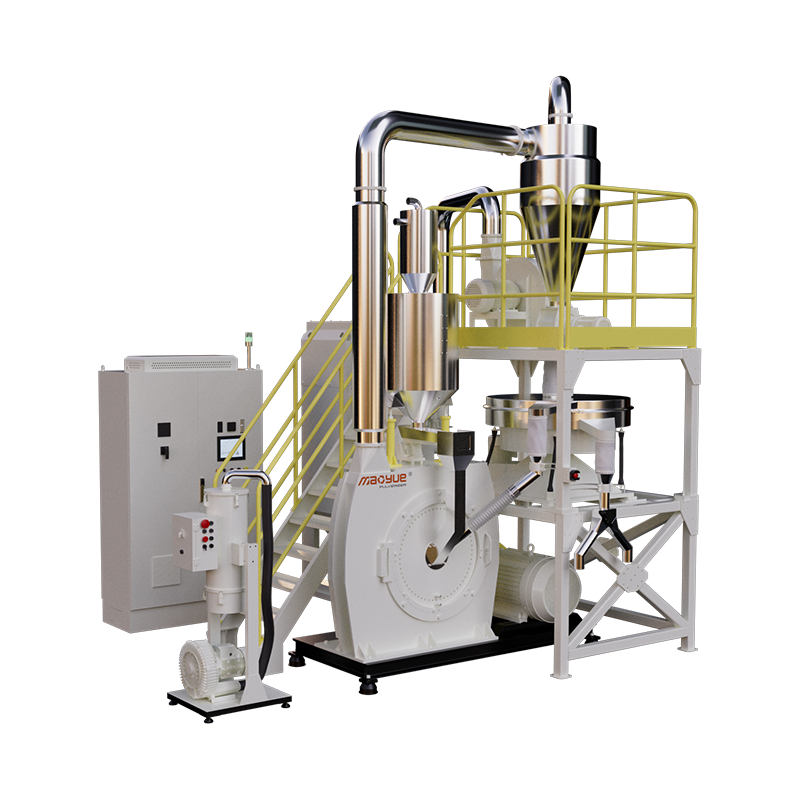
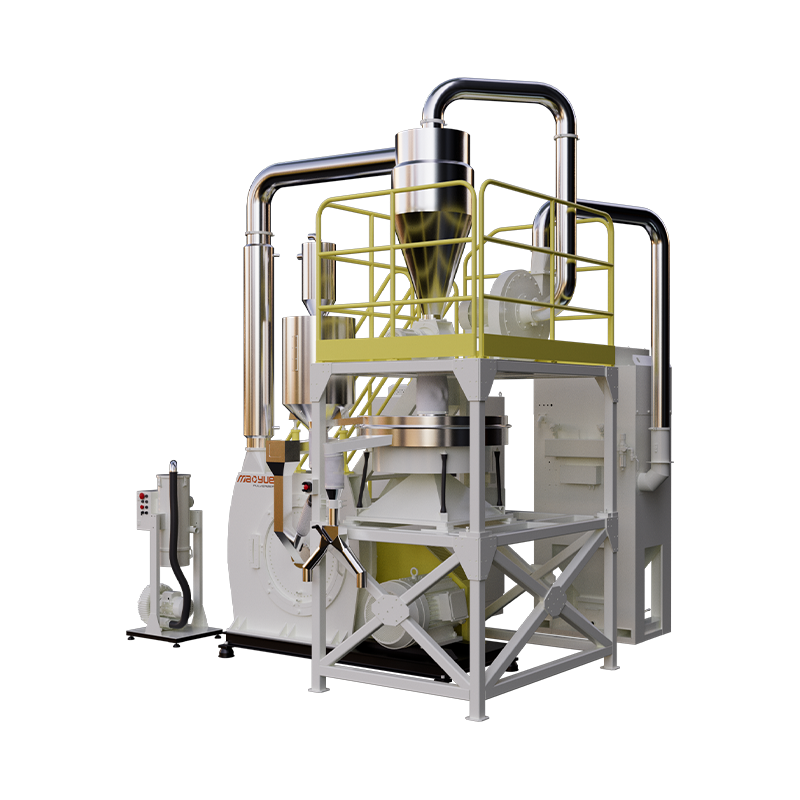
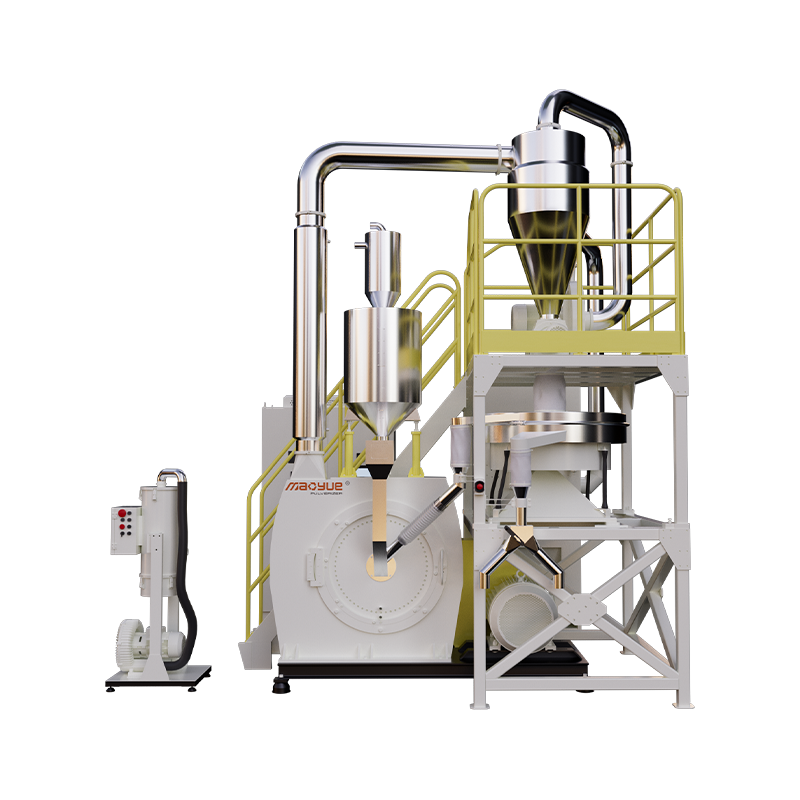
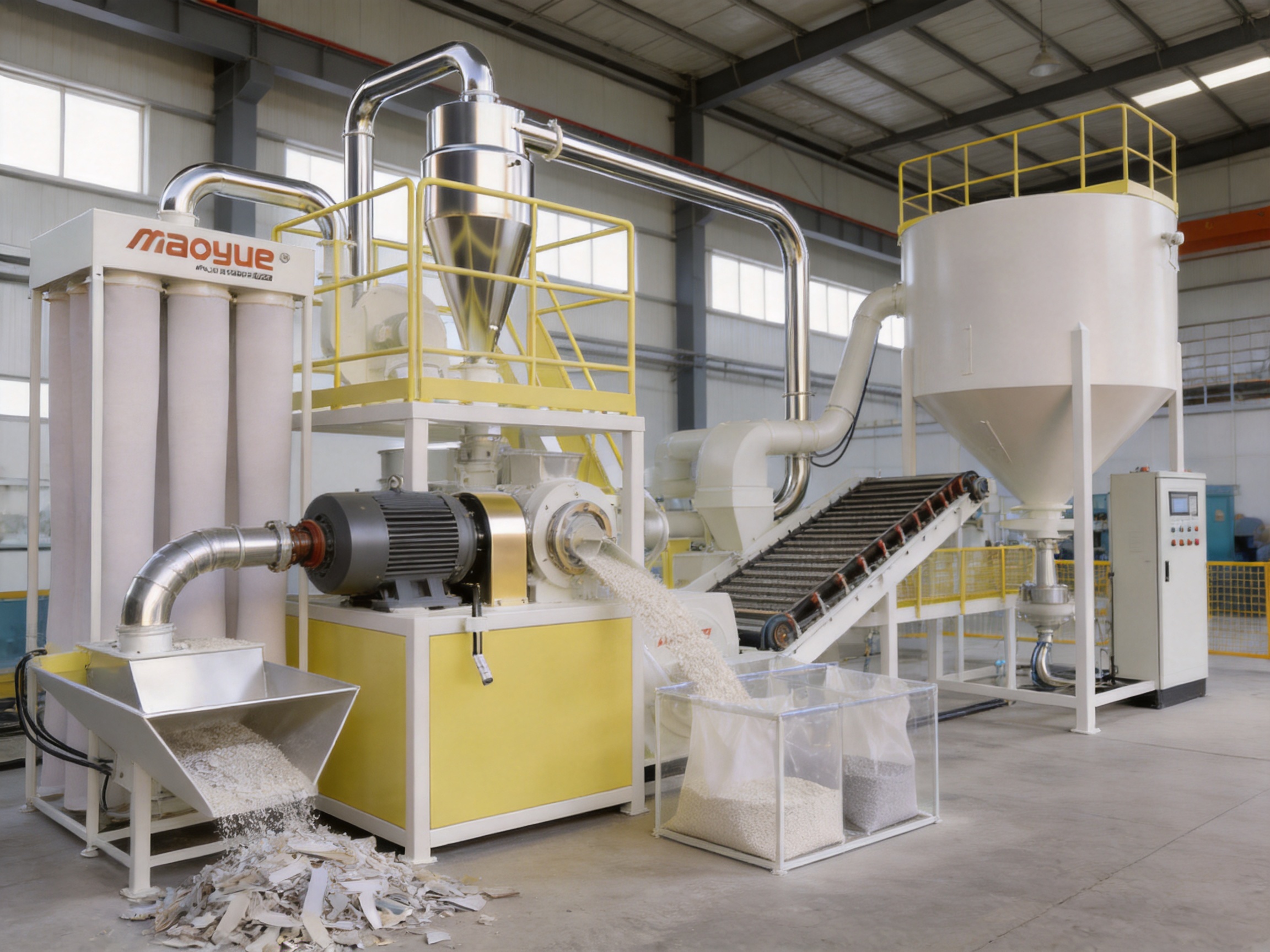
The Model 800 PVC High-Efficiency Energy-Saving Pulverizer is designed for medium-to-large PVC recycling plants, building-material manufacturers, cable recycling companies, and processors producing high-value functional PVC compounds. It combines a heavy-duty grinding chamber, high-wear-resistant alloy discs, controlled cooling, efficient pneumatic conveying, and automated operating functions in one integrated pulverizing system.
For companies handling large volumes of rigid PVC waste, pipe scrap, profile offcuts, cable sheaths, foam-sheet waste, or PVC-based composite materials, pulverizer selection directly affects production capacity, powder consistency, energy consumption, maintenance frequency, and downstream product quality. A machine that produces inconsistent powder or operates at excessive temperature can create problems throughout the entire production line. These problems may include powder agglomeration, thermal degradation, plate adhesion, unstable extrusion, excessive dust, and frequent replacement of wear parts.
The Model 800 is engineered to address these challenges through a larger grinding configuration, a multi-layer shearing structure, water-based cooling, inverter speed control, and industrial-grade auxiliary equipment. Depending on the final configuration, material condition, feed size, target mesh, and operating parameters, the machine can provide a nominal capacity in the range of approximately 400 to 800 kilograms per hour. Its 75 kW drive motor is suitable for demanding continuous-production applications, while the optional configuration range can be adapted for higher throughput requirements.
This article examines the structure, working principle, manufacturing strengths, application advantages, operating considerations, and long-term value of the Model 800 PVC pulverizer.
1. Why PVC Pulverizing Equipment Matters in Modern Recycling
PVC recycling is not simply a matter of reducing large pieces into smaller particles. The pulverizing process determines whether recovered PVC can be reused efficiently in extrusion, calendering, injection molding, compounding, or modification processes. Particle size, particle distribution, powder flowability, thermal history, impurity content, and material uniformity all influence the performance of the final recycled product.
Rigid PVC pipes and profiles, for example, often contain stabilizers, fillers, pigments, impact modifiers, and other additives. Waste construction materials may also carry metal fragments, dust, rubber, wood, labels, and other contaminants. A pulverizer must therefore handle a material stream that is mechanically abrasive and chemically varied.
High-calcium PVC is particularly demanding. Calcium carbonate improves stiffness and cost efficiency, but high filler levels increase abrasion on grinding discs and other contact components. If the grinding system is not properly designed, the discs can wear rapidly, reducing output and changing the powder’s particle distribution.
Temperature management is equally important. PVC is sensitive to excessive heat. Friction generated during high-speed grinding can raise the internal temperature of the grinding chamber. If heat is not removed effectively, the material may soften, stick to the grinding plates, scorch, discolor, or begin to degrade. These issues can cause unstable feeding and create quality problems in downstream processing.
The Model 800 is intended for this type of demanding application. It combines mechanical shearing with a high-flow cooling system and temperature monitoring to maintain more stable pulverizing conditions. As a result, it is suitable for enterprises that need continuous operation rather than intermittent small-batch processing.
2. Product Positioning and Main Performance Profile
The Model 800 occupies the high-capacity range of PVC disc pulverizers. It is positioned above smaller machines designed for limited production and below the largest systems intended for extremely high-volume industrial plants. This makes it a practical upgrade for companies that have outgrown smaller pulverizers but do not require the size, complexity, or investment associated with the largest model category.
Compared with a Model 700-class machine, the Model 800 offers a larger processing structure and substantially higher production potential. Under suitable operating conditions, its output may increase by approximately 50 to 70 percent compared with the 700 model. Actual production depends on the type of PVC, material moisture, feed size, target mesh, filler content, disc condition, cooling performance, and feeding stability.
The standard technical data provided for the equipment includes a 75 kW drive motor, an 11 kW blower motor, a 1.5 kW vibrating-screen motor, inverter-based speed control, high-chromium alloy blades or grinding components, imported NSK bearings, stainless-steel conveying pipes, and water cooling. The listed grinding diameter is approximately 660 millimeters in the stated configuration, while the product is categorized as an 800 model. Because industrial machinery may be supplied in different configurations, buyers should confirm the final disc diameter, motor arrangement, and capacity specification before placing an order.
Item |
Technical Specification |
Application Significance |
Model |
800 |
Designed for medium-to-large PVC production lines |
Drive motor |
75 kW standard configuration |
Provides the power required for high-throughput grinding |
Stated capacity range |
Approximately 400–650 kg/h in the listed configuration; up to approximately 500–800 kg/h depending on configuration and material |
Suitable for continuous industrial production |
Grinding size |
10–50 mesh |
Supports different downstream processing requirements |
Speed control |
Inverter |
Allows adjustment of grinding intensity and output conditions |
Grinding components |
High-chromium alloy |
Improves wear resistance when processing abrasive PVC compounds |
Blower motor |
11 kW |
Supports pneumatic conveying and powder discharge |
Vibrating-screen motor |
1.5 kW |
Separates powder according to the selected size range |
Pipe material |
Stainless steel |
Improves cleanliness, durability, and corrosion resistance |
Cooling method |
Water cooling, inlet and outlet circulation |
Helps control grinding temperature during continuous operation |
Dust collection bag diameter |
300 mm |
Supports powder collection and dust-control integration |
The capacity range should always be understood as a reference rather than a guarantee for every material. PVC pipe scrap that has been pre-crushed to a consistent size may achieve a different output from mixed profile waste containing metal, rubber, or high levels of filler. A finer target mesh also normally reduces throughput because the material must remain in the grinding zone for a longer period.
3. Heavy-Duty Grinding Structure
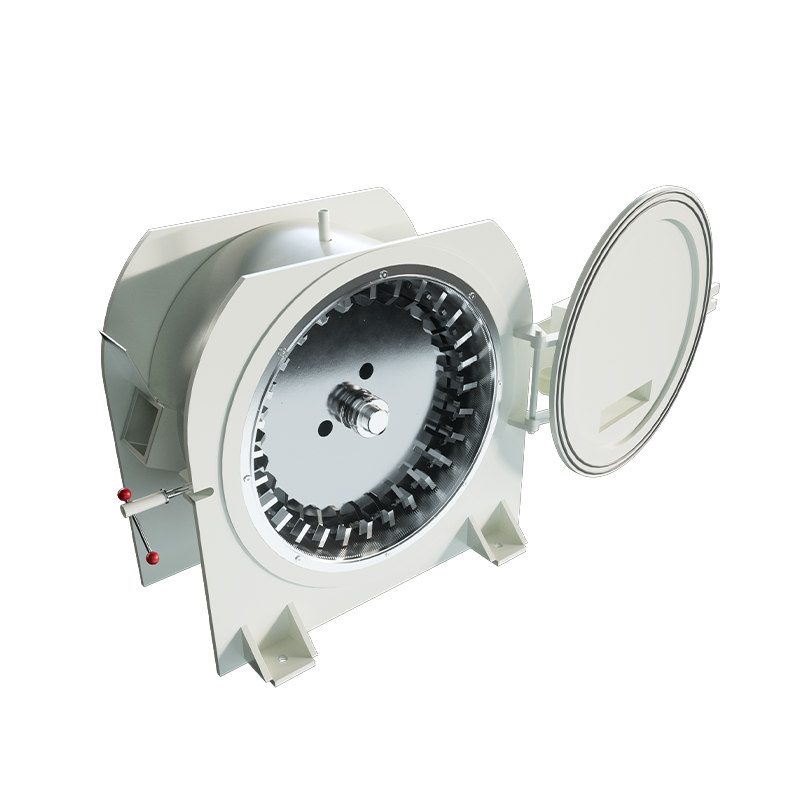
The central advantage of the Model 800 is its heavy-duty multi-layer shearing structure. Instead of relying only on a simple impact action, the grinding chamber uses controlled contact between rotating and stationary high-wear components. Material is progressively broken, sheared, and refined until it reaches the required particle size.
This structure is important for PVC because PVC waste can vary considerably in hardness and geometry. A pipe wall, profile section, cable sheath, and foam sheet do not behave in exactly the same way under grinding. A properly designed shearing configuration helps maintain more consistent reduction across different feed shapes.
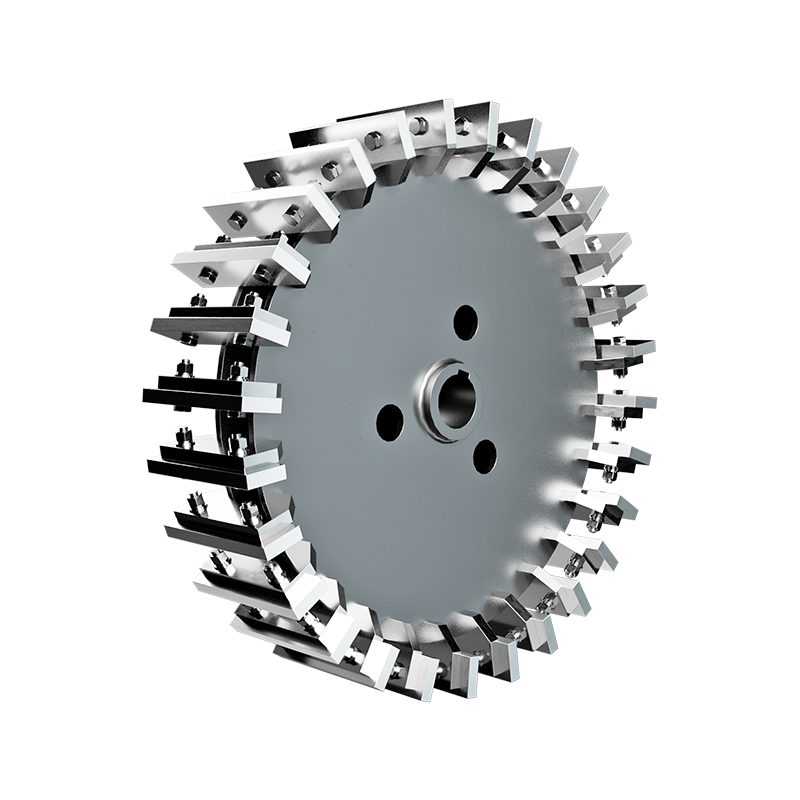
The grinding discs are manufactured from high-chromium alloy or comparable wear-resistant material. This alloy selection is intended to withstand the abrasive action of high-calcium PVC, mineral-filled compounds, and recycled materials containing a moderate level of residual contamination. Under appropriate operation and maintenance, the service life of the grinding components may reach approximately 1,000 to 1,500 hours. Actual service life depends on the filler level, contamination, feed size, operating temperature, disc gap, and maintenance discipline.
A longer wear-part life reduces more than replacement cost. It also helps preserve product consistency. As a grinding disc wears, the clearance and surface geometry may change. This can influence output, energy consumption, particle distribution, and the temperature profile inside the chamber. Durable alloy components help keep the equipment closer to its original operating condition for a longer period.
Compared with lower-cost pulverizers using ordinary materials, the Model 800 is better suited to continuous processing of abrasive PVC streams. A low initial purchase price can become less economical if the machine requires frequent disc replacement, extended downtime, or repeated adjustment to maintain acceptable powder quality.
4. Temperature Control and Protection Against PVC Degradation
Temperature control is one of the most important design priorities in PVC pulverizing. Friction, high rotor speed, insufficient airflow, and excessive feed rate can all raise the material temperature. Once the temperature becomes too high, powder may soften and stick to the grinding disc or chamber wall. This condition can reduce throughput and force operators to stop the machine for cleaning.
The Model 800 uses a dual-loop, high-flow cooling arrangement. Water enters the cooling circuit through one connection and exits through another, allowing heat to be continuously removed from the grinding assembly. This circulating arrangement is more effective than relying on static cooling or occasional manual intervention.
The equipment is also described as having AI-assisted temperature control. In practical terms, intelligent temperature management can monitor operating conditions and assist in adjusting cooling or operating parameters when temperature approaches a preset limit. The exact control functions depend on the supplied automation package, sensors, and customer configuration. Buyers should request a detailed control-system description if automated temperature regulation is a critical requirement.
Effective cooling offers several benefits. It helps reduce the risk of thermal degradation, limits plate adhesion, protects powder color, and supports stable output during long production shifts. It also makes it easier to process PVC materials containing higher levels of filler, provided that the feedstock is properly prepared.
Temperature control must still be supported by correct operation. Operators should avoid overloading the feed system, maintain appropriate disc clearance, keep the cooling water clean, inspect the circulation system regularly, and remove foreign metal objects before they enter the grinding chamber. No cooling system can compensate for severely incorrect feeding or an unsuitable material stream.
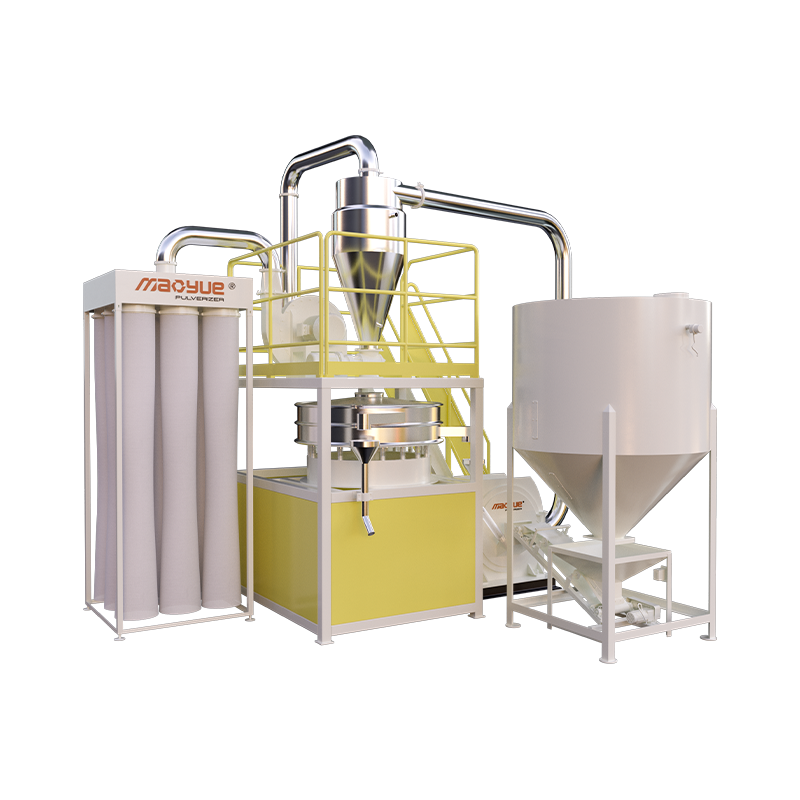
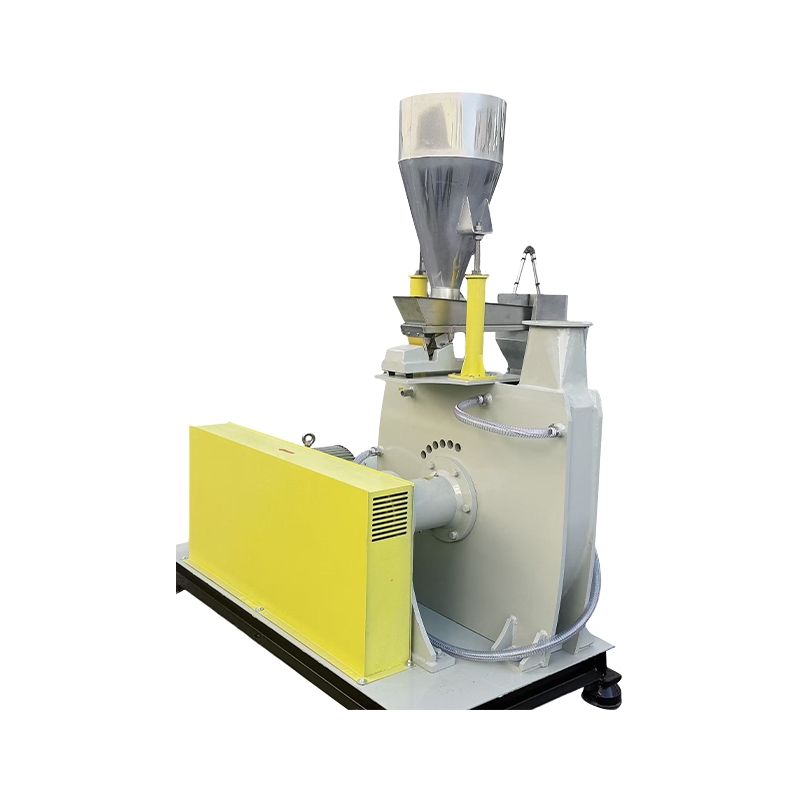
Model 800 PVC High-Efficiency Energy-Saving Pulverizer
5. Energy Efficiency and Production Economics
Energy efficiency in a pulverizing line should not be measured only by the rated motor power. The more useful measurement is energy consumption per kilogram of acceptable powder. A larger motor may consume more power in absolute terms, but a machine with higher throughput and fewer interruptions can use less energy per unit of product than a smaller machine operating near its limit.
The Model 800 is designed around this principle. Its heavy-duty grinding structure allows a large volume of material to pass through the system while maintaining the required size reduction. The high-capacity blower and stable material conveying path help reduce bottlenecks between grinding, screening, and collection.
Inverter speed control is another important energy-management feature. Rather than operating at one fixed speed under every condition, the operator can adjust the motor according to feed material, target mesh, moisture level, and required output. Lower or optimized speed can reduce unnecessary energy consumption and limit heat generation when the material does not require maximum grinding intensity.
The inverter also supports smoother starting and stopping. This can reduce mechanical shock to belts, bearings, shafts, and other drive components. More controlled acceleration may improve equipment life and reduce the electrical stress associated with direct-on-line starting.
For a plant processing 15 to 20 tons of PVC material per day, production continuity is often more valuable than a minor difference in the initial purchase price. A machine that maintains stable operation for extended shifts can reduce labor costs, lower the frequency of unplanned stoppages, and improve planning for downstream extrusion or compounding equipment.
The Model 800 is described as suitable for operation exceeding 16 hours per day when properly installed and maintained. This makes it appropriate for production environments where the pulverizer is expected to serve as a core process rather than a backup or occasional machine.
6. Powder Quality and Particle-Size Control
The Model 800 can be configured to produce powder in a range of approximately 10 to 50 mesh. The appropriate mesh size depends on the downstream process. Coarser powder may be suitable for certain recycling or compounding applications, while finer powder may be preferred for high-quality profiles, sheets, coatings, or functional composite formulations.
Particle-size distribution is often more important than nominal mesh alone. A powder containing too many oversized particles may create feeding problems or visible defects in an extruded product. A powder containing an excessive proportion of fines may increase dust, alter bulk density, or change the behavior of additives and fillers during mixing.
The vibrating screen helps classify the pulverized material. The screen can separate powder according to the selected opening and return or redirect material that does not meet the desired size specification, depending on the complete line design. Stable screening contributes to a more consistent final product and reduces the burden on downstream filtration and mixing equipment.
Uniform powder improves material flow. It can support more stable feeding into extruders, mixers, and compounding systems. In PVC foam-sheet production, consistent powder distribution helps promote more even foaming and wall thickness. In recycled pipe production, it contributes to more predictable melt behavior and improved mechanical consistency.
Powder purity is also important. For premium applications, the supplied product information indicates impurity levels below approximately 80 parts per million in suitable processing conditions. This figure should be verified through a material trial and laboratory testing because impurity performance depends heavily on sorting, metal removal, pre-crushing, cleaning, and the condition of the incoming waste.
7. Integrated Feeding, Conveying, Screening, and Dust Collection
A pulverizer cannot perform efficiently if its supporting equipment is poorly matched. For this reason, the Model 800 is supplied as part of an integrated process arrangement rather than as an isolated grinding chamber alone.
The listed feeding method includes iron-removal tie feeding. This indicates that the material-feeding section can be configured to support the removal of ferrous metal contaminants before they reach the grinding components. Metal removal is essential when processing construction waste, cable scrap, and post-consumer PVC because even a small metal fragment can damage the grinding discs or create an unplanned shutdown.
Stainless-steel conveying pipes are used in the powder-transfer section. Stainless steel offers good resistance to corrosion and helps maintain a cleaner conveying environment. It is also easier to inspect and clean than many ordinary carbon-steel alternatives, particularly when the line handles fine powder over long operating periods.
The 11 kW blower provides the airflow needed to move pulverized material from the grinding chamber toward the screening and collection sections. Stable pneumatic conveying can help prevent material accumulation inside the pipe and maintain a continuous flow through the line.
Dust collection is another important part of the system. Fine PVC powder can become airborne during discharge, screening, bag filling, or maintenance. A properly sized dust collector helps protect the working environment, reduce material loss, and maintain better housekeeping. The listed dust-collector bag diameter is 300 millimeters, although the complete dust-collection capacity should be selected according to the number of machines, airflow rate, powder properties, and local environmental requirements.
An effective dust-control system should include appropriate ducting, sealed transfer points, regular filter cleaning, and safe disposal or recovery procedures. Operators should also follow local requirements for combustible dust, ventilation, static control, and personal protective equipment.
8. Applications in PVC Pipe and Profile Recycling
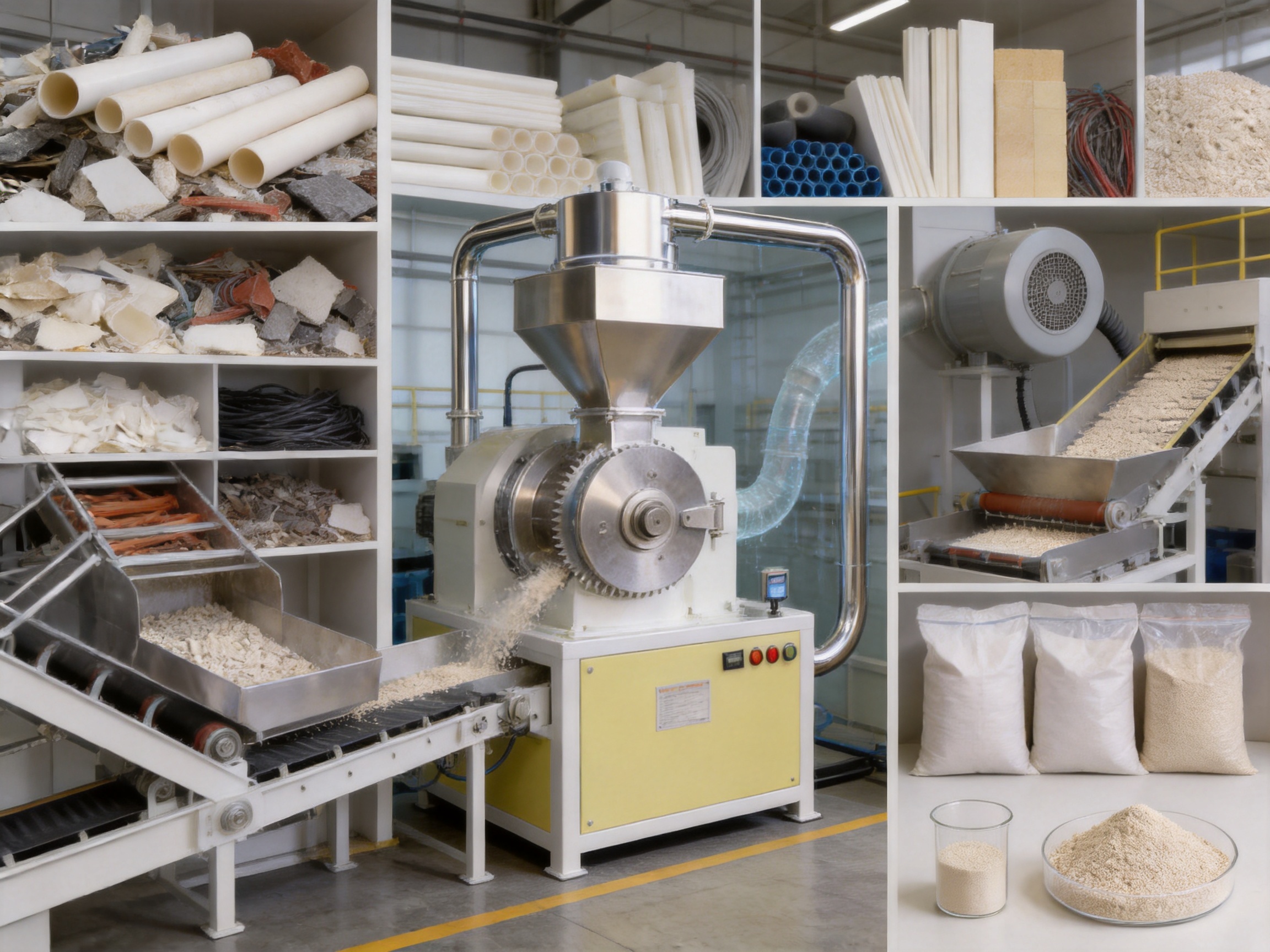
Large-scale PVC pipe and profile recycling is one of the main application areas for the Model 800. Construction and demolition activities generate large quantities of discarded pipes, window profiles, door sections, siding, and other rigid PVC products. These materials often have high residual value if they can be processed into clean, uniform powder.
Before pulverizing, the material should be sorted to remove non-PVC items, elastomeric seals, screws, concrete residue, wood, and other contaminants. A pre-crusher or shredder can reduce long pipes and profile sections to a size suitable for stable feeding. Magnetic separation and manual inspection can further protect the pulverizer.
Once prepared, the material enters the grinding chamber, where the multi-layer shearing structure reduces it into powder. The cooling system helps maintain stable temperature even during long processing cycles. The screening section then classifies the powder, while the blower transfers it to the collection system.
The resulting PVC powder can be used in recycled pipe, profile, construction board, and other extrusion products, depending on its composition and quality. Uniform particle size helps downstream mixers achieve better dispersion of stabilizers, pigments, impact modifiers, and additional fillers.
For a large recycling plant, the ability to process approximately 15 to 20 tons per day can help overcome the capacity limitations commonly associated with smaller disc pulverizers. The actual daily output will depend on operating hours, feed preparation, machine configuration, and the proportion of material that must be rejected or reprocessed.
9. Applications in PVC Foam and Sheet Production
PVC foam sheets, decorative panels, thick-walled boards, and related building products require stable powder preparation. Inconsistent particle size can affect melt uniformity, cell formation, surface quality, and final mechanical performance.
The Model 800 is suited to powder preparation for medium-to-large extrusion and calendering lines. Its output can provide the narrow particle-size distribution and flowability needed for stable mixing. When the powder is properly classified and free from excessive contamination, it can support uniform feeding and more consistent thermal processing.
For foamed products, temperature control is especially important. Overheated or partially degraded PVC powder may contribute to color variation, poor cell structure, surface defects, and unstable processing. The circulating water-cooling system helps reduce the likelihood of excessive heat accumulation during high-output operation.
Large building-material manufacturers may also use the machine as part of a closed-loop production system. Waste trim, rejected sheets, and production offcuts can be pulverized and returned to a controlled formulation. This reduces waste-disposal costs and can lower the consumption of virgin resin, provided that the recycled material is compatible with the product specification.
10. Applications in Cable and Wire Recycling
PVC cable sheaths and wire scrap can contain high levels of filler and may be difficult to process consistently. The material often comes in irregular shapes and may include traces of copper, aluminum, rubber, insulation compounds, or other polymers.
Metal separation is essential before pulverizing. The Model 800 should be integrated with appropriate stripping, granulation, screening, and magnetic or eddy-current separation equipment when processing cable waste. The cleaner the feedstock, the longer the grinding components will last and the more uniform the final powder will be.
For suitable PVC cable-sheath material, the pulverizer can produce powder with good dispersion characteristics. This powder may be reused in recycled cable compounds or other PVC products after testing for ash content, metal contamination, plasticizer composition, and electrical performance.
Stable powder quality can improve the flowability of recycled cable compounds. It can also support better electrical stability when the material is used in applications where insulation performance is important. However, cable recycling should always include laboratory verification because different cable formulations can contain significantly different additives and plasticizers.
11. Functional Modification and High-Value PVC Compounds
The Model 800 is also suitable for producing PVC-based powders for functional modification. These applications may involve flame-retardant profiles, impact-resistant products, weather-resistant building materials, automotive interior components, electronic enclosures, and chemical-resistant parts.
In these applications, the pulverizer is not merely producing low-cost filler material. It is helping prepare a consistent raw material for a controlled formulation. Particle size, purity, flowability, and thermal history can all affect the performance of the final modified compound.
A uniform powder can help distribute flame retardants, impact modifiers, pigments, stabilizers, and reinforcing agents more evenly during mixing. It can also reduce variation in melt behavior during injection molding or extrusion.
The supplied product information identifies several target properties for premium applications, including high powder purity, consistent particle size, and limited melt-index variation. These properties should be evaluated through customer-specific trials because the final performance depends on the resin source, additive formulation, mixing sequence, and downstream processing temperature.
12. Comparison with Smaller and Larger Pulverizer Models
The Model 800 is designed to occupy a practical position between lower-capacity and larger industrial pulverizers. Understanding this position helps buyers select equipment according to actual production requirements rather than choosing solely by motor size or nominal disc diameter.
Comparison with a Model 700
Compared with a 700-class pulverizer, the Model 800 provides greater processing capacity, a more industrialized structure, and stronger suitability for long continuous shifts. The 700 may be appropriate for smaller plants, moderate daily volumes, or applications where floor space and investment are restricted. The Model 800 becomes more attractive when the smaller machine is creating a production bottleneck.
The larger machine can reduce the number of parallel units required to reach a target output. It may also reduce labor associated with operating, cleaning, and maintaining multiple smaller machines. However, it requires more electrical capacity, stronger supporting infrastructure, and a higher initial investment.
Comparison with an 850-class machine
An 850-class pulverizer may provide still greater capacity or a larger grinding structure, but the associated investment, installation requirements, and operating complexity can also increase. The Model 800 offers a balance between industrial capacity and manageable operation.
For many medium-to-large plants, the Model 800 may be easier to integrate into an existing line than a larger model. It can offer sufficient capacity for daily production targets without requiring the same level of building modification, electrical upgrading, or operator training.
Evaluation Factor |
Smaller Pulverizer |
Model 800 |
Larger Industrial Pulverizer |
Typical use |
Small or medium production |
Medium-to-large continuous production |
Very high-volume industrial production |
Investment level |
Lower |
Medium to high |
High |
Capacity potential |
Limited to moderate |
Approximately 400–800 kg/h depending on configuration |
Very high, subject to specific design |
Operating complexity |
Relatively simple |
Industrial but manageable |
More complex integration and controls |
Best fit |
Flexible or lower-volume applications |
Plants seeking a capacity upgrade |
Large centralized production facilities |
13. Advanced Manufacturing Processes
Machine performance depends not only on the design drawing but also on the accuracy and consistency of manufacturing. Grinding equipment must maintain alignment, balance, dimensional accuracy, and structural rigidity under high-speed operation. Small manufacturing errors can create vibration, uneven wear, excess noise, or unstable powder quality.
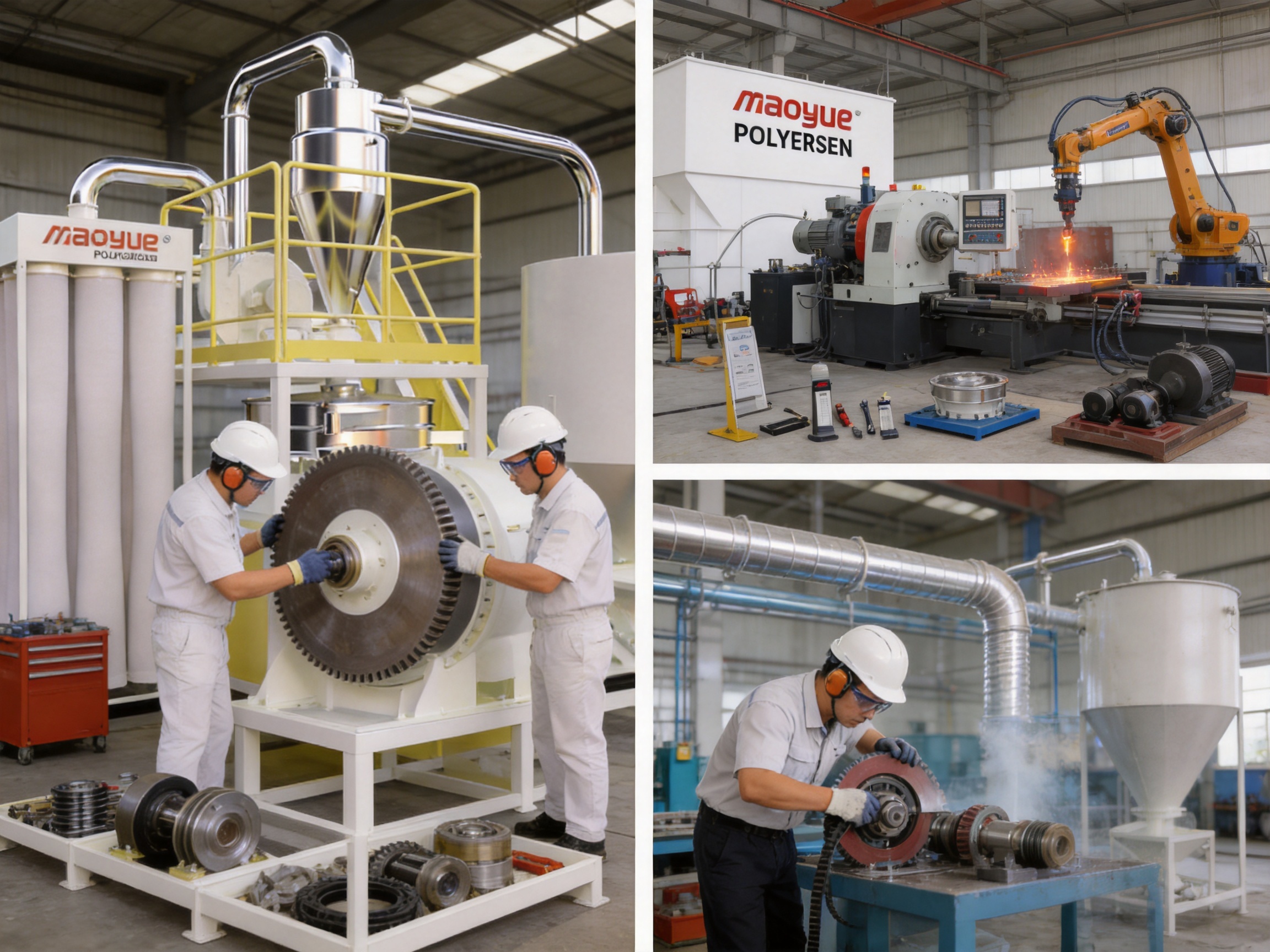
Changzhou Mao Yue Intelligent Equipment Co., Ltd. manufactures plastic crushing and pulverizing equipment using a combination of precision machining, dynamic balancing, specialized welding, and quality-control procedures. The company operates six processing workshops, with each workshop averaging approximately 1,400 square meters. This production scale supports the manufacture of machine bodies, grinding components, conveying sections, screening systems, and other auxiliary equipment.
The factory uses high-precision grinding machines imported from Taiwan and built according to German-oriented manufacturing standards. Precision grinding is especially important for the working surfaces of pulverizer discs. Accurate surfaces help maintain the intended clearance and reduce localized contact that could increase temperature or accelerate wear.
German dynamic balancing equipment is used to help balance rotating parts. Dynamic balancing is essential for high-speed pulverizers because an imbalanced rotor can generate vibration, noise, bearing load, and fatigue in the machine frame. Proper balancing contributes to smoother operation and longer service life.
Japanese welding systems are used in the manufacturing process for structural and conveying components. Consistent welding helps control dimensional distortion and improves the strength of the machine frame, pipes, hoppers, and other fabricated parts. Stronger structures also support more effective vibration damping.
The company’s technical team regularly studies advanced machinery technology from Germany and other industrial markets. This ongoing technical development supports improvements in grinding geometry, material selection, automation, cooling, and line integration.
14. Structural Stability, Vibration Control, and Noise Reduction
High-speed rotating equipment naturally generates vibration. If vibration is not properly controlled, it can reduce bearing life, loosen fasteners, damage foundations, and create uncomfortable working conditions. It may also indicate that the rotor, grinding discs, or drive system are not correctly aligned or balanced.
The Model 800 incorporates industrial-grade vibration damping. A rigid frame, correctly balanced rotating assembly, suitable bearings, and appropriate foundation design work together to control vibration. The machine uses imported NSK bearings in the listed configuration, providing a recognized component choice for demanding rotating applications.
Noise control is also addressed through low-noise fans and an industrial structural design. The operating noise level is stated as below 88 dB under the relevant conditions. Actual noise at the operator position depends on the complete line, building acoustics, material feed, airflow, and distance from the machine. Hearing protection and local occupational-noise controls should be applied where required.
Reduced vibration and noise benefit both equipment reliability and operator comfort. A stable machine is easier to inspect, and unusual changes in sound or vibration can be identified earlier as possible signs of wear, imbalance, blockage, or bearing problems.
15. Quality, Certification, and Technical Support
The manufacturer has more than 30 years of experience in plastic crushing and pulverizing equipment. Its product range is used in rotational molding, masterbatch production, polymer processing, PVC and PE recycling, and powder-coating applications.
The company has established partnerships with more than 5,000 enterprises in domestic and international markets. This customer base reflects experience in supplying equipment for different materials, production scales, and plant layouts.
CE mechanical certification and ISO 9001 quality management system certification support the company’s focus on product safety and manufacturing consistency. Certification does not eliminate the need for site-specific risk assessment, installation review, or operator training, but it provides an important foundation for international equipment procurement.
As a source manufacturer, the company can support customized solutions rather than offering only a fixed machine package. Customization may involve feeding systems, dust collection, cooling arrangements, screen specifications, pipe layouts, electrical standards, material-contact surfaces, and integration with upstream shredders or downstream mixers.
Technical support is especially important for PVC pulverizing because the correct configuration depends on the customer’s material. Before finalizing a system, buyers should provide information about material type, bulk density, moisture, filler content, contamination, feed size, target mesh, expected hours of operation, and required daily output.
16. Installation and Commissioning Considerations
A high-capacity pulverizer should be installed on a stable foundation capable of supporting the machine and controlling vibration. The installation area should provide sufficient space for inspection, cleaning, disc replacement, screen maintenance, belt adjustment, and safe material handling.
Electrical supply must be matched to the drive motor, blower, vibrating screen, cooling controls, dust collector, and auxiliary equipment. The plant should verify voltage, frequency, starting current, protection devices, grounding, cable sizing, and control-panel requirements before installation.
The water-cooling system requires clean water, suitable flow, proper inlet and outlet connections, and regular inspection for leaks or blockage. If the plant uses recycled cooling water, filtration and water-quality control may be necessary to prevent deposits inside the cooling circuit.
Commissioning should begin with a no-load inspection. Operators should check rotation direction, belt tension, bearing temperature, vibration, electrical readings, cooling flow, screen movement, and blower operation. Material should then be introduced gradually while the team monitors amperage, product temperature, output, and powder quality.
The first production trial should use a known and relatively clean PVC feedstock. This allows operators to establish a baseline before processing more abrasive or contaminated material. Trial results should be recorded so that future changes in disc clearance, inverter frequency, feed rate, and cooling flow can be made systematically.
17. Maintenance and Wear-Part Management
Preventive maintenance is necessary to obtain the expected service life from the Model 800. Daily inspections should include abnormal noise, vibration, bearing temperature, water leakage, dust leakage, screen condition, pipe blockage, and changes in powder quality.
Grinding discs and high-wear components should be inspected according to operating hours and material conditions. They should be replaced or refurbished when wear begins to affect capacity, particle size, temperature, or energy consumption. Waiting until severe wear occurs can increase the risk of damage to other components.
Bearings should be lubricated according to the manufacturer’s specified interval and lubricant type. Over-lubrication can be as harmful as insufficient lubrication because it may cause heat accumulation or seal damage. Belts should be checked for alignment, tension, cracking, and contamination.
The cooling circuit should be kept clean and free from scale. Filters, pumps, valves, and hoses should be inspected regularly. If the water flow falls below the required level, the machine should be stopped or operated at a reduced load until the problem is corrected.
Dust-collection bags and filters must be cleaned or replaced as needed. A blocked filter can reduce airflow, increase dust leakage, and affect the conveying capacity of the blower. Maintenance personnel should isolate electrical and mechanical energy before opening the grinding chamber or entering any restricted maintenance area.
18. Safety Requirements
Only trained personnel should operate the pulverizer. Operators must understand the emergency-stop system, start-up sequence, shutdown sequence, and procedures for clearing blockages. Hands, tools, clothing, and loose materials must never be placed near rotating components while the machine is energized.
Metal and other hard foreign objects should be removed before feeding. Magnetic separation, manual sorting, and suitable upstream equipment can significantly reduce the risk of damage. If unusual vibration, impact noise, smoke, burning odor, or sudden output reduction occurs, the machine should be stopped and inspected.
PVC dust should not be allowed to accumulate around motors, electrical cabinets, ducts, or working platforms. Proper ventilation, dust collection, housekeeping, and personal protective equipment are essential. Depending on local regulations and the material formulation, the plant may also need to evaluate combustible-dust risks and static-electricity control.
Safety guards should remain installed during operation. Interlocks, emergency stops, and protective devices should be tested periodically. Maintenance should be performed only after the machine has fully stopped and all relevant energy sources have been isolated.
19. How to Select the Correct Configuration
Although the Model 800 is a standardized product category, the best configuration depends on the intended application. A buyer should not evaluate the machine only by its nominal model number.
Material type
Clean rigid PVC pipe may require a different setup from mixed profile waste, cable sheath, foam sheet, or high-calcium compound. Material hardness, filler content, plasticizer level, and contamination all affect wear and output.
Required capacity
Capacity should be calculated from both hourly demand and daily production. A plant requiring 15 tons per day may need a different operating schedule from one requiring 20 tons per day. It is advisable to leave capacity margin for maintenance, material variation, and future growth.
Target mesh
Finer powder normally requires more grinding energy and may reduce throughput. The customer should identify the particle-size specification required by the downstream process rather than selecting the finest available setting automatically.
Feed preparation
Feed size has a direct impact on output. An upstream crusher, shredder, or granulator may be necessary for long pipes, large profiles, or compacted waste. Stable feeding generally produces better results than attempting to process oversized or irregular pieces directly.
Cooling and environmental conditions
Plants operating in hot climates or processing materials with high filler content may require enhanced cooling capacity. Water temperature, available flow, ambient temperature, and ventilation should be considered during system design.
Dust collection
The dust collector must be sized for the complete line. It should be capable of handling the airflow generated by the blower and the amount of fine powder created at the selected mesh. Sealed transfer points and suitable filter media are also important.
20. Return on Investment
The economic value of the Model 800 comes from the combination of output, reliability, product quality, and wear-part life. A machine with a higher purchase price may provide a better long-term return if it processes more material per hour, operates for longer shifts, and requires fewer stoppages.
Key factors in a return-on-investment analysis include usable output, electricity consumption per kilogram, labor requirements, wear-part cost, maintenance downtime, rejected material, powder selling price, and the value of recycled feedstock. The cost of upstream sorting and downstream mixing should also be included because the pulverizer is part of a complete process line.
For a plant facing a capacity bottleneck, the Model 800 may increase revenue by allowing more waste material to be processed and more recycled powder to be supplied to downstream production. For a manufacturer using internal scrap, the benefit may appear as lower disposal costs and reduced virgin-material consumption.
The most reliable calculation should be based on a customer-specific material trial. Trial data can establish actual capacity, energy consumption, powder temperature, screen performance, and wear behavior. These results provide a stronger basis for investment decisions than general catalog values alone.
21. Questions and Answers
Q1: What materials can the Model 800 process?
The machine is primarily intended for PVC materials, including rigid pipes, profiles, construction scrap, foam-sheet waste, decorative-panel waste, cable sheaths, wire-scrap insulation, and PVC-based compounds. Materials should be sorted and prepared before feeding. Non-PVC materials, excessive metal, rubber, wood, and concrete contamination should be removed.
Q2: What is the production capacity?
The stated capacity depends on the configuration and feed material. The listed technical data gives approximately 400 to 650 kilograms per hour, while the broader product description identifies a potential range of approximately 500 to 800 kilograms per hour. Actual output depends on feed size, target mesh, filler content, temperature, disc condition, and feeding stability. Final capacity should be confirmed through a material trial.
Q3: What motor power is used?
The listed standard drive motor is 75 kW. Some configurations or application requirements may use a different motor arrangement. The complete line also includes an 11 kW blower motor and a 1.5 kW vibrating-screen motor.
Q4: What particle size can the machine produce?
The stated range is approximately 10 to 50 mesh. The final particle-size distribution depends on screen selection, grinding-disc condition, operating speed, and material characteristics.
Q5: How does the machine prevent PVC from sticking to the grinding plates?
The machine uses water cooling with circulating inlet and outlet flow, together with temperature monitoring and control. These functions help limit heat accumulation during grinding. Correct feed rate, suitable disc clearance, clean cooling water, and regular maintenance are also necessary to prevent adhesion.
Q6: How long do the grinding discs last?
The product information indicates a potential service life of approximately 1,000 to 1,500 hours for high-wear-resistant alloy grinding components. Actual life depends on high-calcium content, contamination, feed size, operating speed, temperature, and maintenance.
Q7: Is the machine suitable for continuous operation?
Yes. The industrial design, vibration damping, cooling system, durable grinding components, and low-noise fan arrangement are intended for extended operation, including production schedules exceeding 16 hours per day when the machine is correctly installed and maintained.
Q8: Can the Model 800 process cable waste?
It can process suitable PVC cable sheaths and insulation materials after metal separation and appropriate preparation. Copper, aluminum, steel, rubber, and other contaminants must be removed or controlled to protect the grinding system and maintain powder quality.
Q9: Does the machine include dust collection?
The listed configuration includes a dust-collection arrangement with a 300-millimeter bag diameter. The complete dust-collection system should be selected according to the airflow, number of machines, powder characteristics, local regulations, and required environmental performance.
Q10: What makes this machine different from a low-cost pulverizer?
The main differences include the heavy-duty multi-layer shearing structure, high-chromium alloy grinding components, inverter speed control, circulating water cooling, industrial vibration damping, imported bearings, stainless-steel conveying pipes, and integration with screening and dust collection. These features are intended to improve output stability, wear resistance, powder quality, and long-term operating value.
Q11: Can the equipment be customized?
Yes. Customization may include the feeding system, iron-removal equipment, cooling arrangement, screen specification, dust collector, conveying layout, electrical standard, and connection to upstream or downstream machinery. The final design should be based on the customer’s material and production requirements.
Q12: What information should be provided before requesting a quotation?
The buyer should provide the material type, photographs or samples, approximate composition, filler content, moisture, contamination, feed size, target mesh, hourly capacity, daily production, operating hours, electrical standard, available water supply, and required layout. This information helps the manufacturer recommend a suitable configuration.
22. Final Assessment
The Model 800 PVC High-Efficiency Energy-Saving Pulverizer is a practical solution for companies seeking a significant upgrade in PVC powder production. It is designed for high-volume applications where stable operation, controlled temperature, wear resistance, and consistent powder quality are more important than the lowest initial purchase price.
Its principal strengths include a heavy-duty multi-layer grinding structure, high-chromium alloy wear parts, inverter speed control, dual-loop water cooling, automated temperature assistance, integrated conveying and screening, vibration damping, and industrial manufacturing quality. These features make it suitable for PVC pipe and profile recycling, foam-sheet production, cable-sheath recycling, building-material manufacturing, and functional composite-powder preparation.
The machine is particularly well matched to medium-to-large plants processing approximately 15 to 20 tons of material per day. It provides a middle position between smaller pulverizers that may create capacity bottlenecks and larger machines that require higher investment and more complex operation.
For the best result, the pulverizer should be evaluated as part of a complete processing line. Feed preparation, metal separation, cooling-water quality, dust collection, screening, operator training, and preventive maintenance all influence final performance. A customer-specific material test remains the most reliable way to confirm capacity, powder quality, energy consumption, and wear behavior.
With appropriate configuration and disciplined operation, the Model 800 can help PVC processors increase output, improve recycled-powder consistency, reduce unplanned downtime, and create greater value from difficult industrial and post-consumer PVC waste streams.
References
1. Product technical information for the Model 800 PVC High-Efficiency Energy-Saving Pulverizer, supplied by the manufacturer.
2. Manufacturer information regarding plastic crushing, pulverizing, recycling, and powder-processing equipment.
3. ISO 9001 quality management system principles for industrial manufacturing and process control.
4. General engineering principles for disc pulverizer design, dynamic balancing, wear-resistant alloys, and pneumatic powder conveying.
5. General technical guidance for PVC recycling, particle-size control, thermal management, dust collection, and industrial equipment safety.
6. General industry practices for the recycling of PVC pipes, profiles, cable sheaths, foam sheets, and construction-material waste.