

 English
 русский
 Español
 عربى
عربى 中文简体
中文简体
 中文简体
中文简体
Content
- 1 Introduction
- 2 What the 500PA/PP Pulverizer Is Designed to Do
- 3 Core Technical Configuration
- 4 Ambient-Temperature Grinding Without Routine Liquid Nitrogen
- 5 Grinding Disc Engineering and Wear Resistance
- 6 Temperature Control and Process Stability
- 7 Particle Size, Screening, and Powder Uniformity
- 8 Integrated Feeding, Conveying, and Dust Collection
- 9 Advantages Compared with Conventional Competitor Solutions
- 9.1 Reduced Dependence on Cryogenic Consumables
- 9.2 More Complete Process Integration
- 9.3 Adaptability for Multiple Materials
- 9.4 Wear Management for Reinforced Plastics
- 9.5 Compact Power and Factory Compatibility
- 9.6 Focus on Powder Quality Rather Than Only Throughput
- 9.7 Lower Noise and Better Operating Environment
- 10 Applications in PA Engineering Plastic Recycling
- 11 Applications in PP Film and Injection-Part Recycling
- 12 Masterbatch and Powder-Coating Uses
- 13 Laboratory and Research Applications
- 14 Manufacturing Strengths and Quality-Control Capabilities
- 15 Engineering Support and Customization
- 16 Operating Procedure and Best Practices
- 17 Maintenance and Total Cost of Ownership
- 18 Environmental and Workplace Considerations
- 19 How to Select the Right Configuration
- 20 Why This Model Fits Small and Medium-Sized Factories
- 21 Quality Verification Before Commercial Operation
- 22 Frequently Asked Questions
- 22.1 Can the machine grind PA and PP without liquid nitrogen?
- 22.2 What capacity can users expect?
- 22.3 What powder size can be produced?
- 22.4 Is the pulverizer suitable for glass-fiber-reinforced PA?
- 22.5 How does the machine reduce PP melting and adhesion?
- 22.6 Does the machine include screening?
- 22.7 What starting and speed-control methods are available?
- 22.8 What materials are used for the conveying pipes?
- 22.9 Is vacuum feeding included?
- 22.10 How often must the grinding disc be replaced?
- 22.11 Can the machine be used for laboratory trials?
- 22.12 What should be checked before purchasing?
- 23 Conclusion
- 24 References
- 25 Product: 500PA/PP Ambient Temperature Grinder Requires No Liquid Nitrogen
Introduction
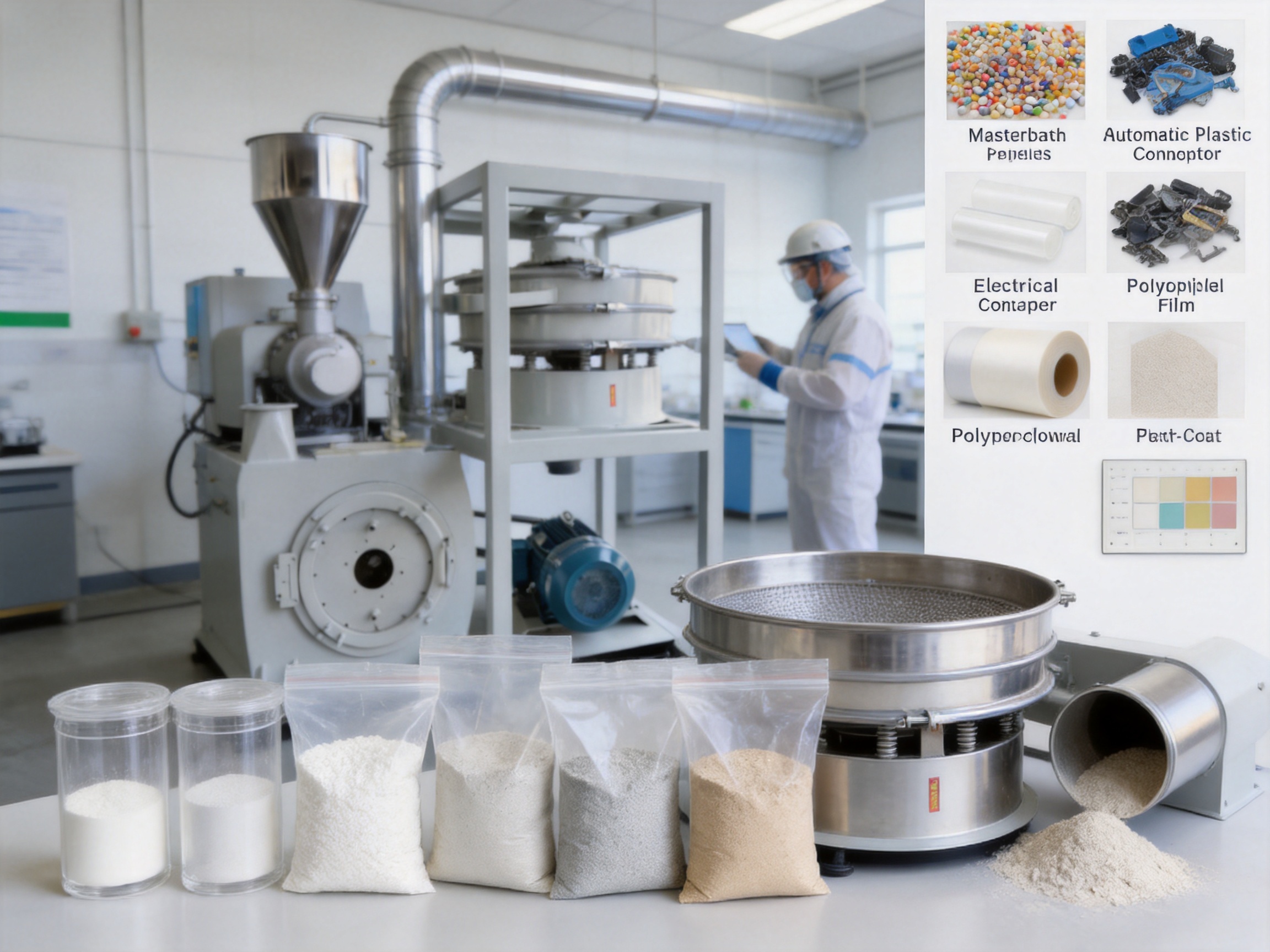
Plastic recycling is moving beyond simple size reduction. Modern processors increasingly require powders with controlled particle size, stable flowability, low contamination, and consistent thermal history. These requirements are especially important when processing engineering plastics such as polyamide and polypropylene waste. Automotive components, electrical connectors, packaging films, injection-molding scraps, cable coverings, textile waste, and powder-coating materials must often be converted into a uniform powder before they can be reused in compounding, masterbatch production, molding, coating, or research applications.
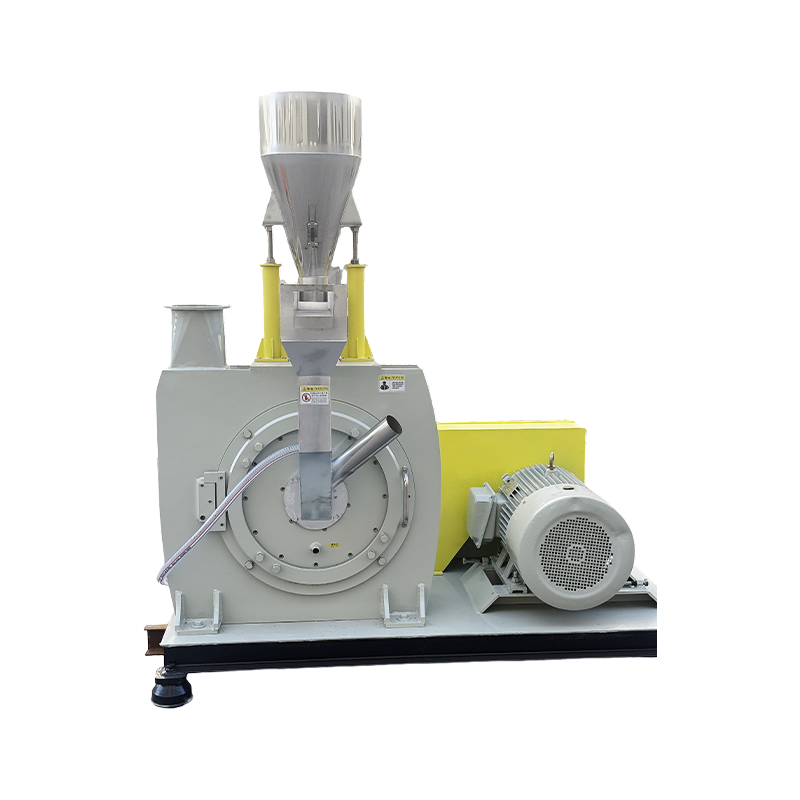
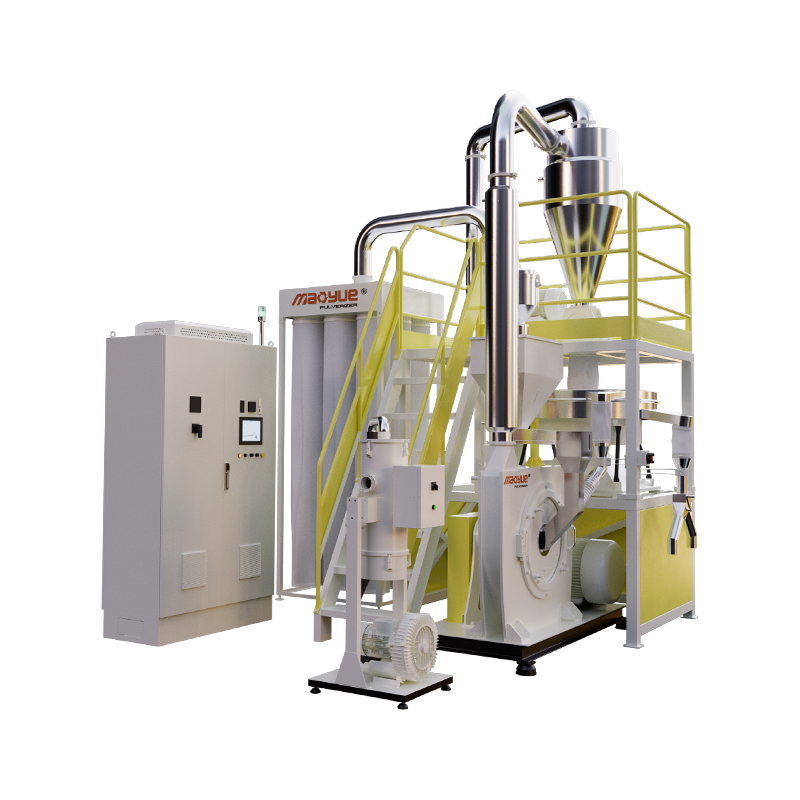
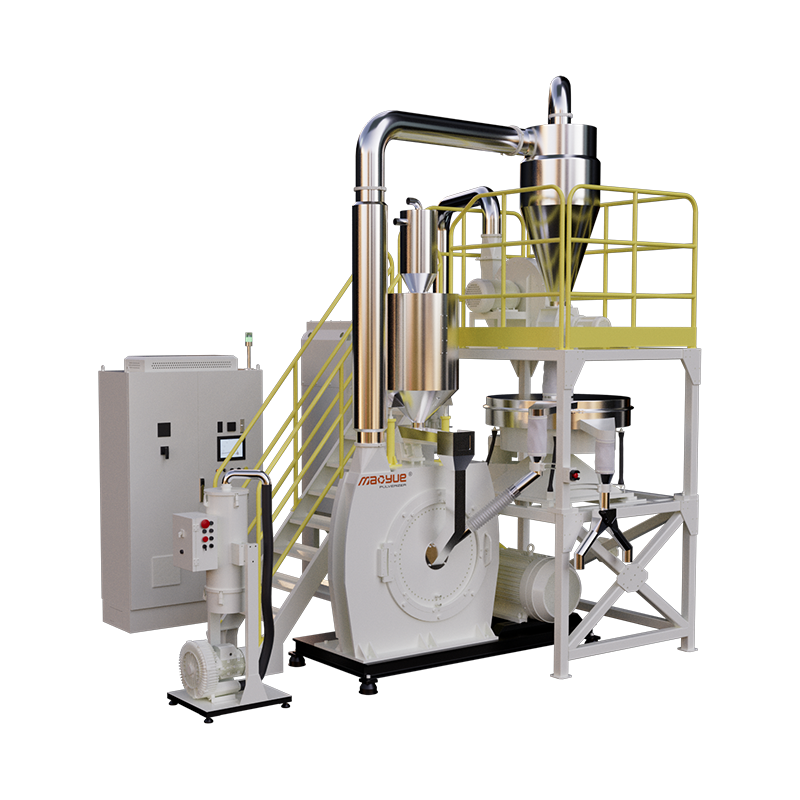
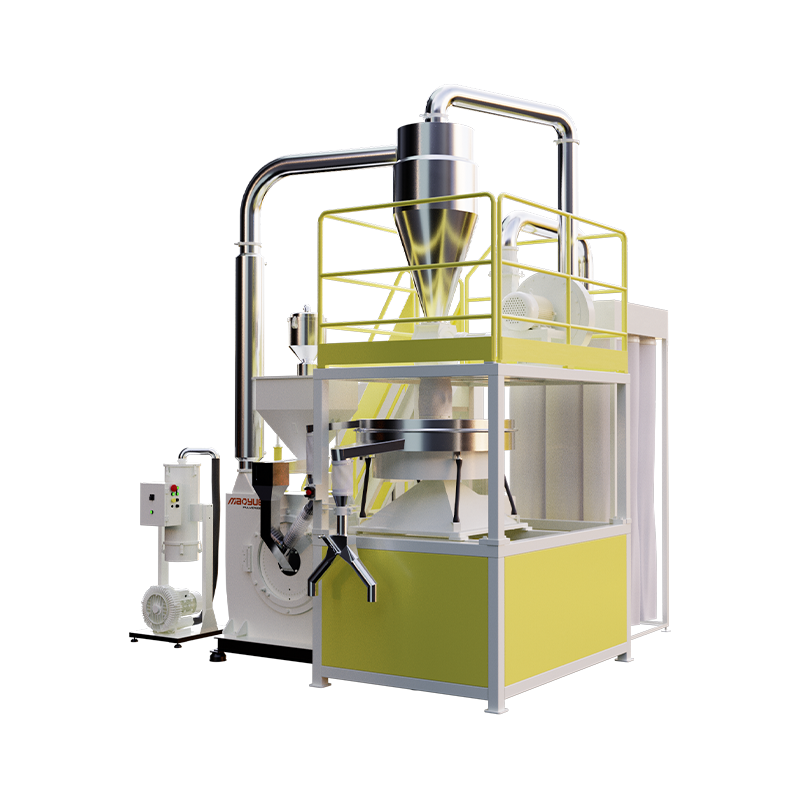
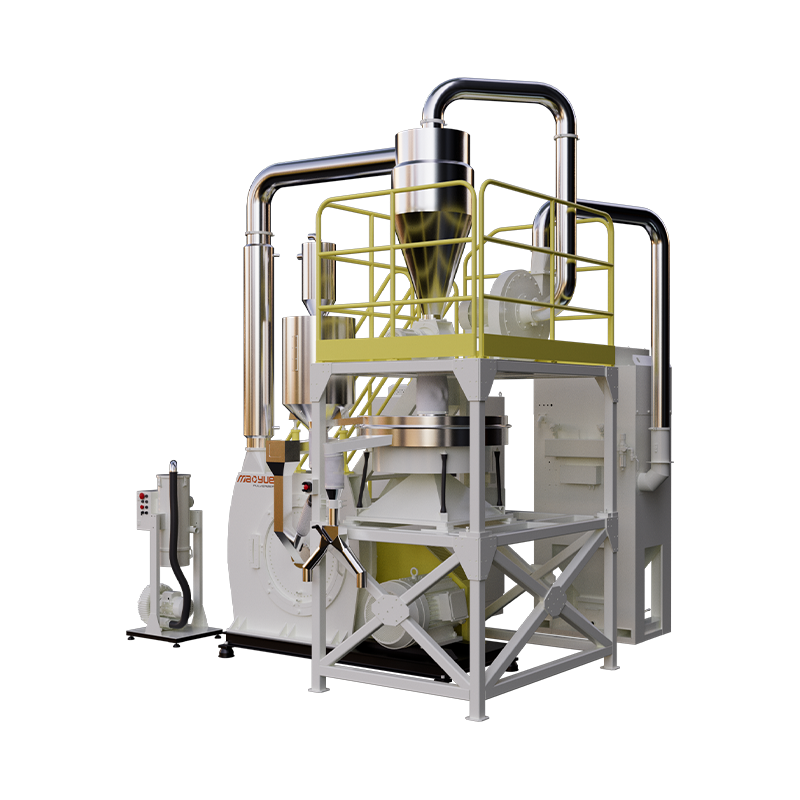
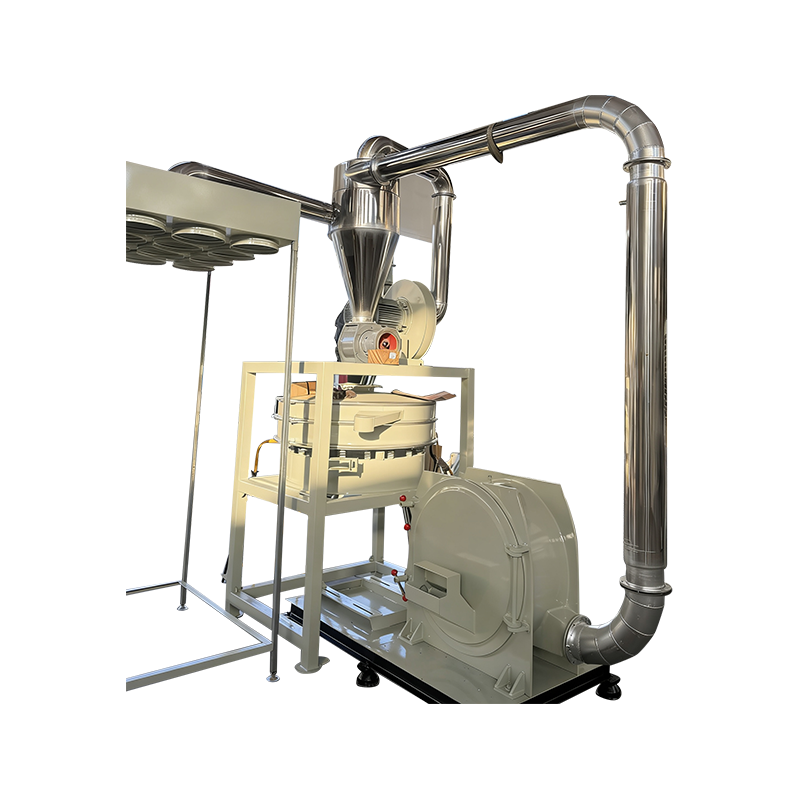
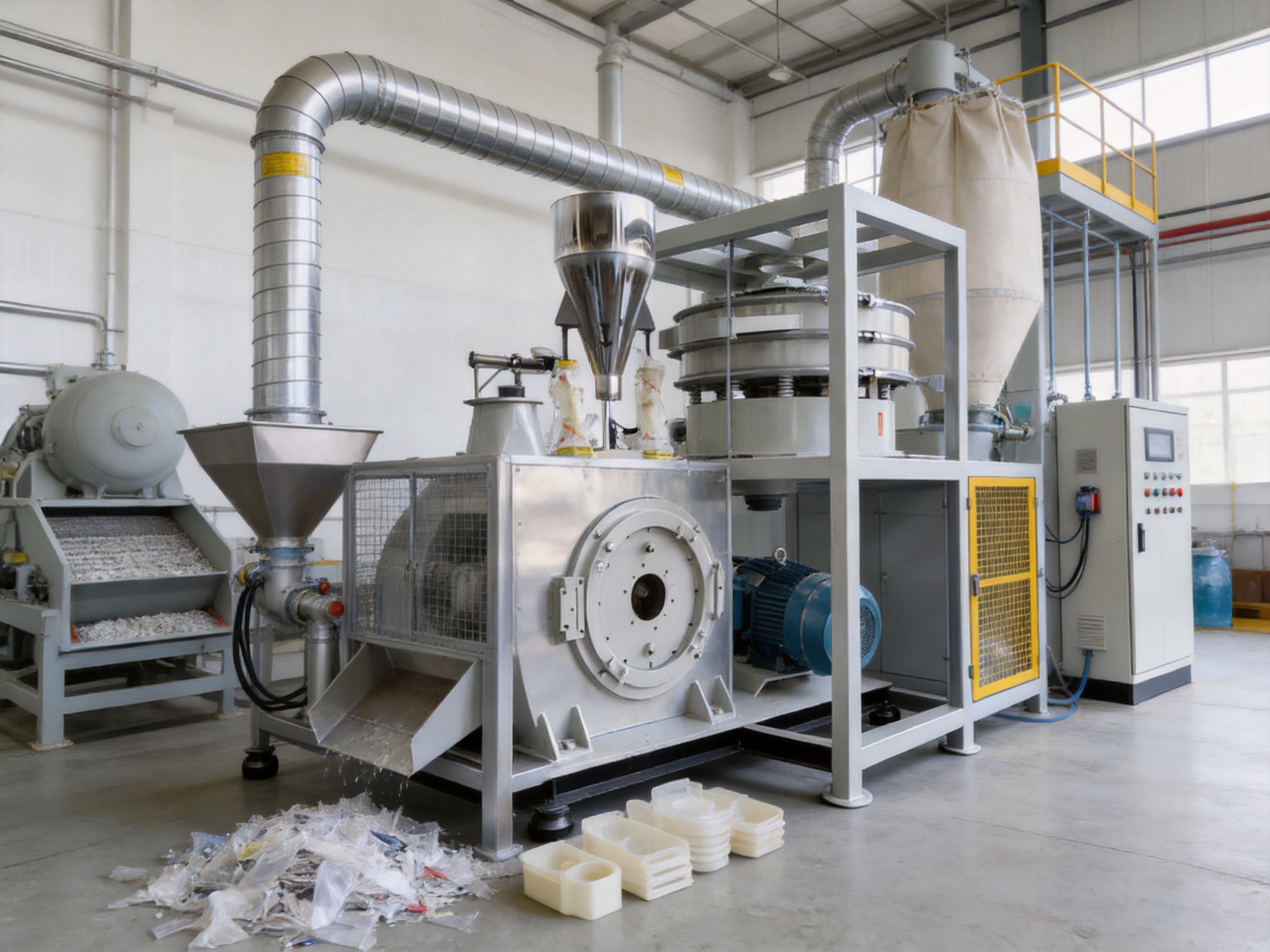
The 500PA/PP ambient-temperature grinder is designed for this demanding area of plastic processing. It combines a 500 mm grinding disc, a high-power drive system, controlled cooling, adjustable grinding clearance, vacuum feeding, stainless-steel conveying components, and integrated vibrating screening. Its objective is to produce stable PA and PP powders without depending on liquid nitrogen for routine operation. This design makes the machine particularly attractive to small and medium-sized factories, recycling businesses, masterbatch producers, laboratories, and companies that need to change materials frequently.
Unlike a basic plastic crusher, which generally produces flakes or irregular chips, a disc pulverizer reduces material to a controlled powder range. Unlike cryogenic grinding systems, it is intended to achieve practical fine grinding at ambient operating conditions with water-assisted temperature control. The result is a more compact process, lower operating complexity, and fewer consumables for users who do not require ultra-low-temperature pulverization.
The machine is manufactured by Changzhou Mao Yue Intelligent Equipment Co., Ltd., a specialist producer of plastic crushing and pulverizing equipment with more than three decades of industry experience. The company emphasizes European-style component standards, precision machining, dynamic balancing, systematic quality control, and application-oriented customization. These capabilities support a product that is not merely a grinding chamber and motor, but a complete powder-processing solution incorporating feeding, grinding, conveying, screening, dust collection, cooling, and material-changeover considerations.
What the 500PA/PP Pulverizer Is Designed to Do
The 500PA/PP model is a disc-type plastic pulverizer with a nominal grinding disc diameter of 500 mm. Its main drive motor is available in 37 kW or 45 kW configurations, while the complete system typically includes a blower, vibrating screen, feeding equipment, and dust-collection components. Depending on the material, screen arrangement, feed condition, moisture level, desired fineness, and operating configuration, the supplied technical information identifies capacity ranges from 50–160 kg/h in the standard specification table and approximately 200–400 kg/h in the broader product description. These figures should be treated as application-dependent rather than as a single guaranteed output for every plastic.
PA and PP behave differently during grinding. Polyamide is an engineering plastic with relatively high strength and demanding thermal behavior. Reinforced PA containing glass fibers can accelerate disc wear and increase the heat generated during pulverization. Polypropylene has a lower softening range and can become sticky or agglomerate if the grinding chamber is not managed correctly. A suitable machine must therefore balance cutting and impact action, airflow, residence time, disc clearance, and cooling.
The 500PA/PP system addresses these differences with adjustable operating conditions. Grinding clearance can be regulated at a fine level, allowing the operator to adapt the machine to the incoming material and target powder size. Water cooling is arranged with separate inlet and outlet paths, helping remove heat from the grinding system. A vibrating screen separates material after pulverization, while the airflow system transports powder through stainless-steel piping toward collection and screening stages.
The machine is intended for powders ranging from relatively coarse grades to fine laboratory and production grades. The product description indicates a normal range of approximately 20–100 mesh, with 30–80 mesh identified as a mainstream operating range. The standard data table lists 10–30 mesh, and the application description mentions adjustment to 20–120 mesh for small-batch testing. This variation reflects the fact that final fineness depends on the selected screen, disc gap, material form, feed rate, moisture, and operating speed. Buyers should confirm the required particle-size distribution and output through a material test before final configuration.
Core Technical Configuration
| Item | Specification | Application Significance |
|---|---|---|
| Machine type | 500PA/PP disc pulverizer | Designed for PA and PP recycling, modification, and fine powder production |
| Grinding disc diameter | 500 mm | Provides a substantial grinding surface for flexible medium-scale production |
| Drive motor | 37/45 kW | Allows configuration according to material and throughput requirements |
| Spindle speed | Approximately 2,900–3,700 rpm | Supports different grinding intensities and material conditions |
| Capacity | Approximately 50–160 kg/h in the standard table; higher application-dependent figures are also described | Actual output depends on material, screen, feed size, and target fineness |
| Powder fineness | Approximately 10–30 mesh in the standard table; broader application ranges are available | Screening and clearance adjustments enable different product grades |
| Grinding disc material | D2 in the standard specification; specialized alloy options are described for demanding applications | Supports wear resistance and service-life management |
| Blower motor | 5.5/7.5 kW | Creates conveying airflow and assists powder discharge |
| Pipe material | Stainless steel | Reduces contamination risk and supports durable powder conveying |
| Pipe diameter | 159 mm | Provides the airflow passage for the conveying circuit |
| Vibrating screen diameter | 1,000 mm | Supports post-grinding classification and uniformity |
| Vibrating-screen motor | 1.1 kW | Drives the classification stage |
| Feeding method | Vacuum feeding | Improves controlled material delivery and supports cleaner operation |
| Dust-collector bag diameter | 300 mm | Provides a designated dust-collection interface |
| Cooling method | Water cooling with separate inlet and outlet | Helps control grinding temperature without liquid nitrogen |
| Starting and speed options | Star-delta, soft start, or inverter | Allows electrical configuration to match plant requirements |
The table describes the principal configuration supplied for the 500PA/PP machine. Some features, such as disc material, motor control, screen arrangement, and cooling capacity, may be adjusted for a specific application. The company can therefore assess the customer’s material, required output, target mesh, and factory conditions before recommending a final design.
Ambient-Temperature Grinding Without Routine Liquid Nitrogen
Cryogenic grinding is useful for materials that become excessively ductile, sticky, or difficult to fracture at normal temperatures. However, liquid nitrogen systems introduce additional equipment, storage requirements, operating procedures, safety considerations, and consumable costs. They may also increase the complexity of production planning, particularly for smaller factories or users who process several materials in limited batches.
The ambient-temperature approach used by this pulverizer is intended to avoid those burdens in suitable PA and PP applications. Water cooling removes heat from the grinding assembly, while controlled airflow assists with material transport. The operator can regulate the feed rate, disc clearance, speed, and screening conditions to keep the material within an appropriate processing window. This is not the same as claiming that every plastic can be pulverized under identical conditions. Instead, the design provides a practical alternative for materials that can be processed effectively through mechanical grinding and controlled heat removal.
For PA, temperature management helps reduce thermal degradation during repeated grinding. For PP, it helps limit softening and melt adhesion that can cause powder to stick to the disc or form oversized agglomerates. Stable thermal conditions are particularly valuable when the powder will be reused in a formulation where melt flow behavior, color, mechanical properties, or dispersion must remain consistent.
The supplied product information describes an intelligent temperature-control system capable of maintaining the grinding chamber within approximately plus or minus 3–5 degrees Celsius under appropriate operating conditions. It also associates the system with melt-index fluctuation below 0.4 grams per 10 minutes and an improvement in qualification rate. These values should be verified under the customer’s own material, test method, and production settings, but they illustrate the machine’s focus on process stability rather than simple mechanical size reduction.
Eliminating routine liquid nitrogen can also simplify plant layout. The user does not need to install a cryogenic storage arrangement solely for standard PA or PP powder production. The overall system can be organized around electrical power, cooling-water circulation, feeding, conveying, screening, and dust collection. This can reduce the number of operating variables and make training easier for production personnel.
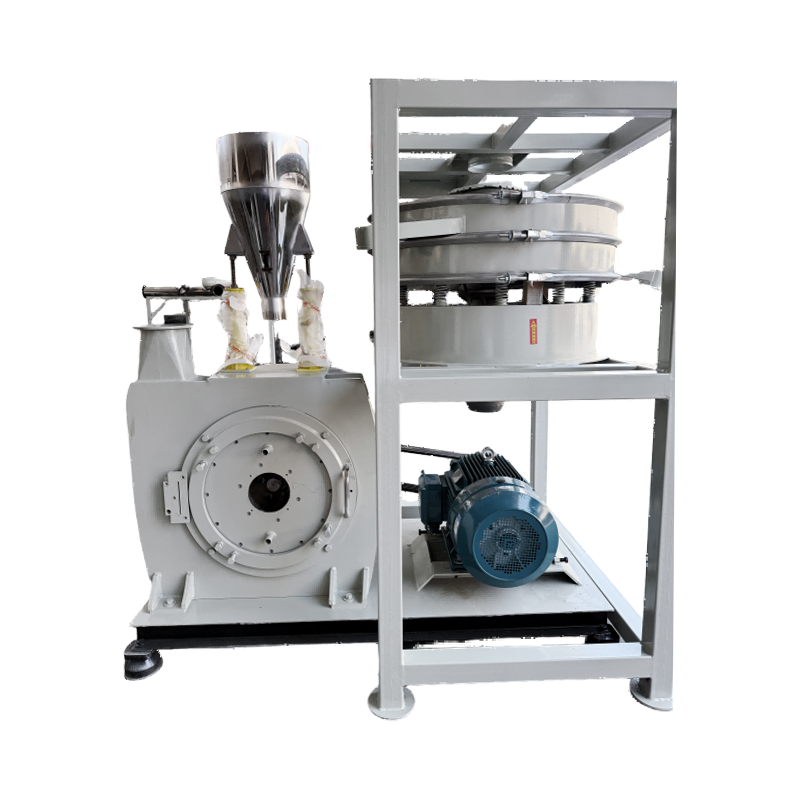
500PA/PP Ambient Temperature Grinder Requires No Liquid Nitrogen
Grinding Disc Engineering and Wear Resistance
The grinding disc is the central working component of any disc pulverizer. Its geometry, hardness, balance, edge condition, and resistance to abrasion directly influence throughput, powder quality, energy consumption, and maintenance intervals. This is especially important when processing reinforced engineering plastics. Glass-fiber-filled PA can be much more abrasive than unfilled PA, and ordinary disc materials may lose their working profile quickly.
The product information describes a proprietary high-chromium-molybdenum-vanadium alloy grinding disc with a hardness of approximately HRC 60–65 for demanding PA applications. The standard table identifies D2 as the disc material. These details indicate that disc selection can vary by configuration and material duty. D2 tool steel is widely recognized for wear resistance and dimensional stability, while specialized alloy formulations can be selected where reinforced plastics place greater stress on the grinding edge.
According to the supplied performance description, the specialized disc can reduce wear by more than 60 percent when processing glass-fiber-reinforced PA and may provide approximately twice the service life of standard discs. A continuous operating life of about 600–800 hours is also described for suitable conditions. Actual life depends on the percentage and type of reinforcement, contamination in the waste stream, feed preparation, operating gap, cooling, and maintenance practice.
Longer disc life offers several advantages. First, it reduces the frequency of machine stoppages for replacement or resurfacing. Second, it helps maintain a more consistent powder profile because a stable disc edge produces more predictable grinding action. Third, it lowers the cost of ownership by reducing spare-part consumption and labor associated with maintenance. Fourth, it supports production scheduling, which is valuable for recycling plants handling customer-specific batches.
Disc wear should still be monitored rather than judged only by elapsed operating hours. Operators can observe changes in throughput, motor load, powder size distribution, noise, vibration, and temperature. A planned inspection schedule can identify edge rounding or surface damage before it causes a significant decline in output. When processing reinforced PA, pre-sorting and removal of metallic contamination are also essential for protecting the grinding assembly.
Temperature Control and Process Stability
Heat management is one of the most important advantages of a properly configured PA/PP pulverizer. Mechanical grinding converts part of the motor’s energy into heat. As particles become smaller, the specific surface area increases, and repeated contact between the material and grinding surfaces can raise the chamber temperature. If the material softens before it exits, the powder may adhere to the disc, form lumps, block conveying passages, or lose the desired particle-size distribution.
The 500PA/PP system uses a water-cooling circuit with one inlet and one outlet. The circulating water removes heat from the grinding assembly and supports stable operation. The temperature-control system can be integrated with sensors and control logic so that the operator receives information about the working condition of the chamber. This helps the machine respond to variations in feed rate and material behavior.
Temperature stability is particularly useful for recycled materials because their composition may not be perfectly uniform. One batch of PP film may contain printing ink, labels, fillers, or different grades of resin. A batch of PA components may include glass fiber, mineral filler, pigment, or moisture. A controlled thermal environment reduces the likelihood that these variations will cause sudden melting or excessive agglomeration.
Moisture control remains important even when temperature is well managed. PA is hygroscopic and can absorb moisture from the surrounding environment. Wet feedstock may affect powder quality, downstream melt processing, and energy balance. Where necessary, incoming PA should be dried according to the resin supplier’s recommendations. PP generally requires less drying, but contaminated or washed material must be adequately prepared before pulverization.
The best operating results are achieved when temperature control is combined with proper feed preparation. Oversized parts should be reduced to a suitable feed size, foreign materials should be removed, and the material should be supplied at a steady rate. The pulverizer can then work within a stable load range instead of repeatedly responding to surges and blockages.
Particle Size, Screening, and Powder Uniformity
Particle size affects nearly every downstream application. In masterbatch production, a uniform powder improves the distribution of pigments, fillers, and additives. In powder coating, it affects charging, fluidization, transfer efficiency, coating thickness, and surface appearance. In recycled-compound production, a consistent powder can help improve feeding and reduce fluctuations in extruder loading. In laboratory work, a narrow size range makes formulation comparisons more meaningful.
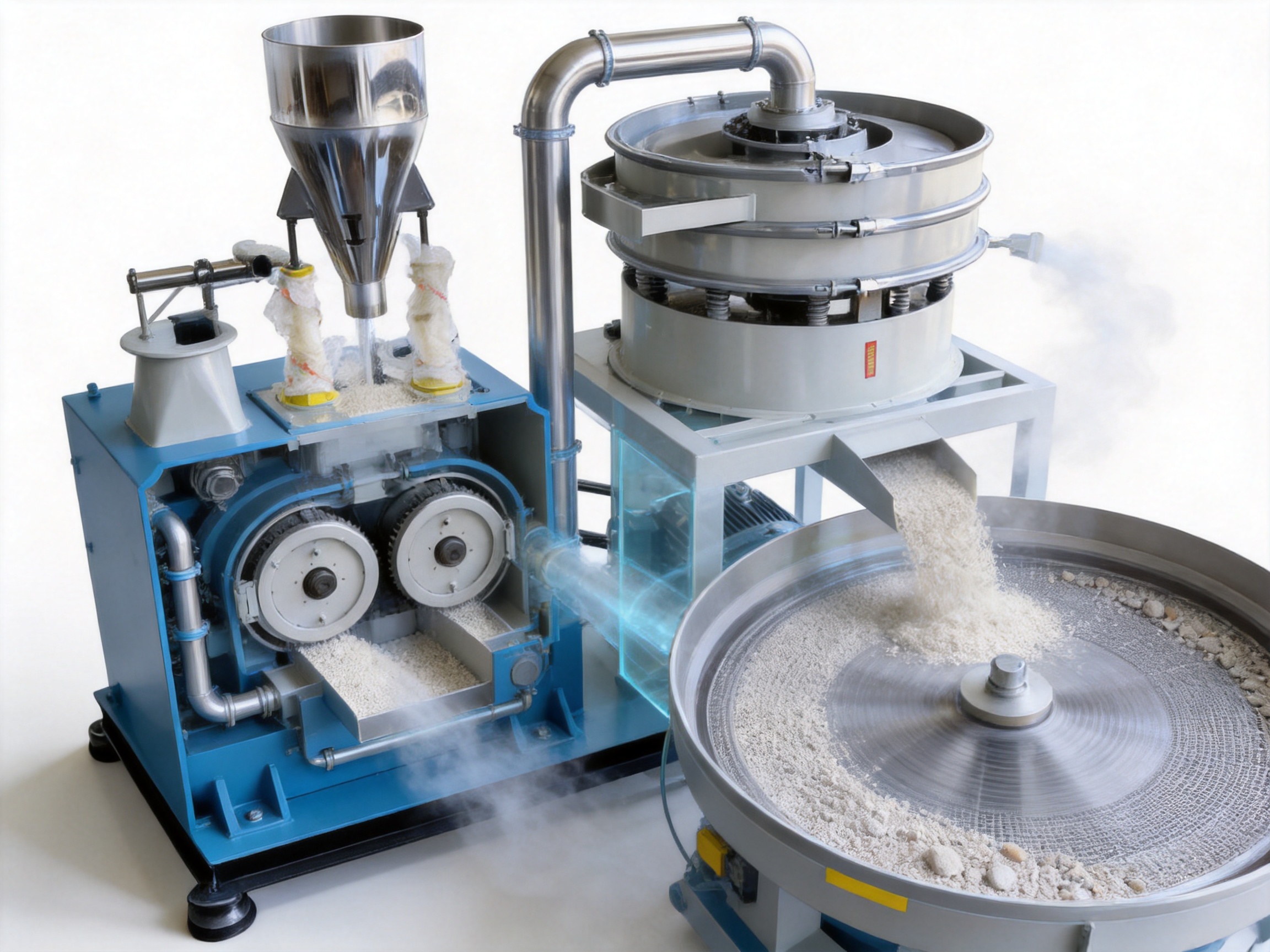
The 500PA/PP pulverizer combines grinding-gap adjustment with vibrating screening. The grinding stage reduces the material, while the screen classifies the output. Oversized particles can be separated for further processing or returned to the grinding stage, depending on the line design. This arrangement is more effective than relying solely on a pulverizer outlet because it provides a second control point for the final powder.
The described operating ranges include coarse and fine grades, with a mainstream range of approximately 30–80 mesh and broader adjustment from about 20–100 mesh. For research and small-batch applications, the product information indicates that fineness may be adjusted to approximately 20–120 mesh. The supplied standard table lists 10–30 mesh, demonstrating that the machine may be configured for different target sizes. Since mesh terminology can vary according to screen standard and material characteristics, customers should define the required particle-size distribution in micrometers where possible.
High sphericity and flowability are identified as product benefits. In practical terms, a well-controlled powder should feed smoothly, resist excessive bridging, and disperse consistently in a downstream process. Particle shape is influenced by the fracture behavior of the polymer, the disc design, the gap, speed, residence time, and screen selection. No pulverizer produces exactly the same particle shape from every resin, so trial testing remains the most reliable method of confirming the final powder characteristics.
The 1,000 mm vibrating screen provides a relatively large classification surface for this machine size. Its 1.1 kW motor creates the vibration needed to move material across the screen and prevent premature accumulation. Screen cleaning and inspection are important because fine polymer powder can gradually cover openings, especially if the material carries static charge, oil, moisture, or low-melting contaminants.
Integrated Feeding, Conveying, and Dust Collection
A pulverizer should be evaluated as a complete process rather than as an isolated grinding chamber. Stable feeding is essential because sudden surges can overload the motor, increase temperature, and create inconsistent powder. The machine uses vacuum feeding to deliver material into the grinding system. This method supports controlled intake and can reduce manual handling in a production line.
After grinding, airflow carries the powder through a 159 mm pipe. The blower is available with a 5.5 kW or 7.5 kW motor, allowing the conveying system to be matched to the required throughput and line arrangement. Stainless-steel piping helps maintain cleanliness and reduces the risk of corrosion or material contamination. It also provides a durable surface for applications that require repeated material changes.
Dust collection is essential for worker protection, housekeeping, and product recovery. Fine polymer powder can become airborne during discharge, bag replacement, screening, or cleaning. The system includes a dust-collector interface with a 300 mm bag diameter. The final dust-collection configuration should be selected according to the powder type, plant ventilation, local regulations, and required emission-control standard.
Effective dust control also improves yield. Material that escapes into the workspace is not available for sale or reuse. Capturing it at the source can reduce product loss and limit contamination between different colors or resin grades. In plants that process PA and PP in alternating campaigns, good housekeeping and dedicated collection procedures help prevent cross-contamination.
The integrated layout also reduces the need for multiple independent machines. A buyer can receive grinding, conveying, screening, and collection functions in one coordinated system. This can make installation easier and reduce the number of transfer points where material may spill or accumulate.
Advantages Compared with Conventional Competitor Solutions
Reduced Dependence on Cryogenic Consumables
The most obvious competitive advantage is the ability to process suitable PA and PP materials without routine liquid nitrogen. Cryogenic systems can be effective, but they require a continuous supply of nitrogen and careful management of storage, vaporization, ventilation, and safety. The ambient-temperature design offers a simpler operating model for companies whose materials can be mechanically pulverized with controlled water cooling.
More Complete Process Integration
Many basic competitors focus on the grinding chamber and leave the customer to assemble separate feeding, conveying, screening, and dust-collection equipment. The 500PA/PP system incorporates these functions into a coordinated line concept. This can reduce engineering work, simplify commissioning, and improve the compatibility of the individual components.
Adaptability for Multiple Materials
Material switching is a major concern for small and medium-sized factories. A large dedicated line may offer excellent output but perform poorly when it must be stopped and cleaned for frequent product changes. The 500PA/PP model is positioned as an entry-level and flexible machine for PA, PP, research samples, masterbatch carriers, and trial powder coatings. Adjustable speed, grinding clearance, feed settings, and screening make it easier to adapt the machine to different grades.
Wear Management for Reinforced Plastics
Standard disc pulverizers may incur high maintenance costs when processing glass-fiber-reinforced PA. The availability of high-hardness alloy disc technology gives this system an advantage in abrasive applications. A stronger disc does not eliminate wear, but it can delay performance deterioration and reduce the frequency of replacement compared with ordinary working surfaces.
Compact Power and Factory Compatibility
The machine is described as having total system power of approximately 50–60 kW, depending on the selected drive and auxiliary equipment. A compact footprint and moderate power requirement make it suitable for factories that cannot justify a large industrial line. It can also serve as a secondary or flexible line within a larger plant, especially where small batches, new materials, or customized powder grades are required.
Focus on Powder Quality Rather Than Only Throughput
Some low-cost pulverizers are marketed primarily by motor power or nominal capacity. However, powder users often care more about uniformity, flowability, thermal history, and repeatability. The combination of temperature control, gap adjustment, screening, and controlled conveying gives this model a more balanced performance profile. It is designed to help users produce powder that can be used consistently in downstream operations.
Lower Noise and Better Operating Environment
The supplied information identifies a noise level below 85 dB under stated operating conditions. Actual noise depends on installation, material, enclosure, and plant acoustics, but the target indicates attention to the working environment. Proper foundation design, guards, dust collection, and hearing protection should still be used in accordance with local occupational safety requirements.
Applications in PA Engineering Plastic Recycling
PA6 and PA66 waste can originate from automotive parts, electrical connectors, cable sheathing, textile tow, industrial components, and production scrap. Much of this material retains significant value if it can be processed into a clean, uniform feedstock. The pulverizer can reduce prepared PA waste into powder for regeneration granulation, compounding, injection molding, or selected additive-manufacturing applications.
Automotive waste may contain glass fiber, mineral filler, pigments, coatings, metal inserts, and mixed polymer components. Sorting and pre-cleaning are therefore necessary. The machine is most effective when the incoming stream has been classified and foreign matter has been removed. For reinforced PA, the high-wear disc option can help manage the abrasive nature of the feed.
In regeneration processes, powder fineness affects feeding, melting, filtration, and additive dispersion. A stable particle-size distribution can help the compounder maintain a more predictable feed rate. It may also improve blending with virgin resin, colorants, stabilizers, and reinforcing agents. Before commercial production, users should test the powder’s moisture, ash, fiber content, bulk density, and melt-flow behavior.
PA powder can also be used in R&D work involving new formulations. Universities, material laboratories, and product-development teams may need to produce small quantities of powder from experimental samples. The machine’s adjustable settings and screening stage can support these trials without requiring a large cryogenic pulverization line.
Applications in PP Film and Injection-Part Recycling
Polypropylene waste is common in packaging, automotive, household products, containers, caps, and injection-molding operations. Film waste can be difficult to handle because it is light, flexible, and prone to feeding irregularities. Injection scraps and molded parts are denser but may vary significantly in shape and thickness. Pre-cutting or primary size reduction may be used to create a consistent feed for the pulverizer.
When PP is processed into a uniform powder, it can serve as a carrier or base material for filled masterbatches, color masterbatches, and modified compounds. The powder can help distribute pigments, mineral fillers, processing aids, and other additives before extrusion or molding. Uniform particles can also support more consistent feeding into a compounding system.
PP is sensitive to excessive heat because softening can cause adhesion and agglomeration. The water-cooling circuit, temperature monitoring, controlled feed, and suitable disc gap are therefore important. Operators should avoid overfeeding the machine, because an overloaded chamber may raise the temperature even if the cooling system is working correctly.
Recycled PP can contain labels, adhesives, paper, dirt, and mixed polymers. Washing, drying, separation, and metal detection should be considered upstream. The pulverizer should not be expected to correct poor sorting. Its role is to provide controlled mechanical reduction after the material has been prepared to an appropriate standard.
Masterbatch and Powder-Coating Uses
Powder from the 500PA/PP system can be used in masterbatch-related operations where a uniform carrier improves additive dispersion. A consistent powder size may reduce segregation between polymer particles and pigment or filler particles. It can also help maintain steady feeding into an extruder, especially in small-batch or customized formulations.
For entry-level PP-based powder coating production, fine powder quality is particularly important. Coating particles must be suitable for electrostatic spraying or fluidized-bed dipping. Excessive oversize, scorching, moisture, or contamination can result in poor charging, uneven coating thickness, surface defects, or blocked equipment. Controlled grinding and screening help reduce these risks.
The model is well suited to trial production and multi-variety coating work because it can support smaller batches than a large centralized line. A coating producer can use it to validate new resin blends, colors, fillers, or process conditions before investing in higher-capacity equipment. The ability to clean and change materials relatively quickly is also valuable when several product grades are manufactured in sequence.
Laboratory and Research Applications
Research environments often prioritize flexibility over maximum hourly output. A laboratory may need to process only a few kilograms of a new PA blend, a recycled PP sample, or an experimental additive formulation. The ability to adjust fineness and collect a clean sample is more important than running at the highest possible capacity.
The 500PA/PP system can support material screening, formulation validation, recycling studies, and process-development trials. Researchers can compare different disc gaps, screen sizes, feed rates, and cooling conditions. They can then evaluate powder morphology, bulk density, flowability, moisture, thermal properties, particle-size distribution, and downstream processing behavior.
For laboratories, contamination control is essential. Stainless-steel conveying sections, systematic cleaning, dedicated collection bags, and careful scheduling can help reduce carryover from one material to another. When highly sensitive tests are performed, the operator should establish a documented cleaning procedure and verify the cleanliness of the equipment before collecting test samples.
Manufacturing Strengths and Quality-Control Capabilities
The machine’s performance depends not only on its design but also on the precision and consistency of its manufacture. Changzhou Mao Yue Intelligent Equipment Co., Ltd. operates six processing workshops, each averaging approximately 1,400 square meters. This production structure supports machining, fabrication, assembly, inspection, and customization activities within an organized manufacturing environment.
The company uses high-precision grinding machines imported from Taiwan and built to German standards. Such equipment is important for working surfaces, disc components, shafts, and other parts where dimensional accuracy affects balance and clearance. A disc pulverizer operates at high speed, so even small dimensional deviations can influence vibration, noise, bearing load, and grinding uniformity.
Dynamic balancing is another critical manufacturing step. The company uses German dynamic-balancing equipment to verify rotating assemblies. Proper balancing helps reduce vibration during operation and supports longer bearing life. It also contributes to a more stable grinding gap and a better working environment. Balancing should be confirmed after relevant machining, fitting, and repair work, not only during initial assembly.
Japanese welding systems are used in the company’s fabrication processes. Consistent welding quality is important for frames, hoppers, ducting, guards, screening structures, and stainless-steel pipework. Sound welds improve structural reliability and reduce the likelihood of air leakage, distortion, or premature fatigue. Surface finishing and internal cleanliness are also relevant when the equipment conveys polymer powder.
The company states that it manufactures components according to European quality standards and has obtained CE mechanical certification and ISO 9001 quality-management certification. These certifications do not replace application testing or proper installation, but they provide a structured basis for design review, manufacturing control, documentation, and corrective action.
More than 5,000 domestic and international enterprise partnerships are identified in the company profile. A broad installed base can help a manufacturer accumulate practical knowledge about different polymers, reinforcement levels, feed forms, powder specifications, and line arrangements. This experience is especially useful when a customer’s material does not fit a standard catalog condition.
Engineering Support and Customization
Plastic pulverization is strongly affected by material properties. A machine that performs well on clean PP injection scrap may require different settings for PA66 with glass fiber. Film, pellet, sheet, molded parts, and textile waste each present different feeding and grinding challenges. A responsible equipment supplier should therefore evaluate the customer’s material rather than rely solely on a nominal motor rating.
Customization may involve the drive motor, inverter, starting method, screen specification, disc material, cooling capacity, feeding system, blower size, dust collector, control panel, and discharge arrangement. The company’s technical team can use the customer’s target capacity and powder specification to recommend an appropriate configuration.
Material testing is particularly important when the customer requires a narrow particle-size distribution, low thermal history, or a specific melt-flow range. A test should examine not only the initial appearance of the powder but also its behavior in the intended downstream process. For example, a powder that looks uniform may still have excessive static, moisture, or fines that affect masterbatch feeding.
Installation support should include foundation requirements, electrical load, water-cooling connections, ventilation, dust collection, pipe routing, and access for maintenance. The machine should be positioned with enough space to remove the grinding disc, inspect the screen, replace belts, service bearings, and clean the conveying path.
Operating Procedure and Best Practices
Feed Preparation
Before pulverization, the material should be sorted by polymer type and grade as far as practical. Metal, stones, glass, wood, paper, and incompatible plastics should be removed. Large molded parts should be reduced to a manageable feed size. Films may require densification or controlled cutting to prevent bridging and unstable feeding.
Start-Up
The operator should check electrical connections, cooling-water flow, pipe connections, dust-collector installation, screen condition, guards, belt tension, and emergency-stop functions. The machine should normally be started without a heavy material load. Once the drive, blower, cooling, and screening systems are operating normally, material can be introduced gradually.
Temperature Management
Temperature should be monitored continuously during production. If the chamber temperature rises unexpectedly, the operator should reduce feed rate, verify cooling-water circulation, inspect the screen for blockage, and check whether the material contains excessive moisture or an incompatible low-melting component. Continuing to feed into an overheating chamber may damage the product and increase cleaning time.
Grinding-Gap Adjustment
The grinding gap should be adjusted carefully. A smaller gap may produce finer powder but can increase heat, power consumption, and disc wear. A wider gap may increase throughput but produce a coarser product. The best setting is the one that meets the particle-size requirement while maintaining acceptable temperature and motor load.
Screen Inspection
The vibrating screen should be inspected regularly for blinding, tears, loosened fasteners, or contamination. A damaged screen can allow oversized material into the product stream or release material into areas where it should not be present. Screen cleaning should be carried out safely after the machine has been isolated from electrical power.
Material Changeover
When switching from one polymer, color, or formulation to another, the grinding chamber, feed area, conveying pipe, screen, blower inlet, and collection system should be cleaned according to the required purity level. A short purge with compatible material may be helpful in some production environments, but the procedure should be validated so that purge material does not contaminate the next batch.
Maintenance and Total Cost of Ownership
Maintenance costs are determined by more than spare-part prices. Downtime, labor, product loss, emergency repairs, and inconsistent powder quality can be more expensive than planned component replacement. The 500PA/PP model is intended to reduce these costs through wear-resistant disc options, accessible construction, controlled operation, and integrated process components.
Routine checks should include disc condition, spindle and bearing temperature, belt tension, fastener tightness, cooling-water flow, screen condition, blower performance, pipe cleanliness, dust-collector condition, and electrical-panel status. Unusual vibration or noise should be investigated immediately because it may indicate imbalance, bearing deterioration, loose components, or foreign material in the grinding chamber.
The grinding disc is a wear item and should be inspected according to the abrasiveness of the feed. Reinforced PA generally requires more frequent monitoring than unfilled PP. If the disc becomes excessively worn, the operator may see reduced capacity, less uniform powder, increased energy consumption, or more frequent temperature excursions.
Cooling-water quality also deserves attention. Scaling, corrosion, biological growth, or blocked passages can reduce heat-transfer efficiency. A suitable water-treatment and maintenance program should be established according to the local water source and the manufacturer’s recommendations.
Dust-collection bags should be checked for damage and excessive loading. A blocked filter can reduce airflow, impair powder transport, and increase dust leakage. Stainless-steel pipes should be cleaned when changing sensitive materials or colors. Preventive maintenance is particularly valuable for businesses that depend on short production runs and rapid delivery commitments.
Environmental and Workplace Considerations
Recycling PA and PP powder can support a circular material strategy by returning production waste and post-use components to useful manufacturing streams. The environmental benefit is strongest when the recovered powder replaces virgin resin or reduces disposal. Product quality must still be controlled because contaminated or degraded material may not be suitable for high-value applications.
The ambient-temperature design can reduce reliance on cryogenic consumables in appropriate applications. It may also lower the infrastructure burden associated with nitrogen storage and handling. However, the machine still consumes electrical power and cooling water, and the total environmental performance depends on operating efficiency, water management, feed preparation, and the final use of the recovered powder.
Dust management should be treated as a central safety requirement. Fine plastic powder can create respiratory exposure and, under particular conditions, combustible-dust hazards. The plant should conduct a site-specific risk assessment, provide appropriate ventilation and filtration, ground relevant equipment, control ignition sources, and follow applicable local standards. Operators should use personal protective equipment and receive training in safe cleaning and maintenance procedures.
How to Select the Right Configuration
Customers should begin with the material rather than the machine name. Important questions include whether the feed is PA6, PA66, PP, filled resin, reinforced resin, film, molded scrap, or a mixed stream. The percentage of glass fiber or mineral filler should be identified where possible. Contamination, moisture, bulk density, feed size, and expected hourly volume also influence the correct configuration.
The target powder specification should be expressed clearly. A requirement such as “fine powder” is not sufficient for engineering a line. The buyer should state the desired mesh or micrometer range, acceptable oversize percentage, fines percentage, bulk density, flowability, and any restrictions on thermal degradation or color change.
Capacity should be discussed together with fineness. A machine may produce a higher hourly output at a coarse screen setting than at a fine setting. PA with glass fiber may have a different output from clean PP film. Customers should request application-specific test results instead of comparing nominal capacity figures from different manufacturers without considering test conditions.
The electrical supply, cooling-water availability, building height, floor loading, dust-collection requirements, and material-handling arrangements should also be reviewed. The available starting methods include star-delta, soft start, and inverter control. An inverter can provide greater flexibility in speed adjustment, while a soft starter may reduce starting current without offering the same level of speed control.
Why This Model Fits Small and Medium-Sized Factories
Large recycling plants often justify dedicated high-capacity systems for a single polymer stream. Smaller factories usually face a different commercial reality. They may receive varied materials, manufacture several colors, run customer-specific formulations, and process quantities that change from week to week. A compact, adaptable pulverizer can be more useful than a large machine that remains underloaded or requires expensive changeovers.
The 500PA/PP model provides a balance between industrial construction and entry-level investment. Its 500 mm disc offers meaningful production capability, while the integrated screen and conveying system reduce the need for separate equipment. Temperature control supports quality, and the available disc options address both standard and abrasive materials.
The machine can be used as a primary production unit, a trial line, a backup machine, or a dedicated line for special materials. Masterbatch producers can use it for customized carrier powders. Recyclers can process selected PA and PP streams. New-material companies can conduct formulation trials. Powder-coating producers can develop small batches before scaling up.
This flexibility can improve asset utilization. Instead of purchasing separate pulverizers for every material, a business may use one configurable system with documented cleaning and operating procedures. The decision should be based on material compatibility and required purity, but the concept is well aligned with modern manufacturing environments that value responsiveness and shorter development cycles.
Quality Verification Before Commercial Operation
Before approving the machine for full production, the user should establish a verification plan. The plan may include capacity testing, particle-size analysis, temperature recording, power-consumption measurement, bulk-density evaluation, visual inspection, and downstream processing trials.
For PA, testing may include moisture content, melt flow, fiber retention, color, ash, and mechanical properties after reprocessing. For PP, testing may include melt flow, contamination, odor, color, ash, and dispersion in a masterbatch or compound. Powder-coating users may evaluate charging behavior, fluidization, coating coverage, surface finish, and curing performance.
Performance should be recorded at defined operating conditions. Feed rate, screen size, disc gap, spindle speed, cooling-water temperature, cooling-water flow, and ambient conditions should be documented. This creates a repeatable process recipe and helps operators identify changes before they become quality problems.
Acceptance criteria should be agreed with the equipment supplier before testing. If the customer requires a particular capacity and particle-size distribution simultaneously, both conditions must be evaluated together. A machine that reaches the desired mesh at a low feed rate may not meet the required commercial throughput, while a high-throughput test may produce powder that is too coarse.
Frequently Asked Questions
Can the machine grind PA and PP without liquid nitrogen?
Yes, the machine is designed for ambient-temperature grinding of suitable PA and PP materials using water cooling and controlled operating conditions. Liquid nitrogen is not required for routine operation when the feedstock, target fineness, and process settings are compatible with ambient grinding. Material testing is recommended for unusual grades or highly ductile formulations.
What capacity can users expect?
The supplied specifications list approximately 50–160 kg/h, while the broader product description refers to approximately 200–400 kg/h under certain operating conditions. Actual capacity depends on polymer type, reinforcement, feed size, moisture, screen, grinding gap, spindle speed, and desired powder fineness. The final guaranteed capacity should be confirmed through a test using the customer’s material.
What powder size can be produced?
The available descriptions identify ranges from approximately 10–30 mesh in the standard table to approximately 20–100 mesh or wider application ranges. Laboratory settings may extend toward approximately 20–120 mesh. The actual result depends on screen selection, disc clearance, material behavior, and operating conditions. Micrometer-based particle-size requirements should be provided during machine selection.
Is the pulverizer suitable for glass-fiber-reinforced PA?
Yes, the machine is specifically described for demanding PA applications, including glass-fiber-reinforced materials. A high-hardness chromium-molybdenum-vanadium alloy disc option is available for improved wear resistance. Metal contamination must be removed, and disc condition should be inspected more frequently than when processing unfilled plastics.
How does the machine reduce PP melting and adhesion?
The system combines water cooling, temperature monitoring, controlled feeding, airflow, grinding-gap adjustment, and screening. These features help remove heat and reduce residence time or overload conditions that can cause PP to soften and adhere. Correct feed preparation and operating settings remain essential.
Does the machine include screening?
Yes, the configuration includes an integrated vibrating screen with a diameter of approximately 1,000 mm and a 1.1 kW motor. The screen helps classify the pulverized material and improve final-size consistency.
What starting and speed-control methods are available?
The listed options include star-delta starting, soft start, and inverter control. The appropriate selection depends on the factory power supply, desired speed flexibility, motor size, and local electrical requirements.
What materials are used for the conveying pipes?
The listed configuration uses stainless-steel pipes with a diameter of approximately 159 mm. Stainless steel supports durability, cleanliness, and reduced contamination risk in powder-conveying applications.
Is vacuum feeding included?
Vacuum feeding is identified as the standard feeding method in the supplied technical table. The final feeding arrangement can be reviewed according to the form of the material, required storage system, and production-line layout.
How often must the grinding disc be replaced?
Replacement intervals vary according to material abrasiveness, contamination, operating gap, speed, cooling, and production hours. The supplied description indicates approximately 600–800 hours of continuous service for suitable conditions with the specialized wear-resistant disc. This should be treated as an indicative range, not a universal guarantee.
Can the machine be used for laboratory trials?
Yes, the product information identifies laboratories, universities, research institutions, and new-material companies as suitable users. Its adjustable fineness and flexible operating configuration make it useful for small-batch sample preparation and formulation validation.
What should be checked before purchasing?
Customers should confirm the material type, reinforcement, contamination level, feed form, moisture, target particle size, required capacity, electrical supply, cooling-water conditions, dust-collection requirements, and acceptable thermal history. A material trial is the best way to verify performance before commercial installation.
Conclusion
The 500PA/PP ambient-temperature pulverizer is a practical solution for businesses that need controlled PA and PP powder production without routinely depending on liquid nitrogen. Its 500 mm disc, 37/45 kW drive options, temperature-control system, water cooling, adjustable grinding clearance, vibrating screening, vacuum feeding, stainless-steel conveying, and dust-collection interface create a coordinated process for flexible plastic recycling and powder manufacturing.
Its advantages over more basic or highly specialized competitor solutions include reduced cryogenic dependence, integrated line functions, flexible material switching, wear-resistant disc options, compact factory compatibility, and a stronger focus on powder consistency. The system is suitable for PA engineering-plastic recycling, PP film and injection-scrap processing, masterbatch production, entry-level powder coating, and laboratory research.
The manufacturing foundation behind the equipment is equally important. Six processing workshops, precision grinding equipment, German dynamic balancing, Japanese welding systems, European-oriented component standards, CE mechanical certification, ISO 9001 quality management, and long-term experience in plastic pulverization support the machine’s reliability and customization potential.
For the best result, buyers should not select the machine based solely on a catalog capacity. They should define the material, target fineness, acceptable temperature range, and downstream application, then confirm the final configuration through testing. When correctly specified and maintained, the 500PA/PP pulverizer can help small and medium-sized factories produce higher-value recycled powder, improve material utilization, and respond more efficiently to changing market requirements.
References
1. Manufacturer-supplied technical specification for the 500PA/PP ambient-temperature grinder.
2. Manufacturer-supplied application information for PA6, PA66, PP recycling, masterbatch, powder coating, and research use.
3. Manufacturer-supplied information regarding grinding-disc materials, hardness, wear resistance, and service-life performance.
4. ISO 9001 quality-management principles for manufacturing and process control.
5. CE mechanical-equipment safety principles applicable to industrial machinery.
6. General polymer-processing guidance for moisture control, thermal management, particle-size classification, and recycled-material quality verification.