

 English
 русский
 Español
 عربى
عربى 中文简体
中文简体
 中文简体
中文简体
Content
- 1 1. Product Overview
- 2 2. Modular Multi-Blade Construction
- 3 3. Cutting Performance in PVC Pulverizing
- 4 4. Wear Resistance and Heat Treatment
- 5 5. Precision Manufacturing and Dynamic Balance
- 6 6. Cooling and Temperature Control
- 7 7. Particle Size, Purity, and Product Quality
- 8 8. Applications in PVC Recycling
- 9 9. Applications in PVC Powder Products and Construction Materials
- 10 10. Polymer Modification and Chemical Applications
- 11 11. Advantages over Conventional Pulverizer Discs
- 12 12. Manufacturing Strengths of the Supplier
- 13 13. Installation and Replacement Considerations
- 14 14. Maintenance Recommendations
- 15 15. Customization Options
- 16 16. Selecting the Rotor for a Production Line
- 17 17. Total Cost of Ownership
- 18 18. Recommended Operating Practices
- 19 19. Frequently Asked Questions
- 19.1 What is the main purpose of this PVC pulverizer rotor?
- 19.2 What makes the rotor different from a conventional solid disc?
- 19.3 What hardness do the cutting blocks have?
- 19.4 Can the rotor process PVC containing fillers?
- 19.5 What particle size can the pulverizer produce?
- 19.6 Can the rotor be used for recycled PVC pipes and profiles?
- 19.7 How does the rotor help reduce maintenance costs?
- 19.8 Is the rotor compatible with other brands of pulverizers?
- 19.9 Why is dynamic balancing important?
- 19.10 How does the cooling system protect PVC powder quality?
- 19.11 Can blade quantity and angle be customized?
- 19.12 How often should cutting blocks be replaced?
- 19.13 What certifications does the supplier have?
- 19.14 What information should be provided when requesting a quotation?
- 20 20. Conclusion
- 21 References
- 22 Product: PVC Pulverizer Large disc-shaped Rotor
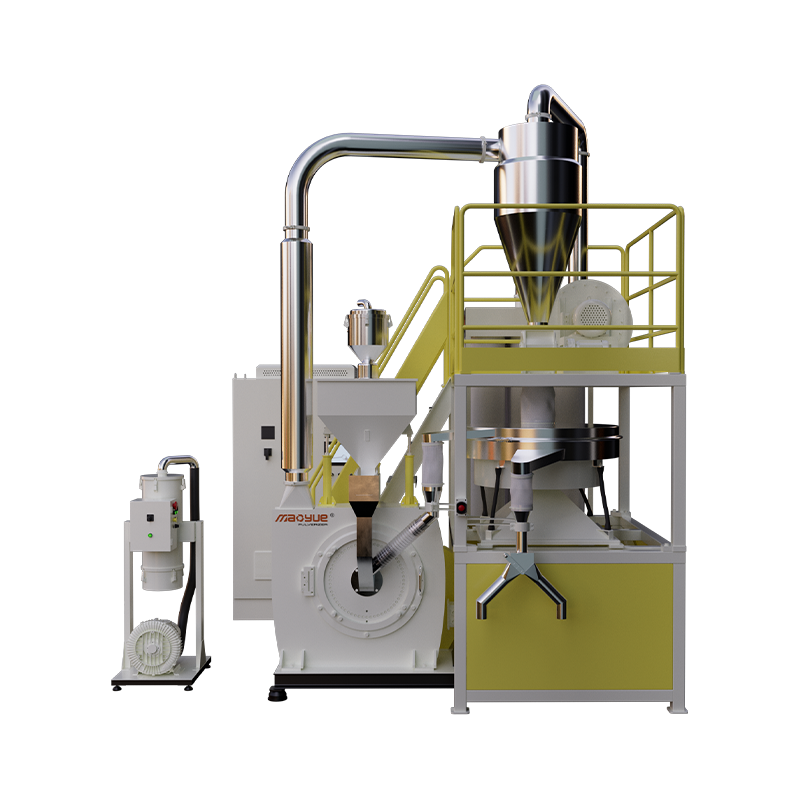
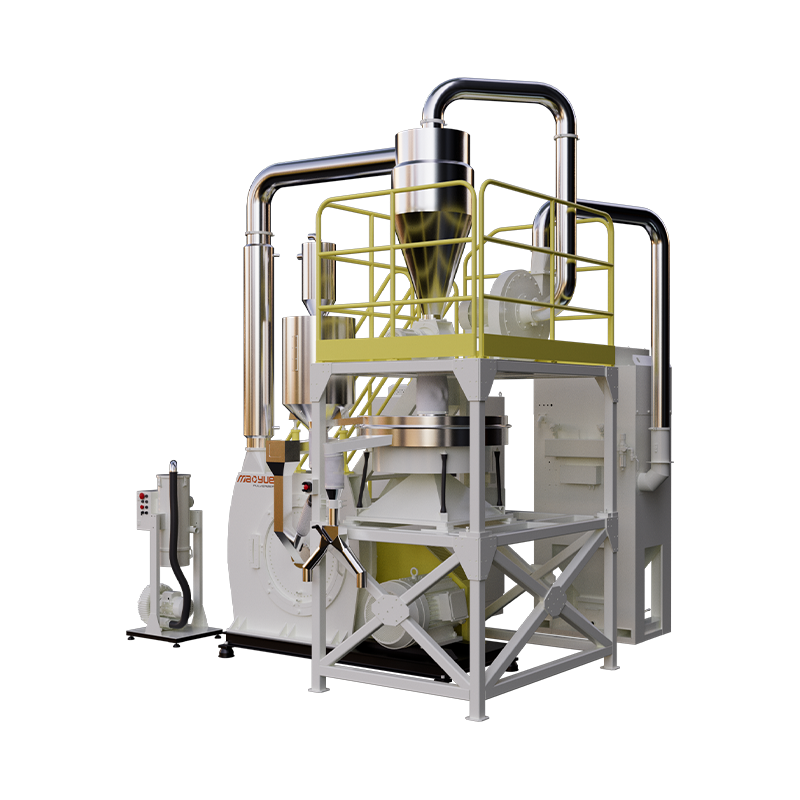
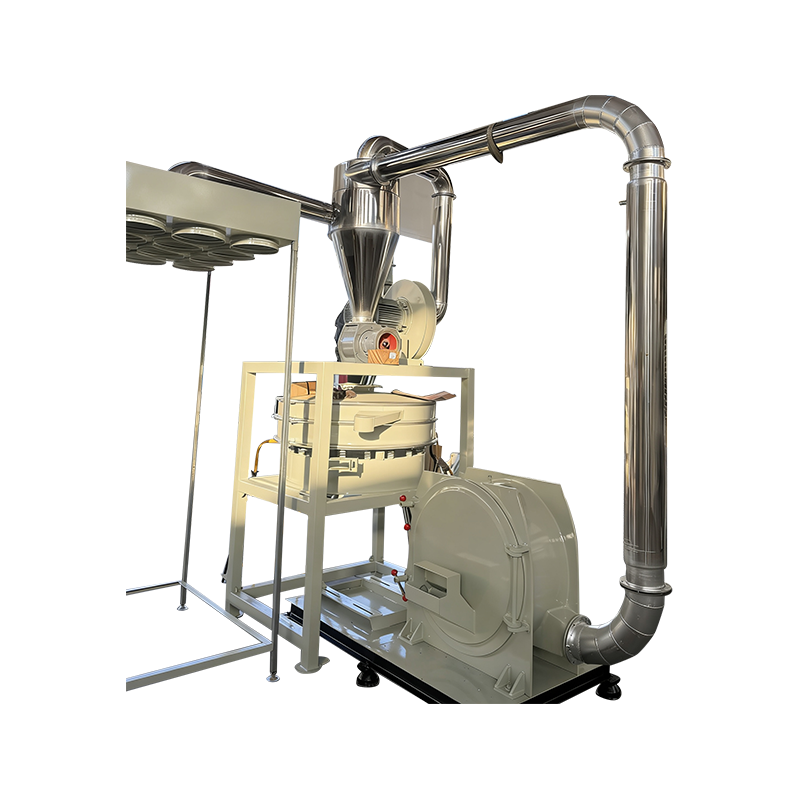
Modern PVC recycling and powder-processing operations require more than a conventional grinding disc. A production rotor must maintain sharp cutting performance, withstand continuous impact and friction, control heat, produce consistent particle sizes, and remain practical to maintain. The PVC pulverizer large disc-shaped rotor described in this article has been developed for these demanding conditions. It combines a modular multi-blade structure, precision machining, specialized heat treatment, efficient material flow, and compatibility with air-and-water cooling systems.
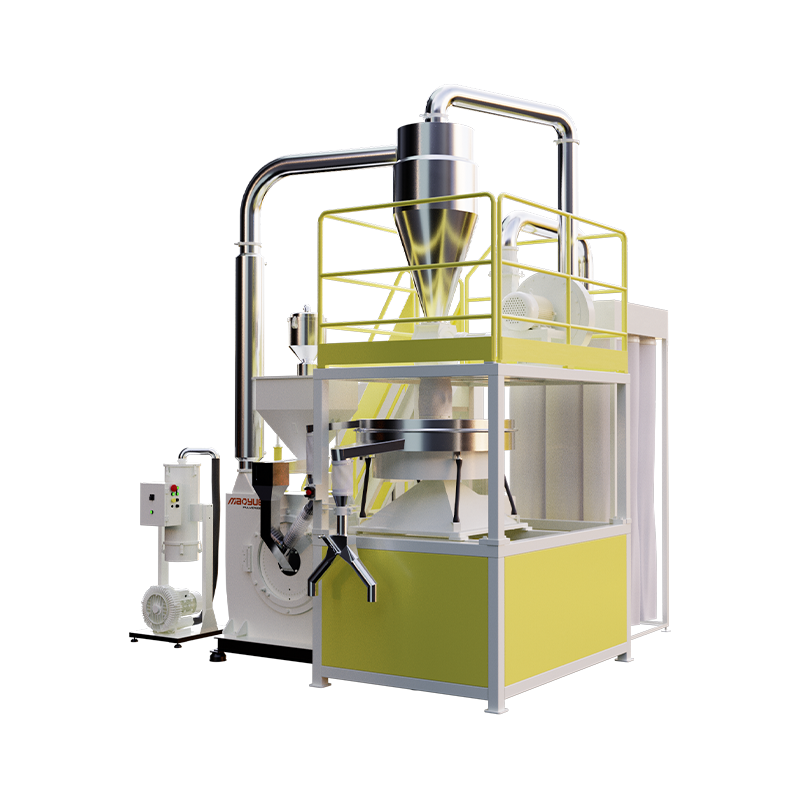
Designed for PVC pulverizer equipment and related crushing and pulverizing lines, this rotor is intended for high-output applications involving rigid and flexible PVC waste, production scrap, filled compounds, profiles, pipes, flooring, cable sheathing, sheets, injection-molded parts, and other plastic materials. Its replaceable cutting-block design allows operators to restore cutting performance without replacing the entire disc. This can reduce maintenance time, lower spare-part consumption, and improve the operating availability of the complete pulverizing system.
The rotor is manufactured by Changzhou Mao Yue Intelligent Equipment Co., Ltd., a China-based manufacturer specializing in plastic crushing and pulverizing equipment. With more than three decades of industry experience, multiple processing workshops, precision CNC equipment, dynamic balancing capability, and export experience, the company supplies components and complete pulverizing solutions for PVC, PE, masterbatch, polymers, recycling, rotational molding, powder coating, and other applications.
For demanding users, the value of a pulverizer rotor is determined not only by its initial purchase price. Long-term performance depends on the quality of the alloy steel, the accuracy of the shaft connection, the balance of the rotating assembly, the hardness of the cutting edges, the convenience of blade replacement, and the manufacturer’s ability to match the component to a specific machine. This article examines these factors in detail and explains why a modular large-disc rotor can offer important advantages over traditional monolithic or low-tooth-count designs.
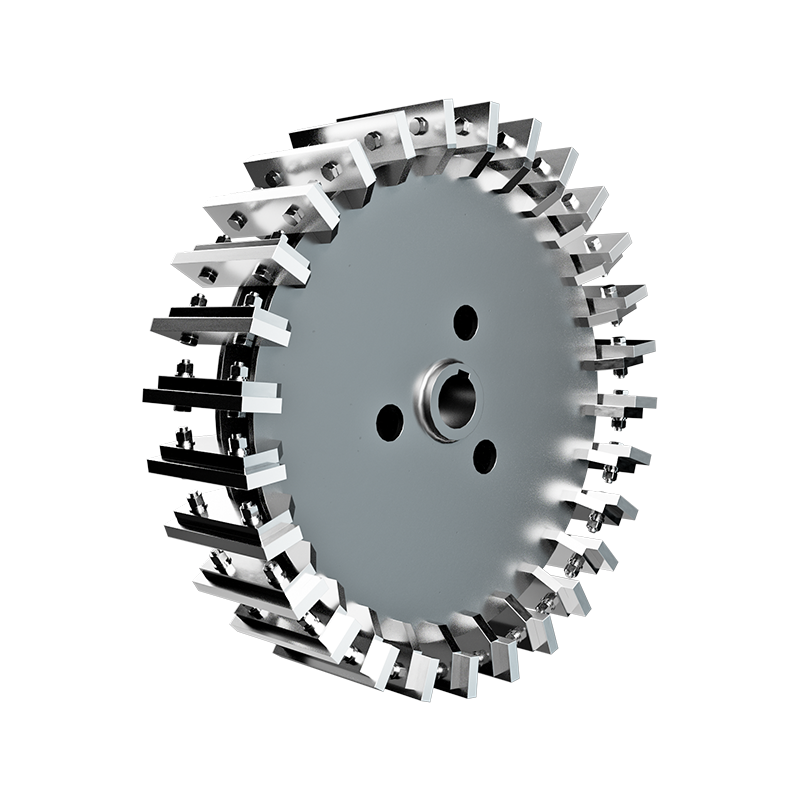
PVC Pulverizer Large disc-shaped Rotor
1. Product Overview
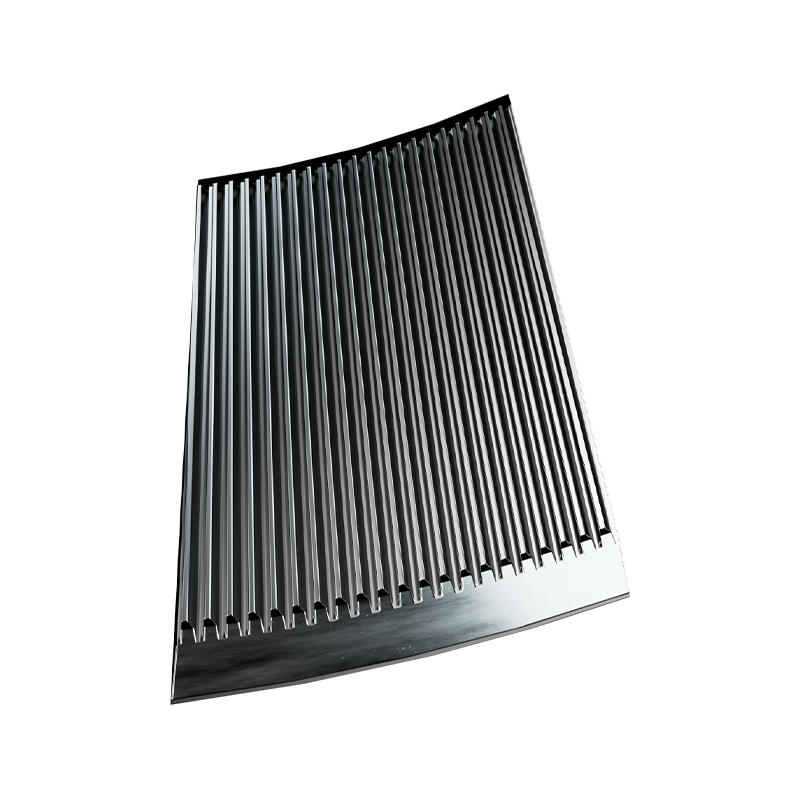
The PVC pulverizer large disc-shaped rotor is a circular cutter head designed for high-speed grinding and pulverizing equipment. Multiple sets of cutting blocks are distributed evenly around the disc. Each block set is independently secured using high-strength bolts, allowing worn cutting elements to be removed and replaced individually.
A precision-machined central shaft hole provides the connection between the rotor and the main spindle. This connection must be manufactured accurately because even a small deviation can affect concentricity, vibration, bearing loading, noise, and the service life of surrounding components. The rotor therefore requires both dimensional accuracy and reliable dynamic balance before it is installed in a production pulverizer.
The disc and its cutting components are made for high-wear operation. The cutting blocks use a wear-resistant alloy steel substrate and receive carburizing and quenching treatment followed by multiple tempering processes. According to the supplied product information, the cutting hardness is maintained in the approximate range of HRC 58–62. The purpose of this treatment is to provide a suitable combination of edge hardness, impact resistance, toughness, and resistance to chipping.
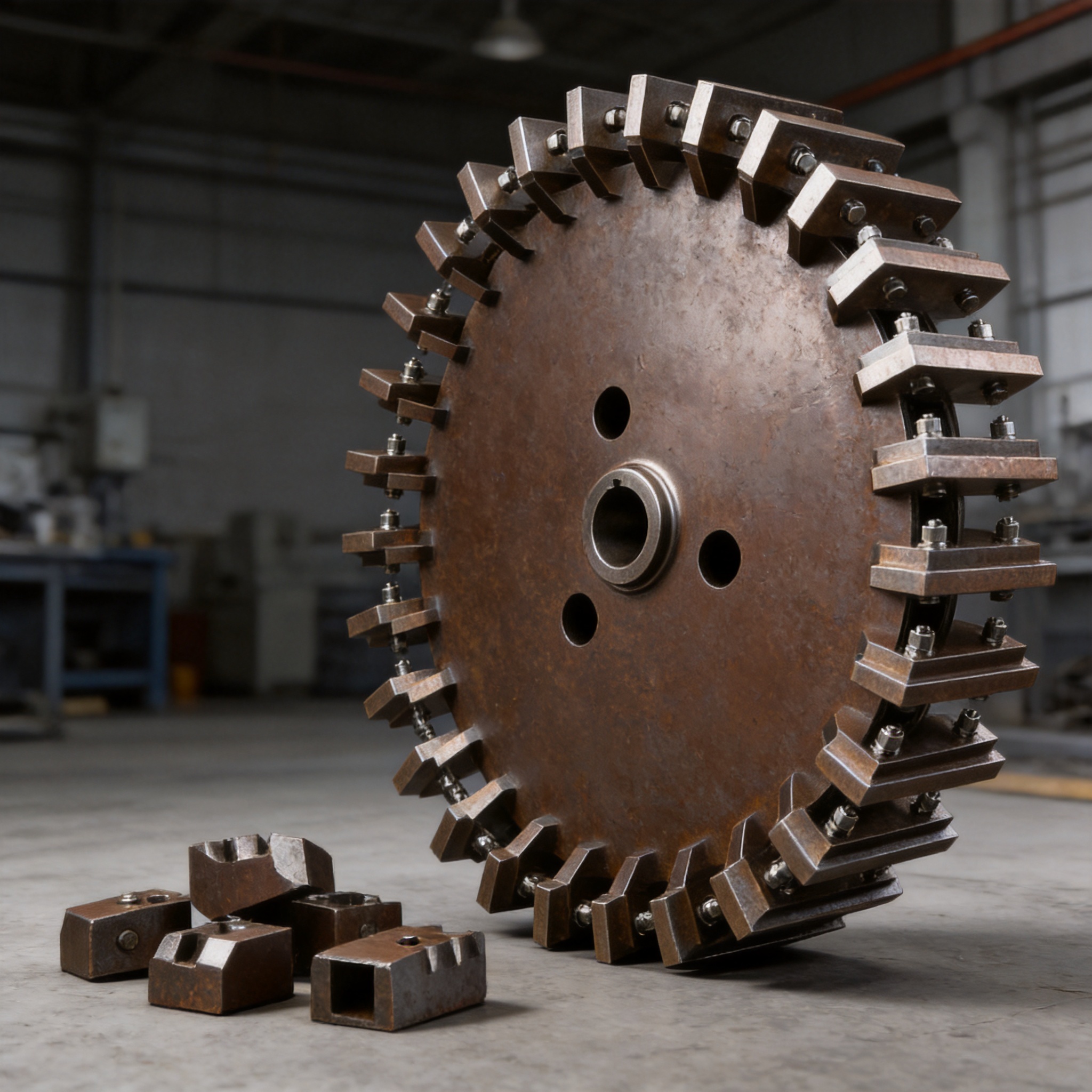
The finished assembly has a deep brown or rust-brown appearance associated with oxidation or a special surface treatment. This appearance is not the primary indicator of performance. The more important characteristics are the material composition, heat-treatment quality, depth and consistency of the hardened layer, surface finish, edge geometry, and dimensional accuracy.
Because PVC processing can generate substantial friction heat, the rotor is intended to operate together with a suitable cooling arrangement. Mao Yue pulverizer systems use a combined air-and-water cooling concept with intelligent temperature control. When properly configured, this arrangement helps prevent PVC from softening, sticking to the grinding plates, degrading, or changing color during extended operation.
2. Modular Multi-Blade Construction
The most distinctive feature of the rotor is its modular multi-blade arrangement. Instead of using a single integrated cutting surface or a disc with only a small number of large teeth, the rotor uses multiple independently replaceable cutting blocks. These blocks are positioned around the working circumference and may be arranged in interlaced, radial, or other optimized patterns depending on the application.
This construction provides several practical benefits. First, the cutting geometry can be distributed over many working points. Material is subjected to repeated shearing and friction as it passes through the grinding zone. Second, wear can be managed locally. If one or several cutting blocks are damaged or worn, the operator can replace those parts rather than discard the complete rotor. Third, the arrangement allows the manufacturer to modify the number, spacing, angle, or shape of cutting blocks for different material characteristics and capacity requirements.
Traditional monolithic discs may provide a simple structure, but they can be less convenient when the cutting surface becomes worn. A damaged edge may require extensive regrinding, complete disc replacement, or long maintenance downtime. Low-tooth-count discs may also create fewer cutting contacts during each rotation, potentially limiting throughput or producing a wider particle-size distribution under certain operating conditions.
The modular approach does not eliminate the need for correct installation. Every cutting block must be mounted securely, and the fasteners must be tightened according to the manufacturer’s instructions. The contact surfaces should be clean, the block seating areas should be free from contamination, and the arrangement should be checked for correct orientation. After replacement, the rotor should be inspected for balance and safe clearance before returning to full-speed operation.
For production users, modularity is particularly valuable when the feedstock contains mineral fillers, pigments, foreign particles, or inconsistent contamination. These materials can accelerate local wear or cause occasional edge damage. Replaceable blocks allow maintenance teams to respond to localized problems without replacing components that still have useful service life.
Replaceable Cutting Blocks and Maintenance Efficiency
A replaceable cutting block is more than a spare part. It is a maintenance strategy. The block concentrates the cutting function in a component that can be inspected, removed, and renewed independently. This makes the condition of the working edges easier to monitor and allows the maintenance department to hold a practical inventory of replacement blocks instead of complete discs.
In the supplied performance description, the modular structure can reduce downtime by more than 80 percent compared with replacing an entire disc. Actual results depend on machine size, operator skill, access to spare parts, the number of affected blocks, and the condition of the rotor body. Nevertheless, the fundamental advantage remains: localized wear can be repaired locally.
Lower downtime directly benefits production planning. A grinding line that returns to operation quickly can improve daily output and reduce the risk of missed delivery schedules. It can also reduce the labor required for major disassembly. Where production runs continuously, the ability to change cutting blocks during planned short maintenance intervals is especially valuable.
3. Cutting Performance in PVC Pulverizing
PVC is a versatile material, but it can be challenging to pulverize. Rigid PVC pipes, profiles, sheets, and injection-molding scrap may require strong impact and shear. Flexible PVC products may behave differently because of their elasticity and plasticizer content. Filled PVC compounds can introduce abrasive minerals that rapidly wear ordinary cutting edges. Contamination, moisture, feed size, and material temperature also influence performance.
The rotor addresses these conditions through a combination of edge geometry, blade density, material selection, and rotational balance. Multiple interlaced or radial blade configurations create numerous cutting and friction points. Instead of depending on one or two large cutting events, the rotor distributes the work across a series of interactions between the rotating cutter, stationary cutter, and incoming material.
Efficient pulverizing depends on maintaining a controlled gap between rotating and stationary components. If the gap is too large, the material may pass through without sufficient reduction. If it is too small, energy consumption, heat generation, vibration, and the risk of contact may increase. The rotor’s precision-machined surfaces and accurate shaft hole support stable alignment, while the machine’s adjustment system determines the final working clearance.
With proper feed control, cooling, and machine adjustment, the rotor is designed to produce powder in an approximate range of 20 to 100 mesh. The exact result depends on rotor diameter, speed, screen or classification arrangements, material type, moisture, feed rate, and the condition of the cutting edges. The stated objective is a narrow and uniform particle-size distribution with fewer coarse particles and reduced fiber-like residues.
Compared with traditional discs operating at equivalent power, the supplied product information reports potential output improvements of 30–50 percent or more in actual testing. Such figures should be evaluated against the specific material and machine configuration, but the design logic is clear. More effective cutting points, optimized material movement, stable edge hardness, and controlled heat can allow the pulverizer to process more material before performance declines.
4. Wear Resistance and Heat Treatment
In a PVC pulverizer, the cutting edge is exposed to repeated impact, sliding friction, compression, and thermal cycling. Ordinary mild steel or inadequately treated tool steel may lose its edge rapidly. Once the edge becomes rounded, the pulverizer often consumes more power while producing less uniform powder. The rounded edge can also increase friction heat and encourage material adhesion.
The rotor’s cutting blocks use a proprietary optimized high-wear-resistant alloy steel substrate. The supplied specification identifies carburizing and quenching followed by multiple tempering processes, with stable hardness above approximately HRC 58–62. The aim is to create a hard and wear-resistant working zone while preserving sufficient toughness in the body of the block.
Carburizing enriches the surface layer with carbon. Subsequent quenching transforms the prepared layer into a hard structure, while tempering reduces excessive brittleness and relieves internal stresses. Multiple tempering stages can help stabilize the material and improve resistance to cracking or distortion. The success of this process depends on furnace control, temperature uniformity, treatment time, cooling conditions, material composition, and inspection procedures.
Hardness alone does not determine service life. A cutting block that is extremely hard but brittle may chip under impact. A block that is tough but too soft may wear quickly. The practical target is a balanced combination of hardness, toughness, edge retention, and resistance to impact. This is particularly important when processing PVC containing calcium carbonate, pigments, glass fibers, mineral fillers, or occasional metal contamination.
Surface coatings or carbide inserts can also be specified for special operating conditions. These options may be useful when the material is especially abrasive or when a customer requires extended edge life. The selection should be based on the feedstock, expected production hours, permissible maintenance intervals, and the cost of replacement components.
Resistance to Chipping and Impact
PVC waste is rarely perfectly uniform. A recycling line may receive parts with different wall thicknesses, embedded labels, residual fasteners, or hardened inclusions. The rotor must therefore tolerate intermittent impact rather than only steady sliding wear. Correct heat treatment and secure block fastening help the cutting elements withstand such conditions.
Operators should still remove foreign metal before pulverizing. No cutter head should be expected to process uncontrolled metal contamination safely. Magnetic separation, manual sorting, pre-crushing inspection, and appropriate upstream protection can greatly reduce the risk of catastrophic damage.
5. Precision Manufacturing and Dynamic Balance
A high-speed rotor must be manufactured with close attention to concentricity, flatness, perpendicularity, hole accuracy, and weight distribution. A cutter head that is visually strong but poorly balanced can cause vibration, premature bearing failure, noise, fastener loosening, and fatigue damage to the pulverizer frame.
Changzhou Mao Yue Intelligent Equipment Co., Ltd. operates six processing workshops, each averaging approximately 1,400 square meters. The company uses Taiwan-imported high-precision grinding machines built to German standards, German dynamic balancing equipment, and Japanese welding systems. These resources support the production of stable rotating components and accurately manufactured machine assemblies.
CNC machining is used for critical shapes and dimensions. Computer-controlled equipment can produce repeatable shaft holes, mounting surfaces, bolt patterns, and cutting-block seats. Consistency is especially important when a rotor must be installed as a replacement for an existing component. If the new rotor differs from the original in mounting dimensions or axial position, installation may require additional adjustment.
Dynamic balancing is a separate but equally important step. Static balance checks whether the center of mass is aligned in a stationary condition. Dynamic balancing evaluates the rotating assembly and identifies unbalanced forces at operating speed or at a specified test speed. Correct balancing helps reduce vibration and improves the operating environment for bearings, housings, seals, and the surrounding pulverizer structure.
Welding quality also matters in the complete machine. Rotor systems are mounted within a frame that must remain rigid under repeated loads. Japanese welding systems and controlled fabrication methods can help maintain structural consistency. A rigid frame supports stable clearance and reduces the possibility that vibration or deformation will affect the grinding zone.
The company’s technical team regularly studies advanced machine technologies from countries such as Germany. This international technical orientation supports the company’s stated goal of manufacturing components according to European quality standards. It also contributes to the development of customized solutions for different machine sizes, materials, and production targets.
6. Cooling and Temperature Control
Heat management is a central issue in PVC pulverizing. Mechanical energy does not disappear; a substantial portion becomes heat through friction, deformation, and impact. If the grinding chamber temperature rises excessively, PVC may soften and adhere to the plates. The material can then form deposits, reduce the effective opening, increase power consumption, and disturb the powder flow.
Overheating can also cause degradation or discoloration. PVC is sensitive to thermal history, and excessive heat may contribute to yellowing, burning, or changes in the final powder. For applications requiring clean and consistent recycled PVC, thermal control is therefore as important as mechanical cutting performance.
The rotor is designed to work with a dual cooling system using air and water, supported by intelligent temperature control. Air circulation helps remove heat from the grinding area, while water cooling can absorb heat through the relevant machine components. Intelligent control can monitor operating temperature and adjust cooling conditions to maintain a more stable process.
Cooling performance depends on several factors, including feed rate, rotor speed, material type, ambient temperature, water temperature, airflow, grinding clearance, and the sharpness of the cutting blocks. A dull edge generally creates more rubbing and may generate more heat. Correct maintenance of the rotor therefore contributes directly to temperature stability.
Operators should establish suitable temperature limits for each material. The proper target for rigid PVC scrap may not be identical to the target for flexible PVC or filled compounds. A reliable process should include temperature monitoring, inspection of the cooling circuit, cleaning of air passages, and regular checks for leaks or restricted water flow.
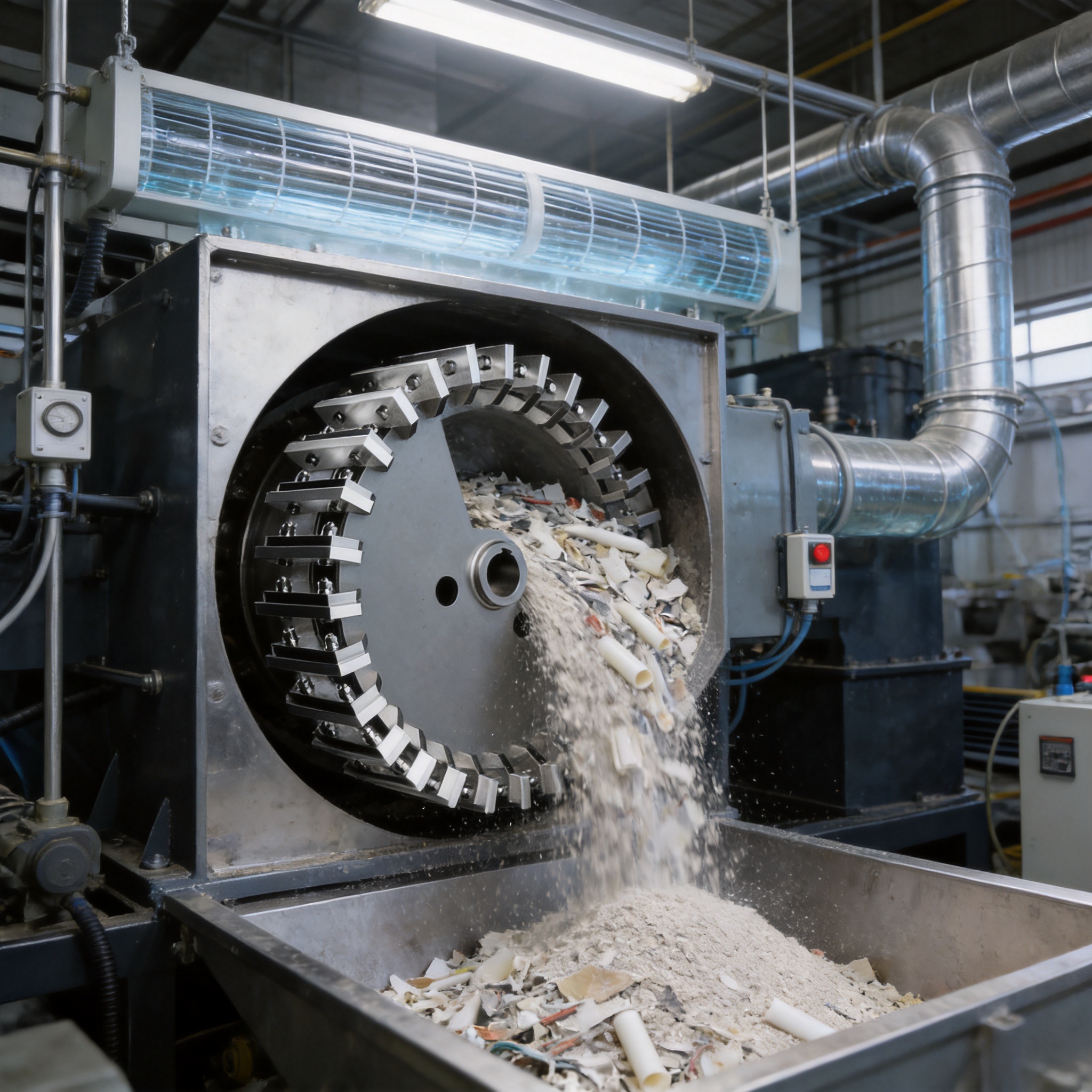
7. Particle Size, Purity, and Product Quality
The final value of pulverized PVC is closely connected to particle size and cleanliness. Recycled powder may be used in regranulation, extrusion, injection molding, calendering, profile production, flooring, wall panels, pipes, foam boards, cable compounds, and leather products. In each of these applications, inconsistent powder can create downstream processing problems.
A rotor with sharp and evenly arranged cutting blocks can help produce more uniform particles. A narrow distribution may improve feeding behavior, blending, melting, and dispersion. It may also reduce the need for repeated classification or regrinding. The stated product range of approximately 20–100 mesh provides flexibility for different applications, although the actual mesh result must be confirmed through production testing.
Uniformity is influenced by more than the rotor. Feed size should be controlled before pulverizing, and the material should be free from excessive moisture. The pulverizer should operate at a stable feed rate, with an appropriate rotor speed and grinding clearance. Downstream screens, classifiers, or collection systems must also be selected correctly.
High-quality PVC powder should not contain significant coarse particles, long fibers, or visibly degraded material. Excessively coarse particles may cause surface defects or inconsistent melting in later processes. Fiber-like residues can interfere with feeding and reduce product appearance. Discoloration may indicate excessive heat, contamination, or chemical degradation.
The rotor’s cutting action, combined with controlled cooling, is intended to support clean powder production without significant scorching or decomposition discoloration. For recycling plants, this can increase the value of recovered PVC by producing a feedstock suitable for more demanding applications.
8. Applications in PVC Recycling
The rotor is suited to a broad range of PVC recycling tasks. Waste PVC pipes and profiles can be pre-crushed and then pulverized into a fine powder for blending or reprocessing. Window and door trimming, rigid sheets, flooring offcuts, cable sheathing, bottle caps, and injection-molding scrap can also be processed when the material has been appropriately sorted and prepared.
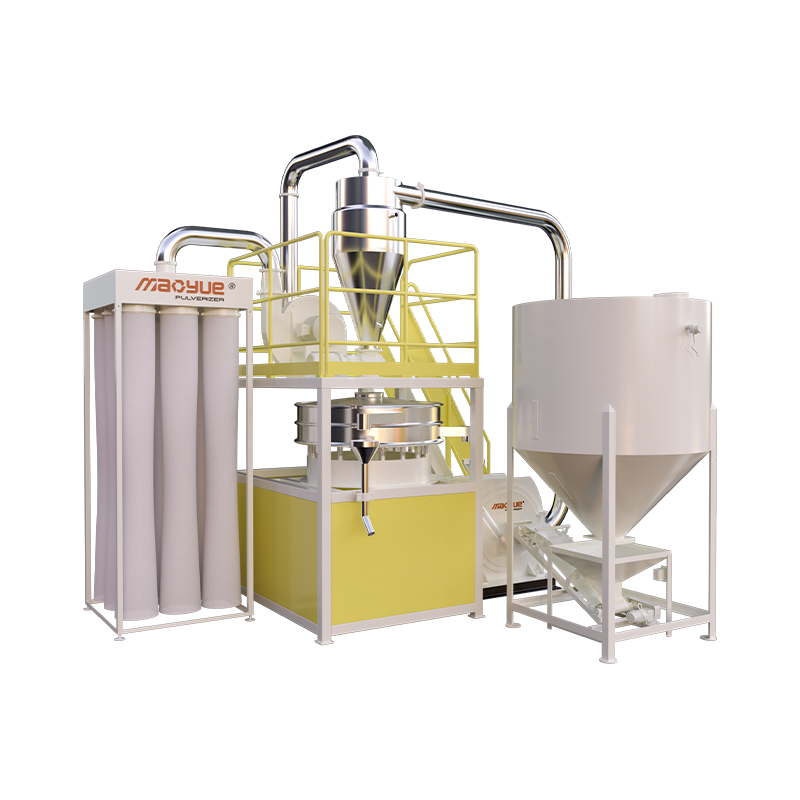
In a typical recycling workflow, large items are first inspected and sorted. Metal, dirt, and incompatible plastics are removed. A crusher reduces the feed to a manageable size, after which the pulverizer performs fine size reduction. The powder may then pass through a cyclone, dust separator, classifier, or storage system. The rotor is a critical component in the fine-grinding stage because it determines the intensity and consistency of cutting.
Recycled PVC powder can be used in regranulation, extrusion profiling, injection molding, and calendering. The better the powder’s fineness, purity, and thermal condition, the more easily it can be integrated into downstream processes. A stable powder may improve the consistency of recycled products and help manufacturers reduce dependence on virgin resin.
The system also supports green manufacturing objectives. By converting production scrap and post-use PVC components into reusable powder, manufacturers can reduce waste disposal, conserve raw materials, and establish a more closed-loop material system. Effective recycling also supports national circular-economy initiatives and broader carbon-reduction goals.
9. Applications in PVC Powder Products and Construction Materials
PVC micropowder is used in many construction-related products. Flooring, wall panels, pipes, profiles, foam boards, cable compounds, and synthetic leather products may require powders with consistent flow, fineness, and processing behavior.
When powder is uniform and free from excessive agglomeration, it can feed more consistently into extrusion and calendering equipment. Stable feeding contributes to smoother surfaces, fewer pores, and reduced color variation. It can also simplify the formulation process when the powder is blended with plasticizers, stabilizers, pigments, fillers, or other additives.
Construction-material manufacturers often operate at high volume and cannot tolerate frequent interruptions. A modular rotor can help reduce maintenance disruption because cutting blocks can be renewed individually. The combination of wear-resistant edges and temperature control is valuable when a plant needs to run continuously for extended shifts.
For filled PVC, wear resistance becomes particularly important. Calcium carbonate and other mineral additives can accelerate abrasion, especially when the feed rate is high. A rotor with heat-treated alloy cutting blocks may provide a longer service interval than a standard untreated or lightly treated cutter head. The correct design should still be selected based on the filler type and concentration.
10. Polymer Modification and Chemical Applications
Fine PVC powder is also used in polymer modification and chemical processing. PVC blends containing fillers, additives, pigments, or functional materials may need to be pulverized to improve mixing and dispersion. A controlled particle size can help achieve more consistent distribution of additives and support improved mechanical or processing properties.
Modified masterbatch production may benefit from uniform carrier powder. When the base material is consistent, downstream compounding can become more predictable. Fine powder may also improve the contact area between PVC and other formulation ingredients, although the final result depends on the formulation, mixing energy, and thermal conditions.
Other potential applications include chemical carrier powder preparation, laboratory sample testing, and fine grinding of PVC components recovered from electronic waste. These applications can be sensitive to contamination and particle-size distribution. For small-batch or laboratory use, the rotor’s replaceable cutting blocks can also be useful because different materials may be processed at different intervals, requiring easy cleaning and inspection.
11. Advantages over Conventional Pulverizer Discs
The primary advantage over a conventional monolithic disc is maintainability. A conventional disc may require complete replacement or extensive reworking when its cutting surface becomes damaged. The modular rotor concentrates wear in replaceable blocks, reducing the amount of material that must be discarded during routine service.
The second advantage is cutting-point density. Multiple blocks can provide more frequent shearing contacts than a low-tooth-count design. This may increase processing efficiency and support higher capacity at equivalent motor power, particularly when the feedstock and operating parameters are properly matched.
The third advantage is adaptability. The manufacturer can customize the number of blade blocks, cutting-edge angle, surface coating, and carbide insert configuration. This allows the same basic rotor concept to be adjusted for rigid PVC, flexible PVC, filled materials, recycled scrap, or special powder-fineness requirements.
The fourth advantage is potential service life. The supplied product information states that the modular cutter head can extend overall service life by two to three times compared with traditional designs under suitable operating conditions. The actual result depends on material abrasiveness, contamination, production hours, maintenance discipline, and cooling performance. Even when the total life extension differs from the stated range, replaceable blocks can still reduce the cost of maintaining the rotor body.
The fifth advantage is compatibility. The rotor can be adapted directly to disc-diameter models in the manufacturer’s PVC pulverizer series and may be partially compatible with selected disc-type grinders from other brands. Compatibility must be confirmed using machine drawings, shaft dimensions, bolt patterns, rotor diameter, axial position, and working-clearance requirements before ordering.
| Performance or Maintenance Factor | Modular PVC Pulverizer Rotor | Traditional Monolithic or Low-Tooth-Count Disc |
|---|---|---|
| Replacement method | Individual cutting blocks can be replaced | May require full-disc replacement or extensive reworking |
| Maintenance downtime | Potentially reduced through localized service | Often longer when the complete cutting surface is affected |
| Wear management | Worn sections can be renewed independently | Wear may require replacing a larger assembly |
| Cutting-point density | Multiple distributed cutting blocks | Fewer cutting points in low-tooth-count designs |
| Customization | Blade quantity, angle, coating, and inserts can be specified | Usually more limited after manufacture |
| Material suitability | Can be configured for PVC, filled PVC, and recycled materials | Depends heavily on the original disc specification |
| Service planning | Replacement blocks can be stocked as individual spare parts | Complete discs may require greater inventory investment |
| Thermal performance | Designed to operate with air-and-water cooling systems | Depends on the machine’s original cooling arrangement |
12. Manufacturing Strengths of the Supplier
Changzhou Mao Yue Intelligent Equipment Co., Ltd. is a source manufacturer with approximately 30 years of experience in plastic crushing and pulverizing equipment. The company pioneered development in the plastic pulverizer market and focuses on producing equipment and components according to European quality standards.
The company’s six processing workshops provide capacity for machining, fabrication, assembly, testing, and related manufacturing operations. Each workshop averages about 1,400 square meters, creating a combined production environment suitable for both standard products and customized orders.
Precision manufacturing equipment is a major part of the company’s production strength. Taiwan-imported high-precision grinding machines built to German standards support accurate machining. German dynamic balancing equipment is used for rotating components, while Japanese welding systems contribute to the fabrication of machine structures and assemblies.
These capabilities are important because pulverizing equipment contains many parts that must work together. A rotor cannot perform properly if the spindle is misaligned, the frame lacks rigidity, the grinding plates are uneven, or the cooling system is poorly integrated. A manufacturer with in-house processing capability can coordinate these details more effectively than a supplier that only resells generic components.
The company’s technical team studies advanced technologies from international equipment-manufacturing markets, including Germany. This helps the organization improve mechanical design, processing accuracy, safety, and operating stability. It also supports the development of solutions for various industries, from recycling and compounding to powder production and rotational molding.
Quality Management and Certifications
The company has obtained CE mechanical certification and ISO 9001 quality management system certification. CE certification indicates conformity with applicable European health, safety, and environmental protection requirements for relevant machinery. ISO 9001 demonstrates the use of a documented quality management framework focused on process control and continual improvement.
Certifications do not replace technical evaluation, but they provide customers with an additional indication that product development, manufacturing, inspection, and documentation are managed systematically. For export customers, certification can simplify internal supplier qualification and support compliance procedures in different markets.
The company has established long-term partnerships with more than 5,000 domestic and international enterprises. Its export experience exceeds 20 years, helping it understand the practical requirements of overseas installation, spare-parts support, communication, packaging, and technical documentation.
13. Installation and Replacement Considerations
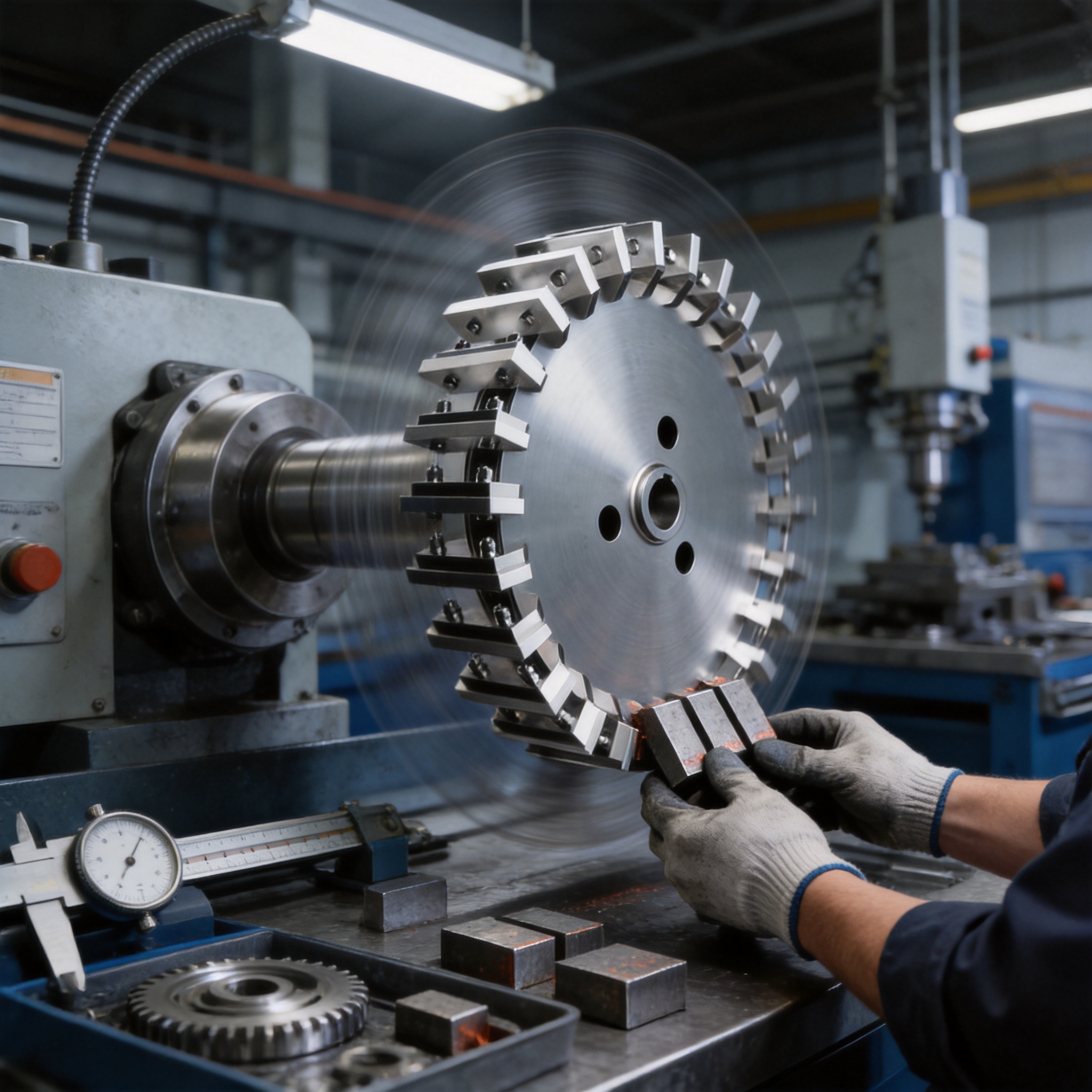
Before installing a replacement rotor, the user should confirm the pulverizer model, disc diameter, shaft-hole dimensions, keyway or locking arrangement, bolt pattern, rotor thickness, cutting-block direction, and required clearance. A drawing or technical confirmation is recommended, especially when adapting the rotor to a machine made by another manufacturer.
The spindle and mounting surfaces should be cleaned and inspected. Burrs, accumulated powder, corrosion, or damaged keyways can prevent proper seating. The rotor should be installed in the correct axial position, and all fasteners should be tightened evenly. Thread-locking methods should be used only when approved for the machine and operating temperature.
After installation, the operator should rotate the assembly manually to confirm that there is no interference. Guards must be fitted before electrical testing. The first trial should be conducted at low or controlled speed where possible, followed by inspection for abnormal noise, vibration, heat, or fastener movement.
Blade blocks should be arranged according to the supplied layout. Mixing different block types or reversing cutting edges may change the balance and material-flow pattern. If only some blocks are replaced, the operator should confirm that the replacement parts have the same mass and dimensions as the original components or follow the manufacturer’s balancing instructions.
For high-speed rotating machinery, safety procedures are essential. Operators should isolate electrical power before opening the chamber, wait for complete stoppage, use suitable protective equipment, and follow lockout and tagout procedures. Sharp cutting edges must be handled with protective gloves and appropriate lifting tools.
14. Maintenance Recommendations
Routine inspection should focus on cutting-edge sharpness, block fastening, rotor balance, bolt condition, shaft-hole wear, cooling performance, and the condition of stationary grinding components. Inspection frequency should be based on production hours and material abrasiveness rather than a fixed calendar period alone.
When the cutting edge becomes rounded, the machine may show reduced capacity, increased power consumption, higher outlet temperature, or a less uniform powder. These signs indicate that the blocks should be inspected. Continuing to operate with severely worn edges can place additional load on the motor and increase thermal stress.
Replacement blocks should be stored in a dry and clean environment. Spare parts should be protected from impact and identified by specification. Mixing unapproved components may create differences in weight, hardness, cutting angle, or mounting dimensions.
The cooling system should be checked for sufficient airflow and water flow. Air passages should be kept free of dust accumulation. Water circuits should be inspected for leaks, scaling, corrosion, and blockages. Temperature sensors should be checked periodically because inaccurate readings can allow overheating to continue unnoticed.
Dynamic balance should be reconsidered after significant repairs, after replacing an unusual number of cutting blocks, or after any event involving foreign-object impact. A balanced rotor is necessary for low vibration and long component life. If abnormal vibration develops, the machine should be stopped and inspected rather than operated until a failure occurs.
15. Customization Options
Different PVC products require different grinding conditions. The rotor can be customized in several ways to match the customer’s material and machine.
Blade-block quantity affects the number of cutting contacts and the distribution of the working load. A higher block count may support intensive cutting and finer reduction, while a different spacing arrangement may be more suitable for a particular feed rate or material type.
The cutting-edge angle influences the balance between shearing, impact, and friction. A sharper angle may support efficient cutting of certain materials, while a more robust angle may be preferred for abrasive or impact-heavy feedstock. The correct angle should be selected through technical evaluation rather than by assuming that the sharpest edge is always the best option.
Surface wear-resistant coatings can be specified when additional abrasion protection is required. Carbide inserts may also be considered for especially demanding conditions. These options can increase initial cost, but they may be justified when the material contains high filler levels or when maintenance access is difficult.
Customization should include a review of the complete operating system. Rotor design, stationary plate design, machine speed, motor power, cooling capacity, feed preparation, and target particle size must be considered together. A rotor cannot compensate for an undersized motor, poor material sorting, insufficient cooling, or incorrect operating clearance.
16. Selecting the Rotor for a Production Line
Customers should begin by identifying the feed material. Important details include whether the PVC is rigid or flexible, the presence of fillers, moisture content, contamination risk, incoming particle size, and the desired final mesh. Production volume and planned operating hours are equally important.
The machine model and disc diameter should then be confirmed. Shaft dimensions, mounting details, rotor speed, motor power, and grinding-chamber geometry determine whether a rotor is suitable. For replacement applications, photographs alone may not be sufficient. Technical drawings, measurements, and machine nameplate information provide a more reliable basis for selection.
Maintenance conditions should also be considered. If the plant has limited service staff or operates continuously, a modular rotor with readily available replacement blocks may offer a clear advantage. If the machine processes highly abrasive filled PVC, the customer may want to evaluate upgraded alloy steel, surface coating, or carbide-insert options.
Finally, the customer should request information about inspection, balancing, heat treatment, spare parts, and installation support. These factors are essential to the total cost of ownership. A low purchase price may not be economical if the component has poor balance, short edge life, or limited technical support.
17. Total Cost of Ownership
The cost of a pulverizer rotor includes more than the purchase price. It includes maintenance labor, production downtime, energy consumption, replacement frequency, powder quality, and the potential effect of vibration or overheating on other machine parts.
A modular rotor can reduce ownership cost by allowing the operator to replace only worn cutting blocks. The rotor body remains in service for a longer period, and spare-part inventory can be managed more efficiently. Faster maintenance can also reduce lost production, which may be more financially significant than the cost of the cutting blocks themselves.
Sharp, wear-resistant edges may support lower energy consumption because the machine spends less power rubbing and deforming material unnecessarily. Better cutting can also reduce heat generation and help maintain powder quality. These benefits depend on regular inspection and timely replacement; a modular design is most effective when the operator uses it as intended.
Long-term value is also influenced by supplier support. A manufacturer with its own workshops, technical staff, and export experience can help customers identify the correct configuration, arrange spare blocks, and address installation issues. This support can reduce the risk associated with purchasing a specialized rotating component.
18. Recommended Operating Practices
Feedstock should be sorted before it reaches the pulverizer. Metal, stones, excessive dirt, and incompatible plastic should be removed. Large items should be reduced to a suitable pre-crushed size so the rotor can perform fine grinding rather than attempting to absorb oversized impact loads.
The feed rate should be stable. Overfeeding can reduce residence time, increase motor load, raise temperature, and produce coarse particles. Underfeeding may reduce productivity and create unstable operating conditions. The correct rate should be established through testing for each material.
Rotor speed and grinding clearance should be adjusted to the target powder size. Higher speed is not always the best solution because it can increase heat and wear. The optimal setting balances output, fineness, power consumption, and temperature.
Cooling should be active before the process reaches an excessive temperature. Waiting until material begins to stick or discolor can make recovery more difficult. Temperature records can help identify changes in feedstock, blade condition, or cooling-system performance.
Operators should monitor vibration, noise, current, outlet temperature, powder appearance, and production rate. A gradual decline in output or a rise in current may indicate edge wear. Sudden vibration or metallic noise may indicate a loose block, foreign object, or balance problem and requires immediate shutdown.
19. Frequently Asked Questions
What is the main purpose of this PVC pulverizer rotor?
The rotor is the high-speed cutting component inside a disc-type pulverizer. It works with stationary grinding components to reduce PVC scrap and other suitable plastic materials into fine powder.
What makes the rotor different from a conventional solid disc?
Its cutting surface uses multiple independently replaceable blocks. When wear occurs, the affected blocks can be replaced without necessarily replacing the entire disc. The arrangement also provides multiple cutting points for efficient shearing and friction.
What hardness do the cutting blocks have?
The supplied specification indicates stable hardness in the approximate range of HRC 58–62 after carburizing, quenching, and multiple tempering processes. The actual result should be verified through the manufacturer’s inspection documentation for the supplied batch.
Can the rotor process PVC containing fillers?
Yes. The rotor is specifically described for high-wear PVC conditions, including PVC containing fillers. However, the correct alloy, coating, carbide option, and maintenance interval should be selected according to the type and concentration of filler.
What particle size can the pulverizer produce?
The stated working range is approximately 20–100 mesh. Actual particle size depends on rotor diameter, speed, clearance, feed rate, material properties, moisture, and downstream classification.
Can the rotor be used for recycled PVC pipes and profiles?
Yes. PVC pipes, profiles, window and door trimmings, flooring, sheets, cable sheathing, injection-molding scrap, and similar materials are among the intended applications, provided they are sorted and pre-crushed appropriately.
How does the rotor help reduce maintenance costs?
Only worn or damaged cutting blocks need to be replaced in many maintenance situations. This can reduce spare-part consumption, shorten service time, and keep the main rotor body in operation for a longer period.
Is the rotor compatible with other brands of pulverizers?
It may be partially compatible with selected disc-type grinders from other manufacturers. Compatibility must be confirmed using shaft dimensions, disc diameter, mounting pattern, thickness, speed, clearance, and machine drawings.
Why is dynamic balancing important?
Dynamic balancing reduces vibration in a rotating assembly. Proper balance helps protect bearings, fasteners, seals, the machine frame, and the grinding chamber while also improving operating comfort and noise performance.
How does the cooling system protect PVC powder quality?
The air-and-water cooling system helps remove friction heat and maintain a stable operating temperature. This reduces the risk of PVC softening, sticking, degradation, yellowing, or discoloration.
Can blade quantity and angle be customized?
Yes. The available customization options include cutting-block quantity, cutting-edge angle, surface wear-resistant coating, and carbide inserts. The selection should be based on feedstock and production requirements.
How often should cutting blocks be replaced?
There is no universal replacement interval. Replacement depends on material abrasiveness, filler content, contamination, feed rate, operating hours, temperature, and the acceptable particle-size specification. Regular inspection is more reliable than a fixed schedule.
What certifications does the supplier have?
The supplier has obtained CE mechanical certification and ISO 9001 quality management system certification. These certifications support the company’s stated commitment to machinery safety and controlled manufacturing quality.
What information should be provided when requesting a quotation?
Customers should provide the pulverizer model, rotor diameter, shaft-hole dimensions, machine speed, motor power, feed material, filler content, desired mesh, production capacity, and photographs or drawings of the existing rotor. This information helps the manufacturer recommend the correct configuration.
20. Conclusion
The PVC pulverizer large disc-shaped rotor is designed for manufacturers that need efficient fine grinding, consistent powder quality, and practical maintenance. Its modular multi-blade construction provides an important advantage over monolithic and low-tooth-count discs because worn cutting blocks can be replaced individually. This approach can reduce downtime, lower spare-part costs, and extend the useful life of the rotating assembly.
Wear-resistant alloy steel, carburizing, quenching, multiple tempering, precision CNC machining, and dynamic balancing support reliable performance in demanding PVC applications. The rotor’s cutting arrangement is intended to increase shearing efficiency and help achieve a stable particle-size range of approximately 20–100 mesh. When combined with appropriate feed preparation, grinding clearance, and cooling, it can support high-output production without excessive heat, adhesion, or powder discoloration.
The manufacturing strength of Changzhou Mao Yue Intelligent Equipment Co., Ltd. further adds value to the product. Six processing workshops, precision grinding equipment, dynamic balancing systems, controlled welding, an experienced technical team, CE certification, ISO 9001 certification, and more than 20 years of export experience provide a strong foundation for both standard and customized solutions.
For PVC recycling plants, construction-material producers, compounders, powder manufacturers, and specialized laboratories, the rotor can serve as a central component in a reliable pulverizing line. Its greatest benefit is not a single feature but the integration of cutting efficiency, wear resistance, temperature control, balance, compatibility, and serviceability into one industrial component.
References
1. Product information supplied for the PVC Pulverizer Large Disc-Shaped Rotor, including design, material, heat treatment, applications, and customization options.
2. General principles of plastic size reduction, disc pulverizer operation, cutting-edge wear, and particle-size control.
3. General engineering practices for carburizing, quenching, tempering, and wear-resistant alloy steel components.
4. General industrial guidance concerning dynamic balancing of high-speed rotating machinery.
5. General quality-management principles associated with ISO 9001 certification.
6. General machinery safety and conformity principles associated with CE mechanical certification.
7. Manufacturer information concerning plastic crushing and pulverizing equipment, workshop capacity, processing equipment, technical capabilities, and application experience.