

 English
 русский
 Español
 عربى
عربى 中文简体
中文简体
 中文简体
中文简体
Content
- 1 Introduction
- 2 Core Product Positioning
- 3 High-Efficiency Grinding System
- 4 Temperature Control and Continuous Operation
- 5 Durable Components for PVC and Filled Formulations
- 6 Powder Quality and Fineness Control
- 7 Applications in PVC Recycling
- 8 Applications in Compound Modification
- 9 Technical Specification Overview
- 10 Comparison with Smaller and Larger Pulverizers
- 11 Manufacturing Strengths and Quality Control
- 12 Company Certification and Service Capability
- 13 Line Integration and Supporting Equipment
- 14 Installation, Operation, and Maintenance
- 15 Economic Value for Medium-Sized Enterprises
- 16 Why Choose This Model for a Medium-Scale Line?
- 17 Frequently Asked Questions
- 17.1 What materials can the Model 700 PVC Pulverizer process?
- 17.2 What is the production capacity?
- 17.3 What fineness can the machine produce?
- 17.4 How does the cooling system work?
- 17.5 Can it operate continuously?
- 17.6 Is it suitable for calcium-filled PVC?
- 17.7 What is the purpose of the vibrating screen?
- 17.8 Does the system include dust collection?
- 17.9 What starting or speed-control options are available?
- 17.10 How does this model compare with a Model 500?
- 17.11 How does it compare with an 800-class machine?
- 17.12 What manufacturing capabilities support the machine?
- 17.13 Is the equipment certified?
- 18 Conclusion
- 19 References
- 20 Product: Model 700 PVC High-Efficiency Grinding Equipment
Introduction
PVC recycling and powder production require equipment that can combine high throughput, stable particle size control, reliable temperature management, and reasonable operating cost. When a pulverizer is used continuously for recycled profiles, pipes, flooring, cable sheathing, wallboards, or compound formulations, inconsistent grinding performance can quickly affect the quality of the final product. Excessive heat may cause material deformation, unstable particle size may reduce downstream processability, and frequent maintenance can increase production costs.
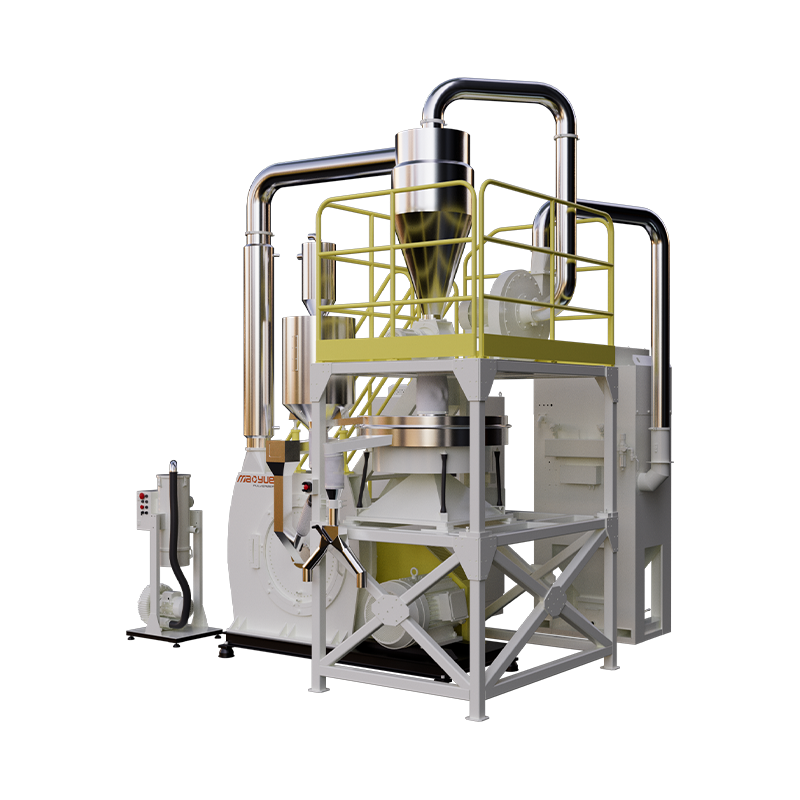
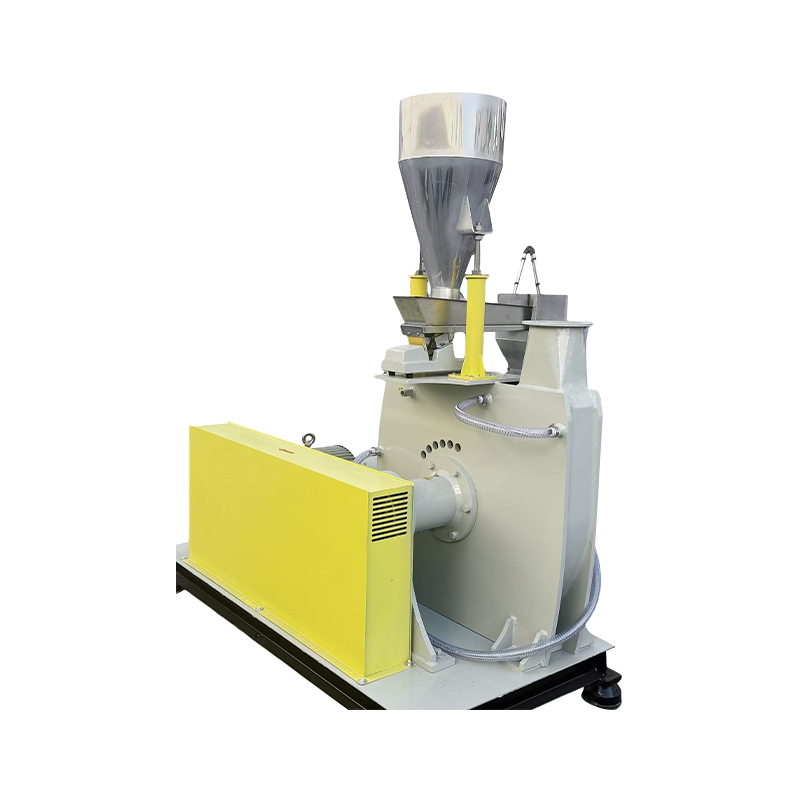
The Model 700 PVC High-Efficiency Grinding Equipment is designed to address these challenges in medium-scale PVC recycling and manufacturing operations. With a disc diameter of approximately 660 to 700 millimetres, a main motor power of 55 kilowatts, and a stated capacity of approximately 320 to 500 kilograms per hour under the listed configuration, the machine provides a practical balance between output, investment, energy consumption, and operational stability.
The equipment is positioned between smaller pulverizers, such as a Model 500, and larger high-capacity systems, such as an 800-class machine. Compared with smaller equipment, it delivers greater production capacity and more effective continuous processing. Compared with larger machines, it generally requires a lower initial investment, occupies less space, and offers a more manageable power requirement. This balance makes it suitable for medium-sized recycling plants, PVC product manufacturers, cable compound producers, flooring manufacturers, and compound modification facilities.
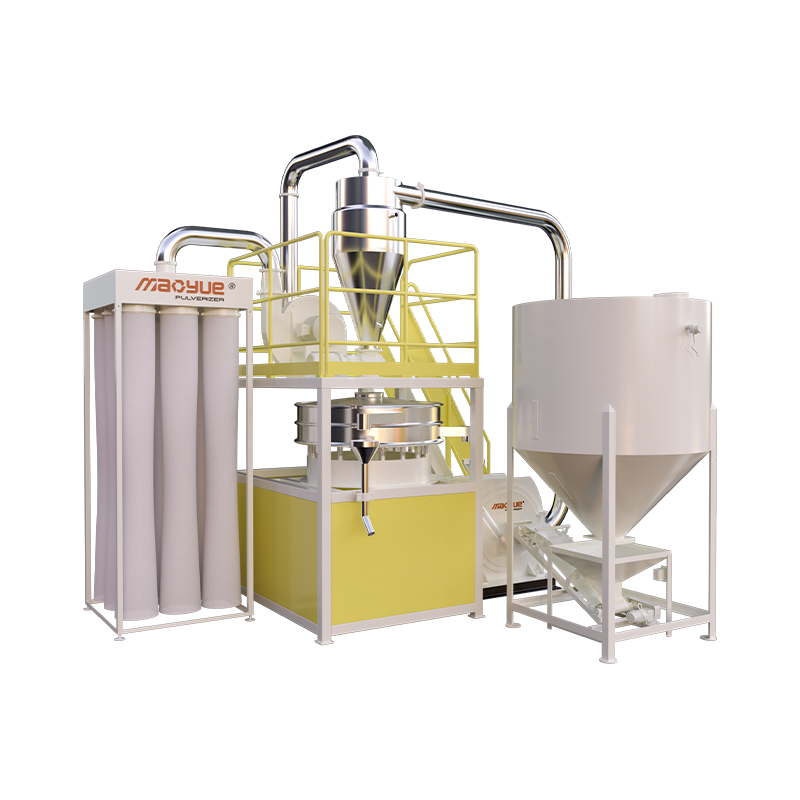
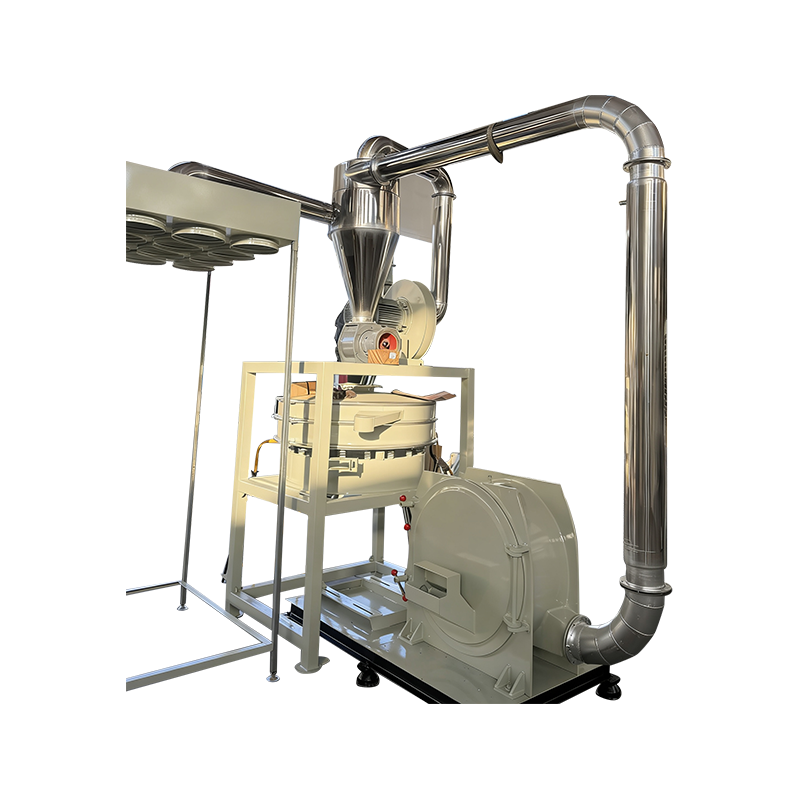
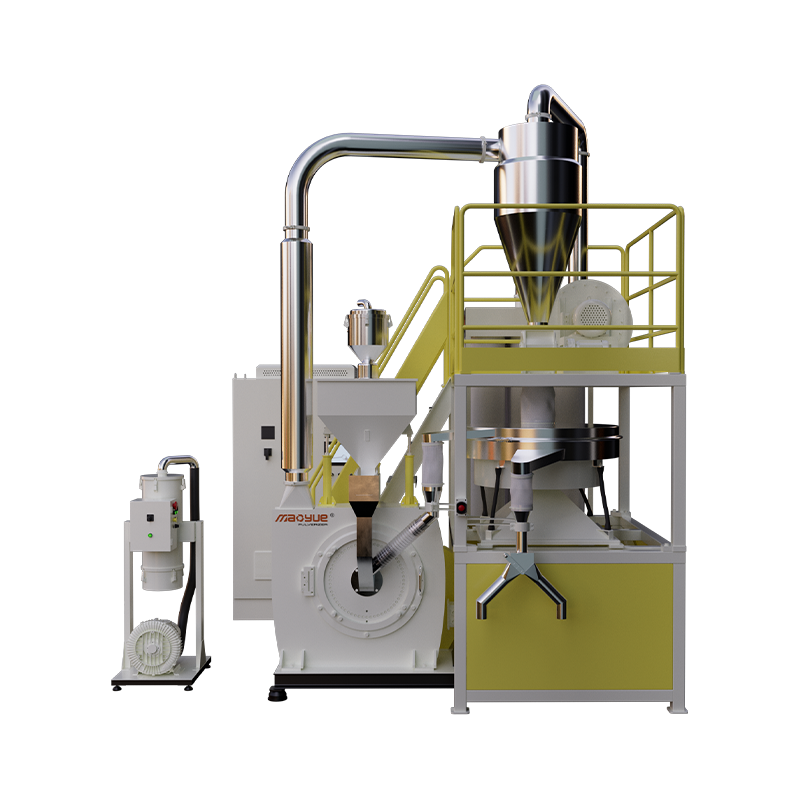
The Model 700 is not simply a larger grinding disc. Its performance is based on the coordinated design of the grinding chamber, moving blades, fixed teeth, cooling system, feeding arrangement, conveying line, vibrating screen, dust collection equipment, and control options. These systems work together to produce PVC powder with controllable fineness, stable flowability, and low impurity content.
Core Product Positioning
The Model 700 PVC Pulverizer is primarily intended for operations requiring stable medium-to-high output rather than occasional laboratory processing. It is suitable for continuous operation under medium-to-high loads, with a typical stable working period of approximately eight to twelve hours when correctly installed, operated, and maintained.
Its production range makes it suitable for daily processing requirements of approximately eight to twelve tons, depending on material type, moisture, feeding consistency, target mesh size, formulation, and operating conditions. Hard, thick, highly filled, or contaminated materials may produce a lower output than clean and properly prepared PVC scrap. Conversely, well-sorted and pre-crushed material can allow the machine to operate closer to its higher capacity range.
The equipment can process a variety of PVC-based feedstocks, including rigid PVC profiles, window and door offcuts, scrap pipes, vinyl flooring, wallboard waste, ceiling panel waste, cable sheathing, leather-like PVC products, and other industrial or post-consumer PVC materials. It can also be used for PVC formulations containing calcium carbonate, stabilisers, plasticisers, flame retardants, and other functional additives.
With flexible fineness control from approximately 10 to 50 mesh in the listed specification, and a broader stated adjustment capability of approximately 10 to 100 mesh depending on configuration, the pulverizer can support different downstream requirements. Coarser powder may be appropriate for some recycling and extrusion applications, while finer powder may be preferred for compound modification, coating, or specific product formulations.
High-Efficiency Grinding System
Large Grinding Disc and Optimized Chamber
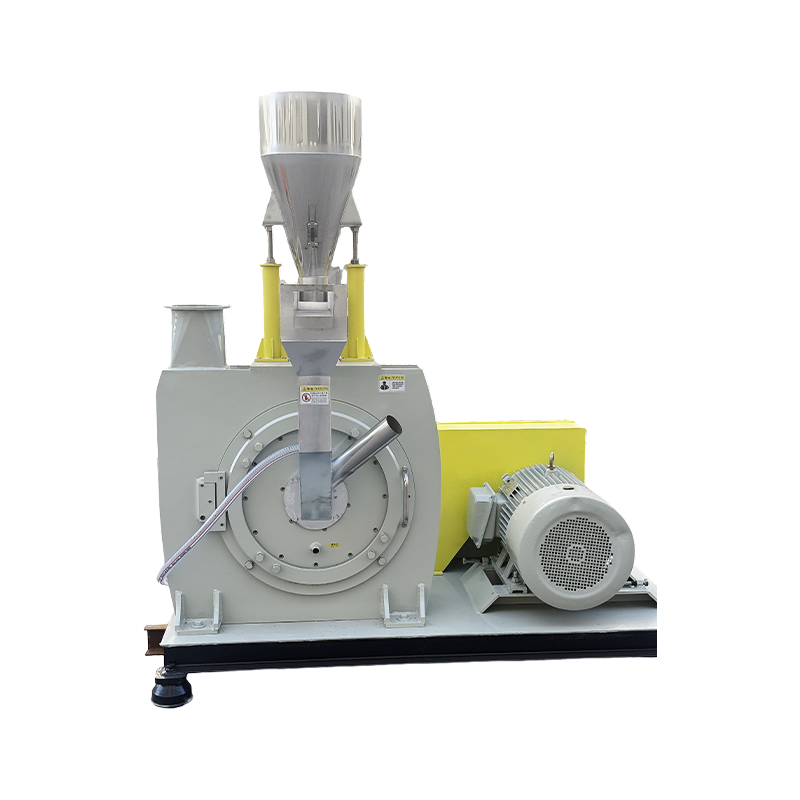
The grinding disc has a diameter of approximately 660 millimetres in the standard technical table, while the product range is described as approximately 660 to 700 millimetres. This disc size gives the machine a larger active grinding area than smaller models. A larger working surface allows more material to be engaged during each rotation and supports higher throughput without relying solely on an extreme increase in rotational speed.
The design is especially important for PVC because different forms of waste behave differently during size reduction. Rigid profiles and pipes require effective impact and shearing action, while soft PVC, cable sheathing, and plasticised materials may tend to deform or become warm during grinding. The grinding chamber must therefore create a controlled combination of cutting, impact, and friction rather than depending on one mechanism alone.
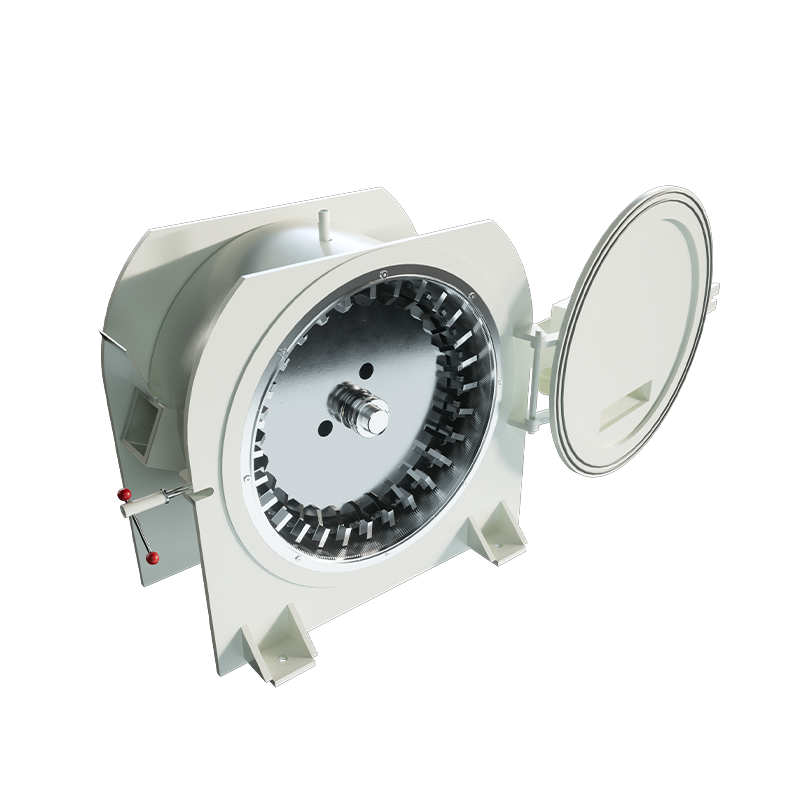
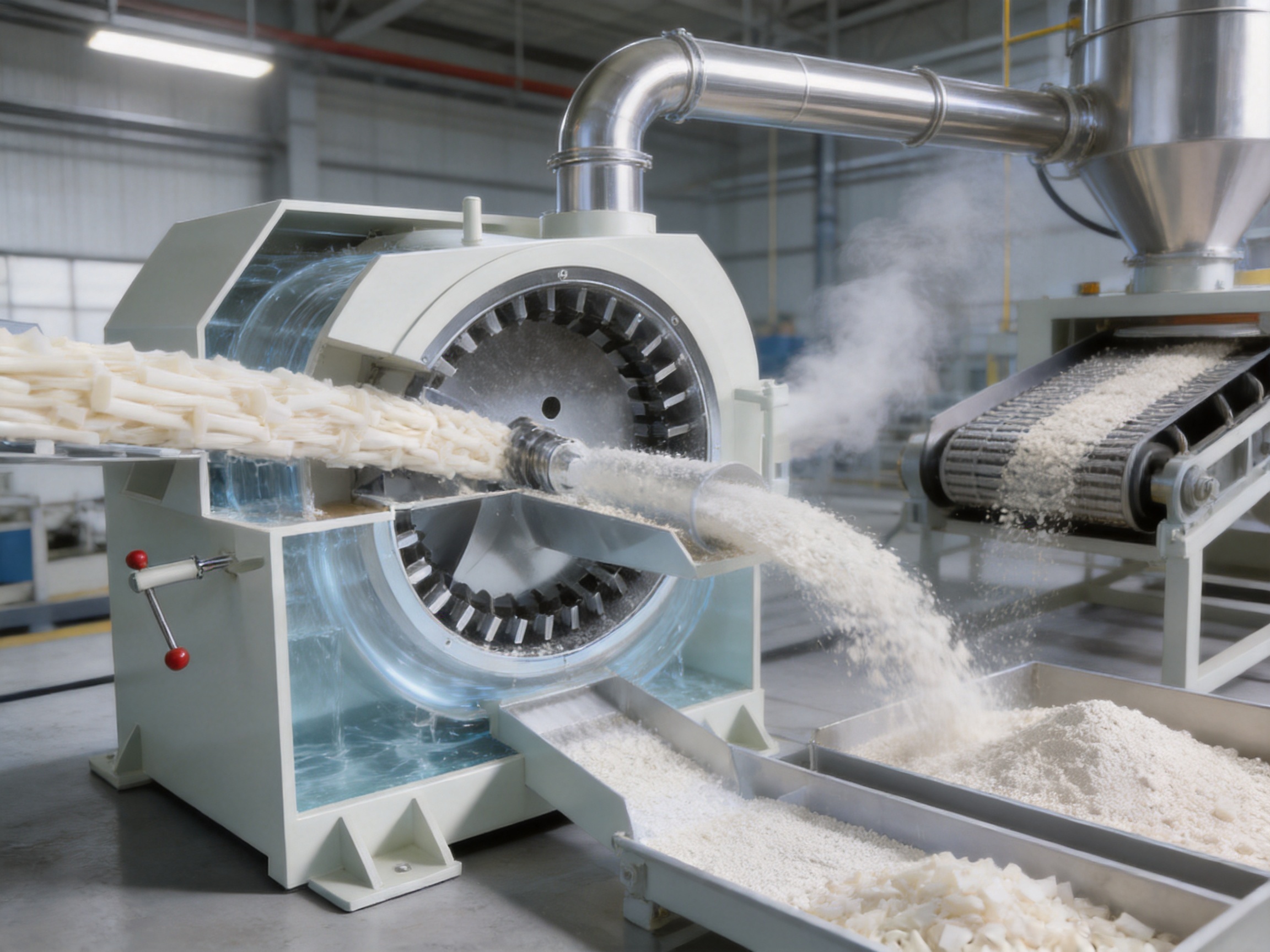
The Model 700 uses an arrangement of approximately 32 to 36 moving blades together with high-density dual-row fixed teeth. This configuration increases the number of active contact points inside the grinding zone. As feedstock moves through the chamber, it encounters repeated cutting and frictional interactions, helping to break the material into smaller and more uniform particles.
Dual-Effect Shearing and Friction
The combination of moving blades and fixed teeth creates a dual-effect grinding process. The moving components provide shearing and impact, while the fixed teeth create resistance and friction. This arrangement is beneficial for PVC waste containing different thicknesses, hardness levels, and filler concentrations.
In comparison with a basic pulverizer using fewer cutting elements, the denser blade and tooth arrangement can increase the number of grinding actions occurring in a single pass. This may help improve capacity at the same target fineness. It can also reduce the need for repeated circulation of material, which may limit unnecessary residence time and reduce heat accumulation.
The grinding effect is influenced by many operating variables, including feed rate, blade clearance, rotor condition, material size, moisture level, formulation, and desired mesh size. The machine’s mechanical design provides the foundation for performance, but correct adjustment remains essential. A well-maintained blade system can deliver more consistent powder than an improperly adjusted machine with higher nominal power.
For recycling companies, this means that production can be increased without necessarily selecting the largest available pulverizer. For manufacturers, it means the machine can support regular production while retaining flexibility for different PVC recipes and waste streams.
Model 700 PVC High-Efficiency Grinding Equipment
Temperature Control and Continuous Operation
Composite Water-Cooling and Air-Cooling System
Temperature control is one of the most important factors in PVC pulverizing. PVC can be sensitive to excessive heat, particularly when it contains plasticisers, stabilisers, pigments, fillers, or other additives. If the powder becomes too warm, it may soften, agglomerate, change colour, or lose the flow characteristics required by a downstream process.
The Model 700 is equipped with a high-flow water-cooling and air-cooling composite system. The listed cooling method uses water circulation, with one connection serving as the inlet and another as the outlet. Air movement through the system also assists in removing heat from the grinding and conveying process.
According to the supplied product information, the cooling design is intended to maintain temperature fluctuations within approximately plus or minus three to four degrees Celsius under suitable operating conditions. Stable temperature control can support more consistent powder quality, especially during long production runs or when processing materials with high frictional resistance.
The combined cooling approach offers a practical advantage over relying on air cooling alone. Air cooling may be sufficient for light-duty operation, but it can become less effective when throughput increases or when the material generates significant frictional heat. Water cooling provides a more direct method of extracting heat, while air movement helps transport material and remove residual heat from the system.
Benefits for Continuous Production
Stable cooling supports longer production cycles by reducing the risk of thermal accumulation. This is particularly valuable for facilities operating one or more shifts per day. When temperature is more stable, operators can spend less time stopping the machine to wait for the chamber to cool, provided that the feedstock, cooling water, and electrical systems are properly managed.
Continuous operation also depends on the condition of the grinding components. The Model 700 uses carburising and quenching together with a wear-resistant coating for the grinding disc and related working surfaces. This treatment is intended to improve hardness, wear resistance, and service life when processing calcium-containing powders, stabilised PVC, and other abrasive formulations.
The stated service life of approximately 800 to 1,200 hours for calcium-containing powders and stabilised PVC is dependent on the actual material, operating parameters, maintenance schedule, and wear tolerance. Even so, the treatment can extend the interval between major maintenance activities compared with untreated or lower-grade components.
Durable Components for PVC and Filled Formulations
High-Chromium Alloy Blades
The standard specification identifies high-chromium alloy as the material for the knives and blades. High-chromium alloys are commonly selected for grinding applications because they can offer a useful combination of hardness, wear resistance, and resistance to surface deterioration.
This is important when processing PVC compounds containing calcium carbonate and other mineral fillers. Such fillers can accelerate wear on ordinary steel blades and grinding surfaces. As blade edges become worn, the machine may require more energy to achieve the same fineness, while output may decline and particle size distribution may become less consistent.
High-chromium alloy components are not maintenance-free. Blade clearance, fastening, alignment, cleaning, and inspection remain necessary. However, the material selection provides a stronger starting point for demanding applications. It also supports a more predictable maintenance plan for medium-sized factories that cannot afford frequent unscheduled downtime.
Carburising, Quenching, and Surface Protection
The grinding disc uses carburising and quenching combined with a wear-resistant coating. Carburising increases the carbon content near the surface of the steel, while quenching increases hardness through controlled heat treatment. A protective coating can further improve resistance to abrasive contact and repeated friction.
The advantage of combining these processes is that the component can retain a tougher internal structure while providing a harder working surface. This is relevant to pulverizers because grinding parts experience repeated mechanical loading, vibration, impact, and friction. A surface that is hard but excessively brittle may be vulnerable to chipping, while a surface that is too soft may wear rapidly.
Proper heat treatment must be supported by accurate machining and dynamic balancing. A well-treated component that is poorly balanced may still create vibration, noise, bearing stress, and uneven wear. The manufacturing capabilities of the equipment producer are therefore as important as the material grade itself.
Powder Quality and Fineness Control
Flexible Mesh Adjustment
The Model 700 supports flexible fineness control. The listed standard range is approximately 10 to 50 mesh, while the broader product description indicates that fineness can be adjusted from approximately 10 to 100 mesh depending on configuration and process requirements.
Mesh size is only one way to describe powder fineness, and actual particle size distribution may vary according to material properties and screening conditions. Nevertheless, the ability to adjust the output gives users greater flexibility when processing different PVC products or supplying several downstream applications.
For recycled PVC extrusion, the preferred powder may need to flow evenly and feed consistently into a compounding or extrusion system. For flooring, wallboard, or ceiling panel production, a uniform powder can contribute to consistent dispersion and product appearance. For compound modification, different fillers and additives may require different particle size targets to achieve the desired blend behaviour.
Vibrating Screen Integration
The equipment includes a vibrating screen with a diameter of approximately 1,200 millimetres and a 1.5-kilowatt motor. The screen separates material according to the selected opening and can help prevent oversized particles from entering the finished powder stream.
Screening after pulverization provides an additional quality-control stage. Material that does not meet the selected size can be returned for further processing or handled separately. This helps reduce the risk of oversized fragments affecting downstream feeding, surface quality, extrusion stability, or compound dispersion.
The vibrating screen also makes the overall line more adaptable. Operators can change screening specifications when switching from one product to another, subject to the machine configuration and operating procedure. This is useful for medium-sized factories that process several grades of PVC rather than manufacturing only one standard powder.
Low-Impurity Powder Production
The product information indicates a powder purity target with impurities below approximately 80 parts per million under suitable conditions. Actual purity depends on the cleanliness of the feedstock, upstream sorting, iron removal, equipment cleaning, and separation efficiency. A pulverizer cannot remove every contaminant that enters with unsorted waste.
For this reason, the Model 700 uses an iron-removal tie feeding arrangement and a pulse dust collector as part of the supporting system. Removing ferrous contamination before or during feeding helps protect the grinding chamber and reduces the risk of metallic particles entering the finished powder. Dust collection improves workplace cleanliness and supports more controlled handling of fine PVC material.
Applications in PVC Recycling
Profiles, Pipes, and Construction Waste
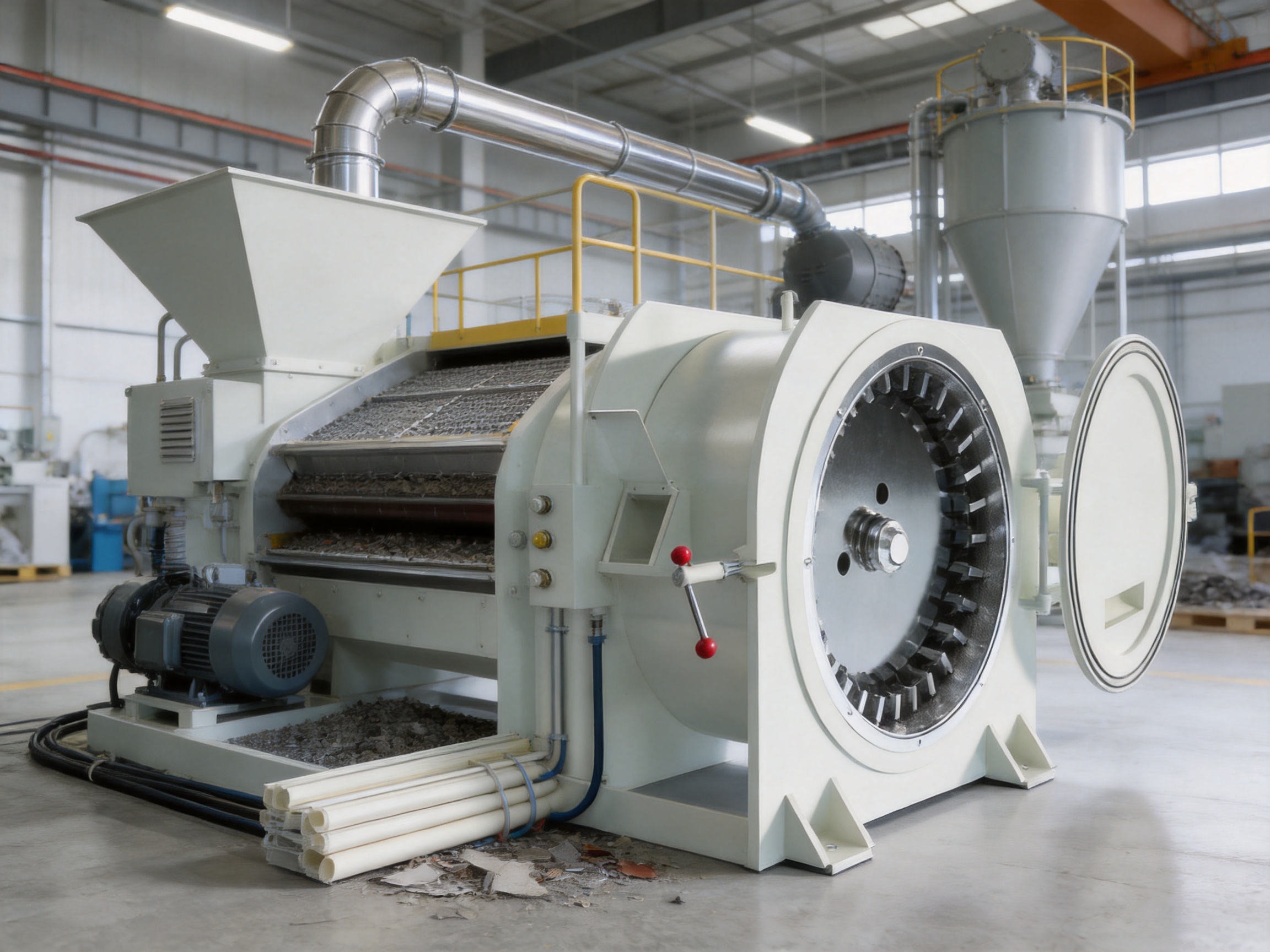
One of the primary uses of the Model 700 is the processing of discarded PVC window and door profiles, scrap pipes, building offcuts, and related construction materials. These materials are often available in medium to large quantities and may contain a mixture of rigid PVC, coatings, reinforcement, metal fragments, seals, or other attached components.
After sorting, removal of metal parts, and appropriate pre-crushing, the material can be supplied to the pulverizer for fine size reduction. The resulting powder may be used in recycled extrusion, profile production, pipe manufacturing, or compound preparation, depending on its composition and quality.
A stable pulverizing process can help recycling companies upgrade low-value scrap into a more useful intermediate material. Uniform powder is easier to store, blend, meter, and introduce into downstream equipment than irregular flakes or oversized fragments. It can also support more consistent formulation control when mixed with virgin PVC or other recycled materials.
Vinyl Flooring, Wallboards, and Ceiling Panels
Vinyl flooring and PVC wallboard production often requires powder with consistent flowability and a controlled particle size distribution. The Model 700 is suitable for recycling production waste and preparing PVC powder for medium-sized calendering or extrusion lines.
In a closed-loop production arrangement, edge trim, rejected sheets, offcuts, and other clean production waste can be returned to the pulverizing line. This reduces material loss and helps manufacturers recover value from internal scrap. The powder can potentially be blended into new formulations, subject to quality testing and product requirements.
Consistent powder feeding can contribute to more uniform product thickness, surface appearance, and mechanical behaviour. However, the final result also depends on formulation, mixing, heating, calender settings, extrusion conditions, and quality control throughout the production line.
Cable Sheathing and Soft PVC
PVC cable sheathing can contain plasticisers, pigments, stabilisers, and other additives. It may also be associated with copper or other conductive materials that must be removed before pulverization. After effective separation, the Model 700 can be used to reduce clean cable sheath waste into a fine powder for recycling or compound preparation.
Soft PVC often presents different grinding characteristics from rigid PVC. It may deform under heat or produce a less free-flowing powder if the process is not properly cooled. The composite cooling system and adjustable processing conditions are therefore valuable for cable recycling applications.
In addition, the vibrating screen helps control the final fraction, while the dust collector supports cleaner handling of fine particles. The result can be a more suitable feedstock for recycled cable compounds, flexible products, flooring, and other PVC applications.
Applications in Compound Modification
The Model 700 is also suitable for entry-level and medium-batch PVC compound modification. Manufacturers may use it to process PVC together with calcium carbonate, stabilisers, plasticisers, flame retardants, pigments, and other functional additives.
Different formulations can require different grinding conditions. A calcium-filled rigid formulation may be more abrasive than a plasticised formulation. A flame-retardant compound may require closer temperature monitoring. A pigment-containing material may require thorough cleaning during product changeover to prevent colour contamination.
The machine’s material changeover design and temperature control functions support operations that frequently switch between formulations. Although operators must still follow a defined cleaning and inspection procedure, a flexible pulverizer can reduce the difficulty of managing multiple product specifications.
This makes the Model 700 appropriate for medium-sized modified plastic factories conducting trial production, custom powder preparation, and the gradual transition from small-batch development to regular commercial production. It provides more capacity than a small development machine while remaining more economical and easier to integrate than a high-capacity industrial system.
Technical Specification Overview
| Item | Specification | Operational Significance |
| Type | Model 700 | Medium-scale PVC pulverizing equipment |
| Disc diameter | Approximately 660 millimetres | Large active grinding surface for higher throughput |
| Capacity | Approximately 320–500 kilograms per hour | Suitable for medium-scale recycling and production lines |
| Mesh size | Approximately 10–50 mesh as standard | Flexible fineness control for multiple applications |
| Main drive motor | 55 kilowatts | Provides the power required for continuous grinding |
| Speed control | Star-delta, soft start, or inverter | Allows selection of a suitable starting and control method |
| Bearing standard | Imported NSK bearings | Supports stable rotation and service reliability |
| Blade material | High-chromium alloy | Improves resistance to abrasive PVC formulations |
| Blower motor | 7.5 kilowatts | Supports conveying and airflow through the system |
| Pipe material | Stainless steel | Provides durable, clean material transfer surfaces |
| Pipe diameter | Approximately 159 millimetres | Defines the conveying passage and airflow requirements |
| Vibrating screen diameter | Approximately 1,200 millimetres | Provides post-grinding classification |
| Vibrating screen motor | 1.5 kilowatts | Drives the screening process |
| Feeding method | Iron-removal tie feeding | Helps reduce ferrous contamination before grinding |
| Dust collector bag diameter | Approximately 300 millimetres | Supports dust collection and cleaner operation |
| Cooling method | Water cooling with inlet and outlet circulation | Removes heat during continuous operation |
Specifications may vary according to material, electrical standards, line layout, optional equipment, and customer requirements. Capacity is also affected by feedstock preparation, target fineness, moisture, bulk density, and formulation.
Comparison with Smaller and Larger Pulverizers
Advantages over Smaller Models
A smaller pulverizer may be attractive because of its lower purchase price and reduced footprint. However, it may not provide sufficient capacity for a medium-sized recycling plant operating several hours per day. When a smaller machine is pushed beyond its practical operating range, the result may be higher thermal stress, more frequent wear, slower production, and greater pressure on the operator.
The Model 700 offers a larger disc, higher installed power, a denser cutting arrangement, and a more comprehensive cooling system. These features allow it to process greater quantities while maintaining a controlled grinding environment. The stated production improvement over a Model 500 is approximately 80 to 120 percent, depending on material and operating conditions.
This higher capacity can reduce the number of machines required for a medium-scale line. It may also lower labour requirements per tonne because one operator can supervise a larger production volume when the feeding, screening, and dust collection systems are properly integrated.
Advantages over Larger Models
An 800-class pulverizer may offer greater nominal capacity, but it can require more space, higher electrical infrastructure, a larger initial investment, and greater supporting-system capacity. For a medium-sized company, selecting a machine that is too large may result in underutilisation and a longer return on investment.
The Model 700 provides a practical middle position. It has greater power and output than smaller equipment while retaining moderate dimensions and a comparatively manageable energy requirement. This makes it suitable for companies that need dependable production but do not yet require the highest possible throughput.
Its balanced configuration can also simplify spare-parts management and operator training. A medium-sized plant can build its production line around one main pulverizer, a suitable pre-crusher, a vibrating screen, a dust collector, and appropriate material handling equipment without designing an oversized system.
Advantages over Basic or Low-Cost Competitors
Some low-cost pulverizers may use simpler blade arrangements, limited cooling, lower-grade bearings, or insufficient dust management. Such equipment can appear economical at the purchase stage but may create hidden costs through reduced output, inconsistent powder, frequent blade replacement, and unplanned downtime.
The Model 700 differentiates itself through the combination of high-chromium alloy blades, treated grinding surfaces, composite cooling, imported bearings, stainless-steel conveying pipes, integrated screening, and pulse dust collection. These features are designed to address the complete production process rather than only the grinding chamber.
For buyers comparing competing systems, it is important to evaluate output at the same mesh size, material type, and feed preparation. A machine that claims high capacity at a coarse fineness may perform very differently when producing fine powder from calcium-filled PVC. The Model 700’s value lies in its balanced system design and suitability for realistic medium-scale workloads.
Manufacturing Strengths and Quality Control
Long-Term Industry Experience
Changzhou Mao Yue Intelligent Equipment Co., Ltd. is a source manufacturer with approximately thirty years of experience in plastic crushing and pulverizing equipment. Long-term experience in this field provides practical knowledge of blade wear, material behaviour, temperature control, dust handling, maintenance requirements, and production-line integration.
The company pioneered the plastic pulverizer market and focuses on manufacturing components according to European quality standards. Its equipment is used in applications involving rotational molding, masterbatch, polymers, PVC, polyethylene, recycling, and powder coating.
Experience across multiple plastic sectors is valuable because pulverizer performance cannot be evaluated only through motor power. Different materials generate different levels of heat, abrasion, elasticity, and dust. A manufacturer familiar with these variables can make more informed decisions about blade materials, disc geometry, cooling, conveying, and screening.
Six Processing Workshops
The company operates six processing workshops, each averaging approximately 1,400 square metres. A multi-workshop manufacturing structure can support separate production stages, improve workflow organization, and provide space for machining, welding, assembly, balancing, testing, and component preparation.
Manufacturing capacity is particularly important for customized pulverizing lines. Customers may require different feeding systems, screen specifications, electrical controls, cooling arrangements, pipe layouts, or dust collection configurations. A factory with dedicated processing resources is better positioned to manage these variations than a trading company that outsources most of the production.
Precision Machining Equipment
The factory is equipped with Taiwan-imported high-precision grinding machines built to German standards. Precision grinding is important for the working surfaces of pulverizer discs, blades, shafts, and other rotating components. Accurate machining supports correct clearances and reduces the risk of uneven contact inside the grinding chamber.
Consistent dimensional accuracy can also improve the repeatability of machine performance. When the disc, blades, and fixed teeth are produced within controlled tolerances, operators can more easily adjust the machine and obtain predictable results after maintenance.
Dynamic Balancing
The company uses German dynamic balancing equipment. Dynamic balancing is essential for high-speed rotating assemblies. An unbalanced disc or rotor can create vibration, noise, bearing loading, uneven wear, and reduced service life.
For a machine intended to operate continuously for eight to twelve hours, balancing quality is especially important. Vibration may increase gradually as components wear, but a properly balanced assembly provides a stronger foundation for stable operation. It also helps protect the imported bearings and other supporting components.
Japanese Welding Systems
Japanese welding systems are used in the factory to support the production of frames, hoppers, pipes, housings, and other structural components. Welding quality affects dimensional stability, mechanical strength, sealing performance, and the ability of the system to withstand vibration.
Accurate welding is also important for dust control. Gaps, poor joints, or distorted pipe sections may reduce conveying efficiency or allow powder leakage. Well-produced stainless-steel pipes and properly assembled housings contribute to cleaner and more reliable operation.
Company Certification and Service Capability
Changzhou Mao Yue Intelligent Equipment Co., Ltd. has obtained CE mechanical certification and ISO 9001 quality management system certification. CE certification indicates conformity with applicable European machinery requirements within the scope of the certified product and documentation. ISO 9001 certification reflects the use of a structured quality management system.
Certifications do not replace practical equipment evaluation, but they provide buyers with additional confidence in manufacturing procedures, documentation, safety considerations, and quality-control processes. International customers can also benefit from a supplier familiar with export-oriented technical communication and machinery compliance expectations.
The company has established long-term partnerships with more than 5,000 enterprises in domestic and international markets. Such a customer base suggests broad exposure to different materials, production environments, electrical standards, and application requirements.
The company’s stated focus includes quality, service, innovation, and customized solutions. For purchasers of pulverizing equipment, service is important because performance depends on installation, commissioning, blade adjustment, cooling-water management, screen selection, and operator training. A machine supplier that can provide technical guidance is more valuable than a supplier offering only a basic mechanical unit.
Line Integration and Supporting Equipment
Feeding and Iron Removal
Consistent feeding is essential for stable pulverizer operation. Sudden surges may overload the motor, while irregular feeding can cause fluctuating temperature and inconsistent particle size. The Model 700 uses an iron-removal tie feeding method to help reduce ferrous contamination before the material enters the grinding chamber.
Feedstock should still be sorted and pretreated. PVC waste containing large metal parts, stones, excessive moisture, or other foreign objects should not be fed directly into the pulverizer. Pre-crushing may also be required for profiles, pipes, and large offcuts so that the material enters the grinding chamber at a suitable size.
Blower and Stainless-Steel Pipes
The 7.5-kilowatt blower supports material conveying and airflow through the system. The conveying pipe is made of stainless steel and has a listed diameter of approximately 159 millimetres. Stainless steel provides a durable internal surface and can support cleaner material handling during production changes.
The blower must be matched to the line layout, pipe length, bends, elevation, material density, and dust collector resistance. An unsuitable conveying arrangement can reduce throughput even when the pulverizer itself has sufficient grinding power. Correct installation design is therefore essential to achieving the intended production level.
Pulse Dust Collection
Fine PVC powder can become airborne during grinding, conveying, screening, and discharge. The pulse dust collector captures airborne particles and helps maintain a cleaner production environment. It also reduces product loss and can support more consistent powder recovery.
Dust collection requires regular inspection of filter bags, pulse valves, seals, discharge points, and airflow. Operators should follow appropriate industrial hygiene and safety procedures when handling fine plastic powder. The dust collector should be sized and configured according to the total air volume and the characteristics of the processed material.
Installation, Operation, and Maintenance
Installation Considerations
The Model 700 should be installed on a stable foundation capable of supporting the machine, motor, conveying equipment, screen, and dust collector. Adequate clearance should be provided for inspection, blade replacement, cleaning, screen changes, and access to electrical and cooling connections.
The cooling-water system should have a dependable supply, suitable flow, and appropriate drainage. Water quality and temperature may affect cooling performance. The inlet and outlet should be clearly identified, and the system should be checked for leakage before production begins.
Electrical installation must comply with local regulations and the customer’s power-supply conditions. The machine can be configured with star-delta starting, soft start, or inverter control. Selection depends on the available electrical capacity, desired speed control, starting-current limitations, and process requirements.
Operating Procedure
Before starting, the operator should confirm that the grinding chamber is clear, the blades and fixed teeth are correctly secured, the screen is properly installed, the dust collector is ready, and the cooling system is operating. The blower and downstream equipment should be started according to the recommended sequence.
Material should be introduced gradually rather than all at once. The feed rate should be adjusted according to motor current, temperature, output, and powder quality. If the machine shows abnormal vibration, excessive noise, rising temperature, or unstable current, feeding should be stopped and the cause investigated.
When changing materials or colours, the line should be cleaned thoroughly. Residual powder from a previous formulation can affect the colour, filler content, or performance of the next product. A documented changeover procedure is especially useful for compound manufacturers handling several formulations.
Routine Maintenance
Routine maintenance should include inspection of blades, fixed teeth, disc surfaces, bearings, belts, pulleys, fasteners, screens, filter bags, pipe connections, and cooling-water lines. Wear parts should be replaced or serviced before their condition causes secondary damage.
Blade clearance and alignment should be checked at appropriate intervals. Excessive clearance may reduce grinding efficiency, while insufficient clearance may increase friction and heat. Bearings should be monitored for unusual temperature, noise, or vibration. Belts should be correctly tensioned and replaced when signs of cracking, stretching, or surface damage appear.
The service-life estimate of approximately 800 to 1,200 hours for certain calcium-containing or stabilised PVC applications should be treated as a planning reference rather than a guarantee. Actual life depends on filler concentration, contamination, feed size, grinding fineness, operating hours, cooling effectiveness, and maintenance quality.
Economic Value for Medium-Sized Enterprises
The economic value of the Model 700 comes from its balance of capacity and investment. A machine that is too small may limit sales growth, while an oversized system may increase capital cost without being fully utilised. The Model 700 is designed for companies that need a dependable production platform but want to avoid the financial burden of a larger machine.
Its 55-kilowatt main motor, integrated 7.5-kilowatt blower, vibrating screen, and dust collection system create a complete processing arrangement. When evaluating total cost, buyers should consider not only motor power but also output per hour, maintenance intervals, labour requirements, powder recovery, energy consumed per tonne, and downtime.
Longer wear-part life can reduce maintenance frequency and make production scheduling easier. Stable temperature control can reduce rejected powder and improve the repeatability of downstream processing. Integrated screening can reduce the need for separate classification equipment, while dust collection can improve housekeeping and reduce product loss.
For recycling enterprises, the machine can help convert construction and industrial waste into a more valuable powder feedstock. For PVC product manufacturers, it can support internal scrap recovery. For compound producers, it can provide a flexible platform for medium-batch formulation development and production.
Why Choose This Model for a Medium-Scale Line?
The Model 700 is most appropriate when the customer requires a combination of the following characteristics:
First, the line must process several hundred kilograms of PVC material per hour rather than only small development batches.
Second, the customer requires stable powder fineness for extrusion, calendering, compounding, or recycling.
Third, the feedstock may contain mineral fillers or stabilisers that create increased wear.
Fourth, the operation may run for long daily shifts and therefore needs a practical cooling and maintenance strategy.
Fifth, the factory wants to process more than one PVC product or formulation.
Sixth, the customer needs an integrated arrangement including feeding, conveying, screening, and dust collection.
Seventh, the investment must remain more economical than a larger high-capacity pulverizer.
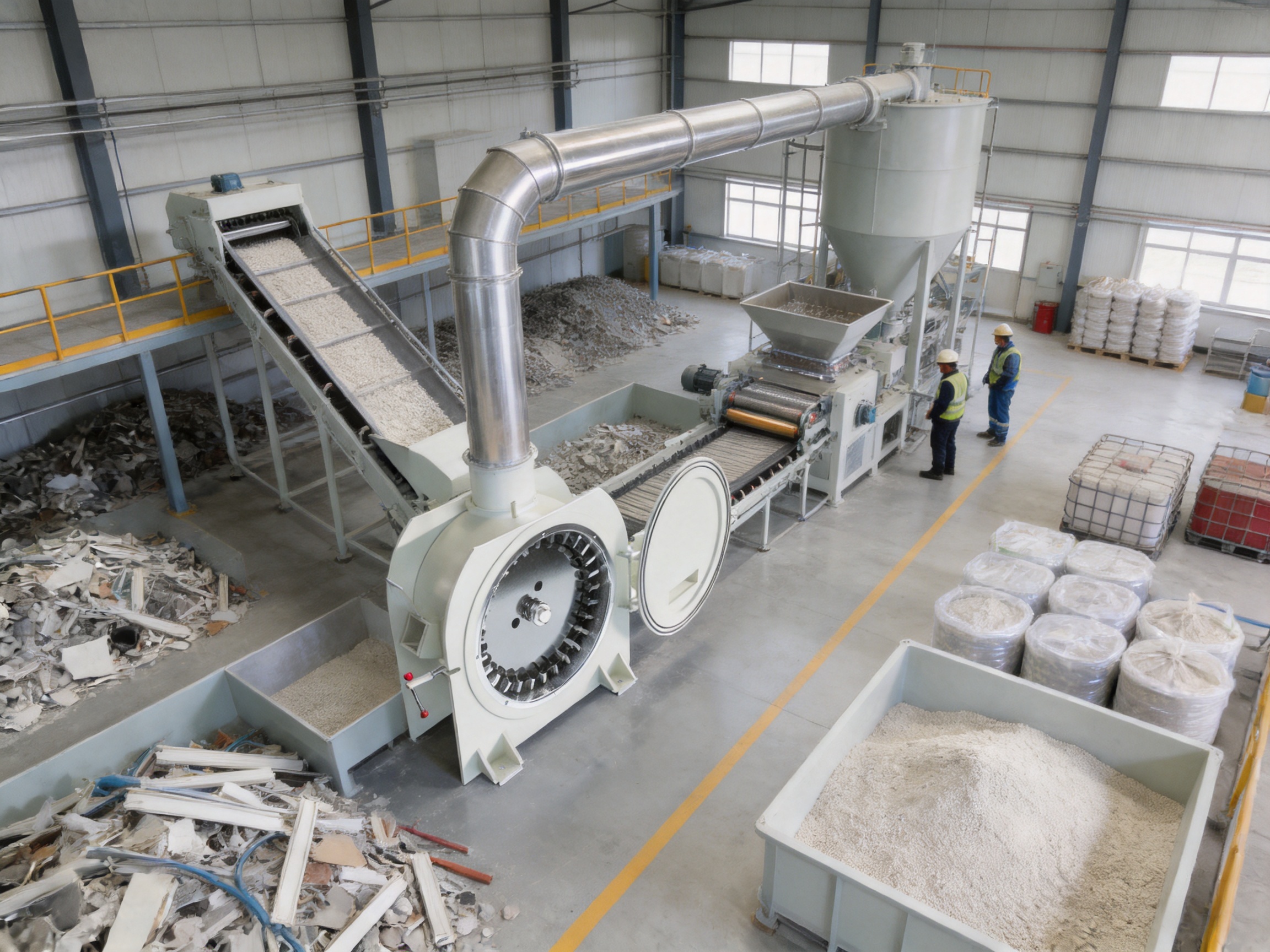
Under these conditions, the Model 700 can serve as the main pulverizing unit for a medium-sized recycling or manufacturing enterprise. It offers a useful combination of processing capacity, component durability, temperature control, and application flexibility.
Frequently Asked Questions
What materials can the Model 700 PVC Pulverizer process?
The machine is suitable for many PVC-based materials, including rigid profiles, pipes, vinyl flooring, wallboard offcuts, ceiling panel waste, cable sheathing, soft and hard PVC products, and PVC compounds containing fillers and additives. Material should be sorted, appropriately pre-crushed, and cleared of large metal or foreign objects before feeding.
What is the production capacity?
The listed standard capacity is approximately 320 to 500 kilograms per hour. The product description also refers to a broader capacity range of approximately 300 to 550 kilograms per hour depending on configuration. Actual capacity depends on material type, feed size, moisture, bulk density, target mesh size, formulation, and operator settings.
What fineness can the machine produce?
The standard technical table identifies a range of approximately 10 to 50 mesh. The broader product information indicates flexible control from approximately 10 to 100 mesh depending on configuration. The final particle size distribution depends on screen selection, material properties, blade condition, and operating parameters.
How does the cooling system work?
The machine uses a composite water-cooling and air-cooling arrangement. Water circulates through the system through separate inlet and outlet connections, while air movement assists in conveying and heat removal. The stated design target is to keep temperature fluctuations within approximately plus or minus three to four degrees Celsius under suitable operating conditions.
Can it operate continuously?
The Model 700 is designed for continuous operation under medium-to-high loads and is described as stable for approximately eight to twelve hours. Continuous operation requires proper feed control, cooling-water flow, blade maintenance, dust collection, and regular inspection.
Is it suitable for calcium-filled PVC?
Yes. The machine is designed to handle PVC formulations containing calcium carbonate and other fillers. High-chromium alloy blades and treated grinding surfaces are intended to improve wear resistance. Because mineral fillers are abrasive, the actual service life still depends on filler content, contamination, fineness, and maintenance.
What is the purpose of the vibrating screen?
The vibrating screen separates the pulverized material according to the selected opening. It helps control the final powder fraction and reduces the amount of oversized material entering the finished product stream. The screen also supports flexible production when different PVC grades require different fineness levels.
Does the system include dust collection?
Yes. The system is equipped with a pulse dust collector. It is intended to capture fine powder from the grinding, conveying, and screening processes, helping improve powder recovery and workplace cleanliness. Filter bags and other dust-collection components require regular inspection and maintenance.
What starting or speed-control options are available?
The listed options include star-delta starting, soft start, and inverter control. The appropriate choice depends on the customer’s electrical supply, desired speed adjustment, motor-starting requirements, and process conditions.
How does this model compare with a Model 500?
The Model 700 has a larger grinding disc, greater motor power, a denser blade and fixed-tooth arrangement, and a higher production range. The stated improvement over the Model 500 is approximately 80 to 120 percent, although the actual difference depends on the material and target fineness.
How does it compare with an 800-class machine?
The Model 700 generally offers a lower investment level, more moderate dimensions, and lower supporting-system requirements than a larger 800-class machine. It is intended for customers who need reliable medium-scale output without paying for capacity they may not yet use.
What manufacturing capabilities support the machine?
The manufacturer operates six processing workshops and uses Taiwan-imported high-precision grinding machines, German dynamic balancing equipment, and Japanese welding systems. These capabilities support accurate machining, stable rotating assemblies, durable welded structures, and consistent equipment quality.
Is the equipment certified?
The manufacturer has obtained CE mechanical certification and ISO 9001 quality management system certification. Customers should confirm the specific documentation, configuration, electrical standard, and compliance requirements applicable to their installation location.
Conclusion
The Model 700 PVC High-Efficiency Grinding Equipment is designed as a balanced solution for medium-scale PVC recycling, product manufacturing, and compound modification. Its approximately 660-millimetre grinding disc, 55-kilowatt main motor, high-chromium alloy blades, dense moving-blade and fixed-tooth arrangement, and composite cooling system provide the foundation for stable high-output pulverizing.
Its advantages are not limited to nominal motor power. The integrated vibrating screen, pulse dust collector, stainless-steel conveying pipe, iron-removal feeding arrangement, imported bearings, and treated grinding surfaces contribute to a more complete processing system. These features are especially valuable for customers working with filled PVC, stabilised formulations, construction waste, cable sheathing, flooring scrap, and other materials that require dependable powder quality.
Compared with smaller equipment, the Model 700 provides greater production capacity and improved suitability for continuous operation. Compared with larger equipment, it offers a more economical and manageable configuration for medium-sized enterprises. Its position between these two categories makes it a practical choice for companies expanding from small-batch production to regular commercial output.
The manufacturer’s approximately thirty years of industry experience, six processing workshops, precision machining resources, dynamic balancing capability, Japanese welding systems, CE mechanical certification, and ISO 9001 quality management system further support the equipment’s value. Together, these strengths provide customers with a pulverizer designed not only to grind PVC, but also to form the core of a stable, maintainable, and adaptable production line.
References
1. Product technical specification for Model 700 PVC High-Efficiency Grinding Equipment.
2. Manufacturer application information for PVC recycling, powder production, and compound modification.
3. Manufacturer overview covering production workshops, machining equipment, balancing systems, welding technology, and quality certifications.
4. General industrial guidance on PVC recycling, pulverizing, particle-size control, and dust collection.
5. General engineering principles for rotating equipment balancing, wear-resistant alloy selection, water cooling, and preventive maintenance.