

 English
 русский
 Español
 عربى
عربى 中文简体
中文简体
 中文简体
中文简体
Content
- 1 Introduction
- 2 Product Overview
- 3 Grinding Performance and Particle Quality
- 4 Advantages for PVC Recycling
- 5 Applications Beyond Recycling
- 6 Design Advantages Compared with Basic Pulverizing Equipment
- 7 Auxiliary Systems and Process Integration
- 8 Manufacturing Quality and Engineering Capability
- 9 Quality Certifications and Customer Support
- 10 Operating Principles for Efficient Production
- 11 Energy Efficiency and Production Economics
- 12 Installation and Factory Planning
- 13 Why the Model 500 Is Suitable for Small and Medium Enterprises
- 14 Selection Considerations
- 15 Q&A
- 15.1 What materials can the Model 500 PVC pulverizer process?
- 15.2 What is the normal production capacity?
- 15.3 What powder fineness can be achieved?
- 15.4 How does the machine prevent PVC yellowing?
- 15.5 How long do the blades normally last?
- 15.6 Can the machine process different PVC materials?
- 15.7 What starting and speed-control options are available?
- 15.8 Is the machine suitable for laboratory work?
- 15.9 Does the system include screening?
- 15.10 What maintenance is required?
- 15.11 What should buyers confirm before ordering?
- 16 Conclusion
- 17 References
- 18 Product: Model 500 PVC Pulverizer Grinder Machine
Introduction
The Model 500 PVC Pulverizer Grinder Machine is designed for manufacturers that need reliable, flexible, and economical PVC powder processing in a compact production system. With a disc diameter of approximately 470–500 mm, a 37–45 kW drive motor, and a typical capacity of 100–300 kg/h, the machine occupies an important position between laboratory-scale equipment and high-capacity industrial pulverizing lines.
PVC recycling and powder manufacturing require more than simple size reduction. The material must be processed into a consistent particle size while avoiding overheating, yellowing, scorching, contamination, and unnecessary energy consumption. A suitable pulverizer must also support different feedstocks, frequent material changes, rapid maintenance, and stable operation over extended production periods.
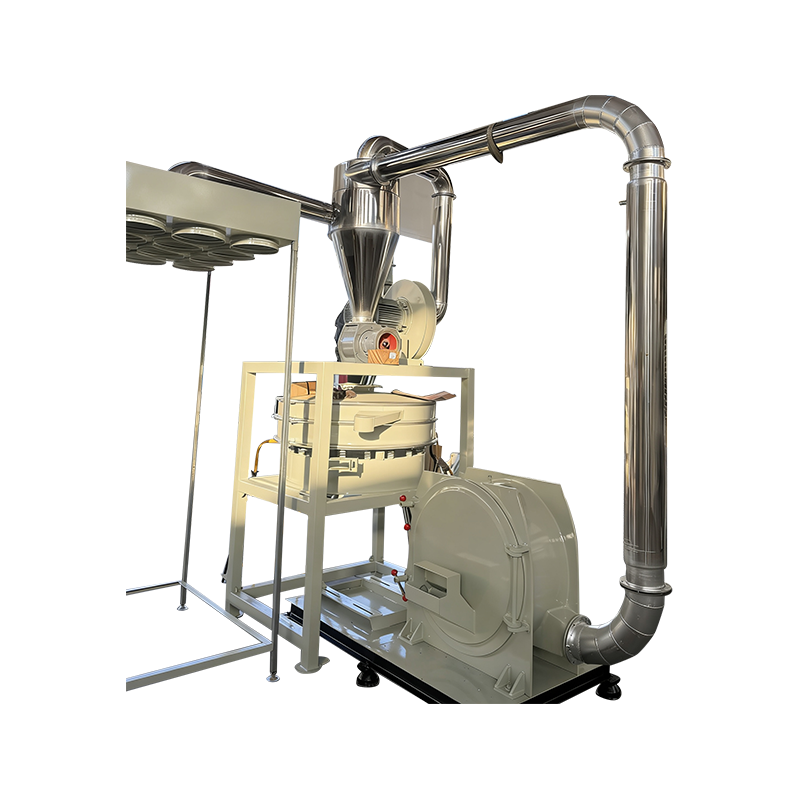
The Model 500 system addresses these requirements through a high-speed disc pulverizing structure, replaceable high-chromium alloy blades, high-density fixed tooth plates, water-cooled circulation, intelligent temperature control, and an integrated conveying and screening arrangement. Its configuration is suitable for PVC pipe waste, profile offcuts, flooring materials, cable sheaths, door and window scraps, and other relatively clean PVC feedstocks.
With a mainstream powder range of approximately 30–60 mesh and an adjustable range that can extend from fine laboratory settings to coarser production requirements, the equipment is suitable for recycling, formulation testing, small-batch production, and entry-level PVC powder manufacturing. It is especially attractive to small and medium-sized factories that require multiple-material flexibility without investing in a large, dedicated pulverizing line.
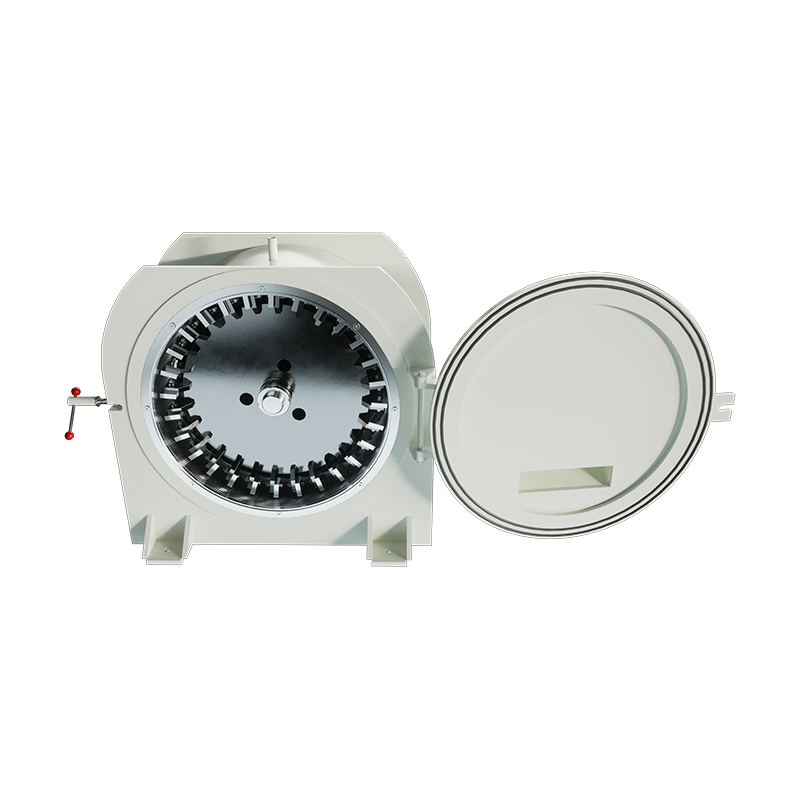
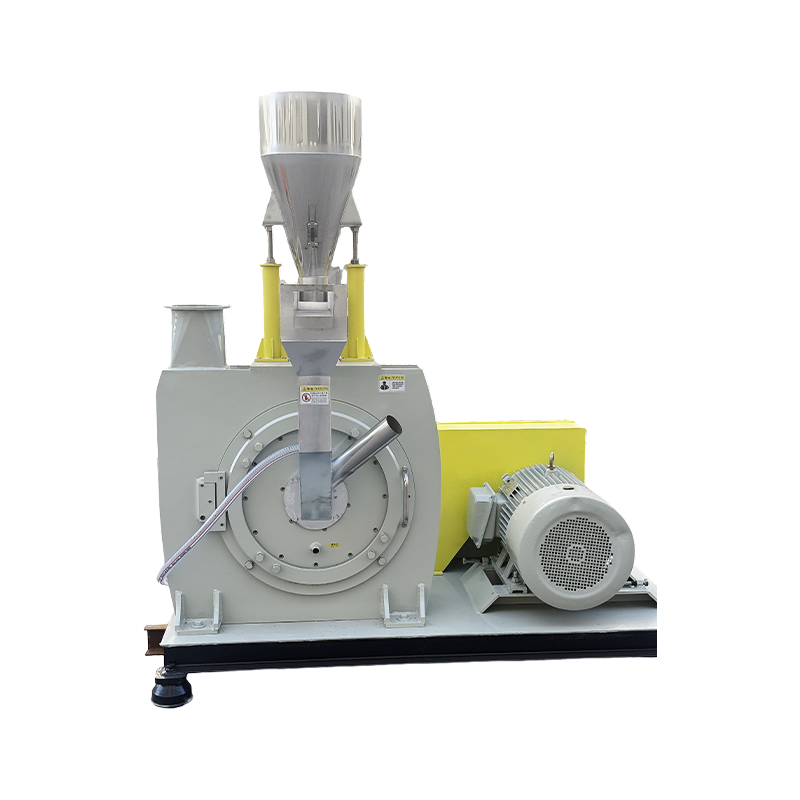
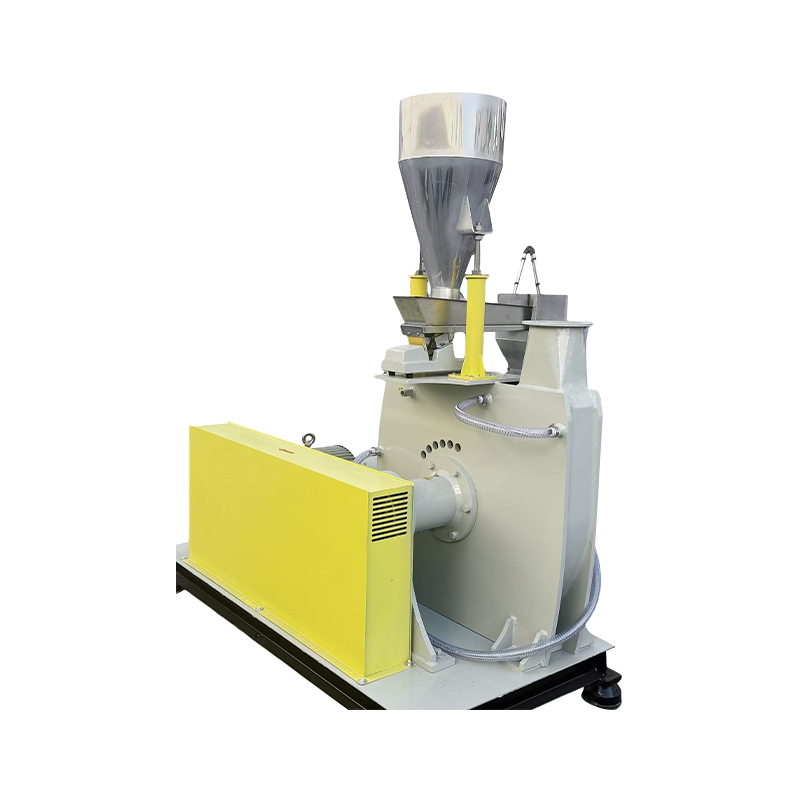
Model 500 PVC Pulverizer Grinder Machine
Product Overview
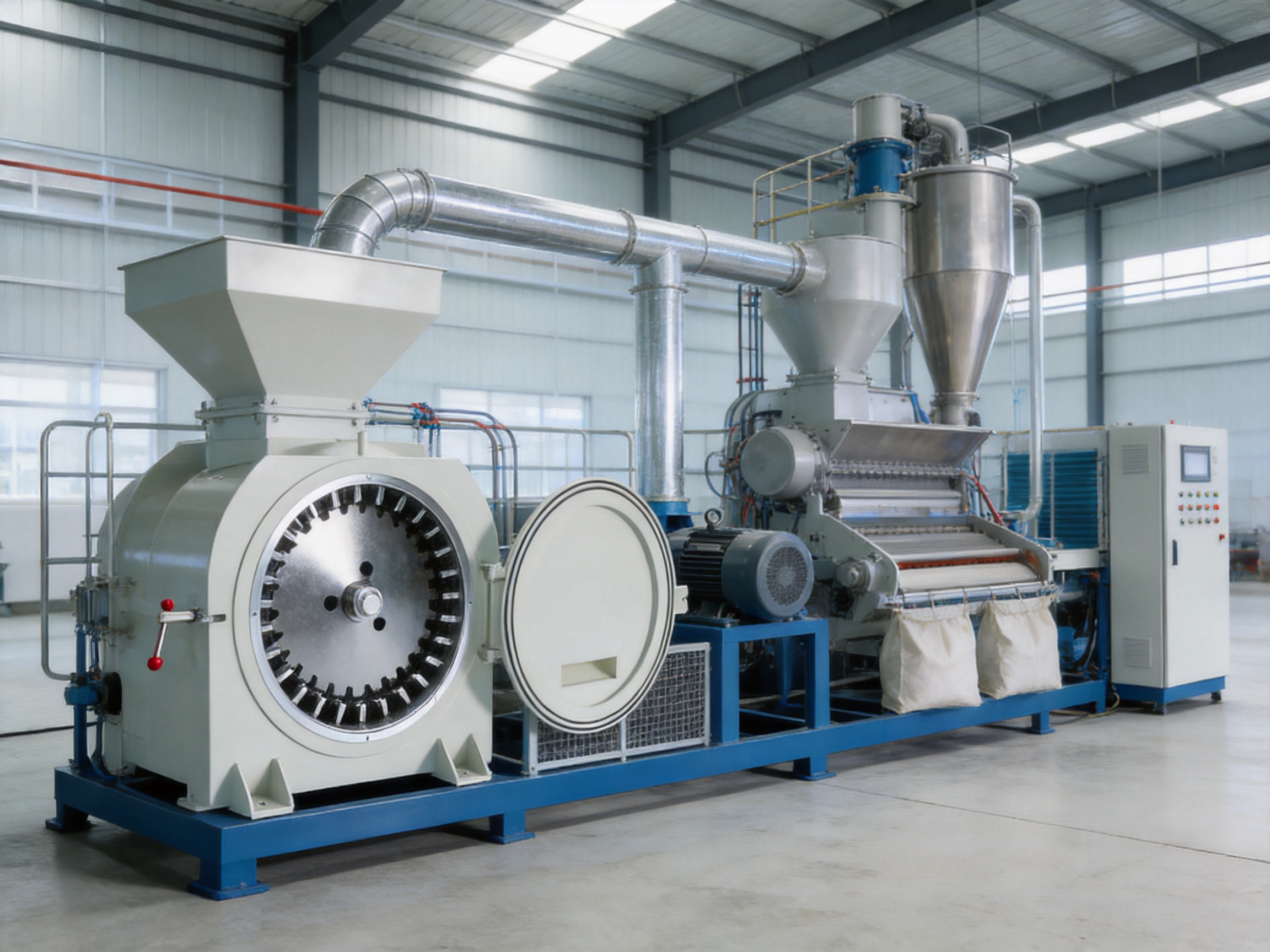
The Model 500 PVC Pulverizer Grinder Machine uses a rapidly rotating grinding disc and a stationary tooth plate to reduce pre-sized PVC particles into fine powder. The interaction between the moving and fixed components creates a combination of impact, shearing, friction, and controlled grinding. This arrangement enables the system to process PVC efficiently while maintaining a relatively narrow particle size distribution.
The main disc diameter is approximately 500 mm, while the machine is commonly configured with a 37 kW or 45 kW drive motor. Depending on the material, feed size, moisture level, formulation, desired mesh size, and operating conditions, the normal output range is approximately 100–300 kg/h. Actual capacity should be confirmed through testing because PVC waste varies significantly in hardness, filler content, contamination level, and thermal behavior.
The spindle speed is typically in the range of 3,600–3,800 rpm. High rotational speed helps create the shearing force needed for fine pulverization. At the same time, the machine uses water-cooled circulation and temperature monitoring to control the grinding chamber. Maintaining the chamber at approximately 45–55°C helps reduce the risk of PVC decomposition, discoloration, and thermal damage during continuous operation.
The machine is positioned as an entry-level model within a broader series of plastic pulverizing equipment. Entry-level does not mean limited in application. Instead, the Model 500 is optimized for customers that value flexibility, manageable investment, straightforward maintenance, and moderate throughput. It can serve as a primary pulverizer for smaller factories or as a trial, backup, or specialty machine in larger facilities.
Principal Technical Specifications
| Item | Specification | Application Significance |
|---|---|---|
| Machine type | Model 500 PVC pulverizer | Entry-level and flexible production equipment |
| Disc diameter | Approximately 470–500 mm | Provides a practical grinding area for medium-output processing |
| Typical capacity | 100–300 kg/h | Suitable for small and medium production requirements |
| Typical powder range | 20–80 mesh, with 30–60 mesh as a mainstream range | Supports recycling and downstream PVC processing |
| Reference table mesh range | 10–50 mesh | Final range depends on material and configuration |
| Main motor | 37 kW or 45 kW | Provides high-speed grinding power |
| Spindle speed | Approximately 3,600–3,800 rpm | Supports efficient shearing and impact grinding |
| Blower motor | 5.5 kW | Assists pneumatic conveying and material circulation |
| Vibrating screen motor | 1.1 kW | Supports classification of pulverized material |
| Pipe diameter | 159 mm | Provides a practical conveying passage |
| Vibrating screen diameter | 1,000 mm | Offers useful screening area for moderate throughput |
| Blade material | High-chromium alloy | Improves wear resistance and replacement life |
| Cooling system | Water-cooled circulation | Helps control heat and protect PVC quality |
| Speed control options | Star-delta, soft start, or inverter | Allows configuration according to operating requirements |
Grinding Performance and Particle Quality
The central performance objective of a PVC pulverizer is the production of uniform powder without excessive thermal degradation. PVC is sensitive to heat, and uncontrolled temperature rise can lead to yellowing, scorching, odor, decomposition, and changes in processing behavior. These defects may reduce the value of recycled powder and affect the surface quality and mechanical performance of finished products.
The Model 500 uses a high-speed grinding structure that combines shearing and controlled impact. The moving blades or grinding elements work against high-density fixed tooth plates. Rather than relying on a single crushing action, the machine repeatedly reduces the material as it passes through the grinding zone. This helps produce a more consistent powder and supports the processing of different grades of rigid and semi-rigid PVC.
The available fineness range is commonly stated as approximately 20–80 mesh, with 30–60 mesh representing a practical mainstream range for many PVC applications. The supplied technical table also identifies a 10–50 mesh range. These figures should be understood as reference values because final particle size depends on the gap setting, material characteristics, throughput, blade condition, air circulation, and screening configuration.
For laboratory and formulation work, the machine can be adjusted for finer grinding and small-batch testing. For production recycling, operators may select a coarser setting to improve throughput and reduce energy consumption. This adaptability is useful when a business processes several products with different powder requirements.
Temperature Protection
Temperature management is one of the key advantages of the system. Water-cooled circulation removes heat from the grinding chamber and supports a controlled operating range of approximately 45–55°C. An intelligent temperature control arrangement allows operators to monitor and regulate the process rather than relying solely on manual observation.
Cooling does not eliminate every possible risk associated with PVC processing. Feedstock composition, moisture, contamination, residence time, and operating speed still influence temperature. However, active cooling provides a stronger level of process control than a basic air-cooled design operating under the same load.
By reducing heat accumulation, the system helps protect powder color and reduces the possibility of PVC decomposition or yellowing. This is particularly valuable for light-colored PVC, recycled material intended for visible products, and formulations where color consistency is commercially important.
Blade and Tooth Plate Configuration
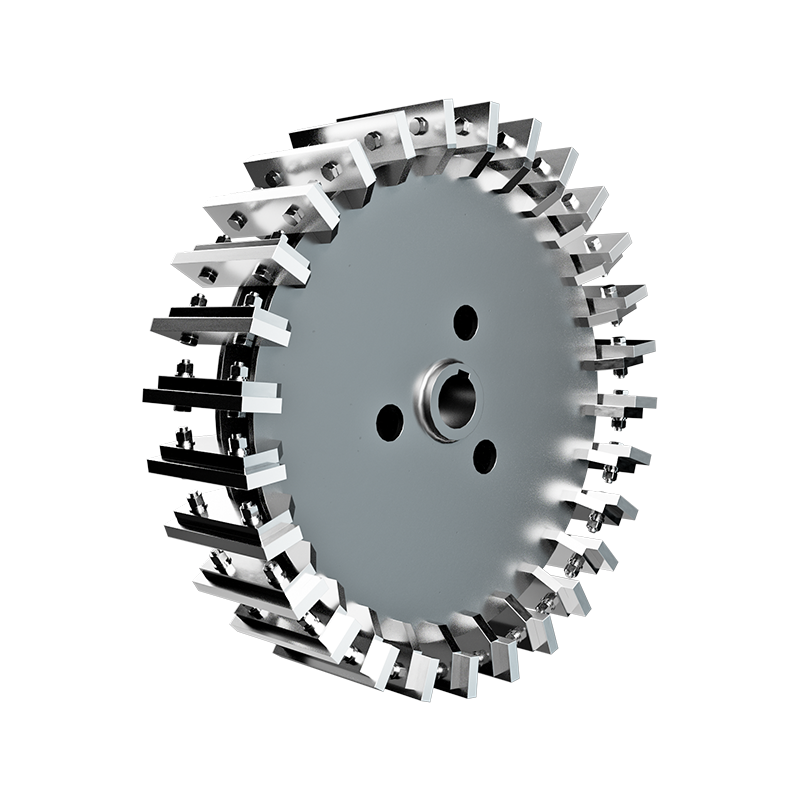
The machine can be equipped with approximately 24–28 replaceable moving blades together with high-density fixed tooth plates. This configuration provides a large active grinding area and supports efficient material engagement. The blades are manufactured from high-chromium alloy, a material selected for its resistance to abrasion and its suitability for repeated contact with plastic feedstock.
A replaceable blade design gives the machine a practical maintenance advantage. Instead of replacing an entire grinding disc or sending a large assembly away for repair, operators can change modular blade blocks or worn components. This can reduce maintenance time, simplify inventory planning, and help return the equipment to service more quickly.
Under suitable operating conditions, the expected service life of the wear components may be approximately 500–800 hours. Actual service life varies according to the amount of mineral filler, sand, metal, glass, pigments, and other contaminants in the feedstock. Clean, properly pre-sorted PVC generally produces less wear than heavily contaminated or highly filled material.
Advantages for PVC Recycling
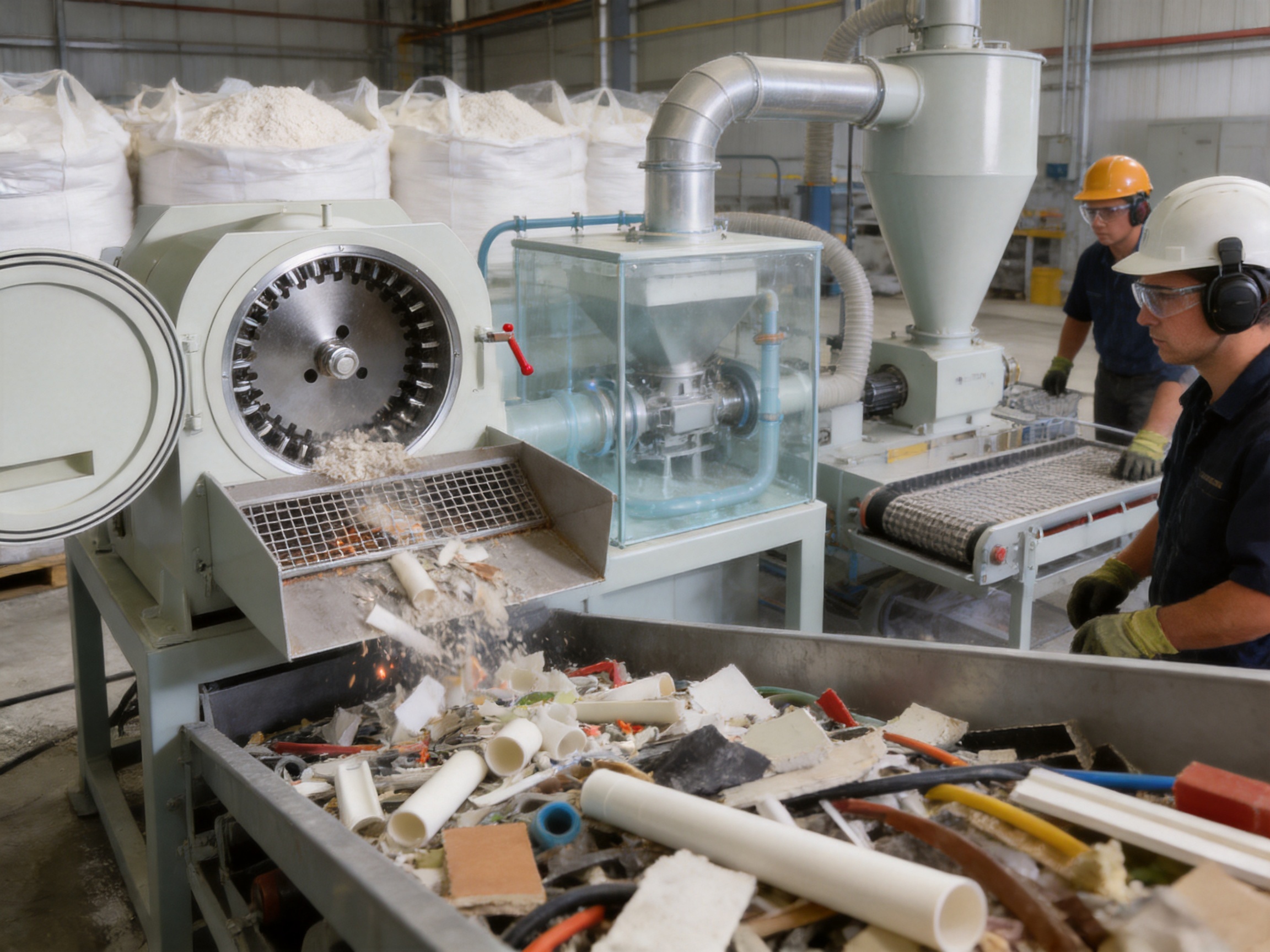
PVC recycling is one of the most important applications for the Model 500 pulverizer. Waste pipes, profiles, flooring, cable sheaths, and construction offcuts often have sufficient material value to justify recovery. However, recycling economics depend on the quality, consistency, and usability of the recovered powder.
The machine supports a process in which sorted PVC is first reduced to a suitable feed size and then pulverized into a fine, relatively uniform powder. The resulting powder may be used in regranulation, pipe extrusion, profile extrusion, injection molding, calendering, or other downstream applications, subject to the specific formulation and contamination level.
For small and medium recycling operations, the 100–300 kg/h capacity range offers a useful balance between output and investment. A large industrial pulverizer may provide higher capacity, but it can also require greater floor space, larger auxiliary equipment, more electrical infrastructure, and a higher initial budget. The Model 500 allows a company to establish or expand a recycling operation with a more manageable production scale.
The system is also suitable for recycling operations that process several forms of PVC rather than one continuous feedstock. Quick material changeovers and an adjustable grinding gap enable operators to adapt the machine to different product types. This flexibility can improve equipment utilization when material supply changes from one day to the next.
Typical Recyclable Materials
Common feedstocks include rigid PVC pipes, profile production offcuts, window and door frame scraps, PVC flooring, cable sheaths, wall panel waste, and selected construction materials. Feedstock should be sorted and inspected before entering the pulverizer. Ferrous and non-ferrous metal, stones, excessive dirt, and incompatible plastics should be removed to protect the blades, tooth plates, bearings, and conveying components.
The supplied system includes an iron-removal tie feeding method. This feature supports safer feeding by helping reduce the risk of ferrous metal entering the grinding chamber. It should be considered part of a broader material preparation procedure rather than a substitute for careful sorting and inspection.
Clean feedstock generally improves capacity, powder quality, and wear life. When processing material with high filler content, operators should expect increased blade wear and may need to adjust the production rate, temperature limits, and maintenance schedule.
Applications Beyond Recycling
Laboratory and Formulation Testing
The Model 500 is well suited to laboratories, universities, research institutes, and new-material companies that require repeatable PVC powder preparation. Formulation development often involves testing small quantities of resin, stabilizer, plasticizer, pigment, filler, or processing aid. The ability to adjust the grinding gap and particle size allows researchers to study how powder fineness affects mixing, melting, flow, surface appearance, and final product performance.
Fine particle control is particularly valuable during formulation development. A narrow and consistent particle size distribution can make experimental results easier to compare. It may also help researchers identify whether a change in product performance results from the chemical formulation or from inconsistent particle preparation.
The machine can support small-batch processing and rapid material changes. This is helpful when several formulations must be evaluated in one working day. With proper cleaning and inspection between batches, operators can reduce the chance of cross-contamination and maintain a more reliable testing program.
Entry-Level PVC Powder Manufacturing
Small manufacturers producing flooring, wall panels, foam boards, profiles, and related PVC products may use the Model 500 for trial production or regular small-batch manufacturing. The machine delivers powder that can be integrated into downstream calendering, extrusion, or molding processes after the appropriate formulation and quality checks.
Uniform powder helps downstream equipment operate more consistently. A stable particle size can support predictable feeding, mixing, melting, and dispersion. When the powder is processed without scorching or excessive contamination, it can also contribute to smoother surfaces and more consistent product appearance.
The Model 500 is not limited to one finished product category. Its value comes from its ability to prepare PVC powder for different production experiments and smaller commercial orders. This makes it useful for companies developing new products or serving customers with diverse specifications.
Multi-Variety and Small-Batch Processing
Some factories do not operate a single high-volume production line. Instead, they process multiple colors, grades, products, or formulations in relatively small batches. For these companies, the ability to change material quickly may be more important than achieving the highest possible hourly capacity.
The convenient changeover design and micro-adjustment gap system support this type of production. Operators can adjust the machine for different material types and fineness requirements without making the equipment permanently dedicated to one product. This can improve scheduling flexibility and reduce the need to purchase separate pulverizers for every material category.
Design Advantages Compared with Basic Pulverizing Equipment
When comparing pulverizers, buyers should evaluate the complete process rather than only the motor power or nominal output. A machine with a large motor may not deliver the best value if it creates excessive heat, requires long maintenance shutdowns, produces inconsistent powder, or cannot adapt to different feedstocks.
Integrated Temperature Management
One notable advantage of the Model 500 is the combination of intelligent temperature control and water-cooled circulation. Basic machines may depend primarily on natural cooling or operator experience. Such arrangements can be less consistent when the feed rate changes or when processing more difficult materials.
Controlled cooling supports stable powder quality and helps reduce the risk of thermal damage. It also gives operators a clearer operating reference, which is valuable for repeatable production and quality documentation.
Replaceable Wear Components
The replaceable blade and modular grinding component design can lower maintenance complexity compared with machines that use large, difficult-to-replace assemblies. Wear parts can be inspected, replaced, and adjusted according to actual operating conditions. This is particularly important in recycling, where feedstock quality may vary from batch to batch.
Flexible Speed and Starting Options
The equipment may be configured with star-delta starting, soft starting, or inverter control. A soft starter can reduce mechanical shock and current demand during startup. An inverter can provide additional flexibility for speed adjustment, allowing operators to balance capacity, fineness, energy use, and temperature according to the material being processed.
Speed control can also help when a factory handles several PVC formulations. A lower speed may be suitable for heat-sensitive or easily pulverized material, while a higher speed may be used when the process requires greater shearing action. The appropriate setting should always be established through testing and operating procedures.
Compact and Practical Configuration
With a total power requirement of approximately 50 kW for the primary system configuration, the Model 500 offers a practical scale for small factories and production workshops. Its compact footprint can simplify installation where floor space is limited. The integrated blower, stainless steel piping, vibrating screen, and dust collection connection reduce the need for improvised auxiliary arrangements.
Noise is specified at less than approximately 85 dB under normal conditions. Noise levels can vary according to the installation, building structure, material, and operating load. Proper foundation design, enclosure planning, hearing protection, and routine inspection should still be included in the factory safety program.
Auxiliary Systems and Process Integration
Blower and Pneumatic Conveying
The 5.5 kW blower supports material movement through the system. Pneumatic conveying can help transfer pulverized PVC from the grinding chamber toward screening or collection equipment while reducing manual handling. It also supports a more enclosed process, which can help control dust when connected to an appropriate collection system.
Stainless Steel Piping
The pipe system is made from stainless steel, with a reference diameter of 159 mm. Stainless steel offers useful corrosion resistance and provides a clean conveying surface for plastic powders. The smooth internal passage can support material flow and simplify cleaning during material changeovers.
Vibrating Screening
The system includes a vibrating screen with a diameter of approximately 1,000 mm and a 1.1 kW motor. Screening separates particles according to the selected mesh and helps return or identify oversize material. This contributes to a more consistent final product and provides operators with a practical method of monitoring the pulverization result.
Screen selection should correspond to the required powder specification. A finer mesh may increase classification precision but can reduce throughput. A coarser mesh may increase production capacity while allowing more variation in particle size. The correct balance depends on the downstream application.
Dust Collection
Fine PVC powder can become airborne during conveying, screening, discharge, and bagging. The system includes a dust collector arrangement with a reference bag diameter of 300 mm. An effective dust collection system helps improve housekeeping, reduce material loss, and protect workers from unnecessary dust exposure.
Dust control should be designed as a complete system. Connections must be sealed, filters must be maintained, and collection containers must be emptied safely. The factory should also establish procedures for cleaning, personal protective equipment, ventilation, and the handling of accumulated powder.
Manufacturing Quality and Engineering Capability
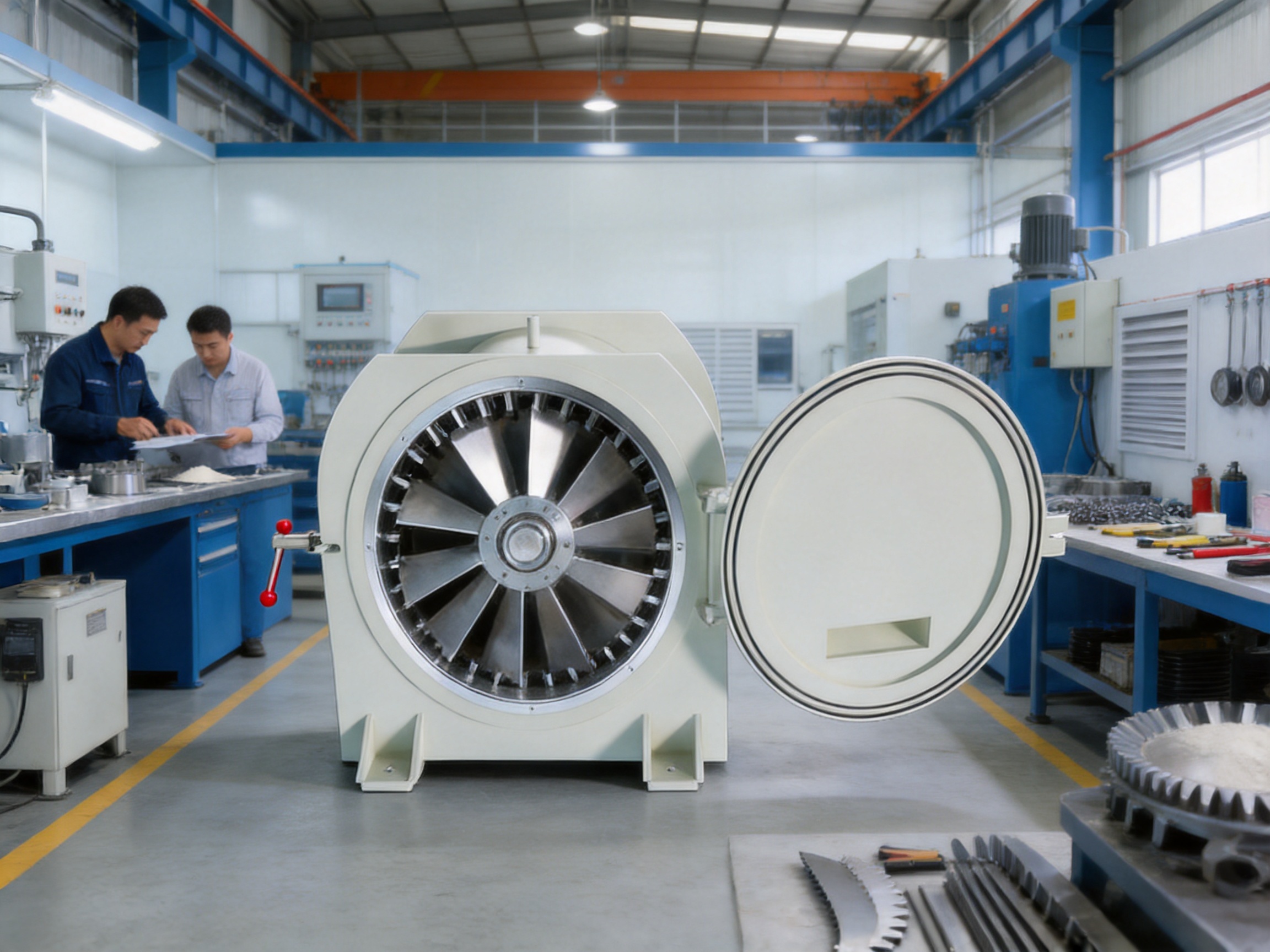
The performance of a pulverizer depends not only on its design but also on the quality of manufacturing. Disc balance, shaft alignment, bearing installation, welding quality, blade positioning, gap accuracy, and assembly tolerances all influence operating stability.
The manufacturer behind the Model 500 has approximately 30 years of experience in plastic crushing and pulverizing equipment. Its production activities cover plastic size reduction applications for PVC, PE, polymers, rotational molding, masterbatch, recycling, and powder coating. This broad experience supports the development of equipment for different materials and processing conditions.
The manufacturing organization operates six processing workshops, each averaging approximately 1,400 square meters. This workshop structure provides dedicated space for machining, welding, assembly, testing, and related production activities. A multi-workshop arrangement can also support more organized production flow and improve the separation of different manufacturing operations.
Precision Machining
The factory uses high-precision grinding machines imported from Taiwan and built according to German standards. Precision machining is important for the grinding disc, shaft components, blade mounting surfaces, and other parts that influence the gap and rotational stability.
Accurate machining helps reduce uneven wear and supports a consistent distance between moving and fixed grinding elements. It can also improve the service life of bearings and reduce vibration caused by dimensional errors or misalignment.
Dynamic Balancing
High-speed rotating components must be balanced carefully. The factory uses German dynamic balancing equipment to check rotating assemblies. Dynamic balancing is especially important at spindle speeds around 3,600–3,800 rpm, where even a small imbalance can produce significant vibration.
Proper balance supports smoother operation, reduces stress on bearings and structural components, and helps lower the risk of premature mechanical failure. It can also contribute to a more comfortable working environment by reducing unnecessary noise and vibration.
Welding and Structural Reliability
Japanese welding systems are used in the manufacturing process. Consistent welding quality helps improve the strength and dimensional stability of frames, hoppers, supports, piping connections, and other fabricated components.
A rigid and accurately fabricated structure is important because the pulverizer produces high-speed mechanical forces. The frame must maintain alignment while carrying the weight of the motor, grinding chamber, conveying system, screen, and associated equipment.
Technical Development
The professional technical team regularly studies advanced machine technologies from Germany and other industrially developed manufacturing regions. Continuous technical study can support improvements in grinding geometry, cooling, component life, safety, automation, and process efficiency.
The objective is not simply to increase speed. A well-engineered pulverizer must balance output, fineness, temperature, energy use, maintenance requirements, and operational safety. This balanced approach is particularly relevant to PVC, where excessive mechanical energy can become unwanted heat.
Quality Certifications and Customer Support
The equipment is manufactured by a company holding CE mechanical certification and ISO 9001 quality management system certification. CE certification indicates that applicable European mechanical safety requirements have been addressed for the relevant equipment configuration. ISO 9001 certification reflects the use of a structured quality management system.
Certifications should be considered alongside technical documentation, factory inspection, testing procedures, spare-part support, and after-sales service. Buyers should confirm the exact certification scope and the documents supplied with the selected machine configuration.
The manufacturer reports long-term cooperation with more than 5,000 enterprises in domestic and international markets. A broad installed customer base can provide valuable experience in different materials, climates, production environments, and application requirements.
Customer support may include equipment selection, layout planning, configuration advice, installation guidance, operating training, spare-part recommendations, and maintenance assistance. For a new recycling operation, these services can be as important as the initial machine specification.
Operating Principles for Efficient Production
Feedstock Preparation
Before pulverizing, PVC waste should be sorted by material type and inspected for metal, stones, wood, paper, rubber, and incompatible plastics. Large pieces should be pre-crushed to a suitable size for stable feeding. Excessively large feedstock can overload the pulverizer, while irregular feed can cause fluctuations in capacity and temperature.
Feedstock should also be reasonably dry. Moisture can affect conveying, screening, powder flow, and the stability of the grinding process. If the waste has been stored outdoors or exposed to washing, drying or adequate drainage may be required before pulverization.
Gap Adjustment
The grinding gap influences the balance between fineness and throughput. A smaller gap generally promotes finer powder but can increase friction, energy consumption, and temperature. A larger gap may improve capacity and reduce heat generation while producing a coarser product.
Operators should make adjustments gradually and record the relationship between gap position, motor load, temperature, capacity, and powder fineness. This creates a practical process database for different PVC materials.
Temperature Monitoring
Temperature should be checked continuously during production. The target operating range of approximately 45–55°C provides a useful reference for PVC processing, but the appropriate limit may vary according to the formulation and application. If the temperature rises unexpectedly, the operator should check feed rate, cooling-water flow, blade condition, material contamination, screen blockage, and conveying resistance.
Routine Inspection
Daily or shift-based checks should include fasteners, guards, bearings, cooling-water connections, electrical controls, dust collection, screen condition, and abnormal vibration or noise. Blades and tooth plates should be inspected at planned intervals, especially when processing filled or contaminated PVC.
Preventive maintenance is normally less expensive than emergency repair. Replacing worn blades before they become severely damaged can help maintain powder quality and reduce stress on the motor and spindle.
Energy Efficiency and Production Economics
Energy efficiency should be evaluated through the complete process rather than by motor power alone. The Model 500 uses approximately 37–45 kW for the main drive, with additional power for the blower, vibrating screen, and other auxiliaries. The total installed power is approximately 50 kW in the reference configuration.
Actual energy consumption per kilogram depends on capacity and operating conditions. Processing clean, easily pulverized PVC at a suitable feed rate will generally require less specific energy than processing highly filled, contaminated, or difficult material at an excessively fine setting.
The machine can support favorable production economics in several ways. Its moderate capacity avoids the cost of oversizing a line for a small factory. Replaceable wear components can reduce service expenses. Water cooling helps protect product quality and may reduce losses caused by scorched or discolored powder. Rapid changeovers can also improve utilization when a factory produces several grades or colors.
For a complete investment evaluation, buyers should consider the cost of pre-crushing, labor, electricity, cooling water, dust collection, packaging, blade replacement, maintenance, and downstream processing. A sample test using the customer’s actual PVC waste is recommended before finalizing capacity and configuration.
Installation and Factory Planning
The installation area should provide sufficient space for feeding, inspection, maintenance, screen access, dust collector servicing, and finished powder collection. The floor should be level and strong enough to support the machine and absorb operating forces.
Electrical supply must match the selected motor, starting method, control cabinet, and local safety requirements. Water-cooling connections should provide stable flow and allow convenient inspection of inlet and outlet lines. Drainage or water recovery should be planned to prevent leakage from affecting the production area.
Ventilation and dust collection are essential. Even with enclosed conveying, powder may be released during bag changes, screen cleaning, or maintenance. The layout should minimize open transfer points and provide safe access to collection containers.
Operators should be trained in startup, shutdown, emergency stopping, temperature control, cleaning, gap adjustment, blade replacement, and lockout procedures. Guards and interlocks should never be removed during operation.
Why the Model 500 Is Suitable for Small and Medium Enterprises
Many small and medium enterprises need equipment that can grow with their business. They may begin with recycling or sample production and later expand into PVC powder manufacturing or downstream product production. A flexible pulverizer provides a lower-risk starting point than a very large dedicated line.
The Model 500 offers a practical combination of moderate capacity, fine powder capability, controlled cooling, compact layout, and replaceable wear parts. It can be used for regular production, contract processing, product development, or as a supplementary machine during periods of high demand.
Its flexibility is also valuable for companies that handle seasonal or irregular waste streams. When the availability of one PVC product declines, the equipment can be adapted to another suitable feedstock. This may help improve annual utilization and reduce dependence on one customer or one material source.
The machine is particularly attractive where quality requirements are higher than those served by simple coarse crushers, but the output requirement does not justify a very large industrial pulverizing system. It provides a controlled route from prepared PVC scrap to usable fine powder.
Selection Considerations
Before purchasing, customers should define the required powder fineness, hourly capacity, feedstock type, filler content, moisture level, color requirements, and downstream use. These factors determine whether the standard 37 kW or higher 45 kW configuration is more appropriate.
Customers should also clarify whether the machine will process one dedicated material or multiple materials. A single-material application may permit optimization for maximum capacity, while multi-material processing may require greater attention to cleaning, gap adjustment, screen selection, and changeover time.
Additional questions should address pre-crushing requirements, metal separation, dust collection, packaging, cooling-water management, spare blades, electrical standards, and installation support. A complete technical proposal should identify the main machine, auxiliary equipment, control system, consumables, and recommended spare parts.
Q&A
What materials can the Model 500 PVC pulverizer process?
The machine is primarily designed for PVC materials such as waste pipes, profile offcuts, flooring, cable sheaths, door and window scraps, wall panels, and similar relatively clean rigid or semi-rigid PVC. Material should be sorted and pre-sized before entering the pulverizer.
What is the normal production capacity?
The typical capacity is approximately 100–300 kg/h. Actual output depends on feedstock hardness, filler content, moisture, particle size, powder fineness, blade condition, and operating settings. A material test is the best way to confirm expected capacity.
What powder fineness can be achieved?
The general stated range is approximately 20–80 mesh, with 30–60 mesh commonly used for mainstream production. The reference specification table lists 10–50 mesh. The final range depends on the material, grinding gap, screen, speed, and process conditions.
How does the machine prevent PVC yellowing?
The grinding chamber uses water-cooled circulation and intelligent temperature control. Maintaining the chamber at approximately 45–55°C helps reduce heat accumulation and lowers the risk of PVC decomposition or yellowing. Proper feeding, clean material, and regular maintenance are also necessary.
How long do the blades normally last?
The expected service life of the replaceable wear components is approximately 500–800 hours under suitable conditions. Highly filled or contaminated PVC can shorten service life, while clean and properly sorted material can improve it.
Can the machine process different PVC materials?
Yes. The Model 500 is designed for flexible processing and can support different PVC materials and small batches. Operators should clean the machine between materials and adjust the gap, speed, feed rate, and screen according to the new material.
What starting and speed-control options are available?
The listed options include star-delta starting, soft starting, and inverter control. The most appropriate option depends on the electrical supply, desired speed flexibility, startup requirements, and production process.
Is the machine suitable for laboratory work?
It can support laboratory, university, research, and formulation-testing applications when small batches and adjustable powder fineness are required. The machine should be configured and operated according to the laboratory’s safety, cleaning, and sample-control procedures.
Does the system include screening?
The reference configuration includes a vibrating screen with an approximate diameter of 1,000 mm and a 1.1 kW motor. Screening helps classify the pulverized powder and supports more consistent final particle size.
What maintenance is required?
Routine maintenance includes checking blades, tooth plates, bearings, belts, fasteners, cooling-water flow, screens, dust collection, electrical controls, and vibration. Wear parts should be replaced or serviced before severe deterioration affects powder quality or machine safety.
What should buyers confirm before ordering?
Buyers should confirm the material type, capacity, desired mesh size, filler content, feed size, motor configuration, speed-control method, cooling arrangement, dust collection, electrical standard, installation conditions, spare parts, and after-sales support. Testing actual feedstock is strongly recommended.
Conclusion
The Model 500 PVC Pulverizer Grinder Machine provides a balanced solution for PVC recycling, powder production, laboratory testing, and multi-variety small-batch processing. Its 500 mm-class disc, 37–45 kW drive, 100–300 kg/h capacity, adjustable fineness, water-cooled chamber, and replaceable high-chromium alloy blades make it suitable for customers that require more control and flexibility than a basic crusher can provide.
Its competitive value lies in the combination of product quality, manageable investment, compact installation, modular maintenance, and adaptable operation. Temperature control helps protect PVC powder from scorching and yellowing, while the screening and conveying system supports a more complete processing arrangement.
The manufacturing strengths behind the equipment further support its suitability for demanding applications. Precision grinding equipment, dynamic balancing technology, organized workshop production, advanced welding systems, experienced technical personnel, CE mechanical certification, and ISO 9001 quality management provide a foundation for reliable equipment production.
For small and medium enterprises, research institutions, recycling companies, and PVC product manufacturers, the Model 500 can serve as a practical entry point into controlled fine pulverization. With appropriate material preparation, operating discipline, preventive maintenance, and application-specific testing, it can help convert PVC waste or prepared resin into consistent powder for further processing.
References
1. Internal product specifications for the Model 500 PVC Pulverizer Grinder Machine.
2. Technical information on PVC recycling, grinding, screening, and powder handling supplied for product evaluation.
3. ISO 9001 quality management system principles for manufacturing organizations.
4. European mechanical safety and conformity principles applicable to industrial processing machinery.
5. General engineering guidance for high-speed rotating equipment, dynamic balancing, wear-part maintenance, and industrial dust control.
6. General PVC processing references concerning thermal stability, particle size, recycling, extrusion, molding, and formulation development.