

 English
 русский
 Español
 عربى
 中文简体
 中文简体
Content
- 1 Why High-Uniformity Powder Matters in Rotational Molding
- 2 Heavy-Duty 800 mm Grinding System
- 3 DC53 Grinding Discs for Long Service Life
- 4 Precision Tooth-by-Tooth Grinding
- 5 Dynamic Balancing for Stable Operation
- 6 Temperature Management for Polyethylene Pulverizing
- 7 Integrated Conveying and Dust Collection
- 8 Vacuum Feeding and Screening Configuration
- 9 Technical Specifications
- 10 Advantages Over Basic or Conventional Pulverizers
- 11 Manufacturing Capability and Quality Control
- 12 Applications in Rotomolding and Plastic Recycling
- 13 Factory Layout and Installation Considerations
- 14 Productivity, Energy, and Return on Investment
- 15 Recommended Operating Practices
- 16 Purchasing and Customization Guidance
- 17 Company Strengths and Service Support
- 18 Q&A
- 18.1 What material is the 800-model pulverizer primarily designed to process?
- 18.2 What is the capacity of the machine?
- 18.3 What particle sizes can the machine produce?
- 18.4 Why are DC53 discs used?
- 18.5 Can the grinding discs be refurbished?
- 18.6 How does the machine control temperature?
- 18.7 Is the machine suitable for continuous production?
- 18.8 Does the system include dust control?
- 18.9 How much space is required?
- 18.10 What information should be supplied when requesting a quotation?
- 19 Conclusion
- 20 References
- 21 Product: PE Rotomolding Powder High Uniformity 800 Model Pulverizer
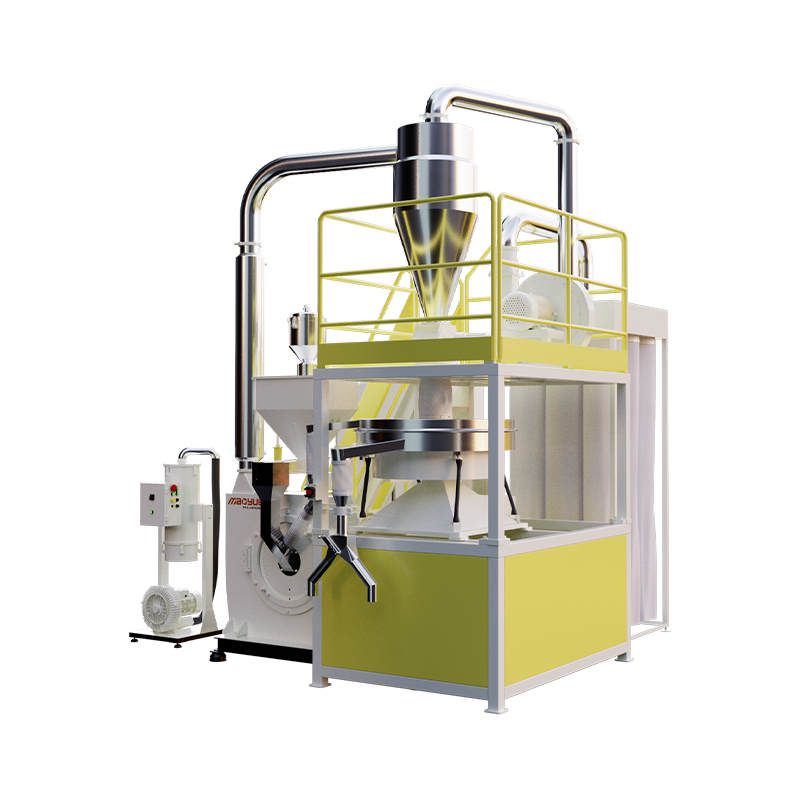
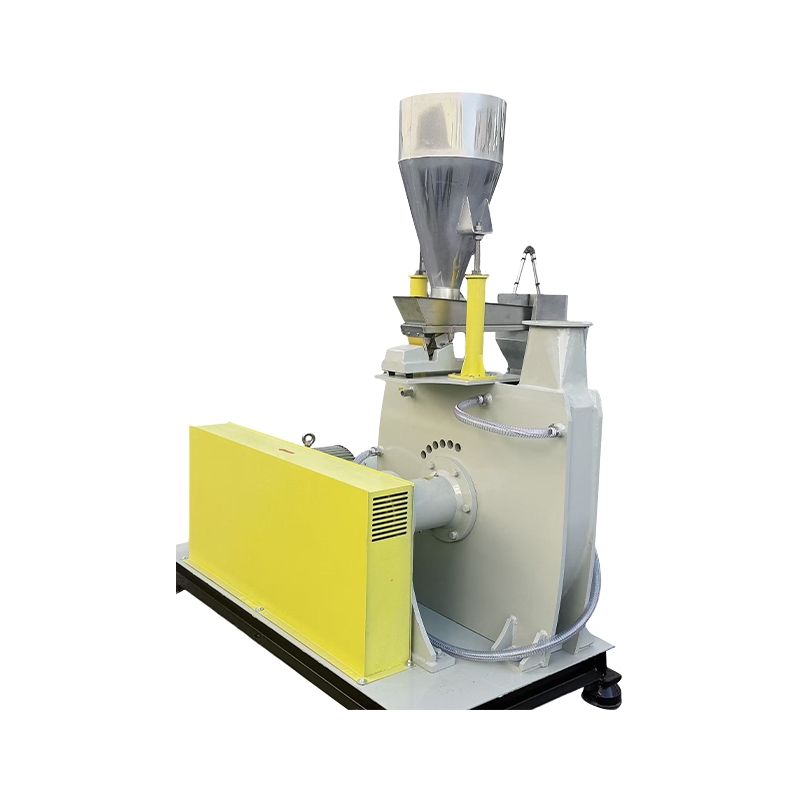
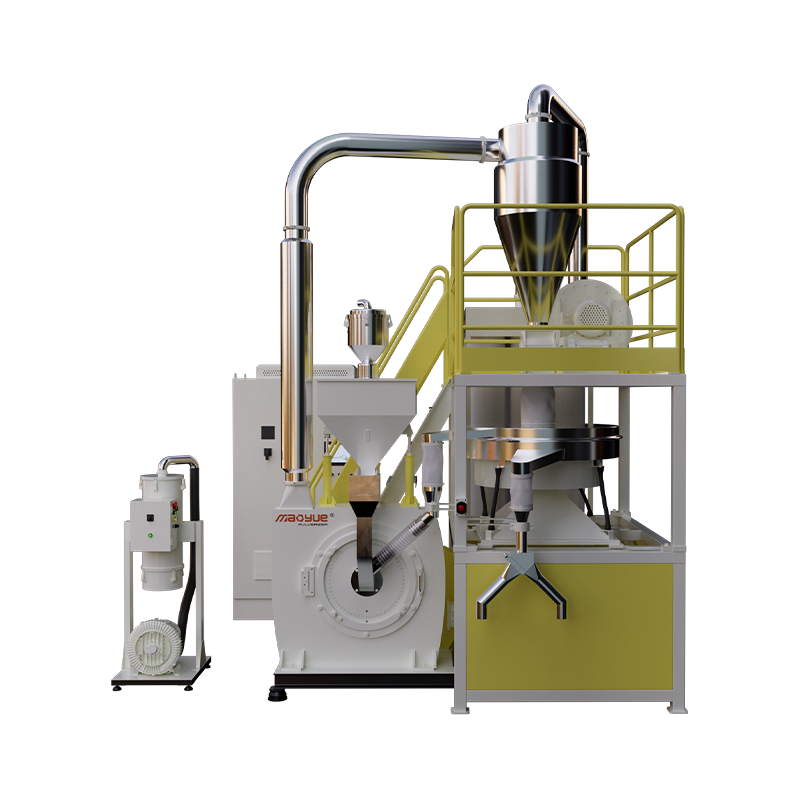
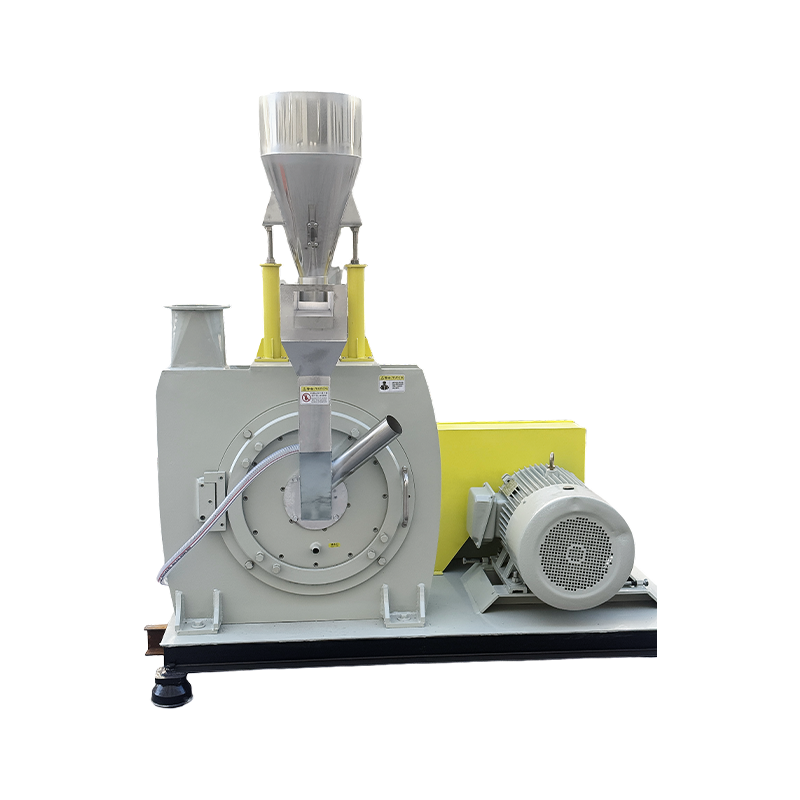
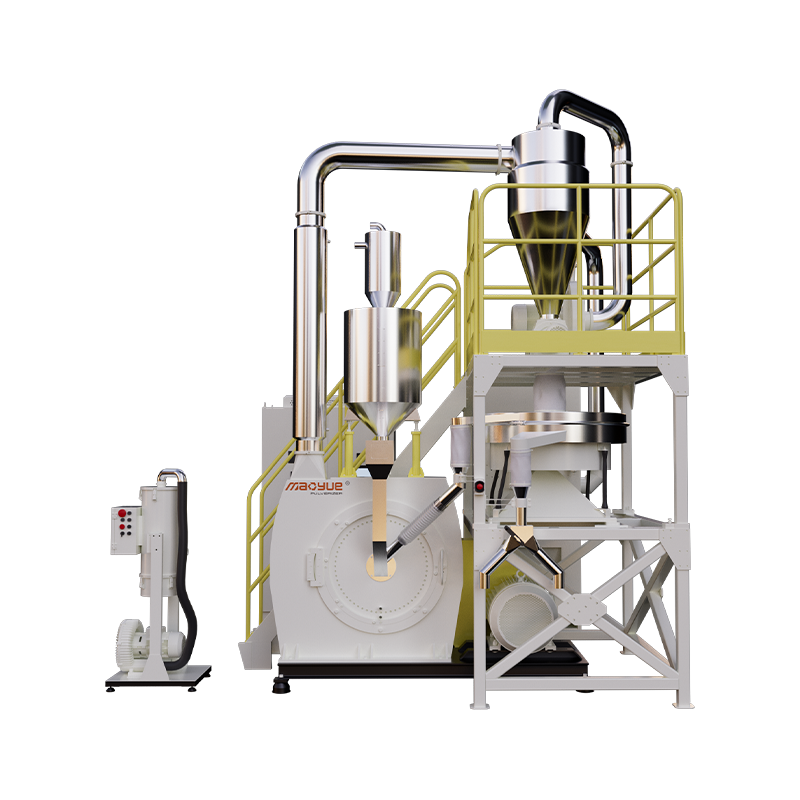
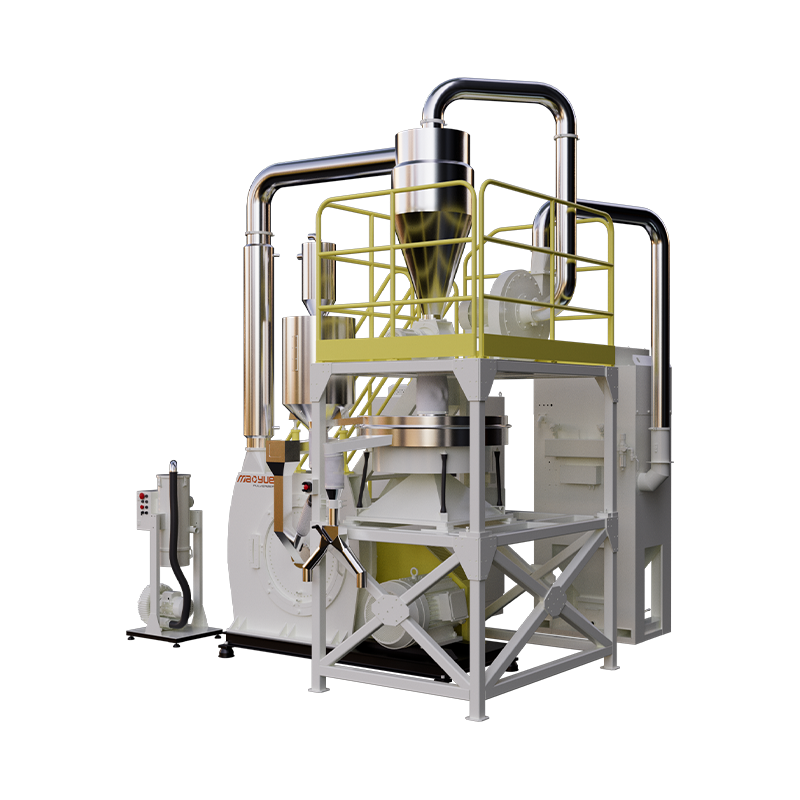
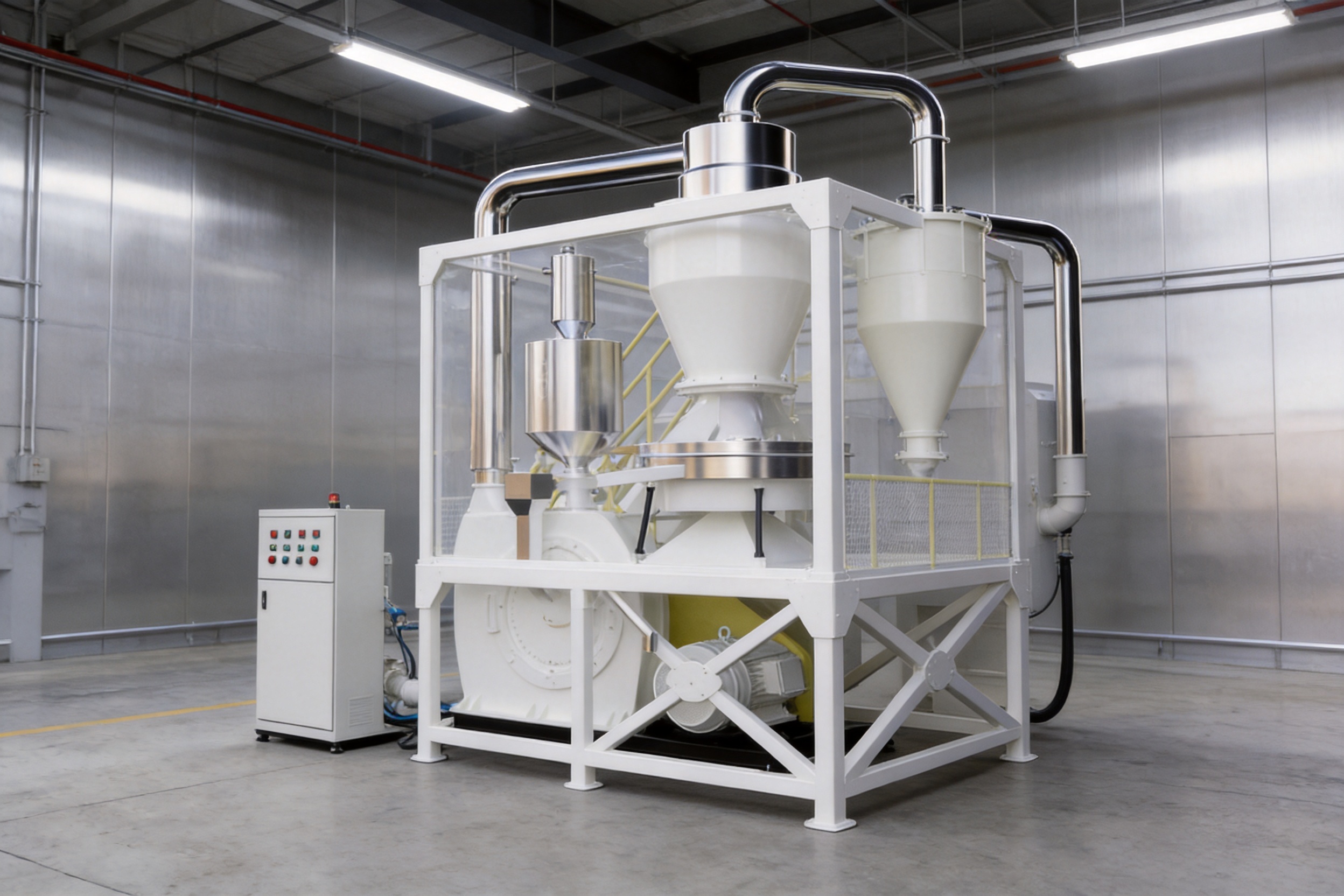
Large-scale rotational molding operations require more than a machine that can reduce plastic into smaller particles. They need a pulverizing system that delivers stable output, consistent particle size, controlled temperature, low dust emissions, dependable operation, and manageable long-term maintenance costs. The 800-model PE rotomolding pulverizer is designed for this demanding production environment. As a heavy-duty disc pulverizer for polyethylene and other suitable thermoplastic materials, it combines high processing capacity with precision grinding, reinforced cooling, automated control, and an integrated conveying and dust-collection arrangement.
The machine is intended for manufacturers producing large quantities of rotomolding powder for water tanks, pallets, containers, trash bins, playground equipment, industrial components, and other molded products. It is also suitable for recycling and re-pulverizing waste polyethylene, producing powder for SPC flooring core layers, processing hot-melt adhesive materials, and supplying industrial-grade plastic powders where uniformity and flowability are important.
With an 800 mm grinding disc, a configurable drive motor range of 75 to 132 kW, vacuum feeding, stainless-steel conveying pipes, optional vibrating screening, and water cooling, the pulverizer can be adapted to different raw materials, output targets, and powder specifications. Depending on the material, feeding condition, mesh requirement, and system configuration, published production ranges may vary. Standard technical data identifies a capacity of approximately 450–900 kg/h, while optimized operating conditions and particular PE formulations may support higher throughput. This makes correct system configuration and performance testing essential when selecting the machine for a specific factory.
PE Rotomolding Powder High Uniformity 800 Model Pulverizer
Why High-Uniformity Powder Matters in Rotational Molding
Rotational molding is highly sensitive to the physical characteristics of the plastic powder used in production. During the heating and rotation stages, the powder must melt, spread, fuse, and build a consistent wall thickness across the mold. If the powder contains excessive coarse particles, irregular shapes, agglomerates, moisture, or a wide particle-size distribution, the molding process can become unstable.
Inconsistent powder may contribute to rough surfaces, incomplete fusion, uneven wall thickness, weak areas, pinholes, visible defects, or inconsistent product weight. These problems are particularly serious in large molded products, where a small difference in material distribution can affect structural strength and dimensional stability. High-uniformity powder supports more predictable melting behavior and helps manufacturers maintain repeatable product quality.
The 800-model pulverizer is designed to produce controlled polyethylene powder through precision grinding and screening. The grinding gap, disc condition, rotor speed, cooling performance, feed rate, and screening arrangement all influence the final result. By combining these factors in one production system, the machine helps operators maintain a narrower and more consistent particle-size distribution than may be possible with basic or poorly balanced pulverizers.
Particle fineness is adjustable according to the intended application. The general product description identifies a range of approximately 20–100 mesh for certain operating configurations, while the detailed technical table lists 10–50 mesh as a standard range. The actual result depends on the material, disc setting, throughput, screen specification, and operating conditions. Customers requiring a particular powder specification should confirm the target mesh and conduct a material trial before finalizing the equipment configuration.
Heavy-Duty 800 mm Grinding System
The central component of the machine is its large 800 mm grinding disc. A larger disc provides a substantial grinding surface and allows the equipment to process greater quantities of suitable plastic material than smaller models. The large working diameter is especially valuable for factories that need continuous production rather than intermittent batch processing.
The machine is configured for demanding industrial duty. Its reinforced structure, high-power drive options, and heavy-duty transmission arrangement are intended to withstand long operating hours and the mechanical loads associated with high-volume polyethylene pulverizing. Available drive motor configurations include 75 kW, 90 kW, 110 kW, and 132 kW. This range allows the system to be matched to different production capacities, material characteristics, and fineness requirements.
A variable-frequency inverter is used for speed control. Speed adjustment gives operators greater control over the balance between capacity, fineness, power consumption, and heat generation. Different polyethylene grades may require different operating conditions. A softer or more heat-sensitive material may benefit from a lower operating load and stronger cooling, while a material requiring higher throughput may need a different combination of speed and feed rate.
Variable-speed operation also helps manufacturers respond to changing production requirements. The same machine can be configured for higher output when a coarser powder is acceptable, or for a finer product when the application requires more controlled particle sizing. This flexibility is an advantage over fixed-speed machines that offer limited adjustment once installed.
DC53 Grinding Discs for Long Service Life
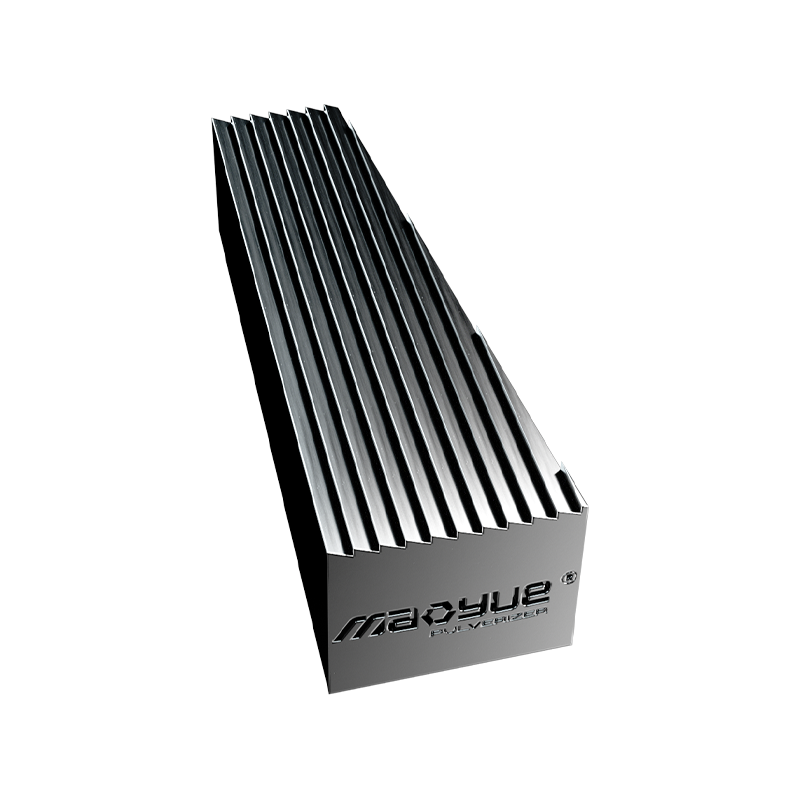
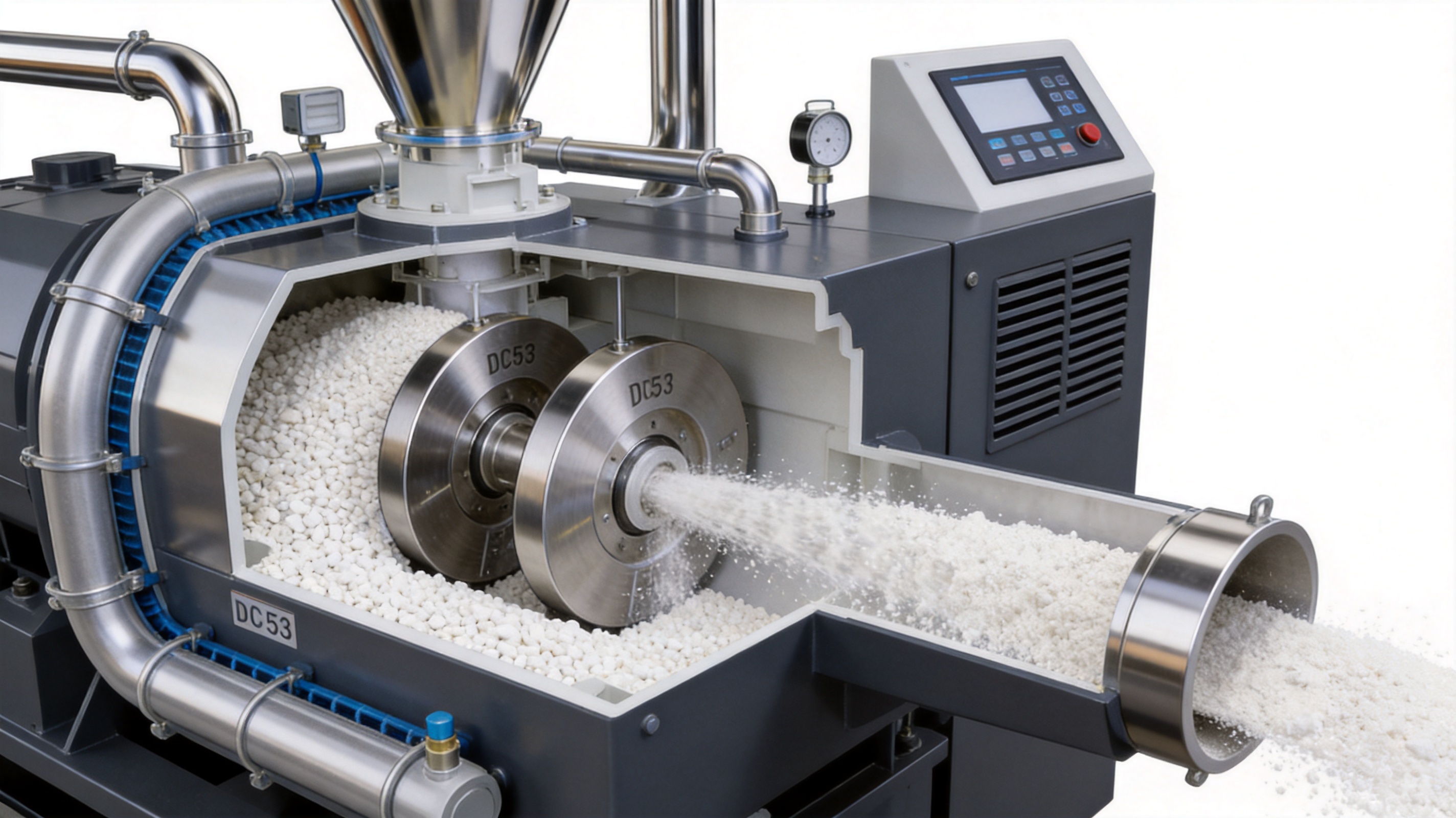
The grinding discs are manufactured from DC53 high-grade cold-work mold steel. The specified hardness is approximately HRC 62–64. DC53 is selected for its combination of hardness, toughness, fatigue resistance, and resistance to chipping. These characteristics are important in plastic pulverizing because the disc edges must remain sharp and stable during extended operation.
Compared with conventional D2 tooling steel, DC53 can provide improved resistance to chipping and fatigue when properly heat-treated and used under suitable operating conditions. The product information indicates that the service life of the DC53 discs may be approximately 1.5–2.5 times longer than standard discs, although actual service life depends on raw-material cleanliness, contamination, operating load, feed preparation, maintenance, and adjustment.
A durable disc offers several practical benefits. It reduces the frequency of disc replacement, limits production interruptions, helps maintain a stable particle-size distribution, and lowers the consumption of spare parts. As a disc becomes worn, its cutting and grinding performance can change. This may cause more heat, greater power consumption, lower output, or less uniform powder. Maintaining disc condition is therefore directly related to product quality and production efficiency.
The disc is designed as a separated component, allowing it to be removed for inspection, sharpening, replacement, or refurbishment. The manufacturer also supports professional disc refurbishment. The stated refurbishment cost is approximately one-quarter to one-third of the price of a new disc, depending on the condition and required work. This creates a useful life-cycle advantage for factories that operate multiple machines or maintain continuous production schedules.
Precision Tooth-by-Tooth Grinding
Grinding-disc accuracy is determined not only by the selected steel but also by the manufacturing process. Uneven tooth geometry, inconsistent edge angles, or inaccurate disc surfaces can cause fluctuating grinding performance. They may also produce excessive vibration, irregular particle size, or localized heat generation.
The manufacturing process uses imported Taiwanese professional CNC tool grinders for tooth-by-tooth precision grinding. According to the supplied company information, the factory operates two such high-precision machines. CNC grinding allows the geometry of each tooth or cutting edge to be controlled according to a defined program. This supports consistent blade angles, repeatable edge profiles, and improved balance between the fixed and rotating grinding surfaces.
Precision tooth geometry is especially valuable when polyethylene powder must meet demanding flowability and uniformity requirements. A sharp and consistent edge can reduce unnecessary friction and help the machine break material more efficiently. It can also reduce the tendency of the plastic to smear or soften excessively inside the grinding chamber.
The production objective is not simply to make smaller particles. It is to create a controlled powder with a distribution suited to the molding process. When the grinding disc is accurately manufactured and correctly adjusted, the pulverizer can provide more consistent results over an extended operating period. This consistency is one of the key advantages of an industrial system manufactured with dedicated precision tooling equipment.
Dynamic Balancing for Stable Operation
High-speed rotating components must be accurately balanced. Even a small imbalance in a large grinding disc can produce significant vibration when the machine operates continuously. Excessive vibration can increase bearing loads, accelerate spindle wear, loosen fasteners, damage foundations, and create unpleasant working conditions for operators.
Each grinding disc is rigorously dynamically balanced using imported German high-precision balancing equipment. Dynamic balancing measures and corrects the distribution of mass while the component rotates. This is more effective than relying only on static balancing because the machine is intended to operate at speed and under continuous industrial load.
The company describes the operating stability using a “coin-standing” comparison, meaning that vibration is sufficiently low for a coin to remain upright during operation under appropriate conditions. The stated noise level is below 85 dB. Actual noise will vary according to installation, material, building structure, conveying equipment, and surrounding machinery, but precise balancing can contribute substantially to lower mechanical noise and smoother operation.
Stable operation benefits the entire production line. Bearings, spindles, reducers, belts, and supporting structures experience less mechanical stress. Lower vibration also helps protect the powder quality because the grinding gap and machine alignment are less likely to change during operation. For factories running around the clock, this reliability can be more valuable than a short-term increase in nominal speed.
Temperature Management for Polyethylene Pulverizing
Polyethylene is sensitive to heat generated by friction and mechanical energy. If the grinding chamber becomes too hot, the material may soften, stick to the grinding surfaces, form lumps, or lose the free-flowing characteristics required for rotational molding. Excessive heat can also reduce output and make cleaning more difficult.
The 800-model pulverizer uses a reinforced dual cooling system. The principal system is a large-area water-cooling jacket, supported by multi-stage forced air cooling. The water-cooling arrangement is specified as one inlet and one outlet, allowing cooling water to circulate through the relevant chamber or jacket. Forced air assists heat removal from the machine and associated components.
PLC-based multi-point control and over-temperature protection help operators monitor and manage the grinding process. The stated grinding-chamber temperature range is approximately 50–80°C under controlled conditions. The suitable operating temperature depends on the polyethylene grade, moisture level, feed size, throughput, ambient conditions, and target powder fineness. The purpose of the system is to prevent uncontrolled temperature rise rather than to impose one identical temperature for every application.
Effective cooling provides several advantages. It reduces the risk of sticking and agglomeration, helps maintain powder flowability, protects the grinding discs, and supports stable production during long operating periods. It also makes the equipment more suitable for high-throughput production, where heat accumulation can become a major limitation for smaller or less effectively cooled machines.
Cooling water quality and flow must be managed correctly. The water circuit should be inspected for adequate flow, leaks, scaling, and blockage. If the factory operates in a region with hard water, a suitable water-treatment or cleaning program may be necessary. Operators should also follow recommended temperature limits and alarm procedures rather than attempting to increase output by bypassing protective controls.
Integrated Conveying and Dust Collection
Plastic powder handling creates a risk of airborne dust, product loss, and workplace contamination. A pulverizer that produces good powder but lacks effective conveying and collection can create operational problems throughout the factory. Dust may settle on electrical equipment, reduce housekeeping efficiency, contaminate other materials, and expose workers to unnecessary airborne particles.
The system uses enclosed negative-pressure airflow conveying together with a high-efficiency pulse bag dust collector. Negative pressure helps draw material and air through the conveying line while reducing the chance of powder escaping through unsealed points. Stainless-steel pipes are specified for the conveying system, with pipe diameters of approximately 178 mm or 203 mm depending on the configuration.
The stated dust-capture rate is greater than 99.9 percent under suitable operating conditions. Actual environmental performance depends on filter selection, air volume, sealing, maintenance, pressure settings, and the condition of the filter bags. The pulse-cleaning system periodically removes accumulated dust from the filter surfaces, helping maintain airflow and collection performance.
Effective dust collection provides both environmental and economic advantages. It supports a cleaner workshop, reduces loss of finished powder, protects nearby equipment, and assists compliance with factory environmental requirements. A sealed conveying system also reduces the need for manual transfer between the pulverizer, classifier or screen, collection point, and packaging area.
Dust collectors must be maintained as carefully as the pulverizer itself. Filter bags should be inspected, pulse valves should be checked, and duct connections should be kept airtight. Operators should also evaluate the dust characteristics of the material being processed and confirm that the complete system is suitable for the factory’s safety requirements.
Vacuum Feeding and Screening Configuration
The standard feeding method is vacuum feeding. Vacuum conveying can improve material transfer by reducing manual handling and supporting a more enclosed production route. It is particularly useful when the pulverizer is integrated with upstream crushing, recycling, storage, or weighing equipment.
For recycled polyethylene, feed preparation is important. Large molded waste products should normally be crushed or cut into suitable pieces before entering the pulverizer. Metal, stones, excessive moisture, and other foreign materials must be removed because contamination can damage the discs, reduce service life, and affect powder quality.
A vibrating screen can be included in the production line to separate particles according to the selected specification. The technical data identifies vibrating-screen diameters of approximately 1,200 mm or 1,500 mm, with screen motor options of 1.1 kW or 1.5 kW. The screen helps remove oversized particles and can return material for additional pulverizing when the line is designed for closed-loop processing.
The final system configuration should reflect the required product. A powder for a particular rotational molding process may need a different screen specification from powder used in hot-melt adhesive production or recycling. Mesh size, screen opening, screen area, vibration intensity, and recirculation method should be selected according to the material and the customer’s quality standard.
Technical Specifications
The following table summarizes the principal technical data supplied for the 800-model machine. Some values are offered as ranges because the equipment can be configured for different capacities and applications.
| Item | Specification | Application Notes |
|---|---|---|
| Model | 800 | Heavy-duty industrial disc pulverizer |
| Grinding disc diameter | 800 mm | Designed for high-volume processing |
| Capacity | Approximately 450–900 kg/h | Depends on material, fineness, feed condition, and configuration |
| Possible optimized output | Higher output may be achievable under selected PE conditions | Requires performance testing and suitable operating parameters |
| Mesh size | Approximately 10–50 mesh in the listed standard data | Other fineness ranges may be available according to configuration |
| Drive motor | 75, 90, 110, or 132 kW | Selected according to production target and material characteristics |
| Speed control | Inverter | Allows adjustment of operating speed and process load |
| Grinding-disc material | DC53, separated disc design | High hardness and improved resistance to chipping |
| Blower motor | 11 or 15 kW | Supports conveying and airflow management |
| Conveying pipe material | Stainless steel | Suitable for enclosed powder transfer |
| Conveying pipe diameter | 178 or 203 mm | Selected according to system airflow and capacity |
| Vibrating-screen diameter | 1,200 or 1,500 mm | Supports powder classification |
| Vibrating-screen motor | 1.1 or 1.5 kW | Configuration depends on screen size and duty |
| Feeding method | Vacuum feeding | Reduces manual material transfer |
| Dust-collector bag diameter | 300 mm | Used in the pulse bag collection system |
| Cooling method | Water cooling with inlet and outlet circulation | Supported by forced air cooling and temperature protection |
Advantages Over Basic or Conventional Pulverizers
The main competitive advantage of the 800-model system is that it treats pulverizing as a complete production process rather than as an isolated grinding step. Basic machines may provide a motor, a grinding chamber, and a simple discharge point, but they may not offer the same level of disc precision, dynamic balancing, cooling control, dust collection, or process integration.
The first advantage is production capacity. The 800 mm disc and high-power motor options are intended for factories that require hundreds of kilograms per hour rather than small-batch output. Higher capacity can reduce the number of machines required for a given production target and simplify plant layout. It may also reduce labor associated with repeated loading, unloading, and material transfer.
The second advantage is powder consistency. DC53 discs manufactured using CNC tooth-by-tooth grinding help maintain accurate edge geometry. Combined with variable-speed control and screening, this supports a more predictable particle-size distribution. Consistent powder can help downstream molding departments reduce process variation and improve product uniformity.
The third advantage is operational stability. Dynamic balancing reduces vibration and supports longer service life for bearings, spindles, belts, and reducers. This is particularly important for continuous production, where unplanned stoppages can affect delivery schedules and create significant labor and material losses.
The fourth advantage is thermal control. The dual cooling system and over-temperature protection reduce the risks associated with overheating polyethylene. A basic pulverizer without sufficient cooling may experience sticking, agglomeration, lower throughput, or inconsistent powder quality when operated continuously at high load.
The fifth advantage is lower long-term tooling expense. The ability to refurbish dulled discs at a fraction of new-disc cost can reduce maintenance spending. Longer disc service life also reduces the frequency of replacement and the associated downtime.
The sixth advantage is environmental control. Negative-pressure conveying and pulse bag filtration help contain dust and reduce raw-material waste. This can be especially valuable for large factories that must maintain organized, clean, and compliant production environments.
Manufacturing Capability and Quality Control
The performance of industrial machinery depends heavily on the manufacturing capability of its supplier. A well-designed machine can still underperform if machining accuracy, welding quality, assembly control, or component inspection is inconsistent. The manufacturer behind this equipment has approximately 30 years of experience in plastic crushing and pulverizing equipment.
The company operates six processing workshops, each averaging approximately 1,400 square meters. This scale provides space for machining, welding, assembly, testing, component preparation, and storage. Dedicated workshop capacity can improve production organization and help the manufacturer handle customized equipment requirements for different plastic-processing applications.
The factory uses high-precision grinding machines imported from Taiwan and manufactured to German standards. These machines support the production of accurate grinding discs and other critical components. German dynamic-balancing equipment is used to verify rotating parts, while Japanese welding systems support consistent structural fabrication.
These manufacturing resources are important because a pulverizer is a system of interacting components. The disc must align correctly with the grinding chamber. The spindle must rotate accurately. The bearings must operate under the intended load. The frame must remain rigid. The conveying route must be sealed. Cooling passages must provide sufficient flow. Quality control must therefore cover more than the visible exterior of the machine.
The company reports that it regularly studies advanced machinery technologies from countries including Germany. This focus on process development supports improvements in machine structure, component selection, balance, cooling, and automation. The manufacturer also provides customized solutions, allowing the pulverizer to be integrated with crushers, screens, feeders, conveyors, dust collectors, and packaging systems.
CE mechanical certification and ISO 9001 quality management system certification provide additional evidence of a structured approach to product safety and quality management. Certification does not replace proper installation or operating procedures, but it gives international buyers a recognized framework for evaluating the supplier’s manufacturing and documentation practices.
Applications in Rotomolding and Plastic Recycling
The principal application is the production of polyethylene powder for rotational molding. Large water tanks are one example of a product that requires reliable powder distribution and consistent fusion. Other applications include pallets, waste containers, playground equipment, storage products, agricultural containers, and industrial housings.
The machine can also process waste PE rotomolding products for recycling and re-pulverizing. Recycling reduces the amount of plastic sent to disposal and can recover usable material for suitable applications. Recycled material must be sorted and prepared carefully because additives, pigments, contamination, oxidation, and mixed polymers can affect the final powder and the molding process.
Additional applications include supplying powder for SPC flooring core layers, hot-melt adhesives, and industrial rotational molding compounds. These materials may require different powder characteristics, and the machine should be configured with the appropriate disc setting, screen, cooling arrangement, and feed system.
For masterbatch and polymer-related processing, the suitability of the 800-model pulverizer depends on the specific formulation. Some materials may require special temperature control, contamination prevention, or additional classification. A technical evaluation is recommended before applying the machine to materials outside the standard polyethylene range.
Factory Layout and Installation Considerations
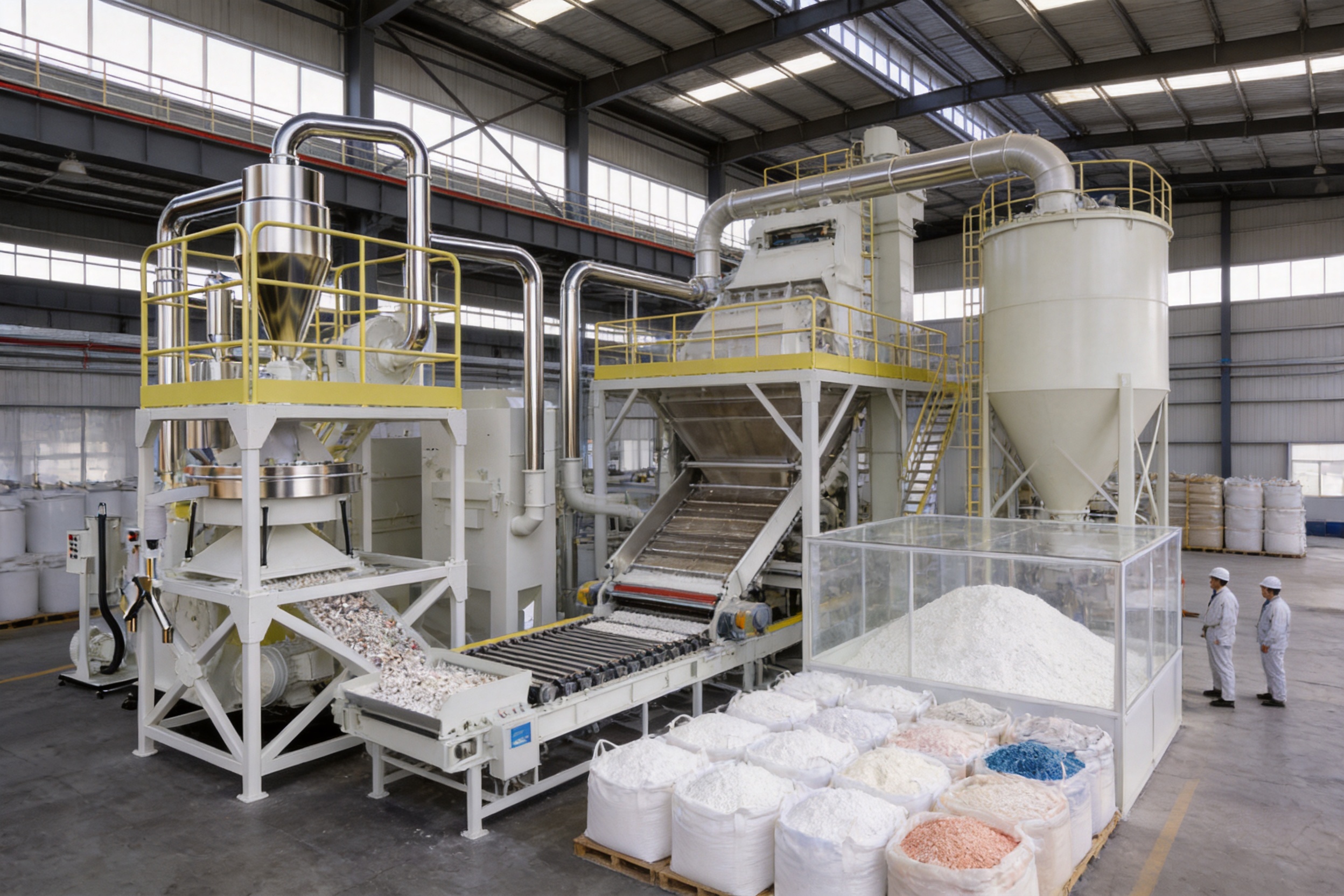
The 800-model machine is a large industrial system. The total installation area may be approximately 8–12 square meters for the primary equipment, although the complete line requires additional space for feeding, storage, screening, dust collection, electrical control, operator access, and maintenance clearance.
The floor should be level, sufficiently strong, and suitable for the machine’s weight and vibration loads. Although dynamic balancing reduces vibration, the installation foundation remains important. The equipment should be aligned according to the supplier’s instructions, and all anchors, guards, belts, pipes, and electrical connections should be checked before commissioning.
Electrical requirements depend on the selected drive motor, blower, screen, cooling equipment, and local power standard. The factory should confirm voltage, frequency, starting method, control-panel requirements, grounding, and available transformer capacity before ordering. A complete power assessment is especially important when selecting the 110 kW or 132 kW motor configuration.
Cooling-water supply must provide adequate flow and pressure. The water circuit should include appropriate valves, drainage, temperature monitoring, and access for cleaning. The dust-collection system should be positioned so that duct lengths are practical and inspection of filter bags is convenient.
Operators require safe access to control panels, inspection points, discharge areas, and maintenance components. Guards must remain installed during operation. Emergency stops, over-temperature alarms, interlocks, and overload protection should be tested as part of commissioning and periodically during service.
Productivity, Energy, and Return on Investment
A high-capacity pulverizer can improve factory economics in several ways. It may increase output from the existing production area, reduce the number of machines needed, decrease labor per ton, and lower the frequency of tooling changes. The largest benefits are normally achieved when the equipment operates close to its designed duty for a sufficient number of hours each year.
The product information identifies a typical return-on-investment period of approximately six to twelve months in suitable production environments. This estimate is not universal. The actual payback period depends on purchase cost, installation cost, operating hours, local electricity prices, labor costs, powder selling price, scrap reduction, maintenance expense, financing, and the difference between the new machine and the existing process.
Energy efficiency should be evaluated on a kilowatt-hour-per-ton basis rather than by motor power alone. A larger motor does not automatically mean lower energy consumption. However, a properly loaded high-capacity machine may process material more efficiently than several smaller units, particularly when it reduces idle time, repeated handling, and frequent disc changes.
Lower reject rates can also contribute to the economic return. If consistent powder reduces surface defects, wall-thickness variation, or insufficient-strength problems in molded products, the factory may save material and labor while improving delivery reliability. These benefits should be measured through production data rather than assumed solely from nominal machine specifications.
Recommended Operating Practices
Before starting production, operators should confirm that the grinding chamber is clean, the discs are correctly installed, the cooling circuit is functioning, and the dust collector has adequate airflow. The feed material should be free of metal, stones, excessive moisture, and oversized pieces that could overload the system.
The machine should normally be started according to a controlled sequence. Auxiliary systems such as cooling, dust collection, airflow, and conveying should reach operating condition before material is introduced. Feeding should begin gradually so that the operator can observe current draw, temperature, vibration, airflow, and powder quality.
Operators should avoid overfeeding the machine in an attempt to increase output beyond the stable operating range. Excessive feed can increase temperature, overload the motor, accelerate disc wear, and produce less uniform powder. A stable process with consistent feed is generally more productive than a process that repeatedly trips, blocks, or requires cleaning.
Disc condition should be inspected according to a scheduled maintenance plan. Wear, chipping, gap changes, and abnormal edge damage should be recorded. Bearings, belts, reducers, fasteners, seals, cooling lines, filters, and vibrating-screen components should also be checked regularly.
When changing materials or colors, the conveying route and grinding chamber should be cleaned as necessary to avoid cross-contamination. For recycled polyethylene, the incoming stream should be inspected so that changes in contamination or formulation do not pass unnoticed into the finished powder.
Purchasing and Customization Guidance
Buyers should provide the manufacturer with detailed information before selecting the final configuration. Important factors include the polyethylene grade, bulk density, moisture content, feed size, desired mesh range, target capacity, daily operating hours, available power supply, ambient temperature, cooling-water conditions, and dust-control requirements.
A sample-material test is strongly recommended. Testing can verify capacity, powder fineness, temperature behavior, energy consumption, and the need for additional screening or recirculation. It can also reveal whether the material requires a special disc design or a modified feeding method.
Customers should distinguish between the capacity of the pulverizer itself and the capacity of the complete line. Crushers, feeders, vacuum systems, screens, blowers, dust collectors, and packaging equipment must be balanced. If one component has a lower capacity than the pulverizer, it may become the bottleneck.
Customization may include motor selection, pipe diameter, vibrating-screen size, dust-collector arrangement, cooling capacity, automation level, storage silos, magnetic separation, weighing, and packaging. For international projects, documentation may include electrical drawings, spare-parts lists, operating manuals, maintenance instructions, and commissioning support.
Company Strengths and Service Support
Changzhou Mao Yue Intelligent Equipment Co., Ltd. is a source manufacturer specializing in plastic crushing and pulverizing equipment. Its products are used in rotational molding, masterbatch, polymer processing, PVC, polyethylene, recycling, powder coating, and related size-reduction applications.
The company’s reported experience of approximately 30 years provides a broad base of application knowledge. Long-term experience is valuable because plastic materials behave differently under grinding conditions. The correct solution depends on more than machine size; it also requires an understanding of material softness, thermal behavior, particle shape, contamination, and downstream requirements.
The manufacturer reports long-term cooperation with more than 5,000 domestic and international enterprises. Its focus includes quality, service, innovation, and customized engineering. A factory that purchases a high-capacity pulverizer is not only purchasing a machine; it is establishing a production process that may require technical support, spare parts, refurbishment, troubleshooting, and future expansion.
The combination of CNC disc grinding, dynamic balancing, industrial welding, cooling design, automation, and dust control gives the supplier a strong foundation for manufacturing complete pulverizing solutions. These capabilities help distinguish the equipment from low-cost machines that may focus primarily on initial purchase price without providing the same level of process control or life-cycle support.
Q&A
What material is the 800-model pulverizer primarily designed to process?
The primary application is polyethylene for rotational molding. It can also be considered for suitable recycled PE, industrial rotational molding compounds, SPC flooring core-layer powder, hot-melt adhesive powder, and other compatible plastics. Material testing is recommended for applications outside standard PE processing.
What is the capacity of the machine?
The listed standard technical data gives a capacity of approximately 450–900 kg/h. The broader product description indicates that output may vary significantly according to material and fineness, with higher output possible under optimized conditions. Actual capacity should be confirmed through a sample test and final system configuration.
What particle sizes can the machine produce?
The detailed specification lists approximately 10–50 mesh, while other operating configurations may support a broader fineness range. The final particle size depends on the material, disc adjustment, screen, speed, feed rate, and recirculation arrangement.
Why are DC53 discs used?
DC53 offers high hardness together with toughness, fatigue resistance, and improved resistance to chipping when properly treated. These characteristics help the disc maintain performance during extended plastic pulverizing. The supplied information indicates a potential service life 1.5–2.5 times longer than standard discs, subject to operating conditions.
Can the grinding discs be refurbished?
Yes. The disc design supports professional refurbishment. The stated refurbishment cost may be approximately one-quarter to one-third of the cost of new discs, depending on the amount of work required and the disc condition.
How does the machine control temperature?
It uses a large-area water-cooling jacket, forced air cooling, PLC multi-point monitoring, and over-temperature protection. The stated controlled chamber temperature range is approximately 50–80°C, although the optimum operating condition depends on the PE grade and production parameters.
Is the machine suitable for continuous production?
Yes. The heavy-duty structure, dynamic balancing, cooling system, high-power motor options, enclosed conveying, and automated protection are intended for long-duration industrial operation. Regular maintenance and correct feed control remain necessary for reliable continuous production.
Does the system include dust control?
The configuration includes negative-pressure airflow conveying and a pulse bag dust collector. The stated dust-capture rate is greater than 99.9 percent under suitable operating and maintenance conditions. Filter bags, seals, ducting, and pulse-cleaning components must be maintained.
How much space is required?
The primary 800-model equipment may occupy approximately 8–12 square meters. The complete installation will require additional space for feeding, storage, dust collection, electrical equipment, operator access, maintenance, and packaging.
What information should be supplied when requesting a quotation?
Buyers should provide the material type, feed size, moisture content, desired mesh, target capacity, operating hours, power supply, cooling conditions, dust-control requirements, and information about upstream and downstream equipment. A sample of the material is helpful for performance testing.
Conclusion
The 800-model PE rotomolding powder pulverizer is engineered for manufacturers that require high-volume, stable, and controlled plastic powder production. Its 800 mm grinding disc, DC53 tooling, CNC tooth-by-tooth grinding, dynamic balancing, variable-speed drive, reinforced cooling, PLC protection, vacuum feeding, stainless-steel conveying, vibrating screening, and pulse bag dust collection form an integrated solution for large-scale factories.
Its advantages over basic pulverizers extend beyond nominal output. The machine is designed to improve powder uniformity, reduce vibration, control heat, extend disc service life, limit dust emissions, and support continuous production. The manufacturer’s experience, precision-processing equipment, balancing capability, welding systems, certification, and customization services further support the machine’s position as a complete industrial pulverizing solution.
For the best result, customers should select the motor, disc setting, screen, cooling system, conveying arrangement, and dust collector according to the actual polyethylene material and production target. A material trial and complete line assessment will provide the most reliable basis for confirming capacity, mesh size, energy consumption, and return on investment.
References
1. Changzhou Mao Yue Intelligent Equipment Co., Ltd. Product information for the 800-model PE rotomolding pulverizer.
2. Changzhou Mao Yue Intelligent Equipment Co., Ltd. Technical data for disc diameter, capacity, motor options, mesh range, conveying, screening, and cooling.
3. Changzhou Mao Yue Intelligent Equipment Co., Ltd. Company information concerning manufacturing workshops, processing equipment, certifications, and plastic pulverizing applications.
4. General engineering principles for rotational molding powder preparation, thermoplastic size reduction, particle-size control, industrial cooling, and dust collection.
5. General maintenance practices for dynamically balanced rotating machinery, grinding discs, industrial blowers, vibrating screens, and pulse-jet filtration systems.