

 English
 русский
 Español
 عربى
 中文简体
 中文简体
Content
- 1 1. The Role of Integrated Size Reduction in Modern Plastic Recycling
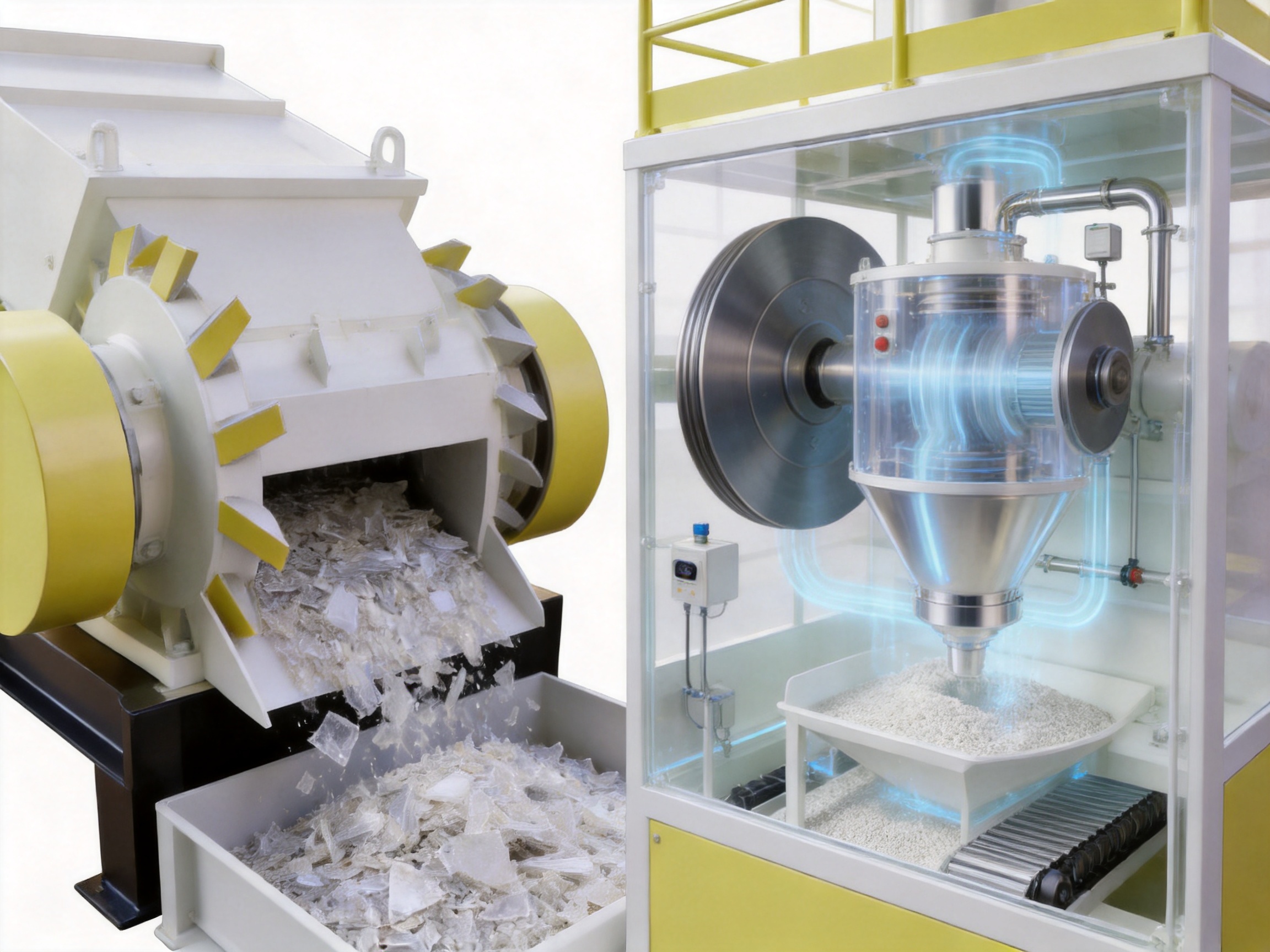
- 2 2. Complete Process Flow of the Production Line
- 3 3. Blade Cutting Compared with Conventional Hammer Crushing
- 4 4. Temperature Control for Heat-Sensitive Plastics
- 5 5. Precision Manufacturing of the Grinding Components
- 6 6. Manufacturing Strengths and Quality Infrastructure
- 7 7. Main Advantages of the Integrated System
- 8 8. Technical Configurations of the Blade Crusher
- 9 9. Applications in Plastic Recycling and Manufacturing
- 9.1 9.1 Injection-Molding and Blow-Molding Waste
- 9.2 9.2 PET Bottles, Sheets, and Strapping
- 9.3 9.3 ABS and PS Engineering Plastics
- 9.4 9.4 PVC Film, Profiles, Pipes, and Flooring Offcuts
- 9.5 9.5 Masterbatch and Functional Masterbatch
- 9.6 9.6 Rotational Molding Powder
- 9.7 9.7 SPC Flooring and Modified Plastics
- 10 10. Automation, Controls, and Operator Benefits
- 11 11. Energy, Cost, and Return on Investment
- 12 12. Selecting the Correct Configuration
- 13 13. Maintenance and Operating Recommendations
- 14 14. Frequently Asked Questions
- 14.1 Q1: What types of plastic can this production line process?
- 14.2 Q2: What is the difference between the blade crusher and the disc pulverizer?
- 14.3 Q3: What powder size can the line produce?
- 14.4 Q4: How does the system control overheating?
- 14.5 Q5: Can the line process PVC and PET?
- 14.6 Q6: How is dust controlled?
- 14.7 Q7: What are the advantages over a hammer-type crushing and grinding system?
- 14.8 Q8: What are the available crusher capacities?
- 14.9 Q9: What knife and grinding-disc materials are used?
- 14.10 Q10: Does the manufacturer provide customized solutions?
- 14.11 Q11: Is the system suitable for masterbatch production?
- 14.12 Q12: What should be tested before purchasing?
- 15 15. Conclusion
- 16 References
- 17 Product: Blade-type crushing and pulverizing production line
Plastic recycling increasingly requires more than simple size reduction. Recyclers, compounders, masterbatch producers, and plastic manufacturers need equipment that can transform irregular waste into consistent, clean, and technically useful powder while controlling heat, dust, energy consumption, and maintenance costs. An integrated blade crushing and pulverizing production line addresses these requirements by combining controlled front-end cutting with precision fine grinding, pneumatic conveying, separation, screening, temperature management, and dust collection.
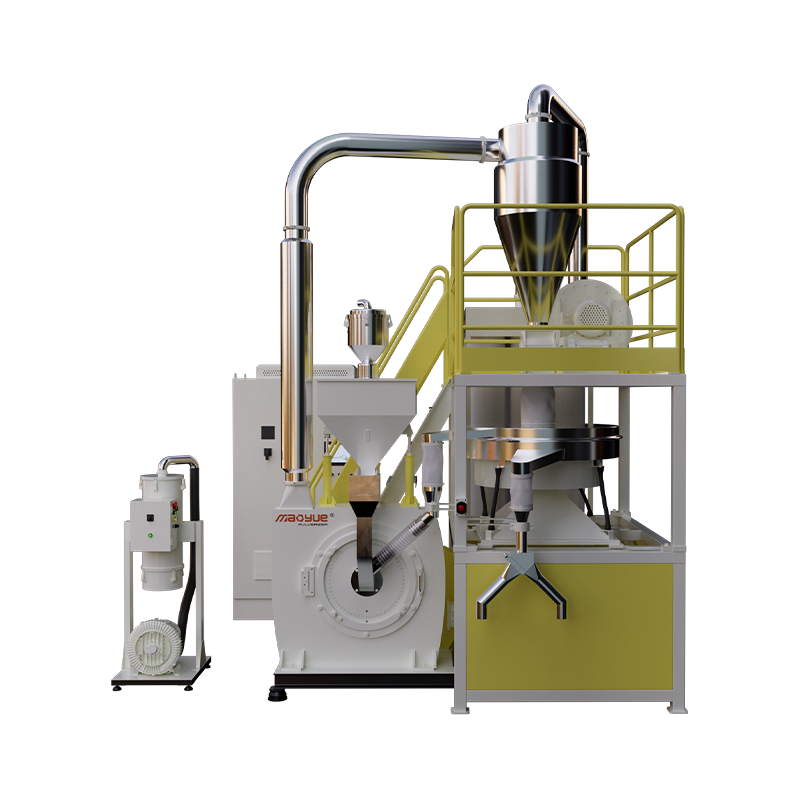
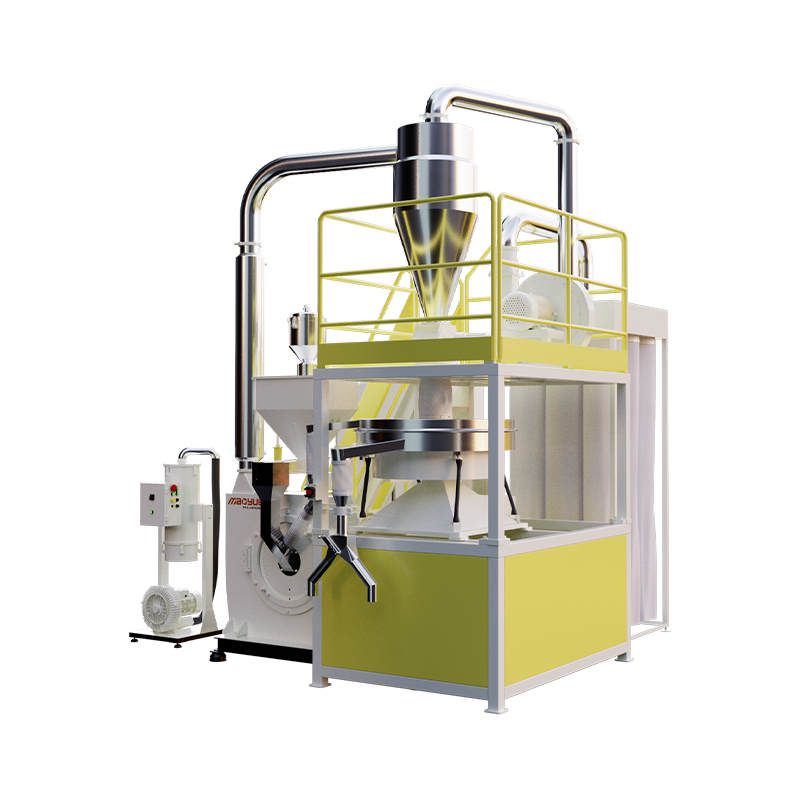
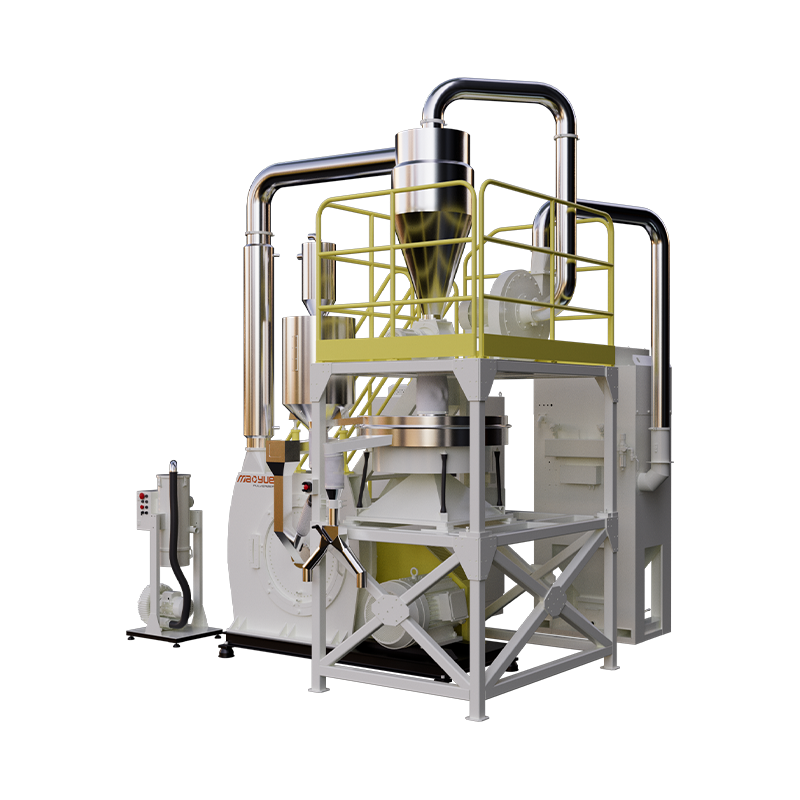
This type of production line is designed for medium-hardness and high-impact plastic waste, including pipes, profiles, sheets, barrels, pallets, woven bags, injection-molded parts, bottles, appliance housings, flooring offcuts, and other rigid or semi-rigid materials. Instead of relying on a single machine, the system coordinates multiple processing stages. Large pieces are first reduced by a heavy-duty blade crusher. The resulting material is then conveyed under negative pressure to a disc pulverizer, where it is processed into a controlled fine powder. Cyclone separation, vibrating screening, and pulse-jet filtration complete the system.
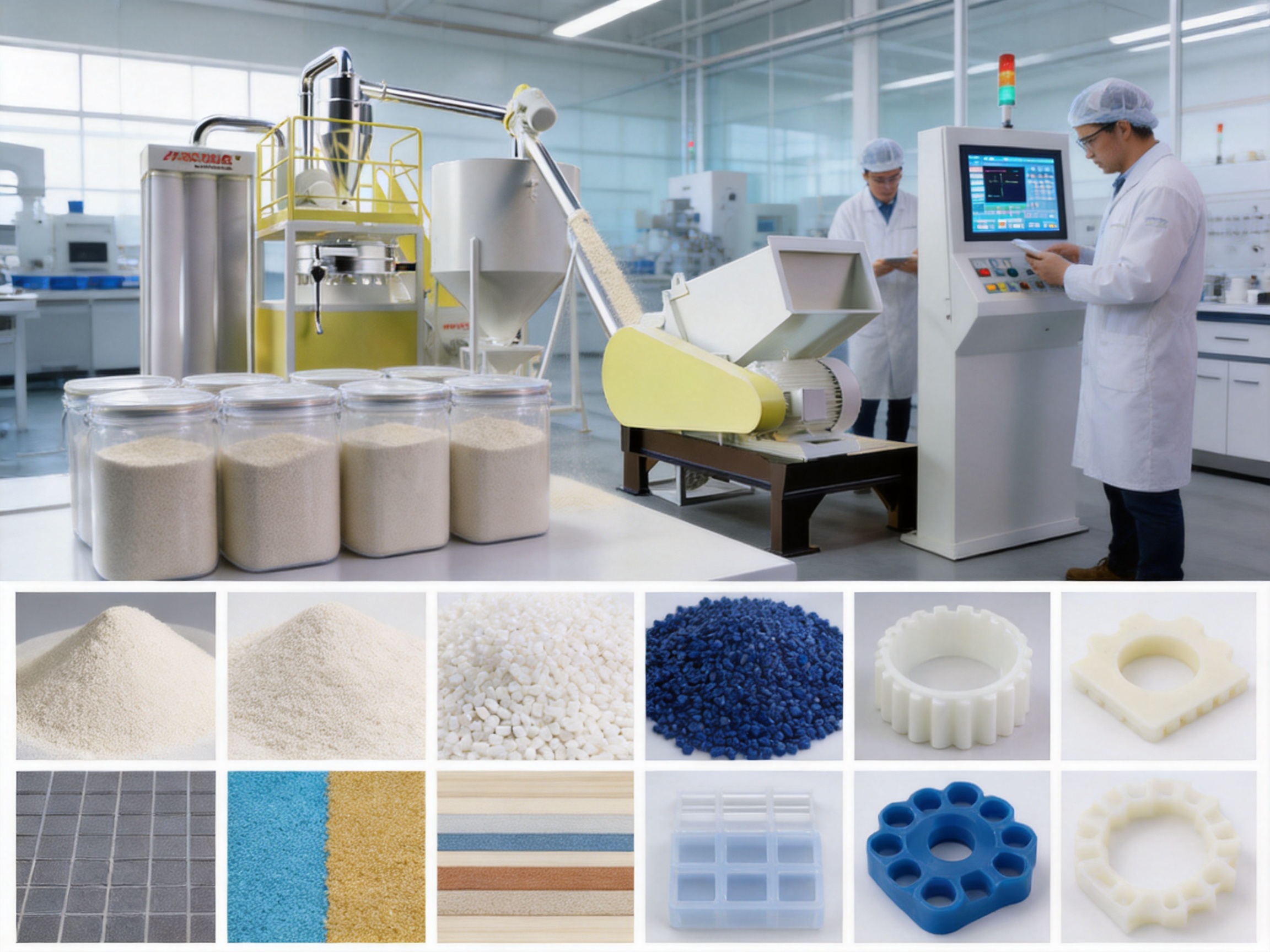
Depending on the raw material, equipment configuration, and customer requirements, the finished product can generally be produced in the range of 20–80 mesh or finer. The result is a powder with strong dispersion, stable flowability, consistent particle size, and good suitability for injection molding, extrusion, rotational molding, masterbatch production, modified plastics, regenerated materials, and other applications.
1. The Role of Integrated Size Reduction in Modern Plastic Recycling
Plastic waste is highly variable. A recycling plant may receive thick pipes, thin sheets, brittle molded components, flexible film clumps, bottle flakes, and composite production scraps in the same day. These materials differ in hardness, thickness, toughness, moisture content, melting behavior, and tendency to wrap around rotating tools. A machine that works well for one type of waste may be inefficient or unstable when processing another.
A complete crushing and pulverizing line solves this challenge by dividing the process into appropriate stages. The blade crusher performs high-volume coarse reduction. Its purpose is not to produce final powder, but to convert large and irregular pieces into smaller, more manageable particles. The disc pulverizer then performs precision grinding under controlled conditions. This separation of functions improves throughput, reduces unnecessary stress on the fine-grinding section, and allows each machine to operate within its ideal working range.
The line is also designed as an enclosed system. Material is transferred through negative-pressure pneumatic conveying rather than being moved through open handling points. Cyclones and screens help classify the product, while a pulse-jet baghouse captures airborne particles. This configuration reduces product loss, improves workplace cleanliness, and helps the installation comply with applicable environmental and occupational safety requirements.
For plastic processors, the advantages extend beyond basic recycling. A carefully controlled powder can become a valuable secondary raw material. It may be blended into virgin resin, used in modified compounds, added to masterbatch formulations, or processed into new molded and extruded products. In this way, the production line supports a circular materials strategy rather than merely disposing of waste at a lower cost.
2. Complete Process Flow of the Production Line
2.1 Feeding and Initial Preparation
Raw material is fed into the front-end blade crusher after basic sorting and, where necessary, removal of metal, stones, and other foreign matter. The feed opening and crusher configuration can be selected according to the size and form of the waste. Large plastic components such as pipes, sheets, housings, pallets, and barrels can be introduced after suitable preparation.
Consistent feeding is important because it helps maintain stable motor loading and improves the uniformity of the coarse output. Depending on the application, a conveyor, hopper, magnetic separator, or other auxiliary equipment may be integrated into the feeding section. The modular design allows the line to be adapted to different factory layouts and material-handling requirements.
2.2 Blade-Based Coarse Crushing
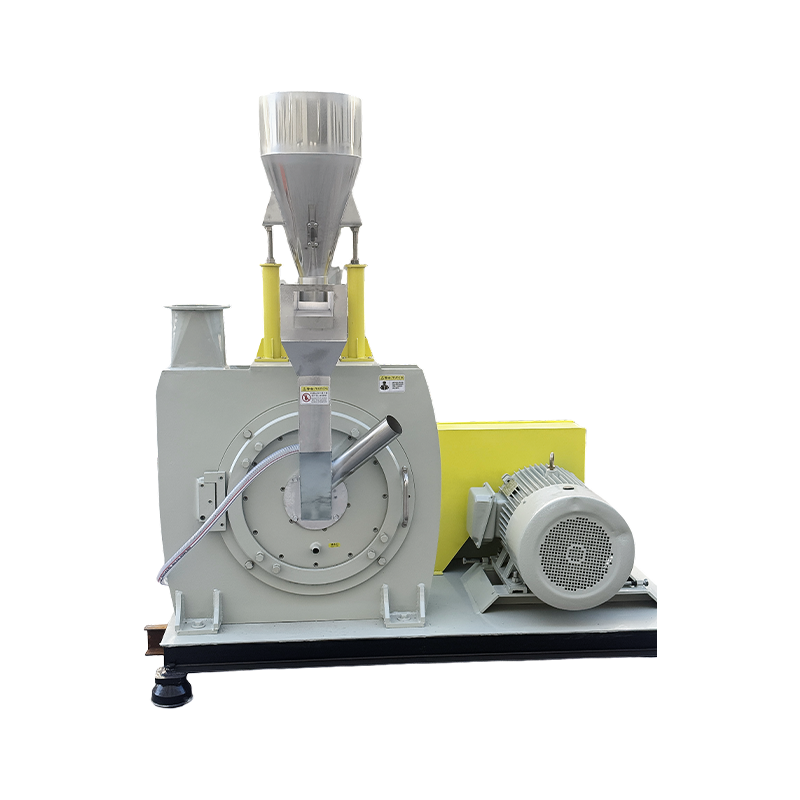
The blade crusher uses a rotating knife assembly and fixed knives to generate repeated cutting and shearing forces. Unlike impact-only reduction, cutting actively engages with the plastic and separates it along controlled cutting paths. This is particularly useful for medium-hardness and brittle materials that require rapid size reduction without excessive pulverization at the first stage.
The heavy-duty multi-blade structure can process injection-molded scraps, bottles, electrical casings, rigid panels, toy components, film clumps, and similar waste. A replaceable screen controls the approximate discharge size. In the listed configurations, the standard screen size is 16 millimeters, providing a suitable feed size for the subsequent disc pulverizer.
Cutting also helps reduce several common problems associated with unsuitable crushing methods. Hammer-type systems may create large quantities of fines, generate considerable impact noise, or cause certain flexible materials to wrap around the rotor. A properly configured blade system can provide cleaner separation and more consistent output while reducing the likelihood of material entanglement, excessive dust, and unplanned stoppages.
2.3 Negative-Pressure Pneumatic Conveying
After coarse crushing, the material is transferred through a closed pneumatic conveying system. Negative pressure draws the crushed plastic from the crusher toward the grinding and separation sections. Because the conveying route operates within an enclosed system, the material is less exposed to the surrounding environment and the risk of dust escaping through transfer points is reduced.
Negative-pressure conveying also provides layout flexibility. Equipment does not always need to be arranged in a straight line, and the conveying route can be designed around existing columns, walls, platforms, and service areas. The system can therefore support both compact installations and larger production layouts.
2.4 Precision Disc Pulverizing
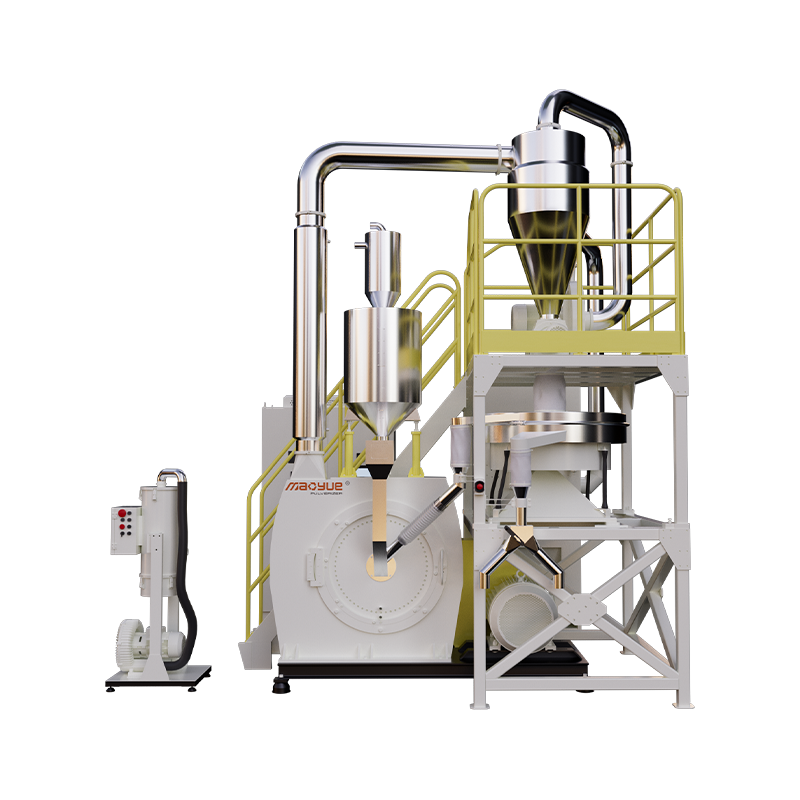
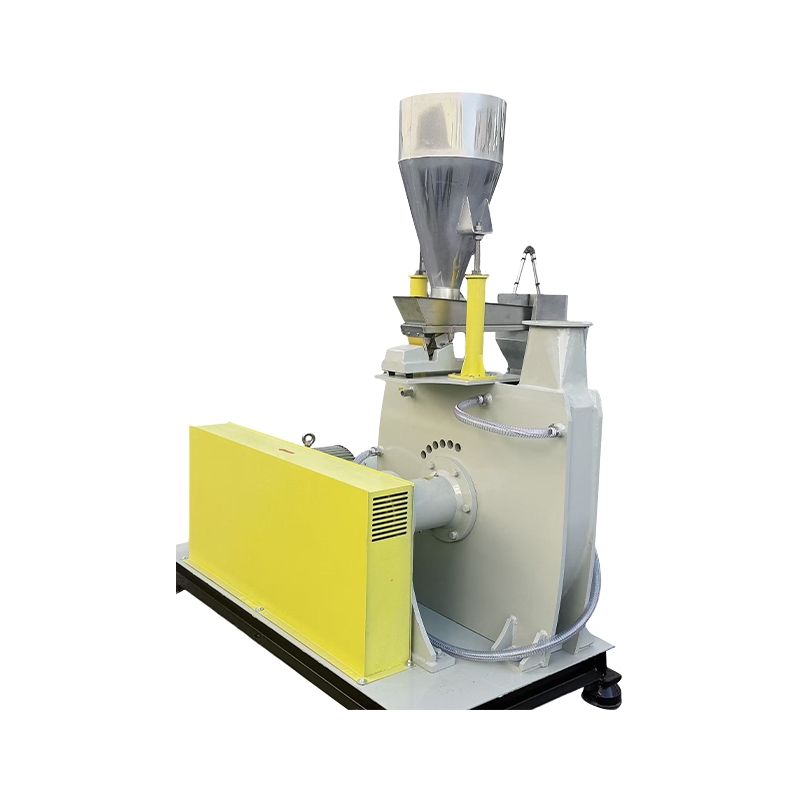
The disc pulverizer is the core fine-grinding component. It uses high-speed grinding discs to apply friction, impact, and shearing action to the coarse plastic particles. Disc mills are available in different models, including 500, 600, and 800 class configurations, allowing the line to be matched to the desired capacity and powder specification.
The grinding discs use DC53 high-grade mold steel. This material provides a combination of hardness, wear resistance, toughness, and dimensional stability suitable for demanding plastic pulverizing work. The grinding surfaces can be manufactured and maintained to support a narrow particle-size distribution and stable production over an extended operating period.
The design of the grinding discs is especially important for applications such as masterbatch, modified plastic, rotational molding powder, and SPC flooring core powder. These applications often require powder with consistent dispersion and flow behavior. Irregular particles, excessive fines, agglomerates, or overheating can negatively affect the final product. Precision grinding helps limit these variations.
2.5 Cyclone Separation and Vibrating Screening
Following fine grinding, the material enters the separation section. Cyclone separation assists in collecting and directing the pulverized product, while vibrating screening classifies particles according to the selected specification. Oversized particles can be returned for additional grinding or managed through a separate discharge route, depending on the plant design.
Screening improves product consistency and helps prevent unwanted coarse particles from entering downstream production. It also gives operators greater control over the final powder grade. For customers producing different products, screen changes and process adjustments can support multiple mesh specifications on the same basic line.
2.6 Pulse-Jet Dust Collection
The production line incorporates a pulse-jet baghouse dust collection system. Airborne powder is drawn into the filtration unit, where filter bags capture fine particles. Periodic compressed-air pulses clean the bags and maintain airflow. The collected powder can be returned to the product stream when appropriate, reducing material loss.
A fully enclosed conveying and filtration system is designed to achieve a dust capture rate exceeding 99.9 percent under suitable operating conditions. Actual performance depends on installation, filter selection, sealing, airflow, maintenance, and local environmental requirements. Nevertheless, the integrated approach provides a significant advantage compared with open transfer systems or standalone mills operated without coordinated dust control.
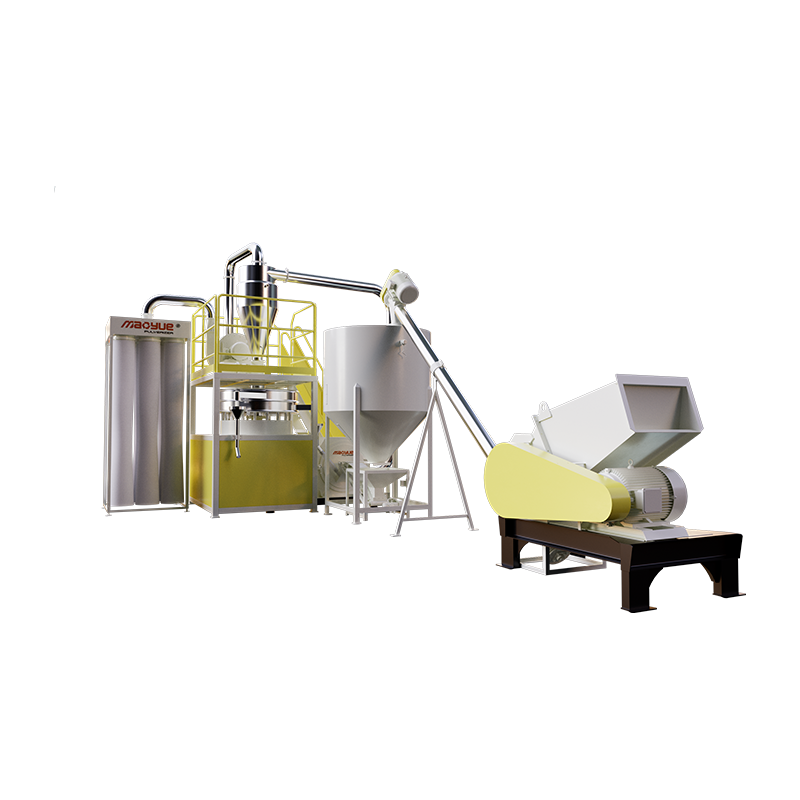
Blade-type crushing and pulverizing production line
3. Blade Cutting Compared with Conventional Hammer Crushing
Hammer crushers reduce material primarily through repeated impact. This method can be effective for certain brittle products, but it may create limitations when the feed contains flexible, tough, thin-walled, or mixed plastic components. Film clumps may wrap around rotating parts, impact can generate a high proportion of fines, and the heat produced by repeated collisions may affect heat-sensitive polymers.
Blade cutting uses a different reduction principle. The rotating knives pass across fixed knives, creating a controlled shear action. This mechanism is better suited to plastic waste that needs clean and rapid cutting before fine grinding. It can help reduce the size of bulky parts without asking the fine mill to accept material that is too large or irregular.
The blade-type arrangement provides several practical advantages:
First, it can improve the consistency of coarse particles. Uniform feed to the disc pulverizer helps stabilize motor loading and grinding conditions.
Second, cutting may reduce the generation of uncontrolled dust during the initial stage. Less unnecessary impact means fewer extremely fine particles before the material reaches the dedicated grinding and filtration sections.
Third, the cutting action can reduce the risk of material bridging and entanglement when the crusher is correctly matched to the feedstock.
Fourth, the front-end blade system can handle a broad range of plastic forms, from molded components and rigid sheets to profiles, bottles, and selected flexible materials.
Finally, dividing coarse crushing and fine pulverizing into separate stages can improve overall energy efficiency. The disc mill does not need to spend a large portion of its power breaking down oversized pieces. It can focus on achieving the required final powder size.
Equipment selection must still be based on the material. Extremely abrasive, heavily contaminated, wet, or metal-containing waste may require additional preparation, specialized knife materials, or a different process configuration. However, for clean or pre-sorted medium-hardness plastic waste, blade cutting offers a highly effective front-end solution.
4. Temperature Control for Heat-Sensitive Plastics
Thermal management is one of the most important factors in plastic pulverizing. PVC, PET, ABS, and other polymers can be affected by excessive heat. If the grinding chamber temperature rises too high, the material may soften, stick to the grinding surfaces, discolor, degrade, or form agglomerates. These problems can reduce powder quality and increase downtime.
The production line addresses this issue through a reinforced dual cooling system in the grinding section. Multi-point temperature sensors monitor operating conditions at relevant locations, while a programmable logic controller coordinates cooling and system operation. Under suitable conditions, the grinding chamber temperature can be stabilized between approximately 50 and 80 degrees Celsius.
Temperature control is not simply a matter of adding cooling water. The complete process must be balanced. Feed rate, disc clearance, rotor speed, air volume, material moisture, screen condition, and ambient temperature all affect thermal behavior. A stable control system helps operators respond to changing conditions before overheating damages the product or the equipment.
The coarse crushing section may also be equipped with air cooling or localized water cooling around the blade area. This can reduce heat accumulation during high-throughput operation and help extend blade service life. For facilities processing heat-sensitive polymers, the ability to combine cooling measures at both the coarse and fine stages is a major operational advantage.
Effective temperature management helps maintain the original properties of the polymer. It can reduce yellowing, adhesion, thermal degradation, and loss of flowability. This is especially important when recycled powder is intended for high-value applications rather than low-grade filler use.
5. Precision Manufacturing of the Grinding Components
The performance of a pulverizer depends heavily on the accuracy of its grinding components. Small variations in disc geometry, balance, surface profile, or clearance can affect particle size, vibration, energy use, and product quality. For this reason, the manufacturing process behind the equipment is as important as the general machine design.
Changzhou Mao Yue Intelligent Equipment Co., Ltd. uses Taiwan-imported CNC tooth-by-tooth precision grinding equipment for the manufacture of key grinding components. This approach allows the working surfaces to be machined with controlled geometry and repeatability. Accurate tooth profiles promote more uniform interaction between the grinding discs and the plastic material.
German dynamic balancing equipment is used to calibrate rotating components. Proper balancing is essential for high-speed machinery. An unbalanced rotor can produce vibration, bearing stress, noise, uneven wear, and reduced service life. Dynamic balancing helps the machine operate more smoothly and supports stable production at high rotational speeds.
The company also uses German-standard processing methods and Japanese welding systems in its manufacturing operations. These technologies contribute to accurate assemblies, strong structural components, and reliable frame construction. A rigid and properly welded machine frame helps maintain alignment under continuous load, which is particularly important when the equipment operates at high speed.
DC53 high-grade mold steel is selected for the grinding discs because it offers suitable mechanical properties for repeated contact with plastic feedstock. Knife blades in the listed coarse crusher configurations use 9CrSi material. The combination of appropriate steel selection, controlled machining, heat treatment where applicable, and correct installation supports long service intervals and predictable maintenance.
The production process also benefits from inspection at multiple stages. Dimensional checks, balance testing, weld inspection, assembly verification, and trial operation help identify problems before shipment. This manufacturing discipline reduces the possibility of premature vibration, poor particle-size performance, or alignment-related wear.
6. Manufacturing Strengths and Quality Infrastructure
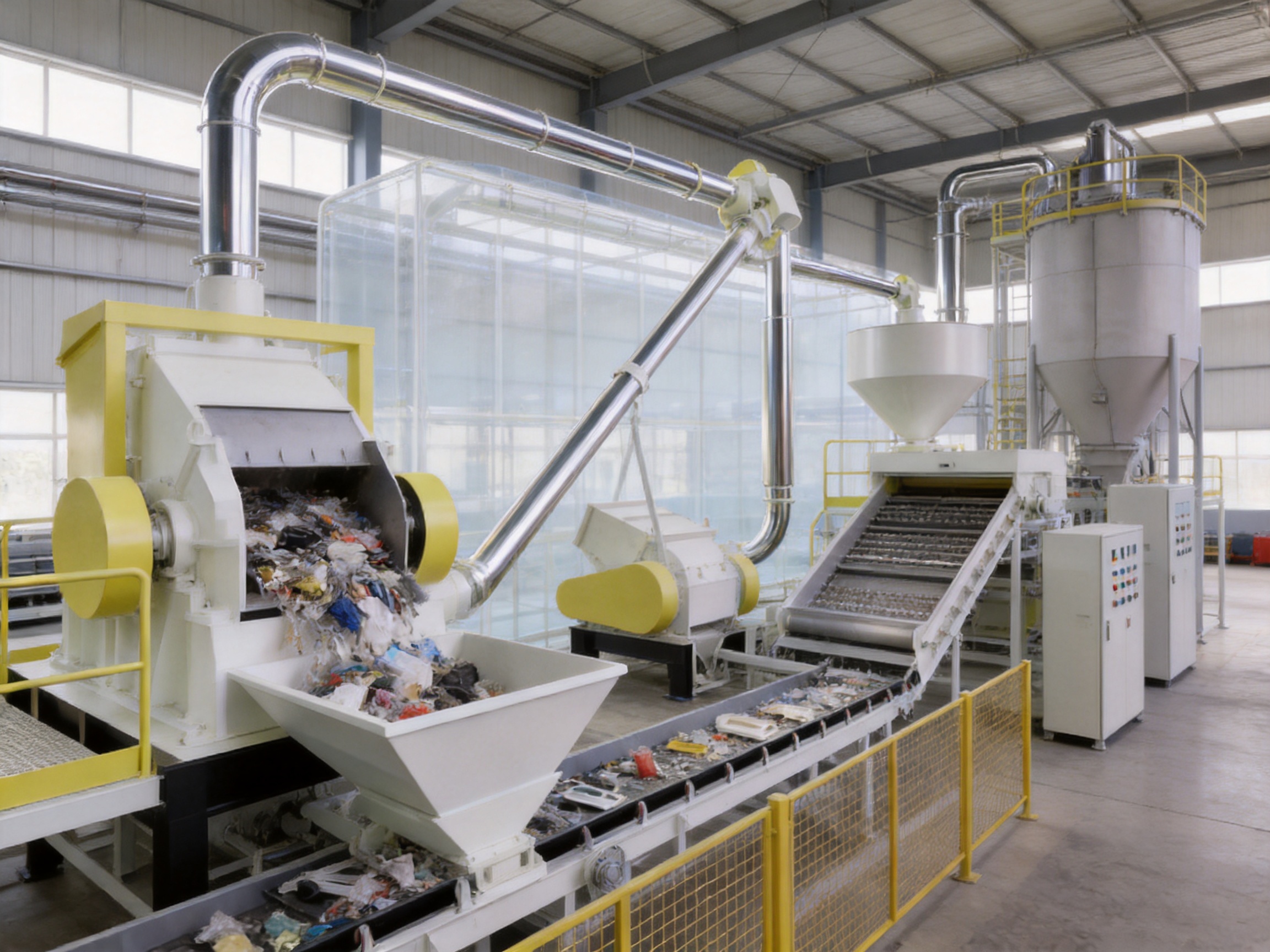
The equipment manufacturer operates six processing workshops, each averaging approximately 1,400 square meters. This workshop structure provides space for machining, welding, assembly, testing, component preparation, and service support. A manufacturer with in-house production capacity can exercise greater control over critical components than a company that simply assembles externally sourced equipment.
The technical team regularly studies advanced equipment technologies from Germany and other industrially developed markets. This continued technical development helps the company improve machine structure, control systems, grinding components, safety arrangements, and production efficiency. It also supports the development of customized systems for customers processing different materials.
Changzhou Mao Yue Intelligent Equipment Co., Ltd. has approximately 30 years of experience in plastic crushing and pulverizing equipment. During this period, the company has focused on disc pulverizers, plastic size-reduction systems, grinding components, and integrated recycling solutions. Its equipment is used in rotational molding, masterbatch, polymer processing, PVC and PE recycling, powder coating, and related applications.
The company has developed long-term relationships with more than 5,000 enterprises in domestic and international markets. This installed experience provides practical knowledge about operating conditions, wear patterns, material behavior, production objectives, and plant integration. Such experience is valuable when recommending machine configurations for new projects.
Quality management is supported by ISO 9001 certification, while CE mechanical certification demonstrates conformity with relevant European mechanical safety requirements for applicable products. Certification does not replace proper installation or operator training, but it provides an important framework for design control, manufacturing procedures, documentation, and product safety.
The company’s stated manufacturing philosophy emphasizes quality, service, innovation, and customized solutions. These principles are particularly relevant to plastic recycling because no two raw-material streams are exactly identical. A line for clean PVC profile waste may require different feeding, cooling, screening, and dust-control arrangements than a line for PET bottle flakes or mixed engineering-plastic scraps.
7. Main Advantages of the Integrated System
7.1 High and Consistent Processing Efficiency
The line is designed for continuous processing. The front-end crusher reduces large waste into controlled particles, and the conveying system transfers material automatically to the grinding and separation sections. This reduces manual handling and supports stable production rates.
Because the coarse crusher and disc mill perform different tasks, the system can be configured to match the required capacity. The listed blade crusher models provide coarse-crushing capacities from approximately 400 to 1,150 kilograms per hour, depending on model, material, feed condition, and operating parameters. Actual line output will depend on the capacity of every connected component, not only the crusher.
7.2 Narrower Particle-Size Distribution
Precision-machined grinding discs, dynamic balancing, controlled feeding, and vibrating screening work together to improve particle-size consistency. A narrower distribution is valuable in applications where the powder must disperse evenly or flow predictably through a dosing and feeding system.
Uniform powder can help reduce formulation variation in masterbatch, modified plastics, rotational molding compounds, and flooring materials. It can also improve the repeatability of recycled-content products by limiting the difference between production batches.
7.3 Reduced Over-Grinding and Agglomeration
Over-grinding creates unnecessary fines and can increase energy consumption. Excessive fines may also affect bulk density, flowability, dust loading, and downstream feeding. The staged process allows the blade crusher to perform coarse reduction while the disc mill focuses on the selected final specification.
Temperature control further reduces the risk of softening and agglomeration. This is important because plastic particles that become partially molten can adhere to grinding surfaces or form irregular clusters that are difficult to screen.
7.4 Lower Dust Emissions
The enclosed negative-pressure conveying network and pulse-jet baghouse help control dust across the production line. By capturing airborne particles and reducing open transfer points, the system can provide a cleaner workshop and reduce material loss.
Dust control is also essential for employee protection and equipment reliability. Fine powder can accumulate on motors, control cabinets, bearings, and ventilation systems if it is not properly managed. A coordinated filtration system helps reduce these risks.
7.5 Longer Tool and Equipment Life
Appropriate knife and disc materials, cooling systems, dynamic balancing, and stable operating conditions can extend service intervals. Reduced vibration protects bearings and structural components, while temperature control helps limit thermal stress and material adhesion.
Maintenance remains necessary. Knives and grinding discs are wear components and should be inspected regularly. However, a machine designed with replaceable wear parts and accessible service areas can reduce downtime and make routine maintenance more predictable.
7.6 Flexible Plant Integration
The modular structure allows the line to be arranged according to available space and production objectives. Conveying ducts, cyclones, screens, dust collectors, control cabinets, and auxiliary cooling equipment can be integrated into different layouts.
This flexibility is useful for both new recycling plants and existing factories that need to add a powder-production section. The equipment can be configured for different feed materials, powder grades, and production volumes after technical evaluation.
8. Technical Configurations of the Blade Crusher
The following table summarizes the principal configurations provided for the blade crusher section. These figures describe the listed crusher models and should not be interpreted as guaranteed output for every type of plastic. Capacity depends on material density, shape, moisture, feeding method, screen condition, and operating settings.
| Item | Model 665 | Model 1200 | Model 1500 |
|---|---|---|---|
| Knife quantity | 10 rotary knives and 4 fixed knives | 15 rotary knives and 6 fixed knives | 20 rotary knives and 8 fixed knives |
| Nominal capacity range | 400–650 kg/h | 700–1,000 kg/h | 800–1,150 kg/h |
| Standard screen size | 16 mm | 16 mm | 16 mm |
| Drive motor options | 22/30/37/45 kW | 30/45/55 kW | 45/55/75 kW |
| Starting or speed-control option | Star-delta or soft start | Star-delta or soft start | Star-delta or soft start |
| Bearing standard | Imported NSK bearings | Imported NSK bearings | Imported NSK bearings |
| Knife material | 9CrSi | 9CrSi | 9CrSi |
| Host speed | 550 r/min | 550 r/min | 650 r/min |
| Listed feeding size | 665 mm | 665 mm | 665 mm |
The 665 model is suitable for operations requiring a compact front-end crusher and a moderate processing rate. The 1200 model provides a higher knife count and greater capacity for larger recycling operations. The 1500 model is intended for higher-volume applications and uses a larger knife arrangement with a listed host speed of 650 revolutions per minute.
The use of star-delta starting or soft-start control can reduce electrical and mechanical shock during startup. The appropriate choice depends on motor size, plant power supply, control preferences, and the customer’s automation strategy. Imported NSK bearings support reliable rotor operation when correctly installed, lubricated, sealed, and maintained.
9. Applications in Plastic Recycling and Manufacturing
9.1 Injection-Molding and Blow-Molding Waste
Injection-molding and blow-molding plants generate sprues, runners, rejected parts, bottles, housings, caps, containers, and production offcuts. These materials may be returned to the production process after suitable grinding and quality control.
The blade crusher can reduce bulky parts and irregular scraps, while the disc pulverizer produces powder suitable for blending, modified compounds, masterbatch remanufacturing, or selected molding applications. Recycling production waste on-site can reduce disposal costs and lower the purchase volume of virgin material.
9.2 PET Bottles, Sheets, and Strapping
PET waste can include bottles, sheets, packaging straps, and other brittle products. After sorting and appropriate preparation, the material can be crushed and pulverized for use in regenerated PET sheets, fibers, injection-molded parts, and other products.
PET is sensitive to contamination and thermal history, so washing, drying, and material separation may be required before pulverizing. The line’s cooling and temperature-monitoring functions are valuable when processing PET because excessive heat can affect color, viscosity, and powder quality.
9.3 ABS and PS Engineering Plastics
Waste appliance housings, keyboards, monitor components, toys, and other ABS or PS products can be reduced into consistent particles and powder. Recovered powder may be used in injection molding, composite production, and modified material formulations after testing.
Engineering plastics often require closer control of contamination and material identity than general packaging waste. Separating different polymers, colors, flame-retardant grades, and filled materials can improve the value of the final powder.
9.4 PVC Film, Profiles, Pipes, and Flooring Offcuts
PVC is widely used in pipes, profiles, films, flooring, sheets, and cable-related products. The line can process selected rigid and flexible PVC waste after sorting and preparation. The final powder may be used in pipe extrusion, profile regeneration, flooring substrates, or other PVC applications.
Because PVC can be affected by heat, the reinforced cooling system and temperature monitoring are important advantages. Stable processing conditions help reduce yellowing, adhesion, and degradation. PVC formulations may also contain plasticizers, stabilizers, fillers, and pigments, so the recycling route should be selected according to the composition of the waste.
9.5 Masterbatch and Functional Masterbatch
Masterbatch scrap and production waste can be coarsely reduced and then finely pulverized for reuse or remanufacturing. Consistent powder is important because pigment and additive dispersion strongly influence the performance of the new masterbatch.
A well-controlled powder can be supplied to a downstream modified-material plant or used in a remanufacturing formulation. The production line’s narrow particle-size distribution, low agglomeration tendency, and enclosed conveying system support cleaner and more repeatable material handling.
9.6 Rotational Molding Powder
Rotational molding requires powder that flows evenly into the mold and distributes consistently during heating and rotation. Particle-size variation, excessive fines, and agglomerates can create defects in wall thickness, surface appearance, and part performance.
The precision disc pulverizer is therefore suitable for preparing certain PE and other rotational-molding materials. Final suitability depends on resin grade, additives, color, powder specification, and the molding process. Screening and quality testing should be used to verify the required grade.
9.7 SPC Flooring and Modified Plastics
SPC flooring and related composite products often require controlled mineral-filled polymer formulations. The recycled powder must be compatible with the formulation and sufficiently uniform for stable mixing and extrusion.
The line can serve as a pre-treatment and powder-production system for selected flooring offcuts, PVC compounds, and other compatible materials. Controlled temperature and dust collection help protect both the powder and the working environment.
10. Automation, Controls, and Operator Benefits
A modern recycling line should reduce unnecessary manual intervention while giving operators clear control over the process. The integrated system uses PLC-based intelligent control to coordinate the crusher, pulverizer, cooling functions, conveying equipment, screening section, and dust collector.
Temperature sensors provide information about the grinding chamber and other critical points. When temperatures approach the selected limit, the control system can adjust cooling or trigger an alarm. Electrical protection, overload monitoring, and interlocking can help prevent unsafe operation or damage caused by blocked conveying routes and abnormal feed conditions.
Automation improves consistency because the line can operate according to defined parameters rather than relying entirely on manual adjustment. It also makes it easier to record operating conditions, compare production batches, and identify causes of variation.
Operator safety is supported by enclosed moving parts, controlled access points, emergency-stop devices, and dust collection. Safety procedures must still include lockout and tagout, proper personal protective equipment, routine inspection, and training for all personnel.
Maintenance access is another important consideration. Wear parts should be reachable without unnecessary disassembly, and the design should allow inspection of knives, grinding discs, screens, bearings, filters, belts, and pneumatic lines. Easy maintenance reduces downtime and supports a longer equipment life cycle.
11. Energy, Cost, and Return on Investment
The economic value of a pulverizing line depends on more than its purchase price. Important factors include throughput, energy consumption, wear-part life, labor requirements, dust-control expenses, product value, downtime, and the percentage of material recovered for reuse.
The staged blade-crushing and disc-pulverizing approach can reduce energy waste by matching each machine to a specific task. The crusher handles large pieces through cutting, while the disc mill performs controlled fine grinding. This division can be more efficient than forcing one high-energy machine to process the entire size-reduction range.
Reduced dust emissions can also have economic benefits. Capturing fine powder minimizes loss of saleable material and reduces the cleaning burden. A cleaner workshop may require less maintenance for nearby equipment and may reduce the risk of interruptions caused by dust accumulation.
Longer maintenance intervals help improve equipment availability. High-quality bearings, balanced rotors, durable knife and disc materials, and effective cooling all contribute to predictable operation. The exact return on investment must be calculated using the customer’s raw-material cost, product value, annual operating hours, labor cost, power tariff, and expected recovery rate.
For companies purchasing external recycled resin or powder, on-site processing may provide an additional benefit. Production waste can be converted into a controlled secondary raw material rather than sold as low-value scrap. This can reduce disposal charges, transport requirements, and dependence on externally sourced recycled content.
12. Selecting the Correct Configuration
Before selecting a line, the customer should define the raw material, desired powder size, target capacity, operating hours, and final application. A laboratory or production trial is recommended when the material is mixed, contaminated, heat-sensitive, or difficult to classify.
Material Evaluation
Important material questions include whether the feed is PVC, PE, PP, PET, ABS, PS, EVA, or a blend; whether it contains fillers or glass fiber; whether it is rigid or flexible; whether it is clean and dry; and whether it contains metal, stones, labels, or other contaminants.
Capacity Evaluation
The required output should be calculated from actual operating hours rather than theoretical maximum capacity. Continuous production may require buffer storage, spare components, and sufficient dust-collector capacity. The crusher, pulverizer, screen, cyclone, and conveying system must be balanced so that one section does not limit the entire line.
Powder Specification
The desired mesh size and particle-size distribution determine the disc mill, grinding-disc configuration, screen, air volume, and operating parameters. A powder for rotational molding may require a different specification from powder used in a masterbatch formulation or a PVC flooring compound.
Cooling and Environmental Conditions
Heat-sensitive materials require appropriate cooling capacity. The factory climate, water availability, ambient temperature, dust regulations, and electrical supply should be considered during system design. The dust collector must be sized for the complete line, including conveying air and fine-powder loading.
Future Expansion
Customers should consider whether production volume may increase or whether additional materials and mesh grades may be processed later. A modular arrangement can make it easier to add storage, screening, cooling, conveying, or packaging equipment in the future.
13. Maintenance and Operating Recommendations
Regular maintenance is essential for stable production. Before each shift, operators should inspect the feed hopper, blade area, screen, guards, bearings, belts, pneumatic lines, temperature sensors, and dust-collector condition. Unusual noise, vibration, temperature rise, or reduced throughput should be investigated promptly.
Knives should be checked for wear and damage. Dull knives require more power and can produce irregular particles, heat, and increased stress on the rotor. Regrinding or replacement should follow the manufacturer’s recommendations. Knife clearances should be maintained within the required range to preserve cutting quality.
Grinding discs should be inspected for wear, cracks, deformation, and changes in tooth or surface geometry. Because the disc mill operates at high speed, any imbalance or damaged component must be addressed before continued operation.
Dust-collector filters should be cleaned through the pulse-jet system and replaced when pressure loss or filtration performance indicates that they have reached the end of their service life. Seals, inspection doors, duct joints, and discharge valves should be checked for leakage.
Cooling systems should be maintained to ensure adequate flow and heat transfer. Water quality, pump condition, hoses, valves, and heat-exchange surfaces should be monitored. Air-cooling channels should be kept free of powder accumulation.
Operators should avoid feeding foreign objects, excessive quantities of wet material, or oversized pieces beyond the equipment specification. Proper sorting and controlled feeding protect the machine and improve product quality.
14. Frequently Asked Questions
Q1: What types of plastic can this production line process?
The line is suitable for many medium-hardness plastic materials, including PVC, PE, PP, PET, ABS, PS, and EVA. Typical feedstocks include pipes, profiles, sheets, bottles, barrels, pallets, woven bags, film clumps, injection-molded parts, appliance housings, toys, masterbatch scraps, and flooring offcuts. Final suitability depends on cleanliness, moisture, additives, contamination, and the required powder specification.
Q2: What is the difference between the blade crusher and the disc pulverizer?
The blade crusher performs coarse size reduction. It cuts large and irregular waste into smaller particles, commonly controlled by a screen. The disc pulverizer performs the fine-grinding stage and converts the crushed material into a controlled powder. Using both stages allows each machine to work more efficiently.
Q3: What powder size can the line produce?
The line can generally produce powder in the range of 20–80 mesh or finer, depending on the material, disc-mill model, grinding configuration, screen, feed rate, and operating conditions. The exact particle-size distribution should be confirmed through a material trial and technical evaluation.
Q4: How does the system control overheating?
The grinding section uses a reinforced dual cooling system, multi-point temperature sensors, and PLC-based control. Under suitable operating conditions, the grinding chamber temperature can be controlled at approximately 50–80 degrees Celsius. The coarse crusher may also use air cooling or localized water cooling around the blade area.
Q5: Can the line process PVC and PET?
Yes. The system is designed for selected PVC and PET recycling applications. Because both materials can be affected by heat and contamination, the feed should be properly sorted and prepared. Washing and drying may be necessary for certain PET streams, while PVC formulations should be separated according to polymer type and additive content.
Q6: How is dust controlled?
Material is conveyed through a closed negative-pressure pneumatic system. Cyclone separation, vibrating screening, and a pulse-jet baghouse work together to capture and manage fine powder. The system is designed for a dust capture rate exceeding 99.9 percent under suitable conditions, although final performance depends on installation and maintenance.
Q7: What are the advantages over a hammer-type crushing and grinding system?
The blade-type system provides controlled shearing and cutting at the coarse stage, which can improve particle consistency and reduce problems such as entanglement, excessive dust, over-grinding, and heat accumulation. The disc mill then performs dedicated fine grinding. This staged process may provide better control, lower dust emissions, lower energy use, and longer tool life for suitable plastic feedstocks.
Q8: What are the available crusher capacities?
The listed crusher configurations have approximate capacity ranges of 400–650 kilograms per hour for model 665, 700–1,000 kilograms per hour for model 1200, and 800–1,150 kilograms per hour for model 1500. Actual performance depends on the material, feeding conditions, screen, motor configuration, and complete line balance.
Q9: What knife and grinding-disc materials are used?
The listed crusher knives use 9CrSi material. The disc pulverizer uses DC53 high-grade mold steel grinding discs. These materials are selected to provide suitable wear resistance and mechanical performance for plastic crushing and pulverizing applications.
Q10: Does the manufacturer provide customized solutions?
Yes. The company focuses on customized plastic crushing, pulverizing, conveying, screening, cooling, and dust-collection solutions. Customization may address material type, capacity, powder size, factory layout, automation level, cooling requirements, and environmental conditions.
Q11: Is the system suitable for masterbatch production?
It can be used for masterbatch scrap recycling, pre-treatment, and powder preparation. The precision grinding section helps produce powder with good dispersion and flowability. Final use depends on pigment concentration, additive composition, color requirements, and quality-control standards.
Q12: What should be tested before purchasing?
Customers should test representative samples of their actual waste. Important results include throughput, energy consumption, powder-size distribution, temperature behavior, color change, agglomeration, dust generation, and suitability for the intended downstream application.
15. Conclusion
The integrated blade crushing and pulverizing production line provides a complete route from bulky plastic waste to valuable fine powder. Its combination of heavy-duty cutting, precision disc grinding, pneumatic conveying, cyclone separation, vibrating screening, temperature control, and pulse-jet filtration addresses the main challenges of modern plastic recycling.
Its advantages over conventional single-stage or hammer-based systems include improved coarse-particle consistency, reduced risk of entanglement, controlled fine grinding, lower dust emissions, better thermal management, and greater suitability for high-value recycled materials. The system can serve applications ranging from injection-molding waste and PET recycling to PVC regeneration, engineering-plastic recovery, masterbatch production, rotational molding, and flooring-material preparation.
The equipment’s performance is supported by the manufacturer’s production capabilities, including six processing workshops, Taiwan-imported CNC grinding equipment, German dynamic balancing technology, Japanese welding systems, DC53 grinding discs, 9CrSi knives, imported bearings, PLC control, and quality-management procedures. Approximately 30 years of industry experience and cooperation with more than 5,000 enterprises provide a strong foundation for technical support and customized project development.
For recyclers seeking to increase recovery value, reduce manual handling, improve powder consistency, and create a cleaner production environment, this type of integrated line offers a practical and scalable solution. Correct material preparation, technical configuration, installation, operator training, and regular maintenance remain essential to achieving the best results.
References
1. Manufacturer-provided technical information for the blade-type crushing and pulverizing production line.
2. Manufacturer-provided specifications for models 665, 1200, and 1500 blade crushers.
3. Manufacturer-provided information concerning DC53 grinding discs, 9CrSi knives, temperature control, conveying, screening, and dust collection.
4. ISO 9001 Quality Management Systems — Requirements.
5. General principles of plastic recycling, mechanical size reduction, material classification, and polymer reprocessing.
6. General industrial guidance on dust collection, machine guarding, lockout procedures, and safe operation of high-speed rotating equipment.