

 English
 русский
 Español
 عربى
عربى 中文简体
中文简体
 中文简体
中文简体
Content
- 1 1. The Importance of Blade Performance in PE Pulverizing
- 2 2. High-Performance Alloy Steel Construction
- 3 3. Precision Heat Treatment for Longer Service Life
- 4 4. Long Continuous Operating Life
- 5 5. Precision-Adjustable Blade Clearance
- 6 6. High-Speed Rotating Tooth Design
- 7 7. Powder Quality and Particle-Size Uniformity
- 8 8. Heat Management During Grinding
- 9 9. Advantages Compared with Ordinary Cutting Discs
- 10 10. Application in Plastic Recycling
- 11 11. Application in Powder Coating
- 12 12. Application in Masterbatch and Modified Plastics
- 13 13. Application in Rotational Molding
- 14 14. Application in Extrusion and Injection Molding
- 15 15. Manufacturing Strengths of the Producer
- 16 16. Advanced Processing Equipment
- 17 17. Quality Control and Certification
- 18 18. Compatibility with PE and PP Pulverizers
- 19 19. Customization for Different Operating Conditions
- 20 20. Maintenance Recommendations
- 21 21. Safety Considerations
- 22 22. Total Cost of Ownership
- 23 23. Environmental and Sustainability Benefits
- 24 24. Selecting the Correct Blade Specification
- 25 25. Why Manufacturing Experience Matters
- 26 26. Recommended Evaluation Method for Buyers
- 27 27. Q&A
- 27.1 Q1: What are PE pulverizer alloy steel blades used for?
- 27.2 Q2: What makes alloy steel blades different from ordinary cutting discs?
- 27.3 Q3: How long can one blade set operate?
- 27.4 Q4: Can these blades process glass-fiber-reinforced plastic?
- 27.5 Q5: What powder fineness can be achieved?
- 27.6 Q6: Can the blade clearance be adjusted?
- 27.7 Q7: Are the blades compatible with different pulverizer brands?
- 27.8 Q8: Can customized blades be manufactured?
- 27.9 Q9: How does blade design affect PE powder quality?
- 27.10 Q10: Why is heat dissipation important when pulverizing PE?
- 27.11 Q11: What manufacturing equipment supports blade quality?
- 27.12 Q12: What certifications does the manufacturer have?
- 27.13 Q13: What should operators do to extend blade life?
- 27.14 Q14: Are longer-life blades beneficial for sustainability?
- 28 28. Conclusion
- 29 References
- 30 Product: PE Pulverizer alloy steel blades
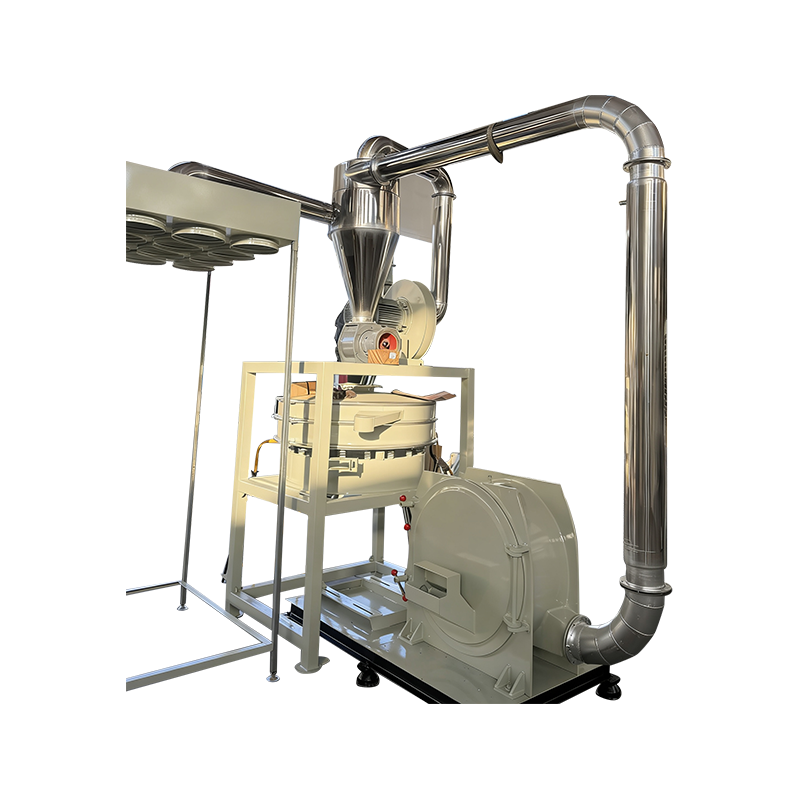
PE pulverizer alloy steel blades are critical wear components in plastic grinding systems. Although a pulverizer is composed of many mechanical and electrical parts, the blade set directly determines cutting efficiency, powder quality, energy consumption, production stability, and maintenance frequency. When polyethylene is processed continuously, ordinary cutting discs may lose their sharpness quickly, develop edge deformation, or require frequent replacement. These problems can reduce output, increase downtime, and create inconsistent powder particle sizes.
High-performance alloy steel blades are designed to overcome these limitations. Manufactured from high-density wear-resistant alloy steel and treated through multiple precision heat-treatment stages, these blades combine high hardness, impact resistance, dimensional stability, and long-term cutting performance. They are suitable for PE and other plastic pulverizing applications in recycling, powder coating, rotational molding, masterbatch production, extrusion, injection molding, and related industries.
The blade design is especially valuable when processing demanding materials such as glass-fiber-reinforced plastics, high-toughness polyethylene, thick PE film, pipe sections, cable sheathing, bottle caps, and industrial plastic scrap. Compared with ordinary cutting discs, a properly engineered alloy steel blade can offer a significantly longer operating life while maintaining stable powder fineness and uniformity.
1. The Importance of Blade Performance in PE Pulverizing
PE pulverization is not simply a process of breaking plastic into smaller pieces. It is a controlled combination of high-speed cutting, shearing, friction, and heat management. The rotating disc and stationary disc work together to reduce the feed material into powder. The condition of the blade edges determines how effectively this mechanical action occurs.
When a blade is sharp and correctly aligned, the material is cut and sheared efficiently. The pulverizer can achieve the desired particle size with comparatively stable energy consumption. When the edge becomes rounded or damaged, the equipment may rely increasingly on friction rather than clean cutting. This can increase heat generation, lower output, produce coarse particles, and create agglomerates.
PE is particularly sensitive to processing temperature. Excessive friction can soften the material, causing it to smear on the disc surface or form partially melted particles. In severe cases, overheating can affect the powder quality, obstruct the grinding chamber, and accelerate wear on other components. Therefore, blade hardness, edge retention, clearance adjustment, and heat dissipation must be considered together.
A high-quality alloy steel blade addresses these requirements through a combination of material selection, heat treatment, precision machining, dynamic balancing, and application-specific design. The result is not merely a harder blade, but a more stable grinding system that can operate for extended periods while maintaining consistent performance.
2. High-Performance Alloy Steel Construction
The core material of the blade is a high-density, wear-resistant alloy steel. Depending on the application and required specification, the steel may be based on chromium-molybdenum-vanadium alloy systems or comparable high-hardness materials. These alloying elements are commonly selected because they can improve hardness, toughness, wear resistance, and resistance to thermal stress when processed correctly.
Chromium contributes to hardness and wear resistance. Molybdenum can improve strength, toughness, and resistance to softening at elevated temperatures. Vanadium can help form hard wear-resistant carbides and improve edge retention. The final performance depends not only on the chemical composition but also on the steel quality, forging method, heat-treatment parameters, grinding accuracy, and quality-control procedures.
The blade material is engineered to withstand the repeated mechanical impacts generated inside a high-speed pulverizer. PE feedstock may contain hard inclusions, thick sections, reinforcement fibers, or irregular shapes. A blade that is extremely hard but insufficiently tough may chip under impact. Conversely, a blade that is tough but too soft may wear quickly. The purpose of alloy design and controlled heat treatment is to achieve a practical balance between hardness and toughness.
After processing, the blade can achieve a hardness of approximately HRC 60–65 or higher, depending on the specific material and application requirements. This is substantially higher than the approximate HRC 45 level often associated with ordinary cutting discs. The higher hardness helps the blade resist abrasive wear and retain a sharper working edge during continuous operation.
Hardness alone should not be treated as the only quality indicator. A reliable blade must also have uniform hardness throughout the working area, stable metallurgical structure, accurate geometry, and sufficient resistance to cracking. For this reason, the complete manufacturing process is important. Material selection, forging, heat treatment, surface finishing, precision grinding, inspection, and balancing must be coordinated.
3. Precision Heat Treatment for Longer Service Life
Heat treatment is one of the most important stages in the production of pulverizer blades. It determines the relationship between hardness, toughness, dimensional stability, and edge durability. A blade that has not been heat-treated accurately may become too soft, too brittle, or dimensionally unstable during operation.
The manufacturing process may include multiple controlled stages, such as preheating, austenitizing, quenching, tempering, and stress relief. Exact parameters depend on the alloy composition, blade thickness, tooth profile, and intended working conditions. The aim is to create a hard and wear-resistant working structure while retaining sufficient toughness in the body of the blade.
Multiple tempering and stress-relief stages can help reduce internal stress generated during hardening. This is important because pulverizer blades rotate at high speed and experience repeated vibration and impact. Excessive residual stress can contribute to distortion, cracking, or unstable operation. Controlled heat treatment improves the reliability of the blade under these demanding conditions.
Precision heat treatment also helps maintain the blade’s geometry. If a disc warps during hardening, the clearance between rotating and stationary discs may change. Even a small dimensional variation can affect the grinding result, increase vibration, or create localized wear. Stabilized blade geometry supports more accurate assembly and easier clearance adjustment.
The combination of high hardness and controlled toughness gives the alloy steel blade a major advantage over standard low-hardness cutting discs. In demanding applications, wear rates can be reduced by more than 70 percent compared with ordinary blade materials, subject to feedstock, operating conditions, cooling, and maintenance practices.
4. Long Continuous Operating Life
A single blade set can be designed to achieve approximately 800 hours of continuous service life under suitable operating conditions. Actual service life varies according to material type, contamination level, feed rate, powder fineness, rotor speed, cooling performance, and operator maintenance. Nevertheless, the extended-life design significantly reduces the frequency of blade replacement.
Longer blade life provides several direct economic benefits. The first is a reduction in spare-part consumption. If a blade set lasts two or three times longer than a conventional set, the annual number of replacements can fall substantially. The second benefit is reduced labor. Each replacement requires equipment shutdown, disassembly, inspection, installation, clearance adjustment, and restart. Fewer replacements reduce the amount of maintenance labor required.
The third benefit is reduced downtime. In a recycling or powder production line, the pulverizer may be connected to feeding, conveying, screening, storage, extrusion, or packaging equipment. A blade replacement can interrupt the entire process. Extending the operating interval between maintenance events helps improve overall line availability.
The fourth benefit is more stable product quality. A blade that maintains its edge for a longer period is less likely to produce sudden changes in particle size. Stable blade performance supports more consistent downstream processing, including regranulation, film blowing, pipe extrusion, rotational molding, and injection molding.
Long service life should not be understood as a reason to eliminate inspections. Regular checks remain important. Operators should monitor vibration, motor load, product temperature, powder fineness, unusual noise, and the condition of the blade edges. Preventive inspection helps identify abnormal conditions before they damage the disc, spindle, bearings, or other parts.
5. Precision-Adjustable Blade Clearance
Clearance between the rotating and stationary grinding discs directly affects cutting efficiency and final powder fineness. If the clearance is too large, the feed material may pass through without sufficient shearing, resulting in coarse particles and lower grinding efficiency. If the clearance is too small, friction and heat may increase, and the blade edges may experience unnecessary contact or accelerated wear.
The alloy steel blade system supports precise clearance adjustment, including fine adjustment at a very small scale. This allows operators and technicians to adapt the pulverizer to different PE grades, feed sizes, moisture conditions, and target particle sizes.
Fine clearance adjustment also helps compensate for normal wear during the blade’s service life. As the edge gradually changes, the working gap can be adjusted to maintain the desired grinding effect. This makes better use of the blade material and can delay the need for replacement when the blade remains structurally sound.
Correct clearance must be established according to the equipment model and material. PE film, rigid PE pipe, bottle caps, and reinforced plastic scrap may require different settings. Operators should avoid excessive adjustment based only on the desired fineness. The correct setting should be confirmed by observing powder quality, equipment load, temperature, vibration, and production rate.
6. High-Speed Rotating Tooth Design
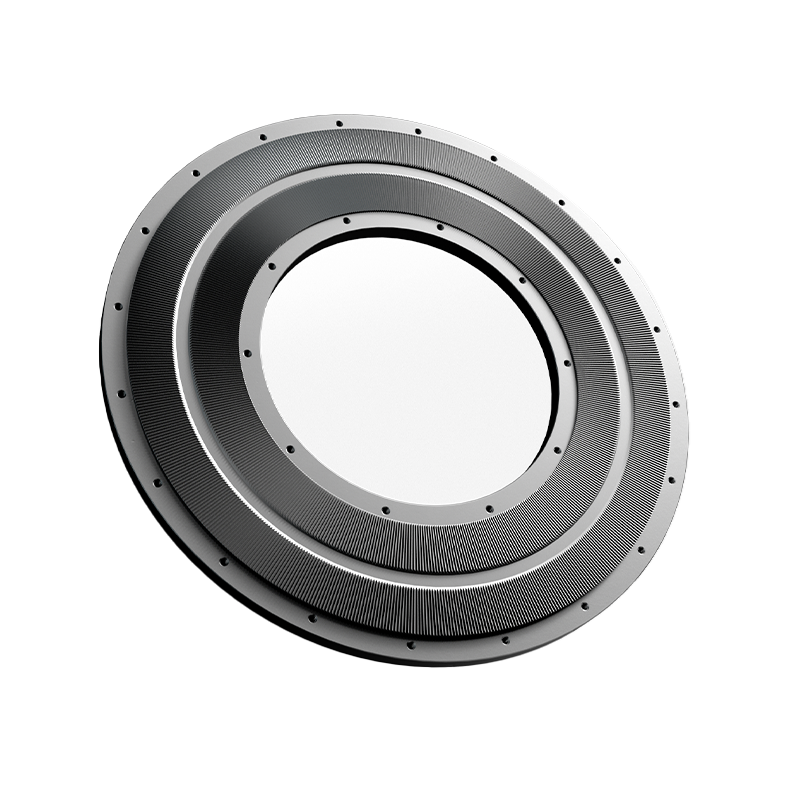
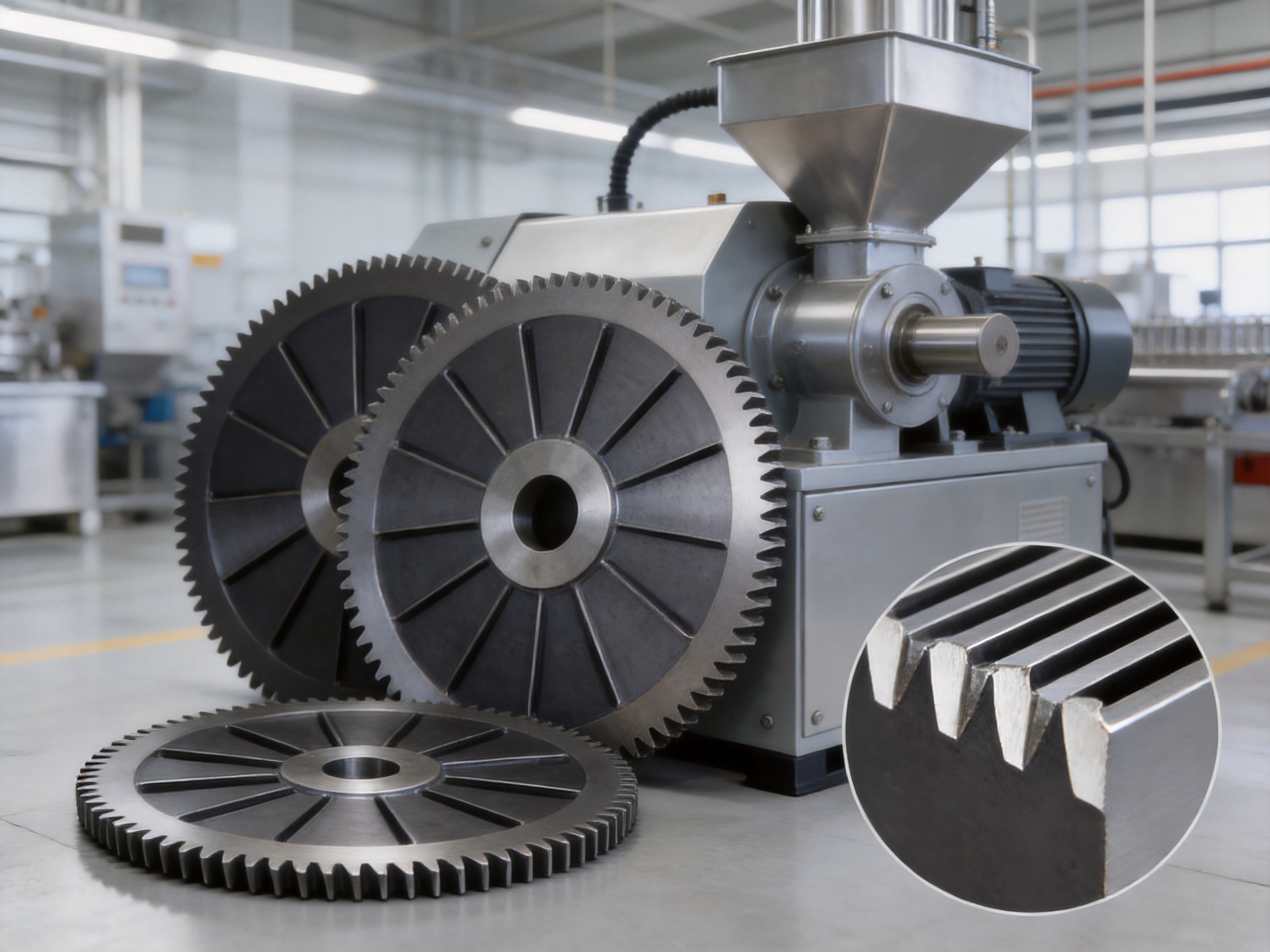
The working profile of a pulverizer blade is as important as the steel grade. A well-designed tooth structure increases the effective cutting area and improves the interaction between the rotating disc and the material. The high-speed rotating tooth design is intended to create efficient shearing and friction grinding rather than relying on uncontrolled impact alone.
As PE enters the grinding chamber, the tooth profile captures and guides the material. The rotating disc applies centrifugal force and high-speed movement, while the stationary disc provides a counter-surface. The interaction creates repeated cutting and shearing actions. Material that does not yet meet the required size remains in the grinding zone until it is sufficiently reduced.
A suitable tooth profile can help distribute the workload across the disc rather than concentrating wear in one area. This supports more uniform edge wear and stable operating balance. It also helps prevent large pieces from moving irregularly through the chamber.
The exact profile can be customized according to material characteristics and process requirements. Different tooth shapes may be suitable for flexible film, rigid pipe, injection-molded scrap, filled PE, or high-toughness plastics. Customization may include tooth height, spacing, angle, quantity, and grinding surface arrangement.
When combined with precise clearance adjustment, an optimized tooth design can help produce powder in the range of approximately 20–80 mesh or finer. The achievable result depends on the pulverizer model, feedstock, screen or classification arrangement, cooling, and process settings. The objective is not only fine powder but also a consistent particle-size distribution with minimal coarse particles and agglomerates.
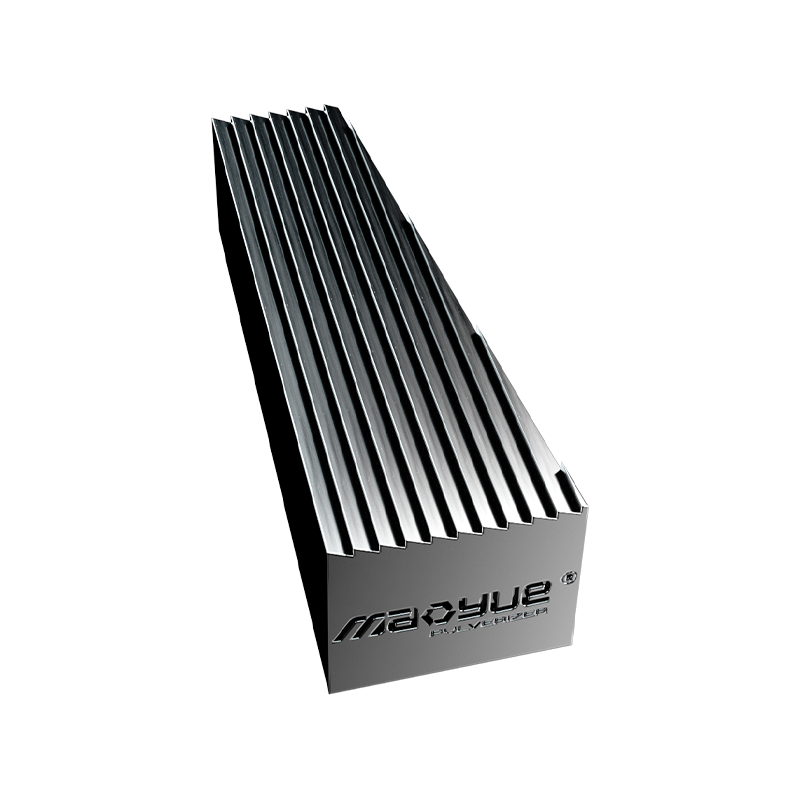
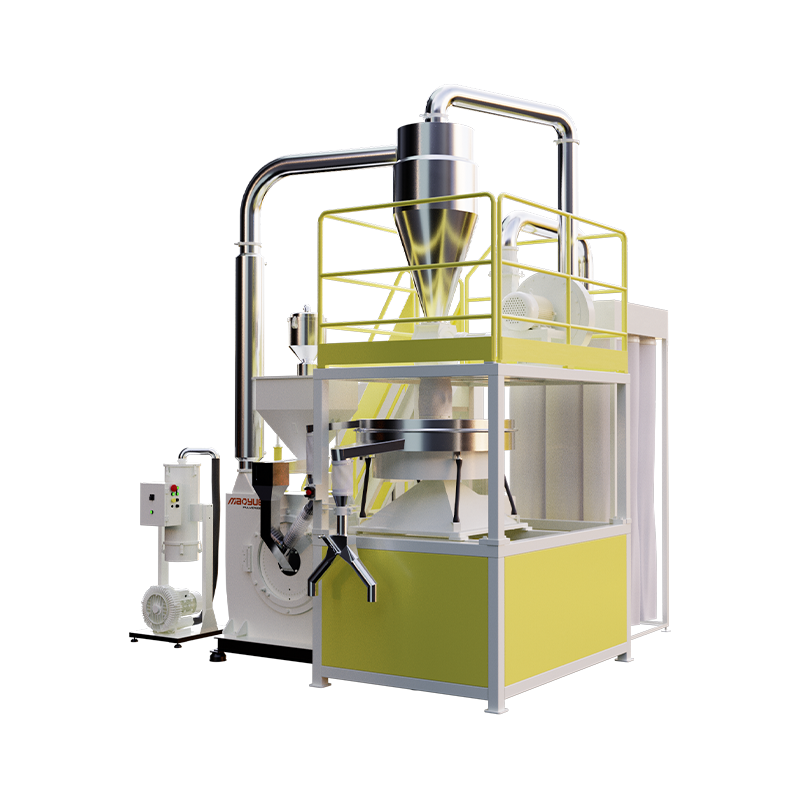
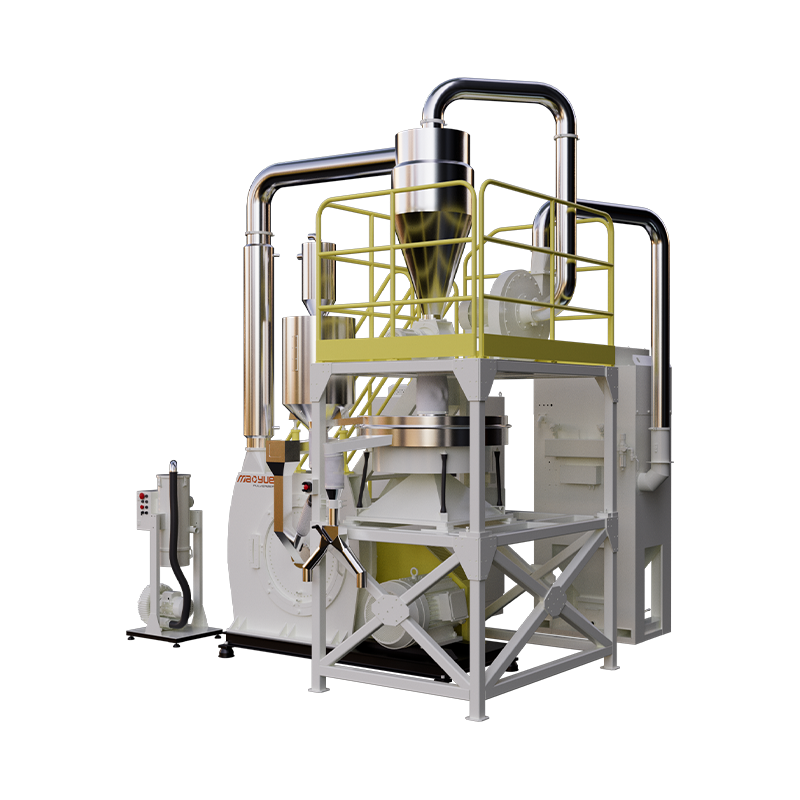
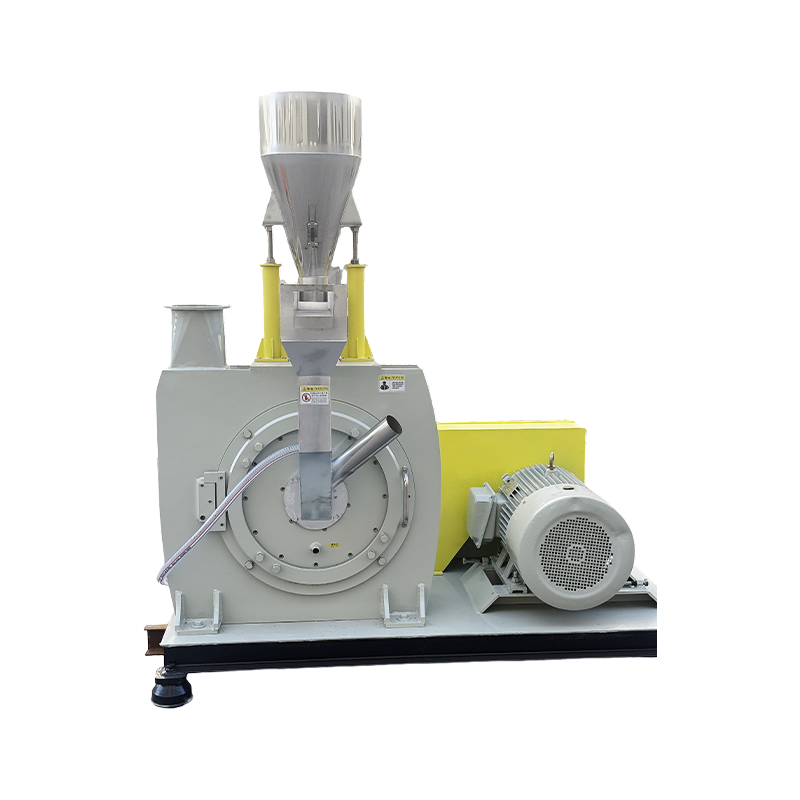
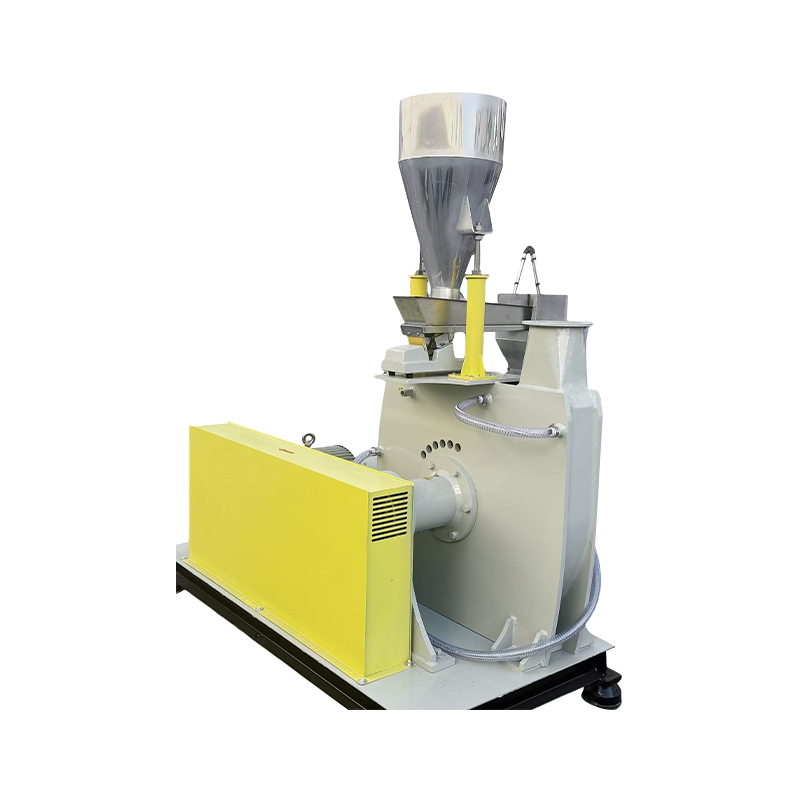
PE Pulverizer alloy steel blades
7. Powder Quality and Particle-Size Uniformity
In many applications, powder quality is more important than simple throughput. Recycled PE powder may be used in regranulation, film blowing, injection molding, extrusion, rotational molding, or powder coating. Each application requires a suitable particle size and a consistent distribution.
Uniform powder improves feeding behavior and helps downstream equipment operate more consistently. In extrusion and injection molding, excessive coarse particles can interrupt feeding, cause incomplete melting, or contribute to surface defects. In rotational molding, irregular particles may melt unevenly and create variations in wall thickness. In powder coating, poor fineness or agglomeration can affect flowability, coverage, and coating appearance.
The alloy steel blade is designed to support stable powder production by maintaining a sharp cutting edge and accurate disc geometry. Reduced edge wear helps prevent the gradual increase in oversized particles that often occurs with ordinary blades. Fine clearance adjustment allows technicians to optimize the grinding chamber for the required powder specification.
Uniformity also helps reduce the need for repeated screening or reprocessing. If powder contains too many coarse particles, the material may need to pass through the pulverizer again. This increases energy consumption, handling requirements, and production time. A blade system that produces a more uniform initial output can improve total process efficiency.
Particle-size control must be evaluated together with temperature. PE particles that become soft or partially fused may form agglomerates even if the blade is sharp. Effective cooling, proper feed rate, appropriate rotor speed, and adequate air circulation are therefore essential to obtain the best results from the blade system.
8. Heat Management During Grinding
Grinding converts mechanical energy into cutting work and heat. PE has a relatively low softening range compared with many engineering materials, so excessive temperature can affect its behavior inside the pulverizer. Overheated material may soften, smear, stick to the grinding disc, or form lumps.
The blade and disc structure can include a multi-tiered finned heat-dissipation arrangement using materials with good thermal conductivity. This structure increases the surface area available for heat transfer and helps move friction heat away from the working area. Improved thermal control supports continuous operation and reduces the risk of edge softening, dulling, or deformation.
Heat dissipation also protects product quality. When the grinding temperature is controlled, PE powder is less likely to contain thermally affected particles or fused agglomerates. This is important for applications requiring clean, free-flowing, and consistent powder.
Cooling performance depends on more than the disc structure. The complete system may include air flow, cooling channels, feed control, ambient conditions, and the condition of the grinding chamber. Operators should ensure that cooling paths remain clean and that the machine is not overloaded. Excessive feed rate can generate more heat than the cooling system can remove.
For 24-hour industrial production, thermal stability is particularly important. A blade that remains dimensionally stable at operating temperature can maintain a more consistent clearance. This helps protect both the blade edge and the final product specification throughout a long production shift.
9. Advantages Compared with Ordinary Cutting Discs
Ordinary cutting discs may appear attractive because of their lower initial purchase price. However, the purchase price is only one part of the operating cost. A lower-cost blade that wears quickly may require more replacements, create more downtime, and produce less consistent powder. The total cost of ownership can therefore be higher.
The alloy steel blade provides advantages in several areas. Its higher hardness improves resistance to abrasive wear. Its controlled toughness helps reduce chipping under impact. Its precision-machined geometry supports accurate installation and clearance adjustment. Its heat-treated structure helps preserve edge stability during extended production.
Another advantage is performance consistency. Ordinary blades may lose their cutting ability relatively quickly when processing reinforced or high-toughness plastics. As the edge becomes rounded, the machine may consume more power while delivering a lower proportion of fine powder. The alloy steel blade is designed to retain cutting effectiveness for a longer period.
The blade’s longer operating life can reduce replacement frequency by two to three times or more compared with standard market products, depending on the operating environment. This can lower maintenance costs, reduce labor losses, and improve production planning.
| Performance Factor | Ordinary Cutting Disc | Alloy Steel Pulverizer Blade | Operational Benefit |
|---|---|---|---|
| Typical hardness level | Approximately HRC 45 in common designs | Approximately HRC 60–65 or higher, depending on specification | Improved wear resistance and edge retention |
| Resistance to reinforced plastic | May wear rapidly during demanding applications | Designed for high-toughness and glass-fiber-reinforced materials | More stable production with fewer interruptions |
| Service interval | Shorter and more variable | Designed for extended continuous use, with some sets reaching about 800 hours | Lower replacement frequency |
| Clearance control | May offer limited adjustment | Supports precision fine adjustment | Better control of powder fineness |
| Heat stability | More vulnerable to dulling or deformation under excess heat | Supported by heat treatment and heat-dissipation design | Reduced risk of agglomeration and edge damage |
| Particle-size consistency | May decline as the edge wears | Designed to maintain more uniform cutting performance | Improved downstream processing quality |
| Long-term cost | Lower initial price but potentially higher maintenance cost | Higher-performance component with lower replacement and downtime costs | Better total cost of ownership |
The comparison is intended as a general guide. Actual performance depends on feedstock, operating conditions, machine configuration, cooling, and maintenance. Even so, the main distinction is clear: a high-quality blade should be evaluated by its complete operating value rather than its purchase price alone.
10. Application in Plastic Recycling
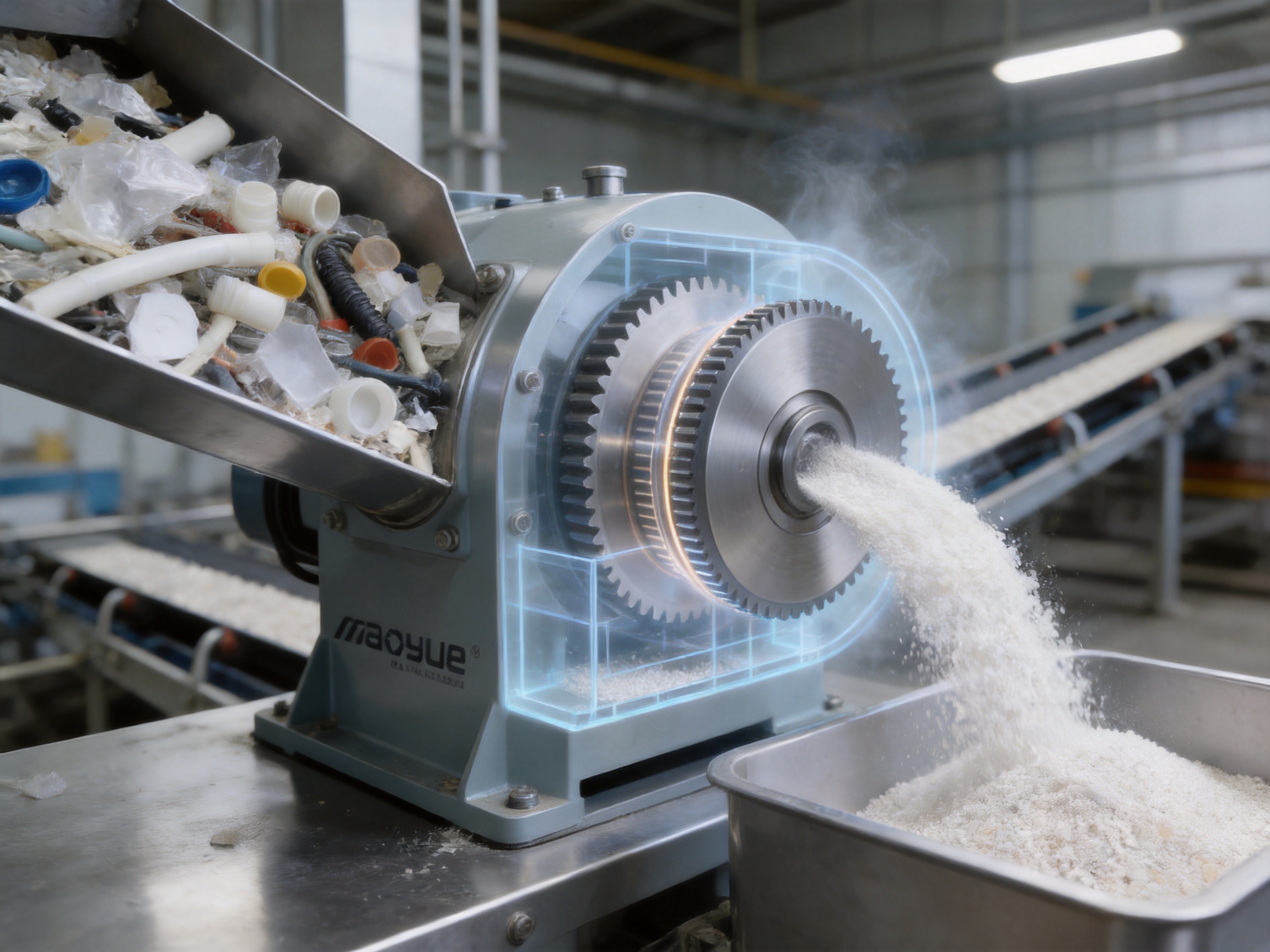
Plastic recycling is one of the principal applications for PE pulverizer blades. Waste PE can come from films, pipes, bottle caps, cable sheathing, packaging materials, strapping bands, molded components, and production scrap. These materials vary considerably in thickness, flexibility, contamination, and toughness.
Before pulverizing, large or irregular feedstock is generally reduced to a suitable size. The pulverizer then converts the prepared material into powder for reuse or further processing. The quality of the powder influences the efficiency of subsequent recycling steps, such as blending, extrusion, pelletizing, or molding.
For recycled PE, a stable blade edge helps reduce the variation caused by changing feed characteristics. Film may be flexible and difficult to capture, while pipe sections may be rigid and thick. Bottle caps and molded parts may contain additives or fillers. A wear-resistant alloy steel blade can provide greater tolerance for these changing conditions than a conventional low-hardness disc.
Fine and uniform powder can be fed into a regranulation line, where it is melted, filtered, compounded, and pelletized. It may also be used directly or blended with other materials for film blowing, pipe extrusion, injection molding, or rotational molding. The ability to convert waste into a consistent intermediate material supports the economic value of recycling.
Long blade life is also relevant to environmental performance. Fewer discarded blades mean less metal waste and lower consumption of replacement materials. Reduced downtime and improved grinding efficiency may also reduce the energy and resources required per unit of usable recycled material.
11. Application in Powder Coating
PE powder is used in certain coating applications where flowability, particle fineness, thermal behavior, and purity are important. The grinding system must produce particles that can be transported, stored, charged, sprayed, or applied with minimal agglomeration.
Alloy steel blades support this requirement by maintaining a stable cutting edge and helping control the particle-size range. Powder in the approximate range of 20–80 mesh or finer may be produced according to the machine configuration and process settings. The appropriate specification depends on the coating formulation and application technology.
Coarse particles can cause uneven coating distribution, while agglomerates may interfere with feeding and application. Excessive grinding temperature can also affect powder flowability or create partially fused particles. The combination of high edge retention, precision clearance adjustment, and improved heat management helps reduce these risks.
For electrostatic spraying and fluidized-bed processes, consistent powder behavior is essential. The blade is therefore part of a larger quality system that includes raw-material preparation, contamination control, cooling, screening, storage, and process monitoring.
12. Application in Masterbatch and Modified Plastics
PE-based filler masterbatch, color masterbatch, and functional masterbatch production requires effective mixing and dispersion. The carrier material must be prepared in a form that can be accurately combined with pigments, fillers, additives, or functional ingredients.
Uniformly ground PE powder can serve as a suitable carrier for compounding. A consistent particle size helps improve material feeding and supports more predictable blending. It can also reduce the chance that large pieces remain insufficiently mixed in the compound.
In modified plastics, the quality of the base powder affects the final dispersion of additives. An alloy steel blade helps provide stable grinding conditions over a longer service period, reducing changes in powder characteristics caused by rapid edge wear.
Because masterbatch formulations may be sensitive to contamination, the blade material and maintenance condition are important. Proper cleaning, inspection, and replacement procedures should be used to prevent excessive metal wear or foreign particles from entering the product.
13. Application in Rotational Molding
Rotational molding uses polymer powder to manufacture large hollow products, including tanks, containers, recreational equipment, and industrial components. During the heating and rotation cycle, the powder melts and coats the inner surface of the mold. Powder uniformity strongly affects wall thickness, surface appearance, and defect control.
PE powder produced with stable particle-size distribution can melt more evenly and distribute more consistently across the mold surface. This helps reduce the risk of thin areas, incomplete coverage, bubbles, and rough surfaces.
For large rotationally molded products, process inconsistency can be costly because defects may not be discovered until after a long heating and cooling cycle. Reliable powder preparation is therefore an important part of quality assurance.
The alloy steel blade is suitable for this application because it is designed to maintain sharpness, support fine grinding, and reduce agglomeration caused by excessive friction heat. The final result depends on the complete production system, but high-quality blades provide a strong foundation for consistent powder preparation.
14. Application in Extrusion and Injection Molding
Extrusion and injection molding operations require feedstock with predictable melting and feeding characteristics. PE powder that contains excessive coarse particles may bridge in the feed system, melt unevenly, or create inconsistent product properties.
Fine and uniform powder can improve the stability of material feeding and mixing. It may also help reduce variations in melt flow, especially when recycled material is blended with virgin resin or additives. The exact benefit depends on formulation, equipment, moisture, contamination, and process temperature.
When blades remain sharp, the pulverizer can maintain a consistent output for longer periods. This reduces the need to frequently adjust downstream process conditions to compensate for changing powder characteristics. Stable upstream preparation supports more reliable production throughout the line.
15. Manufacturing Strengths of the Producer
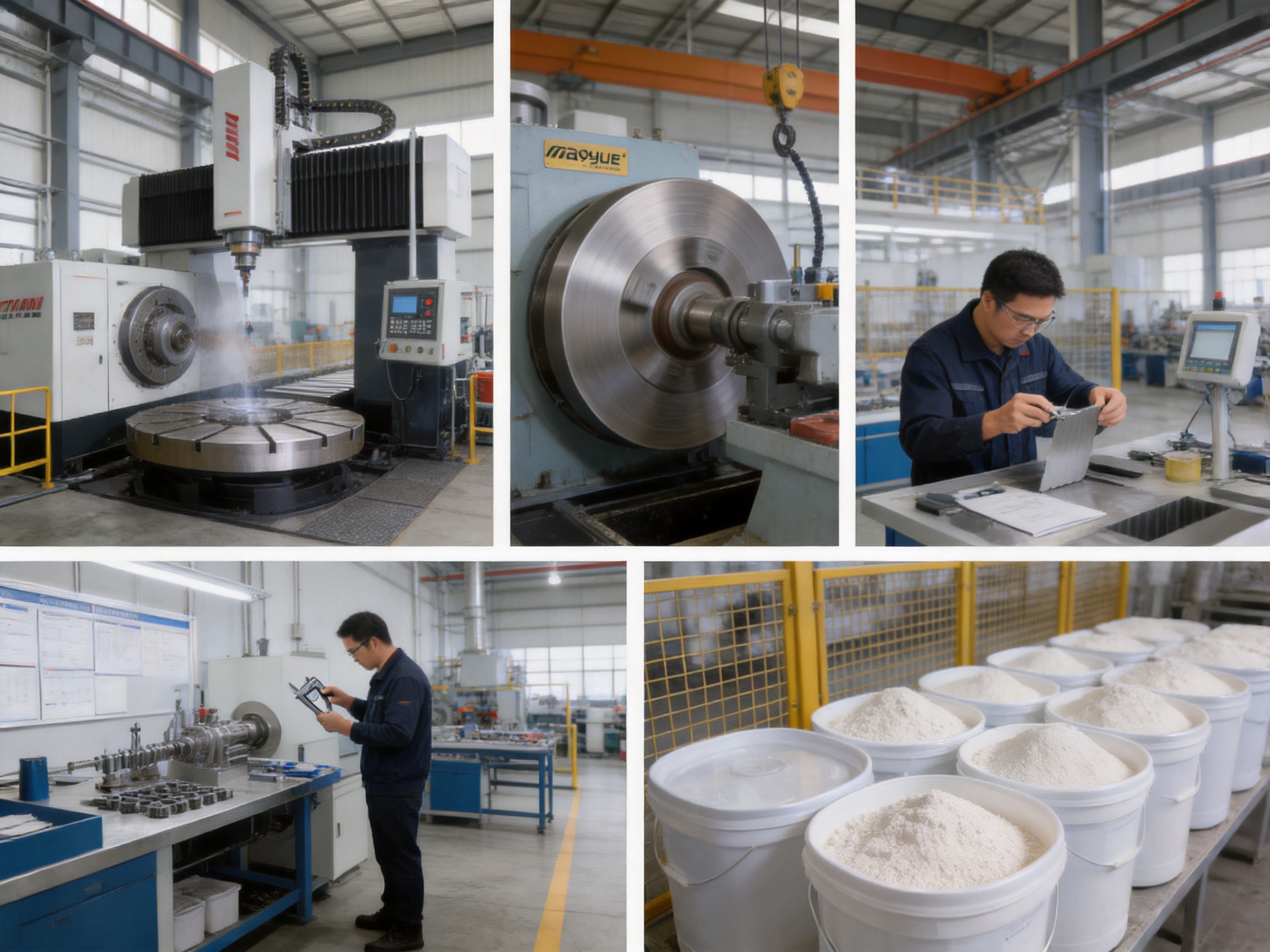
The blade’s performance is closely connected with the manufacturing capability of its producer. Changzhou Mao Yue Intelligent Equipment Co., Ltd. is a source manufacturer with approximately 30 years of experience in plastic crushing and pulverizing equipment. Its experience covers pulverizer design, components, production systems, process application, and customer-specific solutions.
The company operates six processing workshops, each averaging approximately 1,400 square meters. This workshop structure supports dedicated production activities, component processing, assembly, inspection, and equipment manufacturing. A specialized production environment is valuable because pulverizer blades require close coordination between material treatment, machining accuracy, and final balance.
The company manufactures components according to European quality standards and has developed long-term partnerships with more than 5,000 enterprises in domestic and international markets. This broad application experience helps the technical team understand different types of plastic feedstock, production requirements, and maintenance conditions.
Its technical personnel regularly study advanced machinery technologies from countries such as Germany. This focus on technical development supports improvements in design, machining, balancing, welding, process control, and complete-line integration.
16. Advanced Processing Equipment
Precision manufacturing requires suitable equipment. The factory is equipped with Taiwan-imported high-precision grinding machines built to German standards. These machines support accurate blade and disc machining, which is essential for maintaining tooth geometry, flatness, surface finish, and dimensional consistency.
Accurate grinding helps ensure that the working surfaces of the blades interact correctly. Small dimensional differences can affect clearance, vibration, cutting efficiency, and wear distribution. High-precision equipment reduces these variations and supports repeatable component quality.
The factory also uses German dynamic balancing equipment. Dynamic balance is particularly important for high-speed rotating pulverizer discs. An unbalanced disc can produce vibration, increase bearing loads, accelerate wear, create noise, and reduce operator confidence. Accurate balancing helps the rotating assembly operate more smoothly.
Japanese welding systems are also used within the factory. Although welding may not be the primary process for every blade, reliable welding technology is important for equipment frames, housings, cooling structures, and other pulverizer components. Strong and consistent welded assemblies contribute to overall machine stability.
The combination of precision grinding, dynamic balancing, and advanced welding provides an integrated manufacturing foundation. It allows the producer to control not only the blade material but also the mechanical environment in which the blade operates.
17. Quality Control and Certification
Quality control begins with material selection and continues through every manufacturing stage. The steel must be appropriate for the intended wear and impact conditions. Heat treatment must be controlled to achieve the required hardness and toughness. Machining must maintain accurate dimensions, and balancing must meet the requirements of high-speed operation.
Inspection may include dimensional measurement, visual examination, hardness testing, edge inspection, balance verification, and assembly checks. For customized orders, additional verification may be required for disc diameter, tooth profile, mounting dimensions, material grade, and operating speed.
The company has obtained CE mechanical certification and ISO 9001 quality management system certification. CE certification indicates conformity with applicable European mechanical safety requirements for relevant products. ISO 9001 certification demonstrates the implementation of a quality management system designed to support controlled and repeatable production.
Certification does not replace application engineering or regular maintenance, but it provides customers with additional assurance regarding manufacturing procedures, documentation, and product management. For international buyers, standardized quality systems can simplify supplier evaluation and support long-term procurement planning.
18. Compatibility with PE and PP Pulverizers
The alloy steel blades are designed as original accessories for PE and PP disc pulverizers. They are available for common disc diameters such as 500 millimeters, 600 millimeters, and 800 millimeters. The exact dimensions, mounting holes, tooth structure, and blade arrangement must be confirmed before ordering.
Compatibility is not determined by diameter alone. A correct replacement must match the disc structure, spindle arrangement, fastening system, rotating direction, stationary-disc configuration, and operating speed. Incorrect dimensions can cause poor performance or create a safety hazard.
The blades are intended to fit mainstream pulverizer configurations and may offer partial adaptability to equipment from other brands. For replacement or cross-brand applications, customers should provide technical drawings, photographs, equipment model information, disc dimensions, or existing blade samples.
Customized specifications may include disc diameter, tooth profile, blade material, mounting pattern, thickness, surface treatment, and hardness requirement. Custom engineering is useful when the customer processes unusual PE grades, abrasive fillers, reinforced plastic, or a special powder specification.
19. Customization for Different Operating Conditions
Plastic processing lines differ in raw materials, production capacity, powder size, cooling arrangements, and working schedules. A blade optimized for clean PE film may not be identical to a blade used for glass-fiber-reinforced engineering plastic or heavily contaminated industrial scrap.
Customization begins with a review of the feedstock. Important factors include polymer type, melt flow characteristics, hardness, filler content, reinforcement, moisture, contamination, feed size, and expected throughput. The target powder size and downstream application must also be considered.
For high-throughput systems, the blade design may emphasize wear resistance, heat dissipation, and long maintenance intervals. For fine powder production, tooth geometry and clearance control become especially important. For abrasive materials, the steel grade and heat treatment may need to be selected for increased wear resistance.
A customized blade can help the pulverizer operate closer to its intended design conditions. It may also reduce the need for unnecessary modifications to the machine. Before production, technical confirmation should cover the equipment model, blade dimensions, material, hardness, tooth arrangement, quantity, and inspection requirements.
20. Maintenance Recommendations
Even a high-performance alloy steel blade requires appropriate maintenance. Regular inspection helps preserve service life and protects the pulverizer from secondary damage.
20.1 Check the blade edge regularly
Inspect the cutting edges for rounding, chipping, cracks, deformation, or uneven wear. If one section wears more quickly than another, investigate possible causes such as incorrect alignment, uneven feeding, foreign contamination, or disc imbalance.
20.2 Verify clearance
Measure and adjust the clearance according to the equipment instructions and material requirements. A gradual change in powder fineness may indicate that the clearance needs adjustment or that the blades have reached the end of their useful service life.
20.3 Monitor temperature
Observe grinding temperature and cooling performance. If the material begins to soften, agglomerate, or stick to the disc, reduce the feed rate and check the cooling system. Operating with excessive temperature can reduce blade life even when the blade material is highly wear resistant.
20.4 Monitor vibration and noise
Unusual vibration or noise may indicate disc imbalance, loose fasteners, damaged bearings, foreign objects, or blade damage. The pulverizer should be stopped and inspected rather than operated continuously under abnormal conditions.
20.5 Clean the grinding chamber
Accumulated plastic residue can affect heat transfer, clearance, and material flow. Cleaning should be performed according to safety procedures after the machine has been isolated from power and has completely stopped.
20.6 Use correct replacement procedures
Replacement blades should be installed as a matched set where required. Fasteners must be tightened correctly, and the rotating assembly should be checked for balance. After installation, the machine should be tested at low load before returning to full production.
21. Safety Considerations
Pulverizer blades operate at high speed and must be treated as safety-critical components. Operators should never open the grinding chamber while the rotor is moving. The power supply must be isolated, locked out, and verified before inspection, cleaning, or blade replacement.
Protective guards, interlocks, emergency stops, and access covers should remain functional. Operators should use appropriate personal protective equipment, including eye protection, hearing protection, gloves suitable for maintenance work, and protective footwear.
Replacement blades must match the machine’s rated speed and mounting requirements. A blade with incorrect dimensions, an unsuitable material, or a damaged mounting surface can create serious mechanical risks. Before operation, confirm that all fasteners are secure and that no tools or foreign objects remain inside the grinding chamber.
Safety also includes dust management. Plastic powder can become airborne during feeding, conveying, discharge, or cleaning. Appropriate ventilation, dust collection, housekeeping, and fire-prevention practices should be established according to the material and local regulations.
22. Total Cost of Ownership
The financial value of a pulverizer blade should be measured over its complete operating life. Initial price, service life, replacement labor, downtime, energy use, product quality, and secondary equipment wear all contribute to total cost of ownership.
A blade with a lower purchase price may become expensive if it requires frequent replacement. Every replacement may involve machine shutdown, lost production, technician time, clearance readjustment, and quality checks. If the worn blade produces excessive coarse powder before replacement, additional screening or reprocessing costs may also occur.
The alloy steel blade is designed to reduce these hidden costs. Extended wear life lowers replacement frequency. Stable cutting performance reduces product variation. Better clearance control helps maintain the target powder size. Improved heat management helps prevent overheating-related defects. Smooth operation can also reduce the mechanical stress imposed on the pulverizer.
For a high-volume recycling or powder-processing line, these benefits can have a greater financial impact than the difference in purchase price. Customers should compare blades based on cost per operating hour, maintenance interval, usable powder output, and total production availability.
23. Environmental and Sustainability Benefits
Long-life components support more sustainable plastic processing in several ways. First, fewer discarded blades reduce metal waste. Second, longer maintenance intervals can reduce the resources used for manufacturing, transporting, and installing replacement parts. Third, stable pulverizing performance can improve the efficiency of plastic recycling and reduce the amount of material sent to disposal.
Uniform PE powder supports circular utilization by making waste material more suitable for regranulation, film production, pipe extrusion, molding, and other applications. Turning post-industrial or post-consumer plastic into a useful feedstock reduces dependence on virgin resin in appropriate products.
Energy efficiency is influenced by the complete pulverizer system, including motor selection, rotor design, cooling, feed rate, and maintenance. A sharp blade generally performs cutting more efficiently than a worn edge, which may help reduce unnecessary friction and energy loss. Stable powder quality can also reduce repeated processing.
These environmental advantages are most meaningful when combined with responsible operation, proper dust control, equipment maintenance, and effective recycling systems. The blade is one component within a broader circular-economy solution, but its service life and performance can make a measurable contribution.
24. Selecting the Correct Blade Specification
Customers should provide complete technical information when selecting replacement or customized blades. The most important information includes the pulverizer model, disc diameter, rotating speed, blade quantity, mounting pattern, tooth profile, material type, desired powder fineness, production capacity, and operating schedule.
Information about the PE feedstock is equally important. Specify whether the material is film, pipe, bottle cap, cable covering, molded scrap, reprocessed pellet, reinforced plastic, filled plastic, or a mixture. Also identify any contamination, filler, pigment, moisture, or metal content.
The target application should be stated clearly. Powder for rotational molding may require a different specification from powder for powder coating or masterbatch production. The required mesh range, flowability, bulk density, and downstream feeding behavior may influence the blade design and operating settings.
When cross-brand compatibility is required, technical drawings or samples are recommended. Visual similarity does not guarantee functional compatibility. The blade must fit accurately and operate safely at the required speed.
25. Why Manufacturing Experience Matters
Pulverizer blades are not generic flat cutting parts. Their performance depends on the relationship between material, tooth shape, disc design, rotor speed, clearance, cooling, and feedstock. A manufacturer with long-term experience in plastic pulverizing equipment can evaluate these factors as part of a complete system.
Changzhou Mao Yue Intelligent Equipment Co., Ltd. combines equipment manufacturing experience with component production capabilities. This allows the company to understand how blade geometry affects the complete pulverizing process rather than treating the blade as an isolated spare part.
Experience across recycling, rotational molding, masterbatch, polymers, PVC, PE, and powder coating applications provides a broad technical reference base. It also supports customized recommendations for customers with special production targets or challenging materials.
The company’s technical development approach includes studying advanced international machine technologies and applying precision manufacturing methods. Its factory facilities, quality certifications, and international customer base further support its position as a specialized supplier of plastic pulverizing equipment and components.
26. Recommended Evaluation Method for Buyers
Buyers comparing pulverizer blades should evaluate more than hardness or price. A practical assessment should include material certification, heat-treatment method, hardness uniformity, dimensional accuracy, balance requirements, expected service life, compatibility, and after-sales technical support.
Ask whether the supplier can provide a blade matched to the equipment model and operating conditions. Confirm whether the blade can be customized for disc diameter, tooth profile, mounting arrangement, or material grade. Review the supplier’s manufacturing equipment and quality-management credentials when purchasing for continuous industrial production.
It is also useful to compare actual operating data. Relevant indicators include service hours, powder fineness, proportion of coarse particles, motor load, grinding temperature, replacement time, and downtime. These measurements provide a more accurate comparison than a single laboratory hardness value.
A trial evaluation may be appropriate for new feedstock or cross-brand applications. The trial should record input material, feed rate, rotor speed, cooling conditions, clearance, output, powder-size distribution, and blade condition after operation. This information can guide future blade selection and maintenance planning.
27. Q&A
Q1: What are PE pulverizer alloy steel blades used for?
They are used in disc pulverizers that reduce polyethylene and related plastic materials into fine powder. Typical feedstocks include PE film, pipes, bottle caps, cable sheathing, strapping bands, molded scrap, and high-toughness plastic materials. The resulting powder may be used in recycling, regranulation, powder coating, masterbatch, extrusion, injection molding, and rotational molding.
Q2: What makes alloy steel blades different from ordinary cutting discs?
Alloy steel blades use a higher-performance wear-resistant material and undergo controlled heat treatment. They can achieve approximately HRC 60–65 or higher, while ordinary cutting discs may have hardness around HRC 45. The higher hardness, combined with suitable toughness and precision machining, helps improve wear resistance and edge retention.
Q3: How long can one blade set operate?
Under suitable conditions, a single blade set can achieve approximately 800 hours of continuous service life. Actual life depends on the material being processed, contamination, feed rate, target fineness, cooling, rotor speed, clearance, and maintenance. Reinforced or highly abrasive materials may reduce service life.
Q4: Can these blades process glass-fiber-reinforced plastic?
They are designed for demanding materials, including high-toughness and glass-fiber-reinforced plastics. However, the correct alloy grade, tooth design, cooling arrangement, and operating parameters should be confirmed for the specific reinforced material.
Q5: What powder fineness can be achieved?
The pulverizer can be configured to produce powder in the approximate range of 20–80 mesh or finer. The actual particle size depends on the machine model, blade configuration, clearance, feedstock, cooling, rotor speed, and classification or screening system.
Q6: Can the blade clearance be adjusted?
Yes. The system supports precision clearance adjustment, allowing the operator to fine-tune the gap between rotating and stationary discs. Correct adjustment is important for balancing powder fineness, output, heat generation, and blade service life.
Q7: Are the blades compatible with different pulverizer brands?
The blades are designed for PE and PP pulverizers and can match common disc diameters such as 500, 600, and 800 millimeters. They may be adaptable to equipment from other brands, but compatibility must be confirmed using model information, dimensions, drawings, or samples.
Q8: Can customized blades be manufactured?
Yes. Customization may include disc diameter, tooth profile, mounting dimensions, blade material, hardness, thickness, and other technical specifications. Customers should provide complete equipment and material information so the blade can be designed correctly.
Q9: How does blade design affect PE powder quality?
A sharp and accurately positioned blade provides more consistent shearing and grinding. This helps reduce coarse particles and agglomerates and supports a more uniform particle-size distribution. Blade performance must be combined with correct clearance, feed rate, cooling, and machine maintenance.
Q10: Why is heat dissipation important when pulverizing PE?
Excessive friction heat can soften PE, cause smearing or agglomeration, and reduce blade sharpness. A heat-dissipation structure and an effective cooling system help control disc temperature, protect the blade edge, and improve powder quality during continuous production.
Q11: What manufacturing equipment supports blade quality?
The producer’s factory uses Taiwan-imported high-precision grinding machines built to German standards, German dynamic balancing equipment, and Japanese welding systems. These facilities support accurate machining, balanced rotating assemblies, and reliable pulverizer construction.
Q12: What certifications does the manufacturer have?
The company has CE mechanical certification and ISO 9001 quality management system certification. These certifications support product safety, manufacturing consistency, and controlled quality-management procedures.
Q13: What should operators do to extend blade life?
Operators should use the correct feed rate, maintain adequate cooling, keep the grinding chamber clean, check clearance, monitor vibration and temperature, remove foreign metal objects, and inspect the blade edge regularly. Correct installation and balanced replacement sets are also important.
Q14: Are longer-life blades beneficial for sustainability?
Yes. Longer service life reduces discarded blade waste, replacement-material consumption, maintenance frequency, and production downtime. When the blades support efficient recycling and consistent powder quality, they can also contribute to better use of recovered PE materials.
28. Conclusion
PE pulverizer alloy steel blades are designed to improve the performance and reliability of plastic powder production. Their main advantages come from the combination of high-density wear-resistant alloy steel, precision heat treatment, high hardness, impact resistance, accurate tooth geometry, adjustable clearance, and effective heat dissipation.
Compared with ordinary cutting discs, these blades can provide stronger wear resistance, longer service life, more stable powder fineness, and lower maintenance requirements. A service life of approximately 800 continuous hours may be achieved under suitable conditions, while the extended-life design can reduce replacement frequency by two to three times or more in demanding applications.
The blades are suitable for PE recycling, powder coating, masterbatch production, modified plastics, rotational molding, extrusion, injection molding, and laboratory or research applications. Their compatibility with common 500-millimeter, 600-millimeter, and 800-millimeter disc configurations, together with customization options, allows them to serve a wide range of pulverizer systems.
The manufacturing strength of Changzhou Mao Yue Intelligent Equipment Co., Ltd. further supports product reliability. With approximately 30 years of industry experience, six processing workshops, precision grinding machinery, dynamic balancing equipment, advanced welding systems, CE certification, ISO 9001 certification, and a broad international customer base, the company provides both replacement components and complete technical support for plastic pulverizing applications.
For customers seeking lower operating costs, consistent PE powder quality, reduced downtime, and more sustainable recycling production, selecting a properly engineered alloy steel blade is an important investment. The best results are achieved when the blade specification, pulverizer configuration, cooling system, clearance, and maintenance program are considered as one integrated solution.
References
1. Manufacturer-provided technical information for PE pulverizer alloy steel blades and pulverizer components.
2. ISO 9001, Quality Management Systems—Requirements.
3. CE mechanical safety and conformity principles applicable to industrial machinery.
4. General principles of heat treatment for alloy tool steels and wear-resistant components.
5. Technical practices for plastic recycling, pulverizing, powder preparation, extrusion, rotational molding, and powder coating.
6. General maintenance principles for high-speed rotating industrial grinding equipment.
7. Manufacturer information concerning plastic pulverizer design, precision machining, dynamic balancing, and customized grinding solutions.