

 English
 русский
 Español
 عربى
عربى 中文简体
中文简体
 中文简体
中文简体
Content
- 1 Introduction
- 2 Why High-Uniformity PE Powder Matters in Rotomolding
- 3 Heavy-Duty 800 mm Grinding System
- 4 Dynamic Balancing for Stable Continuous Operation
- 5 Dual Cooling and Intelligent Temperature Management
- 6 Enclosed Negative-Pressure Conveying and Dust Collection
- 7 Large Capacity for Industrial Production
- 8 Applications Across PE and Industrial Powder Processing
- 9 Manufacturing Strengths Behind the Equipment
- 10 Advantages Over Conventional Pulverizers
- 11 Technical Specifications
- 12 Energy Efficiency and Return on Investment
- 13 Installation and Production Planning
- 14 Maintenance and Service Considerations
- 15 Quality Control for PE Rotomolding Powder
- 16 Customized Solutions and Technical Support
- 17 Safety and Environmental Performance
- 18 Why Choose an Experienced Source Manufacturer
- 19 Frequently Asked Questions
- 19.1 What materials can the 800-type pulverizer process?
- 19.2 What output can the machine achieve?
- 19.3 What mesh sizes are available?
- 19.4 Why is DC53 steel used for the grinding disc?
- 19.5 Can the grinding disc be refurbished?
- 19.6 How does the machine prevent PE from sticking?
- 19.7 Is the machine suitable for continuous operation?
- 19.8 How much space is required?
- 19.9 What type of dust-control system is included?
- 19.10 Does the machine require pre-crushing?
- 19.11 How should buyers evaluate the return on investment?
- 19.12 What certifications does the manufacturer have?
- 20 Conclusion
- 21 References
- 22 Product: PE Rotomolding Powder High Uniformity 800 Model Pulverizer
Introduction
Large-scale rotational molding depends on the consistent quality of polyethylene powder. When the powder has an unstable particle-size distribution, poor flowability, excessive moisture, or a high proportion of oversized particles, the final molded product may show uneven wall thickness, rough surfaces, weak corners, incomplete fusion, and inconsistent mechanical strength. For this reason, the pulverizer is not simply an auxiliary machine in a rotomolding plant. It is one of the central production systems that determines powder quality, operating cost, production capacity, and long-term manufacturing stability.
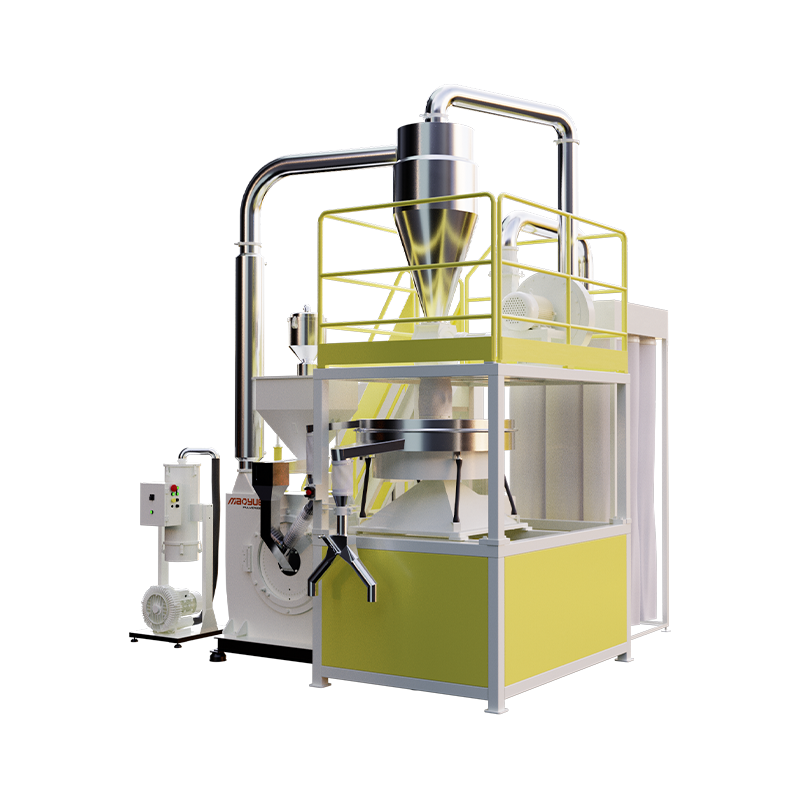
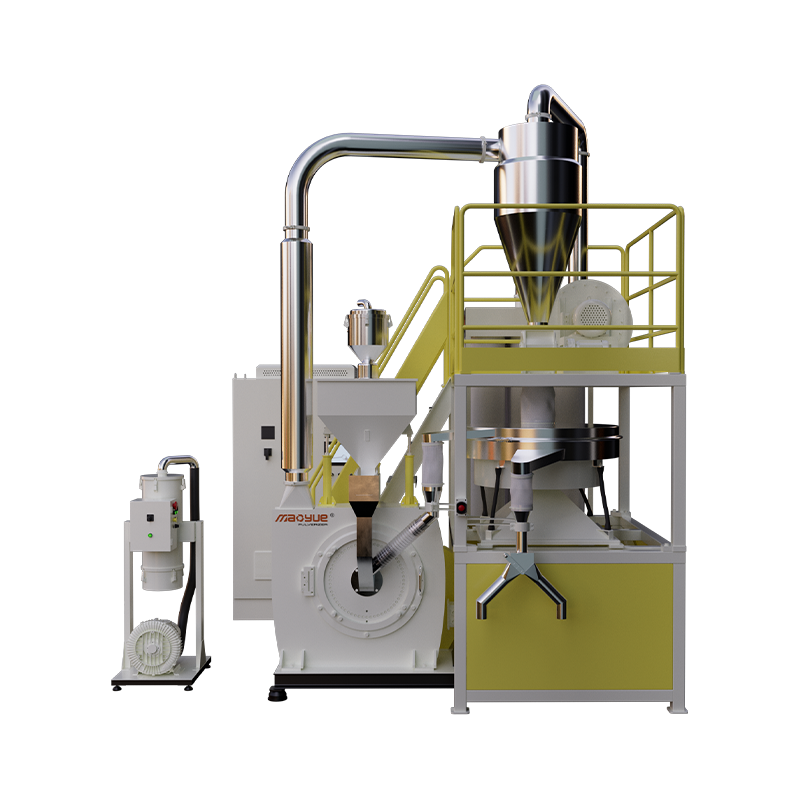
The 800-type PE rotomolding pulverizer is designed for factories that require high throughput without sacrificing powder uniformity. With an 800 mm grinding disc, heavy-duty drive system, dual cooling arrangement, negative-pressure conveying, and intelligent process control, this machine is intended for continuous industrial production. Depending on material characteristics, target fineness, and operating conditions, the machine can deliver approximately 600–1500 kg/h in practical high-capacity applications. The supplied technical configuration lists a reference capacity of 450–900 kg/h, demonstrating that actual performance depends on the selected motor, raw material, mesh requirement, and complete system configuration.
The equipment is manufactured by Changzhou Mao Yue Intelligent Equipment Co., Ltd., a Chinese source manufacturer with approximately 30 years of experience in plastic crushing and pulverizing equipment. The company combines dedicated production workshops, imported precision grinding equipment, dynamic balancing technology, Japanese welding systems, and a professional technical team to produce pulverizing systems for PE, PVC, polymers, masterbatch, recycling, powder coating, and other plastic processing applications.
This article explains the operating value, engineering design, manufacturing strengths, technical specifications, application fields, maintenance advantages, and purchasing considerations of the 800-type PE rotomolding pulverizer. It also compares the machine’s principal advantages with common conventional pulverizers and concludes with frequently asked questions and reference materials.
Why High-Uniformity PE Powder Matters in Rotomolding
Rotational molding is highly sensitive to powder behavior. During a typical production cycle, polyethylene powder is charged into a mold, heated while the mold rotates around two axes, fused against the internal mold surface, cooled, and then removed. Unlike some other plastic processing methods, rotational molding does not normally use high injection pressure to force material into every part of the mold. The powder must therefore melt and spread evenly as the mold rotates.
Particle size has a direct influence on this process. If the powder contains too many coarse particles, the material may require additional heating time before complete fusion. Oversized particles can also remain partially melted, creating roughness or localized weak areas. If the powder contains excessive fines, it may flow poorly, generate more dust, or behave inconsistently during feeding and handling. A narrow and well-controlled particle-size distribution helps the material melt more uniformly and supports stable coverage of the mold surface.
Flowability is equally important. Powder must move reliably from storage equipment through conveying and feeding systems. Poorly flowing material may bridge in hoppers, form clumps, or create inconsistent charges. In the mold, poor flowability can contribute to uneven material distribution, especially in products with complex geometry, deep corners, ribs, or large surface areas.
Temperature control during pulverization also affects final powder performance. Polyethylene can soften when exposed to excessive grinding heat. If the grinding chamber becomes too hot, material may stick to the discs, form agglomerates, partially degrade, or lose its desired flow characteristics. A pulverizer that maintains a stable working temperature helps preserve the original quality of the polymer while delivering a consistent powder output.
For large rotomolding manufacturers, these quality issues are multiplied by production volume. A small inconsistency in powder may be manageable in a laboratory or small workshop, but it can cause substantial waste when several hundred kilograms are processed every hour. The 800-type machine is therefore designed around three connected objectives: high capacity, stable temperature, and uniform particle size.
Heavy-Duty 800 mm Grinding System
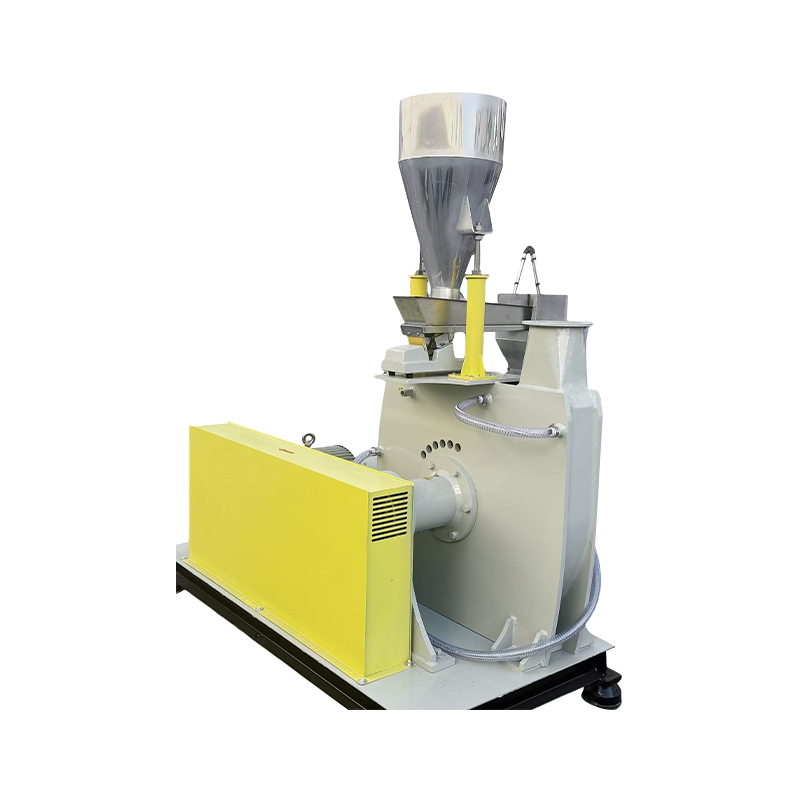
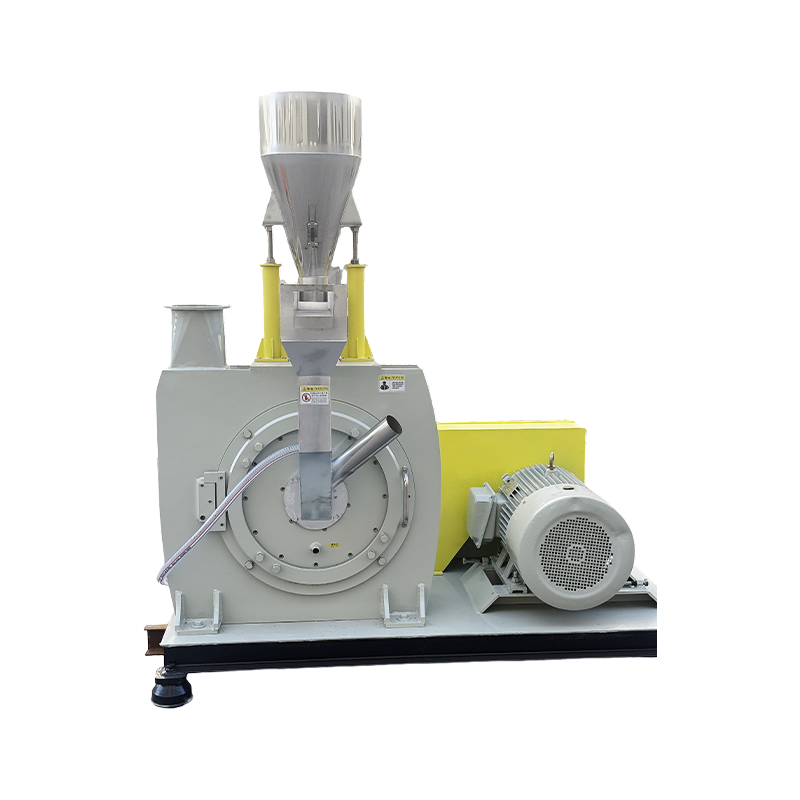
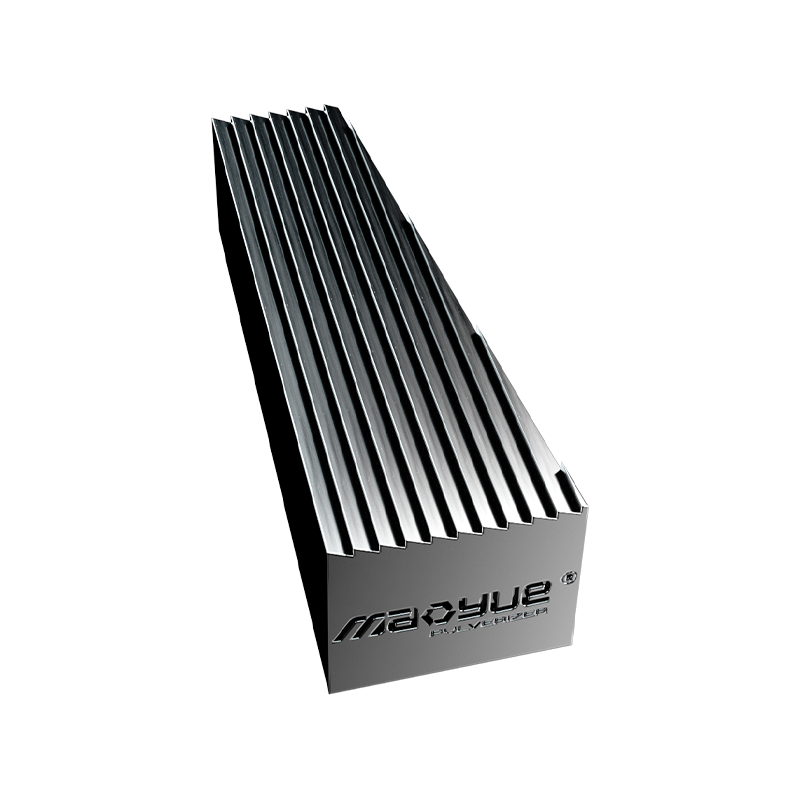
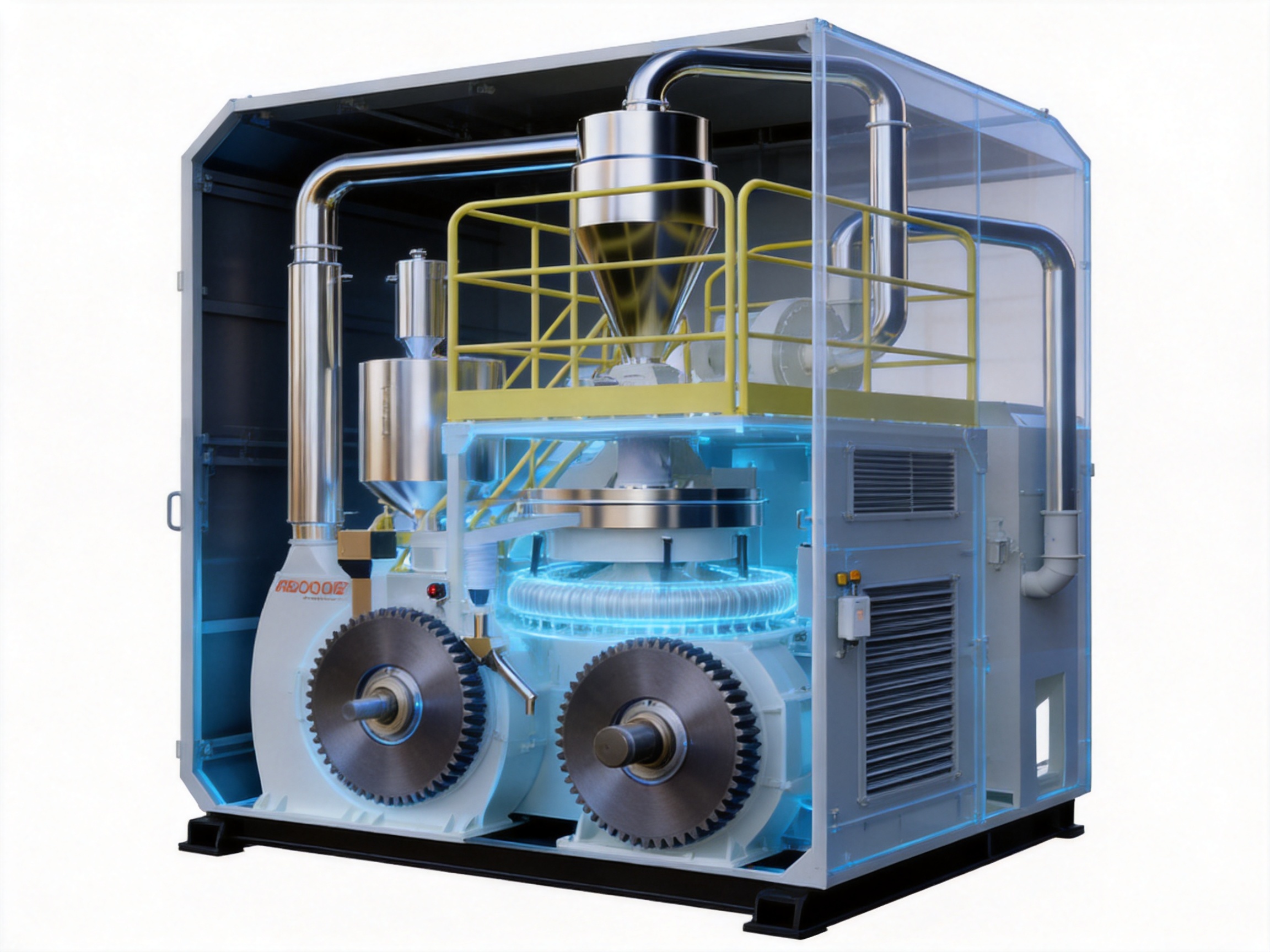
The most visible feature of the machine is its large 800 mm grinding disc. A larger disc provides a substantial working area for processing high volumes of plastic. It also supports a heavy-duty machine structure suitable for continuous operation in large factories. The design is intended to reduce the need for multiple smaller pulverizers when a single high-capacity line can provide the required production rate.
The grinding disc is manufactured from DC53 high-grade cold-work mold steel. The specified hardness is approximately HRC 62–64. DC53 is selected for its combination of hardness, toughness, fatigue resistance, and resistance to chipping. Compared with conventional D2 grinding components, DC53 can offer improved durability in demanding plastic pulverizing applications where the disc is exposed to continuous mechanical stress and repeated thermal cycles.
Longer disc life provides more than a tooling benefit. Frequent disc replacement creates production interruptions, labor requirements, alignment work, and quality fluctuations. Every time a disc is changed, the machine must be inspected and adjusted before returning to stable production. A more durable disc helps extend service intervals, reduce downtime, and keep the powder specification consistent across longer production campaigns.
Under suitable operating conditions, the service life of the DC53 disc may be approximately 1.5 to 2.5 times longer than that of standard discs. Actual service life depends on the type of polyethylene, contamination level, input form, moisture, operating temperature, target mesh, feeding rate, and maintenance practices. Nevertheless, the material selection provides an important advantage for plants that process large quantities of powder every day.
The disc is designed as a separated grinding component, which supports replacement and servicing without requiring the replacement of an entire rotor assembly. This approach can simplify maintenance planning and help factories control spare-parts costs. When a disc becomes dull, professional refurbishment is also available. Refurbishing can cost approximately one-quarter to one-third of the price of a new disc, subject to the disc condition and required work.
Precision Tooth-by-Tooth Grinding
The grinding geometry of a pulverizer has a major effect on capacity and powder quality. Small variations in tooth angle, edge sharpness, or clearance can cause differences in cutting efficiency and particle-size distribution. For this reason, Mao Yue uses two imported professional CNC tool grinders from Taiwan for precision tooth-by-tooth grinding.
CNC grinding allows the cutting profile to be produced with consistent geometry across the disc. Accurate blade angles improve the interaction between the rotating and stationary grinding surfaces. Sharp and uniform edges help the machine process material efficiently rather than relying on excessive friction. This can support lower energy consumption per ton, reduce unnecessary heat generation, and improve output stability.
Consistent tooth geometry is also valuable for particle-size control. When each grinding position works in a similar way, the resulting powder is more uniform. A narrower distribution can reduce the amount of material that must be screened and returned for additional processing. It can also improve the consistency of the final rotomolded product.
In comparison, lower-cost pulverizers may rely on less precise manual machining or inconsistent disc finishing. Such differences may not be obvious when the machine is new, but they can become more apparent during long production runs. Uneven wear, fluctuating power consumption, unstable output, and inconsistent powder fineness may increase operating costs over time.
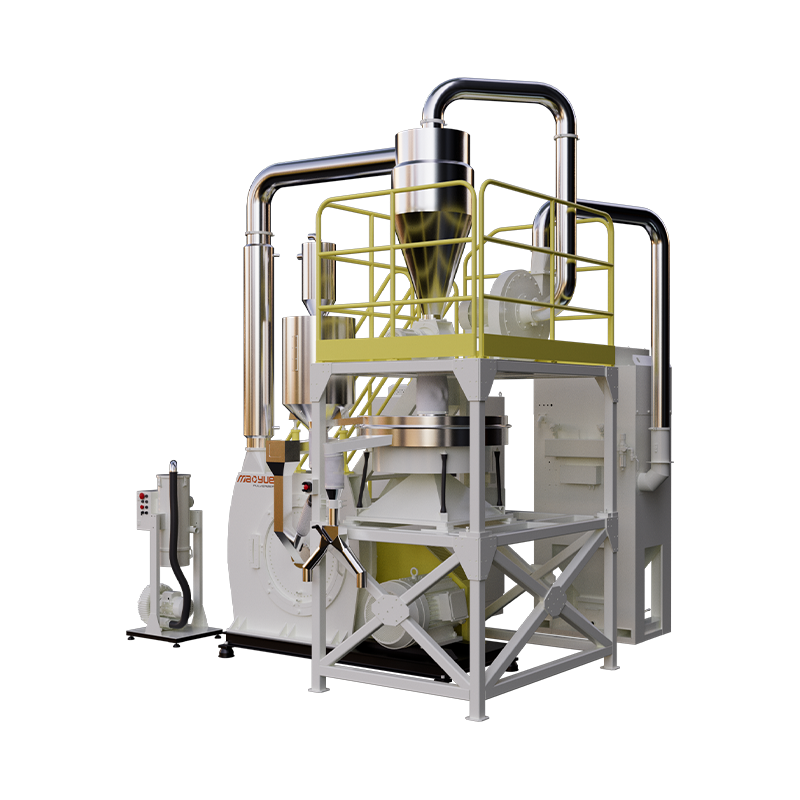
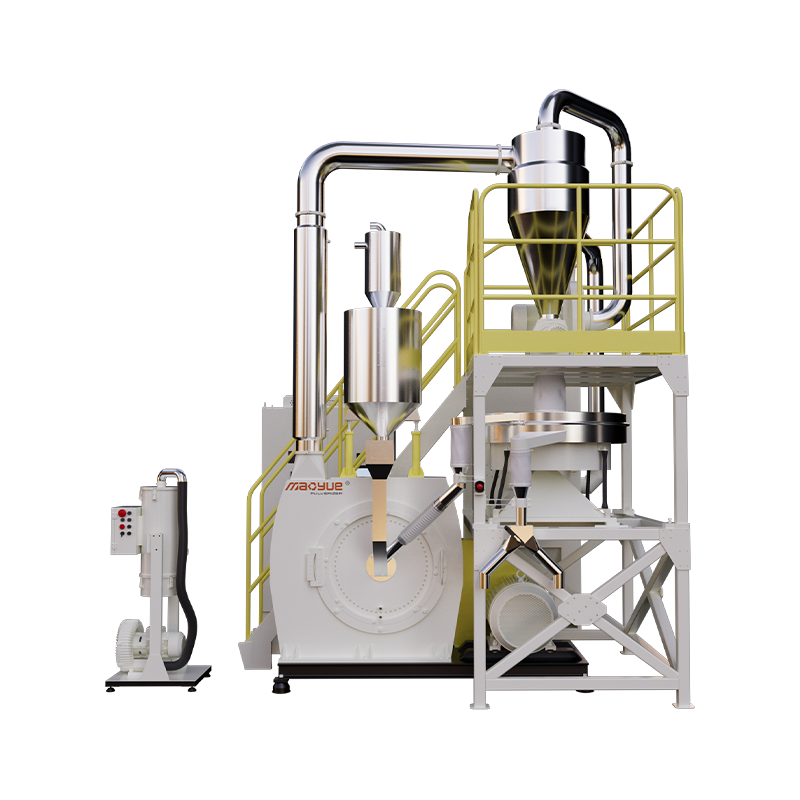
PE Rotomolding Powder High Uniformity 800 Model Pulverizer
Dynamic Balancing for Stable Continuous Operation
High-speed rotating equipment must be balanced accurately. Even a small imbalance in a large grinding disc can create vibration, increase bearing loads, accelerate spindle wear, loosen fasteners, and transmit noise through the machine structure. In severe cases, vibration can affect product quality and reduce the service life of connected equipment.
Each grinding disc in the 800-type pulverizer is dynamically balanced using German-imported high-precision balancing equipment. Dynamic balancing evaluates the rotating component while it is in motion and identifies the location and magnitude of imbalance. Corrective adjustments can then be made to produce smoother rotation.
The result is a machine designed for stable operation with low vibration and a reported noise level below 85 dB under appropriate operating conditions. The company describes the stability through a “coin-standing” demonstration, in which a coin can remain upright while the machine operates. While this demonstration is an easy visual indication rather than a substitute for formal vibration measurement, it reflects the importance placed on smooth mechanical operation.
Improved balance benefits the complete system. Bearings and spindles are subjected to lower dynamic stress, and the reducer and drive components experience fewer shock loads. Operators can work in a more comfortable environment, and the machine is better suited to uninterrupted production schedules. Stable rotation also helps maintain the clearance and grinding conditions required for consistent powder quality.
Many industrial customers operate pulverizers for extended shifts or around the clock. In such environments, vibration control is not a cosmetic feature. It directly influences maintenance intervals, production reliability, workplace conditions, and the total cost of ownership. A machine that appears inexpensive at the time of purchase may become costly if it requires frequent bearing replacement, repeated alignment, or unplanned downtime.
Dual Cooling and Intelligent Temperature Management
Grinding plastic generates heat through friction and mechanical energy. The larger the processing rate, the greater the need for effective heat removal. Without sufficient cooling, polyethylene may soften inside the grinding chamber and adhere to the disc surface. This can cause clumping, unstable feeding, reduced capacity, and inconsistent powder fineness.
The 800-type pulverizer uses a reinforced dual cooling system that combines a large-area water-cooling jacket with multi-stage forced-air cooling. The water-cooling system removes heat from the grinding chamber and its surrounding structure. Forced air assists heat dissipation and supports the movement of processed powder through the conveying system.
The cooling system is designed to maintain the grinding chamber within an approximate operating range of 50–80°C. The correct temperature depends on the polyethylene grade, ambient conditions, feed rate, target fineness, and cooling-water conditions. Maintaining the chamber in a controlled range helps prevent the material from becoming excessively soft while avoiding unnecessary thermal stress.
PLC multi-point intelligent control monitors operating conditions and coordinates the cooling and protection functions. Over-temperature protection can alert the operator or stop relevant operations when the temperature exceeds the set limit. This is particularly valuable during high-load production, when an operator may not immediately detect a gradual increase in heat.
Compared with a pulverizer that depends only on basic air cooling, a combined water-and-air system offers greater thermal capacity for large-volume production. Air cooling alone may be sufficient for smaller machines or lower feed rates, but high-capacity PE processing requires a more robust method of removing heat. The dual arrangement helps the machine maintain stable powder characteristics during long production runs.
Effective cooling also reduces the risk of polymer degradation. Excessive temperature can affect color, odor, melt behavior, and mechanical performance. By controlling heat at the grinding stage, the equipment supports the production of flowable powder suitable for demanding rotomolding applications.
Enclosed Negative-Pressure Conveying and Dust Collection
Plastic powder handling must address both product recovery and workplace cleanliness. Fine PE particles can escape into the workshop if the conveying line is open or poorly sealed. Dust accumulation can increase housekeeping requirements, waste usable raw material, and create environmental management challenges.
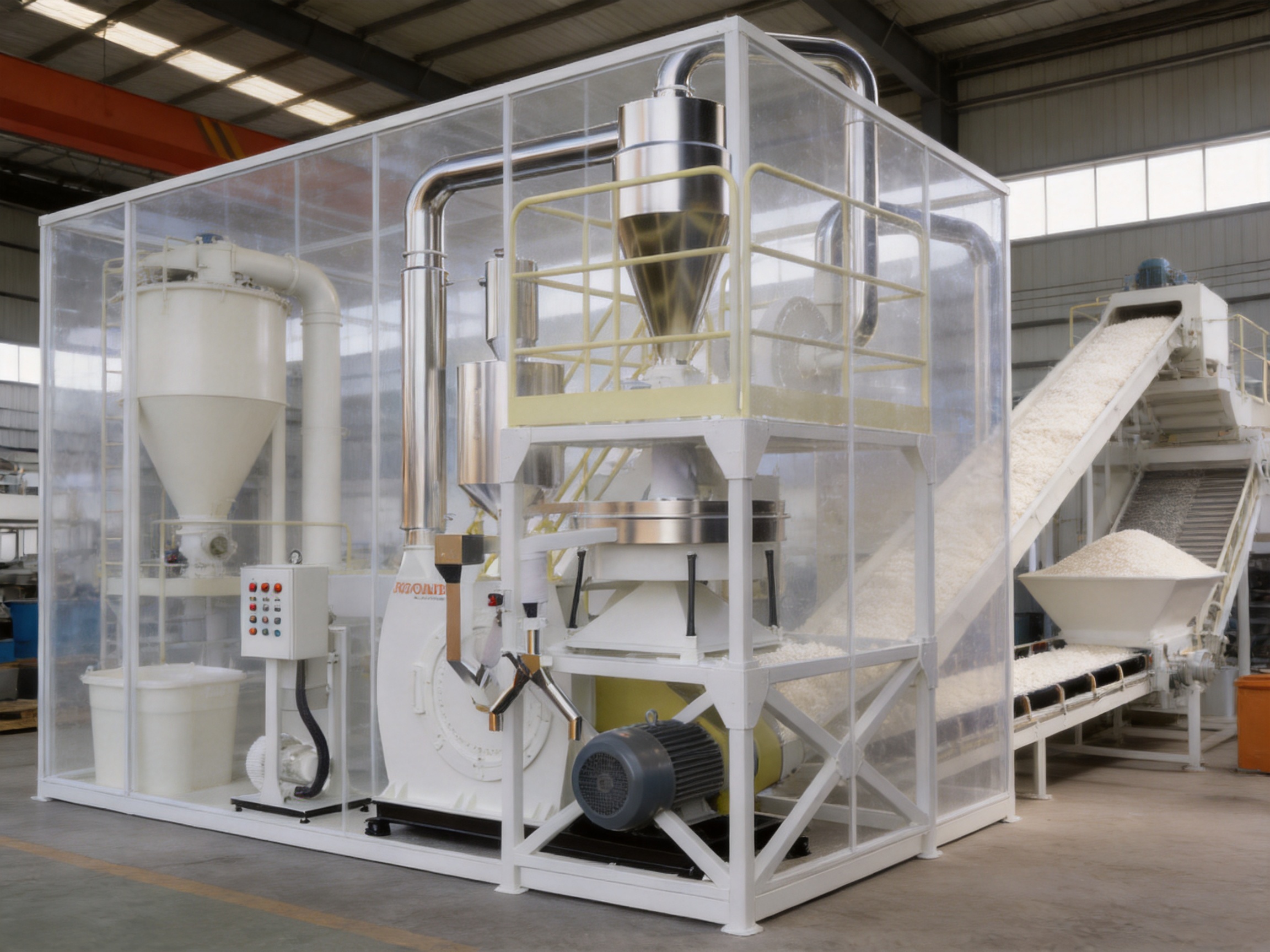
The 800-type system uses fully enclosed negative-pressure airflow conveying. In this arrangement, air movement draws processed powder through a sealed pipeline rather than pushing material through an open transfer route. The enclosed design helps limit powder leakage and supports cleaner transfer between the pulverizer, classifier or screen, and collection equipment.
The piping is specified as all stainless steel, with pipe diameters of approximately 178 or 203 mm depending on the configuration. Stainless steel provides a smooth and durable conveying surface and is suitable for industrial powder-handling environments. The selected diameter must match the airflow, blower capacity, material characteristics, and complete line layout.
A high-efficiency pulse bag dust collector is used to separate powder from the conveying air. Pulse cleaning periodically removes accumulated dust from the filter bags, helping maintain airflow and filtration performance. The system is designed for a dust capture rate above 99.9 percent under suitable operating conditions.
Near-zero visible dust emission offers several advantages. Workers benefit from a cleaner production area, cleaning time is reduced, and more of the processed material is recovered rather than lost. A controlled powder-handling system can also support the environmental requirements of large factories and improve the overall professionalism of the production site.
The enclosed conveying arrangement is especially important when the factory operates several machines or processes large quantities of recycled polyethylene. Material loss that appears small at the outlet of one machine can become significant when multiplied across many hours and multiple production lines. Dust recovery therefore contributes to both environmental performance and raw-material efficiency.
Large Capacity for Industrial Production
The 800-type pulverizer is intended for production environments where throughput is a primary concern. Its heavy-duty construction, large disc diameter, and high-power drive options enable it to process substantially more material than many small and medium pulverizers. Depending on the application and configuration, the machine can support output ranging from approximately 450–900 kg/h in the listed standard specification to 600–1500 kg/h in high-capacity production conditions.
Capacity is not a single fixed value. It changes according to the polyethylene grade, input particle size, moisture, contamination, feed stability, grinding disc condition, target mesh, cooling performance, and acceptable powder distribution. A coarser powder generally requires less grinding energy and may allow higher throughput. A finer powder requires more processing and may reduce capacity. For this reason, a responsible technical evaluation should confirm capacity using the customer’s actual material and target specification.
The drive motor can be configured with several power levels, including 75 kW, 90 kW, 110 kW, and, in some configurations, 132 kW. A frequency inverter provides speed control, allowing the operator to adjust machine behavior according to the material and required fineness. Speed control can help balance throughput, energy use, temperature, and particle size.
Large factories may use the 800-type machine as the primary pulverizer in a complete powder production line. It can also operate alongside pre-crushing, feeding, screening, storage, and packaging equipment. A suitable upstream crusher can reduce oversized waste PE to a stable input size, while a downstream screening system can separate powder that meets specification from material requiring further pulverization.
Compared with installing several small pulverizers, one high-capacity machine may simplify plant layout, reduce the number of operators, and centralize maintenance. It can also make dust collection, cooling-water management, and quality monitoring easier to organize. However, the correct choice depends on production schedules, redundancy requirements, available space, and the customer’s preferred maintenance strategy.
Applications Across PE and Industrial Powder Processing
Rotational Molding Products
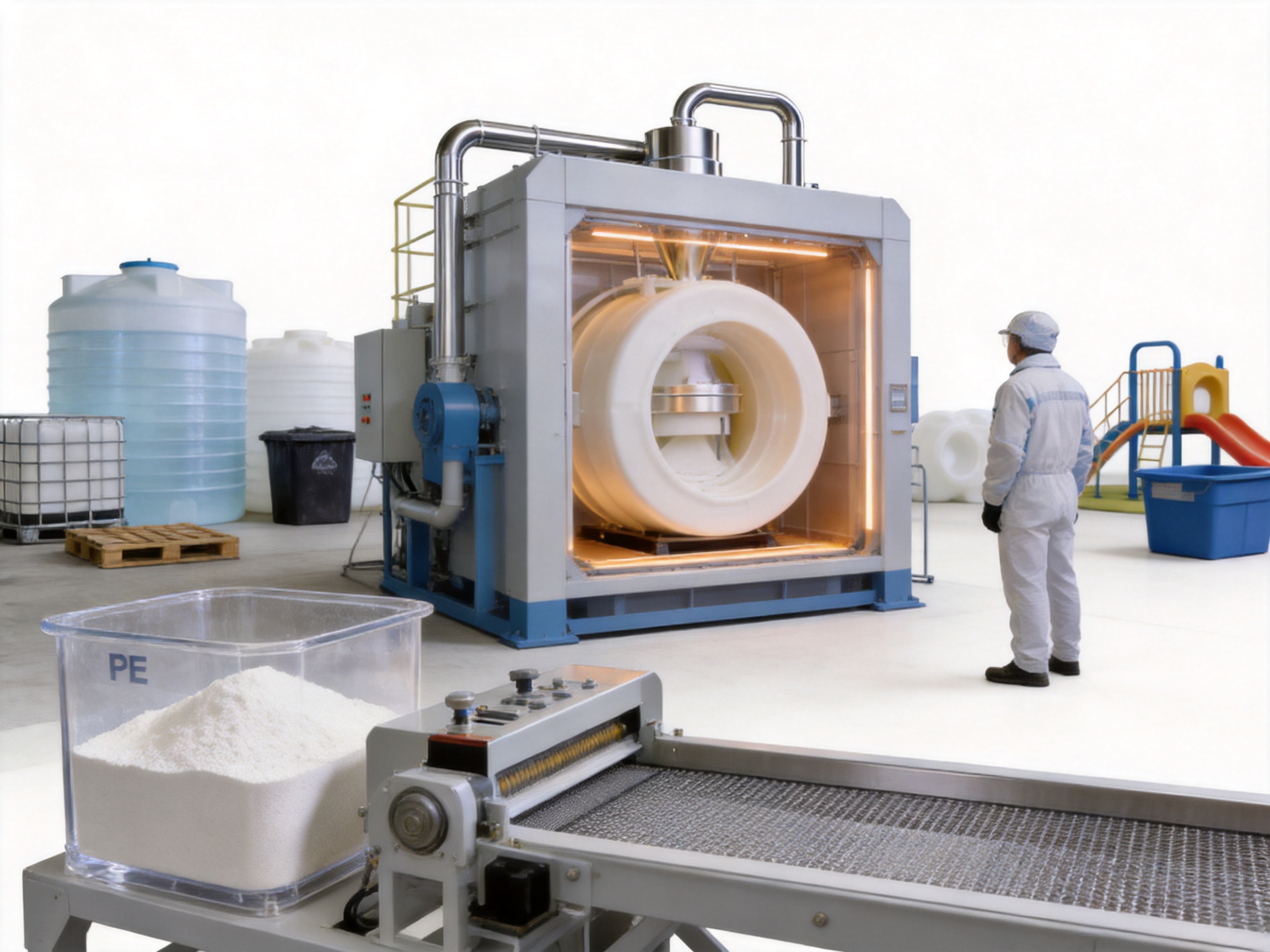
The primary application is the production of PE powder for rotationally molded products. Typical products include large water tanks, pallets, waste containers, playground equipment, storage containers, agricultural components, transportation parts, and industrial housings.
These products often require dependable wall thickness, impact resistance, weathering performance, and a smooth external surface. Uniform powder supports consistent melting and helps reduce visible and structural defects. For manufacturers producing large products in high volumes, a stable pulverizer can contribute directly to lower reject rates and more predictable cycle times.
Recycling and Re-Pulverizing Waste PE
Waste polyethylene from trimming, rejected products, production changeovers, and used rotomolding articles can often be processed for reuse, subject to material compatibility and quality-control requirements. The 800-type pulverizer can be integrated into a recycling line to reduce pre-crushed PE into reusable powder.
Recycling applications may contain greater variation than virgin material. The feedstock may include different grades, colors, fillers, labels, or foreign particles. Proper sorting and pre-treatment are therefore essential. When the feed is prepared correctly, the heavy-duty grinding system can support high-volume re-pulverizing and help reduce raw-material waste.
Industrial Rotomolding Powder
Some industrial products require specialized powder behavior, including high flowability, controlled fusion, and consistent particle size. The machine’s adjustable grinding conditions and screening options allow manufacturers to develop powder specifications for different mold designs and product requirements.
SPC Flooring Core Layer Powder
The equipment may also be applied to high-output powder preparation for SPC flooring core-layer materials, subject to the specific formulation and processing requirements. In this type of application, stable particle size and reliable feeding are important for blending and downstream production. Material compatibility and test processing should be confirmed before large-scale installation.
Hot-Melt Adhesive and Other Polymer Powders
Hot-melt adhesive powder and other polymer-based powders may require controlled fineness and good conveying behavior. The machine can serve as part of a broader size-reduction system for these materials, provided that the polymer’s thermal sensitivity, melting point, and formulation are compatible with the operating temperature and grinding method.
Manufacturing Strengths Behind the Equipment
The performance of an industrial pulverizer depends not only on its design but also on how accurately the machine is manufactured. A strong production system reduces variation between components and supports repeatable field performance. Changzhou Mao Yue Intelligent Equipment Co., Ltd. operates six processing workshops, each averaging approximately 1,400 square meters, giving the company a substantial manufacturing base for pulverizer production and related components.
The company has built its business around plastic crushing and pulverizing technology and has supplied equipment to more than 5,000 domestic and international enterprises. Its product range serves rotational molding, masterbatch, polymers, PVC, PE, recycling, and powder coating industries. This application experience helps the technical team understand how material characteristics influence machine configuration.
A key manufacturing strength is the use of Taiwan-imported high-precision grinding machines built to German standards. These machines support accurate processing of grinding discs and other critical components. Disc geometry is especially important because a small machining error can affect clearance, energy consumption, wear pattern, and output quality.
German dynamic balancing equipment is used to control the balance of rotating parts. This reflects a production philosophy that treats vibration as a measurable engineering issue rather than an unavoidable feature of heavy machinery. Accurate balancing can improve operating stability and protect the bearing and spindle system.
Japanese welding systems are used in the fabrication process. Consistent welding supports the strength and dimensional stability of the machine frame, cooling structures, conveying components, and other fabricated assemblies. Good welding practice is important because a pulverizer must withstand vibration, thermal cycling, and continuous industrial use.
The technical team regularly studies advanced machinery technologies from countries such as Germany. This ongoing technical development helps the company refine machine construction, precision machining, cooling, automation, and process control. The objective is not merely to produce a high-powered machine, but to provide a complete system that performs reliably in actual factory conditions.
The company has obtained CE mechanical certification and ISO 9001 quality management system certification. CE certification supports conformity with applicable European machinery safety requirements, while ISO 9001 provides a structured framework for quality management. Certification does not replace customer-side installation, operation, or risk assessment, but it demonstrates a formal commitment to manufacturing control and equipment safety.
Advantages Over Conventional Pulverizers
Higher Production Efficiency
The 800 mm disc and high-power drive options make the machine suitable for large-volume processing. Its capacity can reduce the need for several smaller machines and help factories meet demanding powder supply schedules. For manufacturers expanding production, the equipment provides a practical path to increase capacity without multiplying the number of grinding stations.
Improved Powder Uniformity
Tooth-by-tooth CNC grinding produces consistent grinding geometry. Combined with speed control, temperature management, and screening, this supports a more stable particle-size distribution. Uniform powder helps rotomolding manufacturers reduce defects associated with rough surfaces, uneven thickness, incomplete fusion, and insufficient strength.
Longer Grinding Disc Service Life
DC53 steel with a hardness of HRC 62–64 offers a useful combination of hardness and toughness. The disc is designed to resist wear and chipping during long production campaigns. Longer service intervals can reduce maintenance interruptions and lower the annual cost of replacement components.
Lower Long-Term Tooling Cost
The option to refurbish dulled discs at approximately one-quarter to one-third of the price of new discs can significantly reduce recurring tooling expenditure. Disc refurbishment also supports a planned maintenance strategy, allowing a factory to prepare refurbished components in advance rather than waiting for a complete tooling failure.
Better Vibration and Noise Control
High-precision dynamic balancing supports stable rotation and helps protect the spindle, bearings, and reducer. A reported noise level below 85 dB under appropriate conditions contributes to a more manageable working environment. Reduced vibration also helps maintain machine alignment and limits mechanical fatigue.
More Reliable Temperature Control
The combination of water cooling, forced air cooling, PLC monitoring, and over-temperature protection is better suited to heavy PE processing than a basic cooling arrangement. Stable temperature reduces the likelihood of sticking, clumping, thermal degradation, and unstable powder flow.
Cleaner Production Conditions
Negative-pressure conveying, stainless-steel piping, and pulse bag filtration help control fine dust. With a reported dust capture rate above 99.9 percent under suitable operating conditions, the system is designed to reduce visible emissions and improve material recovery.
Reduced Labor Intensity
Vacuum feeding, automated conveying, intelligent cooling control, and integrated dust collection reduce the amount of manual handling required. Operators can focus more on monitoring material quality, production data, and preventive maintenance rather than repeatedly transferring powder by hand.
Technical Specifications
The following table summarizes the principal specifications provided for the 800-type PE rotomolding pulverizer. Final configuration should be confirmed according to the customer’s material, production target, electrical standard, plant layout, and desired powder fineness.
| Item | Specification | Notes |
| Machine type | 800 | Heavy-duty disc pulverizer model |
| Grinding disc diameter | 800 mm | Large grinding area for high-volume processing |
| Reference capacity | 450–900 kg/h | Actual capacity varies with material and mesh requirement |
| High-capacity production range | Approximately 600–1500 kg/h | Applicable to selected PE materials and operating conditions |
| Mesh size | 10–50 mesh | Other fineness ranges may be evaluated according to application |
| Drive motor | 75, 90, 110, or 132 kW | Configuration selected according to output and material requirements |
| Speed control | Frequency inverter | Supports adjustment of operating conditions |
| Grinding disc material | DC53, separated type | Specified hardness approximately HRC 62–64 |
| Blower motor | 11 or 15 kW | Selected according to conveying and dust-collection requirements |
| Conveying pipe material | Stainless steel | Suitable for enclosed powder conveying |
| Pipe diameter | 178 or 203 mm | Depends on system configuration |
| Swing vibrator diameter | 1200 or 1500 mm | Used for screening and powder classification |
| Vibrating screen motor | 1.1 or 1.5 kW | Depends on screen configuration |
| Feeding method | Vacuum feeding | Supports automated material transfer |
| Dust collector bag diameter | 300 mm | Pulse bag filtration system |
| Cooling method | Water cooling | Water enters through one connection and exits through another |
Energy Efficiency and Return on Investment
Investment decisions for a pulverizer should consider more than the purchase price. Electricity consumption, disc replacement, labor, downtime, reject rates, dust losses, and production capacity all influence the total cost of ownership. A machine with a higher initial price may provide a better return if it produces more material per hour with fewer interruptions and lower maintenance requirements.
The 800-type machine is designed to reduce the energy cost per ton of powder through high throughput, efficient grinding geometry, speed adjustment, and stable operation. The actual energy consumption depends on the motor configuration and operating load. Plants should evaluate kilowatt-hours per ton using their own PE grade and target mesh rather than relying only on the rated motor power.
Longer disc life can reduce the cost of consumable tooling. Professional disc refurbishment creates another cost-control option. Lower vibration may extend bearing and spindle service life, while effective cooling can reduce production losses caused by sticking and overheating. Dust recovery helps preserve raw material that might otherwise be lost during conveying.
The supplied product information indicates a typical return-on-investment period of approximately 6–12 months in suitable high-volume applications. This estimate is not universal. It depends on local electricity prices, powder selling price, operating hours, labor rates, material cost, reject reduction, maintenance cost, and the difference between the new machine’s output and the existing production system. A factory should prepare a project-specific calculation before purchase.
A basic ROI model can compare the following factors:
First, calculate additional saleable powder produced per month. Second, estimate the value of reduced rejects and improved powder quality. Third, subtract electricity, labor, cooling, maintenance, and consumable costs. Fourth, include the value of recovered waste PE and reduced outsourcing expenses. Finally, compare the resulting monthly benefit with the installed project cost.
For a large rotomolding plant, capacity itself may have strategic value. If powder supply limits molding-machine utilization, a higher-capacity pulverizer can allow the factory to increase finished-product output without adding an equal number of molding machines. This can improve asset utilization across the entire plant.
Installation and Production Planning
The 800-type pulverizer occupies approximately 8–12 square meters for the core equipment, although the complete line requires additional space for feeding, pre-crushing, screening, dust collection, storage, access, and maintenance. The factory layout should provide sufficient clearance around the grinding chamber, motor, cooling connections, electrical cabinet, dust collector, and conveying pipes.
Floor strength is an important consideration because the machine combines a large disc, high-power motor, frame, cooling system, and connected equipment. The installation foundation should be level and capable of supporting the operating load. Anchoring and alignment must follow the manufacturer’s technical instructions.
Electrical planning should consider the selected motor, inverter, blower, vibrating screen, control cabinet, local voltage, frequency, protection devices, cable size, and emergency-stop arrangement. The maximum installed power should be calculated for the complete line rather than the main motor alone.
Cooling-water quality and flow must also be considered. The system requires water to enter and exit through dedicated connections. A stable cooling-water supply helps maintain temperature control. Where necessary, a cooling tower, chiller, circulation tank, filter, or water-treatment system can be included in the plant design.
The feed preparation system should deliver material at a controlled rate. Large lumps, metal contamination, stones, or other foreign matter can damage the grinding disc. Pre-crushing, magnetic separation, screening, and sorting may be necessary when processing recycled PE. Consistent feed size improves both capacity and powder quality.
Before commercial production begins, the line should be commissioned with the intended material. Operators should verify motor current, disc clearance, temperature, vibration, conveying pressure, dust-collector performance, powder fineness, and output rate. Samples should be collected at different times during the trial to confirm that quality remains stable throughout the production cycle.
Maintenance and Service Considerations
Preventive maintenance is essential for a high-capacity pulverizer. Operators should inspect the grinding disc, chamber, bearings, spindle, reducer, belts, pulleys, blower, pipes, screen, dust-collector bags, cooling system, and electrical controls according to a planned schedule.
The grinding disc should be checked for wear, chipping, cracks, abnormal tooth damage, and material buildup. A dull or damaged disc can increase power consumption and reduce throughput. It may also produce a less uniform powder. Disc refurbishment should be performed by qualified technicians using the correct grinding profile and balancing procedure.
Bearings and spindle components should be monitored for unusual temperature, noise, or vibration. A change from the normal operating condition may indicate lubrication problems, misalignment, imbalance, or component wear. Early intervention can prevent a minor issue from becoming a major production stoppage.
The cooling system should be inspected for water flow, leaks, blockage, scale, and temperature performance. Forced-air passages must remain clear. Sensors and over-temperature protection should be tested periodically to ensure that the machine can respond correctly to abnormal conditions.
Pulse bag dust collectors require regular inspection. Filter bags should be checked for damage, excessive dust loading, or reduced airflow. Pulse valves and compressed-air supply should operate correctly. A blocked filter can increase conveying resistance and reduce system performance.
Stainless-steel conveying pipes should be examined for wear at bends, joints, and high-velocity sections. Accumulated material can restrict airflow and alter the powder transfer rate. Seals and connections should remain tight so that negative pressure is maintained and dust leakage is minimized.
Operators should keep production records that include material type, feed rate, motor current, temperature, output, mesh result, maintenance events, and disc condition. These records help identify trends and support data-based optimization of the production line.
Quality Control for PE Rotomolding Powder
High-quality pulverization should be verified through practical testing rather than visual inspection alone. Important powder-control parameters include particle-size distribution, moisture, bulk density, flowability, color consistency, contamination level, and thermal behavior.
Mesh analysis can confirm whether the powder meets the specified fineness. Samples should be taken from different production periods because a machine may perform differently during start-up, steady operation, and extended running. A stable result across time is more valuable than a single acceptable sample.
Flowability tests can help determine whether the powder transfers smoothly through storage and feeding systems. If the powder bridges, clumps, or forms excessive dust, the cause may be related to particle size, temperature, moisture, formulation, or conveying conditions.
For rotomolding, final product testing remains essential. Manufacturers can evaluate surface appearance, wall-thickness consistency, impact resistance, tensile properties, elongation, dimensional stability, and other application-specific requirements. The pulverizer should be considered part of the complete quality system rather than an isolated machine.
When recycled PE is processed, additional controls may be necessary. Different polymer grades, pigments, fillers, and contaminants can affect melting behavior and finished-product performance. Sorting and blending procedures should be defined before the material enters the pulverizer.
Customized Solutions and Technical Support
Not every factory requires the same pulverizer configuration. Capacity, target mesh, material grade, line arrangement, electrical standard, cooling method, dust-control requirement, and available floor space all influence the final design. Mao Yue focuses on customized solutions rather than treating every installation as identical.
Technical discussions should begin with the customer’s material information. Useful data includes polymer type, virgin or recycled status, input size, moisture level, contamination level, desired output, target mesh, operating hours, and downstream molding requirements. Trial processing may be recommended when the material is unusual or when a precise capacity guarantee is required.
The company can support complete crushing and pulverizing lines that include feeding, pre-crushing, pulverizing, conveying, screening, dust collection, storage, and packaging. Integrating these systems can reduce interface problems between different suppliers and help establish a coordinated operating sequence.
After-sales support is also important for equipment of this scale. Training should cover safe startup and shutdown, feeding control, temperature management, disc inspection, dust-collector operation, emergency procedures, and routine maintenance. Spare parts planning should include grinding discs, bearings, seals, belts, sensors, filter bags, and other wear components.
Safety and Environmental Performance
High-power rotating machinery requires appropriate guarding, interlocks, emergency stops, electrical protection, and operator training. The grinding chamber should not be opened while rotating components are moving. Lockout and isolation procedures must be used before maintenance.
Operators should wear suitable personal protective equipment, including hearing protection where required, safety footwear, eye protection, and dust-control equipment in areas where exposure may occur. Even with a highly efficient dust collector, safe working practices remain necessary.
The enclosed negative-pressure conveying system helps control workplace emissions, but the complete installation should still be evaluated for leakage, ventilation, filter performance, and local environmental requirements. Dust-collection performance can be affected by incorrect airflow, damaged bags, poor sealing, or inadequate maintenance.
Noise below 85 dB is a stated operating target under suitable conditions, but actual workplace noise depends on the complete line, building structure, blower, material, and surrounding equipment. Noise measurement should be conducted at the operator position after installation.
Environmental performance also includes material efficiency. Recovering more PE powder reduces raw-material waste and can support the use of recycled feedstock. Lower reject rates in rotomolding further reduce the material and energy consumed per acceptable finished product.
Why Choose an Experienced Source Manufacturer
Purchasing from a source manufacturer gives customers direct access to the engineering and production team responsible for the machine. This can simplify communication about customization, replacement components, troubleshooting, and process improvements.
Thirty years of experience in plastic crushing and pulverizing gives the manufacturer a broad understanding of the challenges associated with different polymers. A machine designed for PE rotomolding powder must handle thermal sensitivity and flowability requirements that differ from those of rigid PVC, masterbatch, or other materials.
Manufacturing control is another advantage. When critical components such as discs, frames, balancing elements, conveying systems, and control assemblies are managed within an organized factory structure, the supplier can better coordinate dimensional accuracy and system integration.
The company’s six workshops, precision equipment, dynamic balancing facilities, and welding systems provide an industrial foundation for producing large equipment. Its experience serving more than 5,000 enterprises also offers practical feedback from a broad range of operating environments.
CE mechanical certification and ISO 9001 certification provide additional evidence of structured quality and safety management. International buyers should still review the specific technical documents, electrical requirements, installation standards, and local compliance obligations applicable to their project.
Frequently Asked Questions
What materials can the 800-type pulverizer process?
The primary material is polyethylene used for rotational molding. The equipment may also be applied to recycled PE, industrial rotomolding powder, SPC flooring core-layer powder, hot-melt adhesive powder, and other compatible polymer materials. Material testing is recommended when the feedstock contains unusual fillers, high moisture, mixed polymers, or significant contamination.
What output can the machine achieve?
The listed reference capacity is 450–900 kg/h, while the product description indicates approximately 600–1500 kg/h in selected high-capacity PE applications. Actual output depends on material properties, target fineness, motor configuration, feed size, cooling performance, and the complete line design. A customer-specific trial is the best way to confirm expected production.
What mesh sizes are available?
The standard technical table lists 10–50 mesh. The product description also indicates adjustable fineness from approximately 20–100 mesh for certain operating conditions. The achievable range depends on the grinding disc, screening arrangement, material, and required throughput. The desired powder specification should be confirmed before ordering.
Why is DC53 steel used for the grinding disc?
DC53 offers high hardness together with good toughness, fatigue resistance, and anti-chipping performance. It is intended to provide longer service life and more stable performance than conventional disc materials in demanding plastic pulverizing applications.
Can the grinding disc be refurbished?
Yes. Professional refurbishment is available for dulled discs when their condition permits. Refurbishment may cost approximately one-quarter to one-third of a new disc, helping reduce long-term tooling expenses. The disc should be inspected by qualified personnel before refurbishment.
How does the machine prevent PE from sticking?
The machine combines a water-cooling jacket, forced-air cooling, PLC temperature monitoring, and over-temperature protection. These functions help maintain the grinding chamber within an approximate 50–80°C range. Correct feeding, disc condition, and cooling-water performance are also important.
Is the machine suitable for continuous operation?
The 800-type model is designed for heavy-duty industrial production and can support long operating schedules when correctly installed, operated, cooled, and maintained. Continuous operation requires regular monitoring of temperature, vibration, motor current, disc wear, bearings, dust collection, and conveying airflow.
How much space is required?
The core machine occupies approximately 8–12 square meters. Additional space is required for feeding, pre-crushing, screening, dust collection, storage, packaging, access, and maintenance. The final layout should be prepared using the complete line dimensions.
What type of dust-control system is included?
The system uses enclosed negative-pressure airflow conveying and a high-efficiency pulse bag dust collector. The stated dust capture rate is above 99.9 percent under suitable operating conditions. Proper sealing, filter maintenance, and airflow adjustment are necessary to achieve effective performance.
Does the machine require pre-crushing?
Large or irregular PE waste generally benefits from pre-crushing before entering the pulverizer. A stable input size improves feeding consistency and protects the grinding disc. Recycled materials may also require sorting and magnetic separation before pulverization.
How should buyers evaluate the return on investment?
Buyers should compare installed cost with additional saleable output, electricity per ton, labor, disc consumption, maintenance, reject reduction, recovered material, and reduced outsourcing. The stated 6–12 month ROI period is a typical indication for suitable high-volume projects, not a universal guarantee.
What certifications does the manufacturer have?
Changzhou Mao Yue Intelligent Equipment Co., Ltd. has obtained CE mechanical certification and ISO 9001 quality management system certification. Customers should request the technical and compliance documents appropriate to their region and project.
Conclusion
The 800-type PE rotomolding pulverizer is engineered for manufacturers that need a combination of high output, stable powder quality, and dependable long-term operation. Its 800 mm grinding disc, DC53 steel construction, precision CNC tooth grinding, dynamic balancing, dual cooling, PLC protection, enclosed conveying, and pulse dust collection address the principal challenges of large-scale PE powder production.
Its advantages over conventional pulverizers are most evident in demanding factory environments. Longer disc life can reduce tooling interruptions, precision grinding can improve particle-size uniformity, balanced rotating components can lower vibration, and intelligent cooling can reduce the risk of sticking and thermal degradation. High-capacity operation can also help large rotomolding manufacturers simplify their production lines and increase overall plant efficiency.
The machine’s performance ultimately depends on correct configuration and operation. Capacity, mesh size, power, cooling, screening, and conveying must be matched to the specific polyethylene material and downstream application. With suitable installation, preventive maintenance, quality control, and operator training, the equipment can serve as the core pulverizing unit for a large PE rotomolding powder production line.
Supported by approximately 30 years of manufacturing experience, six processing workshops, precision machining resources, dynamic balancing equipment, Japanese welding systems, CE certification, ISO 9001 certification, and a customer base of more than 5,000 enterprises, Changzhou Mao Yue Intelligent Equipment Co., Ltd. provides a technically focused option for factories seeking reliable plastic size-reduction equipment and customized pulverizing solutions.
References
1. Changzhou Mao Yue Intelligent Equipment Co., Ltd., 800-Type PE Rotomolding Pulverizer Product Information and Technical Specification Sheet.
2. Changzhou Mao Yue Intelligent Equipment Co., Ltd., Company Profile and Manufacturing Capability Information.
3. ISO 9001, Quality Management Systems—Requirements.
4. European Machinery Safety Framework and Applicable CE Conformity Principles.
5. General industrial practices for polymer powder handling, particle-size control, cooling, conveying, and dust collection.
6. General rotational molding processing principles for polyethylene powder preparation, melting, flowability, and molded-product quality.